
Best Crypto Cards for Passive Income Seekers (2026)
Compare crypto cards for passive income by cashback, staking or idle-balance yield, liquidity, and upkeep. Best for auto-compounding setups and realistic long-term returns.


Curated for Passive Income Seekers
50 matching cards
Filtered by yield linked, staking, cashback, airdrops
Most people think of crypto cards as a spending tool. Passive income seekers think of them as the first step in a compounding loop. Every purchase generates cashback tokens. Those tokens can be staked for yield. That yield generates more tokens.
And the on-chain activity from card transactions may qualify you for airdrops from protocols that reward active users. The result: your grocery shopping, gas fill-ups, and subscription payments become the seed capital for a passive income stream that compounds over time.
This is not theoretical. A cardholder spending $2,000/month on a 4% cashback card accumulates $960/year in tokens. Staked at 10% APY, those tokens generate $96 in the first year, growing each month as the cashback balance compounds. Add potential token rewards from active ecosystem participation, and the total return from everyday spending can rival traditional savings account rates applied to your entire annual spend.
Our cost-per-month model selected the cards below for their ability to deliver reliable passive income through at least two layers: cashback, staking yield, or idle-balance interest.
If compounding is not the first thing you care about, our overall card rankings give the broader starting point.
Passive Income Card Comparison
| Card | Cashback | Token | Yield Layer | Lock-up | Annual Fee |
|---|---|---|---|---|---|
| COCA | Up to 8% (1% free) | Stablecoins | 6% APY on idle balance | $COCA stake for higher tiers | Free |
| ether.fi Core | 3% | ETHFI | ETH restaking (3-5%) | No | Free (1% FX) |
| Bitget Card | Up to 8% | BGB | BGB staking products | 30-90 day terms | Free (0.9% tx) |
| Tria Premium | 6% | TRIA XP | Yield on idle USDC | No | $250/yr |
| Nexo | Up to 2% | NEXO | Up to 14% APY (lending) | Optional (better rate) | Free (0.2% FX) |
| Gemini Credit Card | Up to 4% | 50+ cryptos | SOL auto-staking (Solana Ed.) | No | Free |
| Crypto.com Pro | 3% | CRO | CRO staking | No (subscription model) | $299.90/yr |
Every card above delivers at least two income layers without requiring active DeFi management. The "Airdrop Potential" column from the old version of this table has been removed - airdrops are speculative upside, not a passive income layer you can plan around.
What Passive Income Seekers Need in a Crypto Card
Cashback in tokens that can be staked for additional yield (not just stablecoins)
Staking rewards on idle card balance or deposited collateral
Airdrop eligibility through on-chain card activity and points accumulation
Compounding mechanics - cashback feeds into staking which feeds into more rewards
No manual intervention required once set up - truly passive after initial configuration
Top 7 Cards for Passive Income Seekers
Passive income from a crypto card has two reliable layers - cashback and yield on idle balances - plus a speculative third layer in airdrops. The seven cards here each deliver on at least two reliable layers. COCA is the guaranteed-income baseline: up to 8% stablecoin cashback (1% at free Starter tier, 8% at Elite with 30K $COCA staked) plus 6% APY on idle balances at every tier. Even at the free tier, a $5,000 idle balance generates $300/year in yield alone.
ether.fi Core is the auto-compounding play: ETH restaking yield (3-5% APY) accrues on your collateral without manual intervention, plus 3% cashback on all spending. The 1% FX fee on international transactions is the tradeoff for a fully passive setup.
Bitget delivers the highest volatile-token cashback (7.1% net BGB after the 0.9% transaction fee) for seekers who accept price risk in exchange for maximum upside. Tria Premium layers 6% base cashback with yield on idle USDC at $250/year with 0% FX and 0% transaction fees, so every dollar of cashback is pure profit that feeds directly into the yield layer.
Nexo is here for large-balance holders: the 2% cashback requires a $5,000+ account balance, but up to 14% APY lending yield on deposited USDC turns idle capital into a primary income stream. Gemini Credit Card earns up to 4% cashback in 50+ cryptos with zero annual fee (US only); the Solana Edition auto-stakes rewards in SOL at approximately 6% yield. Crypto.com Pro at $299.90/year delivers 3% CRO cashback that feeds directly into CRO staking for multi-layer compounding.

1. COCA Visa Card
Self-Banking: 8% Cashback + 6% APY + 0% FX

2. ether.fi Core Card
Zero Barriers: 3% Back on Every Purchase, No Stake Required

3. Bitget Card
Trade and Spend: Up to 8% BGB Cashback for Bitget Traders

4. Tria Premium Card
Ultimate Web3 Luxury: 6% Cashback + Zero ATM Fees
5. Nexo Dual Card
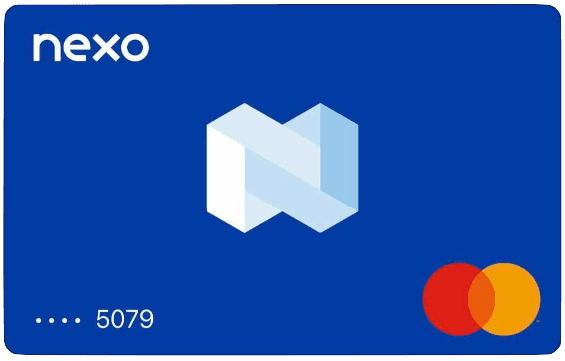
Hybrid Spend Mastery: 2% Rewards + Up to 14% APY Balance
6. Gemini Credit Card
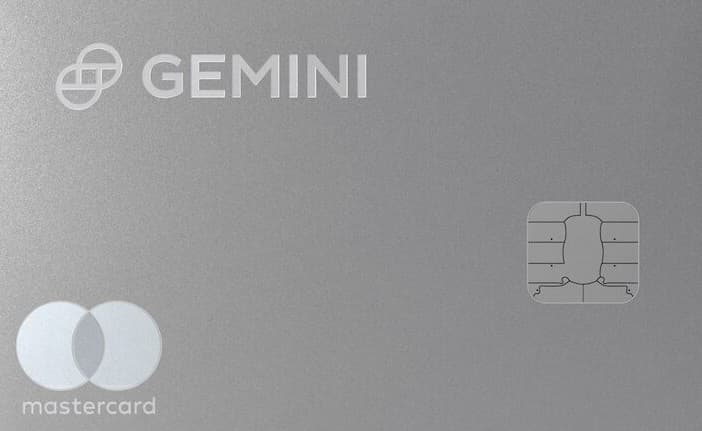
Category Crypto Rewards: 4% Gas/Transit/Rideshare, 3% Dining, 2% Groceries

7. Pro (Royal Indigo / Jade Green)
The Lifestyle Sweet Spot: 3% Cashback + Lounges + Netflix
What $2,000/Month Looks Like
$200
/month in cashback (based on Jupiter Global at 10%)
Scenario 1: Mei, Product Designer in Toronto ($3,000/month)
Mei earns $4,500/month freelancing and wants to maximize passive income without managing complex DeFi positions. She prioritizes simplicity over maximum yield.
Setup:
- Primary: COCA for all spending (up to 8% cashback with staking $COCA, 6% idle yield)
- Idle balance: $3,000 USDC parked in COCA earning 6% APY
- Monthly spend: $3,000 across groceries, coworking, SaaS subscriptions
Monthly flow:
| Category | Monthly Spend | Cashback (8%) | Notes |
|---|---|---|---|
| Groceries | $600 | $48 | Weekly Costco/Metro runs |
| Coworking | $450 | $36 | Monthly membership |
| SaaS tools | $350 | $28 | Figma, Adobe, Notion |
| Dining/coffee | $400 | $32 | Client meetings, daily coffee |
| Transit/Uber | $200 | $16 | TTC pass + occasional rides |
| Other | $1,000 | $80 | General spending |
| Total | $3,000 | $240 |
Year 1 result:
- Cashback: $2,880 (stablecoin, no volatility)
- Idle yield on $3,000 balance: $180
- Yield on accumulated cashback (compounding): $86
- Total passive income: $3,146
Verdict: "I earn more from using my card than my savings account pays on my emergency fund. And I do literally nothing except tap my phone at checkout."
Scenario 2: Daniel, DevOps Engineer in Berlin ($5,000/month)
Daniel is comfortable with crypto and wants to maximize yield across multiple layers. He accepts token volatility as the price of higher returns.
Setup:
- Primary: Bitget Card for high-value purchases (7.1% net BGB)
- Secondary: ether.fi Core for everyday small transactions (points accumulation)
- Staking: BGB staked in 90-day terms, ETH restaking automatic
- Emergency buffer: $2,000 USDC in hot wallet (unstaked, liquid)
Monthly flow:
| Category | Card | Monthly Spend | Return |
|---|---|---|---|
| Rent (crypto-friendly landlord) | Bitget | $1,400 | $99.40 BGB |
| Groceries | ether.fi | $500 | $15 (3%) |
| Subscriptions | Bitget | $200 | $14.20 BGB |
| Dining/entertainment | ether.fi | $600 | $18 (3%) |
| Transport | ether.fi | $150 | $4.50 (3%) |
| Other | Bitget | $2,150 | $152.65 BGB |
| Total | $5,000 | $266.25 BGB + $37.50 cashback |
Year 1 result (flat BGB price):
- Bitget cashback: $3,195 in BGB
- BGB staking yield (8% on accumulated): $127.80
- ether.fi cashback on $1,250/mo: $450 (3%)
- Total passive income: $3,773 guaranteed
Year 1 result if BGB drops 30%:
- BGB cashback real value: $2,237
- Staking yield real value: $89.46
- Downside scenario: $2,326 + $450 ether.fi cashback = $2,776
Verdict: "The BGB cashback alone pays more than my Sparkasse savings. The ether.fi restaking yield on my ETH collateral earns while I sleep."
Scenario 3: Priya, Retired Teacher in Lisbon ($2,000/month)
Priya lives on a fixed pension and needs reliability over maximum yield. Token volatility is unacceptable. She wants income from spending without any crypto complexity.
Setup:
- Primary: COCA at the free Starter tier (1% stablecoin cashback, 6% idle yield)
- Idle balance: $8,000 USDC (three months of spending as buffer)
- No $COCA staking, no airdrops, no token management
Year 1 result:
- Cashback: $240 in USDC (1% on $24,000 annual spend)
- Idle yield on $8,000: $480
- Yield on accumulated cashback: approximately $7
- Total passive income: approximately $727
That is $727/year from a free card with zero token management. The $480 idle yield on her $8,000 buffer is the real anchor - it exceeds what most European savings accounts pay on the same balance, and the $240 in cashback from everyday spending is pure bonus. If Priya later decides to stake $COCA for the 8% tier, the cashback alone jumps to $1,920/year, but the free tier already outperforms her bank.
Verdict: "My savings earn more sitting in COCA than they did in my bank. I do not touch any crypto. I load euros, it converts to USDC, and the yield accrues automatically."
Passive Income vs Traditional Alternatives
| Vehicle | Capital Required | Annual Return | Risk | Effort | Taxable |
|---|---|---|---|---|---|
| HYSA (4.5% APY) | $24,000 saved | $1,080 | Very low | None | Yes (interest) |
| COCA card (1% free, up to 8% CB + 6% yield) | $24,000 spent | $540-$2,400 | Low | None at 1%; staking $COCA for 8% | Varies |
| Bitget card (7.1% + staking) | $24,000 spent | $1,704+ | Medium | Low | Yes (cashback + staking) |
| Dividend ETF (3% yield) | $24,000 invested | $720 | Medium | None | Yes (dividends) |
| Crypto card + airdrop | $24,000 spent | $1,000-$5,000+ | High | Low | Yes (multiple events) |
The key insight: savings accounts, dividends, and bond yields require capital you set aside and do not spend. Crypto card passive income generates returns on money you spend. These are complementary, not competing strategies. You should have both.
Multi-Card Strategy for Passive Income Seekers
How Crypto Card Passive Income Actually Works
The phrase "passive income from spending" sounds like marketing language. Here is the mechanical reality of what happens when you make a purchase on a card that pays token cashback, and how that cashback becomes a yield-generating asset.
Step 1: The transaction. You tap your COCA card for a $100 grocery purchase. The card draws from your USDC balance, converts to fiat at settlement, and the merchant gets paid.
Step 2: Cashback minting. Within 24-72 hours, COCA deposits cashback: at Starter tier (free), that is $1 in USDC (1%). At Elite tier (staking 30K $COCA tokens), it is $8 in USDC (8%). This sits in your COCA wallet as a stablecoin earning yield.
Step 3: Yield accrual. Your USDC balance (including cashback) earns 6% APY automatically through COCA's built-in yield program. No manual staking, no lock-up, no validator selection.
Step 4: Compounding. Yield accrues continuously. After one year of spending $2,000/month at 1% Starter cashback with 6% APY on a $5,000 idle balance, you have $240 in cashback plus $300 in yield = $540/year in passive income from a free card with no token commitment.
Step 5: The airdrop lottery. Your on-chain staking activity, card transactions, and wallet history establish you as an active Solana ecosystem participant. When protocols distribute airdrops, this history matters. This layer is speculative but historically significant.
The Critical Distinction: Auto-Compound vs Manual Staking
Not all "passive" income is equally passive. The setup effort varies dramatically by card:
| Card | Staking Method | Auto-Compound | Manual Steps Required |
|---|---|---|---|
| COCA | Idle balance yield (6%) | Yes, fully automatic | None. Load USDC, earn yield |
| Tria | Up to 15% APY + badge staking | Semi-auto (yield accrues) | Badge purchase optional for bonus |
| ether.fi | Restaking (built-in) | Yes, continuous | None. ETH balance earns automatically |
| Crypto.com | CRO staking (app) | No | Stake CRO manually, restake rewards monthly |
| Bitget | BGB staking products | No | Move BGB to staking, manage terms |
| Nexo | Lending yield | Yes, daily accrual | Deposit assets, select yield product |
The difference matters more than people realize. A card with 8% cashback and manual staking generates LESS actual passive income than a card with 6% cashback and auto-compounding, if the cardholder never bothers to stake. COCA's up to 8% cashback (1% free, 8% at Elite with staking 30K $COCA) plus 6% auto-yield on idle balances.
At the free Starter tier (1%), it is truly "set and forget" with no token commitment. Elite tier requires staking $COCA tokens (locked during membership, 30-day cooldown to unstake). The 6% APY applies at every tier including free Starter.
The Three Numbers That Determine Your Actual Return
Our passive income database shows that most seekers focus on the cashback percentage, but that is only one-third of the equation. These three numbers together determine your real annual return:
Number 1: Net cashback after all fees
The headline rate minus transaction fees, FX conversion costs, and any subscription required to unlock the rate.
| Card | Headline Rate | Transaction Fee | FX Fee | Net Rate |
|---|---|---|---|---|
| COCA | Up to 8% | 0% | 0% | Up to 8.0% (1% free, 8% with staking 30K $COCA) |
| Bitget Card | 8% | 0.9% | 0% | 7.1% |
| Gemini Credit Card | Up to 4% | 0% | 0% | Up to 4.0% (US only) |
| Tria Premium | 6% | 0% | 0% | 6.0% (minus $250/yr fee) |
| Crypto.com Pro | 3% | 0% | 0% | 3.0% (minus $299.90/yr fee) |
| ether.fi Core | 3% | 0% | 1% | 2.0% (international purchases) |
| Nexo | Up to 2% | 0% | 0.2% | Up to 1.8% |
Number 2: Achievable staking APY after your own effort
Published staking APYs assume you actually stake. The "realistic" column below accounts for the percentage of cardholders who actually follow through:
| Token | Published APY | Lock-up Period | Staking Complexity | Realistic APY |
|---|---|---|---|---|
| ETH (ether.fi) | 3-5% | None (restaking) | None (automatic) | 3-5% |
| CRO (Crypto.com) | 8-14% | 6 months | Low (app staking) | 8-14% |
| BGB (Bitget) | 5-12% | 30-90 days | Medium (manage terms) | 3-8% |
| NEXO (Nexo) | Up to 14% | None or 3 months | Low (auto-earn) | Up to 14% |
Number 3: Token price stability
This is the number most passive income guides ignore, and it is the most important one. Your cashback is denominated in a volatile token. A 4% cashback rate means nothing if the token drops 40%.
| Scenario | Cashback Earned ($2K/mo) | Token Price Change | Real Value After 1 Year |
|---|---|---|---|
| Bull market | $960 | +50% | $1,440 |
| Flat market | $960 | 0% | $960 |
| Mild correction | $960 | -20% | $768 |
| Bear market | $960 | -50% | $480 |
| Crash | $960 | -80% | $192 |
At a 4% cashback rate, the token must not lose more than roughly 4% annually for the passive income to be positive. A stablecoin-denominated cashback card like COCA eliminates this risk entirely: $960 in stablecoin cashback is worth $960 regardless of market conditions.
This is why the "boring" option (stablecoin cashback + idle yield) often outperforms the "exciting" option (high-rate volatile token + staking) over a full market cycle.
The Compounding Stack: Year-by-Year Breakdown
How $2,000/month spending compounds through cashback plus staking over 3 years, assuming flat token prices:
| Year | New Cashback (4%) | Staking on Accumulated (10%) | Cumulative Balance | Cumulative Passive Income |
|---|---|---|---|---|
| Year 1 | $960 | $48 | $1,008 | $1,008 |
| Year 2 | $960 | $149 | $2,117 | $2,117 |
| Year 3 | $960 | $260 | $3,337 | $3,337 |
| Year 5 | $960 | $527 | $6,360 | $6,360 |
The staking yield in Year 5 ($527) is more than half your annual cashback. This is the compound effect in action. But it only works if: (1) you actually stake, (2) the token holds its value, and (3) the staking APY remains consistent.
Best Cards by Income Strategy
Maximum guaranteed income (no token risk): COCA at up to 8% cashback in stablecoins (1% free Starter, 8% at Elite with 30K $COCA) plus 6% APY on idle balances at every tier. At Elite tier with $2,000/month spend and a $5,000 idle balance: $1,920 cashback + $300 yield = $2,220/year. Even at free Starter (1%): $240 cashback + $300 yield = $540/year.
No token volatility on the cashback itself. The 6% yield is automatic at every tier, though higher cashback tiers require staking $COCA tokens (locked during membership, 30-day cooldown).
Maximum potential income (with risk): Bitget Card at 7.1% net BGB cashback. At $2,000/month: $1,704/year in BGB. Stake at 8% for an additional $136. Total: $1,840/year before token appreciation. If BGB appreciates 30% over the year, total value reaches $2,392. If BGB drops 30%, total value falls to $1,288.
Best compounding ecosystem: ether.fi Core combines restaking yield on idle ETH balance with points accumulation. The yield is built into the card architecture rather than requiring manual staking. Points may convert to ETHFI tokens in future distributions, adding a speculative upside layer.
Lending-based yield: Nexo (up to 2% cashback with $5,000+ balance required, up to 14% APY on deposited assets, tier-dependent). The cashback is modest, but the lending yield on a $10,000 USDC deposit generates up to $1,400/year passively. Best for users who maintain larger balances.
When Compounding Breaks Down: The Liquidity Trap
Staking locks your tokens. Even "liquid staking" has nuances. Here is what actually happens when you need your money back:
| Staking Type | Unlock Time | Early Exit Penalty | Liquidity During Lock |
|---|---|---|---|
| COCA idle yield | Instant | None | Full |
| ether.fi restaking | 7-14 days | None (queue wait) | Limited (some DEX liquidity) |
| Crypto.com CRO staking | 6 months | Cannot exit early | None |
| Bitget BGB staking | 30-90 days | Forfeit accrued interest | None |
| Nexo lending | Instant (flex) or 3 months (fixed) | Forfeit bonus rate | Flex: full. Fixed: none |
If you need emergency funds, your "passive income" stack may be partially or fully inaccessible. This is why passive income seekers should maintain a liquid emergency buffer (at least one month of spending) outside of any staked position.
Common Mistakes to Avoid
1. Chasing the Highest Cashback Rate Without Checking Net Rate
The mistake: Picking an 8% headline cashback card without realizing a 0.9% transaction fee and staking requirement reduce the effective rate to 5-6%.
The cost: On $2,000/month spending, the difference between 8% headline and 5.5% net is $600/year in passive income you expected but never received.
How to avoid it: Calculate net cashback: headline rate minus transaction fees, minus FX fees, minus monthly or annual subscription cost amortized per dollar of spending. Use the net rate table in this guide as your reference.
2. Not Staking Cashback Tokens
The mistake: Letting cashback tokens sit idle in your wallet instead of staking them.
The cost: $960/year in cashback at 10% staking APY generates $48 in year one, $149 by year two, and $260 by year three. Over three years, unstaked cashback costs you $457 in foregone yield.
How to avoid it: Set a monthly calendar reminder to stake accumulated cashback. Better yet, choose a card with auto-compounding (COCA, ether.fi) so staking happens without your involvement.
3. Over-Concentrating in One Volatile Token
The mistake: Accumulating 100% of your passive income in a single token like CRO or BGB.
The cost: CRO dropped from $0.90 (November 2021) to $0.06 (December 2022), a 93% decline. A cardholder who accumulated $5,000 in CRO cashback during the bull run saw it drop to $350. Two years of passive income, erased.
How to avoid it: Every quarter, convert 50% of accumulated volatile-token cashback to USDC or ETH. This locks in real value while maintaining 50% upside exposure. Alternatively, choose stablecoin cashback from the start (COCA) and eliminate the risk entirely.
4. Treating Airdrop Income as Guaranteed
The mistake: Building a passive income strategy around expected airdrop distributions.
The cost: Protocols change airdrop criteria, dilute point values, add sybil filters, or pivot to different reward mechanisms. If you chose a lower-cashback card purely for airdrop potential and the airdrop never materializes, you lost $500-$1,500/year in guaranteed cashback for nothing.
How to avoid it: Treat airdrops as a bonus, not a foundation. Your base strategy should generate positive returns through cashback plus staking alone. Any airdrop income is upside, not baseline.
5. Ignoring Tax Complexity on Three Income Layers
The mistake: Not tracking the tax implications of cashback receipt, staking rewards, and airdrop distributions as separate taxable events.
The cost: In the US, untracked staking rewards of $800/year taxed at 24% creates an unexpected $192 tax bill. Multiply across cashback, staking, and airdrops, and the total tax liability on a $2,000/year passive income strategy can reach $300-$600 depending on jurisdiction. See our tax-conscious guide for detailed jurisdiction-by-jurisdiction treatment.
How to avoid it: Use a crypto tax tracker (Koinly, CoinTracker, TokenTax) that can import your card transactions and staking rewards. Set aside 25% of all passive income for tax obligations until you know your jurisdiction's treatment.
6. Locking All Liquidity in Staking
The mistake: Staking 100% of your accumulated cashback in 6-month lock-up products for the highest APY.
The cost: When you need emergency funds, your passive income stack is frozen. A $3,000 emergency with $4,000 in locked CRO staking means you cannot access your own money for months. You end up taking a cash advance or selling other assets at a loss.
How to avoid it: Follow the 50/30/20 staking rule: 50% in liquid or short-term staking (instant withdrawal), 30% in medium-term staking (30-90 days), and 20% in long-term staking (6+ months, highest APY). Keep at least one month of spending in unstaked, instantly accessible stablecoins.
Risk Analysis: When Your Passive Income Goes Negative
Passive income from crypto cards is not risk-free. Here is exactly how each risk scenario affects your annual return:
| Risk Event | Impact on $2K/mo Strategy | Recovery Time | Mitigation |
|---|---|---|---|
| Token drops 30% | $960 cashback worth $672, net loss vs stablecoin | Market-dependent | Use stablecoin cashback card |
| Exchange freezes withdrawals | Staked tokens inaccessible | Weeks to months | Spread across multiple cards |
| Staking APY drops to 2% | Annual yield drops from $96 to $19 | Permanent (new normal) | Diversify yield sources |
| Airdrop does not materialize | $0 from speculative layer | N/A (no loss, just no gain) | Never count airdrops as income |
| Smart contract exploit | Partial or total loss of staked tokens | Permanent if uninsured | Use established protocols only |
| Regulatory ban on staking | Forced unstaking, possible tax event | Policy-dependent | Check jurisdiction rules |
Tax Implications for Passive Income Strategies
Three income layers mean three categories of taxable events. Most jurisdictions treat them differently:
| Event | US Treatment | EU/EEA Treatment | Notes |
|---|---|---|---|
| Cashback receipt | Generally a rebate (non-taxable) | Varies by country | Some treat as income |
| Staking rewards | Ordinary income at receipt | Income in most EU countries | Taxed at fair market value when received |
| Airdrop distribution | Ordinary income at receipt | Income in most EU countries | Must report even if not sold |
| Selling staking rewards | Capital gains on appreciation | Capital gains (rates vary) | Holding period may reduce rate |
| Converting cashback token to USDC | Capital gains if token appreciated | Capital gains | Every conversion is a disposal |
A cardholder earning $1,500/year in cashback, $200/year in staking rewards, and receiving a $2,000 airdrop faces three separate tax calculations. Without proper tracking, you may underpay (audit risk) or overpay (leaving money on the table). See our tax-conscious guide for jurisdiction-specific advice.
Card Selection by Income Profile
"I do not want to think about it": COCA (up to 8% stablecoin cashback with staking $COCA, 6% idle yield at every tier). The free Starter tier (1%) gives $540/year at $2,000/month + $5K idle balance with zero staking management. Elite (8%, staking 30K $COCA, locked during membership with 30-day cooldown) gives $2,220/year. Zero airdrop speculation at both tiers.
"I want maximum yield and accept risk": Bitget Card (7.1% net BGB) plus BGB staking. At $2,000/month: $1,704/year plus staking yield. Token volatility is the tradeoff.
"I believe in Ethereum": ether.fi Core (free, restaking yield plus points). ETH balance earns restaking yield automatically. Points may convert to ETHFI tokens. Best for users who already hold and believe in ETH long-term.
"I want self-custody yield": Tria Premium (6% base cashback, up to 15% APY on idle USDC, XP airdrop farming). The $250/year fee pays for itself at $348/month spending. With TRIA staking badges, cashback reaches up to 8%. Combines all three passive income layers (cashback + yield + airdrop) with 0% FX and 0% transaction fees.
"I want the highest floor": Nexo with a $10,000+ USDC deposit earning up to 14% APY. The 2% cashback (requires $5,000+ balance) is a bonus. The real passive income is the lending yield on your parked stablecoins: up to $1,400/year on $10K with no token exposure.
"I want a credit card, not prepaid": Gemini Credit Card (up to 4% cashback in 50+ cryptos, US only). The Solana Edition auto-stakes rewards in SOL at approximately 6% yield. No annual fee, no crypto funding required - it works like a traditional credit card with crypto cashback.
"I am a beginner": Start with COCA at the free Starter tier (1% cashback, 6% idle yield). It is free, it lets you build the habit of funding and spending from a crypto balance, and it generates cashback plus yield from day one. Add staking or a second card only after you know you will actually keep a meaningful balance inside the system.
"I want to split the risk": Use COCA for 70% of spending (stablecoin safety) and ether.fi Core for 30% of spending (restaking yield). This gives you a guaranteed income floor ($1,344/year at $2K/mo on COCA) plus ETH restaking yield on the ether.fi portion.
Multi-card passive income stack: Use Bitget for high-value purchases (7.1% net BGB), ether.fi Core for everyday small transactions (3% cashback + restaking yield), and COCA for idle balance yield (6%). This three-card setup maximizes guaranteed cashback, restaking yield, AND yield on unspent capital simultaneously.
Where it lands: Passive income from crypto cards is not about picking the single highest percentage number. It is about understanding the three layers (cashback, staking, airdrops), the three risks (token volatility, lock-up illiquidity, tax complexity), and choosing the combination that matches your risk tolerance.
A conservative setup using COCA generates $2,000-$3,000/year in dollar-denominated returns with zero management. An aggressive multi-card stack can push returns above $4,000/year, but with meaningful token risk and tax tracking requirements. Start with one card. Prove the habit compresses naturally into your spending routine. Then add layers as your confidence and understanding grow. The best passive income is the kind you actually maintain.
Disclaimer: SpendNode is a data comparison platform. We are not financial advisors. Crypto cards involve risks including asset volatility, custodial risk, and tax complexity. Verify all terms directly with issuers before applying.
Written by Aleksandar Dukic
Frequently Asked Questions
Can I actually earn passive income from a crypto card?
Yes, through three stacking layers. Layer 1: cashback on every purchase (1-8%). Layer 2: staking the cashback tokens for additional yield (5-15% APY depending on the token). Layer 3: airdrop eligibility from on-chain activity. Combined, these can generate meaningful returns on everyday spending.
Which card offers the best yield on idle balance?
ether.fi connects card balances to restaking yields on Ethereum. Crypto.com offers CRO staking returns (variable APY). Nexo offers lending-based yields on deposited assets (up to 14% APY). The yield mechanism differs: restaking (ether.fi) vs token staking (Crypto.com) vs lending (Nexo). Choose based on your risk tolerance.
How do card-based airdrops work?
Cards like ether.fi, Solflare, and MetaMask earn points through on-chain card transactions. These points may convert to token airdrops when the protocol distributes rewards. The key word is 'may' - airdrops are not guaranteed. Treat them as potential upside, not a reliable income source.
What is the realistic annual return from card-based passive income?
At $2,000/month spending with 4% cashback, you earn $960/year in tokens. If those tokens are staked at 10% APY, they generate another $96/year (growing as the cashback balance compounds). Add potential airdrop value and the total could reach $1,500-$2,000/year - roughly a 6-8% annual return on your spending.
Recent Updates to Best Crypto Cards for Passive Income Seekers
- Added Gemini Credit Card. Fixed Crypto.com Jade to Pro with $299.90/yr fee (was $4K CRO stake)
- Corrected Priya scenario from 8% cashback to 1% free tier (was contradicting no-staking setup)
- Noted ether.fi 1% FX and Nexo 0.2% FX in net rate calculations