

Best Crypto Cards in Brazil (2026)
Brazil is one of the clearest everyday crypto-card markets: Pix funding, BRL spending, and a real chance to reduce the extra cost of foreign purchases.
Verified for Brazil
57 crypto cards available
Local currency: BRL
If Pix already moves money instantly, Nubank and Inter cover daily spending, and over 170 million Brazilians have used Pix since its 2020 launch, the honest question is: why would a Brazilian need a crypto card at all?
The answer is narrow and specific. Brazil is one of the most stablecoin-active markets in the world. Chainalysis ranked Brazil as a top global crypto adoption market in its 2025 index, with the country receiving roughly $319 billion in on-chain crypto value between mid-2024 and mid-2025.
A 2026 Oobit consumer survey found that the large majority of Brazilian crypto holders own stablecoins, but only a minority have ever spent them in a store or online. That holding-vs-spending gap is the practical business case for a crypto card here. Brazilians already hold the dollarized assets. They need a way to spend them without the conversion friction back to BRL.
Two other forces compound the case. Brazilian bank cards can add IOF and a bank FX spread on international purchases. A USDC-funded crypto card may cost less, but its acquisition spread, issuer fees, network conversion, and applicable taxes determine the actual saving.
The tax treatment depends on where and how the crypto is held. Domestic disposals can qualify for a R$35,000 monthly small-sale exemption; qualifying foreign-held crypto investments follow separate annual rules. Card users need transaction records and a cost basis in reais, even when the funding asset is a stablecoin.
This page is for the Brazilians who already hold USDT, the freelancers receiving stablecoin payments from foreign clients, and the travelers paying IOF on Amazon US and AliExpress orders. It is not a daily-driver guide.
Pix Automático went live on June 16, 2025 and now covers recurring domestic payments natively (subscriptions, utility bills, gym memberships) - which means the crypto card's window of usefulness has narrowed further to the boundaries Pix cannot reach: international purchases, dollarized holdings, and cross-border travel.
Three kinds of Brazilians get real value out of these cards. The Nubank user paying IOF, a São Paulo professional buying on Amazon US, AliExpress, or Shein, paying 4.5-7.5% in combined IOF and bank FX spread on every order.
The freelancer already receiving USDT, a Curitiba developer billing Upwork or US clients in stablecoin, holding it on Binance, and needing to convert it to BRL spending without dropping it through 0.9% conversion fees. The regional traveler, monthly trips to Argentina, Chile, the US, or Portugal, where 0% FX cards save 4-7% per transaction versus an Itaú or Bradesco credit card.
For these three users, Jupiter Global is the cleanest free self-custody pick for the freelancer already receiving USDT. The free virtual card runs at 2% base cashback (4% for a month after referring 2 qualifying friends), with $0 fees, a self-custody Solana wallet as the funding source, and 0% FX on USD-billed transactions like Amazon US, AliExpress, Spotify, and AWS. Cashback payouts arrived within 48 hours in our testing.
The trade-off is 1% non-USD FX on BRL-merchant purchases (Rain-issued cards) or 1.8% (DCS-issued), so Jupiter is strongest when international USD-billed spending dominates the basket.
Oobit is the no-stake answer to COCA's staking ladder. It pays 5% back in stablecoin on USDT-funded spend, or 10% in OOB, and unlocks at Level 2 ($250 of cumulative spend) with nothing to lock. That makes its headline far easier to actually reach than COCA's 8% (which needs a large $COCA stake), and it out-earns Jupiter's flat 2% base on USD-billed spend.
The catch is Brazilian: roughly 3% FX on BRL purchases plus monthly caps ($200 of stablecoin spend, $10,000 of OOB spend), so Oobit is strongest on USD-billed offshore subscriptions where its FX is near zero, not on everyday BRL.
COCA leads on raw cashback at up to 8% (1% at free Starter, scaling with staking $COCA tokens) with 0% FX across the board and 5% APY on eligible USD balances. The trade-off versus Jupiter is the staking commitment: the headline 8% requires holding $COCA tokens, which carries token-price risk.
Kolo markets 1% ongoing BTC cashback (2% for the first 30 days) with 0% FX and $0 annual fee - a simple free BTC option, no longer a rewards leader.
Plasma One Core is aimed at the exact gap the Oobit survey documented: Brazilians hold stablecoins and do not spend them. Core is not a card you fund from a USDT balance, it is the USDT balance, self-custodied, with a Visa bolted on, so the held dollars become spendable without ever visiting an exchange's conversion screen.
It costs $199/yr or a 20,000 XPL lock, pays 3% in XPL on the first $1,000 of monthly spend, and carries roughly 1.5% FX on BRL merchants, so it earns its place as the home for the dollarized half of the portfolio rather than as the everyday-spend card.
Binance is the smoothest local option with BRL settlement and Pix deposits, though its 2% maximum (capped at R$250/month) is lower than global alternatives.
For users who want a simple stablecoin-funded prepaid Visa with everyday BRL spending, KAST provides 1.5% USD cashback on the first $2,000/month of card spend at $0 annual fee. KAST's FX (0.5-1.75% on non-USD) eats most of the 1.5% cashback on BRL-merchant transactions, so the practical net return for Brazilian spenders is in the 0-1% range depending on country-pair pricing.
xPlace Gold pays 1.5% USDC in Credit Mode with a $100 monthly cashback ceiling against a $249 fee, so the case for it rests on Solana self-custody and 0.25% FX rather than the reward line.
Summary:
Which crypto cards are best in Brazil?
The best crypto cards in Brazil in September 2026 are Oobit Visa Card, COCA Visa Card, Plasma One Core Card, Jupiter Global, Kolo Card, and Binance Mastercard. The detailed ranking below explains the local tax, fee, and availability trade-offs.
| Crypto card | Base reward | Net after fees | Annual fee | FX fee | Type |
|---|---|---|---|---|---|
| 5% baseup to 10% in OOB at Level 2, no stake | 2% | Free | 3% | Debit | |
| 1% baseup to 8% with a large $COCA stake; $15-$350/mo claim capacity by tier | 1% | Free | 0% | Debit | |
| 3% base3% base, up to 5% on AI spend; ChatGPT Go rebate; $199/yr or 20k XPL | 2.5% | $199 | 0.5% | Crypto Backed Credit | |
| 2% baseup to 4% by referring 2 qualifying friends the prior month | 1% | Free | 1% / 1.8% | Debit | |
| 1% base2% for the first 30 days, then 1%; also capped at $1/EUR 1 per transaction ($2/EUR 2 during intro) and $100/EUR 100 per month | 1% | Free | 0% | Prepaid | |
| 2% baseup to 3% on regional / BNB tiers | 0% | Free | 2% | Prepaid | |
| 3% base3% on the first $2,000/month, then 1% and 0.5% | 2.5% | Free | 0.5% | Crypto Backed Credit | |
| 4% baseneeds a $50k CRO stake to hold the tier | 4% | TBD | 0% | Prepaid | |
| 1.5% base | 1% | Free | 0.5% | Prepaid | |
| Up to 2.5% rewards | - | $83.88 | 1.02% | Crypto Backed Credit | |
| 1.5% base1.5% in USDC on Credit Mode spend; cashback capped at $100/mo | 1.3% | $249 | 0.25% | Crypto Backed Credit |
Best Card For Every Need in Brazil
Top 11 Crypto Cards in Brazil
The Brazilian crypto card story centers on the all-in cost of international spending and the dollarization last mile, not just cashback. Chainalysis ranks Brazil among the world's top crypto markets ($319 billion in on-chain value, mid-2024 to mid-2025), and stablecoins make up the dominant share of that flow according to the BCB's own classification of stablecoin transactions as foreign exchange operations (Resolution 521, effective February 2026).
The card recommendations here are about turning existing dollarized balances into spending, not about earning a few percentage points on top of fresh BRL.
Jupiter Global at 2% base cashback (4% for a month after referring 2 qualifying friends) fits the freelancer-paid-in-USDT segment that anchors a large slice of Brazil's crypto card audience. The card is funded directly from a self-custody Solana wallet, charges nothing on USD-billed transactions, has $0 fees, and pays cashback within 48 hours in our testing. Its edge is the clean self-custody flow and 0% USD FX rather than the raw rate.
For a Curitiba developer billing Upwork or US clients in stablecoin and paying recurring USD bills like Amazon US, AliExpress, Spotify, AWS, and OpenAI, Jupiter avoids a Brazilian bank-card conversion on the payment leg without any staking commitment. The overall IOF treatment still depends on how the balance was acquired and the applicable transaction. BRL-merchant spending carries 1% non-USD FX on Rain-issued cards or 1.8% on DCS-issued cards.
Oobit takes the top slot for that same USD-billed segment: its 5% stablecoin and 10% OOB cashback unlock at Level 2 with no token to stake, so on raw USD-billed rate it out-earns Jupiter's flat 2% base, where COCA's 8% needs a large stake. Jupiter sits behind it as the cleaner self-custody option, where the pitch is the true Solana-wallet funding and 0% USD FX rather than headline rate.
On BRL spend Oobit's roughly 3% FX and the $200 and $10,000 monthly caps pull the real return down, so the value concentrates on dollarized, USD-billed baskets rather than domestic everyday spending.
COCA leads on staked-tier gross return at the spending levels modeled here: up to 8% cashback (1% at free Starter, scaling with $COCA staking), 5% APY on eligible USD, and 0% FX. Reward claims are limited to $15-$350 per month by tier. USDC funding can reduce exposure to crypto price swings, but a USD stablecoin can still produce a gain or loss against a BRL cost basis.
The headline 8% requires committing capital to $COCA tokens, so the realistic comparison versus Jupiter depends on whether the user is willing to take token-price exposure for the higher rate.
Plasma One Core takes third as the holding-side answer to the same thesis. The page's whole premise is that Brazil's stablecoin money sits idle; Core turns the idle balance itself into the payment instrument, wallet-custodied throughout, with a fee that XPL holders can replace with a 20,000-token lock. Its rewards land in XPL and BRL merchants carry roughly 0.5% FX, so its slot rests on what it does for the balance rather than the basket.
Kolo at 1% ongoing BTC cashback with 0% FX keeps its full rate on every BRL transaction with no FX erosion, though at 1% it is no longer the strongest free-tier option. Binance earns its spot not on raw rewards (2%, capped at R$250/month) but on local integration: BRL settlement, Pix deposits in seconds, and Flexible Earn yield on idle crypto make it the smoothest Brazilian experience for the freelancer already running USDT through Binance.
ether.fi Core pays 3% in ETHFI on the first $2,000 of monthly spend, 1% from $2,001 to $5,000, and 0.5% above that. Stablecoin balances can fund purchases directly; eligible assets can instead secure a loan. That second route can postpone an immediate sale, but its full financing terms and Brazilian tax treatment have to be assessed separately.
Crypto.com Icy (4%, CRO stake) adds Priority Pass airport lounge access at Guarulhos (GRU), Galeão (GIG), and Brasília (BSB) for frequent travelers. KAST rounds out the free tier as the stablecoin-to-card option for users who care more about turning USDC/USDT exchange balances into normal BRL spending than about staking ladders they may never use.
Cashback economics on the Standard tier are modest in Brazil: the 1.5% USD cashback caps at the first $2,000/month of spend, and 0.5-1.75% FX continues to apply on the full BRL transaction.
At the bottom of the list, Rizon Emerald does a narrower job than the cashback cards above it: a US-issued Visa Platinum on the Brazilian passport at ~1.02% international fees, with USD and EUR account details a freelancer's Deel or Upwork payout can land in, ATM cash at a published $1 + 0.65%, and both cards included at $6.99/month.
Its 2.5% cashback caps at the plan fee, so it works as a subscription rebate rather than a rate; the reason to hold it next to Jupiter or Oobit is the US banking rail and the cheapest published cash-out on this page (local ATM operators may add their own charge), not the rewards line.
xPlace Gold sits last on rewards. Its 1.5% USDC Credit Mode cashback has a $100 monthly ceiling, so cashback covers the $249 fee only from about R$7,500 of monthly eligible spend, before Gold's 0.25% FX and variable borrowing costs. A spender who maxes the cap every month collects $951 a year after that fee, roughly 1.2% at the spend needed to reach the cap.
The funding wallet stays in the user's hands, which remains a fit for Solana-native users. Members who bought Gold before September 14, 2026 keep the earlier rates for up to a year.
1. Oobit Visa Card
Spend Crypto Anywhere Visa Works - Self-Custody or In-App
2. COCA Visa Card
Self-Banking: 8% Cashback + 5% APY + 0% FX

3. Plasma One Core Card
Self-Custodial Visa for AI Spenders - 3% Base, 5% on AI Spend, ChatGPT Go Rebate
4. Jupiter Global
Free virtual USDC card with 2% base cashback
5. Kolo Card
Earn Bitcoin on Purchases: 2% for 30 Days, Then 1% (Capped) + Visa Platinum + 170+ Countries

6. Binance Mastercard
Spend Crypto With Binance: Up to 3% Back in BNB

7. ether.fi Core Card
3% Back on the First $2,000 Each Month, No Stake Required
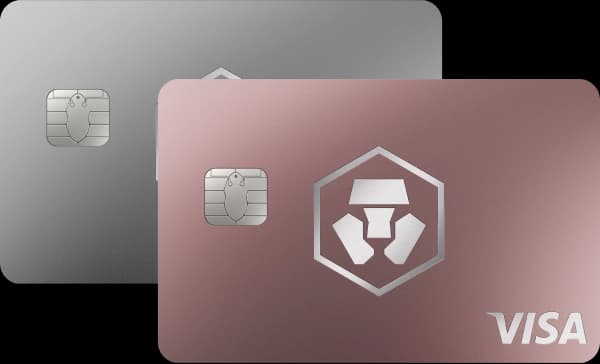
8. Private (Icy White / Rose Gold)
Private Tier: 4% Uncapped Cashback + Lounge Guest
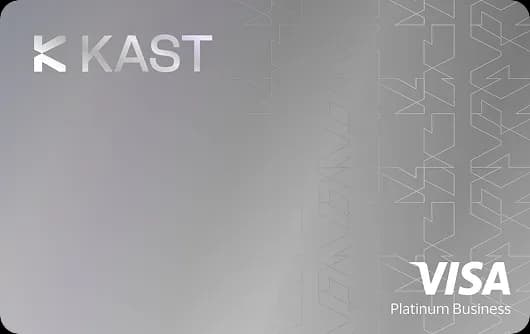
9. KAST K Card
Free USD Cashback: 1.5% on First $2K/Month
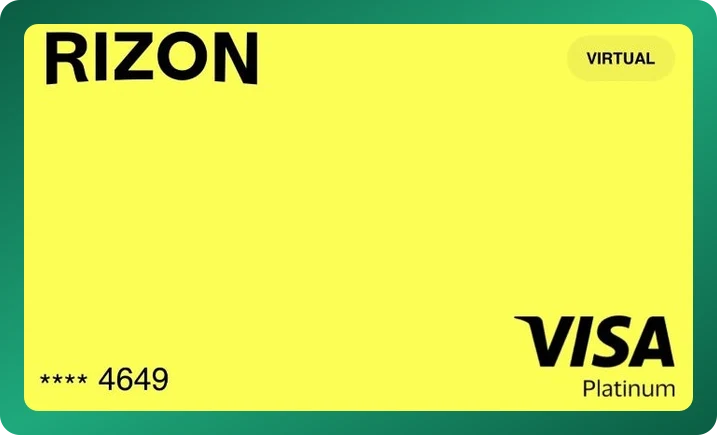
10. Rizon Emerald Card
Rizon's top plan: international fees near 1%, trading at 0.85%, and the physical Visa Platinum included.

11. Xplace Gold Card
10% Off Gold with SPENDNODE: Pay $224.10 Instead of $249
Complete list:
All 57 crypto cards available in Brazil in September 2026
This table includes every crypto card we currently track for Brazil. Rows marked Top pick are ranked and reviewed above.
| Crypto card | Max rewards | Annual fee | FX fee | Type | Custody |
|---|---|---|---|---|---|
1 Oobit Visa CardTop pick | Up to 10% rewards | Free | 3% | Debit | Hybrid |
2 COCA Visa CardTop pick | Up to 8% rewards | Free | 0% | Debit | Self-custody |
3 Plasma One Core CardTop pick | Up to 3% rewards | $199 | 0.5% | Crypto Backed Credit | Self-custody |
4 Jupiter GlobalTop pick | Up to 4% rewards | Free | 1% / 1.8% | Debit | Hybrid |
5 Kolo CardTop pick | Up to 2% rewards | Free | 0% | Prepaid | Custodial |
6 Binance MastercardTop pick | Up to 3% rewards | Free | 2% | Prepaid | Custodial |
7 ether.fi Core CardTop pick | Up to 3% rewards | Free | 0.5% | Crypto Backed Credit | Self-custody |
8 Private (Icy White / Rose Gold)Top pick | Up to 4% rewards | TBD | 0% | Prepaid | Custodial |
9 KAST K CardTop pick | Up to 1.5% rewards | Free | 0.5% | Prepaid | Custodial |
10 Rizon Emerald CardTop pick | Up to 2.5% rewards | $83.88 | 1.02% | Crypto Backed Credit | Self-custody |
11 Xplace Gold CardTop pick | Up to 1.5% rewards | $249 | 0.25% | Crypto Backed Credit | Self-custody |
| Up to 10% rewards | Free | 0% | Prepaid | Custodial | |
| Up to 8% rewards | Free | 0% | Debit | Custodial | |
14 | Up to 8% rewards | TBD | 0% | Prepaid | Custodial |
| Up to 8% rewards | Free | 0% | Debit | Hybrid | |
| Up to 6% rewards | $200 with code | 1% | Debit | Self-custody | |
| Up to 5% rewards | Free | 1% | Crypto Backed Credit | Self-custody | |
| Up to 5% rewards | Free | 0% | Debit | Self-custody | |
| Up to 5% rewards | TBD | 0% | Prepaid | Custodial | |
| Up to 5% rewards | Free | 1% | Debit | Self-custody | |
| Up to 4.5% rewards | $87 with code | 1% | Debit | Self-custody | |
| Up to 4% rewards | Free | 0% | Crypto Backed Credit | Self-custody | |
| Up to 4% rewards | Free | 0% | Crypto Backed Credit | Self-custody | |
| Up to 3% rewards | Free | 0.25% | Crypto Backed Credit | Self-custody | |
| Up to 3% rewards | Free | 0% | Crypto Backed Credit | Self-custody | |
| Up to 3% rewards | $10000 | 0.5% | Prepaid | Custodial | |
| Up to 3% rewards | $299.9 | 0% | Prepaid | Custodial | |
| Up to 3% rewards | $129 | 1.2% | Prepaid | Custodial | |
| Up to 3% rewards | Free | 0% | Debit | Hybrid | |
| Up to 2% rewards | $1000 | 0.5% | Prepaid | Custodial | |
| Up to 2% rewards | Free | 1% | Crypto Backed Credit | Self-custody | |
| Up to 2% rewards | $49.9 | 0% | Prepaid | Custodial | |
| Up to 2% rewards | $999 | 0% | Crypto Backed Credit | Self-custody | |
| Up to 1.5% rewards | Free | 0.5% | Prepaid | Custodial | |
| Up to 1.5% rewards | Free | 1% | Debit | Self-custody | |
| Up to 1% rewards | Free | 1% | Crypto Backed Credit | Self-custody | |
| Up to 1% rewards | Free | 1.75% | Debit | Self-custody | |
| Up to 1% rewards | Free | 1% | Debit | Self-custody | |
| Up to 1% rewards | Free | TBD | Prepaid | Custodial | |
| Up to 1% rewards | $47.88 | 1.275% | Crypto Backed Credit | Self-custody | |
| Up to 1% rewards | $99 | 0.5% | Crypto Backed Credit | Self-custody | |
| Up to 0.5% rewards | Free | 0% | Debit | Hybrid | |
| Up to 0.5% rewards | Free | 1% | Crypto Backed Credit | Self-custody | |
| none | Free | 0% | Crypto Backed Credit | Self-custody | |
| none | $30 | 0% | Crypto Backed Credit | Self-custody | |
| none | Free | 0% | Prepaid | Custodial | |
| Varies | Free | 1.7% | Prepaid | Custodial | |
| cashback | Free | 1.75% | Prepaid | Self-custody | |
| cashback | $199 | 0.75% | Prepaid | Self-custody | |
| cashback | Free | 0.5% | Prepaid | Custodial | |
| none | Free | 1% | Prepaid | Self-custody | |
| none | Free | 1% | Debit | Self-custody | |
| Varies | Free | 1.2% | Prepaid | Custodial | |
| Varies | Free | 1.2% | Prepaid | Custodial | |
| Varies | Free | 1.2% | Prepaid | Custodial | |
| Varies | Free | 1.7% | Crypto Backed Credit | Self-custody | |
| points | Free | 1% | Debit | Self-custody |
Crypto Card Regulation in Brazil
Brazil passed its dedicated crypto regulatory framework (Lei 14.478/2022, the Legal Framework for Virtual Assets) in December 2022, making it the first major LATAM country with dedicated crypto legislation. The law took effect in June 2023.
The BCB (Banco Central do Brasil) was designated as the primary regulator for crypto service providers, while the CVM (Comissao de Valores Mobiliarios) oversees crypto assets classified as securities.
In November 2025, the BCB published three landmark resolutions that operationalize the 2022 law:
- Resolution 519: Establishes the authorization and supervision framework for Sociedades Prestadoras de Servicos de Ativos Virtuais (SPSAVs) - the new formal designation for all crypto service providers. Capital requirements range from R$10.8 million to R$37.2 million depending on the activity (custody, exchange, intermediation).
- Resolution 520: Sets operational requirements including mandatory segregation of client assets, independent audits, governance standards, and a dedicated compliance officer for each area of activity.
- Resolution 521: Classifies stablecoin transactions as foreign exchange operations. Any purchase, sale, or exchange of fiat-pegged tokens (USDT, USDC, BRZ) is treated as a foreign currency transaction, subject to the same reporting, taxation, and AML rules as traditional FX operations. This is a major development for crypto card users, since funding a card with USDC now falls under FX reporting requirements.
On April 30, 2026, the BCB published Resolution 561, tightening the eFX rules for regulated international payment and transfer providers. eFX providers must settle payments with foreign counterparties through traditional FX operations or non-resident BRL accounts, not virtual assets. This does not ban Brazilians from holding, trading, or spending stablecoins, but it narrows how licensed cross-border payment firms can use USDT or USDC as a back-end settlement rail.
The core regulations took effect on February 2, 2026, with mandatory reporting for capital-market and cross-border operations beginning May 4, 2026. Existing operators must submit authorization requests to the BCB by October 30, 2026 or cease operations.
On August 7, 2026, the BCB published Resolution 584, introducing a mandatory 24-hour hold on crypto and stablecoin transfers above the equivalent of US$10,000 when sent to self-custody wallets or foreign crypto firms, as an anti-fraud measure. It takes effect January 1, 2027, and exchanges may release funds earlier after a documented risk review.
Routine card spending is unaffected, but large one-off transfers into a self-custody funding wallet may face the delay from 2027.
Binance holds full BCB registration in Brazil and is the most established card issuer in the market. Bybit has expanded LATAM operations and serves Brazilian users through its LATAM entity. Crypto.com operates under global coverage. Mercado Bitcoin (Brazil's largest domestic exchange) is building a financial super app with payments, digital fixed income, and remittances, but does not offer a Visa/Mastercard spending card.
DREX (Brazil's CBDC) was originally planned as a blockchain-based system, but the BCB shifted to a centralized model for the first phase after repeated difficulties with privacy solutions. Phase 1 is expected to launch in 2026 focused on credit lien reconciliation infrastructure, with blockchain integration deferred to a later phase. DREX's impact on crypto card funding remains uncertain until the second phase.
Brazil's regulatory clarity remains a clear advantage compared to Argentina, Colombia, or Mexico, where crypto card operations exist in more of a gray area. The BCB's clear SPSAV framework means card users have stronger consumer protections than in most other LATAM countries.
Tax Treatment of Card Rewards in Brazil
Brazil's Receita Federal (RFB, Federal Revenue Service) requires records and, in applicable cases, transaction reporting. DeCripto replaced the IN RFB 1888/2019 reporting format for transactions from July 2026.
Reporting obligations and income-tax liability are separate questions.
Domestic and Foreign-Held Crypto Gains
The RFB's 2026 individual income-tax guidance distinguishes crypto custodied or traded through Brazilian institutions from virtual assets held through foreign institutions that qualify as foreign financial investments.
| Holding or transaction route | Gain treatment | Small-sale exemption |
|---|---|---|
| Brazilian institution | Progressive capital-gains rates when taxable | R$35,000 in total monthly crypto disposals |
| Qualifying foreign financial investment | 15% in the annual return on realized gains | None under the foreign-investment rules |
Spending crypto through a card can dispose of an asset. The tax result depends on the asset's BRL cost basis and the applicable domestic or foreign rules, not on a universal per-swipe rate. The R$35,000 threshold refers to total monthly sale value, not gains, and does not exempt qualifying foreign financial investments.
Example: You dispose of BTC worth R$5,000 with a R$3,000 cost basis, realizing a R$2,000 gain. If it falls under the domestic regime and your total crypto disposals that month remain at or below R$35,000, the small-sale exemption can apply. The same gain in a qualifying foreign financial investment follows the foreign-investment rules instead.
Stablecoin funding limits crypto-price exposure, not necessarily BRL gains. A USD stablecoin can rise against the real between acquisition and spending. Record its BRL cost and disposal value just as you would for BTC.
Cashback Records
Keep the receipt date, BRL value, and later disposal value of token rewards. We have not found RFB guidance establishing one blanket income-tax classification for every crypto card cashback program; treatment can depend on how the reward is granted. Appreciation after receipt raises a separate disposal question.
| Reward | Records to keep | Disposal issue |
|---|---|---|
| BTC/BNB cashback | Receipt date and BRL value | Price movement after receipt |
| USDT/USDC cashback | Receipt date and BRL value | USD/BRL movement after receipt |
| Points | Program terms and redemption record | Depends on what the points become |
Foreign-Held Crypto Reporting
Crypto assets with an acquisition cost of at least R$5,000 per asset type belong in the annual Bens e Direitos schedule, according to the RFB's 2026 guidance. The relevant crypto transaction-reporting channel is DeCripto, not an individual cardholder filing through e-Financeira. Whether a user must report particular transactions depends on the applicable reporting rules and who carried them out.
BCB Resolution 521 brings specified stablecoin transactions within its foreign-exchange framework. It does not, by itself, mean every card top-up creates an individual e-Financeira filing. Keep records of stablecoin acquisition, transfers, and spending so the transaction can be classified correctly.
Practical record-keeping: Track the BRL purchase price of each funding asset, where it was custodied or traded, and the BRL value when spent. USDT and USDC reduce exposure to BTC or ETH price swings, but they do not eliminate foreign-exchange gains against the real. Ask a Brazilian tax adviser to classify card rewards and foreign-held balances when the sums are material.
How to Apply from Brazil
Brazilian crypto card applications require a CPF (Cadastro de Pessoas Fisicas), the 11-digit Brazilian tax identification number issued by the Receita Federal. Every Brazilian resident (citizen or foreign) needs a CPF for financial transactions.
A government-issued photo ID is required: either RG (Registro Geral) from the Secretaria de Seguranca Publica, or CNH (Carteira Nacional de Habilitacao), which works as both driver's license and national ID.
Proof of Brazilian address (comprovante de residencia) via utility bill (conta de luz from CEMIG/Enel/Equatorial, conta de agua from SABESP/CEDAE, conta de gas), bank statement (extrato bancario from Itau/Bradesco/Santander/Nubank/Inter), or condominium fee receipt (boleto de condominio).
Binance offers the fastest verification for Brazilian users with existing accounts - typically instant via CPF validation. Bybit and Crypto.com also offer streamlined KYC for Brazilian users. Global issuers without a local Brazilian entity may require passport verification and take 1-3 business days.
Foreign residents in Brazil can apply using their CPF (obtainable at Receita Federal offices or Brazilian consulates abroad) plus their passport and CRNM (Carteira de Registro Nacional Migratorio, the foreigner ID replacing the old RNE). Digital nomads on Brazil's new Digital Nomad Visa (Visto Temporario para Nomades Digitais, launched 2022) qualify with their CPF, passport, and proof of Brazilian address.
CPF tip for foreigners: You can obtain a CPF online via the Receita Federal website if you have a Brazilian address and valid passport. Alternatively, apply at any Receita Federal office (Agencia da Receita Federal) with your passport - the process takes approximately 30 minutes and is free.
Physical cards from Binance ship domestically via Correios (Sedex or PAC) within 7-10 business days.
International issuers ship from global fulfillment centers via Correios or private courier (FedEx, DHL), which can take 2-4 weeks - note that customs (Receita Federal aduana) may hold international shipments for inspection. Virtual card access is usually available within minutes of KYC approval and works immediately with crypto cards with Apple Pay and Google Pay.
Spending Tips for Brazil
What Pix Solves, and What It Doesn't
A Brazilian considering a crypto card needs an honest answer to one question: where exactly does Pix stop being enough? Pix is one of the world's strongest instant-payment systems. It processes 7+ billion transactions per month, covers over 170 million users, and is free for individuals at every transaction size. Pix Automático went live on June 16, 2025 and now extends the same instant rail to recurring payments - closing what used to be the main weak spot for daily-driver use cases.
For domestic BRL spending, Pix wins almost every comparison. Restaurants, supermarkets, delivery apps (iFood, Rappi), small shops, taxis, and increasingly large retailers all accept Pix QR codes. Merchant fees are zero or near-zero, which is why corner stores and feiras prefer Pix over Visa contactless. A crypto card cannot displace this. It should not try.
What Pix does not solve sits at three boundaries:
- International purchases. Pix is strictly domestic. A Brazilian bank card can add IOF and a bank FX spread to foreign-currency purchases. A USDC-funded crypto card has a different cost path; compare the stablecoin acquisition, card conversion, and applicable taxes before treating it as cheaper.
- Stablecoin holdings already on exchanges. A freelancer earning USDT through Upwork or direct client payments has dollarized assets sitting on Binance, Bybit, or a self-custody wallet. Pix cannot move those into BRL spending without a sale, a transfer, and a conversion fee. A crypto card spends them directly.
- Cross-border travel. A trip to Argentina, Chile, the US, or Portugal involves a currency-conversion cost somewhere in the funding or payment route. A card advertising 0% issuer FX can still have acquisition, network, or tax costs.
Outside those three boundaries, Pix is the better tool. This page is about the inside.
The USDT Shadow Dollar
Brazil has been quietly dollarizing for a decade. The BRL has lost roughly 60% against USD since 2015 (recovered ~8% in the year to March 2026, USD/BRL around 5.20), and Brazilians have responded by holding stablecoins instead of BRL deposits. Several converging data points outline the scale:
- Chainalysis ranked Brazil among the top global crypto adoption markets in its 2025 index, citing approximately $319 billion in on-chain value received between mid-2024 and mid-2025
- A 2026 Oobit consumer survey reported that the large majority of Brazilian crypto holders own stablecoins, with USDT the dominant token by user count
- Industry research from 2026 (consistently cited across exchange and payments coverage) places stablecoins as the dominant share of Brazil's retail Pix-to-crypto flows, well above the global average
- The BCB itself moved to bring stablecoins under foreign exchange reporting with Resolution 521 (effective February 2026) - a regulatory choice that only makes sense if stablecoin volumes are large enough to warrant FX-grade oversight
What Brazilians actually use USDT for, based on industry coverage and user surveys: inflation hedge against BRL depreciation, freelance payment receipt from foreign clients, export settlement with Chinese and Turkish suppliers when bank wires fail or take weeks, remittance receipt from family abroad, and a savings vehicle replacing CDBs and savings accounts paying interest below inflation.
In our view, BCB Resolution 521 reads as the central bank treating stablecoins as a parallel dollar settlement layer rather than as fringe assets. The crypto card sits at the last mile of that layer. A Brazilian who already holds USDT does not need help acquiring crypto. They need help spending it.
Stablecoin-First Funding Strategy
For domestic crypto dispositions, the R$35,000 monthly small-sale exemption remains relevant. Qualifying foreign financial investments follow different rules. Funding with USDC or USDT avoids BTC or ETH volatility during the spending period, but gains against a BRL cost basis can still arise.
If you spend appreciated BTC, calculate the realized gain and classify the holding route before estimating tax. Do the same BRL-basis calculation for USDC. Keep the purchase, transfer, and spending records; do not infer a fixed tax charge from the card transaction alone.
Card Selection by Use Case
- Jupiter Global (2% base, 4% via referrals, 0% USD FX, 1% Rain / 1.8% DCS non-USD FX, $0 free virtual): Cleanest free self-custody pick for freelancers paid in USDT and for USD-billed online services. Cashback paid within 48 hours in our testing.
- COCA (up to 8% + 5% USD APY, free card, 0% FX): High cashback plus yield on eligible idle USD (8% requires $COCA staking; 1% at free Starter)
- Plasma One Core (3% XPL tapering, $199/yr or 20k XPL lock, 0.5% FX): A card that is itself the USDT balance; closes the hold-but-never-spend gap
- Kolo (1% BTC ongoing, 0% FX, $0): Simple free BTC cashback option
- Binance (2%, free, Pix funding): Smoothest local experience with BRL settlement
- Crypto.com Icy (4%, CRO stake): Metal card with airport lounge access at GRU/GIG/BSB
- ether.fi (3% in ETHFI on first $2K/mo, then 1% and 0.5% bands): Direct stablecoin spending or optional collateral-backed borrowing
- KAST (1.5% USD cashback on first $2K/mo, 0.5-1.75% FX, free): Free prepaid Visa Platinum globally available
- Rizon Emerald (2.5% capped at plan fee, ~1.02% intl, $6.99/mo): US-issued Visa with USD/EUR account details and $1 + 0.65% ATM cash
- xPlace Gold (1.5% USDC Credit Mode, $100/mo ceiling, 0.25% FX, $249/yr): Solana self-custody with the lowest paid-tier FX here; hold it for the wallet model, not the rate
COCA vs Binance vs KAST: Brazilian Spending Math
All three are free at entry tier; COCA's 8% shown below requires staking 30,000 COCA, while its free Starter tier pays 1%. Kolo's 1% figures presume purchases of $100 or less; larger ones hit its $1-per-transaction cap. The table compares card rewards before any personal tax treatment.
| Monthly Spend (BRL) | COCA (8%, 0% FX) | Kolo (1% ongoing, 0% FX) | Binance (1.1% net after 0.9% conv, capped R$250/mo gross) | KAST (1.5% USD cashback on first $2K/mo minus 1% FX) |
|---|---|---|---|---|
| R$3,000 | R$2,880/yr | R$360/yr | R$396/yr | R$180/yr |
| R$6,000 | R$5,760/yr | R$720/yr | R$792/yr | R$360/yr |
| R$10,000 | R$9,600/yr | R$1,200/yr | R$1,320/yr | R$600/yr (cashback cap hit at ~$2K/mo USD-equivalent) |
| R$15,000 | R$14,400/yr | R$1,800/yr | R$1,380/yr (cap hit) | R$0/yr (cashback capped, FX continues on full spend) |
COCA leads at every spending level with 0% FX (requires staking $COCA tokens; free Starter tier earns 1%). Kolo at 1% ongoing BTC with 0% FX is a simpler free BTC option than a free-tier leader. At R$10,000/month, COCA returns R$9,600/year, Kolo returns R$1,200/year, versus R$1,320 from Binance or about R$600 from KAST after FX and cashback cap.
Jupiter Global is not in this BRL-merchant table because its math splits by funding currency: 2% net at 0% FX on USD-billed transactions (Amazon US, AliExpress, Spotify, AWS), versus about 1% net after the 1% Rain non-USD FX on BRL-merchant spending. For a freelancer whose recurring expenses run heavily through USD-priced services, Jupiter's 2% still nets ahead of COCA's free Starter tier (1%) without requiring any token-staking commitment.
COCA rewards are paid in stablecoins (USDC or EURC), while Kolo rewards are paid in BTC. Record the BRL value when each reward arrives and any change before disposal; the treatment of the reward itself needs separate classification.
Binance hits its R$250/month gross cashback cap at R$12,500/month spending and stops scaling above that. KAST's 1.5% USD cashback caps at the first $2,000/month of card spend (about R$10,000), and the 0.5-1.75% FX on non-USD transactions continues to apply on the full BRL spend even after the cashback cap is hit.
COCA continues earning at the tier rate, but monthly withdrawals from the reward balance are limited by claim capacity: $15 at Starter through $350 at Elite. The BRL spending levels in this table remain inside Elite's capacity at current exchange rates. Kolo pays a flat 1% (2% for the first 30 days), capped at $100/month, so it does not scale the same way.
Spending Scenario: R$8,000/month (USDC Funding)
| Factor | USDC via COCA | USDT via Binance |
|---|---|---|
| Capital gains | Depends on BRL basis and holding route | Depends on BRL basis and holding route |
| Gross cashback | R$640/mo (8%) | R$160/mo (2%) |
| FX/conversion cost | R$0 (0% FX) | -R$72/mo (0.9% conversion) |
| Net cashback | R$640/mo | R$88/mo |
| Annual card rewards after conversion, before tax | approx. R$7,680 | approx. R$1,056 |
COCA's 8% gross rate with 0% FX produces higher modeled card rewards than Binance's 2% gross (1.1% net after 0.9% conversion), but requires a COCA stake. Binance's advantage is instant Pix integration and BRL settlement. For international purchases, compare the full funding and payment costs separately from these reward figures.
Pix as the On-Ramp
Pix is the best fiat-to-crypto-card on-ramp anywhere on the planet. The workflow: BRL via Pix to exchange (instant, free), convert to USDT or load card directly, spend at any Visa/Mastercard terminal. Total time from Nubank balance to funded crypto card: under 10 minutes, 24/7, including weekends and holidays.
The scale matters for context. Pix launched in November 2020 and now processes around 7 billion transactions per month, with over 170 million users (BCB Pix em números). The system works via CPF, phone number, email, or random alphanumeric key (chave aleatória). It surpassed credit and debit card volume combined in 2024 and has continued growing.
For crypto card users, the on-ramp is usually the easy part: Pix moves BRL quickly. After conversion, check the card's fees and acceptance and keep a BRL cost basis for the crypto spent. The IOF comparison is a separate question from personal income tax.
Pix Automático went live on June 16, 2025 and extended the instant Pix rail to recurring payments (subscriptions, utility bills, gym memberships). Since that date, the case for using a crypto card on domestic recurring spending has shrunk further. The case for using one on international purchases, dollarized holdings, and travel remains unchanged.
Borrow-to-Spend for Large Holders
Brazilian users with large eligible holdings can use ether.fi to borrow for card spending instead of selling the collateral immediately. Core pays 3% in ETHFI on the first $2,000 per month, then 1% to $5,000 and 0.5% above it.
That can defer realization while the loan remains open, but it is not a blanket tax exemption. The useful comparison is the tax and market impact of selling now against the loan's interest, collateral requirements, repayment plan, and liquidation risk. A Brazilian tax adviser should confirm how the arrangement applies to the user's circumstances.
The IOF Legal History of 2025
Brazil's IOF rate on international card purchases is high, but the path to its current level was unusually messy. Based on tax-advisory and law-firm coverage of the changes, the rough sequence was:
- May 2025: The federal government issued Decrees 12,466 and 12,467, raising IOF on a range of international financial transactions including card purchases
- June 2025: The President of the Senate issued a separate decree attempting to suspend the increase, citing constitutional concerns about the executive branch raising taxes by decree
- July 2025: The Supreme Federal Court reportedly granted an injunction partially reinstating Decree 12,499/2025, which had introduced further changes to IOF on credit and FX transactions
The exact decree numbers and dates above come from tax-advisory writeups rather than direct primary text, so treat them as approximate. The practical takeaway for crypto card users is that elevated IOF on international card spending has been in force for most of 2025 and into 2026, but the rate has been through both political and judicial review. Plan for 3.5% IOF + 1-4% bank FX spread as the working baseline, while accepting that the legal foundation is less stable than usual.
The Brazilian Diaspora and the Card
Several million Brazilians live abroad (estimates vary, but the total is commonly placed in the low millions across all destinations). Four corridors matter most for crypto card use, each with a different story.
- Portugal (one of the largest and fastest-growing destinations): Same Portuguese language, EU passport pathway via residency, and growing tech worker community in Lisbon and Porto. Brazilian diaspora members in Portugal benefit from EEA-native cards like Gnosis Pay and Bleap plus broader European card availability. See Portugal guide.
- United States (the largest diaspora by most estimates, concentrated in Florida, Massachusetts, and New Jersey): US residency unlocks the broadest crypto card market in the world but adds US tax filing complexity (FBAR, FATCA). See US guide.
- Japan (the Dekasegi community): Brazilians of Japanese descent who returned to Japan as factory workers from the 1990s onward. Japan's 15-55% miscellaneous income tax on crypto gains is the harshest treatment in any developed country, making stablecoin funding absolutely essential. See Japan guide.
- Italy: Smaller but established, with EU access and Italian-language overlap. Italy's crypto tax rules make stablecoin funding and carefully assessed collateral-backed spending relevant options. See Italy guide.
For Brazilians abroad, the value proposition flips. They are no longer trying to bridge Brazilian banking and global crypto - they have full access to global financial infrastructure.
The remaining use case is sending value home: a family member in Boston or Lisbon loads USDC onto a card held by a relative in Recife or Salvador, bypassing 5-10% Western Union/MoneyGram remittance fees. The annual remittance flow into Brazil from these four corridors is approximately USD 5-7 billion combined, and crypto cards can capture a meaningful share of it.
Local Payment Infrastructure
Contactless card acceptance is strong and growing rapidly across Sao Paulo, Rio de Janeiro, Brasilia, Belo Horizonte, Curitiba, Porto Alegre, and Recife. Major retailers (Magazine Luiza, Casas Bahia, Renner, C&A, Americanas), supermarkets (Carrefour, Extra, Pao de Acucar, Assai), malls (Shopping Iguatemi, Shopping Morumbi, BarraShopping), and restaurants accept contactless Visa/Mastercard. Apple Pay and Google Pay penetration is growing.
Pix vs card: Pix dominates peer-to-peer and is increasingly accepted at small merchants (padarias, restaurantes populares, feiras). Some smaller establishments prefer Pix over card due to lower merchant fees (Pix is free for merchants, while card processing fees run 1.5-3.5%). For these, keep a separate Pix-enabled account (Nubank, Inter, or C6 Bank all offer free accounts). Use your crypto card for everything card-accepted to maximize cashback earnings.
Brazil's fintech banking revolution: Nubank (over 100 million customers, the world's largest digital bank by customer count), Inter (over 30 million), C6 Bank, PagBank (from PagSeguro), and Neon have transformed Brazilian banking access. Before Nubank launched in 2013, the Big Five (Itau, Bradesco, Santander, Banco do Brasil, Caixa) charged high fees and served primarily urban middle and upper-class customers.
Now, millions of previously unbanked Brazilians have bank accounts and Pix access, which means they can also access the crypto card pipeline (BRL via Pix to exchange to crypto card). The fintech banks themselves do not offer crypto cards, but they are the on-ramp.
FX savings and the IOF tax: Brazilian-issued international cards can incur IOF on the underlying FX operation, alongside the bank's exchange spread. The compiled IOF regulation lists 3.5% for specified international-card and prepaid-card exchange operations. The applicable rate and whether an FX operation occurs in Brazil depend on the transaction route.
For a cardholder funding from an existing USDC balance, the payment leg may avoid a new Brazilian bank-card conversion. That does not establish that acquiring or moving the USDC was free of IOF or other costs.
COCA advertises 0% issuer FX, but the effective saving against a bank card depends on the bank's rate, the stablecoin acquisition spread, and the card's settlement route. Compare those costs in our comparison tool.
For Brazilians shopping internationally or traveling to Argentina, Chile, or the US, price the funding route and the final card charge before counting cashback.
Subscriptions: Brazilian streaming and digital subscriptions (Netflix, Spotify, Disney+, Globoplay, Amazon Prime Video, HBO Max) are recurring charges that earn cashback automatically. At 8% on R$100/month in subscriptions, that is R$96/year returned.
Airport spending: All major airports (GRU Guarulhos, GIG Galeao, BSB Brasilia, CNF Confins, CWB Curitiba) accept Visa/Mastercard contactless at all shops, restaurants, and duty-free. Crypto.com Icy White and above includes Priority Pass lounge access, valuable for frequent domestic and international travelers.
Supported Exchanges & Wallets in Brazil
Binance is the dominant crypto platform in Brazil with a dedicated Brazil-only Mastercard. Binance holds full BCB registration, supports Pix deposits (instant, free), and offers BRL settlement. The card provides up to 2% BNB cashback (capped at R$250/month).
The standout feature: spending directly from Flexible Earn while continuing to accrue yield on your deposited crypto. Binance offers the easiest crypto card setup for Brazilian users.
Jupiter Global suits Brazilians who already hold USDT and want a self-custody Solana wallet as the funding source. The free virtual card runs at 2% base cashback (4% for a month after referring 2 qualifying friends), with 0% FX on USD-billed transactions like Amazon US, AliExpress, Spotify, and AWS, and 1% (Rain) or 1.8% (DCS) on BRL-merchant purchases. Cashback payouts arrived within 48 hours in our testing.
For the freelancer-USDT persona this page is largely written for, Jupiter avoids a Brazilian bank-card conversion on the payment leg without any staking commitment. The cost of acquiring the USDT remains part of the comparison.
COCA reaches Brazil under LATAM/GLOBAL coverage with up to 8% cashback, 0% FX, and 5% APY on eligible USD. The non-custodial model means your USDC stays in the app wallet until you spend. For Brazilians willing to commit capital to $COCA staking for the full 8% rate (free Starter earns 1%), COCA leads the raw cashback math at the spending levels shown.
Kolo (1% ongoing BTC cashback, 2% for the first 30 days, 0% FX, $0 annual fee) remains a free BTC cashback option in Brazil. Keep the BRL value and date of each reward for tax records.
Crypto.com serves Brazilian users through its global platform with tiers from Midnight Blue (0% rewards, free) to Obsidian (5%, CRO stake). The Icy tier (4%, CRO stake) adds Priority Pass lounge access at GRU and GIG. Spotify and Netflix rebates at higher tiers add recurring value.
ether.fi offers tiered ETHFI cashback with direct stablecoin spending or optional borrowing against eligible collateral. Avici serves Brazil through its LATAM coverage with crypto-backed credit, which also introduces borrowing costs and collateral risk. Ledger CL Card (1%) covers LATAM with self-custody spending from a hardware wallet.
Domestic exchanges: Mercado Bitcoin (Brazil's largest, building a financial super app with payments and digital fixed income), Foxbit (one of Brazil's oldest, founded 2014), BitcoinTrade, and NovaDAX focus on trading and custody. None offer a Visa/Mastercard spending card.
For on-ramping BRL, all support Pix deposits (instant, free). The BRL-to-USDT-to-card pipeline via Binance's Pix integration remains the fastest path: deposit BRL via Pix (instant), buy USDT (seconds), fund card (minutes). Total time: under 15 minutes.
Remittances: Brazil receives remittances from the US, Portugal, Japan, and Italy. Crypto cards can still help families spend or share stablecoin-funded value, but Resolution 561 makes the regulated remittance story more constrained: licensed eFX providers cannot use crypto assets as their back-end settlement rail. This matters for the Brazilian diaspora in Portugal and Japan.
KAST (1.5% USD cashback on first $2K/mo, 2-minute KYC) and RedotPay (stablecoin-native, high limits) are the most direct options for Brazilian users who want to fund from stablecoin balances without immediately moving into staking-heavy rewards tiers.
KAST's modest net return for Brazilian BRL spenders (after FX) makes it primarily useful for users who value the global Visa Platinum acceptance and 2-minute onboarding rather than maximum cashback yield.
xPlace (0.5-2% Credit Mode by tier, capped monthly) adds a self-custody alternative with Solana ecosystem integration; the Gold tier pairs 1.5% USDC (to $100/month) with 0.25% FX, so its appeal at Brazilian spending levels is the wallet-held funding and low FX rather than the cashback.
Cost of living context for spending scenarios: Monthly expenses vary widely across Brazil. Sao Paulo and Rio de Janeiro average R$5,000-R$10,000/month for a single professional (rent, food, transport, entertainment). Smaller cities like Florianopolis, Curitiba, Belo Horizonte, and Recife run R$3,000-R$6,000/month.
Digital nomads in northeastern beach towns (Jericoacoara, Pipa, Porto de Galinhas) can operate at R$2,500-R$4,000/month. Stablecoin funding avoids BTC price swings while spending, but the BRL cost basis still matters for tax.
Common Mistakes
1. Spending appreciated crypto without tracking its BRL cost basis. A BTC position bought at R$200,000 and worth R$500,000 has substantial embedded gains. Spending from it may realize some of that gain. The tax depends on the amount disposed of during the month and whether the asset falls under the domestic or foreign-investment regime.
How to avoid it: Keep acquisition and disposal records in BRL. USDC or USDT can simplify the exposure to BTC or ETH price changes, but converting appreciated BTC into a stablecoin can itself realize a gain, and the stablecoin can move against BRL before spending.
2. Comparing issuer FX fees alone. An international purchase on a Brazilian bank card can include IOF and an exchange spread. A crypto card funded from stablecoins shifts some costs to acquisition and conversion, so a 0% issuer FX rate is not the same as a zero-cost purchase.
How to avoid it: Compare the BRL cost of acquiring USDC, any taxes or fees on that step, the card-network conversion rate, and the issuer's fees against the actual cost of a bank-card purchase. Choose the route with the lower all-in cost for that transaction.
3. Relying solely on Binance's capped cashback. Binance's 2% BNB cashback is capped at R$250/month gross (R$3,000/year). After the 0.9% conversion fee on all spending, net returns are much lower. A cardholder spending R$15,000/month on Binance earns approximately R$1,380/year net. The same spending on COCA (8% with 0% FX) returns approximately R$14,400/year - a R$13,020 annual difference.
How to avoid it: Use Binance for its Pix convenience on BRL-settled domestic purchases, but route high-volume and international spending through COCA (0% FX, up to 8% cashback at higher $COCA tiers). Maintain multiple cards and split spending strategically.
4. Using your primary bank account for P2P USDT trading. Brazilian banks and fintechs have tightened their response to Pix-linked fraud following the August 2025 Sinqia incident, in which around $130 million in unauthorized transfers passed through a platform connecting more than twenty banks to Pix.
Users on crypto forums and Telegram groups have since reported more aggressive account reviews when incoming Pix transfers trace back to counterparties later flagged for fraud, with some fintechs (Nubank is the most frequently named) holding accounts for extended investigation periods.
If your salary, rent payments, and crypto P2P trades all run through the same primary account and one of your counterparties is later flagged, you risk losing access to everything at once while the investigation runs.
How to avoid it: Open a separate account at a different fintech (Inter, C6 Bank, PagBank) specifically for P2P USDT purchases. Keep only the amount needed for the next trade in that account. Use BCB-supervised exchanges (Binance Brazil, Mercado Bitcoin, Foxbit) for larger volumes - direct exchange purchases avoid the P2P chain-of-funds risk entirely.
5. Sending Pix from a third-party account to a crypto platform. Under tightened 2026 AML rules, many Brazilian exchanges and fintechs require that the name on the funding bank account match the KYC name on the crypto platform. Third-party Pix deposits from friends, family, or business accounts may be automatically reversed or held for manual review. A common mistake is asking a friend to send Pix on your behalf, or attempting to fund a personal exchange account from a corporate one.
How to avoid it: Always use Pix from an account whose CPF matches the CPF on your exchange and crypto card KYC. The BCB's MED 2.0 framework (rolled out in early 2026) reportedly extended fraud-tracing logic across multiple layers of accounts, so attempting to disguise a third-party transfer through intermediary accounts is unlikely to help.
Closing Outlook
Brazilian crypto card users inherited three things. The world's fastest fiat rail (Pix), the world's highest card FX tax (3.5% IOF plus 1-4% bank spread), and a 60-year habit of dollarizing savings - now modernized as $6-8 billion per month in USDT flows. The crypto card sits at the intersection of those three realities, not at the center of any one of them.
It is not a daily-driver product in Brazil. Pix already won the daily-driver fight, and Pix Automático - live since June 16, 2025 - has closed most of the remaining recurring-payment gaps. The crypto card is the bridge between Brazilians who already hold dollarized assets and the merchants who price in dollars. That is a narrower use case than the cashback-led pitches imply, but it is also a more durable one.
The next two regulatory questions are whether the BCB's SPSAV framework reshapes international issuers' Brazilian access after the October 2026 authorization deadline, and whether DREX's later phase delivers a useful card-adjacent payment rail. Neither changes the card choices on this page today.
For a freelancer earning USDT or a traveler facing bank-card FX charges, a stablecoin-funded card can be useful when the all-in cost is lower. A holder of appreciated BTC should account for the tax consequences of conversion or card spending before choosing a funding route.
Written by SpendNode Editorial
Frequently Asked Questions
Which crypto card is best for Brazilian residents?
Binance's Brazil card is the strongest local option: BRL settlement, Pix top-ups, 0.9% conversion fee, and up to 2% BNB cashback (capped at R$250/month). For maximum cashback, COCA reaches up to 8% with 0% FX by staking COCA tokens (1% at free Starter).
Oobit is the no-stake alternative: 5% on stablecoin-funded spend (paid in stablecoin) or 10% in OOB, reachable at Level 2 with nothing to lock, strongest on USD-billed offshore subscriptions where its FX is near zero, though BRL spend carries about 3% FX and cashback is capped ($200/mo stablecoin, $10,000/mo OOB). xPlace Gold pays 1.5% USDC in Credit Mode, capped at $100/month, with 0.25% FX for $249/year; its lower BRL FX is useful, but the fee and cap limit its rewards case. Kolo markets 1% ongoing BTC cashback (2% for the first 30 days) with 0% FX at $0 annual fee. KAST (1.5% USD cashback on first $2K/mo, 0.5-1.75% FX) is the simplest free Visa Platinum option.
How does the new 17.5% flat tax affect crypto card spending?
Since January 2026, every crypto card transaction is a taxable disposition at 17.5% on any capital gains. The former R$35,000/month exemption was eliminated by Provisional Measure 1303 (June 2025). To minimize tax, fund your card with USDC or USDT - stablecoin dispositions generate near-zero capital gains, so the 17.5% applies to essentially nothing.
Can I top up my crypto card with Pix?
Yes, if you use Binance. Binance supports instant BRL deposits via Pix. The workflow is: Pix to exchange, convert to USDT or load card directly, then spend at any Visa/Mastercard terminal. Pix deposits are instant and free. Global issuers without Brazilian banking rails may require stablecoin on-ramp via a domestic exchange.
How much do I save vs a Brazilian bank card on USD purchases?
Brazilian banks charge IOF tax (3.5% on all card types since May 2025) plus 1-4% FX spread - a combined 4.5-7.5% cost. A crypto card bypasses IOF entirely. Crypto.com, COCA, and Kolo all offer 0% FX, saving 4.5-7.5% versus a bank card. On R$1,000 in USD purchases, you save approximately R$50-80 versus a traditional Brazilian credit card, before cashback.
Other Countries
View all 112 countries →


Latest Page Changes to the Best Crypto Cards in Brazil Guide
- xPlace cut Gold's Credit Mode cashback to 1.5% USDC with a $100 monthly cap for new memberships, effective September 14, 2026. We moved xPlace down this page's rankings accordingly. Memberships purchased before that date keep the previous rates for up to 12 months
- BCB Resolution 561, which bars virtual assets from back-end settlement inside regulated eFX cross-border payment rails while leaving consumer crypto holding and spending outside that narrow rail unchanged
- Provisional Measure 1303 eliminated Brazil's R$35,000/month crypto capital-gains exemption and replaced it with a flat 17.5% tax from January 2026
- BCB Resolutions 519, 520, and 521 created the SPSAV authorization framework, classified stablecoins as foreign exchange operations, and set an October 2026 authorization deadline
- Pix volume reached 63.4 billion transactions in 2024, while crypto adoption reached an estimated 170 million users