
Best Crypto Cards in Albania (2026)
Albania is a remittance-first crypto card market: diaspora-funded household spend, low local bank rewards, and a 15% CGT regime that makes stablecoin funding more important than headline cashback.
Verified for Albania
26 crypto cards available
Local currency: ALL
Albania receives approximately EUR 1.5 billion per year in remittances (14% of GDP), mostly from Italy (500,000+ Albanian diaspora), Greece (250,000+), Germany, and the United States. A stablecoin-funded card can be useful when the recipient wants to spend directly, but funding, conversion and card fees need to be compared with bank transfers and money-transfer services. For the broader cross-border use case, see our expat guide.
Albania's DLT law (Law No. 66/2020, effective September 2020) gives it a dedicated crypto licensing framework. EU accession negotiations add pressure to align that framework with European standards, but Albania is not yet covered by MiCA passporting.
Albania is also one of the Balkans' most cash-heavy economies, but card adoption has accelerated rapidly since 2020 driven by government incentives (2% VAT discount on card payments introduced in 2019) and the pandemic. Visa and Mastercard contactless now works at most urban retailers in Tirana, Durres, and the Albanian Riviera.
The lek (ALL) is a freely floating currency (approximately 100 ALL per EUR), so EUR-settled crypto cards incur FX conversion, but the 0% FX fee on most crypto cards means you pay interbank rates without the 2-3% markup that BKT, Raiffeisen, or Credins typically charge.
BKT (Banka Kombetare Tregtare, largest by assets, 90+ branches), Raiffeisen Bank Albania (Austrian parent), Credins Bank, Intesa Sanpaolo Bank Albania, OTP Bank Albania (Hungarian parent), and Tirana Bank (Balfin Group) offer standard debit cards with zero cashback. Credit cards carry annual fees of ALL 2,000-5,000 ($19-48) with 0.5-1% rewards at best. Crypto cards paying 1-1.5% with no annual fee, or up to 4.5% on staked and subscription tiers, are a clear upgrade in a market where banking rewards are essentially nonexistent.
Summary:
Which crypto cards are best in Albania?
The best crypto cards in Albania in October 2026 are Tria Signature Card, KAST K Card, Kolo Card, Private (Icy White / Rose Gold), and Xplace Basic Card. The detailed ranking below explains the local tax, fee, and availability trade-offs.
| Crypto card | Base reward | Net after fees | Annual fee | FX fee | Type |
|---|---|---|---|---|---|
| 4.5% base4.5% on the first $1,000/mo, then 1% | 3% | $109/year | 1% | Debit | |
| 1.5% base | 1% | Free | 0.5% | Prepaid | |
| 1% base2% for the first 30 days, then 1%; also capped at $1/EUR 1 per transaction ($2/EUR 2 during intro) and $100/EUR 100 per month | 1% | Free | 0% | Prepaid | |
| 4% baseneeds a $50k CRO stake to hold the tier | 4% | TBD | 0% | Prepaid | |
| 0.5% base0.5% in USDC on Credit Mode spend; cashback capped at $10/mo, $2,000/mo card limit | 0% | Free | 1% | Crypto Backed Credit |
We verified 11 card vendors that currently list Albania as available. Tria Signature pays the highest capped rate: 4.5% on the first $1,000/month (then 1%), enough to recover its $109/year fee at Albania's roughly EUR 550 average monthly spend, though its USDT cashback can take up to three months to arrive - a real trade-off for anyone who wants rewards they can spend now.
KAST is the low-cost fit for families funding from remittances and exchange balances: 1.5% USD cashback on the first $2,000/month, $0 annual fee, and a prepaid structure that keeps household spending separate from staking or premium exchange tiers.
Kolo is a simple free BTC cashback option at 1% ongoing (2% for the first 30 days), capped at $100/month and $1 per transaction, with 0% FX. Crypto.com Icy White (4%) adds lounge access at Tirana International Airport Nene Tereza (TIA).
Best Card For Every Need in Albania
Top 5 Crypto Cards in Albania
An Albanian recipient can use transferred stablecoins for household purchases without first withdrawing cash. KAST's USDC-to-card route is one option. In a EUR 500 monthly transfer where a cash-pickup service costs 5-8% all-in, the starting fee is EUR 25-40.
Cashback of 1.5% on EUR 500 of eligible card spending adds roughly EUR 7.50 before the card route's own costs. That is a potential EUR 32-48 gross difference, not a guaranteed household saving. World Bank corridor data shows why the actual provider and delivery method matter.
SEPA euro transfers have operated in Albania since October 2025. Compare bank-transfer and conversion costs before assuming a stablecoin route is cheaper.
At Albania's 15% CGT rate, Tria Signature's stablecoin-funded model fits naturally: buying USDT near the time of spending keeps the taxable disposal gain small, so more of its roughly 3% net rate survives.
Kolo remains a simple free BTC option for moderate spending, with 1% ongoing cashback (2% for the first 30 days), caps of $100/month and $1 per transaction, and 0% FX. Crypto.com Icy is the premium exchange-linked option for diaspora users who can qualify through overseas residency or documentation. xPlace gives Solana users a free self-custody route with 0.5% USDC cashback in Credit Mode, capped at $10/month.
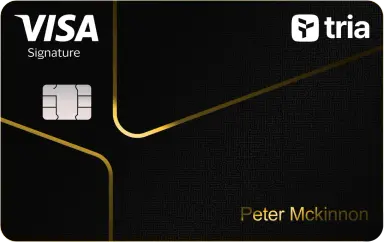
1. Tria Signature Card
High-Yield Self-Custody: 15% APY + Visa Signature Perks
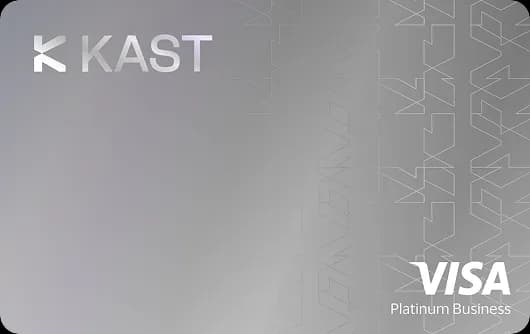
2. KAST K Card
Free USD Cashback: 1.5% on First $2K/Month
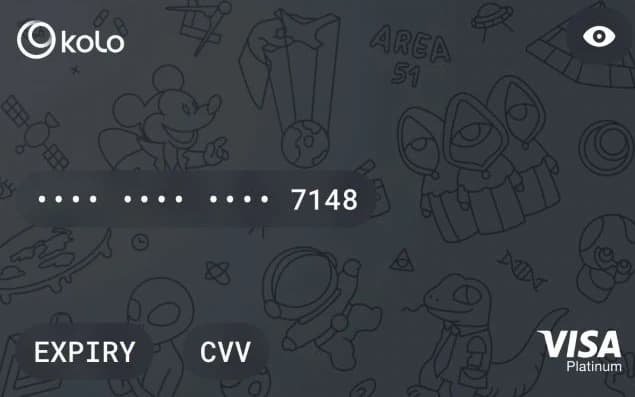
3. Kolo Card
Earn Bitcoin on Purchases: 2% for 30 Days, Then 1% (Capped) + Visa Platinum + 170+ Countries
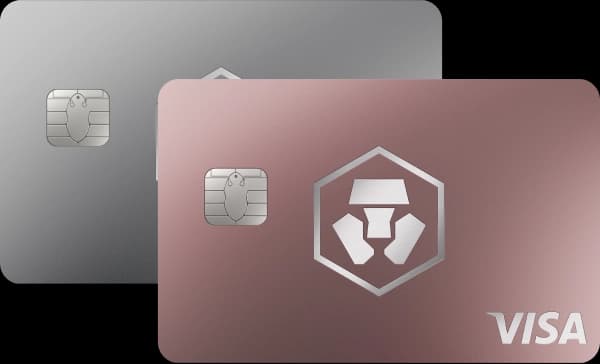
4. Private (Icy White / Rose Gold)
Private Tier: 4% Uncapped Cashback + Lounge Guest
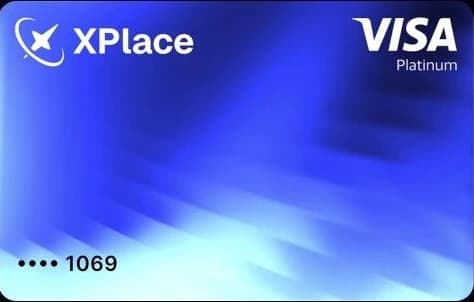
5. Xplace Basic Card
Free Visa Entry, with 10% Off a Paid Upgrade Using SPENDNODE
Complete list:
All 26 crypto cards available in Albania in October 2026
This table includes every crypto card we currently track for Albania. Rows marked Top pick are ranked and reviewed above.
| Crypto card | Max rewards | Annual fee | FX fee | Type | Custody |
|---|---|---|---|---|---|
1 Tria Signature CardTop pick | Up to 4.5% rewards | $109/year | 1% | Debit | Self-custody |
2 KAST K CardTop pick | Up to 1.5% rewards | Free | 0.5% | Prepaid | Custodial |
3 Kolo CardTop pick | Up to 2% rewards | Free | 0% | Prepaid | Custodial |
4 Private (Icy White / Rose Gold)Top pick | Up to 4% rewards | TBD | 0% | Prepaid | Custodial |
5 Xplace Basic CardTop pick | Up to 0.5% rewards | Free | 1% | Crypto Backed Credit | Self-custody |
| Up to 8% rewards | Free | 0% | Debit | Custodial | |
| Up to 8% rewards | TBD | 0% | Prepaid | Custodial | |
| Up to 6% rewards | $250/year | 1% | Debit | Self-custody | |
| Up to 5% rewards | TBD | 0% | Prepaid | Custodial | |
| Up to 4% rewards | Free | 0% | Crypto Backed Credit | Self-custody | |
| Up to 3% rewards | $10000 | 0.5% | Prepaid | Custodial | |
| Up to 3% rewards | $199 | 0.5% | Crypto Backed Credit | Self-custody | |
| Up to 3% rewards | $299.9 | 0% | Prepaid | Custodial | |
| Up to 2% rewards | $1000 | 0.5% | Prepaid | Custodial | |
| Up to 2% rewards | Free | 1% | Crypto Backed Credit | Self-custody | |
| Up to 2% rewards | $49.9 | 0% | Prepaid | Custodial | |
| Up to 2% rewards | $999 | 0% | Crypto Backed Credit | Self-custody | |
| Up to 1.5% rewards | Free | 0.5% | Prepaid | Custodial | |
| Up to 1.5% rewards | $20/year | 1% | Debit | Self-custody | |
| Up to 1.5% rewards | $249 | 0.25% | Crypto Backed Credit | Self-custody | |
| Up to 1% rewards | Free | TBD | Prepaid | Custodial | |
| Up to 1% rewards | $99 | 0.5% | Crypto Backed Credit | Self-custody | |
| none | Free | 0% | Prepaid | Custodial | |
| none | Free | 1% | Prepaid | Self-custody | |
| Varies | Free | 1.5% | Debit | Custodial | |
| points | Free | 1% | Debit | Self-custody |
Crypto Card Regulation in Albania
Albania has a dedicated crypto framework in Law No. 66/2020 on Financial Markets Based on Distributed Ledger Technology, effective September 1, 2020. It covers virtual-asset issuance, trading and custody. The AMF says it has not licensed any company to conduct virtual-asset trading under this law; the existence of the framework is not proof that a local exchange is authorized.
The Albanian Financial Supervisory Authority (Autoriteti i Mbikqyrjes Financiare, AMF) is the primary regulator for crypto activities, responsible for VASP licensing, capital requirements, and consumer protection enforcement.
The Bank of Albania (Banka e Shqiperise) oversees monetary policy and banking regulation. The BoA has issued statements clarifying that cryptocurrencies are not legal tender and are not backed by the central bank, but has not prohibited their use.
The BoA's primary concern has been the intersection of crypto with the informal economy (still approximately 30-35% of GDP) and its use for remittances that bypass the formal banking system.
The AMF's licensing framework under Law 66/2020 sets requirements for authorization, capital, AML/CFT controls and investor protection. Prospective users should check the AMF's public license records rather than infer authorization from an exchange's Albanian-language marketing.
Albania is an EU candidate country (candidate status since June 2014, accession negotiations opened July 2022). Alignment with MiCA may form part of its accession work, but there is no fixed transposition date or EU CASP passport into Albania today.
The Bank of Albania's September 2, 2026 decisions require clearer disclosure of exchange-rate markups against the lek before card payments or ATM withdrawals involving conversion. Providers must also show exchange-rate fees and the total amount before online credit transfers.
A separate amendment eases supporting-document requirements for current transfers between residents and non-residents while preserving AML duties. Neither change removes conversion fees.
Law 66/2020 offers a route to licensing, but users should distinguish that legal framework from an actual AMF authorization. An overseas card's availability still depends on the issuer's own eligibility and payment rules.
Tax Treatment of Card Rewards in Albania
Albania taxes individual income using a progressive system administered by the Drejtoria e Pergjithshme e Tatimeve (DPT, General Directorate of Taxation): 0% on annual income up to ALL 2,040,000 (approximately EUR 18,500), 13% on income from ALL 2,040,000 to ALL 3,360,000 (EUR 30,500), and 23% above that threshold. However, capital gains from crypto disposals, including card spending, are treated separately and taxed at a flat 15% rate under the capital gains provisions.
Card Spending as a Taxable Disposal
Buy ETH at EUR 400 (ALL 40,000). It appreciates to EUR 1,200 (ALL 120,000). Spend EUR 60 (ALL 6,000) at a restaurant in Blloku, Tirana. The proportional gain is EUR 40 (two-thirds of the spend amount), and the 15% tax is EUR 6 (ALL 600). Scale this across a year of spending on appreciated crypto and the tax drag becomes material: 15% of every gain realized through card spending.
Example at scale: EUR 500/month spending from BTC that has appreciated 200%. Annual spend = EUR 6,000. Proportional gain = EUR 4,000. Tax at 15% = EUR 600. This wipes out the cashback from a 1% card (EUR 60) and eats deep into even a 4% card's return (EUR 240).
The Stablecoin Solution
Buying USDC or USDT close to the time of spending can keep the disposal gain, and therefore the 15% tax on that gain, near zero. That can preserve most of a card reward where spending appreciated BTC or ETH would consume it in tax. The result depends on what the stablecoins cost, any conversion fees and the card's reward terms. Swapping appreciated crypto into a stablecoin does not by itself erase the earlier gain.
| Cashback Type | Tax When Received | Tax When Spent/Sold | Optimal Strategy |
|---|---|---|---|
| BTC/ETH cashback | Not taxed (rebate) | 15% on gains at disposal | Convert to stablecoin immediately |
| Stablecoin cashback (USDC) | Not taxed (rebate) | Near-zero gain | Spend anytime |
| CRO/token cashback | Not taxed (rebate) | 15% on gains at disposal | Convert to stablecoin early |
Funding with stablecoins acquired near their spending value can limit disposal gains. For diaspora payments, compare the full stablecoin-to-card cost with a SEPA euro transfer or other available remittance route; neither channel is always cheapest.
How to Apply from Albania
Crypto card applications from Albania require the Karte Identiteti (National Identity Card), issued by the General Directorate of Civil Status (Drejtoria e Pergjithshme e Gjendjes Civile). The Karte Identiteti is a biometric ID card mandatory for Albanian citizens over 16, containing the NID (Numri i Identitetit), a personal identification number, and NUIS (Numri Unik i Identifikimit te Subjektit) for tax purposes.
Alternative identification: Albanian passport (Pasaporta e Republikes se Shqiperise), issued by the Ministry of Internal Affairs. Albanian citizens have had visa-free Schengen access since December 2010, so the passport is well-recognized by international issuers.
Proof of address via utility bills from OSHEE (Operatori i Shperndarjes se Energjise Elektrike, electricity distributor), UKT (Ujesjellesi Kanalizime Tirane, water for Tirana), or bank statements from BKT, Raiffeisen, or Credins Bank. Mobile phone bills from Vodafone Albania, One Albania (formerly Telekom Albania), or ALBtelecom may also be accepted.
Physical cards ship to Albanian addresses within 14-21 business days. Virtual cards are available immediately for crypto cards with Apple Pay and Google Pay use. For the massive Albanian diaspora (500,000+ in Italy, 250,000+ in Greece, 100,000+ in US, UK, Germany), host-country documents provide broader issuer access.
Spending Tips for Albania
The Remittance Optimization Strategy
Albania's remittance dependency (14% of GDP, EUR 1.5 billion/year) makes cross-border funding relevant to card users. Cash pickup services, bank transfers and stablecoin-funded cards solve different needs. At a 5-8% all-in cost, EUR 500 sent through a traditional cash-transfer route would lose EUR 25-40 before delivery. This is a comparison scenario, not a rate charged by every provider. Since Albania joined operational SEPA euro transfers in October 2025, a bank transfer can be a competitive way to deliver euros directly to an account.
With crypto, a sender can buy USDC, transfer it to a family member's KAST wallet and let the recipient spend through the card. KAST's FX fee is 0.5-1.75%, and its 1.5% USD cashback applies to the first $2,000/month under the program's conditions. Exchange fees, spreads, network costs and the recipient's ability to use a card decide whether this beats a SEPA transfer or cash pickup. Do not count cashback as a guaranteed net saving.
Banking System: Foreign-Owned, Zero Rewards
BKT (Banka Kombetare Tregtare) is the largest bank by assets with 90+ branches, majority-owned by Calik Holding (Turkey). Standard debit: zero cashback, ALL 500-1,000 annual maintenance. Credit cards: ALL 2,000-5,000 annual fee, 0.5% points at best.
Raiffeisen Bank Albania (Austrian parent) serves the upper-middle and corporate market with slightly better digital banking but similar reward terms. Credins Bank (largest Albanian-owned bank) has grown rapidly but offers minimal card rewards.
Intesa Sanpaolo Bank Albania (Italian parent) serves the Italian business connection. OTP Bank Albania (Hungarian parent, acquired Societe Generale Albania in 2019) and Tirana Bank (Balfin Group, Albanian conglomerate) complete the retail picture.
FX markup is the key cost: Albanian banks charge 2-3% on non-ALL transactions. For a country where many transactions are influenced by EUR pricing (real estate, imported goods, tourist services), a crypto card at 0% FX saves 2-3% per international transaction before cashback even enters the equation.
Card Selection by Use Case
- Best low-cost remittance card: KAST (1.5% USD cashback on first $2K/mo, free, built for remittance-funded household spending)
- Highest capped rate: Tria Signature (4.5% to $1K/mo then 1%, $109/yr, about 3% net after its 1% FX and 0.5% per-payment fees)
- Free BTC cashback: Kolo (1% BTC ongoing, 2% for the first 30 days, capped $100/mo, $0, 0% FX)
- Premium perks: Crypto.com Icy White (4% + airport lounge perks at TIA)
Break-Even Math: Stablecoin Funding in a 15% CGT Environment
All EUR. 15% CGT on volatile crypto gains only. Stablecoin funding = zero tax.
| Monthly Spend | KAST (1.5% USD, $2K/mo cap, free) | Kolo (1% BTC ongoing, free) | Crypto.com Icy (4%, CRO stake) |
|---|---|---|---|
| EUR 200 | EUR 36/yr | EUR 24/yr | EUR 96/yr + lounges |
| EUR 400 | EUR 72/yr | EUR 48/yr | EUR 192/yr + lounges |
| EUR 600 | EUR 108/yr | EUR 72/yr | EUR 288/yr + lounges |
| EUR 1,000 | EUR 180/yr | EUR 120/yr | EUR 480/yr + lounges |
At Albania's average monthly salary of approximately EUR 550, KAST at EUR 99/year on EUR 550/month spending is meaningful, covering roughly 1.5 weeks of groceries at Conad or Spar. Kolo's 1% ongoing BTC returns roughly EUR 66/year on the same spend without USD-conversion drag (its 2% first-30-day rate adds a small one-time bump).
Crypto.com Icy at 4% delivers EUR 264/year on the same spending. The Kolo figures assume purchases at or under EUR 100, where its EUR 1-per-transaction cap does not bite; KAST's cashback is timelocked for 14 days, redeemed manually, spendable only toward a later card purchase, and cannot be withdrawn as cash.
Cost of Living by Area
Blloku/Pazari i Ri (Tirana upscale/hipster): Rent EUR 400-900/month. The former communist-era restricted zone is now Tirana's most fashionable district. Restaurants EUR 8-20/person, cafes (Tirana has more cafes per capita than almost any European city), boutiques. Universal card acceptance. The expatriate and embassy district. Pazari i Ri (New Bazaar) is the renovated food market with both card and cash vendors.
Qendra/Rruga Durresi (Tirana center): Rent EUR 250-600/month. Skanderbeg Square, National Museum, Et'hem Bey Mosque. Commercial corridor with good card acceptance at formal businesses. Mix of modern retail and traditional shops (cash-dominant for the latter).
Durres (port city/beach): Rent EUR 200-500/month. Albania's second city and main port. Beach promenade restaurants, Durres amphitheater area. Card acceptance at hotels and formal restaurants. Weekend destination from Tirana (35km). Growing residential area for Tirana commuters.
Saranda/Ksamil (Albanian Riviera south): Rent EUR 250-700/month (seasonal premium June-September). Tourist economy with strong card acceptance at hotels and restaurants. Facing Corfu (ferry connection). Budget Mediterranean alternative to Croatia or Greece. Ksamil beaches are among Albania's most popular.
Vlora/Himara/Dhermi (Albanian Riviera north): Rent EUR 200-600/month. Growing tourist infrastructure. Card acceptance improving rapidly but still patchy outside hotels. The Lungomare promenade in Vlora has good card coverage. Himara and Dhermi attract higher-end tourism.
Berat/Gjirokaster (UNESCO historic cities): Rent EUR 150-350/month. Low cost of living, stunning Ottoman architecture. Tourist economy growing but cash-dominant outside hotels. Day-trip destinations from Tirana or Saranda.
The Albanian Riviera Tourism Boom
Albania has become one of Europe's fastest-growing tourism destinations, with visitor numbers growing 20%+ annually since 2019. The Albanian Riviera (Saranda, Ksamil, Himara, Dhermi, Vlora) offers Mediterranean coastline at 30-50% of Croatian or Greek prices.
International visitors increasingly use Visa/Mastercard, and this tourism infrastructure benefits Albanian crypto card users too, since card terminals proliferate in tourist-facing businesses. For Albanians working in the tourism sector (hotels, restaurants, tour operators) who receive tips in EUR, crypto cards provide a way to spend those euros with cashback where Albanian bank cards offer nothing.
Tirana has also repositioned itself as a nightlife and cultural destination. Blloku's restaurant and bar scene, the Lake Artificial (Liqeni Artificial) development, and Skanderbeg Square's 2017 redesign have attracted European weekend tourists from Rome, Milan, and Vienna via budget airlines (Wizz Air, Ryanair). This drives improving card infrastructure that benefits all card users.
Cross-Border and Online Spending
Italy (largest diaspora, Bari-Durres ferry): The dominant economic corridor. Many Albanians maintain dual lives across the Adriatic. Greece (southern border, Kakavia/Kapshtica crossings): Strong commercial and labor ties. Kosovo (Albanian-speaking neighbor, Morine crossing): Shared language, growing economic integration. North Macedonia (Kafasan/Lin crossing near Ohrid): Regional Balkan ties.
Online shopping: eBay Italy and Amazon (via forwarding services), Merrjep.al (Albanian classifieds), Neptun.al (electronics), and digital services. Netflix (EUR 4-16/month), Spotify, and streaming services charge in EUR with zero FX on crypto cards.
Local Payment Infrastructure
Card acceptance has improved dramatically since Albania's 2019 VAT discount on card payments (2% off the 20% TVSH). Contactless Visa/Mastercard works at supermarkets (Conad 30+ stores, Spar, Big Market), shopping centers (TEG Tirana East Gate, QTU, Toptani Shopping Center, Coin), pharmacies (Farma Net, Pharmaceutical Group), gas stations, hotels, and most restaurants in Tirana's Blloku district. Apple Pay and Google Pay work through international issuers.
Cash remains dominant outside Tirana's commercial zones. Traditional markets (Pazari i Ri for the retail section, Pazari i Vjeter in Old Bazaar), furgon (minibus) transportation, taxis (except in-app services like InDriver), and rural areas are overwhelmingly cash-only.
The Bank of Albania's Faster Payments system launched in 2023, connecting banks for instant ALL transfers. E-money licenses have been issued to several local fintech companies. Albania's TVSH (VAT) is 20% on most goods (6% on tourism services).
Supported Exchanges & Wallets in Albania
11 card issuers currently list Albania as available. The 15% CGT makes tax strategy critical: stablecoin funding matters more here than in zero-tax jurisdictions.
Tria Signature leads on rate for Albanians who clear its $109/year fee: 4.5% USDT cashback on the first $1,000/month (then 1%), about 3% net after its 1% FX and 0.5% per-payment fees. The USDT payout also keeps disposal gains small under the 15% CGT, though rewards can take up to three months to arrive.
Kolo delivers 1% ongoing BTC cashback (2% for the first 30 days), capped at $100/month and $1 per transaction, with $0 annual fee and 0% FX. It stays relevant for Albanians who want Bitcoin rewards instead of points, though KAST and Tria Signature out-earn it on raw payout.
Crypto.com provides tiered rewards: Ruby at 2% with Spotify rebate, Icy White at 4% with Priority Pass airport lounge access at Tirana International Airport Nene Tereza (TIA), useful for travelers to Italy, Greece, and Germany.
KAST is the low-cost card that best fits households funding from diaspora remittances: 1.5% USD cashback on the first $2,000/month, free, and designed for families that want supermarket, pharmacy, and bill spending live without turning remittance money into a staking strategy.
xPlace remains the main Solana/self-custody option here.
On-Ramps: Diaspora-Driven
No crypto exchanges are headquartered or licensed in Albania (though the AMF licensing framework under Law 66/2020 may change this). Binance P2P (ALL and EUR pairs) and local OTC Telegram/WhatsApp groups are the primary on-ramps. Albanian-language crypto communities are active on Telegram. The diaspora connection means many Albanians access European exchanges through Italian, Greek, or German bank accounts. Some Albanian OTC desks operate in Tirana, serving both local and diaspora clients.
For the Albanian developer in Tirana's Blloku district earning EUR 1,200/month on remote contracts, a zero-FX crypto card funded with USDC already outperforms any BKT or Raiffeisen card on international purchases. For the diaspora sending EUR 300/month home from Milan or Athens, stablecoin transfers cut Western Union's 4-7% fees to near zero.
At a 15% CGT rate, postponing ALL 300,000 of taxable gains would defer about ALL 45,000 before borrowing costs and any later liability. Law 66/2020 and Albania's alignment work provide the regulatory context, but the user still has to compare the loan with a direct sale.
Written by SpendNode Editorial
Frequently Asked Questions
Which crypto cards work in Albania?
Albania is served by globally available crypto cards including Tria Signature (4.5% on the first $1,000/month then 1%, $109/yr, USDT cashback that can take up to three months to arrive), KAST (1.5% USD cashback on first $2K/mo timelocked 14 days and spendable only toward a later card purchase, $0 annual, 0.5-1.75% FX), Kolo (1% BTC ongoing, 2% for the first 30 days, capped at $100/month and $1 per transaction, $0, 0% FX), and Crypto.com (Icy White 4% with CRO staking). Visa and Mastercard acceptance is good in Tirana, Durres, and Vlora. The ALL is a freely floating currency, so FX conversion applies on EUR/USD-settled cards.
How is cryptocurrency taxed in Albania?
Albania taxes crypto capital gains at 15% for individuals under the Income Tax Law. Crypto is treated as property. Each disposal (including card spending) triggers a taxable event. The General Directorate of Taxation (Drejtoria e Pergjithshme e Tatimeve) requires reporting of all investment income. Albania also has a 0% tax rate on the first ALL 2 million (approx. EUR 18,500) of annual income.
Is crypto legal in Albania?
Yes. Albania passed the Law on Financial Markets Based on Distributed Ledger Technology (DLT) in 2023, establishing a licensing framework for crypto service providers. The Albanian Financial Supervisory Authority (AMF) oversees licensing. This makes Albania one of the few Balkan countries with dedicated crypto legislation.
Can crypto cards help with remittances to Albania?
Yes. Albania receives approximately EUR 1.5 billion annually in remittances (14% of GDP), primarily from Italy, Greece, Germany, and the US. Traditional remittance channels charge 5-8% in fees. Stablecoin transfers via crypto cards can reduce costs to near zero. Diaspora members can load a card abroad and send the physical card or use it for family purchases remotely.
Other Countries
View all 112 countries →


Latest Page Changes to the Best Crypto Cards in Albania Guide
- RedotPay removed from the recommended cards as it does not serve Albania
- xPlace added as a Solana self-custody alternative