
Best Crypto Cards in Bangladesh (2026)
Bangladesh bans crypto domestically, but offshore cards still matter for diaspora workers, freelancers, and remittance-heavy households moving through stablecoins.
Verified for Bangladesh
32 crypto cards available
Local currency: BDT
Cryptocurrency is officially prohibited in Bangladesh. Bangladesh Bank (BB, বাংলাদেশ ব্যাংক) has declared all crypto transactions illegal under the Foreign Exchange Regulation Act (FERA) 1947 and the Money Laundering Prevention Act (MLPA) 2012. Whether you hold accounts at Sonali Bank, Islami Bank, BRAC Bank, or any of the 61 scheduled banks, the legal position is the same: no bank will knowingly process crypto-related transactions.
Yet Chainalysis ranks Bangladesh 35th globally in the 2024 Global Crypto Adoption Index, with an estimated 3.1 million wallet holders navigating around the ban through P2P channels, VPNs, and offshore platforms. The disconnect between regulation and reality is one of the starkest in Asia.
This page is written for two audiences: (1) Bangladesh's diaspora (10+ million abroad) who hold Bangladeshi nationality but live and work in countries where crypto is legal, and (2) the 500,000+ freelancer community receiving international payments who may benefit from understanding the crypto card options available in their host countries. Using crypto cards from within Bangladesh carries real legal risk.
Summary:
Which crypto cards are best in Bangladesh?
The best crypto cards in Bangladesh in September 2026 are KAST K Card, Rizon Standard Card, Kolo Card, Tria Virtual Card, RedotPay Solana Card, and Xplace Basic Card. The detailed ranking below explains the local tax, fee, and availability trade-offs.
| Crypto card | Base reward | Net after fees | Annual fee | FX fee | Type |
|---|---|---|---|---|---|
| 1.5% base | 1% | Free | 0.5% | Prepaid | |
| Varies | - | Free | 1.7% | Crypto Backed Credit | |
| 1% base2% for the first 30 days, then 1%; also capped at $1/EUR 1 per transaction ($2/EUR 2 during intro) and $100/EUR 100 per month | 1% | Free | 0% | Prepaid | |
| 1.5% base1.5% on the first $1,000/mo, then 0.5% | 0% | $20/year | 1% | Debit | |
| 0% baseno standing cashback; launch promo ended | 0% | Free | 1.2% | Prepaid | |
| 0.5% base0.5% in USDC on Credit Mode spend; cashback capped at $10/mo, $2,000/mo card limit | 0% | Free | 1% | Crypto Backed Credit |
Based on our Bangladesh research, KAST is the cleanest low-cost card for Bangladeshis already holding crypto offshore: 1.5% USD cashback on the first $2,000/month, $0 annual fee, and basic-tier onboarding that works better for Gulf workers and diaspora users than most premium exchange cards. RedotPay (Hong Kong-based, stablecoin-native) suits USDT/USDC holders.
None of these cards are legally endorsed for use within Bangladesh. Bangladeshi nationals with foreign residency or dual citizenship have much easier access and face no legal barriers in their host countries.
Best Card For Every Need in Bangladesh
Top 6 Crypto Cards in Bangladesh
For a Bangladeshi worker legally resident in the Gulf, the card question is whether KAST accepts that person's documents and offers useful spending terms there. Sending money home is a separate, regulated remittance decision; a card does not make crypto transfers into Bangladesh permissible.
Rizon Standard holds the second slot because it answers this page's central constraint: eligibility. Its access follows the passport, not the address, and the Bangladeshi passport sits on its 49-nationality list.
A Riyadh worker or a Dhaka-born freelancer in Kuala Lumpur can get a US-issued Visa Platinum for $1 with code spendnode, with USD account details attached. Stablecoin collateral stays in the user's smart-contract wallet rather than on an exchange that might flag a Bangladeshi document during review.
On the free plan rewards come as RizPoints, not cashback, and non-USD spend runs 1.7% + $0.30, so KAST stays the daily cashback rail; Rizon is the US-card and dollar-account layer most issuers simply refuse to give this passport.
Kolo's 1% ongoing BTC cashback (2% intro) with $0 annual fee and 0% FX remains relevant for diaspora spending that prioritizes Bitcoin rewards over points.
RedotPay Solana suits the 500,000+ freelancers already receiving USDC from international clients. Its HK-based issuance processes Bangladeshi passport KYC more smoothly than European issuers, and the stablecoin-native approach beats Payoneer's 1-2% FX plus 2% withdrawal fee.
Tria Virtual costs $20 a year through its Lite membership and pays 1.5% on the first $1,000/mo, then 0.5%. Its 1% FX fee and 0.5% charge on every payment consume the first-band reward on local-currency spend before the annual price. For diaspora users spending in USD, it can net about 1% inside that band; the broader draw is low-cost self-custody without a token stake.
Avici's crypto-backed credit lets ETH holders borrow against collateral instead of selling. xPlace offers a free Solana self-custody route with 0.5% USDC cashback in Credit Mode, capped at $10/month.
Self-custody cards matter because Bangladeshi nationals face real account-freeze risk on centralized exchanges if their home country's ban gets flagged during compliance reviews. Wallet-based spending avoids that dependency entirely.
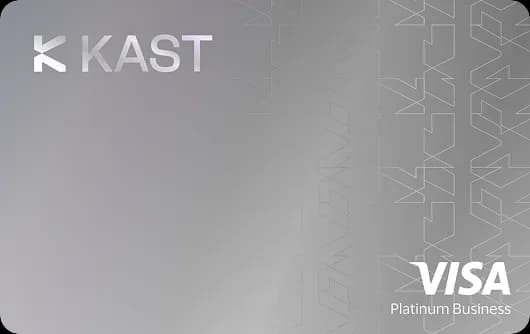
1. KAST K Card
Free USD Cashback: 1.5% on First $2K/Month
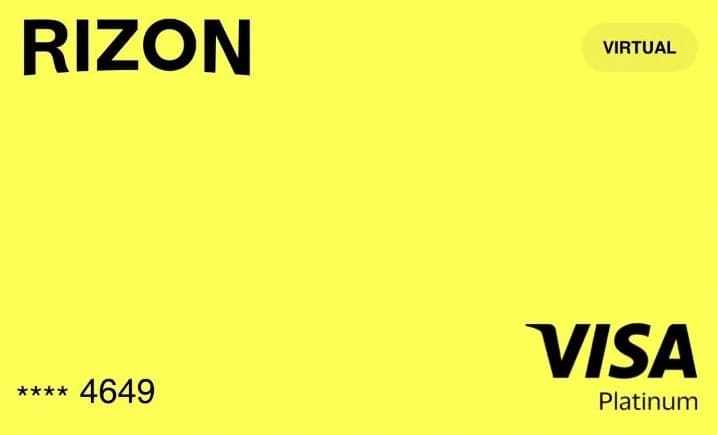
2. Rizon Standard Card
A $1 US virtual Visa Platinum for passport holders the traditional card system skips.
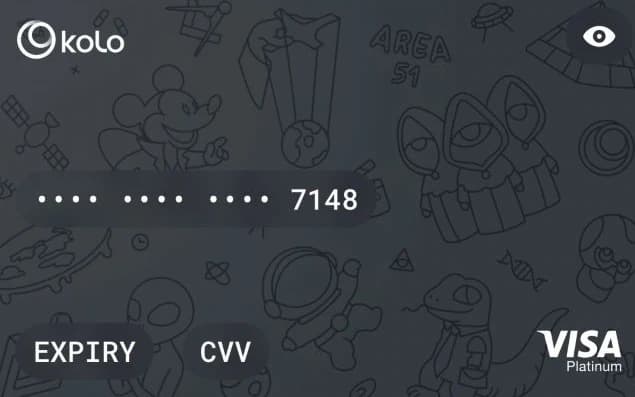
3. Kolo Card
Earn Bitcoin on Purchases: 2% for 30 Days, Then 1% (Capped) + Visa Platinum + 170+ Countries
4. Tria Virtual Card
Instant Virtual Entry: 1.5% Cashback + Apple Pay
5. RedotPay Solana Card
Solana Goes IRL: Spend SOL Directly at 130M+ Merchants
6. Xplace Basic Card
Free Visa Entry, with 10% Off a Paid Upgrade Using SPENDNODE
Complete list:
All 32 crypto cards available in Bangladesh in September 2026
This table includes every crypto card we currently track for Bangladesh. Rows marked Top pick are ranked and reviewed above.
| Crypto card | Max rewards | Annual fee | FX fee | Type | Custody |
|---|---|---|---|---|---|
1 KAST K CardTop pick | Up to 1.5% rewards | Free | 0.5% | Prepaid | Custodial |
2 Rizon Standard CardTop pick | Varies | Free | 1.7% | Crypto Backed Credit | Self-custody |
3 Kolo CardTop pick | Up to 2% rewards | Free | 0% | Prepaid | Custodial |
4 Tria Virtual CardTop pick | Up to 1.5% rewards | $20/year | 1% | Debit | Self-custody |
5 RedotPay Solana CardTop pick | Varies | Free | 1.2% | Prepaid | Custodial |
6 Xplace Basic CardTop pick | Up to 0.5% rewards | Free | 1% | Crypto Backed Credit | Self-custody |
| Up to 8% rewards | Free | 0% | Debit | Custodial | |
| Up to 6% rewards | $250/year | 1% | Debit | Self-custody | |
| Up to 5% rewards | Free | 1% | Crypto Backed Credit | Self-custody | |
| Up to 5% rewards | Free | 1% | Debit | Self-custody | |
| Up to 4.5% rewards | $109/year | 1% | Debit | Self-custody | |
| Up to 4% rewards | Free | 0% | Crypto Backed Credit | Self-custody | |
| Up to 3% rewards | Free | 0.5% | Crypto Backed Credit | Self-custody | |
| Up to 3% rewards | Free | 0.25% | Crypto Backed Credit | Self-custody | |
| Up to 3% rewards | Free | 0% | Crypto Backed Credit | Self-custody | |
| Up to 3% rewards | $10000 | 0.5% | Prepaid | Custodial | |
| Up to 3% rewards | $129 | 1.2% | Prepaid | Custodial | |
| Up to 2.5% rewards | $83.88 | 1.02% | Crypto Backed Credit | Self-custody | |
| Up to 2% rewards | $1000 | 0.5% | Prepaid | Custodial | |
| Up to 2% rewards | $999 | 0% | Crypto Backed Credit | Self-custody | |
| Up to 1.5% rewards | Free | 0.5% | Prepaid | Custodial | |
| Up to 1.5% rewards | $249 | 0.25% | Crypto Backed Credit | Self-custody | |
| Up to 1% rewards | Free | 1% | Crypto Backed Credit | Self-custody | |
| Up to 1% rewards | Free | TBD | Prepaid | Custodial | |
| Up to 1% rewards | $47.88 | 1.275% | Crypto Backed Credit | Self-custody | |
| Up to 1% rewards | $99 | 0.5% | Crypto Backed Credit | Self-custody | |
| none | Free | 0% | Crypto Backed Credit | Self-custody | |
| none | $30 | 0% | Crypto Backed Credit | Self-custody | |
| cashback | Free | 0.5% | Prepaid | Custodial | |
| none | Free | 1% | Prepaid | Self-custody | |
| Varies | Free | 1.2% | Prepaid | Custodial | |
| Varies | Free | 1.2% | Prepaid | Custodial |
Crypto Card Regulation in Bangladesh
Bangladesh maintains one of Asia's strictest anti-crypto regulatory regimes. The legal basis for the ban rests on multiple overlapping frameworks:
Foreign Exchange Regulation Act (FERA) 1947: Prohibits unauthorized foreign exchange transactions. Bangladesh Bank and the BFIU classify crypto as an unauthorized foreign asset, making acquisition, holding, and disposal of crypto potentially a FERA violation.
Money Laundering Prevention Act (MLPA) 2012: Bangladesh Bank has stated that crypto transactions may constitute money laundering due to the anonymous nature of blockchain transactions. The Bangladesh Financial Intelligence Unit (BFIU) monitors financial transactions for crypto-related activity.
Bangladesh Bank Circulars: Multiple circulars (2014, 2017, 2021) warned citizens against using cryptocurrencies. The 2017 circular explicitly stated that "transacting in any type of cryptocurrency is a punishable offense." Penalties include imprisonment under the FERA and MLPA.
Enforcement timeline:
- 2014: First BB warning against Bitcoin
- 2017: BB explicitly declared crypto transactions a punishable offense
- 2021: Intensified warnings amid global crypto bull market
- 2023-2025: Added biometric verification requirements for international bank transfers, intensified mining crackdowns, ISPs instructed to block crypto exchange websites (circumvented by VPN)
- 2025: Government added crypto exchanges to the blocked websites list. Several P2P traders arrested in Dhaka and Chittagong.
No exchange operates legally in Bangladesh. Binance, OKX, Bybit, and other major exchanges have no local presence or Bangladeshi entity. P2P trading occurs through Telegram groups and informal networks, carrying real prosecution risk. The BFIU has developed monitoring capabilities to detect crypto-related bank transactions, flagging unusual international transfers and mobile money patterns.
Bangladesh has not signaled any intent to legalize cryptocurrency. The regulatory stance has tightened since 2024, not loosened. The comparison with India (which taxed rather than banned crypto in 2022) and Indonesia (which created a licensing framework) highlights Bangladesh's outlier position in South Asia.
Bangladesh Bank's July 2026 cross-border digital payment framework permits authorized banks to partner with foreign payment providers for eligible travel, business and online payments. The digital value accounts remain bank-controlled and subject to foreign-exchange limits. This creates a regulated non-crypto payment route; it does not permit a resident to fund an offshore crypto card.
Tax Treatment of Card Rewards in Bangladesh
Bangladesh has no specific cryptocurrency tax framework. Since crypto transactions are prohibited, the National Board of Revenue (NBR, Jatio Rajaswa Board, জাতীয় রাজস্ব বোর্ড) has not issued dedicated guidance. However, if crypto gains were to be reported, they would fall under existing tax categories.
Theoretical Treatment
Capital gains: Under the Income Tax Act 2023, capital gains from the transfer of capital assets are taxed at 15%. If crypto were classified as a capital asset (the most likely treatment by analogy), disposal gains would attract 15% tax.
General income: Progressive income tax slabs apply: 0% on the first BDT 350,000, then 5%/10%/15%/20%/25% up to BDT 3,850,000, with a 30% surcharge on income above BDT 3,850,000 (approximately USD 32,000). Mining and staking income would be classified as "income from other sources."
The Legal Paradox
Reporting crypto gains to the NBR while the activity itself is banned creates a fundamental contradiction. Declaring crypto income would be simultaneously a tax compliance action and an admission of illegal activity. This paradox is unresolved in Bangladeshi law.
| Cashback Type | If Reported as Income | If Capital Gain | Practical Reality |
|---|---|---|---|
| BTC/ETH cashback | Up to 25% | 15% | No reporting mechanism |
| USDC cashback | Up to 25% on FMV | Near-zero gain | No reporting mechanism |
| Points/tokens | Unclear | Unclear | No reporting mechanism |
For Bangladeshi nationals abroad: Follow the tax rules of your country of residence. Your host country's crypto tax framework applies, not Bangladesh's. If you are a UK tax resident, UK rules apply. If you are a Saudi resident, Saudi rules apply (no personal income tax on crypto).
USDC funding reduces exposure to BTC price moves, but tax treatment and record-keeping depend on the worker's country of residence and the currency used to calculate gains.
How to Apply from Bangladesh
Crypto card applications require a Jatio Porichoy Potro (জাতীয় পরিচয়পত্র, National Identity Card/NID), the mandatory biometric smart card issued by the Bangladesh Election Commission to all citizens over 16. The NID number (17 digits) is the primary national identifier. Since 2016, all NID cards are biometric smart cards with fingerprints and iris data. Bangladesh's NID system is one of South Asia's largest biometric databases (110+ million registered).
Bangladesh passport (জাতীয় পাসপোর্ট, e-passport since 2020, issued by the Department of Immigration and Passports) is the most practical document for offshore card applications. Bangladesh issues approximately 2 million passports annually, many for migrant workers heading to the Middle East, Malaysia, and Singapore.
In practice, most offshore crypto card issuers may not accept Bangladeshi NID cards for KYC verification. The NID is domestically focused and may not be recognized by international identity verification services (Onfido, Jumio, Sumsub). Bangladeshi nationals with host-country documents (Saudi iqama, UAE residence visa, Malaysian work permit, UK BRP, US green card) have much higher approval rates.
Physical cards cannot reliably ship to Bangladeshi addresses due to customs inspection risks and delivery reliability. Virtual cards for crypto cards with Apple Pay and Google Pay are the most practical option for those with access.
Spending Tips for Bangladesh
The Remittance Economy: Bangladesh's Biggest Crypto Use Case
Bangladesh receives over $23 billion in annual remittances (World Bank 2024), making it the 8th-largest remittance recipient globally. The primary corridors:
- Saudi Arabia: Largest source (2+ million Bangladeshi workers, construction, services)
- UAE: Second-largest (700,000+ workers, Dubai/Abu Dhabi)
- Malaysia: Third-largest (500,000+ workers, manufacturing, plantation)
- Kuwait/Qatar/Oman/Bahrain: Combined 1+ million workers
- United States: Growing, primarily professional diaspora
- United Kingdom: 600,000+ British Bangladeshis (concentrated in Tower Hamlets, Birmingham)
- Italy/Singapore/South Korea/Japan: Smaller but growing corridors
Remittance fees and FX margins vary by corridor and provider. The World Bank's Saudi Arabia-Bangladesh corridor data shows all-in costs around 5-8% for several services. Applied to the page's $23 billion 2024 remittance figure, 5-8% is $1.15-1.84 billion of illustrative fee and FX friction; it is not a measured total for every corridor.
An overseas worker can compare crypto card costs for spending where they live, but that does not make a stablecoin transfer to a recipient in Bangladesh lawful.
For diaspora members: Check card eligibility under the rules of your country of residence. For a transfer to Bangladesh, compare licensed bank and remittance channels. The Bangladesh Bank framework for bank-linked digital value accounts adds a regulated payment option for eligible transactions, but not a route for offshore crypto-card funding. For the wider living-abroad setup, see our expat guide.
The Freelancer Economy
Bangladesh has one of the world's largest freelancer communities. Upwork, Fiverr, Freelancer.com, 99designs, and other platforms employ an estimated 500,000+ Bangladeshi freelancers, primarily in web development, graphic design, data entry, and digital marketing. Annual freelance earnings exceed $1 billion.
The payment problem: Freelancers often need to receive foreign-currency earnings through Payoneer or bank transfers, subject to the provider's fees and Bangladesh's foreign-exchange rules. Offshore crypto-card funding is not a substitute for an authorized payment channel for someone resident in Bangladesh.
Payment comparison: Compare the all-in FX rate and withdrawal fee on each authorized route. For eligible foreign payments, a participating bank may offer a digital value account under Bangladesh Bank's 2026 framework. A card's cashback rate does not override local restrictions on crypto transactions.
The Gulf Worker Economy
Approximately 3 million Bangladeshi workers are employed in the Gulf states (Saudi Arabia, UAE, Qatar, Kuwait, Oman, Bahrain), primarily in construction, domestic service, hospitality, and retail. Average monthly earnings range from $300-500 (construction workers) to $500-1,500 (skilled trades, hospitality management). Workers typically send 60-70% of earnings home as remittances.
Current remittance friction: A worker in Riyadh sending SAR 1,200 home each month could lose 5-8% (SAR 60-96) through a higher-cost route, or SAR 720-1,152 over twelve monthly transfers. That is a scenario drawn from published corridor prices, not the fee of every service. Compare the amount delivered in BDT, including both fees and FX spread.
An overseas worker may use an eligible crypto card for personal spending in the country where they live. Sending USDC to a family member's card wallet inside Bangladesh is a different matter: Bangladesh's crypto restrictions still apply there. Compare licensed remittance providers for the transfer home, and keep the overseas card decision separate.
UAE is the sweetest spot: Zero personal income tax, progressive crypto regulation, and easy access to exchanges (Binance, Bybit, and other major platforms all serve UAE residents). A Bangladeshi national with a UAE residence visa can open any crypto card with full KYC and earn tax-free rewards.
The British Bangladeshi Community
An estimated 600,000+ British Bangladeshis live in the United Kingdom, concentrated in Tower Hamlets (Brick Lane area, 35%+ Bangladeshi heritage), Birmingham (Sparkhill, Sparkbrook), and Oldham/Bradford/Luton. This community is one of the most established diasporas, with second and third-generation professionals in finance, tech, and entrepreneurship.
For British Bangladeshis, crypto cards operate under UK rules. The individual capital-gains annual exempt amount is GBP 3,000 in 2026-27. UK exchanges provide GBP on-ramps, but card eligibility still depends on the issuer's KYC and residency rules. Use a permitted remittance route when sending money to family in Dhaka or Sylhet.
The Garment Industry and Management Class
Bangladesh is the world's second-largest garment exporter (after China), with 4+ million workers across 4,500+ factories. While floor-level garment workers earn $100-200/month (below practical crypto card utility), the factory management, merchandising, and buying office class earns $500-3,000/month and frequently travels to China (fabric sourcing), India (accessories), Turkey (design), and European buyer offices.
These professionals face constant international FX charges on business and personal travel spending. A zero-FX crypto card saves 2-3% on every international trip.
Card Selection for Bangladeshis Abroad
- KAST (1.5% USD cashback on first $2K/mo, 0.5-1.75% FX): Best prepaid card for overseas Bangladeshis who need remittance-funded spending without building around exchange tiers first
- RedotPay (stablecoin-native, free virtual): Best for stablecoin spending
- Kolo (1% ongoing BTC, 2% intro, $0, 0% FX): Free BTC cashback for diaspora spending
- Avici (crypto-backed credit): Borrow against collateral instead of selling, no taxable disposal
- Tria Virtual (1.5% on first $1,000/mo, $20/yr, 1% FX + 0.5%/payment): Low-cost self-custody, netting about 1% on the first $1,000 of USD-billed spend before its annual price
- xPlace (0.5% USDC in Credit Mode, capped at $10/month; free entry tier): Solana self-custody until the moment of spending
KAST vs Kolo vs RedotPay: Diaspora Math
For Bangladeshi nationals living overseas with host-country documentation. Tax depends on country of residence. RedotPay has no ongoing rewards but its value is stablecoin-native spending with high limits and HK-based KYC that accepts Bangladeshi passports.
| Monthly Spend | KAST (1.5% USD, $2K/mo cap, free) | Kolo (1% BTC ongoing, free) | RedotPay (no rewards, free) |
|---|---|---|---|
| BDT 15,000 ($125) | BDT 2,700/yr | BDT 1,800/yr | -BDT 2,160/yr (1.2% FX cost) |
| BDT 25,000 ($208) | BDT 4,500/yr | BDT 3,000/yr | -BDT 3,600/yr (1.2% FX cost) |
| BDT 40,000 ($333) | BDT 7,200/yr | BDT 4,800/yr | -BDT 5,760/yr (1.2% FX cost) |
| BDT 80,000 ($667) | BDT 14,400/yr | BDT 9,600/yr | -BDT 11,520/yr (1.2% FX cost) |
Kolo's 1% figures assume purchases at or under $100, where its $1-per-transaction cap does not bite; monthly rewards also cap at $100. KAST's 1.5% leads Kolo's 1% at every level shown here (before KAST's 0.5-1.75% FX).
Spending Scenario: BDT 25,000/month (Bangladeshi National in UAE)
| Funding Method | Annual Spend | Cashback (1% Kolo ongoing) | Tax (UAE: 0%) | Net Cashback |
|---|---|---|---|---|
| USDC (stablecoin) | BDT 300,000 | BDT 3,000 | BDT 0 | BDT 3,000 |
| BTC (appreciated) | BDT 300,000 | BDT 3,000 | BDT 0 | BDT 3,000 |
At 1% cashback on BDT 300,000 of annual equivalent card spending, the modeled reward is BDT 3,000 ($25), before fees and any tax treatment in the worker's country of residence. This does not include a remittance-saving claim or assume a crypto transfer into Bangladesh.
BDT Depreciation and the Stablecoin Hedge
The Bangladeshi taka has depreciated sharply: from approximately BDT 85/USD in 2022 to BDT 120+/USD by 2025, a 41%+ loss of purchasing power in three years. Bangladesh Bank's foreign exchange reserves have declined, and the managed float has come under sustained pressure from import costs and reduced garment export revenues.
The taka's exchange rate matters to freelancers and migrant workers, but a USD stablecoin is not a guaranteed hedge and is not a permitted domestic funding route under Bangladesh Bank's crypto restrictions. Residents seeking lawful access to foreign-currency payments should check authorized bank channels and the eligibility limits on digital value accounts.
Domestic Payment Infrastructure
Bangladesh's payment system is dominated by mobile financial services (MFS), not cards. bKash (75+ million registered accounts, BRAC Bank subsidiary, founded 2011, the developing world's mobile money success story) processes over BDT 1 trillion monthly. Nagad (60+ million accounts, Bangladesh Post Office digital financial service) is the primary competitor. Rocket (Dutch-Bangla Bank) is third.
Card acceptance is limited to urban areas: Dhaka malls (Bashundhara City, South Asia's largest shopping mall by floor space; Jamuna Future Park, the world's 7th-largest mall; Shimanto Square), hotels (Radisson Blu, InterContinental, Pan Pacific Sonargaon), Aarong outlets (BRAC's fair trade retail chain, 23 stores), and upscale restaurants in Gulshan, Banani, and Dhanmondi. Chittagong has limited acceptance at a few hotels and malls.
Apple Pay and Google Pay are not officially supported in Bangladesh. The virtual card use case is primarily for international online transactions, not domestic in-store spending.
Cash remains dominant for 95%+ of retail transactions. Kawran Bazar (Dhaka's largest wholesale market), New Market (Dhaka's most popular retail market), local shops, rickshaws, CNG auto-rickshaws, and all informal commerce operate exclusively in cash or bKash/Nagad.
Supported Exchanges & Wallets in Bangladesh
No crypto exchanges or card issuers operate legally in Bangladesh. Binance P2P (BDT pairs) has been the primary on-ramp but faces periodic blocks as ISPs comply with government directives. Telegram-based P2P trading networks serve the domestic market at 1-3% premiums above international rates.
For Bangladeshis abroad with host-country documentation, card selection depends on the corridor. Gulf workers (Saudi, UAE, Qatar) earning $300-1,500/month benefit most from cards that turn P2P USDT balances into ordinary Visa spending without another exchange loyalty layer: KAST at 1.5% USD cashback on the first $2,000/month with 0.5-1.75% FX fits that remittance-and-payroll use case.
RedotPay with Virtual, Solana, and Physical cards suits USDC-native freelancers already receiving crypto payments.
For overseas personal spending, Kolo at 1% ongoing BTC cashback (2% intro) with $0 annual fee and 0% FX remains a simple free option. It does not solve the regulated transfer into Bangladesh.
Self-custody matters more here than in most markets because Bangladeshi nationals face account-freeze risk on centralized exchanges if their home country's ban gets flagged.
Avici offers crypto-backed credit via Platinum and Signature: borrow against collateral instead of selling, preserving upside in a market where host-country tax rules (not Bangladesh's ban) govern the transaction. xPlace remains the cleaner Solana/self-custody option.
Regional Context: What Neighbors Did Differently
Bangladesh's ban stands in contrast to its South Asian neighbors. India legalized and taxed crypto (30% flat rate on gains, 1% TDS on transactions) under the Finance Act 2022. Pakistan also maintains a ban but has explored a regulatory framework. Sri Lanka is developing VASP licensing. Nepal maintains a ban similar to Bangladesh's.
India's approach of taxing rather than banning generated tax revenue while acknowledging the reality of 30+ million Indian crypto users. Bangladesh's continued prohibition pushes activity underground, generates zero tax revenue, and does not prevent adoption (Chainalysis ranking: 35th globally despite the ban). Whether Bangladesh eventually follows India's path or maintains prohibition will define the future of crypto cards for its 170 million citizens.
For a Bangladeshi Upwork developer, receiving foreign-currency earnings requires an authorized channel under Bangladesh Bank rules; a crypto card does not replace that requirement. For the diaspora in the Gulf and Europe, remittance fees remain a material cost, but transfers to family in Bangladesh need a permitted channel. An offshore stablecoin-funded card is not a lawful substitute for a resident's remittance account.
Written by SpendNode Editorial
Frequently Asked Questions
Is crypto legal in Bangladesh?
No. Bangladesh Bank prohibits all cryptocurrency transactions under the Foreign Exchange Regulation Act and Money Laundering Prevention Act. Despite this, Chainalysis ranks Bangladesh 35th globally in crypto adoption with an estimated 3.1 million wallet holders as of 2025.
Which crypto cards work for Bangladeshis?
No crypto card issuer officially targets domestic Bangladesh use, and using these cards from inside Bangladesh violates local financial regulations. The cards listed on this page (KAST, Kolo, Tria, RedotPay, xPlace) are globally available for Bangladeshi nationals living overseas, who face far fewer barriers; treat them as an offshore or diaspora option, not a domestic one.
How is crypto taxed in Bangladesh?
No specific crypto tax framework exists. The NBR (National Board of Revenue) would likely treat crypto gains as taxable under general capital gains rules at 15%, or as income under progressive slabs (0-25%). The legal ambiguity compounds the risk since the activity itself is prohibited.
Can Bangladeshi freelancers use crypto cards?
Bangladesh's large freelancer community (Upwork, Fiverr) sometimes receives crypto payments. However, converting crypto to BDT through banking channels is prohibited. Freelancers working abroad with foreign bank accounts face fewer restrictions on accessing globally available crypto cards.


