
Best Crypto Cards in Bahrain (2026)
Bahrain is still the most institutionally mature crypto-card market in the GCC: zero personal tax, a USD-pegged currency, and a regulatory setup that makes offshore-funded spending unusually practical.
Verified for Bahrain
38 crypto cards available
Local currency: BHD
Bahrain is the GCC's crypto regulatory pioneer. The Central Bank of Bahrain (CBB, Masraf Al-Bahrain Al-Markazi) created the Gulf's first dedicated crypto licensing framework in 2019, making Bahrain home to Rain (the region's first licensed crypto exchange) and CoinMENA (the first Bahraini-owned licensed exchange).
Zero personal income tax, zero capital gains tax, and the BHD-USD peg at 0.376 create what may be the world's most favorable environment for crypto card spending: every dinar of cashback is pure, untaxed, currency-stable profit.
NBB (National Bank of Bahrain), BBK (Bank of Bahrain and Kuwait), and Ahli United Bank debit cards earn minimal cashback (0.1-0.5% on select categories) and charge 1-2% FX on non-BHD international purchases. A crypto card with zero FX fees and up to 8% cashback replaces that with a tool that compounds rewards in a zero-tax jurisdiction.
Bahrain's compact size (786 square kilometers, the smallest country in the Middle East) means card acceptance is near-universal in commercial areas. From the gold souq in Manama to the malls in Seef District, contactless Visa/Mastercard works almost everywhere that is not a traditional market.
Summary:
Which crypto cards are best in Bahrain?
The best crypto cards in Bahrain in September 2026 are Tria Premium Card, Oobit Visa Card, Plasma One Platinum Card, Kolo Card, KAST K Card, and Xplace Platinum Card. The detailed ranking below explains the local tax, fee, and availability trade-offs.
| Crypto card | Base reward | Net after fees | Annual fee | FX fee | Type |
|---|---|---|---|---|---|
| 6% base6% on the first $2,000/mo, then 1% | 4.5% | $200 with code | 1% | Debit | |
| 5% baseup to 10% in OOB at Level 2, no stake | 2% | Free | 3% | Debit | |
| 4% base4% base, up to 10% on AI and flights; 100k XPL lock | 4% | Free | 0% | Crypto Backed Credit | |
| 1% base2% for the first 30 days, then 1%; also capped at $1/EUR 1 per transaction ($2/EUR 2 during intro) and $100/EUR 100 per month | 1% | Free | 0% | Prepaid | |
| 1.5% base | 1% | Free | 0.5% | Prepaid | |
| 2% base2% in USDC on Credit Mode spend; cashback capped at $250/mo | 2% | $999 | 0% | Crypto Backed Credit | |
| 0% baseno standing cashback; launch promo ended | 0% | Free | 1.2% | Prepaid |
Our Bahrain availability check confirms 16 issuers serve the market. Tria Premium leads: 6% cashback on the first $2,000/month (then 1%) and self-custody, with no token to stake.
A 1% FX fee on non-USD spend and a 0.5% charge on every payment bring the real return to about 4.5% net on that first $2,000, and in a zero-tax jurisdiction that net cashback is kept in full, with the BHD-USD peg holding its dollar value steady.
Oobit issues through Bahrain-founded Rain. It has no annual fee and advertises up to 10% back in OOB or 5% in stablecoin, backed by Tether. Its roughly 3% FX cost matters for purchases in Bahraini dinars, so the headline reward is not the net return.
Plasma One Platinum works better in Bahrain than almost anywhere in the Gulf for a plumbing reason. At heart it is a USDT balance you hold yourself, with a Visa as the spending layer, and Bahrain is the one GCC state with licensed BHD-to-stablecoin rails: Rain or CoinMENA converts dinar to USDT in minutes, the balance earns a fixed 5% while parked, and the CBB framework means none of that flow runs through a gray zone.
There is no annual fee; entry is a 12-month lock of 100,000 XPL, and the 4% cashback pays in XPL rather than a stablecoin, which is the trade-off to price in.
KAST at 1.5% USD cashback on the first $2,000/month, free, fits newly arrived expats whose spending money still sits in offshore dollars or stablecoins while employer payroll and CPR-linked bank onboarding catch up. That is the exact profile covered in our expat guide.
Best Card For Every Need in Bahrain
Top 7 Crypto Cards in Bahrain
Bahrain wrote the GCC's first crypto licensing rulebook (CBB Volume 6, 2019) and hosts Rain, the region's first licensed exchange. It is the one Gulf state where crypto card usage sits on solid regulatory ground.
Tria Premium leads at 6% on the first $2,000/month (then 1%) with self-custody; a 1% FX fee and a 0.5% per-payment charge net it to about 4.5% on that first $2,000, and in a zero income tax, zero CGT environment that net cashback compounds without a tax drag, with the BHD-USD peg eliminating currency risk entirely.
Oobit is the second pick because its issuer, Rain, is based in Bahrain. It pays up to 10% in OOB or 5% in stablecoin without an annual fee. At roughly 3% FX, it makes more sense for dollar-denominated spending than for routine purchases in dinars.
Plasma One Platinum takes the premium slot because Bahrain's licensed dinar-to-stablecoin on-ramp turns its funding model from a niche setup into a practical one: a yield-bearing USDT account with a Visa layer, entered through a token lock rather than a fee. In a zero-tax market the 5% on parked balance compounds clean, and the whole stack stays in the user's own custody.
xPlace Platinum has become a traveler's specialty item rather than a rewards contender. A population that crosses the King Fahd Causeway tens of thousands of times each weekend and flies regularly to Dubai, London, and Istanbul still gets real value from 1,400+ lounges, concierge, and 0% FX with no capital locked, but at 2% USDC capped at $250 a month, cashback returns at most $3,000 a year against the $999 fee and covers it only from about BHD 1,570 of monthly eligible spend, before Credit Mode borrowing costs. Pre-September 14, 2026 purchases stay on the earlier rates for up to a year.
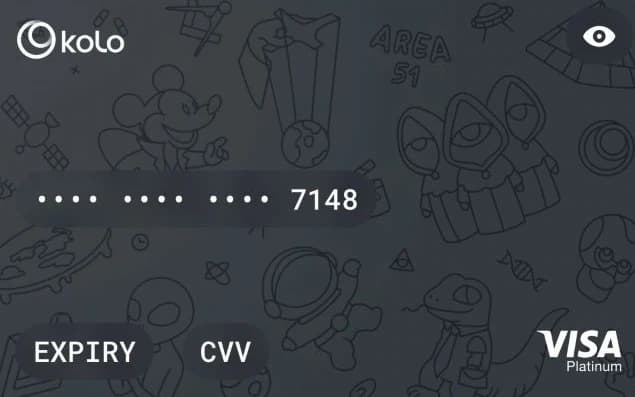
Kolo keeps a free, 0%-FX everyday option in the mix at a capped 1% BTC (2% for the first 30 days), which matters because Bahrain's cost of living runs below Qatar's and many residents spend below Tria Premium's break-even. KAST earns its place because Bahrain's 55% expat majority often lands with offshore salary savings before the first local payroll cycle, and that spending gap matters more than long-term card perks.
RedotPay Solana addresses the remittance corridor: Rain provides BHD-to-USDC in minutes, then an Indian construction worker's family in Kerala spends via their own card at near-zero cost.
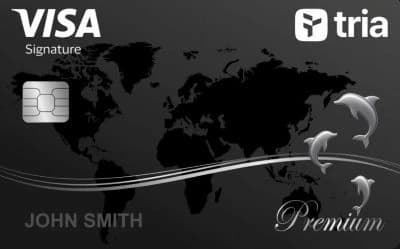
1. Tria Premium Card
Self-Custody Premium: 6% Cashback + Zero ATM Fees
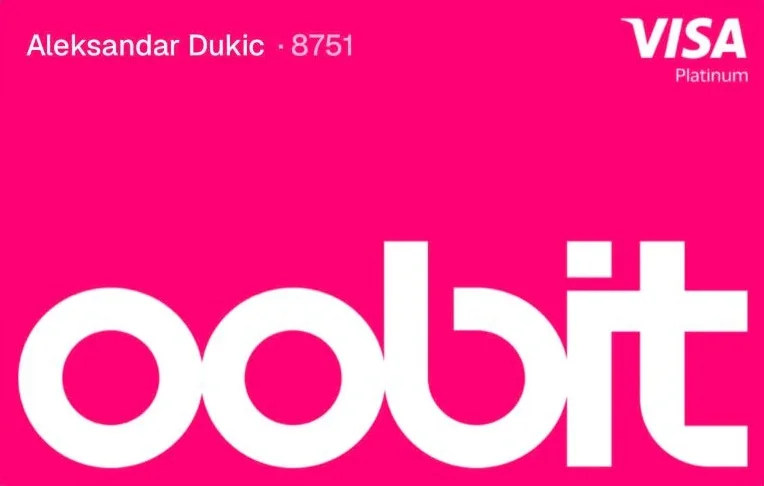
2. Oobit Visa Card
Spend Crypto Anywhere Visa Works - Self-Custody or In-App
3. Plasma One Platinum Card
Premium Self-Custodial Visa - 4% Base, 10% AI, 10% Flights, Lounge Access, Boosted 5% Yield
4. Kolo Card
Earn Bitcoin on Purchases: 2% for 30 Days, Then 1% (Capped) + Visa Platinum + 170+ Countries
5. KAST K Card
Free USD Cashback: 1.5% on First $2K/Month
6. Xplace Platinum Card
10% Off Platinum with SPENDNODE: Pay $899.10 Instead of $999
7. RedotPay Solana Card
Solana Goes IRL: Spend SOL Directly at 130M+ Merchants
Complete list:
All 38 crypto cards available in Bahrain in September 2026
This table includes every crypto card we currently track for Bahrain. Rows marked Top pick are ranked and reviewed above.
| Crypto card | Max rewards | Annual fee | FX fee | Type | Custody |
|---|---|---|---|---|---|
1 Tria Premium CardTop pick | Up to 6% rewards | $200 with code | 1% | Debit | Self-custody |
2 Oobit Visa CardTop pick | Up to 10% rewards | Free | 3% | Debit | Hybrid |
3 Plasma One Platinum CardTop pick | Up to 4% rewards | Free | 0% | Crypto Backed Credit | Self-custody |
4 Kolo CardTop pick | Up to 2% rewards | Free | 0% | Prepaid | Custodial |
5 KAST K CardTop pick | Up to 1.5% rewards | Free | 0.5% | Prepaid | Custodial |
6 Xplace Platinum CardTop pick | Up to 2% rewards | $999 | 0% | Crypto Backed Credit | Self-custody |
7 RedotPay Solana CardTop pick | Varies | Free | 1.2% | Prepaid | Custodial |
| Up to 10% rewards | Free | 0% | Prepaid | Custodial | |
| Up to 8% rewards | Free | 0% | Debit | Custodial | |
10 | Up to 8% rewards | TBD | 0% | Prepaid | Custodial |
| Up to 5% rewards | TBD | 0% | Prepaid | Custodial | |
| Up to 4.5% rewards | $87 with code | 1% | Debit | Self-custody | |
| Up to 4% rewards | Free | 0% | Crypto Backed Credit | Self-custody | |
| Up to 4% rewards | TBD | 0% | Prepaid | Custodial | |
| Up to 3% rewards | Free | 0.5% | Crypto Backed Credit | Self-custody | |
| Up to 3% rewards | Free | 0.25% | Crypto Backed Credit | Self-custody | |
| Up to 3% rewards | Free | 0% | Crypto Backed Credit | Self-custody | |
| Up to 3% rewards | $10000 | 0.5% | Prepaid | Custodial | |
| Up to 3% rewards | $199 | 0.5% | Crypto Backed Credit | Self-custody | |
| Up to 3% rewards | $299.9 | 0% | Prepaid | Custodial | |
| Up to 3% rewards | $129 | 1.2% | Prepaid | Custodial | |
| Up to 2% rewards | $1000 | 0.5% | Prepaid | Custodial | |
| Up to 2% rewards | Free | 1% | Crypto Backed Credit | Self-custody | |
| Up to 2% rewards | $49.9 | 0% | Prepaid | Custodial | |
| Up to 1.5% rewards | Free | 0.5% | Prepaid | Custodial | |
| Up to 1.5% rewards | Free | 1% | Debit | Self-custody | |
| Up to 1.5% rewards | $249 | 0.25% | Crypto Backed Credit | Self-custody | |
| Up to 1% rewards | Free | TBD | Prepaid | Custodial | |
| Up to 1% rewards | $99 | 0.5% | Crypto Backed Credit | Self-custody | |
| Up to 0.5% rewards | Free | 1% | Crypto Backed Credit | Self-custody | |
| none | Free | 0% | Prepaid | Custodial | |
| cashback | Free | 1.75% | Prepaid | Self-custody | |
| cashback | $199 | 0.75% | Prepaid | Self-custody | |
| cashback | Free | 0.5% | Prepaid | Custodial | |
| none | Free | 1% | Prepaid | Self-custody | |
| Varies | Free | 1.5% | Debit | Custodial | |
| Varies | Free | 1.2% | Prepaid | Custodial | |
| points | Free | 1% | Debit | Self-custody |
Crypto Card Regulation in Bahrain
Bahrain leads the GCC in crypto regulation and has positioned itself as the region's fintech hub. The CBB (Central Bank of Bahrain) created a full crypto-asset framework in 2019, issuing Volume 6 of the CBB Rulebook specifically for crypto-asset services. This was the first dedicated crypto regulatory framework in the Gulf Cooperation Council.
CBB Volume 6 framework requirements:
- Full licensing for crypto-asset exchanges, custodians, portfolio managers, and advisory services
- Minimum capital requirements (varying by license type)
- Customer asset segregation from company assets
- AML/CFT compliance aligned with FATF recommendations
- Cybersecurity standards and business continuity planning
- Quarterly reporting to the CBB
- Fit and proper requirements for directors and shareholders
Licensed entities in Bahrain:
- Rain (Rain Management WLL): The GCC's first licensed crypto exchange, founded in Bahrain in 2017, received CBB Category 3 license in 2019. Rain offers BHD, AED, SAR, KWD, and OMR on-ramps with BTC, ETH, USDT, and other major pairs. Rain serves users across the GCC.
- CoinMENA: Bahraini-owned CBB-licensed exchange, founded 2019. Focused on MENA markets with BHD/crypto pairs.
- Binance received a Category 4 (Crypto-Asset Service Provider) license from the CBB in 2022, one of the first major international exchanges to receive Bahraini licensing. However, Binance cards are NOT available in Bahrain (Brazil only).
Bahrain FinTech Bay (located in Bahrain Bay, Harbour Towers) is the region's largest fintech ecosystem, providing sandbox testing, co-working, and regulatory guidance for crypto startups. Over 100 fintech firms operate within the ecosystem.
The Economic Development Board (EDB) actively promotes Bahrain as a fintech destination, positioning the Kingdom as the GCC gateway for international crypto companies. Bahrain's regulatory clarity (explicit licensing rather than ambiguity) contrasts with Saudi Arabia's wait-and-see approach and Kuwait's outright ban.
In July 2025, the CBB introduced the Stablecoin Issuance and Offering (SIO) Module, permitting issuance of fiat-backed stablecoins (BHD, USD) under CBB approval. The CBB also granted a Payment Service Provider (PSP) license to BPay Global (Binance subsidiary), expanding Binance's regulated presence. Crypto.com received a Bahraini PSP license in 2024.
That framework is now starting to show up in real banking products. On April 17, 2026, Singapore Gulf Bank (SGB) launched a stablecoin mint-and-redeem service for corporate and high-net-worth clients, starting with USDC transactions above USD 100,000. Clients can convert between fiat and stablecoins directly from their bank accounts, with SGB pitching the service as a 24/7 settlement rail that bypasses traditional correspondent banking friction.
In June 2026 the CBB granted AX Coin Bahrain the first license under this framework to issue a stablecoin. In August 2026 that token, AXBHD, the first stablecoin pegged to the Bahraini dinar, completed a formal Sharia review by the CBB-licensed Shariyah Review Bureau, making it the first central-bank-regulated stablecoin to carry a Sharia certification. That matters in a market where Islamic-finance compliance shapes what banks and card issuers can put in front of customers.
Solana is the launch chain, and SGB has said USDT, USDe and USDG support is planned. This is a treasury product, not a retail card launch. Its relevance here is that a Bahrain-regulated bank is using stablecoin rails beyond exchange trading and sandbox tests.
Crypto card usage is legal and unrestricted in Bahrain. The CBB framework provides regulatory certainty that most GCC and MENA countries lack.
Tax Treatment of Card Rewards in Bahrain
Bahrain has no personal income tax (la tuujad daribat al-dakhl), no capital gains tax, no withholding tax on individuals, and no inheritance tax. This makes Bahrain one of the world's most favorable jurisdictions for personal financial activity of any kind, including crypto.
What this means for crypto card spending:
| Scenario | Acquisition Cost | Disposal Value | Gain | Tax | Net After Tax |
|---|---|---|---|---|---|
| BTC bought at BHD 500, spent at BHD 1,500 | BHD 500 | BHD 1,500 | BHD 1,000 | BHD 0 | BHD 1,500 |
| ETH bought at BHD 200, spent at BHD 600 | BHD 200 | BHD 600 | BHD 400 | BHD 0 | BHD 600 |
| USDC bought at BHD 0.376, spent at BHD 0.376 | BHD 0.376 | BHD 0.376 | BHD 0 | BHD 0 | BHD 0.376 |
There is no tax optimization strategy because there is no tax. Spend BTC, ETH, SOL, stablecoins, or any asset freely. No filing required. No reporting obligation on personal investment activity.
| Cashback Type | Tax When Received | Tax When Spent/Sold | Total Tax Burden |
|---|---|---|---|
| Tria cashback (USDT) | 0% | 0% | 0% |
| CRO tokens (Crypto.com) | 0% | 0% | 0% |
| USDC cashback | 0% | 0% | 0% |
| Any other token | 0% | 0% | 0% |
The NBR (National Bureau for Revenue, Al-Jahaz Al-Watani Lil-Iradat) handles VAT administration only (10% VAT introduced January 2019). VAT applies to goods and services purchased in Bahrain regardless of payment method and is not affected by crypto card usage.
Zakat: The 2.5% Islamic zakat obligation applies to Muslim Bahrainis on assets including crypto holdings, but this is a religious obligation calculated annually on net wealth, not a transaction tax. It is not collected by the NBR.
How to Apply from Bahrain
Bahraini crypto card applications require a CPR Smart Card (Central Population Registry, bitaqat al-sijil al-markazi lil-sukkan), the mandatory biometric national ID issued by the Information and eGovernment Authority (iGA). The CPR number (9 digits, format: YYMMDD-XXX) is Bahrain's universal identifier, used for all government services, banking, and identity verification. All Bahraini citizens and registered residents over 15 hold a CPR.
For foreign residents: Passport plus CPR card (issued to all legal residents). Bahrain's large expat community (approximately 55% of the population is non-Bahraini) means card issuers are accustomed to non-Bahraini KYC. Common nationalities: Indian (largest expat community, approximately 350,000), Filipino, Pakistani, Egyptian, Bangladeshi, and Western expats.
Proof of address: utility bills from EWA (Electricity and Water Authority), telecom bills from Batelco (Bahrain Telecommunications Company, oldest carrier), STC Bahrain (Saudi Telecom, formerly Viva), or Zain Bahrain. Bank statements from NBB (National Bank of Bahrain), BBK (Bank of Bahrain and Kuwait), Ahli United Bank, Arab Banking Corporation (ABC), or Ithmaar Bank (Islamic banking).
Rain and CoinMENA KYC for Bahraini residents is streamlined using the CPR number, giving locals a regulated route into USDC/USDT before they fund a crypto card.
Spending Tips for Bahrain
What Bahraini Bank Cards Actually Cost You
Bahrain's banking sector includes conventional and Islamic banks: NBB (National Bank of Bahrain, the largest by assets, government-owned majority), BBK (Bank of Bahrain and Kuwait, full-service), Ahli United Bank (AUB, now Al Rajhi subsidiary after 2024 acquisition), Ithmaar Bank (Islamic), Kuwait Finance House Bahrain (Islamic), and Al Baraka Banking Group (Islamic, headquartered in Bahrain but operates across 15+ countries).
Bank debit cards earn 0.1-0.5% cashback on select promotional categories (BBK offers 0.5% on dining during promotions, NBB offers occasional cashback campaigns). Credit cards are better (Ahli United Visa Signature offers 1% flat), but require credit approval. FX markup on non-BHD transactions: 1-2% (lower than most regions due to BHD-USD peg reducing base conversion costs for USD-denominated purchases).
| Category | NBB Visa Debit | Crypto Card (Tria Premium, ~4.5% net) | Annual Difference |
|---|---|---|---|
| Annual fee | BHD 0-5 | BHD 94 ($250) | BHD 89-94 more |
| Cashback on BHD 500/mo | BHD 6-30 (0.1-0.5%) | BHD 270 (6% less 1% FX and 0.5% fee) | BHD 240-264 earned |
| FX on BHD 200/mo intl | BHD 24-48 (1-2%) | BHD 24 (1%) | BHD 0-24 saved |
| Total annual advantage | - | - | BHD 150-200 |
BHD 150-200/year ($400-530), even after Tria Premium's $250 annual fee and its 1% FX plus 0.5% per-payment charges. That still covers well over a month of groceries. A free card like Kolo (1% BTC ongoing, 0% FX) earns less cashback but skips the fee, the stake, and the FX, which suits residents who spend lightly or want zero commitment.
Zero Tax Means Every Reward Is Pure Profit
In a zero-tax environment, crypto card returns compound without any tax drag (the card's own fees still apply):
- 6% cashback (Tria Premium, on the first $2,000/month), or up to 8% via Crypto.com Prime or Bitget for heavy stakers
- Up to 10% in OOB or 5% in stablecoin (Oobit) when you fund and spend stablecoins, with no annual fee
- 0% tax on all of it
On BHD 500/month spending, Tria Premium's 6% is about BHD 360/year gross, or roughly BHD 270 after its 1% FX and 0.5% per-payment fees, all untaxed and currency-stable under the BHD-USD peg. Kolo's free 1% BTC is the no-fee, no-stake fallback. No GCC bank product comes close.
Card Selection for Bahrain
- Tria Premium (6% on first $2,000/mo, 1% FX + 0.5%/payment, $250/yr): Highest accessible cashback at about 4.5% net, self-custody. Best for tax-free spending in a zero-tax market.
- Oobit (up to 10% OOB / 5% stablecoin, $0, ~3% FX): Rain-issued stablecoin ceiling, Tether-backed. Best when you load and spend USDT.
- Plasma One Platinum (4% XPL, 100k XPL lock, 0% FX): Self-custodial USDT balance with a Visa layer and a fixed 5% on parked funds; smoothest to fund here thanks to Rain and CoinMENA's BHD rails.
- xPlace Platinum (2% USDC to $250/mo, $999/yr, 0% FX): 1,400+ lounges, concierge, and $XP. The specialist pick for genuine frequent flyers and causeway commuters who buy it for the travel stack.
- Kolo (1% BTC ongoing, $0, 0% FX): Simple free BTC cashback for zero-tax spenders.
- KAST (1.5% USD cashback on first $2K/mo, 0.5-1.75% FX): Best offshore-funded card before the first Bahrain salary cycle is in place.
- RedotPay Solana (stablecoin-native): Stablecoin-focused, good for the BHD/USD corridor.
Tria Premium vs Crypto.com vs Kolo: Bahrain Math
Zero tax. BHD-USD peg means minimal FX risk on USD-denominated card spending. Figures are net annual cashback after fees: Tria Premium after its $250/yr fee, 1% FX, and 0.5% per payment; Crypto.com Icy after its CRO-stake requirement (no FX, no fee); Kolo free with 0% FX (its 1% figures use the ongoing rate and assume purchases at or under $100, where the per-transaction cap does not bite).
| Monthly Spend | Tria Premium (6% to $2K/mo, then 1%) | Crypto.com Icy (4%, CRO stake) | Kolo (1% BTC ongoing, free) |
|---|---|---|---|
| BHD 300 ($797) | BHD 68/yr | BHD 144/yr + lounges | BHD 36/yr |
| BHD 500 ($1,330) | BHD 176/yr | BHD 240/yr + lounges | BHD 60/yr |
| BHD 800 ($2,128) | BHD 310/yr | BHD 384/yr + lounges | BHD 96/yr |
| BHD 1,500 ($3,989) | BHD 268/yr | BHD 720/yr + lounges | BHD 180/yr |
Once Tria Premium's 1% FX and 0.5% per-payment fees come out, a CRO-staked Crypto.com Icy White (4%, 0% FX) out-earns it at every tier here. Free Kolo's 1% ongoing rate trails on cashback at every row here, but it carries no fee, no stake, and no FX. Among the no-stake cards in this table, Tria Premium leads on the net figure; its case rests on needing no staking and keeping self-custody rather than the top return.
Kolo's free 1% BTC (2% for the first 30 days) trails on cashback but carries no fee, no stake, and no FX, which makes it the cleaner pick for anyone who would rather not stake or pay an annual fee.
Cost of Living and Spending Tiers
- Manama (Diplomatic Area/Seef): BHD 250-500 rent (1-bed), BHD 100-200 groceries, BHD 80-150 dining. Financial district, excellent card acceptance.
- Juffair: BHD 200-400 rent. Expat hub, restaurants, bars, strong card acceptance. US Naval base nearby drives international character.
- Amwaj Islands: BHD 300-600 rent (premium waterfront). Resort-style living, near-complete card acceptance.
- Riffa/Isa Town: BHD 150-350 rent. More residential, moderate card acceptance. Riffa Views is an upscale gated community.
- Muharraq: BHD 100-250 rent. Traditional area near BAH airport, growing card acceptance.
Monthly card-eligible spending: BHD 200-1,500 ($532-3,989).
Spending Scenario: BHD 500/month Manama Professional
| Category | Monthly | Annual | Where It Goes |
|---|---|---|---|
| Groceries | BHD 100 | BHD 1,200 | Lulu Hypermarket, Jawad, Al Jazira |
| Dining | BHD 120 | BHD 1,440 | Block 338 restaurants, Adliya cafes |
| Transport | BHD 40 | BHD 480 | Fuel (petrol BHD 0.160/L), car expenses |
| Subscriptions | BHD 30 | BHD 360 | Netflix, Spotify, gym, Shahid VIP |
| Shopping | BHD 100 | BHD 1,200 | City Centre Bahrain, Seef Mall, The Avenues |
| Entertainment | BHD 60 | BHD 720 | Bahrain Bay, Amwaj, weekend activities |
| International purchases | BHD 50 | BHD 600 | Amazon, online shopping |
Total: BHD 6,000/year ($15,957). At 6% cashback (Tria Premium, under its $2,000/mo cap): BHD 360/year ($957) gross, about BHD 176 after the 1% FX, 0.5% per-payment, and $250 annual fees. Zero tax, and the BHD-USD peg keeps the dollar value stable.
Local Payment Infrastructure
Bahrain's compact geography means excellent card acceptance island-wide. Malls: City Centre Bahrain (Seef), Seef Mall, The Avenues (Bahrain Bay), Dragon City (Bahraini-Chinese trade center, Diyar Al Muharraq), Bahrain Mall (Sanabis).
Supermarkets: Lulu Hypermarket (UAE-based, 8+ Bahrain locations, dominant grocery retailer), Jawad Business Group (local conglomerate, supermarkets and retail), Al Jazira Supermarkets, Carrefour (2 locations). Gold Souq (Manama, traditional gold market) accepts cards at most established shops.
BenefitPay (Bahrain's national e-wallet by BENEFIT Company, linked to all Bahraini bank accounts) handles domestic QR payments. Credimax (Bahrain's largest card processing company) processes most domestic card transactions. mada (GCC domestic card scheme from Saudi Arabia) is accepted at many merchants. Apple Pay works at most modern retailers and restaurants.
Cash is rarely needed in commercial Bahrain. Even smaller restaurants and shops in Manama and Muharraq accept card payment. The main cash-heavy areas are traditional souqs (Bab Al Bahrain Souq, Muharraq Souq) and labor accommodations areas.
The 55% Expat Economy
Approximately 55% of Bahrain's 1.5 million population is non-Bahraini. The expat community includes 350,000+ Indians (largest group, concentrated in construction, retail, and IT), 100,000+ Filipinos (hospitality, healthcare), Pakistanis, Egyptians, Bangladeshis, and 30,000+ Western expats (financial services, military, education). Each community has distinct spending patterns and remittance needs.
For expat workers, a crypto card offers: (1) international spending without Bahraini bank FX markups, (2) a remittance channel to home countries via stablecoin transfers, (3) cashback on everyday spending in a zero-tax environment.
An Indian IT professional in Manama earning BHD 800/month can use a Tria Premium card for daily spending (6% to the $2,000/mo cap, roughly BHD 310/year in cashback after the FX, per-payment, and annual fees) while sending USDC to family in India, who spend it through a RedotPay card. KAST covers India for transfers and savings, but its spending card is not available there.
Either route avoids the 3-5% fees charged by Al Rajhi Express or Western Union. That full setup is why this page overlaps so much with our expat guide.
The F1 Grand Prix and Peak Spending
The Bahrain Grand Prix (Bahrain International Circuit, Sakhir, March annually) is Bahrain's largest annual event, drawing 90,000+ spectators over three days. Hotel rates triple, restaurant spending peaks, and international visitors pour in.
For Bahraini residents with crypto cards, the F1 weekend is a high-spend period where strong cashback on dining, entertainment, and hospitality generates meaningful returns. The circuit area and associated entertainment (concerts, desert events) all accept Visa/Mastercard.
The GCC Cross-Border Advantage
Bahrain's position in the GCC creates natural cross-border spending:
- Saudi Arabia (SAR): The 25km King Fahd Causeway connects Bahrain to Saudi Arabia's Eastern Province. Approximately 70,000+ vehicles cross daily on weekends, making this one of the world's busiest border crossings. Bahrainis regularly shop in Dammam, Al Khobar, and Dhahran. SAR-USD peg means minimal FX impact.
- UAE (AED): Frequent flights to Dubai and Abu Dhabi for shopping, business, and entertainment. AED-USD peg means minimal FX.
- Qatar (QAR): Flights from BAH. QAR-USD peg.
- Europe/UK (EUR/GBP): Popular vacation destinations for Bahraini nationals. This is where zero-FX crypto cards generate the most FX savings.
Supported Exchanges & Wallets in Bahrain
Rain (Bahrain-licensed, CBB Category 3) is the primary domestic on-ramp, offering BHD/BTC, BHD/ETH, BHD/USDT, and BHD/USDC pairs with instant domestic bank transfers from NBB, BBK, Ahli United, and other Bahraini banks. Rain also supports AED, SAR, KWD, and OMR deposits, serving the broader GCC. CoinMENA (CBB-licensed, Bahraini-owned) provides additional BHD on-ramp options. Both offer streamlined KYC for Bahraini CPR holders.
Among global card issuers serving Bahrain, Tria Premium leads the no-stake field on accessible cashback: 6% on the first $2,000/month (about 4.5% net after a 1% FX fee and 0.5% per payment), self-custody, all of it untaxed in Bahrain.
Oobit runs on Rain's own issuing rails, pairing that CBB-licensed Bahraini infrastructure with a stablecoin-funded ceiling (up to 10% in OOB or 5% in stablecoin, Tether-backed, no annual fee) at roughly 3% FX.
xPlace Platinum adds 1,400+ airport lounges, concierge, and 0% FX for frequent flyers (2% USDC cashback, capped at $250/month), and Kolo is the simple free option at 1% BTC (2% intro) with 0% FX.
KAST provides 1.5% USD cashback on the first $2,000/month with 0.5-1.75% FX and is most useful when offshore balances need to cover a newcomer's first month of Bahrain spending before salary and CPR-linked bank rails are steady. RedotPay offers Virtual, Solana, and Physical options.
For staking-led tiers, Crypto.com offers CRO metal tiers with Icy White at 4% and BAH lounge access, and it holds a Bahraini Payment Service Provider (PSP) license granted in 2024. The free ether.fi Core Card pays 3% in ETHFI on the first $2,000 per month, then 1% to $5,000 and 0.5% above. Both remain available in Bahrain.
Bahrain as a Financial Services Hub
Bahrain hosts the headquarters of the Arab Banking Corporation (ABC, now Bank ABC), Gulf International Bank (GIB), Al Baraka Banking Group, and over 400 financial institutions licensed by the CBB. The Bahrain Financial Harbour and Bahrain Bay developments house most of these.
For professionals in the financial sector, crypto fluency and crypto card usage are both a practical tool and a marketable skill in a market that is moving toward digital assets and DeFi. The CBB's stance means Bahrain's financial professionals can engage with crypto openly, unlike their counterparts in more restrictive GCC jurisdictions.
Bahrain combines a CBB crypto licensing framework, no personal income or capital gains tax, a BHD-USD peg, licensed domestic exchanges and broad card acceptance. Those conditions make a crypto card easier to use and price than in many neighboring markets. Card fees and reward-token volatility still affect what the holder keeps.
Written by SpendNode Editorial
Frequently Asked Questions
Is crypto taxed in Bahrain?
No. Bahrain has no personal income tax, no capital gains tax, and no withholding tax, so all crypto card cashback is untaxed (the card's own fees still apply). 10% VAT applies to purchases but is the same regardless of payment method.
Which crypto card is best for Bahrain?
Tria Premium (6% on the first $2,000/mo, 1% FX plus 0.5% on every payment, about 4.5% net, self-custody, $250/yr) leads for most residents, and Bahrain's zero tax means that net cashback is kept in full.
Oobit issues its card through Rain, the Bahrain-founded company behind the GCC's first licensed exchange, and pays a stablecoin-funded ceiling (up to 10% in OOB, 5% in stablecoin) with no annual fee, though its FX runs about 3%. xPlace Platinum ($999/yr, 0% FX, 1,400+ lounges and concierge) is the specialist pick for frequent flyers; its cashback is 2% USDC capped at $250/month, so the lounges are the point. Kolo is the simplest free 0%-FX option at 1% ongoing BTC (2% for the first 30 days), and KAST suits newer arrivals. The BHD-USD peg keeps the dollar value of rewards stable.
Why is Bahrain considered GCC's crypto leader?
Bahrain's CBB was the first GCC regulator to issue comprehensive crypto licensing rules (2019). Rain became the first licensed crypto exchange. Bahrain FinTech Bay provides sandbox testing. The EDB actively promotes fintech.
Is Rain exchange based in Bahrain?
Yes. Rain is headquartered in Bahrain and holds a CBB crypto-asset license. It was the GCC's first licensed crypto exchange and serves users across the Gulf region with fiat on-ramps.
Other Countries
View all 112 countries →


Latest Page Changes to the Best Crypto Cards in Bahrain Guide
- xPlace cut Platinum's Credit Mode cashback to 2% USDC with a $250 monthly cap for new memberships, effective September 14, 2026, and removed Cash Mode cashback. We moved xPlace down this page's rankings accordingly. Memberships purchased before that date keep the previous rates for up to 12 months
- Singapore Gulf Bank's April 17, 2026 USDC mint-and-redeem launch, showing Bahrain's stablecoin framework moving from licensed exchanges into live bank treasury rails
- July 2025 CBB Stablecoin Issuance Module, BPay Global PSP license, Crypto.com PSP 2024