
Best Crypto Cards in Bolivia (2026)
Bolivia is one of the more interesting reopened crypto-card markets in Latin America: the ban is gone, banks now touch USDT, and practical access matters more than hype. This guide compares the cards that still make sense once availability, rewards, and local spending reality are cleaned up.
Verified for Bolivia
42 crypto cards available
Local currency: BOB
Bolivia's digital payment ecosystem is changing fast. Between Banco Bisa, Banco Mercantil Santa Cruz, BancoSol, BCP, and Banco Nacional de Bolivia running QR payments through VPay, $imple, and SoliPagos, the infrastructure is already in place.
Bolivia made headlines in June 2024 when the Central Bank (Banco Central de Bolivia, BCB) officially lifted its decade-long cryptocurrency ban through Board Resolution No. 082/2024, triggering a 630% surge in crypto transaction volumes in the first half of 2025 alone. By March 2025, even the state oil company YPFB began settling fuel import contracts using digital assets.
Bolivia's crypto story is one of the most dramatic reversals in Latin America. From a complete ban since 2014 to Banco Bisa offering USDT custody services by October 2024, the country has moved fast. The Boliviano (BOB) is the local currency, which means every crypto card transaction involves currency conversion.
Cards with low or 0% FX fees matter because the amount paid to acquire USD or USDT can differ from the rate used at checkout. While card acceptance lags behind other LATAM markets (cash remains dominant outside major cities), QR-based mobile payments are filling the gap, and crypto cards now serve this newly reopened market.
Summary:
Which crypto cards are best in Bolivia?
The best crypto cards in Bolivia in September 2026 are ether.fi Core Card, Kolo Card, KAST K Card, Rizon Standard Card, and Tria Signature Card. The detailed ranking below explains the local tax, fee, and availability trade-offs.
| Crypto card | Base reward | Net after fees | Annual fee | FX fee | Type |
|---|---|---|---|---|---|
| 3% base3% on the first $2,000/month, then 1% and 0.5% | 2.5% | Free | 0.5% | Crypto Backed Credit | |
| 1% base2% for the first 30 days, then 1%; also capped at $1/EUR 1 per transaction ($2/EUR 2 during intro) and $100/EUR 100 per month | 1% | Free | 0% | Prepaid | |
| 1.5% base | 1% | Free | 0.5% | Prepaid | |
| Varies | - | Free | 1.7% | Crypto Backed Credit | |
| 4.5% base4.5% on the first $1,000/mo, then 1% | 3% | $109/year | 1% | Debit |
Over a dozen card vendors are available in Bolivia, a sharp turnaround for a country that banned crypto entirely until June 2024. ether.fi Core leads on free rate at typical local spending, paying 3% in ETHFI on the first $2,000 per month.
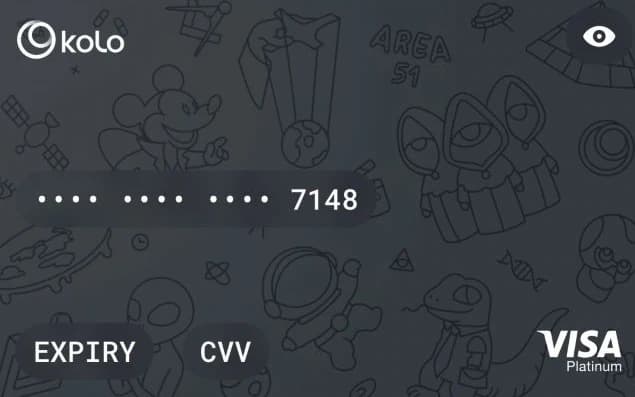
Kolo pays 1% ongoing BTC (2% for the first 30 days), capped at $100/month and $1 per transaction, with $0 annual fee and 0% FX. It is a free BTC pick in a dollar-starved economy where USDT already functions as parallel currency.
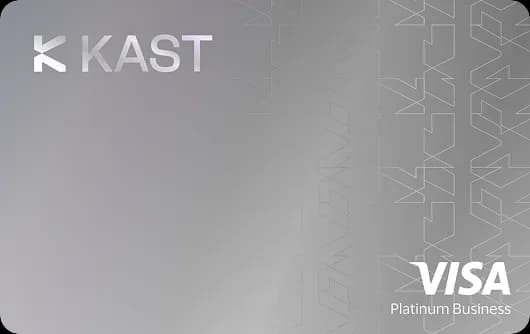
KAST at 1.5% USD cashback on the first $2,000/month with $0 annual fee and 2-minute KYC is the fastest path from Binance P2P to card spending for Bolivia's 49% unbanked.
Tria Signature at 4.5% on the first $1,000/month (then 1%) with self-custody offers USDT cashback, though a 1% FX fee and a 0.5% per-payment charge net it to about 3% on the first $1,000. ether.fi Core supports direct stablecoin spending or optional borrowing against eligible collateral.
Best Card For Every Need in Bolivia
Top 5 Crypto Cards in Bolivia
Bolivia's June 2024 ban lift, after a decade of complete prohibition, created a market of first-time crypto users rather than DeFi sophisticates. That is why this list is deliberately short and simple. ether.fi Core heads the no-stake cards at 3% in ETHFI on the first $2,000 per month.
Kolo at 1% ongoing BTC cashback (2% for the first 30 days, capped at $100/month and $1 per transaction) with $0 annual fee and 0% FX still fits a dollar-starved economy where USDT already functions as parallel currency and Toyota, Yamaha, and BYD accept it for vehicle purchases.
KAST leads the practical on-ramp because 49% of Bolivian adults lack bank accounts and its 2-minute KYC means going from Binance P2P USDT to international card spending in minutes, which sidesteps the 30-50% decline rate on Banco Bisa and BMSC cards.
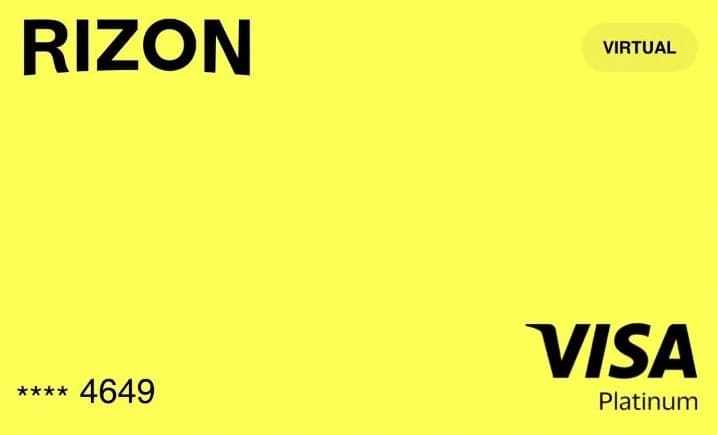
Rizon Standard earns its place as a US-issued Visa Platinum with USD account details for eligible Bolivian passport holders. The virtual card costs $1 with code spendnode, and the USDT that funds it stays in the holder's own smart-contract wallet. Check the all-in cost of acquiring USDT separately from the card's FX fee.
RizPoints stand in for cashback on the free plan, and non-USD purchases carry 1.7% + $0.30, so Kolo and KAST keep the boliviano cashback while Rizon carries the dollar-account layer.
Tria Signature at 4.5% on the first $1,000/month (then 1%) adds self-custodial USDT cashback, though its 1% FX and 0.5% per-payment fees pull the net to about 3%. At the BCB's September 16 reference rate, its $109 annual fee needs roughly BOB 3,075/month of spend to clear. ether.fi Core offers tiered ETHFI rewards with direct stablecoin spending and an optional collateral-backed route.

1. ether.fi Core Card
3% Back on the First $2,000 Each Month, No Stake Required
2. Kolo Card
Earn Bitcoin on Purchases: 2% for 30 Days, Then 1% (Capped) + Visa Platinum + 170+ Countries
3. KAST K Card
Free USD Cashback: 1.5% on First $2K/Month
4. Rizon Standard Card
A $1 US virtual Visa Platinum for passport holders the traditional card system skips.
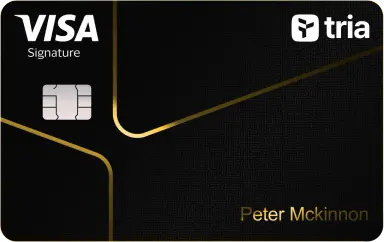
5. Tria Signature Card
High-Yield Self-Custody: 15% APY + Visa Signature Perks
Complete list:
All 42 crypto cards available in Bolivia in September 2026
This table includes every crypto card we currently track for Bolivia. Rows marked Top pick are ranked and reviewed above.
| Crypto card | Max rewards | Annual fee | FX fee | Type | Custody |
|---|---|---|---|---|---|
1 ether.fi Core CardTop pick | Up to 3% rewards | Free | 0.5% | Crypto Backed Credit | Self-custody |
2 Kolo CardTop pick | Up to 2% rewards | Free | 0% | Prepaid | Custodial |
3 KAST K CardTop pick | Up to 1.5% rewards | Free | 0.5% | Prepaid | Custodial |
4 Rizon Standard CardTop pick | Varies | Free | 1.7% | Crypto Backed Credit | Self-custody |
5 Tria Signature CardTop pick | Up to 4.5% rewards | $109/year | 1% | Debit | Self-custody |
| Up to 10% rewards | Free | 0% | Prepaid | Custodial | |
| Up to 10% rewards | Free | 3% | Debit | Hybrid | |
| Up to 8% rewards | Free | 0% | Debit | Custodial | |
| Up to 6% rewards | $250/year | 1% | Debit | Self-custody | |
| Up to 5% rewards | Free | 1% | Crypto Backed Credit | Self-custody | |
| Up to 5% rewards | Free | 0% | Debit | Self-custody | |
| Up to 5% rewards | Free | 1% | Debit | Self-custody | |
| Up to 4% rewards | Free | 0% | Crypto Backed Credit | Self-custody | |
| Up to 4% rewards | Free | 1% / 1.8% | Debit | Hybrid | |
| Up to 4% rewards | Free | 0% | Crypto Backed Credit | Self-custody | |
| Up to 3% rewards | Free | 0.25% | Crypto Backed Credit | Self-custody | |
| Up to 3% rewards | Free | 0% | Crypto Backed Credit | Self-custody | |
| Up to 3% rewards | $10000 | 0.5% | Prepaid | Custodial | |
| Up to 3% rewards | $199 | 0.5% | Crypto Backed Credit | Self-custody | |
| Up to 3% rewards | $129 | 1.2% | Prepaid | Custodial | |
| Up to 2.5% rewards | $83.88 | 1.02% | Crypto Backed Credit | Self-custody | |
| Up to 2% rewards | $1000 | 0.5% | Prepaid | Custodial | |
| Up to 2% rewards | Free | 1% | Crypto Backed Credit | Self-custody | |
| Up to 2% rewards | $999 | 0% | Crypto Backed Credit | Self-custody | |
| Up to 1.5% rewards | Free | 0.5% | Prepaid | Custodial | |
| Up to 1.5% rewards | $20/year | 1% | Debit | Self-custody | |
| Up to 1.5% rewards | $249 | 0.25% | Crypto Backed Credit | Self-custody | |
| Up to 1% rewards | Free | 1% | Crypto Backed Credit | Self-custody | |
| Up to 1% rewards | Free | TBD | Prepaid | Custodial | |
| Up to 1% rewards | $47.88 | 1.275% | Crypto Backed Credit | Self-custody | |
| Up to 1% rewards | $99 | 0.5% | Crypto Backed Credit | Self-custody | |
| Up to 0.5% rewards | Free | 1% | Crypto Backed Credit | Self-custody | |
| none | Free | 0% | Crypto Backed Credit | Self-custody | |
| none | $30 | 0% | Crypto Backed Credit | Self-custody | |
| cashback | Free | 1.75% | Prepaid | Self-custody | |
| cashback | $199 | 0.75% | Prepaid | Self-custody | |
| cashback | Free | 0.5% | Prepaid | Custodial | |
| none | Free | 1% | Prepaid | Self-custody | |
| Varies | Free | 1.2% | Prepaid | Custodial | |
| Varies | Free | 1.2% | Prepaid | Custodial | |
| Varies | Free | 1.2% | Prepaid | Custodial | |
| points | Free | 1% | Debit | Self-custody |
Crypto Card Regulation in Bolivia
Bolivia's crypto regulatory framework underwent a historic transformation in 2024. The Banco Central de Bolivia (BCB) issued Board Resolution N 082/2024 in June 2024, officially repealing the 2014 ban (BCB Resolution 044/2014) that had prohibited all cryptocurrency transactions.
The resolution allows crypto transactions through authorized electronic channels, though cryptocurrencies remain classified as "not legal tender" and "not an authorized means of payment."
The Autoridad de Supervision del Sistema Financiero (ASFI, Financial System Supervisory Authority) oversees regulated financial institutions' interactions with crypto. The Unidad de Investigaciones Financieras (UIF, Financial Investigations Unit) monitors transactions for AML/CFT compliance. The Servicio de Impuestos Nacionales (SIN, National Tax Service) has authority over crypto taxation but has not yet issued specific guidance.
Key milestones since the ban lift: Banco Bisa introduced USDT custody services in October 2024. YPFB (Yacimientos Petroliferos Fiscales Bolivianos, the state oil company) began settling fuel import contracts with digital assets in March 2025. By September 2025, Toyota, Yamaha, and BYD began accepting USDT payments for vehicle purchases in Bolivia.
In November 2025, Economy Minister Jose Gabriel Espinoza announced the formal integration of cryptocurrencies and stablecoins into the financial system. Banks can now custody crypto on behalf of clients and offer digital currency-based savings accounts, credit cards, and loans. 86% of crypto transfers involve individual users rather than businesses, with Binance and USDT as the dominant rails.
Bolivia's card access as of 2026: crypto card issuers including Kolo, KAST, Tria, ether.fi, RedotPay, and others are available in Bolivia. The market is moving from newly reopened to formally integrated as banks gain legal authority to offer crypto-linked products.
Tax Treatment of Card Rewards in Bolivia
Bolivia has no specific cryptocurrency tax legislation. The Servicio de Impuestos Nacionales (SIN) has not issued guidance on how crypto gains should be treated for tax purposes. We have not identified a published SIN case assessing an individual's crypto-card gains. That observation about published enforcement does not establish an exemption.
Under Bolivia's general tax framework, the Impuesto sobre las Utilidades de las Empresas (IUE, Corporate Profits Tax) applies at 25% to business income. The Regimen Complementario al Impuesto al Valor Agregado (RC-IVA) taxes individual employment and investment income at 13%. Whether casual crypto gains fall under RC-IVA or are exempt is unclear. Frequent trading with profit-seeking intent likely qualifies as business activity subject to the 25% IUE.
Example: BTC acquired for BOB 5,000 and later spent at a BOB 15,000 value has a BOB 10,000 difference before transaction costs. If the 13% RC-IVA regime were found to apply to that entire difference, the illustrative tax would be BOB 1,300. Published crypto-specific guidance does not establish that it does apply, or that the difference is exempt. The BOB 1,300 is a scenario, not an assessed liability.
| Cashback Type | When Received | When Spent via Card | Total Tax Burden |
|---|---|---|---|
| BTC cashback | Unclear (no guidance) | Unclear (0-13%) | Uncertain |
| USDC cashback | Unclear (no guidance) | Unclear; BOB value can change | Uncertain |
| Points | Unclear | Unclear | Uncertain |
The absence of crypto-specific guidance does not mean individual gains are tax-free. Stablecoin funding limits token-price volatility, but its BOB value can change and its tax treatment is unresolved. Keep records of acquisitions, rewards, disposals, and conversion costs.
How to Apply from Bolivia
Bolivian crypto card applications require a Cedula de identidad (National Identity Card) issued by the Servicio General de Identificacion Personal (SEGIP), or a Pasaporte boliviano (Bolivian passport) issued by the Direccion General de Migracion. Foreign residents use their Carnet de extranjeria.
Proof of address via utility bills from ENDE (Empresa Nacional de Electricidad, electricity), EPSAS (water and sanitation), Entel, Tigo, or Viva (telecommunications), or bank statements from Banco Bisa, Banco Mercantil Santa Cruz, BancoSol, or BCP. Bolivia's national ID number (CI, Cedula de Identidad, typically 7-8 digits plus a department extension like "LP" for La Paz or "SC" for Santa Cruz) is assigned to all citizens.
Globally available card issuers (RedotPay, KAST) accept Bolivian identity documents. KAST offers 2-minute KYC options for basic tiers, especially useful given Bolivia's high unbanked rate (approximately 49% of adults lack formal bank accounts). Physical card shipping to Bolivia is available but may take 15-30 business days from international issuers, with delivery times longer in rural areas.
Spending Tips for Bolivia
Banking System: The Managed Economy
Bolivia's banking sector operates within one of Latin America's most state-influenced economies. Banco Bisa (largest private bank, made history with USDT custody in October 2024) offers Visa debit cards that work domestically and at some international merchants but charge 3-5% FX markup on foreign purchases with frequent international decline rates of 30-50%.
Banco Mercantil Santa Cruz (BMSC, second largest) has better international connectivity but imposes monthly international spending caps. BancoSol (the world's largest microfinance bank, serving 1.5M+ clients) targets small entrepreneurs but has limited international card functionality. BCP (Banco de Credito) and Banco Nacional de Bolivia round out the tier-one institutions.
The core friction: Bolivian bank cards get routinely declined on Amazon, Netflix, and international e-commerce due to 3DS authentication failures, merchant-side country blocks, and ASFI-mandated spending limits. The QR-based payment systems (VPay, $imple, SoliPagos) handle domestic payments efficiently but cannot process international transactions. A crypto card looks to merchants like any global Visa/Mastercard and bypasses these restrictions.
The Post-Ban Opportunity
Bolivia's June 2024 ban lift is one of the more dramatic regulatory reversals in crypto. The country went from complete prohibition (2014 ban) to Banco Bisa offering USDT custody and YPFB (state oil company) settling fuel imports with digital assets, all within nine months. The 630% surge in crypto transaction volumes signals massive pent-up demand. The regulatory framework is still forming, tax guidance is absent, and the market is expanding rapidly.
Card Selection for Bolivian Residents
- Top free rate at typical spend: ether.fi Core (3% ETHFI on first $2K/mo, then lower bands; $0, 0-0.5% FX)
- Free BTC cashback: Kolo (1% ongoing BTC, 2% for 30 days, capped $100/mo and $1/txn, crypto cards with cashback, $0, 0% FX)
- Fastest on-ramp for unbanked: KAST (1.5% USD cashback on first $2K/mo, $0, 2-minute KYC)
- USDT cashback: Tria Signature (4.5% on first $1K/mo, then 1%, $109/yr, 1% FX + 0.5%/payment, about 3% net)
- Crypto-backed credit: Avici (no disposal event)
Break-Even Math: ether.fi vs Tria vs KAST vs Kolo
No crypto-specific SIN guidance has been identified, so this card-return table excludes personal tax rather than assuming an exemption. USD equivalents and the $109 Tria fee use the BCB's September 16 reference of about BOB 10.15/USD; card-network and USDT purchase rates can differ. ether.fi Core's 3% first band covers every row. Kolo figures assume individual purchases at or under $100, where its $1 cap does not bite.
| Monthly Spend | ether.fi Core (3% ETHFI within these rows, $0) | Tria Sig (4.5% to $1K/mo, then 1%, $109/yr, 1% FX + 0.5%/payment) | KAST (1.5% USD, $2K/mo cap, free) | Kolo (1% BTC, free) |
|---|---|---|---|---|
| BOB 2,500 (~$246) | BOB 900/yr | -BOB 206/yr | BOB 450/yr | BOB 300/yr |
| BOB 4,500 (~$443) | BOB 1,620/yr | BOB 514/yr | BOB 810/yr | BOB 540/yr |
| BOB 7,000 (~$690) | BOB 2,520/yr | BOB 1,414/yr | BOB 1,260/yr | BOB 840/yr |
| BOB 12,000 (~$1,182) | BOB 4,320/yr | BOB 2,437/yr | BOB 2,160/yr | BOB 1,440/yr |
Free ether.fi Core leads the comparison at every displayed spending level, with rewards paid in ETHFI. Tria Signature's $109 annual fee, 1% FX and 0.5% per-payment charge put the modeled break-even near BOB 3,075/month at this reference rate; its draw is self-custodial USDT cashback. KAST remains a low-friction option, while Kolo is the free BTC pick for small purchases.
Spending Scenario: BOB 4,500/month (Bolivian Professional)
| Funding Method | Annual Spend | Rewards (1.5% KAST USD cashback) | Personal tax treatment |
|---|---|---|---|
| BTC | BOB 54,000 | BOB 810 | Not resolved by published crypto-specific guidance |
| USDC | BOB 54,000 | BOB 810 | Not resolved by published crypto-specific guidance |
BOB 810/year (about $80 at the BCB reference) in USD cashback at KAST's 1.5% rate, under the $2K/month cap. Free ether.fi Core leads at BOB 1,620/year (about $160) in ETHFI, while Kolo at 1% ongoing BTC returns BOB 540/year (about $53) before any price move. KAST rewards land as in-app credit toward future card spending after a 14-day hold, rather than cash you can move to a bank.
The SIN has not issued crypto-specific guidance that resolves these card-reward examples. The table is before personal tax; it should not be read as confirmation that the gains or rewards are exempt. Stablecoin funding reduces crypto-price volatility, while acquisition and conversion costs still need checking.
Local Payment Infrastructure
Card acceptance is limited compared to other LATAM markets. La Paz has the best acceptance: Megacenter Irpavi, Multicine, Centro Comercial San Miguel, and the Zona Sur commercial district. Santa Cruz de la Sierra (economic capital): Ventura Mall, Las Brisas Shopping, and the Equipetrol district. Cochabamba: Boulevard de la Recoleta and mall areas.
Visa and Mastercard are accepted at major hotels, upscale restaurants, supermarket chains (Hipermaxi, Ketal), malls, and ATMs. Cash remains dominant in Bolivia, especially in markets, small shops, and rural areas.
QR-based mobile payments are Bolivia's leapfrog technology: VPay, $imple (backed by the Association of Private Banks), and SoliPagos (from BCP) process QR transactions at growing merchant networks. Tigo Money enables mobile money transfers. Apple Pay and Google Pay are not available in Bolivia due to limited local bank support.
The BOB Currency Challenge
The boliviano's former managed rate near BOB 6.91/USD is no longer a useful current card-cost assumption. The BCB posted about BOB 10.15/USD on September 16, 2026 as it moved toward a more flexible FX market.
In September the bank also announced dollar sales to financial institutions to limit market disruption. A card's network rate and the actual price paid for USDT may differ from the BCB reference.
Dollar availability has been a persistent constraint for Bolivian households and firms, helping explain interest in USDT. But USDT is not a bank deposit, and its acquisition price may include a substantial premium to an official reference.
For crypto card users, compare the BOB spent to acquire USDT with the BOB value of the purchase after card-network conversion and issuer fees. A 0% issuer FX fee does not guarantee access to the BCB rate or an arbitrage profit.
Cost of Living by Area
Zona Sur, La Paz (upscale): Rent BOB 3,500-10,000/month. Restaurants USD 8-25/meal. Megacenter Irpavi, shopping centers, and formal restaurants accept Visa/Mastercard. Bolivia's political capital and primary card-acceptance zone.
El Prado/Sopocachi, La Paz (mid-range): Rent BOB 2,000-5,000/month. Growing card acceptance at restaurants, cafes, and shops along the Prado strip. The cable car system (Mi Teleferico) accepts digital payments.
Equipetrol, Santa Cruz (economic capital, upscale): Rent BOB 4,000-12,000/month. Santa Cruz is Bolivia's wealthiest city with the strongest card infrastructure. Ventura Mall, Las Brisas Shopping, and Equipetrol's restaurant strip have the highest POS density in the country.
Plan 3000, Santa Cruz (popular neighborhood): Rent BOB 1,000-2,500/month. Cash-dominant economy. Card use limited to online purchases.
Cochabamba (valley city): Rent BOB 1,500-5,000/month. Card acceptance at Boulevard de la Recoleta and mall areas. Known for its food culture; chicharron restaurants are still cash-only.
Sucre (constitutional capital): Rent BOB 1,200-3,500/month. Limited but growing card acceptance in the historic center. Tourist-friendly establishments accept cards.
The Lithium Factor
Bolivia holds the world's largest lithium reserves (estimated 21 million tonnes in the Salar de Uyuni, the world's largest salt flat). The state-owned Yacimientos de Litio Bolivianos (YLB) and partnerships with Chinese (CATL, TBEA), Russian (Uranium One Group), and local companies are developing extraction capacity. The lithium economy is expected to generate billions in export revenue as global EV demand surges.
This matters for crypto card users because the lithium development is bringing international mining engineers, geologists, logistics companies, and their USD-denominated spending into previously isolated regions (Potosi department, Uyuni). Crypto cards provide these workers with international payment capability that Bolivian banks cannot match in remote mining areas.
Diaspora and Remittances
Bolivia receives approximately USD 1.5 billion in annual remittances (roughly 3.5% of GDP):
Argentina (largest corridor, 350,000+ Bolivians in Buenos Aires, Salta, Jujuy): Many Bolivians work in Argentina's textile workshops, agriculture (Mendoza wineries), and construction. Peso instability means many now convert remittances to USDT rather than sending pesos directly.
Spain (150,000+, Madrid, Barcelona, Murcia): The colonial language connection drives this corridor. Brazil (100,000+, Sao Paulo textile industry): Active but often informal. Chile (80,000+, Santiago, Antofagasta): Mining region pulls Bolivian workers. US (50,000+, Virginia, Maryland, New York): Smaller but growing.
Traditional remittance services such as Western Union, MoneyGram and Soli Remesas can cost 4-8% in a higher-cost transfer scenario once fees and FX are counted. Funding an eligible family member's own card from stablecoins is another route, but acquiring the stablecoins, transferring them, and spending through the card can each add costs. Check the delivered value and issuer rules on card ownership and third-party funding.
Online Shopping and Subscriptions
The post-ban demand spike is partly driven by young Bolivians wanting access to international digital services. Banco Bisa and BMSC Visa cards fail to process Netflix, Spotify, Amazon, AliExpress, Steam, and App Store purchases at high rates. The workaround ecosystem (gift card resellers, asking relatives in Argentina or Spain to make purchases) is expensive and inefficient. A crypto card solves this natively for the 630% increase in crypto users since June 2024.
Cross-Border Spending
Peru (Desaguadero border, Lake Titicaca route to Puno/Cusco): The most active land crossing. Shopping in Puno's markets and tourist spending in Cusco/Machu Picchu. A crypto card avoids BOB-to-PEN conversion at border cambios. Argentina (Villazon-La Quiaca border, flights to Buenos Aires): Business and family visits. Chile (Arica/Tambo Quemado border): Shopping for electronics and goods not available in Bolivia. Brazil (Puerto Quijarro-Corumba border): Commercial trade route.
Supported Exchanges & Wallets in Bolivia
Over a dozen card vendors are available in Bolivia, a sharp shift for a market that was entirely banned until June 2024.
ether.fi Core posts the top free rate at ordinary local spending, paying 3% in ETHFI on the first $2,000 per month.
Kolo has no annual or FX fee and pays 2% in BTC for 30 days, then 1%. Rewards stop at $100 per month and $1 on each purchase. In a dollar-starved economy where USDT is already accepted for vehicle purchases (Toyota, Yamaha, BYD since September 2025), Kolo's BTC rewards still provide a simple dollar-denominated savings angle.
Tria Signature at 4.5% on the first $1,000/month (then 1%) with self-custody offers USDT cashback for La Paz and Santa Cruz professionals who prefer predictable returns, netting about 3% on the first $1,000 once its 1% FX and 0.5% per-payment fees are counted; that USDT cashback can take up to three months to arrive.
KAST at 1.5% USD cashback on the first $2,000/month with $0 annual fee is the fastest path for Bolivians moving from Binance P2P USDT into international card spending without rebuilding around a bank relationship. ether.fi Core combines tiered ETHFI rewards with direct stablecoin spending or optional borrowing against eligible collateral.
RedotPay suits stablecoin-first users with free virtual and physical card options, a natural fit in an economy where USDT already circulates as a parallel dollar. Jupiter serves the Solana/DeFi ecosystem.
On-Ramps: From Ban to Banco Bisa USDT
Binance P2P exploded after the June 2024 ban lift, with BOB pairs and bank transfer (Banco Bisa, BMSC, BancoSol) as primary payment methods. The 630% volume increase means deep liquidity and competitive spreads (1-3% above spot). Banco Bisa made history by offering USDT custody services in October 2024, the first traditional Bolivian bank to integrate crypto. This creates a regulated on-ramp: deposit BOB at Banco Bisa, buy USDT through their custody service, load a crypto card.
YPFB (Yacimientos Petroliferos Fiscales Bolivianos), the state oil company, began settling fuel import contracts using digital assets in March 2025. Its use signals a more receptive government stance toward digital assets, though it does not by itself establish how consumer crypto payments are regulated.
Local Telegram groups ("Bitcoin Bolivia", "Crypto Santa Cruz", "DeFi La Paz") and WhatsApp trading communities handle OTC volumes and serve as educational networks for the wave of new users entering the market post-ban.
A Zona Sur professional spending BOB 4,500/month earns a modeled BOB 1,620/year in ETHFI on free ether.fi Core, or BOB 540/year on Kolo at 1% ongoing BTC. KAST at 1.5% USD cashback offers another card route, but the amount paid to acquire USDT and the checkout conversion both affect the real return.
USD-denominated crypto cards can help someone spend a balance they already hold. They are not a guaranteed inflation hedge: the acquisition spread, card-network rate, and issuer fees determine the result in BOB.
Written by SpendNode Editorial
Frequently Asked Questions
Is cryptocurrency legal in Bolivia?
Yes, since June 2024. The BCB issued Board Resolution N 082/2024 lifting the 2014 ban. In November 2025, Economy Minister Espinoza announced formal integration of crypto and stablecoins into the banking system - banks can now custody crypto and offer digital currency products. Toyota, Yamaha, and BYD accept USDT for vehicle purchases since September 2025.
How is crypto taxed in Bolivia?
There are no specific crypto tax laws. The SIN has not issued crypto-specific guidance. Individual capital gains are in a gray area and currently untaxed in practice. Business-level crypto activity may be subject to 25% IUE. Keep records for potential future regulation. Stablecoin funding eliminates capital gains exposure.
Which crypto cards work in Bolivia?
Kolo (1% ongoing BTC, 2% for the first 30 days, capped $100/mo and $1/txn, $0, 0% FX) remains a simple free card. KAST (1.5% USD cashback on first $2K/mo, $0, 2-minute KYC) is fastest for the 49% unbanked. Tria Signature (4.5% on the first $1,000/month then 1%, $109/yr, with a 1% FX fee and 0.5% per payment netting about 3% on the first $1,000) offers self-custody USDT cashback. ether.fi Core pays 3% in ETHFI on the first $2,000/month, then lower bands, with direct stablecoin spending or optional borrowing. Visa/Mastercard acceptance is limited to major cities, malls, and ATMs.
Can Bolivian banks handle crypto now?
Yes, increasingly. Banco Bisa introduced USDT custody in October 2024. In November 2025, the government formally authorized banks to custody crypto, offer digital currency savings accounts, and issue crypto-linked credit products. 86% of crypto transfers involve individual users, with Binance and USDT as dominant rails.
Other Countries
View all 112 countries →


Latest Page Changes to the Best Crypto Cards in Bolivia Guide
- November 2025 formal financial system integration (banks authorized for crypto custody, savings, credit), Toyota/Yamaha/BYD USDT acceptance (Sep 2025), 22%+ inflation driving adoption