

Best Crypto Cards in Argentina (2026)
Argentina no longer needs crypto cards as a survival hack, but they still beat bank cards on foreign spend, digital services, and stablecoin-funded day-to-day use once you factor in ARCA friction and cashback.
Verified for Argentina
56 crypto cards available
Local currency: ARS
Two things happened in the Milei government that would have been unimaginable three years ago. The Impuesto PAIS, a 30% surcharge on every foreign currency purchase, expired on December 23, 2024. The cepo cambiario, Argentina's six-year-old currency control regime, was lifted on April 14, 2025.
Both were historic. Neither eliminated the reason Argentines carry crypto cards. The dolar tarjeta is halved, not gone: the 30% Ganancias perception still runs on every foreign purchase made through a Banco Galicia, BBVA, Santander, or Macro card, a withholding refundable through ARCA only if you file and qualify, which in practice most Argentines never do. Every card below bypasses it.
Summary:
Which crypto cards are best in Argentina?
The best crypto cards in Argentina in September 2026 are Tria Signature Card, Jupiter Global, COCA Visa Card, Kolo Card, Private (Icy White / Rose Gold), and ether.fi Core Card. The detailed ranking below explains the local tax, fee, and availability trade-offs.
| Crypto card | Base reward | Net after fees | Annual fee | FX fee | Type |
|---|---|---|---|---|---|
| 4.5% base4.5% on the first $1,000/mo, then 1% | 3% | $87 with code | 1% | Debit | |
| 2% baseup to 4% by referring 2 qualifying friends the prior month | 1% | Free | 1% / 1.8% | Debit | |
| 1% baseup to 8% with a large $COCA stake; $15-$350/mo claim capacity by tier | 1% | Free | 0% | Debit | |
| 1% base2% for the first 30 days, then 1%; also capped at $1/EUR 1 per transaction ($2/EUR 2 during intro) and $100/EUR 100 per month | 1% | Free | 0% | Prepaid | |
| 4% baseneeds a $50k CRO stake to hold the tier | 4% | TBD | 0% | Prepaid | |
| 3% base3% on the first $2,000/month, then 1% and 0.5% | 2.5% | Free | 0.5% | Crypto Backed Credit | |
| 1.5% base | 1% | Free | 0.5% | Prepaid | |
| Up to 2.5% rewards | - | $83.88 | 1.02% | Crypto Backed Credit |
Argentina has one of the broadest card selections in Latin America. 27 vendors currently list Argentina as an available market, which is rare outside the EEA, and the spread of custody models and reward mechanics is wide enough that the right card depends on how you earn and spend.
Every card in the table bypasses the 30% Ganancias perception on international purchases. What separates them is whether they minimize the 15% cedular tax, whether they support native stablecoin spending at zero FX, and whether they survive a peso inflation environment that still runs 30 to 40 percent a year.
The saving is no longer a survival tactic against the cepo; it is a tax and cash-flow optimization against the surcharges the reforms left in place, worked through with real ARS numbers in the tax section below.
Best Card For Every Need in Argentina
Top 8 Crypto Cards in Argentina
For an Argentine cardholder, the source of funds and the currency of each purchase matter more than the size of a crypto balance. The choices below cover salary-funded spending, stablecoin income and borrowing against existing holdings. Each has a different fee and tax trail.
Freelancers paid in USDC through Deel, Upwork, or similar want the smallest possible spread between dollar income and peso spending, because every conversion is a potential cedular tax event and every peso left in the wallet loses purchasing power.
Jupiter Global fits this directly: 2% base cashback (4% for a month after referring 2 qualifying friends) on USD-billed transactions, USDC funded straight from a self-custody Solana wallet, $0 fees, and a virtual card in minutes (cashback paid within 48 hours in our testing). Local ARS spend carries 1% non-USD FX on Rain-issued cards or 1.8% on DCS, netting around 1% on Buenos Aires purchases.
KAST at 1.5% USD cashback on the first $2,000/month with 0.5-1.75% FX is a cleaner low-cost pipe, and COCA adds 5% APY on eligible idle USD between pay cycles. Tria Signature at 4.5% on the first $1,000/month (then 1%), with 1% FX and a 0.5% per-payment fee ($109/yr), lands near 4% effective and pays in predictable USDT rather than a volatile reward token.
Salary-earners converting pesos to USDT on payday through Binance P2P or Lemon Cash, then spending internationally, value simplicity over yield. Kolo at 2% intro then 1% BTC, 0% FX, $0 is the most direct version of that flow: top up, spend, done.
Crypto.com Icy at 4% adds airport lounge access at Ezeiza and Aeroparque, perks a frequent traveler would otherwise pay for separately.
Rizon Emerald rounds out the freelancer set from the fee side: $6.99/month buys a US-issued Visa Platinum with international fees near 1.02%, USD and EUR account details a Deel payout can land in, ATM cash at $1 + 0.65%, and both virtual and physical cards included, with USDC collateral sitting in a smart-contract wallet the holder controls.
The 2.5% cashback is capped at the plan fee, so read it as a subscription rebate rather than income; the card earns its slot on the fee schedule and the US banking rail, not the rate.
Occasional travelers who do not want to sell appreciated collateral before a booking can consider a borrowing card. ether.fi Core supports collateral-backed spending as well as direct stablecoin use, while Avici offers a secured-credit model. In either case, the financing cost and tax treatment need to be compared with a direct sale.

1. Tria Signature Card
High-Yield Self-Custody: 15% APY + Visa Signature Perks

2. Jupiter Global
Free virtual USDC card with 2% base cashback

3. COCA Visa Card
Self-Banking: 8% Cashback + 5% APY + 0% FX
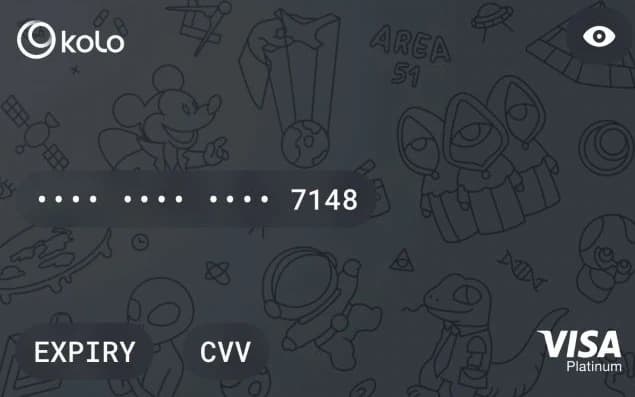
4. Kolo Card
Earn Bitcoin on Purchases: 2% for 30 Days, Then 1% (Capped) + Visa Platinum + 170+ Countries
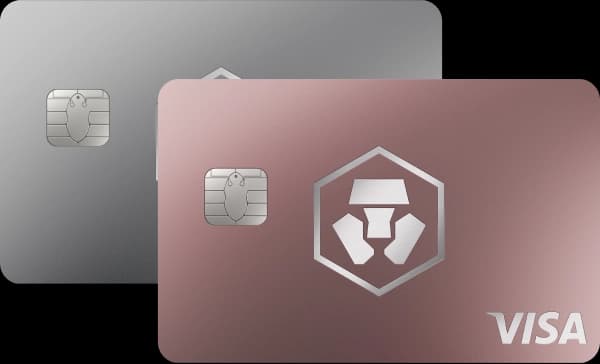
5. Private (Icy White / Rose Gold)
Private Tier: 4% Uncapped Cashback + Lounge Guest

6. ether.fi Core Card
3% Back on the First $2,000 Each Month, No Stake Required

7. KAST K Card
Free USD Cashback: 1.5% on First $2K/Month
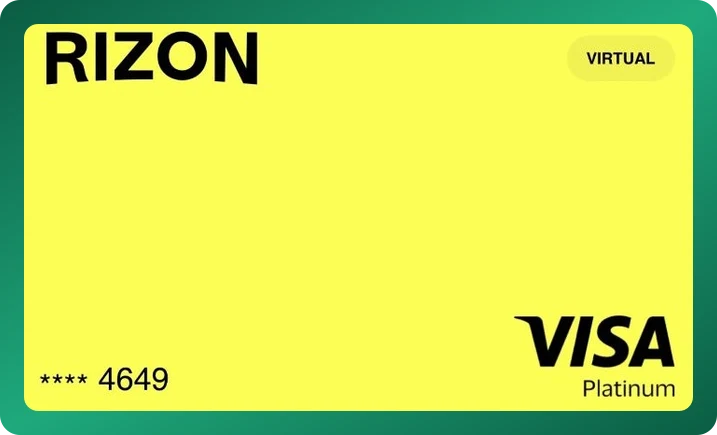
8. Rizon Emerald Card
Rizon's top plan: international fees near 1%, trading at 0.85%, and the physical Visa Platinum included.
Complete list:
All 56 crypto cards available in Argentina in September 2026
This table includes every crypto card we currently track for Argentina. Rows marked Top pick are ranked and reviewed above.
| Crypto card | Max rewards | Annual fee | FX fee | Type | Custody |
|---|---|---|---|---|---|
1 Tria Signature CardTop pick | Up to 4.5% rewards | $87 with code | 1% | Debit | Self-custody |
2 Jupiter GlobalTop pick | Up to 4% rewards | Free | 1% / 1.8% | Debit | Hybrid |
3 COCA Visa CardTop pick | Up to 8% rewards | Free | 0% | Debit | Self-custody |
4 Kolo CardTop pick | Up to 2% rewards | Free | 0% | Prepaid | Custodial |
5 Private (Icy White / Rose Gold)Top pick | Up to 4% rewards | TBD | 0% | Prepaid | Custodial |
6 ether.fi Core CardTop pick | Up to 3% rewards | Free | 0.5% | Crypto Backed Credit | Self-custody |
7 KAST K CardTop pick | Up to 1.5% rewards | Free | 0.5% | Prepaid | Custodial |
8 Rizon Emerald CardTop pick | Up to 2.5% rewards | $83.88 | 1.02% | Crypto Backed Credit | Self-custody |
| Up to 10% rewards | Free | 0% | Prepaid | Custodial | |
| Up to 10% rewards | Free | 3% | Debit | Hybrid | |
| Up to 8% rewards | Free | 0% | Debit | Custodial | |
12 | Up to 8% rewards | TBD | 0% | Prepaid | Custodial |
| Up to 8% rewards | Free | 0% | Debit | Hybrid | |
| Up to 6% rewards | $200 with code | 1% | Debit | Self-custody | |
| Up to 5% rewards | Free | 1% | Crypto Backed Credit | Self-custody | |
| Up to 5% rewards | Free | 0% | Debit | Self-custody | |
| Up to 5% rewards | TBD | 0% | Prepaid | Custodial | |
| Up to 5% rewards | Free | 1% | Debit | Self-custody | |
| Up to 4% rewards | Free | 0% | Crypto Backed Credit | Self-custody | |
| Up to 4% rewards | Free | 0% | Crypto Backed Credit | Self-custody | |
| Up to 3% rewards | Free | 0.25% | Crypto Backed Credit | Self-custody | |
| Up to 3% rewards | Free | 0% | Crypto Backed Credit | Self-custody | |
| Up to 3% rewards | $10000 | 0.5% | Prepaid | Custodial | |
| Up to 3% rewards | $199 | 0.5% | Crypto Backed Credit | Self-custody | |
| Up to 3% rewards | $299.9 | 0% | Prepaid | Custodial | |
| Up to 3% rewards | $129 | 1.2% | Prepaid | Custodial | |
| Up to 3% rewards | Free | 0% | Debit | Hybrid | |
| Up to 2% rewards | $1000 | 0.5% | Prepaid | Custodial | |
| Up to 2% rewards | Free | 1% | Crypto Backed Credit | Self-custody | |
| Up to 2% rewards | $49.9 | 0% | Prepaid | Custodial | |
| Up to 2% rewards | $999 | 0% | Crypto Backed Credit | Self-custody | |
| Up to 1.5% rewards | Free | 0.5% | Prepaid | Custodial | |
| Up to 1.5% rewards | Free | 1% | Debit | Self-custody | |
| Up to 1.5% rewards | $249 | 0.25% | Crypto Backed Credit | Self-custody | |
| Up to 1% rewards | Free | 1% | Crypto Backed Credit | Self-custody | |
| Up to 1% rewards | Free | 1% | Debit | Self-custody | |
| Up to 1% rewards | Free | TBD | Prepaid | Custodial | |
| Up to 1% rewards | $47.88 | 1.275% | Crypto Backed Credit | Self-custody | |
| Up to 1% rewards | $99 | 0.5% | Crypto Backed Credit | Self-custody | |
| Up to 0.5% rewards | Free | 0% | Debit | Hybrid | |
| Up to 0.5% rewards | Free | 1% | Crypto Backed Credit | Self-custody | |
| none | Free | 0% | Crypto Backed Credit | Self-custody | |
| none | $30 | 0% | Crypto Backed Credit | Self-custody | |
| none | Free | 0% | Prepaid | Custodial | |
| Varies | Free | 1.7% | Prepaid | Custodial | |
| cashback | Free | 1.75% | Prepaid | Self-custody | |
| cashback | $199 | 0.75% | Prepaid | Self-custody | |
| cashback | Free | 0.5% | Prepaid | Custodial | |
| none | Free | 1% | Prepaid | Self-custody | |
| none | Free | 1% | Debit | Self-custody | |
| Varies | Free | 1.5% | Debit | Custodial | |
| Varies | Free | 1.2% | Prepaid | Custodial | |
| Varies | Free | 1.2% | Prepaid | Custodial | |
| Varies | Free | 1.2% | Prepaid | Custodial | |
| Varies | Free | 1.7% | Crypto Backed Credit | Self-custody | |
| points | Free | 1% | Debit | Self-custody |
Crypto Card Regulation in Argentina
Argentina regulates crypto through three agencies. The CNV (Comisión Nacional de Valores) is the securities regulator and now the lead authority over virtual asset service providers. The BCRA (Banco Central de la República Argentina) controls banking, payments, and the exchange rate regime. The UIF (Unidad de Información Financiera) is the financial intelligence unit responsible for AML enforcement.
Law 27,739 and the PSAV Framework
Law 27,739 (March 2024) created Argentina's formal Virtual Asset Service Provider framework and handed CNV direct oversight of crypto exchanges, custodians, wallet providers, and card issuers operating in Argentina.
The CNV implementing rule was Resolution 994/2024, which set up the Registro de Proveedores de Servicios de Activos Virtuales (Registro PSAV) and staggered the deadlines: individuals by July 1, 2025, Argentine companies by August 1, and foreign companies by September 1, 2025.
VASPs operating above the threshold set in Resolution 994/2024 (denominated in UVA units, roughly in the tens of thousands of USD at 2026 values) must register. The framework imposes tiered minimum net worth requirements, annual CNV registration fees, and mandatory annual audits, with the specific figures set by activity category in the implementing resolutions.
Legal commentary from Dentons and Chambers and Partners has put net worth requirements in the USD 35,000 to 150,000 range and annual fees near the USD 10,000 mark, but prospective VASPs should read the CNV text directly rather than rely on summary figures.
Resolution 1058/2025 (published in the Boletín Oficial on March 14, 2025, effective December 31, 2025) tightened the original framework with new transparency, sustainability, and user protection requirements, and all existing PSAVs had to adapt their operations by the December 2025 deadline.
The live CNV PSAV register is published publicly - if a crypto card issuer claims to be registered in Argentina but does not appear there, treat that claim skeptically.
UIF Resolution 49/2024 requires VASPs to maintain risk-based AML programs, designate an MLRO (Money Laundering Reporting Officer), systematically report transactions at or above six times the SMVM (Salario Mínimo Vital y Móvil), and comply with travel-rule obligations aligned with FATF Recommendation 16.
On April 30, 2026, the CNV opened public consultation on RG 1137, a proposed expansion of Argentina's tokenized securities regime. The proposal would let more negotiable securities issued under automatic public-offering regimes be represented digitally, including low-impact and expanded medium-impact issuance paths, and would extend the regulatory sandbox to December 31, 2027.
This does not change crypto card rules directly, but it reinforces the same pattern already visible in the PSAV framework: Argentina is trying to move more on-chain financial activity into CNV-supervised rails rather than leaving it entirely offshore.
The Cepo Lift and the Exchange Rate Band
The cepo cambiario was lifted on April 14, 2025, backed by a $20 billion IMF agreement. For the first time since 2019, individuals could purchase USD freely at the official rate. The government adopted a moving exchange rate band with monthly inflation-linked adjustments.
As of the BCRA's April 2025 cambiario market report, the initial band ran 1,000 to 1,400 ARS/USD. By December 2025 the lower bound was 921 and the upper bound 1,518, and from January 1, 2026 the band ceiling and floor adjust monthly in line with the most recent inflation figure. Milei has said the ultimate goal is a free float.
In early 2026 the official rate, blue dollar, and MEP have all converged to roughly 1,430 to 1,460 ARS per USD. The gap that once defined Argentine crypto trading (buy USDT at blue, sell at MEP, pocket the spread) has almost entirely closed. Crypto card savings that still exist do not come from FX arbitrage; they come from Ganancias perception avoidance, IVA Digital avoidance, and stablecoin cost basis tracking.
The Impuesto PAIS Expiration
The Impuesto PAIS, a 30% surcharge introduced in 2019 with a five-year legal sunset, expired on December 23, 2024 when the government declined to extend it. That alone cut the combined dolar tarjeta surcharge roughly in half.
What remains on bank card foreign purchases is the 30% Ganancias perception - a withholding against income tax, refundable through ARCA after the fiscal year ends, available in full only to individuals who do not owe income tax or personal property tax. In practice, a significant share of card users either never file or wait many months for the refund to land, which turns the perception into a long-duration cash-flow drag even when it is not a permanent cost.
Banks Still Cannot Offer Crypto Directly
In May 2022, the BCRA issued Communication A7506, restricting commercial banks from carrying out or facilitating operations involving digital assets that have not been authorized by a competent national regulator or the BCRA. The BCRA still presents that restriction as its operative position.
In December 2025, press reports said the BCRA was working on a measure that could allow traditional banks to offer crypto services, with one industry estimate pointing to April 2026. That estimate passed without an implementing communication. As of September 2026, users should not treat direct crypto trading or custody inside an Argentine bank as an available funding route unless the BCRA publishes an authorization or replacement rule.
The LIBRA Scandal, in Short
Argentina's pro-crypto political narrative took structural damage on February 14, 2025, when President Milei posted an endorsement of the $LIBRA memecoin on his official X account. The token spiked to a multi-billion-dollar market cap and collapsed within hours; blockchain analysts identified the move as a coordinated insider sell-off and investors were reported to have lost around $251 million.
A government task force was created to investigate and then disbanded, and the criminal probe has continued through 2026 with additional evidence surfacing in April 2026 via a New York Times investigation.
The scandal has not changed ordinary user behavior at any measurable scale: local fintech adoption continues, Binance P2P is still clearing large volumes, and stablecoins are still the dominant retail on-chain product in the market. The lesson for card users is narrower and practical: do not load politically promoted memecoins into your card wallet expecting yield. Stick to assets with real on-chain liquidity and independent audit trails.
Separately, a Buenos Aires federal court ordered Polymarket blocked nationwide in March 2026, arguing the prediction market operates as an unlicensed online betting service. The CNV's jurisdiction over virtual assets does not automatically extend protection to prediction markets or unlicensed derivatives.
Tax Treatment of Card Rewards in Argentina
Argentina taxes crypto under the cedular regime of the Impuesto a las Ganancias. Spending crypto through a card is treated as a disposal (venta or permuta) and triggers tax at the moment of the transaction, regardless of whether any real-world value has been gained. ARCA's crypto microsite is the authoritative source and is worth bookmarking if you are a heavy card user.
The Two Rates Most Pages Get Wrong
The 15% "flat cedular rate" that most commentary cites is only half the picture. For Argentine-source gains by individuals, the rate depends on the currency denomination of the disposal:
- 5% rate applies to gains from crypto sales denominated in Argentine pesos without adjustment clauses
- 15% rate applies to sales conducted in foreign currency, which includes stablecoins and most crypto-to-fiat-abroad conversions
For foreign-source income - crypto held on exchanges or wallets classified as offshore - a flat 15% rate applies regardless of denomination.
In practice, almost every crypto card transaction an Argentine makes lands at 15%. Stablecoins are foreign-currency-denominated by definition. BTC, ETH, and SOL are treated as foreign-currency-linked because they settle against USD.
A peso-denominated sale only exists in narrow cases like an ARS-denominated synthetic on a local exchange, and those are rare. The 5% rate mostly applies to a few pesified products on Ripio, Buenbit, and similar local platforms, and even then only if the disposal is genuinely in pesos with no adjustment clause.
For both rates, ARCA permits deductions for acquisition costs, related expenses, and a small annual special deduction under Article 100. Unrealized gains from price appreciation alone are not taxable. Only the disposal event is.
The Phantom Gains Trap
Peso depreciation can create a nominal ARS gain on a stablecoin held for months, even when its dollar value barely moves. Under the 15% cedular treatment described here, the calculation uses the ARS gain rather than a USD-equivalent real gain. That leaves a cardholder with tax on an increase in pesos that did not improve purchasing power.
A concrete example. In March 2025, Martín buys 1,000 USDT at ARS 1,150 per USDT, spending ARS 1,150,000. Twelve months later, in March 2026, he spends that same 1,000 USDT through a crypto card at Miami Airport. The market price of USDT is now approximately ARS 1,450. The nominal "gain" ARCA sees is ARS 300,000 on the disposal, and at the 15% cedular rate that is a tax bill of ARS 45,000, approximately $31 USD at the March 2026 rate.
In real purchasing power terms, Martín never gained anything. He held 1,000 USDT, which was worth exactly $1,000 at the start and $1,000 at the end. The ARS 300,000 "gain" is entirely peso depreciation. Argentina's tax system does not currently index cost basis for inflation on crypto disposals, so the tax still applies.
The problem was far worse in 2023 when inflation ran over 200%, and it still bites enough in 2026 to matter. Multiply the Martín example by any real freelancer balance - $20,000 held over twelve months - and the phantom tax bill grows to approximately $620 USD per year on zero real appreciation.
Stablecoin spending does not eliminate this but it simplifies it. USDT held for shorter periods generates smaller nominal gains. BTC and ETH held through price appreciation generate real gains plus phantom gains stacked together, and the tax hits the combined figure.
For long-term holders, cards with collateral-backed borrowing, including ether.fi and Avici, can postpone an immediate sale. That may reduce current-period disposal pressure, but it adds interest, repayment, liquidation, and classification questions that direct stablecoin spending does not.
Cashback Taxation
| Cashback Type | Tax When Received | Tax When Spent | Phantom Gains Risk |
|---|---|---|---|
| BTC cashback | Income at ARS FMV at receipt | 15% cedular on nominal ARS gain | High - BTC price volatility plus peso depreciation stack |
| USDT/USDC cashback | Income at ARS FMV at receipt | 15% cedular on ARS depreciation | Medium - pure peso depreciation, predictable |
| Points / non-crypto rewards | Generally not taxable | Taxable on conversion to crypto or cash | Low |
Keep records of every transaction in both ARS and USD equivalent. A card spend of $50 at a Miami Starbucks on a 2024 USDT balance should be logged as "50 USDT, ARS X at disposal, USD 50 equivalent, cost basis Y ARS from ." Without that record, you cannot defend the real-purchasing-power position in any future ARCA dispute. The administration has hinted at crypto tax reforms but as of 2026 the cedular regime is what applies.
How to Apply from Argentina
Argentine crypto card applications require a DNI (Documento Nacional de Identidad), proof of Argentine address (comprobante de domicilio: utility bill such as Edenor/Edesur, bank statement from Galicia/BBVA/Macro, or service bill), and your CUIT or CUIL number (Clave Unica de Identificacion Tributaria/Laboral) for tax reporting.
Exchange-linked cards from Crypto.com typically offer fast verification for users with existing accounts. New users should expect 1-3 business days. Physical cards from global issuers ship from international fulfillment centers and can take 3-6 weeks to arrive in Argentina (Correo Argentino or private courier). Virtual card access is usually available within minutes.
Note: Some global issuers may require a passport in addition to DNI for non-Argentine nationals residing in Argentina.
Spending Tips for Argentina
The Argentine FX and Tax Glossary
Argentina has more FX and tax vocabulary than any other crypto card market on this site. None of it is optional background - each term maps to a real cost or savings decision for a card user. Bookmark this before the rest of the section.
| Term | What it means |
|---|---|
| Dólar oficial | The BCRA official exchange rate, set within the monthly inflation-linked band. Bank card foreign purchases settle here |
| Dólar blue | The informal "black market" USD rate from cueva money changers. As of 2026, converged to within 1-2% of the official rate after Milei's reforms |
| Dólar MEP (Mercado Electrónico de Pagos) | The "bond dollar" - buy a USD-denominated bond with ARS, sell for USD. Legal pathway to USD-equivalent value. Used by Invertir Online, Balanz, Bull Market |
| Dólar CCL (Contado con Liquidación) | Like MEP but settles the USD abroad. Used by people and companies moving dollar-equivalent value offshore |
| Dólar tarjeta (or dólar turista) | The all-in effective rate when you pay in USD using an Argentine bank card. Before reforms: official + PAIS + Ganancias = 60%+ above official. As of 2026: official + Ganancias = 30% above official |
| Impuesto PAIS | The 30% surcharge on foreign currency transactions introduced in 2019 with a five-year sunset. Expired December 23, 2024 |
| Ganancias perception (Retención de Impuesto a las Ganancias) | The 30% withholding on bank card foreign purchases. Legally a tax credit against annual income tax. Refundable only if you file and qualify |
| IVA Digital | The 21% VAT on digital services (Netflix, Spotify, Amazon Cloud, Adobe, Canva) purchased with an Argentine-issued card |
| Cedular | The flat-rate tax regime for specific income categories including crypto gains. 5% for peso-denominated, 15% for foreign-currency-denominated sales |
| Cepo cambiario | The currency control regime that restricted USD purchases from 2019 to April 14, 2025 |
| ARCA (formerly AFIP) | The tax and customs agency. Handles the Ganancias perception refund, crypto disposals, and annual income tax filings |
| CUIT / CUIL (Clave Única de Identificación Tributaria/Laboral) | Argentine tax ID, required for every card application |
| BCRA, CNV, UIF | Central bank, securities regulator (now the lead VASP authority), and financial intelligence unit respectively |
| MODO | Argentina's unified bank-app payment rail. Links to Galicia, BBVA, Santander, Macro, and most banks. Dominant for bank-linked QR and transfer payments |
| Mercado Pago QR | The dominant non-bank QR payment network. Runs on a separate rail from MODO and cards |
What the Reforms Changed, and What They Did Not
The temptation after Milei's reforms is to treat Argentina as a normal Latin American card market. It is not yet, and the split below is the reason.
| What actually changed | What did not |
|---|---|
| Impuesto PAIS expired December 23, 2024 (−30% on card spend) | 30% Ganancias perception still runs on every bank card foreign purchase |
| Cepo cambiario lifted April 14, 2025 - USD purchase at official rate is legal | 21% IVA Digital still runs on streaming, cloud services, and digital goods |
| Blue dollar converged on official rate (both ~1,430-1,460 ARS/USD in early 2026) | Argentines still save in dollars. Stablecoin purchases are over 50% of all ARS exchange volume per Chainalysis |
| The BCRA considered allowing bank crypto services in late 2025, but no implementing rule followed | Communication A7506 remains the published position; do not assume a direct bank crypto route is available |
| Inflation fell from 200%+ (2023) to roughly 30-40% (2026) | 30-40% inflation still erodes ARS savings faster than nearly any other major currency |
| CNV finalized the PSAV framework with Resolution 1058/2025 (effective Dec 31, 2025) | ARCA refund process still requires annual filing; most Argentines do not file for it |
| City of Buenos Aires accepts crypto for certain taxes | LIBRA scandal damaged trust in top-down crypto narratives |
The crypto card value proposition shifted from "survival against the cepo" to "optimization against the surcharges that remain." Everything downstream of this section - funding routes, mistakes, math - assumes that framing.
Banking System and Local Payment Rails
Argentina's banking sector is modern and functional for domestic spending. Banco Galicia (largest private bank), BBVA Argentina, Banco Santander Río, Banco Macro (largest domestic), HSBC Argentina, and the neobank Brubank all issue Visa and Mastercard that work without friction at local terminals. MODO, the unified bank app, connects most of them into a single QR and transfer rail.
For domestic payments, the local stack is adequate. You can pay for groceries at Coto, coffee at a Palermo café, and a taxi through MODO or Mercado Pago QR without friction. Crypto cards do not meaningfully compete at this layer.
Where the local stack breaks down is international spending. As of 2026, bank card foreign purchases incur the 30% Ganancias perception plus 21% IVA Digital on digital services plus the bank's own FX spread of 1 to 3 percent. The total effective surcharge runs 30 to 51 percent above the official rate, down from 60 to 100 percent before the reforms. A crypto card with 0% FX bypasses the perception, the IVA on digital services, and the bank spread, and adds 1 to 8 percent cashback on top.
Funding Routes: How Stablecoins Actually Reach Your Card
Four routes move ARS into stablecoins and stablecoins onto card wallets. Each one fits a different user profile.
-
Binance P2P → card wallet. The largest single route in practice. Any given session shows hundreds of active ARS/USDT sellers offering Mercado Pago, bank transfer from Galicia/BBVA/Macro, and neobank rails from Brubank and Ualala as payment methods, with spreads typically running 1 to 2 percent above the underlying market rate. Best for Martín the Galicia-salary professional converting monthly.
-
Deel / Upwork / Fiverr USD payroll → card wallet. The freelancer corridor. Many Argentine freelancers on Deel and Upwork now receive payment in stablecoins directly, skipping the peso leg entirely. USDC lands in a self-custody wallet or a platform balance, then transfers to a card wallet without ever touching ARS. Best for Sofía the Deel freelancer.
-
Lemon Cash / Belo / Buenbit / Ripio → card wallet. The Argentine fintech on-ramp. Lemon Cash has 2 million-plus users and is the most popular local crypto app. Ripio is the oldest, Belo and Buenbit are close competitors. All four offer ARS-to-USDT/USDC conversion plus their own ARS-denominated cards, but the advantage of using them as funding routes for a global card is they handle compliance and reporting in a way Binance P2P does not.
-
MEP dollar via broker → crypto conversion → card wallet. The regulated pathway. Buy a USD-denominated bond with ARS through Invertir Online, Balanz, or Bull Market. Sell for USD. Convert to USDC through the broker's crypto arm or move to an exchange. More paperwork than P2P but legally cleaner for large volumes and for users who want an audit trail.
The Dolar Tarjeta vs Crypto Card Math (2026)
At an assumed early-2026 ARS/USD rate of ~1,450, the post-reform dolar tarjeta surcharge math for a Galicia or BBVA cardholder looks like this:
| Purchase | Bank Card (official + 30% perception) | Bank Card (after ARCA refund) | Crypto Card (0% FX) | Savings vs no refund |
|---|---|---|---|---|
| $100 USD online | ARS 188,500 | ARS 145,000 | ARS 145,000 | 23% |
| $500 USD flight | ARS 942,500 | ARS 725,000 | ARS 725,000 | 23% |
| $50 USD Netflix | ARS 109,900 (+ IVA Digital 21%) | ARS 87,725 | ARS 72,500 | 34% |
ARS figures assume the early-2026 exchange rate band. With the blue dollar now converged on the official rate, the crypto card FX arbitrage is gone. The remaining savings come from three places: (1) avoiding the 30% Ganancias perception entirely instead of deferring it through ARCA, (2) avoiding IVA Digital on streaming and digital services, and (3) earning 1 to 8 percent cashback on top.
For diligent ARCA filers, the savings narrow to cashback plus IVA avoidance - still meaningful on digital services. For the Argentine majority who do not file, crypto cards still save 23 to 34 percent per transaction in cash, not in refund queue tickets.
Spending Scenario: $500 USD/month in Stablecoins
Take Sofía the Deel freelancer. She receives $3,000/month in USDC and spends roughly $500/month internationally - Amazon, Apple, Canva, Airbnb on weekend trips. Running that through KAST at 1.5% USD cashback on the first $2,000/month and 0.5-1.75% FX versus her Galicia Visa (a higher-yield alternative would be Jupiter Global at 2% on the USD-billed share of her spending):
| Factor | USDT via Crypto Card | Bank Card (no ARCA refund) | Bank Card (with ARCA refund) |
|---|---|---|---|
| Effective ARS cost | approx. ARS 728,625/mo (market + 0.5-1.75% FX) | approx. ARS 942,500/mo (official + 30%) | approx. ARS 725,000/mo (after refund) |
| Ganancias perception | $0 | $150/mo (refundable) | $0 (refunded) |
| Cashback (KAST 1.5% USD) | +$7.50 USD/mo | $0 | $0 |
| Annual perception avoided | $1,800 | Baseline | Refunded (6-12 mo delay) |
| Annual cashback | +$90 USD | $0 | $0 |
| Total annual benefit vs no refund | approx. $1,890 USD | $0 | $1,800 (delayed) |
For Sofía's actual financial situation (she works on deadlines and does not enjoy filing ARCA paperwork) the crypto card saves approximately $1,890 per year. If she is diligent and does file, the savings narrow to $90 in cashback plus the time value of not extending the government a 30% interest-free loan on every transaction for 6 to 12 months. Either way the card pays for itself in the first month.
Cost of Living by Area
At an early-2026 effective rate of approximately 1,450 ARS/USD (official, blue, and MEP all converged), the monthly rent ranges below translate roughly as shown in parentheses.
Palermo/Recoleta (Buenos Aires upscale): Rent ARS 400,000 to 1,200,000/month (approx. $275 to $830 USD) for a 2-bedroom. Restaurants $10 to $30 USD per meal. Card acceptance is universal in Palermo Soho, Palermo Hollywood, and Recoleta - contactless Visa/Mastercard at restaurants, cafés, supermarkets, and retail. The best area in Argentina for daily crypto card use.
Belgrano/Núñez (Buenos Aires upper-middle): Rent ARS 300,000 to 700,000/month (approx. $205 to $485 USD). Full card acceptance at Unicenter mall, Coto, Carrefour, and neighborhood restaurants.
Microcentro/San Telmo (Buenos Aires downtown): Rent ARS 200,000 to 500,000/month (approx. $140 to $345 USD). Tourist area with full card acceptance at hotels, restaurants, and attractions. San Telmo Sunday market is cash-only.
Córdoba Capital (second city): Rent ARS 150,000 to 400,000/month (approx. $105 to $275 USD). Good card acceptance at Patio Olmos and Nuevocentro, supermarkets, and formal restaurants. Roughly 20 to 30 percent cheaper than Buenos Aires.
Rosario (third city): Rent ARS 130,000 to 350,000/month (approx. $90 to $240 USD). Card acceptance at Alto Rosario mall and formal establishments. Growing tech sector.
Mendoza (wine region): Rent ARS 120,000 to 350,000/month (approx. $85 to $240 USD). Tourism-driven card acceptance at bodegas, restaurants, and hotels. Wine region tourism generates USD-denominated spending.
The Five Most Common Mistakes
Every one of these we have seen people make, and the cost is almost always higher than the ARS 30,000 annual fee on even the most expensive crypto card in the comparison table.
-
Treating the ARCA refund as a reliable benefit. The single most common Argentine mistake. A family spends $4,000 USD on a Miami trip with a Galicia Visa, pays $1,200 in Ganancias perception, and reassures themselves it is "just a withholding, we will get it back."
In practice, they either never file, file six months late and wait another six for the refund, or discover at filing time that they do not qualify because they owe income tax against the withheld amount. Cost: $1,200 per $4,000 trip, refunded after 12 to 18 months if at all. How to avoid it: assume the 30% perception is a sunk cost unless you have a history of actually filing and receiving refunds, and size the crypto card savings against the no-refund scenario.
-
Pricing FX savings off the blue dollar. Still common on Argentine crypto forums: "the crypto card is better because it settles at the blue dollar rate, which is higher than official." This was true in 2022 and 2023. As of early 2026 the blue dollar, MEP, and official rate have all converged to within 1 to 2 percent of each other. The FX arbitrage that defined the early Argentine crypto trade is gone.
Cost: decisions made on a dead spread. The real savings now come from perception avoidance and IVA Digital, not FX. How to avoid it: recalculate the math against the 2026 converged rate, not a 2023 spread.
-
Peso-denominated cost basis on long-held stablecoins. A freelancer holds $10,000 USDT for twelve months through a period of 35 percent peso depreciation, then spends $500 through a crypto card.
ARCA sees a nominal ARS gain of roughly 175,000 ARS ($120 USD) on that transaction, taxes it at 15% cedular, and the freelancer pays approximately $18 USD of tax on zero real appreciation. Scaled across the full balance over a year this becomes a multi-hundred-dollar phantom tax. Cost: approximately $620 USD per year on a $20,000 USDT balance at 35% peso depreciation, entirely from holding stablecoins.
One response is refreshing stablecoin balances on shorter cycles. Another is collateral-backed borrowing through ether.fi or Avici, provided the financing risks and tax treatment are understood.
-
Holding ARS idle in a card wallet. A common mistake at the opposite end: keeping the card wallet stocked in pesos "for convenience" when topping up. At 30 to 40 percent annual inflation, ARS 200,000 held for six months loses roughly 15 percent of its USD-equivalent purchasing power.
Cost: approximately $20 USD per ARS 200,000 held six months at 2026 inflation rates. How to avoid it: hold stablecoins in the card wallet, convert to ARS-equivalent at the moment of domestic spend, and never use a crypto card as a peso savings account.
-
Using Argentine fintech-issued cards for international travel. Lemon Cash, Belo, Ripio, and Satoshi Tango all issue cards that work beautifully for domestic spend but are structured as local products. International FX can run 2 to 4 percent, international merchant acceptance is narrower, and in some cases the cards are subject to the same Ganancias perception as a Galicia Visa because they route through a local issuing bank.
Cost: a family's Miami shopping trip charged to a Lemon card can incur both the 30% perception and a 3% FX markup - roughly 33% combined surcharge versus a global crypto card's 0 to 1 percent. How to avoid it: use Argentine fintech cards for domestic and Mercado Pago-style spending, and reserve a global crypto card (Tria, COCA, Crypto.com, Kolo, ether.fi) for any international transaction.
Online Shopping and Subscriptions
International online purchases remain the strongest use case for crypto cards post-reform. Digital services (Netflix, Spotify, Amazon, Google One, Canva, Adobe) paid through a Galicia card still incur the 30% Ganancias perception plus 21% IVA Digital - a combined 51% surcharge above the official rate.
Through a crypto card: market-rate equivalent, with card FX fees ranging from 0% (COCA, Crypto.com) to about 1.75% (KAST's upper end). For digital services specifically, the savings are still substantial: 30-50% per transaction. For non-digital international purchases (flights, physical goods), the savings are smaller (0-30% depending on ARCA filing habits) but cashback adds value on top.
MercadoLibre (Argentina's Amazon equivalent) accepts local Visa/Mastercard natively, so the crypto card advantage is primarily for international purchases and services.
Cross-Border Spending
Uruguay (Colonia/Montevideo ferry): The most common weekend trip from Buenos Aires. Buquebus ferry to Colonia del Sacramento is 1 hour. Shopping in Montevideo's Punta Carretas mall with a crypto card avoids ARS-to-UYU-to-USD conversion chains. Chile (Mendoza-Santiago bus/flight): Wine country to ski country. A crypto card eliminates the ARS-to-CLP conversion.
Brazil (Iguazu Falls, Florianopolis beach tourism): Crypto card avoids the ARS-to-BRL conversion and Brazilian merchant surcharges. Miami/US (the classic Argentine shopping destination): Direct flights from Ezeiza. A crypto card loaded with USDT converts at market rate without the 30% Ganancias perception that bank cards incur.
Local Payment Infrastructure
Contactless Visa and Mastercard acceptance is nearly universal in Buenos Aires, Córdoba, Rosario, and Mendoza. Supermarkets (Coto, Carrefour, Jumbo, Disco), restaurants, cafés, pharmacies, and retail chains all accept contactless tap, and Argentina has among the highest contactless adoption rates in Latin America.
Two parallel domestic rails live alongside the card networks. MODO is the unified bank-app rail shared by Galicia, BBVA, Santander Río, Macro, and most major banks - it handles QR payments, intra-bank transfers, and bill payments with a single app login.
Mercado Pago QR is the dominant non-bank rail, running on Mercado Pago's own network and dominant at food trucks, kioscos, Rappi/PedidosYa deliveries, and small merchants who never set up a card terminal. Both are peso-denominated and do not compete with crypto cards at the international spend layer.
Apple Pay and Google Pay support in Argentina varies by issuer, with Galicia, Brubank, and Mercado Pago leading on local card wallet integration. For most crypto card users, the relevant question is whether the global card issuer supports mobile wallet provisioning for international travel - COCA, Crypto.com, and Tria all do.
Supported Exchanges & Wallets in Argentina
Argentina has one of the broadest card issuer selections in Latin America. 27 vendors currently list Argentina as an available market, and the reason is obvious from the Chainalysis 2025 Geography of Crypto Report: Argentina ranks 20th globally with $93.9 billion in on-chain transaction volume, second in Latin America behind Brazil.
Over 50 percent of every ARS exchange purchase between July 2024 and June 2025 was a stablecoin. Argentines are buying dollars at scale. They are just doing it on Tether.
Card Issuers Serving Argentina
Tria charges 1% FX on non-USD spend plus a 0.5% fee on every payment across all tiers - Signature at 4.5% on the first $1,000/mo ($109/yr) and Premium at 6% on the first $2,000/mo ($250/yr), dropping to 1% past the monthly cap. After the 0.5% fee the effective USD rates land near 4% (Signature) and 5.5% (Premium).
Because Tria cashback pays in USDT rather than a volatile token, it avoids fresh exposure to Argentina's 15% cedular tax.
Kolo at 2% intro then 1% BTC cashback, 0% FX, $0 annual fee stays Argentina's no-frills free Bitcoin card.
Crypto.com runs a tiered system. The free Midnight Blue provides basic access, while the Icy tier at 4% with CRO stake adds airport lounge access at Ezeiza (EZE) and Jorge Newbery Aeroparque (AEP).
Jupiter Global is built around Sofía's profile: USDC funded direct from a self-custody Solana wallet, 2% base cashback (4% for a month after referring 2 qualifying friends), $0 fees, 0% FX on USD-billed transactions, and 1% Rain or 1.8% DCS on ARS-merchant spend. Cashback paid within 48 hours in our testing. Skips the Binance P2P or Lemon Cash conversion step entirely for freelancers already paid in USDC.
KAST is the older practical route from Binance P2P USDT into international spending. The appeal in Argentina is not speed for its own sake; it is keeping everyday card spend live from stablecoin balances without adding another exchange integration or staking framework. $0 annual fee, 1.5% USD cashback on the first $2,000/month, 0.5-1.75% FX.
COCA combines 1% cashback at Starter with rates up to 8% through $COCA staking, plus 5% APY on eligible idle USD. Monthly reward claims are limited by tier, from $15 at Starter to $350 at Elite. RedotPay on the Solana card suits USDC-native spenders.
ether.fi gives Argentine users direct stablecoin spending plus optional borrowing against eligible collateral. Delaying the sale may also delay its peso-denominated gain, but it does not guarantee a 15% saving on the transaction amount. Loan economics and tax treatment decide the result. Avici offers a separate crypto-backed credit approach.
Bitget Wallet provides DCS wallet spending at 1.7% FX. xPlace is the additional Solana ecosystem option for users who want full key control until the moment of spending.
On-Ramps: The Most Liquid P2P Market in Latin America
Binance P2P is the dominant on-ramp in practice. Any given session shows hundreds of active ARS/USDT sellers offering Mercado Pago, bank transfer (Galicia, BBVA, Macro), and neobank rails from Brubank and Ualala as payment methods, with spreads typically running 1 to 2 percent above the underlying market rate.
Local exchanges provide additional pathways. Lemon Cash (2 million-plus users, the most popular Argentine crypto app), Belo, Buenbit, Ripio (the oldest Argentine crypto platform, founded 2013), and Satoshi Tango all offer ARS-to-USDT/USDC conversion.
Many also issue their own ARS-denominated crypto cards for domestic spending, but as explained in the mistakes section, these lack the international card benefits (zero FX, cashback, borrow-to-spend) of global issuers.
The MEP dollar (dolar bolsa) rate through Argentine brokers like Invertir Online, Balanz, and Bull Market provides a semi-official pathway from ARS to USD-equivalent assets that can then fund crypto card wallets. The CCL (Contado con Liquidación) rate is a legal channel for moving ARS into dollar-denominated value offshore, used more by businesses and high-net-worth individuals than retail card users.
What the Reforms Actually Closed and What They Did Not
Argentina did not stop being a good crypto card market in 2025. It stopped being a simple one. Before the reforms the pitch was survival: crypto cards were the only way to buy dollars at anything resembling a fair rate, and everyone knew it.
After the reforms the pitch is optimization: the cepo is gone, the blue gap is gone, PAIS is gone, and the rational Argentine crypto card user is not the person who distrusts the BCRA but the person who understands exactly what ARCA's Ganancias perception actually costs in cash flow, what the cedular tax actually applies to in ARS-denominated phantom gains, and what a Galicia Visa still charges for a Netflix subscription.
The LIBRA scandal did not change that math. It changed the political frame, and it should make anyone skeptical of top-down crypto narratives endorsed by political figures.
It did not change the fact that over half of Argentine retail crypto purchases are stablecoins, that Lemon Cash still has 2 million-plus users, that Binance P2P still clears ARS/USDT with hundreds of counterparties per session, or that a Buenos Aires freelancer paid in USDC through Deel can save roughly $1,900 USD per year by choosing the right card.
The reforms were real and they were historic. The reason Argentines carry crypto cards changed shape. It did not disappear.
Written by SpendNode Editorial
Frequently Asked Questions
How much do I save vs a bank card after the cepo was lifted?
The cepo was lifted in April 2025 and Impuesto PAIS expired in December 2024, cutting the dolar tarjeta surcharge roughly in half. Bank cards still incur a 30% Ganancias perception (refundable through ARCA) plus 21% IVA Digital on streaming and digital services. A crypto card avoids both entirely. For users who do not file ARCA refunds, savings are 23-34% per transaction plus cashback. For diligent filers, the value is mainly from cashback (1-8%) and avoiding the 6-12 month refund wait.
Is it legal to spend crypto through a card in Argentina?
Yes. Law 27,739 (March 2024) created a formal VASP framework under CNV oversight, and crypto card spending operates within this legal framework. Tax obligations still apply: 15% cedular tax on capital gains from crypto dispositions. The cepo cambiario has been lifted as of April 2025, so there are no longer restrictions on USD access through banks either.
Which card is best for Argentine stablecoin spending?
COCA (up to 8% with staking, 0% FX) offers the highest cashback. Tria Signature (4.5% on the first $1,000/mo then 1%, 1% FX plus 0.5% per payment, about 3% net on peso spend, $109/yr) pays cashback in USDT, so there is no volatile token risk. Kolo (1% ongoing BTC, 2% intro, 0% FX, $0) remains a free BTC cashback option.
KAST (1.5% USD cashback on first $2K/mo, 0.5-1.75% FX, $0) is the simplest stablecoin-to-spending option. ether.fi Core starts at 3% in ETHFI and can spend supported stablecoins directly or borrow against eligible collateral. Crypto.com Icy (4%, CRO stake) adds lounge access at EZE.
What happened with the LIBRA scandal?
On February 14, 2025, President Milei promoted the $LIBRA memecoin on his official X account. The token surged to $5.20 before collapsing in what analysts identified as a coordinated insider sell-off, causing approximately $251 million in investor losses. Milei faces fraud and abuse of power charges. The scandal damaged public trust in crypto but has not affected the regulatory framework - Law 27,739 and VASP registration continue operating normally.
Other Countries
View all 112 countries →


Latest Page Changes to the Best Crypto Cards in Argentina Guide
- CNV's April 2026 RG 1137 consultation, which proposes expanding Argentina's tokenized securities regime and extending the regulatory sandbox through December 2027
- BCRA bank crypto services from speculative ('could take effect') to confirmed (April 2026 launch)
- Detail on separate legal unit requirement and higher capital standards for bank crypto operations
- BCRA bank crypto services from 'considering' to 'actively drafting rules', with potential April 2026 effective date reversing the May 2022 ban
- Polymarket nationwide block ordered by Buenos Aires court in March 2026
- Cepo cambiario lifted April 14, 2025 (backed by $20B IMF agreement). Impuesto PAIS expired December 23, 2024. Dolar tarjeta surcharge dropped from 60-100% to 30-51% (30% Ganancias perception, refundable through ARCA, plus 21% IVA Digital on digital services)
- Law 27,739 (March 2024, VASP framework under CNV oversight), UIF Resolution 49/2024 (AML/travel rule), BCRA considering bank crypto services (April 2026), Buenos Aires accepting crypto for tax payments (August 2025). LIBRA scandal (February 14, 2025) - Milei promoted $LIBRA memecoin, $251M investor losses, fraud charges, task force shutdown and judicial probe revival