

Pionex Card Review 2026
Virtual USDT Mastercard with no issuance or annual fee, a 1% transaction fee, up to 1% cashback, 5% annualized card-balance yield, and 10,000 USDT daily spending limit.

SpendNode Rating for Pionex Card
Pionex Card is a virtual USDT Mastercard with no issuance or annual fee, a 1% transaction fee, up to 1% cashback, and 5% annualized yield on the card balance.
The verified card flow, hourly balance yield, digital-wallet support, and published spending limits give Pionex useful day-to-day depth. The disclosed 1% transaction fee can consume the maximum advertised base cashback, while exchange custody and account-specific programme assignment keep the trust and transparency scores below the product's utility score.
Also relevant for Rewards / Cashback.
How It Competes
Cost Efficiency
3.9
Product Utility
4.3
Custody & Trust
3.5
Reliability & UX
4.1
Transparency
3.8

APPLE PAY
Verified
GOOGLE PAY
Verified

CASHBACK
Verified
Pionex Card Overview
Virtual USDT Mastercard With Up to 1% Cashback and 5% Annualized Yield
The Pionex Card is a virtual USDT Mastercard for existing Pionex users who want a spending balance that continues earning between purchases. It has no issuance or annual fee, up to 1% cashback, 5% annualized yield credited hourly, and Apple Pay and Google Pay support. The reviewed account charges a 1% transaction fee, which can offset the maximum advertised base cashback. Check the exact programme shown in your own app before applying because Pionex operates multiple regional card arrangements.
Fees & Charges
Annual Fee
Free
FX Fee
TBD
ATM Fee
TBD
Requirements
Supported Regions
GLOBAL
Spendable Assets
USDT
On This Page
The Pionex Card reviewed and tested by SpendNode is a virtual, USDT-funded Mastercard inside the Pionex exchange app. It has no issuance or annual fee, charges a disclosed 1% transaction fee, advertises up to 1% cashback, and pays 5% annualized yield on the card balance with hourly accrual.
A Virtual USDT Mastercard Inside Pionex
Pionex Card turns a separate USDT balance inside the exchange app into a virtual Mastercard. You can use the card online or add it to Apple Pay and Google Pay for contactless purchases.
Pionex runs more than one card programme. The Malaysian account we verified received Mastercard number prefix 5240 1394 and the terms documented below. Other accounts may see a Visa, DogPay, Gold, Family, VIP, or corporate offer. The network and fee schedule shown in your app take priority over generic help articles.
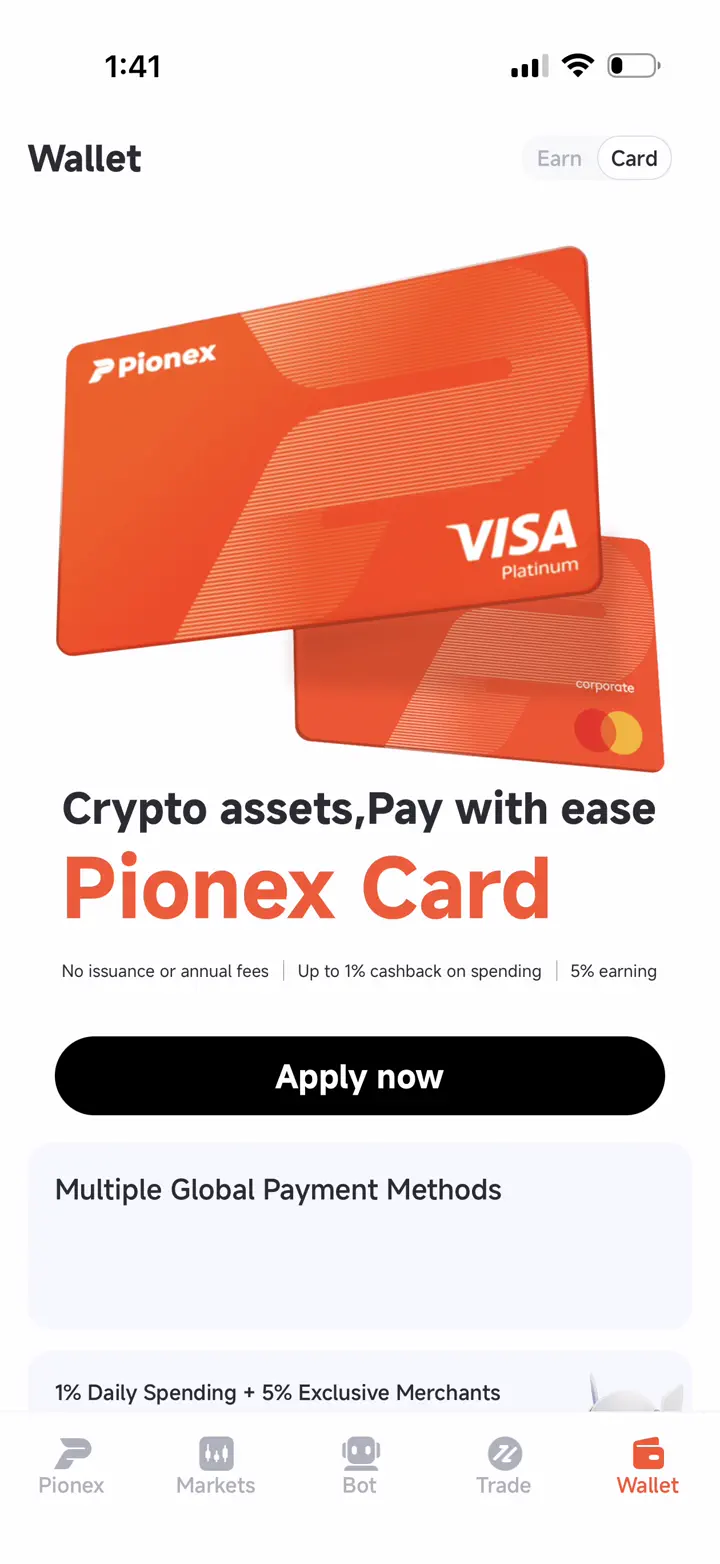
SpendNode app screenshot
Why the artwork is not enough. This screen markets Visa and Mastercard together. The issued number, in-app agreement, and fee schedule determine the actual card. Our prefix, 5240 1394, identifies a Mastercard.
Pionex Promo Code 0NFnwXJiZGk
Register through SpendNode's Pionex link or enter 0NFnwXJiZGk at signup.
| Referred-user benefit | Current rate |
|---|---|
| Spot trading-fee rebate | Up to 15% |
| Manual futures fee rebate | 10% |
| Futures-bot fee rebate | 10% |
The code applies to eligible trading fees; card rewards follow the card terms shown in your app.
How to Use Pionex Promo Code 0NFnwXJiZGk
- Open SpendNode's Pionex signup link. The link passes code 0NFnwXJiZGk into the registration flow.
- Register with your email address or phone number.
- Confirm 0NFnwXJiZGk if Pionex presents a referral-code field, then complete account creation and identity verification.
- Open the Card area after verification. Referral benefits apply to eligible trading fees; the card's cashback and yield follow the separate terms displayed in your account.
How to Apply for the Pionex Card
- Complete Pionex KYC. Card eligibility appears only after Pionex verifies your identity and region.
- Open the Card area in the app. Check which programme, payment network, and fee schedule Pionex assigns to your account.
- Meet the displayed asset threshold. Our account was asked to hold at least 10 USDT of total Pionex assets before issuance. Pionex says some accounts may see a higher requirement.
- Review and submit the application. Our account received a virtual Mastercard, but other users may be offered a different programme.
- Top up the card balance. The reviewed card required an initial transfer of at least 10 USDT into its dedicated spending balance.
- Add it to Apple Pay or Google Pay. The virtual card can then be used online or through a supported mobile wallet.
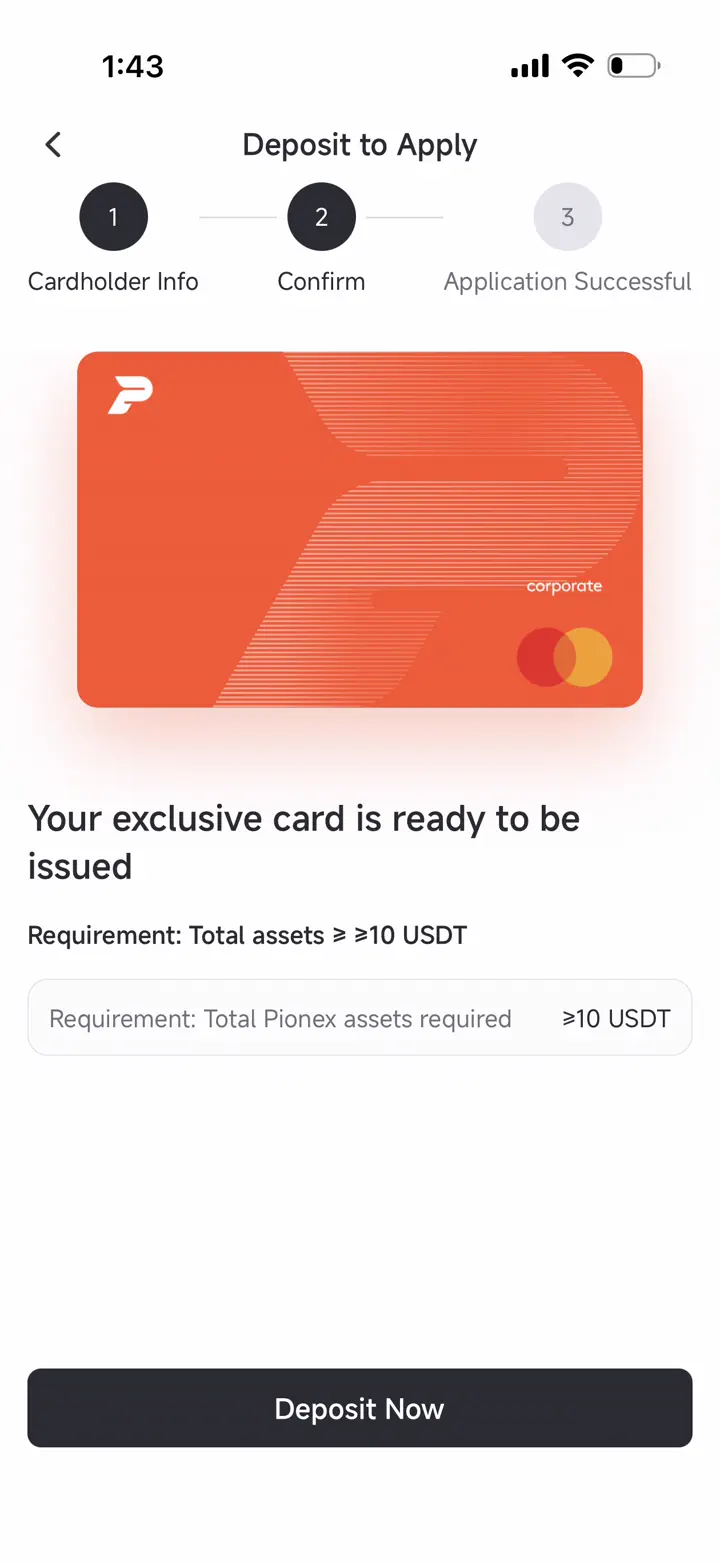
SpendNode app screenshot
SpendNode application result. The account cleared the requirement with at least 10 USDT. This was an eligibility balance rather than an issuance fee.
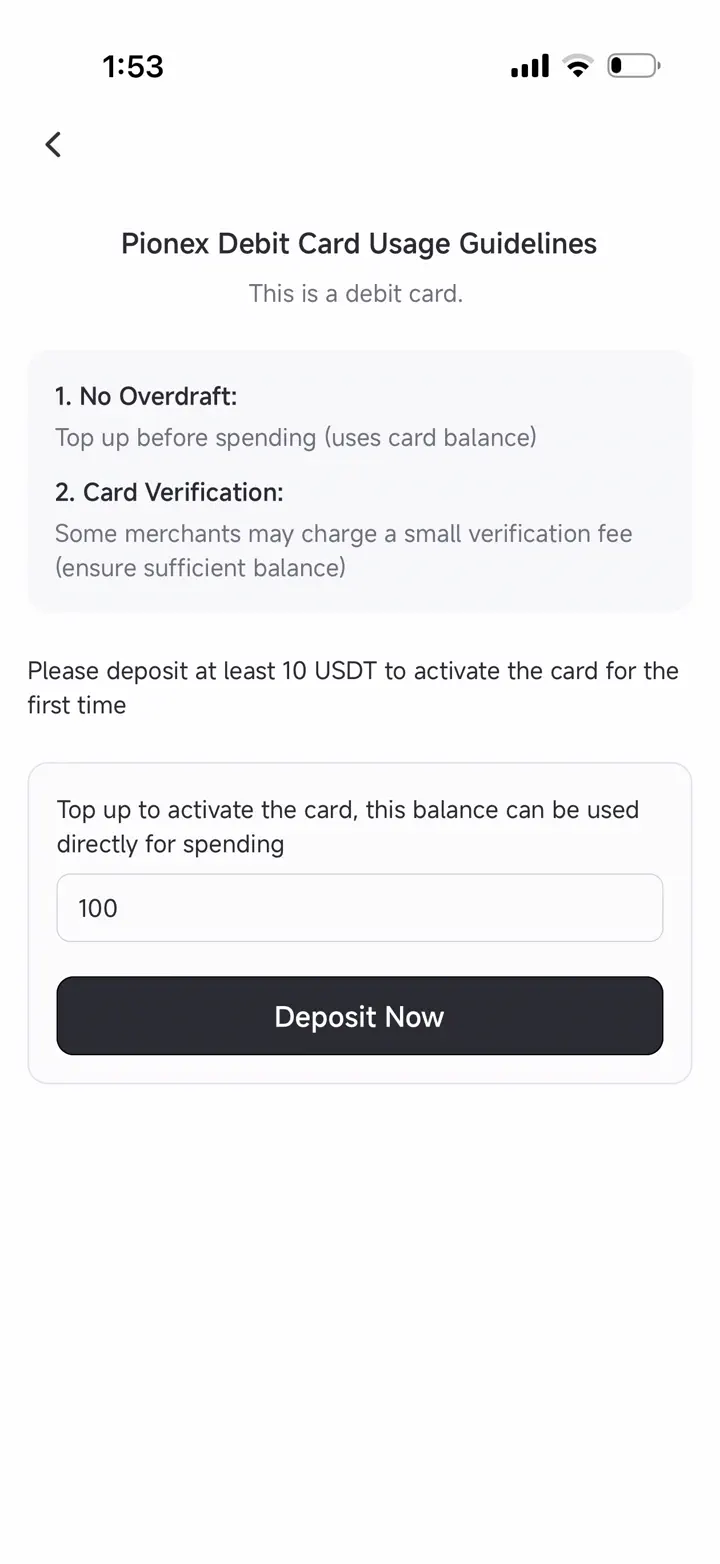
SpendNode app screenshot
Activation is a separate step. Passing the application threshold did not fund the card automatically. The app required at least 10 USDT in the dedicated card balance before spending.
The reviewed card was virtual-only. There was no physical-card order or ATM option in the account, although Pionex separately discusses physical Visa access for selected programmes.
Card Specs: What We Actually Received
Card Type and Payment Network
| Specification | SpendNode-reviewed card |
|---|---|
| Product | Virtual prepaid card |
| Network | Mastercard |
| Funding | Separate custodial USDT card balance |
| Overdraft or credit | None |
| Mobile wallets | Apple Pay and Google Pay |
| Physical card | Not offered on this account |
| ATM access | Not available |
Card Controls
The app provides card details, limits, transaction history, mobile-wallet setup, and card-management controls. These are practical security tools, but they do not change the custody model: the card balance remains inside Pionex.
How Spending Works
The card does not draw directly from every asset in the trading account. You must first move or deposit USDT into its dedicated card balance. The balance is then used for authorizations and settlement.
The card has no overdraft. Pionex also warns that merchants can place small verification charges, so funding only the exact purchase amount can cause a decline.
At checkout, the network converts the merchant amount into the card's settlement amount. Pionex then applies the disclosed transaction fee. Eligible cashback arrives separately and does not reduce the authorization amount.
Fees and Tested FX Cost
| Cost | Reviewed Mastercard account |
|---|---|
| Issuance | $0 |
| Annual fee | $0 |
| Card transaction | 1% |
| ATM withdrawal | Not available |
| Separately disclosed FX fee | Not published |
| Base cashback | Up to 1% on eligible spending |
Pionex's 1% transaction fee and up-to-1% cashback can cancel each other at best before exchange-rate effects. If a purchase is excluded from cashback or earns less than 1%, the fee remains.
SpendNode MYR Transaction Test
We tested the issued Mastercard on a MYR 29.30 purchase. Pionex deducted USD 7.3629 while the contemporaneous online reference rate was MYR 4.08 per USD.
| Calculation | Amount |
|---|---|
| Purchase at reference rate | About USD 7.1814 |
| Actual card deduction | USD 7.3629 |
| Difference | About USD 0.1815 |
| Total observed cost above reference | About 2.53% |
This is the total observed difference, including the disclosed 1% transaction fee. Pionex did not label the remaining conversion difference as an FX fee, so we do not represent the result as a universal 2.53% FX charge. Network, programme, country, currency pair, timing, and settlement can all change the outcome.
Rewards and Cashback
The everyday reward is up to 1%. Pionex does not frame that wording as a universal guarantee on every payment. Refunds, reversals, merchant-category exclusions, country restrictions, and programme-specific rules can reduce or eliminate rewards.
Partner offers are separate. The Trip.com page in our app displayed 5% for hotels, 0.5% for flights, 1.8% for trains, and different rates for packages, activities, rentals, and cruises. It also estimated a one-to-three-month payout period.
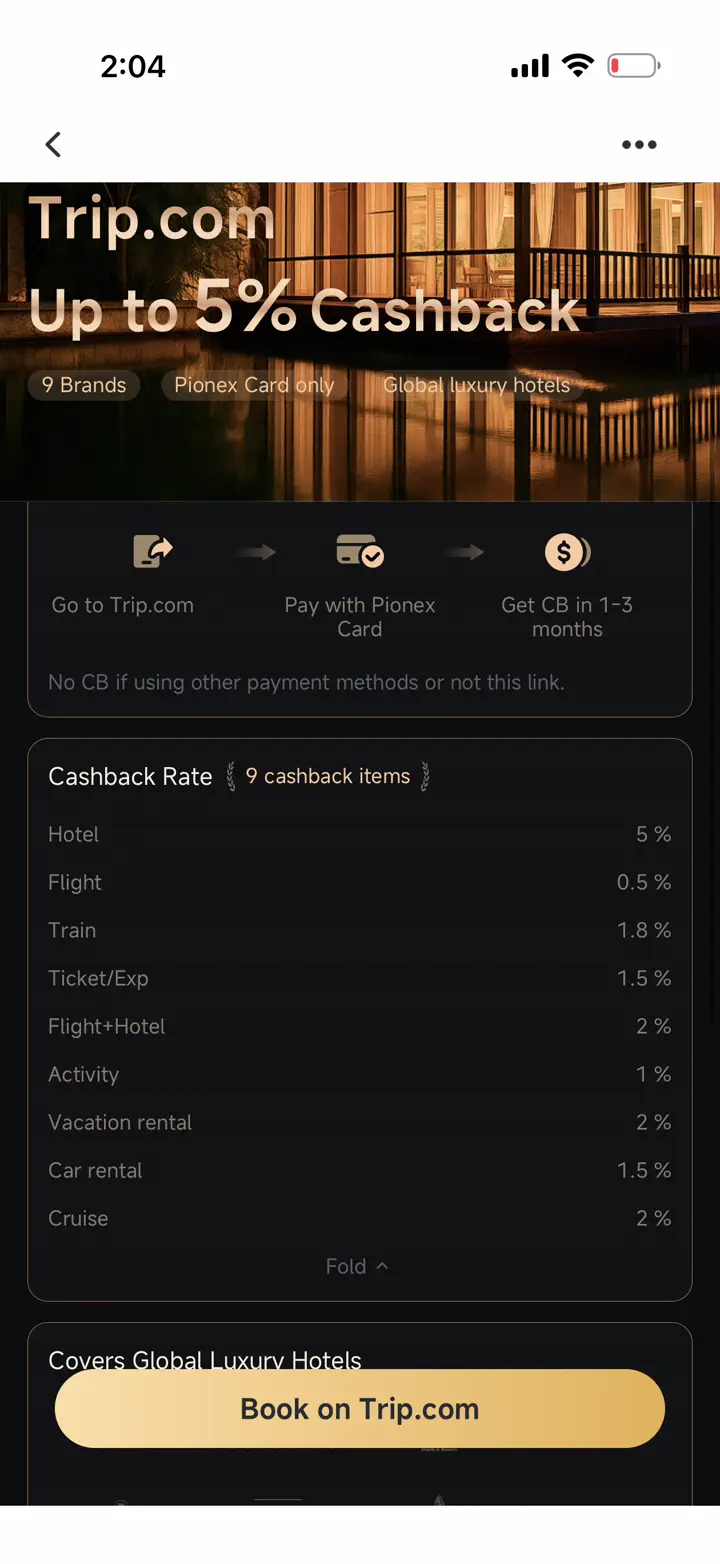
SpendNode app screenshot
Read the category table. The 5% headline applied to hotels, not all Trip.com spending. The purchase also had to follow Pionex's booking route and use the Pionex Card.
The 5% Card-Balance Yield
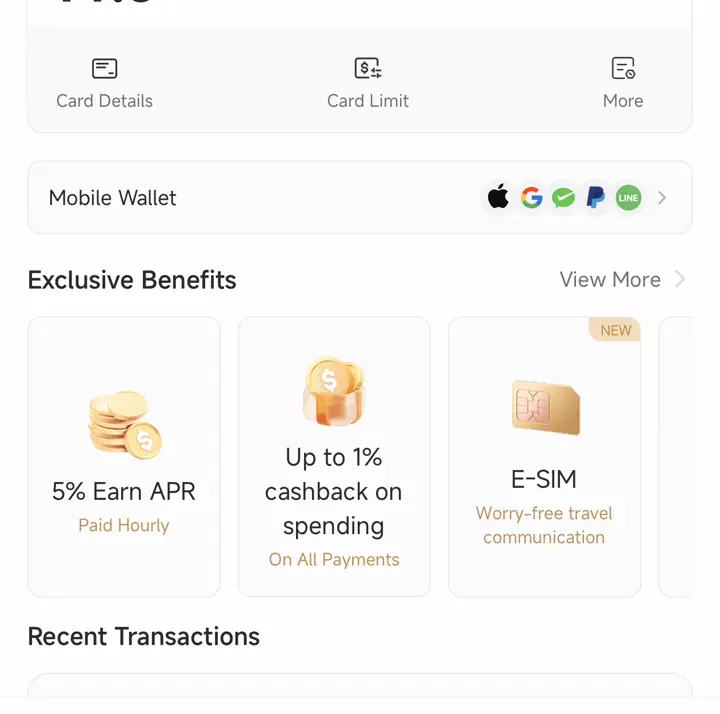
USDT in the card balance advertised 5% annualized yield, accrued hourly. Unlike a fixed-term Earn subscription, the balance remains available for card spending.
SpendNode app screenshot
The strongest feature. Yield continues while USDT waits in the spending balance. It remains a variable custodial product, not insured bank interest.
At an unchanged 5% rate, a 1,000 USDT average balance would earn about 50 USDT over a year. Pionex can change the rate, and the return depends on keeping funds under exchange custody.
Multi-Chain USDT Funding
Our account showed direct USDT deposits over Tron, Ethereum, BNB Smart Chain, Avalanche C-Chain, Plasma, Solana, and TON.
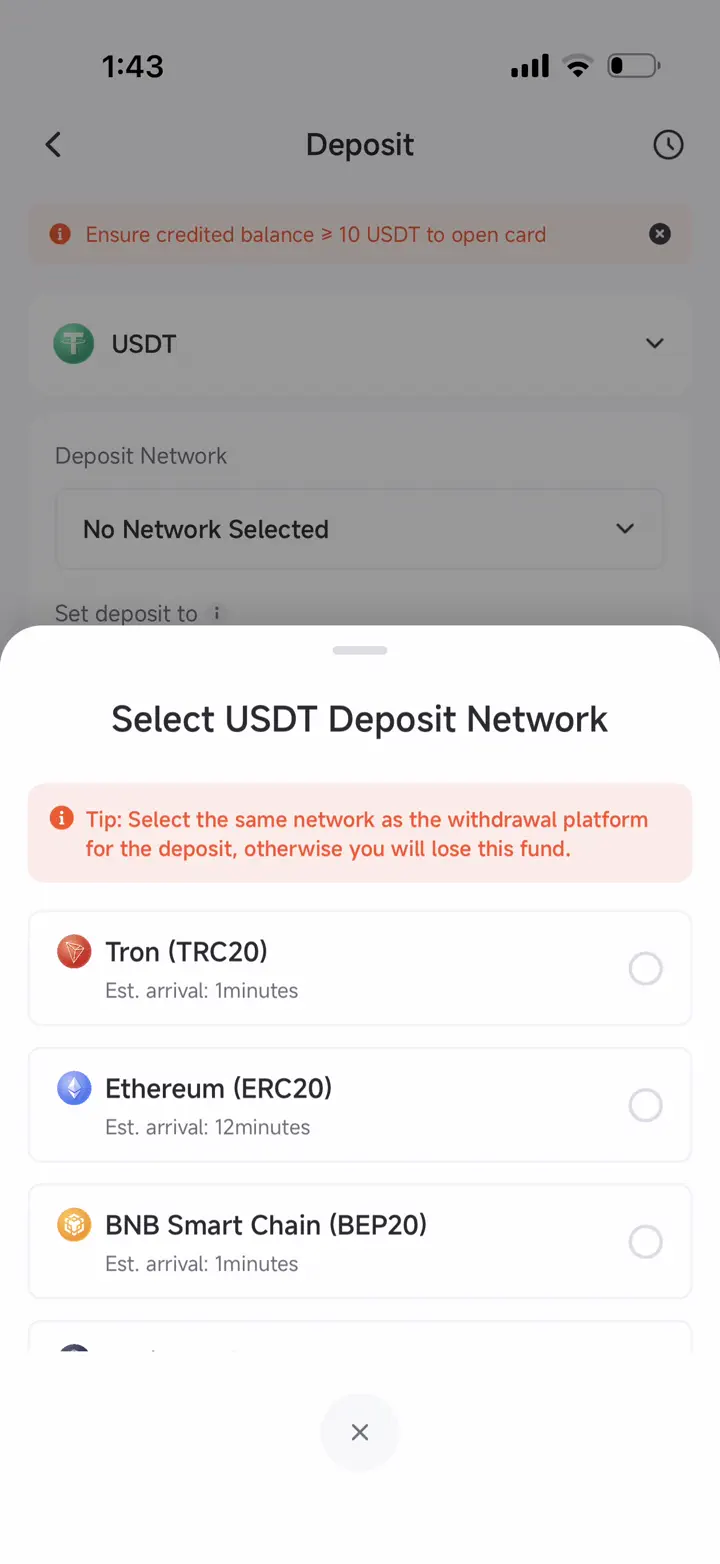
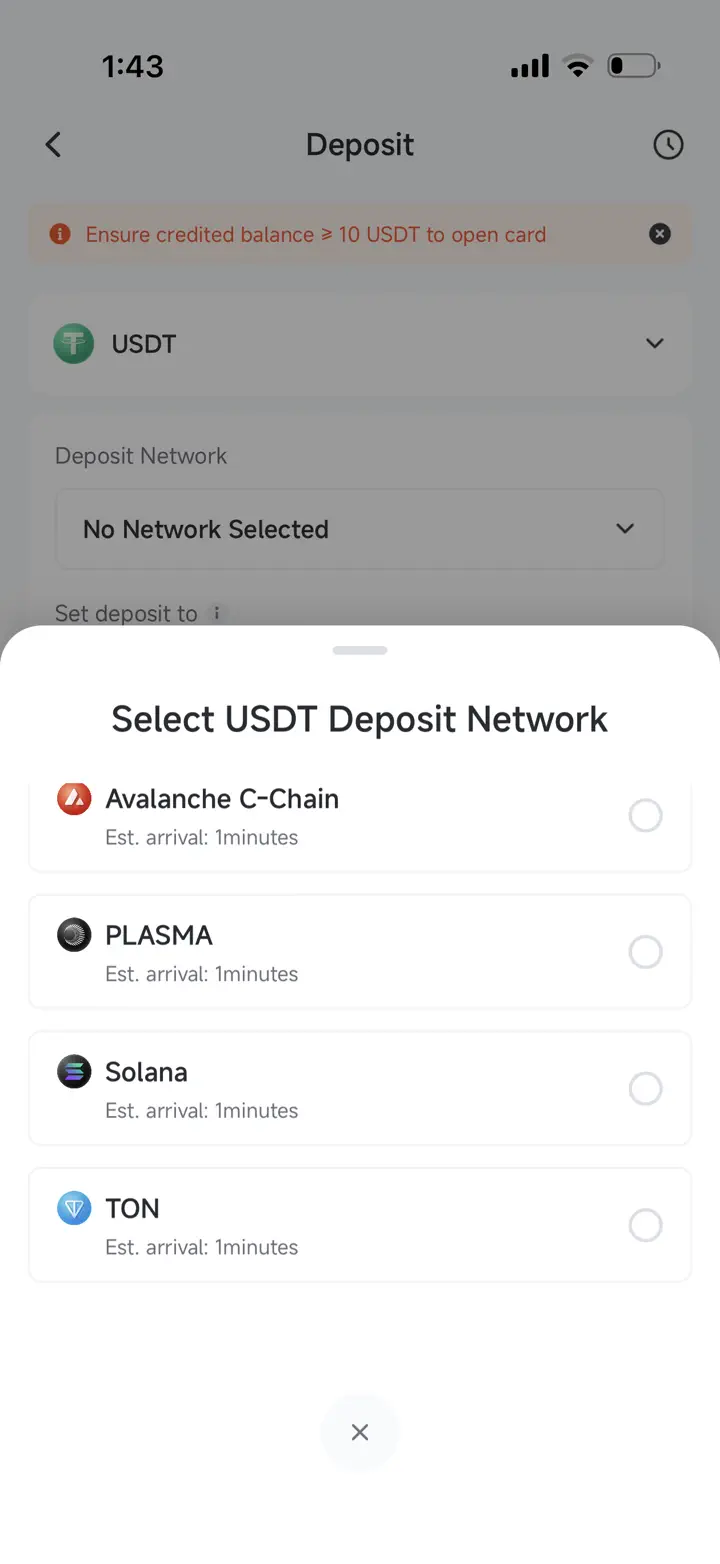
Direct USDT deposit routes displayed to SpendNode's Malaysian Pionex account in September 2026.
This range is useful for people paid on-chain, but the normal deposit warning applies: use the same network on both ends. A supported token sent over the wrong chain can still be lost.
Limits and Restrictions
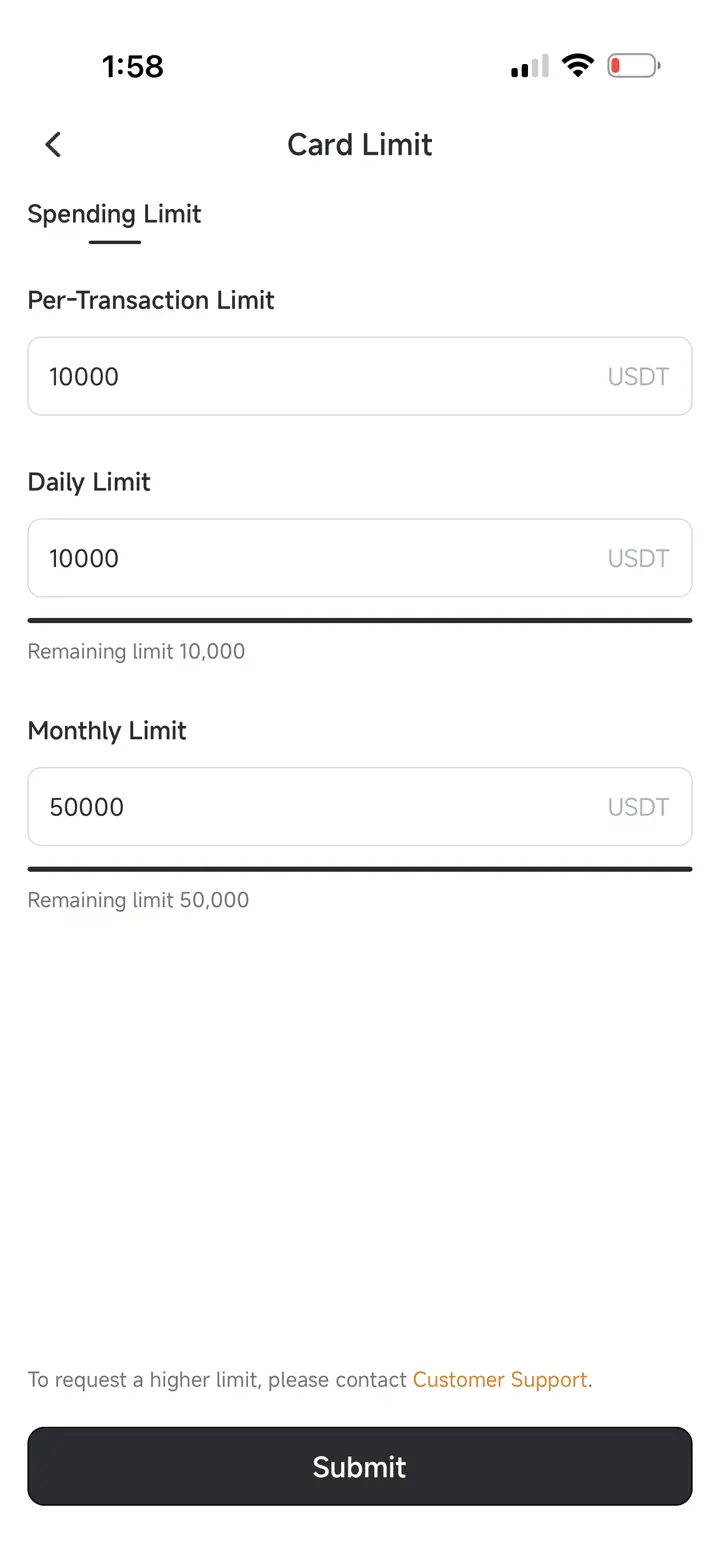
| Limit | Reviewed account |
|---|---|
| Per transaction | 10,000 USDT |
| Per day | 10,000 USDT |
| Per month | 50,000 USDT |
SpendNode app screenshot
Limits confirmed in-app. Customer Support can review requests for higher limits, but these published ceilings do not override merchant or compliance controls.
Pionex also maintains merchant-country and merchant-category restrictions. A successful card application therefore does not guarantee that every Mastercard merchant will accept the payment.
Availability and the United States
Pionex does not publish a dependable positive country list for this exact Mastercard programme. Exchange KYC availability is not proof of card availability. The application screen under Wallet > Card is the reliable account-level check.
The global Pionex service currently lists the United States among unsupported regions for phone registration and KYC. This Pionex Card is therefore not available to US residents. Pionex.US is a separate US platform and does not currently offer the card reviewed here.
Pionex separately restricts card payments to merchants registered or operating in Afghanistan, Venezuela, Russia, Myanmar, Ukraine, North Korea, Iran, and Belarus. Merchant-country restrictions are different from application eligibility.
Apple Pay and Google Pay
The reviewed card supported both Apple Pay and Google Pay. Wallet activation still depends on the assigned programme, device region, and verification flow. Follow the card details shown in-app rather than assuming that every Pionex-branded card supports the same wallets.
Is the Pionex Card Safe?
The card balance is custodial. Pionex controls the account infrastructure and card access, while the user relies on its security, compliance, and withdrawal processes.
Enable an authenticator, use a unique password, confirm anti-phishing settings, and freeze the card immediately if its details are exposed. Keep a practical spending float rather than treating the 5% yield as a reason to move all savings into the card balance.
Is the Pionex Card a Scam?
We found no basis to describe the Pionex Card as a scam. SpendNode completed KYC and application, received a live Mastercard, funded its balance, and completed a foreign-currency purchase. The app displayed the card's fee terms, benefits, deposit routes, and limits.
The weakness is fragmented documentation. Pionex's help centre covers several different programmes, so a generic Visa or DogPay schedule can conflict with an account-specific Mastercard. Confirm the actual card agreement before funding it.
Real User Scenarios
Existing Pionex User With a 1,000 USDT Float
At an unchanged 5% annualized rate, a 1,000 USDT average card balance produces about 50 USDT over a year. If all spending receives the maximum 1% cashback, that reward can offset the disclosed 1% transaction fee. The yield is then the incremental value, before any exchange-rate difference or excluded transactions.
Cashback-Only Shopper
A user who keeps almost no idle balance receives little value from the 5% yield. On $1,000 of monthly spending, the disclosed transaction fee is $10 and maximum base cashback is $10. That is only break-even on those two line items. Our MYR test demonstrates why the final conversion still needs checking.
User With Excluded Spending
If a $1,000 payment earns no cashback, the disclosed transaction fee alone costs $10. Merchant restrictions, failed-payment fees, and conversion effects can add more. Pionex is not the right card to use blindly for bills or financial-service merchants before testing a small payment.
How the Pionex Card Compares
MEXC: Both are custodial USDT cards with transaction fees. MEXC can pay higher cashback to users who qualify through exchange activity; Pionex offers the more distinctive 5% card-balance yield.
RedotPay: RedotPay offers physical cards and ATM access in many markets. Pionex was virtual-only in our account but pays yield on its dedicated spending balance.
Oobit: Oobit focuses on tap-to-pay simplicity and connected-wallet spending. Pionex requires prefunding a custodial USDT balance and fits users already operating inside its exchange.
Plasma One: Plasma One keeps spendable stablecoins under self-custody and publishes tier-specific FX terms. Pionex is operationally simpler for an existing customer, but its custody and conversion disclosures are weaker.
Who Should Use the Pionex Card?
The card fits existing Pionex users who hold USDT, want Apple Pay or Google Pay access, and keep enough spending float for the 5% annualized yield to matter. It can also suit people receiving USDT over one of the supported deposit networks who prefer a single exchange-and-card workflow.
Choose another product if you need self-custody, a physical card, ATM withdrawals, a guaranteed cashback rate, a published country list, or transparent all-in foreign-currency pricing. Pure cashback shoppers should not assume that up to 1% offsets every cost.
Pionex Card Verdict
The 5% annualized card-balance yield is the reason to consider Pionex Card. The rewards pitch is less convincing: the standard 1% transaction fee can consume the maximum advertised 1% base cashback, and our MYR test finished about 2.53% above the contemporaneous reference rate before cashback.
Use it as a convenient extension of an existing Pionex account, not as a zero-fee travel card. Check the terms assigned to your account and test one small local-currency transaction before increasing spend.
Sources and Verification
- Pionex Card Review
- Pionex Digital Wallet Setup
- Pionex Card Global Cashback Guidelines
- Pionex Visa Card Fee Schedule
- Pionex Mastercard Fee Schedule
- Pionex Unsupported Phone and KYC Regions
- SpendNode in-app screenshots, account terms, card issuance, and MYR transaction test completed September 21, 2026
The scenarios use published fees, maximum advertised cashback, and a constant 5% annualized yield for illustration. The MYR result is one observed transaction, not a universal Pionex exchange rate. Actual costs and returns depend on card programme, currency, settlement timing, cashback eligibility, and changes to the yield rate.
Written by Aleksandar Dukic
FAQ
Does Pionex Card have a promo code?
Yes. Register through SpendNode's Pionex link or enter code 0NFnwXJiZGk. The current offer provides eligible trading-fee rebates; card rewards follow the card terms shown in your app.
What fees does Pionex Card charge?
The Mastercard account reviewed by SpendNode had no issuance fee and no annual fee, with a 1% transaction fee on card purchases. Pionex does not disclose enough account-specific exchange-rate information for us to call the card zero-FX. Check the fee terms and final debit shown in your own app.
Does Pionex Card charge an FX fee?
Pionex did not itemize a separate FX fee for the Mastercard we reviewed. In SpendNode's MYR test, a MYR 29.30 purchase deducted 7.3629 USDT when the reference rate was MYR 4.08 per USD, an observed all-in cost about 2.53% above that reference including the disclosed 1% transaction fee. This is one Malaysian-account test, not a universal rate.
Does the Pionex Card balance earn yield?
The reviewed account advertised 5% annualized yield on USDT held in the card balance, accrued hourly. This is variable yield inside a custodial exchange product, not bank interest or a protected deposit.
This is a prepaid card. Merchants that require pre-authorization holds (gas stations, hotels, car rentals, toll booths) may decline it. Fund only what you plan to spend.
Your funds are held by Pionex. If the provider faces insolvency, your balance may be at risk. This card does not offer self-custody protection.
Fees shown above are the card's disclosed fees. Additional costs may apply: Visa/Mastercard network spread (typically 0.5-0.9%), crypto-to-fiat conversion spread at point of sale, and blockchain gas fees for on-chain top-ups.
Found any issues?
User Reviews
Reviews are moderated and may take a moment to appear.