

Best Crypto Cards in Japan (2026)
Japan's 20% flat crypto tax took effect April 1, 2026 for specified assets on registered exchanges, while FIEA amendments enacted July 15, 2026 will tighten crypto market rules once they commence, expected in fiscal 2027. This guide compares the cards that work best under the new tax rate and where stablecoin funding still matters.
Verified for Japan
48 crypto cards available
Local currency: JPY
MUFG, SMBC, and Mizuho debit cards earn zero crypto cashback and charge 2-3% on non-JPY purchases. Japan's crypto cards offer up to 8% cashback and zero FX fees, but there is a critical caveat that shapes every strategy on this page: Japan currently taxes crypto gains as miscellaneous income (zatsu shotoku) at rates up to 55%, the harshest among developed nations.
Japan was the first major economy to regulate crypto exchanges after the 2014 Mt. Gox collapse, and the FSA (Financial Services Agency) framework remains among the strictest globally. Card availability is more limited than in Singapore or Hong Kong because of FSA registration requirements, but Crypto.com's established Japanese operations plus APAC and global issuers fill the gap.
Japan's crypto user base is estimated at 5-7 million active traders, making it the third-largest crypto market in Asia after South Korea and India.
The proposed 20% separate-taxation regime for certain crypto assets is not yet the rate to use for a 2026 card purchase. The Ministry of Finance ties its application to the year after the amended financial-instruments law takes effect. For now, the National Tax Agency's ordinary miscellaneous-income guidance remains the starting point for crypto disposals.
Separately, amendments to the Financial Instruments and Exchange Act and Payment Services Act, submitted on April 10, 2026, were enacted on July 15, 2026, moving crypto toward the financial-products regime. Commencement and implementing rules are still to be confirmed, with the market-structure shift expected in fiscal 2027 rather than immediately.
Summary:
Which crypto cards are best in Japan?
The best crypto cards in Japan in September 2026 are Tria Signature Card, Plasma One Platinum Card, Jupiter Global, Bitget Card, COCA Visa Card, and Private (Icy White / Rose Gold). The detailed ranking below explains the local tax, fee, and availability trade-offs.
| Crypto card | Base reward | Net after fees | Annual fee | FX fee | Type |
|---|---|---|---|---|---|
| 4.5% base4.5% on the first $1,000/mo, then 1% | 3% | $87 with code | 1% | Debit | |
| 4% base4% base, up to 10% on AI and flights; 100k XPL lock | 4% | Free | 0% | Crypto Backed Credit | |
| 2% baseup to 4% by referring 2 qualifying friends the prior month | 1% | Free | 1% / 1.8% | Debit | |
| 0.5% baseup to 8% by holding 20,000+ BGB | 0.5% | Free | 0% | Debit | |
| 1% baseup to 8% with a large $COCA stake; $15-$350/mo claim capacity by tier | 1% | Free | 0% | Debit | |
| 4% baseneeds a $50k CRO stake to hold the tier | 4% | TBD | 0% | Prepaid | |
| 3% base3% on the first $2,000/month, then 1% and 0.5% | 2.5% | Free | 0.5% | Crypto Backed Credit | |
| 1.5% base | 1% | Free | 0.5% | Prepaid | |
| 2% base2% in USDC on Credit Mode spend; cashback capped at $250/mo | 2% | $999 | 0% | Crypto Backed Credit |
Japan's current crypto tax workflow treats gains from selling or using crypto as miscellaneous income in the ordinary case. Track the asset used to fund the card and any later disposal of reward tokens separately.
The card that pays cashback in a stablecoin-equivalent form keeps the kakutei shinkoku workload from doubling. Tria Signature does that with 4.5% on the first $1,000/month of spend (then 1%), $109/yr, with a 1% FX fee and 0.5% per payment netting about 3% on yen spend, and no second-token cost-basis line on the spreadsheet.
xPlace Platinum pays 2% USDC in Credit Mode for new memberships, capped at $250/month, with 0% FX against megabank markups of 2.5-3% on overseas purchases. The stablecoin reward avoids volatile-token exposure, but its $999 annual fee needs about $4,163 of eligible monthly spend to be covered by cashback, before borrowing costs.
One note before weighing it: Xplace is not FSA-registered, so weigh it as an offshore card, funded the same way as Bitget or COCA.
Plasma One Platinum answers the fear that built Japan's entire regulatory system, but with a catch. Mt. Gox and Coincheck were custodian failures; this card has no custodian, the balance sits in the user's own wallet with a Visa on top.
The catch is the reward token: XPL adds another asset to track under the current miscellaneous-income rules. Rewards and later disposals may contribute to a filing obligation. Take this card for its custody model, not on the assumption that its rewards receive a lower flat rate.
The free option for users who already fund through a bitFlyer or GMO Coin USDC balance is Jupiter Global: 2% USDC base cashback (4% for a month after referring 2 friends), $0 annual, virtual-only with QR-based handoff, 1% FX. The $100/month cashback cap kicks in at $5,000/month of spend, above the JPY 200,000/month (~$1,300) Tokyo professional profile, so the cap typically stays theoretical.
The high-headline cards stay on the page for the audience already running their token exposure. Bitget's 8% needs 20,000+ BGB held (about $40,000), and the 0.9% transaction fee leaves net 7.1%. COCA scales the same way with $COCA, starting at 1% on the free Starter tier and reaching 8% only with token staking, plus 5% APY on the USD balance.
Crypto.com Icy trades the headline rate down to 4% in exchange for FSA registration through Foris DAX JP, the regulatory anchor that still matters in a market shaped by Mt. Gox and Coincheck.
Best Card For Every Need in Japan
Top 9 Crypto Cards in Japan
Under current NTA guidance, gains from using crypto are generally miscellaneous income. The proposed 20% separate rate is not yet operative for card spending. Recently acquired USDC can limit disposal gains, but fees, staking, FX, and reward taxation still affect the card choice.
The argument for Tria Signature in Japan is paperwork. After USDC funding solves the disposal-tax angle, the next-largest drain on a Japanese cardholder's tax workflow is tracking reward-token cost basis across BTC, BGB, CRO, and PLU lots. Tria's USDT payout collapses that to a single line per receipt. 4.5% on the first $1,000/month, then 1%, with a 1% FX fee and 0.5% per payment (about 3% net on yen spend), $109/yr.
On USD-denominated subscriptions Tria charges no FX, since the spend is already in dollars; on Korea/Taiwan/Southeast Asia travel its 1% FX still undercuts the 2.5-3% MUFG and SMBC stack, just short of the true 0%-FX cards. Premium at $250/yr reaches 6% on the first $2,000/month and edges out Signature net above roughly JPY 117,000/month of spend (the fees cancel between the two tiers).
Plasma One Platinum brings a self-custodial funding model with no platform holding the card balance. That differs from FSA registration and does not remove wallet, smart-contract or issuer risk.
Its weakness is the extra XPL exposure and record-keeping. The 100,000 XPL lock also creates price risk. The custody case has to justify both for a Japanese cardholder.
Jupiter Global takes the free slot for users already running a bitFlyer or GMO Coin USDC balance into card spend. The 2% base rate applies until $5,000/month of card spend, which is above the typical JPY 200,000/month profile cited throughout this page. 1% FX on JPY purchases is the trade-off for the $0 annual fee, and the card itself is virtual-only with QR-based handoff, fine for the konbini-and-online segment but not the right pick if a physical card is the priority.
Bitget and COCA both reach 8% on paper, but only with substantial vendor-token positions: 20,000+ BGB on a 30-day rolling average for Bitget and $COCA staking tiers for COCA. Without those positions, the available rates are lower.
Tria nets roughly 3% within its first $1,000 monthly band and falls behind above the cap. Crypto.com pays a lower 4% headline but is the FSA-registered option, a distinction that matters in a market shaped by Mt. Gox and Coincheck.
xPlace Platinum closes the list as an offshore 0%-FX travel option with USDC rewards. Its 2% Credit Mode cashback has a $250 monthly ceiling, and the $999 fee limits the rewards case even before borrowing costs.
ether.fi Core pays 3% in ETHFI on the first $2,000 each month, 1% through $5,000, and 0.5% above. It supports direct stablecoin spending and an optional collateral mode, examined in the tax section below. KAST fits users who want a no-stake USD-reward card, while Bybit is excluded due to FSA restrictions.

1. Tria Signature Card
High-Yield Self-Custody: 15% APY + Visa Signature Perks

2. Plasma One Platinum Card
Premium Self-Custodial Visa - 4% Base, 10% AI, 10% Flights, Lounge Access, Boosted 5% Yield

3. Jupiter Global
Free virtual USDC card with 2% base cashback
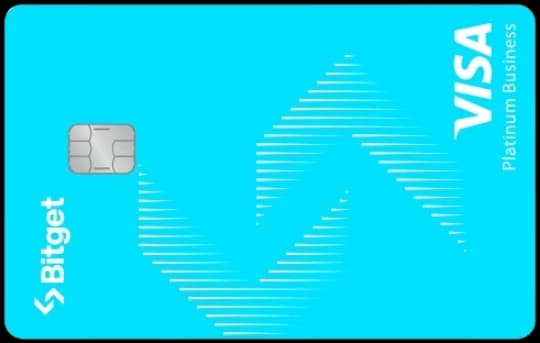
4. Bitget Card
Trade and Spend: Up to 8% BGB Cashback for Bitget Traders

5. COCA Visa Card
Self-Banking: 8% Cashback + 5% APY + 0% FX
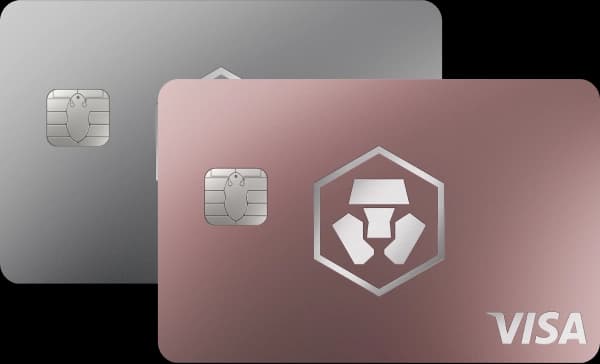
6. Private (Icy White / Rose Gold)
Private Tier: 4% Uncapped Cashback + Lounge Guest

7. ether.fi Core Card
3% Back on the First $2,000 Each Month, No Stake Required

8. KAST K Card
Free USD Cashback: 1.5% on First $2K/Month

9. Xplace Platinum Card
10% Off Platinum with SPENDNODE: Pay $899.10 Instead of $999
Complete list:
All 48 crypto cards available in Japan in September 2026
This table includes every crypto card we currently track for Japan. Rows marked Top pick are ranked and reviewed above.
| Crypto card | Max rewards | Annual fee | FX fee | Type | Custody |
|---|---|---|---|---|---|
1 Tria Signature CardTop pick | Up to 4.5% rewards | $87 with code | 1% | Debit | Self-custody |
2 Plasma One Platinum CardTop pick | Up to 4% rewards | Free | 0% | Crypto Backed Credit | Self-custody |
3 Jupiter GlobalTop pick | Up to 4% rewards | Free | 1% / 1.8% | Debit | Hybrid |
4 Bitget CardTop pick | Up to 8% rewards | Free | 0% | Debit | Custodial |
5 COCA Visa CardTop pick | Up to 8% rewards | Free | 0% | Debit | Self-custody |
6 Private (Icy White / Rose Gold)Top pick | Up to 4% rewards | TBD | 0% | Prepaid | Custodial |
7 ether.fi Core CardTop pick | Up to 3% rewards | Free | 0.5% | Crypto Backed Credit | Self-custody |
8 KAST K CardTop pick | Up to 1.5% rewards | Free | 0.5% | Prepaid | Custodial |
9 Xplace Platinum CardTop pick | Up to 2% rewards | $999 | 0% | Crypto Backed Credit | Self-custody |
| Up to 10% rewards | Free | 0% | Prepaid | Custodial | |
11 | Up to 8% rewards | TBD | 0% | Prepaid | Custodial |
| Up to 6% rewards | $200 with code | 1% | Debit | Self-custody | |
| Up to 5% rewards | Free | 1% | Crypto Backed Credit | Self-custody | |
| Up to 5% rewards | TBD | 0% | Prepaid | Custodial | |
| Up to 5% rewards | Free | 1% | Debit | Self-custody | |
| Up to 4% rewards | Free | 0% | Crypto Backed Credit | Self-custody | |
| Up to 3% rewards | Free | 0.25% | Crypto Backed Credit | Self-custody | |
| Up to 3% rewards | Free | 0% | Crypto Backed Credit | Self-custody | |
| Up to 3% rewards | $10000 | 0.5% | Prepaid | Custodial | |
| Up to 3% rewards | $199 | 0.5% | Crypto Backed Credit | Self-custody | |
| Up to 3% rewards | $299.9 | 0% | Prepaid | Custodial | |
| Up to 3% rewards | $129 | 1.2% | Prepaid | Custodial | |
| Up to 2.5% rewards | $83.88 | 1.02% | Crypto Backed Credit | Self-custody | |
| Up to 2% rewards | $1000 | 0.5% | Prepaid | Custodial | |
| Up to 2% rewards | Free | 0% | Prepaid | Custodial | |
| Up to 2% rewards | Free | 1% | Crypto Backed Credit | Self-custody | |
| Up to 2% rewards | $49.9 | 0% | Prepaid | Custodial | |
| Up to 1.5% rewards | Free | 0.5% | Prepaid | Custodial | |
| Up to 1.5% rewards | Free | 1% | Debit | Self-custody | |
| Up to 1.5% rewards | $249 | 0.25% | Crypto Backed Credit | Self-custody | |
| Up to 1% rewards | Free | 1% | Crypto Backed Credit | Self-custody | |
| Up to 1% rewards | $47.88 | 1.275% | Crypto Backed Credit | Self-custody | |
| Up to 1% rewards | $99 | 0.5% | Crypto Backed Credit | Self-custody | |
| Up to 0.5% rewards | Free | 1% | Crypto Backed Credit | Self-custody | |
| none | Free | 0% | Crypto Backed Credit | Self-custody | |
| none | $30 | 0% | Crypto Backed Credit | Self-custody | |
| none | Free | 0% | Prepaid | Custodial | |
| Varies | Free | 1.7% | Prepaid | Custodial | |
| cashback | Free | 1.75% | Prepaid | Self-custody | |
| cashback | $199 | 0.75% | Prepaid | Self-custody | |
| cashback | Free | 0.5% | Prepaid | Custodial | |
| none | Free | 1% | Prepaid | Self-custody | |
| none | Free | 1% | Debit | Self-custody | |
| Varies | Free | 1.2% | Prepaid | Custodial | |
| Varies | Free | 1.2% | Prepaid | Custodial | |
| Varies | Free | 1.2% | Prepaid | Custodial | |
| Varies | Free | 1.7% | Crypto Backed Credit | Self-custody | |
| points | Free | 1% | Debit | Self-custody |
Crypto Card Regulation in Japan
The FSA (Financial Services Agency, Kinyu-cho) regulates crypto under the Payment Services Act and the Financial Instruments and Exchange Act. Crypto exchanges must register as CAESPs (Crypto-Asset Exchange Service Providers).
Registered providers face customer-asset segregation, audit, cybersecurity, and transaction-monitoring requirements.
Japan's regulatory framework was born from crisis. The 2014 Mt. Gox collapse (approximately 850,000 BTC lost, worth approximately USD 470 million at the time) in Tokyo led directly to the 2017 Payment Services Act amendments. The 2018 Coincheck hack (approximately USD 530 million in NEM stolen) further tightened requirements. These disasters gave Japan stricter exchange rules than any other jurisdiction.
The JVCEA (Japan Virtual and Crypto Assets Exchange Association, Nihon Kasou Tsuka Koukangyo Kyokai) is the FSA-approved self-regulatory organization. JVCEA sets additional standards including listing review processes, advertising guidelines, and user protection rules. All registered exchanges must be JVCEA members. As of 2025, approximately 30+ exchanges hold active FSA registration.
A May 2025 amendment to the PSA introduced a lighter ECISB (Electronic Payment Instrument and Crypto Asset Intermediary Service Business) registration framework. Where a person only intermediates the sale or exchange of crypto assets under mandate from a CAESP, a full CAESP licence is no longer required; an ECISB registration suffices.
FIEA shift (enacted July 15, 2026): The FSA's 2026 Working Group report set out the direction of travel. Amendments to the Financial Instruments and Exchange Act (FIEA) and Payment Services Act were submitted on April 10, 2026 and enacted on July 15, 2026, establishing a revised legal framework that moves crypto assets toward the financial-products regime.
Commencement dates and implementing rules are still to be confirmed, with implementation expected in fiscal 2027 rather than immediately.
The bill would prohibit insider trading based on non-public information, require annual issuer disclosures, and rename registered businesses from "crypto asset exchange business" to "crypto asset trading business." It also sharpens penalties for unregistered sellers, with prison terms rising from up to 3 years to up to 10 years and fines increasing from up to JPY 3 million to up to JPY 10 million.
In other words, Japan is moving crypto away from a payments-only framework and toward a stricter investment-market framework. That is a supervision change, not a government endorsement of crypto as safe. For card users, the practical implication is a higher disclosure and enforcement standard around exchange-listed assets once the bill is implemented.
Japan introduced a stablecoin regulation framework in June 2023, requiring stablecoins distributed in Japan to be issued by licensed banks, trust companies, or fund transfer businesses. In October 2025, Japan approved JPYC as its first legally recognized yen-backed stablecoin under the 2023 EPI (Electronic Payment Instrument) framework, maintaining a 1:1 JPY peg backed by bank deposits and government bonds.
On May 19, 2026, the FSA finalized an amendment to the Cabinet Office Ordinance on Electronic Payment Instruments, taking effect June 1, 2026. The amendment recognizes trust-type stablecoins issued abroad as EPIs under the Payment Services Act, provided the foreign issuer meets equivalence, licensing, collateral, and audit standards. It closes the gap left by the 2022 PSA reform, when stablecoins issued by foreign trust banks had ambiguous status in Japan.
The ordinance does not name specific issuers. Whether USDC qualifies under the equivalence test, and whether USDT does, will depend on FSA case-by-case assessment of each issuer's home regulatory regime.
SBI Holdings and Startale Group signed an MOU to launch JPYSC, a trust bank-backed yen stablecoin issued through SBI Shinsei Trust Bank, targeting Q2 2026 via SBI VC Trade. These domestic stablecoins could eventually simplify the fiat-to-stablecoin-to-card funding pipeline for Japanese residents. The FSA also implemented the Travel Rule for VASP-to-VASP transfers in 2023, requiring originator and beneficiary information for crypto transactions above JPY 100,000.
Japan's NFT and DeFi regulatory treatment remains separate. The enacted FIEA amendments are aimed at exchange-listed crypto assets, while NFTs and stablecoins continue under the existing PSA regime for now. For card users, the practical impact is limited in the short term because spending still revolves around simple crypto-to-fiat conversion, but DeFi yield used to fund cards could face additional scrutiny as the financial-products framework expands.
Crypto.com holds FSA registration through its Japanese entity (Foris DAX JP). Bitget serves Japanese residents through its APAC entity. Bybit has restricted Japanese access under FSA pressure and is not available here. Always verify FSA registration status at fsa.go.jp before trusting funds to any issuer.
Tax Treatment of Card Rewards in Japan
Japan taxes crypto gains as miscellaneous income (zatsu shotoku), not capital gains. The National Tax Agency's guidance makes that classification the core problem: miscellaneous income is added to your salary and taxed at your marginal rate. Combined national tax (shotoku-zei) and local residential tax (jumin-zei) rates range from 15% to 55% for high earners.
Example: You earn JPY 8,000,000/year as a software engineer and realize JPY 400,000 in crypto gains from card spending. The gains stack on top of your salary, pushing total income to JPY 8,400,000. At this bracket the marginal rate is approximately 33% (national 23% + local 10%), costing JPY 132,000 in tax on the crypto gains alone. That is JPY 132,000 in tax on what might have been routine grocery and restaurant spending.
No holding-period exemption exists (unlike Germany, which exempts gains after 1 year). No preferential rate exists. Every card swipe spending appreciated crypto is a taxable disposition. Japan does allow losses to offset gains within the miscellaneous income category, but crypto losses cannot offset salary or other income types.
Crypto-to-crypto swaps and using crypto to buy goods or services are themselves taxable events in Japan, adding friction to even the stablecoin conversion step.
| Annual Income Bracket | National Tax | Local Tax | Total Rate on Crypto Gains |
|---|---|---|---|
| Under JPY 1,950,000 | 5% | 10% | 15% |
| JPY 1,950,000 - 3,300,000 | 10% | 10% | 20% |
| JPY 3,300,000 - 6,950,000 | 20% | 10% | 30% |
| JPY 6,950,000 - 9,000,000 | 23% | 10% | 33% |
| JPY 9,000,000 - 18,000,000 | 33% | 10% | 43% |
| JPY 18,000,000 - 40,000,000 | 40% | 10% | 50% |
| Over JPY 40,000,000 | 45% | 10% | 55% |
Proposed 20% separate taxation: Japan's FY2026 tax-reform outline describes a 20% separate rate and a three-year loss carryforward for qualifying crypto assets. It says the income-tax change would apply from the year after the amended Financial Instruments and Exchange Act comes into force. It does not make April 1, 2026 the start date for taxing card-funded disposals at 20%.
The proposed personal-tax change should not be confused with separate corporate tax rules for qualifying long-term holdings.
Until the new rate takes effect, the NTA's published treatment generally classifies gains from using crypto as miscellaneous income. Future eligibility will depend on the final rules and the asset and transaction involved.
Recently acquired stablecoins may keep the gain on a disposal small. Filing is done through the kakutei shinkoku (final tax return) process. The NTA provides worksheets specifically for crypto income calculation; record each acquisition, card conversion, reward receipt, and later disposal.
Airdrop and DeFi yield treatment: The NTA treats airdrops and yield farming rewards as miscellaneous income at fair market value when received. This means staking rewards used to fund card spending face double taxation: income tax when earned, plus additional tax if the tokens appreciate before being spent. Converting yield to USDC immediately upon receipt minimizes this double-hit.
| Cashback Type | Tax When Received | Tax When Spent via Card | Optimal Strategy |
|---|---|---|---|
| BTC/ETH cashback | Depends on reward terms | Later gains may be taxable | Record receipt and disposal |
| USDC cashback | Depends on reward terms | Price gain may be small | Keep value and conversion records |
| Points/perks | Depends on program terms | Depends on redemption | Check the program terms |
How to Apply from Japan
Japanese crypto card applications require a My Number Card (maina-nba- ka-do) issued by the JLIS (J-LIS, Chiho Kokyo Dantai Joho Shisutemu Kiko). The My Number (12-digit individual number) is mandatory for financial account registration under the Act on the Use of Numbers to Identify a Specific Individual. Alternatively, a combination of passport (ryoken) plus notification card (tsuuchi ka-do) or residence card (zairyu ka-do) for foreign residents works.
A Japanese driver's license (unten menkyo-sho) is accepted by most platforms as photo ID. Proof of Japanese address via juminhyo (certificate of residence from your city/ward office), utility bill (denki, gasu, suido), or NTT landline bill. Health insurance card (hoken-sho) is NOT accepted as standalone photo ID for financial KYC since it lacks a photograph.
Japan's FSA-mandated eKYC (electronic Know Your Customer) allows selfie-plus-ID verification that completes in minutes on platforms with CAESP registration. The eKYC standard was introduced in 2018 after the Coincheck hack to balance security with user convenience.
Non-registered international issuers may use separate verification flows that take 3-7 business days. Some issuers still use the traditional hagaki (postcard) verification method, mailing a transfer-not-forward letter (tenso fuka) to your registered address, adding 3-5 days.
Foreign residents with a valid zairyu card can register for crypto cards using their residence card number. The zairyu card works as both photo ID and address proof (address printed on back). Residents on work visas, student visas, or permanent residence all qualify. My Number Card issuance requires visiting your local city/ward office (shiyakusho/kuyakusho) and takes approximately 1 month for first-time applications, so plan ahead.
Physical cards ship domestically via Japan Post (Yu-bin) or Yamato Transport (Kuroneko Yamato) within 5-10 business days. Virtual cards are available immediately for Apple Pay use at FeliCa/NFC terminals. Note that Google Pay NFC payments have more limited merchant support in Japan compared to Apple Pay due to FeliCa dominance.
Spending Tips for Japan
Why the Safest Card Wins in Japan
Japan is not a market where the highest cashback rate automatically wins. The product that feels safest, most legible, and least likely to create tax or accounting pain wins instead.
Two events trained this behavior. The 2014 Mt. Gox collapse (850,000 BTC lost from a Tokyo-based exchange) and the 2018 Coincheck hack ($530 million in NEM stolen) did not just trigger FSA regulation. They created a generation of users who weight platform survival over yield.
A Japanese user choosing between Crypto.com at 4% (FSA-registered through Foris DAX JP, asset segregation audits, JVCEA member) and Bitget at 8% (APAC entity, no FSA registration) will often pick the 4% option. Not because 4 > 8, but because FSA registration means "this platform probably survives the next incident."
Crypto cards also do not enter a vacuum in Japan. They compete against the world's most developed loyalty ecosystem: Rakuten Points (59.3% consumer adoption, 70+ integrated services), PayPay (60+ million users, 4+ million merchants), d-Points, T-Points, and Ponta. Japan's loyalty market exceeds $3.87 billion and is growing at 12.9% annually.
A 30-year-old Tokyo professional already earning 1-3% Rakuten Points on most spending, plus SPU multiplier bonuses across the Rakuten ecosystem, needs a specific reason to add a crypto card on top.
The useful advantages are zero FX on international spending, rewards that exceed domestic card points, and direct spending from stablecoins carrying little or no gain. Collateral-backed borrowing adds another option for large appreciated holdings, but only when its financing and liquidation risks are acceptable. An 8% headline is less compelling when the reward token creates price exposure and extra record-keeping.
Stablecoin Strategy (Still the Safest Option)
Under current miscellaneous-income treatment, a JPY 100,000 gain on a card-funded disposal adds to taxable income; the actual tax depends on the individual's marginal rate. Recently acquired USDC may produce a much smaller gain on the same purchase.
For high earners, recently acquired stablecoin funding can keep disposal gains near zero. Spending appreciated BTC may create a material miscellaneous-income tax bill.
Card Selection by Use Case
- Tria Signature (4.5% on first $1,000/mo, 1% FX + 0.5%/payment, ~3% net, $109/yr): 4.5% on the first $1,000/month, then 1% (about 3% net on yen spend after fees), with cashback that doesn't drop a separate token-cost-basis line into the kakutei shinkoku. Premium at $250/yr reaches 6% on the first $2,000/month and edges out Signature net above roughly JPY 117,000/month of spend.
- xPlace Platinum (2% USDC in Credit Mode capped at $250/mo, $999/yr, 0% FX): Stablecoin rewards avoid volatile-token recordkeeping, but the fee and borrowing costs weaken the net return. Offshore card, no FSA registration.
- Plasma One Platinum (4% XPL, 100k XPL lock, 0% FX): This self-custody card adds XPL reward records and a 100k-token lock. The custody case must justify that exposure.
- Jupiter Global (2% USDC base, 4% via referrals, $100/mo cashback cap, $0): Virtual debit with QR-based handoff, no annual fee. The natural endpoint for a bitFlyer or GMO Coin USDC balance going into JPY spend. The cap sits above the JPY 200,000/month Tokyo professional profile.
- Bitget (up to 8% BGB on 20,000+ BGB, 0% FX + 0.9% tx, free): High ceiling for BGB stakers running about $40,000 of token exposure. Net 7.1% at the top tier; lower BGB balances drop the rate to 0.5-4%.
- COCA (up to 8% with staking $COCA, 1% free, + 5% APY): Best for holders who want yield on idle stablecoins alongside cashback
- Kolo (2% intro then 1% BTC, 0% FX, $0): Free BTC cashback option. BTC cashback is taxable at receipt; convert to USDC immediately if you want to reduce tracking complexity.
- Crypto.com Icy (4%, 0% FX, FSA-registered, CRO stake): Best for users who prioritize regulatory safety and lounge access
- KAST (1.5% USD cashback on first $2K/mo, 0.5-1.75% FX, free): Best no-stake USDC card before moving into richer reward structures
Bitget vs COCA vs Crypto.com Break-Even
Bitget, COCA, and Crypto.com are free with 0% FX. The difference is net cashback after Bitget's 0.9% transaction fee. Tria Signature ($109/yr) is included for comparison.
| Monthly Spend | Bitget (8%, 0.9% tx) | COCA (up to 8%, 0% FX) | Tria Sig (4.5% on first $1,000/mo, 1% FX + 0.5%/payment, net of $109/yr) | Crypto.com Icy (4%, 0% FX) |
|---|---|---|---|---|
| JPY 100,000 | JPY 85,200/yr | JPY 96,000/yr | approx. JPY 20,000/yr | JPY 48,000/yr + lounges |
| JPY 250,000 | JPY 213,000/yr | JPY 240,000/yr | approx. JPY 32,000/yr | JPY 120,000/yr + lounges |
| JPY 400,000 | JPY 340,800/yr | JPY 384,000/yr | approx. JPY 23,000/yr | JPY 192,000/yr + lounges |
COCA leads on raw cashback rate and pays rewards in stablecoins (USDC/EURC), though the 8% requires staking $COCA (1% at free Starter) and monthly claims cap at $15-$350 by tier. Bitget pays in BGB with broader exchange liquidity.
Tria Signature at 4.5% on the first $1,000/month (then 1%) with a 1% FX fee and 0.5% per payment (about 3% net on yen spend) pays cashback in USDT. Critically, this avoids the volatile token double-taxation that makes BTC/BGB cashback expensive at 33-55% marginal rates. Crypto.com Icy adds Priority Pass lounge access (requires CRO stake).
Direct Stablecoin Spending or Collateral-Backed Borrowing
ether.fi Core can spend supported stablecoins directly, which is the simpler route when those assets carry little or no gain. Eligible users may instead borrow against collateral rather than selling appreciated assets. That can defer a disposal in some circumstances, but the loan's economics and the tax treatment of the full arrangement must be assessed.
A JPY 5,000,000 portfolio that has appreciated 100% contains a JPY 2,500,000 gain. Selling it can create a material tax bill. A collateral-backed loan preserves the position initially, but its variable financing cost and downside risk mean it is not automatically the cheaper choice.
Spending Scenario: JPY 200,000/month (USDC Funding, 33% Bracket)
| Funding Method | Annual Spend | Cashback (8%, top-tier staked card) | Disposal Tax | FX Savings (vs MUFG 3%) | Before Reward Tax |
|---|---|---|---|---|---|
| BTC (appreciated 100%) | JPY 2,400,000 | JPY 192,000 | JPY 396,000 (33%) | JPY 72,000 | -JPY 132,000 (net loss) |
| USDC (stablecoin) | JPY 2,400,000 | JPY 192,000 | approx. JPY 0 | JPY 72,000 | JPY 264,000 |
| ether.fi Core, direct stablecoins | JPY 2,400,000 | JPY 72,000 in ETHFI (3% band) | approx. JPY 0 | JPY 60,000 (vs MUFG 3%, ether.fi 0-0.5% margin) | JPY 132,000 before reward tax |
At the example's assumed 33% marginal rate, the BTC-funded route creates JPY 396,000 in tax on JPY 1,200,000 of gains. That overwhelms the modeled cashback and FX savings. The USDC row assumes negligible disposal gain and is before any separate tax on rewards.
Proposed 20% Rate: Not Yet a Card-Spending Rule
The Ministry of Finance outline describes a 20% separate rate for qualifying crypto-asset disposals after the amended financial-instruments framework takes effect. It is not a current 2026 tax shortcut for spending BTC through a card.
The proposal also includes a three-year loss carryforward for qualifying transactions. Neither that feature nor the 20% rate should be used in today's card-return estimates.
The NTA's current miscellaneous-income guidance still governs ordinary crypto use; reward receipts need classification under their actual terms.
The Filing Threshold: Why JPY 200,000 Drives Behavior
Most Japanese salarymen never file taxes. Their employer handles everything through nenmatsu chosei (year-end adjustment). Crypto gains above JPY 200,000 force the first kakutei shinkoku (final tax return), and for someone who has never interacted with the e-Tax system, this is a real barrier.
The e-Tax interface is primarily in Japanese. Crypto-specific worksheets require per-transaction cost basis calculations. A zeirishi (tax accountant) can help reconcile exchange and card records.
Stablecoin funding can reduce both gains and record-keeping complexity. The JPY 200,000 filing exception has conditions; do not treat it as a tax exemption or assume it removes local-tax obligations.
The practical choice is whether a higher reward rate justifies another volatile asset and its tax records. BTC, BGB, and airdrop receipts should not be modeled at a flat 20% today.
FX Savings vs Japanese Bank Cards
Japanese megabank debit cards charge steep FX markups on non-JPY purchases. For Japanese residents who travel or shop internationally, 0% FX crypto cards save 2.5-3% per purchase.
| Card | FX Markup on USD Purchase | Cost on JPY 100,000 Equiv. |
|---|---|---|
| MUFG Debit | 3.0% | JPY 3,000 |
| SMBC Debit | 3.0% | JPY 3,000 |
| Mizuho Debit | 2.5% | JPY 2,500 |
| Rakuten Card | 1.63% | JPY 1,630 |
| Bitget (0% FX) | 0% + 0.9% tx | JPY 900 |
| Crypto.com (0% FX) | 0% | JPY 0 |
For frequent international shoppers or travelers to South Korea, Taiwan, or Southeast Asian destinations, a 0% FX crypto card saves JPY 25,000-36,000 per year on JPY 100,000/month in foreign purchases.
Where Crypto Cards Fit in Japanese Payment Life
A crypto card in Japan does not replace the domestic payment stack. It fills specific gaps that Suica, PayPay, and Rakuten Card cannot reach.
What handles domestic spending: IC cards (Suica, PASMO, ICOCA) handle transit and konbini small purchases. PayPay (60+ million users, 4+ million merchants) and Rakuten Pay handle QR-code restaurants and local shops. Rakuten Card earns points across 70+ integrated services. Smaller izakaya, ramen shops, and rural merchants remain cash-only. This domestic stack works and crypto cards do not need to displace it.
What crypto cards handle better: International subscriptions billed in USD or EUR (Netflix, Spotify, Adobe, AWS, GitHub, iCloud), where MUFG and SMBC charge 2.5-3% FX markup. International travel spending. Airport purchases at Narita (NRT), Haneda (HND), Kansai (KIX), and Fukuoka (FUK).
Larger purchases at electronics retailers such as Bic Camera and Yodobashi Camera, or department stores such as Mitsukoshi Isetan and Takashimaya, can produce meaningful rewards. Collateral-backed spending is also available to eligible holders, although no domestic loyalty card has the same financing and liquidation risks.
The yen weakness urgency: JPY has weakened from roughly 110/USD (2021) to 150+/USD (2025-2026), with strategists projecting 160/USD or beyond by end of 2026. A tech professional with JPY 50,000/month in USD-billed subscriptions pays JPY 18,000/year more than they would have at JPY 110/USD, which is pure currency erosion. On top of that, MUFG adds 3% FX markup: another JPY 18,000/year. A zero-FX crypto card eliminates the second cost entirely.
USDC holdings also provide a hedge against further yen depreciation, since holding stablecoins preserves USD purchasing power that yen bank deposits actively lose.
Where both stacks coexist: A Tokyo professional runs Suica for JR commute and konbini coffee. PayPay for lunch at the office canteen or local ramen. Rakuten Card for domestic e-commerce on Rakuten Ichiba. And a zero-FX crypto card (Bitget or Crypto.com Icy) for Amazon US, international subscriptions, airport spending, and any foreign-currency purchase.
The crypto card does not replace the other three. It covers the 15-25% of spending where the domestic stack leaks money.
Contactless acceptance continues to improve. Konbini (Seven-Eleven, FamilyMart, Lawson, Ministop), supermarkets (Aeon, Ito-Yokado, Life, Summit), drugstores (Matsumoto Kiyoshi, Welcia, Sundrug), and restaurant chains (Sukiya, Matsuya, Yoshinoya, Saizeriya) all accept Visa/Mastercard contactless.
Apple Pay works at FeliCa terminals alongside iD and QUICPay. Japan's government cashless push (targeting 40% ratio, up from 20% in 2016) drives terminal upgrades nationwide.
Crypto.com Icy White/Rose Gold tiers include Priority Pass lounge access at Narita, Haneda, and Kansai. For frequent domestic travelers on Shinkansen routes, JR station shops (ekiben vendors, NewDays, Kiosk) increasingly accept Visa contactless alongside IC cards.
Supported Exchanges & Wallets in Japan
Crypto.com is the strongest institutional pick for Japanese card users. It holds FSA registration through Foris DAX JP, operates a domestic Japanese platform, and serves all Crypto.com card tiers to Japanese residents. The Icy tier (4%, 0% FX, CRO stake) adds Priority Pass lounges at Narita, Haneda, and Kansai.
Tria now takes a 1% FX fee on non-USD spend plus a 0.5% charge on every payment across all tiers: Signature at 4.5% on the first $1,000/mo ($109/yr, about 3% net on yen spend) and Premium at 6% on the first $2,000/mo ($250/yr, about 4.5% net). Tria's USDT cashback fits Japan's tax environment unusually well.
Unlike a volatile BTC, BGB, or CRO payout, a stablecoin reward limits later price movement. It still needs classification at receipt and records for any later disposal.
Bitget serves Japan through its APAC operations without direct FSA registration. The Bitget Card (Visa debit, 8% BGB cashback, 0% FX, 0.9% transaction fee) and Bitget Wallet Card (Mastercard prepaid, 1.7% FX with JPY 60,000/month zero-fee quota) provide the highest cashback rates available to Japanese residents. Japanese users should note the 0.9% transaction fee that reduces net returns to approximately 7.1%.
We flag a restriction for Japanese users: Bybit has limited access. Bybit restricted access for Japanese residents in late 2025 under mounting FSA pressure and is not available in Japan.
For stablecoin yield alongside spending, COCA (up to 8% cashback scaling with staking $COCA tokens, 1% at free Starter, plus 5% APY on eligible USD in a non-custodial smart wallet) reaches Japan under global coverage. Monthly reward claims range from $15 to $350 by tier, while the yield component adds income on eligible balances waiting to be spent.
ether.fi Core gives Japanese users a direct stablecoin route and an optional collateral-backed route. Core's reward is paid in ETHFI at stepped rates; the loan route is not guaranteed tax savings.
Domestic exchanges with FSA registration include bitFlyer (Japan's largest by volume), Coincheck (Monex Group subsidiary, rebuilt post-2018 hack), GMO Coin (GMO Internet Group), SBI VC Trade (SBI Group), and Rakuten Wallet (Rakuten Group). None currently offer standard Visa/Mastercard spending cards, leaving international issuers to fill the gap.
bitFlyer experimented with a T-Point partnership for crypto rewards but has not launched a spending card. SBI Group's deep financial services integration (SBI Securities, SBI Sumishin Net Bank, SBI Remit), plus its partnership with Startale on the JPYSC yen stablecoin via SBI VC Trade, positions them as the most likely domestic issuer to eventually launch a crypto-linked card.
Rakuten Wallet deserves specific mention: Rakuten's ecosystem (Rakuten Card, Rakuten Pay, Rakuten Points) is Japan's most integrated cashback platform with over 100 million members. Rakuten Wallet lets users convert Rakuten Super Points to crypto, but the reverse (spending crypto via Rakuten Card) is not available. For Japanese users already deep in the Rakuten ecosystem, a crypto card from Bitget or Crypto.com fills the spending gap Rakuten has not yet addressed.
On-ramp options for Japanese residents: bitFlyer and GMO Coin accept JPY deposits via Japanese bank transfer (furikomi) with zero or minimal fees. Users can buy USDC or USDT, then transfer to their crypto card wallet for tax-efficient spending. Coincheck supports convenient bank deposits through Monex Group's banking relationships. For larger amounts, SBI VC Trade integrates with SBI Sumishin Net Bank for instant JPY-to-crypto conversion.
P2P trading via platforms like Paxful served the Japanese market historically, but FSA regulation has pushed most activity to registered exchanges. LINE (Japan's dominant messaging app) explored crypto through LINE BITMAX but card integration remains absent.
Common Mistakes
1. Using the proposed 20% rate today. A tech professional spending JPY 200,000/month in BTC that doubled realizes about JPY 1,200,000 in gains under this illustration. At an assumed 33% marginal rate, the modeled tax is JPY 396,000, before personal deductions or other transactions. Recently acquired USDC would usually have a much smaller disposal gain.
How to avoid it: Compare the gain on appreciated crypto with the cost of a stablecoin funding route before spending. Do not count the proposed loss carryforward as an available offset.
2. Treating reward receipts as tax-free or assigning them a zero basis. Cashback treatment depends on the program terms. Record the value when received and the later disposal value; a change in price can create a further taxable gain or loss.
How to avoid it: Convert volatile rewards if you do not want their price exposure, and keep records of the receipt and conversion. Do not assume an automatic 20% rate.
3. Treating collateral-backed borrowing as automatic tax savings. Selling an appreciated position can create a tax bill, but a loan has a financing cost and can expose the collateral to liquidation. The correct comparison depends on the unrealized gain, loan terms, holding period, and personal tax treatment.
How to avoid it: Compare direct stablecoin spending, selling, and borrowing under the same assumptions. Include the full financing cost and a downside scenario for the collateral, then confirm the tax treatment with a Japanese professional.
Closing Outlook
Japan's card market remains shaped by exchange registration, crypto-income record keeping, and a developing domestic stablecoin market.
The proposed 20% separate rate awaits the relevant commencement and tax-application date. For current card spending, use the NTA's published miscellaneous-income treatment.
The domestic stablecoin ecosystem may simplify a funding path that often relies on international exchanges. JPYC received regulatory approval in October 2025; SBI's trust bank-backed JPYSC remains a separate development to verify before relying on it for card funding.
The FSA also finalized rules recognizing trust-type foreign stablecoins as EPIs from June 1, 2026. This creates a regulated path for assets such as USDC through licensed intermediaries once an issuer clears the equivalence test.
The FIEA amendments point toward stronger supervision of exchange-listed crypto. Their implementation timetable matters to exchanges and issuers; it does not change the tax calculation on today's card purchases by itself.
For everyday card spending, recently acquired stablecoins can limit realized gains. Appreciated crypto and token rewards still require careful records under the current rules.
Written by SpendNode Editorial
Frequently Asked Questions
How are crypto card transactions taxed in Japan?
Since April 1, 2026, specified crypto assets on FSA-registered exchanges are taxed at a flat 20% (15% national + 5% local) with 3-year loss carryforward. DeFi yields, airdrops, and trades on non-registered platforms still face 15-55% as miscellaneous income (zatsu shotoku). Stablecoin funding remains the safest strategy since USDC generates near-zero taxable gain per transaction.
Which crypto cards work in Japan?
Tria Signature (4.5% on the first $1,000/mo then 1%, with a 1% FX fee and 0.5% per payment netting about 3%, $109/yr) needs no token-staking exposure. Jupiter Global (2% USDC base, 4% for a month after referring 2 friends, $0 annual, 1% FX) is a free self-custody pick. xPlace Platinum pays 2% USDC in Credit Mode capped at $250/month, with 0% FX and a $999 annual fee, while Plasma One Platinum pays 4% in XPL behind a 100,000 XPL lock.
Bitget and COCA reach up to 8% only with substantial token positions. Crypto.com Icy pays 4% with 0% FX and is FSA-registered. KAST and Kolo round out the free options. ether.fi Core pays stepped ETHFI rewards and supports direct stablecoin spending or optional collateral-backed borrowing. Bybit is not available in Japan.
What changed with the 20% flat crypto tax?
The 20% flat tax (bunri kazei, 15% national + 5% local) took effect April 1, 2026 for 105 specified crypto assets on FSA-registered exchanges, replacing the old miscellaneous income classification (15-55%). The reform includes 3-year loss carryforward. DeFi yields, airdrops, and non-registered platform trades still face 15-55% as miscellaneous income.
Separately, FIEA amendments submitted on April 10, 2026 were enacted on July 15, 2026 and would add insider-trading restrictions and annual issuer disclosures, with commencement expected in fiscal 2027.
Is Japan still the worst country for crypto card taxes?
No longer, for specified assets. The 20% flat rate (effective April 1, 2026) brought Japan in line with its equities tax rate, down from up to 55%. However, DeFi yields, airdrops, and non-registered platform trades still face 15-55% as miscellaneous income - making Japan still punishing for those categories. Stablecoin funding remains the safest approach since it generates near-zero taxable gain regardless of which regime applies.
Other Countries
View all 112 countries →


Latest Page Changes to the Best Crypto Cards in Japan Guide
- We reranked xPlace Platinum for Japan at 2% USDC Credit Mode cashback with a $250 monthly cap for new members. Its stablecoin rewards and 0% FX remain useful, but the offshore card's $999 fee limits the net return
- Japan's FSA finalized rules that recognize trust-type foreign stablecoins as Electronic Payment Instruments under the Payment Services Act. The rules take effect June 1, 2026. Foreign issuers must meet equivalence, licensing, collateral, and audit standards
- The change opens a regulated path for assets like USDC to reach Japanese users through licensed intermediaries. Stablecoin funding for cards no longer has to route through international exchanges. USDT and other issuers are not pre-approved; each must clear the FSA's equivalence test on its own
- Separated the live April 1, 2026 bunri kazei tax change from the Cabinet-approved FIEA bill announced on April 10, 2026, so the page no longer treats the broader financial-products regime as already in force
- New FIEA-bill details that matter for card users: insider-trading restrictions, annual issuer disclosures, stronger penalties for unregistered sellers, and fiscal-2027 implementation timing if enacted
- Page for the April 1, 2026 bunri kazei reform: 20% flat tax on 105 specified crypto assets is now live, replacing the old 15-55% miscellaneous income regime
- Kakutei shinkoku filing threshold: crypto gains above JPY 200,000 trigger a first-time tax return obligation for most salaried workers
- Japan's FIEA reclassification and 20% flat crypto tax became effective April 1, 2026, with 105 tokens regulated as financial products