

Best Crypto Cards in Singapore (2026)
Singapore is a narrow but unusually clean crypto-card market where domestic payments already work, so cards mainly matter for appreciated-crypto spending, stablecoin-native users, regional travel, and cross-border corridors.
Verified for Singapore
43 crypto cards available
Local currency: SGD
If you already have a DBS or OCBC account, PayNow covers peer-to-peer transfers, FAST handles instant interbank moves, GrabPay and Apple Pay run most retail spending, and SimplyGo lets you tap any contactless Visa or Mastercard at MRT and bus readers. The honest question is what a crypto card in Singapore actually adds.
The city does not have a payments problem. PayNow alone has tens of millions of registered identifiers in a population of about 5.9 million, and Singapore's domestic payments infrastructure is among the most mature anywhere.
Summary:
Which crypto cards are best in Singapore?
The best crypto cards in Singapore in September 2026 are Tria Signature Card, Plasma One Platinum Card, Bitget Card, Jupiter Global, Kolo Card, and Private (Icy White / Rose Gold). The detailed ranking below explains the local tax, fee, and availability trade-offs.
| Crypto card | Base reward | Net after fees | Annual fee | FX fee | Type |
|---|---|---|---|---|---|
| 4.5% base4.5% on the first $1,000/mo, then 1% | 3% | $87 with code | 1% | Debit | |
| 4% base4% base, up to 10% on AI and flights; 100k XPL lock | 4% | Free | 0% | Crypto Backed Credit | |
| 0.5% baseup to 8% by holding 20,000+ BGB | 0.5% | Free | 0% | Debit | |
| 2% baseup to 4% by referring 2 qualifying friends the prior month | 1% | Free | 1% / 1.8% | Debit | |
| 1% base2% for the first 30 days, then 1%; also capped at $1/EUR 1 per transaction ($2/EUR 2 during intro) and $100/EUR 100 per month | 1% | Free | 0% | Prepaid | |
| 4% baseneeds a $50k CRO stake to hold the tier | 4% | TBD | 0% | Prepaid | |
| 3% base3% on the first $2,000/month, then 1% and 0.5% | 2.5% | Free | 0.5% | Crypto Backed Credit | |
| 1.5% base | 1% | Free | 0.5% | Prepaid | |
| 2% base2% in USDC on Credit Mode spend; cashback capped at $250/mo | 2% | $999 | 0% | Crypto Backed Credit |
The crypto-card use case in Singapore is therefore narrow but unusually clean. It exists for four situations: spending appreciated crypto under Singapore's no-CGT treatment of personal-investment gains, and turning stablecoin holdings already on-chain into ordinary SGD spending without an exchange round-trip.
The other two are cutting the 2.5-3.5% FX drag on regional travel and the SG-JB causeway corridor, and giving Singapore-based foreign domestic workers and migrant labour a stablecoin remittance rail with a card-spending leg on the receiving side.
Singapore also went through a regulatory tightening in 2024-2025 that the rest of this page covers in detail. The short version: customer-asset safeguarding requirements under amendments to the Payment Services Regulations took effect on 4 October 2024, alongside ongoing AML and Travel Rule obligations under MAS Notice PSN02.
In its November 2023 release on retail digital-payment-token consumer protection, MAS confirmed that locally issued credit cards could no longer be used to buy digital payment tokens for retail customers, and that DPT service providers would have to assess customer risk awareness before granting access.
In mid-2025, MAS clarified the Digital Token Service Provider (DTSP) licensing regime under the Financial Services and Markets Act 2022, taking effect from 30 June 2025 for any Singapore-incorporated entity serving overseas clients, with licences to be granted only in "extremely limited circumstances."
Bitget publicly confirmed plans to relocate Singapore-based staff to Dubai and Hong Kong. The 2025 DTSP rule pushed several Singapore-based crypto teams offshore.
Singapore did not stop being a good crypto-card market. It became a more precise one: tighter retail rules, a sharper line between regulated and unregulated providers, and an institutional pivot toward wholesale tokenisation that is shaping the long-run rails picture.
Four kinds of Singapore residents get real value out of these cards.
The DBS, OCBC, or UOB customer who already has PayNow, FAST, GrabPay, Apple Pay, and SimplyGo does not need a crypto card for daily spending. They need it for the specific moments when those rails do not reach: foreign-currency purchases, dollarised holdings, and regional travel.
The Web3 employee or founder paid in USDC or USDT needs a clean spending rail into normal Singapore life without converting back to SGD through an exchange every time. The card simplifies the spending leg; it does not change the income leg, which is taxable employment income in Singapore regardless of how it is denominated.
The frequent regional traveller flying SG-KL, SG-BKK, SG-JKT, SG-TYO, or SG-HKG every few weeks faces 2.5-3.5% FX drag on every overseas DBS or OCBC swipe and saves that on a 0% FX crypto card.
The SG-JB cross-border weekend visitor crosses the Woodlands or Tuas causeway for groceries, dining, Genting, and Iskandar destinations, paying SGD-bank FX of 3.0-3.25% on every MYR purchase that a 0% FX card removes.
For these users, Jupiter Global is a zero-fee self-custody rail for a Web3 employee paid in USDC. The free virtual card runs at 2% base cashback (4% for a month after referring 2 qualifying friends), with a self-custody Solana wallet as the funding source and 0% FX on USD-billed transactions.
Cashback payouts arrived within 48 hours in our testing. Tria out-earns Jupiter on raw cashback; Jupiter's draw is the free self-custody flow.
Non-USD spending carries 1% FX on Rain-issued cards or 1.8% on DCS-issued cards.
Tria Signature delivers 4.5% on the first $1,000/month (then 1%) with a 1% FX fee and 0.5% per payment (about 3% net on SGD spend) at $109/yr. Tria Premium lifts that to 6% on the first $2,000/month (about 4.5% net) at $250/yr. Cashback pays in USDT, so there is less reward-token price movement.
Bitget has the highest raw cashback at 8% BGB with 0% FX and a 0.9% transaction fee (7.1% after the fee). It suits SGD-billed regional travel where Jupiter's non-USD FX fee applies.
Kolo markets 1% ongoing BTC cashback (2% for the first 30 days) with 0% FX at $0, which keeps it relevant as a free BTC card rather than a cashback leader. Crypto.com Icy adds 4% cashback with Changi Airport lounge access (CRO stake required, MAS-licensed via Foris DAX Asia).
For the affluent regional traveller, Plasma One Platinum is a self-custodial Visa Infinite with unlimited Priority Pass access to 1,900+ airport lounges and travel experiences, concierge, travel insurance, 4% base cashback, and a 5% yield on idle stablecoin balance behind a 100,000 XPL lockup.
xPlace Platinum offers 1,400+ airport lounges, concierge, 0% FX, and a $750,000 monthly limit at $999/year, with Credit Mode cashback of 2% capped at $250 a month. Both are lounge-and-concierge cards for Changi-hub flyers; on xPlace the cashback recovers the fee only from about $4,150 of monthly eligible spend, so below that the travel stack carries the case.
Best Card For Every Need in Singapore
Top 9 Crypto Cards in Singapore
Singapore's no-CGT treatment of personal-investment crypto gains is the foundation, not the headline. The headline is that Singapore already has one of the best domestic payment systems in the world, so the crypto card here is a specialist tool rather than a daily-driver replacement. Every recommendation below maps to one of the four users named above.
Jupiter Global at 2% base cashback (4% for a month after referring 2 qualifying friends) fits the Web3 employee paid in USDC. The card is funded directly from a self-custody Solana wallet, charges nothing on USD-billed transactions, has $0 fees, and pays cashback within 48 hours in our testing. Its edge is the zero-fee self-custody flow rather than the headline rate.
Non-USD spending carries 1% FX on Rain-issued cards or 1.8% on DCS-issued cards, which is the trade-off for users whose mix is SGD-merchant-heavy. For Web3 developers, founders, and freelancers whose disposable income flows through USD-denominated services like cloud, AI subscriptions, and online tools, this is the lowest-friction pick on the list.
Tria Signature at 4.5% on the first $1,000/month (then 1%) with a 1% FX fee plus 0.5% per payment, about 3% net on SGD spend ($109/yr), delivers USDT cashback without volatile token exposure, a cleaner pick for the DBS or OCBC customer adding a crypto card alongside their normal spending stack.
For the Singapore HENRY who flies the SG-KL, SG-BKK, and SG-TYO corridors constantly, the premium tier is where the card stops being a cashback tool and becomes a lounge-and-concierge one. Plasma One Platinum leads it: a self-custodial Visa Infinite with unlimited Priority Pass access to 1,900+ airport lounges and travel experiences, concierge, travel and rental insurance, 4% base cashback (10% on AI subscriptions and eligible flights), and a 5% yield on idle stablecoin balance.
The catch: access requires locking 100,000 XPL for twelve months, so you carry a full year of token-price risk, and the cashback pays in volatile XPL. It suits the high-net-worth crypto-native, not a casual user.
xPlace Platinum is the no-lockup card in the same tier: 1,400+ airport lounges, concierge, a $750,000 monthly limit, and 0% FX that beats the 2.5-3.5% DBS and OCBC charge on every regional swipe, for a flat $999/year. Its Credit Mode cashback runs at 2% with a $250 monthly ceiling, worth at most $3,000 a year; it covers the membership fee only from about $4,163 of monthly eligible spend before borrowing costs, so for anyone under that level the lounge access and limits have to close the gap. Anyone who bought Platinum before September 14, 2026 keeps the earlier terms for up to twelve months.
Bitget at 8% BGB (0.9% tx fee, 7.1% net) is the highest raw return for the regional traveller doing SG-KL or SG-BKK every other weekend, where 0% FX on SGD-billed conversions matters more than the funding model. It is also the cashback maximiser for Singapore-merchant spend that does not get the USD-billed treatment Jupiter is built around.
Crypto.com Icy (4%, CRO stake) is issued through Foris DAX Asia, which holds an MAS Major Payment Institution licence (verifiable on the MAS Financial Institutions Directory). That licence provides regulatory comfort that matters in a market where MAS has tightened sharply since 2024. The Icy tier adds Changi lounge access at all four terminals plus Jewel.
Kolo at 1% ongoing BTC, or 2% during its introductory period, is the simple free BTC accumulator. KAST is a no-stake card for testing crypto-funded spend before committing to an exchange tier. ether.fi Core begins at 3% in ETHFI and gives ETH holders both a stablecoin-funded route and an eligible collateral option.

1. Tria Signature Card
High-Yield Self-Custody: 15% APY + Visa Signature Perks

2. Plasma One Platinum Card
Premium Self-Custodial Visa - 4% Base, 10% AI, 10% Flights, Lounge Access, Boosted 5% Yield
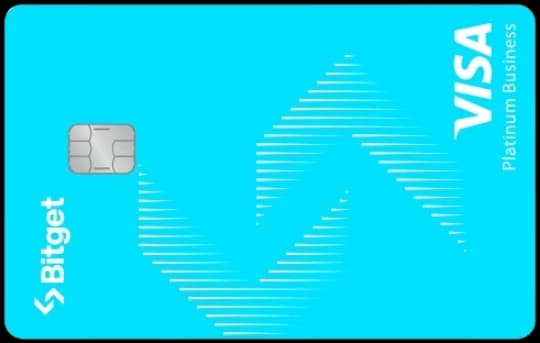
3. Bitget Card
Trade and Spend: Up to 8% BGB Cashback for Bitget Traders
4. Jupiter Global
Free virtual USDC card with 2% base cashback
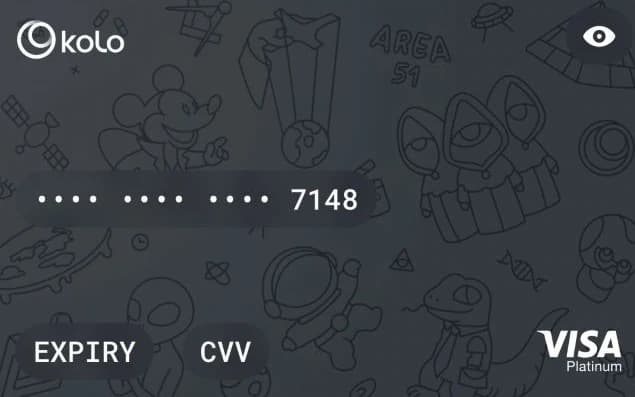
5. Kolo Card
Earn Bitcoin on Purchases: 2% for 30 Days, Then 1% (Capped) + Visa Platinum + 170+ Countries
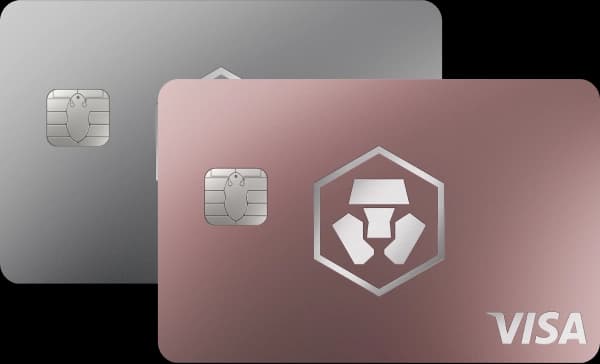
6. Private (Icy White / Rose Gold)
Private Tier: 4% Uncapped Cashback + Lounge Guest

7. ether.fi Core Card
3% Back on the First $2,000 Each Month, No Stake Required
8. KAST K Card
Free USD Cashback: 1.5% on First $2K/Month

9. Xplace Platinum Card
10% Off Platinum with SPENDNODE: Pay $899.10 Instead of $999
Complete list:
All 43 crypto cards available in Singapore in September 2026
This table includes every crypto card we currently track for Singapore. Rows marked Top pick are ranked and reviewed above.
| Crypto card | Max rewards | Annual fee | FX fee | Type | Custody |
|---|---|---|---|---|---|
1 Tria Signature CardTop pick | Up to 4.5% rewards | $87 with code | 1% | Debit | Self-custody |
2 Plasma One Platinum CardTop pick | Up to 4% rewards | Free | 0% | Crypto Backed Credit | Self-custody |
3 Bitget CardTop pick | Up to 8% rewards | Free | 0% | Debit | Custodial |
4 Jupiter GlobalTop pick | Up to 4% rewards | Free | 1% / 1.8% | Debit | Hybrid |
5 Kolo CardTop pick | Up to 2% rewards | Free | 0% | Prepaid | Custodial |
6 Private (Icy White / Rose Gold)Top pick | Up to 4% rewards | TBD | 0% | Prepaid | Custodial |
7 ether.fi Core CardTop pick | Up to 3% rewards | Free | 0.5% | Crypto Backed Credit | Self-custody |
8 KAST K CardTop pick | Up to 1.5% rewards | Free | 0.5% | Prepaid | Custodial |
9 Xplace Platinum CardTop pick | Up to 2% rewards | $999 | 0% | Crypto Backed Credit | Self-custody |
10 | Up to 8% rewards | TBD | 0% | Prepaid | Custodial |
| Up to 6% rewards | $200 with code | 1% | Debit | Self-custody | |
| Up to 5% rewards | Free | 1% | Crypto Backed Credit | Self-custody | |
| Up to 5% rewards | TBD | 0% | Prepaid | Custodial | |
| Up to 5% rewards | Free | 1% | Debit | Self-custody | |
| Up to 4% rewards | Free | 0% | Crypto Backed Credit | Self-custody | |
| Up to 3% rewards | Free | 0.25% | Crypto Backed Credit | Self-custody | |
| Up to 3% rewards | Free | 0% | Crypto Backed Credit | Self-custody | |
| Up to 3% rewards | $10000 | 0.5% | Prepaid | Custodial | |
| Up to 3% rewards | $199 | 0.5% | Crypto Backed Credit | Self-custody | |
| Up to 3% rewards | $299.9 | 0% | Prepaid | Custodial | |
| Up to 2.5% rewards | $83.88 | 1.02% | Crypto Backed Credit | Self-custody | |
| Up to 2% rewards | $1000 | 0.5% | Prepaid | Custodial | |
| Up to 2% rewards | Free | 1% | Crypto Backed Credit | Self-custody | |
| Up to 2% rewards | $49.9 | 0% | Prepaid | Custodial | |
| Up to 1.5% rewards | Free | 0.5% | Prepaid | Custodial | |
| Up to 1.5% rewards | Free | 1% | Debit | Self-custody | |
| Up to 1.5% rewards | $249 | 0.25% | Crypto Backed Credit | Self-custody | |
| Up to 1% rewards | Free | 1% | Crypto Backed Credit | Self-custody | |
| Up to 1% rewards | $47.88 | 1.275% | Crypto Backed Credit | Self-custody | |
| Up to 1% rewards | $99 | 0.5% | Crypto Backed Credit | Self-custody | |
| Up to 0.5% rewards | Free | 1% | Crypto Backed Credit | Self-custody | |
| none | Free | 0% | Crypto Backed Credit | Self-custody | |
| none | $30 | 0% | Crypto Backed Credit | Self-custody | |
| none | Free | 0% | Prepaid | Custodial | |
| Varies | Free | 1.7% | Prepaid | Custodial | |
| cashback | Free | 1.75% | Prepaid | Self-custody | |
| cashback | $199 | 0.75% | Prepaid | Self-custody | |
| cashback | Free | 0.5% | Prepaid | Custodial | |
| none | Free | 1% | Prepaid | Self-custody | |
| none | Free | 1% | Debit | Self-custody | |
| Varies | Free | 1.5% | Debit | Custodial | |
| Varies | Free | 1.7% | Crypto Backed Credit | Self-custody | |
| points | Free | 1% | Debit | Self-custody |
Crypto Card Regulation in Singapore
MAS clarity vs MAS caution
The Monetary Authority of Singapore (MAS) runs one of the most transparent crypto regulatory frameworks anywhere. The downside is that the framework is also one of the strictest. The two halves of that statement are not in tension; they are the value proposition. The strictness is what makes the clarity worth having.
MAS regulates crypto under the Payment Services Act (PSA) 2019, amended in 2021. Crypto exchanges and card-adjacent services must hold a Major Payment Institution (MPI) or Standard Payment Institution (SPI) licence for digital payment token (DPT) services. MAS also regulates under the Securities and Futures Act (SFA) when tokens qualify as capital markets products.
The MAS Financial Institutions Directory currently lists around 37 firms holding active MPI licences for Digital Payment Token Service activities. That count is operational rather than fixed: new licences are granted occasionally, exits happen, and the MAS FID is the source of truth. Verify on the FID before relying on a specific count for any decision.
Foris DAX Asia (Crypto.com's Singapore entity) is on the FID under Major Payment Institution + Digital Payment Token Service. The licensed entities serving Singapore residents today are among the most compliance-vetted globally; that is the practical advantage Singapore residents get in exchange for the smaller field.
The 2024-2025 tightening
Between November 2023 and mid-2025, MAS rolled out the most significant retail consumer-protection package in any major Asian crypto market. Each rule landed separately but the cumulative effect was that the 2022-2024 boom-era environment was replaced by a much narrower operational reality.
- November 2023: MAS confirmed that DPT service providers would be required to assess customer risk awareness before granting access, would be barred from accepting locally issued credit-card payments for crypto, and would be prohibited from offering trading incentives, financing, margin, or leverage to retail users. The measures rolled out in phases through 2024 and 2025.
- April 2024: MAS issued Notice PSN02, updating the AML/CFT requirements for DPT service providers.
- 4 October 2024: Customer-asset safeguarding requirements under amendments to the Payment Services Regulations took effect (the consumer-protection measures originally announced in MAS's November 2023 release). All licensed DPT firms must ring-fence customer assets in trust accounts separated from the operating company's funds. Customer crypto sitting on Coinhako or Independent Reserve is now legally segregated.
- Travel Rule: Singapore's FATF-aligned Travel Rule for crypto transfers has been in force since 28 January 2020 under PSN02 (not a 2025 introduction). Wider information requirements (residential address, identification number) apply to value transfers above SGD 1,500.
- Mid-2025: MAS clarified the Digital Token Service Provider (DTSP) licensing regime under the Financial Services and Markets Act 2022. DTSP licences would be granted only in "extremely limited circumstances," citing unresolved AML and counter-terrorist-financing concerns.
- 30 June 2025: Any Singapore-incorporated entity providing digital token services to overseas clients required a DTSP licence with no grace period or transitional arrangements. Minimum base capital: SGD 250,000. Section 137 of the Financial Services and Markets Act 2022 sets the maximum penalty for operating without a licence at SGD 250,000 in fines or three years imprisonment.
In the months around the 30 June 2025 deadline, Bitget publicly confirmed plans to relocate staff to Dubai and Hong Kong. Bybit was reported by Bloomberg and other outlets to be weighing similar moves. Several smaller Web3 firms also relocated. The 2025 DTSP rule pushed several Singapore-based crypto teams offshore, though MAS's own communications made clear that the tightening was deliberate rather than accidental.
For retail crypto-card users sitting in Singapore as residents, the practical impact is narrower than the headlines suggest. The DTSP rule targets Singapore-incorporated entities serving overseas clients. It does not prevent Singapore residents from using cards issued by globally licensed providers.
What it does is reduce the number of Singapore-based crypto businesses overall, which over time may shrink local options for Singapore-specific support, customer service, and dispute resolution.
The institutional pivot most coverage misses
Reading only the retail-tightening story understates what MAS actually did. While retail DPT services were narrowed, MAS doubled down on institutional and wholesale tokenisation, with several flagship programmes that signal the strategic direction.
- Project Guardian brings together MAS and major banks (HSBC, Standard Chartered, DBS, OCBC, UOB, JPMorgan, and others) to pilot tokenised asset markets, including tokenised deposits, tokenised funds, and asset-backed tokens.
- Project Mariana (with the BIS and the Bank of France and Swiss National Bank) tested cross-border CBDC settlement using DeFi-style automated market makers.
- Project Orchid explored "purpose-bound money," programmable Singapore-dollar tokens with conditional logic for vouchers and government disbursement.
- MAS Global Layer One is the cross-border tokenisation initiative aiming at common standards for tokenised assets across major financial centres.
For retail card users, none of these programmes change the everyday picture today. They do shape the multi-year trajectory of Singapore's payment rails: tokenised deposits and SGD-pegged stablecoins are likely to settle a growing share of institutional and eventually retail flows, and the card-funding side of that pipeline is being rebuilt around regulated rails rather than retail-promoted ones.
MAS Stablecoin Regulatory Framework and StraitsX XSGD
The MAS Stablecoin Regulatory Framework (August 2023) established rules for single-currency stablecoins pegged to the SGD or any G10 currency. Issuers must maintain reserve assets at 100% value, segregate reserves, and meet minimum capital requirements. The framework predates Hong Kong's August 2025 Stablecoins Ordinance by two years.
The Singapore-distinctive piece is XSGD, a Singapore-dollar-pegged stablecoin issued by StraitsX. StraitsX is regulated by MAS as a Major Payment Institution and operates the SGD on/off-ramp infrastructure that several local DPT players rely on. XSGD is supported on Ethereum, Polygon, Avalanche, and Hedera, with reserves audited monthly.
For retail card users, XSGD is interesting more as a funding-leg signal than as a daily spending currency: most card products settle in USD-equivalent on the issuer side, so XSGD generally gets converted to USDC or USD before card-facing rails see it. If a meaningful Singapore card issuer integrates direct XSGD funding without a USD round-trip, the cost-of-funds picture changes. As of early 2026, no major retail card has done that yet.
The Hong Kong divergence
The simplest way to understand Singapore's 2025 trajectory is to compare it with Hong Kong, which moved decisively in the opposite direction during the same period.
- Hong Kong: October 2022 Policy Statement on Virtual Assets, June 2023 SFC VASP licensing regime, August 2025 Stablecoins Ordinance, April 2026 first stablecoin issuer licences granted to HSBC and Anchorpoint Financial. Six deliberate policy decisions over four years, all pointing the same direction: regulated expansion.
- Singapore: October 2024 asset safeguarding, November 2023 credit-card crypto-purchase ban (rolled out through 2024-2025), 2024-2025 mandatory knowledge assessment for retail DPT users, mid-2025 DTSP rule clarification with no grace period for Singapore-incorporated entities serving overseas clients. Several measures over roughly eighteen months pointing the same direction: a deliberate retreat from the boom-era retail posture, alongside an institutional pivot to wholesale tokenisation.
For Singapore residents thinking about regional crypto-card strategy, the divergence matters in practice. Hong Kong-based providers (RedotPay is HQ'd there, the HKMA's stablecoin regime is now operational, and firms like Bitget have publicly confirmed Hong Kong relocation plans) increasingly offer the kind of broad APAC product access that Singapore-based providers have stopped optimising for.
Singapore retains no-CGT for personal-investment gains, the MAS-licensed quality moat, and the FAST/PayNow funding rail. Hong Kong now offers the broader product field. A regional traveller may legitimately end up using Singapore for tax residence and HK-based cards for spending tools.
Tax Treatment of Card Rewards in Singapore
Singapore does not tax capital gains. Gains from disposing of digital tokens held as a long-term personal investment are generally not taxable for individuals. Spending such crypto through a card is not, in normal circumstances, a taxable event. The IRAS framework on this is set out in IRAS guidance on the income-tax treatment of digital tokens.
The right summary is more careful than "tax-free." Three distinct income categories live inside the same wallet for many Singapore card users.
- Personal-investment disposals (capital-type gains) are generally not taxable for individuals. This is the case the page is mostly about.
- Trading or business-character activity is taxable as ordinary income at progressive resident rates. Brackets reach 22% above SGD 320,000, 23% above SGD 500,000, and 24% above SGD 1,000,000 (YA 2024 onwards). The applicable marginal rate depends on total chargeable income. IRAS applies a badges-of-trade test (frequency, volume, holding period, organisation, supplementary work, intent), and high-velocity activity can be re-characterised as carrying on a business.
- Digital tokens received as remuneration or revenue are taxable as employment or business income in the hands of the recipient. A USDC salary for work performed in Singapore is taxable employment income at the same progressive rates as a SGD salary, regardless of how it is paid. The card simplifies the spending leg; it does not change the income leg.
Example. You bought 0.5 ETH at SGD 500 and spend it when it is worth SGD 10,000. Held as personal investment, the SGD 9,500 gain is generally not taxable in Singapore. In Japan, this would cost up to 55% in miscellaneous income tax. In Australia, up to 47% CGT (or 23.5% with the 12-month discount). In France, 30% PFU. In Singapore: SGD 0, subject to the personal-investment characterisation holding.
Example, Web3 employee. You receive USDC 5,000/month as employment income for work performed at a Singapore office. That USDC is employment income, taxable at progressive rates. Converting it to SGD or spending it directly through a crypto card does not change the underlying tax treatment of the salary itself; later disposal of the same USDC as personal investment after a holding period is a separate question.
Records. Keep cost-basis, date-of-acquisition, counterparty, transaction-hash where relevant, and disposal records, even if your position is that the activity is personal investment in character. IRAS can request these years later.
CARF reporting. Singapore enacted its CARF regulations in August 2026. Reporting Singapore crypto-asset service providers must perform due diligence and report covered transactions to IRAS. Singapore intends to begin exchanges with partner tax authorities in September 2028.
This adds no new Singapore tax; it is transparency infrastructure, so the personal-investment versus trading distinction above still governs whether you owe anything.
GST treatment, separately from income tax
IRAS treats digital payment tokens for GST purposes under three rules that are easy to confuse:
- Exchange of one DPT for another DPT, or a DPT for fiat, is exempt from GST. From January 2020 onwards, this is the IRAS treatment.
- Use of DPT as payment for goods or services is disregarded as a supply for GST purposes. The DPT side of the transaction does not generate GST.
- GST still applies to the underlying taxable goods or services purchased, at the prevailing 9% rate (raised from 8% in January 2024). Spending USDC at FairPrice for a SGD 100 supermarket bill does not eliminate the SGD 9 GST on the supermarket bill; that GST is on the goods, charged by the merchant, settled in SGD on the merchant side.
In practice, the GST rule that matters for card users is that crypto-funded spending does not add a separate GST layer on top of normal merchant GST. It does not zero out merchant GST.
| Scenario | Personal investment? | Likely treatment |
|---|---|---|
| Bought BTC 2019, spent through card 2026, ~10x gain | Yes | Generally not taxable |
| ETH cashback received and held, sold months later | Depends on reward character | Later private-investment gain generally not taxable; receipt may be income |
| 200+ disposals/year, leveraged trading, primary income | No (trading) | Income at progressive rates (22% above SGD 320k, 23% above SGD 500k, 24% above SGD 1m) |
| USDC salary from Singapore-office employer | No (employment income) | Employment income at progressive rates regardless of token form |
Practical posture for cardholders. A salaried resident spending crypto held as a personal investment generally has no tax on the private disposal gain. A token reward has its own receipt character and cannot be assumed exempt on that basis alone. Keep card, exchange and reward records; trading or work compensation changes the answer.
How to Apply from Singapore
Singapore crypto-card applications require your NRIC (National Registration Identity Card) for citizens and Permanent Residents. The NRIC is issued by the Immigration and Checkpoints Authority (ICA) and contains a unique alphanumeric number (S/T prefix for citizens, F/G/M prefix for foreigners).
Foreign residents need a passport plus valid work authorisation: Employment Pass (EP), S Pass, EntrePass, Personalised Employment Pass (PEP), or Work Permit. Dependant's Pass holders with a Letter of Consent (LOC) also qualify. Proof of Singapore address via utility bill (SP Group for electricity, PUB for water), bank statement (DBS, OCBC, UOB, POSB), or IRAS notice of assessment.
Singpass and Myinfo integration is supported by MAS-licensed platforms for near-instant verification. Singpass is Singapore's national digital identity system with around 4.5 million users, and Myinfo auto-fills KYC data from government records, making onboarding nearly frictionless for Singapore residents. International issuers without Singpass integration may take 1-3 business days for manual verification.
Physical cards ship to Singapore addresses within 3-7 business days via SingPost or private courier. Virtual-card add-to-wallet support for Apple Pay and Google Pay varies by issuer; verify with the specific issuer before relying on NFC at checkout.
Spending Tips for Singapore
What Singapore already solved
A Singapore resident considering a crypto card needs an honest answer to one question: where exactly does the existing Singapore payment stack stop being enough? The answer is "almost never, for domestic payments."
Singapore has built one of the world's most complete domestic payment systems. PayNow handles instant peer-to-peer transfers via mobile number, NRIC, or UEN, free for individuals. FAST (Fast and Secure Transfers) runs interbank settlement in seconds across DBS, OCBC, UOB, POSB, and the rest of the banking system.
GrabPay dominates ride-hailing, delivery, and a growing share of small-merchant retail. DBS PayLah, OCBC Pay Anyone, and UOB TMRW integrate the major banks into the same instant-payment fabric.
SimplyGo lets contactless Visa and Mastercard cards (and Apple Pay, Google Pay, Samsung Pay) tap directly at MRT and bus readers. Bank cards and mobile wallets are now broadly accepted across the public transit system, not just on selected lines. Apple Pay penetration is high. Singapore residents already have free, instant, universal domestic payments.
The crypto card here does not displace any of that. It exists for situations the domestic stack does not cover:
- Spending appreciated crypto under Singapore's no-CGT treatment for personal-investment gains, where holding it indefinitely is no better than spending it.
- Stablecoin holdings already on-chain that need a clean rail into normal SGD spending without an exchange round-trip.
- Regional travel and foreign-currency spending, where SGD is not pegged to anything and DBS/OCBC/UOB charge 2.5-3.5% FX on every overseas swipe.
- Cross-border SG-JB causeway spending and stablecoin remittance corridors for foreign domestic workers and migrant labour sending money home.
Outside those four boundaries, your DBS or OCBC card is the better tool. This page is about the inside.
Who actually needs a crypto card in Singapore
Four kinds of Singapore residents extract real value from a crypto card. Everyone else is probably better served by their existing bank rails.
The DBS, OCBC, or UOB customer with appreciated crypto. A long-time crypto holder sitting on BTC or ETH bought before 2022 has unrealised gains they can spend under Singapore's no-CGT treatment for personal-investment disposals. Selling on a Singapore-licensed exchange for SGD then spending via PayNow is a longer chain than swiping a crypto card directly. The card collapses the round-trip into one step.
The Web3 employee or founder paid in USDC or USDT. Singapore's Web3 sector is smaller than it was at the 2022-2024 peak but still substantial. Block 71, the One North precinct, and parts of CBD remain the main clusters for crypto and fintech start-ups.
A developer or founder receiving stablecoin salary needs a card that turns USDC directly into HDB rent, supermarket spending, and Grab fares without converting back through an exchange every payday. The salary itself is taxable employment income; the card only addresses the spending leg.
The frequent regional traveller. Singapore's geography puts Kuala Lumpur 4 hours by car, Bangkok 2 hours by air, Jakarta 1.5 hours, Tokyo 7 hours, Hong Kong 4 hours. Business travel is constant. A 0% FX crypto card saves 2.5-3.5% on every overseas swipe versus DBS, OCBC, or UOB; on SGD 2,000/month of foreign spending that is SGD 600-840/year before counting any cashback.
The SG-JB causeway visitor and the Singapore-resident foreign domestic worker / migrant labour remittance sender. The Woodlands and Tuas causeways process hundreds of thousands of crossings daily. Singapore residents going to JB for groceries, dining, Genting, or Forest City spend MYR through SGD-denominated cards at 3.0-3.25% FX.
Separately, Singapore hosts a large foreign-domestic-worker and migrant-labour population sending money home each month. For Filipino, Indonesian, Bangladeshi, Indian, and Myanmarese workers, traditional cash-pickup channels typically run in the low- to mid-single-digit percent range that World Bank Remittance Prices reporting tends to quote for these corridors. Stablecoin remittance can compress that materially, with the receiving-side family using a crypto card on the destination corridor.
CPF and the disposable-income arithmetic
Singapore HENRYs face significant CPF (Central Provident Fund) deductions: 20% employee contribution and 17% employer contribution up to the wage ceiling, into Ordinary, Special, and MediSave accounts. The disposable share of headline salary on which cashback compounds is therefore smaller than the gross figure suggests.
For a SGD 10,000/month salary at the ceiling, take-home is closer to SGD 7,800-8,000 after CPF, before tax. Of that, SGD 3,000-4,000 typically flows through cards in a normal month for a Singapore professional with HDB or condo housing on GIRO. That is the realistic base on which 4-8% cashback compounds, not the gross figure. The 0% FX advantage stays material independent of CPF, since FX charges hit only the cross-border share.
The regional-travel use case
Of the four personas, the regional traveller has the cleanest case for a Singapore crypto card. Singapore is one of Asia's busiest aviation hubs and SGD is not pegged to any reference currency, so every overseas trip incurs real FX cost on a domestic bank card.
The most common corridors:
- Singapore to Kuala Lumpur (MYR): the land border at Woodlands and Tuas processes hundreds of thousands of crossings per day. JB malls, Genting, and Penang are weekend destinations. DBS Visa Debit charges roughly 3.25% on MYR purchases; on a SGD 500 weekend trip that is SGD 16 in pure FX cost.
- Singapore to Bangkok (THB): two-hour flight, year-round destination. Hotel and shopping spending in Sukhumvit, Phrom Phong, and Thonglor is frequent enough that DBS-vs-crypto-card FX adds up across a year.
- Singapore to Jakarta (IDR): business-travel destination with ongoing fintech and trade ties. IDR carries a wider FX spread than most regional currencies, and bank markups compound on top.
- Singapore to Tokyo (JPY): premium leisure destination for Singapore HENRYs, with high spend per trip. JPY swings significantly against SGD, and a 0% FX card eliminates one source of cost on top of currency-timing risk.
- Singapore to Hong Kong (HKD): regional finance and family visits. HKD is pegged to USD, which gives some predictability, but DBS still charges its usual markup.
For a Singapore resident doing two regional trips per month at SGD 1,500 per trip, a 0% FX crypto card saves SGD 720-1,260/year in FX alone. On top of that, 7-8% cashback on the same SGD 36,000 of annual foreign spend adds SGD 2,400-2,880 in rewards. Combined value: roughly SGD 3,100-4,140/year compared to using only DBS or OCBC for overseas swipes.
Spend appreciated crypto under no-CGT (subject to characterisation)
Singapore's no-CGT treatment for personal-investment gains eliminates the stablecoin-only constraint that dominates strategy in Japan (15-55% miscellaneous income tax), India (30% flat plus 1% TDS), and most of Europe.
If your BTC is up 500% and you hold it as a personal investment rather than as trading inventory, you can spend it through your card and collect cashback under the personal-investment characterisation, without the disposal generating a separate Singapore tax. No per-transaction gain tracking, no separate Singapore CGT forms, no stablecoin conversions strictly needed for tax reasons.
The qualifier matters: this only works if IRAS classifies your activity as personal investment rather than trading, and the badges-of-trade test (frequency, volume, holding period, organisation, intent) is the line to watch. Receiving tokens as remuneration or running a high-velocity card is a different fact pattern.
Card selection by use case
- Jupiter Global (2% base, 4% via referrals, 0% USD FX, 1% Rain / 1.8% DCS non-USD FX, $0 free virtual): the zero-fee self-custody pick for Web3 employees paid in USDC and for USD-billed online services, below the higher-cashback cards on rate. Cashback paid within 48 hours in our testing.
- Tria (up to 6%, 1% FX + 0.5%/payment, ~3% Signature / ~4.5% Premium net): Signature at 4.5% on the first $1,000/mo ($109/yr) or Premium at 6% on the first $2,000/mo ($250/yr). USDT cashback, no volatile token exposure.
- Plasma One Platinum (4% base, up to 10% on AI/flights, 0% FX, 100k XPL lock): self-custodial Visa Infinite with unlimited Priority Pass access to 1,900+ airport lounges and travel experiences, concierge, travel insurance, and 5% yield; the premium-travel pick for high-net-worth users willing to lock XPL for a year and accept XPL-denominated cashback.
- xPlace Platinum (2% USDC to $250/mo, 0% FX, $999/yr): 1,400+ lounges, concierge, and a $750K monthly limit; the no-lockup premium-travel card, justified by the travel stack rather than the capped cashback.
- Bitget (8% BGB, 0% FX + 0.9% tx, free): highest raw cashback at 7.1% net, the regional-travel and SGD-merchant pick.
- Kolo (1% BTC ongoing, 0% FX, $0): free BTC accumulation without staking.
- Crypto.com Icy (4%, 0% FX, CRO stake, MAS-licensed via Foris DAX Asia): metal card with Changi lounge access.
- ether.fi Core (3% ETHFI on first $2K/mo, then 1% / 0.5%, 0-0.5% FX, $0): direct stablecoin spending or optional collateral-backed borrowing.
- KAST (1.5% USD cashback on first $2K/mo, 0.5-1.75% FX, free): free card for users testing crypto-card spend.
Card returns: Singapore spending math
The math below assumes the personal-investment characterisation applies; trading-character activity or remuneration-in-token can change the answer. Kolo's 1% figures presume purchases at or under SGD 135 ($100); larger ones hit its $1-per-transaction cap and earn less.
| Monthly spend | Bitget (8%, 0.9% tx) | Tria Signature net of FX + tx fee, before its $109/yr fee (4.5% on first $1,000/mo, 1% FX + 0.5%/payment) | Kolo (1% BTC ongoing, 0% FX) | Crypto.com Icy (4%, 0% FX) |
|---|---|---|---|---|
| SGD 2,000 | SGD 1,704/yr | approx. SGD 450/yr | SGD 240/yr | SGD 960/yr + lounges |
| SGD 3,500 | SGD 2,982/yr | approx. SGD 360/yr | SGD 420/yr | SGD 1,680/yr + lounges |
| SGD 5,000 | SGD 4,260/yr | approx. SGD 270/yr | SGD 600/yr | SGD 2,400/yr + lounges |
| SGD 8,000 | SGD 6,816/yr | approx. SGD 90/yr | SGD 960/yr | SGD 3,840/yr + lounges |
For SGD-merchant spending of the kind shown above, Bitget leads on raw return at 7.1% net after the 0.9% tx fee. Tria's figures are before its $109/yr fee (about SGD 147), which pulls its net below Kolo's at the higher spend levels shown. Kolo at 1% ongoing BTC (2% intro) with 0% FX remains the free BTC option rather than a cashback leader.
Jupiter Global is not in this table because the math shifts depending on whether the underlying transaction is USD-billed (2% net, no FX) or SGD-billed (about 1% net after the 1% Rain non-USD FX). For Web3 employees whose disposable income flows through USD-denominated services, Jupiter's draw is the zero fees and self-custody rather than a category-leading rate.
Tria Signature at 4.5% on the first $1,000/mo (then 1%) pays USDT cashback. After its 1% FX and 0.5% payment fees, it returns about 3% inside the cap and can slip below those fees above it. On raw SGD-merchant return it trails Bitget; its case is the stablecoin payout.
Crypto.com Icy makes sense if you value Changi lounge access and Spotify/Netflix rebates and can meet the CRO stake requirement.
Spending scenario: SGD 4,000/month under personal-investment characterisation
| Funding method | Annual spend | Cashback (7.1% net) | Singapore tax on disposal | FX savings (vs DBS 3%) | Net benefit |
|---|---|---|---|---|---|
| BTC, appreciated 300%, personal investment | SGD 48,000 | SGD 3,408 | Generally none | SGD 1,440 | SGD 4,848 |
| USDC bought as personal investment | SGD 48,000 | SGD 3,408 | Generally none | SGD 1,440 | SGD 4,848 |
| ETH, appreciated 150%, personal investment | SGD 48,000 | SGD 3,408 | Generally none | SGD 1,440 | SGD 4,848 |
| USDC received as Singapore employment income | SGD 48,000 | SGD 3,408 | Income tax on the underlying salary at progressive rates (22-24% in the top brackets) | SGD 1,440 | Cashback and FX uplift survive; salary tax is independent |
Three of the four rows assume personal-investment crypto disposals and are generally not taxable in Singapore. The fourth row is included precisely because it is the case the framing most often gets wrong: cashback and FX savings on the spending leg do not eliminate income tax on USDC or USDT received as work compensation.
Borrow-to-spend (position preservation, not tax avoidance)
In Singapore, ether.fi's collateral mode is about preserving market exposure rather than avoiding personal-investment CGT. ether.fi Core pays stepped ETHFI rewards and also supports direct stablecoin spending. Borrowing adds interest and liquidation risk, so it is not automatically superior to the direct route.
Lending platforms similarly offer borrowing against BTC, ETH, and select altcoins. The combined yield plus cashback makes this attractive even without a tax motive.
FX savings for Singapore residents
SGD is not pegged to USD (unlike HKD), so every foreign-currency purchase incurs FX conversion. DBS, OCBC, and UOB charge 2.5-3.5% on non-SGD transactions.
| Card | FX markup on USD/EUR purchase | Cost on SGD 2,000/month foreign spend |
|---|---|---|
| DBS Visa Debit | 3.25% | SGD 780/yr |
| OCBC Debit | 2.5% | SGD 600/yr |
| UOB Debit | 3.0% | SGD 720/yr |
| Bitget (0% FX) | 0% + 0.9% tx | SGD 216/yr |
| Crypto.com (0% FX) | 0% | SGD 0/yr |
For Singaporeans who travel frequently to Malaysia (MYR), Thailand (THB), Indonesia (IDR), or Japan (JPY), a 0% FX crypto card saves SGD 500-780/year on SGD 2,000/month in foreign spending.
Funding your card inside the new rules
Singapore's fiat-to-crypto pipeline is efficient but the funding rules tightened in 2024-2025. Three constraints apply:
- No locally issued credit cards. Since the 2023-2025 retail consumer-protection rollout, locally issued credit cards cannot be used to purchase digital payment tokens for retail customers in Singapore. Funding flows must use FAST, PayNow, or debit-card transfers.
- Knowledge assessment first. New retail users on a Singapore-licensed DPT platform must pass a short risk-knowledge assessment before placing a first trade. This applies to first-time trades on Coinhako, Independent Reserve, Crypto.com SG, and other MAS-licensed venues. Existing users were grandfathered.
- Asset segregation. Funds you hold on a MAS-licensed platform sit in a segregated trust account, separated from the operating company's funds, with daily reconciliation and independent oversight. This is a benefit rather than a constraint, but withdrawal mechanics may run slightly slower than on offshore exchanges.
The typical workflow that survives all three rules: DBS/OCBC/UOB to FAST transfer (instant, free) to Coinhako or Independent Reserve, pass the knowledge assessment if first-time, buy USDC, transfer to card wallet. The flow can be completed quickly after the one-time assessment, assuming no compliance review on the transfer leg.
Major Singapore banks generally do not block transfers to MAS-licensed crypto platforms, though individual transaction reviews can occasionally delay larger transfers. For non-MAS-licensed card issuers (Bitget, Tria, Kolo), fund via crypto transfer from an MAS-licensed exchange or from an existing self-custody wallet rather than direct bank deposit.
Common mistakes Singapore cardholders make
- Mistake 1: Crossing the line from personal investment to trading-character activity. IRAS applies a facts-and-circumstances test. High-velocity buy-and-spend cycles funded by rapid trading can be re-characterised as carrying on a business, taxed at progressive rates (22-24% in the top brackets). For a HENRY at the SGD 320,000+ tier, SGD 50,000 of re-characterised disposals adds roughly SGD 11,000-12,000 of tax. Keep separate long-term-portfolio and card-spending wallets, and keep records.
- Mistake 2: Treating USDC salary as tax-free because it spends like crypto. Tokens received as remuneration for work in Singapore are employment income, taxable at the same progressive rates as a SGD salary regardless of token form. A USDC salary equivalent to SGD 120,000/year produces roughly SGD 7,000-8,000 of income tax under normal brackets. Treating it as untaxed disposals risks the full liability plus penalties on assessment. The card simplifies the spending leg only.
- Mistake 3: Using a DBS/OCBC/UOB debit card for overseas spending instead of a 0% FX crypto card. A Singaporean spending SGD 2,000/month on regional trips pays SGD 600-780/year in bank FX markups. A 0% FX card with 7-8% cashback flips that into SGD 1,920+/year in rewards plus SGD 600-780 in FX savings: a swing of over SGD 2,500/year. Carry a low-FX crypto card for non-SGD transactions and use the bank card only for SGD where the crypto card offers no specific advantage.
- Mistake 4: Trying to fund crypto purchases with a Singapore credit card. Locally issued credit cards cannot be used to purchase digital payment tokens for retail customers in Singapore. Attempting to top up via DBS, OCBC, or UOB credit will be blocked at the exchange level. Use FAST or PayNow from a Singapore bank account, or use a debit card transfer. The credit-card route was never going to give better rewards than spending the resulting crypto via a 0% FX card anyway.
(Note for Singapore-incorporated crypto businesses serving overseas clients: since 30 June 2025, a DTSP licence under the Financial Services and Markets Act 2022 is required, and Section 137 sets the maximum penalty at SGD 250,000 in fines or three years' imprisonment. This is a business-formation issue rather than a card-user issue and is covered in the regulatory section above. Specialist legal advice is the right starting point if any of this applies to you.)
Local payment infrastructure
Contactless payments are standard across Singapore. Visa and Mastercard tap-to-pay works at supermarkets (FairPrice, Cold Storage, Sheng Siong, Giant), department stores (Takashimaya, Robinsons, BHG), electronics chains (Challenger, Harvey Norman, Courts), hawker centres (many stalls now accept contactless via NETS terminals), and food courts (Kopitiam, Food Republic, Koufu).
Public transit: EZ-Link and NETS FlashPay are the original closed-loop transit cards. Since the SimplyGo rollout, contactless Visa and Mastercard cards (including crypto-issued debit and prepaid cards) are widely accepted at MRT and bus readers across the network, alongside Apple Pay, Google Pay, and Samsung Pay on enabled phones. Running daily transit through a crypto card earns cashback on commutes that previously sat outside the rewards loop entirely.
PayNow (instant bank transfer via mobile number or NRIC) and GrabPay dominate peer-to-peer and delivery payments. These are bank/app-only and do not work with crypto cards, but Visa/Mastercard contactless covers in-person spending at the same merchants.
Changi Airport. All terminals (T1-T4, Jewel) accept Visa/Mastercard contactless. Crypto.com Icy White/Rose Gold and Obsidian tiers include Priority Pass lounge access at Changi, eliminating the need for a separate membership (typically SGD 130-600/year).
Supported Exchanges & Wallets in Singapore
Crypto.com (Foris DAX Asia) is the strongest MAS-licensed pick for Singapore card users. It holds a Major Payment Institution licence, operates a domestic Singapore platform, and offers the full card tier range from Midnight Blue to Obsidian.
The Icy White tier is one of the stronger crypto cards with airport lounges in Singapore (4% CRO cashback, Changi access, Spotify/Netflix rebates).
Bitget serves Singapore through its APAC entity with the highest cashback rate available (8% BGB). The exchange-linked Bitget Card (Visa debit, 0% FX, 0.9% transaction fee) is the top pick for pure cashback maximisation on SGD-merchant and regional-travel spending. Bitget's Wallet Card (Mastercard prepaid, 1.7% FX with $400/month zero-fee quota) suits users who prefer wallet-based stablecoin spending without an exchange account.
Jupiter Global is the USDC-native pick for Singapore-resident Web3 employees, founders, and freelancers paid in stablecoin. The free virtual card runs at 2% base cashback (4% for a month after referring 2 qualifying friends), funded directly from a self-custody Solana wallet, with 0% FX on USD-billed transactions and 1% (Rain) or 1.8% (DCS) on non-USD spending. Cashback payouts arrived within 48 hours in our testing.
The trade-off versus Bitget is the funding-currency assumption: Jupiter wins for USD-billed bills, Bitget wins for SGD-merchant and regional travel.
Bybit is on the MAS Investor Alert List and does not offer card products to Singapore residents. Verify the current status at the MAS Financial Institutions Directory before any decision.
Binance exited Singapore's retail market in 2021-2022 after MAS directed it to stop soliciting Singapore users. Binance's card is not available here.
Wirex holds an MPI licence from MAS but does not currently offer its card product in Singapore despite the licensing.
Tria now bills 1% FX on non-USD spend plus 0.5% on every payment across all tiers (Signature at 4.5% on the first $1,000/mo / $109/yr, about 3% net on SGD; Premium at 6% on the first $2,000/mo / $250/yr, about 4.5% net). USDT cashback avoids volatile token-price risk. Kolo (1% ongoing BTC, 2% intro, 0% FX, $0) remains the free BTC option in Singapore.
Self-custody had a natural fit in Singapore's Web3 developer scene through Cypher, but that card program has closed; developers who want self-custody now lean on wallet-native options like MetaMask.
KAST (1.5% USD cashback on first $2K/mo, 0.5-1.75% FX, free) and RedotPay (stablecoin-native, Hong Kong-based APAC issuer) provide additional options.
Domestic exchanges. Independent Reserve (MAS-licensed), Coinhako (MAS-licensed), and Sygnum (digital-asset bank with MAS banking licence) operate locally but none offer Visa/Mastercard spending cards. For on-ramping SGD to stablecoins, Coinhako and Independent Reserve support FAST/PayNow transfers with near-zero fees, making the SGD-to-USDC-to-card pipeline efficient.
Outlook (our read)
A handful of open questions will shape the next 18 months for Singapore crypto-card users.
- DTSP "extremely limited circumstances" practical scope. MAS has signalled the bar is high without spelling out which fact patterns clear it. The first set of issued (or refused) DTSP licences will define the operational meaning of the phrase, and indirectly whether any new Singapore-incorporated card-adjacent businesses can stand up.
- SGD-stablecoin regime expansion and XSGD merchant adoption. The 2023 Stablecoin Regulatory Framework is in place but XSGD remains a funding-leg primitive rather than a daily-spending currency. Whether a major retail card issuer integrates direct XSGD funding without a USD round-trip, and whether second SGD-stablecoin issuers emerge, will shape the cost of funds for Singapore card users.
- HK-SG licensing reciprocity. Hong Kong's stablecoin and VASP regimes are now operational. Whether MAS and the SFC build any practical reciprocity for licensed VASPs operating across both jurisdictions would change the choice between a Singapore-tax-resident user with HK-issued cards versus a fully Singapore-stack setup.
- Project Guardian retail spillover. Tokenised deposits and tokenised funds are institutional today. The first concrete bridge from wholesale tokenisation to retail card-rail integration (for example, tokenised deposit funding for a Singapore-issued debit card) would be a meaningful change in funding economics.
- Foreign-issuer permit structure. Singapore residents currently use either MAS-licensed cards (Crypto.com via Foris DAX Asia) or globally licensed cards from issuers without a Singapore-incorporated entity. Whether MAS issues a formal foreign-issuer permit category, or continues to rely on the current de facto split, is the structural question that decides whether the licensed shortlist grows or stays at its current size.
Singapore's crypto-card market has fewer marketing-driven entrants and more regulator-aligned ones. The case for cards remains strongest for DBS or OCBC customers with appreciated crypto, Web3 employees paid in stablecoins, regional travelers, and SG-JB visitors or FDW remittance senders. Issuer eligibility and the relevant tax treatment still need checking for each route.
Written by SpendNode Editorial
Frequently Asked Questions
Is spending crypto through a card taxable in Singapore?
Singapore does not tax capital gains, so disposals of digital tokens held as long-term personal investment (including spending through a card) are generally not taxable for individuals. IRAS applies a badges-of-trade test, and trading-character activity can be re-characterised as ordinary income at progressive resident rates up to 24% (top bracket from YA 2024 onwards).
Separately, digital tokens received as remuneration for work performed in Singapore are taxable employment income at the same progressive rates regardless of token form. Records should still be kept either way.
Which crypto cards work for Singapore residents after the 2024-2025 MAS tightening?
Crypto.com (via Foris DAX Asia, MAS Major Payment Institution licence on the MAS Financial Institutions Directory) is the strongest licensed pick. Bitget at 8% BGB with 0% FX (0.9% tx fee, 7.1% net) leads on raw cashback through its APAC entity.
Tria Signature is 4.5% on the first $1,000/mo (then 1%) with a 1% FX fee plus 0.5% per payment, about 3% net on SGD spend ($109/yr); its draw is USDT cashback rather than the rate. Kolo is 1% ongoing BTC (2% for the first 30 days) with 0% FX at $0. Crypto.com Icy adds 4% with Changi lounge access (CRO stake). Bybit and Binance are not available; COCA and Wirex are not currently issuing cards in Singapore.
For affluent regional travellers, Plasma One Platinum (self-custodial Visa Infinite, 4% base, 0% FX, unlimited Priority Pass access to 1,900+ airport lounges and travel experiences, and concierge behind a 100,000 XPL lock) is the premium-travel option. xPlace Platinum offers 1,400+ lounges and 0% FX at $999/yr, with cashback of 2% USDC capped at $250/month, so it is a lounge card rather than a rewards card.
Why does FX still matter when PayNow and SimplyGo cover domestic spending?
Domestic Singapore spending is well-served by PayNow, FAST, GrabPay, Apple Pay, and SimplyGo. The crypto-card FX advantage concentrates on the cross-border layer: regional travel (SG-KL, SG-BKK, SG-JKT, SG-TYO, SG-HKG), the SG-JB causeway weekend visitor pattern, and stablecoin remittance corridors for Singapore-based foreign domestic workers and migrant labour sending money home.
SGD is not pegged to anything, so DBS, OCBC, and UOB charge 2.5-3.5% on non-SGD transactions; a 0% FX crypto card removes that layer.
What did the 2025 DTSP rule actually change for residents?
From 30 June 2025, any Singapore-incorporated entity providing digital token services to overseas clients requires a Digital Token Service Provider (DTSP) licence under the Financial Services and Markets Act 2022, with no grace period. MAS has stated DTSP licences will be granted only in 'extremely limited circumstances.' Section 137 sets the maximum penalty at SGD 250,000 in fines or three years' imprisonment.
The rule targets Singapore-incorporated entities serving overseas clients; it does not stop Singapore residents from using cards issued by globally licensed providers. It did push Bitget and several other firms to relocate Singapore-based teams to Dubai and Hong Kong.
Other Countries
View all 112 countries →


Latest Page Changes to the Best Crypto Cards in Singapore Guide
- xPlace cut Platinum's Credit Mode cashback to 2% USDC with a $250 monthly cap for new memberships, effective September 14, 2026, and removed Cash Mode cashback. We moved xPlace down this page's rankings accordingly. Memberships purchased before that date keep the previous rates for up to 12 months
- Bitget's April 2026 APAC virtual card launch, which includes Singapore, while keeping Crypto.com as the strongest MAS-licensed card option