

Best Crypto Cards in Hong Kong (2026)
Hong Kong pairs zero capital gains tax with one of Asia's most usable everyday card markets. This guide compares the cards that make the most of HKD spending, travel utility, and the city's exchange-heavy crypto culture.
Verified for Hong Kong
43 crypto cards available
Local currency: HKD
If you already bank with HSBC, Bank of China (HK), or Standard Chartered, you already carry an Octopus card, and you can tap FPS for instant HKD and RMB transfers any hour of the day, the honest question is: what does a crypto card in Hong Kong actually add? The city does not have a payments problem.
HKMA Q4 2025 statistics report 28.99 million credit cards in circulation in a city of 7.5 million residents, nearly four cards per person. Stored-value facility accounts reached 86.4 million accounts in use, roughly eleven per resident. This is one of the most payment-saturated cities on the planet.
Summary:
Which crypto cards are best in Hong Kong?
The best crypto cards in Hong Kong in September 2026 are Tria Signature Card, COCA Visa Card, Plasma One Platinum Card, Private (Icy White / Rose Gold), Kolo Card, and KAST K Card. The detailed ranking below explains the local tax, fee, and availability trade-offs.
| Crypto card | Base reward | Net after fees | Annual fee | FX fee | Type |
|---|---|---|---|---|---|
| 4.5% base4.5% on the first $1,000/mo, then 1% | 3% | $87 with code | 1% | Debit | |
| 1% baseup to 8% with a large $COCA stake; $15-$350/mo claim capacity by tier | 1% | Free | 0% | Debit | |
| 4% base4% base, up to 10% on AI and flights; 100k XPL lock | 4% | Free | 0% | Crypto Backed Credit | |
| 4% baseneeds a $50k CRO stake to hold the tier | 4% | TBD | 0% | Prepaid | |
| 1% base2% for the first 30 days, then 1%; also capped at $1/EUR 1 per transaction ($2/EUR 2 during intro) and $100/EUR 100 per month | 1% | Free | 0% | Prepaid | |
| 1.5% base | 1% | Free | 0.5% | Prepaid | |
| 2% base2% in USDC on Credit Mode spend; cashback capped at $250/mo | 2% | $999 | 0% | Crypto Backed Credit |
The crypto card use case in Hong Kong is narrow but valuable for investors. It is not a daily-driver replacement for Octopus or FPS. Hong Kong does not tax gains on digital assets held as capital investments, so spending appreciated holdings can avoid the capital-gains bill faced in many other markets. The HKD-USD peg reduces currency volatility on dollar-settled cards; card-level FX fees still apply.
That infrastructure reached a historic milestone on April 10, 2026, when the HKMA granted its first stablecoin issuer licences to HSBC and Anchorpoint Financial (a Standard Chartered, Animoca Brands, and HKT joint venture).
The approvals came under the Stablecoins Ordinance effective August 1, 2025, and made Hong Kong the first major jurisdiction where commercial banks that already print physical Hong Kong dollar banknotes are now also licensed to issue regulated Hong Kong dollar stablecoins. Only 2 of 36 applicants were approved in the first batch.
The HKD-USD peg (7.75-7.85 range via the Linked Exchange Rate System maintained since 1983) means USD-settled crypto cards have negligible FX drag, an advantage shared only by UAE (AED-USD soft peg) and a handful of other pegged currencies.
For an investment holding, Hong Kong's lack of a separate capital-gains tax can make disposal less costly than in many markets. The IRD distinguishes capital holdings from trading stock on the facts, and a card's own FX fee still applies. Singapore's tax and licensing rules require their own assessment.
Three kinds of Hong Kong residents get real value out of these cards. The Web3 employee paid in USDT or USDC (Cyberport has hundreds of blockchain companies, many paying in stablecoin) needs to turn stablecoin salary into HKD spending without a conversion step.
The long-term holder of investment crypto may be able to spend without a Hong Kong profits-tax charge on the gain. The Shenzhen commuter or frequent regional traveller can compare the HKD-USD peg and card FX terms with existing HSBC or BOCHK rails.
For the typical reader across all three personas who doesn't want to lock up token capital in a staking tier, Tria Signature is the simplest no-stake rate: 4.5% on the first $1,000/month of spend (then 1%), $109/yr, with a 1% FX fee and 0.5% per payment that net it to about 3% on HKD spend, no $COCA or BGB position required.
COCA still leads on absolute rate for users running $COCA exposure at the spending levels modeled here: up to 8% cashback (1% at free Starter, scaling with staking) plus 5% APY on eligible USD, a stack that works well for the Web3 employee whose salary lands in USDC and stays in USDC.
Crypto.com Icy trades rate down to 4% in exchange for Priority Pass lounge access at HKIA (requires CRO stake). Kolo at 1% ongoing BTC (2% intro) with 0% FX is the simple free BTC card.
The premium-travel tier serves the Shenzhen-and-regional commuter who passes through HKIA most weeks. Plasma One Platinum leads it: a self-custodial Visa Infinite with unlimited Priority Pass access to 1,900+ airport lounges and travel experiences, concierge, travel insurance, 4% base cashback and a 5% yield on idle stablecoin balance, behind a 100,000 XPL lockup.
xPlace Platinum is the no-lockup alternative: 1,400+ airport lounges, concierge, 0% FX, and a $750K monthly limit at $999/year, with Credit Mode cashback of 2% USDC capped at $250 a month.
At a 70-million-passenger hub the lounge network does more for these cards than the headline rate.
Wirex (up to 8%, 0% FX) is available in Hong Kong through its 35-country coverage. A personal investment disposal may be outside profits tax, but that classification should not be assumed for assets held as trading stock.
Best Card For Every Need in Hong Kong
Top 7 Crypto Cards in Hong Kong
Zero CGT removes the tax-optimization layer that defines most other markets on this site. What's left is a straight net-rate comparison after fees, FX, and any token-staking lockup. The HKD-USD peg (7.75-7.85) removes FX value risk on dollar-settled cards, so the 0%-FX advantage that matters in Sweden or Korea barely registers on peg-aligned spend.
One catch: a card that charges a percentage FX fee still applies it on HKD transactions regardless of the peg, so Tria's 1% FX bites on HKD spend even though the value stays steady. The decision turns on absolute rate net of fees and any staking requirement.
Tria Signature is the no-stake pick for users who don't want to build a token position to unlock a higher cashback tier. 4.5% on the first $1,000/month of spend (then 1%), $109/yr, plus a 1% FX fee and 0.5% per payment that net it to about 3% on HKD spend.
The annual fee earns back at roughly HKD 2,360/month of card spend; the 4.5% headline runs up to the $1,000/month (about HKD 7,800) cap before dropping to 1%, with no $COCA or BGB ladder to climb. Premium ($250/yr) takes the rate to 6% on the first $2,000/month and beats Signature on net above roughly HKD 6,100/month of card spend (the FX and per-payment fees cancel between the two tiers).
COCA holds the case for users running $COCA exposure. The free Starter tier pays 1%, below Tria's roughly 3% net; reaching 8% requires staking $COCA across the tier ladder. COCA also pays 5% APY on eligible USD, a useful yield sidecar for the Web3 employee whose salary lands in USDC and is not yet ready to spend it. The trade-off is the $COCA token position itself and a monthly claim capacity of $15-$350 by tier.
For the Shenzhen commuter and the regional flyer who passes through HKIA most weeks, the premium tier is where the card becomes a lounge-and-concierge one.
Plasma One Platinum carries that tier: a self-custodial Visa Infinite with unlimited Priority Pass access to 1,900+ airport lounges and travel experiences, concierge, travel and rental insurance, 4% base cashback (10% on AI subscriptions and eligible flights), and a 5% yield on idle stablecoin balance. Access requires locking 100,000 XPL for twelve months, so you carry a full year of token-price risk and the cashback pays in volatile XPL.
xPlace Platinum is what you buy when the XPL lockup is a dealbreaker: 1,400+ airport lounges, concierge, a $750,000 monthly limit, and 0% FX for $999/year with no token position. Its 2% USDC cashback stops at $250 a month; it covers the membership fee from roughly HKD 32,500 ($4,163) of monthly eligible spend before borrowing costs, and under that level the HKIA lounge routine decides whether the card earns its keep. Buyers who paid before September 14, 2026 hold the previous rates for up to a year.
Crypto.com Icy (4%, CRO stake) trades headline rate for Priority Pass at HKIA. For a regional commuter making weekly trips to Tokyo, Taipei, Seoul, or Bangkok, the lounge access does more for travel comfort than the rate gap to COCA does for the wallet. Kolo (1% BTC ongoing, $0, 0% FX) is the BTC-accumulation sidecar that costs nothing to run. KAST (1.5% on first $2,000/month) is the prepaid no-commitment entry for testing stablecoin-funded spending before settling on a primary card.
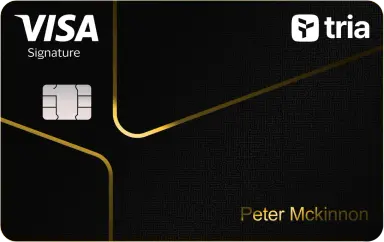
1. Tria Signature Card
High-Yield Self-Custody: 15% APY + Visa Signature Perks
2. COCA Visa Card
Self-Banking: 8% Cashback + 5% APY + 0% FX
3. Plasma One Platinum Card
Premium Self-Custodial Visa - 4% Base, 10% AI, 10% Flights, Lounge Access, Boosted 5% Yield
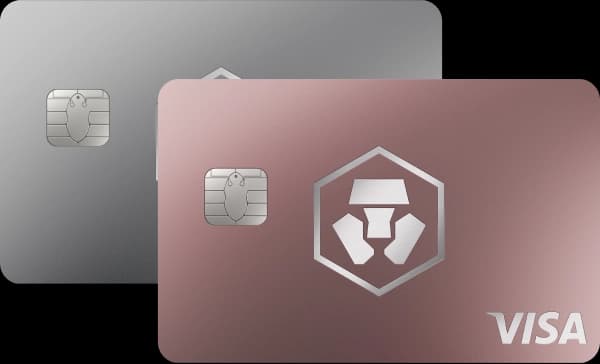
4. Private (Icy White / Rose Gold)
Private Tier: 4% Uncapped Cashback + Lounge Guest
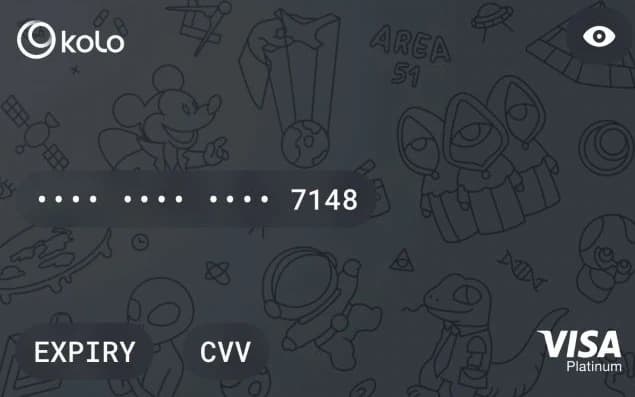
5. Kolo Card
Earn Bitcoin on Purchases: 2% for 30 Days, Then 1% (Capped) + Visa Platinum + 170+ Countries
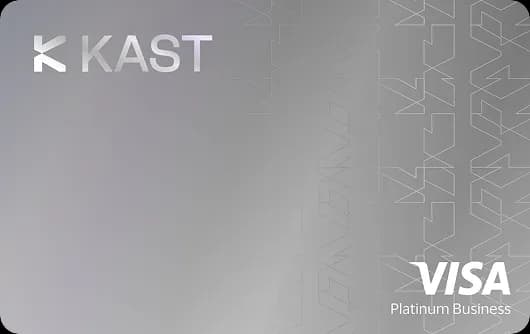
6. KAST K Card
Free USD Cashback: 1.5% on First $2K/Month
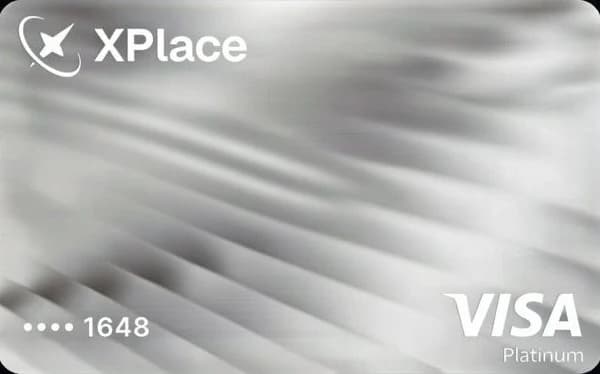
7. Xplace Platinum Card
10% Off Platinum with SPENDNODE: Pay $899.10 Instead of $999
Complete list:
All 43 crypto cards available in Hong Kong in September 2026
This table includes every crypto card we currently track for Hong Kong. Rows marked Top pick are ranked and reviewed above.
| Crypto card | Max rewards | Annual fee | FX fee | Type | Custody |
|---|---|---|---|---|---|
1 Tria Signature CardTop pick | Up to 4.5% rewards | $87 with code | 1% | Debit | Self-custody |
2 COCA Visa CardTop pick | Up to 8% rewards | Free | 0% | Debit | Self-custody |
3 Plasma One Platinum CardTop pick | Up to 4% rewards | Free | 0% | Crypto Backed Credit | Self-custody |
4 Private (Icy White / Rose Gold)Top pick | Up to 4% rewards | TBD | 0% | Prepaid | Custodial |
5 Kolo CardTop pick | Up to 2% rewards | Free | 0% | Prepaid | Custodial |
6 KAST K CardTop pick | Up to 1.5% rewards | Free | 0.5% | Prepaid | Custodial |
7 Xplace Platinum CardTop pick | Up to 2% rewards | $999 | 0% | Crypto Backed Credit | Self-custody |
| Up to 8% rewards | TBD | 0% | Prepaid | Custodial | |
| Up to 8% rewards | Free | 0% | Debit | Hybrid | |
| Up to 6% rewards | $200 with code | 1% | Debit | Self-custody | |
| Up to 5% rewards | Free | 1% | Crypto Backed Credit | Self-custody | |
| Up to 5% rewards | TBD | 0% | Prepaid | Custodial | |
| Up to 5% rewards | Free | 1% | Debit | Self-custody | |
| Up to 4% rewards | Free | 0% | Crypto Backed Credit | Self-custody | |
| Up to 3% rewards | Free | 0.5% | Crypto Backed Credit | Self-custody | |
| Up to 3% rewards | Free | 0.25% | Crypto Backed Credit | Self-custody | |
| Up to 3% rewards | Free | 0% | Crypto Backed Credit | Self-custody | |
| Up to 3% rewards | $10000 | 0.5% | Prepaid | Custodial | |
| Up to 3% rewards | $199 | 0.5% | Crypto Backed Credit | Self-custody | |
| Up to 3% rewards | $299.9 | 0% | Prepaid | Custodial | |
| Up to 3% rewards | $129 | 1.2% | Prepaid | Custodial | |
| Up to 3% rewards | Free | 0% | Debit | Hybrid | |
| Up to 2% rewards | $1000 | 0.5% | Prepaid | Custodial | |
| Up to 2% rewards | Free | 1% | Crypto Backed Credit | Self-custody | |
| Up to 2% rewards | $49.9 | 0% | Prepaid | Custodial | |
| Up to 1.5% rewards | Free | 0.5% | Prepaid | Custodial | |
| Up to 1.5% rewards | Free | 1% | Debit | Self-custody | |
| Up to 1.5% rewards | $249 | 0.25% | Crypto Backed Credit | Self-custody | |
| Up to 1% rewards | Free | 1% | Crypto Backed Credit | Self-custody | |
| Up to 1% rewards | $99 | 0.5% | Crypto Backed Credit | Self-custody | |
| Up to 0.5% rewards | Free | 0% | Debit | Hybrid | |
| Up to 0.5% rewards | Free | 1% | Crypto Backed Credit | Self-custody | |
| none | Free | 0% | Crypto Backed Credit | Self-custody | |
| none | $30 | 0% | Crypto Backed Credit | Self-custody | |
| none | Free | 0% | Prepaid | Custodial | |
| cashback | Free | 1.75% | Prepaid | Self-custody | |
| cashback | $199 | 0.75% | Prepaid | Self-custody | |
| cashback | Free | 0.5% | Prepaid | Custodial | |
| none | Free | 1% | Prepaid | Self-custody | |
| Varies | Free | 1.2% | Prepaid | Custodial | |
| Varies | Free | 1.2% | Prepaid | Custodial | |
| Varies | Free | 1.2% | Prepaid | Custodial | |
| points | Free | 1% | Debit | Self-custody |
Crypto Card Regulation in Hong Kong
The Four-Year Policy Arc (2022-2026)
Hong Kong's crypto-card market is a direct consequence of six deliberate government decisions over four years. Each one pushed the city further toward being the default Asian crypto hub. Read in sequence, they form one of the most coherent regulatory strategies in global digital assets.
- October 31, 2022: The Financial Services and Treasury Bureau (FSTB) issued the first Policy Statement on Virtual Assets, signaling a full reversal from the city's previously cautious stance and welcoming Web3 businesses to set up in Hong Kong.
- December 28, 2022: The Top Talent Pass Scheme (TTPS) launched, offering two-year visas to high-earning professionals and graduates of top global universities. By the end of 2024, over 92,000 applications had been approved. Roughly 90% came from mainland China.
- June 1, 2023: The SFC virtual asset service provider (VASP) licensing regime came into force under the Anti-Money Laundering and Counter-Terrorist Financing Ordinance (AMLO), requiring any platform trading crypto in or to Hong Kong to hold an SFC license.
- August 1, 2025: The Stablecoins Ordinance took effect, moving stablecoin issuance under HKMA oversight with strict reserve and capital requirements.
- June 26, 2025: The government published Policy Statement 2.0, introducing the LEAP framework and formalizing Hong Kong's long-term digital asset strategy.
- April 10, 2026: The HKMA granted the first two stablecoin issuer licences to HSBC and Anchorpoint Financial (Standard Chartered + Animoca Brands + HKT) from a pool of 36 applicants. A 5.6% approval rate.
Six decisions. Four years. One direction. For a crypto card user, the operational takeaway is that Hong Kong's regulatory environment is the most stable and predictable in Asia for this product category. Compare with Singapore, which moved decisively in the opposite direction during the same period.
The LEAP Framework (Policy Statement 2.0)
Policy Statement 2.0 organizes Hong Kong's digital asset strategy around four pillars, L.E.A.P., defined in the June 26, 2025 document:
- L - Legal and regulatory streamlining. A unified framework for digital asset exchanges, stablecoin issuers, dealing service providers, and custodian service providers. The Stablecoins Ordinance (August 2025) and the pending dealer/custodian licensing bill are implementations of this pillar.
- E - Expanding tokenized products. Normalization of tokenized bond issuance, with plans to extend tokenization to gold, green energy, and electric vehicles as real-world asset classes.
- A - Advancing use cases and cross-sectoral collaboration. Deepening institutional adoption and integration with traditional finance, including cross-border RMB settlement pilots.
- P - People and partnerships. Cyberport's Web3 and blockchain training programs, university research partnerships, and the Blockchain & Digital Asset Pilot Subsidy Scheme launched in June 2025, which funds up to HKD 500,000 per eligible project at 80% cost coverage.
For individual crypto card users, LEAP's most relevant pillar is Legal. The unified licensing framework means Hong Kong will soon be the only major jurisdiction where crypto exchanges, stablecoin issuers, dealers, and custodians all operate under a single transparent public register.
The Singapore Divergence
To understand why Hong Kong became what it is, watch what Singapore did instead. Between 2022 and 2024, Singapore was the default Asian crypto hub. Binance Asia, KuCoin, Crypto.com, and dozens of Web3 startups were all based there. Then MAS changed direction.
- June 6, 2025: The Monetary Authority of Singapore (MAS) announced that Digital Token Service Provider (DTSP) licences would only be issued in "extremely limited circumstances," citing anti-money-laundering and counter-terrorist-financing concerns.
- June 30, 2025: Any Singapore-incorporated entity providing digital token services to overseas clients required a DTSP licence with no grace period, no transitional arrangements, and no extensions. Violations carry fines of up to SGD 250,000 or three years imprisonment.
- Late 2025: Bybit, Bitget, and several other major crypto firms pulled teams and operations from Singapore. Some relocated to Hong Kong, others to Dubai.
Hong Kong absorbed much of that outflow. The HKMA reported a 233% year-over-year increase in digital-asset-related transaction volume in Hong Kong banks during the first half of 2025, reaching HKD 26.1 billion. The infrastructure that enabled that absorption (SFC licences, HKMA stablecoin regime, TTPS visa pipeline, Cyberport subsidies) was already in place.
For a crypto card user choosing a regional base, the implication is concrete: Singapore is now hostile territory for crypto businesses and, by extension, uncertain territory for users who rely on Singapore-based exchanges. Hong Kong is the opposite. The same product category that Singapore is restricting, Hong Kong is actively subsidizing.
SFC Exchange Licensing (VASP Regime)
The SFC (Securities and Futures Commission, 证券及期货事务监察委员会) regulates crypto exchanges through the VASP licensing regime introduced on June 1, 2023 under AMLO.
Any platform operating a virtual asset exchange in Hong Kong or actively marketing to Hong Kong investors must hold an SFC VASP licence. Existing platforms had until June 1, 2024 to submit applications or cease operations.
The licensing process has been selective. As of May 18, 2026, the SFC has granted licences to 13 virtual asset trading platforms, including HashKey Exchange, OSL (BC Technology Group), and Victory Fintech (VDX). VDX was licensed on February 13, 2026, followed by NewBX (operating as Bixin.com) on May 18, 2026.
Important distinction for card users: The SFC maintains a public register of licensed VASPs separately from its Applicant list. A platform on the Applicant list is not yet licensed and is operating on an extension while its application is reviewed.
As of early 2026, several well-known global exchanges still appear on the Applicant list rather than the licensed list, which means their Hong Kong operations are provisional rather than fully approved.
Before trusting any platform with meaningful funds, check which list they are on at sfc.hk. The SFC also maintains an "Alert List" of unlicensed platforms for additional scrutiny.
None of the 13 SFC-licensed VASPs offer a Visa or Mastercard spending card directly. RedotPay, headquartered in Hong Kong, is the de facto native crypto card issuer for the city via a different regulatory pathway.
HKMA Stablecoin Ordinance - The Strictest Regime in the World
The HKMA (Hong Kong Monetary Authority, 香港金融管理局) oversees stablecoin regulation under the Stablecoins Ordinance, passed by the Legislative Council on May 21, 2025 and effective August 1, 2025. The requirements are tighter than any equivalent framework elsewhere:
- HKD 25 million minimum paid-up capital
- 100% reserve backing in high-quality liquid assets (HQLA), segregated from operational funds
- 12 months of operating expenses held in additional liquid capital
- One-for-one redemption at par within one business day
- Wallet controls: issuers must apply customer due diligence and risk-based controls; do not assume that every unhosted-wallet transfer is categorically prohibited
- Travel Rule threshold: HKD 8,000 (approximately USD 1,025): any transfer above this triggers originator/beneficiary information requirements
- Smart-contract whitelisting expected for Anchorpoint's HKDAP token
On April 10, 2026, the HKMA granted the first stablecoin issuer licences to Anchorpoint Financial Limited and The Hongkong and Shanghai Banking Corporation Limited.
HSBC plans to distribute through its PayMe app and HSBC HK Mobile Banking, starting with person-to-person transfers in the second half of 2026. Anchorpoint plans an institutional-first launch of HKDAP (Hong Kong Dollar At Par) in the second quarter of 2026, expanding to retail later.
For crypto card users: A licensed issuer's wallet controls can affect issuance, redemption, and transfers, including transfers involving unhosted wallets. Check the particular token and provider; a blanket ban on unverified addresses is too broad.
This is not yet operational, but it is the direction the regime points. Users who rely on non-HK-issued stablecoins (Circle USDC, Tether USDT) should track how HK stablecoin whitelisting interacts with their existing wallets once HSBC and Anchorpoint go live.
Dual Regulator Structure
Hong Kong maintains a dual licensing approach: the SFC handles exchange regulation while the HKMA handles banking and stablecoin matters. This is distinct from Singapore, where MAS handles everything under one roof, and from Japan, where the FSA has unified authority.
The dual structure has been criticized as fragmented, but it also means crypto businesses in Hong Kong have two regulators to work with rather than one single point of failure or approval.
A separate bill to create licensing regimes for virtual asset dealers and custodians is expected in the Legislative Council during 2026, extending regulation beyond exchanges and stablecoins. The SFC will also roll out new rules allowing margin financing and derivatives for approved market participants.
Hong Kong's government has actively encouraged crypto businesses to set up in the city. Cyberport hosts hundreds of Web3 companies. TOKEN2049 Hong Kong, Hong Kong Web3 Festival, and other industry events draw thousands of professionals annually. The four-year policy arc, from Policy Statement 1.0 through the April 2026 HSBC licence, points in one direction: regulated expansion.
Tax Treatment of Card Rewards in Hong Kong
Hong Kong has no capital-gains tax. Under IRD guidance, gains on digital assets held as capital investments are outside profits tax, while trading profits can be taxable. For an individual spending long-held investment crypto, that distinction is the central tax advantage; a card swipe does not turn a capital holding into trading stock. Rewards still need their own classification.
Example: If 1 ETH bought for HKD 3,000 was held as a capital investment and later disposed of at HKD 25,000 to fund a card purchase, its HKD 22,000 gain would generally be outside Hong Kong profits tax. If it was trading stock, the result can differ.
Exception - Profits Tax: If crypto trading constitutes your primary business activity (you trade professionally, it generates your main income, you have no other employment), profits may be subject to profits tax: 8.25% on the first HKD 2 million and 16.5% on amounts above (for corporations), or 7.5% and 15% respectively (for unincorporated businesses).
Personal card spending does not automatically make an asset trading stock, but neither does calling a wallet a personal investment portfolio establish a tax exemption. The IRD considers the facts, including acquisition intent and the pattern of activity, alongside the source of any trading profits.
| Cashback Type | When Received | When Spent via Card | Total Tax Burden |
|---|---|---|---|
| BTC/ETH cashback | Personal purchase rebate may be outside tax | Capital-holding gains generally outside profits tax | Check program and holding facts |
| USDC cashback | Personal purchase rebate may be outside tax | Capital-holding gains generally outside profits tax | Check program and holding facts |
| Staking yield | Depends on activity and terms | Later disposal is separate | No blanket exemption |
| Points/perks | Personal purchase rebate may be outside tax | Check conversion rights | Check program terms |
For capital investments, the lack of a separate CGT reduces the tax reason to prefer stablecoins over appreciated assets. That does not make all rewards tax-free or remove card conversion fees. Compare the actual network rate, issuer charges, and the status of the asset being disposed of.
Salaries tax: Hong Kong's salaries tax (2% to 17%, capped at the standard rate of 15%) does not apply to crypto gains from personal investment. The low overall tax environment (no estate tax, no withholding tax on dividends, 15% standard rate on salaries) compounds the zero CGT advantage.
How to Apply from Hong Kong
Hong Kong crypto card applications require your HKID (Hong Kong Identity Card, 香港身份证), the smart card issued by the Immigration Department to all Hong Kong residents aged 11 and over. Permanent residents hold a three-star HKID; non-permanent residents (those who have not completed seven years of ordinary residence) hold a single-star HKID. Both work for crypto card KYC.
For non-permanent residents, some issuers may also require your passport and the visa label page showing your right to remain in Hong Kong. Common visa categories include the Employment Visa, Investment Visa, Quality Migrant Admission Scheme (QMAS), Top Talent Pass Scheme (TTPS, launched December 2022), and Dependant Visa.
Proof of Hong Kong address via utility bill (CLP Power or HK Electric for electricity, Towngas for gas, Water Supplies Department quarterly bill), bank statement (HSBC, Hang Seng, BOC HK, Standard Chartered), or government correspondence (IRD tax return, Rating and Valuation Department notice). The address must be a Hong Kong residential address, not a P.O. box.
SFC-licensed platforms (HashKey, OSL) offer streamlined eKYC verification using the HKID reader on NFC-enabled smartphones, enabling near-instant onboarding for Hong Kong residents. International card issuers may take 1-3 business days for manual verification.
RedotPay, being HK-headquartered, has the most streamlined local onboarding process because it reads HKID documents natively. Crypto.com has an HK onboarding flow but users should verify its current SFC status (licensed vs applicant vs unregulated) at sfc.hk before committing meaningful funds.
Physical cards ship to Hong Kong addresses within 3-7 business days via Hongkong Post or private courier (SF Express is fast for domestic HK delivery). Virtual cards are available immediately for crypto cards with Apple Pay and Google Pay use. Both NFC and QR-code payments work widely at Hong Kong merchants.
Spending Tips for Hong Kong
Spend Appreciated Crypto Freely (Zero CGT Advantage)
Hong Kong's lack of a separate CGT reduces one reason to use only stablecoins for card funding. It does not remove the need to retain acquisition and disposal records: those establish whether a gain came from an investment holding or taxable trading activity. Reward treatment also depends on the program terms.
The comparison to Singapore is worth making explicit. Singapore also had zero CGT on personal crypto investment.
But after the MAS DTSP tightening in mid-2025, Singapore-based exchange access has become materially more fragile than Hong Kong-based access for the same user spending the same appreciated crypto. Zero CGT is a necessary condition, not a sufficient one. Hong Kong has both the tax treatment and the infrastructure; Singapore now has only the tax treatment.
Card Selection by Use Case
- Tria Signature (4.5% to $1,000/mo, 1% FX + 0.5%/payment, ~3% net on HKD, $109/yr): The best no-stake rate, though COCA and Crypto.com Icy out-earn it if you hold their stake - the no-token pick for users who stay near the cap
- COCA (up to 8% with staking $COCA, 1% free, + 5% USD APY): Suits users combining yield on eligible idle USD with staked-tier cashback
- Plasma One Platinum (4% base, up to 10% on AI/flights, 0% FX, 100k XPL lock): self-custodial Visa Infinite with unlimited Priority Pass access to 1,900+ airport lounges and travel experiences, concierge, travel insurance, and 5% yield; for high-net-worth users willing to lock XPL for a year and accept XPL-denominated cashback
- xPlace Platinum (2% USDC to $250/mo, 0% FX, $999/yr): 1,400+ lounges, concierge, and a $750K monthly limit with no token lockup; a lounge purchase first, with capped cashback as a partial offset
- Crypto.com (up to 8%): Best for metal card tiers with lounge access at HKIA
- KAST (1.5% USD cashback on first $2K/mo, free): Best free prepaid card for testing HKD day-to-day spend from existing stablecoin balances without moving into exchange VIP economics
COCA vs Tria vs Crypto.com: Hong Kong Spending Math
COCA is free at entry tier. Tria Signature costs $109/yr. Crypto.com Icy requires a $50,000 CRO stake. No tax on any funding method.
| Monthly Spend | COCA (up to 8%, 0% FX, no fee) | Tria Sig (4.5% to $1k/mo, 1% FX + 0.5%/payment, net of $109/yr) | Crypto.com Icy (4%, 0% FX) |
|---|---|---|---|
| HKD 8,000 | HKD 7,680/yr | ~HKD 1,950/yr | HKD 3,840/yr + lounge |
| HKD 15,000 | HKD 14,400/yr | ~HKD 1,530/yr | HKD 7,200/yr + lounge |
| HKD 25,000 | HKD 24,000/yr | ~HKD 930/yr | HKD 12,000/yr + lounge |
| HKD 40,000 | HKD 38,400/yr | ~HKD 30/yr | HKD 19,200/yr + lounge |
COCA leads on raw return in this table with no transaction fee and adds 5% APY on eligible USD (requires staking $COCA for 8%; 1% at free Starter). Earning continues at the tier rate, while monthly reward claims are limited to $350 at Elite. The HKD 25,000 scenario remains below that capacity at the exchange rate used here.
Tria Signature pays 4.5% on the first $1,000/month, about HKD 7,800, before dropping to 1%. Its 1% FX fee and 0.5% per-payment charge leave about 3% net on HKD spend, and returns can turn slightly negative after the first band.
Crypto.com Icy adds 4% and Priority Pass lounge access at HKIA behind a CRO stake. At HKD 25,000/month, COCA's 8% rate returns HKD 24,000/year before claim-capacity constraints.
Spending Scenario: HKD 25,000/month (~USD 3,200), COCA at its 8% tier
| Funding Method | Annual Spend | Modeled Cashback (COCA 8%) | FX Savings (vs HSBC 1.5%) | Tax on Capital-Holding Gain | Benefit Before Reward Tax |
|---|---|---|---|---|---|
| BTC (appreciated 400%) | HKD 300,000 | HKD 24,000 | HKD 4,500 | HKD 0 | HKD 28,500 |
| USDC (stablecoin) | HKD 300,000 | HKD 24,000 | HKD 4,500 | HKD 0 | HKD 28,500 |
| ETH (appreciated 200%) | HKD 300,000 | HKD 24,000 | HKD 4,500 | HKD 0 | HKD 28,500 |
All three rows assume the disposed assets were capital investments, not trading stock. For COCA at its 8% tier (0% FX, no fee), the modeled cashback and FX difference totals HKD 28,500/year (~USD 3,654). Hong Kong's capital treatment means the BTC and ETH appreciation does not create an extra profits-tax charge in this example; reward treatment remains separate.
The HKD-USD Peg Advantage
The Linked Exchange Rate System (LERS), maintained since 1983, keeps HKD within the 7.75-7.85 band against USD. This means USD-settled crypto cards have negligible FX conversion costs for Hong Kong users, typically 0.1-0.3% within the peg band, not the 1.5-2% that HSBC or BOC charge.
For other currencies when traveling (JPY in Japan, THB in Thailand, TWD in Taiwan, EUR in Europe), a 0% FX fee card saves 1.5-2% per transaction versus traditional bank cards.
The peg also means that holding USD stablecoins (USDC, USDT) is effectively the same as holding HKD, with no currency risk. This is why Hong Kong users can comfortably hold 100% of their spending funds in USD-denominated stablecoins without FX concern, a luxury not available to users in Japan (JPY floats), South Korea (KRW floats), or Australia (AUD floats).
Local Payment Infrastructure
Octopus card (八达通) dominates transit (MTR, buses, ferries, minibuses, trams) and small-value payments (7-Eleven, Circle K, Maxim's, Cafe de Coral, McDonald's). Crypto cards complement Octopus for restaurant, retail, and larger merchant spending where Visa/Mastercard contactless is widely accepted. You cannot replace Octopus with a crypto card for transit, but you can use a crypto card for everything else.
Supermarkets and retail: ParknShop, Wellcome, AEON, CitySuper, Marks & Spencer Food, and Japanese supermarkets (Don Don Donki, YATA) all accept contactless Visa/Mastercard. Shopping malls (Harbour City, IFC Mall, Times Square, Pacific Place, K11 MUSEA, Elements) accept all international card networks.
Dining: From dai pai dong (大排档, outdoor food stalls) with newer payment terminals to Michelin-starred restaurants, card acceptance varies. Central, Tsim Sha Tsui, Causeway Bay, and Wan Chai have full card acceptance. Older neighborhoods (Sham Shui Po, Yau Ma Tei) and wet markets still prefer cash or Octopus. Most restaurants in tourist and business areas accept contactless Visa/Mastercard.
Apple Pay and Google Pay penetration is very high. Samsung Pay also works widely. FPS (Faster Payment System) handles bank-to-bank transfers but does not interact with crypto cards. AlipayHK and WeChat Pay HK dominate certain merchant categories (especially those serving mainland Chinese tourists) but are app/bank-linked.
The Mainland China Gateway
Hong Kong is the only city in the world where a crypto card doubles as a residency-linked legal gateway into China. Mainland Chinese citizens cannot hold or trade cryptocurrency under PRC law (the People's Bank of China reinforced the September 2021 ban through 2024 and 2025 enforcement actions).
Hong Kong, as a Special Administrative Region with its own legal system, is exempt from the mainland crypto ban. Mainland Chinese professionals obtain Hong Kong residency specifically to access regulated crypto markets legally, a pattern that has no parallel in Asia.
The Top Talent Pass Scheme is the primary pipeline. Launched December 28, 2022, the scheme offers two-year visas to three categories of applicants: Category A (annual income of HKD 2.5 million or above), Category B (bachelor's degrees from top global universities with three years of work experience), and Category C (recent graduates from those same universities).
By the end of 2024, more than 92,000 applications had been approved and over 75,000 talents had arrived in Hong Kong. Over 90% of applicants are from mainland China. A significant share work in fintech, blockchain, or Web3.
The border between Hong Kong and Shenzhen is essentially walkable. The main crossing points (Lo Wu / Luohu on the mainland side, Lok Ma Chau / Futian, and the East Rail Line extension to Lok Ma Chau Spur Line) handle hundreds of thousands of daily crossings.
Cross-border residents and professionals commute in both directions: Hong Kong residents shopping in Shenzhen for lower prices, mainland professionals working in Hong Kong on TTPS visas, and families split across the two cities.
For crypto card spending, the gateway works in two directions:
- Shenzhen shopping from Hong Kong: Upscale Shenzhen malls (MixC, Coco Park, KK ONE, The Mixc World) accept Visa and Mastercard, though WeChat Pay and Alipay dominate everywhere else. A zero-FX HK-issued crypto card saves 1.5-2% versus HSBC when spending in RMB, and settles within the HKD-USD peg band on the HK side.
- Hong Kong spending for mainland visa holders: TTPS holders and other HK residents from the mainland can legally hold crypto in Hong Kong through SFC-licensed exchanges and spend it through international card issuers. For many, this is the first time in their lives they have had legal, regulated access to a crypto spending rail. Hong Kong is the escape valve for mainland Chinese crypto demand.
Hong Kong's position as the only legal crypto-spending jurisdiction adjacent to the world's largest banned crypto market is structural and unlikely to change. Mainland policy has shown no sign of reversing. Hong Kong's Policy Statement 2.0 shows no sign of narrowing. The gateway widens every year.
Subscription Optimization
Hong Kong's streaming subscriptions (Netflix, Disney+, Spotify, HBO Go, Viu, Apple TV+, YouTube Premium) are recurring charges that earn cashback month after month. At 8% cashback on HKD 300/month in subscriptions, that is HKD 288/year returned automatically. Crypto.com Icy and above offer Spotify and Netflix rebates.
Borrow-to-Spend (Position Preservation)
In Hong Kong, collateral-backed spending is about preserving a long-term position rather than avoiding capital gains tax. ether.fi Core supports direct spending from eligible stablecoins or optional borrowing against eligible collateral. It pays 3% in ETHFI on the first $2,000/month, 1% through $5,000, and 0.5% above.
Borrowing can leave an ETH position invested, but positive carry is not guaranteed. The result depends on variable collateral yield, borrowing costs, repayment, and liquidation risk.
Supported Exchanges & Wallets in Hong Kong
RedotPay: Hong Kong's Native Card Issuer
RedotPay is the only major crypto card issuer headquartered in Hong Kong. Every other card serving the city (Crypto.com, COCA, Tria, Kolo, KAST) operates under global or APAC coverage. RedotPay is built in and for the city it serves.
Being HK-based has operational consequences. Card delivery through SF Express typically arrives within 2-3 business days for local HK addresses rather than the 7-14 days most international issuers quote. Customer support operates during Hong Kong business hours in English, Cantonese, and Mandarin.
KYC verification for HKID holders is streamlined because RedotPay reads HKID documents natively rather than treating them as a foreign ID format. Mainland Chinese nationals with HKID (Top Talent Pass Scheme holders, Dependant Visa holders, Employment Visa holders) have the smoothest onboarding experience here of any card on the market.
RedotPay offers three variants: Virtual ($10 entry, instant issuance, $1M daily limits), Solana edition (direct SOL spending alongside stablecoins), and Physical ($100, with ATM withdrawals). All support USDC, USDT, BTC, and ETH funding across multiple blockchains.
For the TTPS pipeline specifically (the 75,000+ mainland Chinese professionals who arrived since December 2022), RedotPay is often the first regulated crypto spending product they have ever held. The psychological shift from "crypto is banned" to "I have a Hong Kong-based crypto Visa card in my PayMe-compatible wallet" is significant, and Hong Kong is the only jurisdiction in Asia where that shift is possible through a legal residency pathway.
Exchange-Linked Cards
Crypto.com has the longest history in Hong Kong of any crypto card issuer. Originally headquartered in Hong Kong, the company shifted its legal base to Singapore and then expanded globally. Card tiers run from Midnight Blue (0%) to Prime (8%).
The Icy White tier adds Priority Pass lounge access at HKIA Terminals 1 and 2. The airport handles over 70 million passengers annually, so the lounge benefit is practical rather than decorative. Spotify and Netflix rebates at higher tiers add recurring value.
Verify Crypto.com's current SFC licensing status at sfc.hk before committing meaningful funds. Platforms sometimes appear on the Applicant list rather than the Licensed list, and the distinction matters for regulatory recourse.
COCA reaches Hong Kong with up to 8% cashback (scaling with staking $COCA tokens, 1% at free Starter) and 5% APY on eligible USD. The non-custodial model keeps spending funds outside an exchange. In a zero-CGT environment, the yield and stablecoin cashback avoid capital-gains drag, making the combination especially relevant compared with higher-tax Asian markets.
Self-Custody and DeFi Options
Self-custody options: Hong Kong is one of Asia's largest DeFi and Web3 hubs, with hundreds of crypto companies based in Cyberport and Science Park. Cyberport received the Blockchain & Digital Asset Pilot Subsidy Scheme in June 2025, funding up to HKD 500,000 per eligible Web3 pilot project at 80% cost coverage.
ether.fi Core pays 3% in ETHFI on the first $2,000/month, then 1% through $5,000 and 0.5% above. Funding can come from supported stablecoins or a loan secured by eligible collateral.
In Hong Kong, the borrowing use case is position preservation rather than capital-gains tax planning. Whether it produces positive carry depends on borrowing costs, collateral yield, repayment, and liquidation risk. Avici serves APAC with another collateral-backed model.
SFC-Licensed Exchanges (No Card Products, But Critical On-Ramps)
As of May 18, 2026, 13 platforms hold full SFC VASP licences. None offer a Visa or Mastercard spending card, but they are the regulated HKD-to-crypto on-ramps that feed the card ecosystem.
- HashKey Exchange is the most prominent, offering spot trading for BTC and ETH pairs with HKD deposits
- OSL (BC Technology Group) is the longest-standing licensed platform, operating since 2014 with institutional focus
- VDX (Victory Fintech) was licensed on February 13, 2026, and NewBX (Bixin.com) on May 18, 2026, the two newest SFC VASP licences
The full current list is published at the SFC VASP register. Before trusting a platform with meaningful funds, confirm which specific list the platform appears on.
Licensed VASPs appear on one list; applicants (whose applications are pending and whose operations are provisional) appear on a separate list; unregulated platforms appear on the SFC's Alert List. All three categories are distinct, and the distinction matters if anything ever goes wrong with your platform.
For the HKD-to-USDC-to-card pipeline, SFC-licensed exchanges provide the compliance-vetted route.
KAST (1.5% USD cashback on first $2K/mo, 2-minute KYC at basic tier) and xPlace (0.5-2% Credit Mode by tier, capped monthly, Solana self-custody) give Hong Kong users lighter prepaid and self-custody options when the goal is to keep existing balances spendable without rebuilding the whole setup around exchange VIP programs.
Closing Outlook
Hong Kong did not become a crypto-friendly city by accident. Between October 2022 and April 2026, the government made six deliberate policy decisions that together reversed its earlier cautious position and absorbed the crypto industry that Singapore chose to push away.
The zero capital gains tax was always there; that was the floor. What changed is the infrastructure built on top of it.
SFC-licensed exchanges. An HKMA stablecoin regime that granted its first two licences to HSBC and Anchorpoint on April 10, 2026. A Top Talent Pass Scheme pipeline that brought 75,000+ mainland Chinese professionals into the city. A Cyberport subsidy regime funding Web3 pilots at HKD 500,000 per project. A dual-regulator framework designed to scale.
For individual card users, the strongest cases are cross-border spending, an eligible capital-investment disposal, or a funding route the existing bank card handles poorly. A token received as salary or used in a trading business needs separate tax treatment.
Everyone else already has 28.99 million credit cards and 86.4 million SVF accounts to choose from. The crypto card does not displace that infrastructure. It rides alongside it, optimized for the specific moments when HKD rails, Octopus, and FPS cannot do what you need.
Written by SpendNode Editorial
Frequently Asked Questions
Is crypto card spending taxed in Hong Kong?
Hong Kong has no general capital gains tax, so gains from personal investment activity are usually outside profits tax. Trading conducted as a business can be taxable, however, and the classification depends on the facts rather than the payment method alone.
Which crypto card is best for Hong Kong?
Tria Signature pays 4.5% on the first $1,000/month (then 1%), $109/year, with a 1% FX fee and 0.5% per payment leaving about 3% on HKD spend. It requires no token stake.
COCA reaches 8% for users willing to stake $COCA (1% at free Starter), adds 5% APY on eligible USD, and has monthly reward claim capacity of $15 to $350 by tier. Crypto.com Icy at 4% trades rate for Priority Pass at HKIA. Kolo (1% ongoing BTC, 2% intro, $0) is the free BTC option. The HKD-USD peg removes FX value risk, but percentage FX fees can still apply on HKD transactions.
For premium travel, Plasma One Platinum pays 4% base cashback with 0% FX, unlimited Priority Pass access to 1,900+ airport lounges and travel experiences, concierge, and 5% yield behind a 100,000 XPL lock. xPlace Platinum is the no-lockup lounge option (1,400+ lounges, 0% FX, $999/year); its cashback is 2% USDC capped at $250/month, so treat it as a travel card rather than a rewards card.
Does the HKD-USD peg help with crypto card FX costs?
Yes. The HKD-USD peg (7.75-7.85) means USD-settled crypto cards have near-zero FX conversion costs. For non-USD currencies (JPY, EUR, THB), the standard FX fee applies, so 0% FX fee cards are still valuable for travel.
How do crypto cards compare to HSBC or BOC debit cards?
Hong Kong bank debit cards offer minimal cashback and can charge 1.5-2% on foreign-currency transactions. Crypto cards can offer higher rewards and lower issuer FX fees. On HKD 20,000/month, an 8% card plus 1.5% avoided bank FX produces HKD 22,800 in modeled annual value before considering reward conditions or the user's profits-tax classification.
Other Countries
View all 112 countries →


Latest Page Changes to the Best Crypto Cards in Hong Kong Guide
- xPlace cut Platinum's Credit Mode cashback to 2% USDC with a $250 monthly cap for new memberships, effective September 14, 2026, and removed Cash Mode cashback. We moved xPlace down this page's rankings accordingly. Memberships purchased before that date keep the previous rates for up to 12 months
- Hong Kong's stablecoin regime is now live, while the first licensed issuers still expect a short pre-launch preparation period
- Stablecoin licensing moved from 'expected March 2026' to 'missed March target, zero licenses issued as of April 2026'
- Expected applicants: Standard Chartered/HKT/Animoca Brands joint venture and HSBC
- Stablecoin licensing moved from 'expected early 2026' to 'expected March 2026'
- Upcoming dealer and custodian licensing bill to be tabled in LegCo in 2026, plus SFC margin financing and derivatives rules
- SFC VASP licensing from 2 platforms (HashKey, OSL) to 12 licensed platforms as of February 2026, including VDX (latest approval Feb 2026). Stablecoins Ordinance from 'Bill introduced late 2024' to 'passed May 21, 2025, effective August 1, 2025' with HKMA licensing requirements (HKD 25M capital, full reserve backing)