

Best Crypto Cards in South Korea (2026)
South Korea has one of the world's deepest retail crypto markets, but card choice still turns on KRW friction, reporting rules, and tier realism. This guide compares the cards that remain strong after the numbers are cleaned up.
Verified for South Korea
43 crypto cards available
Local currency: KRW
KB Kookmin, Shinhan, and Hana debit cards earn minimal cashback and charge 1-2% on non-KRW purchases. Some crypto cards offer higher rewards and lower FX fees. The dedicated tax on private virtual-asset gains is scheduled for January 2027, not currently in force; income from work, business or certain rewards needs separate treatment.
South Korea ranks among the world's highest crypto adoption rates per capita, with an estimated 6-7 million active crypto investors (roughly 12% of the population). The "kimchi premium" - where crypto trades 2-5% above global prices on Korean exchanges - reflects intense domestic demand. Upbit alone handles more daily volume than Coinbase on peak days.
Card availability is more limited than Singapore due to Korea's strict real-name bank account requirements, but APAC and global issuers serve Korean residents through regional entities.
There is one important gap to understand upfront. Korean residents receive a tax deduction for domestic card spending under the Income Tax Act - spending above 25% of your annual salary on Korean-issued credit and debit cards reduces your taxable income by 15-30% of the excess (30% for cash receipt/debit, 15% for credit cards, capped at KRW 3-4M depending on income). This incentive drives Korea's high card usage rates.
Crypto cards issued by international issuers do NOT qualify for this deduction because they are not issued by Korean financial institutions. This means switching your daily spending from a KB Kookmin or Samsung Card to a crypto card costs you the card spending deduction. The math still favors crypto cards for most users - 7-8% cashback exceeds the deduction value - but it is a trade-off worth calculating based on your salary bracket.
The optimal strategy for many Korean users is to keep a Korean card for qualifying domestic purchases up to the deduction ceiling, then use a crypto card for everything above it and all foreign spending.
Summary:
Which crypto cards are best in South Korea?
The best crypto cards in South Korea in September 2026 are Tria Signature Card, Plasma One Platinum Card, Jupiter Global, Bitget Card, COCA Visa Card, and Private (Icy White / Rose Gold). The detailed ranking below explains the local tax, fee, and availability trade-offs.
| Crypto card | Base reward | Net after fees | Annual fee | FX fee | Type |
|---|---|---|---|---|---|
| 4.5% base4.5% on the first $1,000/mo, then 1% | 3% | $87 with code | 1% | Debit | |
| 4% base4% base, up to 10% on AI and flights; 100k XPL lock | 4% | Free | 0% | Crypto Backed Credit | |
| 2% baseup to 4% by referring 2 qualifying friends the prior month | 1% | Free | 1% / 1.8% | Debit | |
| 0.5% baseup to 8% by holding 20,000+ BGB | 0.5% | Free | 0% | Debit | |
| 1% baseup to 8% with a large $COCA stake; $15-$350/mo claim capacity by tier | 1% | Free | 0% | Debit | |
| 4% baseneeds a $50k CRO stake to hold the tier | 4% | TBD | 0% | Prepaid | |
| 1.5% base | 1% | Free | 0.5% | Prepaid | |
| 1% base2% for the first 30 days, then 1%; also capped at $1/EUR 1 per transaction ($2/EUR 2 during intro) and $100/EUR 100 per month | 1% | Free | 0% | Prepaid | |
| 2% base2% in USDC on Credit Mode spend; cashback capped at $250/mo | 2% | $999 | 0% | Crypto Backed Credit |
Korean residents already get a 15-30% income-tax deduction on Korean-issued card spending above the 25%-of-salary threshold, which crypto cards don't qualify for. That makes crypto cards the natural pick for spending above the Korean-card deduction ceiling and for any foreign-currency purchase, where Big Three Korean bank cards charge 1-2% FX.
Tria Signature pays 4.5% on the first $1,000/month of spend (then 1%) across that above-deduction slot. It has no token-staking requirement, but a 1% FX fee, 0.5% per-payment fee and $109 annual fee bring the net KRW return closer to 3% within the cap.
Jupiter Global is the zero-fee option for an Upbit or Bithumb USDC balance: 2% USDC base (4% for a month after referring 2 friends) and a $100/month cashback cap reached at $5,000/month of eligible spend.
xPlace Platinum suits frequent overseas spend, with 0% FX on Japan, Taiwan and duty-free purchases plus lounge access. New Credit Mode memberships earn 2% USDC capped at $250/month, so it does not clear the 3.5-4.2% effective return threshold in the deduction comparison below on rate alone. Cashback covers the $999 fee only from about $4,163 of eligible monthly spend, before borrowing costs.
Plasma One Platinum uses a self-custodial funding model, which differs from leaving assets on an exchange. It still carries wallet, smart-contract and issuer risks.
Two Korea-specific issues matter before locking up XPL: the cost of the token position and any foreign-exchange reporting tied to moving funds offshore. The delay to the private-gains tax does not itself establish that every form of cashback is untaxed.
Bitget still tops the headline tier at 8% BGB; net of the 0.9% transaction fee that's 7.1%, available to users already running 20,000+ BGB (about $40,000 at current prices). COCA scales the same way to 8% with $COCA staking and adds 5% APY on the USD balance.
Best Card For Every Need in South Korea
Top 9 Crypto Cards in South Korea
South Korea's 22% crypto CGT remains delayed to January 2027, the third such delay, so the KRW 2.5M annual gain threshold is academic for now. What actively shapes the card decision is something else: the Korean-card spending deduction.
Korean-issued cards reduce taxable income above the 25%-of-salary threshold by 15-30% of the excess, an incentive that crypto cards from international issuers don't qualify for. The practical split for most Korean residents is to run a KB Kookmin or Shinhan card up to the deduction ceiling, then route additional spend and all foreign-currency purchases through a crypto card.
Tria Signature handles the post-deduction slot on the stablecoin side: 4.5% on the first $1,000/month of spend (then 1%), with a $109 annual fee, 1% FX fee and 0.5% per payment. Those charges bring the KRW return close to 3% inside the cap. Its draw is USDT cashback without a token-tier ladder, not the headline rate.
Premium costs $250/year and pays 6% on the first $2,000/month. That tier needs enough post-deduction spending to cover the higher fee.
Plasma One Platinum suits readers who prefer a self-held stablecoin balance with a Visa attached. COCA uses a Privy-managed non-custodial smart wallet. Compare custody, lockup and reward-token exposure separately from the delayed private-gains tax.
The lock is the caveat: 100,000 XPL parked offshore for a year is exactly the sort of position the Bank of Korea's KRW 50M reporting threshold exists to see.
Jupiter Global takes the free-entry slot for users already funding through an Upbit or Bithumb USDC balance into card spend. 2% USDC base (4% for a month after referring 2 friends), $0 annual, 1% FX, virtual-only with QR-based handoff. The $100/month cashback cap binds at $5,000/month of card spend, well above typical post-deduction volume for most Korean cardholders.
Bitget reaches the 8% BGB headline only with 20,000+ BGB held on a 30-day rolling average. After its 0.9% per-transaction fee, the maxed tier returns 7.1%. Below the stake threshold, Bitget runs 0.5-4%.
Tria nets about 3% inside its first $1,000/month cap and can fall below its fees above it. COCA also uses a token-tier ladder but pays cashback in stablecoins and advertises 5% APY on an eligible USD balance.
Crypto.com Icy White (4%, CRO stake) covers Priority Pass lounge access at Incheon (ICN), useful for Korea's frequent-traveler demographic. KAST (1.5% on first $2,000/month) is the free prepaid for users still calibrating which side of the Korean-card deduction line they're on. Kolo (1% ongoing BTC, 2% intro, $0, 0% FX) keeps a Bitcoin-payout path for users who want crypto rather than stablecoin cashback.
xPlace Platinum is a specialist travel option: 0% FX, lounges and USDC rewards without a token stake. Its 2% Credit Mode rate stops at $250/month, so the $999 fee is hard to justify from post-deduction spending alone.

1. Tria Signature Card
High-Yield Self-Custody: 15% APY + Visa Signature Perks

2. Plasma One Platinum Card
Premium Self-Custodial Visa - 4% Base, 10% AI, 10% Flights, Lounge Access, Boosted 5% Yield
3. Jupiter Global
Free virtual USDC card with 2% base cashback
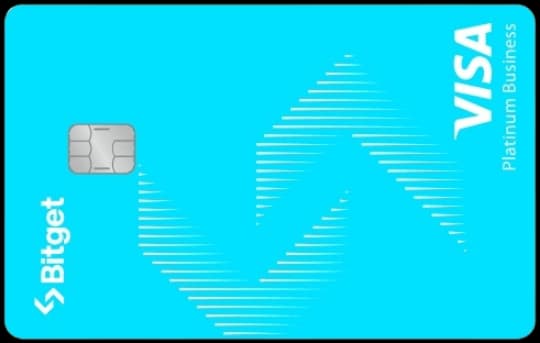
4. Bitget Card
Trade and Spend: Up to 8% BGB Cashback for Bitget Traders
5. COCA Visa Card
Self-Banking: 8% Cashback + 5% APY + 0% FX
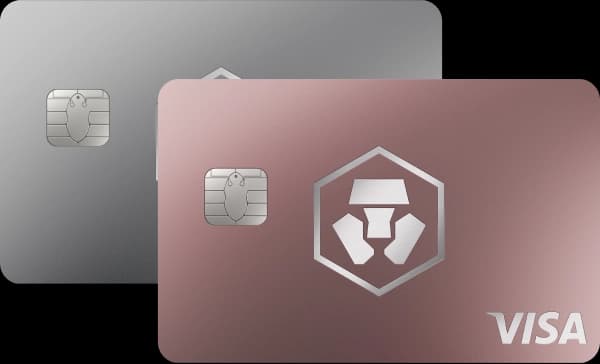
6. Private (Icy White / Rose Gold)
Private Tier: 4% Uncapped Cashback + Lounge Guest
7. KAST K Card
Free USD Cashback: 1.5% on First $2K/Month
8. Kolo Card
Earn Bitcoin on Purchases: 2% for 30 Days, Then 1% (Capped) + Visa Platinum + 170+ Countries

9. Xplace Platinum Card
10% Off Platinum with SPENDNODE: Pay $899.10 Instead of $999
Complete list:
All 43 crypto cards available in South Korea in September 2026
This table includes every crypto card we currently track for South Korea. Rows marked Top pick are ranked and reviewed above.
| Crypto card | Max rewards | Annual fee | FX fee | Type | Custody |
|---|---|---|---|---|---|
1 Tria Signature CardTop pick | Up to 4.5% rewards | $87 with code | 1% | Debit | Self-custody |
2 Plasma One Platinum CardTop pick | Up to 4% rewards | Free | 0% | Crypto Backed Credit | Self-custody |
3 Jupiter GlobalTop pick | Up to 4% rewards | Free | 1% / 1.8% | Debit | Hybrid |
4 Bitget CardTop pick | Up to 8% rewards | Free | 0% | Debit | Custodial |
5 COCA Visa CardTop pick | Up to 8% rewards | Free | 0% | Debit | Self-custody |
6 Private (Icy White / Rose Gold)Top pick | Up to 4% rewards | TBD | 0% | Prepaid | Custodial |
7 KAST K CardTop pick | Up to 1.5% rewards | Free | 0.5% | Prepaid | Custodial |
8 Kolo CardTop pick | Up to 2% rewards | Free | 0% | Prepaid | Custodial |
9 Xplace Platinum CardTop pick | Up to 2% rewards | $999 | 0% | Crypto Backed Credit | Self-custody |
| Up to 10% rewards | Free | 0% | Prepaid | Custodial | |
| Up to 10% rewards | Free | 3% | Debit | Hybrid | |
12 | Up to 8% rewards | TBD | 0% | Prepaid | Custodial |
| Up to 6% rewards | $200 with code | 1% | Debit | Self-custody | |
| Up to 5% rewards | TBD | 0% | Prepaid | Custodial | |
| Up to 4% rewards | Free | 0% | Crypto Backed Credit | Self-custody | |
| Up to 3% rewards | Free | 0.5% | Crypto Backed Credit | Self-custody | |
| Up to 3% rewards | Free | 0.25% | Crypto Backed Credit | Self-custody | |
| Up to 3% rewards | Free | 0% | Crypto Backed Credit | Self-custody | |
| Up to 3% rewards | $10000 | 0.5% | Prepaid | Custodial | |
| Up to 3% rewards | $199 | 0.5% | Crypto Backed Credit | Self-custody | |
| Up to 3% rewards | $299.9 | 0% | Prepaid | Custodial | |
| Up to 3% rewards | $129 | 1.2% | Prepaid | Custodial | |
| Up to 2% rewards | $1000 | 0.5% | Prepaid | Custodial | |
| Up to 2% rewards | Free | 1% | Crypto Backed Credit | Self-custody | |
| Up to 2% rewards | $49.9 | 0% | Prepaid | Custodial | |
| Up to 1.5% rewards | Free | 0.5% | Prepaid | Custodial | |
| Up to 1.5% rewards | Free | 1% | Debit | Self-custody | |
| Up to 1.5% rewards | $249 | 0.25% | Crypto Backed Credit | Self-custody | |
| Up to 1% rewards | Free | TBD | Prepaid | Custodial | |
| Up to 1% rewards | $99 | 0.5% | Crypto Backed Credit | Self-custody | |
| Up to 0.5% rewards | Free | 1% | Crypto Backed Credit | Self-custody | |
| none | Free | 0% | Prepaid | Custodial | |
| Varies | Free | 1.7% | Prepaid | Custodial | |
| cashback | Free | 1.75% | Prepaid | Self-custody | |
| cashback | $199 | 0.75% | Prepaid | Self-custody | |
| cashback | Free | 0.5% | Prepaid | Custodial | |
| none | Free | 1% | Prepaid | Self-custody | |
| none | Free | 1% | Debit | Self-custody | |
| Varies | Free | 1.5% | Debit | Custodial | |
| Varies | Free | 1.2% | Prepaid | Custodial | |
| Varies | Free | 1.2% | Prepaid | Custodial | |
| Varies | Free | 1.2% | Prepaid | Custodial | |
| points | Free | 1% | Debit | Self-custody |
Crypto Card Regulation in South Korea
The FSC (Financial Services Commission, 금융위원회) and FSS (Financial Supervisory Service, 금융감독원) jointly regulate crypto in South Korea. The Virtual Asset Users Protection Act (VAUPA, 가상자산이용자보호법), effective from July 19, 2024, established the first dedicated crypto regulatory framework.
VAUPA mandates cold wallet storage of at least 80% of user deposits, requires real-time suspicious transaction monitoring, prohibits market manipulation and insider trading of virtual assets, and gives FSC authority to suspend or delist tokens.
All exchange operators must register as Virtual Asset Service Providers (VASPs) with the FIU (Financial Intelligence Unit, 금융정보분석원) under the Specific Financial Information Act. As of 2025, only five exchanges maintain full FIU registration with real-name bank account partnerships: Upbit (KB Kookmin), Bithumb (NH NongHyup), Coinone (Kakao Bank), Korbit (Shinhan), and Gopax (Jeonbuk Bank). All other exchanges operate with won-only restrictions or crypto-to-crypto only.
Korea implements the FATF Travel Rule through the Korea Financial Intelligence Unit. Transfers exceeding KRW 1 million (~$730) between VASPs require sender and recipient identification data. The ISMS-P (Information Security Management System - Privacy) certification from KISA (Korea Internet & Security Agency) is required for all registered exchanges, adding a security layer absent in most other jurisdictions.
VAUPA Phase 2, now rebranded as the Digital Asset Basic Act (디지털자산기본법), was delayed past its December 2025 deadline due to a deadlock between the FSC and the Bank of Korea over stablecoin regulation. The Bank of Korea wants a bank-led model (51% bank equity stake in issuers), which the FSC opposes.
The Act is expected to finalize in 2026 and will introduce token listing review standards, mandatory stablecoin reserve audits (100% reserves in bank deposits or government securities), a prohibition on paying interest to stablecoin holders, and expanded investor protection measures. The FSC's Virtual Asset Committee already reviews token listings for market integrity.
In July 2026 the framework moved forward on two fronts. The government's 2026 Second-Half Economic Growth Strategy (July 14) committed to revising the Capital Markets Act to allow spot Bitcoin ETFs later in the year, ending Korea's long-standing block on institutional crypto funds.
A July 19 roadmap from the finance ministry, FSC, and Bank of Korea then laid out a legal path for won-denominated stablecoins, with the FSC pushing bank-led issuer consortiums. Neither step changes card taxation, but both signal the Digital Asset Basic Act is advancing toward a vote.
Exchange controls tightened (April 2026): After a payout error at Bithumb in February 2026, the FSC imposed new rules on all registered exchanges. Reconciliation checks moved from delayed (up to 24-hour) to every 5 minutes in real time. Automated kill switches must now halt transactions the moment discrepancies are detected. External audits increased from quarterly to monthly, with expanded disclosure on asset holdings. System upgrades are expected by May 2026.
The National Tax Service (NTS) is building a KRW 3 billion (~$2 million) AI-based tracking system to monitor crypto transactions and flag undeclared income. The system targets late 2026 for deployment, ahead of the planned 2027 CGT rollout.
Korea also maintains a foreign exchange reporting requirement for crypto transactions. Under the Foreign Exchange Transactions Act, cross-border crypto transfers exceeding KRW 50 million (~$36,500) per year must be reported to the Bank of Korea. This affects card users who fund from overseas exchanges. The Bank of Korea can impose fines of up to 5% of the unreported amount.
The real-name bank account system was implemented in January 2018 as an emergency anti-speculation measure during the crypto boom. Before this, anyone could open exchange accounts pseudonymously, leading to massive speculative inflows from retail investors, many of them university students and young workers.
The government paired the real-name requirement with a ban on anonymous exchange accounts, effectively forcing all crypto trading through verified banking rails. This system persists today and is a key reason Korea's card options are more limited than other APAC markets - global card issuers must meet the same compliance infrastructure.
Bitget operates via APAC licensing. Crypto.com serves the Korean market through its global platform. Korea's strict FIU/real-name requirements mean some global issuers choose not to handle the compliance burden, resulting in fewer card options than Singapore or Hong Kong.
Verify FIU registration status and real-name account compatibility before applying. The FSC publishes registered VASP lists at fsc.go.kr.
Tax Treatment of Card Rewards in South Korea
South Korea has legislated a flat 20% (22% including the 2% local surtax) crypto capital gains tax on gains exceeding KRW 2.5 million (~$1,800) per year - but it is not yet in force.
Current implementation date: The dedicated tax was delayed to January 2027. As of September 2026, the National Tax Service still describes 2027 commencement. The date and details may change before then.
The framework exists in law but is not yet in force for ordinary private virtual-asset gains. Proposals to change or repeal it should be tracked as proposals until enacted.
What this means for card users now: the scheduled tax on an individual's private virtual-asset gains is not yet in force. That does not remove tax on business or employment income received in crypto. Keep acquisition and spending records; the planned rules may still change before commencement.
Illustration of the scheduled 2027 rules, not tax due in 2026: KRW 4,000,000 in covered annual gains, less the planned KRW 2,500,000 deduction, would leave KRW 1,500,000 subject to the scheduled 20% national tax plus local income tax.
The table below is a planning illustration under the scheduled regime. Domestic exchange purchase prices, including any local premium, form part of acquisition records, but the applicable cost-basis method and loss rules need to be checked when the tax begins.
| Annual Crypto Gain | Scheduled Taxable Amount | Illustrative Tax (22%) | Effective Rate |
|---|---|---|---|
| KRW 2,500,000 or less | KRW 0 | KRW 0 | 0% |
| KRW 5,000,000 | KRW 2,500,000 | KRW 550,000 | 11% |
| KRW 10,000,000 | KRW 7,500,000 | KRW 1,650,000 | 16.5% |
| KRW 20,000,000 | KRW 17,500,000 | KRW 3,850,000 | 19.3% |
| KRW 50,000,000 | KRW 47,500,000 | KRW 10,450,000 | 20.9% |
These figures are not an amount due under current law. They show how the scheduled KRW 2.5 million deduction and combined 22% rate would interact if implemented as described.
Cost basis method: The National Tax Service guidance describes a total-average method for covered virtual assets under the scheduled regime, not a free choice between FIFO and moving average. Keep records of every acquisition, fee and disposal, including purchases on Korean exchanges.
Cashback tax treatment: The dedicated private-gains tax is delayed, but a token credit's treatment at receipt depends on what it pays for. Keep reward terms and receipt values; do not apply the planned KRW 2.5 million deduction to every reward.
Crypto-to-crypto swaps need records even while the dedicated private-gains tax is deferred. The planned regime may treat swaps as disposals when it commences; business activity and other income categories can already have tax consequences.
NTS reporting: Do not file private virtual-asset gains under a tax that has not started. If crypto activity is already taxable as business or other income, follow the applicable reporting rules and retain exchange statements.
How to Apply from South Korea
Korean crypto card applications require a 주민등록증 (Resident Registration Card) for Korean citizens (13-digit national identification number), or 외국인등록증 (Alien Registration Card, ARC) for foreign residents holding E-series (employment), D-series (study/training), F-2 (residential), or F-5 (permanent residence) visas.
A 실명확인 계좌 (real-name verified bank account) from a partnered Korean bank is mandatory for FIU-registered exchange access. The five partnered banks are KB Kookmin (국민), Shinhan (신한), Hana (하나), Woori (우리), and NH NongHyup (농협). Opening a Korean bank account as a foreigner requires an ARC, proof of employment or school enrollment, and a Korean phone number. The process typically takes 1-3 business days at a branch.
Mobile phone verification requires a Korean mobile number (010-XXXX-XXXX) registered under your real name. Prepaid SIMs purchased at convenience stores do not qualify for real-name phone verification. You need a postpaid plan from SKT, KT, or LG U+ registered with your ARC or 주민등록번호.
For global card issuers (Bitget, COCA) that don't require a Korean bank account, KYC uses passport + proof of address. Korean address verification accepts utility bills (KEPCO for electricity, city waterworks), bank statements, or 등본 (resident registration extract) from your local 구청 (district office) or via the 정부24 (Government 24) portal.
Foreigner bank account tip: Korean banks have become stricter about opening accounts for non-residents. KB Kookmin and Shinhan are generally the most foreigner-friendly branches. Bring your ARC, passport, proof of Korean address, and a letter from your employer or university. Some branches in Itaewon, Gangnam, and Hongdae have English-speaking staff. If one branch refuses, try another - policies vary by branch manager.
Physical cards ship to Korean addresses within 5-10 business days via Korea Post (우체국) or CJ Logistics. Virtual cards are available immediately for Apple Pay and Google Pay use - Apple Pay launched in Korea in March 2023 via Hyundai Card and is expanding to more issuers. Samsung Pay users can add virtual crypto cards via the Samsung Wallet app if the issuer supports Samsung's NFC tokenization.
Spending Tips for South Korea
Funding a Card Before the Gains Tax Begins
The proposed KRW 2.5 million deduction is part of the scheduled 2027 regime, not a tax-planning tool for current spending. For now, compare stablecoin and volatile-asset funding on conversion cost and price exposure, and keep acquisition records.
Korea's domestic-card spending deduction is already relevant to card selection. The separate virtual-asset gains deduction only becomes relevant if and when the scheduled tax starts.
Card Selection by Use Case
- Tria Signature (4.5% on first $1,000/mo, 1% FX + 0.5%/payment, ~3% net, $109/yr): The above-deduction stablecoin default. 4.5% on the first $1,000/month, then 1%, with no token-tier ladder. Premium at $250/yr reaches 6% on the first $2,000/month once post-deduction spend clears roughly KRW 1.05M/month.
- xPlace Platinum (2% USDC in Credit Mode capped at $250/mo, $999/yr, 0% FX): A travel card without volatile reward-token exposure. The fee and borrowing costs must be measured against FX savings and lounge use.
- Plasma One Platinum (4% XPL, 100k XPL lock, 0% FX): Self-custodial premium Visa. Check foreign-exchange reporting before moving funds to lock XPL; the delay to the private-gains tax does not by itself exempt rewards at receipt.
- Jupiter Global (2% USDC base, 4% via referrals, $100/mo cashback cap, $0): The zero-fee answer for Upbit/Bithumb USDC balances heading into card spend. 1% FX on KRW transactions, cap kicks in above $5,000/month of spend.
- Bitget (8% BGB, 0% FX + 0.9% tx, free): The rate leader if you already hold 20,000+ BGB. Net 7.1% at the top tier; without the stake, the card runs 0.5-4%.
- COCA (up to 8% with staking $COCA, 1% free, + 5% APY): Best for earning yield on idle stablecoins alongside maximum cashback
- Kolo (1% ongoing BTC, 2% intro, 0% FX, $0): Free BTC cashback option without exchange requirements
- Crypto.com Icy (4%, 0% FX, CRO stake): Metal card with lounge access at Incheon (ICN)
- Cypher: its Cosmos, Injective, and Hyperliquid coverage suited Korea's Cosmos ecosystem, but the card is shutting down after its Nium acquisition, leaving no direct replacement for those chains
- KAST (1.5% USD cashback on first $2K/mo, 0.5-1.75% FX, free): Best low-cost second card after Korean deduction-eligible spend is covered
Bitget vs COCA vs Crypto.com: Korean Spending Math
All three are free at entry tier. Compare their reward asset, FX fees and funding limits; the scheduled KRW 2.5 million deduction is not a current cashback exemption.
| Monthly Spend | Bitget (8%, 0.9% tx) | COCA (up to 8%, 0% FX) | Tria Sig (4.5% on first $1,000/mo, 1% FX + 0.5%/payment) | Crypto.com Icy (4%, 0% FX) |
|---|---|---|---|---|
| KRW 2,000,000 | KRW 1,704,000/yr | KRW 1,920,000/yr | approx. KRW 315,000/yr | KRW 960,000/yr + lounges |
| KRW 3,000,000 | KRW 2,556,000/yr | KRW 2,880,000/yr | approx. KRW 255,000/yr | KRW 1,440,000/yr + lounges |
| KRW 5,000,000 | KRW 4,260,000/yr | KRW 4,800,000/yr | approx. KRW 135,000/yr | KRW 2,400,000/yr + lounges |
COCA has no transaction fee, pays cashback in stablecoins, and adds 5% APY on the USD balance. Its 8% rate requires staking $COCA (1% at free Starter), and monthly reward claims are metered by tier, topping out at $350 at Elite. Bitget pays in BGB with deeper exchange liquidity.
Tria Signature applies 4.5% to the first $1,000 each month and 1% thereafter. After its 1% FX and 0.5% per-payment fees, it returns about 3% in the first band and slightly less than its fees above it. Its case here is USDT cashback without BGB or COCA price risk, not the highest net rate.
Crypto.com Icy earns less in raw cashback but adds Priority Pass lounge access at Incheon (ICN) (requires CRO stake). At KRW 3M/month, Bitget returns KRW 2.56M/year - meaningful against Korea's cost of living.
The Kimchi Premium Advantage
If you bought crypto on Upbit or Bithumb at premium prices (historically 2-5% above global rates, spiking to 8%+ during bull runs), your cost basis is higher. When you spend this crypto via a card, the taxable gain is smaller. Example: BTC purchased at KRW 140M on Upbit when the global price was KRW 133M gives you a 5% higher cost basis.
Any local premium paid on acquisition affects cost records, but it is not a reason to trade purely for a deduction under a regime that has not started. Keep your Korean exchange purchase records.
Spending Scenario: KRW 3,500,000/month
| Funding Method | Annual Spend | Cashback (net 7.1%) | Tax (once enforced) | FX Savings (vs KB 1.5%) | Net Benefit |
|---|---|---|---|---|---|
| USDC (stablecoin) | KRW 42M | KRW 2.98M | KRW 0 (no gains) | KRW 630K | KRW 3.61M |
| BTC (up 25%) | KRW 42M | KRW 2.98M | KRW 1.30M | KRW 630K | KRW 2.31M |
| ETH (up 200%) | KRW 42M | KRW 2.98M | KRW 5.61M | KRW 630K | KRW -2.00M |
These figures use Bitget's 7.1% return after the 0.9% transaction fee. The tax column is an illustration under the scheduled regime, not tax payable in 2026. Stablecoin funding generally reduces price-driven gains but does not guarantee zero FX difference or settle the treatment of rewards.
The dedicated private-gains tax is not scheduled to begin before January 2027. Separate income categories can already be taxable.
For heavy spenders with appreciated holdings, stablecoin funding can reduce volatility in the card-funding leg. It does not remove all reporting or tax questions.
Borrow-to-Spend for Large Holders
Korean users with large ETH holdings can either sell assets to fund spending or consider collateral-backed liquidity. ether.fi Core pays 3% in ETHFI on the first $2,000 per month, then lower bands, and supports direct stablecoin spending or optional borrowing. The borrowing route adds interest and liquidation risk, and its Korean tax treatment should not be assumed.
Borrowing adds interest and liquidation risk. With the private-gains tax not yet in force, a simple comparison against a future 22% rate would overstate the present tax benefit.
Local Payment Infrastructure
Contactless card payments are standard in South Korea. Every convenience store (CU, GS25, 7-Eleven, Emart24), supermarket (E-Mart, Lotte Mart, Homeplus), department store (Lotte, Shinsegae, Hyundai), and most restaurants accept Visa and Mastercard. Korea's coffee culture means daily card use at Starbucks, Mega Coffee, Compose Coffee, and Paik's Coffee.
Transit: T-money and Cashbee handle Seoul Metro and buses; rail tickets use their own booking channels. Visa/Mastercard contactless is not generally a direct substitute for a transit card on Korean local transport, unlike in Singapore.
Load a supported transit card separately. For intercity rail, check whether Korail or SRT accepts your particular international card at checkout before counting on a reward.
Mobile payments: Samsung Pay dominates with 80%+ mobile payment market share in Korea, using both NFC and MST (Magnetic Secure Transmission) which works at legacy swipe terminals. Apple Pay launched in Korea in March 2023 via Hyundai Card and is expanding. Kakao Pay and Naver Pay handle most P2P transfers but are bank/app-linked and do not support crypto card funding.
Online shopping: Korea has heavy e-commerce adoption. Coupang (Korea's largest e-commerce platform, often called "the Amazon of Korea"), Naver Shopping (integrated into Korea's dominant search engine), Gmarket, 11st (11Street), and SSG.COM (Shinsegae group) all accept Visa/Mastercard for online purchases. Crypto cards work at all of these.
For international purchases through iHerb (popular in Korea for supplements), Amazon Japan, and AliExpress, a 0% FX crypto card saves the 1-1.8% FX markup that Korean bank cards charge.
Delivery apps: Baemin (Baedal Minjok), Coupang Eats, and Yogiyo accept card payments. Running food delivery through a crypto card earns cashback on what is, for many young Korean professionals, a daily spending category. Seoul's delivery culture means a lot of monthly spending goes through these apps.
Subscription Optimization
Korean streaming and digital subscriptions (Netflix, Spotify, YouTube Premium, Coupang Play, Watcha) are recurring charges that earn cashback month after month. At 8% cashback on KRW 50,000/month in subscriptions, that is KRW 48,000/year returned. Crypto.com Ruby Steel and above offer Spotify rebates, and Icy White adds Netflix rebates - effectively making these subscriptions free for users already staking CRO.
FX Savings for Travelers
Korean bank cards charge 1-1.8% on foreign currency purchases. For Koreans traveling to Japan, Southeast Asia, or the US, a 0% FX crypto card saves KRW 250-500K annually on KRW 2M/month in foreign spending.
| Card | FX Markup | Cost on KRW 2M/month Foreign Spend |
|---|---|---|
| KB Kookmin Debit | 1.5% | KRW 360,000/yr |
| Shinhan Debit | 1.3% | KRW 312,000/yr |
| Hana Debit | 1.2% | KRW 288,000/yr |
| Bitget (0% FX) | 0% + 0.9% tx | KRW 216,000/yr |
| Crypto.com (0% FX) | 0% | KRW 0/yr |
Duty-free shopping: Incheon Airport duty-free (Lotte, Shilla, Shinsegae) and downtown duty-free stores in Myeongdong and Gangnam accept cards. A crypto card may earn rewards there if the merchant and transaction category qualify under the issuer's terms.
The duty-free price is separate from card cashback; check purchase eligibility rather than assuming the two discounts always stack.
The Card Spending Deduction Trade-off
As noted in the intro, Korean residents lose the domestic card spending tax deduction when using international crypto cards. Here is the math to decide when crypto cards win:
| Annual Salary | Deduction Threshold (25%) | Max Deduction Value (at 30% rate, KRW 3M cap) | Crypto Card Cashback Needed to Match |
|---|---|---|---|
| KRW 40,000,000 | KRW 10,000,000 | up to KRW 900,000 at 15% bracket | KRW 900K = 3.6% on KRW 25M spend |
| KRW 60,000,000 | KRW 15,000,000 | up to KRW 1,050,000 at 24% bracket | KRW 1.05M = 4.2% on KRW 25M spend |
| KRW 80,000,000 | KRW 20,000,000 | up to KRW 1,050,000 at 35% bracket | KRW 1.05M = 3.5% on KRW 30M spend |
Our South Korea availability check confirms: at 7-8% net cashback (Bitget/COCA), a crypto card outperforms the deduction at every salary level. But many Korean workers maximize both: use a Korean credit card for purchases up to the deduction threshold, then switch to a crypto card for everything beyond it. This hybrid approach is unique to Korea and is the optimal strategy for salaried employees.
Year-End Tax Planning
The scheduled private-gains tax uses a calendar-year calculation, but its KRW 2.5 million deduction is not available for tax planning in 2026. Keep acquisition and disposal records so the position is clear if the regime starts in 2027.
Supported Exchanges & Wallets in South Korea
Bitget serves Korean users through its APAC entity with 8% BGB cashback on the exchange-linked Visa debit card (0% FX, 0.9% transaction fee). The Bitget Wallet Card (Mastercard prepaid, 1.7% FX with $400/month zero-fee quota) offers a stablecoin-only spending alternative. Bitget's Korean-language app and customer support make it more accessible than some global issuers.
Crypto.com serves Korea through its global platform with card tiers from Midnight Blue (0% cashback, free) to Obsidian (5%, CRO stake). The Icy White tier (4%, CRO stake) adds Priority Pass lounge access at Incheon Airport (ICN) Terminal 1 and 2, plus Spotify and Netflix rebates. For Korean travelers who fly frequently through ICN, the lounge benefit can justify the CRO staking requirement.
Tria charges 1% FX on non-USD spend plus 0.5% on every payment. Virtual pays 1.5% on the first $100/mo ($25/yr), Signature 4.5% on the first $1,000/mo ($109/yr), and Premium 6% on the first $2,000/mo ($250/yr).
On KRW spend, that nets roughly 3% inside Signature's cap and 4.5% inside Premium's. USDT cashback avoids the vendor-token holding required for some rivals' highest rates.
Cypher was the one card that reached Cosmos, Injective, Osmosis, and Hyperliquid, which fit Korea's strong Cosmos ecosystem (Terraform Labs was Korean-founded) and its post-Terra security consciousness. Its card program has closed, and no other card matches that self-custody chain coverage.
COCA reaches Korea under global coverage, combining up to 8% cashback (scaling with staking $COCA tokens, 1% at free Starter) with 5% APY on eligible USD. The Privy-managed smart wallet is non-custodial, and cashback is paid in USDC/EURC. Monthly reward claims range from $15 to $350 by tier.
Self-custody spending appeals to Korean users wary of exchange custody risk after Korea's own security incidents. The Bithumb hacks (2017: $7M, 2019: $19M), Coinrail breach (2018: $40M), and Upbit hack (2019: $49M) demonstrated the risks of exchange custody in Korea specifically. COCA reduces exchange exposure through a non-custodial smart wallet, but its Privy recovery model is not the same as direct seed-phrase control.
Domestic exchanges: Upbit (Dunamu/Kakao partnership) handles 80%+ of Korean won crypto volume and dominates mobile trading with an interface deeply integrated into the Kakao ecosystem. Bithumb is the second-largest by volume with the longest operating history (since 2014). Coinone, Korbit, and Gopax make up the remaining FIU-registered exchanges. None offer a Visa/Mastercard spending card, so Korean users must use global card issuers.
For on-ramping KRW, all five domestic exchanges support instant won deposits via their partnered bank accounts (real-name verified), making the KRW-to-USDC-to-card pipeline efficient. Transfer from Upbit to a Bitget or Bybit wallet typically settles within 10-30 minutes.
KAST (1.5% USD cashback on first $2K/mo) and RedotPay (stablecoin-native, Hong Kong-based APAC issuer) make the most sense for Korean users who want a working crypto card after they have already used their domestic KB, Shinhan, or Hana card enough to capture the tax deduction.
They fit the Korean pattern of keeping a local bank card for deductible spend, then moving discretionary and travel purchases onto a separate crypto card instead of locking themselves into one exchange's VIP ladder immediately.
On-ramp pipeline: The most efficient path is: deposit KRW via bank transfer to Upbit or Bithumb (instant, free), buy USDC or USDT, transfer to your card issuer's wallet (Bitget, COCA, etc.), fund the card. Total time from bank to card: under 1 hour. The kimchi premium means you pay slightly more per USDC than global rates, but the simplicity and speed of the domestic on-ramp compensates.
Korea's strict real-name bank account requirements and FIU registration create compliance barriers that narrow the card selection compared to Singapore or Hong Kong. Verify each issuer's Korean availability directly before applying - FIU registration status changes periodically as regulators update their VASP list.
Written by SpendNode Editorial
Frequently Asked Questions
What is the crypto tax rate in South Korea?
22% (20% national + 2% local surtax) on gains exceeding KRW 2.5 million per year - but implementation has been delayed to January 2027 (third delay). As of early 2026, Korea effectively has no active crypto capital gains tax. When it takes effect, losses offset gains within the same year. Track your running total to stay within the exemption.
Do I need a Korean bank account for a crypto card?
Not necessarily for global issuers. Korea requires real-name verified bank accounts for domestic exchange access, but global card issuers like KAST, Tria, Jupiter, and Kolo accept passport + proof of address. For exchange-linked cards (Bitget, Crypto.com), you need an exchange account with Korean real-name verification first.
Does the kimchi premium affect my card tax calculation?
Yes, favorably. If you bought crypto on Upbit or Bithumb at premium prices (3-5% above global rates), your cost basis is higher. This means less taxable gain (or even a loss) when spending through a card. Keep Korean exchange purchase records.
Which crypto card has the best value in South Korea?
Tria Signature pays 4.5% on the first $1,000/month (then 1%) with a 1% FX fee plus 0.5% on every payment, leaving about 3% on KRW spend, for $109/year and no token stake. Jupiter Global is a free self-custody alternative at 2% USDC base (4% for a month after referring 2 friends), with a $100 monthly cashback cap. xPlace Platinum (2% USDC in Credit Mode capped at $250/month, 0% FX, $999/year) is a travel-focused option for foreign purchases, while Plasma One Platinum (4% XPL, 100,000 XPL lock) is a premium self-custody option.
Bitget reaches 8% BGB, or 7.1% after its 0.9% transaction fee, for users holding 20,000+ BGB. COCA also reaches 8% through $COCA staking, adds 5% APY on eligible USD, and limits monthly reward claims to $15-$350 by tier. Because the won is not pegged, zero-FX cards retain a cost advantage on KRW spending.
Other Countries
View all 112 countries →


Latest Page Changes to the Best Crypto Cards in South Korea Guide
- xPlace Platinum moved lower in South Korea after its new Credit Mode terms reduced cashback to 2% USDC capped at $250 a month. The rate no longer clears the domestic-card deduction comparison on its own; 0% FX and lounges are the remaining travel case
- FSC exchange control tightening after Bithumb payout error: 5-minute reconciliation, kill switches, monthly audits
- NTS AI-based crypto tracking system (KRW 3B, targeting late 2026 deployment)
- Democratic Party proposal to scrap 22% CGT entirely rather than delay again
- VAUPA Phase 2 to Digital Asset Basic Act - delayed past Dec 2025 deadline due to FSC/Bank of Korea stablecoin deadlock. 100% reserve requirement, interest prohibition, expected 2026 finalization
- Crypto tax is delayed to January 2027 (third delay, not currently enforced). All card availability verified against supported-country data