
Best Crypto Cards in United Arab Emirates (2026)
Compare crypto cards available in the UAE. Zero income and capital gains tax, VARA-regulated issuers in Dubai, and AED settlement options.
Verified for United Arab Emirates
48 crypto cards available
Local currency: AED
Emirates NBD, FAB (First Abu Dhabi Bank), and ADCB debit cards earn 0.5-1% cashback and charge 2-3% on non-AED purchases. For the 88% of UAE residents who are expats, those bank fees compound into real annual drag. That drag looks very different depending on who you are: a Dubai Marina professional routing AED 15,000/month through restaurants and retail, or a Karama warehouse worker sending AED 4,000/month to family in Manila.
The UAE is effectively two crypto-card markets at once. For high-earning professionals and founders, the decision is a cashback and lounge-access optimization against a zero-personal-tax backdrop. For labor-expat remittance senders, it is a funding-rail and transfer-cost story where 2% BTC or USDC cashback on daily spending compounds against the 5-8% fees charged by Western Union, Lulu Exchange, and Al Ansari. The right card looks different for each.
Three regulators govern the exchanges that fund those cards: Dubai's VARA (all of Dubai except DIFC, including DMCC and JAFZA), Abu Dhabi's ADGM FSRA, and Dubai's DFSA inside the DIFC.
The AED has been fixed at 3.6725 per USD since 1997, eliminating FX volatility on domestic purchases, though most card issuers still charge FX fees on AED transactions because AED is technically a different currency from USD. Crypto.com, COCA, and Kolo offer 0% FX globally.
Globally available crypto card issuers serve UAE residents with up to 10% cashback, low or zero FX fees, and a tax environment where every dirham of rewards lands in your wallet untouched by individual tax.
Summary:
Which crypto cards are best in United Arab Emirates?
The best crypto cards in United Arab Emirates in September 2026 are Oobit Visa Card, COCA Visa Card, Plasma One Platinum Card, Private (Icy White / Rose Gold), Jupiter Global, and Kolo Card. The detailed ranking below explains the local tax, fee, and availability trade-offs.
| Crypto card | Base reward | Net after fees | Annual fee | FX fee | Type |
|---|---|---|---|---|---|
| 5% baseup to 10% in OOB at Level 2, no stake | 2% | Free | 3% | Debit | |
| 1% baseup to 8% with a large $COCA stake; $15-$350/mo claim capacity by tier | 1% | Free | 0% | Debit | |
| 4% base4% base, up to 10% on AI and flights; 100k XPL lock | 4% | Free | 0% | Crypto Backed Credit | |
| 4% baseneeds a $50k CRO stake to hold the tier | 4% | TBD | 0% | Prepaid | |
| 2% baseup to 4% by referring 2 qualifying friends the prior month | 1% | Free | 1% / 1.8% | Debit | |
| 1% base2% for the first 30 days, then 1%; also capped at $1/EUR 1 per transaction ($2/EUR 2 during intro) and $100/EUR 100 per month | 1% | Free | 0% | Prepaid | |
| 3% base3% on the first $2,000/month, then 1% and 0.5% | 2.5% | Free | 0.5% | Crypto Backed Credit | |
| 1.5% base | 1% | Free | 0.5% | Prepaid | |
| 2% base2% in USDC on Credit Mode spend; cashback capped at $250/mo | 2% | $999 | 0% | Crypto Backed Credit |
In our UAE guide, Oobit takes the top spot among no-stake cards: 10% back on OOB-funded spend, or 5% on stablecoin spend, unlocked at Level 2 with no token to lock. Net of its roughly 3% AED FX it returns about 7%, up to a high $10,000/month OOB cap, the best no-stake rate here; on heavy AED spend its ~3% FX, not the cap, is what favors 0%-FX cards like COCA or Crypto.com.
Jupiter Global is the free starter card for the DMCC/DIFC/ADGM crypto-paid professional: a 2% base on USD-billed spend that works out to roughly 1% effective on AED merchants once the 1% FX and the $100/month base-tier cap apply, plus a $20 welcome bonus. The 4% rate needs 2 qualifying referrals a month, so treat 2% as the realistic rate; in a zero-tax market where the higher-cashback cards keep more, that now trails Oobit and COCA.
AED-merchant spending carries 1% non-USD FX (Rain-issued cards) or 1.8% (DCS), so Jupiter is best deployed against USD subscription stacks and international travel outside the GCC.
COCA combines up to 8% cashback, 0% FX, and 5% APY on eligible USD (1% at the free Starter tier). Its $15-$350 monthly reward claim capacity makes spending level as important as the headline rate.
Oobit can return more on OOB-funded spend, while COCA avoids Oobit's roughly 3% AED FX and pays rewards in stablecoins. For frequent travelers, Crypto.com offers lounge access at DXB alongside its card rewards.
Best Card For Every Need in United Arab Emirates
Top 9 Crypto Cards in United Arab Emirates
The UAE is two crypto-card markets at once, and the top-cards ranking reflects both. Zero personal income tax, zero capital gains tax, and the AED-USD peg at 3.6725 mean every dirham of cashback lands untouched for individuals.
But the optimal card shifts by user type. High-spend professionals and founders optimize for cashback ceiling and travel perks. Labor-expat remittance senders optimize for funding-rail friction and corridor cost. New arrivals optimize for documentation flexibility before their UAE banking setup completes.
Oobit anchors the no-stake top of the list. At Level 2 ($250 of cumulative spend) it pays 10% back on OOB-funded spend and 5% on stablecoin spend, with no token to stake and no annual fee.
Against the AED-USD peg the rate still carries Oobit's roughly 3% FX, so net of fees it returns about 7%, the strongest no-stake return here. Its OOB rewards run to $10,000 of monthly spend before the cap bites, so most spenders never reach it; the limiter is the ~3% AED FX, which hands heavy local spenders to 0%-FX cards like COCA or Crypto.com.
Jupiter Global is the free starter rail for the UAE's crypto-paid Web3 workforce. The 2024 Dubai court ruling that confirmed employers can pay salary in cryptocurrency without converting to fiat sits behind this fit: a USDC salary at a DMCC-licensed firm flows from the wallet to the Jupiter card with no exchange step.
The headline is 2% on USD-billed spend, and on AED merchants the 1% FX and the $100/month base cap bring it closer to 1% effective. The 4% rate needs 2 qualifying referrals a month, so 2% is the realistic rate. The $20 welcome bonus, paid to the new user after $1,000 of spend, still makes it a worthwhile first card.
COCA reaches 8% for those willing to stake, with 0% FX and 5% APY on eligible USD. The 8% requires locking a meaningful $COCA position (it is 1% at the free Starter tier), and Elite's $350 monthly claim capacity fully covers the headline rate through roughly $4,375 of monthly spend before added staking capacity. That can fit many UAE professionals, but it is not an unlimited high-spend rate.
Plasma One Platinum takes third, and the UAE is the rare market where its entry cost is only what the token does. The 100,000 XPL lock that adds a wealth-tax line in Zurich or Oslo meets no tax layer here at all; nothing counts the position, and nothing touches the XPL cashback.
On top sit perks a Dubai professional actually uses: discounted airport lounge access, travel cover, the $20-a-month rebates on each of ChatGPT Plus and Claude Pro, and a fixed 5% yield on idle stablecoin balance that compounds with zero drag. It ranks ahead of Crypto.com's staked tiers because the lock replaces the fee outright and the card stays self-custodial.
Crypto.com at up to 8% with 0% FX is strong for DXB-based frequent flyers: Dubai Airports reported 92.3 million passengers for 2024 and has forecast 95M+ for 2025, and LoungeKey access at Terminal 1/3 saves real money on six or more trips a year. Its top rates need a large CRO stake.
Kolo at 1% ongoing BTC cashback (2% for the first 30 days) with 0% FX and $0 annual fee remains a simple free option for users who want Bitcoin rewards without staking.
ether.fi Core provides direct stablecoin spending or optional collateral-backed borrowing for ETH holders, while KAST gives expats a simpler prepaid route for stablecoin-funded daily purchases. RedotPay's high limits and stablecoin-native funding round out the labor-expat set, especially before a new arrival has an active Emirates ID or bank account.
xPlace Platinum drops to the end of the list under its September 2026 terms: 2% USDC in Credit Mode with a $250 monthly ceiling, which needs about AED 15,300 of eligible monthly spend before cashback covers the $999 fee, excluding variable borrowing costs. The Dubai case that survives is the AED 15,000+ spender who wants lounge access, a $750K monthly limit, and Solana self-custody without a token position; memberships bought before September 14, 2026 run on the old rates for up to a year.
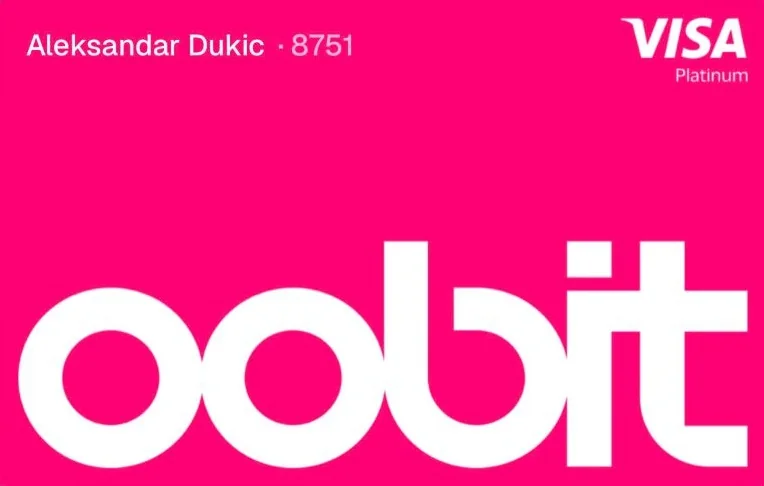
1. Oobit Visa Card
Spend Crypto Anywhere Visa Works - Self-Custody or In-App
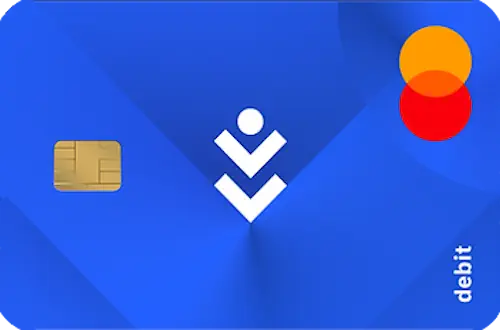
2. COCA Visa Card
Self-Banking: 8% Cashback + 5% APY + 0% FX
3. Plasma One Platinum Card
Premium Self-Custodial Visa - 4% Base, 10% AI, 10% Flights, Lounge Access, Boosted 5% Yield
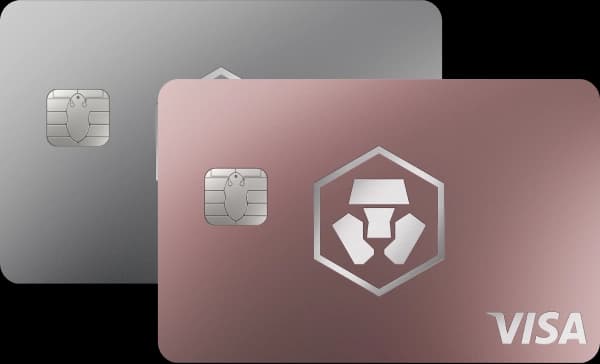
4. Private (Icy White / Rose Gold)
Private Tier: 4% Uncapped Cashback + Lounge Guest
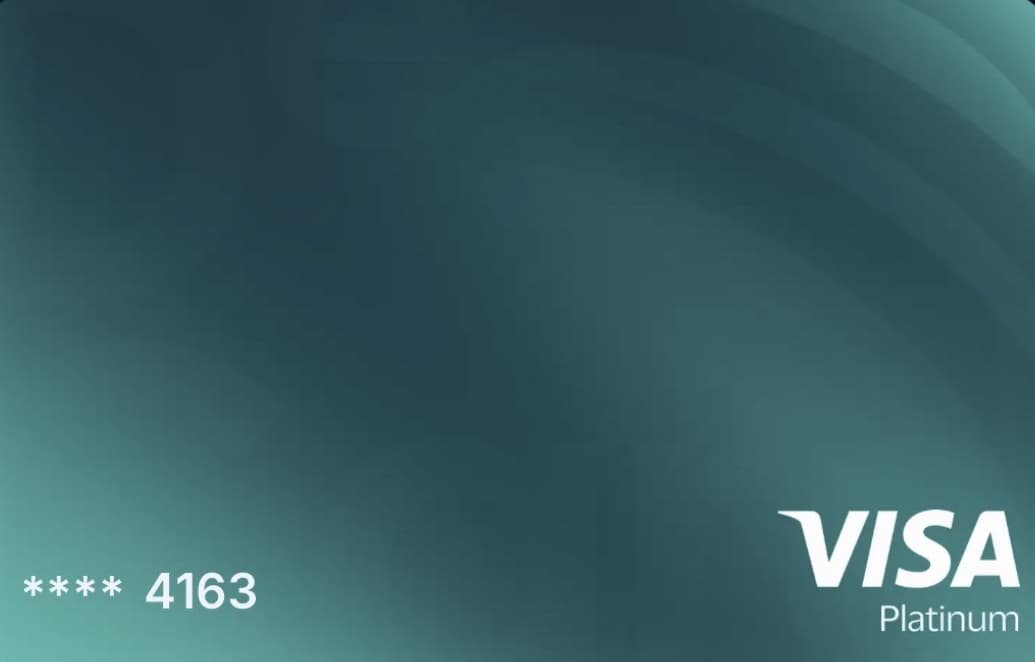
5. Jupiter Global
Free virtual USDC card with 2% base cashback
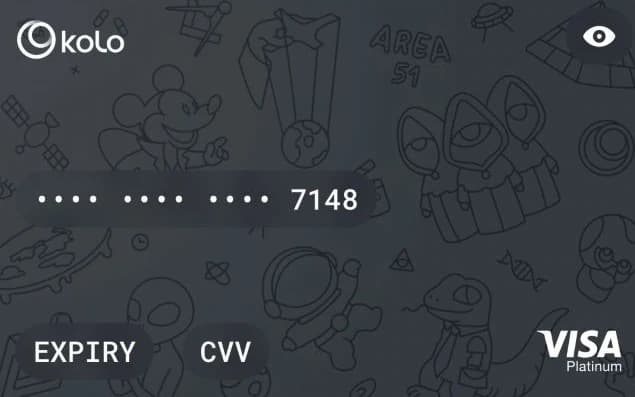
6. Kolo Card
Earn Bitcoin on Purchases: 2% for 30 Days, Then 1% (Capped) + Visa Platinum + 170+ Countries

7. ether.fi Core Card
3% Back on the First $2,000 Each Month, No Stake Required
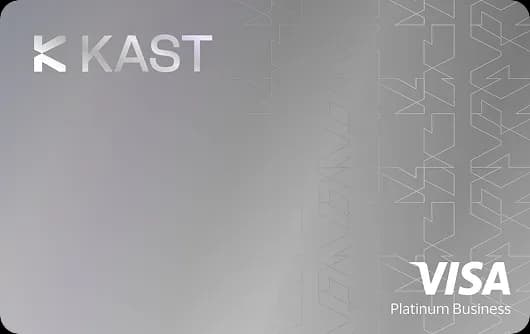
8. KAST K Card
Free USD Cashback: 1.5% on First $2K/Month
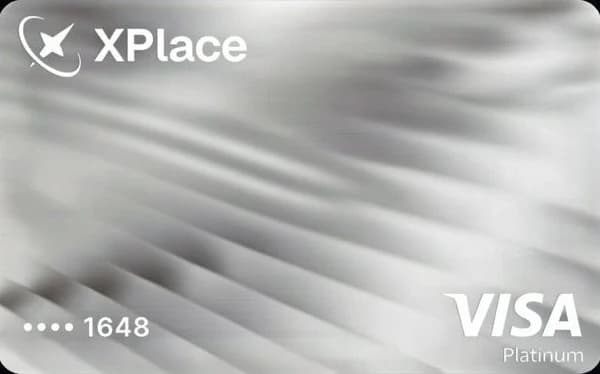
9. Xplace Platinum Card
10% Off Platinum with SPENDNODE: Pay $899.10 Instead of $999
Complete list:
All 48 crypto cards available in United Arab Emirates in September 2026
This table includes every crypto card we currently track for United Arab Emirates. Rows marked Top pick are ranked and reviewed above.
| Crypto card | Max rewards | Annual fee | FX fee | Type | Custody |
|---|---|---|---|---|---|
1 Oobit Visa CardTop pick | Up to 10% rewards | Free | 3% | Debit | Hybrid |
2 COCA Visa CardTop pick | Up to 8% rewards | Free | 0% | Debit | Self-custody |
3 Plasma One Platinum CardTop pick | Up to 4% rewards | Free | 0% | Crypto Backed Credit | Self-custody |
4 Private (Icy White / Rose Gold)Top pick | Up to 4% rewards | TBD | 0% | Prepaid | Custodial |
5 Jupiter GlobalTop pick | Up to 4% rewards | Free | 1% / 1.8% | Debit | Hybrid |
6 Kolo CardTop pick | Up to 2% rewards | Free | 0% | Prepaid | Custodial |
7 ether.fi Core CardTop pick | Up to 3% rewards | Free | 0.5% | Crypto Backed Credit | Self-custody |
8 KAST K CardTop pick | Up to 1.5% rewards | Free | 0.5% | Prepaid | Custodial |
9 Xplace Platinum CardTop pick | Up to 2% rewards | $999 | 0% | Crypto Backed Credit | Self-custody |
| Up to 8% rewards | Free | 0% | Debit | Custodial | |
11 | Up to 8% rewards | TBD | 0% | Prepaid | Custodial |
| Up to 6% rewards | $200 with code | 1% | Debit | Self-custody | |
| Up to 5% rewards | Free | 1% | Crypto Backed Credit | Self-custody | |
| Up to 5% rewards | TBD | 0% | Prepaid | Custodial | |
| Up to 5% rewards | Free | 1% | Debit | Self-custody | |
| Up to 4.5% rewards | $87 with code | 1% | Debit | Self-custody | |
| Up to 4% rewards | Free | 0% | Crypto Backed Credit | Self-custody | |
| Up to 3% rewards | Free | 0.25% | Crypto Backed Credit | Self-custody | |
| Up to 3% rewards | Free | 0% | Crypto Backed Credit | Self-custody | |
| Up to 3% rewards | $10000 | 0.5% | Prepaid | Custodial | |
| Up to 3% rewards | $199 | 0.5% | Crypto Backed Credit | Self-custody | |
| Up to 3% rewards | $299.9 | 0% | Prepaid | Custodial | |
| Up to 3% rewards | $129 | 1.2% | Prepaid | Custodial | |
| Up to 2.5% rewards | $83.88 | 1.02% | Crypto Backed Credit | Self-custody | |
| Up to 2% rewards | $1000 | 0.5% | Prepaid | Custodial | |
| Up to 2% rewards | Free | 1% | Crypto Backed Credit | Self-custody | |
| Up to 2% rewards | $49.9 | 0% | Prepaid | Custodial | |
| Up to 1.5% rewards | Free | 0.5% | Prepaid | Custodial | |
| Up to 1.5% rewards | Free | 1% | Debit | Self-custody | |
| Up to 1.5% rewards | $249 | 0.25% | Crypto Backed Credit | Self-custody | |
| Up to 1% rewards | Free | 1% | Crypto Backed Credit | Self-custody | |
| Up to 1% rewards | Free | TBD | Prepaid | Custodial | |
| Up to 1% rewards | $47.88 | 1.275% | Crypto Backed Credit | Self-custody | |
| Up to 1% rewards | $99 | 0.5% | Crypto Backed Credit | Self-custody | |
| Up to 0.5% rewards | Free | 1% | Crypto Backed Credit | Self-custody | |
| none | Free | 0% | Crypto Backed Credit | Self-custody | |
| none | $30 | 0% | Crypto Backed Credit | Self-custody | |
| none | Free | 0% | Prepaid | Custodial | |
| cashback | Free | 1.75% | Prepaid | Self-custody | |
| cashback | $199 | 0.75% | Prepaid | Self-custody | |
| cashback | Free | 0.5% | Prepaid | Custodial | |
| none | Free | 1% | Prepaid | Self-custody | |
| none | Free | 1% | Debit | Self-custody | |
| Varies | Free | 1.5% | Debit | Custodial | |
| Varies | Free | 1.2% | Prepaid | Custodial | |
| Varies | Free | 1.2% | Prepaid | Custodial | |
| Varies | Free | 1.7% | Crypto Backed Credit | Self-custody | |
| points | Free | 1% | Debit | Self-custody |
Crypto Card Regulation in United Arab Emirates
The UAE runs three crypto regulators in parallel, plus one federal-level supervisor. For cardholders, the distinction mostly matters in the exchange layer (where you fund your card), not in the card itself. Global card issuers operate under their own jurisdictional licenses. But knowing which regulator covers which postcode affects whether an exchange serving you from Dubai Marina or DIFC Gate District is operating legally.
VARA (Dubai, outside DIFC)
Dubai's Virtual Assets Regulatory Authority (VARA), launched in March 2022 under Dubai Law No. 4 of 2022, regulates all of Dubai except DIFC, including Special Development Zones and free zones like DMCC and JAFZA. VARA issued Rulebook 2.0 in May 2025 (effective 19 June 2025), then updated to Version 2.1 on 31 March 2026.
Version 2.1 introduced one of the world's first dedicated regulatory frameworks for crypto derivatives, covering listed futures, perpetuals, options, and contracts for difference through a new Part V of the Exchange Services Rulebook. It also raised Qualified Investor thresholds to AED 3.5M net assets (excluding primary residence) or AED 700K annual income, tightening access to margin and derivatives products.
VARA fully implemented the Travel Rule as of February 2026, requiring originator/beneficiary information for all transfers. In April 2026, VARA released updated Virtual Asset Issuance Rulebook and Guidance covering Fiat-Referenced Virtual Assets (FRVAs), Asset-Referenced Virtual Assets (ARVAs), and other token categories. This is the world's first dedicated regulatory guidance on virtual asset issuance.
The VARA public register currently lists licensed VASPs including Binance FZE, Crypto.com Exchange, OKX MENA, BitOasis, Rain MENA, and Laser Digital. Bybit holds an Initial Product Approval (IPA, not a full operating licence) as of early 2026. Several other exchanges sit at intermediate licensing stages. If you are funding a card through a Dubai-based exchange, checking the VARA register is more reliable than trusting marketing language on exchange websites.
ADGM FSRA (Abu Dhabi)
Abu Dhabi's ADGM (Abu Dhabi Global Market) operates its own framework through the FSRA (Financial Services Regulatory Authority). In late 2025, the FSRA authorized Binance's global platform (Binance.com) under a full regulatory framework, with operational launch on 5 January 2026.
Binance's ADGM structure uses three entities: Nest Clearing and Custody Limited (clearing, custody, CSD services), BCI Limited (being renamed Nest Trading Limited, covering broker-dealer, OTC, and conversion services), and Nest Services Limited (being renamed Nest Exchange Limited, operating a multilateral trading facility as a recognised investment exchange).
The announcement framing came from Binance rather than ADGM itself, so read the structure on the FSRA register rather than the press headline.
ADGM also banned privacy tokens (Monero, Zcash) and algorithmic stablecoins in June 2025, and published new Fiat-Referenced Token (FRT) rules effective 1 January 2026. A staking regulatory framework consultation launched in September 2025. For cardholders, the FRT rules matter because they shape which stablecoins ADGM-licensed exchanges can list: USDC and USDT remain fine, but under-backed or algorithmic stablecoins are excluded.
DFSA (DIFC, Dubai International Financial Centre)
DIFC sits inside Dubai geographically but outside VARA's perimeter. The DFSA (Dubai Financial Services Authority) regulates financial services within DIFC, including crypto token activities. On 12 January 2026, the DFSA's updated Crypto Token Regulatory Framework came into force. This was a major shift from the previous 2022 regime.
The biggest change: DFSA no longer maintains a list of Recognised Crypto Tokens. Instead, DIFC-licensed firms must undertake their own due diligence and suitability assessments, with reasoned and documented justifications, for every token they engage with. Enhanced investor safeguards, tailored reporting obligations, and proportionate conduct requirements apply.
This shift from regulator-led pre-approval to firm-led assessment is meaningful for DIFC-based professionals using institutional custody or asset-management products linked to card spending. The token universe accessible through DIFC-licensed firms is now firm-determined rather than regulator-curated.
Federal layer: SCA and CBUAE
At the federal level, Cabinet Decision No. 111 of 2022 made the Securities and Commodities Authority (SCA) the federal supervisor for VASPs across the UAE, including free zones. The SCA-VARA cooperation agreement of 5 September 2024 established automatic cross-registration: VASPs licensed by VARA are automatically registered with the SCA, simplifying federal-level compliance.
In August 2025, VARA and SCA extended this to mutual recognition of VASP licenses, enabling cross-emirate operations through a unified register. Federal Decree Law No. 6 of 2025 expanded the CBUAE (Central Bank of UAE) supervisory authority over crypto payment services.
On 4 July 2026, the CBUAE issued a No-Objection Certificate clearing the dirham-backed stablecoin DDSC (from IHC, First Abu Dhabi Bank, and Sirius International Holding) for retail rollout via selected VARA-regulated exchanges, backed 100% by dirham reserves under the CBUAE's Payment Token Services Regulation.
For cardholders, a regulated AED-pegged stablecoin adds a domestic funding option alongside USDC and USDT. It is distinct from the CBUAE's separate Digital Dirham CBDC.
For cardholders, this four-regulator architecture is largely transparent. Global card issuers (COCA, Kolo, Crypto.com, KAST, ether.fi, RedotPay) operate under their own jurisdictional licenses rather than UAE-specific ones.
VARA/ADGM/DFSA licensing for exchange operations does not guarantee card product availability. Always verify card eligibility directly with each issuer before committing.
Tax Treatment of Card Rewards in United Arab Emirates
The UAE has zero personal income tax and zero capital gains tax on crypto for individual residents. Spending BTC, ETH, SOL, or any other crypto through a card generates no tax liability at the UAE level. Receiving cashback triggers no tax event. There is no annual filing and no withholding for individual crypto cardholders spending personal crypto.
Example: You bought 1 BTC at AED 50,000 and spend it when it is worth AED 350,000. The AED 300,000 gain is completely tax-free in the UAE. No form to file, no payment to make.
FTA VAT clarification (VATP040)
The Federal Tax Authority's Public Clarification VATP040 (14 March 2025) confirmed that the transfer and conversion of virtual assets are VAT-exempt retroactively from 1 January 2018. Custody services are also VAT-exempt when provided without a fee, commission, or other payment. Otherwise the standard 5% VAT applies. Crypto mining does not qualify for the exemption under Cabinet Decision 100/2024.
For cardholders, this means there is no 5% VAT drag on the crypto-to-AED conversion moment that happens when you spend. Taxable persons who applied VAT to historical virtual asset transactions may need to revisit those treatments.
Corporate tax and the AED 1M natural-person threshold
UAE corporate tax applies at 9% on profits above AED 375,000 for mainland companies. Free zone entities may qualify for 0% corporate tax on "qualifying income" if they maintain adequate economic substance. The free zones most relevant to crypto:
- DMCC (Dubai Multi Commodities Centre): Home to the DMCC Crypto Centre, which DMCC reports hosts hundreds of crypto and blockchain firms. The 17-storey DMCC Crypto Tower (150,000 sq ft, blockchain-native tenancy management) anchors the cluster.
- DIFC (Dubai International Financial Centre): Financial services focus, DFSA-regulated, 12 January 2026 crypto framework update.
- ADGM (Abu Dhabi Global Market): FSRA-regulated, Binance-licensed from 5 January 2026.
- JAFZA (Jebel Ali Free Zone): Logistics-focused with some crypto activity.
The nuance most UAE crypto guides skip: an individual conducting a business in the UAE with total turnover exceeding AED 1 million per calendar year falls into corporate tax on that business income. Salary, investment income, and real estate held personally stay outside this threshold.
A freelancer or founder whose business turnover crosses AED 1M, regardless of whether payment is in AED, USD, or crypto, falls into the 9% corporate tax regime on profits above AED 375,000. This matters specifically for Web3 freelancers receiving crypto payments above this threshold who route card spending as business expense.
CARF: the reporting layer, not a new tax
The UAE Ministry of Finance signed the Crypto-Asset Reporting Framework (CARF) multilateral agreement in July 2025. Reporting begins 1 January 2027 for the 2027 reporting year, with the first automatic exchange of information between tax authorities in 2028. CARF is not a UAE tax. It is a reporting framework for exchanges and custodians. But it reshapes the practical risk for expats who still have tax residency in their home country:
- An Indian expat under RNOR status (Resident but Not Ordinarily Resident) for the first two years after relocation may find Indian tax authorities receiving CARF data on their Dubai exchange activity
- A British resident with unresolved domicile status may face HMRC questions once HMRC starts receiving UAE data
- A US citizen pays worldwide tax regardless of UAE residence. CARF just makes the underlying data more visible
- A newly arrived Russian or Iranian relocant may find home-country tax authorities receiving reports they would rather not exist
The UAE's zero-tax status protects you from UAE tax. It does not change your home country's tax position if you have not properly severed that residency.
CARF is a reporting layer, not a tax change. But once it is live, data that previously stayed on exchanges may become visible to home-country tax authorities. UAE residents with unresolved home-country tax residency may want to factor that increased visibility into their planning. Any specific cross-border tax question should go to a qualified tax advisor in both jurisdictions, not a country guide.
| Event | Tax Rate | Filing Required | Notes |
|---|---|---|---|
| Spending crypto via card (individual, personal) | 0% | No | Zero CGT for individuals |
| Receiving cashback (any crypto) | 0% | No | Not treated as income |
| Crypto trading profits (individual, personal) | 0% | No | No personal income tax |
| Natural-person business turnover >AED 1M | 9% | Yes | On profits above AED 375,000 |
| Crypto business profits (mainland corporate) | 9% | Yes | Above AED 375,000 threshold |
| Crypto business profits (free zone qualifying) | 0% | Yes | Qualifying income rules apply |
| Transfer/conversion of virtual assets (VAT) | 0% | N/A | Retroactive to 1 Jan 2018 (VATP040) |
| Cashback or salary in crypto, paid via business | 9% | Yes | Business income, if above AED 375K |
For individuals spending personal crypto through a card in the UAE, the practical answer is unchanged: no filing, no payment, no stablecoin-vs-BTC dilemma. The nuance bites for natural-person business owners above AED 1M turnover and for expats with unresolved home-country tax residency who should act as if CARF is live today.
How to Apply from United Arab Emirates
UAE crypto card applications require an Emirates ID (الهوية, Huwiyyah) for residents. This is a 15-digit ID number issued by ICP (Federal Authority for Identity, Citizenship, Customs, and Port Security) that functions as the universal identifier across every government and financial service.
Since 88% of UAE residents are expatriates, most cardholders hold an Employment Visa, Investor Visa, Green Visa (5-year renewable for freelancers, self-employed, and high-skilled workers), or Golden Visa (10-year renewable for property investors at AED 2M+, entrepreneurs with AED 500K+ projects, or professionals earning AED 30K+/month).
The ICP has explicitly clarified that cryptocurrency investments do not qualify as an eligible investment vehicle for the Golden Visa. This is a common misconception that catches people out.
UAE Pass, the federal digital identity system, is now required for most government and financial transactions. It links to your Emirates ID and carries the same legal weight as a physical ID document in most contexts. Setting up UAE Pass should be your first administrative task as a new resident; many bank account openings and VASP KYC flows now accept UAE Pass attestation directly.
Proof of address and document types
- DEWA bill (Dubai Electricity and Water Authority) for Dubai residents
- ADDC bill (Abu Dhabi Distribution Company) for Abu Dhabi residents
- SEWA (Sharjah) or utility bills from other emirate authorities
- Ejari (Dubai's rental registration system) tenancy contract
- Tawtheeq (Abu Dhabi's equivalent tenancy registration)
- Makani address code (10-digit geographic locator, now used in many KYC flows)
- Bank statements from Emirates NBD, FAB, ADCB, Mashreq, Wio, HSBC UAE, or Al Etihad Credit Bureau (AECB) reference letter
For expats not yet residency-complete, passport plus visa stamp plus hotel booking or employment contract is sometimes accepted for basic-tier virtual cards. KAST and RedotPay have the most flexible requirements here.
Bank friction by institution
Bank choice affects how smoothly you can move AED from salary to a crypto exchange and then onto a card. Specific bank postures shift over time and vary by customer profile, so treat the below as a general read rather than guaranteed behaviour for any individual account:
- Wio Bank and Mashreq Neo are digital-native banks generally regarded in the UAE crypto community as more accommodating of transfers to licensed VASPs, with faster compliance review cycles.
- Emirates NBD is commonly workable for crypto-related transfers and was the settlement bank selected for Dubai's Department of Finance crypto settlement pilot with Crypto.com in late 2025, signalling institutional comfort with licensed crypto rails.
- Mashreq supports VASP settlement integrations in various pilot contexts.
- FAB and ADCB are frequently discussed in UAE expat communities as more conservative, with some users describing additional compliance review on larger transfers to exchanges. Behaviour varies by account type and history.
- HSBC UAE and Standard Chartered UAE apply global compliance policies that tend to be more cautious on retail crypto on-ramps.
If a specific transfer gets flagged, the resolution is usually in-branch documentation of the source of funds and the destination VASP's VARA or ADGM licensing.
Verification timelines
Global issuers accept Emirates ID regardless of visa type or nationality. Verification typically completes within 1-3 business days for KAST and RedotPay, 2-5 days for Crypto.com and COCA, and longer for higher tiers requiring enhanced due diligence. Physical cards ship within 5-10 days to UAE addresses. Virtual cards are available immediately for Apple Pay and Google Pay use.
Spending Tips for United Arab Emirates
The four archetypes
Which of the four user types below you are decides the UAE playbook; each one optimizes differently.
Archetype 1: High-earning professional (Dubai Marina, JLT, Business Bay, Downtown Dubai, Al Reem, Saadiyat)
Typical monthly card spend AED 10,000-25,000 across groceries, dining, retail, and travel. Rent excluded because most landlords still require post-dated cheques or bank transfers. The goal is cashback ceiling and travel perk value.
Oobit offers the highest no-stake rate at 10% on OOB-funded spend, but its roughly 3% AED FX limits its net at this spending level, so it works as a complement rather than the primary card here.
COCA at up to 8% (with $COCA staking) plus 5% APY on eligible USD is competitive at this spending level; AED 15,000 per month remains within Elite's base claim capacity.
Crypto.com Icy White at 4% with lounge access at DXB Terminal 1/3 and AUH adds airport value for frequent travelers. At AED 15K/month, its 4% reward is AED 7,200/year before other costs. Six lounge visits could add roughly AED 770 of comparable pay-per-visit value if the holder would otherwise buy entry at the published US$35 rate.
Archetype 2: Founder or free-zone operator (DMCC, DIFC, ADGM)
Business turnover and card spending often overlap. If your business turnover crosses AED 1M, natural-person corporate tax applies at 9% on profits above AED 375K, so personal card spending should stay cleanly separated from business flows.
For founders running a DMCC crypto-centre company or DIFC-licensed fintech, the practical setup is: business bank account at Mashreq or Wio for payroll and supplier payments, personal card (Jupiter Global for direct USDC self-custody spending, COCA or Crypto.com for AED-merchant maximization) for personal spending, and separate documentation for anything that could be challenged as business income.
DIFC founders should review the January 2026 DFSA framework change. Token suitability is now firm-determined, and that affects what institutional custody products are accessible through DIFC firms.
Archetype 3: Labor-expat remittance sender (Karama, Deira, International City, Satwa, Al Qusais, Mussafah)
Typical monthly card spend AED 3,000-8,000 on daily essentials, with AED 2,000-6,000 going home monthly to India, the Philippines, Pakistan, Bangladesh, Nepal, or Sri Lanka. The goal is not cashback ceiling. It is minimizing funding-rail friction and remittance cost.
KAST at 1.5% USD cashback on the first $2,000/month with 0.5-1.75% FX and $0 annual is the pragmatic card choice; daily USDT balances convert cleanly to AED spending power. Kolo at 1% ongoing BTC (2% intro) with 0% FX adds a Bitcoin-cashback buffer that accumulates tax-free. RedotPay at 1.2% FX with no rewards is the fallback when documentation is thin. Remittance itself is covered below.
Archetype 4: New arrival (first 90 days)
Employment contract signed, Emirates ID pending, bank account not yet open. This is the highest-friction window in the UAE. Global prepaid cards that accept passport plus visa stamp plus employment letter (specifically KAST and RedotPay Virtual) bridge the 4-8 week gap until Emirates ID issuance and a full UAE bank account. Once residency is settled, migrate up the stack.
Remittance corridor cost comparison
For Archetype 3, the UAE's zero-tax framing matters less than the remittance math. At AED 4,000/month sent home:
The ranges below are typical bands commonly quoted by remittance aggregators (Wise, Remitly, World Bank Remittance Prices). Actual fees vary by amount, payout method, and promotional offers on any given month. Treat these as order-of-magnitude comparisons, not guaranteed quotes:
| Corridor | Traditional (Lulu, Al Ansari) | USDT via crypto card + P2P | Typical annual savings |
|---|---|---|---|
| UAE → India (INR) | ~3-5% + FX markup | ~1-2% (Binance P2P + Indian bank) | AED 480-960 |
| UAE → Philippines (PHP) | ~4-6% + FX markup | ~1-2% (GCash + USDT) | AED 720-1,440 |
| UAE → Pakistan (PKR, Roshan) | ~2-3% (Roshan free) | ~1-2% | AED 0-240 (Roshan already competitive) |
| UAE → Bangladesh (BDT) | ~5-7% | ~2-3% | AED 960-1,680 |
| UAE → Nepal (NPR) | 4-6% | 2-3% | AED 720-1,200 |
The remittance advantage is real but varies sharply by corridor. Roshan Digital Account flows for Pakistanis are already near-zero-cost; the crypto-card remittance advantage there is marginal. The Philippines, Bangladesh, and Nepal corridors are where stablecoin remittance materially beats traditional channels.
The last-mile conversion (USDT to local currency for family access) still requires a local P2P or exchange relationship. Binance P2P with INR/PHP/BDT pairs is the most common rail.
GCC regional context
The UAE is the clear GCC hub. The other GCC crypto regulatory postures look very different:
- Bahrain: Central Bank of Bahrain (CBB) licenses Rain (since 2019) and Binance (2022). Permissive but smaller market. BHD is USD-pegged at a different ratio than AED.
- Saudi Arabia: Capital Market Authority (CMA) has not issued a dedicated crypto framework. Retail crypto is informal; bank transfers to foreign exchanges are friction-heavy. Significant Saudi retail volume routes through UAE infrastructure.
- Qatar: QFCRA maintains an explicit ban on crypto asset services under its jurisdiction. Crypto cards are not officially supported; some residents use UAE-issued cards while visiting.
- Kuwait: Central Bank of Kuwait prohibited crypto as a payment method in July 2023. KYC restrictions make on-ramping harder than in the UAE.
- Oman: Capital Market Authority has taken a permissive-to-neutral stance. Smaller market.
Saudi and Kuwaiti residents sometimes use UAE-based exchange accounts (via UAE residency, relatives, or business entities) precisely because the UAE has the most developed regulatory clarity in the GCC. This concentrates regional volume through Dubai.
Card selection at UAE spending levels
UAE residents generally spend at higher levels than global averages. Dubai's cost of living, luxury retail scene, and dining culture create substantial cashback accumulation opportunities:
- Oobit (10% OOB / 5% stablecoin, ~3% FX, free): Highest no-stake rate, unlocked at Level 2. Nets about 7%; the $10,000/month OOB cap is high enough to rarely matter, leaving the ~3% AED FX as the real limit on heavy spend.
- Jupiter Global (2% on USD-billed, ~1% effective on AED, $0 free virtual): Direct USDC rail for crypto-paid professionals and USD subscription stacks, with a $20 welcome bonus. The 1% AED FX and $100/month base cap pull the AED rate down; the 4% rate needs 2 referrals a month.
- COCA (up to 8%, 0% FX): Tiered rewards with 5% APY on eligible USD and $15-$350 monthly claim capacity in a non-custodial smart wallet
- Kolo (1% BTC ongoing, 0% FX, free): Simple free BTC cashback in a zero-CGT jurisdiction
- Crypto.com Icy White (4%, 0% FX): CRO stake required, includes lounge access at DXB Terminal 1 and Terminal 3, plus AUH (Abu Dhabi International)
- xPlace Platinum ($999/yr, 2% USDC to $250/mo, 0% FX): No staking gate; the cashback outearns the fee only from about AED 15,300/month of eligible spend, and the tier includes lounge access and Solana self-custody
- Plasma One Platinum (4% XPL, 100k XPL lock, 0% FX): Self-custodial premium Visa with unlimited Priority Pass access to 1,900+ airport lounges and travel experiences, travel cover, AI subscription rebates, and a fixed 5% yield on idle stablecoin balance; neither the lock nor the rewards meet any UAE tax at the individual level
- ether.fi Core (3% ETHFI on first $2K/mo, then 1% / 0.5%, 0-0.5% FX): direct stablecoin spending or optional collateral-backed borrowing
- KAST (1.5% USD cashback on first $2K/mo, 0.5-1.75% FX, free): Simplest route from USDT/USDC to AED spending
DXB lounge access, quantified
DXB is the world's busiest international airport. Dubai Airports publishes passenger counts each year; 2024 closed at 92.3 million and 2025 was forecast above 95 million. For UAE residents who fly frequently, lounge access is not a luxury but a practical time-saver during peak hours. Crypto.com Jade/Icy includes LoungeKey access at DXB Terminal 1 and Terminal 3, plus AUH.
At US$35 per visit under Mastercard Airport Experiences, six otherwise paid lounge visits represent about AED 770 of comparable entry value. Actual savings depend on whether the traveler would have paid for those visits and whether the card's access covers each lounge. Frequent flyers can weigh that benefit alongside cashback against the CRO lock-up requirement.
Returns at UAE spending levels
| Monthly Spend (AED) | COCA (8%, 0% FX) | Kolo (1% BTC ongoing, 0% FX) | Crypto.com Icy (4%, 0% FX) + Lounge | KAST (1.5% USD - 0.5-1.75% FX, $2K/mo cap) |
|---|---|---|---|---|
| AED 4,000 (labor expat, ~$1,089/mo, under cap) | AED 3,840/yr | AED 480/yr | AED 1,920/yr + LoungeKey | -AED 120 to AED 480/yr |
| AED 8,000 (mid-range, ~$2,178/mo, above cap) | AED 7,680/yr | AED 960/yr | AED 3,840/yr + LoungeKey | -AED 358 to AED 842/yr (cap binds) |
| AED 15,000 (professional, above cap) | AED 14,400/yr | AED 1,800/yr | AED 7,200/yr + LoungeKey | -AED 1,828 to -AED 628/yr (cap binds, FX dominates) |
| AED 25,000 (high-spend, above cap) | approx. AED 15,425/yr claimable, with excess accrued | AED 3,000/yr | AED 12,000/yr + LoungeKey | -AED 3,828 to -AED 2,178/yr (cap binds, FX dominates) |
Every number above is net reward after FX fees with no UAE personal tax assumed for private spending. Kolo's 1% figures hold for purchases of about AED 367 ($100) or less, where the $1-per-transaction cap does not apply. COCA requires staking $COCA for 8%, and the AED 25,000 row reflects Elite's $350 monthly claim capacity.
Cashback above that amount accrues for later claims, subject to expiry. Kolo at 1% ongoing BTC (2% intro) with 0% FX remains a free BTC option. Crypto.com Icy at 4% with 0% FX adds LoungeKey at DXB and AUH.
KAST goes from positive to net-negative as UAE spending climbs because cashback is capped at $2,000/month while FX accrues on the full spend - it works for sub-$2K/mo budgets paid in stablecoins, but Kolo's 0% FX keeps it net-positive where KAST turns negative at any UAE professional spending level.
Jupiter Global is not in this AED-merchant table because its math splits by funding currency and is capped: roughly 2% on USD-billed transactions (Amazon, Apple, AWS, Adobe, Spotify), but closer to 1% on AED merchants once the 1% Rain FX and the $100/month base-tier cashback cap apply.
For a crypto-paid professional whose recurring expenses run heavily through USD-priced services, Jupiter is still a clean free card with a $20 welcome bonus and no token-staking commitment, though in the UAE's zero-tax market the higher-cashback cards keep more.
Oobit is kept out of the table for a different reason: its ~3% AED FX. The 10% on OOB-funded spend nets about 7% after that FX, up to a high $10,000/month OOB cap that rarely binds at these spending levels. For a moderate spender it is the best no-stake return on the page; for the AED 15,000+/month profiles in the table, the 3% FX on heavy local spend lets COCA and Crypto.com pull clearly ahead.
Common mistakes UAE residents make with crypto cards
Mistake 1: Using ADCB or FAB as your primary crypto on-ramp. Both banks have been known to delay or block inbound wires from exchanges, sometimes requiring in-branch explanation for amounts above AED 50,000. The cost is delayed card funding and occasional compliance review.
How to avoid: Open a Wio Bank or Mashreq Neo account specifically for crypto on-ramp flows. Keep only the amount needed for the next transfer cycle in this account. Separate your crypto on-ramp bank from your salary bank so a compliance review does not freeze payroll.
Mistake 2: Assuming the Golden Visa accepts crypto investments. ICP clarified in 2025 that cryptocurrency investments do not qualify for Golden Visa eligibility. Expats occasionally commit to card strategies expecting to convert to Golden Visa via their exchange balance. The path does not exist.
How to avoid: If you want the 10-year Golden Visa, use one of the recognized pathways: AED 2M+ property purchase, AED 2M+ bank deposit held for two years, AED 500K+ business investment, or the AED 30K/month professional route. Cryptocurrency held in an exchange does not count.
Mistake 3: Treating UAE zero-tax as global zero-tax. UAE residency does not automatically cancel home-country tax residency, and home-country tax treatment of crypto gains varies widely. Indian RNOR rules, UK domicile tests, and US worldwide taxation for citizens all continue to apply until residency is formally resolved. Once CARF is live (2027 reporting, 2028 first exchange), data visibility between jurisdictions increases.
How to avoid: Talk to a qualified cross-border tax advisor in both the UAE and your home country before making assumptions about tax exposure. Keep records of crypto acquisition cost for any appreciated assets you plan to spend. Stablecoin funding minimises the gain side of any potential home-country disposal event regardless of how residency ends up being determined.
Mistake 4: Loading rent onto the card. Most UAE landlords still require 1-4 post-dated cheques per year or bank transfers. Payment processors that accept card for rent typically charge 2-3% fees that eat most of any cashback advantage. Real annual rent spending falls outside the card flow entirely.
How to avoid: Plan card spending around groceries, dining, transport, retail, travel, and utilities (DEWA/ADDC accept cards). Keep rent on separate cheque/transfer rails. Do not build card-spending projections that assume you can route rent through the card at full cashback value.
Cost of living by neighbourhood
Dubai spending levels vary sharply by area and lifestyle. Monthly card spending, excluding rent:
- Discovery Gardens, International City, Al Nahda Dubai, Al Qusais: AED 3,000-6,000/month. Budget-friendly expat areas with strong labor community presence. Card acceptance at Lulu, Carrefour Market, local restaurants. Cash still preferred at smaller Indian and Pakistani grocery shops.
- JLT, Business Bay, Al Nahda Sharjah (cross-border commuters): AED 8,000-15,000/month. Mid-range professional areas with full contactless infrastructure.
- Dubai Marina, JBR, Downtown, Al Barsha South: AED 12,000-25,000/month. Premium expat areas. Brunch economy (AED 300-600 per Friday brunch for two), Marina Walk dining, Dubai Mall retail.
- Palm Jumeirah, Emirates Hills, District One: AED 25,000-50,000+/month. Luxury-tier spending.
- Abu Dhabi Al Reem, Saadiyat Island, Yas Island, Khalifa City: AED 10,000-20,000/month. Newer developments with near-universal contactless acceptance.
- Sharjah Al Majaz, Ajman: AED 4,000-8,000/month for cross-emirate commuters. 30-40% lower than Dubai at comparable lifestyle.
School fees are a major expat expense often paid via bank transfer or specialized school-fee card products rather than standard retail cards. Plan AED 35K-100K+ per child per year for British, American, Indian, or IB curriculum schools.
Seasonal spending: shopping festivals and Ramadan
Dubai Shopping Festival (DSF, January-February) and Dubai Summer Surprises (DSS, June-August) feature large retail discounts across participating malls. Cashback on already-discounted purchases compounds the savings.
During Ramadan, spending patterns shift to evening and night hours, with large grocery and dining expenditures around iftar and suhoor. A 4-8% cashback card during Ramadan on naturally higher spending is meaningful.
National Day (2 December) and Eid al-Fitr/Eid al-Adha also drive spending spikes. Summer (July-August) sees spending drop as many expats travel home, but international travel spending then benefits from 0% FX cards.
Where cards work
The UAE is a largely cashless society. Contactless Visa/Mastercard acceptance is standard across Dubai and Abu Dhabi:
- Supermarkets: Carrefour, Lulu Hypermarket, Spinneys, Waitrose, Choithrams
- Malls: Dubai Mall, Mall of the Emirates, Ibn Battuta, Yas Mall (Abu Dhabi), Abu Dhabi Mall. Majid Al Futtaim malls now also accept Binance Pay at select merchants
- Transport: RTA taxis accept cards; Careem and Uber accept in-app. Salik toll gates (AED 4 per crossing) debit automatically. Dubai Metro and Abu Dhabi bus use the Nol card (closed-loop, not loadable via crypto cards), but taxis are fully compatible
- Government: Dubai's Department of Finance announced a live crypto-to-AED settlement pilot through DubaiPay in late 2025, routed through a Crypto.com subsidiary and Emirates NBD. This is an early signal that Dubai government services are moving toward crypto compatibility rather than away from it.
Dubai vs Abu Dhabi: Dubai has slightly higher card acceptance rates in smaller establishments. Abu Dhabi's newer developments (Saadiyat, Yas, Al Maryah) are fully cashless. Sharjah, Ajman, and the Northern Emirates have lower contactless adoption in traditional markets and smaller shops.
Cash pockets: Older souks (Gold Souk, Spice Souk, Textile Souk in Deira), some labor accommodation areas, and small shops in industrial zones still prefer cash. Dubai Marina, Downtown, JBR, DIFC, and Business Bay are essentially 100% cashless.
Apple Pay and Google Pay work at most terminals. Samsung Pay is also widely accepted given Samsung's strong UAE market share.
Supported Exchanges & Wallets in United Arab Emirates
The UAE crypto card market runs on globally available issuers layered over local regulatory infrastructure. For cardholders, what matters is which card serves your archetype. But the health of the underlying exchange market affects how easily you fund the card.
Globally available card issuers
Oobit is the no-stake rate leader: a free virtual Visa, issued by Rain, paying 10% on OOB-funded spend and 5% on stablecoin spend once you clear Level 2. On AED merchants its roughly 3% FX nets it to about 7%, with the $10,000/month OOB cap rarely a factor; on heavy AED spend a 0%-FX card is the better pairing.
Jupiter Global works for UAE residents in the Web3 cluster who hold or earn USDC. The free virtual card runs at a 2% base, which on AED merchants lands near 1% effective after the 1% Rain FX and the $100/month base-tier cap, funded directly from a self-custody Solana wallet. Its $20 welcome bonus and zero fees make it a fine first card; the 4% rate, by contrast, needs 2 qualifying referrals a month and is not a steady rate for most users.
Cashback payouts arrived within 48 hours in our testing. The card uses Rain on the issuing side; verify availability before applying.
Crypto.com offers the most complete card lineup for UAE residents: six tiers from free Midnight Blue (0%) to Prime (8%), plus crypto cards with airport lounges at DXB and AUH.
The CRO staking model pairs especially well with the UAE's zero-individual-tax environment since staking rewards are also tax-free at the personal level. Crypto.com's Dubai presence is stronger than most competitors: its local infrastructure was the one selected for the October 2025 DubaiPay crypto settlement pilot.
COCA provides up to 8% cashback with 0% FX, a non-custodial smart wallet, and 5% APY on eligible USD. Its tier stake and monthly claim capacity determine how much of that value is immediately accessible. Kolo (1% ongoing BTC, 2% intro, 0% FX, $0/yr) is the simple free BTC cashback option. In the UAE's zero-CGT environment, BTC cashback accumulates tax-free at the individual level.
ether.fi Core combines stepped ETHFI rewards with direct stablecoin and optional collateral-backed spending. In the UAE, the collateral route is primarily about preserving market exposure; users still need to compare interest and liquidation risk with the direct route.
KAST (1.5% USD cashback on first $2K/mo, 0.5-1.75% FX, $0/yr) provides simple stablecoin-funded spending without exchange dependency, especially useful for labor-expat remittance senders and new arrivals - though the cap binds tightly at UAE professional spend levels, where Kolo's 0% FX is the better fit.
RedotPay (no rewards, 1.2% FX) offers stablecoin-native spending with high daily limits and flexible documentation requirements. xPlace (0.5-2% Credit Mode by tier, capped monthly, 1% FX at entry) serves the self-custody segment for users who want full key control until the moment of spending.
Domestic exchanges (the fund-your-card layer)
The VARA public register defines the legal exchange market in Dubai. Among licensed VASPs relevant to cardholders:
- Rain (Bahrain-headquartered, ADGM-licensed since 2019, VARA-registered) is the most established regional exchange serving the UAE and broader GCC, with AED on-ramps via bank transfer.
- BitOasis (Dubai-founded, SCA-regulated, VARA-licensed) was among the first crypto exchanges to receive a VARA provisional license. Local team, local support, AED-native.
- Binance FZE operates under VARA. Binance's broader global platform now operates under ADGM FSRA authorization via the three-entity Nest structure from 5 January 2026.
- Crypto.com Exchange is VARA-licensed, distinct from the card product which operates globally.
- OKX MENA is VARA-licensed.
- Laser Digital (Nomura-backed institutional platform) operates under ADGM FSRA.
None of these regional exchanges currently issue their own Visa/Mastercard spending card. They function as the AED-to-crypto bridge that feeds into globally available card issuers.
Crypto as salary: the 2024 Dubai court precedent
A Dubai Court of First Instance ruling, widely reported in 2024, confirmed that employers can agree to pay all or some of an employee's salary in cryptocurrencies without needing to convert to fiat. The ruling emerged from a wage recovery dispute and established a legal foundation for crypto salary payment in the emirate.
In practice this matters for Web3 professionals at VARA- and ADGM-licensed companies operating from DMCC, DIFC, and ADGM. Web3 job boards list a wide range of Dubai salaries, and bank-analyst reports can give more current figures than a country guide. For a professional paid in USDC, funding a non-custodial card such as COCA or a self-custody card such as ether.fi removes one conversion step entirely.
Gold culture and the crypto card alternative
The UAE has a deep gold culture. Dubai's Gold Souk, gold ATMs in malls, and gold vending machines reflect a long tradition of storing value in physical metal. Crypto cards offer a different proposition: instead of buying gold and storing it (no yield, storage costs), COCA lets eligible USD earn 5% APY while remaining available for card spending.
For UAE residents weighing gold versus crypto as a store of value, crypto cards add two things gold does not: compoundable yield and tap-to-pay liquidity. The cultural and geopolitical reasons for holding physical gold remain valid.
Hub travel advantage
The UAE is a natural travel hub. DXB handles more than 95 million passengers annually. Frequent routes to India, Pakistan, Philippines, UK, and Europe mean UAE residents travel often. On non-AED spending abroad, 0% FX fee cards save 2-3% versus bank cards. A UAE resident flying to London and spending GBP 2,000 saves AED 150-220 in FX fees alone per trip. For the UK-UAE corridor (one of the busiest), this adds up fast.
Within the GCC (Bahrain, Oman, Saudi Arabia, Qatar, Kuwait), most currencies are also USD-pegged, so FX impact is minimal regardless of card choice. The 0% FX advantage matters most on European, Asian, and African travel.
Outlook (our read)
The items below are our current read of where the UAE crypto-card market may move, not official guidance or confirmed policy. Read them as open questions, not predictions:
- VARA Rulebook evolution. Rulebook 2.1 (March 2026) introduced derivatives. Future rulebook updates could expand into retail stablecoin rules or direct card-issuance licensing, though VARA has not signalled specific plans publicly as of the date of this page.
- CBUAE Digital Dirham. The UAE's CBDC program is in pilot and is expected to interact with the domestic payment system (Aani instant payments). How the Digital Dirham ultimately interacts with crypto-card settlement infrastructure is an open question.
- mBridge (UAE-China CBDC bridge). Operational since 2024 for cross-border wholesale settlement. Retail implications for UAE-based remitters with family in China or Hong Kong are still developing.
- CARF first reporting (1 January 2027). The first 12 months of CARF data collection will determine how home-country tax authorities treat UAE balances in practice. Residents with potential dual-residency exposure have time this year to establish clean UAE tax residency documentation.
- DFSA firm-determined token universe. The January 2026 DFSA change shifts due diligence responsibility to DIFC firms. Over the next year, the range of tokens actually available through DIFC-licensed custody will likely reveal more about institutional preferences than any regulator-published list did.
The UAE in one line
Most countries force individuals to optimize against tax drag. The UAE lets individuals spend crypto without that drag. But it runs two very different card markets under one regulatory umbrella, and knowing which market you are in decides whether your card is a cashback-maximising tool for high-spend professionals or a remittance-cost tool for expatriate workers. Get that right, and the UAE is among the most straightforward markets for crypto card spending.
Written by SpendNode Editorial
Frequently Asked Questions
Is crypto card spending completely tax-free in the UAE?
Yes, for individuals. The UAE has zero personal income tax and zero capital gains tax. Spending crypto through a card generates no tax liability. Corporate tax (9%) applies only to business entities. VAT (5%) applies to goods purchased, not to the crypto conversion itself.
Which crypto card is best for UAE residents?
Oobit leads among no-stake options: 10% back on OOB-funded spend (5% on stablecoin spend) with no token to lock, though its roughly 3% AED FX makes it strongest on USD-billed spend. COCA reaches up to 8% with 0% FX and 5% APY on eligible USD, but the top rate requires staking 30,000 COCA and Elite claims are limited to $350 per month before added staking capacity.
xPlace Platinum pays 2% USDC capped at $250/month (0% FX, lounge access, $999/yr); the fee only clears from roughly AED 15,300/month of eligible spend, so it suits heavy spenders who value the lounges and self-custody. Crypto.com adds premium cashback and DXB/AUH lounge access behind CRO exposure. Jupiter is a free starter card at roughly 1% effective on AED spend once its 1% FX and $100 monthly base cap are counted. The right choice depends on local versus USD spending, travel use, and willingness to hold a platform token.
Does the AED-USD peg benefit crypto card users?
The peg eliminates FX volatility risk - the rate never moves, so there is no spread between funding and spending. However, card issuers still charge their standard FX fees on AED transactions since AED is technically a different currency from USD. Crypto.com, COCA, and Kolo all offer 0% FX. Jupiter charges 1% on AED, KAST 0.5-1.75%, ether.fi a 0-0.5% margin, RedotPay 1.2%, and Oobit about 3%.
Which crypto cards have the lowest fees for UAE residents?
The AED-USD peg means USD-settled cards with 0% FX convert at near-zero cost. COCA (up to 8%, 0% FX), Kolo (1% ongoing BTC, 2% intro, 0% FX), Crypto.com (up to 5%, 0% FX), xPlace Platinum (2% USDC to $250/month, 0% FX), and KAST (1.5% USD cashback on first $2K/mo, 0.5-1.75% FX, $0 annual) are all confirmed serving UAE residents.
Other Countries
View all 112 countries →


Latest Page Changes to the Best Crypto Cards in United Arab Emirates Guide
- xPlace cut Platinum's Credit Mode cashback to 2% USDC with a $250 monthly cap for new memberships, effective September 14, 2026, and removed Cash Mode cashback. We moved xPlace down this page's rankings accordingly. Memberships purchased before that date keep the previous rates for up to 12 months
- VARA Exchange Services Rulebook v2.1 (March 31, 2026): first crypto derivatives regulatory framework in the region, with margin trading rules, 24-hour settlement, client suitability checks, and code of conduct requirements
- VARA Rulebook 2.0 (May 2025), CMA-VARA mutual recognition (August 2025), Binance ADGM global license (January 2026), ADGM privacy token ban (June 2025), fiat-referenced token rules (January 2026), Decree Law No. 6 of 2025 (CBUAE crypto payment authority), Travel Rule implementation (February 2026)
- DXB passenger figures reached 95.2M (2025 record). CARF 2026 reporting framework context (not a tax)