

Best Crypto Cards in Indonesia (2026)
Indonesia is one of the few large markets where crypto card tax is almost a rounding error. This guide compares the cards that make the most of low tax, expensive bank FX, and Indonesia's card-and-wallet split.
Verified for Indonesia
33 crypto cards available
Local currency: IDR
Indonesia applies a 0.21% final income tax (PPh Pasal 22) to qualifying crypto sales through domestic platforms, while the rate for foreign platforms is 1%. These are transaction-value taxes, not taxes on the gain alone. A card purchase does not automatically qualify as a domestic-platform sale. VAT on crypto-asset transfers was removed under PMK 50/2025, effective August 1, 2025.
Indonesia's crypto tax is charged on qualifying transaction value rather than the gain alone, but the domestic 0.21% and foreign-platform 1% rates are both low enough to leave cashback and FX fees central to the card choice. The conversion route decides which rate, if either, applies; an overseas card swipe is not automatically a domestic-platform sale.
Indonesia is Southeast Asia's largest economy (280 million people) and one of the world's most active crypto markets, with registered crypto investors reaching 20.19 million by December 2025. Since January 2025, oversight shifted from Bappebti (commodity futures regulator) to OJK (Otoritas Jasa Keuangan, Financial Services Authority), which reclassified crypto as a digital financial asset under Law No. 4 of 2023 and PP 49/2024.
The rupiah (IDR) means FX fees are the primary cost concern for crypto card users: Indonesian bank cards charge 2-3.5% on non-IDR transactions, while a zero-FX crypto card eliminates this entirely.
Card acceptance has expanded rapidly in urban Indonesia (Jakarta, Bali, Surabaya, Bandung) while rural areas remain cash-dominant. The QRIS (Quick Response Code Indonesian Standard) ecosystem handles most digital payments through GoPay and OVO, but Visa/Mastercard contactless works at all modern retail terminals. For the 20+ million Indonesians registered to trade crypto, a crypto card bridges the gap between their exchange balances and daily spending.
Summary:
Which crypto cards are best in Indonesia?
The best crypto cards in Indonesia in September 2026 are Tria Signature Card, ether.fi Core Card, Kolo Card, KAST K Card, Xplace Basic Card, and Plasma One Core Card. The detailed ranking below explains the local tax, fee, and availability trade-offs.
| Crypto card | Base reward | Net after fees | Annual fee | FX fee | Type |
|---|---|---|---|---|---|
| 4.5% base4.5% on the first $1,000/mo, then 1% | 3% | $87 with code | 1% | Debit | |
| 3% base3% on the first $2,000/month, then 1% and 0.5% | 2.5% | Free | 0.5% | Crypto Backed Credit | |
| 1% base2% for the first 30 days, then 1%; also capped at $1/EUR 1 per transaction ($2/EUR 2 during intro) and $100/EUR 100 per month | 1% | Free | 0% | Prepaid | |
| 1.5% base | 1% | Free | 0.5% | Prepaid | |
| 0.5% base0.5% in USDC on Credit Mode spend; cashback capped at $10/mo, $2,000/mo card limit | 0% | Free | 1% | Crypto Backed Credit | |
| 3% base3% base, up to 5% on AI spend; ChatGPT Go rebate; $199/yr or 20k XPL | 2.5% | $199 | 0.5% | Crypto Backed Credit | |
| 0% baseno standing cashback; launch promo ended | 0% | Free | 1.2% | Prepaid |
Our Indonesia card selection starts with Tria Signature as the strongest cashback option for an engaged spender: 4.5% on the first $1,000/month (then 1%), self-custody, for $109/year, though a 1% FX fee and 0.5% per payment net it to about 3% on rupiah spend. After its fees, it pulls ahead of free Kolo once you spend past roughly IDR 7,000,000 a month.
ether.fi Core is the free alternative: 3% ETHFI on the first $2,000/month, 1% through $5,000, and 0.5% above, with a 0-0.5% FX margin. Card funding can be direct from supported stablecoins or credit secured by eligible collateral.
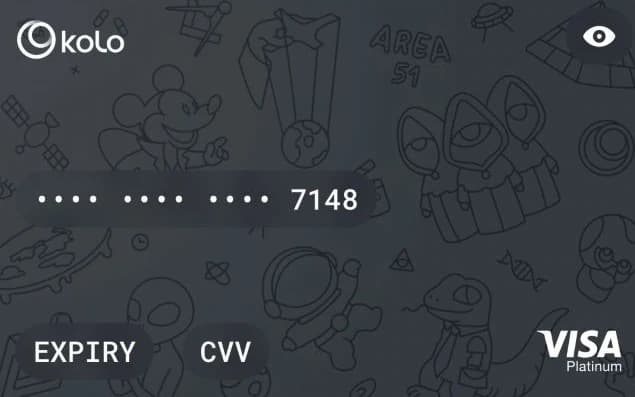
Kolo delivers 1% ongoing BTC after its first month, capped at $100/month and $1 per transaction, with no annual or FX fee. It is the simplest free option without exchange-specific token requirements, although ether.fi Core pays more within its first spending band.
xPlace is a free Solana self-custody route paying 0.5% USDC in Credit Mode, capped at $10/month; RedotPay is the no-fee stablecoin rail that has become a default across Southeast Asia.
Plasma One Core is the one paid card on this page, and it earns the exception by being a different kind of product. Indonesia's OJK regime routes every registered-exchange transaction through three licensed layers, an exchange, a clearinghouse, and a custodian; Core is a USDT balance with no layers at all, held in the user's own wallet and spent through a Visa.
At $199/yr (or a 20,000 XPL lock in place of the fee) it only suits the upper band of Jakarta spenders, and its ~1.5% rupiah FX means the free 0%-FX cards keep the everyday job.
Best Card For Every Need in Indonesia
Top 7 Crypto Cards in Indonesia
Indonesia is an unusually low-rate crypto market for qualifying sales, even at the 1% foreign-platform rate. That tax is based on transaction value, not gains, and the rate depends on where the sale occurs. Cashback and FX costs can therefore dominate the card comparison: BCA and BRI charge 2-3.5% FX on non-IDR transactions, while Tria Signature pays 4.5% on the first $1,000/month without an exchange-token lockup.
Tria's own 1% FX and 0.5% per-payment fees leave about 3% net on rupiah spend. Once its annual fee is included, free alternatives remain stronger below roughly IDR 7,000,000 of monthly spending.
The catch is the fees and payout delay. Tria's $109 annual fee, 1% FX charge, and 0.5% per payment mean free cards net more below roughly IDR 7,000,000 a month. Within ether.fi Core's first band, its 3% ETHFI rate remains the strongest free alternative; Kolo pays 1% ongoing BTC.
xPlace contributes a free Solana self-custody route, paying 0.5% USDC in Credit Mode up to $10/month, for users who want full key control; KAST at 1.5% USD cashback on the first $2,000/month with 0.5-1.75% FX is the simpler free entry point for stablecoin-funded IDR spending.
Plasma One Core is the one outlier in an otherwise free lineup. Its case is structural: for the investor who would rather not have a Bursa, a clearinghouse, and a custodian between their money and their spending, it is the only card here where nothing sits in between.
The $199 fee (or 20,000 XPL lock) and ~1.5% FX price it out of the mass Indonesian profile, which is why it ranks near the bottom despite the 3% headline. RedotPay rounds out the list with no cashback but the widest real-world adoption among Southeast Asian stablecoin spenders.

1. Tria Signature Card
High-Yield Self-Custody: 15% APY + Visa Signature Perks

2. ether.fi Core Card
3% Back on the First $2,000 Each Month, No Stake Required
3. Kolo Card
Earn Bitcoin on Purchases: 2% for 30 Days, Then 1% (Capped) + Visa Platinum + 170+ Countries
4. KAST K Card
Free USD Cashback: 1.5% on First $2K/Month

5. Xplace Basic Card
Free Visa Entry, with 10% Off a Paid Upgrade Using SPENDNODE
6. Plasma One Core Card
Self-Custodial Visa for AI Spenders - 3% Base, 5% on AI Spend, ChatGPT Go Rebate

7. RedotPay Solana Card
Solana Goes IRL: Spend SOL Directly at 130M+ Merchants
Complete list:
All 33 crypto cards available in Indonesia in September 2026
This table includes every crypto card we currently track for Indonesia. Rows marked Top pick are ranked and reviewed above.
| Crypto card | Max rewards | Annual fee | FX fee | Type | Custody |
|---|---|---|---|---|---|
1 Tria Signature CardTop pick | Up to 4.5% rewards | $87 with code | 1% | Debit | Self-custody |
2 ether.fi Core CardTop pick | Up to 3% rewards | Free | 0.5% | Crypto Backed Credit | Self-custody |
3 Kolo CardTop pick | Up to 2% rewards | Free | 0% | Prepaid | Custodial |
4 KAST K CardTop pick | Up to 1.5% rewards | Free | 0.5% | Prepaid | Custodial |
5 Xplace Basic CardTop pick | Up to 0.5% rewards | Free | 1% | Crypto Backed Credit | Self-custody |
6 Plasma One Core CardTop pick | Up to 3% rewards | $199 | 0.5% | Crypto Backed Credit | Self-custody |
7 RedotPay Solana CardTop pick | Varies | Free | 1.2% | Prepaid | Custodial |
| Up to 10% rewards | Free | 3% | Debit | Hybrid | |
| Up to 8% rewards | Free | 0% | Debit | Self-custody | |
| Up to 6% rewards | $200 with code | 1% | Debit | Self-custody | |
| Up to 4% rewards | Free | 0% | Crypto Backed Credit | Self-custody | |
| Up to 4% rewards | Free | 0% | Crypto Backed Credit | Self-custody | |
| Up to 3% rewards | Free | 0.25% | Crypto Backed Credit | Self-custody | |
| Up to 3% rewards | Free | 0% | Crypto Backed Credit | Self-custody | |
| Up to 3% rewards | $10000 | 0.5% | Prepaid | Custodial | |
| Up to 3% rewards | $129 | 1.2% | Prepaid | Custodial | |
| Up to 2% rewards | $1000 | 0.5% | Prepaid | Custodial | |
| Up to 2% rewards | Free | 1% | Crypto Backed Credit | Self-custody | |
| Up to 2% rewards | $999 | 0% | Crypto Backed Credit | Self-custody | |
| Up to 1.5% rewards | Free | 0.5% | Prepaid | Custodial | |
| Up to 1.5% rewards | Free | 1% | Debit | Self-custody | |
| Up to 1.5% rewards | $249 | 0.25% | Crypto Backed Credit | Self-custody | |
| Up to 1% rewards | Free | TBD | Prepaid | Custodial | |
| Up to 1% rewards | $99 | 0.5% | Crypto Backed Credit | Self-custody | |
| cashback | Free | 1.75% | Prepaid | Self-custody | |
| cashback | $199 | 0.75% | Prepaid | Self-custody | |
| cashback | Free | 0.5% | Prepaid | Custodial | |
| none | Free | 1% | Prepaid | Self-custody | |
| none | Free | 1% | Debit | Self-custody | |
| Varies | Free | 1.5% | Debit | Custodial | |
| Varies | Free | 1.2% | Prepaid | Custodial | |
| Varies | Free | 1.2% | Prepaid | Custodial | |
| points | Free | 1% | Debit | Self-custody |
Crypto Card Regulation in Indonesia
Indonesia's crypto regulatory framework is unique in Asia. Bappebti (Badan Pengawas Perdagangan Berjangka Komoditi, Commodity Futures Trading Regulatory Agency) originally regulated crypto as a commodity from 2019 under Regulation No. 5/2019. This commodity classification (rather than currency or security) produced Indonesia's light tax treatment and avoided the heavy restrictions that banking regulators in neighboring countries imposed.
A major regulatory transition occurred on January 10, 2025: oversight shifted from Bappebti to OJK (Otoritas Jasa Keuangan, Financial Services Authority) under Government Regulation No. 49 of 2024. Crypto was reclassified from commodity to digital financial asset under Law No. 4 of 2023 (Development and Strengthening of the Financial Sector).
OJK Regulation No. 27 of 2024 established the new framework, later amended by POJK No. 23 of 2025 (December 2025) which introduced crypto derivatives regulation.
As of December 2025, Indonesia's registered crypto investor base reached 20.19 million, surpassing the entire capital market investor base of 20.13 million. The OJK framework requires every crypto transaction to pass through three licensed layers: a regulated exchange (Bursa), a central clearinghouse, and an independent custodian, mirroring conventional stock market architecture.
ICEx (International Crypto Exchange) received an OJK license (Decision KEP-2/D.07/2026) and commenced operations on January 5, 2026, becoming Indonesia's first fully OJK-licensed integrated digital asset exchange with clearing and custody under one group.
In June 2026, Parliament passed a further amendment (Law No. 4 of 2026, revising the P2SK financial-sector law), effective June 17, 2026, which cements OJK's full authority over crypto. It raises the minimum paid-up capital for a digital-asset exchange license to IDR 500 billion (about US$320 million), mandates client-asset segregation, and expands the securities definition to cover digital-form investment contracts.
Existing operators must meet OJK's applicable licensing and governance requirements. A separate OJK implementing rule took effect September 1, 2026 and sets reporting procedures for digital-financial-asset and crypto trading providers, including periodic and incident reports. It does not authorize crypto as a payment method.
Bank Indonesia (the central bank) has prohibited crypto as a means of payment (Regulation PBI No. 17/3/PBI/2015 on payment obligations in rupiah, extended to crypto). This means merchants cannot accept BTC or ETH directly. However, crypto cards settle through Visa/Mastercard networks: the merchant receives IDR fiat from the card network, not crypto. This legal distinction is identical to Turkey and India's approach and means crypto cards operate normally.
Domestic exchanges: Indonesia has 32+ OJK-registered crypto exchanges (transferred from Bappebti in January 2025). Indodax (Indonesia Digital Asset Exchange, founded 2014) is the largest by volume with 6+ million registered users. Tokocrypto (Binance-affiliated) was the second-largest before restructuring.
Pintu (mobile-first, popular with younger users), Rekeningku, and Luno Indonesia serve the market. These domestic exchanges provide IDR-to-crypto on-ramps via local bank transfers but do not offer consumer spending cards.
International card issuers serving Indonesia: KAST, ether.fi, RedotPay, Tria, xPlace, and Kolo serve Indonesian residents through their APAC or GLOBAL coverage.
Tax Treatment of Card Rewards in Indonesia
Indonesia's crypto tax was originally introduced in PMK 68/2022 (effective May 1, 2022) and overhauled by PMK 50/2025 (effective August 1, 2025). The key change: for VAT purposes, crypto was reclassified as a digital financial asset, removing VAT entirely.
Current rates (PMK 50/2025):
- 0.21% final income tax (PPh Pasal 22 Final) on the transaction value for domestic OJK-registered exchanges
- 0% VAT - crypto transfers are now VAT-exempt as digital financial assets
- Total: 0.21% per transaction on registered exchanges
- For trades on foreign/unregistered platforms or self-reported: 1% income tax
Previous rates (PMK 68/2022): 0.1% PPh + 0.11% VAT = 0.21%. The total stayed at 0.21% but the composition flipped: income tax doubled, VAT was eliminated. The government removed VAT because determining "value added" on highly volatile crypto transactions proved impractical.
Why this matters for card users: DJP describes the 0.21% rate for sales through a domestic platform and 1% for sales through a foreign platform. Both are based on transaction value, not gain. An overseas card payment is not automatically a sale through an Indonesian domestic platform, so the 0.21% rate should not be applied to every card swipe without tracing the conversion route.
| Scenario | Card Spend | Tax (0.21%) | Cashback (Kolo 1%) | Net Return |
|---|---|---|---|---|
| IDR 3,000,000/mo (approx. $190) | IDR 36,000,000/yr | IDR 75,600 | IDR 360,000 | IDR 284,400 |
| IDR 5,000,000/mo (approx. $310) | IDR 60,000,000/yr | IDR 126,000 | IDR 600,000 | IDR 474,000 |
| IDR 10,000,000/mo (approx. $625) | IDR 120,000,000/yr | IDR 252,000 | IDR 1,200,000 | IDR 948,000 |
| IDR 20,000,000/mo (approx. $1,250) | IDR 240,000,000/yr | IDR 504,000 | IDR 2,400,000 | IDR 1,896,000 |
The table assumes a qualifying sale through a domestic platform. It does not price the foreign-platform 1% rate or determine the treatment of a direct card-funded disposal. Stablecoins can still reduce price volatility and make records easier to reconcile. PMK 50/2025 removed VAT on crypto-asset transfers.
Cashback treatment: Receipt of a cashback token is not, by itself, the platform sale to which DJP attaches the 0.21% final transaction tax. Keep the reward terms and its value at receipt; check whether and where a later conversion or disposal is taxed.
Tax reporting: A domestic platform normally withholds PPh 22 Final on its qualifying sales. DJP says the 1% foreign-platform rate may be collected by a designated foreign platform or paid by the taxpayer. Keep the card conversion and exchange records; do not assume the tax was withheld merely because the merchant settled in rupiah.
Compared with gain-based systems: Indonesia's transaction-based levy works differently from India's 30% tax on gains or Japan's miscellaneous-income treatment. Thailand has a conditional exemption for qualifying transfers through licensed operators, not a flat 15% capital-gains tax on every card payment. Compare the actual funding and conversion route before treating headline rates as an after-tax card ranking.
How to Apply from Indonesia
Indonesian crypto card applications require a KTP (Kartu Tanda Penduduk, national identity card) for Indonesian citizens. The NIK (Nomor Induk Kependudukan, 16-digit population identification number printed on the KTP) is the primary identifier. Foreign residents need a valid passport plus KITAS (Kartu Izin Tinggal Terbatas, temporary stay permit) or KITAP (Kartu Izin Tinggal Tetap, permanent stay permit).
Proof of address via utility bills from PLN (Perusahaan Listrik Negara, state electricity company), PDAM (Perusahaan Daerah Air Minum, municipal water companies), telecom bills from Telkomsel, Indosat Ooredoo Hutchison, or XL Axiata (Indonesia's three largest mobile operators), bank statements from BCA (Bank Central Asia), BRI (Bank Rakyat Indonesia), Bank Mandiri, or BNI (Bank Negara Indonesia), or the KTP itself (which includes a registered address).
e-KTP (electronic KTP) with biometric data has been rolled out nationally. Some international issuers may have difficulty reading the Javanese/Balinese/etc. script on older KTP versions; use a passport if verification fails.
Physical cards ship to Indonesian addresses within 14-21 business days. Virtual cards are available immediately for Apple Pay and Google Pay at supported merchants.
Spending Tips for Indonesia
What Indonesian Bank Cards Actually Cost You
Indonesia's banking sector is dominated by the Big Four: BCA (Bank Central Asia, the most popular retail bank, known for its BCA mobile app and extensive ATM network), BRI (Bank Rakyat Indonesia, the largest bank by assets, strong in rural/microfinance), Bank Mandiri (state-owned, largest by branches), and BNI (Bank Negara Indonesia, state-owned). Digital banks include Bank Jago (Gojek-affiliated), Seabank (Shopee-affiliated), and Blu by BCA Digital.
Standard debit cards from the Big Four earn zero cashback. Monthly admin fees (biaya administrasi bulanan): IDR 15,000-50,000 ($1-3). FX fees on non-IDR transactions: 2-3.5%. This FX markup is the primary cost for Indonesian crypto card users, since domestic IDR transactions through Indonesian banks are cheap.
| Category | BCA Debit Card | Crypto Card (Kolo 1%, free) | Annual Difference |
|---|---|---|---|
| Annual fee | IDR 180,000-600,000 | IDR 0 | IDR 180,000-600,000 saved |
| Cashback on IDR 5M/mo | IDR 0 | IDR 600,000 | IDR 600,000 earned |
| FX on IDR 1M/mo non-IDR | IDR 240,000-420,000 | IDR 0 | IDR 240,000-420,000 saved |
| Total annual advantage | - | - | IDR 1,020,000-1,620,000 |
IDR 1.0 to 1.6 million per year on a free card, before paying a rupiah in fees. The Kolo cashback figures assume purchases at or under $100, where its $1-per-transaction cap does not bite. Step up to Tria Signature once monthly spend clears roughly IDR 7,000,000. Either way it is a few weeks of Jakarta groceries or a domestic flight that the bank would have quietly kept.
Spend Any Crypto Freely
For a qualifying sale on the same domestic platform, the 0.21% tax is based on transaction value whether the asset is BTC or USDC. A foreign-platform sale has a different rate, and a direct card conversion needs its own classification. Stablecoins may still be useful for limiting price movement between funding and spending.
Card Selection for Indonesian Residents
- Tria Signature (4.5% to $1K/mo then 1%, 1% FX + 0.5%/payment, ~3% net, $109/yr): Self-custody cashback for an engaged spender. After its fees it out-earns free Kolo past roughly IDR 7,000,000/month of spend, though its USDT cashback can take up to three months to arrive.
- ether.fi (3% ETHFI to $2K/mo, then 1% to $5K and 0.5% above; 0-0.5% FX; $0): The stronger free return within its first band, with direct stablecoin spending or optional collateral-backed borrowing.
- Kolo (1% BTC ongoing, 2% for the first 30 days, capped $100/mo, 0% FX, $0): Simple free BTC cashback without exchange-specific token requirements.
- Tria Premium (6% to $2K/mo then 1%, 1% FX + 0.5%/payment, ~4.5% net, $250/yr): The step up for high spenders. After its fees it clears free Kolo above roughly IDR 9,000,000/month, so it suits Jakarta professionals at the top of the spend range.
- RedotPay (no cashback, $0 virtual, 1.2% FX): No rewards, but the most widely used stablecoin card across Southeast Asia for turning a USDC balance into daily IDR spending.
- xPlace (0.5% USDC in Credit Mode, capped at $10/month; $0, 1% FX): Free Solana self-custody until the moment of spending.
- KAST (1.5% USD cashback on first $2K/mo, 0.5-1.75% FX, free): Simplest entry for Indonesians spending from stablecoin balances, though its cashback is timelocked 14 days, redeemed manually, and spendable only toward a later card purchase.
Cost of Living and Spending Scenarios
Indonesia's cost of living varies widely between Jakarta and the rest of the country:
- Jakarta: IDR 5-12 million rent/month ($310-750, 1-bed, Menteng/Kuningan expensive, Cempaka Putih/Kelapa Gading moderate), IDR 2-4 million groceries, IDR 1.5-3 million dining
- Bali (Canggu/Seminyak): IDR 4-10 million rent (villa premium), IDR 2-3.5 million groceries, IDR 1.5-3 million dining. Nomad-premium pricing.
- Bali (Ubud/Sanur): IDR 3-7 million rent, IDR 1.5-3 million groceries. More affordable than Canggu.
- Surabaya: IDR 3-6 million rent, IDR 1.5-2.5 million groceries. Java's second city, much cheaper than Jakarta.
- Bandung/Yogyakarta: IDR 2-5 million rent, IDR 1.5-2 million groceries. Student cities, very affordable.
Monthly card-eligible spending: IDR 3-15 million ($190-940) depending on city and lifestyle.
Spending Scenario: IDR 8,000,000/month Jakarta Professional
| Category | Monthly | Annual | Where It Goes |
|---|---|---|---|
| Groceries | IDR 3,000,000 | IDR 36,000,000 | Ranch Market, Grand Lucky, Hypermart, Indomaret |
| Dining/cafes | IDR 2,000,000 | IDR 24,000,000 | Mall food courts, Starbucks, local restaurants |
| Transport | IDR 500,000 | IDR 6,000,000 | Grab/Gojek car, TransJakarta (IDR 3,500 flat) |
| Subscriptions | IDR 300,000 | IDR 3,600,000 | Netflix, Spotify, Vidio, gym |
| Shopping | IDR 1,200,000 | IDR 14,400,000 | Grand Indonesia, Plaza Senayan, Tokopedia |
| Travel | IDR 1,000,000 | IDR 12,000,000 | Lion Air/Garuda to Bali/Yogya/Surabaya |
Annual spending is IDR 96,000,000, approximately $6,000. Tria Signature returns IDR 4,320,000 gross at 4.5%. After its FX and payment fees, $109 annual fee, and 0.21% tax, the modeled net is about IDR 923,000 ($57).
Kolo nets roughly IDR 758,000 at its 1% ongoing rate, so Signature edges ahead at IDR 8,000,000/month, just above the estimated crossover, provided the user accepts its payout delay. Kolo's figure assumes purchases at or under $100, where its per-transaction cap does not bite.
Local Payment Infrastructure: QRIS, GoPay, and Card Acceptance
Indonesia's digital payment system is dominated by QRIS (Quick Response Code Indonesian Standard), a unified QR payment system launched by Bank Indonesia in 2020. QRIS integrates with GoPay (Gojek ecosystem, the largest e-wallet), OVO (Grab-affiliated), DANA (Ant Group-backed), ShopeePay, and LinkAja (state-owned banks consortium).
These e-wallets handle the majority of cashless transactions in Indonesia but are bank-account or e-wallet-only and do not work with crypto cards.
Visa/Mastercard contactless works at a separate, overlapping set of merchants. Major retailers with full contactless: Hypermart (100+ hypermarkets), Ranch Market/Farmers Market (premium groceries, Jakarta/Surabaya), Grand Lucky (premium groceries), Indomaret (21,000+ convenience stores, contactless at newer locations), Alfamart (16,000+ stores, contactless expanding).
Transmart/Carrefour (now Trans Retail), Matahari Department Store, MAP Group retailers (Zara, Sephora, Starbucks in Indonesia).
Malls are central to Indonesian urban life and universally accept cards: Grand Indonesia, Plaza Indonesia, Pacific Place, Senayan City, Pondok Indah Mall (Jakarta), Beachwalk (Bali), Tunjungan Plaza (Surabaya).
Cash-dominant venues: Traditional markets (pasar), warungs (small food stalls), angkot (minibuses), ojek direct payment (though Grab/Gojek apps accept cards for ride credits). Rural Indonesia is almost entirely cash.
Indonesia is not a local Apple Pay or Google Wallet tap-to-pay market for domestic bank cards. Foreign-issued crypto cards can still work through Apple Pay or Google Pay where the card program supports wallet provisioning and the merchant accepts NFC contactless, but QRIS, GoPay, and OVO stay on separate local rails a crypto card cannot plug into.
Online Shopping and Subscriptions
Indonesia's e-commerce market is Southeast Asia's largest. Tokopedia (merged with Gojek into GoTo Group), Shopee Indonesia (Sea Group), Lazada Indonesia (Alibaba), and Blibli are the major platforms. All accept Visa/Mastercard for direct payment (bypassing the e-wallet intermediary). Bukalapak and JD.ID provide additional options.
USD-billed international subscriptions (Netflix at IDR 54,000-186,000/month, Spotify at IDR 54,990/month, Amazon Prime Video, Adobe Creative Cloud, ChatGPT Plus at $20/month) trigger bank FX fees when paid with Indonesian bank cards. A zero-FX crypto card eliminates this markup on every subscription payment.
Bali: The Digital Nomad Economy
Bali deserves separate mention because its economic dynamics differ from the rest of Indonesia. Canggu has become one of the world's top digital nomad hubs, with co-working spaces (Dojo Bali, Outpost Canggu, Tropical Nomad, BWork Bali) charging IDR 2-4 million/month ($125-250). The Canggu/Seminyak/Ubud triangle hosts thousands of remote workers, many of whom are crypto-native and already hold exchange balances.
Card acceptance in tourist Bali is much higher than mainland Indonesia. Beach clubs (Potato Head, Finns, La Brisa), restaurants in Seminyak/Canggu, villa rental agencies, and surf schools accept Visa/Mastercard contactless. The main gap is local warungs and traditional markets, which remain cash.
For Bali-based nomads, a crypto card is the primary spending tool for 70-80% of daily expenses (restaurants, co-working, groceries at Ranch Market/Pepito, scooter rental agencies, surf lessons, villa payments). Cash covers the remaining 20-30% (warungs, local markets, small shops).
Cross-Border and Domestic Travel
Indonesia's archipelago geography (17,000+ islands) means domestic flights are a regular expense. Lion Air, Garuda Indonesia, Citilink, AirAsia Indonesia, and Batik Air flights between Jakarta, Bali, Surabaya, Yogyakarta, Makassar, and Medan range from IDR 500,000-3,000,000 ($31-190). All bookable by card, all generating cashback.
International: Jakarta and Bali airports serve Singapore (SGD), Malaysia (MYR), Thailand (THB), and Australia (AUD). Each destination triggers 2-3.5% FX fees on Indonesian bank cards. A zero-FX crypto card saves on every international trip.
Supported Exchanges & Wallets in Indonesia
Indonesia's domestic exchange ecosystem is among Asia's largest. Indodax (Indonesia Digital Asset Exchange, founded 2014, OJK-registered) is the largest by volume with 6+ million registered users. Tokocrypto (Binance-affiliated, OJK-registered) was the second-largest before restructuring. Pintu (mobile-first, popular with younger users), Rekeningku, Luno Indonesia, and others serve the market.
All provide IDR-to-crypto on-ramps via local bank transfers (BCA Virtual Account, Mandiri, BNI, BRI). None offer consumer spending cards.
The international card market splits by use case. For Bali-based nomads paying in IDR, Tria Signature pays 4.5% on the first $1,000/month before dropping to 1%. Its FX and payment fees leave about 3% net before the $109 annual fee.
Kolo pays 1% ongoing BTC after its first month, subject to its caps, with 0% FX. It is the simpler free option for users spending below the estimated Tria crossover.
Beyond Signature, Tria Premium adds 6% on the first $2,000/mo ($250/yr) for the highest spenders, with self-custody, a 1% FX fee, and 0.5% per payment that net it to about 4.5%. Tria's Season 3 caps both headline rates to those monthly thresholds (then 1%), so above the cap the blended rate drifts toward 1% and a flat free card like Kolo narrows the gap.
xPlace provides a free Solana self-custody route for users who want full key control until the moment of spending. Basic pays 0.5% USDC in Credit Mode, capped at $10/month; paid tiers have higher rates and caps.
ether.fi supports direct spending from eligible stablecoins or optional borrowing against eligible collateral. Indonesia's transaction-value tax makes borrowing less compelling as a tax strategy, while the total credit cost and variable collateral yield determine whether position preservation is worthwhile.
KAST (1.5% USD cashback on first $2K/mo, 0.5-1.75% FX, free) is the simplest entry point for Indonesians spending from stablecoin balances. Cypher once covered Cosmos, Injective, and Hyperliquid alongside 15+ other chains, but its card program has closed and is no longer available.
RedotPay with Virtual, Solana, and Physical options fits stablecoin-native spending.
Indonesia combines a 0.21% crypto tax, a 280-million-person addressable market, rapidly expanding card acceptance, and a strong domestic exchange ecosystem. That stack makes it one of the most important crypto card growth markets in Southeast Asia.
Written by SpendNode Editorial
Frequently Asked Questions
How light is Indonesia's crypto tax for card users?
Very light. 0.21% final income tax (PPh Pasal 22) per transaction on OJK-registered exchanges. VAT was removed entirely under PMK 50/2025 (Aug 2025). On IDR 5,000,000 spending, the tax is only IDR 10,500 (less than $1). No stablecoin strategy needed. Spend whatever maximizes cashback.
Which crypto card is best for Indonesian users?
Tria Signature pays 4.5% on the first $1,000/month before dropping to 1%, but its $109 annual fee, 1% FX charge, and 0.5% per-payment fee leave about 3% net on rupiah spend before the annual fee. ether.fi Core is the stronger free alternative within its first band: 3% ETHFI on the first $2,000/month, 1% through $5,000, and 0.5% above, with a 0-0.5% FX margin. Kolo pays 1% ongoing BTC after its introductory month with 0% FX, while RedotPay prioritizes stablecoin spending rather than rewards.
Is crypto card spending legal in Indonesia?
Bank Indonesia banned crypto as a means of payment, but crypto cards convert to IDR through Visa/Mastercard networks. The merchant receives fiat. This is legally distinct from the banned direct crypto payment, same as in Turkey.
Can I use GoPay or OVO with a crypto card?
No. GoPay and OVO are separate e-wallet systems. Crypto cards work at Visa/Mastercard terminals. Most malls, modern restaurants, and hotels accept both systems. Traditional markets and warungs are cash or QRIS only.
Other Countries
View all 112 countries →


Latest Page Changes to the Best Crypto Cards in Indonesia Guide
- Registered crypto investors from 14.16M (April 2025) to 20.19M (December 2025), now exceeding the capital market investor base
- ICEx launch (January 5, 2026) as first fully OJK-licensed integrated exchange with clearing and custody
- PMK 50/2025 doubled Indonesia's crypto income tax from 0.1% to 0.21% from August 1, 2025, ended VAT treatment for crypto, and added a 1% rate for foreign or unregistered platform transactions
- Bappebti-to-OJK supervision shifted under Government Regulation No. 49 of 2024, with crypto reclassified as a digital financial asset under Law No. 4 of 2023
- OJK Regulation No. 27/2024 and POJK No. 23/2025 added the crypto-derivatives layer, while OJK reported 14.16 million crypto users in April 2025