

Best Crypto Cards in Mexico (2026)
Compare crypto cards available in Mexico. Ley Fintech fintech regime, $61.8B remittance corridor from the US, and the MXNB peso stablecoin from Bitso/Juno.
Verified for Mexico
55 crypto cards available
Local currency: MXN
BBVA Mexico, Banorte, Citibanamex, and Santander Mexico debit cards earn essentially zero cashback and charge 3-5% on non-MXN purchases. Mexico's domestic payment infrastructure works fine for daily life. Where it stops working is the cross-border layer: USD-denominated subscriptions, US travel, US-corridor remittances, and the digital-nomad pattern of earning in dollars while spending in pesos.
That cross-border layer is where crypto cards fit in Mexico. They are not a workaround for broken payments. They are a tool for the part of Mexican financial life that is most US-linked, peso-volatility-exposed, or stablecoin-funded.
Mexico received approximately $61.8 billion in remittances in 2025 per Banxico, down about 4.6% from the 2024 record of $64.7B. The figures establish the decline, not how much of it was caused by anticipated US policy.
The US 1% remittance tax began January 1, 2026. It applies to cash and specified physical-instrument funded transfers, not transfers funded from a bank account or a debit or credit card. The US-to-Mexico corridor is large, but most digital remittance users should compare actual FX and provider fees rather than assume they pay this tax.
The country was also the first in Latin America to enact dedicated fintech regulation, with the Ley para Regular las Instituciones de Tecnologia Financiera (Ley Fintech) in 2018. The framework has matured slowly. Some of the early full crypto-licensing expectations did not materialize the way they did in the EEA or the UAE.
What Mexico has instead is a working AML framework for VASPs, a strong domestic exchange (Bitso), an emerging peso stablecoin (MXNB), and an unusually active stablecoin remittance corridor that does not need a perfect retail crypto regime to function.
Summary:
Which crypto cards are best in Mexico?
The best crypto cards in Mexico in September 2026 are ether.fi Core Card, Tria Signature Card, Plasma One Core Card, Jupiter Global, COCA Visa Card, and Private (Icy White / Rose Gold). The detailed ranking below explains the local tax, fee, and availability trade-offs.
| Crypto card | Base reward | Net after fees | Annual fee | FX fee | Type |
|---|---|---|---|---|---|
| 3% base3% on the first $2,000/month, then 1% and 0.5% | 2.5% | Free | 0.5% | Crypto Backed Credit | |
| 4.5% base4.5% on the first $1,000/mo, then 1% | 3% | $87 with code | 1% | Debit | |
| 3% base3% base, up to 5% on AI spend; ChatGPT Go rebate; $199/yr or 20k XPL | 2.5% | $199 | 0.5% | Crypto Backed Credit | |
| 2% baseup to 4% by referring 2 qualifying friends the prior month | 1% | Free | 1% / 1.8% | Debit | |
| 1% baseup to 8% with a large $COCA stake; $15-$350/mo claim capacity by tier | 1% | Free | 0% | Debit | |
| 4% baseneeds a $50k CRO stake to hold the tier | 4% | TBD | 0% | Prepaid | |
| 1% base2% for the first 30 days, then 1%; also capped at $1/EUR 1 per transaction ($2/EUR 2 during intro) and $100/EUR 100 per month | 1% | Free | 0% | Prepaid | |
| 1.5% base | 1% | Free | 0.5% | Prepaid | |
| Up to 2.5% rewards | - | $83.88 | 1.02% | Crypto Backed Credit | |
| 1.5% base1.5% in USDC on Credit Mode spend; cashback capped at $100/mo | 1.3% | $249 | 0.25% | Crypto Backed Credit |
In our Mexico research, Jupiter Global is the most direct USDC-to-card path for the two archetypes that drive Mexican crypto-card demand: remittance-receiving households spending USDC sent from US family, and USD-earning digital nomads in CDMX, Tulum, and beach destinations.
The free virtual card runs at 2% base cashback (4% for a month after referring 2 qualifying friends), funded directly from a self-custody Solana wallet, with 0% FX on USD-billed transactions and $0 fees. Cashback payouts arrived within 48 hours in our testing.
COCA leads on raw rewards: up to 8% cashback (1% at the free Starter tier, scaling with staked $COCA), 0% FX, and 5% APY on the USD balance. KAST is a simple free option for households spending USDC sent from the US: 1.5% USD cashback on the first $2,000/month of card spend, $0 annual fee, 0.5-1.75% FX, and direct stablecoin loading without a paid tier.
xPlace Gold pays 1.5% in Credit Mode USDC with a $100 monthly ceiling for $249 a year; its 0.25% peso FX and Solana self-custody wallet are what remain distinctive. Cashback covers the membership fee from about MXN 25,500 of monthly eligible spend, before peso FX and variable Credit Mode borrowing costs.
Plasma One Core allows a sender who already holds USDT to fund a self-custodial balance used for card spending. That can simplify the payment path. The US 1% tax is narrower than a general levy on remittances, however: bank- and card-funded transfers are already excluded. Compare the full stablecoin acquisition, transfer, card, and FX costs with those alternatives.
It runs $199/yr or a 20,000 XPL lock, pays 3% in XPL on the first $1,000 of monthly spend, and its ~1.5% peso FX is the toll that keeps Gold ahead for pure nomad spending.
For high earners exposed to Mexico's progressive ISR rates (up to 35% at the top bracket), stablecoin funding is the cleaner default because it minimises the disposal-gain side of any transaction.
Best Card For Every Need in Mexico
Top 10 Crypto Cards in Mexico
Mexico is effectively three crypto-card markets, and the optimal card shifts for each.
For remittance-receiving households (Michoacan, Jalisco, Oaxaca, Guerrero, Puebla, Veracruz, plus the urban peripheries), the card is a spending layer over USDC sent from US-based family. The optimization is friction and FX cost, not cashback ceiling.
Jupiter Global at 2% base cashback on USD-billed transactions is purpose-built for this corridor: USDC funds straight from a self-custody Solana wallet, no exchange account required, $0 fees, virtual card available within minutes of KYC.
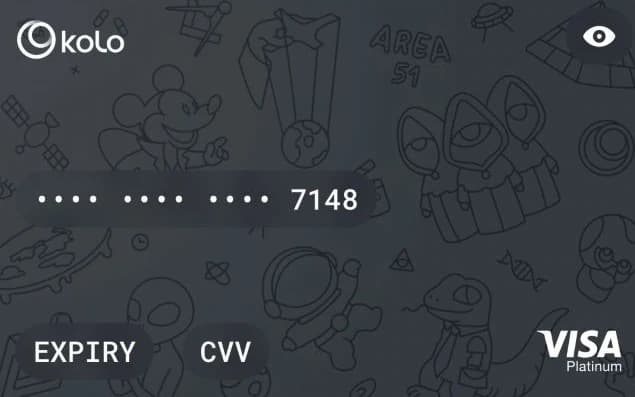
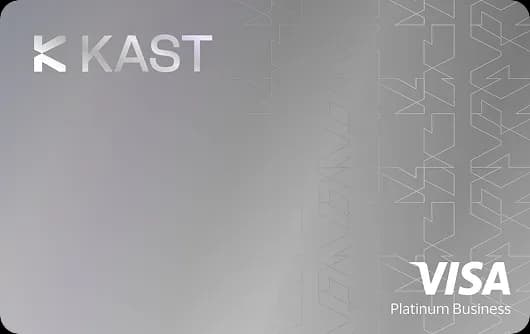
KAST at 1.5% USD cashback (capped at first $2,000/mo) and 0.5-1.75% FX is the simple free Visa Platinum default. Kolo at 1% BTC (2% for the first 30 days), capped at $100/month and $1 per transaction, with 0% FX is the simple free Bitcoin-cashback option. RedotPay covers stablecoin-native flows when documentation is thin.
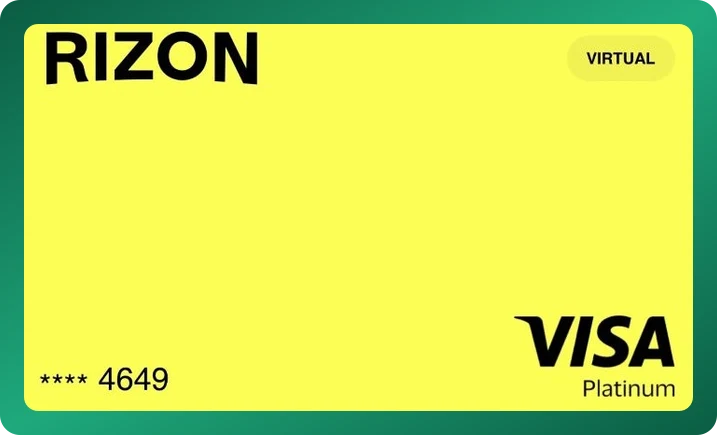
Rizon Emerald serves the corridor from the US end: a US-issued Visa Platinum on the Mexican passport with USD and EUR account details, international fees around 1.02%, ATM cash at a published $1 + 0.65%, with the two cards bundled into the $6.99/month plan.
Rizon also supports wallet-to-wallet USDT top-ups. Its 2.5% cashback caps at the plan fee, a subscription rebate rather than an uncapped rate. The card's case rests on its US banking rail and cash-out price, not on avoiding a tax that bank-funded transfers do not pay.
For USD earners spending in MXN (digital nomads in Roma Norte and Condesa, freelancers paid via Upwork or Deel, remote employees at US tech firms living in Mexico), the optimization is FX savings on the USD-to-MXN cycle plus cashback on top.
COCA reaches up to 8% with 0% FX, while Tria Signature pays 4.5% on the first $1,000 per month before fees. ether.fi Core starts at 3% in ETHFI, with direct stablecoin spending and optional collateral-backed borrowing.
Plasma One Core serves households that already receive USDT from abroad. The sender can fund the self-custodial balance wallet-to-wallet and the recipient can spend through Visa; the reward pays in XPL rather than a stablecoin, and its advantage is the shorter funding path when the family already uses stablecoins.
xPlace Gold anchors the bottom of the list. It pays 1.5% USDC in Credit Mode to a $100 monthly ceiling, so a nomad running MXN 30,000 a month earns about MXN 5,400 a year gross, and the $249 fee (roughly MXN 4,600) consumes nearly all of it. The 0.25% peso FX is still the sharpest paid-tier conversion cost on the page and funding stays in the holder's own Solana wallet; Gold tiers bought before September 14, 2026 continue on the old rates for up to a year.
For domestic Mexican professionals (CDMX, Monterrey, Guadalajara, Queretaro residents whose income is in MXN and whose US-corridor exposure is mostly online subscriptions and occasional travel), the optimization is FX on USD-priced subscriptions and cashback on local spending. The same cards work, but the use case is narrower than the first two segments.

1. ether.fi Core Card
3% Back on the First $2,000 Each Month, No Stake Required

2. Tria Signature Card
High-Yield Self-Custody: 15% APY + Visa Signature Perks

3. Plasma One Core Card
Self-Custodial Visa for AI Spenders - 3% Base, 5% on AI Spend, ChatGPT Go Rebate
4. Jupiter Global
Free virtual USDC card with 2% base cashback

5. COCA Visa Card
Self-Banking: 8% Cashback + 5% APY + 0% FX
6. Private (Icy White / Rose Gold)
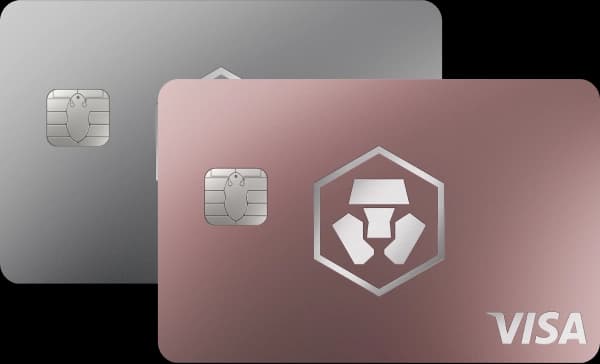
Private Tier: 4% Uncapped Cashback + Lounge Guest
7. Kolo Card
Earn Bitcoin on Purchases: 2% for 30 Days, Then 1% (Capped) + Visa Platinum + 170+ Countries
8. KAST K Card
Free USD Cashback: 1.5% on First $2K/Month
9. Rizon Emerald Card
Rizon's top plan: international fees near 1%, trading at 0.85%, and the physical Visa Platinum included.

10. Xplace Gold Card
10% Off Gold with SPENDNODE: Pay $224.10 Instead of $249
Complete list:
All 55 crypto cards available in Mexico in September 2026
This table includes every crypto card we currently track for Mexico. Rows marked Top pick are ranked and reviewed above.
| Crypto card | Max rewards | Annual fee | FX fee | Type | Custody |
|---|---|---|---|---|---|
1 ether.fi Core CardTop pick | Up to 3% rewards | Free | 0.5% | Crypto Backed Credit | Self-custody |
2 Tria Signature CardTop pick | Up to 4.5% rewards | $87 with code | 1% | Debit | Self-custody |
3 Plasma One Core CardTop pick | Up to 3% rewards | $199 | 0.5% | Crypto Backed Credit | Self-custody |
4 Jupiter GlobalTop pick | Up to 4% rewards | Free | 1% / 1.8% | Debit | Hybrid |
5 COCA Visa CardTop pick | Up to 8% rewards | Free | 0% | Debit | Self-custody |
6 Private (Icy White / Rose Gold)Top pick | Up to 4% rewards | TBD | 0% | Prepaid | Custodial |
7 Kolo CardTop pick | Up to 2% rewards | Free | 0% | Prepaid | Custodial |
8 KAST K CardTop pick | Up to 1.5% rewards | Free | 0.5% | Prepaid | Custodial |
9 Rizon Emerald CardTop pick | Up to 2.5% rewards | $83.88 | 1.02% | Crypto Backed Credit | Self-custody |
10 Xplace Gold CardTop pick | Up to 1.5% rewards | $249 | 0.25% | Crypto Backed Credit | Self-custody |
| Up to 10% rewards | Free | 0% | Prepaid | Custodial | |
| Up to 10% rewards | Free | 3% | Debit | Hybrid | |
| Up to 8% rewards | Free | 0% | Debit | Custodial | |
14 | Up to 8% rewards | TBD | 0% | Prepaid | Custodial |
| Up to 6% rewards | $200 with code | 1% | Debit | Self-custody | |
| Up to 5% rewards | Free | 1% | Crypto Backed Credit | Self-custody | |
| Up to 5% rewards | Free | 0% | Debit | Self-custody | |
| Up to 5% rewards | TBD | 0% | Prepaid | Custodial | |
| Up to 5% rewards | Free | 1% | Debit | Self-custody | |
| Up to 4% rewards | Free | 0% | Crypto Backed Credit | Self-custody | |
| Up to 4% rewards | Free | 0% | Crypto Backed Credit | Self-custody | |
| Up to 3% rewards | Free | 0.25% | Crypto Backed Credit | Self-custody | |
| Up to 3% rewards | Free | 0% | Crypto Backed Credit | Self-custody | |
| Up to 3% rewards | $10000 | 0.5% | Prepaid | Custodial | |
| Up to 3% rewards | $299.9 | 0% | Prepaid | Custodial | |
| Up to 3% rewards | $129 | 1.2% | Prepaid | Custodial | |
| Up to 2% rewards | Free | 0% | Debit | Self-custody | |
| Up to 2% rewards | $1000 | 0.5% | Prepaid | Custodial | |
| Up to 2% rewards | Free | 1% | Crypto Backed Credit | Self-custody | |
| Up to 2% rewards | $49.9 | 0% | Prepaid | Custodial | |
| Up to 2% rewards | $999 | 0% | Crypto Backed Credit | Self-custody | |
| Up to 1.5% rewards | Free | 0.5% | Prepaid | Custodial | |
| Up to 1.5% rewards | Free | 1% | Debit | Self-custody | |
| Up to 1% rewards | Free | 1% | Crypto Backed Credit | Self-custody | |
| Up to 1% rewards | Free | 1.75% | Debit | Self-custody | |
| Up to 1% rewards | Free | 1% | Debit | Self-custody | |
| Up to 1% rewards | Free | TBD | Prepaid | Custodial | |
| Up to 1% rewards | $47.88 | 1.275% | Crypto Backed Credit | Self-custody | |
| Up to 1% rewards | $99 | 0.5% | Crypto Backed Credit | Self-custody | |
| Up to 0.5% rewards | Free | 1% | Crypto Backed Credit | Self-custody | |
| none | Free | 0% | Crypto Backed Credit | Self-custody | |
| none | $30 | 0% | Crypto Backed Credit | Self-custody | |
| none | Free | 0% | Prepaid | Custodial | |
| Varies | Free | 1.7% | Prepaid | Custodial | |
| cashback | Free | 1.75% | Prepaid | Self-custody | |
| cashback | $199 | 0.75% | Prepaid | Self-custody | |
| cashback | Free | 0.5% | Prepaid | Custodial | |
| none | Free | 1% | Prepaid | Self-custody | |
| none | Free | 1% | Debit | Self-custody | |
| Varies | Free | 1.5% | Debit | Custodial | |
| Varies | Free | 1.2% | Prepaid | Custodial | |
| Varies | Free | 1.2% | Prepaid | Custodial | |
| Varies | Free | 1.2% | Prepaid | Custodial | |
| Varies | Free | 1.7% | Crypto Backed Credit | Self-custody | |
| points | Free | 1% | Debit | Self-custody |
Crypto Card Regulation in Mexico
Mexico's regulatory position is more layered than most country guides describe. The country has a real fintech law and an active AML framework for virtual assets, but it does not have a dedicated crypto-exchange licensing regime in the EU or UAE sense.
Ley Fintech (2018) and what it actually licenses
The Ley para Regular las Instituciones de Tecnologia Financiera created two licensed Financial Technology Institution (FTI) categories under CNBV oversight:
- Instituciones de Financiamiento Colectivo (IFCs), the crowdfunding platforms
- Instituciones de Fondos de Pago Electronico (IFPEs), the electronic payment fund institutions
It also created an innovative-models sandbox. What Ley Fintech does not do is establish a generic "crypto exchange" license. Mexican crypto operators commonly anchor their MXN payment-handling activities inside an IFPE structure (because IFPEs hold customer funds), with AML compliance layered on top, but the wider crypto-exchange picture is mixed and not a clean dedicated VASP regime.
Banxico Circular 4/2019: the restriction layer
Banxico's Circular 4/2019 is the single most important regulatory document for Mexican crypto. It restricts what regulated financial institutions (banks, credit unions, IFPEs themselves) can do with virtual assets when serving the public.
In practice, this means Mexican retail banks cannot offer crypto wallets, custody, or card products to their customers directly. Individuals using international crypto cards are not affected. But the restriction is the reason Mexico has no domestic bank-issued crypto card despite the fintech sector being otherwise developed.
CNBV, SHCP, and Banxico joint warnings
In 2021, the CNBV, SHCP (Secretaria de Hacienda y Credito Publico), and Banxico issued a joint statement warning the public about virtual asset risks and clarifying that crypto is not legal tender. The statement did not change the legal position but reinforced the regulators' cautious stance.
AML reforms 2025-2026
The AML reform published in the DOF on 16 July 2025 added VASPs explicitly to the list of designated non-financial businesses and professions (DNFBPs), with reporting obligations to the UIF (Unidad de Inteligencia Financiera). New thresholds require VASPs to report transactions equal to or exceeding 210 UMA (around USD $1,180 at 2026 UMA values).
A further AML regulation reform published 27 March 2026 tightened the implementation rules. For cardholders, the practical implication is that Mexican exchanges (notably Bitso) report large or suspicious VASP transactions to the UIF.
CARF and SAT visibility
Mexico is among the OECD jurisdictions committed to CARF (Crypto-Asset Reporting Framework) implementation, with first automatic exchanges of crypto transaction data scheduled for 2028.
Combined with the July 2025 AML reform and March 2026 regulation tightening, VASP reporting obligations to the UIF and SAT visibility into platform-level transactions are stronger than they were a year ago.
Specific timing on data-flow access varies by platform and reporting category. The published CARF schedule remains the most reliable forward marker.
Bitso and the on-ramp question
Bitso operates within Mexico's broader Ley Fintech and AML regime, with its MXN payment activities anchored to an IFPE-style structure. Calling it a "CNBV-licensed crypto exchange" overstates the case, because there is no such license category. Bitso is the most prominent regulated Mexican entity handling MXN-to-crypto on-ramps, and the safest local option for funding crypto cards. Volabit and Tauros also serve the Mexican market with similar regulatory positioning.
International card issuers (COCA, Crypto.com, Tria, Kolo, KAST, ether.fi, RedotPay, xPlace, Avici, Jupiter) operate under their own jurisdictional licenses and serve Mexican users through Visa/Mastercard rails. They are not directly regulated by CNBV or Banxico.
What this means for cardholders
Individual crypto-card use is not prohibited. Card transactions clear as standard MXN Visa or Mastercard payments at the merchant level. Funding the card is where the regulatory friction shows up: bank-to-foreign-exchange transfers may attract review, and large or frequent transfers risk AML flags under the 2025-2026 reforms.
The smoothest path is MXN to Bitso via SPEI, then USDC or MXNB to your card wallet. Routes that involve bank wires to international exchanges are slower and more variable.
Tax Treatment of Card Rewards in Mexico
Mexico does not yet have a dedicated crypto-specific tax framework. The SAT (Servicio de Administracion Tributaria) treats crypto under the general income tax framework of the Ley del Impuesto sobre la Renta (LISR), but specific guidance on how to classify gains is thin compared with mature jurisdictions like Australia or South Africa.
The classification ambiguity
Crypto is referred to in Ley Fintech as an "activo virtual" (virtual asset) and treated as intangible personal property. When you spend crypto through a card, the conservative interpretation is that the disposal generates a gain or loss measured against acquisition cost.
The classification of a personal crypto disposal remains fact-specific. Article 129 LISR's 10% rate concerns qualifying publicly traded securities; it should not be offered as an alternative rate for ordinary BTC card spending without a specific legal basis. The progressive ISR schedule below is an illustration, not a ruling that every card disposal is taxable as other income.
| Annual Taxable Income (MXN) | Marginal ISR Rate |
|---|---|
| Up to MXN 8,952 | 1.92% |
| MXN 8,953-75,984 | 6.4% |
| MXN 75,985-133,536 | 10.88% |
| MXN 133,537-155,229 | 16% |
| MXN 155,230-185,852 | 17.92% |
| MXN 185,853-374,837 | 21.36% |
| MXN 374,838-590,795 | 23.52% |
| MXN 590,796-1,127,926 | 30% |
| MXN 1,127,927-1,503,902 | 32% |
| MXN 1,503,903-4,511,707 | 34% |
| Over MXN 4,511,707 | 35% |
Worked example. BTC bought for MXN 50,000 and spent when worth MXN 200,000 has an economic gain of MXN 150,000. If a taxpayer's applicable classification and marginal rate made the gain taxable at 30%, the illustrative ISR would be MXN 45,000. Article 129's securities rate cannot be assumed for ordinary BTC card spending.
Cashback treatment
Cashback received in tokens is generally treated as income at fair-market value when received under the conservative interpretation. Subsequent gains on those tokens trigger another disposal event. USDC cashback minimises the gain side because of the stable peg. BTC cashback is more exposed to second-leg ISR if the BTC appreciates between receipt and spend.
These are conservative treatments rather than settled SAT guidance. A qualified Mexican tax advisor should be the source of truth for any specific situation.
Practical takeaway
For individuals spending personal crypto through a card in Mexico:
- Stablecoin funding (USDC, USDT, MXNB) keeps disposal gains near zero and tax friction minimal
- Funding with appreciated BTC or ETH at the 30%+ ISR brackets can produce tax bills that exceed cashback earned
- Annual ISR declaration (declaracion anual, due in April) is the appropriate place to include any declarable crypto income
- IVA at 16% applies to goods and services purchased with the card, same as any other payment method
CARF: the visibility shift
Once CARF reporting is live (Mexico has committed to first exchanges by 2028), exchange data on Mexican users will flow more directly to the SAT and onward to other tax authorities under the framework. For Mexican residents with US tax residency complications (dual citizens, recent returnees, US green card holders), this matters because data visibility increases on both sides.
How to Apply from Mexico
Mexican crypto-card applications require an INE/IFE (Instituto Nacional Electoral) credential, which is the voter-ID card and Mexico's most common primary ID. A pasaporte mexicano (passport) also works.
The CURP (Clave Unica de Registro de Poblacion) is the 18-character unique population code assigned to every Mexican citizen and resident. Most card platforms request it during verification.
The RFC (Registro Federal de Contribuyentes) is the SAT-issued tax identification number. Some card issuers require it for compliance, especially under the 2025-2026 AML reforms. RFCs can be obtained via the SAT portal or at an Administracion Local de Servicios al Contribuyente office.
Proof of address
Comprobante de domicilio (proof of address) options:
- Utility bill from CFE (Comision Federal de Electricidad) for electricity
- Telmex for fixed-line telephone or internet
- Izzi, Totalplay, or Megacable for cable/internet
- Local water company receipts (varies by municipality)
- Estado de cuenta (bank statement) from BBVA, Banorte, Citibanamex, Santander, Banco Azteca, or Nu Mexico
- Recibo de predial (property tax receipt)
The document must be no more than 3 months old.
Foreign residents and digital nomads
Foreign residents present a valid passport plus tarjeta de residente temporal or tarjeta de residente permanente issued by the INM (Instituto Nacional de Migracion). Digital nomads on a residente temporal visa (granted for up to 4 years) qualify. Foreigners obtain an RFC (RFC para extranjeros) at any SAT office with passport and residency card.
Verification and shipping
Bitso and other domestic platforms typically offer fast KYC for Mexican users via INE validation, often within minutes. International card issuers may take 1-3 business days for manual verification. Physical cards from international issuers ship to Mexican addresses within 7-14 business days via Correos de Mexico, Estafeta, FedEx Mexico, or DHL.
Virtual-card add-to-wallet support for Apple Pay and Google Pay varies by card issuer and partner. Verify before relying on tap-to-pay for a specific card.
Spending Tips for Mexico
The four archetypes
Mexico's crypto-card decision shifts sharply by user type. The four below cover most of the practical universe.
Archetype 1: Remittance-receiving household (Michoacan, Jalisco, Oaxaca, Guerrero, Puebla, Veracruz, urban peripheries)
Recipients are typically dependent family members of US-based workers, often with limited Mexican employment income and therefore low ISR exposure. Typical card spend is MXN 3,000-10,000/month, funded by USDC sent from US family.
KAST pays 1.5% USD cashback on the first $2,000 per month, with 0.5-1.75% FX and no annual fee. Kolo is the free BTC accumulator for smaller purchases, subject to its monthly and per-transaction caps.
RedotPay covers a documentation-light flow when the recipient lacks a clean Mexican address history. The sender's USDC purchase rail in the US may matter more than the Mexican card itself.
Archetype 2: USD-earning digital nomad or remote worker (Roma Norte, Condesa, Coyoacan, Polanco, San Miguel de Allende, Tulum)
USD income via Upwork, Deel, Payoneer, or direct USDC, spending MXN 20,000-60,000/month locally. CDMX in particular has become one of the largest digital-nomad clusters globally, with Roma Norte and Condesa rents up materially since 2020 partly because of USD-earning residents outbidding peso-earning locals.
For this archetype, FX savings on the USD-to-MXN cycle plus cashback compound meaningfully. Jupiter Global at 2% base on USD-billed transactions handles the recurring USD subscription stack (Adobe, Apple, AWS, OpenAI, Spotify) at zero FX.
COCA at up to 8% with 0% FX (staked tier) leads on raw cashback math for users willing to commit to $COCA. Tria Signature at 4.5% on the first $1,000/month (then 1%) with a 1% FX fee and 0.5% per payment nets about 3% on peso spend.
ether.fi Core pays stepped ETHFI rewards and supports direct stablecoin spending, while Crypto.com Icy adds 4% and airport lounge access at AICM and CUN. xPlace Gold pays 1.5% USDC in Credit Mode (to $100/month) with 0.25% FX for $249 per year.
Archetype 3: Domestic Mexican professional (CDMX, Monterrey, Guadalajara, Queretaro, Puebla)
Income in MXN, US-corridor exposure mostly limited to USD-priced subscriptions (Adobe, Microsoft 365, Apple iCloud) and occasional travel. Typical card spend MXN 15,000-50,000/month, mostly domestic.
The case for crypto cards here is narrower than for the first two archetypes. The biggest wins come from FX savings on USD subscriptions (Mexican bank cards charge 3-5% FX) and incremental cashback over the near-zero rewards of BBVA, Banorte, or Citibanamex debit cards. COCA and Crypto.com Icy still work; Tria Signature is a strong fit for users who want USDT cashback without staking exposure.
Archetype 4: New arrival or seasonal expat (recent immigrants, retirees in San Miguel de Allende or Lake Chapala, snowbirds in Cabos or Yucatan)
Documentation-light cards bridge the gap before INE/RFC and Mexican banking are fully set up. KAST and RedotPay lead because their KYC accepts passport plus visa/residency card. Once the residency stack is settled, migration to a higher-tier card from one of the first three archetype recommendations is straightforward.
Remittance corridor: the US-Mexico headline
Banxico's Sistema de Informacion Economica tracks remittance flows monthly. The 2024 record of approximately $64.7B and the 2025 figure of approximately $61.8B are widely reported and consistent across press coverage of the Banxico data.
The 2025 decline is visible in Banxico's data. It predates the US tax's January 2026 start, and the data alone do not establish how much of the decline was due to anticipated policy or other factors.
The US tax applies to cash and certain physical-instrument funded remittances. Bank-account, debit-card, and credit-card-funded transfers are excluded. Stablecoin routes may still be cheaper for some users, but acquisition spreads, off-ramp costs, card FX, and compliance obligations can exceed the network fee.
The ranges below are typical bands quoted by aggregators (World Bank Remittance Prices, Wise, Remitly). Specific fees vary by amount, payout method, and current promotions:
| Transfer Method | Typical Fee on $500 sent | Notes |
|---|---|---|
| Western Union (cash pickup at OXXO/Elektra) | ~$15-25 + FX spread | 5-8% effective |
| MoneyGram | ~$10-20 + FX spread | 4-7% effective |
| Bank wire (US bank to BBVA Mexico) | ~$25-45 + FX spread | 6-10% effective |
| Stablecoin rail (USDC + Mexican card or off-ramp) | Network fee plus acquisition and cash-out costs | Compare the all-in MXN received |
Bitso Business reportedly processed approximately $6.5B in US-Mexico crypto remittances in 2024, roughly 10% of the total corridor.
Bitso Business overall hit a reported $82B in annualised total payment volume in 2025, with about $15.6B specifically in Mexico. These are enterprise-level numbers, but they reflect the same rail that retail users access through Bitso's consumer product.
MXNB: Mexico's peso stablecoin
The biggest 2025 development in Mexican crypto rails was MXNB, a Mexican peso-pegged stablecoin issued by Juno (a Bitso subsidiary). Each MXNB is backed 1:1 by MXN reserves. The product is positioned as enterprise-grade for cross-border B2B payments, but the broader implication for retail crypto cards is structural.
MXNB matters because it eliminates the USD-to-USDC-to-MXN conversion cycle for users who want to hold value in pesos rather than dollars. Where USDC has been the default stablecoin for funding crypto cards in Mexico, MXNB introduces a peso-native option. Whether retail card issuers integrate MXNB directly through 2026 is still an open question, but the rail exists and Bitso is actively pushing it for both consumer and enterprise use.
For the digital nomad archetype, MXNB is less interesting because USD income is the starting point. For the remittance and domestic-Mexican archetypes, MXNB potentially becomes the cleaner default funding rail.
Card cost comparison
Mexican bank debit cards charge real FX and offer minimal rewards. The crypto-card spread is genuinely meaningful at the household level.
| Card | FX Markup | Cashback | Cost on MXN 10,000/mo international + MXN 15,000/mo local |
|---|---|---|---|
| BBVA Mexico debit | 4-5% | ~0% | MXN 4,800-6,000/yr in FX, no rewards |
| Banorte debit | 3.5-4% | ~0% | MXN 4,200-4,800/yr in FX, no rewards |
| COCA (8% staked, 0% FX) | 0% | 8% on all spend | MXN 0 FX cost, MXN 24,000/yr cashback at MXN 25,000/mo total |
| KAST (0.5-1.75% FX, 1.5% USD cashback on first $2K/mo) | 0.5-1.75% | 1.5% capped | MXN 1,200-3,600/yr FX, ~MXN 4,500/yr cashback at the cap |
The COCA tier returns are computed on staking $COCA tokens. The free Starter tier earns 1%, which still exceeds Mexican bank debit card rewards by a wide margin.
Common mistakes
Mistake 1: Funding the card with appreciated BTC or ETH. At Mexico's 30-35% top ISR brackets, the conservative tax treatment can erase the cashback advantage entirely. A 100% appreciated asset spent through a card creates tax liability that often exceeds the rewards earned.
How to avoid: Fund daily spending with USDC, USDT, or MXNB. If considering ether.fi Core's collateral mode, compare the possible tax deferral with the loan's total cost, collateral risk, and the SAT's treatment of the arrangement.
Mistake 2: Trying to wire MXN directly from a Mexican bank to an international exchange. Banxico Circular 4/2019 restrictions on regulated banks combined with general AML scrutiny make direct bank-to-foreign-exchange transfers slow and unreliable. Bitso's SPEI rail is the smoother on-ramp.
How to avoid: Use Bitso (or Volabit/Tauros) as the MXN-to-stablecoin bridge, then transfer USDC or MXNB to the card wallet. Avoid international wires to non-domestic exchanges as your primary funding method.
Mistake 3: Assuming Apple Pay coverage is at US/EU levels. Apple Pay is supported at major Mexican retailers and Apple launched Tap to Pay on iPhone in Mexico in March 2026, but adoption is still maturing. Some smaller merchants and OXXO locations may not accept it.
How to avoid: For NFC-dependent spending, verify Apple Pay or Google Pay support at the specific merchants you visit regularly. Carry the physical card or use Bluetooth/QR alternatives where contactless is patchy.
Mistake 4: Building card-spending projections that include rent. Most Mexican rentals require deposit-plus-monthly transfers via SPEI or cash, not card. Payment processors that accept card for rent typically charge 3-5% fees that erase any cashback advantage.
How to avoid: Plan card spending around groceries, dining, retail, transport, and online purchases. Keep rent on SPEI/cash rails. Do not assume routing rent through the card delivers full cashback value.
CDMX neighbourhood detail
Mexico City's contactless economy varies by neighbourhood:
- Roma Norte and Condesa (the digital-nomad core). Full contactless infrastructure, USD-pricing common at trendy restaurants, Apple Pay widely accepted at modern cafes and boutiques. Rent inflation since 2020 has been notable.
- Polanco (luxury). The most uniformly cashless area in the country. International luxury retailers, Soumaya, Antara mall, Avenida Masaryk.
- Coyoacán (more local). Mixed acceptance. Frida Kahlo Museum and tourist-facing businesses take cards; the neighbourhood market and street food are cash-first.
- Santa Fe and Lomas (corporate/luxury). Strong card acceptance across malls (Centro Santa Fe, Garden Santa Fe) and office areas.
- Centro Historico (old town). Mixed; main tourist draws take cards, surrounding alleys remain cash-heavy.
- Older colonias popular and informal markets (Tepito, La Lagunilla). Cash-first; do not plan card-heavy spending here.
Other major cities and the beach economy
Guadalajara. Mexico's "Silicon Valley" with a strong tech and IT-services sector. Andares (Zapopan), Providencia, Chapultepec are reliably card-friendly. Strong contactless adoption.
Monterrey. Industrial powerhouse. San Pedro Garza García is among the wealthiest neighbourhoods in Latin America, with near-universal card acceptance.
Beach economy (Cancun, Playa del Carmen, Tulum, Los Cabos, Puerto Vallarta). Tourist-heavy, heavily USD-priced. Hotel Zone in Cancun, Quinta Avenida in Playa, central Tulum, and the Cabos golf-resort corridor all run on cards. Tulum specifically is unusual for the density of MXN/USD dual pricing and a meaningful crypto-aware merchant base.
San Miguel de Allende and Lake Chapala/Ajijic. American retiree communities with strong USD-circulation. Card and cash both common.
Tijuana and the border corridor. Cross-border with San Diego. USD widely accepted, peso pricing also normal. Card acceptance follows the formal-retail pattern.
Domestic payment infrastructure
Mexico has working domestic payment rails. Crypto cards are not filling a void; they are competing with or complementing what already works.
SPEI (Sistema de Pagos Electronicos Interbancarios) handles bank-to-bank transfers. Two-second settlement, free for most consumer transfers, the backbone of Mexican formal payments. SPEI is how MXN moves into Bitso for crypto on-ramping.
CoDi (Cobro Digital) is Banxico's QR code payment system. Adoption has been slow compared with Brazil's Pix or India's UPI. CoDi has not replaced cash or cards in most consumer contexts.
OXXO is the bridge between cash economy and digital. Over 20,000 stores nationwide, daily-life infrastructure for many Mexicans. Card acceptance at OXXO has improved but is uneven, and cash remains a significant share of OXXO transactions. OXXO Pay (FEMSA's wallet) handles bill payments and some retail flows.
Mada-equivalent debit infrastructure does not exist in Mexico. Bank cards run on Visa or Mastercard rails directly.
Cash culture is real and persistent. Tianguis (street markets), street food, tip-based services, smaller shops in lower-income colonias, and most informal commerce are cash-first. The crypto card is meaningless for these flows.
Apple Pay is supported at major Mexican retailers and was expanded with Tap to Pay on iPhone for merchants in March 2026. Adoption is growing but lower than US or European baselines. Google Pay support is more limited but expanding through the same partner-bank pattern Mexico used for Apple Pay.
Where the crypto card fits, in plain order
For most Mexican users, the practical payment stack looks like this:
- Cash for street food, tianguis, peseros and other informal transport, tips
- SPEI for rent, utilities, large person-to-person transfers
- OXXO for bill payment, top-ups, occasional retail
- Bank debit or credit for formal retail, dining, online MXN-priced services
- Crypto card for USD-priced subscriptions, US travel, USDC remittance spending, FX-sensitive online shopping
The crypto card sits at the top of the stack as the cross-border and FX layer. It is not a replacement for the stack below it.
Supported Exchanges & Wallets in Mexico
Globally available card issuers
Jupiter Global is a natural fit for Mexicans receiving USDC from US family or earning USDC through Upwork, Deel, or direct stablecoin payroll. The free virtual card runs at 2% base cashback (4% for a month after referring 2 qualifying friends), funded directly from a self-custody Solana wallet, with 0% FX on USD-billed transactions and 1% (Rain) or 1.8% (DCS) on MXN-merchant spending.
Cashback payouts arrived within 48 hours in our testing. The card uses Rain on the issuing side; verify availability for your specific Mexican state.
COCA reaches Mexico under global coverage with up to 8% cashback (1% at the free Starter tier, scaling with staked $COCA), 0% FX, and 5% APY on the USD balance. The non-custodial architecture keeps USDC in your wallet until spending, and rewards are paid in stablecoins (USDC/EURC).
Tria now charges 1% FX on non-USD spend plus 0.5% on every payment across all tiers. Tria Signature pays 4.5% on the first $1,000/month (then 1%, $109/yr, about 3% net on peso spend), and Tria Premium pays 6% on the first $2,000/month (then 1%, $250/yr, about 4.5% net). USDT cashback avoids the volatile-token ISR exposure that BTC or ETH cashback creates at Mexican progressive rates up to 35%.
Crypto.com serves Mexico through its global platform with the full tier range. The Icy White tier adds airport lounge access at AICM (Mexico City) and CUN (Cancun), useful for frequent travelers. Higher tiers add Spotify and Netflix rebates.
Kolo (1% BTC cashback, 2% for the first 30 days, capped at $100/month and $1 per transaction, 0% FX, $0 annual) is the simple free BTC accumulator. BTC cashback creates ISR exposure under conservative interpretation, so it suits users with smaller spend or long-term BTC accumulation goals.
ether.fi Core pays 3% in ETHFI on the first $2,000 per month, 1% through $5,000, and 0.5% above, with a 0-0.5% FX margin. It supports direct stablecoin spending and optional collateral-backed borrowing; neither mode guarantees a particular ISR outcome.
KAST (1.5% USD cashback on first $2,000/month of spend, 0.5-1.75% FX, $0 annual) is a low-friction free option for remittance-receiving households spending USDC sent from the US.
RedotPay covers stablecoin-native spending with Virtual, Solana, and Physical variants.
Avici Platinum (LATAM coverage, crypto-backed credit) lets users borrow against BTC/ETH collateral and spend without triggering an ISR disposal. Avici Signature ($30/yr, Visa Signature perks, lounge access, travel insurance) is the upgrade tier.
Ledger CL Card (1%) provides self-custody spending direct from a Ledger hardware wallet. xPlace (0.5-2% Credit Mode by tier, capped monthly, 1% FX at entry) covers Solana ecosystem users; the Gold tier pairs 1.5% USDC (to $100/month) with 0.25% FX at $249/yr, worthwhile mainly for the peso FX and the wallet-held funding.
Cards with limited or no Mexican coverage
A few prominent issuers either do not serve Mexico or have narrower availability than their global marketing suggests:
- Binance Card is BRL-only (Brazil)
- Wirex covers 35 countries but in LATAM serves only Argentina and Brazil
Other issuers (notably Bitget Wallet Card and MetaMask Card) also serve Mexico, but coverage and feature parity vary by tier and region. Verify directly with the issuer before committing to a card stack around any of them.
Domestic platforms (the fund-your-card layer)
Bitso (founded 2014 in Mexico City, IFPE-licensed, AML-compliant) is the dominant Mexican exchange and the smoothest MXN-to-crypto on-ramp. SPEI deposits are instant and free. Bitso supports MXN-to-USDC, MXN-to-USDT, and MXN-to-MXNB conversions.
Bitso Business operates the enterprise side, with the reported $82B in 2025 annualised TPV cited above.
Volabit and Tauros also serve the Mexican market as smaller IFPE-aligned exchanges with MXN on-ramps. DolarApp and similar fintech apps offer crypto-adjacent USD-account features without being full exchanges.
The MXN-to-USDC-to-card pipeline:
- SPEI MXN to Bitso (instant, free)
- Buy USDC, USDT, or MXNB on Bitso
- Transfer the stablecoin to your card's wallet address
- Spend via the card at Visa/Mastercard merchants
Total elapsed time is typically well under an hour for an established Bitso account once KYC is cleared.
Outlook (our read)
The items below are our current read of where the Mexican crypto-card market may move through 2026 and 2027. Read them as open questions, not predictions:
- MXNB retail integration. Whether retail card issuers (COCA, KAST, others) integrate MXNB directly as a funding option through 2026 will materially change the funding economics for remittance and domestic-Mexican archetypes. The rail exists; the consumer-side integration is the question.
- AML reporting maturation. The July 2025 and March 2026 AML reforms strengthened VASP reporting to the UIF and broadened the SAT-relevant data envelope around crypto transactions. As implementation phases in through 2026, expect more users to migrate toward stablecoin funding as the simpler reporting path.
- CARF 2028 first exchange. Cross-border data flows from foreign exchanges to the SAT will become standard. Mexican users with US tax residency complications should be aware.
- US 1% remittance tax effects. The federal excise that took effect on 1 January 2026 applies to cash-funded remittance transfers and exempts bank-account and card-funded transfers. Net effect on the corridor through 2026 will become clearer as Banxico releases monthly remittance data and as senders adapt their funding methods. Whether the tax persists or expands under future US administrations is a live question.
- Apple Pay Tap to Pay maturation. The March 2026 launch of Tap to Pay on iPhone for Mexican merchants should expand the contactless footprint, indirectly improving crypto card utility where Apple Pay add-to-wallet support exists.
- Open Finance. Mexico's Ley Fintech included Open Finance provisions. Implementation has been slow (only ATM and branch data is fully operational as of early 2026). Faster maturation would improve fintech-to-fintech and fintech-to-bank interoperability, including for crypto on-ramps.
- CoDi vs Pix. Whether CoDi gains traction or remains underused relative to Brazil's Pix shapes how much retail digital-payment growth happens through Banxico-native rails versus card networks.
The Mexico in one line
Mexico is not a country where crypto cards fix a broken payment system. SPEI and Visa rails work. The value sits in three cross-border use cases: remittance households spending dollar-funded stablecoins, USD earners spending in pesos, and domestic professionals paying for foreign subscriptions or travel.
The right card depends on which of those profiles matches the user's actual spending.
Written by SpendNode Editorial
Frequently Asked Questions
Can I receive US remittances through a crypto card in Mexico?
Yes. A family member in the US sends USDC to your wallet. Load it onto a card (like KAST, COCA, or Kolo) and spend at any Visa/Mastercard merchant. Stablecoin rails typically cost well under 1% versus the 3-8% bands quoted at traditional cash-pickup services. The US federal 1% remittance excise tax took effect 1 January 2026 and applies to cash-funded transfers (bank, debit, and credit card-funded transfers are exempt), shifting the relative economics further toward direct stablecoin sends.
Which crypto card is best for Mexican users?
It depends on spending. For USD earners and nomads, ether.fi Core pays 3% in ETHFI on the first $2,000/month, 1% through $5,000, and 0.5% above, with direct stablecoin spending or optional collateral-backed borrowing. Tria Signature pays 4.5% USDT on the first $1,000/month then 1%, with a 1% FX fee plus 0.5% per payment. xPlace Gold pays 1.5% USDC in Credit Mode, capped at $100/month, with 0.25% FX for $249/year, so it is mainly a self-custody and low-FX pick.
COCA reaches up to 8% for users who stake $COCA, with 0% FX, 5% APY on eligible USD, and monthly claim limits. Crypto.com Icy adds 4% with lounge access. For remittance households, KAST pays 1.5% USD on the first $2,000/month, while Kolo pays 1% BTC ongoing after its introductory month.
How are crypto gains taxed in Mexico?
The SAT taxes crypto under the general ISR (income tax) framework. There is no dedicated crypto-specific guidance, and whether gains qualify as capital gains (10% flat) or other income (progressive up to 35%) is unsettled. The conservative interpretation is progressive rates. Stablecoin funding minimises disposal gains. A July 2025 AML reform added VASPs to the DNFBP list with UIF reporting on transactions of 210 UMA or more (around $1,180).
Does the Ley Fintech regulate crypto cards?
Ley Fintech licenses crowdfunding institutions (IFCs) and electronic payment fund institutions (IFPEs), not crypto exchanges generically. Mexican crypto operators commonly anchor MXN payment activities inside an IFPE structure with AML compliance layered on top, but there is no dedicated VASP licensing regime.
International card issuers operating under global licenses are not directly regulated by CNBV; their cards work at Mexican merchants through Visa/Mastercard rails. Bitso operates within this Ley Fintech and AML regime and is the most established Mexican on-ramp.
Other Countries
View all 112 countries →


Latest Page Changes to the Best Crypto Cards in Mexico Guide
- xPlace cut Gold's Credit Mode cashback to 1.5% USDC with a $100 monthly cap for new memberships, effective September 14, 2026. We moved xPlace down this page's rankings accordingly. Memberships purchased before that date keep the previous rates for up to 12 months
- Remittance figures moved from '$60+ billion' to '$61.8B in 2025' (4.6% decline from 2024 record $64.7B, first decline since 2013). Context on US 1% federal remittance tax and immigration enforcement impact
- July 2025 AML Law amendment (VASPs as DNFBPs, 210 UMA reporting threshold), OECD CARF adoption (2028 target), peso-backed stablecoin consultation (2025), sandbox status update