

Best No KYC Crypto Cards 2026
Crypto cards with minimal or no identity verification. Compare simplified onboarding options, spending limits, and the regulatory trade-offs of low-KYC crypto cards.
"No KYC" describes several very different products in 2026. Some ask only for an email address, some postpone document checks until a limit is reached, and others use the phrase even though an issuing partner performs screening behind the scenes. A no-document signup is not the same thing as an anonymous, unregulated card.
That said, there are good providers where the KYC process is so fast and painless that it barely registers as friction. They are not technically "no KYC" but they deserve a place on this page because they solve the same problem: getting you from zero to spending as quickly as possible.
Our editorial position on no-KYC cards
SpendNode does not reject a card merely because its onboarding uses reduced verification or requires no document upload. We look for an identifiable operator, a named issuer, BIN sponsor, or program manager, evidence that the issuing arrangement authorizes the onboarding model, clear customer terms, and an explanation of who controls loaded funds.
When that chain cannot be verified, we do not recommend, rank, monetize, or provide an application link for the product. We may still document it without a rating or signup link when the information helps readers understand the market. The same standard applies to full-KYC cards: legal registration and identity checks do not remove custody or failure risk.
We tested every card on this spectrum and the results were clear. The cards people reach for to minimize onboarding friction can be expensive. RedotPay, often assumed to be no-KYC, verifies identity and pays no standing cashback. Crypto-funded purchases carry a 1% conversion fee, with another 1.2% FX charge when the purchase currency differs from the card currency. A 2-minute ID check on KAST unlocks 1.5% USD cashback on the first $2,000/month with 0.5-1.75% FX. On $12,000 in annual non-card-currency spending, KAST comes out roughly $234-$384 ahead.
If you want the broader market view before narrowing it down to low-KYC options, see our top-ranked crypto cards.
This page maps the full verification spectrum card by card, calculates the exact dollar cost of each KYC tier, and shows you where the sweet spot is between onboarding speed and card value. We also cover the regulatory reality (5AMLD, FATF, MiCA) so you understand why these requirements exist and where they are heading.
Summary:
Which crypto cards are best for no KYC?
The best crypto cards for no KYC in September 2026 are KAST K Card, Jupiter Global, COCA Visa Card, MetaMask Virtual Card, and Bleap Mastercard. The full notes and caveats are in the detailed picks below.
| Crypto card | Key metric | Annual fee | Availability |
|---|---|---|---|
| Up to 1.5% cashback | Free | Global | |
| Up to 4% cashback | Free | US, LATAM, APAC | |
| Up to 8% cashback | Free | Global | |
| Up to 1% cashback | Free | US, EEA, UK | |
| Up to 2% cashback | Free | EEA |
How we ranked these cards
We did not rank by how little verification a card requires. We ranked by the fastest, lightest KYC process that still gets you strong card economics. For some users, the fastest possible onboarding matters for a quick test. For most, the fastest full-KYC process wins because it unlocks dramatically better economics. A card that verifies you in 2 minutes and pays 4% cashback outranks one that verifies you just as much but pays nothing and charges 1.2% on every swipe.
Here is where each card lands on the spectrum, starting with the ones that get you the most value for the least friction.
Top 5 No KYC Cards

1. KAST K Card
Free USD Cashback: 1.5% on First $2K/Month

2. Jupiter Global
Free virtual USDC card with 2% base cashback
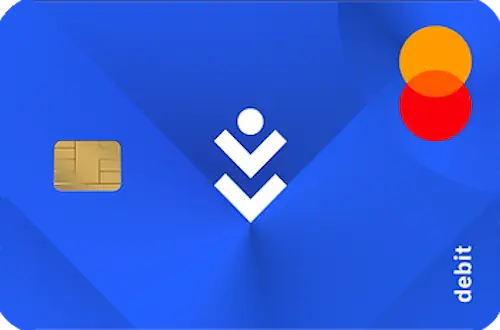
3. COCA Visa Card
Self-Banking: 8% Cashback + 5% APY + 0% FX
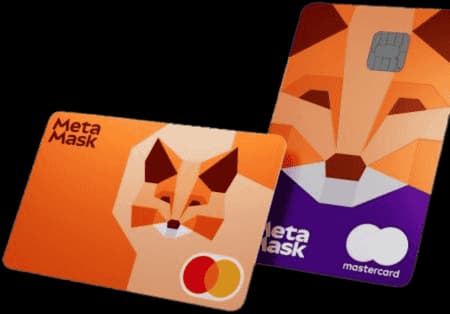
4. MetaMask Virtual Card
Sovereign Spending: 1% Cashback + Self-Custody + MetaMask Security
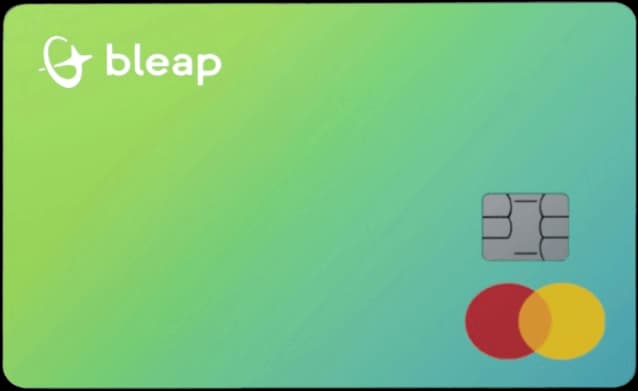
5. Bleap Mastercard
Secure DeFi Spend: Tiered USDC Cashback + 0% FX Fees
Complete list:
All 6 no kyc crypto cards in September 2026
This table includes every active crypto card we currently track for no kyc. Rows marked Top pick are ranked and reviewed above.
| Crypto card | Max rewards | Annual fee | FX fee | Type | Custody |
|---|---|---|---|---|---|
1 KAST K CardTop pick | Up to 1.5% rewards | Free | 0.5% | Prepaid | Custodial |
2 Jupiter GlobalTop pick | Up to 4% rewards | Free | 1% / 1.8% | Debit | Hybrid |
3 COCA Visa CardTop pick | Up to 8% rewards | Free | 0% | Debit | Self-custody |
4 MetaMask Virtual CardTop pick | Up to 1% rewards | Free | 1% | Debit | Self-custody |
5 Bleap MastercardTop pick | Up to 2% rewards | Free | 0% | Debit | Self-custody |
| Up to 2% rewards | Free | 0% | Debit | Custodial |
What "No KYC" Actually Means in 2026
Our current ranked picks require identity verification because these are the low-friction products whose issuing structures and terms we can verify today. That does not make full KYC inherently safer; it means the risk is documented well enough to compare. Here is the data behind those selections.
Every card that connects to Visa or Mastercard depends on a regulated payment chain. The customer-facing app may collect no documents, but SpendNode still needs to establish who issues the card, who performs screening, which limits apply, and whether the issuer authorizes the program.
| Verification Tier | What You Provide | Typical Monthly Limit | Who Uses This |
|---|---|---|---|
| No KYC | Email + phone only | $150 - $500 | EU prepaid exemption users, testers |
| Soft KYC | Email + phone + selfie | $1,000 - $10,000 | Regular daily spenders |
| Standard KYC | Government ID + selfie | $10,000 - $50,000 | Power users, frequent travelers |
| Enhanced KYC | ID + proof of address + source of funds | Unlimited | High-net-worth individuals, business use |
The phrase "no KYC" is used loosely. It may mean no document upload, deferred verification, checks performed by a partner, or genuinely anonymous access. Those models carry different legal and operational risks, so we do not treat the marketing label as a verification result.
The Dollar Cost of Avoiding KYC
| KYC Level | Fastest-KYC Pick | Cashback | FX Fee | Annual Value at $12K Spend | What You Give Up |
|---|---|---|---|---|---|
| Fast KYC, no cashback | RedotPay Virtual | 0% | 1.2% | -$144 (FX loss) | $24-$264/yr vs KAST |
| 2-min Full KYC | KAST K Card | 1.5% USD (cap $2K/mo) | 0.5-1.75% | -$30 to +$120 | Nothing (under cap) |
| Streamlined ID | MetaMask Virtual | 1% | 1% cross-border | $0 (domestic, after cross-border FX) | Comparable to KAST |
| Standard ID | Bleap | 2% | 0% | +$240 | $120-$270/yr ahead of KAST |
Avoiding KYC entirely costs roughly $24-$264/year compared to a 2-minute verification on KAST. Free 0% FX cards like Bleap (EEA) outperform KAST on raw return.
Verified Low-Friction Card Comparison
| Card | Minimum KYC | Lowest Tier Limit | Full KYC Limit | cards with cashback | FX Fee | Custody | Region |
|---|---|---|---|---|---|---|---|
| RedotPay Virtual | Full KYC (fast) | N/A | $50K/mo | 0% | 1.2% | Custodial | Global |
| RedotPay Solana | Full KYC (fast) | N/A | $50K/mo | None | 1.2% | Custodial | Global |
| RedotPay Physical | Full KYC | N/A | $1M/day | 0% | 1.2% | Custodial | Global |
| KAST K Card | Full (2 min) | N/A | Varies | 1.5% USD (cap $2K/mo) | 0.5-1.75% | Custodial | Global |
| KAST Solana Gold | Full (2 min) | N/A | Varies | 3% USD + 2% Points (cap $30K/mo invite-only) | 0.5-1.75% | Custodial | Global |
| Jupiter Global | Full (2-4 min) | N/A | Rain: none / DCS: $50K/day | 2% USDC base (4% via referrals, cap $100/mo) | 1% (Rain) / 1.8% (DCS) | Custodial | Americas, MEA, APAC |
| MetaMask Virtual | Streamlined ID | N/A | Standard | 1% | 1% cross-border | Self-custody | US, EEA, UK, CH, LatAm |
| MetaMask Metal | Streamlined ID | N/A | Standard | 3% (first $10K/yr) | 0% | Self-custody | US, EEA, UK, CH, LatAm |
| Bleap | Standard ID | N/A | Standard | 2% | 0% | Self-custody | EEA |
| 1inch | Standard ID | N/A | Standard | 2% | 0% | Custodial | EEA/UK |
| COCA | Minimal | Varies | Varies | Up to 8% | 0% | Non-custodial smart wallet | 76 countries |
Card-by-Card KYC Breakdown
Here is the exact verification process for the main cards with simplified onboarding. We verified these processes firsthand and through official issuer documentation as of August 2026.
RedotPay - Full KYC, Despite the Reputation
RedotPay is often cited as a no-KYC card. It is not. Every RedotPay card, virtual or physical, requires full identity verification (a government ID and a selfie) before it activates. There is no email-only tier and no anonymous spending.
The process:
- Sign up with email, Google, or Apple ID
- Complete identity verification in the app (ID and selfie)
- Fund the account from 10+ supported assets
- Apply for a virtual or physical card
The verification is fast, usually a couple of minutes of automated checking, and that speed is where RedotPay's "frictionless" reputation comes from. What it removes is wait time, not the identity check. You verify like everyone else.
Why it lands here: RedotPay earns a place on this page for fast onboarding and broad reach (100+ countries, instant virtual issuance), not for skipping KYC. On value it is a weak pick: 0% cashback and roughly 2.2% in fees on international spend, so a 2-minute verification on KAST or MetaMask leaves you better off.
KAST - Two-Minute Full KYC
KAST takes a different approach: instead of minimizing KYC, they made the full process so fast that it barely matters. Their FAQ states "KYC takes less than 2 minutes" - and based on user reports, that is accurate.
The Process:
- Download the app and enter your email
- Scan your government ID (passport, driver's license, or national ID)
- Take a live selfie for biometric matching
- Wait approximately 90 seconds for automated verification
- Virtual K Card is issued instantly upon approval
What makes it fast: KAST uses automated document verification with AI-powered liveness detection. There is no manual review queue for standard applications. The system either approves you in seconds or flags you for manual review (which adds 24-48 hours).
All 7 KAST variants - from the free K Card to the $10,000/year Solana Gold - use the same KYC process. Tier upgrades are payment-based, not verification-based. Once you pass KYC once, every card tier is available.
Jupiter Global - Fast KYC, Stablecoin Cashback on a Free Card
Jupiter Global takes KAST's "make full KYC fast" idea and applies it to a free virtual card. Verification runs through SumSub and clears in 2-4 minutes, and the card pays 2% cashback in USDC (4% for a month after referring two friends).
The Process:
- Open the Jupiter app and start Jupiter ID verification
- Scan a government ID and take a live selfie (APAC also asks for proof of address)
- Wait roughly 2-4 minutes for SumSub automated verification
- Virtual Visa card is issued in-app on approval, funded with USDC on Solana
Why it matters: This is the page's thesis in action. A 2-4 minute verification unlocks 2% on USD spend paid in a stablecoin, so the reward holds its value, and a $20 sign-up bonus through SpendNode lands after $1,000 of spend in the first 30 days. The catch is the $100/month cashback cap (at the 2% base it binds at $5,000/month of spend) and an issuer split: Rain-issued cards charge 1% FX on non-USD spend, DCS-issued cards 1.8%, and your issuer is set by your country of residence at KYC, not chosen.
MetaMask - Wallet-First, KYC-Light
MetaMask Card represents the self-custodial approach to simplified KYC. Since your funds never leave your wallet until the moment of purchase, the compliance burden is structurally lighter.
The Process:
- Connect your existing MetaMask wallet (Linea, Base, or Solana)
- Provide email and basic personal information
- Complete a streamlined ID verification (government ID + selfie)
- Virtual card is issued within minutes
Why it is simpler: Traditional exchange cards require KYC at the exchange level AND at the card level. MetaMask skips the exchange entirely. Your wallet is your account. The only KYC happens at the card issuance stage (required by Mastercard's compliance rules), and it is a single streamlined flow rather than multiple verification steps across different platforms.
Both the Virtual (1% cashback) and Metal (3% on first $10K/yr, then 1%, $199/yr) variants use the same verification process.
Bleap - Account Abstraction Meets Simplified Onboarding
Bleap uses account abstraction (smart contract wallets) to deliver a self-custodial card with a streamlined sign-up flow.
The Process:
- Create an account with email
- The app generates a smart contract wallet via account abstraction
- Complete basic identity verification (ID + selfie)
- Virtual Mastercard issued with 0% FX and 2% cashback
What sets it apart: Bleap's account abstraction model means there is no seed phrase to write down and no existing wallet to connect. The smart contract wallet is created as part of onboarding, with social recovery built in. For users who want self-custody benefits without the complexity of managing wallet infrastructure, Bleap is the most accessible entry point. Currently available in the EEA only.
1inch - DeFi-Native Card via Baanx
1inch Card is issued through Baanx and connects to the 1inch DeFi ecosystem.
The Process:
- Link your existing 1inch or compatible wallet
- Provide basic personal details and complete ID verification
- Virtual Mastercard issued with 0% FX fees and up to 2% cashback
- Apple Pay and Google Pay support for contactless spending
The DeFi angle: 1inch's integration with Baanx means your card is directly connected to one of the largest DEX aggregators. KYC is handled by Baanx (a regulated card issuer), not by 1inch itself. The process is standard for European card issuance, but faster than most exchange-based cards because there is no exchange account to set up separately.
For DeFi-native users already operating on-chain, this is the shortest path from decentralized swaps to a physical Mastercard: one KYC flow, no exchange deposit required.
The Regulatory Reality: Why "No KYC" Is Disappearing
Understanding why fully anonymous cards barely exist requires understanding the regulatory framework that governs them.
The EU's 5th Anti-Money Laundering Directive (5AMLD)
The EU's 5AMLD, implemented across all member states, includes a prepaid card exemption that allows reduced customer due diligence when:
- The card is non-reloadable, OR
- Monthly transaction volume does not exceed 150 EUR (~$160), AND
- The card cannot be used for cash withdrawals above 50 EUR
This exemption is why some EU-issued prepaid crypto cards can operate with email-only verification at the lowest tier. That window is closing on a fixed date: the EU's new Anti-Money Laundering Regulation (AMLR, Regulation 2024/1624) takes effect on 1 July 2027. It prohibits credit institutions, financial institutions, and crypto-asset service providers from maintaining anonymous accounts, and it bars institutions from accepting payments made with anonymous prepaid cards issued outside the EU. The anonymous-card category is not being squeezed by interpretation; it is being outlawed by statute, with a date on the calendar.
FATF Travel Rule
The Financial Action Task Force (FATF) Travel Rule requires financial institutions to share sender and receiver information for transactions above $1,000 USD (lowered from $3,000 in many jurisdictions during 2025). This rule now applies to virtual asset service providers (VASPs) in most G20 countries.
Practical impact: Even if a card issuer does not require KYC upfront, the moment you transact above Travel Rule thresholds, the underlying bank or payment processor must collect and transmit your identity information. Cards that allow anonymous spending above $1,000 are either non-compliant or operating in jurisdictions with weak enforcement - both are red flags.
MiCA (Markets in Crypto-Assets Regulation)
Europe's MiCA framework, fully enforced since June 2025, requires all crypto-asset service providers (CASPs) to be licensed and to implement full KYC/AML programs. For crypto card issuers operating in the EEA:
- All customers must be identified before establishing a business relationship
- Transaction monitoring is mandatory
- Suspicious activity reporting to Financial Intelligence Units (FIUs) is required
- The 5AMLD prepaid exemption still applies but only within its strict limits
FinCEN (United States)
In the US, FinCEN's Bank Secrecy Act requires all money services businesses (MSBs) to implement KYC programs. There is no prepaid exemption equivalent to the EU's. Any card that can be used to spend cryptocurrency at US merchants must comply with full AML/KYC requirements. This is why most "no KYC" cards exclude the US market entirely.
| Jurisdiction | Prepaid Exemption | Travel Rule Threshold | KYC Enforcement Level |
|---|---|---|---|
| EU/EEA | Yes (under 150 EUR) | 1,000 EUR | High (MiCA + 5AMLD) |
| United States | No | $3,000 (lowering) | Very High (FinCEN) |
| United Kingdom | Limited | 1,000 GBP | High (FCA) |
| Singapore | No | 1,500 SGD | High (MAS) |
| Global (FATF) | Varies | $1,000 recommended | Varies by adoption |
Risks and Warnings: What You Need to Know
The Frozen Account Problem
The single biggest risk of using a card with minimal KYC is an account freeze. Here is how it typically plays out:
- You sign up with email only and start spending
- Your transaction volume or pattern triggers an automated compliance flag
- The card issuer freezes your account and requests full KYC documents
- Until you provide satisfactory documentation, your loaded funds are inaccessible
- If you cannot verify your identity, the issuer may hold your funds for 90-180 days before returning them (minus fees) to the original funding source
This is not theoretical. Multiple Reddit threads and crypto forums document users losing access to prepaid card balances for weeks after triggering compliance alerts. The irony: users who skip KYC to protect their privacy end up providing even more documentation during a compliance investigation than they would have during normal onboarding.
No Fraud Protection at the Lowest Tier
Cards with minimal verification typically offer minimal fraud protection. If your card number is stolen and used for unauthorized purchases:
- Full KYC accounts: The issuer can verify your identity, investigate the fraud, and issue a chargeback. You are protected.
- Minimal KYC accounts: The issuer cannot verify you are who you claim to be. Fraud disputes become extremely difficult to resolve. Some issuers explicitly exclude low-tier accounts from chargeback protection in their terms of service.
The Compliance Crackdown Cycle
Historically, cards marketed aggressively as "no KYC" follow a predictable lifecycle:
- Launch: Aggressive marketing around anonymous spending
- Growth: User base grows, transaction volumes increase
- Regulatory attention: Payment processor or banking partner receives inquiries from regulators
- Policy change: KYC requirements are suddenly tightened or the card is discontinued
- User disruption: Existing users must retroactively verify or lose access
This pattern has played out with dozens of crypto card projects since 2020, and 2026 supplied two clean case studies of the final step.
How Anonymous Cards Actually Die: UnCash and CinCin
None of these services own the payment rails they run on. They rent them, typically through a sponsor bank's corporate-card program: the operator is the bank's customer of record, and every "anonymous" user is an unnamed sub-account on someone else's card program. That structure works right up until anyone with authority looks at it, because a network compliance officer can trace the issuing bank from the BIN printed on the card.
UnCash marketed itself as a champion of financial privacy. On February 8, 2026, Mastercard disabled roughly 90% of the cards powering the service. UnCash told customers operations were effectively over, cards would be terminated immediately, and remaining balances would be refunded - on the operator's timeline, through the operator's support queue, with no bank the users could call, because the users were never the bank's customers.
CinCin was a Telegram-run no-KYC card riding a bank's corporate-card loophole. In March 2026 it stopped working within about a day of a journalist contacting the sponsor bank. Not a regulator, not a court order. One email to the right compliance department.
The common thread is that the shutdown decision is never made by the company you loaded money with, and it arrives with somewhere between 24 hours of notice and none. Balances freeze, the operator disappears behind a ticket queue, and users discover the practical meaning of anonymity: the service never knew who they were, so they have no standing to claim anything back.
This is why an anonymous-card service does not enter SpendNode's recommendations solely because the card works today. It must still meet our listing standards: an accountable operator, a verifiable issuing chain, an authorized onboarding model, usable terms, and a clear explanation of customer-fund handling. Products that do not clear that standard may be documented without a rating or application link, but they are not presented as SpendNode picks.
Cards built on standard, fast KYC from the start (like KAST and RedotPay) tend to be more stable long-term than those promising complete anonymity, because the sponsor bank knows exactly what program it is running.
Self-Custody: The Answer to the Privacy Question
If your primary motivation for seeking a "no KYC" card is privacy and asset control, self-custodial cards solve the underlying problem more effectively than avoiding KYC.
The core insight: KYC tells the card issuer who you are. Custody determines who controls your money. These are separate concerns.
With a self-custodial card like MetaMask, Bleap, or Plasma One:
- Your funds stay in your own wallet until the exact moment of purchase
- The card issuer never holds your balance
- If the issuer goes bankrupt, your crypto remains in your wallet
- You maintain full control of your private keys
- Transaction history on-chain is pseudonymous (tied to your wallet address, not your name)
You still complete KYC for the card itself (required by Visa/Mastercard), but your financial sovereignty is preserved. The issuer knows your name but never controls your money. For most users concerned about privacy, this is the more meaningful protection.
Named Scenarios: KYC Decision Math
Scenario 1: Leo, Freelance Developer in Lisbon
Leo earns in crypto and wants to spend it at local restaurants and cafes without uploading his passport to every new app. Monthly card spend: $1,500.
| Option | Card | KYC Level | Monthly Cashback | Monthly FX Cost | Net Monthly Value | Annual Value |
|---|---|---|---|---|---|---|
| A | RedotPay Virtual | Full KYC (fast) | $0 | -$33 (1% conversion + 1.2% FX) | -$33 | -$396 |
| B | MetaMask Virtual | Streamlined ID | +$15 (1%) | $0 | +$15 | +$180 |
| C | KAST K Card | Full (2 min) | +$22.50 (1.5% USD, under cap) | -$7.50 to -$26.25 (0.5-1.75%) | -$3.75 to +$15 | -$45 to +$180 |
Leo assumes RedotPay is the low-friction pick, but it verifies his ID and pays nothing back. At this spending level, KAST finishes roughly $351-$576 ahead of RedotPay, while MetaMask Virtual is about $576 ahead.
Scenario 2: Amara, Digital Nomad in Southeast Asia
Amara moves between Thailand, Vietnam, and Indonesia. She wants a card that works everywhere without complex exchange onboarding in each country. Monthly card spend: $2,400.
| Option | Card | KYC Level | Monthly Cashback | Monthly FX Cost | Net Monthly Value | Annual Value |
|---|---|---|---|---|---|---|
| A | RedotPay Solana | Full KYC (fast) | $0 (none) | -$52.80 (1% conversion + 1.2% FX) | -$52.80 | -$633.60 |
| B | KAST K Card | Full (2 min) | +$30 (1.5% USD, cap binds at $2K/mo) | -$12 to -$42 (0.5-1.75% on full $2,400) | -$12 to +$18 | -$144 to +$216 |
| C | Both cards | Mixed | Split spending | Varies | Varies | Varies |
Amara uses KAST as her primary. Both require quick KYC, but KAST pays cashback while RedotPay does not, leaving her about $490-$850/year better off across the stated FX range. She keeps RedotPay Solana as a backup for countries where KAST's processor has issues.
The trade-off: above the $2,000/month KAST cap, every additional dollar earns 0% cashback while still paying FX. She routes above-cap spending through Bitget or another 0% FX card.
Scenario 3: Marcus, Privacy-Focused Engineer in Berlin
Marcus works in cybersecurity and is philosophically opposed to sharing personal data with startups. He wants maximum asset control. Monthly card spend: $3,000.
| Option | Card | KYC Level | Monthly Cashback | Monthly FX Cost | Custody | Annual Value |
|---|---|---|---|---|---|---|
| A | RedotPay Virtual | Full KYC (fast) | $0 | -$66 (1% conversion + 1.2% FX) | Custodial | -$792 |
| B | Bleap | Standard ID | +$60 (2%) | $0 | Self-custody | +$720 |
| C | MetaMask Metal | Streamlined ID | +$47 avg (3%/1%) | $0 | Self-custody | +$361 net |
Marcus realizes his actual concern is asset control, not identity privacy. Even with KYC, a self-custodial card means the issuer never holds his crypto. He picks MetaMask Metal ($199/yr): his funds stay in his wallet, the 3% cashback on his first $10K in spending (then 1% above) still nets $361/yr, and if MetaMask's card program shuts down, his crypto is untouched. Annual difference versus RedotPay: $1,153 ($361 net versus -$792).
Five Mistakes with No-KYC Cards
1. Loading $5,000 onto a Brand-New Account
You load $5,000 in stablecoins onto a new RedotPay account before you have used it. The large, unusual first inflow trips a compliance flag. Your account freezes pending review, and you cannot access the $5,000 until you clear it, which can take 2-4 weeks. Dollar cost: $5,000 locked for up to a month, plus potential late fees on bills you cannot pay.
How to avoid it: Fund a new account gradually. Start with $50-100, spend at a few merchants to establish a normal pattern, then scale up. A sudden five-figure load onto an account with no history is exactly what triggers a review.
2. Choosing No-KYC Over Self-Custody for Privacy
Many users seek "no KYC" because they want financial privacy. But a no-KYC custodial card still holds your funds on their servers. If the issuer gets hacked or goes bankrupt, your funds are gone. A self-custodial card like MetaMask with standard KYC keeps your funds in YOUR wallet. Dollar cost: 100% of your card balance if the custodial issuer fails.
How to avoid it: Separate the two concerns. KYC tells the issuer who you are. Custody determines who controls your money. Pick a self-custodial card (MetaMask, Bleap, Gnosis Pay, or Plasma One) and complete KYC. Your assets stay in your wallet regardless.
3. Using No-KYC Cards Above Travel Rule Thresholds
You make a $2,500 purchase on a minimal-KYC card, assuming your identity is private. The FATF Travel Rule requires the payment processor to collect and share sender/receiver data for transactions above $1,000. Your "no KYC" card silently reports you anyway. Dollar cost: zero financial loss, but the privacy you were paying for (in worse card terms) was illusory.
How to avoid it: Understand that above $1,000, your identity is shared between financial institutions regardless of your card's KYC tier. If you are spending above this threshold, you gain nothing from avoiding KYC - complete it upfront and unlock better card terms.
4. Ignoring Better Terms Available with Full KYC
RedotPay Virtual offers 0% standing cashback and charges 1% to convert crypto for spending, plus 1.2% FX when the purchase currency differs from the card currency. KAST K Card's 2-minute KYC offers 1.5% USD cashback on the first $2,000/month with 0.5-1.75% FX. On $12,000 of annual non-card-currency spending, RedotPay's two charges total about $264, while KAST returns $180 and charges roughly $60-$210 in FX. KAST's net advantage is about $234-$384.
How to avoid it: Calculate the actual cost of avoiding KYC before choosing a card. KAST's 2-minute verification typically pays for itself within the first few months at moderate spending levels. Complete it.
5. Assuming No-KYC Is Permanent
Cards that launch with minimal KYC requirements routinely tighten them as they grow. MiCA enforcement in the EU (2025) and the AMLR's ban on anonymous accounts (in force 1 July 2027) are pushing all issuers toward stricter verification. Users who built their spending habits around a no-KYC card face sudden disruption when requirements change. Dollar cost: days or weeks without card access during mandatory retroactive verification.
How to avoid it: Complete full verification proactively, even when it is optional. If your card offers tiered KYC, advance to the highest tier before you are forced. Have a backup card (KAST or MetaMask) fully verified and ready to use if your primary card tightens requirements overnight.
Tax Implications: KYC Level Does Not Change Your Tax Obligations
A common misconception: using a no-KYC card reduces your tax burden. It does not. In every major jurisdiction, spending crypto triggers a taxable event regardless of whether your card issuer collected your identity.
United States (IRS): Every swipe is a disposal of property. You owe capital gains tax on any appreciation between your acquisition cost and the spending amount. The IRS receives transaction data from payment processors through 1099 forms - your card's KYC tier is irrelevant.
EU/EEA (MiCA + national laws): Most EU countries treat crypto spending as a taxable disposal. Germany exempts crypto held longer than one year from capital gains tax. MiCA's reporting requirements (effective 2025) mean card issuers report transaction data to tax authorities regardless of which KYC tier you are on.
United Kingdom (HMRC): Each crypto-to-fiat conversion at the point of sale is a CGT event. HMRC's data-sharing agreements with exchanges and payment processors mean transactions are visible even on minimal-KYC cards.
The stablecoin advantage: Spending USDC or USDT eliminates most capital gains events because the value does not fluctuate. This is a more effective tax simplification strategy than avoiding KYC - and it works on any card regardless of verification level.
Key takeaway: If your motivation for avoiding KYC is tax avoidance, reconsider. Tax authorities track blockchain transactions independently of card issuers. Using a no-KYC card while failing to report taxable events creates legal risk without meaningful privacy benefit. Consult a crypto-literate tax advisor in your jurisdiction.
For balances you cannot afford to have frozen, prioritize an accountable issuer, clear redemption terms, and a custody model you understand. Full KYC can unlock higher limits and make account recovery easier, but it does not guarantee that a provider cannot fail. If privacy is your primary concern, a self-custodial card with a documented issuing structure may offer a better balance than an opaque custodial card marketed around anonymity.
Disclaimer: SpendNode is a data comparison platform. We are not financial advisors. Crypto cards involve risks including asset volatility, custodial risk, and tax complexity. Verify all terms directly with issuers before applying.
Written by Aleksandar Dukic
Frequently Asked Questions
Do any crypto cards truly require zero KYC in 2026?
Yes, some services issue cards without asking customers to upload identity documents, but that does not prove the card is anonymous or lawfully issued. Screening may happen through an issuing partner, verification may be deferred, or strict limits may apply. SpendNode checks the legal operator, issuer or BIN sponsor, authorization of the onboarding model, customer terms, and custody before recommending one.
What is the difference between no KYC, limited verification, and full KYC?
No KYC is commonly used to mean email-only or no-document onboarding. Limited or tiered verification means additional identity checks apply after a threshold or for certain features. Full KYC normally includes a government-issued ID and selfie, with proof of address or source-of-funds checks where required. The marketing label alone does not reveal who performs screening.
Can I use a no-KYC crypto card for large purchases?
Some services advertise high spending limits, but those limits do not establish that the issuing structure is authorized or that a large payment will clear without review. Transaction size, funding source, merchant type, geography, and issuer monitoring can trigger additional checks or an account hold. Verify the issuer's cardholder terms and keep the loaded balance limited until the program is proven in use.
Are no-KYC crypto cards legal?
It depends on the issuing structure, customer location, limits, and applicable regulation. Reduced-document onboarding can be lawful when an accountable issuer authorizes it and performs the required screening. A vendor describing its product as no-KYC is not evidence by itself that the card program is authorized.
Does self-custody remove KYC requirements?
No. Self-custody determines who controls the assets before a purchase; KYC determines how the card issuer verifies the customer. A self-custodial card can reduce custody risk while still requiring government-ID and selfie verification to access Visa or Mastercard rails.
What happens if a limited-verification account gets flagged?
The provider or issuing partner may pause transactions and request identity, source-of-funds, or transaction documents. Access and redemption rights depend on the cardholder terms and custody structure. This is why the named issuer, closure process, and treatment of remaining balances matter more than the no-KYC label alone.
How much more can a no-KYC card cost?
There is no universal amount. Some no-document cards charge issuance and load fees while paying no rewards, but terms vary widely. Compare issuance, loading, conversion, FX, ATM, and inactivity costs against a verified alternative rather than assuming reduced verification is either cheaper or more expensive.
Can I use a VPN or fake documents for KYC?
No. Using fake documents is fraud and a criminal offense in every jurisdiction. Modern verification systems use AI liveness detection, document authentication, and cross-referencing with government databases. Fake documents are almost always detected, resulting in permanent account closure and potential legal action.
Which cards on this page support Apple Pay or Google Pay?
KAST, MetaMask, and Bleap all support Apple Pay and Google Pay after completing their respective verification processes. RedotPay also supports Apple Pay and Google Pay once you complete its in-app KYC.