

Best Crypto Cards in Georgia (2026)
Compare crypto cards available in Georgia. Tria, Crypto.com Icy, Kolo, and KAST are the main options in a territorial tax system where source classification matters.
Verified for Georgia
36 crypto cards available
Local currency: GEL
Georgia has emerged as one of the world's most attractive crypto jurisdictions by accident rather than design. The country's territorial tax system means personal income tax (20% flat rate) applies only to Georgian-source income. Crypto gains from global exchanges and DeFi protocols are classified as non-Georgian source and taxed at zero percent.
Combine this with one of Europe's lowest costs of living, a digital nomad-friendly residency system (1-year residence permit for remote workers), and a growing tech scene in Tbilisi, and Georgia offers what may be the world's best cost-of-living-adjusted crypto card environment.
TBC Bank (largest by assets, 5M+ customers in a country of 3.7M, dominant digital banking via TBC app) and Bank of Georgia (second-largest, BoG app, strong corporate banking) together control approximately 80% of the banking market. Both offer standard debit cards with zero cashback and charge 2-3% FX markup on non-GEL (Georgian lari) transactions.
Credit cards carry annual fees of GEL 50-200 ($18-73) with 0.5-1% rewards in restricted programs. The GEL has fluctuated between 2.5-2.8 per USD over recent years, creating meaningful FX exposure. Crypto cards at 2-8% cashback with $0 annual fee and 0% FX fill the rewards gap completely.
Summary:
Which crypto cards are best in Georgia?
The best crypto cards in Georgia in September 2026 are Tria Signature Card, Private (Icy White / Rose Gold), Kolo Card, and KAST K Card. The detailed ranking below explains the local tax, fee, and availability trade-offs.
| Crypto card | Base reward | Net after fees | Annual fee | FX fee | Type |
|---|---|---|---|---|---|
| 4.5% base4.5% on the first $1,000/mo, then 1% | 3% | $87 with code | 1% | Debit | |
| 4% baseneeds a $50k CRO stake to hold the tier | 4% | TBD | 0% | Prepaid | |
| 1% base2% for the first 30 days, then 1%; also capped at $1/EUR 1 per transaction ($2/EUR 2 during intro) and $100/EUR 100 per month | 1% | Free | 0% | Prepaid | |
| 1.5% base | 1% | Free | 0.5% | Prepaid |
In our Georgia guide, Tria Signature leads. It pays 4.5% on the first $1,000/month before dropping to 1%; its 1% FX fee and 0.5% charge on every payment leave about 3% net on GEL spend, with a break-even point around $303/month - inside the spending range of the digital nomads this page describes.
Kolo pays 1% ongoing BTC after a 2% first month, capped at $100/month and $1 per transaction. The reward's treatment at receipt needs separate analysis; an individual's later crypto-asset disposal is covered by Decision No. 201.
KAST fits new arrivals with 1.5% USD cashback on the first $2,000/month, no annual fee, and 0.5-1.75% FX. Crypto.com Icy adds 4% and lounge access at Tbilisi (TBS) and Kutaisi (KUT).
Best Card For Every Need in Georgia
Best for Max Cashback
Tria Signature Card
4.5% back
Highest verified rewards rate
View details →Best for No Fees
Private (Icy White / Rose Gold)
$0 annual + 0% FX
Zero annual fee and zero FX markup
View details →Best for Self-Custody
Tria Signature Card
Your keys
Non-custodial — you control the wallet
View details →Top 4 Crypto Cards in Georgia
Georgia's 2019 public decision exempts income an individual receives from disposing of crypto assets, while rewards and business income need separate treatment. Tria Signature takes the top slot on net rate: it breaks even at about GEL 840/month ($303), within digital-nomad spending levels, and its 4.5% rate on the first $1,000/month lands at about 3% net after the 1% FX and 0.5% per-payment fees.
Kolo remains a useful free BTC option for small purchases at 1% ongoing after its introductory month, subject to its caps. KAST pays 1.5% USD cashback on the first $2,000/month and works for new arrivals who want daily spending set up before choosing a larger card stack.
Crypto.com Icy at 4% adds lounge access at both TBS and KUT, which matters for a nomad population that uses Kutaisi's Wizz Air hub for budget European flights.

1. Tria Signature Card
High-Yield Self-Custody: 15% APY + Visa Signature Perks
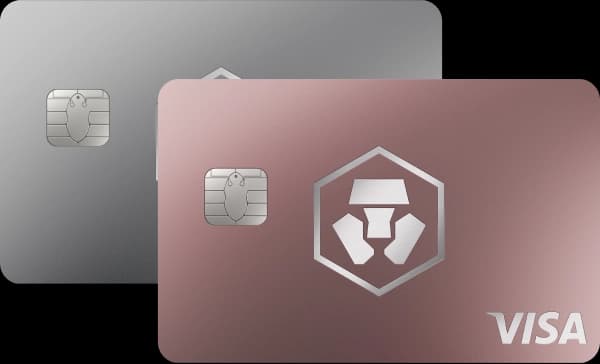
2. Private (Icy White / Rose Gold)
Private Tier: 4% Uncapped Cashback + Lounge Guest
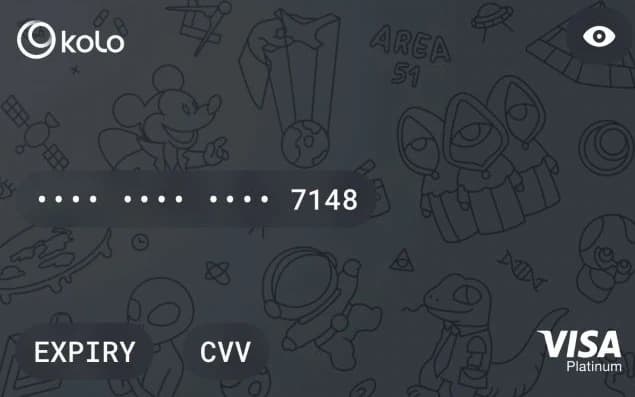
3. Kolo Card
Earn Bitcoin on Purchases: 2% for 30 Days, Then 1% (Capped) + Visa Platinum + 170+ Countries
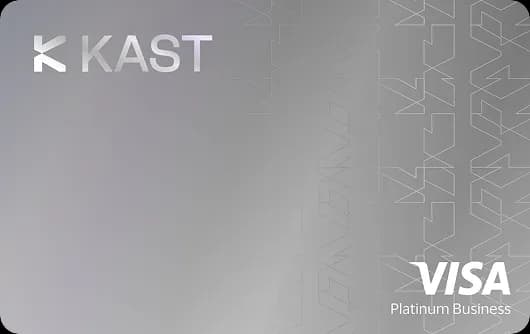
4. KAST K Card
Free USD Cashback: 1.5% on First $2K/Month
Complete list:
All 36 crypto cards available in Georgia in September 2026
This table includes every crypto card we currently track for Georgia. Rows marked Top pick are ranked and reviewed above.
| Crypto card | Max rewards | Annual fee | FX fee | Type | Custody |
|---|---|---|---|---|---|
1 Tria Signature CardTop pick | Up to 4.5% rewards | $87 with code | 1% | Debit | Self-custody |
2 Private (Icy White / Rose Gold)Top pick | Up to 4% rewards | TBD | 0% | Prepaid | Custodial |
3 Kolo CardTop pick | Up to 2% rewards | Free | 0% | Prepaid | Custodial |
4 KAST K CardTop pick | Up to 1.5% rewards | Free | 0.5% | Prepaid | Custodial |
| Up to 10% rewards | Free | 0% | Prepaid | Custodial | |
| Up to 10% rewards | Free | 3% | Debit | Hybrid | |
| Up to 8% rewards | Free | 0% | Debit | Custodial | |
| Up to 8% rewards | Free | 0% | Debit | Self-custody | |
| Up to 8% rewards | TBD | 0% | Prepaid | Custodial | |
| Up to 6% rewards | $200 with code | 1% | Debit | Self-custody | |
| Up to 5% rewards | TBD | 0% | Prepaid | Custodial | |
| Up to 4% rewards | Free | 0% | Crypto Backed Credit | Self-custody | |
| Up to 3% rewards | $10000 | 0.5% | Prepaid | Custodial | |
| Up to 3% rewards | $199 | 0.5% | Crypto Backed Credit | Self-custody | |
| Up to 3% rewards | $299.9 | 0% | Prepaid | Custodial | |
| Up to 3% rewards | $129 | 1.2% | Prepaid | Custodial | |
| Up to 2% rewards | $1000 | 0.5% | Prepaid | Custodial | |
| Up to 2% rewards | Free | 1% | Crypto Backed Credit | Self-custody | |
| Up to 2% rewards | $49.9 | 0% | Prepaid | Custodial | |
| Up to 2% rewards | $999 | 0% | Crypto Backed Credit | Self-custody | |
| Up to 1.5% rewards | Free | 0.5% | Prepaid | Custodial | |
| Up to 1.5% rewards | Free | 1% | Debit | Self-custody | |
| Up to 1.5% rewards | $249 | 0.25% | Crypto Backed Credit | Self-custody | |
| Up to 1% rewards | Free | TBD | Prepaid | Custodial | |
| Up to 1% rewards | $99 | 0.5% | Crypto Backed Credit | Self-custody | |
| Up to 0.5% rewards | Free | 1% | Crypto Backed Credit | Self-custody | |
| none | Free | 0% | Prepaid | Custodial | |
| cashback | Free | 1.75% | Prepaid | Self-custody | |
| cashback | $199 | 0.75% | Prepaid | Self-custody | |
| cashback | Free | 0.5% | Prepaid | Custodial | |
| none | Free | 1% | Prepaid | Self-custody | |
| Varies | Free | 1.5% | Debit | Custodial | |
| Varies | Free | 1.2% | Prepaid | Custodial | |
| Varies | Free | 1.2% | Prepaid | Custodial | |
| Varies | Free | 1.2% | Prepaid | Custodial | |
| points | Free | 1% | Debit | Self-custody |
Crypto Card Regulation in Georgia
Georgia has moved from regulatory absence to active VASP oversight. In 2023, the NBG (Sakartvelos Erovnuli Banki, National Bank of Georgia) implemented the VASP Registration Procedure law, making the NBG the primary supervisor for Virtual Asset Service Providers. VASPs must register with the NBG and comply with AML/KYC requirements.
The NBG's oversight now extends beyond AML/CFT registration. Its September 2026 amendments add activity-based capital and risk-management requirements for registered VASPs.
The GRS (Georgia Revenue Service, Shemosavlebis Samsakhuri) oversees tax compliance including any crypto-related tax obligations. The GRS has not issued specific crypto tax guidance, relying on the existing territorial tax framework to naturally classify most crypto activity as non-Georgian-source income.
Georgia's Financial Monitoring Service (Finansuri Monitoringis Samsakhuri) applies AML/CFT requirements under the Law on Facilitating the Prevention of Illicit Income Legalization. Financial institutions must report suspicious transactions, and VASPs are subject to NBG registration and supervisory requirements.
The NBG's September 8, 2026 amendments set minimum supervisory capital at GEL 150,000 for exchange or transfer services, GEL 350,000 for trading-platform administration, and GEL 250,000 for other services. Stablecoin initial offerings require at least GEL 500,000.
Existing registered providers have until July 1, 2027 for the new risk-management framework and September 1, 2027 for the capital minimums. This is a provider rule, not a new tax or cardholder ban.
In August 2026 the risk in that permissive setup became concrete. The US Treasury's OFAC sanctioned SHPS Shelbit, a Tbilisi-registered crypto exchange, and its owner on August 7, 2026, alleging the platform moved millions in digital assets for Iran's IRGC.
The NBG had already noted in late July that the sanctioned operators were never NBG-licensed. For card users the lesson is that a Georgian registration or local presence is not a safety guarantee: screen any exchange or wallet counterparty against the OFAC SDN list before funding a card through it.
Georgia is a European Free Trade Association (EFTA) free trade partner and has an EU Association Agreement (signed 2014, in force 2016), which provides for progressive regulatory harmonization with EU standards.
Georgia was granted EU candidate status in December 2023, though its accession process has since stalled amid political tensions with Brussels. The Association Agreement still means some alignment with EU financial regulations (potentially including aspects of MiCA) may occur over time.
The Tbilisi tech ecosystem includes blockchain companies, crypto meetups (Tbilisi Blockchain Association), and coworking spaces that cater to the digital nomad community. Georgia's free trade zones (Kutaisi, Tbilisi, and Poti FIZs) have attracted some blockchain-related businesses.
Georgia's framework now combines VASP registration with activity-specific prudential requirements. A 2019 public tax decision exempts income an individual receives from disposing of crypto assets; rewards, services, and business activity need separate analysis. That distinction matters when choosing how to fund a crypto card.
Tax Treatment of Card Rewards in Georgia
Georgia uses a territorial tax system. Personal income tax is a flat 20%, but it applies only to Georgian-source income. This is the defining tax advantage for crypto card users.
How source classification affects tax
Georgia generally exempts foreign-source income received by an individual. More specifically, Ministry of Finance Public Decision No. 201 of June 28, 2019 treats income an individual receives from supplying a crypto asset as non-Georgian-source and exempt from personal income tax. The decision does not classify every card reward or payment for services as exempt, and a platform's location alone does not settle those separate questions.
Example: You bought BTC at $30,000 and later spent $500 through a crypto card after it reached $90,000. The purchase realizes a proportional gain of about $333. For an individual disposing of a crypto asset, Decision No. 201 treats the disposal income as exempt; it does not settle the treatment of crypto received for work or as a card reward.
When 20% Tax Applies
Georgian-source income is taxed at 20%. This can include crypto services provided to Georgian clients, mining operations using Georgian electricity, income from a Georgian-registered crypto business, or employment at a Georgian exchange. Do not apply that rate automatically to an individual's crypto-asset disposal covered by Decision No. 201.
Small Business Status
Georgia's Individual Entrepreneur (IE) status with Small Business regime offers a flat 1% revenue tax for businesses with annual turnover below GEL 500,000. Some digital nomads use this for freelance income, though applying it to crypto trading income is more complex and requires professional tax advice.
Tax residency requires spending 183 days per year in Georgia, or qualifying through the High Net Worth Individual (HNWI) program (minimum $500,000 in assets held in Georgia plus a Georgian residence permit).
| Cashback Type | Tax When Received | Tax When Spent/Sold | Optimal Strategy |
|---|---|---|---|
| BTC cashback | Receipt depends on reward terms and source | Individual crypto-asset disposal is covered by Decision No. 201 | Record receipt and disposal separately |
| USDC cashback | Receipt depends on reward terms and source | Individual crypto-asset disposal is covered by Decision No. 201 | Keep receipt and disposal records |
Stablecoin funding can reduce the price gain realized on each purchase, but it does not determine whether reward income is Georgian- or foreign-source. Keep acquisition, reward, and spending records, and obtain local advice where the sums or business connections are material.
How to Apply from Georgia
Georgian crypto card applications require a piradobis mowmoba (Georgian ID card, პირადობის მოწმობა) or saertashoriso pasporti (international passport, საერთაშორისო პასპორტი). The piradis nomeri (personal number, პირადი ნომერი, 11 digits) is the primary identifier for all government and financial interactions.
For foreign residents: passport plus residence permit (binadzrobis nebarTva, ბინადრობის ნებართვა). Georgia offers relatively easy residency: the 1-year residence permit for remote workers (digital nomad visa) requires proof of income and health insurance. Many crypto-native expats use this pathway.
Proof of address via utility bills (komunaluri gadsakhdeli, კომუნალური გადასახდელი) from Telasi (Tbilisi electricity), GWP (Georgian Water and Power), or Energo-Pro Georgia (regional electricity). Bank statements from TBC Bank or Bank of Georgia (amoniweris, ამონაწერი) are widely accepted. Lease agreements (ijaris khelshekruleba, იჯარის ხელშეკრულება) also work.
Physical cards ship to Georgian addresses within 14-21 business days. Virtual cards are available immediately for crypto cards with Apple Pay and Google Pay use.
Spending Tips for Georgia
Territorial tax and low living costs
Georgia combines a territorial tax system with one of the region's lowest costs of living. Decision No. 201 expressly exempts an individual's income from disposing of crypto assets. Keep records that distinguish those disposals from reward receipts, services, and business income.
In Switzerland, rent for a comparable apartment might be CHF 2,500/month. In Tbilisi, GEL 1,500-2,500 ($550-920).
At GEL 3,000/month ($1,100), Tria Signature nets roughly GEL 670/year after its fees, while Kolo returns GEL 360/year free at its 1% ongoing rate. Whether either reward is untaxed depends on its source classification and the user's circumstances.
Banking System: TBC-BoG Duopoly
TBC Bank and Bank of Georgia together control approximately 80% of the banking market. TBC (founded 1992, now London Stock Exchange listed via TBC Bank Group PLC) has 5M+ customers and dominates digital banking. The TBC app is one of the best banking apps in the region.
Standard debit: zero cashback, GEL 2.5-3.5 monthly maintenance. Credit cards: GEL 50-200 annual fee ($18-73), 0.5-1% rewards in TBC points (redeemable at limited merchants). Bank of Georgia (also LSE-listed) offers similar terms with a slightly more corporate focus.
Liberty Bank (third-largest), Basis Bank (European Bank for Reconstruction and Development-backed), VTB Bank Georgia (Russian parent, operations affected by sanctions), and Credo Bank (microfinance leader) serve niche markets with even fewer card rewards.
The gap: Georgian bank debit = 0% cashback + 2-3% FX fee. Best bank credit = 0.5-1% with annual fee. Crypto cards = 2-8% cashback + 0% FX + $0 annual fee. The upgrade is massive, especially for the FX component.
The FX Factor
The GEL is not pegged to any currency and has fluctuated between 2.5-2.8 per USD. TBC Bank charges approximately 2.5% FX markup on non-GEL transactions, Bank of Georgia approximately 2.5-3%. For digital nomads and expats earning in USD/EUR and spending in GEL, a crypto card at 0% FX saves this spread on every transaction, effectively a 2.5-3% discount on all spending before cashback.
Card selection by use case
- USDT cashback: Tria Signature (4.5% on first $1K/mo, then 1%, $109/yr, 1% FX + 0.5%/payment, ~3% net)
- Premium perks: Crypto.com Icy (4% + airport lounge perks at TBS/KUT)
- Free BTC cashback: Kolo (1% ongoing BTC, 2% for 30 days, capped $100/mo and $1/txn, cashback cards, $0, 0% FX)
- New arrivals: KAST (1.5% USD cashback on first $2K/mo, $0, 0.5-1.75% FX)
Break-even math before personal tax
The figures below show card rewards before personal tax. Foreign-source treatment may preserve the full return, but users should verify how their own activity is classified.
| Monthly Spend | Tria Sig (4.5% to $1K/mo, then 1%, $109/yr, 1% FX + 0.5%/payment) | Crypto.com Icy (4%, CRO stake) | Kolo (1% BTC, free) |
|---|---|---|---|
| GEL 2,000 ($735) | GEL 424/yr | GEL 960/yr + lounges | GEL 240/yr |
| GEL 3,000 ($1,100) | GEL 666/yr | GEL 1,440/yr + lounges | GEL 360/yr |
| GEL 5,000 ($1,840) | GEL 546/yr | GEL 2,400/yr + lounges | GEL 600/yr |
Kolo figures use its 1% ongoing BTC rate and assume purchases at or under $100, where its $1-per-transaction cap does not bite.
At GEL 3,000/month, Tria Signature nets GEL 666/year after its fees, the strongest no-stake outcome here; Crypto.com Icy earns more but requires a CRO position. Kolo returns GEL 360/year free and remains useful as a small-purchase BTC earner. Tax treatment depends on the source classification of the rewards and any later gain rather than the card alone.
Cost of Living by Area
Vake/Vera (Tbilisi premium residential): Rent GEL 1,500-3,500/month ($550-1,290). Tree-lined avenues, embassies, Vake Park, the cable car to Turtle Lake. The traditional wealthy neighborhood. Strong card acceptance at restaurants ($10-25/person), cafes, and boutiques. International school zone.
Saburtalo/Bagebi (Tbilisi middle-class/student): Rent GEL 800-1,800/month ($295-662). Technical University area, Liberty Square periphery, Goodwill supermarket. Growing cafe and restaurant scene. Card acceptance good at formal establishments. Popular with students and young professionals.
Marjanishvili/Aghmashenebeli (Tbilisi trendy/revitalizing): Rent GEL 700-1,500/month ($257-550). Aghmashenebeli Avenue (revitalized pedestrian zone with restaurants, wine bars, cafes), Dry Bridge flea market. The emerging creative district. Strong card acceptance on the avenue, cash-dominant off it.
Old Town/Rustaveli (Tbilisi historic/tourist): Rent GEL 1,000-2,500/month ($368-920, tourist premium). Rustaveli Avenue, Freedom Square, sulfur baths, Narikala Fortress. Tourist economy with universal card acceptance at restaurants and hotels. The most walkable area.
Kutaisi (second city): Rent GEL 400-1,000/month ($147-368). Significantly cheaper than Tbilisi. Kutaisi International Airport (KUT) handles budget airlines (Wizz Air). Growing expat interest due to very low cost. Card acceptance at malls (Kutaisi Mall) and supermarkets, cash-dominant elsewhere.
Batumi (Black Sea resort/free zone): Rent GEL 600-2,000/month ($220-735, seasonal premium). Casino zone (Batumi is one of the few places in the region with legalized casino gambling, attracting Turkish and Iranian tourists), Batumi Boulevard (7km seaside promenade), Batumi Free Industrial Zone (offering tax incentives for qualifying businesses).
Tourist economy with strong card acceptance. Growing as a tech hub (Batumi Technological University, coworking spaces, Batumi Innovation Center). Warmer, subtropical climate compared to Tbilisi's continental winters.
The Digital Nomad Economy
Georgia has become one of the world's top digital nomad destinations. The combination of zero crypto tax, low cost of living ($1,000-1,500/month for comfortable living in Tbilisi), fast internet (50-100+ Mbps widely available), rich food/wine culture, safety (one of the lowest crime rates in Europe), and easy residency (1-year permit for remote workers) attracts thousands of crypto-native expats.
Tbilisi coworking spaces (Terminal, Impact Hub Tbilisi, CoWork Tbilisi) host blockchain and crypto communities. The Tbilisi Blockchain Association organizes regular meetups. This community creates a natural crypto card user base with higher-than-average spending power and technical sophistication.
Wine, Food, and the Experience Economy
Georgia's 8,000-year winemaking tradition (the world's oldest) drives a busy wine tourism and hospitality economy. The Kakheti region (Telavi, Sighnaghi), Tbilisi's wine bars (Vino Underground, g.Vino, Wine Gallery), and restaurant culture (traditional supra banquets) create large card spending opportunities.
A supra at a premium Tbilisi restaurant costs GEL 80-200 ($30-75) per person. Wine tours in Kakheti run GEL 150-400 ($55-147) per day. The restaurant scene on Aghmashenebeli Avenue and in Vera/Vake neighborhoods is expanding rapidly, with most establishments accepting contactless payments.
For digital nomads spending GEL 500-1,000/month on dining and experiences, KAST at 1.5% USD cashback returns GEL 90-180/year. COCA at up to 8% with staking returns GEL 480-960/year before its claim-capacity rules bind. Whether those rewards are taxed depends on source classification and personal circumstances.
Online Subscriptions and International Services
Georgia's growing tech community drives high demand for international digital services. Netflix (GEL 15-40/month), Spotify, YouTube Premium, Adobe Creative Cloud, Figma, Notion, GitHub, AWS, and Google Cloud are all commonly used. TBC Bank and Bank of Georgia charge 2-3% FX markup on these USD-denominated subscriptions despite their recurring nature.
A crypto card eliminates this recurring cost. At GEL 200/month in subscriptions ($73), the FX savings alone are GEL 48-72/year, plus 2-8% cashback on top.
Cross-Border and Online Spending
Turkey (southern border, flights to Istanbul): Strong economic ties, Turkish investment in Georgia. Azerbaijan (eastern border, Baku flights): Oil economy connection. Armenia (southern border, land crossing closed, flights available): Regional commerce. EU (visa-free 1-year stays in Schengen for Georgian citizens): Significant labor migration.
Online: Glovo (dominant food delivery), Wolt, Amazon (via forwarding), Netflix (GEL 11-33/month), Spotify, and digital services. The GEL conversion on international subscriptions makes the 0% FX advantage particularly valuable.
Local Payment Infrastructure
Card acceptance in Tbilisi is strong and growing rapidly. Contactless Visa/Mastercard works at supermarkets (Carrefour, Goodwill, Nikora, Smart, Ori Nabiji), shopping centers (East Point, Galleria Tbilisi, Tbilisi Mall), restaurants on Rustaveli Avenue and Aghmashenebeli Avenue, cafes (Tbilisi's cafe culture is extensive), hotels, pharmacies (GPC, Aversi), and most formal businesses. Apple Pay is supported at major retailers. Google Pay has limited support.
TBC Pay (QR-based mobile payments via TBC Bank) and BOG iPay (Bank of Georgia's mobile platform) handle domestic mobile payments but are bank-account-linked (not usable by foreigners without local bank accounts easily).
Cash remains common at bazaars (Dezerter Bazaar, the largest in the Caucasus), marshrutkas (minibuses), smaller shops outside central Tbilisi, and rural areas. Card acceptance drops sharply outside Tbilisi, Kutaisi, and Batumi.
Supported Exchanges & Wallets in Georgia
Our Georgia availability check found 16 card vendors serving the country. The reward comparison is shown before personal tax because source classification depends on the user's activity and circumstances.
Tria Signature heads the list at 4.5% on the first $1,000/month (then 1%), about 3% net after its 1% FX and 0.5% per-payment fees. It breaks even at about GEL 840/month; its draw is the headline rate and USDT payout for steady spenders willing to carry the $109 fee.
Kolo delivers 1% ongoing BTC cashback after its first month, capped at $100/month and $1 per transaction, with no annual or FX fee. It is the strongest free pick for small everyday purchases. BTC reward gains still require a source and tax classification rather than an assumption of automatic exemption.
Crypto.com provides tiered rewards: Ruby at 2% adds Spotify rebate, Icy at 4% adds Priority Pass airport lounge access at Tbilisi (TBS), Kutaisi (KUT), and Batumi (BUS). For digital nomads traveling through Georgian airports, lounge access saves $25-50 per visit.
KAST provides new arrivals a free prepaid rail with 1.5% USD cashback on the first $2,000/month and 0.5-1.75% FX.
RedotPay is the stablecoin-native off-ramp: $0 annual fee, 1.2% FX, and high limits for users who want spending utility without rewards complexity.
COCA at 1% free Starter (scaling to 8% at 30K $COCA staking) suits users comfortable with token exposure as the entry requirement; cashback is paid in USDC/EURC. xPlace remains the Solana/self-custody option.
On-Ramps: Expat-Driven Ecosystem
No crypto exchanges are headquartered in Georgia. Binance P2P (GEL and USD pairs) is the primary on-ramp. CryptoGeorgia and smaller local OTC desks serve the domestic market. The growing expat community uses internationally available platforms.
TBC Bank and Bank of Georgia do not block transfers to crypto exchanges, making wire transfers to global platforms relatively straightforward. Bitcoin ATMs have been deployed in Tbilisi (limited locations, primarily in Vake and Old Town). P2P trading via Telegram is active in both Georgian and English-language communities. The expat-driven demand creates reasonable liquidity in USD and EUR pairs, particularly during peak digital nomad season (March-November).
Georgia combines a territorial tax system, low living costs, digital-nomad-friendly residency, a growing tech community, improving card infrastructure, and 16 available card vendors. Foreign-source treatment can improve the after-tax result, but that depends on the facts. Low costs still give even modest card rewards meaningful purchasing power.
Written by SpendNode Editorial
Frequently Asked Questions
Is crypto card spending tax-free in Georgia?
It can be for individuals when the gain is treated as foreign-source income under Georgia's territorial system, but that classification depends on the facts. Georgian-source income can be taxed at 20%. Do not assume that every card reward or crypto disposal is automatically outside Georgian tax.
Which crypto card is best for Georgia residents?
Tria Signature leads at 4.5% on the first $1,000/month then 1% ($109/yr, 1% FX plus 0.5% per payment, about 3% net); it suits steady spenders who want USDT cashback and can recover the fee, which takes about $303/month of card spend. Kolo pays 1% ongoing BTC after its introductory month, capped at $100/month and $1 per transaction. Tax treatment depends on the source and circumstances of each reward and disposal.
Why is Georgia popular with crypto nomads?
Georgia combines: zero crypto tax (territorial system), low cost of living (GEL 3,000/month covers a comfortable lifestyle in Tbilisi), easy residency process, and growing tech infrastructure. Crypto cards maximize value in this environment.
Does the NBG regulate crypto in Georgia?
Yes, since 2023. The NBG implemented the VASP Registration Procedure law, making it the primary supervisor for Virtual Asset Service Providers. VASPs must register and comply with AML/KYC requirements. Georgia aims to fully integrate digital assets into its AML/CFT framework by 2026. Crypto adoption rate: 14.13%.
Other Countries
View all 112 countries →


Latest Page Changes to the Best Crypto Cards in Georgia Guide
- NBG VASP Registration Procedure law (2023) added - NBG now primary VASP supervisor. 14.13% crypto adoption rate (153,350 users). Georgia holds 66 BTC in state reserves (8th globally). Full AML/CFT digital asset integration planned by 2026