

Best Crypto Cards in South Africa (2026)
South Africa is the continent's most structured crypto-card market, with working domestic rails and a stronger card case around cross-border FX, rand volatility, diaspora flows, and offshore-service spending.
Verified for South Africa
49 crypto cards available
Local currency: ZAR
Standard Bank, FNB, Nedbank, and Absa debit cards earn negligible cashback (0.25-0.75% on selected categories) and charge 2.5-3.5% on non-ZAR transactions. South Africa's domestic payment infrastructure works: PayShap handles instant interbank transfers by phone or ID, SnapScan and Zapper cover the QR-code small-merchant layer, contactless Visa and Mastercard tap is universal in malls and chains. The crypto-card story here is not about filling a payments gap.
It is about the cross-border layer, the rand-volatility hedge, the dual-direction SADC and diaspora remittance corridors, and the offshore-subscription overhead that South African banks charge a premium for.
South Africa is the most regulated crypto market on the continent. The Financial Sector Conduct Authority brought crypto under existing financial-services regulation in October 2022 and has been actively licensing Crypto Asset Service Providers (CASPs) since.
SARS has issued specific tax guidance, the Financial Intelligence Centre's Travel Rule under Directive 9 took effect on 30 April 2025, and CARF (the OECD Crypto-Asset Reporting Framework) activated on 1 March 2026 with the first CARF return due 31 May 2027 and first international automatic exchange in September 2027.
National Treasury also published draft Capital Flow Management Regulations on 20 April 2026 inviting public comment, which (if enacted in their current shape) would modernise the apartheid-era exchange-control framework into a Capital Flow Management regime. They are not yet law.
The comment period, extended to 30 June 2026, has now closed, and the regulations remain draft. The direction matters because every offshore-funded crypto card touches this regime when the money leaves a South African bank account.
For South African residents, the usable card list is narrower than the global market: Bitget, Bybit, COCA, Wirex, and Gate.io do not serve South Africa. The remaining lineup is led by Oobit, Crypto.com, Tria, Kolo, KAST, ether.fi, Jupiter Global, Payy, RedotPay, and xPlace.
Summary:
Which crypto cards are best in South Africa?
The best crypto cards in South Africa in September 2026 are Oobit Visa Card, Tria Signature Card, Private (Icy White / Rose Gold), Plasma One Core Card, Kolo Card, and ether.fi Core Card. The detailed ranking below explains the local tax, fee, and availability trade-offs.
| Crypto card | Base reward | Net after fees | Annual fee | FX fee | Type |
|---|---|---|---|---|---|
| 5% baseup to 10% in OOB at Level 2, no stake | 2% | Free | 3% | Debit | |
| 4.5% base4.5% on the first $1,000/mo, then 1% | 3% | $87 with code | 1% | Debit | |
| 4% baseneeds a $50k CRO stake to hold the tier | 4% | TBD | 0% | Prepaid | |
| 3% base3% base, up to 5% on AI spend; ChatGPT Go rebate; $199/yr or 20k XPL | 2.5% | $199 | 0.5% | Crypto Backed Credit | |
| 1% base2% for the first 30 days, then 1%; also capped at $1/EUR 1 per transaction ($2/EUR 2 during intro) and $100/EUR 100 per month | 1% | Free | 0% | Prepaid | |
| 3% base3% on the first $2,000/month, then 1% and 0.5% | 2.5% | Free | 0.5% | Crypto Backed Credit | |
| 1.5% base | 1% | Free | 0.5% | Prepaid | |
| Up to 2.5% rewards | - | $83.88 | 1.02% | Crypto Backed Credit | |
| 1.5% base1.5% in USDC on Credit Mode spend; cashback capped at $100/mo | 1.3% | $249 | 0.25% | Crypto Backed Credit |
Oobit leads on no-stake cashback: 10% back on OOB-funded spend (5% on stablecoin spend), nothing staked, with the OOB track capped at $10,000/month of spend. It nets close to 9% on USD-billed subscriptions and around 6% on ZAR after its ~3% local FX, so it suits the offshore-subscription user more than heavy local spend.
Tria Signature at 4.5% on the first $1,000/mo ($109/yr) is a fixed-rate alternative. Its 1% FX and 0.5% per-payment fee bring the effective ZAR rate to about 3%.
Crypto.com Icy at 4% adds Priority Pass access at OR Tambo (JNB) and Cape Town International (CPT), useful for frequent domestic and international flyers.
xPlace Gold avoids a CRO commitment and offers 0.25% FX, Solana self-custody, and lounge access. New memberships earn 1.5% USDC in Credit Mode up to $100/month, while Cash Mode pays no cashback.
Its $249 annual fee needs about $1,383/month of eligible Credit Mode spend just to be covered by cashback, before borrowing costs. Paid memberships bought before September 14, 2026 can retain earlier rates for up to 12 months from purchase.
Plasma One Core gives the rand-volatility hedger this page describes a product instead of a workflow. Instead of holding USDT offshore and routing it through an exchange at spend time, the hedge itself becomes the account: a self-custodial dollar balance with a Visa on it, priced at $199/yr or a 20,000 XPL lock.
One SARB note applies: moving funds into it from South Africa is still an offshore transfer, so it draws on the same SDA and FIA allowances as any other capital leaving the country. Its ~1.5% ZAR FX and XPL rewards are trade-offs against Gold's lower FX and USDC payout, though Core has the stronger opening cashback band.
Kolo at 1% ongoing BTC, or 2% for the first 30 days, keeps a free BTC option in the mix. KAST at 1.5% USD cashback on the first $2,000 per month is a simple stablecoin-funded entry.
ether.fi Core opens with a 3% ETHFI reward band. Purchases can draw from supported stablecoins, while eligible holders may instead borrow against collateral. SARS's CGT-versus-revenue framework still applies, so the loan should not be assumed to avoid tax.
Rizon Emerald closes the list for the rand-volatility hedger who wants a dollar account, not just a dollar balance: a US-issued Visa Platinum on the South African passport carrying USD and EUR account details, international fees near 1.02%, a published $1 + 0.65% ATM rate, and both cards in the $6.99/month plan, with USDT collateral in the holder's own smart-contract wallet.
The same SARB note as Plasma One applies - funding it is an offshore transfer against the SDA/FIA allowances - and the 2.5% cashback caps at the plan fee, so the cards above it win on every rand of rewards; this one wins on the rail.
Best Card For Every Need in South Africa
Best for Max Cashback
Oobit Visa Card
10% back
Highest verified rewards rate
View details →Best for No Fees
Private (Icy White / Rose Gold)
$0 annual + 0% FX
Zero annual fee and zero FX markup
View details →Best for Self-Custody
Tria Signature Card
Your keys
Non-custodial — you control the wallet
View details →Top 9 Crypto Cards in South Africa
South Africa is effectively three crypto-card markets, with a fourth growing fast.
The JNB / CPT / DBN professional with international subscriptions, regional travel, and Amazon habit is the largest segment. Their value driver is FX savings on USD-priced subscriptions and ZAR 8,000-15,000/month of foreign-card spending, plus cashback on top.
The diaspora-receiving household and the rand-volatility hedger overlap in practice. Roughly 3-5 million South Africans live abroad (the UK, Australia, New Zealand, Canada, the Netherlands, Germany, the UAE), and many send regular ZAR-equivalent flows home.
On top of that, the rand has depreciated meaningfully against USD over the past decade with significant intra-year volatility. For the household trying to preserve purchasing power, USDC or USDT held offshore and spent through a 0% FX crypto card is structurally different from holding ZAR or buying ZAR-denominated investment products.
The SADC-corridor sender is the third group. Roughly 2-3 million Zimbabweans plus large Mozambican, Basotho, and Eswatini communities work in SA and remit home each month. World Bank corridor data has SA as a top sub-Saharan sender. Stablecoin remittance compresses the cost meaningfully versus traditional wire and money-transfer rails for documented workers; undocumented workers face KYC barriers at FSCA-licensed CASPs and at international card issuers.
The fourth group is the digital nomad and critical-skills-visa earner. Roughly USDC-paid for offshore work, living in Cape Town, Stellenbosch, or Johannesburg, and treating SA as a base. Their tax position is the most carefully judged; we cover it in the tax section below.
Oobit leads on no-stake cashback: 10% on OOB-funded spend and 5% on stablecoin spend, unlocked at Level 2 with nothing staked. Its FX is near zero on USD-billed spend, so it fits the offshore-subscription professional best; on ZAR spend the ~3% FX trims the net to around 6%, up to a high $10,000/month OOB cap.
Tria Signature at 4.5% on the first $1,000/mo (then 1%) is the fixed-rate alternative, but its new 1% FX and 0.5% per-payment fee cut the effective ZAR rate to about 3%, so it no longer leads on FX.
Crypto.com Icy at 4% with airport-lounge perks earns its keep for the JNB-CPT-DUR frequent flyer, and with true 0% FX it is now one of the genuine FX-savings picks alongside Kolo.
xPlace Gold replaces the CRO commitment with a $249 annual fee. The card pairs 0.25% FX, Solana self-custody, and lounge access with 1.5% USDC cashback in Credit Mode, capped at $100/month. The cap and fee make it a specialist choice rather than a rate rival to Icy or the free options above it.
Plasma One Core fits the rand-hedge segment: it compresses an offshore dollar balance and card spend into one self-held account. It concedes FX and stablecoin rewards to xPlace Gold, and its funding leg still consumes SARB allowances like any offshore move. Its account utility and stronger opening cashback band carry its place ahead of Gold.
Kolo at 1% ongoing BTC holds a place as the simple free, zero-FX option. KAST at 1.5% USD cashback on the first $2,000 per month is a natural stablecoin-funded entry for diaspora-receiving households and digital nomads. ether.fi covers both direct stablecoin users and ETH holders considering collateral-backed liquidity.
Note: the FSCA CASP regime applies to crypto service providers operating in or into SA. None of the global card issuers above hold SA-specific CASP licences for card products specifically; they serve SA residents under their home-jurisdiction regulation. The FSCA register is the source of truth for what is licensed in SA, and it is dominated by exchanges (Luno, VALR, Altify, Coindirect, and others) rather than card issuers.
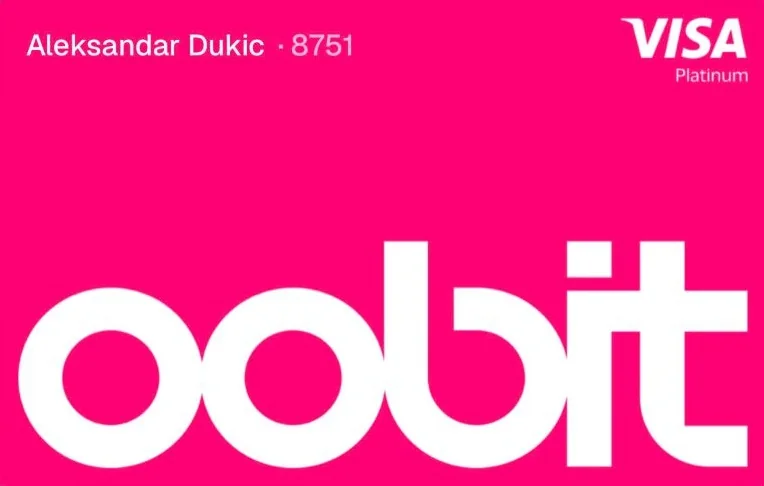
1. Oobit Visa Card
Spend Crypto Anywhere Visa Works - Self-Custody or In-App

2. Tria Signature Card
High-Yield Self-Custody: 15% APY + Visa Signature Perks
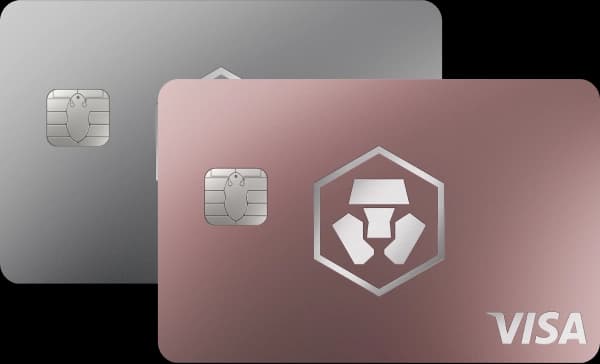
3. Private (Icy White / Rose Gold)
Private Tier: 4% Uncapped Cashback + Lounge Guest
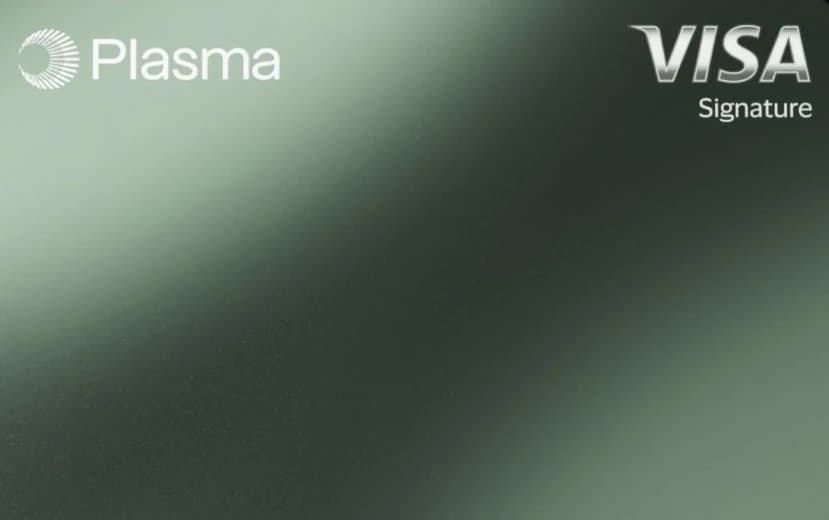
4. Plasma One Core Card
Self-Custodial Visa for AI Spenders - 3% Base, 5% on AI Spend, ChatGPT Go Rebate
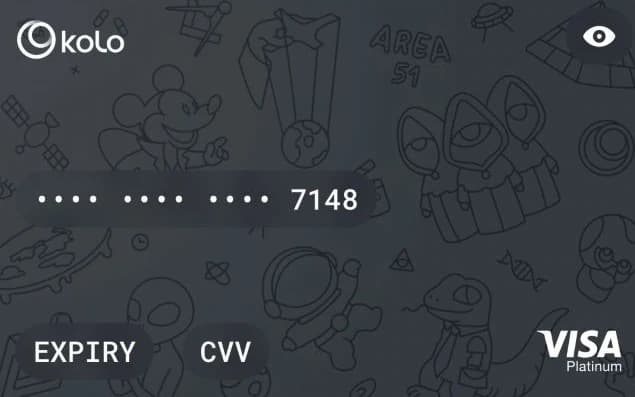
5. Kolo Card
Earn Bitcoin on Purchases: 2% for 30 Days, Then 1% (Capped) + Visa Platinum + 170+ Countries

6. ether.fi Core Card
3% Back on the First $2,000 Each Month, No Stake Required
7. KAST K Card
Free USD Cashback: 1.5% on First $2K/Month
8. Rizon Emerald Card
Rizon's top plan: international fees near 1%, trading at 0.85%, and the physical Visa Platinum included.

9. Xplace Gold Card
10% Off Gold with SPENDNODE: Pay $224.10 Instead of $249
Complete list:
All 49 crypto cards available in South Africa in September 2026
This table includes every crypto card we currently track for South Africa. Rows marked Top pick are ranked and reviewed above.
| Crypto card | Max rewards | Annual fee | FX fee | Type | Custody |
|---|---|---|---|---|---|
1 Oobit Visa CardTop pick | Up to 10% rewards | Free | 3% | Debit | Hybrid |
2 Tria Signature CardTop pick | Up to 4.5% rewards | $87 with code | 1% | Debit | Self-custody |
3 Private (Icy White / Rose Gold)Top pick | Up to 4% rewards | TBD | 0% | Prepaid | Custodial |
4 Plasma One Core CardTop pick | Up to 3% rewards | $199 | 0.5% | Crypto Backed Credit | Self-custody |
5 Kolo CardTop pick | Up to 2% rewards | Free | 0% | Prepaid | Custodial |
6 ether.fi Core CardTop pick | Up to 3% rewards | Free | 0.5% | Crypto Backed Credit | Self-custody |
7 KAST K CardTop pick | Up to 1.5% rewards | Free | 0.5% | Prepaid | Custodial |
8 Rizon Emerald CardTop pick | Up to 2.5% rewards | $83.88 | 1.02% | Crypto Backed Credit | Self-custody |
9 Xplace Gold CardTop pick | Up to 1.5% rewards | $249 | 0.25% | Crypto Backed Credit | Self-custody |
| Up to 8% rewards | Free | 0% | Debit | Custodial | |
| Up to 8% rewards | Free | 0% | Debit | Self-custody | |
12 | Up to 8% rewards | TBD | 0% | Prepaid | Custodial |
| Up to 6% rewards | $200 with code | 1% | Debit | Self-custody | |
| Up to 5% rewards | Free | 1% | Crypto Backed Credit | Self-custody | |
| Up to 5% rewards | TBD | 0% | Prepaid | Custodial | |
| Up to 5% rewards | Free | 1% | Debit | Self-custody | |
| Up to 4% rewards | Free | 0% | Crypto Backed Credit | Self-custody | |
| Up to 4% rewards | Free | 1% / 1.8% | Debit | Hybrid | |
| Up to 4% rewards | Free | 0% | Crypto Backed Credit | Self-custody | |
| Up to 3% rewards | Free | 0.25% | Crypto Backed Credit | Self-custody | |
| Up to 3% rewards | Free | 0% | Crypto Backed Credit | Self-custody | |
| Up to 3% rewards | $10000 | 0.5% | Prepaid | Custodial | |
| Up to 3% rewards | $299.9 | 0% | Prepaid | Custodial | |
| Up to 3% rewards | $129 | 1.2% | Prepaid | Custodial | |
| Up to 2% rewards | $1000 | 0.5% | Prepaid | Custodial | |
| Up to 2% rewards | Free | 1% | Crypto Backed Credit | Self-custody | |
| Up to 2% rewards | $49.9 | 0% | Prepaid | Custodial | |
| Up to 2% rewards | $999 | 0% | Crypto Backed Credit | Self-custody | |
| Up to 1.5% rewards | Free | 0.5% | Prepaid | Custodial | |
| Up to 1.5% rewards | Free | 1% | Debit | Self-custody | |
| Up to 1% rewards | Free | 1% | Crypto Backed Credit | Self-custody | |
| Up to 1% rewards | Free | TBD | Prepaid | Custodial | |
| Up to 1% rewards | $47.88 | 1.275% | Crypto Backed Credit | Self-custody | |
| Up to 1% rewards | $99 | 0.5% | Crypto Backed Credit | Self-custody | |
| Up to 0.5% rewards | Free | 1% | Crypto Backed Credit | Self-custody | |
| none | Free | 0% | Crypto Backed Credit | Self-custody | |
| none | $30 | 0% | Crypto Backed Credit | Self-custody | |
| none | Free | 0% | Prepaid | Custodial | |
| cashback | Free | 1.75% | Prepaid | Self-custody | |
| cashback | $199 | 0.75% | Prepaid | Self-custody | |
| cashback | Free | 0.5% | Prepaid | Custodial | |
| none | Free | 1% | Prepaid | Self-custody | |
| none | Free | 1% | Debit | Self-custody | |
| Varies | Free | 1.5% | Debit | Custodial | |
| Varies | Free | 1.2% | Prepaid | Custodial | |
| Varies | Free | 1.2% | Prepaid | Custodial | |
| Varies | Free | 1.2% | Prepaid | Custodial | |
| Varies | Free | 1.7% | Crypto Backed Credit | Self-custody | |
| points | Free | 1% | Debit | Self-custody |
Crypto Card Regulation in South Africa
The Financial Sector Conduct Authority (FSCA) declared crypto assets as a financial product in October 2022 under the Financial Advisory and Intermediary Services Act (FAIS). Crypto Asset Service Providers (CASPs) operating in SA must hold a Category I or Category II FSP licence to provide intermediary services for crypto assets.
The licensing volume reflects the maturity of the local market. According to the FSCA's published updates, by 31 March 2026 the regulator had received around 533 CASP applications, with 310 approved and 17 declined. The remainder were under review or with applicants for further information. Numbers move with each licensing cycle, and the FSCA register is the source of truth; verify directly before relying on a count.
Among the approved CASPs are South Africa's anchor exchanges and asset platforms, including Luno (founded in SA in 2013), VALR (Johannesburg-based, the largest by domestic volume), Altify, Coindirect, and AltCoinTrader. The FSCA register covers a longer list of approved CASPs across exchange, broker, and adviser categories; verify entity-specific licensing directly.
None of the named exchanges issues a Visa or Mastercard spending card. They are the on-ramp layer; the cards on this page are global issuers operating from outside SA.
Enforcement has been visible. The FSCA has investigated unlicensed CASPs and issued substantial penalties, with administrative fines of up to ZAR 10 million for unlicensed operation. The signal: licensing is not just paperwork, it is being enforced.
The South African Reserve Bank (SARB) oversees monetary policy, exchange controls, and payment-system policy. SARB's posture on crypto has moved from cautious to engaged. Project Khokha, SARB's wholesale CBDC pilot, has run multiple iterations exploring tokenised settlement and cross-border applications.
SARB has not yet issued a dedicated stablecoin licensing framework; the framework is in development. Domestic ZAR-pegged stablecoin candidates (such as ZARP, with reserves held at FNB) exist but are at very early stage and do not yet anchor major retail payment flows.
The Intergovernmental Fintech Working Group (IFWG), comprising SARB, the FSCA, National Treasury, and the FIC, coordinates crypto policy across agencies. Position papers from the IFWG have shaped successive rounds of regulation, including the 2022 FSCA declaration and the 2024-2025 FIC Travel Rule rollout.
Exchange control today: SDA, FIA, and the funding-leg constraint
SARB's exchange-control framework limits how much capital South African residents can move offshore each year. The two main individual allowances are:
- Single Discretionary Allowance (SDA) of up to ZAR 2 million per calendar year, available without a SARS Tax Compliance Status (TCS) certificate. The 2026 Budget doubled the SDA from ZAR 1 million, with SARB giving it legal effect through exchange-control circulars on 8 April 2026; the travel allowance for minors doubled to ZAR 400,000 at the same time. Permitted offshore transfers for travel, gifts, donations and investment share this limit. A crypto-related transfer still has to comply with SARB's rules and the bank's permitted route.
- Foreign Investment Allowance (FIA) of up to ZAR 10 million per calendar year, requiring a TCS issued by SARS. The TCS replaced the older Tax Clearance Certificate (TCC) in 2019. The FIA was left unchanged in the 2026 reforms.
Above ZAR 12 million combined, explicit SARB approval is required. An offshore card-funding transfer, where permitted, uses the applicable allowance. Track cumulative transfers and confirm the permitted purpose and route with the bank before sending funds; the allowance amount alone does not authorize an otherwise restricted crypto transaction.
The April 2026 draft Capital Flow Management Regulations
National Treasury published draft Capital Flow Management Regulations for public comment on 20 April 2026. The proposal would modernise the apartheid-era exchange-control framework into a Capital Flow Management (CFM) regime, replacing the Exchange Control Regulations of 1961 (issued under the Currency and Exchanges Act of 1933, which remains the enabling statute).
What the draft proposes (subject to comment and likely revision):
- A move from the current quantitative allowance model (SDA + FIA) toward a transparency-and-reporting model with risk-based oversight by SARB.
- Clearer treatment of digital assets as part of the cross-border capital flow picture, rather than being squeezed into rules designed for traditional fiat.
- A single integrated CFM framework instead of the current fragmentation between exchange control, FIC reporting, and SARS tax-compliance machinery.
This is draft, not enacted. The comment period was extended to 30 June 2026 and has now closed. SARB has also published a draft cross-border crypto-asset manual for consultation; neither draft should be treated as an operative permission to fund a card through a prohibited route.
For crypto-card users today, the SDA + FIA limits remain operative. The forward-looking question is what funding mechanics look like after the CFM regime lands; we cover that in the outlook section below.
FIC and the Travel Rule
The Financial Intelligence Centre (FIC) enforces AML compliance under the Financial Intelligence Centre Act (FICA). On 15 November 2024, the FIC issued Directive 9 implementing the FATF Travel Rule for crypto-asset transfers, with effect from 30 April 2025.
CASPs must collect and transmit originator and beneficiary information for crypto transfers above defined thresholds. For card users, the impact concentrates on funding-leg transfers from a CASP into a card wallet, where the CASP now collects more information than before. The end-user experience has moved closer to the standard for fiat international transfers.
CARF: full reporting visibility from 2027
SARS activated the OECD Crypto-Asset Reporting Framework on 1 March 2026. FSCA-licensed CASPs and other in-scope reporting entities must collect and report user identities, transaction amounts, and fiat conversions directly to SARS. The first CARF return is due 31 May 2027, with the first international automatic exchange following in September 2027.
Combined with the FIC Travel Rule (effective April 2025) and the proposed Capital Flow Management Regulations (under consultation April 2026), the structural shift is significant. SARS will have visibility on offshore crypto disposals at the same time as SARB rebuilds the cross-border framework. Penalties for non-disclosure can run to 200% of the underlying tax owed.
For South African crypto-card users, the practical posture matters more than the headlines. Long-term-investment cardholders keeping clean records and declaring under the existing SARS framework are aligned with the direction of travel. Active high-velocity users without records are increasingly exposed.
Tax Treatment of Card Rewards in South Africa
SARS treats crypto either as capital (if held as a long-term investment) or revenue (if acquired with the intention to trade or if trading constitutes a business). The SARS crypto-tax guidance sets out the framework. The classification is the most important tax decision a SA crypto-card user makes, and it is fact-and-circumstances-specific.
The right summary is more careful than "tax-free." Three distinct tax positions live inside the same crypto-card user:
- Capital-character disposals, including spending long-held crypto through a card, attract Capital Gains Tax. Only 40% of the gain is included in taxable income (the inclusion rate for individuals). At the top marginal income tax rate of 45%, the effective CGT rate is 18%. Lower-bracket taxpayers face a proportionally lower effective rate.
- Revenue-character activity (frequent trading, profit-seeking intent, badges-of-trade satisfied) is taxed as ordinary income at progressive rates up to 45%. The annual CGT exclusion does not apply to revenue gains.
- Cashback received in BTC, ETH, USDC, or other tokens does not have a published SARS rewards-specific position. Depending on facts, it may be characterised as income at receipt, or it may affect base cost on subsequent disposal, and any later disposal carries its own capital-or-revenue characterisation. Cashback is not categorically tax-free; treatment depends on amounts, character, and the overall facts. Keep records and take advice for material amounts.
The annual exclusion (the SARS term, not "exemption")
For the 2026/27 tax year, individuals have an annual exclusion of ZAR 50,000 that can shelter up to that amount of net capital gains. It applies across qualifying capital disposals, not separately to each card or crypto asset.
| Annual capital-character gain | Within annual exclusion? | Effective CGT (mid bracket) |
|---|---|---|
| ZAR 30,000 | Yes (within ZAR 50,000) | ZAR 0 |
| ZAR 100,000 | No (ZAR 50,000 above exclusion) | Depends on marginal rate |
| ZAR 250,000 | No (ZAR 200,000 above exclusion) | Depends on marginal rate |
| ZAR 500,000 | No (ZAR 450,000 above exclusion) | Depends on marginal rate |
The annual exclusion shelters capital-character gains only. It does not apply if SARS classifies your activity as revenue, and it does not categorically eliminate cashback income recognition.
Capital-vs-revenue: the badges-of-trade test
SARS applies a facts-and-circumstances test to determine whether crypto activity is capital or revenue. The factors are familiar from common-law badges of trade:
- Frequency and volume of transactions
- Holding period
- Profit-seeking intent
- Financing and organisation of the activity
- Whether the taxpayer has supplementary trading work or expertise
- The taxpayer's stated intention at acquisition
Casual card spending from a long-held investment portfolio reads as capital. Daily buy-and-spend cycles funded by rapid trading look like revenue. The line is not bright; record-keeping and stated intent matter.
Income-tax brackets (FY2026/27)
| Taxable income | Marginal rate |
|---|---|
| Up to ZAR 245,100 | 18% |
| ZAR 245,101-383,100 | 26% |
| ZAR 383,101-530,200 | 31% |
| ZAR 530,201-695,800 | 36% |
| ZAR 695,801-887,000 | 39% |
| ZAR 887,001-1,878,600 | 41% |
| Over ZAR 1,878,600 | 45% |
Brackets are reviewed annually in the National Budget. For revenue-character classification, the marginal rate that applies is determined by total taxable income, not just the crypto component. The effective CGT rate for capital-character disposals is the inclusion rate (40%) multiplied by the marginal rate (up to 45%), giving an effective top of 18%.
CARF and the record-keeping shift
CARF activation on 1 March 2026 (first CARF return due 31 May 2027, first international exchange September 2027) means that SARS will receive automatic data on FSCA-licensed CASP user holdings, deposits, withdrawals, and disposals. Combined with the FIC Travel Rule (April 2025) and the proposed CFM regulations, this is a meaningful tightening of visibility.
The practical posture for cardholders: keep clean records of acquisition cost (in ZAR), date, counterparty, transaction hash where relevant, and disposal amount. Whether the position taken is capital or revenue, the records are what allow that position to hold up. SARS penalties for non-disclosure can run to 200% of the underlying tax.
How to Apply from South Africa
South African crypto-card applications require a South African Smart ID Card (credit-card-sized, green) or the older bar-coded ID book (being phased out). Both carry the 13-digit SA ID number. For foreign residents: passport plus valid visa (work, critical-skills, business, or permanent-residence permit) from the Department of Home Affairs.
The Tax Reference Number issued by SARS may be required by card issuers for compliance. Register via SARS eFiling or a SARS branch with your ID.
Proof of South African address via utility bill (Eskom, municipal-account, Telkom/Vodacom/MTN), bank statement (Standard Bank, FNB, Nedbank, Absa, Capitec), or municipal rates account. Address verification can be challenging in informal settlements or rural areas; some issuers accept a letter from a local authority or traditional leader as alternative proof.
Capitec (the largest bank by customer count, around 20 million accounts) has the simplest onboarding for new banking customers. For the ZAR-to-crypto pipeline, Luno and VALR support instant EFT deposits from all major SA banks.
Physical cards from international issuers ship to SA addresses within 10-21 business days via SAPO (the South African Post Office) or private courier (The Courier Guy, DPD Laser, Aramex). SAPO delivery times can be unpredictable; courier services are more reliable. Virtual-card add-to-wallet support for Apple Pay and Google Pay varies by issuer; verify before relying on NFC at checkout.
Spending Tips for South Africa
What South Africa already solved
PayShap, the SA equivalent of an instant-interbank rail, launched in March 2023 (BankservAfrica plus the major banks: Standard Bank, FNB, Nedbank, Absa, Capitec, Discovery, Investec, Tyme, and others). Domestic transfers move instantly and free or near-free using a phone number, ID, or proxy.
SnapScan and Zapper sit on the QR-code small-merchant layer and cover the long tail of street merchants and townships. Contactless Visa and Mastercard tap is universal in malls and chains. Apple Pay launched in 2023 with FNB, Nedbank, and Discovery Bank; Google Pay support is expanding.
What that adds up to: domestic SA payment rails work. The crypto card here does not displace any of that. It earns its keep at the cross-border layer, the rand-volatility-hedge layer, and the SADC and diaspora corridors.
The South African user journey
The realistic flow for most SA crypto-card users:
- ZAR salary lands at Capitec, FNB, Standard Bank, Nedbank, or Absa.
- Instant EFT (free or low-fee, via PayShap or the relevant bank's transfer rail) to Luno or VALR, the two FSCA-licensed local exchanges with the strongest ZAR on-ramps.
- Convert ZAR to USDC, USDT, or BTC on the exchange; trading fees are typically 0.10-0.50% depending on the venue and pair.
- Transfer to the card wallet of choice (Crypto.com, Tria, Kolo, KAST, ether.fi, etc.) over the relevant chain. Transfer fees range from a few cents (Solana, Polygon) to a few dollars (Ethereum mainnet) per transfer.
- Spend at SA merchants for ZAR-denominated transactions, or internationally / on USD-priced subscriptions for the FX-savings case.
Timing varies with exchange settlement, card funding and bank review. For cross-border funding, confirm the allowed purpose and route with the bank; SDA/FIA limits are not a general authorization for crypto transfers.
Banking friction varies by bank
Not all SA banks treat crypto-related transfers the same way. None of the banks publishes detailed crypto-transfer policy, so the picture below is drawn from accumulated user reports across SA crypto communities rather than primary sources, and individual experience varies.
User reports broadly suggest:
- Capitec is among the more permissive options for crypto-adjacent transfers, helped by its digital-first posture.
- FNB and Nedbank sit in the middle: compliant transfers to FSCA-licensed CASPs typically settle, larger or repeated offshore-card transfers can prompt reviews.
- Standard Bank is reported as among the stricter major banks on crypto-adjacent flows, with more frequent flagging of transfers to non-FSCA-licensed platforms.
- Absa is reported as case-by-case.
- The newer digital banks (TymeBank, Discovery Bank, Bank Zero) tend to be efficient for the ZAR-to-CASP step.
For larger funding flows, splitting across multiple banks or using a bank that has historically been more crypto-friendly for the funding leg is a common pattern. Treat all of this as anecdotal; individual experience and bank policy can change.
ZAR volatility as the structural case
The tax section already made the point once, and it bears repeating in strategy terms: a ZAR salary loses ground against the dollar in most years. Moving part of each month's surplus into USDC or USDT and spending from that balance means the money sits in dollars until the moment of purchase, rather than in a currency that spent the last decade drifting downward with sharp intra-year swings.
This is the same logic that drives stablecoin adoption in Turkey, Argentina, Venezuela, and Lebanon. SA is the developed-economy version: the rand is not in hyperinflation, but it is volatile enough that the inflation-and-FX-hedge case is real for anyone with a multi-year horizon. ZARP and other ZAR-pegged stablecoin candidates exist in early form but have not yet anchored major retail payment flows; the practical hedge today is offshore USD-pegged stablecoins.
Cost of living and spending scenarios
Card-eligible spending varies sharply by city and lifestyle:
- Johannesburg (Sandton, Rosebank, Melrose Arch, Parkhurst, Linden): ZAR 7,000-15,000/month rent on a 1-bed in the affluent corridor; ZAR 4,000-7,000 groceries; ZAR 2,000-4,000 dining and cafes.
- Cape Town (CBD, Sea Point, Green Point, De Waterkant, Camps Bay, Constantia, Stellenbosch): premium-pulled by tourism and the digital-nomad inflow. ZAR 10,000-20,000 rent; ZAR 4,000-7,500 groceries; ZAR 2,500-5,000 dining.
- Pretoria (Brooklyn, Waterkloof, Menlyn): more affordable than Sandton but with similar urban infrastructure. ZAR 5,000-10,000 rent.
- Durban, Port Elizabeth (Gqeberha), Bloemfontein: secondary cities with lower cost bases. ZAR 4,500-9,000 rent.
- Stellenbosch and Wine Country: lifestyle premium plus the digital-nomad / remote-worker community.
Monthly card-eligible spend typically runs ZAR 5,000-15,000 ($270-820), with ZAR 8,000 representative for an urban professional. The ZAR 50,000 annual exclusion applies to net capital gains across the tax year, not to a fixed amount of card spending; the gain depends on each asset's cost and disposal value.
FX savings: the structural win for ZAR users
ZAR is among the more volatile major emerging-market currencies, regularly fluctuating 2-3% against USD in a single week. SA bank cards charge punishing FX markups on international purchases.
| Card | FX markup | Cost on ZAR 8,000/month foreign spend |
|---|---|---|
| Standard Bank Debit | 3.5% | ZAR 3,360/yr |
| FNB Gold Debit | 3.0% | ZAR 2,880/yr |
| Nedbank Debit | 2.75% | ZAR 2,640/yr |
| Absa Debit | 2.5% | ZAR 2,400/yr |
| Crypto.com (0% FX) | 0% | ZAR 0/yr |
| xPlace Gold (0.25% FX) | 0.25% | ZAR 240/yr |
| Tria (1% FX) | 1% | ZAR 960/yr |
| Kolo (0% FX) | 0% | ZAR 0/yr |
| KAST (0.5-1.75% FX) | 0.5-1.75% | ZAR 480-1,680/yr |
For South Africans subscribing to international streaming (Netflix, Spotify, Disney+, Apple iCloud, all USD-billed), shopping on Amazon or international retailers, or travelling regionally to Mauritius, Botswana, Kenya, or further to Europe and the US, the FX savings alone justify a 0% FX crypto card before counting cashback.
Oobit is the exception on this list. Its ~3% FX makes it a poor fit for ZAR spend, but it is the cashback leader, and on USD-billed subscriptions its FX is near zero. It competes on the offshore-subscription leg and its 10% cashback, not on local FX savings.
The dual-direction remittance picture
South Africa is unusual in being both a meaningful diaspora-receiver and a meaningful sub-Saharan-corridor sender.
- Receiving from the SA diaspora abroad. Roughly 3-5 million South Africans live abroad, primarily in the UK, Australia, New Zealand, Canada, the Netherlands, Germany, and the UAE. Many remit to family in SA. USDC or USDT sent from the diaspora and spent through a SA-resident's crypto card cuts traditional remittance fees materially against typical Western Union and bank-wire alternatives. The receiving leg sits inside the FSCA / FIC framework, so the trail is documented.
- Sending to SADC neighbours. Roughly 2-3 million Zimbabweans plus large Mozambican, Basotho, and Eswatini communities work in SA and remit home. The corridor cost on traditional rails is high; stablecoin remittance compresses it materially for documented workers. The constraint is documentation: undocumented workers face KYC barriers at FSCA-licensed CASPs and at international card issuers, which is the practical limit on this corridor.
For documented households on either direction, the saving against traditional channels is meaningful and compounds over the year.
Local payment infrastructure
Card acceptance is strong in the major urban areas: Johannesburg, Cape Town, Durban, Pretoria, Stellenbosch, Port Elizabeth, and the larger secondary cities. Visa and Mastercard contactless covers Woolworths, Pick n Pay, Checkers, Shoprite, Spar, Clicks, Dis-Chem, Game, Makro, and most chain restaurants and coffee shops.
Malls are central to SA retail life: Sandton City, Mall of Africa (Waterfall), V&A Waterfront (Cape Town), Canal Walk, Gateway (Durban), Menlyn Park (Pretoria), among hundreds of others. Universal Visa and Mastercard contactless across all of them.
PayShap, SnapScan, Zapper, and the QR-code layer dominate small-merchant and street-level payment. PayShap is bank-account-tied and free or near-free. SnapScan and Zapper are app-based QR rails accepted by long-tail merchants where Visa or Mastercard terminals are not present. Crypto cards do not integrate with PayShap or SnapScan/Zapper directly; they sit on the Visa/Mastercard rails alongside.
Cash-heavy areas persist: informal traders, spaza shops, township markets, and rural businesses remain meaningfully cash. Card acceptance drops outside major urban centres. Crypto cards work best for formal retail, restaurants, online, subscription, and travel spending.
Transit: Gautrain (Joburg-Pretoria rapid rail) uses its proprietary Gautrain Gold Card. MyCiti (Cape Town) and Rea Vaya (Joburg BRT) use their own cards or cash. Minibus taxis are cash-only. For the day-to-day urban-mobility spend, ride-hailing (Uber, Bolt, InDriver) is where most SA professionals route the meaningful spend, and Visa or Mastercard contactless works there.
Apple Pay launched in SA in 2023 with FNB, Nedbank, and Discovery Bank; coverage is expanding through additional partner banks. Google Pay and Samsung Pay are present but more limited. Crypto-card add-to-wallet support for SA varies by issuer; verify before relying on NFC.
Energy reliability and the offshore-services case
The 2022-2024 load-shedding shock and the broader Eskom-reliability uncertainty since have shaped how SA professionals think about offshore exposure. Households increasingly route critical services (cloud storage, email, productivity software, streaming, video calls) through international providers paid in USD, and the FX cost on those subscriptions compounds over the year. A 0% FX crypto card removes that cost layer.
Load-shedding has eased materially compared to its 2022-2023 peak as Eskom maintenance and independent-power-producer additions have come online, but the structural picture remains volatile enough that the case for offshore-paid critical services is intact. The card here is one tool in a broader portable-services posture for SA users.
Common mistakes SA cardholders make
- Mistake 1: Treating the SDA as blanket crypto permission. The Single Discretionary Allowance is ZAR 2 million per calendar year without a TCS. A permitted offshore transfer uses that allowance, but a crypto-related payment must also meet SARB's purpose and routing rules. Confirm the route with your bank and track cumulative offshore transfers.
- Mistake 2: Treating trading-character activity as still capital. SARS applies a badges-of-trade test. Daily buy-and-spend cycles funded by rapid trading can be re-characterised as revenue, taxed at progressive rates up to 45% with no annual exclusion. For a SA HENRY at the 41% bracket, ZAR 200,000 of disposals re-characterised as revenue adds roughly ZAR 60,000-80,000 versus the capital characterisation. Keep separate long-term and card-spending wallets, and keep records.
- Mistake 3: Funding a card from a non-FSCA-licensed CASP without considering the bank-side AML implications. Originator banks under FICA review pattern-suggestive transfers; transfers to non-licensed offshore platforms can attract more scrutiny than transfers to FSCA-licensed local exchanges. Use Luno, VALR, Altify, or another FSCA-licensed CASP for the ZAR-to-stablecoin step; fund the card from there rather than directly from a non-licensed source.
- Mistake 4: Ignoring CARF first-reporting in 2027. CASPs file the first CARF return by 31 May 2027 and first international automatic exchange follows in September 2027. Cardholders without records will not have a defensible position when the data starts arriving. SARS penalties for non-disclosure can run to 200% of the underlying tax. Get cost-basis records in shape now, before the reporting layer creates its own pressure.
Where crypto cards fit in South Africa
South Africa is the most regulated crypto-card market on the continent and one of the structurally most interesting in emerging markets. Domestic payment rails work; the crypto-card story is the cross-border layer, the rand-volatility hedge, the dual-direction remittance picture, and the offshore-services overhead.
The card decisions that matter are the funding-rail choice (Luno or VALR for the ZAR-to-stablecoin step, Capitec or another permissive bank for the ZAR-leg), the cross-border layer (0% FX cards saving 2.5-3.5% on overseas spending), and tax posture. SARS's capital-vs-revenue classification determines whether the ZAR 50,000 annual capital-gains exclusion applies.
Supported Exchanges & Wallets in South Africa
Oobit at 10% on OOB-funded spend (5% on stablecoin spend), no staking, is the strongest no-stake cashback pick for the SA professional routing offshore USD subscriptions, where its FX is near zero. On ZAR spend it carries about 3% FX, and the OOB cashback caps at $10,000/month of spend.
Tria Signature at 4.5% on the first $1,000/mo ($109/yr) is the fixed-rate alternative. Tria now charges 1% FX plus a 0.5% per-payment fee across all tiers, bringing the effective ZAR rate to about 3%, with Premium at 6% on the first $2,000/mo ($250/yr) for higher spend.
Crypto.com serves SA through its global platform. Its tier range runs from Midnight Blue to Obsidian; Icy pays 4% and includes Priority Pass access at OR Tambo (JNB) and Cape Town International (CPT).
Frequent flyers may value that access more than a marginally higher reward rate. Spotify and Netflix rebates at higher tiers add recurring value.
Kolo at 1% ongoing BTC (2% intro), 0% FX, $0 keeps the simple free BTC-cashback option available. KAST at 1.5% USD cashback on the first $2,000/month, 0.5-1.75% FX, $0 is the simplest stablecoin-funded prepaid entry.
ether.fi Core pays 3% in ETHFI on the first $2,000 per month, then lower bands. Users can debit supported stablecoins or finance spending against eligible collateral. Any SARS benefit from postponing a sale must be considered alongside financing costs, liquidation risk, and the character of the activity.
Secondary card options available in SA:
- Cypher offered self-custody spending across 15+ chains, but its card program closed after the Nium acquisition.
- Jupiter Global is the USDC and Solana ecosystem option (2% base, 4% for a month after referring 2 friends, 0% on USD spending, 1% Rain or 1.8% DCS non-USD FX depending on issuer assignment). The 2% applies to USD-billed spend; on mixed spend the 1% non-USD FX pulls the effective rate closer to 1%.
- RedotPay with Virtual, Solana, and Physical cards covers stablecoin-native users.
- Payy is a smaller stablecoin-native option. xPlace offers Solana self-custody; the Gold tier ranks here for 0.25% FX and lounge access, with 1.5% USDC cashback in Credit Mode capped at $100/month and a $249 annual fee.
These secondary options are useful when a primary card does not match a specific use case (Solana-native flows, multi-chain self-custody, exchange-tied funding). For the typical SA crypto-card user, the top table earlier on this page covers the pragmatic choice.
Domestic exchanges (rails, not card issuers):
Luno (founded in SA in 2013, FSCA-licensed) is a prominent retail on-ramp. It supports bank-transfer funding; availability and speed depend on the user's bank and payment route. VALR (Johannesburg-based, FSCA-licensed) supports a broad set of trading pairs.
Altify, AltCoinTrader and Coindirect are other local crypto-service options. Check current authorization and funding support before using any exchange as the card's on-ramp.
None of these issue a Visa or Mastercard spending card. They are the ZAR-to-crypto on-ramp layer; for the spending leg, the global card issuers above are the available routes.
Exchange-control note: Permitted offshore transfers use the SDA (ZAR 2m/year, no TCS) or FIA (ZAR 10m/year, with TCS). That does not make every offshore crypto-card funding route permissible. Confirm the route with the bank and track total cross-border transfers. Proposed Capital Flow Management Regulations remain subject to finalization.
Outlook (our read)
A handful of open questions will shape the next 18 months for South African crypto-card users.
- Capital Flow Management Regulations final form. The April 2026 Treasury draft closed for comment on 30 June 2026. SARB has published a draft cross-border crypto-asset manual, but the final rules and timing remain open. Their treatment of card funding is the consequential point to watch.
- CARF first reporting (31 May 2027 domestic return, September 2027 international exchange). First batch of automatic data flowing to SARS. The mechanics, treatment of foreign-CASP data, and SARS's enforcement priorities once the data arrives will set the practical visibility level for the next several years.
- FSCA CASP register growth and any card-issuer entry. The register is currently exchange-heavy. Whether any global card issuer (Crypto.com, Tria, or others) takes a SA-specific licence over the next 18 months would change the local-licensed-card picture meaningfully.
- ZAR-pegged stablecoin scaling. ZARP and other early ZAR-stablecoin candidates exist but have not yet anchored major retail payment flows. SARB's stablecoin licensing framework is in development; the question is whether 2026-2027 produces a regime that lets ZAR-pegged stablecoins scale alongside USD-pegged ones for SA users.
- SARB-FSCA-FIC coordination and the Travel Rule + CARF + CFM feedback loop. Three pieces of regulation arriving in close sequence (April 2025, March 2026, April 2026 draft) create cross-agency reporting integration that has not yet been tested. How smoothly the agencies coordinate will affect the operational picture for crypto-card users.
South Africa is one of the more interesting crypto-card markets globally for the JNB/CPT/DBN professional, the diaspora-receiving rand-volatility hedger, the SADC-corridor sender, and the digital nomad on a critical-skills visa. Card choice and tax posture determine whether those use cases work in practice.
Written by SpendNode Editorial
Frequently Asked Questions
Is crypto card spending taxed in South Africa?
SARS treats crypto disposals as either capital or revenue based on a badges-of-trade test. Capital-character disposals attract CGT with a 40% inclusion rate, giving an effective top rate of 18% at the 45% marginal bracket.
The annual exclusion of ZAR 40,000 (the precise SARS term, not 'exemption') shelters capital-character gains up to that amount; it does not apply to revenue-character activity, and it does not categorically eliminate cashback income recognition. Records matter; CARF activated 1 March 2026 with first reporting May 2027.
Which crypto cards work for South African residents?
Oobit leads on no-stake cashback: 10% back on OOB-funded spend (5% on stablecoin spend) with no token to lock, strongest on USD-billed offshore subscriptions where its FX is near zero, though ZAR spend carries about 3% FX and the OOB cashback is capped at $10,000/mo of spend.
Tria Signature pays 4.5% on the first $1,000/mo then 1% ($109/yr); note Tria now charges 1% FX plus a 0.5% per-payment fee, so the effective ZAR rate is about 3%. Crypto.com Icy at 4% (0% FX) adds Priority Pass lounge access at OR Tambo (JNB) and Cape Town (CPT). xPlace Gold pays 1.5% USDC in Credit Mode capped at $100/month, with 0.25% FX and no token stake at $249/yr. Kolo is 1% ongoing BTC (2% intro) at $0 with 0% FX. KAST is 1.5% USD cashback on first $2K/mo with 0.5-1.75% FX at $0. ether.fi Core pays 3% in ETHFI on the first $2,000/month, then lower bands, with direct stablecoin or optional collateral-backed spending.
Bitget, Bybit, COCA, Wirex, and Gate.io do not list SA in their availability data. Secondary options include Jupiter Global, RedotPay, and Payy.
Are Luno and VALR crypto card issuers?
No. Luno (South African-founded 2013, FSCA-licensed) and VALR (Johannesburg-based, FSCA-licensed) are the leading domestic exchanges and ZAR-to-crypto on-ramps. Neither issues a Visa or Mastercard spending card. The standard SA workflow is ZAR salary → bank → Luno or VALR → USDC or BTC → global card issuer.
How does SA exchange control affect crypto card funding?
Funding offshore card balances from a SA bank account counts toward the Single Discretionary Allowance (ZAR 2m/year since April 2026, no Tax Compliance Status required) and the Foreign Investment Allowance (ZAR 10m/year, requires TCS, the modern replacement for the old TCC). Above ZAR 12m combined, explicit SARB approval is required.
The 2026 Budget doubled the SDA from ZAR 1m, with SARB circulars giving effect on 8 April 2026. National Treasury's draft Capital Flow Management Regulations (published 20 April 2026 for comment) would modernise the framework further if enacted.
Other Countries
View all 112 countries →


Latest Page Changes to the Best Crypto Cards in South Africa Guide
- xPlace Gold moved down the South African ranking after its new-member Credit Mode rate became 1.5% USDC with a $100 monthly cap. Low FX and self-custody remain its main strengths
- CARF activation (March 1, 2026) with exchange reporting to SARS
- Cold wallet transfer tracking, 8M holders vs 500K declarers stat, and 200% non-disclosure penalty
- FSCA licensing data: 300 CASP licenses approved out of 512 applications (was 'over 60'). Travel Rule (FIC Directive 9, in force April 30, 2025). Enforcement data: 81 investigations, ZAR 10M fines for unlicensed operations