
Best Crypto Cards in Qatar (2026)
Compare crypto cards available in Qatar. Tria Premium, Plasma One, Oobit, and Kolo lead for affluent expats, frequent flyers, and stablecoin-funded spenders in a zero-tax, USD-pegged market.
Verified for Qatar
34 crypto cards available
Local currency: QAR
Qatar does not tax ordinary employment salaries and has no general VAT. Personal, non-business investment gains generally sit outside its listed taxable categories. Its riyal is pegged to the US dollar at QAR 3.64/USD. Crypto rewards and business-connected activity still need their own classification.
QNB (Qatar National Bank, the largest bank in the Middle East and Africa by assets), Commercial Bank of Qatar, Doha Bank, and Qatar Islamic Bank charge 1.5-3% FX markup on non-QAR transactions and offer limited cashback (0-1% on select categories).
Post-FIFA 2022, Qatar's payment infrastructure is highly developed: contactless acceptance is near-universal in Doha. A crypto card with low FX fees and up to 6% cashback changes the economics of spending for both citizens and the 2.5 million expatriates.
Summary:
Which crypto cards are best in Qatar?
The best crypto cards in Qatar in September 2026 are Tria Premium Card, Plasma One Platinum Card, Oobit Visa Card, Kolo Card, KAST K Card, and Xplace Platinum Card. The detailed ranking below explains the local tax, fee, and availability trade-offs.
| Crypto card | Base reward | Net after fees | Annual fee | FX fee | Type |
|---|---|---|---|---|---|
| 6% base6% on the first $2,000/mo, then 1% | 4.5% | $200 with code | 1% | Debit | |
| 4% base4% base, up to 10% on AI and flights; 100k XPL lock | 4% | Free | 0% | Crypto Backed Credit | |
| 5% baseup to 10% in OOB at Level 2, no stake | 2% | Free | 3% | Debit | |
| 1% base2% for the first 30 days, then 1%; also capped at $1/EUR 1 per transaction ($2/EUR 2 during intro) and $100/EUR 100 per month | 1% | Free | 0% | Prepaid | |
| 1.5% base | 1% | Free | 0.5% | Prepaid | |
| 2% base2% in USDC on Credit Mode spend; cashback capped at $250/mo | 2% | $999 | 0% | Crypto Backed Credit | |
| 0% baseno standing cashback; launch promo ended | 0% | Free | 1.2% | Prepaid |
We verified which cards serve Qatari residents. Tria Premium is the strongest single all-rounder here: 6% on the first $2,000/month, self-custody, a Visa lounge benefit, and yield, with no token to stake. Its 1% FX fee plus 0.5% on every payment (about 4.5% net on riyal spend) is the one caveat for residents who spend heavily abroad.
Plasma One Platinum solves the one friction Qatar's card math cannot: the funding leg. Where a QCB-regulated bank might slow or question a transfer to an exchange, this card is a stablecoin account first and a Visa second, so USDT lands and spends with no Qatari bank in the loop.
The 100,000 XPL lock replaces the fee, while eligible idle balances can earn a stated 5% yield. That return needs its own tax and product-risk assessment.
Oobit funds a stablecoin ceiling, up to 10% back in OOB or 5% in stablecoin, Tether-backed, with no annual fee. Its roughly 3% FX makes it a dollar-and-stablecoin card rather than an everyday riyal card, so it pays best when you load and spend USDT.
Kolo stays the simplest free option at 1% ongoing BTC (2% for the first 30 days) with 0% FX, and KAST at 1.5% USD cashback on the first $2,000/month is the practical bridge for Doha expats still organizing salary setup, QID paperwork, and family transfers.
xPlace Platinum suits frequent flyers who will use its lounges, concierge and 0% FX. New memberships earn 2% USDC in Credit Mode, capped at $250 a month, while the $999 annual fee and variable borrowing costs limit the case for buying it solely for cashback.
Best Card For Every Need in Qatar
Top 7 Crypto Cards in Qatar
For a salary earner spending privately held crypto, Qatar's lack of salary tax, general VAT and a broad tax on personal investment gains can make card returns unusually clean. Business-linked gains and token rewards need separate review.
For affluent residents who want one card to carry at moderate spend, Tria Premium does the most work: 6% on the first $2,000/month nets about 4.5% after its 1% FX and 0.5% per-payment fees, with self-custody, a Visa lounge benefit, yield, and no token to stake. Its capped 6% dilutes at higher spend, though only above roughly QAR 19,000/month would free Kolo's flat 1% BTC edge ahead.
Plasma One Platinum follows for residents who want to fund a card directly with USDT instead of relying on a Qatari bank transfer to an exchange. Eligible idle balances can earn yield, while its XPL cashback and 100,000 XPL lock carry token-price risk.
Oobit suits spenders who keep balances in stablecoins, paying up to 10% in OOB or 5% in stablecoin with no annual fee, though its roughly 3% FX means it is a dollar card, not a riyal one. Kolo stays the clean free pick at 1% ongoing BTC (2% intro) with 0% FX for anyone who wants Bitcoin rewards without annual-fee friction.
KAST's 2-minute KYC matters because 88% of Qatar's 2.9 million residents are expatriates, and many need a working card while paperwork settles. RedotPay Solana serves the $15+ billion annual remittance outflow.
xPlace Platinum remains a travel-specialist option. Its 2% USDC Credit Mode reward covers the $999 fee only after about QAR 15,150 of eligible monthly spend, before borrowing costs, and stops rising once the $250 monthly cashback cap is reached. Lounges, concierge and 0% FX need to justify the membership independently for most cardholders.
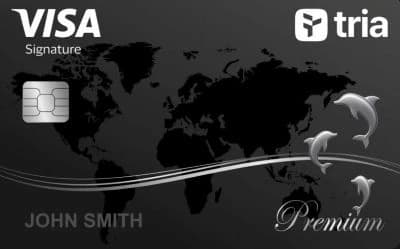
1. Tria Premium Card
Self-Custody Premium: 6% Cashback + Zero ATM Fees
2. Plasma One Platinum Card
Premium Self-Custodial Visa - 4% Base, 10% AI, 10% Flights, Lounge Access, Boosted 5% Yield
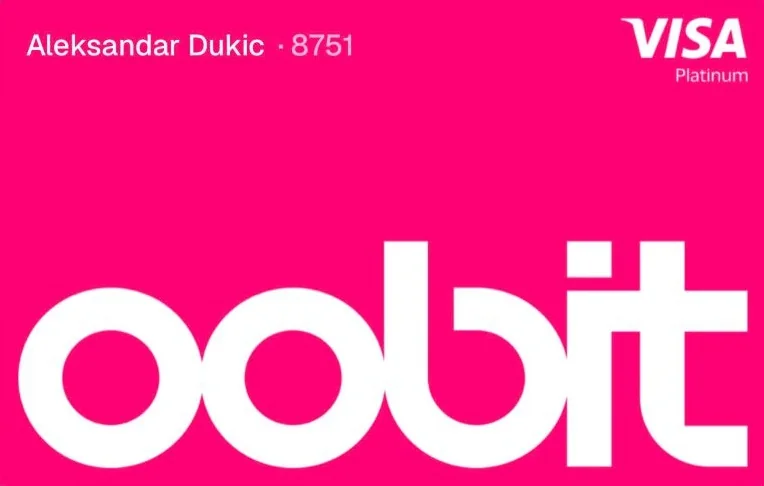
3. Oobit Visa Card
Spend Crypto Anywhere Visa Works - Self-Custody or In-App
4. Kolo Card
Earn Bitcoin on Purchases: 2% for 30 Days, Then 1% (Capped) + Visa Platinum + 170+ Countries
5. KAST K Card
Free USD Cashback: 1.5% on First $2K/Month
6. Xplace Platinum Card
10% Off Platinum with SPENDNODE: Pay $899.10 Instead of $999
7. RedotPay Solana Card
Solana Goes IRL: Spend SOL Directly at 130M+ Merchants
Complete list:
All 34 crypto cards available in Qatar in September 2026
This table includes every crypto card we currently track for Qatar. Rows marked Top pick are ranked and reviewed above.
| Crypto card | Max rewards | Annual fee | FX fee | Type | Custody |
|---|---|---|---|---|---|
1 Tria Premium CardTop pick | Up to 6% rewards | $200 with code | 1% | Debit | Self-custody |
2 Plasma One Platinum CardTop pick | Up to 4% rewards | Free | 0% | Crypto Backed Credit | Self-custody |
3 Oobit Visa CardTop pick | Up to 10% rewards | Free | 3% | Debit | Hybrid |
4 Kolo CardTop pick | Up to 2% rewards | Free | 0% | Prepaid | Custodial |
5 KAST K CardTop pick | Up to 1.5% rewards | Free | 0.5% | Prepaid | Custodial |
6 Xplace Platinum CardTop pick | Up to 2% rewards | $999 | 0% | Crypto Backed Credit | Self-custody |
7 RedotPay Solana CardTop pick | Varies | Free | 1.2% | Prepaid | Custodial |
| Up to 10% rewards | Free | 0% | Prepaid | Custodial | |
| Up to 8% rewards | Free | 0% | Debit | Custodial | |
10 | Up to 8% rewards | TBD | 0% | Prepaid | Custodial |
| Up to 5% rewards | TBD | 0% | Prepaid | Custodial | |
| Up to 4.5% rewards | $87 with code | 1% | Debit | Self-custody | |
| Up to 4% rewards | TBD | 0% | Prepaid | Custodial | |
| Up to 3% rewards | $10000 | 0.5% | Prepaid | Custodial | |
| Up to 3% rewards | $199 | 0.5% | Crypto Backed Credit | Self-custody | |
| Up to 3% rewards | $299.9 | 0% | Prepaid | Custodial | |
| Up to 3% rewards | $129 | 1.2% | Prepaid | Custodial | |
| Up to 2% rewards | $1000 | 0.5% | Prepaid | Custodial | |
| Up to 2% rewards | Free | 1% | Crypto Backed Credit | Self-custody | |
| Up to 2% rewards | $49.9 | 0% | Prepaid | Custodial | |
| Up to 1.5% rewards | Free | 0.5% | Prepaid | Custodial | |
| Up to 1.5% rewards | Free | 1% | Debit | Self-custody | |
| Up to 1.5% rewards | $249 | 0.25% | Crypto Backed Credit | Self-custody | |
| Up to 1% rewards | Free | TBD | Prepaid | Custodial | |
| Up to 1% rewards | $99 | 0.5% | Crypto Backed Credit | Self-custody | |
| Up to 0.5% rewards | Free | 1% | Crypto Backed Credit | Self-custody | |
| none | Free | 0% | Prepaid | Custodial | |
| cashback | Free | 1.75% | Prepaid | Self-custody | |
| cashback | $199 | 0.75% | Prepaid | Self-custody | |
| cashback | Free | 0.5% | Prepaid | Custodial | |
| none | Free | 1% | Prepaid | Self-custody | |
| Varies | Free | 1.5% | Debit | Custodial | |
| Varies | Free | 1.2% | Prepaid | Custodial | |
| points | Free | 1% | Debit | Self-custody |
Crypto Card Regulation in Qatar
Qatar's crypto regulatory stance is cautious but developing through the QFC (Qatar Financial Centre), a special economic zone with its own regulatory framework.
The Qatar Central Bank (QCB) has restricted licensed banks and other financial institutions from dealing in virtual currencies, citing consumer protection, volatility, and anti-money-laundering concerns. Its monetary-policy framework separately maintains the riyal's dollar peg.
The financial-institution restriction does not itself prohibit an individual from owning crypto. It also does not amount to approval of every route used to fund an offshore card.
The QFC Regulatory Authority (QFCRA) took a different approach. In September 2024, the QFCRA enacted the QFC Digital Assets Regulations 2024, creating a framework for tokenized traditional assets (shares, bonds, sukuk, commodities, real estate) within the QFC.
However, the QFCRA explicitly designated cryptocurrencies and stablecoins as "Excluded Tokens", meaning crypto trading and services remain outside the QFC's digital asset licensing. The framework allows tokenization of traditional assets under strict oversight but does not open the door to crypto exchanges or crypto custody within Qatar.
Key distinction: The QCB's restrictions apply to banks and financial institutions. The QFCRA's framework covers tokenized traditional assets, not cryptocurrencies. Individual crypto ownership and usage are not explicitly prohibited. Crypto card spending settles through Visa/Mastercard fiat rails, falling outside the QCB's crypto restrictions.
Qatar's approach distinguishes between tokenized traditional assets (permitted in QFC) and cryptocurrencies (excluded). This is more restrictive than the UAE's VARA framework or Bahrain's CBB licensing, which both cover cryptocurrencies directly.
Tax Treatment of Card Rewards in Qatar
Qatar does not tax ordinary employment salaries. For a resident holding crypto as a personal investment outside a taxable business, gains generally fall outside the General Tax Authority's listed capital-gains categories. That is a practical reading of the published scope, not a crypto-specific exemption. Gains on specified Qatar-connected assets and taxable activities can still bring an individual into the tax net.
What is taxed: The income-tax law generally applies a 10% rate to Qatar-source taxable activity, including some individual business activity, with statutory exemptions. The QFC has its own tax rules. Qatar has not introduced a general VAT. A personal card purchase does not by itself make its holder a taxable business, but business-connected token income should not be assumed exempt.
| Scenario | Tax question |
|---|---|
| Salary paid to a resident employee | Ordinary salary is outside Qatar's income tax. |
| Personally held BTC sold or spent through a card | Generally outside the listed taxable categories if it is a private investment, not part of a taxable activity. |
| Staking income or frequent trading | Determine whether it is part of a taxable activity in Qatar. |
| Ordinary purchase at a local merchant | No general VAT currently applies. |
The practical advantage is strongest for personal, non-business holdings; no general VAT is added to the purchase, and private investment gains usually sit outside the listed tax scope. Keep records of acquisitions, disposals and rewards. Staking, trading as a business, or business-funded card spending require separate treatment.
How to Apply from Qatar
Qatari crypto card applications require the Bitaqat Al-Hawiyya Al-Qatariyya (Qatar ID Card, بطاقة الهوية القطرية), also known as the QID, issued by the Ministry of Interior (Wizarat Al-Dakhiliyya, وزارة الداخلية). The QID contains an 11-digit identification number, biometric data, and is mandatory for all citizens and residents. The QID is linked to all government services, banking, telecom, and healthcare.
Alternative: Qatari passport (Jawaz As-Safar Al-Qatari, جواز السفر القطري). Qatari passports have strong international recognition and high approval rates with financial services globally.
Proof of address via utility bills from Kahramaa (Qatar General Electricity and Water Corporation, the monopoly provider), telecom bills from Ooredoo Qatar (formerly Qtel) or Vodafone Qatar, or bank statements from QNB, Commercial Bank, Doha Bank, Qatar Islamic Bank (QIB), or Masraf Al Rayan.
The Metrash2 government services app and Hukoomi portal provide digital identity services for Qatari residents. These digital ID systems could support future KYC integration with international crypto card providers.
Spending Tips for Qatar
What Qatari Bank Cards Actually Cost You
Qatar's banking sector is dominated by QNB (the largest bank in the Middle East and Africa by total assets, $340+ billion). Banks offer premium card products with some of the region's best loyalty programs.
| Bank | Best Credit Card | Cashback | FX Markup | Annual Fee |
|---|---|---|---|---|
| QNB | Visa Infinite | Up to 1.5% | 2-3% | QAR 0 (high income) |
| Commercial Bank | World Elite | Up to 1% (points) | 2-2.5% | QAR 0-500 |
| Doha Bank | Visa Signature | Up to 1% | 2-3% | QAR 0-200 |
| QIB | World Mastercard | Up to 1% (Sharia-compliant) | 2-2.5% | QAR 0-300 |
| Masraf Al Rayan | Platinum | Points-based | 2-3% | QAR 0-200 |
Our Qatar card selection shows crypto cards spanning 1% to 10% cashback and low or zero FX still create a large annual advantage. On QAR 10,000/month spending ($2,747), Kolo earns QAR 1,200/year at its 1% ongoing rate and 0% FX, and Tria Premium's 6% on the first $2,000/month nets near QAR 2,860/year after its 1% FX, 0.5% per-payment, and $250 fees, versus QAR 1,200-1,800 from the best bank card. Most crypto cards also trim the 2-3% bank FX markup on international spending.
Returns After Fees
For ordinary salary earners, the absence of salary tax and general VAT changes the card-spending math:
- 1% ongoing cashback (Kolo BTC, 2% for the first 30 days) at 0% FX, free
- 6% on the first $2,000/month (Tria Premium), then 1%, about 4.5% net after its 1% FX and 0.5% fees
- No tax on ordinary salary and no general VAT; assess investment or business income separately
On QAR 10,000/month spending, Kolo at 1% ongoing returns QAR 1,200/year and Tria Premium nets near QAR 2,860/year after its fees, before any tax assessment of the rewards.
Card Selection for Qatar
- Tria Premium (6% on first $2K/mo, 1% FX + 0.5%/payment, ~4.5% net, $250/yr): Self-custody all-rounder with Visa lounge access and yield, no token stake.
- Plasma One Platinum (4% XPL, 100k XPL lock, 0% FX): Self-custodial stablecoin account with a Visa attached. Check the funding route and the treatment of any yield separately.
- Oobit (up to 10% OOB / 5% stablecoin, $0, ~3% FX): Stablecoin-funded ceiling, Tether-backed. Best when you load and spend USDT.
- Kolo (1% BTC ongoing, $0, 0% FX): Simple free BTC cashback, with reward records kept separately.
- KAST (1.5% USD cashback on first $2K/mo, 0.5-1.75% FX): 2-minute KYC. Practical free prepaid for newer arrivals.
- xPlace Platinum ($999/yr, 2% USDC Credit Mode capped at $250/mo, 0% FX): Lounges and concierge for frequent flyers who can use them enough to justify the fee.
- RedotPay (stablecoin-native): Stablecoin-focused. Solana variant.
Spending Scenario: QAR 10,000/month (approx. $2,747, Doha Professional)
| Category | Monthly | Annual | Where It Goes |
|---|---|---|---|
| Groceries | QAR 2,000 | QAR 24,000 | Lulu, Carrefour, Al Meera, Monoprix |
| Dining | QAR 2,500 | QAR 30,000 | The Pearl restaurants, West Bay, Katara |
| Transport | QAR 800 | QAR 9,600 | Petrol (subsidized), car costs |
| Subscriptions | QAR 500 | QAR 6,000 | Netflix, Spotify, beIN SPORTS, gym |
| Shopping | QAR 3,000 | QAR 36,000 | Villaggio, Doha Festival City, Mall of Qatar |
| Entertainment | QAR 1,200 | QAR 14,400 | Qatar Foundation events, Lusail, Aspire Zone |
Total: QAR 120,000/year ($32,967). At 1% ongoing, Kolo returns QAR 1,200/year ($330). Tria Premium (6% on the first $2,000/month, then 1%) nets near QAR 2,860/year ($785) after its 1% FX, 0.5% per-payment, and $250 fees. At 1.5%, KAST returns roughly QAR 1,310/year ($360) under its $2,000 monthly eligible-spend cap. These are card-return figures before tax classification of rewards.
Tria Premium vs Kolo vs KAST: Qatar-Specific Math
No general VAT applies to these purchases, and the QAR-USD peg limits currency swings against USD-denominated rewards. Kolo's 1% figures apply to purchases of about QAR 365 ($100) or less because ongoing rewards are capped at $1 per transaction. Reward-tax treatment is separate.
| Monthly Spend | Tria Premium (6% first $2K, then 1%, $250/yr) | Kolo (1% BTC ongoing, free) | KAST (1.5% USD, $2K/mo cap, free) |
|---|---|---|---|
| QAR 5,000 ($1,374/mo, under cap) | ~QAR 1,790/yr (net of fees) | QAR 600/yr | QAR 900/yr |
| QAR 10,000 ($2,747/mo) | ~QAR 2,860/yr (net) | QAR 1,200/yr | QAR 1,310/yr (capped) |
| QAR 15,000 ($4,121/mo) | ~QAR 2,560/yr (net) | QAR 1,800/yr | QAR 1,310/yr (capped) |
| QAR 25,000 ($6,868/mo) | ~QAR 1,960/yr (net) | QAR 3,000/yr | QAR 1,310/yr (capped) |
Tria Premium leads around QAR 5,000-10,000/month because its 6% on the first $2,000/month does the heavy lifting. After the 1% FX and 0.5% payment fee, that portion nets about 4.5% before reward-tax treatment. Above the cap its return falls, and Kolo's flat 1% BTC can overtake it at higher spend if purchases stay under Kolo's per-transaction cap.
KAST plateaus at QAR 1,310/year once spending clears its $2,000/month cap, which most Doha professionals exceed, so it works best as a free starter rather than a primary card.
Post-FIFA 2022 Infrastructure
Qatar invested over $200 billion in infrastructure for the 2022 FIFA World Cup. The legacy includes advanced payment infrastructure:
Where cards work: Malls (Villaggio mall with Venice-inspired canal, Doha Festival City, Mall of Qatar, Lagoona Mall, Place Vendome), hotels (St. Regis, Mandarin Oriental, Fairmont, W Doha, Ritz-Carlton), restaurants across The Pearl-Qatar (artificial island, 2km riviera with 100+ restaurants), West Bay (Doha's business district), Katara Cultural Village, and all Lusail city venues.
Supermarkets (Lulu Hypermarket, Carrefour, Al Meera, Monoprix) have full contactless acceptance.
The Doha Metro (launched 2019, 3 lines, 37 stations) accepts contactless cards.
Apple Pay, Google Pay, and Samsung Pay are all supported through major Qatari banks. Mobile wallets: QPay (QNB), CBQ Click, and bank-specific apps.
Where cash still matters: Souq Waqif (traditional market, though some shops now accept cards), some smaller restaurants in Industrial Area, and a few traditional shops.
The Expat Majority (88% of Population)
Qatar's population of approximately 2.9 million is 88% expatriate, the highest expat ratio in the world. Only 350,000 are Qatari citizens. The expat population includes:
- India: 800,000+. Construction, IT, finance, retail, healthcare. Largest community.
- Nepal: 500,000+. Construction, service industry.
- Bangladesh: 400,000+. Construction, domestic work.
- Philippines: 250,000+. Healthcare, hospitality, retail.
- Egypt: 200,000+. Education, engineering, professional services.
- Western expats: 100,000+ in oil/gas (Qatar Energy, formerly Qatar Petroleum), finance (QFC firms), aviation (Qatar Airways HQ).
Total remittance outflow exceeds $15 billion annually. For tech-literate expats earning QAR 5,000-20,000/month, a crypto card offers both personal spending cashback and cheaper cross-border value transfer to family.
Cross-Border Spending
Qatar's international connections create FX spending opportunities:
- UAE (AED): Short flights to Dubai for shopping, entertainment. AED-USD peg. Dubai Mall weekend trips.
- Bahrain (BHD): Business ties. BHD-USD peg. Banking connections.
- Turkey (TRY): Top vacation destination. Istanbul, Bodrum. Major FX savings with zero-FX cards.
- UK (GBP): London shopping, education (Qatari Investment Authority owns Harrods). Significant GBP spending.
- Europe (EUR): Paris, Geneva, Milan for luxury shopping. Largest FX savings category.
- Maldives/Southeast Asia: Growing vacation destinations.
Cost of Living: The World's Richest Country
Qatar's cost of living reflects its wealth but varies widely by area and lifestyle.
| Area | 1-Bed Rent/Month | Groceries/Month | Card-Eligible Spending |
|---|---|---|---|
| The Pearl-Qatar | QAR 6,000-12,000 | QAR 1,500-3,000 | QAR 10,000-25,000 |
| West Bay | QAR 5,000-10,000 | QAR 1,200-2,500 | QAR 8,000-20,000 |
| Lusail | QAR 4,000-9,000 | QAR 1,000-2,000 | QAR 6,000-15,000 |
| Al Sadd/Bin Mahmoud | QAR 3,000-6,000 | QAR 800-1,500 | QAR 5,000-12,000 |
| Al Wakra | QAR 2,500-5,000 | QAR 700-1,200 | QAR 4,000-10,000 |
| Industrial Area | QAR 1,000-2,000 | QAR 400-800 | QAR 2,000-5,000 |
Qatari citizens receive substantial government benefits: free education, free healthcare, subsidized electricity/water, marriage grants, and housing loans. This means a higher proportion of citizen income is discretionary. The average Qatari household's consumer spending is among the highest globally.
The LNG Economy
Qatar is the world's largest exporter of liquefied natural gas (LNG). Qatar Energy (formerly Qatar Petroleum) drives the economy. The North Field Expansion project (the world's largest LNG project, $28.75 billion) will increase production capacity by 64% by 2027. This means:
- Sustained high government revenue and citizen benefits
- Continued high expat workforce demand (construction, engineering, O&G)
- Growing financial services sector (QFC firms managing LNG-related wealth)
- Qatari sovereign wealth fund (QIA, $475+ billion) investments globally
For crypto card users, the LNG economy means stable high incomes and sustained consumer spending power, making Qatar's crypto card market resilient to oil price fluctuations compared to smaller GCC economies.
Education City and Qatar Foundation
Qatar Foundation (Mu'assasat Qatar, founded by Sheikha Moza) operates Education City, home to branch campuses of Georgetown, Northwestern, Carnegie Mellon, Texas A&M, Weill Cornell Medicine, Virginia Commonwealth, and HEC Paris. These 10,000+ students (many on QF scholarships) are tech-literate, internationally oriented, and natural crypto adopters. Student spending on dining, subscriptions, and online shopping (QAR 2,000-5,000/month) represents a growing crypto card demographic.
Online Shopping and Subscriptions
Qatar's high-income population drives heavy online spending. Amazon.ae delivers to Qatar, Noon.com (active), Namshi (fashion), and international luxury e-commerce handle most purchases. beIN SPORTS (headquartered in Doha, QAR 380/year), Netflix, Spotify, Apple services, and gaming subscriptions are universal among the under-40 demographic. Zero-FX crypto cards eliminate bank markup on all USD/EUR-billed services.
Food Delivery and Services Economy
Qatar's delivery and services economy is massive relative to population. Talabat (Delivery Hero subsidiary, dominant in Qatar), Snoonu (Qatari-founded, the local champion), Carriage (Delivery Hero), and Rafeeq handle food delivery. Uber and Careem handle ride-hailing. GetBaqala (grocery delivery) provides same-day grocery service.
A typical Doha professional or family spends QAR 1,000-3,000/month on delivery and ride-hailing, entirely card-eligible. The post-pandemic shift to delivery-first dining has made this a permanent spending category.
Sports Events and Entertainment
Qatar's investment in sports extends beyond FIFA 2022. The Qatar Open (tennis, Khalifa International Tennis Complex), Qatar MotoGP (Lusail International Circuit), Qatar Prix de l'Arc de Triomphe (horse racing, Al Shaqab), Qatar Total Open (women's tennis), and the annual Aspire Academy events drive entertainment spending.
Season tickets, event passes, and hospitality packages are card-eligible. The Aspire Zone (Doha's sports city, 250-hectare campus) hosts regular events year-round.
Supported Exchanges & Wallets in Qatar
Qatar has no domestically licensed crypto exchanges. The QFC Digital Assets Framework licenses services for permitted tokenized assets, not cryptocurrency or stablecoin exchanges. The primary on-ramps are Binance (P2P with QAR, active user base), Rain Financial (Bahrain-licensed, serves GCC including Qatar), and Crypto.com (global platform). QCB-regulated banks may restrict crypto-related transactions, but enforcement varies.
With no domestic crypto-exchange route under the QFC framework, the card options here are international issuers. Tria Premium leads for affluent residents with 6% on the first $2,000/month, self-custody, a Visa lounge benefit, and yield, at $250/year, with a 1% FX fee plus 0.5% per payment netting about 4.5% on riyal spend. xPlace Platinum serves frequent flyers with lounges, concierge and 0% FX; its new-member Credit Mode cashback is 2% USDC, capped at $250 per month.
Plasma One Platinum answers the on-ramp problem directly: a self-custodial USDT account with a Visa on top, no Qatari bank in the funding chain, entered via a 100,000 XPL lock.
Oobit pays a stablecoin-funded ceiling (up to 10% in OOB or 5% in stablecoin, Tether-backed, no annual fee) at roughly 3% FX, so it works best when you load and spend USDT. Kolo stays the simple free BTC option at 1% ongoing (2% intro) with 0% FX.
KAST provides 1.5% USD cashback on the first $2,000/month with 0.5-1.75% FX and 2-minute KYC, practical for Qatar's 88% expat population, especially newer arrivals whose monthly card spend stays under the cap. RedotPay covers Virtual (free), Solana (stablecoin-native), and Physical ($100).
For lounge-led metal tiers, Crypto.com Icy White adds Hamad International lounge access at DOH.
Qatar's high incomes, QAR-USD peg, contactless payment infrastructure and large expatriate population create substantial cross-border card demand. Bank restrictions on crypto-related transactions and international issuers' eligibility rules still matter when choosing how to fund a card.
Written by SpendNode Editorial
Frequently Asked Questions
Is crypto spending taxed in Qatar?
No. Qatar has no personal income tax and no capital gains tax on personal investments. All crypto card cashback is pure profit.
Which crypto card is best for Qatar?
Tria Premium (6% on the first $2,000/mo, self-custody, Visa lounge, $250/yr; a 1% FX fee plus 0.5% per payment nets about 4.5% on riyal spend) leads at moderate spend for affluent residents who want one all-rounder without staking a token, though free Kolo's 1% BTC only edges ahead above roughly QAR 19,000/month.
xPlace Platinum ($999/yr, 2% USDC in Credit Mode capped at $250/month, 0% FX) fits high-spend flyers with 1,400+ lounges and concierge. Plasma One Platinum (4% XPL, 0% FX, 100k XPL lock) adds a self-custodial USDT account whose funding never touches a QCB-regulated bank. Oobit pays a stablecoin-funded ceiling (up to 10% in OOB, 5% in stablecoin) with no annual fee, though its FX runs about 3%. Kolo stays the simplest free 0%-FX option at 1% ongoing BTC (2% intro), and KAST (1.5% USD on the first $2K/mo) suits newer arrivals. Personal reward tax treatment depends on whether the activity is private or business-connected.
Is crypto legal in Qatar?
Crypto is not explicitly banned for individuals, though the QCB has restricted banks from crypto dealings. The QFC's 2024 Digital Assets Regulations cover tokenized traditional assets but explicitly exclude cryptocurrencies and stablecoins as Excluded Tokens.
How is Qatar's card payment infrastructure?
Excellent. FIFA 2022 investment created world-class payment infrastructure. Malls, supermarkets, restaurants, and entertainment venues across Doha accept contactless payments. Apple Pay is widely supported.
Other Countries
View all 112 countries →


Latest Page Changes to the Best Crypto Cards in Qatar Guide
- xPlace Platinum now pays 2% USDC cashback in Credit Mode, capped at $250 per month for new memberships. We moved it below the free everyday cards and kept it as a lounge and 0% FX option. ether.fi Cash does not list Qatar as an eligible region, so it is no longer recommended on this page