

Best Crypto Cards in Finland (2026)
Finland is digitally advanced enough to make crypto cards practical, but the 30-34% tax rate means disposal strategy still matters. This guide compares the cards that hold up once rewards, FX, and tax drag are treated honestly.
Verified for Finland
51 crypto cards available
Local currency: EUR
Nordea charges EUR 2.95/month for a basic debit card with zero cashback. OP Financial Group's payment card adds a 1.5% FX markup on every non-EUR transaction. Danske Bank Finland is similar. These are Finland's three largest banks, and none offers any form of crypto integration or card-based rewards that compete with what crypto cards deliver.
If you are a Finnish resident paying for groceries at K-Citymarket with a Nordea debit card, you are leaving 2-8% from cards with cashback on the table every single month, depending on how much you stake.
Finland joined the eurozone in 2002 as a founding member. Every EUR-denominated crypto card works at face value on domestic purchases with zero FX conversion. This is a structural advantage: your crypto card and your traditional bank card both settle in EUR, but only the crypto card pays you for the privilege. The difference compounds: at a realistic Helsinki monthly spend of EUR 2,000, a 5% cashback card returns EUR 1,200/year. A Nordea debit card returns EUR 0.
The catch is taxation. Finland's capital income tax runs at 30% on gains up to EUR 30,000 and 34% above EUR 30,000, making it one of the higher crypto tax rates in the EEA. Funding strategy is the single most important decision and determines whether crypto card usage is profitable or counterproductive.
Summary:
Which crypto cards are best in Finland?
The best crypto cards in Finland in September 2026 are Tria Premium Card, Plasma One Platinum Card, Bitget Card, Gnosis Pay Card, Nexo Dual Card, and COCA Visa Card. The detailed ranking below explains the local tax, fee, and availability trade-offs.
| Crypto card | Base reward | Net after fees | Annual fee | FX fee | Type |
|---|---|---|---|---|---|
| 6% base6% on the first $2,000/mo, then 1% | 4.5% | $200 with code | 1% | Debit | |
| 4% base4% base, up to 10% on AI and flights; 100k XPL lock | 4% | Free | 0% | Crypto Backed Credit | |
| 0.5% baseup to 8% by holding 20,000+ BGB | 0.5% | Free | 0% | Debit | |
| 1% baseup to 5% with 100 GNO + OG NFT; weekly eligible-spend cap $250-$1,250 by tier | 1% | Free | 0% | Debit | |
| 1% baseneeds a $5,000 balance; up to 2% with NEXO loyalty | 0.8% | Free | 0.2% | Crypto Backed Credit | |
| 1% baseup to 8% with a large $COCA stake; $15-$350/mo claim capacity by tier | 1% | Free | 0% | Debit | |
| 1% base2% for the first 30 days, then 1%; also capped at $1/EUR 1 per transaction ($2/EUR 2 during intro) and $100/EUR 100 per month | 1% | Free | 0% | Prepaid | |
| 3% baseup to 9% by stacking PLU; allowance-capped per plan | 0.5% | $240 | 2.5% | Debit | |
| 2% base2% in USDC on Credit Mode spend; cashback capped at $250/mo | 2% | $999 | 0% | Crypto Backed Credit |
Our Finland fee comparison puts Tria Premium at the top for most residents: 6% on the first $2,000/month (then 1%), self-custody, with a 1% FX fee and 0.5% per payment netting about 4.5% on euro spend, and no token to lock up. At a typical Helsinki budget that high-rate band covers nearly all of your monthly spend.
Xplace Platinum pays 2% cashback in USDC in Credit Mode for new memberships, capped at $250 monthly, reducing reward-token price volatility. Finnish tax treatment still depends on the terms of the card program; a stablecoin payout is not automatically taxable at receipt.
The 0% FX covers the Stockholm ferry and Lapland routes where Nordea charges 1.5-2%, unlimited lounge access includes Helsinki-Vantaa, and a 10% boost applies to AI subscriptions (ChatGPT, Claude, Cursor) on up to $250/month.
The $999 annual fee is the gate: cashback covers it from about $4,163 of eligible monthly spend, before Credit Mode borrowing costs. A typical Helsinki budget leaves the travel perks, not cashback alone, carrying the case.
Plasma One Platinum has no cash fee; entry is a 100,000 XPL lock held for 12 months. Its 4% base cashback pays in XPL, which makes Vero's distinction between rewards requiring a token lock and ordinary purchase-based rebates relevant. XPL's later price movement also matters when the reward is sold or spent. The card adds a self-custodial Visa and subscription rebates, with no FX fee on non-EUR spend.
Plutus is the perk optimizer for domestic EUR spending: subscription rebates on Netflix, Spotify, and Amazon Prime add value on top of 3-9% base cashback, but plans now start at GBP 6.99/month (Starter), the Premium tier costs GBP 19.99/month (GBP 240/year), eligible spend is capped at GBP 250-1,000/month depending on plan, and a 2.5% non-domestic FX fee applies to all non-EUR transactions.
Nexo is the tax play: spend from its crypto-backed credit line instead of selling, and no disposal is triggered, so Finland's 30-34% capital income tax is deferred until you close the position.
Best Card For Every Need in Finland
Top 9 Crypto Cards in Finland
Finland's 30-34% capital income tax makes every crypto disposal expensive, and Finns rank among Europe's highest per-capita digital payment adopters, so the right card is the one that pays well without forcing a taxable sale. Tria Premium leads for most residents: 6% on the first $2,000/month then 1%, self-custody; a 1% FX fee and 0.5% per payment net it to about 4.5% on euro spend, a band wide enough to cover a full Helsinki budget.
Plasma One Platinum brings self-custody and subscription perks; its 100,000 XPL 12-month lock and XPL-denominated cashback carry token-price risk that the USDC and EUR cards on this list avoid.
Bitget shows a higher raw rate at 7.1% net, but only at its top BGB-staking tier near $40,000 locked, so it earns its slot for existing BGB holders rather than newcomers.
Gnosis Pay pays up to 5% GNO with full self-custody on Gnosis Chain and no large stake. COCA reaches up to 8% on staked tiers (1% free) with 0% FX and 5% APY on eligible idle USD through a Privy-managed non-custodial wallet. Its monthly reward claims range from $15 to $350 by tier.
Nexo handles the tax angle: its crypto-backed credit line lets you spend without selling, deferring the 30-34% disposal tax until you repay. Kolo delivers 1% ongoing BTC (2% for the first 30 days) at zero cost with direct SEPA send from wallet to any Finnish IBAN (Nordea, OP, Danske, S-Pankki), though BTC payout starts a taxable chain on each spend. Plutus rounds out the set as a domestic EUR perk optimizer, capped at GBP 250-1,000/month eligible spend and charging 2.5% on non-EUR.
Xplace Platinum is a travel-focused option with USDC rewards, 0% FX and Helsinki-Vantaa lounge entry. Its 2% Credit Mode cashback stops at $250/month; the $999 fee and borrowing costs make it a poor rate-only choice for a typical Finnish budget.
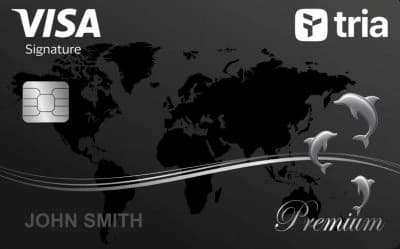
1. Tria Premium Card
Self-Custody Premium: 6% Cashback + Zero ATM Fees

2. Plasma One Platinum Card
Premium Self-Custodial Visa - 4% Base, 10% AI, 10% Flights, Lounge Access, Boosted 5% Yield
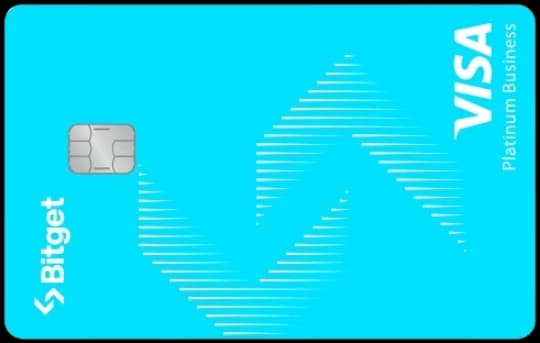
3. Bitget Card
Trade and Spend: Up to 8% BGB Cashback for Bitget Traders
4. Gnosis Pay Card
Your Keys, Your Card, Your Money
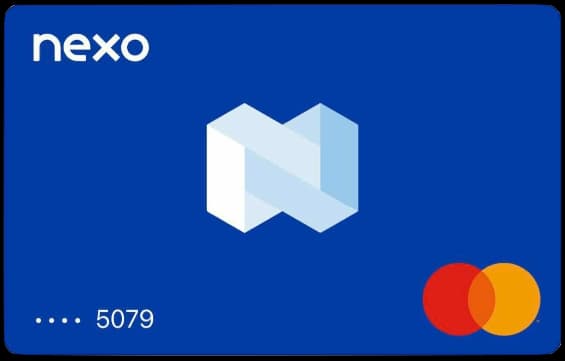
5. Nexo Dual Card
Credit/Debit Toggle: 2% Rewards + Up to 14% APY on Idle Balance
6. COCA Visa Card
Self-Banking: 8% Cashback + 5% APY + 0% FX
7. Kolo Card
Earn Bitcoin on Purchases: 2% for 30 Days, Then 1% (Capped) + Visa Platinum + 170+ Countries

8. Plutus Visa Card
Non-Custodial PLU Rewards on Eligible Spend + Lifestyle Perks

9. Xplace Platinum Card
10% Off Platinum with SPENDNODE: Pay $899.10 Instead of $999
Complete list:
All 51 crypto cards available in Finland in September 2026
This table includes every crypto card we currently track for Finland. Rows marked Top pick are ranked and reviewed above.
| Crypto card | Max rewards | Annual fee | FX fee | Type | Custody |
|---|---|---|---|---|---|
1 Tria Premium CardTop pick | Up to 6% rewards | $200 with code | 1% | Debit | Self-custody |
2 Plasma One Platinum CardTop pick | Up to 4% rewards | Free | 0% | Crypto Backed Credit | Self-custody |
3 Bitget CardTop pick | Up to 8% rewards | Free | 0% | Debit | Custodial |
4 Gnosis Pay CardTop pick | Up to 5% rewards | Free | 0% | Debit | Self-custody |
5 Nexo Dual CardTop pick | Up to 2% rewards | Free | 0.2% | Crypto Backed Credit | Hybrid |
6 COCA Visa CardTop pick | Up to 8% rewards | Free | 0% | Debit | Self-custody |
7 Kolo CardTop pick | Up to 2% rewards | Free | 0% | Prepaid | Custodial |
8 Plutus Visa CardTop pick | Up to 9% rewards | $240 | 2.5% | Debit | Non-custodial |
9 Xplace Platinum CardTop pick | Up to 2% rewards | $999 | 0% | Crypto Backed Credit | Self-custody |
| Up to 10% rewards | Free | 3% | Debit | Hybrid | |
| Up to 8% points | Free | 0.4% | Debit | Custodial | |
12 | Up to 8% rewards | TBD | 0% | Prepaid | Custodial |
| Up to 8% rewards | Free | 0% | Debit | Hybrid | |
| Up to 5% rewards | TBD | 0% | Prepaid | Custodial | |
| Up to 4.5% rewards | $87 with code | 1% | Debit | Self-custody | |
| Up to 4% rewards | TBD | 0% | Prepaid | Custodial | |
| Up to 3% rewards | $10000 | 0.5% | Prepaid | Custodial | |
| Up to 3% rewards | Free | 0% | Debit | Custodial | |
| Up to 3% rewards | $199 | 0.5% | Crypto Backed Credit | Self-custody | |
| Up to 3% rewards | $299.9 | 0% | Prepaid | Custodial | |
| Up to 3% rewards | $129 | 1.2% | Prepaid | Custodial | |
| Up to 3% rewards | Free | 0% | Debit | Hybrid | |
| Up to 2% rewards | Free | 0% | Debit | Custodial | |
| Up to 2% rewards | Free | 0% | Debit | Self-custody | |
| Up to 2% rewards | $1000 | 0.5% | Prepaid | Custodial | |
| Up to 2% rewards | Free | 0% | Debit | Custodial | |
| Up to 2% rewards | Free | 1% | Crypto Backed Credit | Self-custody | |
| Up to 2% rewards | $49.9 | 0% | Prepaid | Custodial | |
| Up to 1.5% rewards | Free | 0.5% | Prepaid | Custodial | |
| Up to 1.5% rewards | Free | 0.5% | Prepaid | Custodial | |
| Up to 1.5% rewards | Free | 1% | Debit | Self-custody | |
| Up to 1.5% rewards | $249 | 0.25% | Crypto Backed Credit | Self-custody | |
| Up to 1% rewards | Free | 0% | Debit | Custodial | |
| Up to 1% rewards | Free | 1.75% | Debit | Self-custody | |
| Up to 1% rewards | Free | 1% | Debit | Self-custody | |
| Up to 1% rewards | Free | TBD | Prepaid | Custodial | |
| Up to 1% rewards | $99 | 0.5% | Crypto Backed Credit | Self-custody | |
| Up to 0.5% rewards | Free | 0% | Debit | Hybrid | |
| Up to 0.5% rewards | Free | 1% | Crypto Backed Credit | Self-custody | |
| none | Free | 0% | Prepaid | Custodial | |
| Varies | Free | 1.7% | Prepaid | Custodial | |
| cashback | Free | 1.75% | Prepaid | Self-custody | |
| cashback | $199 | 0.75% | Prepaid | Self-custody | |
| cashback | Free | 0.5% | Prepaid | Custodial | |
| none | Free | 1% | Prepaid | Self-custody | |
| none | Free | 1% | Debit | Self-custody | |
| Varies | Free | 1.5% | Debit | Custodial | |
| Varies | Free | 1.2% | Prepaid | Custodial | |
| Varies | Free | 1.2% | Prepaid | Custodial | |
| Varies | Free | 1.2% | Prepaid | Custodial | |
| points | Free | 1% | Debit | Self-custody |
Crypto Card Regulation in Finland
FIN-FSA and the Nordic Compliance Standard
The Finanssivalvonta (FIN-FSA, Financial Supervisory Authority) regulates all crypto asset service providers operating in Finland. Since the entry into force of the Act on Virtual Currency Providers (572/2019), all VASPs serving Finnish customers must register with FIN-FSA and comply with AML/CTF requirements.
As of 2024, Finland fully applies MiCA, bringing crypto card issuers under the same EU-wide CASP licensing framework.
FIN-FSA has historically taken a strict, enforcement-first approach consistent with broader Nordic regulatory culture. The authority has rejected or revoked registrations from providers failing to meet compliance standards, including several that attempted to serve Finland from outside the EEA without proper authorization. Suomen Pankki (Bank of Finland) provides complementary oversight on monetary policy and payment system stability.
For crypto card users, the practical impact is straightforward: all major card issuers serving Finland operate under EEA-wide licenses that FIN-FSA recognizes through MiCA passporting.
Gnosis Pay holds a Lithuanian EMI license, Plutus operates under UK and EU authorizations, and exchange-linked cards from Crypto.com use third-party issuers licensed within the EEA.
Bitpanda holds its own Austrian license, valid across the EEA.
Finland also has specific advertising regulations for financial products. FIN-FSA requires that crypto-related marketing include risk disclosures, and has issued warnings about misleading crypto promotions. This affects how card issuers market in Finland but does not restrict availability.
Vero Guidance Update (December 2025): The Finnish Tax Administration issued Guidance No. VH/3057/00.01.00/2025, adding new material on payment cards linked to crypto-asset user accounts, margin trading, and locking of crypto assets. This is the first time Vero has specifically addressed crypto card usage in its guidance.
CARF/DAC8 reporting (from 2026): Starting tax year 2026, crypto asset service providers must collect and report user identity, purchase, sale, and transfer data to Vero.
Finland's implementation goes broader than the EU DAC8 minimum: providers must supply enough data for Vero to calculate capital gains and losses directly. First annual returns due to Vero in 2027.
FIN-FSA's strict compliance stance means Finnish residents should only use EEA-licensed card issuers. Check FIN-FSA's public register to verify any provider's status before depositing funds.
Tax Treatment of Card Rewards in Finland
Capital Income Tax at 30-34%: The Math That Drives Every Decision
Finland taxes crypto disposal gains as capital income, generally at 30% up to EUR 30,000 of total capital income and 34% above that. There is no general holding-period exemption.
Under Vero's small-disposal rule, gains can be exempt if the combined sale proceeds of qualifying property disposals during the tax year do not exceed EUR 1,000. This is a threshold on proceeds across eligible disposals, not a EUR 1,000 crypto-gain allowance. Normal card spending will usually exceed it.
Worked Tax Examples
Example 1: BTC spending (expensive). You acquired 0.1 BTC at EUR 3,000. It is now worth EUR 9,000. You spend EUR 900 through your card on a weekend at Koli National Park. Gain on disposal = EUR 600 (cost basis for 10% of your holding was EUR 300). Tax = EUR 180 (30%). Your EUR 900 weekend actually cost EUR 1,080 after tax.
Example 2: USDC spending (optimal). Same weekend, same EUR 900 spend, but funded with USDC purchased at EUR 900. Gain = EUR 0. Tax = EUR 0. Your weekend cost exactly EUR 900. This is the only rational approach for personal spending.
Example 3: Capital income crossing EUR 30,000. If a Finnish resident has EUR 50,000 of taxable crypto gains and no other capital income, the first EUR 30,000 at 30% is EUR 9,000 and the remaining EUR 20,000 at 34% is EUR 6,800, or EUR 15,800 in total. Recently acquired stablecoins might produce little price gain on disposal, but cashback is assessed separately under its own terms.
Example 4: Borrow-to-spend (tax deferral). You hold 5 ETH worth EUR 15,000. Instead of selling, you borrow EUR 2,000 against it through the Nexo credit line and spend that on the card. No disposal occurred, so no tax is triggered. Your ETH stays in the collateral position. You only owe tax when you eventually sell ETH to repay the loan or close it out. At 30% tax, deferring EUR 2,000 of gains saves EUR 600 in current-year tax liability.
Example 5: Cashback taxation. Vero distinguishes crypto cashback that requires holding or locking crypto from a minimum purchase-based reward available without such a requirement.
If a EUR 1,200 BGB reward is taxable at receipt, the 30% capital-income tax would be EUR 360 and its reported receipt value becomes its acquisition cost. If the same reward qualifies as a tax-exempt purchase rebate, there is no receipt tax, but its acquisition cost is generally zero for a later disposal. Do not apply one rule to every cashback tier.
| Funding Method | Taxable Event? | Rate | When Triggered | Annual Impact (EUR 2,000/mo spend) |
|---|---|---|---|---|
| USDC/USDT (stablecoin) | No | 0% | Never | EUR 0 tax on disposal |
| BTC/ETH (2x appreciated) | Yes | 30-34% | At each spend | approx. EUR 3,600 tax on EUR 12,000 gains |
| Crypto cashback received | Depends on qualification terms | 0% or 30-34% at receipt | Receipt and later disposal | Staking/lock requirement changes treatment |
| Points/perks (PLU rebates) | Unclear | Likely 0% | Debated | Minimal until converted |
| Borrow-to-spend (Nexo credit line) | No | 0% | Deferred | EUR 0 current-year tax |
Loss Harvesting
Finland allows eligible capital losses to offset capital gains first, then other capital income if gains are insufficient. Unused losses can be carried forward for five years, as Vero explains. There is no general EUR 1,500 annual cap on that offset.
Vero's small-disposal rules can also affect whether a loss is deductible. Keep lot-level records; do not assume every price decline is immediately deductible.
Report all crypto transactions on the annual pre-filled tax return (esitaytetty veroilmoitus) via OmaVero. Vero has begun receiving exchange data through DAC8 information sharing and actively cross-references reported income. Finland is not a jurisdiction where unreported crypto gains go unnoticed.
How to Apply from Finland
KYC: Finnish Digital Identity
Finnish crypto card applications require a henkilokortti (Finnish ID card) or passi (passport) for citizens. The henkilotunnus (personal identity code, HETU, format DDMMYY-XXXX, 11 characters) is the primary identifier for all financial services in Finland. Every card issuer operating in the EEA will request this code during registration.
EU/EEA citizens residing in Finland can use their national ID card under eIDAS mutual recognition. Non-EU residents need a oleskelulupa (residence permit) plus passport. Finland's digital infrastructure supports bank-based strong authentication (Finnish Trust Network / Suomi.fi tunnistus), which some card platforms may accept for step-up verification.
Proof of address: sahkolasku (electricity bill from Helen, Fortum, or Vattenfall), tiliote (bank statement from Nordea, OP, or Danske Bank), or vuokrasopimus (rental agreement). Registration with the Digi- ja vaestotietovirasto (DVV, Digital and Population Data Services Agency) provides an official address record that most issuers accept.
Physical cards ship to Finnish addresses within 5-10 business days via standard EU postal services. Posti (Finnish Post) handles last-mile delivery. Virtual cards activate immediately and can be added to cards with Apple Pay or Google Pay within minutes. Given Finland's strong contactless infrastructure, a virtual card is fully functional from day one.
Spending Tips for Finland
The 30-34% Rule: Stablecoin or Lose
Finland's two-bracket capital income tax makes funding strategy the dominant variable in crypto card profitability. At 30-34%, every euro of gain spent from appreciated crypto costs 30-34 cents in tax. The break-even math is unambiguous: if your BTC has doubled, you lose 15-17% of every purchase to tax on the gain portion alone. Stablecoin funding eliminates this entirely.
| Annual Spend: EUR 24,000 | BTC (2x appreciated) | USDC (stablecoin) | Difference |
|---|---|---|---|
| Gross cashback at 7.1% (Bitget net) | EUR 1,704 | EUR 1,704 | EUR 0 |
| Tax on disposal gains (30%) | EUR 3,600 | EUR 0 | EUR 3,600 |
| Tax on cashback, if receipt is taxable (30%) | EUR 511 | EUR 511 | EUR 0 |
| Net annual position | -EUR 2,407 | +EUR 1,193 | EUR 3,600 |
Under the table's assumed 30% rate and taxable-at-receipt cashback, the BTC spender loses EUR 2,407 while the USDC spender gains EUR 1,193 net. The EUR 3,600 difference comes from the assumed BTC disposal gain; it is not a universal result for every funding source or reward tier. Check the actual reward conditions before applying the cashback row.
Card Selection for Finnish Residents
- Tria Premium (6% on the first $2,000/mo, then 1%, $250/yr): Self-custody Visa debit with a 1% FX fee and 0.5% per payment (about 4.5% net on euro spend) plus Visa Luxury Hotel benefits. The $2,000 high-rate band covers a full Helsinki budget, with no token to stake. The strongest accessible no-token pick for most residents.
- Xplace Platinum (2% USDC in Credit Mode, capped at $250/mo; 0% FX; $999/yr): USDC cashback limits reward-token volatility; its receipt tax treatment depends on the reward rules. The 0% FX covers SEK and NOK trips and lounges include Helsinki-Vantaa. The annual fee and borrowing costs limit its appeal as a rewards card.
- Plasma One Platinum (4% XPL, 100k XPL lock, 0% FX): Self-custodial Visa with up to $20/month rebated toward each of ChatGPT Plus and Claude Pro. Cashback pays in volatile XPL (taxed at receipt, then a second chain on disposal) and the 12-month lock carries token-price risk.
- Bitget (net 7.1% after 0.9% tx fee): Highest raw return, but only at the top tier, which needs a large BGB position (around $40,000). Below that, the rate drops well under 8%. At EUR 2,000/month the top tier nets approx. EUR 1,704 before cashback tax.
- Gnosis Pay (up to 5% GNO, free): No staking requirement, no subscription tiers to manage. Tiered GNO rewards with self-custody. Your EUR stays in your own Gnosis Safe until the transaction settles.
- Nexo (borrow-to-spend, up to 2% NEXO): The tax-deferral instrument. Spend from a crypto-backed credit line instead of selling and the 30-34% disposal tax is deferred, holding back roughly EUR 300 of tax per EUR 1,000 of gains you would otherwise realize. EEA FX is 0.2% on weekdays.
- COCA (up to 8%, free card): Non-custodial Visa with 0% FX and 5% APY on eligible idle USD. The 8% rate needs COCA staking; the free Starter tier pays 1%.
- Kolo (1% ongoing BTC, 2% intro, free): Free BTC-payout card with direct SEPA bank send to any Finnish IBAN. BTC payout creates a 30-34% disposal chain on each spend, a drawback vs USDC-paying alternatives.
- Plutus (3-9% + perks): The domestic EUR perk optimizer. Netflix, Spotify, Amazon Prime, and Disney+ are eligible for PLU rebates. Plans start at GBP 6.99/month (Starter, 1 perk, GBP 250 eligible spend), GBP 9.99/month (Everyday, 2 perks, GBP 500), or GBP 19.99/month (Premium, 3 perks, GBP 1,000). The 2.5% non-domestic FX fee means Plutus is best used for EUR-denominated domestic spending only.
- Crypto.com Icy (4%): Airport lounge access at Helsinki-Vantaa (HEL), useful for frequent Nordic travelers. CRO stake required.
Break-Even: Tria vs Bitget vs Plutus vs Gnosis Pay
| Monthly Spend | Tria Premium (6% to $2K/mo, $250/yr, 1% FX + 0.5%/payment) | Bitget (8% - 0.9% tx) | Plutus Premium (3% base, GBP 1,000 cap, 3 perks, GBP 240/yr sub) | Gnosis Pay (up to 5% GNO) |
|---|---|---|---|---|
| EUR 800 | EUR 202/yr | EUR 682/yr | EUR 288 + EUR 420 perks - EUR 240 sub = EUR 468/yr | EUR 480/yr |
| EUR 1,500 | EUR 580/yr | EUR 1,278/yr | EUR 360 + EUR 420 - EUR 240 = EUR 540/yr CAPPED | EUR 900/yr |
| EUR 2,500 | EUR 724/yr | EUR 2,130/yr | EUR 540/yr CAPPED | EUR 1,500/yr |
| EUR 4,000 | EUR 634/yr | EUR 3,408/yr | EUR 540/yr CAPPED | EUR 2,400/yr |
Plutus is capped by eligible spend: above GBP 1,000/month, no additional cashback accrues. At EUR 800/month Plutus still delivers EUR 468/year net (perks minus subscription), but at EUR 1,500+ it flatlines at EUR 540/year while Bitget and Gnosis Pay scale linearly.
Gnosis Pay at its top tier overtakes Plutus at EUR 800/month and scales without cap. Bitget leads on raw cashback at every spend level, but those figures assume its top BGB-staking tier (around $40,000 locked).
Tria Premium's net trails Gnosis Pay here once its 1% FX and 0.5% per-payment fees are counted, but it is the only one of these picks that needs no token or subscription at all (Gnosis still wants 100+ GNO for its 4-5%), which is why it earns the no-lockup slot for a token-averse spender.
Helsinki Cost of Living Context
A realistic monthly budget for a single person in Helsinki: rent EUR 900-1,400 (Kallio, Sornainen EUR 900-1,100; Kamppi, Eira EUR 1,200-1,400; Espoo suburbs EUR 700-1,000), groceries EUR 300-450 (K-Citymarket, S-Market, Lidl), dining out EUR 150-300, HSL monthly pass EUR 62.70 (AB zones), utilities EUR 100-150, subscriptions EUR 50-100. Total: EUR 1,560-2,460/month of card-eligible spending.
Tampere runs 15-20% cheaper: rent EUR 600-1,000, groceries EUR 250-350. Oulu, Turku, and Jyvaskyla are cheaper still. The 30% tax bracket threshold (EUR 30,000 in gains, not spending) is unlikely to be reached through card spending alone at typical Finnish spending levels.
At EUR 2,000/month on Bitget at its top BGB tier with USDC funding: EUR 1,704/year net cashback minus approx. EUR 511 cashback tax = EUR 1,193 after tax. That covers 3 months of groceries from K-Citymarket or 19 months of HSL transit passes.
Local Payment Infrastructure
Finland is a largely cashless nation. The K-Group (K-Citymarket, K-Supermarket, K-Market) and S-Group (Prisma, S-Market, Sale, Alepa) duopoly covers the vast majority of grocery shopping, and both fully support contactless Visa and Mastercard. Lidl, Tokmanni, H&M, Stockmann, and most chain retailers accept contactless payments.
HSL (Helsingin seudun liikenne, Helsinki Regional Transport) accepts contactless bank cards directly at turnstiles and on buses. Tap your crypto card on the HSL reader for a single-trip fare. This makes a crypto card a transit payment method in the Helsinki metropolitan area.
Apple Pay and Google Pay work everywhere contactless terminals exist. MobilePay (owned by Danske Bank) and Siirto (by OP Financial Group) are popular for peer-to-peer transfers but are bank-account-linked, not compatible with crypto cards.
Cash-only spots are rare in Finnish cities. Some market stalls at the Hakaniemi or Hietalahti markets, and occasional small rural shops or cottage-area (mokki) services in Lakeland or Lapland might require cash, but these are exceptions.
Cross-Border Spending: Nordic and Baltic Routes
Finland's geography creates natural cross-border spending patterns:
- Tallinn (EUR zone): The 2-hour Tallink or Viking Line ferry is one of Europe's most popular day trips. Zero FX on EUR spending. Tallinn is cheaper than Helsinki, so Finnish residents regularly shop and dine there. Crypto card cashback on ferry tickets and Tallinn purchases is pure upside.
- Stockholm (SEK zone): An overnight Viking Line or Silja Line ferry. Nordea charges 1.5% FX on SEK. A 0% FX crypto card saves EUR 15 per EUR 1,000 spent in Sweden.
- Lapland/Nordkapp road trips (NOK zone): Norwegian krone purchases through traditional Finnish banks cost 1.5-2% in FX markup. A 0% FX crypto card with 4-8% cashback turns cross-border spending into a net positive.
- Baltic road trips (EUR zone): Latvia and Lithuania both use EUR, so zero FX applies through Estonia, Latvia, and Lithuania.
For Finnish professionals commuting to Tallinn (an increasingly common arrangement), every ferry ticket, Tallinn restaurant meal, and Estonian Bolt ride paid with a crypto card earns cashback that traditional Finnish bank cards cannot match.
Online Shopping and SaaS Subscriptions
Finland's long winters drive significant online shopping. Zalando, Amazon.de, and local platforms like Verkkokauppa.com and XXL all accept Visa and Mastercard. EUR-denominated purchases incur zero FX. For USD-billed SaaS subscriptions (GitHub, AWS, Notion, ChatGPT), a 0% FX fee crypto card avoids the 1.5% markup Nordea or OP would charge, saving EUR 15-30/year on typical developer tool subscriptions.
Supported Exchanges & Wallets in Finland
Card Issuers Serving Finland
Finland's crypto card market is shaped by its 5.6 million tech-savvy residents, near-universal digital literacy, and the highest per-capita mobile banking usage in the Nordics. The country that produced Nokia, Supercell, and Wolt understands digital finance intuitively, and the adoption curve for crypto cards is steeper here than the population size might suggest.
EEA-native issuers benefit from Finland's eurozone membership and MiCA passporting. Gnosis Pay earns up to 5% GNO cashback with full self-custody on Gnosis Chain, which fits Finland's blockchain developer community.
Kolo offers a free 1% ongoing BTC payout (2% intro) with direct SEPA bank send to any Finnish IBAN. Tria offers self-custody debit cards paying up to 6% capped cashback in USDT, with a 1% FX fee and 0.5% per payment (about 4.5% net).
Plutus appeals to Finnish subscription culture through its perk rebate system (Netflix, Spotify, Amazon Prime), but plans start at GBP 6.99/month with no free tier, the Premium costs GBP 240/year, eligible spend is capped at GBP 250-1,000/month, and a 2.5% non-domestic FX fee applies to non-EUR transactions.
Bitpanda offers straightforward 1% from its Austrian base, and Wirex provides up to 8% at higher tiers. Ready brought Starknet self-custody, but its card program is currently unavailable after its card issuer began winding down.
Tax deferral through borrow-to-spend is valuable in Finland due to the 30-34% capital income tax. Nexo lets you spend from a crypto-backed credit line against your holdings without triggering a disposal, with up to 2% NEXO cashback on top. At 30% tax, deferring a EUR 5,000 gain holds back EUR 1,500 of current-year tax. For Finns sitting on significant unrealized gains, that is a practical tax-planning tool, not a niche product.
Local exchanges: Northcrypto (Oulu-based, FIN-FSA registered) and Coinmotion (Jyvaskyla-based, FIN-FSA registered) are Finland's domestic crypto exchanges. Neither offers a Visa or Mastercard card product. They serve primarily as EUR on-ramps for Finnish residents who prefer a domestic regulated entity for fiat-to-crypto conversion before loading funds onto a separate crypto card.
Wallet-based options include MetaMask (1-3%), Ledger CL (1%, hardware wallet), COCA (up to 8% with 5% APY on eligible USD), and Solflare (card paused as of July 28, 2026).
Custody mechanics differ: MetaMask and Ledger preserve direct key control, while COCA uses a Privy-managed smart wallet.
For Finland's privacy-conscious tech community, self-custody cards mean your funds are never held by a third party until the moment you pay.
Finland combines high digital literacy, clear Vero tax guidance, eurozone settlement, and strong contactless acceptance to give it one of the smoother crypto card environments in the Nordics. The main drag is the 30-34% tax, which stablecoin funding and borrow-to-spend strategies effectively neutralize.
Written by SpendNode Editorial
Frequently Asked Questions
What is Finland's crypto tax rate for card spending?
30% on capital gains up to EUR 30,000, 34% above that. Spending crypto through a card is a taxable disposal event. Fund with USDC to minimize gains. Vero issued Guidance VH/3057/00.01.00/2025 specifically addressing crypto card usage.
Which crypto card is best for Finnish residents?
Tria Premium (6% on the first $2,000/mo then 1%, with a 1% FX fee and 0.5% per payment netting about 4.5% on euro spend, self-custody, $250/yr) is the strongest accessible no-token pick for typical Helsinki spend. Bitget reaches 7.1% net but only at its top BGB-staking tier (roughly $40,000 locked), so for most users it runs well below the 8% headline.
Gnosis Pay (up to 5% GNO, self-custody) and Kolo (1% ongoing BTC, 2% intro, free) cover the simpler cashback cases, while Nexo's credit line defers the 30-34% tax by letting you borrow against collateral instead of selling. Finland uses EUR, so the 0%-FX cards (Gnosis, Kolo, COCA) carry no domestic FX; Tria settles in USD and charges 1% FX even on euro spend.
Can I offset crypto losses against card spending gains?
Yes. Capital losses can offset capital gains in Finland for the current year and following 5 years. Losses can also offset up to EUR 1,500 of other capital income. FIFO accounting applies unless you track specific lots.
How does Vero track crypto card transactions?
From tax year 2026, CARF/DAC8 requires crypto service providers to report user transactions to Vero. Finland's implementation is broader than EU minimum - providers must supply enough data for Vero to calculate gains/losses directly. First returns due 2027.
Other Countries
View all 112 countries →


Latest Page Changes to the Best Crypto Cards in Finland Guide
- xPlace Platinum now sits lower in the Finnish ranking: new Credit Mode memberships earn 2% USDC to a $250 monthly cap. Its 0% FX and Helsinki-Vantaa lounges matter more than cashback for most card budgets
- Vero Guidance VH/3057/00.01.00/2025 (Dec 2025) specifically addressing crypto card usage
- CARF/DAC8 reporting (Finland's broader-than-EU implementation, first returns 2027)