

Best Crypto Cards in Malta (2026)
Malta still gives crypto-card users one of Europe's cleaner setups, but only if the page math respects the real tier caps, FX costs, and income-versus-investment split. This guide compares the cards that actually make sense under Malta's MiCA-era regime.
Verified for Malta
53 crypto cards available
Local currency: EUR
Opening a bank account in Malta is one of the most frustrating experiences in the EU. Bank of Valletta, which controls roughly 45% of the retail market, has a weeks-long onboarding process, requires in-branch visits, and routinely rejects non-Maltese applicants with incomplete documentation. HSBC Malta is marginally faster but still paper-heavy.
APS Bank and Lombard Bank serve smaller niches. For a country that branded itself "Blockchain Island" in 2018, the traditional banking experience remains stubbornly analog.
Crypto cards bypass this entirely. An EEA-licensed card like Plutus or Gnosis Pay can be set up in minutes with a Maltese ID or any EU national ID, no branch visit required. In our Malta guide, the EEA membership and euro settlement mean access to the full range of European crypto cards with zero currency conversion cost.
Malta's tax treatment turns on the type of token and the nature of the activity. Its published guidance puts ordinary payment coins outside capital-gains tax, while business trading profits and some financial tokens can still be taxable.
Summary:
Which crypto cards are best in Malta?
The best crypto cards in Malta in September 2026 are Gnosis Pay Card, Bitget Card, Plutus Visa Card, ether.fi Core Card, and Private (Icy White / Rose Gold). The detailed ranking below explains the local tax, fee, and availability trade-offs.
| Crypto card | Base reward | Net after fees | Annual fee | FX fee | Type |
|---|---|---|---|---|---|
| 1% baseup to 5% with 100 GNO + OG NFT; weekly eligible-spend cap $250-$1,250 by tier | 1% | Free | 0% | Debit | |
| 0.5% baseup to 8% by holding 20,000+ BGB | 0.5% | Free | 0% | Debit | |
| 3% baseup to 9% by stacking PLU; allowance-capped per plan | 0.5% | $240 | 2.5% | Debit | |
| 3% base3% on the first $2,000/month, then 1% and 0.5% | 2.5% | Free | 0.5% | Crypto Backed Credit | |
| 4% baseneeds a $50k CRO stake to hold the tier | 4% | TBD | 0% | Prepaid |
Plutus reaches up to 9% PLU cashback with subscription rebates (1-3 perks), though the GBP 240/year Premium cost and GBP 1,000/month eligible spend cap limit its advantage over free alternatives. Gnosis Pay offers self-custody spending directly from a Safe wallet at up to 5% GNO cashback (1% base, scaling with GNO held) with no annual fee.
Bitget provides the highest raw rate for residents comfortable with exchange-linked staking. For anyone currently struggling with Bank of Valletta's onboarding, any of these cards provides a functional EUR spending account within 24 hours.
Best Card For Every Need in Malta
Top 5 Crypto Cards in Malta
Malta's "Blockchain Island" history and iGaming-driven fintech literacy mean residents here are unusually comfortable with crypto products. Plutus reaches 9% with subscription rebates (1-3 perks) but costs GBP 240/year on Premium with a GBP 1,000/month eligible spend cap. Gnosis Pay fits Malta's self-custody demand, since the island's VFA Act community already understands on-chain custody.
Bitget is the high-cashback exchange option. ether.fi Core starts at 3% in ETHFI and gives users a choice between spending supported stablecoins directly and borrowing against eligible collateral. Crypto.com Icy rounds out the list for users who want a familiar metal-card setup with lounge access and CRO rewards.
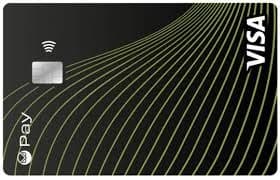
1. Gnosis Pay Card
Your Keys, Your Card, Your Money
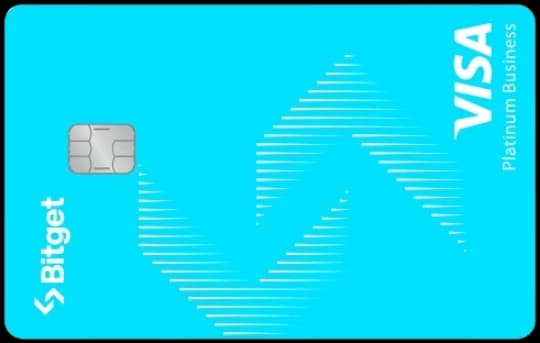
2. Bitget Card
Trade and Spend: Up to 8% BGB Cashback for Bitget Traders

3. Plutus Visa Card
Non-Custodial PLU Rewards on Eligible Spend + Lifestyle Perks

4. ether.fi Core Card
3% Back on the First $2,000 Each Month, No Stake Required
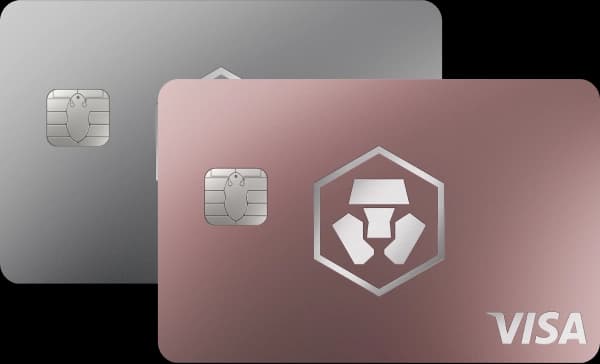
5. Private (Icy White / Rose Gold)
Private Tier: 4% Uncapped Cashback + Lounge Guest
Complete list:
All 53 crypto cards available in Malta in September 2026
This table includes every crypto card we currently track for Malta. Rows marked Top pick are ranked and reviewed above.
| Crypto card | Max rewards | Annual fee | FX fee | Type | Custody |
|---|---|---|---|---|---|
1 Gnosis Pay CardTop pick | Up to 5% rewards | Free | 0% | Debit | Self-custody |
2 Bitget CardTop pick | Up to 8% rewards | Free | 0% | Debit | Custodial |
3 Plutus Visa CardTop pick | Up to 9% rewards | $240 | 2.5% | Debit | Non-custodial |
4 ether.fi Core CardTop pick | Up to 3% rewards | Free | 0.5% | Crypto Backed Credit | Self-custody |
5 Private (Icy White / Rose Gold)Top pick | Up to 4% rewards | TBD | 0% | Prepaid | Custodial |
| Up to 10% rewards | Free | 3% | Debit | Hybrid | |
| Up to 8% rewards | Free | 0% | Debit | Self-custody | |
| Up to 8% rewards | TBD | 0% | Prepaid | Custodial | |
| Up to 8% rewards | Free | 0% | Debit | Hybrid | |
| Up to 6% rewards | $200 with code | 1% | Debit | Self-custody | |
| Up to 5% rewards | TBD | 0% | Prepaid | Custodial | |
| Up to 4.5% rewards | $87 with code | 1% | Debit | Self-custody | |
| Up to 4% rewards | Free | 0% | Crypto Backed Credit | Self-custody | |
| Up to 4% rewards | Free | 0% | Crypto Backed Credit | Self-custody | |
| Up to 3% rewards | Free | 0.25% | Crypto Backed Credit | Self-custody | |
| Up to 3% rewards | Free | 0% | Crypto Backed Credit | Self-custody | |
| Up to 3% rewards | $10000 | 0.5% | Prepaid | Custodial | |
| Up to 3% rewards | $199 | 0.5% | Crypto Backed Credit | Self-custody | |
| Up to 3% rewards | $299.9 | 0% | Prepaid | Custodial | |
| Up to 3% rewards | $129 | 1.2% | Prepaid | Custodial | |
| Up to 3% rewards | Free | 0% | Debit | Hybrid | |
| Up to 2% rewards | Free | 0% | Debit | Custodial | |
| Up to 2% rewards | Free | 0% | Debit | Self-custody | |
| Up to 2% rewards | $1000 | 0.5% | Prepaid | Custodial | |
| Up to 2% rewards | Free | 0% | Prepaid | Custodial | |
| Up to 2% rewards | Free | 0% | Debit | Custodial | |
| Up to 2% rewards | Free | 0.2% | Crypto Backed Credit | Hybrid | |
| Up to 2% rewards | Free | 1% | Crypto Backed Credit | Self-custody | |
| Up to 2% rewards | $49.9 | 0% | Prepaid | Custodial | |
| Up to 2% rewards | $999 | 0% | Crypto Backed Credit | Self-custody | |
| Up to 1.5% rewards | Free | 0.5% | Prepaid | Custodial | |
| Up to 1.5% rewards | Free | 0.5% | Prepaid | Custodial | |
| Up to 1.5% rewards | Free | 1% | Debit | Self-custody | |
| Up to 1.5% rewards | $249 | 0.25% | Crypto Backed Credit | Self-custody | |
| Up to 1% rewards | Free | 0% | Debit | Custodial | |
| Up to 1% rewards | Free | 1.75% | Debit | Self-custody | |
| Up to 1% rewards | Free | 1% | Debit | Self-custody | |
| Up to 1% rewards | Free | TBD | Prepaid | Custodial | |
| Up to 1% rewards | $99 | 0.5% | Crypto Backed Credit | Self-custody | |
| Up to 0.5% rewards | Free | 0% | Debit | Hybrid | |
| Up to 0.5% rewards | Free | 1% | Crypto Backed Credit | Self-custody | |
| none | Free | 0% | Prepaid | Custodial | |
| Varies | Free | 1.7% | Prepaid | Custodial | |
| cashback | Free | 1.75% | Prepaid | Self-custody | |
| cashback | $199 | 0.75% | Prepaid | Self-custody | |
| cashback | Free | 0.5% | Prepaid | Custodial | |
| none | Free | 1% | Prepaid | Self-custody | |
| none | Free | 1% | Debit | Self-custody | |
| Varies | Free | 1.5% | Debit | Custodial | |
| Varies | Free | 1.2% | Prepaid | Custodial | |
| Varies | Free | 1.2% | Prepaid | Custodial | |
| Varies | Free | 1.2% | Prepaid | Custodial | |
| points | Free | 1% | Debit | Self-custody |
Crypto Card Regulation in Malta
Malta's 2018 framework combined the Virtual Financial Assets Act, the Virtual Financial Assets Regulations, the Innovative Technology Arrangements and Services Act, and the Malta Digital Innovation Authority Act.
This legislation formed the basis of Malta's "Blockchain Island" brand and attracted global attention.
The Malta Financial Services Authority (MFSA) regulates all crypto-asset service providers under this framework. Malta's system is unique in requiring a licensed VFA Agent to act as intermediary between crypto companies and the MFSA, similar to how auditors mediate between companies and tax authorities.
VFA Agents conduct due diligence, prepare applications, and provide ongoing compliance oversight. This adds cost but creates a structured pathway that some firms prefer over less predictable regulatory processes elsewhere.
The reality behind "Blockchain Island" was more complex than the branding suggested. Major exchanges that relocated to Malta in 2018-2019 (including OKX and Binance) later moved operations elsewhere. The MFSA was initially overwhelmed by the volume of VFA license applications and processed them slowly.
By 2023, fewer than 20 entities held full VFA Class licenses, far fewer than the hundreds that had expressed interest. The framework works, but it attracted more attention than it could operationally absorb in its early years.
The MFSA is Malta's MiCA authority. The VFA-to-CASP transition has ended; a former VFA licence alone no longer covers MiCA-regulated services. Check a provider's current CASP authorization or EEA passport.
Malta's head start in crypto regulation means its regulators have more institutional experience than most EU counterparts, even if the original "Blockchain Island" vision evolved differently than expected.
EEA-licensed crypto card issuers operate in Malta under MiCA passporting rights. Crypto.com, Plutus, Wirex, Gnosis Pay, and Bitpanda all serve Maltese residents through their EEA licenses, regardless of Malta-specific VFA registration.
Tax Treatment of Card Rewards in Malta
The Commissioner for Revenue's DLT tax guidelines distinguish payment coins, financial tokens, and utility tokens. Ordinary coins used as payment or a store of value fall outside capital-gains tax. Profits from a business of exchanging coins, coins held as trading stock, mining on revenue account, and returns on financial tokens may be income.
A financial token can fall within capital-gains rules if it qualifies as a security. There is no general 15% final-withholding election for all crypto card disposals.
For personal card spending from ordinary payment coins, a price increase alone does not create a capital-gains charge under the CfR guidance. The result changes if the coins are part of a trading business or the asset is a financial token. Keep records of acquisition, reward receipt, and disposal to support that distinction.
| Scenario | Cost Basis | Card Spend | Gain | Relevant treatment | Note |
|---|---|---|---|---|---|
| Personally held BTC, acquired at EUR 500 | EUR 500 | EUR 2,000 | EUR 1,500 | Ordinary coin outside capital-gains tax | Business activity would differ |
| USDC bought at EUR 1,000 | EUR 1,000 | EUR 1,002 | EUR 2 | Ordinary coin treatment if used as payment | Document EUR values |
| Financial token used for payment | Case-specific | Case-specific | Case-specific | Income or capital-gains analysis may apply | Check token rights and activity |
| Coin earned through business activity | Receipt value | Case-specific | Case-specific | Business income rules can apply | Reward source matters |
The guidance does not assign one automatic tax rule to all card cashback. A purchase rebate, remuneration, staking yield, and a return attached to a financial token have different facts. Record the EUR value when received and confirm classification before treating a reward as taxable income or exempt coin appreciation.
Stablecoin funding can make spending values easier to reconcile, although a USD peg does not prevent EUR exchange-rate movement. It does not create a special tax exemption or remove the need to distinguish personal coin holdings from business stock.
Malta's coin-versus-token and personal-versus-business distinctions make a single headline rate misleading. The same card transaction can have different treatment depending on the asset and the holder's activity. Seek Maltese tax advice for business use or financial-token rewards.
How to Apply from Malta
Maltese crypto card applications require a Karta tal-Identita (Maltese Identity Card) issued by Identity Malta, or a Passaport Malti (Maltese Passport). The Numru tal-Identita (ID number, format: 7 digits + letter) is Malta's primary personal identifier and may be required for higher-tier verification.
EU/EEA citizens residing in Malta can use their national ID from any member state. Non-EU residents present their passport plus Permess ta' Residenza (residence permit) issued by Identity Malta. Malta's growing iGaming and financial services workforce means a large expat population, many of whom hold residence permits rather than Maltese citizenship.
Proof of address via utility bills from Enemalta (electricity), Water Services Corporation (water), or GO/Melita (telecoms). Bank statements from Bank of Valletta, HSBC Malta, APS Bank, or MeDirect are also accepted. Rental agreements (Ftehim tal-Kera) registered with the Housing Authority work for recently arrived residents.
EEA-licensed issuers process Maltese documents without issues. Physical cards ship to Malta within 7-14 business days. Virtual cards are available immediately for Apple Pay and Google Pay. Malta's compact geography (316 sq km, smaller than most EU cities) means a single postal address covers the entire country with no shipping complications.
Spending Tips for Malta
Match the Tax Treatment to the Asset
Ordinary payment coins held personally are outside Malta's capital-gains tax under the CfR guidance. Financial tokens and business trading stock require a separate analysis. Funding from stablecoins may simplify valuation, but it does not determine the tax result by itself.
For an appreciated personal BTC or ETH holding, the amount of price appreciation is still worth documenting even where the coin falls outside capital-gains tax. A frequent trading pattern or business inventory can bring the transaction into income tax instead.
Card Selection for Malta
- Plutus (up to 9%): Best everyday card. Subscription rebates on Netflix (EUR 13/mo), Spotify (EUR 10/mo), and Amazon Prime (EUR 50/yr) at paid tiers cover costs most residents already pay. PLU staking unlocks higher cashback percentages.
- Gnosis Pay (5% GNO): Best self-custody card. Spend from your Safe wallet. No intermediary holds your funds. 5% in GNO tokens with zero annual fee.
- Crypto.com Icy (4%): Metal card with CRO staking. Recognizable brand in Malta's crypto-aware market.
- ether.fi Core (3% ETHFI on the first $2,000/mo, then 1% through $5,000 and 0.5% above): direct stablecoin spending or optional collateral-backed borrowing, with 0% EUR FX.
Gnosis Pay vs Plutus vs Bitget at Malta Spending Levels
Malta's average salary is lower than Luxembourg or the Nordics but higher than most Southern European countries. A monthly card spend of EUR 1,200-2,000 is realistic for a professional, particularly in Sliema, St. Julian's, or Valletta where costs are highest.
| Monthly Spend | Gnosis Pay (5% GNO, free) | Plutus (3%, GBP 6.99/mo, capped) | Bitget (7.1% net, free) |
|---|---|---|---|
| EUR 800 | EUR 480/yr | EUR 7/yr (GBP 250 cap) + rebates | EUR 682/yr |
| EUR 1,200 | EUR 720/yr | EUR 7/yr (capped) + rebates | EUR 1,022/yr |
| EUR 2,000 | EUR 1,200/yr | EUR 7/yr (capped) + rebates | EUR 1,704/yr |
Gnosis Pay's up to 5% GNO (1% base, scaling with GNO held) with zero cost leads the free-tier options since Plutus no longer offers a free tier. Plutus plans start at GBP 6.99/month (Starter: 1 perk, GBP 250 eligible spend cap), GBP 9.99/month (Everyday: 2 perks, GBP 500 cap), and GBP 19.99/month (Premium: 3 perks, GBP 1,000 cap). With subscription rebates and staking, Plutus can exceed Gnosis Pay's return, but the eligible spend cap limits cashback at higher spending levels.
Spending Scenario: EUR 1,200/month (Malta Professional)
| Funding Method | Annual Spend | Cashback (5% Gnosis) | Tax Position | Reward Before Any Tax |
|---|---|---|---|---|
| USDC (stablecoin) | EUR 14,400 | EUR 720 | Ordinary coin if personal holding | EUR 720 |
| ETH (appreciated 50%) | EUR 14,400 | EUR 720 | Ordinary coin if personal holding; business use differs | EUR 720 |
| ether.fi Core, direct stablecoins | EUR 14,400 | EUR 432 in ETHFI | Reward classification separate | EUR 432 |
The table shows gross card rewards. The treatment of GNO or ETHFI rewards must be assessed separately. ether.fi Core can spend supported stablecoins directly, while borrowing adds credit costs and collateral risk.
Local Payment Infrastructure and the iGaming Factor
Malta's iGaming industry is directly relevant to crypto card adoption. Over 300 licensed gaming companies operate from Malta (EveryMatrix, Betsson, Kindred, LeoVegas before acquisition, Tipico). This means tens of thousands of professionals who work in digital payments daily. The fintech literacy of Malta's iGaming workforce is higher than almost any other EU market of this size. When you discuss self-custody or DeFi yield with a colleague in Sliema, the concept is not foreign.
Card acceptance on the main island is excellent. Valletta: Republic Street, Merchants Street, the Upper and Lower Barrakka areas, waterfront dining at the Grand Harbour, and the newly developed Valletta Waterfront promenade all have strong POS coverage.
Sliema and St. Julian's: The Strand, Tower Road, Spinola Bay, and Paceville nightlife district have strong contactless coverage. Shopping centers: The Point (Sliema), Bay Street (St. Julian's), and The PAMA Shopping Village (Mosta) all accept Visa/Mastercard contactless.
Supermarkets: PAVI (largest domestic chain, 5+ locations), Tower Supermarket, Valyou (budget chain), Lidl, and Greens Supermarket all accept contactless cards. Weekly grocery spending at PAVI Qormi or PAVI Fgura runs EUR 80-120 for a household.
Important: Malta's public bus system (Malta Public Transport, operated by Autobuses de Leon) uses the proprietary Tallinja Card or the Tallinja app for payments. You cannot tap a Visa or Mastercard on the bus. This is one of the few gaps in contactless coverage. The Tallinja Card costs EUR 15/month for unlimited travel or EUR 1.50-3.00 per trip without a pass.
Gozo: The Second Island
Malta's sister island Gozo (population approx. 33,000) has noticeably lower card acceptance than Malta proper. Victoria (Rabat), the capital, and the Marsalforn waterfront have decent POS coverage, but smaller villages like Gharb, Sannat, and Xewkija are more cash-dependent. The Gozo Channel ferry (EUR 4.65 return for residents) accepts cards, but bring cash for rural Gozo spending.
If you are a Gozo resident, a crypto card works well for ferry trips to Malta and shopping in Sliema/Valletta, but you will still need cash for the village baker, the Sunday market in It-Tokk (Victoria), and most luzzu fishermen selling at Marsaxlokk or Xlendi.
Seasonal Spending Patterns
Malta's tourism-driven economy creates a natural spending cycle. From June through September, Valletta, Sliema, and St. Julian's see prices increase 20-30% on dining and entertainment. A professional who eats out three times a week at EUR 25-40/meal generates EUR 300-480/month in restaurant spending alone during summer.
At 4% cashback, that is EUR 12-19/month in rewards just from dining. Winter months (November through March) are quieter and cheaper, with better value for card spending on local groceries and off-peak dining.
Cross-Border Travel
Malta's nearest EU neighbors by air are Sicily (30-minute flight, Ryanair from EUR 20), Rome (1.5 hours), and Barcelona (2.5 hours). None of these require FX conversion (all EUR). For trips to the UK (a common route given Malta's British colonial history and large Maltese diaspora), no FX fee cards save the typical 1.5-3% GBP markup that Bank of Valletta or HSBC Malta would charge.
Supported Exchanges & Wallets in Malta
Malta's "Blockchain Island" history means the exchange scene here has a backstory most EU countries lack. OKX (then OKEx) and Binance both established Malta entities in 2018-2019, attracted by the VFA Act's early clarity. Both later shifted primary operations elsewhere (OKX to Seychelles/Dubai, Binance to various jurisdictions), but the episode demonstrated Malta's willingness to engage with crypto at a policy level. The institutional memory remains.
Among exchange-linked card issuers serving Malta today, Bitget offers up to 8% BGB cashback through its exchange-linked Visa debit card, complemented by the Wallet Card for stablecoin spending with Immersve/DCS rails.
Crypto.com is well-established here, with its CRO staking tier system and metal cards recognizable across the island's crypto-literate population. EEA-native card issuers serve Malta through passport rights. Plutus focuses on subscription rebates, Gnosis Pay on self-custody, Bitpanda on simplicity, and Wirex on multi-currency spending.
Ready also served Malta, but its card program is currently unavailable after its issuer began winding down.
For Malta's ETH and DeFi community, ether.fi Core combines stepped ETHFI rewards with direct stablecoin and collateral-backed spending modes. Nexo supports a broader collateral range. A loan may defer a sale in some circumstances, but the result depends on financing cost, liquidation risk, and Maltese tax treatment.
Self-custody options including MetaMask and Ledger CL Card (hardware wallet integration) serve the segment of Malta's market that prefers non-custodial spending. 1inch (custodial via Baanx, 2% BXX cashback) rounds out the DeFi-adjacent options.
KAST starts at 1.5% USD cashback on the first $2,000/month with 0.5-1.75% FX and no annual fee, and RedotPay and xPlace provide globally available options.
There are no Malta-specific domestic exchanges with card products. Local crypto activity runs through international platforms. The VFA Agent system (unique to Malta) means that any crypto firm wanting to operate specifically under Maltese law must engage a licensed VFA Agent at additional cost, which is why most card issuers simply passport their EEA license rather than seeking Malta-specific VFA authorization.
Malta's Blockchain Island chapter wrote the playbook that other EU countries studied before drafting MiCA. The VFA framework may not have attracted the permanent headquarters Malta hoped for, but it produced a population with crypto literacy rates that far exceed what you would expect from a 530,000-person island.
Written by SpendNode Editorial
Frequently Asked Questions
What is Malta's crypto tax rate?
0% capital gains for crypto held as investment. Frequent trading is taxed as income at 15-35%. The 15% final withholding tax option is available. MFSA published the MiCA Rulebook in March 2025; the CASP transition deadline of July 2026 has now passed. DAC8 reporting from 2026.
Which crypto card is best for Malta?
Gnosis Pay (5% GNO, self-custody) and Bitget (8%, 7.1% net) lead. EUR settlement means zero FX overhead. Malta's compact size and crypto awareness mean excellent card acceptance everywhere.
What is the VFA Act?
Malta's Virtual Financial Assets Act (2018) was the world's first comprehensive crypto legislation. Under MiCA, the MFSA published a 300+ page Rulebook in March 2025 aligning Malta's framework with EU-wide CASP standards.
Is Malta still the Blockchain Island?
Malta's crypto reputation remains strong. The MFSA MiCA Rulebook (March 2025) and the now-passed CASP transition deadline (July 2026) create a clear compliance framework. EU-licensed card issuers serve Maltese residents fully.
Other Countries
View all 112 countries →


Latest Page Changes to the Best Crypto Cards in Malta Guide
- MFSA published its MiCA Rulebook in March 2025, with a CASP transition deadline in July 2026
- Malta treats investment crypto gains at 0% CGT and trading income at 15-35%
- DAC8 reporting starts in 2026