
Best Crypto Cards in Sweden (2026)
Sweden is almost fully card-based, so rewards and FX savings matter more here than in most markets. This guide compares the cards that still work once you factor in SEK friction, 30% tax, and the 70% loss-offset rule.
Verified for Sweden
55 crypto cards available
Local currency: SEK
Sweden is the most cashless society in Europe. Notes and coins represent less than 1% of GDP, down from 10% a decade ago. Tap-to-pay works in Stockholm subway stations, rural Norrland cafes, and even some church collection plates. For a crypto card user, this means one thing: every krona you spend is a card transaction, and every card transaction is an opportunity to earn cashback instead of the zero percent your SEB or Swedbank debit card returns.
The value proposition in Sweden has two layers. First, the FX savings: Sweden uses the krona (SEK), not the euro. Every EUR, USD, or GBP transaction through a Swedish bank card triggers a 1.5-2% markup. A crypto card with 0% FX fees eliminates this on all foreign-currency purchases, from Amazon.de orders to holiday flights.
Second, the cashback layer: Swedish banks offer zero cashback on debit spending. Even basic crypto cards return 1-4%, with higher tiers reaching 8-9%. In a country where most spending is card-based, the annual savings add up.
Sweden's 30% tax on crypto gains makes the funding asset important. For regular card spending, a stablecoin bought close to its SEK spending value is usually preferable to disposing of appreciated BTC or ETH. It reduces price-driven gains without guaranteeing a tax-free transaction. The 70% loss deduction rule adds asymmetry for volatile assets.
Summary:
Which crypto cards are best in Sweden?
The best crypto cards in Sweden in September 2026 are Tria Signature Card, Plasma One Platinum Card, Bitget Card, Gnosis Pay Card, ether.fi Core Card, and Private (Icy White / Rose Gold). The detailed ranking below explains the local tax, fee, and availability trade-offs.
| Crypto card | Base reward | Net after fees | Annual fee | FX fee | Type |
|---|---|---|---|---|---|
| 4.5% base4.5% on the first $1,000/mo, then 1% | 3% | $87 with code | 1% | Debit | |
| 4% base4% base, up to 10% on AI and flights; 100k XPL lock | 4% | Free | 0% | Crypto Backed Credit | |
| 0.5% baseup to 8% by holding 20,000+ BGB | 0.5% | Free | 0% | Debit | |
| 1% baseup to 5% with 100 GNO + OG NFT; weekly eligible-spend cap $250-$1,250 by tier | 1% | Free | 0% | Debit | |
| 3% base3% on the first $2,000/month, then 1% and 0.5% | 2.5% | Free | 0.5% | Crypto Backed Credit | |
| 4% baseneeds a $50k CRO stake to hold the tier | 4% | TBD | 0% | Prepaid | |
| 3% baseup to 9% by stacking PLU; allowance-capped per plan | 0.5% | $240 | 2.5% | Debit | |
| 1% base2% for the first 30 days, then 1%; also capped at $1/EUR 1 per transaction ($2/EUR 2 during intro) and $100/EUR 100 per month | 1% | Free | 0% | Prepaid | |
| 2% base2% in USDC on Credit Mode spend; cashback capped at $250/mo | 2% | $999 | 0% | Crypto Backed Credit |
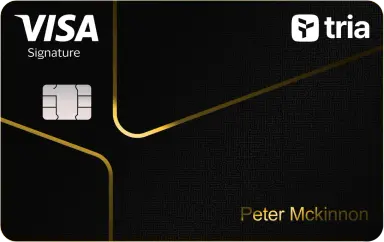
In a country where almost every transaction is a card transaction, the K4 form is the limiting factor on which crypto card actually makes sense. Tria Signature pays 4.5% on the first $1,000/month of spend (then 1%), $109/yr, with a 1% FX fee and 0.5% on every payment (about 3% net on SEK spend), with cashback delivered in stablecoin-equivalent form so the K4 carries one disposal line per swipe (the underlying USDC funding) instead of two.
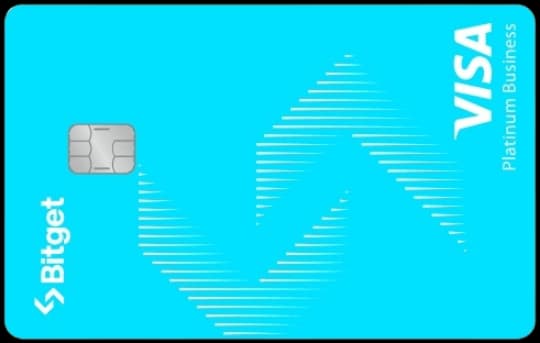
Bitget is the higher-headline rate at 8% BGB, net 7.1% after the 0.9% transaction fee, available to users already holding 20,000+ BGB (about $40,000 at current prices). The Swedish wrinkle: BGB or any other reward token bought via cashback and later sold at a loss only writes off 70% of an offsetting gain under Sweden's 70%-loss-offset rule, which makes reward-token disposals quietly more expensive than headline math suggests.
Xplace Platinum pays 2% USDC in Credit Mode for new memberships, capped at $250 a month. USDC avoids a volatile reward-token position, while 0% FX applies to SEK and foreign-currency spending. Unlimited lounge access covers Arlanda and Landvetter without a CRO stake. Cashback alone covers the $999 annual fee only above about $4,163 of eligible monthly spend, before variable Credit Mode borrowing costs; the cap limits annual net cashback to $2,001.
Plasma One Platinum brings self-custody plus up to $20/month rebated toward each of ChatGPT Plus and Claude Pro, with entry via a 100,000 XPL lock instead of a fee. Its trade-off in Sweden is the reward currency: XPL cashback adds K4 lines and sits square in the 70% loss-offset problem if the token falls, so treat the rebates and custody model as the draw, not the headline 4%.
Gnosis Pay provides 5% GNO through Safe-wallet self-custody, one of the stronger reward cards for technically literate users.
Plutus advertises up to 9% with subscription rebates but settles in EUR, meaning every SEK purchase pays a 2.5% non-EUR FX fee. Combined with the GBP 240/yr Premium subscription and a GBP 1,000/month eligible spend cap, the realistic net for Swedish users sits well below the headline. Bitpanda offers a no-frills 1% setup for users who want the lightest possible reporting workflow.
Best Card For Every Need in Sweden
Top 9 Crypto Cards in Sweden
Sweden runs a 30% flat CGT on crypto disposals, a 70%-loss-offset rule that disallows part of every offsetting loss in the same category, and DAC8 automatic exchange reporting that's been live since January 2026. Every K4 line costs something even when it nets to zero. The simplest way to reduce K4 lines is to receive cashback in stablecoin form so there's only one disposal to report per card swipe.
Tria Signature is the card built for that workflow. 4.5% on the first $1,000/month of spend (then 1%), $109/yr, plus a 1% FX fee and 0.5% on every payment. SEK 15,000/month of card spend yields about SEK 3,500/year in cashback after the 1% FX and 0.5% fees (roughly 3% net on the capped slot), with one funding-disposal line per swipe on the K4.
Premium ($250/yr, 6% on the first $2,000/month) edges out Signature net at roughly SEK 8,200/month of spend, since the FX and payment fees fall on both tiers equally.
Plasma One Platinum offers self-custody and ChatGPT/Claude rebates behind a 100,000 XPL lock. Its XPL cashback carries loss-offset exposure if the token falls, so the lock and reward currency need weighing against the travel benefits.
Bitget keeps the higher-rate slot for users who already run a BGB position. Net 7.1% on every krona at the top tier with a free annual fee, but the path there requires 20,000+ BGB on a 30-day rolling average. Below that, the same card pays 0.5-4%, while Tria nets about 3% inside its $1,000/mo cap once the 1% FX and 0.5% fees land - competitive with unstaked Bitget rather than a clear win.
One more Swedish wrinkle: if BGB drops between cashback receipt and later disposal, only 70% of the loss offsets any matching gain, which makes the reward-token math quietly worse than the headline implies.
Gnosis Pay's 5% GNO via Safe wallet is the stronger free self-custody alternative. ether.fi Core pays stepped ETHFI rewards and supports direct stablecoin or optional collateral-backed spending. Preserving the position only helps when the loan cost, liquidation risk, and Swedish tax treatment compare favorably with direct spending.
Crypto.com Icy White (4%, CRO stake) carries the same volatile-token-cashback structure but provides Priority Pass at Arlanda (ARN) and Landvetter (GOT), useful for Stockholm and Gothenburg residents heading into the outbound EU tourist economy.
Plutus's 9% headline is undercut by the 2.5% non-EUR FX fee that fires on every SEK transaction, turning the realistic net into the rate range Bitpanda's 1% sets a floor on. Kolo's 1% ongoing BTC payout (2% intro) faces the same 70%-loss-offset trap as any other volatile reward token in Sweden.
Xplace Platinum closes the list for frequent travelers who value USDC rewards, 0% FX and lounges. Its 2% Credit Mode rate is capped at $250/month against a $999 fee, so ordinary SEK spending does not make it a rewards leader.
1. Tria Signature Card
High-Yield Self-Custody: 15% APY + Visa Signature Perks
2. Plasma One Platinum Card
Premium Self-Custodial Visa - 4% Base, 10% AI, 10% Flights, Lounge Access, Boosted 5% Yield
3. Bitget Card
Trade and Spend: Up to 8% BGB Cashback for Bitget Traders
4. Gnosis Pay Card
Your Keys, Your Card, Your Money
5. ether.fi Core Card
3% Back on the First $2,000 Each Month, No Stake Required
6. Private (Icy White / Rose Gold)
Private Tier: 4% Uncapped Cashback + Lounge Guest
7. Plutus Visa Card
Non-Custodial PLU Rewards on Eligible Spend + Lifestyle Perks
8. Kolo Card
Earn Bitcoin on Purchases: 2% for 30 Days, Then 1% (Capped) + Visa Platinum + 170+ Countries
9. Xplace Platinum Card
10% Off Platinum with SPENDNODE: Pay $899.10 Instead of $999
Complete list:
All 55 crypto cards available in Sweden in September 2026
This table includes every crypto card we currently track for Sweden. Rows marked Top pick are ranked and reviewed above.
| Crypto card | Max rewards | Annual fee | FX fee | Type | Custody |
|---|---|---|---|---|---|
1 Tria Signature CardTop pick | Up to 4.5% rewards | $87 with code | 1% | Debit | Self-custody |
2 Plasma One Platinum CardTop pick | Up to 4% rewards | Free | 0% | Crypto Backed Credit | Self-custody |
3 Bitget CardTop pick | Up to 8% rewards | Free | 0% | Debit | Custodial |
4 Gnosis Pay CardTop pick | Up to 5% rewards | Free | 0% | Debit | Self-custody |
5 ether.fi Core CardTop pick | Up to 3% rewards | Free | 0.5% | Crypto Backed Credit | Self-custody |
6 Private (Icy White / Rose Gold)Top pick | Up to 4% rewards | TBD | 0% | Prepaid | Custodial |
7 Plutus Visa CardTop pick | Up to 9% rewards | $240 | 2.5% | Debit | Non-custodial |
8 Kolo CardTop pick | Up to 2% rewards | Free | 0% | Prepaid | Custodial |
9 Xplace Platinum CardTop pick | Up to 2% rewards | $999 | 0% | Crypto Backed Credit | Self-custody |
| Up to 10% rewards | Free | 3% | Debit | Hybrid | |
| Up to 8% rewards | Free | 0% | Debit | Self-custody | |
| Up to 8% points | Free | 0.4% | Debit | Custodial | |
13 | Up to 8% rewards | TBD | 0% | Prepaid | Custodial |
| Up to 8% rewards | Free | 0% | Debit | Hybrid | |
| Up to 6% rewards | $200 with code | 1% | Debit | Self-custody | |
| Up to 5% rewards | TBD | 0% | Prepaid | Custodial | |
| Up to 4% rewards | Free | 0% | Crypto Backed Credit | Self-custody | |
| Up to 3% rewards | Free | 0.25% | Crypto Backed Credit | Self-custody | |
| Up to 3% rewards | Free | 0% | Crypto Backed Credit | Self-custody | |
| Up to 3% rewards | $10000 | 0.5% | Prepaid | Custodial | |
| Up to 3% rewards | Free | 0% | Debit | Custodial | |
| Up to 3% rewards | $199 | 0.5% | Crypto Backed Credit | Self-custody | |
| Up to 3% rewards | $299.9 | 0% | Prepaid | Custodial | |
| Up to 3% rewards | $129 | 1.2% | Prepaid | Custodial | |
| Up to 3% rewards | Free | 0% | Debit | Hybrid | |
| Up to 2% rewards | Free | 0% | Debit | Custodial | |
| Up to 2% rewards | Free | 0% | Debit | Self-custody | |
| Up to 2% rewards | $1000 | 0.5% | Prepaid | Custodial | |
| Up to 2% rewards | Free | 0% | Debit | Custodial | |
| Up to 2% rewards | Free | 0.2% | Crypto Backed Credit | Hybrid | |
| Up to 2% rewards | Free | 1% | Crypto Backed Credit | Self-custody | |
| Up to 2% rewards | $49.9 | 0% | Prepaid | Custodial | |
| Up to 1.5% rewards | Free | 0.5% | Prepaid | Custodial | |
| Up to 1.5% rewards | Free | 0.5% | Prepaid | Custodial | |
| Up to 1.5% rewards | Free | 1% | Debit | Self-custody | |
| Up to 1.5% rewards | $249 | 0.25% | Crypto Backed Credit | Self-custody | |
| Up to 1% rewards | Free | 0% | Debit | Custodial | |
| Up to 1% rewards | Free | 1.75% | Debit | Self-custody | |
| Up to 1% rewards | Free | 1% | Debit | Self-custody | |
| Up to 1% rewards | Free | TBD | Prepaid | Custodial | |
| Up to 1% rewards | $99 | 0.5% | Crypto Backed Credit | Self-custody | |
| Up to 0.5% rewards | Free | 0% | Debit | Hybrid | |
| Up to 0.5% rewards | Free | 1% | Crypto Backed Credit | Self-custody | |
| none | Free | 0% | Prepaid | Custodial | |
| Varies | Free | 1.7% | Prepaid | Custodial | |
| cashback | Free | 1.75% | Prepaid | Self-custody | |
| cashback | $199 | 0.75% | Prepaid | Self-custody | |
| cashback | Free | 0.5% | Prepaid | Custodial | |
| none | Free | 1% | Prepaid | Self-custody | |
| none | Free | 1% | Debit | Self-custody | |
| Varies | Free | 1.5% | Debit | Custodial | |
| Varies | Free | 1.2% | Prepaid | Custodial | |
| Varies | Free | 1.2% | Prepaid | Custodial | |
| Varies | Free | 1.2% | Prepaid | Custodial | |
| points | Free | 1% | Debit | Self-custody |
Crypto Card Regulation in Sweden
Sweden's crypto regulation is handled by Finansinspektionen (FI), the Swedish Financial Supervisory Authority.
FI has taken a notably cautious stance toward crypto, influenced in part by the Riksbank's environmental concerns about proof-of-work mining (Erik Thedeen, then FI Director General and now Riksbank Governor, co-authored an open letter in 2021 calling for an EU-wide ban on proof-of-work mining).
Despite the institutional skepticism, Sweden has never banned or materially restricted crypto ownership or trading.
Under MiCA, FI is the competent authority for CASP licensing. Sweden's MiCA transition ended on June 30, 2026. From July 1, 2026, crypto-asset firms without the required authorization had to wind down their activities in the EU, so users should verify a provider's current authorization or passporting status. FI maintains a public register of registered crypto service providers (approximately 30 entities as of early 2026).
The regulatory framework coexists with Sweden's unusually advanced digital financial infrastructure. BankID (used by 8.5 million Swedes, essentially the entire adult population) provides digital identity verification. Swish (developed by the six largest Swedish banks) processes peer-to-peer payments.
The Riksbank is actively developing the e-krona CBDC pilot, making Sweden one of the most advanced CBDC research countries globally. None of these systems currently integrate with crypto cards, but they demonstrate a financial ecosystem where digital-first is the default rather than the aspiration.
EEA-licensed crypto card issuers operate in Sweden under MiCA passporting rights. No additional Swedish FI registration is required for card issuance. Bitget, Crypto.com, Gate.io, KuCoin, Kraken, Plutus, Gnosis Pay, Bitpanda, Wirex, Bleap, and others all serve Swedish residents.
Skatteverket (the Swedish Tax Agency) has data-sharing agreements with major exchanges and actively cross-references crypto transactions with tax filings. Sweden's tax authority is among the most proactive in Europe on crypto enforcement, having sent information letters to tens of thousands of taxpayers with unreported crypto gains.
Tax Treatment of Card Rewards in Sweden
Sweden taxes crypto capital gains at a flat 30% kapitalvinstskatt (capital gains tax on capital income). Every disposition of crypto, including spending through a card (which converts crypto to SEK or EUR at the merchant), is a taxable event. There is no holding period exemption. One year, five years, ten years, it does not matter. The rate is always 30%.
The 70% loss offset rule (kvittningsregeln):
This is Sweden's most punishing crypto tax quirk. Capital losses on crypto can only offset 70% of their value against capital gains. The math creates asymmetric risk:
| Situation | Gains | Losses | Deductible Loss (70%) | Taxable Amount | Tax (30%) |
|---|---|---|---|---|---|
| Gains only | SEK 100,000 | SEK 0 | - | SEK 100,000 | SEK 30,000 |
| Equal gains and losses | SEK 100,000 | SEK 100,000 | SEK 70,000 | SEK 30,000 | SEK 9,000 |
| Net loss after offset | SEK 50,000 | SEK 100,000 | SEK 70,000 | Capital deficit | Relief depends on total capital position |
In the second row: despite breaking even on paper (SEK 100,000 gain minus SEK 100,000 loss), you still owe SEK 9,000 in tax. This asymmetry makes spending volatile crypto through cards riskier in Sweden than in countries with 100% loss offset. If BTC drops after you spend it, your loss only offsets 70% of future gains.
Cashback tax treatment: Skatteverket's crypto guidance establishes how later disposals are handled, but a reward's treatment at receipt depends on its character. A purchase rebate, employment benefit and payment for an activity should not be assigned one universal rate.
| Reward | At receipt | On later disposal |
|---|---|---|
| BTC/ETH or other token cashback | Depends on program terms and reward character | Calculate SEK gain or loss from the recorded acquisition value |
| Stablecoin cashback | Depends on program terms and reward character | Record any SEK difference and fees |
| Subscription rebate | Check whether it reduces the purchase price or is a separate benefit | Depends on what was received |
Worked example at Swedish spending levels:
You spend SEK 15,000/month (EUR 1,330) through a crypto card over a year. Total annual spend: SEK 180,000.
| Funding Source | Annual Spend | Cashback (7.1% net) | CGT (30%) | FX Savings vs Bank | Net Benefit |
|---|---|---|---|---|---|
| USDC (stablecoin) | SEK 180,000 | SEK 12,780 | approx. SEK 0 | SEK 2,700-3,600 | SEK 15,480-16,380 |
| BTC (appreciated 30%) | SEK 180,000 | SEK 12,780 | SEK 12,462 | SEK 2,700-3,600 | SEK 3,018-3,918 |
| BTC (appreciated 100%) | SEK 180,000 | SEK 12,780 | SEK 27,000 | SEK 2,700-3,600 | -SEK 11,520 to -SEK 10,620 |
For a regular spending balance, buy stablecoins near the time they are needed and retain the SEK acquisition value for each lot. That is the practical way to limit price-driven gains on card funding; it does not eliminate conversion records or guarantee zero gain. Sweden's 70% loss deduction adds risk when a reward token falls. Crypto disposals are generally reported on the K4 form (bilaga K4 till inkomstdeklaration).
Compared to neighbors: Norway also charges 22% CGT but allows 100% loss offset. Denmark charges up to 42% (gains taxed as personal income). Finland charges 30%/34% (above EUR 30,000). Sweden's 30% rate is mid-range for Scandinavia, but the 70% loss rule is unique and punishing.
How to Apply from Sweden
Swedish crypto card applications require a nationellt ID-kort (Swedish national ID card, issued by Skatteverket since 2023) or a korkort (Swedish driving licence, issued by Transportstyrelsen). Swedish passports are also accepted. Your personnummer (12-digit personal identity number, format YYYYMMDD-XXXX) is mandatory for tax reporting purposes and may be requested during verification.
BankID is Sweden's near-universal digital identity system, used by approximately 8.5 million people. While most EEA crypto card issuers use standard ID document + selfie verification rather than BankID integration, some platforms with Swedish-specific onboarding may offer BankID as a faster verification path.
EU/EEA citizens residing in Sweden can use their home-country national ID. Non-EU residents present their uppehallstillstand (residence permit card). Proof of address via utility bills from Vattenfall (electricity, Sweden's state-owned energy company), E.ON or Fortum (electricity), Telia (telecoms, formerly TeliaSonera), Tre or Tele2 (mobile), or bank statements from SEB, Swedbank, Handelsbanken, or Nordea.
Physical cards ship to Swedish addresses via PostNord within 7-14 business days. Virtual cards are available immediately for Apple Pay and Google Pay, which have very high adoption in Sweden.
Spending Tips for Sweden
What Swedish Bank Cards Actually Cost You
Sweden's banking sector is an oligopoly: SEB (Skandinaviska Enskilda Banken), Swedbank, Handelsbanken, and Nordea dominate retail banking. Their standard debit cards share common traits: zero cashback, no rewards, and a 1.5-2% FX markup on non-SEK transactions.
SEB charges SEK 24-45/month for its personal account packages (Enkla vardagen, Hela vardagen). Swedbank's equivalent packages (Enkel, Mellan, Stor) run SEK 0-49/month but the free tier lacks basic features. Handelsbanken and Nordea have similar pricing structures. Annual banking cost: SEK 288-588/year before any transaction fees.
We compared fees for Swedish residents against the big four banks - the math is stark:
| Category | Swedish Bank Card | Crypto Card (Bitget 7.1% net) | Annual Difference |
|---|---|---|---|
| Annual fee | SEK 288-588 | SEK 0 | SEK 288-588 saved |
| Cashback on SEK 15,000/mo | SEK 0 | SEK 12,780 | SEK 12,780 earned |
| FX on SEK 3,000/mo non-SEK | SEK 540-720 | SEK 0 | SEK 540-720 saved |
| Total annual advantage | - | - | SEK 13,608-14,088 |
Over SEK 13,000/year in value, more than a month's salary for many Swedes working entry-level positions. Even at a conservative 4% cashback (Gnosis Pay, free), the advantage exceeds SEK 8,000/year.
FX Savings: The Non-Eurozone Advantage
Sweden's SEK creates a permanent FX friction that eurozone countries do not face. Every EUR-priced purchase (common on European e-commerce), every USD-billed subscription (Netflix, Spotify international pricing, Adobe, Google One, ChatGPT Plus), and every holiday transaction in EUR, GBP, or USD incurs a 1.5-2% bank markup. On an average Swedish household's non-SEK spending of SEK 3,000-5,000/month, the annual FX savings from a zero-fee crypto card reach SEK 540-1,200.
This FX layer is separate from cashback and stacks on top. A Swede earning up to 5% through Gnosis Pay (4% with 100 GNO held, 5% with an OG NFT) also saves 1.5-2% in eliminated FX fees, an effective return around 5.5-7% on eligible non-SEK spend.
Card Selection Strategy for Swedish Residents
- Tria Signature (4.5%, 1% FX + 0.5%/payment, ~3% net, $109/yr): The K4-friendly pick. 4.5% on the first $1,000/month (then 1%) with cashback that doesn't add a second reward-token disposal line (and avoids the 70%-loss-offset trap on volatile tokens). Premium at $250/yr reaches 6% (on the first $2,000/month) and pulls ahead of Signature above roughly SEK 8,200/month of spend.
- Xplace Platinum (2% USDC in Credit Mode, capped at $250/mo; 0% FX; $999/yr): USDC rewards avoid reward-token price volatility. Lounges at ARN and GOT require no token stake, though borrowing costs and the fee weigh on net rewards.
- Plasma One Platinum (4% XPL, 100k XPL lock, 0% FX): Self-custodial Visa with up to $20/mo rebated toward each of ChatGPT Plus and Claude Pro. XPL cashback adds K4 lines and loss-offset exposure; pick it for the custody model and perks.
- Bitget (up to 8%, 7.1% net): Highest cashback ceiling with 0% FX for users already holding 20,000+ BGB. Below the stake threshold, the card pays 0.5-4%, roughly level with Tria's ~3% net inside its cap.
- Crypto.com (up to 8%): Best for frequent flyers. crypto cards with airport lounges at Stockholm Arlanda (ARN, Sweden's main hub), Gothenburg Landvetter (GOT), and international Priority Pass lounges on Jade/Indigo ($5,000 CRO stake) and above.
- Plutus (up to 9%): Subscription rebates including Spotify (born in Sweden), Netflix (SEK 139-199/mo), and Prime Video. However, 2.5% FX on all SEK transactions (EUR-settled card) and no free tier (Starter GBP 6.99/mo) reduce net value. Only competitive if most spending is EUR-denominated.
- Gnosis Pay (5% GNO, free): Self-custody Visa from a Safe wallet. Tech-forward Swedish users.
- Kolo (1% ongoing BTC, 2% intro, 0% FX on stablecoin top-ups, $0): Free BTC-payout card. BTC payout creates a 30% disposal chain on each spend, a drawback vs USDC-paying alternatives.
- ether.fi Core (3% ETHFI on first $2K/mo, then 1% / 0.5%, 0-0.5% FX): direct stablecoin spending or optional collateral-backed borrowing.
- KAST (1.5% USD cashback on first $2,000/mo, 0.5-1.75% FX, free): Simple free Visa Platinum prepaid entry.
- Bitpanda (1%): Zero-complexity entry. One percent on everything, no staking requirements, no tiers.
Spending Scenario: SEK 15,000/month Stockholm Professional
A Stockholm-based professional spending SEK 15,000/month (rent excluded, card-eligible expenses only: groceries, dining, transport, subscriptions, clothing, electronics).
| Category | Monthly Amount | Annual Total | Where It Goes |
|---|---|---|---|
| Groceries | SEK 4,000 | SEK 48,000 | ICA Maxi, Coop, Willys, Hemkop |
| Dining/coffee | SEK 2,500 | SEK 30,000 | Restaurants, Espresso House, Wayne's |
| Transport | SEK 1,100 | SEK 13,200 | SL monthly pass, occasional taxi |
| Subscriptions | SEK 1,500 | SEK 18,000 | Spotify, Netflix, gym, cloud services |
| Clothing/personal | SEK 2,000 | SEK 24,000 | H&M, IKEA, NK, Ahlens |
| Electronics/misc | SEK 3,900 | SEK 46,800 | Elgiganten, Webhallen, MediaMarkt |
Total annual: SEK 180,000. At 7.1% net cashback (Bitget) funded with USDC: SEK 12,780/year cashback + SEK 2,700-3,600 FX savings on non-SEK purchases = SEK 15,480-16,380 in annual value. That is equivalent to a full month's take-home salary after tax for the median Swedish income.
Swish, Cash, and What a Crypto Card Replaces
Swish is Sweden's dominant P2P payment system, developed by the six largest banks (SEB, Swedbank, Handelsbanken, Nordea, Danske Bank, Lansforsakringar). With 8.4 million users (97% of smartphone-owning adults), Swish handles splitting bills, paying friends, market stall purchases, and even some small merchant transactions. Swish is bank-only and does not work with crypto cards. It will remain your P2P tool.
What a crypto card replaces is your bank debit card for merchant spending. Everywhere your SEB or Swedbank card works, a crypto card works: ICA (1,300+ stores, Sweden's largest grocer), Coop (800+ stores), Willys (230+ budget stores), Hemkop, Lidl Sweden (200+ stores), H&M (Swedish-born, global retailer), IKEA (Swedish-born, card acceptance at all stores and restaurants), and essentially every merchant in Sweden.
Stockholm SL transit: The SL monthly pass (currently SEK 970, Zone A) is purchased via the SL app or at Pressbyrån/7-Eleven kiosks using any contactless card. Crypto cards work. Gothenburg Vasttrafik and Malmo Skanetrafiken similarly accept contactless.
Cash almost does not exist: Sweden may become the world's first cashless country. Many businesses, especially in Stockholm and Gothenburg, display "Vi tar inte emot kontanter" (We do not accept cash). A crypto card is not an alternative to cash in Sweden. It IS how people pay.
Cross-Border Spending: Norway, Denmark, and Finland
Sweden's geographic position creates regular cross-border spending for residents near the borders.
Norway border: Swedes living in western Sweden (Gothenburg, Stromstad) frequently shop in Norway, though the flow typically runs the other direction (Norwegians shopping in Sweden for cheaper groceries and alcohol). When Swedes travel to Oslo or Norwegian ski resorts (Trysil, Hemsedal), a zero-FX crypto card eliminates the SEK/NOK markup.
Denmark border: The Oresund Bridge connects Malmo to Copenhagen. Malmo residents commute to Copenhagen for work, dining, and shopping. Danish krone (DKK) is pegged to EUR but is still a separate currency. Swedish banks charge 1.5-2% on DKK transactions. A zero-FX crypto card saves this on every Copenhagen lunch, Fields shopping trip, or Tivoli visit.
Finland border: Relevant primarily for northern Swedes (Haparanda/Tornio border twin city). Finland uses EUR, so the FX savings apply on every cross-border purchase.
Weekend trips: Stockholm to Tallinn (2-hour flight or overnight ferry, EUR), Stockholm to Riga (1-hour flight, EUR), Gothenburg to London (2-hour flight, GBP). Each destination triggers bank FX fees that a crypto card eliminates.
Seasonal Spending Patterns
Sweden's spending varies by season. Midsommar (late June) drives food and beverage spending (herring, strawberries, schnapps) at ICA and Systembolaget (the state alcohol monopoly, which accepts cards). Summer (July-August) means Swedish and international holidays: gotlandsfarian ferry to Gotland, Dalarna cabin rentals, and Mediterranean flights. Vintersport (February-March) means ski trips to Are, Salen, or Norwegian resorts. All generate card-eligible spending.
The holiday season (November-December) with Black Friday and Christmas shopping at NK, Ahlens, and online creates the highest monthly card volumes.
Supported Exchanges & Wallets in Sweden
Safello is Sweden's most prominent domestic crypto exchange, founded in Stockholm in 2013 and registered with Finansinspektionen. Safello offers SEK/crypto trading via Swish, BankID verification (near-instant onboarding for Swedish users), and bank transfers. However, Safello does not offer a consumer spending card. For Swedish users, Safello works as a convenient on-ramp (buy crypto with Swish, withdraw to a card-linked wallet) but the spending card comes from an international issuer.
BTCX is another FI-registered Swedish exchange focused on BTC and ETH trading. Like Safello, no card product. Trijo, formerly Sweden's Riksbank-connected exchange, ceased operations.
Among international exchange-linked card issuers serving Sweden, Bitget offers up to 8% in BGB cashback through its exchange-linked card (0% FX, 0.9% transaction fee) and the wallet card via Immersve (1.7% FX with a $400/month zero-fee quota).
Crypto.com offers metal cards with CRO staking tiers. Gate.io provides the Classic Visa Platinum. KuCoin and Kraken round out exchange-linked options.
EEA-passported native issuers: Plutus with its subscription rebates and PLU-based cashback tiers. Gnosis Pay for on-chain self-custody spending from a Safe wallet. Wirex with a free Base tier and higher metal tiers up to 8% in USD (no subscription), useful for multi-currency travel.
Bitpanda for simple 1% EUR-native cashback. Bleap for account abstraction spending. Ready offered Starknet self-custody, but its card program is currently unavailable after its card issuer, Kulipa, began winding down.
For Swedish holders of staked ETH, the ether.fi Core Card offers optional collateral-backed spending alongside a direct stablecoin mode. Borrowing can postpone a sale, but it should not be described as automatically avoiding Sweden's 30% tax.
Given Sweden's 70% loss offset asymmetry, avoiding crypto dispositions entirely by borrowing instead is strategically superior to timing gains and losses. Nexo provides similar borrow-against-collateral functionality across a broader range of assets.
Self-custody card options for users who want their own keys: MetaMask (Virtual Card at 1%), Ledger CL Card (hardware wallet integrated), and Solflare for Solana ecosystem users (its card is paused as of July 28, 2026). 1inch Card (custodial via Baanx, 2% BXX cashback) serves DeFi users but is not self-custodial.
Tria now charges a 1% FX fee on non-USD spend plus 0.5% on every payment, on every tier: Signature at 4.5% on the first $1,000/mo ($109/yr) and Premium at 6% on the first $2,000/mo ($250/yr), then 1% above the cap.
On SEK spend that nets roughly 3% inside the Signature cap and about 4.5% inside Premium's. Because cashback pays in USDT rather than a volatile token, it avoids fresh CGT exposure at Sweden's 30% rate.
Kolo (1% ongoing BTC, 2% intro, 0% FX on stablecoin spending, $0) is a free BTC-payout card, though the BTC payout creates a 30% disposal chain on each spend.
Global-reach cards: KAST (1.5% USD cashback on first $2,000/mo, 0.5-1.75% FX, free), RedotPay with Virtual, Solana, and Physical variants.
Currency note for Swedish users: Most crypto cards settle in EUR. Transactions at Swedish merchants process as EUR-to-SEK conversion at the network rate (Visa/Mastercard). This is still favorable compared to Swedish bank card FX markup on non-SEK purchases, but for SEK-only spending, the effective rate depends on the EUR/SEK exchange rate at the time of transaction. No major crypto card currently settles natively in SEK.
Written by SpendNode Editorial
Frequently Asked Questions
Why are FX fees so important for Swedish crypto card users?
Sweden uses SEK, not EUR. Every non-SEK purchase through a Swedish bank card costs 1.5-2% in FX markup. A crypto card with 0% FX fees eliminates this entirely. On SEK 10,000/month of non-SEK purchases, you save SEK 1,500-2,400/year in FX fees alone.
What is the crypto tax rate in Sweden?
Sweden taxes crypto gains at a flat 30% with no holding period exemption. Critically, losses only offset 70% of gains (not 100%), making stablecoin spending even more important than in other countries. Report on the K4 form. From January 2026, DAC8 requires all crypto exchanges to automatically share transaction data with Skatteverket.
Does BankID work for crypto card verification?
Some EEA-licensed issuers support BankID for Swedish residents, enabling near-instant verification. Most issuers use standard ID document verification. Check with your chosen issuer before applying.
How does a crypto card compare to Swish?
Swish is a bank-to-bank P2P payment system that does not work with crypto cards. For merchant purchases, a crypto card with 8% cashback and 0% FX fees is strictly superior to a Swedish bank debit card. Swish and crypto cards serve different use cases.
Other Countries
View all 112 countries →


Latest Page Changes to the Best Crypto Cards in Sweden Guide
- xPlace Platinum moved down the Swedish ranking as its new-member Credit Mode cashback is 2% USDC capped at $250 a month. Its USDC payout, 0% FX and lounges remain useful, but the $999 fee weakens the rewards case