
SpendNode Rating for KuCoin
KuCoin is still mostly an ecosystem convenience play. That keeps it relevant, but not especially strong on issuer confidence.
The operator gets credit for reach and familiarity with crypto-native users. The weaker side is trust depth and how much extra conviction the user has to supply.
Issuer Snapshot
Editorial vendor score stays separate from user reviews. Methodology
Product Quality
3.4
Trust & Custody
3.0
Fee Transparency
3.3
Operational Reliability
3.5
Market Relevance
3.6
On This Page
What Is KuCoin?
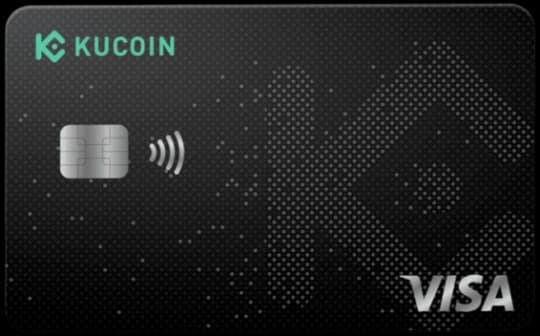
The KuCard is a custodial Visa debit card (not a credit card) issued by KuCoin that enables instant conversion and spending of cryptocurrency holdings from your KuCoin Funding Account, with KCS token-based cashback rewards ranging from 0.5% to 3% depending on staking tier.
Most crypto cards limit you to spending BTC, ETH, and a handful of stablecoins. The KuCard taps into KuCoin's reputation as "The People's Exchange" - offering spending capability for hundreds of altcoins through instant JIT (just-in-time) conversion at point of sale.
The core pitch: If you've made gains on mid-cap and small-cap tokens, KuCard lets you spend those profits directly without multi-step conversions through centralized exchanges. Your RNDR, INJ, ARB, or FTM holdings become spendable at 80M+ Visa merchants globally.
The custodial trade-off: All funds remain on KuCoin's exchange until the moment of spending. This is FTX-level custodial risk in exchange for portfolio versatility.
Available crypto cards by KuCoin in September 2026
1. KuCard Visa Debit
Unlock Your Portfolio: Spend Crypto Anywhere with KuCard
Fees and Rates
Advertised:
- £0 annual fee
- 0% foreign exchange fee
- 0% crypto conversion fee (promotional)
Reality in 2026:
$0 annual fee, 0% advertised FX and conversion fees. True cost: 2.0% standard exchange spread on BTC/ETH, 0.3-0.5% on stablecoins, 2.5-3.5% on mid-cap altcoins. ATM: 1.5% fee + operator charges. Standard tier (0 KCS) earns 0.5% cashback - after spreads, you lose money on everything except stablecoin spending. Pro tier (100 KCS, approx. $900) at 1% starts breaking even on stablecoins. Only VIP 2+ (3,500 KCS, approx. $31,500) generates meaningful returns, and only for active KuCoin ecosystem traders.
Crypto Conversion Spread
Current listed baseline: 2.0% standard exchange spread
What this means:
- You spend £100 equivalent in BTC
- KuCard converts BTC at a rate 2% worse than mid-market
- True cost: £2 per £100 transaction = 2% hidden fee
Asset-specific spreads (2026 observed rates):
- USDT/USDC: 0.3-0.5% (tightest)
- BTC/ETH/SOL: 1.5-2.0%
- Mid-cap altcoins (INJ, RNDR, ARB): 2.5-3.5%
- Low-liquidity alts (under $50M volume): 4-6%
Pro tip: Keep 1-2 months' spending in USDT/USDC in your Funding Account to minimize spreads.
Foreign Currency Markup
Advertised: 0% FX fee
Reality: Visa applies 0.5-0.8% markup on non-EUR conversions when spending outside your base currency.
Example:
- You spend $100 USD in New York (you're UK-based)
- True mid-market rate: $1.27/£1 → Should cost £78.74
- Visa rate with markup: Costs £79.37
- Hidden cost: £0.63 (0.8% markup)
ATM Withdrawals
Fee: 1.5% on all cash withdrawals Daily limit: €250
Example: Withdraw €200 cash in Paris
- Fee: €200 × 1.5% = €3
- Plus: Local ATM operator fee (€2-5 typical)
- Total cost: €5-8 per €200 = 2.5-4% effective fee
Recommendation: Never use KuCard for ATM withdrawals. The 1.5% fee wipes out your cashback.
Total Cost Per Transaction (Realistic)
Scenario A: Spending USDT domestically (UK → UK merchant)
- Conversion spread: 0.4%
- FX fee: 0%
- Total cost: 0.4% = £0.40 per £100
Scenario B: Spending BTC domestically
- Conversion spread: 1.8%
- Total cost: 1.8% = £1.80 per £100
Scenario C: Spending altcoin (RNDR) internationally
- Conversion spread: 3.0%
- FX markup: 0.7%
- Total cost: 3.7% = £3.70 per £100
Break-even with cashback:
- VIP 1 (2% cashback): You lose 1.7% net on altcoin international spending
- VIP 2 (3% cashback): You break even or gain 0.3% on USDT spending, still lose 0.7% on altcoins
Rewards and Cashback
KuCard rewards are paid in KCS (KuCoin Token) and scale based on your KCS holdings staked on the exchange:
| Tier | KCS Required | Current Value (2026) | Monthly Cashback | Typical Monthly Spend for Cap |
|---|---|---|---|---|
| Standard | 0 KCS | £0 | 0.5% | No cap |
| Pro | 100 KCS | ~£900 | 1% | No cap |
| Elite | 500 KCS | ~£4,500 | 1.5% | No cap |
| VIP 1 | 1,000 KCS | ~£9,000 | 2% | No cap |
| VIP 2+ | 3,500+ KCS | ~£31,500+ | 3% | No cap |
Key difference from competitors: KuCard has no monthly reward caps. Unlike Plutus (£250 max) or Crypto.com (CRO tier limits), you can earn unlimited KCS cashback if you hit VIP 2+ tier.
KCS Staking Economics: Is It Worth It?
Example: VIP 1 tier (1,000 KCS = £9,000 staked)
You're locking £9,000 in KCS to unlock 2% cashback vs 0.5% base rate (1.5% differential).
Monthly benefit calculation:
- Monthly spend: £3,000
- Extra cashback: 1.5% × £3,000 = £45/month
- Annual extra reward: £540
Payback period: £9,000 ÷ £540/year = 16.7 years
This looks terrible... until you account for KCS ecosystem benefits:
- Trading fee discount: 20% off spot/margin trading fees at VIP 1
- If you trade £50K/month volume: 0.1% fee × £50K = £50/month → 20% discount = £10/month saved
- KCS Bonus (daily dividends): ~5-8% APY on staked KCS
- £9,000 × 6% APY = £540/year = £45/month
- KuCoin Spotlight access: Priority token launch allocations (highly variable, £0-2,000/year potential)
Total VIP 1 value:
- Card cashback: £540/year
- Trading fee savings: £120/year
- KCS Bonus yield: £540/year
- Spotlight (conservative): £200/year
- Total: £1,400/year = 15.6% return on £9,000 stake
Payback period revised: 6.4 years (if you actively trade + stake)
Risk: KCS is one of the most volatile exchange tokens. 40-60% annual swings are normal.
The Altcoin Advantage
Officially documented supported assets:
- KCS, USDT, USDC, BTC, ETH, SOL, XRP
Reality in 2026: KuCoin supports 700+ trading pairs. While not all are spendable via KuCard, KuCoin's liquidity pools enable spending for 200+ tokens including:
- Layer 1s: AVAX, ALGO, NEAR, FTM, ATOM, DOT
- DeFi: AAVE, UNI, SUSHI, CRV, LDO
- Gaming: AXS, SAND, MANA, IMX, GALA
- AI/Compute: RNDR, FET, AGIX, OCEAN
The conversion flow:
- You hold 5,000 RNDR (~£45,000) in your KuCoin Spot Account
- You tap KuCard at a London restaurant for £85
- KuCard instantly:
- Converts RNDR → USDT (via KuCoin's internal liquidity)
- Converts USDT → GBP (via Visa network)
- Settles £85 to merchant
- You receive 2% cashback (if VIP 1) = £1.70 in KCS
Total time: 1-2 seconds (same as any Visa card)
How to Apply for the KuCoin Crypto Card
The KuCard is tied to your KuCoin exchange account and pays from a dedicated Funding Account, so this is an account setup rather than a wallet one, and it is open to EEA residents only. The path from sign-up to first tap:
- Verify your KuCoin account. Pass at least Level 1 KYC: a government ID, a selfie, and recent proof of address. You must reside in the EEA, as the card is not issued in the US, the UK, or most non-European markets. Approval is automated for most applicants and clears within minutes, occasionally up to a day.
- Order the KuCard. Open Wallet then KuCard in the app and tap Apply Now. Pick virtual-only or virtual plus physical; the physical card has a small shipping fee that drops away from VIP 1 upward.
- Move funds into your Funding Account. The card spends only from this account, never your Trading or Main balance, so transfer what you plan to spend there, ideally in USDT. Keeping just a week or two of spending inside it limits how much sits in custody.
- Order your spending priority. Decide which asset converts first at checkout. Stablecoins carry the tightest spreads, so placing USDT and USDC ahead of BTC or thin altcoins quietly trims your conversion costs over a year.
- Add it to Apple Pay or Google Pay and spend. The virtual card is live for online and in-store use right away, and KCS cashback lands around the 5th of the following month.
For the deeper walkthrough, including security limits and troubleshooting, see the KuCard setup guide.
Countries and Availability
KuCoin is available in 29 countries as of September 2026. We count a country here when at least one active KuCoin card variant lists it, so individual product pages may be narrower.
Available Regions
Europe
Austria (AT), Belgium (BE), Bulgaria (BG), Croatia (HR), Cyprus (CY), Czech Republic (CZ), Denmark (DK), Estonia (EE), Finland (FI), France (FR), Germany (DE), Greece (GR), Hungary (HU), Iceland (IS), Ireland (IE), Italy (IT), Latvia (LV), Liechtenstein (LI), Lithuania (LT), Luxembourg (LU), Netherlands (NL), Norway (NO), Poland (PL), Portugal (PT), Romania (RO), Slovakia (SK), Slovenia (SI), Spain (ES), Sweden (SE)
Major Restricted Markets
These major markets are not currently listed for this vendor. Confirm eligibility with the issuer before applying, especially where card tiers have different country rules.
Africa
Egypt (EG), Kenya (KE), Nigeria (NG), South Africa (ZA)
Americas
Argentina (AR), Brazil (BR), Canada (CA), Chile (CL), Colombia (CO), Mexico (MX), United States (US)
Asia
China (CN), Hong Kong (HK), India (IN), Indonesia (ID), Japan (JP), Malaysia (MY), Philippines (PH), Singapore (SG), South Korea (KR), Taiwan (TW), Thailand (TH), Turkey (TR), United Arab Emirates (AE)
Europe
Switzerland (CH), United Kingdom (GB)
Oceania
Australia (AU), New Zealand (NZ)
Real User Scenarios
Scenario 1: Alex (Altcoin Degen, £2,000/month spend)
Setup:
- VIP 1 tier (1,000 KCS staked = £9,000)
- Portfolio: 40% stablecoins, 60% altcoins (RNDR, INJ, ARB, etc.)
- Spending strategy: Spend USDT for daily purchases, convert altcoin profits monthly
Results after 12 months:
- KCS staking opportunity cost: -£540 (could've earned 6% in KCS Bonus instead of being locked)
- Wait, he IS earning KCS Bonus while staked for card: +£540
- Card cashback: £2,000 × 2% × 12 = +£480 in KCS
- Trading fee savings: +£120 (20% discount on £50K monthly volume)
- Altcoin spending convenience: Saved ~8 hours/month avoiding manual conversions (invaluable for active trader)
KCS price risk: His 1,000 KCS dropped 35% during the year → -£3,150 unrealized loss Net profit: £480 + £120 = £600 cashback/savings, but -£3,150 on KCS stake = -£2,550 total
His verdict: "The card works great for spending my altcoin gains, but the KCS staking requirement killed me. I should've stayed at Standard tier (0 KCS) and accepted 0.5% cashback."
Lesson: Don't stake KCS solely for card rewards. Only stake if you're already bullish on KCS for other reasons (trading discounts, Bonus APY, Spotlight access).
Scenario 2: Maria (Stablecoin Holder, £4,000/month spend)
Setup:
- Standard tier (0 KCS staked)
- Portfolio: 100% USDT
- Spending: All daily expenses on KuCard
Results after 12 months:
- Card cashback: £4,000 × 0.5% × 12 = £240 in KCS
- Conversion spread cost: £4,000 × 0.4% × 12 = -£192
- Net benefit: £48/year
Her verdict: "Not worth it. I earn £48/year after spreads. Crypto.com gives me 1% cashback with no staking for CRO Private tier, which is 2x better."
Lesson: KuCard only makes sense if you're spending altcoins (where competitors don't support) or if you're already staking KCS for trading benefits.
Scenario 3: James (KuCoin Native Trader, £5,000/month spend)
Setup:
- VIP 2 tier (3,500 KCS staked = £31,500)
- Trades £200K monthly volume on KuCoin spot/futures
- Portfolio: Mixed BTC, ETH, alts, spending via USDT
Results after 12 months:
- Card cashback: £5,000 × 3% × 12 = £1,800 in KCS
- Trading fee savings: £200K volume × 0.1% fee × 25% VIP discount × 12 = £600/year
- KCS Bonus yield: £31,500 × 6% = £1,890/year
- Spotlight gains: £4,200 (got allocated 2 good launches)
- Conversion spread cost: £5,000 × 0.4% × 12 = -£240
- Gross benefit: £1,800 + £600 + £1,890 + £4,200 - £240 = £8,250/year
KCS price risk: His 3,500 KCS appreciated 15% during the year → +£4,725 gain
Total return: £8,250 + £4,725 = £12,975 on £31,500 stake = 41% annual return
His verdict: "KuCard is a no-brainer for me, but only because I'm deep in the KuCoin ecosystem. The card alone wouldn't justify 3,500 KCS staking."
Lesson: KuCard rewards scale with KuCoin ecosystem engagement. If you're just using the card, skip high tiers.
KuCoin vs Other Cards
| Feature | KuCard | Bitget | Crypto.com |
|---|---|---|---|
| Max Cashback | 3% (unlimited) | 8% (capped) | 5% (capped) |
| Staking Requirement (Top Tier) | £31,500 (3,500 KCS) | £17,000 (3,000 BGB) | £32,000 (35K CRO) |
| Supported Assets | 200+ (widest) | 12 | 30+ |
| Altcoin Spending | Best-in-class | Majors only | Good |
| Annual Fee | £0 | £0 | £0-£350 |
| EU EMI License | Pending | Lithuania | Malta |
| Reward Cap | Unlimited | Monthly cap | Monthly cap |
| Best For | Altcoin traders | BGB hodlers | CRO ecosystem users |
KuCard's unique value:
- Widest altcoin spending support - If you hold 20+ different tokens, KuCard is the only card that lets you spend all of them
- No reward caps - VIP 2+ users with £10K+ monthly spend can earn unlimited KCS
- Deepest liquidity for obscure assets - KuCoin's 700+ pairs mean better conversion rates for low-cap alts
KuCard's key weaknesses:
- Regulatory uncertainty - No EMI license creates discontinuation risk
- High staking requirements - £31,500 for 3% is expensive vs competitors
- Custodial risk - No self-custody option unlike Plutus
- vs Bitget: Bitget offers up to 8% BGB cashback with Lithuanian EMI license. Lower entry cost (1K BGB approx. $850 for 2% vs 1,000 KCS approx. $9,000 for 2%). Bitget wins on regulation, cost efficiency, and max rewards. KuCoin wins only on altcoin support.
- vs Binance: Binance's current card is a selective-market Mastercard with up to 3% BNB cashback in selected regions and clearer published economics in Brazil. KuCoin still wins on altcoin support; Binance wins on simplicity and current card clarity where available.
- vs Plutus: Plutus offers 3-9% non-custodial cashback with 2.5% FX non-domestic and eligible spend caps (GBP 250-1,000/month). KuCoin is 100% custodial with pending regulation. Plutus wins on security and max rate for domestic spending. KuCoin wins on altcoin spending flexibility, no monthly reward caps, and no FX fees.
Who Should Use KuCoin?
Use KuCard if:
- You hold a diversified altcoin portfolio (10+ tokens)
- You actively trade on KuCoin (£50K+ monthly volume)
- You're already bullish on KCS for yield/trading discounts
- You want unlimited cashback potential (no monthly caps)
- You live in the EEA
Skip KuCard if:
- You only hold BTC/ETH/stablecoins (competitors offer better rates)
- You're not an active KuCoin trader (staking economics don't work)
- You're uncomfortable with custodial risk
- You want regulatory certainty (no EMI license yet)
- You live outside EEA
Our take: KuCard is a niche product for KuCoin power users. It's the best card for spending altcoin portfolios, but the high KCS staking requirements and regulatory uncertainty make it a poor choice for casual users. If you're not already deep in the KuCoin ecosystem, start with Bitget (lower staking requirements) or Crypto.com (stronger regulatory standing). Only choose KuCard if you specifically need to spend obscure altcoins that other cards don't support.
Is KuCoin Safe?
2026 Regulatory Status
Current standing:
- No EU EMI license (as of February 2026)
- MiCA compliance: KuCoin is pursuing registration but not yet approved
- EEA card issuance: Through third-party banking partner (likely Railsr or Modulr via white-label arrangement)
What this means for users:
- Card services can continue in EEA, but regulatory uncertainty remains
- If KuCoin fails MiCA registration, KuCard may be discontinued for EU users in 2026-2027
- UK users face additional uncertainty post-Brexit
Comparison to competitors:
- Bitget: Lithuanian EMI license
- Crypto.com: Malta MFSA EMI license
- KuCoin: Pending
Risk assessment: Given the regulatory situation, use KuCard for spending, not as a long-term fiat storage solution. Keep balances minimal.
Custodial Risk
Your funds on KuCard are:
- Held in your KuCoin Funding Account = fully custodial
- Subject to exchange bankruptcy risk
- Not covered by deposit insurance (crypto assets are not FSCS-protected)
Historical context:
FTX collapse (November 2022):
- Users lost 100% of exchange balances initially
- 3+ years later, ~70% recovery via bankruptcy proceedings
Celsius collapse (July 2022):
- Users lost access for 18+ months
- ~70% recovery for non-Earn accounts
Mt. Gox collapse (2014):
- Still unresolved as of 2026 (12 years later)
KuCoin's track record:
- 2020 hack: $280M stolen, KuCoin covered losses via insurance fund
- 2023 regulatory scrutiny: US DOJ investigation for AML violations
The self-custody alternative: Plutus and Gnosis Pay offer non-custodial card solutions where you retain control of assets until spending.
What Happens If KuCoin Goes Bankrupt?
Your Funding Account balance (the card's funding source):
- Treated as unsecured creditor claim in bankruptcy
- Expected recovery: 30-70% over 2-5 years (based on FTX/Celsius precedents)
- Zero immediate access to funds
Your KCS staking (for cashback tiers):
- Also custodial = same risk as above
- If you staked £9,000 in KCS for VIP 1, you'd lose 30-70% in bankruptcy scenario
Pending KCS cashback rewards (current month not yet paid):
- Likely lost entirely (max exposure: ~£90 for £3K monthly spend at 3%)
Mitigation strategy:
- Minimize on-exchange balances: Only keep 1-2 weeks of spending in Funding Account
- Withdraw KCS rewards monthly: Convert to non-custodial wallet or trade to BTC/withdraw
- Don't stake KCS for tiers unless actively trading: The 16.7-year payback period is too long for custodial risk
- Use for spending only: Treat KuCard as a spending rail, not a savings account
Is KuCoin a Scam?
-
KuCoin has been operating since 2017 as one of the largest cryptocurrency exchanges globally, supporting 700+ trading pairs and serving millions of users across multiple markets.
-
The KuCard is issued via a third-party banking partner (white-label arrangement). KuCoin does not hold an EU EMI license as of 2026. MiCA registration is in progress but not yet approved.
-
KCS cashback rewards are tiered from 0.5% to 3% with no monthly caps - the only uncapped reward structure among comparable exchange cards. Rewards are paid in KCS tokens, not stablecoins.
-
KuCoin covered user losses in full after the $280M hack in September 2020 via its insurance fund, demonstrating operational resilience and willingness to protect users.
-
The card supports 200+ altcoins for spending through JIT conversion, the widest altcoin support of any crypto card in the market.
What to be aware of
- KuCoin has no EU EMI license (pending MiCA, creating discontinuation risk for the KuCard).
- The 2023 US DOJ investigation for AML violations resulted in a $297M settlement in January 2025, followed by a permanent US ban and $500K CFTC penalty in March 2026.
- Custody is fully centralized with no self-custody option.
- KCS staking requirements are steep ($31,500+ for 3%).
- Conversion spreads up to 2-6% on altcoins are not disclosed upfront as explicit fees.
- The card is EEA-only.
SpendNode Verified: The editorial team reviewed KuCoin's issuer identity, product terms, and live card flow per our methodology. Verification is not an endorsement or guarantee.
Sources and Verification
Written by Aleksandar Dukic
Frequently Asked Questions
Is KuCoin crypto card available in the United States?
No. KuCoin crypto card is not available in the United States.
Is the KuCard a credit card?
No. The KuCard is a Visa debit card, not a credit card. It connects to your KuCoin exchange account and converts crypto to fiat at the point of sale - there is no credit line or borrowing. For crypto-backed credit card options, see our reviews of Gemini, ether.fi, Nexo, and Avici.
User Reviews
Reviews are moderated and may take a moment to appear.
Latest Page Changes to the KuCoin Review
- Added note about KuCoin permanent ban from US market
App Store (4.4K ratings)
Source: Apple App Store - Updated Jul 2026