

Best Crypto Cards in Oman (2026)
Oman is one of the cleaner GCC card markets for the next two years: no personal income tax through 2027, a USD-linked currency, and a large expat base that actually benefits from prepaid and remittance-friendly cards.
Verified for Oman
39 crypto cards available
Local currency: OMR
Oman is emerging as one of the Gulf's more methodical crypto adopters. The Capital Market Authority (CMA) introduced a Virtual Assets regulatory framework in 2024, creating a VASP registration pathway. The Central Bank of Oman (CBO) maintains monetary oversight while permitting crypto ownership through compliant channels.
Combined with zero personal income tax, an OMR-USD peg (1 OMR = approx. $2.60), and strong Visa/Mastercard acceptance across Muscat, Oman offers a favorable environment for crypto card users.
Bank Muscat (Oman's largest bank by assets), Bank Dhofar, National Bank of Oman (NBO), and Sohar International charge 1.5-3% FX on non-OMR transactions and earn minimal cashback (0-0.5%). A crypto card with zero FX fees and up to 5% rewards changes the spending economics.
Thawani Technologies, Oman's first CBO-licensed payment service provider and the first Omani fintech licensed by Visa to issue credit cards (October 2025), signals the country's fintech ambitions under Vision 2040.
Summary:
Which crypto cards are best in Oman?
The best crypto cards in Oman in September 2026 are ether.fi Core Card, Tria Signature Card, Private (Icy White / Rose Gold), Kolo Card, and KAST K Card. The detailed ranking below explains the local tax, fee, and availability trade-offs.
| Crypto card | Base reward | Net after fees | Annual fee | FX fee | Type |
|---|---|---|---|---|---|
| 3% base3% on the first $2,000/month, then 1% and 0.5% | 2.5% | Free | 0.5% | Crypto Backed Credit | |
| 4.5% base4.5% on the first $1,000/mo, then 1% | 3% | $109/year | 1% | Debit | |
| 4% baseneeds a $50k CRO stake to hold the tier | 4% | TBD | 0% | Prepaid | |
| 1% base2% for the first 30 days, then 1%; also capped at $1/EUR 1 per transaction ($2/EUR 2 during intro) and $100/EUR 100 per month | 1% | Free | 0% | Prepaid | |
| 1.5% base | 1% | Free | 0.5% | Prepaid |
We verified which cards serve Omani residents. ether.fi Core leads on free starting rate with 3% in ETHFI on the first $2,000 per month, followed by 1% through $5,000 and 0.5% above. It has no annual fee or staking requirement, and rewards remain outside personal income tax through 2027.
Tria Signature delivers 4.5% USDT cashback on the first $1,000/month (then 1%) with a 1% FX fee plus 0.5% per payment (about 3% net on rial spend) at $109/year. Kolo stays a simple free card paying 1% ongoing BTC (2% for the first 30 days), capped at $100/month and $1 per transaction, with $0 annual and 0% FX.
Crypto.com Icy adds 4% cashback and lounge access at Muscat International Airport (MCT) and Salalah Airport (SLL). KAST at 1.5% USD cashback on the first $2,000/month, free, is a practical prepaid card for expats and new arrivals who want card spend before building a fuller Oman banking profile.
Best Card For Every Need in Oman
Best for Max Cashback
Tria Signature Card
4.5% back
Highest verified rewards rate
View details →Best for No Fees
Private (Icy White / Rose Gold)
$0 annual + 0% FX
Zero annual fee and zero FX markup
View details →Best for Self-Custody
ether.fi Core Card
Your keys
Non-custodial — you control the wallet
View details →Top 5 Crypto Cards in Oman
Oman's zero personal income tax through 2027 keeps the card comparison focused on reward rates, fees, and risk. ether.fi Core leads the free cards at 3% in ETHFI on the first $2,000 per month and supports either direct stablecoin spending or optional collateral-backed borrowing.
Kolo's 1% ongoing BTC cashback, or 2% for the first 30 days, remains useful for users who want free Bitcoin rewards on small purchases without staking or annual-fee friction. Its rewards are capped at $100 per month and $1 per transaction.
Tria Signature adds 4.5% USDT cashback on the first $1,000/month (then 1%) with a 1% FX fee and 0.5% per payment (about 3% net on rial spend) at $109/year. Crypto.com Icy's MCT lounge access serves the Muscat professional class and the 500,000+ Khareef visitors transiting through SLL. KAST's 2-minute KYC addresses Oman's 2 million expats, particularly the Indian, Bangladeshi, and Pakistani workers who may lack the CMA-aligned documentation that higher-tier cards require.

1. ether.fi Core Card
3% Back on the First $2,000 Each Month, No Stake Required
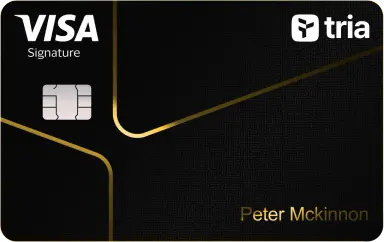
2. Tria Signature Card
High-Yield Self-Custody: 15% APY + Visa Signature Perks
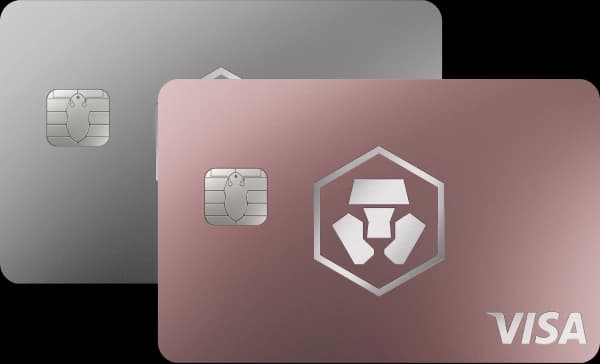
3. Private (Icy White / Rose Gold)
Private Tier: 4% Uncapped Cashback + Lounge Guest
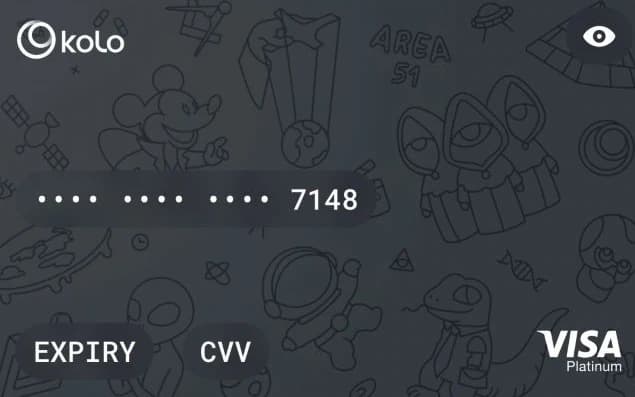
4. Kolo Card
Earn Bitcoin on Purchases: 2% for 30 Days, Then 1% (Capped) + Visa Platinum + 170+ Countries
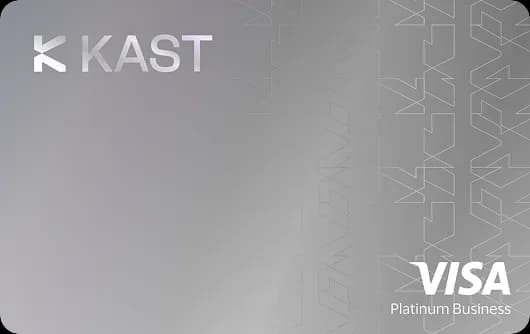
5. KAST K Card
Free USD Cashback: 1.5% on First $2K/Month
Complete list:
All 39 crypto cards available in Oman in September 2026
This table includes every crypto card we currently track for Oman. Rows marked Top pick are ranked and reviewed above.
| Crypto card | Max rewards | Annual fee | FX fee | Type | Custody |
|---|---|---|---|---|---|
1 ether.fi Core CardTop pick | Up to 3% rewards | Free | 0.5% | Crypto Backed Credit | Self-custody |
2 Tria Signature CardTop pick | Up to 4.5% rewards | $109/year | 1% | Debit | Self-custody |
3 Private (Icy White / Rose Gold)Top pick | Up to 4% rewards | TBD | 0% | Prepaid | Custodial |
4 Kolo CardTop pick | Up to 2% rewards | Free | 0% | Prepaid | Custodial |
5 KAST K CardTop pick | Up to 1.5% rewards | Free | 0.5% | Prepaid | Custodial |
| Up to 10% rewards | Free | 0% | Prepaid | Custodial | |
| Up to 10% rewards | Free | 3% | Debit | Hybrid | |
| Up to 8% rewards | Free | 0% | Debit | Custodial | |
| Up to 8% rewards | Free | 0% | Debit | Self-custody | |
10 | Up to 8% rewards | TBD | 0% | Prepaid | Custodial |
| Up to 6% rewards | $250/year | 1% | Debit | Self-custody | |
| Up to 5% rewards | TBD | 0% | Prepaid | Custodial | |
| Up to 4% rewards | Free | 0% | Crypto Backed Credit | Self-custody | |
| Up to 4% rewards | Free | 0% | Crypto Backed Credit | Self-custody | |
| Up to 3% rewards | Free | 0.25% | Crypto Backed Credit | Self-custody | |
| Up to 3% rewards | Free | 0% | Crypto Backed Credit | Self-custody | |
| Up to 3% rewards | $10000 | 0.5% | Prepaid | Custodial | |
| Up to 3% rewards | $199 | 0.5% | Crypto Backed Credit | Self-custody | |
| Up to 3% rewards | $299.9 | 0% | Prepaid | Custodial | |
| Up to 3% rewards | $129 | 1.2% | Prepaid | Custodial | |
| Up to 2% rewards | $1000 | 0.5% | Prepaid | Custodial | |
| Up to 2% rewards | Free | 1% | Crypto Backed Credit | Self-custody | |
| Up to 2% rewards | $49.9 | 0% | Prepaid | Custodial | |
| Up to 2% rewards | $999 | 0% | Crypto Backed Credit | Self-custody | |
| Up to 1.5% rewards | Free | 0.5% | Prepaid | Custodial | |
| Up to 1.5% rewards | $20/year | 1% | Debit | Self-custody | |
| Up to 1.5% rewards | $249 | 0.25% | Crypto Backed Credit | Self-custody | |
| Up to 1% rewards | Free | TBD | Prepaid | Custodial | |
| Up to 1% rewards | $99 | 0.5% | Crypto Backed Credit | Self-custody | |
| Up to 0.5% rewards | Free | 1% | Crypto Backed Credit | Self-custody | |
| none | Free | 0% | Prepaid | Custodial | |
| cashback | Free | 1.75% | Prepaid | Self-custody | |
| cashback | $199 | 0.75% | Prepaid | Self-custody | |
| cashback | Free | 0.5% | Prepaid | Custodial | |
| none | Free | 1% | Prepaid | Self-custody | |
| Varies | Free | 1.5% | Debit | Custodial | |
| Varies | Free | 1.2% | Prepaid | Custodial | |
| Varies | Free | 1.2% | Prepaid | Custodial | |
| points | Free | 1% | Debit | Self-custody |
Crypto Card Regulation in Oman
Oman's crypto regulatory framework is shaped by two institutions working in parallel, taking a characteristically measured Omani approach.
The Central Bank of Oman (CBO, Al-Bank Al-Markazi Al-Umani, البنك المركزي العماني) maintains that cryptocurrencies are not recognized as legal tender and are not protected under Oman's banking laws. The CBO has issued public warnings about virtual assets but has critically not prohibited ownership or trading. This permissive-but-cautious stance distinguishes Oman from Kuwait's prohibition and aligns more with Saudi Arabia's studied ambiguity.
The Capital Market Authority (CMA, Hayat Suq Al-Mal, هيئة سوق المال) took a more progressive step. On June 6, 2023, the CMA issued Decision No. (E/35/2023), establishing Instructions on Registration of Virtual Asset Service Providers. Key requirements:
- Mandatory VASP registration with the CMA
- Enhanced AML/CTF compliance aligned with FATF Recommendations
- Full KYC procedures with customer identity verification
- Transaction monitoring and suspicious activity reporting
- Capital adequacy requirements based on VASP type
- Regular auditing by approved firms
- Client fund segregation
The CMA framework covers exchanges, brokers, custodians, and token issuers. Oman's approach is deliberately phased: registration first (2023-2024), then full licensing with more detailed requirements. The country is positioning itself competitively within the GCC alongside the UAE and Bahrain, but at Oman's characteristic pace.
Crypto ownership and investment are permitted through compliant channels. The CBO's caution plus the CMA's registration framework creates a carefully managed environment. For crypto card users, this means Visa/Mastercard-settled card transactions are unambiguously legal; they appear as standard fiat payments at the merchant level.
Tax Treatment of Card Rewards in Oman
Oman levies no personal income tax on individuals, whether Omani nationals or foreign residents. Individual capital gains from cryptocurrency, including gains realized through card spending, staking yields, and cashback rewards, are currently untaxed. There is no capital gains tax, no income tax on individuals, and no withholding tax on crypto transactions.
What is taxed: Corporate income tax at 15% for businesses. VAT at 5% (introduced April 2021 under Oman's fiscal diversification plan). No excise tax on crypto.
Personal income tax from January 2028: On June 22, 2025, Oman enacted Royal Decree No. 56/2025, introducing a 5% personal income tax on annual gross income exceeding OMR 42,000 (approx. $109,200). Oman is the first GCC country to introduce personal income tax.
The law's broad definition of taxable income may include capital gains, which could affect crypto disposals from 2028; implementing regulations are expected to clarify scope. Until then, individuals retain 100% of crypto gains, cashback, and yields.
| Scenario | Gain | Tax (Individual) | Net Retained |
|---|---|---|---|
| BTC appreciated 200%, spent via card | OMR 1,000 | OMR 0 (0%) | OMR 1,000 |
| ETH staking yield earned | OMR 200 | OMR 0 (0%) | OMR 200 |
| 1% ongoing BTC cashback received (Kolo) | OMR 12 | OMR 0 (0%) | OMR 12 |
| USDC spent (near-zero gain) | approx. OMR 0 | OMR 0 | Full value |
All funding methods are equally tax-efficient for individuals through 2027. The 5% VAT on purchases applies regardless of payment method. From January 2028, the new 5% income tax on income above OMR 42,000 may apply to capital gains; implementing regulations will clarify whether crypto disposals are in scope. Below the OMR 42,000 threshold, income remains untaxed even after 2028.
Zakat: A 2.5% Islamic obligation on net wealth held for a full lunar year. For Muslim Omanis, crypto holdings would logically be included in personal zakat calculations. This is a religious obligation, not a government tax.
How to Apply from Oman
Omani crypto card applications require the Al-Bitaqa Ash-Shakhsiyya (Civil ID Card, البطاقة الشخصية), the mandatory national identity card issued by the Royal Oman Police (ROP, Shurtat Uman As-Sultaniyya, شرطة عمان السلطانية). The Civil ID contains biometric data and a unique civil number required for all financial transactions.
Alternative: Omani passport (Jawaz As-Safar Al-Umani, جواز السفر العماني). Omani passports have strong international recognition. GCC nationals generally have high approval rates with international crypto card providers.
Proof of address via utility bills from Mazoon Holding (electricity distribution), Haya Water (Muscat water utility), Nama Water Services (northern Oman), or telecom bills from Omantel (state-owned, largest telecom), Ooredoo Oman, or Vodafone Oman (launched 2024). Bank statements from Bank Muscat (largest, 170+ branches), Bank Dhofar, NBO (National Bank of Oman), Sohar International, or Alizz Islamic Bank.
Oman's eOman platform (ITA - Information Technology Authority) is expanding digital identity services, which could make KYC easier with international providers.
Spending Tips for Oman
What Omani Bank Cards Actually Cost You
| Bank | Debit FX Markup | Credit Cashback | Card Fee | Best Card |
|---|---|---|---|---|
| Bank Muscat | 2-3% | Up to 1% (BankVision points) | OMR 0-5 | World Elite |
| Bank Dhofar | 2-2.5% | Up to 0.5% | OMR 0-3 | Visa Signature |
| NBO | 2-3% | Up to 0.5% | OMR 0-3 | Platinum |
| Sohar International | 2-3% | Up to 0.5% | OMR 0-3 | World |
| Alizz Islamic Bank | 2-2.5% | Points-based | OMR 0-3 | Murabaha |
Omani bank cards earn minimal cashback and charge 2-3% on non-OMR transactions. A crypto card with 2-4.5% rewards and low or zero FX still creates a meaningful annual advantage on typical professional spending.
Zero Tax Yield Stacking (Through 2027)
Oman's zero personal income tax (until January 2028) enables pure yield stacking:
- 3% in ETHFI from ether.fi Core on the first $2,000/month, then 1% through $5,000 and 0.5% above; direct stablecoin and optional collateral modes are available
- 4.5% USDT cashback (Tria Signature) on the first $1,000/month, then 1%, with 1% FX plus 0.5% per payment (about 3% net) at $109/year
- 4% cashback (Crypto.com Icy) with lounge access
- 1% ongoing BTC cashback (Kolo), capped at $100/month and $1 per transaction
- 0% tax on all returns through 2027
- 5% VAT on purchases applies regardless, so no card advantage here
Our 2026 Oman review confirms the yield stacking potential: on OMR 300/month spending at ether.fi 3%, that is OMR 108/year ($281) in pure, untaxed returns. At Crypto.com Icy 4%: OMR 144/year ($374) plus MCT lounge access. Kolo at 1% ongoing BTC returns OMR 36/year on the same spend.
Card Selection for Oman
- ether.fi (3% ETHFI on first $2K/mo, then 1% / 0.5%): 0-0.5% FX, with direct stablecoin or optional collateral-backed spending.
- Tria Signature (4.5% on first $1K/mo, then 1%): $109/year, 1% FX + 0.5%/payment, ~3% net. USDT cashback.
- Crypto.com Icy (4%): CRO stake. Metal card + airport lounge access at MCT. Netflix/Spotify rebates.
- Kolo (1% ongoing BTC, 2% for 30 days, capped $100/mo and $1/txn): $0 annual, 0% FX. Free BTC cashback on day-to-day purchases.
- KAST (1.5% USD cashback on first $2K/mo): $0 annual, 0.5-1.75% FX. Free prepaid for expats.
- RedotPay: 1.2% FX. Virtual (free) and Physical ($100).
- xPlace (0.5-2% Credit Mode, capped monthly): 1% FX at the free tier, 0% at Platinum. Tiered SOL ecosystem.
Spending Scenario: OMR 400/month (approx. $1,040, Muscat Professional)
| Category | Monthly | Annual | Where It Goes |
|---|---|---|---|
| Groceries | OMR 80 | OMR 960 | Lulu Hypermarket, Carrefour, Nesto, Al Fair |
| Dining | OMR 80 | OMR 960 | Qurum restaurants, Shatti Al Qurum cafes, Al Mouj |
| Transport | OMR 50 | OMR 600 | Petrol (subsidized), car maintenance |
| Subscriptions | OMR 30 | OMR 360 | Netflix, Spotify, gym, Shahid, OSN |
| Shopping | OMR 100 | OMR 1,200 | City Centre Muscat, Oman Avenues Mall, Al Araimi |
| Delivery/Services | OMR 60 | OMR 720 | Talabat, Akeed, Mrsool |
Total: OMR 4,800/year ($12,480). This spending remains inside ether.fi Core's first $2,000 monthly band, producing OMR 144/year ($374) at 3%, the strongest free-card return. Crypto.com Icy at 4% returns OMR 192/year ($499). KAST at 1.5% USD cashback, below its $2,000 monthly cap, returns OMR 72/year ($187). Kolo at 1% ongoing BTC returns OMR 48/year ($125). All are tax-free through 2027.
ether.fi vs KAST vs Kolo vs Crypto.com Icy: Oman-Specific Math
Zero personal tax applies through 2027, and the OMR-USD peg provides currency stability. ether.fi Core pays 3% in ETHFI on the first $2,000 of monthly spend, 1% through $5,000, and 0.5% above. Kolo figures assume 1% ongoing BTC and individual purchases at or under $100, where its $1-per-transaction cap does not bite.
| Monthly Spend | ether.fi (3% ETHFI to ~OMR769/mo, then 1% / 0.5%, $0) | KAST (1.5% USD, $2K/mo cap, $0) | Kolo (1% BTC, $0) | Crypto.com Icy (4%, CRO stake) |
|---|---|---|---|---|
| OMR 200 | OMR 72/yr | OMR 36/yr | OMR 24/yr | OMR 96/yr + lounges |
| OMR 400 | OMR 144/yr | OMR 72/yr | OMR 48/yr | OMR 192/yr + lounges |
| OMR 600 | OMR 216/yr | OMR 108/yr | OMR 72/yr | OMR 288/yr + lounges |
| OMR 1,000 | OMR 305/yr | OMR 138/yr (KAST cap reached at OMR 769/mo of spend) | OMR 120/yr | OMR 480/yr + lounges |
ether.fi Core leads the free cards at every spending level shown. Above roughly OMR 769 per month, its marginal reward falls from 3% to 1%, while KAST stops earning on further spend once its cap is reached.
KAST stays simpler for expats who want a prepaid USD-reward card. Kolo works best as a small-purchase BTC earner. Crypto.com Icy tops the raw rate at 4% but requires a CRO stake and adds airport lounge access at Muscat and Salalah.
Local Payment Infrastructure
Muscat has strong card acceptance that has improved under Vision 2040's digital payments push. Malls (City Centre Muscat, Oman Avenues Mall, Al Araimi Boulevard, Muscat Grand Mall, Qurum City Centre) have full Visa/Mastercard acceptance. Hotels (Al Bustan Palace Ritz-Carlton, Shangri-La Barr Al Jissah, W Muscat, Kempinski Muscat, Anantara Al Jabal Al Akhdar) accept all international cards.
Supermarkets (Lulu Hypermarket 15+ locations, Carrefour, Nesto, Al Fair, Spar) and restaurants in Qurum, Shatti Al Qurum, Al Mouj, and Muttrah areas have strong acceptance. Thawani is the leading fintech payment processor, now Visa-licensed. Bank Muscat and Bank Dhofar mobile banking apps handle growing digital transaction volumes (99.5% annual growth 2021-2023). Apple Pay available through select banks.
Outside Muscat: Salalah (Dhofar governorate, strong acceptance at hotels and malls particularly during Khareef/monsoon tourism season), Sohar (industrial city, 200 km from Muscat), Nizwa (historic city, growing acceptance), and Sur (coastal, tourism-oriented). Smaller towns still lean cash-heavy.
Cost of Living and Regional Variation
| Area | 1-Bed Rent/Month | Groceries/Month | Profile |
|---|---|---|---|
| Muscat (Qurum/Shatti) | OMR 300-600 | OMR 80-150 | Premium, expat-heavy, best acceptance |
| Muscat (Al Mouj) | OMR 400-800 | OMR 80-150 | New development, marina, luxury |
| Muscat (Bausher/Azaiba) | OMR 200-400 | OMR 60-120 | Residential, growing commercial |
| Salalah | OMR 150-350 | OMR 60-100 | Dhofar capital, Khareef tourism |
| Sohar | OMR 120-250 | OMR 50-90 | Industrial, port city |
| Nizwa | OMR 100-200 | OMR 40-80 | Historic interior, university |
Oman Vision 2040 and Fintech
Oman's national development plan (Vision 2040, replacing Vision 2020) prioritizes economic diversification, digital services, and private sector growth. The CBO's licensing of Thawani as a PSP and the CMA's Virtual Assets framework both align with this vision. The National Program for Digital Economy and the Fourth Industrial Revolution drives fintech adoption.
Oman's population is young (median age 26) with high smartphone penetration. The combination of regulatory openness (CMA VASP framework), zero personal income tax, and Vision 2040's digital push creates a natural growth market for crypto financial products. Unlike Kuwait's prohibition, Oman is actively building the infrastructure.
Oil Economy and Omanization
Oman's economy is less oil-dependent than Kuwait or Saudi Arabia (oil accounts for approximately 30% of GDP, down from 50%+ historically), with active diversification into tourism, logistics (Duqm port and SEZ, Sohar port), fisheries, and manufacturing. GDP per capita is approximately $20,000, lower than Kuwait ($35,000) or UAE ($50,000) but growing.
Omanization (Taomeen) policies mandate minimum percentages of Omani nationals in private sector jobs (varies by sector: 30-90%). This has created a growing Omani middle class employed in banking, telecom, and energy. These Omani professionals earning OMR 800-2,000/month ($2,080-5,200) represent the core crypto card demographic: stable income, tech-literate, internationally aware, with discretionary spending on travel and lifestyle.
Salalah Khareef Season
Salalah's annual Khareef (monsoon) season (June-September) transforms Dhofar into a green destination that attracts 500,000+ visitors from across the GCC, particularly Saudis and Emiratis escaping the summer heat. Hotels, restaurants, and tourist services in Salalah operate at peak capacity during these months. Card-eligible spending during Khareef visits typically runs OMR 500-2,000 per trip.
The Expat Economy: 40% of the Population
Oman's total population is approximately 5 million, of which 2 million are expatriates (40%). While lower than Kuwait's 67% or UAE's 88%, the expat community is large:
- India: 700,000+. The largest community. Construction, retail, healthcare, IT, education.
- Bangladesh: 500,000+. Construction, service industry, domestic work.
- Pakistan: 300,000+. Construction, transport, retail.
- Philippines: 50,000+. Healthcare (nurses), hospitality.
- Egypt: 40,000+. Education, engineering.
Annual remittance outflow exceeds $10 billion, representing a large share of GDP. Traditional channels (bank wires, exchange houses in Ruwi's Indian/Pakistani commercial district, Western Union) charge 2-5% in combined fees. For tech-literate expats, USDC-based transfers to family members' crypto cards in India or Bangladesh bypass these costs entirely.
Cross-Border Spending
Oman's geographic position creates FX spending opportunities:
- UAE (AED): The most common cross-border trip. Oman-UAE border crossings at Hatta and Al Ain are busy. Dubai is 4-5 hours from Muscat by road. AED-USD peg means minimal FX risk, but bank cards still charge 2-3% markup.
- Bahrain (BHD): Business connections, short flights from Muscat. BHD-USD basket peg.
- Saudi Arabia (SAR): Growing tourism ties (Riyadh Season). SAR-USD peg.
- India: Most common international flight destination from Muscat. INR floating currency, major FX savings with zero-FX cards.
- Thailand/Malaysia: Popular vacation destinations for Omani families. THB/MYR floating, meaningful savings.
- Europe (EUR/GBP): London, Istanbul for shopping, medical tourism. Largest FX savings category.
Tourism: Oman's Growing Visitor Economy
Oman targets 5 million tourists by 2040 under Vision 2040. Current attractions include Musandam (fjords, dubbed "the Norway of the Middle East"), Jebel Akhdar (Green Mountain, luxury resorts at 2,000m altitude), Wahiba Sands (desert safari camps), Misfat Al Abriyeen (traditional mountain village), Muscat's Muttrah Souq and Sultan Qaboos Grand Mosque, and Salalah's Khareef season.
For Omani residents, domestic tourism spending at these destinations runs OMR 200-1,000 per trip. The growing luxury segment (Anantara Al Jabal Al Akhdar Resort at OMR 150+/night, Alila Jabal Akhdar, Six Senses Zighy Bay in Musandam at OMR 300+/night) creates premium card-eligible spending.
Online Shopping and International Subscriptions
Oman's e-commerce market is developing. OLX Oman (classifieds), Amazon.ae (delivers to Oman), Noon.com (active), Shein, AliExpress, and Namshi handle most online purchases. Food delivery: Talabat (dominant) and Akeed (Omani-founded). Ride-hailing: Careem and OTaxi (Omantel's ride service).
International USD subscriptions (Netflix, Spotify, Adobe, Apple services, Microsoft 365) benefit from the OMR-USD peg stability. Zero-FX crypto cards eliminate the 2-3% bank markup on all USD-billed services. An Omani household spending OMR 30-50/month on international subscriptions saves OMR 7-15/year on FX alone, plus earns cashback.
Supported Exchanges & Wallets in Oman
Oman's CMA VASP registration framework creates a pathway for formal exchange licensing, though no major exchange has completed registration as of 2025. The primary on-ramps are Rain Financial (Bahrain-licensed, serves GCC including Oman with OMR bank transfers), Binance (OMR P2P), and Crypto.com (global platform). Omani banks have not blocked crypto transactions as aggressively as some GCC peers (notably Kuwait and Qatar).
Under Oman's CMA VASP framework, global issuers fill the card gap. The ether.fi Core Card posts the top free starting rate at 3% in ETHFI with a 0-0.5% FX margin and supports both direct stablecoin and optional collateral-backed spending.
Tria Signature adds 4.5% USDT cashback on the first $1,000 per month, then 1%, with a 1% FX fee plus 0.5% per payment. That leaves about 3% net on rial spend before its $109 annual fee.
Crypto.com tiers from Midnight Blue (0%) to Icy (4%, CRO stake required) add MCT lounge access. Kolo pays 1% ongoing BTC (2% for the first 30 days), capped at $100/month and $1 per transaction, on cashback cards with $0 annual and 0% FX, working well with the OMR-USD peg (zero FX surprise).
KAST provides 1.5% USD cashback on the first $2,000/month at $0 annual with 0.5-1.75% FX, relevant for Oman's 1.8M expat workers who may lack local documentation. RedotPay variants include Virtual (free) and Physical ($100) at 1.2% FX. xPlace provides tiered USDC cashback from 0.5% to 2% in Credit Mode, each tier capped monthly.
Oman's zero personal income tax, OMR-USD peg, CMA VASP registration framework, Vision 2040 digital economy plan, and Thawani's Visa licensing signal an economy that is methodically building the infrastructure for crypto adoption. Among GCC states, Oman is moving more slowly than the UAE or Bahrain, but heading firmly in the same direction.
Written by SpendNode Editorial
Frequently Asked Questions
Is cryptocurrency legal in Oman?
Yes. Oman allows crypto ownership and investment through compliant channels. The Capital Market Authority issued Decision E/35/2023 requiring VASP registration. The Central Bank of Oman does not recognize crypto as legal tender but does not prohibit ownership.
How is crypto taxed in Oman?
Individual crypto gains are untaxed through 2027. From January 2028, Royal Decree 56/2025 introduces a 5% personal income tax on annual gross income above OMR 42,000 (approx. $109,200). The law's broad income definition may include capital gains - implementing regulations will clarify crypto scope. Below OMR 42,000, income remains untaxed. Oman is the first GCC country to introduce personal income tax.
Which crypto cards work in Oman?
Several globally available crypto cards serve Oman. ether.fi Core leads on free starting rate with 3% in ETHFI on the first $2,000/month, then lower bands, and supports direct stablecoin or optional collateral-backed spending. Tria Signature provides 4.5% USDT cashback on the first $1,000/month then 1%, with fees leaving about 3% net on rial spend before its $109 annual fee. Crypto.com Icy adds 4% and lounge access at MCT. Kolo pays 1% ongoing BTC after its introductory month, while KAST pays 1.5% USD on the first $2,000/month.
What is Oman's fintech landscape?
Thawani Technologies is Oman's first CBO-licensed payment service provider and became the first Omani fintech licensed by Visa to issue credit cards in 2025. Mobile banking transactions grew 99.5% annually between 2021-2023. Oman Vision 2040 drives cashless payment adoption.
Other Countries
View all 112 countries →


Latest Page Changes to the Best Crypto Cards in Oman Guide
- CMA VASP framework date from 2024 to Decision E/35/2023 (June 6, 2023)