

Best Crypto Cards in Ecuador (2026)
Ecuador's dollarization makes crypto cards unusually practical: no local FX mismatch, no bank debit rewards to compete with, and a clear everyday use case for unbanked users, retirees, and remittance-funded households.
Verified for Ecuador
49 crypto cards available
Local currency: USD
Ecuador runs Latin America's most distinctive monetary setup, and that setup turns out to be one of the strongest fits in the region for crypto card adoption. The country abandoned its own currency (the sucre) and adopted the US dollar as its sole legal tender in January 2000 following a devastating banking crisis that wiped out 70% of the banking sector and triggered emigration of 1 million+ Ecuadorians.
Twenty-six years later, dollarization remains, and it creates an unusual advantage for crypto card users: most globally available crypto cards denominate in USD, meaning zero currency conversion when spending at Ecuadorian merchants. Your 3% rewards rate is a true 3%, not eroded by hidden FX spreads.
Banco Pichincha (largest bank by assets), Banco Guayaquil, Produbanco (Grupo Promerica), and Banco del Pacifico debit cards earn zero cashback. Despite the dollarized economy eliminating FX conversion, these banks still charge maintenance fees (cuota de manejo, USD 2-5/month), ATM fees (USD 0.45-0.50 per withdrawal at other banks), and transaction limits that restrict international spending.
The central bank does not authorize cryptoassets as legal tender or a payment method in Ecuador, but that does not mean every fiat bank transfer used to buy crypto is prohibited. Crypto cards offer one rewards route alongside conventional cards and wallets; the crypto funding and card settlement steps need to be distinguished.
Summary:
Which crypto cards are best in Ecuador?
The best crypto cards in Ecuador in September 2026 are Oobit Visa Card, COCA Visa Card, Tria Signature Card, Jupiter Global, Kolo Card, and Rizon Emerald Card. The detailed ranking below explains the local tax, fee, and availability trade-offs.
| Crypto card | Base reward | Net after fees | Annual fee | FX fee | Type |
|---|---|---|---|---|---|
| 5% baseup to 10% in OOB at Level 2, no stake | 2% | Free | 3% | Debit | |
| 1% baseup to 8% with a large $COCA stake; $15-$350/mo claim capacity by tier | 1% | Free | 0% | Debit | |
| 4.5% base4.5% on the first $1,000/mo, then 1% | 3% | $109/year | 1% | Debit | |
| 2% baseup to 4% by referring 2 qualifying friends the prior month | 1% | Free | 1% / 1.8% | Debit | |
| 1% base2% for the first 30 days, then 1%; also capped at $1/EUR 1 per transaction ($2/EUR 2 during intro) and $100/EUR 100 per month | 1% | Free | 0% | Prepaid | |
| Up to 2.5% rewards | - | $83.88 | 1.02% | Crypto Backed Credit | |
| 4% baseneeds a $50k CRO stake to hold the tier | 4% | TBD | 0% | Prepaid | |
| 1.5% base | 1% | Free | 0.5% | Prepaid |
23 card vendors currently list Ecuador as available, and full dollarization removes the local-currency conversion at the register. Oobit leads on no-stake rate at 10% in OOB or 5% in stablecoin, while COCA reaches 8% through its staking tiers.
Jupiter Global is the free self-custody option at 2% base cashback (4% for a month after referring 2 friends), a $20 signup bonus, 0% FX on USD spend, and no annual fee or token to stake.
COCA starts at 1% free (Starter tier) and scales to 8% at Elite, but reaching higher tiers requires staking $COCA tokens (300 for 3%, 30K for 8%) with a 30-day unstaking cooldown. Cashback earning is uncapped; monthly claims are limited from $15 at Starter to $350 at Elite.
Tria Signature pays 4.5% on the first $1,000/month (then 1%) with self-custody USDT cashback; its 0.5% per-payment fee brings the effective USD rate to about 4%, since the 1% FX does not apply to USD spend. Oobit is the no-stake alternative, reaching up to 10% in OOB or 5% in stablecoin on a free virtual Visa, and because Ecuador settles in dollars its usual ~3% FX does not apply.
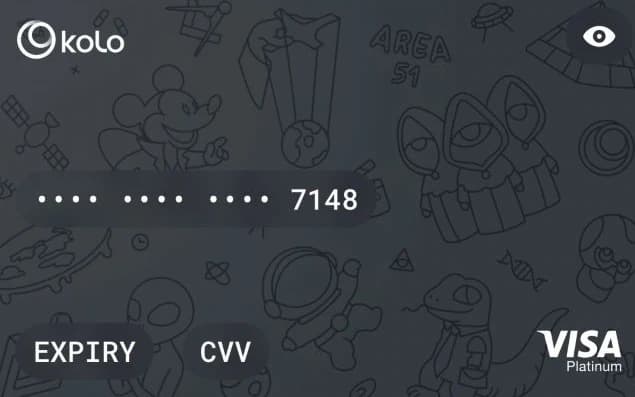
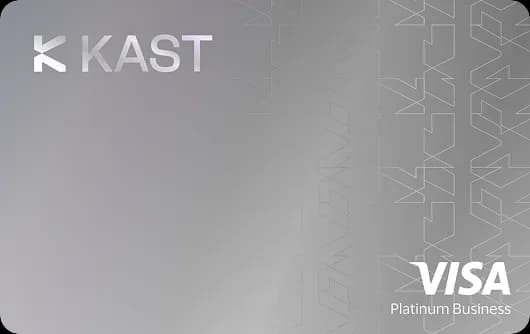
Kolo stays the simple free BTC card at 1% ongoing (2% for the first 30 days) with 0% FX. KAST at 1.5% USD cashback on the first $2,000/month works for users who need USD spending without bank onboarding.
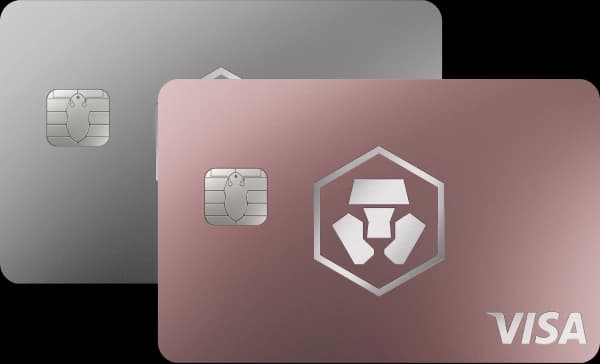
Crypto.com Icy at 4% adds Priority Pass lounge access at Mariscal Sucre (UIO) and Jose Joaquin de Olmedo (GYE).
Best Card For Every Need in Ecuador
Top 8 Crypto Cards in Ecuador
Ecuador's full USD dollarization since 2000 makes it one of LATAM's most direct crypto-card markets: USDC and merchant prices use the same reference currency. Oobit leads on no-stake rewards at 10% in OOB or 5% in stablecoin, and COCA follows at up to 8% through its staking tiers.
Jupiter Global adds a $20 signup bonus and 2% base cashback, rising to 4% for a month after referring 2 friends. It charges no annual fee or USD FX and spends from a self-custody Solana wallet.
COCA offers higher rates (3-8%) but requires staking $COCA tokens and accepting a 30-day unstaking cooldown. Its monthly claim capacity rises with tier from $15 to $350; the free Starter tier pays 1%.
Tria Signature at 4.5% on the first $1,000/month (then 1%) adds self-custody stablecoin cashback, though its 0.5% per-payment fee brings the effective USD rate to about 4% (the 1% FX does not apply to USD spend), and the $109 fee needs roughly $303/month of spend before it beats free Kolo. Oobit sits just below it for no-stake spenders: up to 10% in OOB or 5% in stablecoin on a free virtual Visa, with its usual ~3% FX neutralized by Ecuador's dollar settlement.
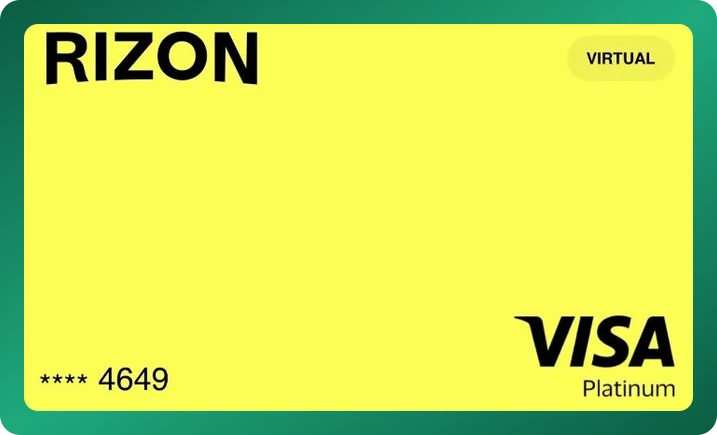
Kolo at 1% ongoing BTC (2% intro) stays the simple free pick with no staking and no fee. Rizon Emerald slots in behind it on a different axis than rate: for the 46% of Ecuadorians without bank accounts, and for the 1 million+ emigrant families whose dollars flow home, it issues a US Visa Platinum on the Ecuadorian passport with USD account details attached, no Superintendencia-policed bank rail anywhere in the stack.
In a fully dollarized economy every local swipe is an international transaction to the card, which is exactly why the $6.99/month Emerald plan earns its fee here: roughly 1.02% per purchase where the free plan would charge 1.7% + $0.30, both cards included, and 2.5% cashback (capped at the plan fee) that recovers the subscription at about $280 a month of eligible spend.
The everyday register spend still earns more on Oobit or COCA; Rizon's lane is the US-billed online side and the dollar account. Lighter users can hold the free Standard plan instead, where code spendnode brings the virtual card to $1.
KAST earns its place because Quito and Guayaquil users can fund it from offshore dollars, family remittances, or stablecoins and spend locally without Ecuadorian bank rails. Crypto.com Icy at 4% covers the Cuenca retiree community and diaspora travelers with Priority Pass at both UIO and GYE.
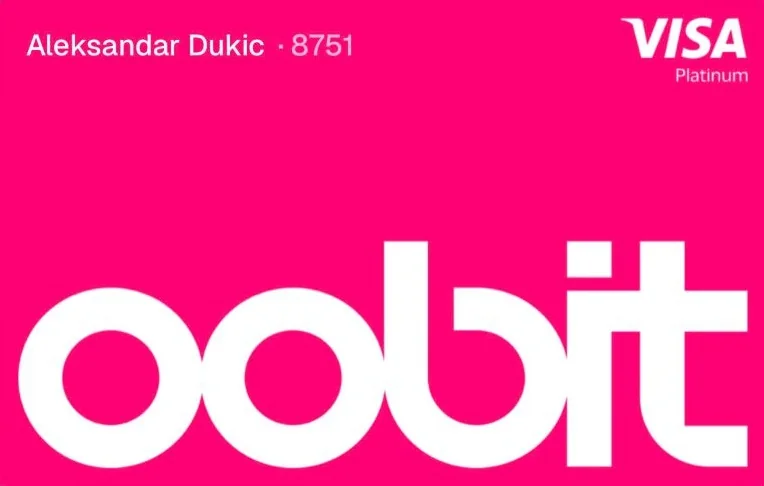
1. Oobit Visa Card
Spend Crypto Anywhere Visa Works - Self-Custody or In-App
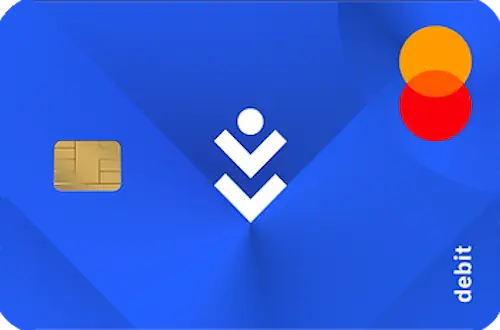
2. COCA Visa Card
Self-Banking: 8% Cashback + 5% APY + 0% FX
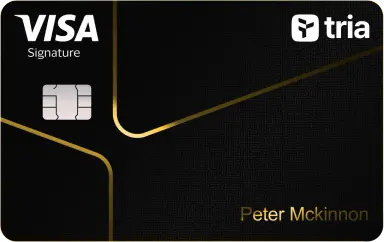
3. Tria Signature Card
High-Yield Self-Custody: 15% APY + Visa Signature Perks
4. Jupiter Global
Free virtual USDC card with 2% base cashback
5. Kolo Card
Earn Bitcoin on Purchases: 2% for 30 Days, Then 1% (Capped) + Visa Platinum + 170+ Countries
6. Rizon Emerald Card
Rizon's top plan: international fees near 1%, trading at 0.85%, and the physical Visa Platinum included.
7. Private (Icy White / Rose Gold)
Private Tier: 4% Uncapped Cashback + Lounge Guest
8. KAST K Card
Free USD Cashback: 1.5% on First $2K/Month
Complete list:
All 49 crypto cards available in Ecuador in September 2026
This table includes every crypto card we currently track for Ecuador. Rows marked Top pick are ranked and reviewed above.
| Crypto card | Max rewards | Annual fee | FX fee | Type | Custody |
|---|---|---|---|---|---|
1 Oobit Visa CardTop pick | Up to 10% rewards | Free | 3% | Debit | Hybrid |
2 COCA Visa CardTop pick | Up to 8% rewards | Free | 0% | Debit | Self-custody |
3 Tria Signature CardTop pick | Up to 4.5% rewards | $109/year | 1% | Debit | Self-custody |
4 Jupiter GlobalTop pick | Up to 4% rewards | Free | 1% / 1.8% | Debit | Hybrid |
5 Kolo CardTop pick | Up to 2% rewards | Free | 0% | Prepaid | Custodial |
6 Rizon Emerald CardTop pick | Up to 2.5% rewards | $83.88 | 1.02% | Crypto Backed Credit | Self-custody |
7 Private (Icy White / Rose Gold)Top pick | Up to 4% rewards | TBD | 0% | Prepaid | Custodial |
8 KAST K CardTop pick | Up to 1.5% rewards | Free | 0.5% | Prepaid | Custodial |
| Up to 10% rewards | Free | 0% | Prepaid | Custodial | |
| Up to 8% rewards | Free | 0% | Debit | Custodial | |
11 | Up to 8% rewards | TBD | 0% | Prepaid | Custodial |
| Up to 6% rewards | $250/year | 1% | Debit | Self-custody | |
| Up to 5% rewards | Free | 1% | Crypto Backed Credit | Self-custody | |
| Up to 5% rewards | TBD | 0% | Prepaid | Custodial | |
| Up to 5% rewards | Free | 1% | Debit | Self-custody | |
| Up to 4% rewards | Free | 0% | Crypto Backed Credit | Self-custody | |
| Up to 4% rewards | Free | 0% | Crypto Backed Credit | Self-custody | |
| Up to 3% rewards | Free | 0.5% | Crypto Backed Credit | Self-custody | |
| Up to 3% rewards | Free | 0.25% | Crypto Backed Credit | Self-custody | |
| Up to 3% rewards | Free | 0% | Crypto Backed Credit | Self-custody | |
| Up to 3% rewards | $10000 | 0.5% | Prepaid | Custodial | |
| Up to 3% rewards | $199 | 0.5% | Crypto Backed Credit | Self-custody | |
| Up to 3% rewards | $299.9 | 0% | Prepaid | Custodial | |
| Up to 3% rewards | $129 | 1.2% | Prepaid | Custodial | |
| Up to 2% rewards | $1000 | 0.5% | Prepaid | Custodial | |
| Up to 2% rewards | Free | 1% | Crypto Backed Credit | Self-custody | |
| Up to 2% rewards | $49.9 | 0% | Prepaid | Custodial | |
| Up to 2% rewards | $999 | 0% | Crypto Backed Credit | Self-custody | |
| Up to 1.5% rewards | Free | 0.5% | Prepaid | Custodial | |
| Up to 1.5% rewards | $20/year | 1% | Debit | Self-custody | |
| Up to 1.5% rewards | $249 | 0.25% | Crypto Backed Credit | Self-custody | |
| Up to 1% rewards | Free | 1% | Crypto Backed Credit | Self-custody | |
| Up to 1% rewards | Free | TBD | Prepaid | Custodial | |
| Up to 1% rewards | $47.88 | 1.275% | Crypto Backed Credit | Self-custody | |
| Up to 1% rewards | $99 | 0.5% | Crypto Backed Credit | Self-custody | |
| Up to 0.5% rewards | Free | 1% | Crypto Backed Credit | Self-custody | |
| none | Free | 0% | Crypto Backed Credit | Self-custody | |
| none | $30 | 0% | Crypto Backed Credit | Self-custody | |
| none | Free | 0% | Prepaid | Custodial | |
| Varies | Free | 1.7% | Prepaid | Custodial | |
| cashback | Free | 1.75% | Prepaid | Self-custody | |
| cashback | $199 | 0.75% | Prepaid | Self-custody | |
| cashback | Free | 0.5% | Prepaid | Custodial | |
| none | Free | 1% | Prepaid | Self-custody | |
| Varies | Free | 1.5% | Debit | Custodial | |
| Varies | Free | 1.2% | Prepaid | Custodial | |
| Varies | Free | 1.2% | Prepaid | Custodial | |
| Varies | Free | 1.7% | Crypto Backed Credit | Self-custody | |
| points | Free | 1% | Debit | Self-custody |
Crypto Card Regulation in Ecuador
Ecuador has no dedicated cryptocurrency legislation. The BCE (Banco Central del Ecuador) and the JPRM (Junta de Politica y Regulacion Monetaria, Monetary Policy and Regulation Board) have repeatedly warned that crypto is not legal tender, not authorized as a means of payment, and not backed by the government.
The Ley Organica para la Proteccion del Uso de la Moneda Nacional protects the dollarization regime and could theoretically be invoked against crypto as "alternative currency," though this has not been tested.
The BCE's cryptoasset warning says cryptoassets are neither legal tender nor an authorized payment means in Ecuador. It distinguishes buying crypto with transfers in the formal system from using crypto itself as payment.
Banks and exchanges may impose their own controls; a blanket prohibition on every bank-to-exchange transfer is not supported by that warning. The UAFE monitors financial-crime risks.
Ecuador's Ley de Tecnologia Financiera (FinTech Law) entered force in 2025 with additional regulations issued in May 2025 mandating that FinTech service providers incorporate locally as sociedades anonimas, post at least USD 200,000 in paid-in capital, carry liability insurance, and submit quarterly cybersecurity reports to the SB. A draft chapter would establish a VASP registry, requiring exchanges to segregate client funds and provide wallet analytics to the UAFE.
Separately, the BCE has simulated tokenized-dollar clearing on a private Quorum chain, with any trial dependent on legislative approval and vendor selection.
Ecuador previously attempted a state-run digital currency through Dinero Electronico from 2015 to 2018. The central bank shut it down after low adoption, and private services including Bimo, Deuna, and PayPhone filled the gap.
The BCE warning does not ban ownership, but users should not treat a Visa or Mastercard acceptance terminal as proof that every underlying crypto funding route is authorized. The merchant receives a card payment through the issuer's rails; the crypto conversion is a separate step.
Tax Treatment of Card Rewards in Ecuador
Ecuador's SRI administers income tax. Resident taxpayers can be liable on Ecuadorian and foreign income, as the SRI explains in its guidance for online earnings. An offshore exchange is not a blanket exemption for a resident's crypto disposal gain.
Individual rates and thresholds depend on the tax year. The SRI has not confirmed that the flat share-disposal rate applies to crypto, so it should not be used as a card-spend estimate. Work from the applicable income category, the year's official schedule, and documented cost basis.
Example: You acquired BTC for USD 500 and sell it for USD 1,500 to fund a card. Record the USD 1,000 gain and assess the Ecuadorian tax treatment if you are resident. Neither the exchange's location nor the location of the card purchase alone resolves that question.
| Cashback Type | When Received | When Spent via Card | Total Tax Burden |
|---|---|---|---|
| BTC cashback | Check reward classification | Calculate later gain or loss | Depends on taxpayer and transaction |
| USDC cashback | Check reward classification | Check USD gain or loss | Not automatically zero |
Stablecoin funding can simplify pricing in a dollarized economy, but depegs, purchase spreads, conversion fees and tax treatment still matter. Keep acquisition and disposal records even when both values are close to USD 1.
USDC-funded spending on a crypto card in Ecuador behaves much more like spending stored dollars than converting into a new local currency first, but with 1% BTC rewards from Kolo (2% for the first 30 days) or 1.5% USD cashback from KAST (capped at $2K/month) on top before looking at higher-tier products.
How to Apply from Ecuador
Ecuadorian crypto card applications require a cedula de ciudadania (National ID Card, 10 digits) issued by the Registro Civil, or a pasaporte ecuatoriano issued by the Ministerio de Relaciones Exteriores y Movilidad Humana. Foreign residents use the cedula de identidad para extranjeros from the Ministerio de Gobierno.
Proof of address via utility bills from Empresa Electrica Quito (EEQ) or CNEL (electricity in other provinces), EMAAP-Q or Interagua Guayaquil (water), CNT or Claro (telecommunications), or bank statements from Banco Pichincha, Banco Guayaquil, Produbanco, or Banco del Pacifico.
KAST remains useful in a country where roughly 46% of adults remain outside the formal banking system because it gives users a way to turn offshore dollars or stablecoins into prepaid card spending without first rebuilding the flow around a local current account.
Many Ecuadorians lack traditional bank accounts but have smartphones and internet access. Physical card shipping from international issuers takes 15-25 business days. Virtual cards activate immediately for cards with Apple Pay and Google Pay use.
Spending Tips for Ecuador
The Dollarization Advantage: Why Ecuador Is Special
Ecuador's full dollarization eliminates the FX cost that plagues crypto card users in every other LATAM country. In Colombia, every card transaction involves COP-to-USD conversion at the bank's marked-up rate. In Argentina, the surcharge stack reaches 65%+. In Chile, CLP fluctuations add unpredictable costs. In Ecuador, USD in = USD out, with zero conversion at any step.
Dollarization changes the card comparison. Kolo pays 1% ongoing BTC cashback (2% for the first 30 days) without adding an FX fee. KAST pays 1.5% in USD on the first $2,000 per month; its own 0.5-1.75% card fee still applies, but there is no second conversion into a local currency.
Even COCA at its free Starter tier delivers 1% that Ecuadorian bank debit cards generally do not match. Panama and El Salvador share the same broad USD-settlement advantage in LATAM.
USDC-to-USD parity removes most exchange-rate movement when it holds, but the purchase price, card conversion rate and fees can differ. Keep cost-basis and disposal records; dollarization does not eliminate those obligations.
Banking System: Dollarized but Limited
Banco Pichincha (largest by assets, 270+ branches) offers the widest reach but charges USD 2-4/month maintenance fee on basic accounts, USD 0.45 per non-Pichincha ATM withdrawal, and imposes conservative international online spending limits. Banco Guayaquil (Guayaquil-focused, growing nationally) has better digital banking with its app but similar fee structures.
Produbanco (Grupo Promerica, Central American banking group) serves upper-middle-class customers with better international connectivity but charges USD 3-5/month. Banco del Pacifico (state-owned, second-largest by deposits) serves the broadest population including government payroll but has the most restrictive international limits.
The critical gap: no Ecuadorian bank offers cashback on debit purchases. Credit cards exist (Visa/Mastercard from all major banks) but carry annual fees of USD 30-80 and earn minimal rewards. Crypto cards fill this gap completely with zero annual fee options at 1-8% rewards (COCA at the top end with $COCA staking, Kolo at 1% BTC free, KAST at 1.5% USD cashback free on the first $2,000/month), in a currency-matched economy.
Card Selection by Use Case
- Free self-custody + signup bonus: Jupiter Global (2% base, 4% via referrals, $20 bonus, $0, 0% USD FX, self-custody Solana)
- Tiered staking rewards: COCA (1% free, up to 8% with 30K $COCA stake, $15-$350 monthly claim capacity)
- Self-custody cashback: Tria Signature (4.5% on first $1K/mo then 1%, $109/yr, 1% FX + 0.5%/tx, ~4% net on USD)
- No-stake high cashback: Oobit (up to 10% OOB / 5% stablecoin, $0, 0% FX on USD spend, Tether-backed)
- Free BTC cashback: Kolo (1% ongoing BTC reward rates, 2% for the first 30 days, $0, 0% FX, no staking)
- Premium perks: Crypto.com Icy (4% + airport lounge perks at UIO/GYE)
- Unbanked/remittance: KAST (1.5% USD cashback on first $2K/mo, $0, 0.5-1.75% FX)
- Crypto-backed credit: Avici (no disposal event)
Break-Even Math: Free Cards First
Dollarized economy = zero FX conversion. All figures in USD (Ecuador's legal tender), net of fees; Tria's 0.5% per-payment fee trims its rate to about 4% net on the capped tier. This table shows what you actually earn without staking tokens. Kolo's 1% figures assume purchases at or under $100, where its per-transaction cap does not bite.
| Monthly Spend | Kolo (1% BTC ongoing, free) | Tria Sig (4.5% to $1k/mo then 1%, net of 0.5% fee, $109/yr) | Icy (4%, CRO stake) | KAST (1.5% USD, $2K/mo cap, free) | COCA Starter (1%, free) |
|---|---|---|---|---|---|
| $400 | $48/yr | $83/yr | $192/yr + lounges | $72/yr | $48/yr |
| $600 | $72/yr | $179/yr | $288/yr + lounges | $108/yr | $72/yr |
| $1,000 | $120/yr | $371/yr | $480/yr + lounges | $180/yr | $120/yr |
| $1,500 | $180/yr | $401/yr | $720/yr + lounges | $270/yr | $180/yr |
KAST at 1.5% USD cashback now out-rates Kolo's 1% ongoing (Kolo pays 2% only for the first 30 days) and COCA's 1% Starter tier, and it brings the simplest KYC of any free option (Oobit and Jupiter advertise higher free-tier rates but with more setup). Kolo's edge is not the headline rate but its BTC denomination, 0% FX, and zero staking or fees.
Higher COCA tiers require staking tokens with a 30-day cooldown and no partial unstaking. Standard pays 3% with a $25 monthly claim capacity, Premium pays 5% with $60, and Elite pays 8% with $350. Earning continues at the tier rate, but rewards above the amount that can be claimed remain queued.
Tria Signature, after its 0.5% per-payment fee, recovers its $109 annual fee at about $227/month against a no-reward card, but against free Kolo's 1% it pulls ahead only above roughly $303/month, where its ~4% net covers the fee (109 / (0.04 - 0.01) / 12). Crypto.com Icy adds Priority Pass lounge access at UIO and GYE. All amounts in USD at 1:1 parity.
Spending Scenario: USD 600/month (Ecuadorian Professional)
| Funding Method | Annual Spend | Rewards (1.5% KAST USD cashback) | Est. Tax | Net Rewards |
|---|---|---|---|---|
| USDC funding | $7,200 | $108 | Depends on actual gain and reward treatment | $108 before tax and funding costs |
| Appreciated BTC funding | $7,200 | $108 | Depends on realized gain and taxpayer | $108 before tax and funding costs |
$108/year in USD cashback at KAST's 1.5% rate (under the $2K/month cap at this spend level). Kolo's 1% ongoing earns about $72/year in BTC here (2% in the first month), below KAST but paid in Bitcoin. COCA's free Starter tier also earns and can claim $72 at this spending level. Reaching COCA's 3% tier requires staking 300 $COCA tokens and raises monthly claim capacity to $25. KAST rewards stay inside the app as future-spend credit (14-day hold) and cannot be moved to a bank or wallet.
Cost of Living by Area
Gonzalez Suarez/La Carolina (Quito upscale north): Rent USD 600-1,500/month. Quicentro Shopping, CCI (Centro Comercial Inaqu), and La Carolina park district restaurants have universal card acceptance. Quito's business and embassy district. Excellent contactless infrastructure.
La Mariscal/Foch (Quito tourist/nightlife): Rent USD 350-700/month. Plaza Foch area restaurants and bars accept cards. Heavy tourist foot traffic drives strong card acceptance. Backpacker hostels and small restaurants on side streets prefer cash.
Centro Historico (Quito UNESCO old town): Rent USD 200-400/month. Tourist-oriented restaurants and hotels accept cards. Street vendors around Plaza Grande and San Francisco church are cash-only. Ecuador's cultural heart.
Urdesa/Kennedy (Guayaquil upscale): Rent USD 500-1,200/month. Mall del Sol, San Marino Shopping, Riocentro. Guayaquil's commercial engine, with major retailers, restaurants, and international chains accepting cards across the board. Hotter and more commercially driven than Quito.
Samborondon (Guayaquil satellite, gated communities): Rent USD 700-2,000/month. La Puntilla, Plaza Lagos, Entre Rios. Ecuador's wealthiest residential area with premium card acceptance.
Cuenca (third city, highland cultural capital): Rent USD 300-700/month. Mall del Rio and El Vergel area. Cuenca has attracted a large American/Canadian retiree community due to low costs, spring climate, and USD economy. Card acceptance is good at restaurants in El Centro and modern malls but limited at Mercado 10 de Agosto and traditional tiendas.
The Retiree and Expat Economy
Cuenca and Vilcabamba (Loja Province) have attracted 10,000+ American, Canadian, and European retirees who were drawn by the dollarized economy (no currency risk), low costs (USD 1,500-2,500/month for comfortable retirement), excellent healthcare (IESS public system covers residents), and pleasant highland climate. Many retirees receive Social Security and pension payments in USD.
A crypto card provides these retirees with cashback on spending they are already doing in USD, effectively a 1-1.5% raise on free-tier spending (Kolo at 1% ongoing BTC, KAST at 1.5% USD cashback) before looking at higher-tier products. The USD-in-USD-out nature eliminates the FX complexity that makes crypto cards challenging for retirees in non-dollar countries.
The Unbanked Opportunity
Approximately 46% of Ecuadorian adults lack bank accounts. In rural Sierra communities, indigenous markets, and parts of the Costa, cash remains dominant. Crypto cards like KAST provide an alternative financial access point when a user already holds dollars or stablecoins but does not want the next step to be opening a conventional current account first.
The growing penetration of smartphones (75%+ of the population) and mobile internet (85%+ 4G coverage in urban areas) makes this technically feasible.
Diaspora and Remittances
Ecuador's diaspora numbers 1.5-2 million people, concentrated in the US (600K+ in New York, New Jersey, and Connecticut), Spain (400K+ in Madrid, Barcelona, and Murcia, the second-largest Ecuadorian population abroad), Italy (100K+, concentrated in Genova and Milano), and Chile (100K+). Remittances reached USD 4.7B in 2023, approximately 4% of GDP.
Dollarization can simplify remittances when an eligible recipient has their own supported card account. Compare the full USDC purchase, network, card and redemption costs against a quoted transfer provider before claiming savings. Do not share a sender's card credentials with family; see our expat guide.
Cross-Border Spending
Colombia (Tulcan/Ipiales border): The most active land crossing. Regular trade in electronics, clothing, and agricultural products. Crypto cards avoid COP-to-USD conversion complications. Peru (Huaquillas/Aguas Verdes border): Southern crossing, common for Loja Province residents. US/Miami: Classic LATAM shopping corridor. Direct flights from UIO and GYE. Spain (Madrid, Barcelona): Diaspora connections.
Online Shopping and Subscriptions
Netflix (USD 7-23/month, priced in USD natively for Ecuador), Spotify, Amazon (shipped via casilleros/forwarding services like Aeropost, Box Correos, Tramaco Express through Miami), iCloud, Google One, Steam, PlayStation Store. Since Ecuador uses USD, many international services charge at US prices without additional FX markup. The crypto card advantage is pure cashback on these already-dollar-denominated purchases.
Domestically, Mercado Libre Ecuador, De Prati (department store e-commerce), and TIA (discount retail) accept Ecuadorian bank cards natively.
Local Payment Infrastructure
Card acceptance is strong in Quito, Guayaquil, and Cuenca. Contactless Visa/Mastercard works at malls (Quicentro, CCI, Mall del Sol, San Marino), supermarkets (Supermaxi, Megamaxi, Mi Comisariato, TIA, Coral Hipermercados), pharmacies (Fybeca, Pharmacys, Sana Sana), and modern restaurants.
Bimo (leading mobile payment app, inter-bank P2P and merchant payments) serves millions of users. Deuna and PayPhone (QR-code merchant payments) are expanding. Google Wallet launched in Ecuador in 2023 with Visa and Mastercard support. Cash remains dominant at mercados (municipal markets), tiendas de barrio, and rural areas. Apple Pay and Google Pay work at major retailers in Quito and Guayaquil.
Supported Exchanges & Wallets in Ecuador
23 card vendors currently list Ecuador as available. The dollarized economy creates a unique advantage: USD-denominated crypto cards function at perfect parity with no conversion at any step.
Jupiter Global is a free self-custody pick in Ecuador: 2% base (4% for a month after referring 2 friends), a $20 signup bonus, 0% FX on USD-billed spend, and $0 fees from a free self-custody Solana wallet. The card is issued through Rain.
Kolo remains one of the cleaner free-tier cards at 1% ongoing BTC cashback (2% for the first 30 days) with $0 annual fee and 0% FX, and in a dollarized economy every cent is real.
COCA offers a tiered system: 1% at free Starter, 3% with 300 $COCA, 5% with 3K, and 8% with 30K. Cashback earning is uncapped, while monthly claim capacity rises from $15 to $350 and is shared with subscription rebates, referrals, and campaign rewards. Eligible USD balances earn 5% APY up to tier-specific balance caps, with 2% above them; EUR balances earn no APY.
Tria Signature at 4.5% on the first $1,000/mo (then 1%) with self-custody offers stablecoin cashback without staking complexity; after its 1% FX (non-USD only) and 0.5% per-payment fee, the effective USD rate is about 4%.
Oobit is the no-stake option, also issued through Rain: up to 10% back in OOB or 5% in stablecoin on a free virtual Visa, Tether-backed, with hybrid custody. Ecuador's dollar settlement neutralizes its usual ~3% FX, and a remittance recipient can be funded in USDC and spend at parity.
Crypto.com Icy at 4% adds Priority Pass airport lounge access at UIO and GYE plus Netflix, Spotify, and Amazon Prime rebates. For the Cuenca retiree community making frequent flights, lounge access justifies the CRO staking requirement.
KAST at 1.5% USD cashback on the first $2,000/month with $0 annual fee serves Ecuador's 46% unbanked population without forcing spending through Banco Pichincha first.
ether.fi Core awards 3% in ETHFI on the first $2,000 each month, 1% on the next $3,000, and 0.5% thereafter. Supported stablecoins can be spent directly, while eligible collateral can back a loan. Delaying an immediate sale this way still leaves the loan's economics and Ecuadorian tax treatment to consider.
xPlace also serves the Solana/DeFi ecosystem.
On-Ramps: P2P in USD
Binance P2P is Ecuador's primary on-ramp. Uniquely, Ecuador's Binance P2P pairs trade in USD (not a local currency), which simplifies pricing and eliminates conversion. Payment methods include Banco Pichincha transfer, Banco Guayaquil transfer, and Bimo/PayPhone mobile wallet transfers. Spreads are typically 1-3% above spot, moderate by LATAM standards.
Bank and exchange policies determine which transfer routes work in practice; there is no blanket BCE bank-to-exchange transfer ban. P2P transfers can introduce counterparty and fraud risk, so check the provider and the all-in spread before using an informal OTC route.
A Cuenca retiree spending $1,500/month on Kolo at 1% ongoing BTC cashback accumulates about $180/year in BTC rewards. A Guayaquil professional spending $600/month on Kolo earns about $72/year in BTC. In a country where Banco Pichincha debit cards earn zero cashback and charge USD 2-4/month in maintenance fees, even that free-tier return still outperforms every local banking product.
Written by SpendNode Editorial
Frequently Asked Questions
Is cryptocurrency legal in Ecuador?
Cryptocurrency is legal to hold and trade but is not legal tender. The BCE and JPRM allow digital asset ownership but warn crypto is not an authorized payment method. The Superintendencia de Bancos prohibits crypto-related transfers within the formal banking system. The 2025 FinTech Law requires FinTech providers to register with USD 200,000 capital.
How is crypto taxed in Ecuador?
Crypto gains may be taxed as general income by the SRI at progressive rates from 0% to 37%. Ecuador uses a source-based tax system, so offshore exchange gains may be treated as foreign-source income. USDC funding can keep gains small because spending is denominated in USD, but cost basis and source classification still matter.
Which crypto cards work in Ecuador?
COCA (1% free, up to 8% with $COCA staking) and Oobit (10% in OOB or 5% in stablecoin, no stake) lead on cashback in Ecuador's USD economy, where dollarization means Oobit's usual ~3% FX does not apply. Kolo (1% ongoing BTC, 2% for the first 30 days, $0, 0% FX) is the simple free pick.
Tria Signature (4.5% on the first $1,000/mo then 1%, $109/yr) offers self-custody stablecoin cashback, though its 1% FX and 0.5% per-payment fee bring the effective USD rate to about 4%. Jupiter Global (2% base, 4% for a month after referring 2 friends, $20 signup bonus, 0% FX on USD spend, free, self-custody) is the free self-custody pick. Crypto.com Icy (4%, CRO stake) adds lounge access at UIO and GYE. All benefit from zero FX conversion.
Why is Ecuador's dollarized economy good for crypto cards?
Ecuador adopted the US dollar as legal tender in 2000. Most globally available crypto cards denominate in USD, meaning zero FX conversion when spending at Ecuadorian merchants. This eliminates the currency mismatch that affects most other Latin American countries and makes Ecuador one of the best markets for crypto card spending efficiency.
Other Countries
View all 112 countries →


Latest Page Changes to the Best Crypto Cards in Ecuador Guide
- FinTech Law to reflect 2025 implementation: USD 200K capital, quarterly cybersecurity reports, local incorporation required