
Best Crypto Cards in Norway (2026)
Norway combines the Nordics' lowest crypto CGT rate with wealth tax and constant NOK FX friction. This guide compares the cards that still make sense once returns, wealth drag, and borrow-to-spend logic are lined up properly.
Verified for Norway
54 crypto cards available
Local currency: NOK
Norwegian bank cards are expensive for what they deliver. DNB, Nordea, and SpareBank 1 debit cards earn zero cashback and charge 1.5-2.5% on every non-NOK transaction. Given that the Norwegian krone floats freely (no EUR peg), every international online purchase, every trip abroad, and every USD-billed subscription involves an FX conversion where your bank takes a cut. On NOK 20,000/month in spending, that is NOK 3,600-6,000/year lost to FX markup alone.
A crypto card with 0% FX eliminates this entirely. But FX savings are only the start. Cards like Bitget (up to 8%) add cashback on top.
Norway's 22% capital gains tax on crypto disposals is moderate by Nordic standards (Denmark charges up to 42%, Finland 30-34%), and a stablecoin funding strategy keeps the tax impact near zero. Combined with the world's most cashless consumer culture, where even Vinmonopolet (the state alcohol monopoly) and rural Nordland fish markets accept contactless, Norway is built for crypto card adoption.
Summary:
Which crypto cards are best in Norway?
The best crypto cards in Norway in September 2026 are Tria Signature Card, Gnosis Pay Card, Plasma One Platinum Card, Bitget Card, ether.fi Core Card, and Kolo Card. The detailed ranking below explains the local tax, fee, and availability trade-offs.
| Crypto card | Base reward | Net after fees | Annual fee | FX fee | Type |
|---|---|---|---|---|---|
| 4.5% base4.5% on the first $1,000/mo, then 1% | 3% | $87 with code | 1% | Debit | |
| 1% baseup to 5% with 100 GNO + OG NFT; weekly eligible-spend cap $250-$1,250 by tier | 1% | Free | 0% | Debit | |
| 4% base4% base, up to 10% on AI and flights; 100k XPL lock | 4% | Free | 0% | Crypto Backed Credit | |
| 0.5% baseup to 8% by holding 20,000+ BGB | 0.5% | Free | 0% | Debit | |
| 3% base3% on the first $2,000/month, then 1% and 0.5% | 2.5% | Free | 0.5% | Crypto Backed Credit | |
| 1% base2% for the first 30 days, then 1%; also capped at $1/EUR 1 per transaction ($2/EUR 2 during intro) and $100/EUR 100 per month | 1% | Free | 0% | Prepaid | |
| 2% base2% in USDC on Credit Mode spend; cashback capped at $250/mo | 2% | $999 | 0% | Crypto Backed Credit |
Tria Signature is the cleanest pick for the Norwegian reader who doesn't want their card to compound their wealth-tax base. 4.5% on the first $1,000/mo of NOK spend (then 1%), $109/yr, with a 1% FX fee and 0.5% per payment netting about 3% on NOK spend, with cashback that doesn't require holding a vendor token in the 1 January snapshot.
Gnosis Pay at up to 5% GNO is the DeFi-native alternative: holding 100+ GNO (about $50-100) unlocks the 5% rate with a much lighter wealth-tax footprint than Bitget's BGB stake.
Plasma One Platinum is the premium tier's deliberate exception to this page's no-token logic. Entry costs a 12-month lock on 100,000 XPL instead of an annual fee, and that lock is exactly the kind of position the formuesskatt picks up on 1 January.
You accept it for what no other premium card here offers: full self-custody, monthly rebates worth up to $20 each on ChatGPT Plus and Claude Pro, and travel cover. Budget for the reward side too, since XPL cashback realizes a 22% gain calculation whenever you later spend or sell it.
Bitget delivers the highest raw cashback (7.1% net after 0.9% tx fee) for users already holding 20,000+ BGB (~$40,000), though that position itself counts as wealth on the year-end snapshot at 0.7-1.1% above the NOK 1.7M threshold. Kolo delivers 1% ongoing BTC cashback (2% for the first 30 days) at zero cost with 0% FX on stablecoin-funded NOK spending.
Crypto.com Icy at 4% adds crypto cards with lounge access at Oslo Gardermoen (OSL). ether.fi Core pays tiered ETHFI cashback and supports either direct stablecoin spending or borrowing against eligible collateral. For most cards, the 0% FX alone saves more per year than Norwegian bank loyalty programs deliver.
xPlace Platinum keeps the wealth-tax-clean structure (USDC rewards, no vendor token) at 2% capped at $250 a month, which repositions it as a Gardermoen lounge card with a self-custody wallet attached rather than a rate play.
Best Card For Every Need in Norway
Top 7 Crypto Cards in Norway
Norway's 22% tax on taxable crypto gains is only half the picture. The 2026 wealth tax adds 0.35% municipal and 0.65% state above NOK 1.9 million of net wealth for a single taxpayer, rising to 1.1% combined above NOK 21.5 million. Crypto and vendor tokens held at the year-end valuation date enter that calculation; their tax cost depends on the rest of the person's net wealth.
Tria Signature collapses that math. 4.5% on the first $1,000/mo of NOK spend, then 1%, $109/yr, with a 1% FX fee and 0.5% per payment, no vendor-token position required. Because there's no separate token sitting in the wallet at year-end, the Jan 1 wealth-tax snapshot doesn't pick up an extra line for the cashback program itself, which most Nordic comparison sites overlook when recommending high-tier staking cards to Norwegian users.
NOK 15,000/mo of card spend nets around NOK 2,520/yr in cashback after the 1% FX and 0.5% per-payment charges.
Gnosis Pay sits at the lighter-commitment end only in relative terms. 4% needs 100+ GNO (roughly $30,000; 5% also requires an OG NFT), still a smaller wealth-tax footprint than Bitget's ~$40,000 BGB stake. For the Norwegian DeFi-native user spending from a Safe wallet, that's the structural pick.
Plasma One Platinum holds the premium slot despite charging the snapshot rather than cash: the 100,000 XPL lock is a line the formuesskatt will count, but its 4% base cashback, self-custody, AI-subscription rebates, and travel cover have no equal on this list at that rate.
Bitget remains the higher headline at 8% (7.1% net) for users who would hold 20,000+ BGB regardless of the card. For someone whose total wealth sits below the NOK 1.7M threshold, the wealth-tax angle doesn't bite. Above that threshold, the same BGB position adds NOK 280-440/yr in wealth tax per $40,000 of BGB held, which closes the Bitget-vs-Tria gap further on net.
ether.fi Core starts at 3% in ETHFI and gives eligible holders a borrowing route that may postpone an immediate sale. That route also carries credit costs and puts collateral at risk, so its value cannot be reduced to the 22% tax rate. Kolo (1% ongoing BTC, 2% intro, $0, 0% FX) keeps a free BTC accumulator in the lineup.
xPlace Platinum now closes the ranking. Its wealth-tax profile is still the cleanest in the premium tier (USDC cashback, nothing extra on the 1 January snapshot), but 2% capped at $250 a month means cashback covers the $999 membership fee only from roughly NOK 43,000 of monthly eligible spend, before Credit Mode borrowing costs. Households under that level are paying for Gardermoen lounges and Solana self-custody; pre-September 14, 2026 memberships stay on the old rates for up to twelve months.
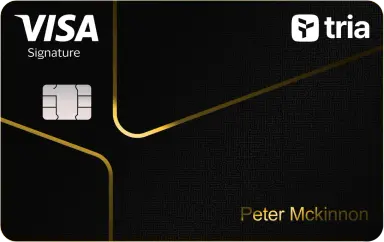
1. Tria Signature Card
High-Yield Self-Custody: 15% APY + Visa Signature Perks
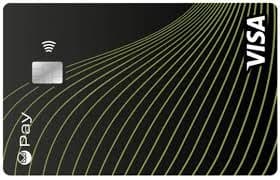
2. Gnosis Pay Card
Your Keys, Your Card, Your Money

3. Plasma One Platinum Card
Premium Self-Custodial Visa - 4% Base, 10% AI, 10% Flights, Lounge Access, Boosted 5% Yield
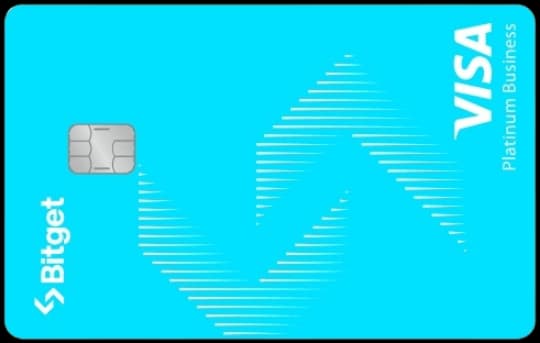
4. Bitget Card
Trade and Spend: Up to 8% BGB Cashback for Bitget Traders

5. ether.fi Core Card
3% Back on the First $2,000 Each Month, No Stake Required
6. Kolo Card
Earn Bitcoin on Purchases: 2% for 30 Days, Then 1% (Capped) + Visa Platinum + 170+ Countries
7. Xplace Platinum Card
10% Off Platinum with SPENDNODE: Pay $899.10 Instead of $999
Complete list:
All 54 crypto cards available in Norway in September 2026
This table includes every crypto card we currently track for Norway. Rows marked Top pick are ranked and reviewed above.
| Crypto card | Max rewards | Annual fee | FX fee | Type | Custody |
|---|---|---|---|---|---|
1 Tria Signature CardTop pick | Up to 4.5% rewards | $87 with code | 1% | Debit | Self-custody |
2 Gnosis Pay CardTop pick | Up to 5% rewards | Free | 0% | Debit | Self-custody |
3 Plasma One Platinum CardTop pick | Up to 4% rewards | Free | 0% | Crypto Backed Credit | Self-custody |
4 Bitget CardTop pick | Up to 8% rewards | Free | 0% | Debit | Custodial |
5 ether.fi Core CardTop pick | Up to 3% rewards | Free | 0.5% | Crypto Backed Credit | Self-custody |
6 Kolo CardTop pick | Up to 2% rewards | Free | 0% | Prepaid | Custodial |
7 Xplace Platinum CardTop pick | Up to 2% rewards | $999 | 0% | Crypto Backed Credit | Self-custody |
| Up to 10% rewards | Free | 3% | Debit | Hybrid | |
| Up to 8% rewards | Free | 0% | Debit | Self-custody | |
| Up to 8% points | Free | 0.4% | Debit | Custodial | |
11 | Up to 8% rewards | TBD | 0% | Prepaid | Custodial |
| Up to 8% rewards | Free | 0% | Debit | Hybrid | |
| Up to 6% rewards | $200 with code | 1% | Debit | Self-custody | |
| Up to 5% rewards | TBD | 0% | Prepaid | Custodial | |
| Up to 4% rewards | Free | 0% | Crypto Backed Credit | Self-custody | |
| Up to 4% rewards | TBD | 0% | Prepaid | Custodial | |
| Up to 3% rewards | Free | 0.25% | Crypto Backed Credit | Self-custody | |
| Up to 3% rewards | Free | 0% | Crypto Backed Credit | Self-custody | |
| Up to 3% rewards | $10000 | 0.5% | Prepaid | Custodial | |
| Up to 3% rewards | Free | 0% | Debit | Custodial | |
| Up to 3% rewards | $199 | 0.5% | Crypto Backed Credit | Self-custody | |
| Up to 3% rewards | $299.9 | 0% | Prepaid | Custodial | |
| Up to 3% rewards | $129 | 1.2% | Prepaid | Custodial | |
| Up to 3% rewards | Free | 0% | Debit | Hybrid | |
| Up to 2% rewards | Free | 0% | Debit | Custodial | |
| Up to 2% rewards | Free | 0% | Debit | Self-custody | |
| Up to 2% rewards | $1000 | 0.5% | Prepaid | Custodial | |
| Up to 2% rewards | Free | 0% | Debit | Custodial | |
| Up to 2% rewards | Free | 0.2% | Crypto Backed Credit | Hybrid | |
| Up to 2% rewards | Free | 1% | Crypto Backed Credit | Self-custody | |
| Up to 2% rewards | $49.9 | 0% | Prepaid | Custodial | |
| Up to 1.5% rewards | Free | 0.5% | Prepaid | Custodial | |
| Up to 1.5% rewards | Free | 0.5% | Prepaid | Custodial | |
| Up to 1.5% rewards | Free | 1% | Debit | Self-custody | |
| Up to 1.5% rewards | $249 | 0.25% | Crypto Backed Credit | Self-custody | |
| Up to 1% rewards | Free | 0% | Debit | Custodial | |
| Up to 1% rewards | Free | 1.75% | Debit | Self-custody | |
| Up to 1% rewards | Free | 1% | Debit | Self-custody | |
| Up to 1% rewards | Free | TBD | Prepaid | Custodial | |
| Up to 1% rewards | $99 | 0.5% | Crypto Backed Credit | Self-custody | |
| Up to 0.5% rewards | Free | 0% | Debit | Hybrid | |
| Up to 0.5% rewards | Free | 1% | Crypto Backed Credit | Self-custody | |
| none | Free | 0% | Prepaid | Custodial | |
| Varies | Free | 1.7% | Prepaid | Custodial | |
| cashback | Free | 1.75% | Prepaid | Self-custody | |
| cashback | $199 | 0.75% | Prepaid | Self-custody | |
| cashback | Free | 0.5% | Prepaid | Custodial | |
| none | Free | 1% | Prepaid | Self-custody | |
| none | Free | 1% | Debit | Self-custody | |
| Varies | Free | 1.5% | Debit | Custodial | |
| Varies | Free | 1.2% | Prepaid | Custodial | |
| Varies | Free | 1.2% | Prepaid | Custodial | |
| Varies | Free | 1.2% | Prepaid | Custodial | |
| points | Free | 1% | Debit | Self-custody |
Crypto Card Regulation in Norway
Finanstilsynet (the Norwegian Financial Supervisory Authority) oversees all crypto-asset service providers operating in Norway. Norway is not an EU member but participates in the single market through the EEA (European Economic Area) Agreement, which means EU financial regulations, including MiCA, are incorporated into Norwegian law through the EEA Joint Committee process.
MiCA now applies in Norway, with Finanstilsynet as the competent authority. After an extended transition, crypto-asset service providers had to hold MiCA authorization by June 30, 2026, and Finanstilsynet began granting Norwegian CASP licenses in 2026 (NBX was among the first). An authorized firm can passport its license across the EEA.
Before MiCA, VASPs (Virtual Asset Service Providers) registered with Finanstilsynet and complied with Norway's hvitvaskingsloven (Anti-Money Laundering Act), which implements EU AML directives. Finanstilsynet maintains a public register of authorized VASPs. Registration requirements include fit-and-proper assessments for management, documented AML/CFT procedures, and ongoing reporting obligations.
Norges Bank (the Central Bank of Norway) manages monetary policy and the NOK. It has been studying a Central Bank Digital Currency (CBDC) since 2017, with multiple phases of technical testing. While a digital krone would not directly affect crypto card usage, the research reflects Norway's institutional comfort with digital payment innovation.
The Skatteetaten (Norwegian Tax Administration) has been among Europe's most proactive crypto tax enforcement agencies. It has data-sharing agreements with Norwegian exchanges (NBX, Firi) and has requested data from international platforms.
Skatteetaten pre-fills tax returns (skattemelding) with known crypto transactions and sends letters to taxpayers it suspects of under-reporting. Norway's tax authority operates with a high level of data access, and assuming your crypto activity is invisible to Skatteetaten is unwise.
CARF implementation: Norway signed the OECD's Crypto-Asset Reporting Framework (CARF) agreement in November 2023, with regulations entering force January 1, 2026. Crypto service providers must report Norwegian user transaction data to Skatteetaten for automatic international exchange. This aligns with the EU's DAC8 timeline.
MiCA and TFR II: Norway has adopted both MiCA and TFR II (Transfer of Funds Regulation) through the EEA Agreement, ensuring Norwegian crypto card users have the same consumer protections as EU residents.
Increased enforcement (2025-2026): Skatteetaten has announced additional inspections targeting crypto investors and is imposing punitive taxes (tilleggsskatt) for failure to disclose crypto income. Norwegian authorities signal crypto compliance as a priority area.
EEA-licensed crypto card issuers serve Norway through passporting rights. Crypto.com, Tria, Kolo, Gnosis Pay, Bitpanda, Bitget, Gate.io, KuCoin, and Kraken all operate under EEA licenses.
Tax Treatment of Card Rewards in Norway
Norway taxes crypto gains as kapitalinntekt (capital income) at a flat 22%. Every time you spend crypto through a card, the disposal (realisasjon) triggers a gain or loss calculation based on the difference between the NOK value at the time of spending and your original acquisition cost (kostpris).
The Skatteetaten does not require FIFO for virtual assets. Identify which units were disposed of and document their acquisition cost; the first units bought do not automatically have to be the first sold.
Wealth tax (formuesskatt): In addition to the 22% tax on taxable crypto gains, Norway levies an annual tax on net wealth. The 2026 rates for a single taxpayer are:
- Municipal: 0.35% above NOK 1,900,000
- State: 0.65% from NOK 1,900,001 to NOK 21,500,000, then 0.75% above that
Crypto holdings are valued at market price on January 1st and included in the formue (wealth) calculation. Unlike the Netherlands' Box 3 (which replaces CGT with a deemed return), Norway's wealth tax operates alongside the 22% CGT. You pay both: 22% when you spend or sell, plus the annual wealth tax on whatever you still hold.
| Scenario | Cost Basis | Card Spend | Gain | CGT (22%) | Wealth Tax Impact |
|---|---|---|---|---|---|
| ETH bought NOK 15,000, spent NOK 45,000 | NOK 15,000 | NOK 45,000 | NOK 30,000 | NOK 6,600 | Holdings reduced, lower Jan 1 wealth |
| BTC bought NOK 200,000, spent NOK 220,000 | NOK 200,000 | NOK 220,000 | NOK 20,000 | NOK 4,400 | Holdings reduced by NOK 220,000 |
| USDC bought NOK 10,000, spent NOK 10,050 | NOK 10,000 | NOK 10,050 | NOK 50 | NOK 11 | Negligible |
| Cashback received (BTC, FMV NOK 5,000) | Depends on reward terms | N/A | N/A | Classify receipt separately | Adds to wealth if still held at year-end |
The Skatteetaten treats income from virtual assets as taxable, but a purchase rebate should not be assigned an automatic 22% receipt tax without classifying the reward. If a token is taxable on receipt, use that NOK value in the later disposal calculation.
Stablecoin rewards are not automatically exempt: their receipt terms and NOK exchange-rate movement still matter.
NOK/FX complication: Since crypto cards settle in EUR or USD before converting to NOK at the point of sale, and Norwegian tax obligations are denominated in NOK, exchange rate movements between EUR and NOK create taxable events that have nothing to do with crypto price changes.
If you buy USDC when 1 USD = 10.5 NOK and spend it when 1 USD = 11.0 NOK, the NOK appreciation in the USDC creates a small taxable gain even though the stablecoin itself did not move. At Norway's 22% rate, this is usually negligible (a few kroner per transaction), but it does mean perfect zero-tax spending is technically impossible with non-NOK stablecoins.
Capital losses: Realized crypto losses can reduce taxable capital income under the ordinary rules. An unrealized price fall also lowers the market value used for wealth tax if it remains reflected in the 1 January valuation; selling is not necessary for that valuation effect.
Compared to Nordic neighbors: Denmark taxes crypto at marginal rates up to 42% (personlig indkomst classification). Finland uses a two-bracket 30%/34% system. Sweden charges 30% flat. Norway's 22% is the lowest pure CGT rate in Scandinavia. The wealth tax adds ongoing cost for large holders, but for someone primarily spending crypto through cards (reducing holdings rather than accumulating), the 22% CGT is favorable.
How to Apply from Norway
Norwegian crypto card applications require a Norsk pass (Norwegian passport) or Nasjonalt ID-kort (national ID card) issued by the police. The fodselsnummer (11-digit personal number, format: DDMMYYXXXCC) is Norway's primary personal identifier and is required by most financial service providers for tax reporting to Skatteetaten.
Foreign residents use their D-nummer (temporary 11-digit ID for non-permanent residents) or their residence permit (oppholdstillatelse) issued by UDI (Utlendingsdirektoratet). BankID is the standard Norwegian digital identity, used for everything from tax filing to online banking. While EEA-licensed card issuers do not typically integrate BankID directly, Norwegian users are accustomed to strong digital identity and find the selfie + ID upload process easy.
Proof of address through utility bills from Hafslund/Fortum (electricity in Eastern Norway), Lyse (Rogaland), or BKK (Western Norway), or telecom bills from Telenor, Telia, or Ice. Bank statements from DNB, Nordea, SpareBank 1, or Sbanken also work. A Bostedsattest (certificate of residence from the National Population Register, Folkeregisteret) is the strongest form of address verification.
Physical cards ship to Norwegian addresses within 7-14 business days. Virtual cards are available immediately for Apple Pay and Google Pay. Norway's universal NFC terminal coverage means virtual cards are fully functional from day one.
Spending Tips for Norway
FX Savings: The Primary Value Driver
For Norwegian residents, the most important feature of a crypto card is 0% FX fee. The NOK floats freely against EUR and USD, and every non-NOK transaction through a Norwegian bank card incurs a 1.5-2.5% markup. Unlike eurozone countries where domestic spending has no FX component, every online purchase from a non-Norwegian merchant, every trip to Sweden or Denmark, and every USD-billed subscription involves currency conversion.
A Norwegian professional spending NOK 8,000/month on international transactions (Amazon, Netflix, Spotify, Notion, travel, cross-border shopping) saves NOK 1,440-2,400/year just on FX elimination. That is before any cashback.
Card Selection for Norwegian Residents
- Bitget (7.1% net, free): Highest raw return. 0% FX matters for NOK users and the 0.9% transaction fee still leaves it ahead of most alternatives.
- Gnosis Pay (up to 5% GNO): Best self-custody option. Spend from your Safe wallet without any intermediary. Up to 5% GNO cashback with zero annual fee and 0% FX.
- Plasma One Platinum (4% XPL, 100k XPL lock, 0% FX): Self-custodial premium Visa with ChatGPT Plus and Claude Pro rebates and travel cover. The lock adds a formuesskatt line and XPL rewards face the 22% realisasjon on disposal; choose it for custody and perks, not net rate.
- xPlace Platinum (2% USDC to $250/mo, $999/yr, 0% FX): No vendor token to declare on the January 1 snapshot; cashback recovers the fee only from about NOK 43,000/month of eligible spend, so the Gardermoen lounge access has to matter to you.
- Kolo (1% ongoing BTC, 2% intro, free): Free BTC-payout card with 0% FX on stablecoin-funded NOK spending. Zero-cost secondary card alongside Bitget or Gnosis Pay. BTC payout creates a 22% CGT disposal chain on each spend.
- Tria Signature (4.5% on first $1,000/mo, $109/yr, 1% FX + 0.5%/payment, ~3% net): Self-custody Debit with Visa perks (auto rental CDW, baggage protection, concierge). Useful for travelers.
- Crypto.com Icy (4%): LoungeKey access at Oslo Gardermoen (OSL) and other airports. CRO stake required. For Norwegians who fly frequently (Bergen-Oslo alone is one of Europe's busiest domestic routes), lounge access adds real value.
- ether.fi Core (3% in ETHFI on first $2K/mo, then lower bands; 0-0.5% FX): Spend supported stablecoins directly or borrow against eligible collateral. Treat borrowing as financing with tax, interest, and liquidation considerations.
- Bitpanda (1%): $0 annual, 0% FX, zero-complexity baseline. 1% on everything, 600+ assets.
Bitget vs Gnosis Pay vs Tria at Norwegian Spending Levels
Norway has among the highest average salaries in Europe (approx. NOK 600,000-700,000/year for professionals). Monthly card spending of NOK 15,000-25,000 is realistic for a household.
| Monthly Spend | Bitget (7.1% net, free) | Gnosis Pay (up to 5% GNO, free) | Tria Signature (4.5% to $1k/mo, then 1%, $109/yr) |
|---|---|---|---|
| NOK 10,000 | NOK 8,520/yr | NOK 6,000/yr | NOK 3,600 - NOK 1,200 = NOK 2,400/yr |
| NOK 15,000 | NOK 12,780/yr | NOK 9,000/yr | NOK 3,720 - NOK 1,200 = NOK 2,520/yr |
| NOK 25,000 | NOK 21,300/yr | NOK 15,000/yr | NOK 3,120 - NOK 1,200 = NOK 1,920/yr |
At NOK 15,000/month, Bitget returns about NOK 12,780/year at the 7.1% net rate, before tax on any taxable rewards and before the cost of holding BGB. Gnosis Pay's maximum 5% GNO tier also depends on its eligibility requirements. Do not subtract a blanket 22% receipt tax from every purchase rebate.
Tria Signature pays 4.5% only on the first $1,000/mo (about NOK 11,000), then 1% above that, and its 1% FX plus 0.5% per-payment fees come off all NOK spend, so at this level it nets around NOK 2,520/year after the $109 fee (approx. NOK 1,200). The trade is much lower net cashback for self-custody and no vendor-token line in the wealth-tax snapshot.
Spending Scenario: NOK 20,000/month Norwegian Professional
| Funding Method | Annual Spend | Cashback (up to 5% Gnosis) | CGT (22%) on Gains | FX Savings vs Bank | Total Benefit |
|---|---|---|---|---|---|
| USDC (stablecoin) | NOK 240,000 | NOK 12,000 | approx. NOK 0 | NOK 4,320 | NOK 16,320 |
| ETH (appreciated 60%) | NOK 240,000 | NOK 12,000 | NOK 19,800 | NOK 4,320 | Negative |
| ETH via ether.fi Core (borrow) | NOK 240,000 | NOK 7,200 (before tier taper) | Potentially deferred; treatment varies | NOK 4,320 | Not comparable before loan costs |
The USDC route delivers approximately NOK 16,320/year in combined cashback and FX savings. The ether.fi borrowing row is not a comparable net-benefit figure until loan costs and tax treatment are known, and Core's cashback tapers above $2,000 and $5,000 of monthly spend. The appreciated ETH route illustrates why stablecoin funding matters at 22% CGT: a 60% gain on NOK 240,000 spend (from a NOK 150,000 cost basis) triggers NOK 19,800 in tax, far exceeding the NOK 12,000 cashback.
The Wealth Tax Dimension
For a single taxpayer whose only net wealth is NOK 5 million of crypto, the 2026 amount above the NOK 1.9 million threshold is NOK 3.1 million. At 0.35% municipal plus 0.65% state, the illustrative wealth tax is NOK 31,000. Other assets, debts, and household circumstances change that result. The wealth tax uses year-end market value whether the holder has sold any crypto or not.
For very large holders (above NOK 20,000,000), the combined 1.1% rate means NOK 100,000,000 in crypto generates NOK 1,081,000/year in wealth tax. At these levels, borrowing through ether.fi or Nexo is primarily a liquidity decision. It does not remove the wealth-tax value of the collateral, and the loan's cost and risk remain part of the calculation.
Local Payment Infrastructure
Norway vies with Sweden for the title of world's most cashless country. Only 3-4% of point-of-sale transactions use cash. Some shops, particularly in Oslo and Bergen, actively display "Vi foretrekker kort" (we prefer card) signs. Contactless Visa and Mastercard are accepted at most businesses with a payment terminal.
Grocery chains: Rema 1000 (Norway's largest by store count, discount format), Kiwi (another discounter, green branding), Coop (cooperative, includes Coop Extra, Coop Prix, Coop Mega, Coop Obs), and Meny (premium). Weekly grocery spending for a household runs NOK 2,000-3,000. All accept contactless. At 5% cashback on NOK 2,500/week, that is NOK 125/week or NOK 6,500/year from groceries alone.
Vipps: Norway's dominant mobile payment app, now merged with MobilePay (Denmark) and Pivo (Finland) into Vipps MobilePay. Used by 4.3 million Norwegians (roughly 80% of the population) for P2P transfers, merchant payments, and invoice splitting. Vipps is bank-linked only (DNB, Nordea, SpareBank 1, etc.) and does not support crypto cards. This means Vipps handles the social payment layer (splitting dinner, paying a friend), while your crypto card handles the merchant payment layer.
Transit: Ruter (Oslo/Akershus public transit) accepts contactless Visa and Mastercard on buses, trams, metro, and ferries. Tap your crypto card on the reader when boarding. Single tickets run NOK 40-68 depending on zones. Monthly commuters spending NOK 800-1,200 on transit generate NOK 40-60/month in cashback at 5%. Bergen's Skyss and Trondheim's AtB are transitioning to similar contactless acceptance.
Cross-Border Sweden Shopping
Norwegians regularly cross into Sweden for cheaper groceries and consumer goods. Stromstad (the nearest Swedish border town to Oslo, 2 hours drive) and Charlottenberg (Varmland, near the E18) are traditional shopping destinations. Swedish prices on meat, cheese, alcohol (Systembolaget vs Vinmonopolet), and diapers can be 20-40% cheaper than Norwegian equivalents.
A monthly cross-border shopping trip spending SEK 3,000-5,000 (NOK 3,000-5,000 at near-parity exchange rate) benefits from 0% FX on the NOK-SEK conversion. Norwegian bank cards charge 1.75-2% on SEK transactions, so a crypto card saves NOK 52-100 per trip on FX alone, plus cashback on the spending itself.
Online Shopping and Subscriptions
Komplett.no (electronics, Norway's largest online retailer), Elkjop.no (electronics), and Kolonial.no/Oda (online groceries) all accept Visa/Mastercard. Amazon does not have a Norwegian domain, so Norwegian shoppers use Amazon.de or Amazon.se, both involving FX conversion that 0% FX cards handle. USD-billed SaaS (ChatGPT, GitHub, Figma, Notion) at NOK 200-400/month benefits directly from FX elimination.
Supported Exchanges & Wallets in Norway
Norway has two notable domestic exchanges, neither of which offers a card product. NBX (Norwegian Block Exchange) is backed by the Aker Group and its chairman Kjell Inge Rokke, one of Norway's wealthiest industrialists. NBX holds full Finanstilsynet registration and provides NOK/crypto trading pairs.
Firi (formerly MiraiEx) is the largest Norwegian exchange by retail user count, also Finanstilsynet-registered, offering NOK deposits via Norwegian bank transfer. Both provide reliable local on-ramps for converting NOK to crypto for card loading, but for card spending itself, Norwegian users rely entirely on international EEA-licensed issuers.
Among exchange-linked card issuers, Bitget provides up to 8% BGB cashback through its exchange-linked Visa debit, with a separate Wallet Card for self-custody spending. Crypto.com is well-recognized with its CRO staking tiers and metal card lineup.
Gate.io offers the Classic Visa Platinum. KuCoin and Kraken provide additional exchange-linked options.
EEA-native issuers have full access. Gnosis Pay earns up to 5% GNO cashback with full self-custody on Gnosis Chain. Kolo pays a free 1% BTC (2% for the first month) at zero cost with 0% FX on NOK spending. Tria offers self-custody Visa cards with up to 6% cashback (on the first $2,000/mo), with a 1% FX fee and 0.5% per payment that net it to about 3-4.5% on NOK spend.
Kolo avoids the NOK drag entirely with 0% FX, a clean fit for Norwegian online spending, though Bitget and Gnosis Pay also charge 0% FX at higher reward rates, so Kolo's edge is simplicity and BTC payout rather than the top return.
Tria Signature settles in USD but charges 1% FX on NOK plus 0.5% on every payment, or about 1.5% per transaction. Gnosis Pay keeps the self-custody angle, while ether.fi adds direct stablecoin spending and an optional borrowing route for larger eligible holders.
For Norwegian holders sitting on large unrealized gains, ether.fi can provide liquidity without an immediate sale of eligible collateral. Interest, repayment, liquidation exposure, and the Norwegian tax treatment determine whether that is preferable to direct stablecoin spending or selling assets.
Nexo offers similar functionality across a broader collateral range. In a country with both CGT and wealth tax, the ability to spend without selling is a meaningful tax-management tool.
Self-custody options serve Norway's privacy-conscious and technically literate user base. MetaMask with the Virtual Card, Ledger CL Card for hardware wallet security, and 1inch for DEX-native users.
KAST starts at 1.5% USD cashback on the first $2,000/month with 0.5-1.75% FX and no annual fee, and RedotPay and xPlace provide globally-available alternatives.
Norway combines Scandinavia's lowest CGT rate (22%), cashless payment infrastructure, and high disposable incomes that make cashback returns substantial in absolute terms. The FX savings alone, on a currency that fluctuates with oil prices and has no EUR peg, justify a 0% FX crypto card even before cashback enters the equation.
Written by SpendNode Editorial
Frequently Asked Questions
What is Norway's crypto tax rate for card spending?
22% capital gains tax on disposal. Spending crypto through a card is a taxable disposal. Fund with USDC to minimize gains. Wealth tax (0.7-1.1%) applies above NOK 1.7M. CARF reporting begins January 2026 - Skatteetaten will receive transaction data from crypto providers.
Which crypto card is best for Norwegian residents?
Tria Signature (4.5% on the first $1,000/mo then 1%, with a 1% FX fee and 0.5% per payment netting about 3%, $109/yr) is the cleanest pick: a cashback rate without requiring vendor tokens that would add to your wealth-tax base on the 1 January snapshot.
Gnosis Pay (up to 5% GNO, self-custody) is the alternative for DeFi users; 100+ GNO (roughly $30,000) unlocks 4%, or 5% with an OG NFT, a smaller wealth-tax footprint than Bitget's ~$40,000 BGB stake. xPlace Platinum sits at the bottom of the list under its September 2026 terms: 2% USDC capped at $250/month, 0% FX, no vendor-token stake, and a $999 annual fee that cashback only recovers from roughly NOK 43,000/month of eligible spend, so it is now a lounge-and-self-custody card. Bitget (8%, 7.1% net) leads on raw rate for users already holding 20,000+ BGB (about $40,000), though that position itself counts as wealth on the year-end snapshot. ether.fi Core pays 3% in ETHFI on the first $2,000/month, then lower bands, and supports direct stablecoin spending or optional borrowing against eligible collateral. Kolo (1% ongoing BTC, 2% intro, $0) is the free BTC accumulator.
Gnosis Pay, xPlace Platinum, Kolo, and Bitget charge 0% FX, while Tria takes 1% FX and ether.fi a 0-0.5% margin, which still beats Norwegian bank markups since NOK floats freely.
How does Norway's wealth tax affect crypto holders?
Wealth tax applies to net assets above NOK 1.7M at 0.7% (municipal) plus 0.4% (state above NOK 20M). Crypto holdings at market value on January 1st are included. This applies to holdings regardless of whether you spend through a card.
Is Norway's crypto tax harsher than Denmark's or Sweden's?
No. Norway's 22% CGT is the lowest among Nordic countries. Denmark taxes at approx. 42% and Sweden at 30%. However, Norway adds wealth tax on holdings, which Denmark and Finland do not have. All three now implement CARF from 2026.
Other Countries
View all 112 countries →


Latest Page Changes to the Best Crypto Cards in Norway Guide
- xPlace cut Platinum's Credit Mode cashback to 2% USDC with a $250 monthly cap for new memberships, effective September 14, 2026, and removed Cash Mode cashback. We moved xPlace down this page's rankings accordingly. Memberships purchased before that date keep the previous rates for up to 12 months
- CARF implementation (Jan 2026), increased Skatteetaten enforcement, MiCA+TFR II adoption