
Best Crypto Cards in Israel (2026)
Israel's crypto card math is mostly about tax discipline: a 25% CGT regime, expensive ILS card spending, and a clear divide between stablecoin funding and borrow-to-spend strategies.
Verified for Israel
20 crypto cards available
Local currency: ILS
Bank Leumi, Bank Hapoalim, Discount Bank, and Mizrachi-Tefahot debit cards offer zero cashback and charge 2.5-3% on non-ILS purchases. For a country where post-army travel is a cultural institution and tech salaries regularly involve USD-denominated stock options, that FX markup is a constant drain.
Six globally available crypto card issuers serve Israeli residents with up to 8% cashback, zero FX fees, and stablecoin funding strategies that matter at Israel's 25% capital gains tax rate.
Tel Aviv ranked as the world's most expensive city in 2021, and Israel's cost of living remains among the highest globally. A one-bedroom apartment in central Tel Aviv costs ILS 5,000-8,000/month. Groceries for a single person run ILS 1,500-2,500/month. Dining out is ILS 60-120 per meal. At these spending levels, even small percentage savings from cashback and FX elimination compound into meaningful annual amounts.
Israel's crypto adoption ranks among the highest per capita globally, driven by the "Startup Nation" tech culture. Companies like StarkWare (Starknet), Fireblocks, and Zengo were all founded in Israel. Unit 8200 alumni have launched dozens of crypto and fintech companies. This deep technical literacy means Israeli users understand self-custody, DeFi, and on-chain mechanics in ways that most consumer markets do not.
The ITA (Israel Tax Authority) treats crypto as property under Circular 5/2018, meaning every card swipe with appreciated crypto is a taxable disposal. Stablecoin loading is a core strategy here. Israel now also has a regulated local-currency stablecoin path: in April 2026, the Capital Market, Insurance, and Savings Authority approved BILS, a shekel-pegged stablecoin from Bits of Gold, after a two-year Solana pilot.
Summary:
Which crypto cards are best in Israel?
The best crypto cards in Israel in September 2026 are COCA Visa Card, Private (Icy White / Rose Gold), Kolo Card, KAST K Card, and RedotPay Solana Card. The detailed ranking below explains the local tax, fee, and availability trade-offs.
| Crypto card | Base reward | Net after fees | Annual fee | FX fee | Type |
|---|---|---|---|---|---|
| 1% baseup to 8% with a large $COCA stake; $15-$350/mo claim capacity by tier | 1% | Free | 0% | Debit | |
| 4% baseneeds a $50k CRO stake to hold the tier | 4% | TBD | 0% | Prepaid | |
| 1% base2% for the first 30 days, then 1%; also capped at $1/EUR 1 per transaction ($2/EUR 2 during intro) and $100/EUR 100 per month | 1% | Free | 0% | Prepaid | |
| 1.5% base | 1% | Free | 0.5% | Prepaid | |
| 0% baseno standing cashback; launch promo ended | 0% | Free | 1.2% | Prepaid |
We tested all globally available cards for Israeli residents. COCA fits Israel's 25% CGT regime with a non-custodial wallet, 0% FX, up to 8% cashback (1% on the free tier), and 5% APY on eligible idle USD. Funding with recently acquired stablecoins can limit disposal gains, though rewards and yield have separate tax questions.
Monthly COCA reward claims run from $15 to $350 by tier. Kolo stays a simple free BTC cashback option at 1% ongoing (2% intro) with 0% FX.
KAST at 1.5% USD cashback on the first $2,000/month with $0 annual fee and 0.5-1.75% FX is the simplest daily driver for USDC-funded spending.
Best Card For Every Need in Israel
Top 5 Crypto Cards in Israel
Israel's flat 25% CGT with zero holding-period exemption makes funding strategy the whole game: every swipe of appreciated crypto is a taxable disposal. Borrow-to-spend would sidestep that, but no borrow-to-spend issuer serves Israeli residents, so stablecoin funding is the practical path. COCA combines a non-custodial wallet, 0% FX, up to 8% cashback, and 5% APY on eligible idle USD.
Kolo at 1% ongoing BTC (2% intro) with $0 annual fee and 0% FX is a simple free BTC cashback option for stablecoin-funded spending, though Israel's 25% CGT on BTC disposal narrows its net return. KAST at 1.5% USD cashback on the first $2,000/month with $0 annual fee and 0.5-1.75% FX is the simplest USDC-funded daily driver and avoids the BTC disposal chain entirely.
Crypto.com Icy White (4%) earns its place through Ben Gurion lounge access: Israel's geography means every trip is international, and 20,000+ post-army gap-year travelers plus frequent business flyers to London, New York, and Berlin use TLV constantly. RedotPay Solana is the cheapest multi-chain USDC route for users who want simple stablecoin loading without taking on another rewards token.

1. COCA Visa Card
Self-Banking: 8% Cashback + 5% APY + 0% FX
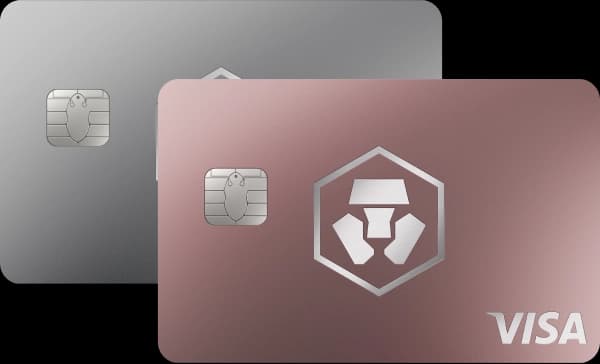
2. Private (Icy White / Rose Gold)
Private Tier: 4% Uncapped Cashback + Lounge Guest
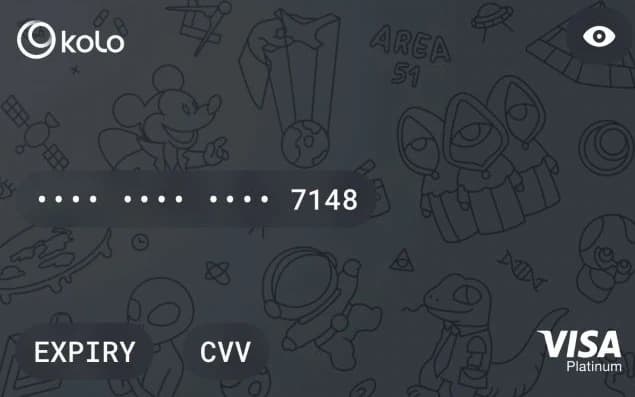
3. Kolo Card
Earn Bitcoin on Purchases: 2% for 30 Days, Then 1% (Capped) + Visa Platinum + 170+ Countries
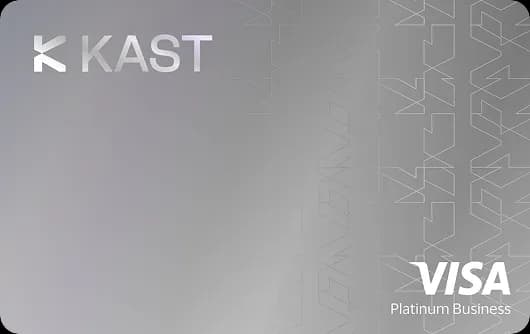
4. KAST K Card
Free USD Cashback: 1.5% on First $2K/Month

5. RedotPay Solana Card
Solana Goes IRL: Spend SOL Directly at 130M+ Merchants
Complete list:
All 20 crypto cards available in Israel in September 2026
This table includes every crypto card we currently track for Israel. Rows marked Top pick are ranked and reviewed above.
| Crypto card | Max rewards | Annual fee | FX fee | Type | Custody |
|---|---|---|---|---|---|
1 COCA Visa CardTop pick | Up to 8% rewards | Free | 0% | Debit | Self-custody |
2 Private (Icy White / Rose Gold)Top pick | Up to 4% rewards | TBD | 0% | Prepaid | Custodial |
3 Kolo CardTop pick | Up to 2% rewards | Free | 0% | Prepaid | Custodial |
4 KAST K CardTop pick | Up to 1.5% rewards | Free | 0.5% | Prepaid | Custodial |
5 RedotPay Solana CardTop pick | Varies | Free | 1.2% | Prepaid | Custodial |
| Up to 10% rewards | Free | 0% | Prepaid | Custodial | |
| Up to 8% rewards | TBD | 0% | Prepaid | Custodial | |
| Up to 5% rewards | TBD | 0% | Prepaid | Custodial | |
| Up to 3% rewards | $10000 | 0.5% | Prepaid | Custodial | |
| Up to 3% rewards | $299.9 | 0% | Prepaid | Custodial | |
| Up to 3% rewards | $129 | 1.2% | Prepaid | Custodial | |
| Up to 2% rewards | $1000 | 0.5% | Prepaid | Custodial | |
| Up to 2% rewards | $49.9 | 0% | Prepaid | Custodial | |
| Up to 1.5% rewards | Free | 0.5% | Prepaid | Custodial | |
| Up to 1% rewards | Free | TBD | Prepaid | Custodial | |
| none | Free | 0% | Prepaid | Custodial | |
| cashback | Free | 0.5% | Prepaid | Custodial | |
| none | Free | 1% | Prepaid | Self-custody | |
| Varies | Free | 1.2% | Prepaid | Custodial | |
| Varies | Free | 1.2% | Prepaid | Custodial |
Crypto Card Regulation in Israel
The ISA (Israel Securities Authority, Rashut Niiarot Erech) regulates securities including certain token offerings. The Bank of Israel oversees payment services and monetary policy, including the ongoing Digital Shekel CBDC research project launched in 2021. The ITA (Israel Tax Authority, Rashut HaMisim) issued Circular 5/2018 establishing that crypto assets are taxable property, not currency.
The CMISD (Capital Market, Insurance, and Savings Authority) has been developing a licensing framework for crypto service providers since 2022. The IMPA (Israel Money Laundering and Terror Financing Prohibition Authority) enforces AML/CFT compliance. In 2021, Israel updated its AML regulations to include crypto service providers, requiring registration and transaction reporting above ILS 50,000.
Bits of Gold, Israel's oldest crypto platform (founded 2013), received a Bank of Israel payment service provider license, making it one of the first locally regulated crypto businesses.
In April 2026, Israeli regulators also approved Bits of Gold's BILS stablecoin, a 1:1 shekel-pegged token with reserves held in designated Israeli accounts after a two-year pilot on Solana. The initial rollout is limited and supervised, so the near-term impact is market infrastructure rather than immediate crypto card availability.
In July 2026 the Capital Market, Insurance and Savings Authority (CMISA) published new binding guidelines that tighten oversight of licensed crypto providers, giving them six months to comply. The rules require multi-signature approval for transfers between hot and cold wallets, daily records of customer holdings with a personal account view for each client, full separation of customer assets from company operating capital, and minimum reserves to absorb operational and cyber losses.
For Israeli cardholders the practical effect is stronger custody and segregation standards at any locally licensed provider, moving the framework past the "still developing" stage it sat in for years.
eToro, founded in Tel Aviv by Yoni Assia and Ronen Assia, is Israel's most globally recognized fintech company but operates under UK FCA and EU CySEC licenses rather than Israeli regulation. Coinmama, also Israeli-founded, focuses on retail crypto purchases.
No Israeli-regulated entity currently issues a Visa/Mastercard crypto spending card. All six available cards come from international issuers operating under their own jurisdictional licenses.
COCA, Crypto.com Icy, KAST, Kolo, RedotPay, and Payy are the international options we currently track for Israeli residents.
In August 2024, the ISA approved an amendment allowing non-bank members of the Tel Aviv Stock Exchange (TASE) to offer cryptocurrency trading and custody services, initially limited to Bitcoin and Ethereum. A 2024 State Comptroller report estimated Israel missed ILS 2-3 billion annually in crypto-related tax revenue from 2018-2022 due to poor enforcement, prompting the finance ministry to publish draft amendments to the Income Tax Ordinance for digital assets.
Verify your eligibility directly with each issuer. Israeli regulatory requirements may evolve as the CMISD framework matures.
Tax Treatment of Card Rewards in Israel
Israel taxes crypto gains as capital gains at a flat 25% for individuals. The ITA classifies all crypto assets as property under Circular 5/2018. Every time you load a card with appreciated crypto or spend crypto directly, the ILS gain since acquisition is taxable. There is no holding period exemption and no reduced rate for long-term holdings, unlike Germany's 1-year exemption or Portugal's formerly zero rate.
An individual whose crypto activity amounts to a business may be taxed under business-income rules rather than ordinary capital-gain rules. A large holding in a token project does not, by itself, establish the tax treatment of that token as a significant shareholding in a company.
Example: You bought ETH at ILS 3,000 and load your card when it reaches ILS 15,000. The ILS 12,000 gain triggers ILS 3,000 in tax (25%). The card swipe itself is the disposal event, not the conversion.
| Income Source | Tax Rate | Holding Period Benefit | Notes |
|---|---|---|---|
| Capital gains (individual) | 25% flat | None | Circular 5/2018 |
| Business or special cases | Case-specific | None assumed | Classification depends on the underlying activity and asset |
| Business income classification | Up to 50% | N/A | ITA discretion based on trading frequency |
| Foreign residents | 25% (may be exempt) | Varies | Check double-tax treaties |
| Cashback Type | When Received | When Spent via Card | Total Tax Burden |
|---|---|---|---|
| BTC cashback | Receipt treatment depends on terms | Calculate later disposal gain | Keep receipt value and program terms |
| USDC cashback | Receipt treatment depends on terms | FX or price movement can matter | Do not assume a zero gain |
| Points/perks | Depends on redemption rights | Assess when converted or used | Keep program terms |
If a BTC reward is taxable when received, later appreciation can create a second taxable amount when it is spent. For example, a reward worth ILS 100 at receipt that later sells for ILS 200 could involve tax on the ILS 100 receipt and 25% CGT on the ILS 100 gain, subject to the actual reward classification. The ITA's crypto circular does not establish a universal 25% receipt tax for card cashback, so the two charges cannot be built into every card's net-return table.
Stablecoin funding is essential in Israel. USDC spending eliminates the disposal gain entirely, saving the full 25% CGT on appreciation. The ITA has active enforcement programs and requires crypto holders to report disposals on annual Form 1301 (Doch Shnati). This includes:
- Every crypto-to-fiat conversion (including card loading)
- Every crypto-to-crypto trade
- Crypto rewards where the program terms create taxable income or a later disposal gain
- DeFi yield and staking rewards
Failure to report carries penalties of up to 30% of the undeclared amount plus interest. The ITA has invested in blockchain analytics tools and has issued data requests to Israeli banks regarding crypto transactions. Omitting crypto from your tax return is an audit risk, not a strategy.
The BILS approval does not change the tax treatment of a card-funded crypto disposal. Card users still need to check whether an issuer supports BILS or only USD stablecoins such as USDC and USDT.
Recently acquired stablecoins may keep disposal gains smaller than spending appreciated BTC or ETH. Borrowing against crypto is a different route, with its own costs and risks, but we do not currently track a borrow-to-spend issuer serving Israeli residents.
How to Apply from Israel
Israeli crypto card applications require a Teudat Zehut (Israeli ID card) for citizens, identified by the 9-digit Mispar Zehut (ID number). Foreign residents need a passport plus valid visa or A-type residence permit (Ishur Shehiya).
Proof of Israeli address via Arnona bill (municipal property tax from your local iriya), utility bill (electricity from IEC, water from Mekorot or local provider), or bank statement from Bank Leumi, Hapoalim, Discount, or Mizrachi-Tefahot. The Arnona bill is the most commonly accepted proof of address in Israel since nearly every resident pays it.
Israeli tech workers receiving compensation from foreign employers may need additional documentation for higher-tier verification. Global issuers generally complete verification within 1-3 business days. Physical cards ship to Israeli addresses within 7-14 business days. Virtual cards are available immediately for Apple Pay and Google Pay use at compatible terminals.
Spending Tips for Israel
Post-Army Travel: Where FX Savings Hit Hardest
Israel has a unique travel culture. After mandatory military service (2-3 years), most young Israelis take extended trips to Southeast Asia, South America, or India. These trips last 3-6 months with spending of ILS 3,000-8,000/month. Bank debit cards charge 2.75% FX on every purchase in Bangkok, Cusco, or Goa.
A 0% FX crypto card saves ILS 500-1,320 on a 6-month trip, before counting cashback. For the 20,000+ Israelis taking gap-year trips annually, this is the most immediate value a crypto card provides.
The 25% Tax Shapes Every Decision
Israel's ordinary 25% capital-gain treatment makes the cost basis important when appreciated crypto is used for spending. Recently acquired USDC may keep the disposal gain small, but ILS exchange-rate movement and fees can still matter.
Borrow-to-spend cards would let you spend against crypto collateral without a disposal, but none are available to Israeli residents, so stablecoin funding is the route that works. COCA sharpens it: hold the stablecoin hedge in its non-custodial smart wallet and earn 5% APY on eligible USD while you spend, on top of tiered cashback.
Stablecoin Funding: The Tax-Neutral Path
At 25% CGT, spending appreciated BTC or ETH is a disposal every time. Borrow-to-spend (spending against collateral without selling) would avoid that, but no borrow-to-spend issuer serves Israeli residents. So the practical route is stablecoin funding: hold and spend USDC, where the disposal gain is near zero.
COCA is a strong version of this approach. You keep stablecoins in a Privy-managed non-custodial wallet, earn up to 8% cashback (1% on the free tier) and 5% APY on eligible idle USD, and pay 0% FX. A small disposal gain is still possible, and yield needs its own tax treatment. KAST is the simpler free alternative (1.5% USD cashback on the first $2,000/month, 0.5-1.75% FX) for users who just want a low-friction USDC daily card.
One nuance worth keeping in mind: if you fund stablecoins by selling an appreciated position, that sale is itself a disposal. The tax-clean path is to acquire USDC directly, from salary, freelance income, or a fresh purchase, rather than converting a long-held, appreciated holding.
Card Selection for Israeli Spending Patterns
- COCA (up to 8%, 0% FX, 5% APY on eligible USD): Non-custodial, stablecoin-funded option. Free Starter tier 1%; higher rates need COCA staking and monthly claims are tier-limited
- Crypto.com Icy (Icy White 4%): Airport lounge access at Ben Gurion (TLV) via LoungeKey, CRO stake required
- Kolo (1% ongoing BTC, 2% intro, $0, 0% FX): Free BTC cashback
- KAST (1.5% USD cashback on first $2K/mo, 0.5-1.75% FX): Simplest free daily card
- RedotPay (stablecoin-native): Cheapest multi-chain USDC route, $10 issuance
Kolo vs Crypto.com Icy vs COCA at Israeli Spending Levels
| Monthly Spend (ILS) | Kolo (1% BTC ongoing) | Crypto.com Icy (4%, CRO stake) | COCA (up to 8%, staked) |
|---|---|---|---|
| ILS 5,000 | ILS 600/yr | ILS 2,400/yr + LoungeKey | ILS 4,800/yr + 5% APY on eligible USD |
| ILS 10,000 | ILS 1,200/yr | ILS 4,800/yr + LoungeKey | ILS 9,600/yr + 5% APY on eligible USD |
| ILS 15,000 | ILS 1,800/yr | ILS 7,200/yr + LoungeKey | approx. ILS 14,000/yr claimable + 5% APY |
COCA leads on raw cashback at its staked tiers (1% on the free tier) and pays 5% APY on eligible idle USD. Elite's $350 monthly claim capacity starts trimming the ILS 15,000 row at the exchange rate used here.
Crypto.com Icy at 4% adds Ben Gurion lounge access. Kolo stays the free BTC option; its 1% figures assume purchases at or under $100, where its $1-per-transaction cap does not bite. Monthly rewards cap at $100.
Spending Scenario: Tech Worker at ILS 12,000/month
Israeli tech workers in Tel Aviv, Herzliya, or Ra'anana typically spend ILS 10,000-15,000/month on cards between groceries, dining, transport, and online purchases. Here is the math at ILS 12,000/month with KAST:
| Funding Method | Annual Card Spend | KAST Rewards (1.5% USD cashback, capped at $2K/mo of spend) | Tax on Disposal | Pre-reward-tax Benefit |
|---|---|---|---|---|
| USDC (stablecoin) | ILS 144,000 (~$3,700/mo, above the $2K cashback cap) | ILS 1,170 (capped at ~$30/mo) | ILS 0 assumed | ILS 1,170 |
| BTC (doubled since buy) | ILS 144,000 | ILS 1,170 | ILS 18,000 | -ILS 16,830 |
BTC funding at 100% appreciation incurs ILS 18,000 of modeled CGT on ILS 72,000 of gains. Stablecoin funding produces ILS 1,170 in modeled rewards before any separate tax treatment of rewards. The difference between the two funding routes is ILS 18,000 under these assumptions.
KAST's USD cashback is capped at the first $2,000/month of card spend. At ILS 12,000/month, the model assumes the user is above that cap, so extra spending earns no further cashback that month.
At higher appreciation, the gap widens. On ILS 144,000 annual spending funded by BTC that tripled, the modeled disposal tax is ILS 24,000, before other gains, losses, and reliefs. Appreciated BTC or ETH can be an expensive card-funding source; recently acquired stablecoins may limit the disposal gain, though they are not automatically tax-free.
FX Savings Are Substantial for ILS Users
ILS has fluctuated between 3.2 and 3.9 per USD in recent years. Bank Leumi and Hapoalim debit cards charge 2.5-3% above the interbank rate on foreign currency purchases. On ILS 12,000/month in mixed domestic and international spending:
- 0% FX crypto card: ILS 0 in FX fees
- Bank debit card at 2.75%: approx. ILS 3,960/year in FX markup on ILS 144,000
Combined with 1.5% USD cashback (capped at the first $2,000/month, ~ILS 1,170/year at this spend level), a KAST card saves an Israeli tech worker roughly ILS 5,130/year versus their Bank Hapoalim debit card (ILS 1,170 cashback + ILS 3,960 FX savings). Above the cashback cap, the FX savings keep delivering on every shekel spent abroad, but the cashback ceiling is the binding constraint at this spending level.
US-Israel Dual Citizens: Double Tax Trap
An estimated 200,000+ US citizens live in Israel, and many more hold dual citizenship. US citizens owe US taxes on worldwide income regardless of residence. This creates a double-taxation scenario on crypto:
- Israel: 25% CGT on crypto disposal
- US: Capital gains tax (0-20% depending on income and holding period)
- Credit: The US-Israel tax treaty provides a foreign tax credit, so you generally pay the higher of the two rates, not both added together
However, the credit mechanics are complex. Short-term US gains (taxed at ordinary income rates up to 37%) may exceed the Israeli 25%, meaning the US takes the lead. Long-term US gains (0-20%) are generally lower than Israel's 25%, meaning Israel takes the lead and the US credit offsets the US liability. In either case, stablecoin funding eliminates the disposal event entirely for both jurisdictions simultaneously.
Online Shopping and Tech Purchases
Israel has an active e-commerce market. KSP, iDigital, and Bug are major electronics retailers with online stores. Zap is the dominant price comparison engine. Many Israelis buy from Amazon US or AliExpress, where USD/CNY transactions incur bank FX markups. A 0% FX crypto card eliminates this cost entirely on international online purchases, which is where the FX savings often matter most, even more than in-store spending.
Software subscriptions (common among Israel's large freelancer and startup population), cloud services, and SaaS tools billed in USD also benefit from 0% FX. An Israeli developer paying $200/month in subscriptions saves ILS 250-400/year on FX alone.
Where Cards Work in Israel
Contactless Visa/Mastercard acceptance is strong in central Israel. Tel Aviv, Jerusalem, Haifa, and Herzliya have excellent coverage: supermarkets (Shufersal Deal, Rami Levy, Yochananof, Victory), malls (Azrieli Center, Dizengoff Center, Grand Canyon Haifa, Malha Mall Jerusalem), restaurants, cafes, and pharmacies (Super-Pharm). Bit (Bank Hapoalim's payment app) dominates peer-to-peer payments but does not accept crypto cards.
Apple Pay and Google Pay work at most NFC-enabled terminals. The shuk vendors in Carmel Market (Tel Aviv) and Machane Yehuda (Jerusalem) still largely prefer cash.
Eilat is a special case: Israel's southernmost city is a designated tax-free zone with no VAT (17% elsewhere in Israel). Crypto card cashback stacks with the VAT exemption for additional savings on resort spending, electronics, and retail. Hotels, restaurants, and shops in Eilat accept contactless payments universally.
The Rav-Kav transit card is a closed-loop system and cannot be loaded with crypto cards. Taxis via Gett and ride-hailing apps accept standard Visa/Mastercard payments. Tel Aviv's light rail (operational since 2023) uses Rav-Kav, not open-loop payments.
Supported Exchanges & Wallets in Israel
Crypto.com Icy provides CRO-staking metal tiers with Icy White at 4% and crypto cards with lounge access at Ben Gurion. Kolo provides 1% ongoing BTC cashback (2% intro) with $0 annual fee and 0% FX, appealing to Israel's technically sophisticated user base that wants free BTC rewards without staking.
For holders managing the 25% CGT, COCA combines a non-custodial smart wallet, 0% FX, up to 8% cashback, and 5% APY on eligible idle USD. With no borrow-to-spend issuer available to Israeli residents, recently acquired stablecoins can limit disposal gains; cashback and yield require separate consideration.
Domestically, Bits of Gold (founded 2013, Bank of Israel licensed) and eToro are Israel's most established crypto platforms. Bits of Gold now also has regulatory approval for BILS, a shekel-backed stablecoin operating under a limited supervised rollout. Coinmama, also Israeli-founded, focuses on retail purchases. None of these offer Visa/Mastercard spending cards. Israeli users must rely on globally available issuers for card products.
KAST and RedotPay cover the simpler stablecoin-spend end of the market: load USDC, keep the tax treatment clean, and use them for everyday card spend or travel.
Payy caters to Israel's active self-custody community, adding zero-knowledge privacy on every transaction. Given that Israel produced StarkWare, Fireblocks, and Zengo, controlling private keys is not a niche preference here but a baseline expectation among a large portion of the tech-sector population.
What is missing: No Israeli-founded company currently combines a locally licensed crypto exchange, a shekel stablecoin, and a Visa/Mastercard spending card. Bits of Gold now has both local regulatory credentials and BILS, while eToro has the global user base, but neither has moved into the card space. Until one of them does, globally available issuers are the only option.
Israel's deep crypto literacy and the ITA's 25% flat CGT make stablecoin-funded, self-custody cards central to the local card decision.
Written by SpendNode Editorial
Frequently Asked Questions
What is Israel's crypto tax rate for card spending?
25% capital gains tax on disposal (31% for significant shareholders). No holding period exemption. Spending through a card triggers CGT. Fund with USDC to minimize taxable disposal gains.
Which crypto card is best for Israeli users?
COCA combines a non-custodial smart wallet, 0% FX, up to 8% cashback (1% on the free tier), and 5% APY on eligible USD. Higher cashback requires $COCA staking, and monthly reward claims range from $15 to $350 by tier.
Crypto.com Icy White (4%) adds Ben Gurion lounge access behind a CRO stake. Kolo (1% ongoing BTC, 2% intro, 0% FX) is a free option, while KAST pays 1.5% USD cashback on the first $2,000/month with 0.5-1.75% FX. Since borrow-to-spend cards are not available to Israeli residents, stablecoin funding is the practical way to limit gains under the 25% CGT regime.
Does eToro offer a crypto spending card in Israel?
eToro (Israeli-founded, global) offers crypto trading but does not offer a Visa/Mastercard spending card in our comparison. Globally available cards like KAST and Crypto.com are the primary options.
How aggressive is Israel's crypto tax enforcement?
The ITA actively enforces crypto tax compliance and requires annual reporting of holdings and disposals. Israeli banks have been asked to report crypto-related transactions. Keep meticulous records of all card spending for tax filing.
Other Countries
View all 112 countries →


Latest Page Changes to the Best Crypto Cards in Israel Guide
- Israel approved BILS from Bits of Gold, its first regulated shekel-pegged stablecoin, affecting local stablecoin rails while current crypto card availability stays separate
- Aug 2024 ISA TASE amendment for BTC/ETH trading, State Comptroller ILS 2-3B missed revenue report, draft Income Tax amendments