

Best Crypto Cards in Czech Republic (2026)
The Czech Republic is one of the rare EU markets where patient holders can make crypto card spending genuinely powerful. This guide compares the cards that best exploit the 3-year exemption, CZK FX savings, and Prague's crypto-heavy user base.
Verified for Czech Republic
54 crypto cards available
Local currency: CZK
Ceska sporitelna (Erste Group), CSOB (KBC Group), and Komercni banka (Societe Generale Group) dominate Czech retail banking with cards that earn zero cashback and charge high FX fees. Ceska sporitelna's standard debit card adds a 1.5% FX markup on non-CZK transactions plus a CZK 5 per-transaction foreign currency fee. CSOB charges 1.75% FX. Komercni banka's debit card adds 1.5% FX with an additional CZK 39/month maintenance fee on international-enabled accounts.
Since the Czech Republic uses CZK and not EUR, every single transaction through a EUR-denominated card involves FX conversion. The difference between 0% FX (crypto cards) and 1.5-1.75% FX (Czech bank cards) is a constant, compounding saving.
The Czech Republic offers two alternative individual crypto-disposal exemptions: a three-year holding test and a CZK 100,000 annual gross-proceeds test. The three-year route is not lost merely because annual proceeds exceed CZK 100,000; exclusions and a CZK 40 million annual cap on time-test exemptions still matter.
Combined with Prague's status as a European crypto hub (home to SatoshiLabs/Trezor, Coinmate, and an active Bitcoin community), full EEA card access, and 0% FX crypto cards that save 1.5-1.75% on every CZK purchase, the Czech Republic is a well-positioned crypto card jurisdiction in the EU.
Summary:
Which crypto cards are best in Czech Republic?
The best crypto cards in Czech Republic in September 2026 are COCA Visa Card, Plasma One Core Card, Bitget Card, Gnosis Pay Card, ether.fi Core Card, and Private (Icy White / Rose Gold). The detailed ranking below explains the local tax, fee, and availability trade-offs.
| Crypto card | Base reward | Net after fees | Annual fee | FX fee | Type |
|---|---|---|---|---|---|
| 1% baseup to 8% with a large $COCA stake; $15-$350/mo claim capacity by tier | 1% | Free | 0% | Debit | |
| 3% base3% base, up to 5% on AI spend; ChatGPT Go rebate; $199/yr or 20k XPL | 2.5% | $199 | 0.5% | Crypto Backed Credit | |
| 0.5% baseup to 8% by holding 20,000+ BGB | 0.5% | Free | 0% | Debit | |
| 1% baseup to 5% with 100 GNO + OG NFT; weekly eligible-spend cap $250-$1,250 by tier | 1% | Free | 0% | Debit | |
| 3% base3% on the first $2,000/month, then 1% and 0.5% | 2.5% | Free | 0.5% | Crypto Backed Credit | |
| 4% baseneeds a $50k CRO stake to hold the tier | 4% | TBD | 0% | Prepaid | |
| 1.5% base1.5% in USDC on Credit Mode spend; cashback capped at $100/mo | 1.3% | $249 | 0.25% | Crypto Backed Credit |
Plasma One Core belongs on this page for a cultural reason as much as a financial one: this is the city that builds Trezor. A premium card where the funding balance stays in the user's own wallet fits how Prague's crypto community already operates.
Entry is $199/yr or a 20,000 XPL lock. XPL rewards can fluctuate before disposal; the three-year exemption may apply to qualifying holdings, while the value test has its own exclusions. Its 0.5% FX is also double Gold's 0.25% when a conversion applies.
xPlace Gold keeps issuer FX to 0.25% when a CZK purchase draws on a foreign-currency balance. Credit Mode pays new members 1.5% USDC, capped at $100 cashback per month; Cash Mode pays no card cashback. The $249 fee and variable borrowing costs make it a specialist Solana credit option, not the default low-FX card for Czech spending.
Best Card For Every Need in Czech Republic
Top 7 Crypto Cards in Czech Republic
The three-year holding test and CZK 100,000 annual proceeds test are alternative routes for qualifying assets, not conditions that must both be met. Czech users still need to check asset exclusions and record each disposal. FX depends on the card's funding and settlement currencies, not simply on the fact that the country uses CZK.
COCA combines up to 8% cashback with 5% APY on eligible USD reserves. The yield is useful for managing the CZK 100,000 threshold, since users keeping a stablecoin reserve for above-threshold spending can earn on that idle capital. Reward claims are limited to $15-$350 per month depending on tier.
Plasma One Core follows for custody-first users, with the ChatGPT Go rebate and a choice between a fee and an XPL lock. Its XPL reward value can move before disposal, and its 0.5% FX applies when conversion is needed.
Bitget at 8% (7.1% net after 0.9% tx fee) with true 0% FX is critical for CZK users. Gnosis Pay earns up to 5% GNO cashback with self-custody, a natural fit for Prague's SatoshiLabs/Trezor community.
ether.fi Core pays 3% in ETHFI on the first $2,000 per month and offers optional borrowing for eligible collateral approaching the three-year exemption mark. The loan only wins when its full cost and risk are lower than the tax from selling. Crypto.com Icy at 4% adds PRG airport lounge access for Czech professionals.
xPlace Gold closes this ranking for users who want to borrow against Solana collateral and keep CZK conversion costs low. Its 1.5% USDC Credit Mode return is capped at $100 per month, so the fee and loan costs matter more than its low FX spread. The USD peg also does not fix the reward's CZK value for tax records.
1. COCA Visa Card
Self-Banking: 8% Cashback + 5% APY + 0% FX
2. Plasma One Core Card
Self-Custodial Visa for AI Spenders - 3% Base, 5% on AI Spend, ChatGPT Go Rebate
3. Bitget Card
Trade and Spend: Up to 8% BGB Cashback for Bitget Traders
4. Gnosis Pay Card
Your Keys, Your Card, Your Money

5. ether.fi Core Card
3% Back on the First $2,000 Each Month, No Stake Required
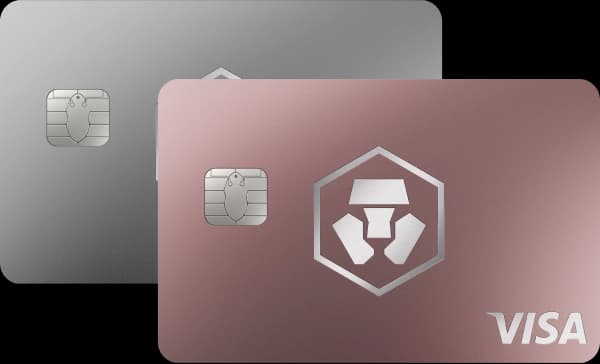
6. Private (Icy White / Rose Gold)
Private Tier: 4% Uncapped Cashback + Lounge Guest

7. Xplace Gold Card
10% Off Gold with SPENDNODE: Pay $224.10 Instead of $249
Complete list:
All 54 crypto cards available in Czech Republic in September 2026
This table includes every crypto card we currently track for Czech Republic. Rows marked Top pick are ranked and reviewed above.
| Crypto card | Max rewards | Annual fee | FX fee | Type | Custody |
|---|---|---|---|---|---|
1 COCA Visa CardTop pick | Up to 8% rewards | Free | 0% | Debit | Self-custody |
2 Plasma One Core CardTop pick | Up to 3% rewards | $199 | 0.5% | Crypto Backed Credit | Self-custody |
3 Bitget CardTop pick | Up to 8% rewards | Free | 0% | Debit | Custodial |
4 Gnosis Pay CardTop pick | Up to 5% rewards | Free | 0% | Debit | Self-custody |
5 ether.fi Core CardTop pick | Up to 3% rewards | Free | 0.5% | Crypto Backed Credit | Self-custody |
6 Private (Icy White / Rose Gold)Top pick | Up to 4% rewards | TBD | 0% | Prepaid | Custodial |
7 Xplace Gold CardTop pick | Up to 1.5% rewards | $249 | 0.25% | Crypto Backed Credit | Self-custody |
| Up to 10% rewards | Free | 3% | Debit | Hybrid | |
| Up to 9% rewards | $240 | 2.5% | Debit | Non-custodial | |
| Up to 8% points | Free | 0.4% | Debit | Custodial | |
11 | Up to 8% rewards | TBD | 0% | Prepaid | Custodial |
| Up to 8% rewards | Free | 0% | Debit | Hybrid | |
| Up to 6% rewards | $200 with code | 1% | Debit | Self-custody | |
| Up to 5% rewards | TBD | 0% | Prepaid | Custodial | |
| Up to 4.5% rewards | $87 with code | 1% | Debit | Self-custody | |
| Up to 4% rewards | Free | 0% | Crypto Backed Credit | Self-custody | |
| Up to 4% rewards | Free | 0% | Crypto Backed Credit | Self-custody | |
| Up to 3% rewards | Free | 0.25% | Crypto Backed Credit | Self-custody | |
| Up to 3% rewards | Free | 0% | Crypto Backed Credit | Self-custody | |
| Up to 3% rewards | $10000 | 0.5% | Prepaid | Custodial | |
| Up to 3% rewards | Free | 0% | Debit | Custodial | |
| Up to 3% rewards | $299.9 | 0% | Prepaid | Custodial | |
| Up to 3% rewards | $129 | 1.2% | Prepaid | Custodial | |
| Up to 3% rewards | Free | 0% | Debit | Hybrid | |
| Up to 2% rewards | Free | 0% | Debit | Custodial | |
| Up to 2% rewards | Free | 0% | Debit | Self-custody | |
| Up to 2% rewards | $1000 | 0.5% | Prepaid | Custodial | |
| Up to 2% rewards | Free | 0% | Prepaid | Custodial | |
| Up to 2% rewards | Free | 0% | Debit | Custodial | |
| Up to 2% rewards | Free | 0.2% | Crypto Backed Credit | Hybrid | |
| Up to 2% rewards | Free | 1% | Crypto Backed Credit | Self-custody | |
| Up to 2% rewards | $49.9 | 0% | Prepaid | Custodial | |
| Up to 2% rewards | $999 | 0% | Crypto Backed Credit | Self-custody | |
| Up to 1.5% rewards | Free | 0.5% | Prepaid | Custodial | |
| Up to 1.5% rewards | Free | 0.5% | Prepaid | Custodial | |
| Up to 1.5% rewards | Free | 1% | Debit | Self-custody | |
| Up to 1% rewards | Free | 0% | Debit | Custodial | |
| Up to 1% rewards | Free | 1.75% | Debit | Self-custody | |
| Up to 1% rewards | Free | TBD | Prepaid | Custodial | |
| Up to 1% rewards | $99 | 0.5% | Crypto Backed Credit | Self-custody | |
| Up to 0.5% rewards | Free | 0% | Debit | Hybrid | |
| Up to 0.5% rewards | Free | 1% | Crypto Backed Credit | Self-custody | |
| none | Free | 0% | Prepaid | Custodial | |
| Varies | Free | 1.7% | Prepaid | Custodial | |
| cashback | Free | 1.75% | Prepaid | Self-custody | |
| cashback | $199 | 0.75% | Prepaid | Self-custody | |
| cashback | Free | 0.5% | Prepaid | Custodial | |
| none | Free | 1% | Prepaid | Self-custody | |
| none | Free | 1% | Debit | Self-custody | |
| Varies | Free | 1.5% | Debit | Custodial | |
| Varies | Free | 1.2% | Prepaid | Custodial | |
| Varies | Free | 1.2% | Prepaid | Custodial | |
| Varies | Free | 1.2% | Prepaid | Custodial | |
| points | Free | 1% | Debit | Self-custody |
Crypto Card Regulation in Czech Republic
The CNB (Ceska narodni banka / Czech National Bank) is the Czech Republic's central bank and primary financial market regulator. The CNB oversees banking, capital markets, insurance, and (under MiCA) crypto asset service providers.
The CNB has taken a moderate regulatory approach: implementing EU directives faithfully without adding burdensome national requirements, while maintaining clear guidance on VASP registration and AML compliance.
Crypto Asset Service Providers need the relevant MiCA authorization or a valid EEA passport to provide covered services. A legacy domestic AML/VASP registration alone does not confer an EEA passport. The CNB supervises Czech-authorized providers under the Digital Finance Act and maintains the relevant public registers.
The Ministerstvo financi (Ministry of Finance) oversees tax policy. The crypto-disposal exemptions took effect on February 15, 2025, with a three-year holding test and a separate CZK 100,000 annual proceeds test for qualifying assets.
Czech Financial Administration guidance for 2026 confirms a CZK 100,000 annual value test and a three-year holding-period test for qualifying cryptoasset disposals, with exclusions and an overall CZK 40 million exemption cap.
Under MiCA, the Czech Republic benefits from full EEA-wide passporting. Crypto.com, Bitget, and Plutus all serve Czech residents through their European entities. No major crypto card issuer has been banned or restricted in the Czech Republic. The CNB has not implemented crypto-specific advertising restrictions beyond standard EU-mandated risk disclosures.
Prague's crypto ecosystem is among the strongest in Central Europe. SatoshiLabs (maker of the Trezor hardware wallet) is headquartered in Prague, as are Coinmate (the leading Czech crypto exchange), Anycoin Direct (Czech-Dutch exchange), and several blockchain startups. The Paralelni Polis community space in Prague's Holesovice district has been a prominent Bitcoin-only venue since 2014. This ecosystem creates strong local awareness of crypto cards and self-custody options.
Digital Finance Act (No. 31/2025 Coll.): Since February 15, 2025, this act designates the CNB as the official MiCA supervisor in the Czech Republic. On February 11, 2026, the CNB issued its first six MiCA authorizations out of 248 applications received, making the Czech Republic among the early EU movers in granting full CASP licenses.
The transitional regime is not a substitute for MiCA authorization or a valid EEA passport. Check a provider's current status in the CNB's register before treating a legacy registration as evidence of authorization.
DAC8/CARF (from January 1, 2026): Crypto service providers must automatically report Czech user transaction data to the Financni urad. This aligns with the EU-wide DAC8 directive and OECD CARF standard.
The Czech Republic's 3-year exemption, CNB's moderate regulation, MiCA passporting, and Prague's active crypto scene make it one of the EU's stronger markets for our top-ranked crypto cards.
Tax Treatment of Card Rewards in Czech Republic
Czech individual crypto-disposal exemptions took effect on February 15, 2025. The Financial Administration's exemption guidance sets out the tests and exclusions.
Standard tax rates:
- 15% on annual income up to CZK 1,935,552 (approx. EUR 77,000)
- 23% on annual income above CZK 1,935,552
Two alternative tests for qualifying assets:
- Annual gross proceeds from covered cryptoasset disposals do not exceed CZK 100,000; or
- The disposed asset was held for more than three years.
The tests have exclusions, including electronic-money tokens from the CZK 100,000 value test. A CZK 40 million annual cap still applies to the crypto time-test exemption in 2026, even though the analogous cap for securities was removed. See the Financial Administration's 2026 update.
Example 1, long-held BTC: A qualifying BTC lot held more than three years can meet the time test even when annual disposals exceed CZK 100,000. A CZK 200,000 sale of such a lot is not automatically taxable merely because it exceeds the separate annual proceeds test.
Example 2, recent BTC: A newer qualifying BTC lot may meet the CZK 100,000 annual gross-proceeds test if total covered disposals stay within the limit. If proceeds exceed the test and the lot has not passed three years, calculate taxable gains from proceeds less documented cost basis.
Example 3, stablecoin funding: A USD-pegged token can move against CZK. Electronic-money tokens such as USDC need separate attention because the value-test exemption does not apply to them. A small or zero gain can mean small or zero tax, but does not make every disposal legally exempt.
The CZK 100,000 test is about gross proceeds, not gains. Keep acquisition records by lot and total annual covered disposals. The ordinary treatment of losses depends on the activity and tax category; do not assume every crypto loss offsets unrelated income.
| Scenario | Holding Period | Annual Crypto Income | Tax Rate | Tax on CZK 50,000 Gain |
|---|---|---|---|---|
| Qualifying asset, time test met | Over 3 years | Can exceed CZK 100,000; cap applies | Exempt | CZK 0 if conditions met |
| Qualifying asset, value test met | Any | Up to CZK 100,000 gross proceeds | Exempt | CZK 0 if conditions met |
| Neither test met | Under 3 years | Over CZK 100,000 | 15% or 23% on taxable gain | CZK 7,500 at 15% |
| Electronic-money token | Any | Value test excluded | Check time test and actual gain | Depends on facts |
Tax reporting: Czech residents file their annual Danove priznani k dani z prijmu fyzickych osob (income tax return for individuals) with the Financni urad (Tax Office) by April 1, or by May 2 for electronic filing via the datova schranka (data box) system. Self-employed individuals and those using a tax advisor can file by July 1.
Crypto gains go in Section 10 (ostatni prijmy / other income) of the tax return. Czech tax software options include Koinly, CoinTracking, and Blockpit, all of which support Czech tax law.
The three-year test can make qualifying long-held crypto disposals exempt even above CZK 100,000 in annual proceeds. The value test is a separate route for covered smaller disposals.
How to Apply from Czech Republic
Czech crypto card applications require an obcansky prukaz (Czech citizen's identity card, credit-card format with chip, issued by the Ministerstvo vnitra / Ministry of Interior) for citizens. EU/EEA citizens can use their national ID card. Non-EU residents need a valid passport plus povoleni k pobytu (residence permit).
The rodne cislo (birth number / personal identification number) is the Czech Republic's primary 9 or 10-digit identifier (format: YYMMDD/XXXX, with a slash between the birthdate and sequence number). The rodne cislo appears on your obcansky prukaz and is required for tax reporting and most financial service registrations.
Proof of Czech address via ucet za energie (energy bill from CEZ, E.ON, innogy/RWE, or PRE for Prague residents), vypis z uctu (bank statement from Ceska sporitelna, CSOB, Komercni banka, or mBank), or registration confirmation from the Ministerstvo vnitra (Ministry of Interior). Some issuers also accept a najemni smlouva (rental agreement) with a notarized signature or official stamp.
EEA issuers use standard European verification via Onfido, Jumio, or Sumsub. Physical cards ship to Czech addresses within 5-10 business days via Ceska posta (Czech Post) or private couriers (PPL, Zasilkovna/Packeta, DPD). Virtual cards are available immediately for cards with Apple Pay and Google Pay use.
Spending Tips for Czech Republic
The 3-Year Exemption: Czech Republic's Strategic Advantage
The three-year holding exemption can remove disposal tax for qualifying lots without requiring the separate CZK 100,000 value test. If the card converts a CZK purchase from another currency, compare its actual FX cost as well:
- 0% tax on disposal (exemption applies)
- 0% FX fee (crypto card vs 1.5-1.75% at Czech banks)
- 4-9% cashback (vs 0% at Czech banks)
The combination can be attractive when the lot qualifies for exemption and a card would otherwise charge FX. Rewards still depend on the chosen tier and its costs.
Choosing the Relevant Exemption
For qualifying lots held more than three years, the time test is the relevant route even if annual spending exceeds CZK 100,000. For newer covered assets, track gross annual proceeds, not merely gains, to see whether the CZK 100,000 value test applies. Electronic-money tokens do not qualify for that value test, and their CZK gain or loss still requires calculation. Do not split card funding between BTC and USDC on the assumption that all stablecoin disposals are tax-free.
FX Savings: Critical for CZK Users
The Czech Republic uses CZK (Czech Koruna), which floats against EUR at approximately 25.0-25.5 CZK per EUR. Unlike Bulgaria's fixed EUR peg, the CZK rate fluctuates. This means:
- Every EUR-denominated card transaction involves CZK conversion
- Czech bank cards charge 1.5-1.75% FX on non-CZK purchases
- 0% FX crypto cards save this entire markup on every transaction
- On CZK 25,000/month of card spending: CZK 4,500-5,250/year saved in FX fees alone
The FX savings alone (before cashback) make a 0% FX crypto card worthwhile for Czech users. Add 4-8% cashback on top, and the math is clear.
Card Selection for Czech Users
- Bitget (8%, free, 0.9% tx fee): Best exchange-linked option. 0% FX critical for CZK users. Net effective rate approx. 7.1% after transaction fee. For users already holding BGB
- COCA (up to 8% with staking $COCA, 1% free): Non-custodial wallet + 5% APY on eligible USD. The yield is especially relevant for the stablecoin portion of spending above the CZK 100,000 threshold
- Gnosis Pay (up to 5% GNO, free): Self-custody from a Safe wallet with tiered GNO cashback. Natural fit for Prague's Trezor/SatoshiLabs community
- Crypto.com Icy (4%): Metal card with airport lounge access at PRG (Vaclav Havel Airport Prague). CRO stake required
- ether.fi Core (3% ETHFI on first $2K/mo, then lower bands; 0-0.5% FX): Direct stablecoin spending or an optional collateral-backed bridge
COCA vs Bitget vs Gnosis Pay: Czech Break-Even
Under the 3-year exemption (0% disposal tax) with 0% FX savings already factored:
| Monthly Spend (CZK) | COCA Elite 8% | Bitget 7.1% net | Gnosis Pay up to 5% GNO |
|---|---|---|---|
| CZK 15,000 | CZK 14,400/yr | CZK 12,780/yr | CZK 9,000/yr |
| CZK 25,000 | CZK 24,000/yr | CZK 21,300/yr | CZK 15,000/yr |
| CZK 40,000 | CZK 38,400/yr | CZK 34,080/yr | CZK 24,000/yr |
COCA leads at every spending level. At CZK 25,000/month: CZK 24,000/year in cashback, which covers 4+ months of groceries at Albert or Lidl. Bitget trails slightly due to the 0.9% transaction fee but remains strong for BGB holders. Gnosis Pay at up to 5% GNO with zero cost and self-custody provides a strong middle ground, especially for Prague's Trezor-heritage crypto community.
Spending Scenario: Prague Developer at CZK 30,000/month
A Prague-based software developer (average IT salary CZK 65,000-85,000/month) spending CZK 30,000/month on cards:
| Funding Strategy | Annual Spend | COCA Cashback (8%) | Tax on Disposal | FX Savings vs Bank | Net Annual Benefit |
|---|---|---|---|---|---|
| Qualifying 3+ year BTC | CZK 360,000 | CZK 28,800 | CZK 0 if time test and cap conditions met | CZK 5,400 | CZK 34,200 before reward tax and other costs |
| USDC funding | CZK 360,000 | CZK 28,800 | Depends on CZK gain and applicable test | CZK 5,400 | Depends on actual gain and costs |
| Recent BTC (1yr, doubled) | CZK 360,000 | CZK 28,800 | CZK 27,000 at illustrative 15% on CZK 180,000 gain | CZK 5,400 | CZK 7,200 before other costs |
The first row illustrates why the time test matters independently of the value test. The FX savings assume the comparison bank charges 1.5% on the same conversions; they are not earned on a CZK-funded purchase with no FX markup.
Borrow-to-Spend: Bridging to the 3-Year Exemption
For Czech residents with eligible crypto approaching the three-year mark, ether.fi Core and Nexo offer a possible bridge strategy similar to Croatia's two-year approach:
- Deposit collateral supported by the chosen provider
- Borrow a supported stablecoin and spend without immediately selling the collateral
- Keep the loan healthy while the asset approaches the three-year threshold
- Plan repayment around interest, collateral value, and the relevant exemption's conditions
The relevant tax is charged on the gain, while interest is charged on the loan balance. Borrowing can still be cheaper for a position with a large unrealized gain and little time left, but rates, liquidation exposure, and the eventual repayment transaction must be included before drawing that conclusion.
Czech Cost of Living Context
- Prague: Rent CZK 18,000-30,000/1BR center (bankovni prevod/bank transfer, not card-eligible). Groceries CZK 6,000-9,000/month at Albert, Kaufland, Lidl, Billa, Tesco. Dining CZK 200-400 per meal (svickova or gulas at a traditional hospoda runs CZK 180-250). Prague DPP (public transit) annual Litacka pass CZK 3,650. Beer at a local pub CZK 40-60/0.5L. Monthly card-eligible spending: CZK 15,000-35,000.
- Brno: Rent CZK 12,000-20,000. Groceries CZK 5,000-7,500. Dining CZK 150-350. Czech Republic's second city with a strong IT sector and university scene. Significantly cheaper than Prague.
- Ostrava: Rent CZK 8,000-15,000. Groceries CZK 4,500-6,500. Mining heritage transitioning to tech and services. Lowest cost among major Czech cities.
- Cesky Krumlov/Olomouc/Plzen: Smaller cities with CZK 7,000-12,000 rent. Tourist spending in Cesky Krumlov is seasonal. Plzen (Pilsner Urquell) has a strong beer tourism economy.
Where Cards Work in the Czech Republic
Contactless Visa/Mastercard acceptance is strong in Czech cities. Prague: Shopping centers (Palladium, Chodov, Novy Smichov, Letnany), all major supermarkets (Albert, Kaufland, Lidl, Billa, Tesco), restaurants throughout Prague 1-7, cafes, and bars. Most Prague hospody (traditional pubs) accept cards, though some in the outer districts prefer cash for small amounts. Brno: Galerie Vankovka, Olympia Brno, central restaurants and shops. Ostrava: Forum Nova Karolina, Avion Shopping Park.
Cash culture note: The Czech Republic is more cash-friendly than Western Europe. While major cities have strong card acceptance, traditional hospody (pubs), trafikanti (tobacconists/newspaper shops), and smaller shops outside Prague may prefer cash. Weekly trznice (markets) and podomni prodejci (street vendors) are cash-only. Carry CZK 500-1,000 for smaller purchases outside city centers.
Apple Pay and Google Pay work at all NFC-enabled terminals. Prague DPP (public transit) accepts contactless bank card tap-to-pay at metro gates and on trams/buses. Czech Railways (Ceske drahy/CD) tickets can be purchased online or at station machines with Visa/Mastercard. Bolt and Liftago (Czech ride-hailing) accept card payments. Rohlik.cz and Kosik.cz (online grocery delivery) accept card payments.
Cross-Border FX: Where 0% Matters Most
The Czech Republic borders Germany (EUR), Austria (EUR), Slovakia (EUR), and Poland (PLN). Since CZK floats, every cross-border trip involves FX:
- Germany (EUR): Dresden, Munich shopping trips from Prague/Brno. 0% FX saves 1.5-1.75% on every purchase vs Czech bank cards.
- Austria (EUR): Vienna is 4 hours from Prague, 2 hours from Brno. 0% FX saves 1.5-1.75%. Austrian ski resorts (Arlberg, Kitzbuhel) are popular Czech holiday destinations.
- Slovakia (EUR): Bratislava is 1 hour from Brno. 0% FX saves 1.5-1.75%. Many Czech-Slovak cross-border commuters and shoppers.
- Poland (PLN): Krakow and Wroclaw trips from Ostrava/Prague. 0% FX saves 1.5-2% on PLN purchases.
For Czech residents making frequent cross-border trips (common in a landlocked country surrounded by 4 neighbors), the FX savings from a 0% crypto card compound quickly: CZK 5,000-10,000/year for active cross-border shoppers.
Supported Exchanges & Wallets in Czech Republic
The Czech Republic's crypto ecosystem centers on Prague, which has one of the most developed Bitcoin communities in Europe. SatoshiLabs, maker of the Trezor hardware wallet, is headquartered in Prague and has been a pillar of the global crypto self-custody movement since 2013.
This local heritage creates natural interest in self-custody card options. Czech Trezor users migrating to spending have a philosophical alignment with cards like Gnosis Pay and Ledger CL Card.
For cashback maximization at the spending levels modeled here, COCA offers up to 8% (1% free Starter, scaling with staking $COCA tokens) plus 5% APY on eligible USD in a non-custodial wallet. Stablecoin rewards and funding still need CZK tax records. Plutus reaches 9% with subscription perks that stretch further at Czech subscription prices.
ether.fi Core and Nexo serve the specific Czech use case of bridging toward the three-year exemption. Eligible holders can borrow against supported collateral and spend the stablecoins while keeping the position open. The result depends on the unrealized gain, time remaining, loan terms, liquidation risk, and repayment treatment.
Wirex reaches up to 8% in USD at its metal tiers, unlocked by holding WPAY rather than staking.
Additional self-custody options beyond Gnosis Pay include Bleap.
Ready (Starknet self-custody with STRK cashback) and Solflare are both currently unavailable, each after its card issuer wound down (Ready as of July 30, 2026; Solflare paused July 28, 2026). 1inch Card (custodial via Baanx, 2% BXX cashback) serves DeFi users who already use the 1inch wallet ecosystem.
Bitpanda at 1% has strong Central European presence with EUR integration and 600+ tradeable assets, though its cashback rate is the lowest in the EEA.
Our exchange section for the Czech Republic starts locally: Coinmate (coinmate.io) is the leading Czech crypto exchange with CZK trading pairs and Czech banking integration (SEPA and domestic transfers). Anycoin Direct (Czech-Dutch) offers simple buy/sell in CZK.
Paralelni Polis in Prague's Holesovice district operates as a Bitcoin-only community space and coworking venue, one of the first in the world to accept only BTC. Neither Coinmate nor Anycoin Direct offers card products. The traditional Czech banks (Ceska sporitelna, CSOB, Komercni banka) have shown no interest in crypto card products.
The Czech Republic's alternative three-year and CZK 100,000 exemptions, Prague's SatoshiLabs heritage, and EEA card access make it a strong jurisdiction for patient holders who keep proper lot records.
Written by SpendNode Editorial
Frequently Asked Questions
Is crypto card spending tax-free in the Czech Republic?
Yes, if you meet two conditions: held the crypto for 3+ years AND your annual crypto income is under CZK 100,000 (approx. EUR 4,000). Otherwise 15% tax applies (23% on high incomes). The CNB is the MiCA supervisor since the Digital Finance Act (Feb 2025). DAC8/CARF reporting starts January 2026.
Which crypto card is best for Czech residents?
COCA (up to 8%, non-custodial smart wallet) leads, with Plasma One Core (3% XPL, $199/yr or a 20,000 XPL lock, self-custodial) among the premium options; xPlace Gold (1.5% USDC in Credit Mode capped at $100/month, 0.25% FX, $249/yr) ranks lower on net rewards. Bitget (8%, 7.1% net) and Gnosis Pay (5% GNO, self-custody) follow. CZK users benefit most from low-FX cards since Czech banks charge 1.5-1.75% on every non-CZK transaction. For long-term holders, the 3-year exemption makes spending tax-free.
How does the CZK 100,000 annual limit work?
The threshold counts gross crypto income (total proceeds from sales, not just gains). If exceeded, the 3-year holding exemption does not apply to that year. Strategy: fund CZK 8,000/month from 3+ year crypto (CZK 96,000/yr, under threshold), use USDC for the rest.
When did the 3-year crypto holding exemption take effect?
Introduced by Zakon c. 349/2023 Sb., effective January 1, 2025. A CZK 40 million combined annual cap (with securities) also applies but is irrelevant for typical card spending. This makes the Czech Republic one of the EU's most crypto-friendly jurisdictions for patient holders.
Other Countries
View all 112 countries →


Latest Page Changes to the Best Crypto Cards in Czech Republic Guide
- xPlace Gold's capped 1.5% Credit Mode reward no longer supports a top-tier position for CZK spending. It remains listed for low-FX Solana-backed borrowing; we moved it below lower-cost card options
- CNB's first 6 MiCA authorizations issued February 11, 2026 out of 248 applications. Mid-2026 deadline for transitional entities
- Digital Finance Act (No. 31/2025 Coll., CNB = MiCA supervisor from Feb 2025)
- DAC8/CARF reporting from January 2026