

Best Crypto Cards in Uruguay (2026)
Uruguay is a stable LATAM card market, but the real value comes from balancing 12% IRPF, dollar liquidity, and premium travel use rather than chasing the highest raw headline rate.
Verified for Uruguay
48 crypto cards available
Local currency: UYU
Uruguay is Latin America's "Switzerland", a country of 3.4 million with the region's strongest institutions, lowest corruption index, highest per capita income outside of oil states, and a political stability that makes it the anomaly in South American economics.
BROU (Banco de la Republica Oriental del Uruguay, state-owned, largest by assets), Itau Uruguay, Santander Uruguay, BBVA Uruguay, and Scotiabank Uruguay offer standard debit and credit products with zero cashback on debit and 0.5-1% on credit cards with annual fees of $30-80.
Crypto cards deliver 2-5% cashback at $0 annual fee, filling the rewards gap that Uruguayan banks have never addressed.
The Uruguayan peso (UYU) has been relatively stable by South American standards but has depreciated from approximately 20 per USD in 2015 to 42-44 per USD by 2026, a 50%+ decline over a decade. USD-denominated crypto cards settle at or near the interbank rate with FX fees from 0% to 1.75%, compared to the 2-4% spreads Uruguayan banks charge on foreign currency transactions.
For a country where real estate, vehicles, and many large purchases are denominated in USD, this FX advantage is substantial.
Summary:
Which crypto cards are best in Uruguay?
The best crypto cards in Uruguay in September 2026 are ether.fi Core Card, Rizon Emerald Card, Tria Signature Card, Kolo Card, Private (Icy White / Rose Gold), and KAST K Card. The detailed ranking below explains the local tax, fee, and availability trade-offs.
| Crypto card | Base reward | Net after fees | Annual fee | FX fee | Type |
|---|---|---|---|---|---|
| 3% base3% on the first $2,000/month, then 1% and 0.5% | 2.5% | Free | 0.5% | Crypto Backed Credit | |
| Up to 2.5% rewards | - | $83.88 | 1.02% | Crypto Backed Credit | |
| 4.5% base4.5% on the first $1,000/mo, then 1% | 3% | $87 with code | 1% | Debit | |
| 1% base2% for the first 30 days, then 1%; also capped at $1/EUR 1 per transaction ($2/EUR 2 during intro) and $100/EUR 100 per month | 1% | Free | 0% | Prepaid | |
| 4% baseneeds a $50k CRO stake to hold the tier | 4% | TBD | 0% | Prepaid | |
| 1.5% base | 1% | Free | 0.5% | Prepaid |
23 card vendors currently list Uruguay as available. ether.fi Core leads on free starting rate with 3% in ETHFI on the first $2,000 per month and supports direct stablecoin or optional collateral-backed spending.
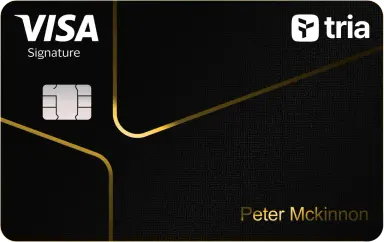
Tria Signature pays 4.5% on the first $1,000 per month, then 1%. Its fees leave about 3% net on peso spend and roughly 4% on USD-priced spend before the annual fee.
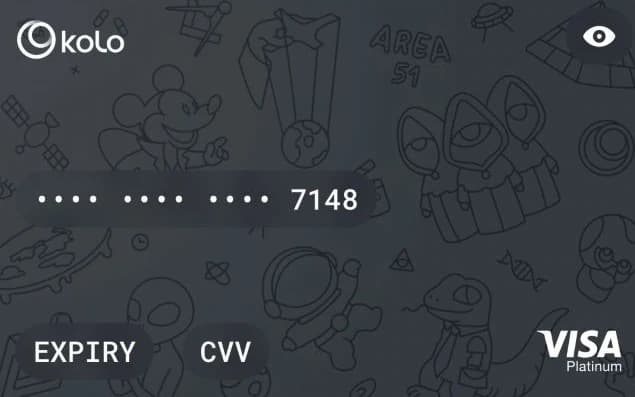
Kolo pays 1% ongoing BTC (2% for the first 30 days), capped at $100/month and $1 per transaction, with $0 annual fee and 0% FX, a free BTC earner for small day-to-day buys.
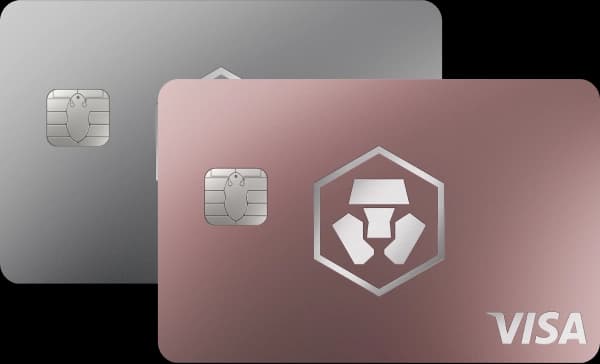
Crypto.com Icy at 4% adds Priority Pass lounge access at Carrasco (MVD) and Buenos Aires Ezeiza (EZE).
Best Card For Every Need in Uruguay
Top 6 Crypto Cards in Uruguay
Uruguay's 12% IRPF on crypto gains is low by regional standards but still relevant. Stablecoin funding keeps the disposal gain small. ether.fi Core's optional collateral route can postpone a sale, although interest, liquidation risk, and Uruguayan tax treatment determine its value.
Kolo at 1% ongoing BTC, or 2% for the first 30 days, remains a free card for small purchases. Its rewards are capped at $100 per month and $1 per transaction.
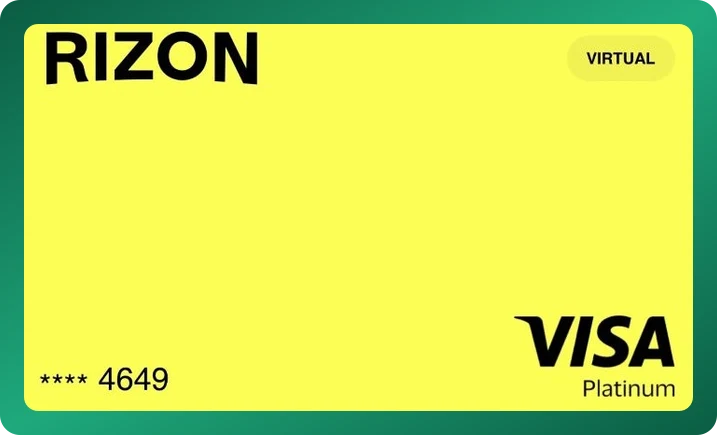
The dollar half of Uruguayan financial life is where Rizon Emerald earns its second slot. This is a country where property, cars, and Punta del Este rents are priced in USD, and Rizon gives a Uruguayan passport holder a US-issued Visa Platinum with USD account details, with stablecoin collateral in the holder's own smart-contract wallet. USDC funding also keeps any gain on the spending event close to zero, which is what matters for the 12% IRPF, the same logic the page applies elsewhere.
In Uruguay's income bracket the $6.99/month Emerald plan (minimum 3-month commitment, about $20.97 upfront) earns its keep quickly: peso spending runs at roughly 1.02% versus 1.7% + $0.30 on the free plan, both cards are in the plan, and the 2.5% cashback (capped at the plan fee) hands the subscription back at about $280 of eligible monthly spend. Kolo keeps the everyday UYU lane while Rizon carries the dollar rail; trying it first costs $1 on the free Standard plan with code spendnode.
Tria Signature at 4.5% on the first $1,000/month (then 1%), about 3% net once its 1% FX and 0.5% per-payment fees land, adds self-custody and USDT cashback for users who want predictable returns over BTC volatility.
Crypto.com Icy at 4% is especially valuable because Priority Pass covers both Carrasco (MVD) and Buenos Aires Ezeiza (EZE), the corridor that 1.2 million Argentines and most Uruguayan travelers fly annually. KAST is the practical starter when a user keeps dollar liquidity on Binance P2P.

1. ether.fi Core Card
3% Back on the First $2,000 Each Month, No Stake Required
2. Rizon Emerald Card
Rizon's top plan: international fees near 1%, trading at 0.85%, and the physical Visa Platinum included.
3. Tria Signature Card
High-Yield Self-Custody: 15% APY + Visa Signature Perks
4. Kolo Card
Earn Bitcoin on Purchases: 2% for 30 Days, Then 1% (Capped) + Visa Platinum + 170+ Countries
5. Private (Icy White / Rose Gold)
Private Tier: 4% Uncapped Cashback + Lounge Guest
6. KAST K Card
Free USD Cashback: 1.5% on First $2K/Month
Complete list:
All 48 crypto cards available in Uruguay in September 2026
This table includes every crypto card we currently track for Uruguay. Rows marked Top pick are ranked and reviewed above.
| Crypto card | Max rewards | Annual fee | FX fee | Type | Custody |
|---|---|---|---|---|---|
1 ether.fi Core CardTop pick | Up to 3% rewards | Free | 0.5% | Crypto Backed Credit | Self-custody |
2 Rizon Emerald CardTop pick | Up to 2.5% rewards | $83.88 | 1.02% | Crypto Backed Credit | Self-custody |
3 Tria Signature CardTop pick | Up to 4.5% rewards | $87 with code | 1% | Debit | Self-custody |
4 Kolo CardTop pick | Up to 2% rewards | Free | 0% | Prepaid | Custodial |
5 Private (Icy White / Rose Gold)Top pick | Up to 4% rewards | TBD | 0% | Prepaid | Custodial |
6 KAST K CardTop pick | Up to 1.5% rewards | Free | 0.5% | Prepaid | Custodial |
| Up to 10% rewards | Free | 0% | Prepaid | Custodial | |
| Up to 10% rewards | Free | 3% | Debit | Hybrid | |
| Up to 8% rewards | Free | 0% | Debit | Custodial | |
10 | Up to 8% rewards | TBD | 0% | Prepaid | Custodial |
| Up to 6% rewards | $200 with code | 1% | Debit | Self-custody | |
| Up to 5% rewards | Free | 1% | Crypto Backed Credit | Self-custody | |
| Up to 5% rewards | TBD | 0% | Prepaid | Custodial | |
| Up to 5% rewards | Free | 1% | Debit | Self-custody | |
| Up to 4% rewards | Free | 0% | Crypto Backed Credit | Self-custody | |
| Up to 4% rewards | Free | 1% / 1.8% | Debit | Hybrid | |
| Up to 4% rewards | Free | 0% | Crypto Backed Credit | Self-custody | |
| Up to 3% rewards | Free | 0.25% | Crypto Backed Credit | Self-custody | |
| Up to 3% rewards | Free | 0% | Crypto Backed Credit | Self-custody | |
| Up to 3% rewards | $10000 | 0.5% | Prepaid | Custodial | |
| Up to 3% rewards | $199 | 0.5% | Crypto Backed Credit | Self-custody | |
| Up to 3% rewards | $299.9 | 0% | Prepaid | Custodial | |
| Up to 3% rewards | $129 | 1.2% | Prepaid | Custodial | |
| Up to 2% rewards | $1000 | 0.5% | Prepaid | Custodial | |
| Up to 2% rewards | Free | 1% | Crypto Backed Credit | Self-custody | |
| Up to 2% rewards | $49.9 | 0% | Prepaid | Custodial | |
| Up to 2% rewards | $999 | 0% | Crypto Backed Credit | Self-custody | |
| Up to 1.5% rewards | Free | 0.5% | Prepaid | Custodial | |
| Up to 1.5% rewards | Free | 1% | Debit | Self-custody | |
| Up to 1.5% rewards | $249 | 0.25% | Crypto Backed Credit | Self-custody | |
| Up to 1% rewards | Free | 1% | Crypto Backed Credit | Self-custody | |
| Up to 1% rewards | Free | 1% | Debit | Self-custody | |
| Up to 1% rewards | Free | TBD | Prepaid | Custodial | |
| Up to 1% rewards | $47.88 | 1.275% | Crypto Backed Credit | Self-custody | |
| Up to 1% rewards | $99 | 0.5% | Crypto Backed Credit | Self-custody | |
| Up to 0.5% rewards | Free | 1% | Crypto Backed Credit | Self-custody | |
| none | Free | 0% | Crypto Backed Credit | Self-custody | |
| none | $30 | 0% | Crypto Backed Credit | Self-custody | |
| none | Free | 0% | Prepaid | Custodial | |
| cashback | Free | 1.75% | Prepaid | Self-custody | |
| cashback | $199 | 0.75% | Prepaid | Self-custody | |
| cashback | Free | 0.5% | Prepaid | Custodial | |
| none | Free | 1% | Prepaid | Self-custody | |
| Varies | Free | 1.5% | Debit | Custodial | |
| Varies | Free | 1.2% | Prepaid | Custodial | |
| Varies | Free | 1.2% | Prepaid | Custodial | |
| Varies | Free | 1.7% | Crypto Backed Credit | Self-custody | |
| points | Free | 1% | Debit | Self-custody |
Crypto Card Regulation in Uruguay
Uruguay has taken the most measured, institutional approach to crypto regulation in Latin America. The BCU (Banco Central del Uruguay) oversees financial stability and has acknowledged digital assets without rushing to legislate.
In 2018, the BCU published a statement clarifying that cryptocurrencies are not legal tender and not regulated as financial instruments, but explicitly stated that crypto ownership and trading are not prohibited.
In April 2022, Senator Juan Sartori introduced Proyecto de Ley de Activos Virtuales (Virtual Asset Bill) to create a full framework including VASP registration, consumer protections, and BCU oversight of crypto exchanges.
The bill passed the Senate in September 2022 and, after revisions in the Chamber of Deputies, was enacted as Law 20,345 in late 2024.
The law places virtual-asset service providers under BCU supervision. The BCU approved its implementing VASP rules in July 2026, covering authorization, risk management, information security, and AML controls.
The digital application process opened September 1, 2026 for providers within the regulated scope. A provider's presence in Uruguay does not itself show that it has authorization.
The Superintendencia de Servicios Financieros (SSF), the BCU's supervisory arm, oversees banks, insurance, and securities markets. The SSF has required banks to report any crypto-related suspicious transactions under Uruguay's AML/CFT framework (Law 19.574, October 2017). The Unidad de Informacion y Analisis Financiero (UIAF) monitors financial intelligence including potential crypto-related money laundering.
Uruguay was among the first countries to pilot a CBDC: the e-Peso pilot ran from November 2017 to April 2018, distributing 20 million digital pesos to 10,000 users through Antel (state telecom). The BCU evaluated results but has not launched a full deployment, opting instead to study international CBDC developments before proceeding.
Uruguay's regulatory approach is institutional: Law 20,345 sets the framework, and the BCU now has an application process for providers subject to its VASP rules. Card users should check the provider's authorization and the card's own country eligibility; the new provider rules are not a blanket approval of every crypto card.
Tax Treatment of Card Rewards in Uruguay
Uruguay's tax system, administered by the DGI (Direccion General Impositiva), treats crypto gains as investment income under the IRPF (Impuesto a la Renta de las Personas Fisicas).
IRPF Category I: Investment Income (Rendimientos del Capital)
Crypto gains from the disposal of movable property (including selling, exchanging, or spending through a card) are taxed at a flat 12% under Category I of the IRPF. This applies to the gain (sale price minus cost basis), not the total amount. The 12% rate is one of the lowest in South America: compare Argentina (progressive up to 35%), Colombia (0-39%), Brazil (15-22.5%), or Chile (up to 40%).
Example: You bought BTC at UYU 40,000 and spent it through your card when BTC was worth UYU 120,000 per unit. On a UYU 10,000 purchase, the proportional gain is approximately UYU 6,667. Tax = UYU 800 (12% of UYU 6,667). On a $240 equivalent purchase, the tax is approximately $19.
IRPF Category II: Employment and Professional Income
If crypto trading is your primary occupation (frequent, systematic, commercial activity), profits may be reclassified as Category II income taxed at progressive rates: 0% on the first UYU 458,232, then 10%, 15%, 24%, 25%, 27%, 31%, and 36% on higher brackets. Occasional card spending from a personal portfolio would not trigger this.
IRAE: Business Income
The Impuesto a las Rentas de las Actividades Economicas (IRAE) applies a flat 25% on business profits, relevant for crypto businesses operating in Uruguay.
IVA
IVA (VAT) is 22% on most goods and services (10% reduced rate on some essentials). Financial services are exempt. Credit/debit card purchases receive an IVA reduction (currently 2 percentage points off, so 20% instead of 22%), and this applies to crypto card spending too since the POS terminal processes it as a standard Visa/Mastercard transaction.
| Cashback Type | Tax When Received | Tax When Spent/Sold | Optimal Strategy |
|---|---|---|---|
| BTC cashback | 12% IRPF on fair value | 12% IRPF on subsequent gain | Hold, track basis carefully |
| USDC cashback | approx. 0% (negligible gain) | approx. 0% | Spend anytime |
| CRO/token cashback | 12% IRPF on fair value | 12% IRPF on subsequent gain | Convert to stablecoin |
USDC funding generally keeps the disposal gain close to zero. For BTC holders, the 12% rate remains relevant. ether.fi Core offers optional collateral-backed liquidity, but the result depends on loan terms, collateral performance, and IRPF treatment.
How to Apply from Uruguay
Uruguayan crypto card applications require a Cedula de Identidad (CI), issued by the Direccion Nacional de Identificacion Civil (DNIC). The CI number is the primary identifier for all financial, tax, and government interactions in Uruguay. The CI is mandatory for all citizens and residents over 16.
Alternative identification: Uruguayan passport (Pasaporte de la Republica Oriental del Uruguay), issued by the Direccion Nacional de Identificacion Civil. Proof of address via utility bills from UTE (Administracion Nacional de Usinas y Trasmisiones Electricas, electricity), OSE (Obras Sanitarias del Estado, water), Antel (state telecom), or Movistar/Claro (mobile). Bank statements from BROU, Itau, Santander, BBVA, or Scotiabank also work.
Physical cards ship to Uruguayan addresses within 14-21 business days. Virtual cards are available immediately for Apple Pay and Google Pay use. For the Uruguayan diaspora (approximately 600,000 abroad, mainly Argentina 300,000+, Spain 100,000+, Brazil, US), host-country documents provide broader issuer access.
Spending Tips for Uruguay
Banking System: Solid Infrastructure, Zero Rewards
BROU (Banco de la Republica) is the largest bank by assets and branches (100+ nationwide), state-owned, and the default salary deposit institution for many public sector employees. Debit cards offer zero cashback. Credit cards carry annual fees of UYU 1,500-3,500 ($35-80) with minimal rewards.
Itau Uruguay (Brazilian parent) serves the upper-middle market with similar terms. Santander Uruguay and BBVA Uruguay offer premium credit products (Visa Signature, Mastercard Black) with annual fees of UYU 3,000-6,000 ($70-140) and 0.5-1% cashback in points programs with restrictive redemption. Scotiabank Uruguay focuses on the corporate segment.
Heritage (formerly Discount Bank) and Banco Bandes (Venezuela-backed, limited operations) serve niche markets. Prex (Uruguayan fintech, prepaid Mastercard) is the closest local competitor to crypto cards: 0% FX on USD purchases, no annual fee, but zero cashback.
Our local cost analysis for Montevideo highlights the gap: Uruguayan bank debit = 0% rewards. Best bank credit = 0.5-1% with $70-140 annual fee. Crypto cards = 2-5% at $0. Even the modest KAST at 1.5% USD cashback on the first $2,000/month beats every Uruguayan bank product.
The Punta del Este Factor
Punta del Este is South America's premier beach destination and its most expensive real estate market. Argentine billionaires, Brazilian vacationers, and a growing international remote worker community drive a luxury economy where everything is priced in USD. Card acceptance is universal: Jose Ignacio restaurants ($50-150/person), La Barra boutiques, Punta Shopping, Conrad Hotel/casino, Enjoy Punta del Este.
During the December-March high season, monthly spending easily reaches $3,000-8,000 for residents.
At ether.fi Core, with 3% on the first $2,000/month and 1% on the next band, that is roughly $75-110/month in free rewards. Kolo at 1% ongoing BTC is a weaker fit here: Punta del Este tickets are large and USD-priced, so its $1-per-transaction cap bites on many purchases and the effective return falls below 1%.
Tria Signature caps its 4.5% rate to the first $1,000/month and charges 0.5% on every payment. On peso-priced purchases, a further 1% FX fee applies. At $3,000-8,000/month of largely USD-priced Punta del Este spend, it returns about $40-65/month after fees.
Card Selection: Tax-Optimal Picks
- Top free starting rate: ether.fi Core (3% ETHFI on first $2K/mo, then 1% / 0.5%)
- USDT cashback: Tria Signature (4.5% on first $1K/mo, then 1%, $109/yr, 1% FX + 0.5%/payment, ~3% net)
- Premium perks: Crypto.com Icy (4% + airport lounge perks at MVD/EZE)
- Free BTC cashback: Kolo (1% ongoing BTC, 2% for 30 days, capped $100/mo and $1/txn, cards with rewards, $0, 0% FX)
- Free starter: KAST (1.5% USD cashback on first $2K/mo, $0, 0.5-1.75% FX)
- Crypto-backed credit: Avici (no disposal = no 12% IRPF)
Break-Even Math: ether.fi vs Tria Signature vs Icy vs Kolo
The table uses a 12% IRPF assumption and approximately 43 UYU per USD. ether.fi pays 3% in ETHFI on the first $2,000 per month, 1% through $5,000, and 0.5% above. Kolo figures assume 1% ongoing BTC and purchases at or under $100, where its transaction cap does not bite.
| Monthly Spend | ether.fi (3% ETHFI to $2K/mo, then 1% / 0.5%) | Tria Sig (4.5% to $1K/mo, then 1%, $109/yr, 1% FX + 0.5%/payment) | Icy (4%, CRO stake) | Kolo (1% BTC, free) |
|---|---|---|---|---|
| UYU 35,000 ($814) | $293/yr | $184/yr | $390/yr + lounges | $98/yr |
| UYU 60,000 ($1,395) | $502/yr | $227/yr | $670/yr + lounges | $167/yr |
| UYU 100,000 ($2,326) | $759/yr | $171/yr | $1,116/yr + lounges | $279/yr |
| UYU 200,000 ($4,651) | $1,038/yr | $32/yr | $2,233/yr + lounges | $558/yr |
Free ether.fi Core leads the no-fee options at moderate spend, paying 3% in ETHFI on the first $2,000 per month before its marginal rate falls to 1%. Its optional collateral mode may postpone a sale, but it does not by itself establish an IRPF deferral and must be weighed against financing and liquidation risk.
Tria Signature peaks near its $1,000/month cap and then declines. Once its 1% FX and 0.5% fees land, its case rests on USDT cashback and self-custody rather than raw return, and it breaks even on its $109 fee at approximately $303/month (UYU 13,000). Kolo remains the free BTC option for everyday spend. Crypto.com Icy tops the raw rate for CRO stakers who value the lounges.
Crypto.com Icy adds airport lounge access at Carrasco (MVD) and Buenos Aires Ezeiza (EZE), relevant for frequent flyers on the 6 daily flights to Buenos Aires.
Cost of Living by Area
Pocitos/Punta Carretas (Montevideo premium): Rent $700-1,800/month. The Rambla oceanfront, Punta Carretas Shopping, Pocitos beach. Universal card acceptance. Montevideo's most desirable residential neighborhood. Restaurants $15-40/person. International expat community.
Centro/Ciudad Vieja (Montevideo historic/business): Rent $400-900/month. Financial district (BROU headquarters, stock exchange), Mercado del Puerto (tourist landmark, parrillas $20-50), Plaza Independencia. Card acceptance strong at formal businesses, cash at smaller establishments and Feria Tristan Narvaja (Sunday market).
Carrasco/Prado (Montevideo upscale residential): Rent $800-2,000/month. Embassy district, Carrasco International Airport, traditional wealth. Excellent card acceptance. Quieter than Pocitos, more established.
Punta del Este (resort/seasonal): Rent $600-3,000/month (doubles in high season December-March). Jose Ignacio, La Barra, Playa Brava, Playa Mansa. Universal card acceptance. Prices 50-100% higher than Montevideo during summer. USD pricing standard for real estate and high-end services.
Colonia del Sacramento (historic/tourism): Rent $400-800/month. UNESCO World Heritage old quarter, day-trip destination from Buenos Aires (ferry 1 hour). Tourist economy with good card acceptance in restaurants and hotels. Lower cost than Montevideo.
Interior (Salto, Paysandu, Rivera): Rent $200-500/month. Much lower costs. Card acceptance at supermarkets (Tata, Disco, Devoto) and malls but cash-dominant for daily purchases. Rivera sits on the Brazilian border and functions as a binational commercial zone.
The Argentina Connection
Uruguay's relationship with Argentina deeply shapes its economy. Approximately 1.2 million Argentines visit Uruguay annually (many spending the entire summer in Punta del Este). Argentine capital flight drives real estate investment - Uruguayan bank accounts have long served as a safe haven for Argentine savings (USD deposits at BROU or Heritage).
Argentine residents in Uruguay (approximately 50,000 permanent) and frequent visitors create a market for crypto cards that settle in USD without the Argentine peso's chronic instability or Argentina's cepo cambiario (exchange controls).
Cross-Border and Online Spending
Argentina (ferry to Buenos Aires, 1 hour Colonia-BA): The dominant economic relationship. Brazil (Rivera/Livramento border, Chuy/Chui border): Active commercial zones, Brazilian shoppers in Uruguayan free shops. Chile/Paraguay/Peru: Mercosur commercial links, growing flight connectivity.
Online shopping: Amazon (through Miami forwarding services like Tiendamia, Grabr, TiendaUY), MercadoLibre Uruguay (dominant local e-commerce), Netflix ($7-23/month), Spotify, all charge in USD with low or zero FX on crypto cards (0% on Kolo/Crypto.com, 1% on Tria, 0.5-1.2% on others). Uruguay's 22% IVA applies to digital services (Netflix, Spotify, etc.) since 2018.
Local Payment Infrastructure
Card acceptance is strong in urban Uruguay. Contactless Visa/Mastercard works at supermarkets (Disco, Devoto, Tienda Inglesa, Tata, El Dorado), shopping centers (Montevideo Shopping, Punta Carretas Shopping, Tres Cruces, Nuevo Centro), pharmacies (Farmashop, San Roque), gas stations (ANCAP, Axion, Petrobras), and most restaurants.
The IVA discount on card payments (2 percentage points) actively incentivizes card usage over cash - a Uruguayan government policy that has driven one of the highest card penetration rates in LATAM.
Prex (Uruguayan fintech prepaid Mastercard) and dLocal (Uruguayan-founded global payments company, NYSE-listed) represent the local fintech ecosystem. PedidosYa (iFood-owned delivery, dominant in Uruguay) accepts cards. Rappi also operates. Cash remains common at ferias (weekly neighborhood markets), street food vendors, and rural interior.
Supported Exchanges & Wallets in Uruguay
23 card vendors currently list Uruguay as available. The 12% IRPF makes tax-optimization strategy more important here than in zero-CGT jurisdictions.
ether.fi Core deserves attention in Uruguay because it combines stepped ETHFI rewards with direct stablecoin and optional collateral-backed spending. The borrowing route can postpone a sale, but its practical value depends on interest, liquidation risk, cost basis, and IRPF treatment.
Avici provides another crypto-backed Visa credit route. Borrowing may preserve a position without an immediate sale, but users still need local advice on the IRPF treatment and must account for financing and liquidation risk.
Kolo remains a free BTC cashback card at 1% ongoing (2% for the first 30 days), capped at $100/month and $1 per transaction, with $0 annual fee and 0% FX. Funding with USDC acquired near its current value can keep the gain on each spending event small, while later disposal of BTC rewards may create a separate tax result.
Tria Signature rewards the first $1,000 of monthly spend at 4.5%, then falls to 1%. It provides self-custody and USDT cashback, but charges 1% FX plus 0.5% per payment on peso spending. Its payout can take up to three months to arrive.
Crypto.com Icy at 4% delivers premium value for Uruguayan travelers with Priority Pass airport lounge access at Carrasco (MVD) and Buenos Aires Ezeiza (EZE) plus Netflix, Spotify, and Amazon Prime rebates.
KAST is the cleanest prepaid bridge from P2P-funded dollar balances into ordinary Montevideo and Punta del Este spending. It pays 1.5% USD cashback on the first $2,000/month with a free card; rewards are held for 14 days, then manually redeemed as credit toward a later card purchase rather than withdrawn as cash.
MetaMask at 1% provides free self-custody spending. xPlace and Jupiter target the Solana and DeFi ecosystem.
On-Ramps: Limited but Functional
The BCU opened authorization applications for regulated VASPs in September 2026. Check a provider's status before relying on its UYU or USD on-ramp. Binance P2P and Buda.com are routes to evaluate, but access and banking acceptance can vary by provider and account.
P2P trading via Telegram and WhatsApp groups is active in the local community.
A Pocitos resident spending UYU 80,000/month ($1,870) earns roughly $673/year on free ether.fi Core at 3%, or about $224/year on Kolo at 1% ongoing BTC. In Punta del Este's high season, Kolo's $1-per-transaction cap bites on large USD tickets, so ether.fi's banded schedule is the stronger free earner at this level.
For ETH stakers, ether.fi Core's collateral mode may provide spending liquidity without an immediate sale. Whether that postpones IRPF depends on the position, loan structure, and Uruguayan tax treatment. Uruguay's IVA discount on card payments adds another 2 percentage points of savings that cash cannot match.
Written by SpendNode Editorial
Frequently Asked Questions
What is Uruguay's crypto tax rate?
12% on investment income including crypto gains, under IRPF Category I. Report to DGI annually. Fund with USDC to avoid taxable gains - no gain means no 12% IRPF. Uruguay's rate is competitive compared to other LATAM countries.
Which crypto card is best for Uruguay?
ether.fi Core leads on free starting rate, paying 3% in ETHFI on the first $2,000/month, then lower bands, with direct stablecoin or optional collateral-backed spending. Tria Signature (4.5% on the first $1,000/month then 1%, $109/yr, 1% FX plus 0.5% per payment, about 3% net on peso spend) offers self-custody USDT cashback for steady spenders who clear the fee. Crypto.com Icy (4%) adds lounge access at MVD and EZE airports but needs a CRO stake. Kolo (1% ongoing BTC, 2% for the first 30 days, capped $100/mo and $1/txn, $0 annual fee, 0% FX) is the simplest free BTC option for small purchases.
Is crypto regulated in Uruguay?
Yes. Law 20,345 (late 2024) officially recognizes virtual assets and requires VASPs to register with the BCU. The framework covers exchange, custody, and trading services with AML/CFT compliance. Uruguay is one of LATAM's first countries with comprehensive crypto regulation.
Why is Uruguay called the Switzerland of South America?
Uruguay has the strongest democratic institutions, rule of law, and financial stability in Latin America. Low corruption, strong banking secrecy traditions, and political neutrality earned this comparison. This stability benefits crypto card users.


