

Best Crypto Cards in Dominican Republic (2026)
The Dominican Republic is one of the cleaner Caribbean crypto card markets because offshore gains are likely outside the tax base, remittances are huge, and card acceptance is strong in both cities and resort zones.
Verified for Dominican Republic
49 crypto cards available
Local currency: DOP
The Dominican Republic is the Caribbean's largest economy by GDP (USD 115B+) and the fastest-growing in LATAM over the past decade, averaging 5%+ annual growth.
The country's payment infrastructure has modernized rapidly: the SIPARD (Sistema de Pagos y Liquidacion de Valores de la Republica Dominicana) instant payment system handles real-time interbank transfers, mobile wallets like tPago and Uepa Pay are driving financial inclusion, and contactless Visa/Mastercard is now standard at malls and tourist zones.
But Dominican banks remain expensive for international spending. Banco Popular Dominicano, Banreservas, and BHD Leon charge 3-5% FX markup on non-DOP purchases plus maintenance fees (cuota de manejo) of DOP 500-1,500/month.
The Dominican Republic's large diaspora remittance corridor and tourism economy give crypto cards a practical use case. Tax is less simple than a blanket territorial exemption: resident taxpayers can owe tax on foreign investment or financial gains, and using an offshore exchange does not itself exempt a crypto disposal.
Summary:
Which crypto cards are best in Dominican Republic?
The best crypto cards in Dominican Republic in September 2026 are ether.fi Core Card, Rizon Emerald Card, Tria Signature Card, Kolo Card, KAST K Card, and Private (Icy White / Rose Gold). The detailed ranking below explains the local tax, fee, and availability trade-offs.
| Crypto card | Base reward | Net after fees | Annual fee | FX fee | Type |
|---|---|---|---|---|---|
| 3% base3% on the first $2,000/month, then 1% and 0.5% | 2.5% | Free | 0.5% | Crypto Backed Credit | |
| Up to 2.5% rewards | - | $83.88 | 1.02% | Crypto Backed Credit | |
| 4.5% base4.5% on the first $1,000/mo, then 1% | 3% | $109/year | 1% | Debit | |
| 1% base2% for the first 30 days, then 1%; also capped at $1/EUR 1 per transaction ($2/EUR 2 during intro) and $100/EUR 100 per month | 1% | Free | 0% | Prepaid | |
| 1.5% base | 1% | Free | 0.5% | Prepaid | |
| 4% baseneeds a $50k CRO stake to hold the tier | 4% | TBD | 0% | Prepaid |
Ten cards are highlighted here for Dominican Republic users. ether.fi Core is the highest free earner within ordinary local budgets, paying 3% in ETHFI on the first $2,000 per month. Users can fund it from supported stablecoins or choose a collateral-backed loan when eligible.
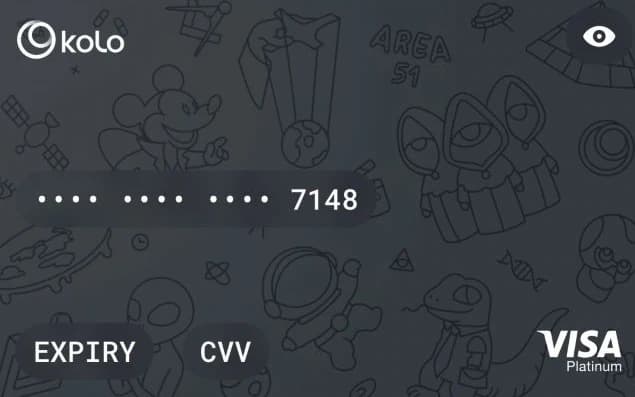
Kolo pays 1% ongoing BTC (2% for the first 30 days), capped at $100/month and $1 per transaction, with $0 annual fee and 0% FX, a free BTC card for remittance-funded spend.
KAST at 1.5% USD cashback on the first $2,000/month with $0 annual fee fits families turning remittance-funded USDC into La Sirena, Jumbo, and utility spending without a Dominican bank account.
Tria Signature at 4.5% on the first $1,000/mo (then 1%) with self-custody suits users who prefer stablecoin cashback, with a 1% FX fee and 0.5% per payment netting it to about 3%. Crypto.com Icy at 4% adds Priority Pass lounge access at Las Americas (SDQ) and Punta Cana (PUJ).
Best Card For Every Need in Dominican Republic
Top 6 Crypto Cards in Dominican Republic
The Dominican Republic's $10 billion annual remittance corridor from 2 million US diaspora members defines the card selection here more than any other factor.
KAST can help an eligible recipient spend USDC in Santo Domingo without first routing it through a local bank. On a USD 500 monthly transfer, a quoted 3-7% remittance cost would be USD 15-35 per transfer, or USD 180-420 over a year. That is the cost available to beat, not a guaranteed saving: compare it with the full USDC purchase, transfer, card conversion and cash-access costs. This is a useful expat comparison.
ether.fi Core sits at the top of the free cards for spending up to $2,000 per month, paying 3% in ETHFI before stepping down to 1% through $5,000 and 0.5% above. Any Dominican tax treatment of the reward depends on its source and the holder's circumstances. Kolo remains the simpler BTC option for small remittance-funded purchases.
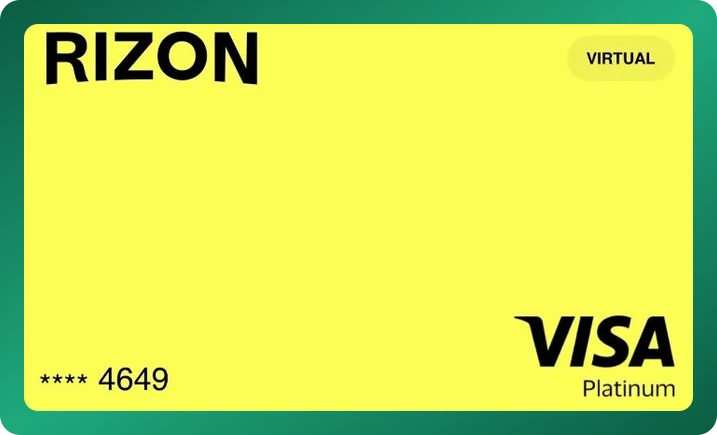
Rizon Emerald takes the second slot because the corridor runs through the same country that issues the card: 2 million Dominicans in the US and their families at home both qualify through the Dominican passport for a US-issued Visa Platinum with USD account details.
The Washington Heights relative and the Santo Domingo household can hold matching dollar rails, with stablecoin collateral in their own smart-contract wallets rather than at any bank the SIB polices.
We would run the corridor on the $6.99/month Emerald plan (minimum 3-month commitment, about $20.97 upfront): peso spending runs at roughly 1.02% where the free plan charges 1.7% + $0.30, with virtual and physical cards in the plan, and the 2.5% cashback (capped at the plan fee) pays the plan fee back once monthly eligible spend passes about $280, which the US end of the corridor clears easily.
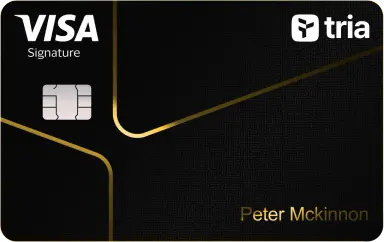
KAST and Kolo keep the DOP conversion lane while Rizon holds the dollar account and US card number; the free Standard plan with code spendnode stays the $1 entry point. Tria Signature at 4.5% on the first $1,000/mo (about 3% net after its 1% FX and 0.5% per-payment fees) adds self-custody and stablecoin cashback for users who prefer predictable returns.
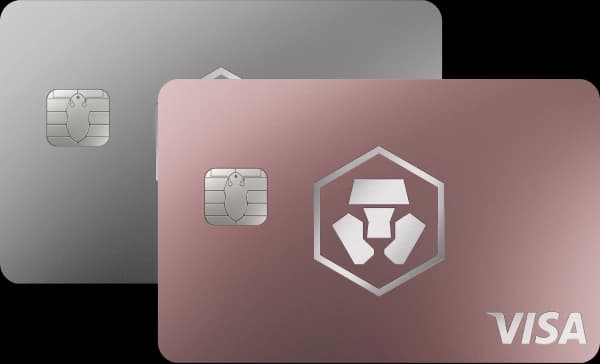
MetaMask provides self-custody Mastercard access in a country where the SIB explicitly prohibits banks from touching crypto. Self-sovereign spending is the only reliable path here. Crypto.com Icy at 4% covers both Las Americas (SDQ) and Punta Cana (PUJ) with Priority Pass.

1. ether.fi Core Card
3% Back on the First $2,000 Each Month, No Stake Required
2. Rizon Emerald Card
Rizon's top plan: international fees near 1%, trading at 0.85%, and the physical Visa Platinum included.
3. Tria Signature Card
High-Yield Self-Custody: 15% APY + Visa Signature Perks
4. Kolo Card
Earn Bitcoin on Purchases: 2% for 30 Days, Then 1% (Capped) + Visa Platinum + 170+ Countries

5. KAST K Card
Free USD Cashback: 1.5% on First $2K/Month
6. Private (Icy White / Rose Gold)
Private Tier: 4% Uncapped Cashback + Lounge Guest
Complete list:
All 49 crypto cards available in Dominican Republic in September 2026
This table includes every crypto card we currently track for Dominican Republic. Rows marked Top pick are ranked and reviewed above.
| Crypto card | Max rewards | Annual fee | FX fee | Type | Custody |
|---|---|---|---|---|---|
1 ether.fi Core CardTop pick | Up to 3% rewards | Free | 0.5% | Crypto Backed Credit | Self-custody |
2 Rizon Emerald CardTop pick | Up to 2.5% rewards | $83.88 | 1.02% | Crypto Backed Credit | Self-custody |
3 Tria Signature CardTop pick | Up to 4.5% rewards | $109/year | 1% | Debit | Self-custody |
4 Kolo CardTop pick | Up to 2% rewards | Free | 0% | Prepaid | Custodial |
5 KAST K CardTop pick | Up to 1.5% rewards | Free | 0.5% | Prepaid | Custodial |
6 Private (Icy White / Rose Gold)Top pick | Up to 4% rewards | TBD | 0% | Prepaid | Custodial |
| Up to 10% rewards | Free | 0% | Prepaid | Custodial | |
| Up to 10% rewards | Free | 3% | Debit | Hybrid | |
| Up to 8% rewards | Free | 0% | Debit | Custodial | |
10 | Up to 8% rewards | TBD | 0% | Prepaid | Custodial |
| Up to 6% rewards | $250/year | 1% | Debit | Self-custody | |
| Up to 5% rewards | Free | 1% | Crypto Backed Credit | Self-custody | |
| Up to 5% rewards | TBD | 0% | Prepaid | Custodial | |
| Up to 5% rewards | Free | 1% | Debit | Self-custody | |
| Up to 4% rewards | Free | 0% | Crypto Backed Credit | Self-custody | |
| Up to 4% rewards | Free | 1% / 1.8% | Debit | Hybrid | |
| Up to 4% rewards | Free | 0% | Crypto Backed Credit | Self-custody | |
| Up to 3% rewards | Free | 0.25% | Crypto Backed Credit | Self-custody | |
| Up to 3% rewards | Free | 0% | Crypto Backed Credit | Self-custody | |
| Up to 3% rewards | $10000 | 0.5% | Prepaid | Custodial | |
| Up to 3% rewards | $199 | 0.5% | Crypto Backed Credit | Self-custody | |
| Up to 3% rewards | $299.9 | 0% | Prepaid | Custodial | |
| Up to 3% rewards | $129 | 1.2% | Prepaid | Custodial | |
| Up to 2% rewards | $1000 | 0.5% | Prepaid | Custodial | |
| Up to 2% rewards | Free | 1% | Crypto Backed Credit | Self-custody | |
| Up to 2% rewards | $49.9 | 0% | Prepaid | Custodial | |
| Up to 2% rewards | $999 | 0% | Crypto Backed Credit | Self-custody | |
| Up to 1.5% rewards | Free | 0.5% | Prepaid | Custodial | |
| Up to 1.5% rewards | $20/year | 1% | Debit | Self-custody | |
| Up to 1.5% rewards | $249 | 0.25% | Crypto Backed Credit | Self-custody | |
| Up to 1% rewards | Free | 1% | Crypto Backed Credit | Self-custody | |
| Up to 1% rewards | Free | 1% | Debit | Self-custody | |
| Up to 1% rewards | Free | TBD | Prepaid | Custodial | |
| Up to 1% rewards | $47.88 | 1.275% | Crypto Backed Credit | Self-custody | |
| Up to 1% rewards | $99 | 0.5% | Crypto Backed Credit | Self-custody | |
| Up to 0.5% rewards | Free | 1% | Crypto Backed Credit | Self-custody | |
| none | Free | 0% | Crypto Backed Credit | Self-custody | |
| none | $30 | 0% | Crypto Backed Credit | Self-custody | |
| none | Free | 0% | Prepaid | Custodial | |
| cashback | Free | 1.75% | Prepaid | Self-custody | |
| cashback | $199 | 0.75% | Prepaid | Self-custody | |
| cashback | Free | 0.5% | Prepaid | Custodial | |
| none | Free | 1% | Prepaid | Self-custody | |
| Varies | Free | 1.5% | Debit | Custodial | |
| Varies | Free | 1.2% | Prepaid | Custodial | |
| Varies | Free | 1.2% | Prepaid | Custodial | |
| Varies | Free | 1.2% | Prepaid | Custodial | |
| Varies | Free | 1.7% | Crypto Backed Credit | Self-custody | |
| points | Free | 1% | Debit | Self-custody |
Crypto Card Regulation in Dominican Republic
The Dominican Republic has no dedicated cryptocurrency legislation. The BCRD (Banco Central de la Republica Dominicana) has issued repeated warnings that crypto is not legal tender, not backed by the government, and carries significant risk. Under the Ley Monetaria y Financiera (Monetary and Financial Law, No. 183-02), the Superintendencia de Bancos (SIB) prohibits regulated financial institutions from conducting operations using digital currencies.
However, the law does not criminalize individual ownership or peer-to-peer crypto trading. The UAF (Unidad de Analisis Financiero, Financial Analysis Unit) applies AML/CFT obligations to regulated entities that may encounter crypto transactions, requiring suspicious transaction reporting. The BCRD's 2022-2025 Strategic Plan identifies the study of digital currencies and payment innovations as institutional objectives, signaling future regulatory development.
The practical environment is a gray zone: individual crypto use is not prohibited but not explicitly regulated. Banks cannot facilitate crypto transactions directly, which means fiat on-ramps through traditional Dominican banking are blocked. P2P trading and international exchange transfers are the primary on-ramp paths.
On March 16, 2026, a bill titled "Ley para la Prevencion, Control y Regulacion de las Criptomonedas" was formally deposited in the Legislative Secretary by Carlos De Perez, following a reported 52% growth in crypto use in the DR during the prior year. The bill proposes a registry for cryptocurrency service providers, defines digital assets as taxable goods, and draws on the EU's MiCA framework for consumer protection and financial stability.
Industry figures have questioned the bill's originality and practical applicability, and passage is not guaranteed.
The DR's regulatory stance is restrictive at the institutional level, while personal ownership is not banned. The March 2026 bill remains a proposal in this page's evidence; it should not be used to assume that offshore crypto gains are tax-free.
Tax Treatment of Card Rewards in Dominican Republic
The Dominican Republic's income-tax system is administered by the DGII. It is not purely territorial for resident individuals: the DGII's guidance on foreign-source financial gains describes a mixed system. Exchange location alone cannot establish an exemption.
The DGII has answered a crypto-specific tax question: conversion into recognized money, including through a third-party exchange, can create taxable patrimonial income. The applicable treatment depends on the taxpayer and transaction. Do not use the older annual bracket figures above as a current tax calculator without checking the tax year's official schedule.
Example: You acquired BTC for DOP 50,000 and later sell it for DOP 150,000 to fund a card. The DOP 100,000 gain needs tax analysis; buying the BTC on a global exchange does not make it automatically exempt. Preserve both transaction values and determine the relevant tax residence, source and classification.
| Cashback Type | When Received | When Spent via Card | Total Tax Burden |
|---|---|---|---|
| BTC cashback | Depends on reward classification | Calculate later gain or loss | Not established by exchange location |
| USDC cashback | Depends on reward classification | Check DOP gain or loss | Not automatically zero |
Stablecoin funding may reduce price volatility against USD, but can still create DOP gains or losses. DGII guidance does not support a blanket offshore-exchange exemption. Maintain cost-basis, reward and disposal records.
How to Apply from Dominican Republic
Dominican crypto card applications require a cedula de identidad y electoral (National ID and Electoral Card, issued by the JCE - Junta Central Electoral) for Dominican citizens, or a pasaporte dominicano issued by the Direccion General de Pasaportos. Foreign residents use the cedula de extranjero (Foreign ID Card) from the Direccion General de Migracion. The Dominican cedula number (11 digits, format: XXX-XXXXXXX-X) is assigned to all citizens at age 18.
Proof of address via utility bills from Edenorte or Edesur (electricity), INAPA or CAASD (water), Claro or Altice (telecommunications), or bank statements from Banco Popular, Banreservas, Scotiabank DR, or BHD Leon. Digital nomad and Zone E residents may use their rental agreement as proof.
KAST remains one of the more workable prepaid options for the DR's approximately 44% unbanked adult population when remittance dollars or stablecoins need to become card spending without leaning on a Dominican bank account first. Physical card shipping from international issuers takes 10-20 business days. Virtual cards activate immediately for crypto cards with Apple Pay and Google Pay use at supported terminals.
Spending Tips for Dominican Republic
Banking System: Growing Fast, International Fees Still High
The Dominican banking sector has modernized sharply since 2003 (when the Baninter banking crisis wiped 20% off GDP). Banco Popular Dominicano (largest private bank, DOP 700B+ in assets) offers the widest digital banking experience with its App Popular and Tapp card, but international purchases still carry 3-4% FX markup plus a 0.15% tax on foreign transactions.
Banreservas (largest state-owned bank, 250+ branches) serves the broadest population but has the most conservative international transaction limits: USD purchases decline at 20-30% rates on basic debit cards. BHD Leon (Grupo Leon Jimenes, one of DR's largest conglomerates) charges 3-5% on non-DOP transactions. Scotiabank RD and Banco Santa Cruz complete the major players.
The practical comparison: a Banco Popular Visa on a USD 100 international purchase costs approximately DOP 6,200-6,400 (including 3-4% FX spread + ITBIS considerations). A crypto card at 0% FX converts at the Visa/Mastercard interbank rate, costing approximately DOP 6,000-6,050 (even cards at 1-1.75% FX undercut Dominican bank markups).
Cashback adds another 1-8% depending on the card: KAST pays 1.5% in USD on the first $2,000 per month, Kolo pays 1% ongoing in BTC, and ether.fi Core pays 3% in ETHFI within the same spending band. Crypto.com Icy pays 4%, Tria Signature starts at 4.5%, and COCA reaches 8% with a token stake. Over DOP 40,000/month (about USD 680) in international spending, modeled FX savings reach DOP 48,000-96,000/year before rewards.
DOP Currency Dynamics
The Dominican Peso has been relatively stable compared to other LATAM currencies, trading in the DOP 55-60/USD range since 2022. The BCRD manages inflation targeting (targeting 4% +/-1%) and maintains adequate international reserves.
This stability means FX markup on crypto cards is consistent and predictable, unlike countries with volatile currencies (Argentina, Venezuela) where the markup varies wildly day to day. However, the 3-5% bank markup still eats into purchasing power on every international transaction.
The Remittance Corridor: USD 10 Billion+
The Dominican Republic's remittance flow is large. Over 2 million Dominicans live in the United States, concentrated in New York City (Washington Heights "Little Dominican Republic", the Bronx), New Jersey (Paterson, Perth Amboy), Massachusetts (Lawrence, Boston), and South Florida (Miami, Broward). Remittances reached USD 10.3B in 2023, approximately 9% of GDP.
Crypto cards can offer an alternative to a quoted remittance transfer when the Dominican recipient is eligible for their own card and account. Some World Bank US-Dominican Republic corridor quotes fall in the 3-7% range, depending on provider, amount and delivery method.
Send funds through a permitted transfer route; do not share the sender's virtual-card credentials. Compare on-ramp, network, off-ramp, card and FX costs against the actual remittance quote before claiming a saving.
KAST suits this corridor because families can move from USDC sent by relatives abroad into ordinary supermarket and utility spending without requiring Dominican bank accounts first.
Card Selection by Use Case
These picks are drawn from our main crypto card rankings, filtered for what actually works in the DR:
- Top free rate for moderate spending: ether.fi Core (3% ETHFI to $2K/mo, then lower bands; $0, 0-0.5% FX)
- Free BTC cashback: Kolo (1% ongoing BTC, 2% for 30 days, capped $100/mo and $1/txn, $0, 0% FX)
- Self-custody cashback: Tria Signature (4.5% on first $1,000/mo, $109/yr, 1% FX + 0.5%/payment, ~3% net)
- Premium perks: Crypto.com Icy (4% + airport lounge perks at SDQ/PUJ)
- Remittance corridor card: KAST (1.5% USD cashback on first $2K/mo, $0, 0.5-1.75% FX)
- Self-custody where banks are blocked: MetaMask (1%, free)
- Crypto-backed credit: Avici (no disposal event)
Break-Even Math: ether.fi vs Tria Signature vs Icy vs Kolo
The table uses approximately 59 DOP/USD. All four spending rows remain inside ether.fi Core's 3% ETHFI band, which covers the first $2,000 per month; the rate falls to 1% through $5,000 and 0.5% above. Reward and disposal taxes are not deducted because foreign-source classification depends on the facts. Kolo figures assume purchases at or below $100, where its $1-per-transaction cap does not bite.
| Monthly Spend | ether.fi Core (3% ETHFI within these rows, free) | Tria Sig (4.5% to $1k/mo, $109/yr, 1% FX + 0.5%/payment) | Icy (4%, CRO stake) | Kolo (1% BTC, free) |
|---|---|---|---|---|
| DOP 25,000 ($424) | DOP 9,000/yr | DOP 2,570/yr | DOP 12,000/yr + lounges | DOP 3,000/yr |
| DOP 40,000 ($678) | DOP 14,400/yr | DOP 7,970/yr | DOP 19,200/yr + lounges | DOP 4,800/yr |
| DOP 60,000 ($1,017) | DOP 21,600/yr | DOP 14,740/yr | DOP 28,800/yr + lounges | DOP 7,200/yr |
| DOP 100,000 ($1,695) | DOP 36,000/yr | DOP 12,340/yr | DOP 48,000/yr + lounges | DOP 12,000/yr |
Free ether.fi Core leads the no-fee options across these rows because each remains within its 3% ETHFI band. With its 1% FX and 0.5% per-payment fees folded in, Tria Signature's break-even sits at about DOP 17,900/month ($303); its draw is self-custodial stablecoin cashback.
KAST fits the New York-to-Santo Domingo remittance use case where USDC needs to become grocery and utility spend quickly, and Kolo covers the free BTC angle for small purchases. Crypto.com Icy tops the raw rate for CRO stakers with lounge access at SDQ and PUJ airports.
Cost of Living by Area
Piantini/Naco (Santo Domingo upscale): Rent DOP 40,000-120,000/month (USD 680-2,040). Agora Mall, Blue Mall, Galerias 360. Universal card acceptance. Most expat restaurants, embassies, and business offices concentrated here along Avenida Abraham Lincoln and Winston Churchill.
Zona Colonial (Santo Domingo historic center): Rent DOP 20,000-60,000/month. UNESCO World Heritage site, tourist-oriented restaurants and bars have excellent card acceptance. Boutique hotels and upscale restaurants along Calle El Conde and Calle Las Damas accept contactless. Street vendors and colmados (corner shops) are cash-only.
Gazcue/Centro (Santo Domingo middle): Rent DOP 15,000-35,000/month. UASD (Universidad Autonoma de Santo Domingo) area. Mercado Modelo is cash-heavy, but Jumbo and Nacional supermarkets accept cards.
Punta Cana/Bavaro (resort zone): Rent DOP 25,000-80,000/month (ranges widely). All-inclusive resorts (Hard Rock, Barcelo, Dreams, Excellence, Secrets) have universal card acceptance. Cap Cana and Downtown Punta Cana shopping complex accept contactless. Outside resort zones, local colmados prefer cash.
Santiago de los Caballeros (second city): Rent DOP 12,000-40,000/month. Bella Terra Mall, Colinas Mall. Commercial zones along Avenida 27 de Febrero accept cards. Industrial capital of the DR: Zona Franca (free trade zone) workers increasingly use digital payments.
Puerto Plata/Sosua/Cabarete (north coast): Rent DOP 15,000-50,000/month. Tourist beach towns with good card acceptance at hotels, restaurants, and tour operators. Cabarete's kite-surfing community has some digital nomad overlap. More affordable than Punta Cana.
The Tourism Economy
The DR received 10.5M+ visitors in 2023, generating USD 9.5B+ in tourism revenue. Punta Cana alone handles 6M+ arrivals. Hotels, resorts, car rentals (Avis, National, local operators), excursion operators, and golf courses (Punta Espada, Teeth of the Dog at Casa de Campo) all accept international Visa/Mastercard.
For Dominican residents who work in the tourism sector and receive tips or payments in USD, crypto cards provide a way to efficiently convert those earnings into card-based spending without bank FX markups.
Zona Franca and Diaspora Business
The DR's 80+ free trade zones (Zonas Francas) employ 180,000+ workers manufacturing textiles, cigars (La Aurora, Arturo Fuente in Santiago/Villa Gonzalez), medical devices, and electronics for export. Many zone workers receive partial compensation in USD. The diaspora-driven Zona E (digital/services free trade zone) enables remote workers to operate with tax incentives. Both populations benefit from USD-denominated crypto cards that avoid DOP conversion friction.
Online Shopping and Subscriptions
Netflix (DOP 299-799/month), Spotify, Amazon (shipped via EPS Courier, Quisqueya Express, or other Miami forwarding services: the DR relies heavily on casilleros in Miami), iCloud, Google One, Steam, PlayStation Store. Banco Popular and Banreservas charge 3-5% FX on USD-denominated digital services. A crypto card eliminates this markup. Domestically, Sirena.do (La Sirena's e-commerce), PedidosYa, and Hugo deliver locally - these accept Dominican bank cards natively.
Local Payment Infrastructure
Card acceptance is strong in Santo Domingo and tourist zones. Contactless Visa/Mastercard works at malls (Agora, Blue Mall, Galerias 360, Sambil, Downtown Center), supermarkets (Nacional, Jumbo, La Sirena, Bravo, Ole), pharmacies (Carol, GBC, Farmacia SAS), and chain restaurants.
tPago (largest mobile wallet, bank-agnostic QR payments) is used at 40,000+ merchants. Uepa Pay and yoyo are growing competitors. SIPARD handles instant interbank transfers. Colmados (neighborhood corner shops, 60,000+ nationwide) and chiriperos (informal vendors) are cash-only. Apple Pay and Google Pay work at select Santo Domingo retailers and international hotel chains.
Supported Exchanges & Wallets in Dominican Republic
Multiple crypto card vendors are available in the Dominican Republic. Compare cashback and remittance costs without assuming rewards or offshore crypto gains are tax-free.
ether.fi Core posts the top free rate for ordinary household spending: 3% in ETHFI on the first $2,000 per month, then 1% through $5,000 and 0.5% above. Its two funding paths are direct use of supported stablecoins and borrowing secured by eligible collateral.
Kolo remains a free BTC cashback card at 1% ongoing (2% for the first 30 days), capped at $100/month and $1 per transaction, with $0 annual fee and 0% FX. For remittance-receiving families, it turns USDC into card spend while accumulating BTC rewards.
Tria Signature at 4.5% on the first $1,000/mo with self-custody offers stablecoin cashback for users who prefer predictable returns over BTC volatility. It nets about 3% after its 1% FX and 0.5% per-payment fees; USDT cashback can take up to three months to arrive.
Crypto.com Icy at 4% provides airport lounge access at Las Americas (SDQ) and Punta Cana (PUJ) plus Netflix, Spotify, and Amazon Prime rebates. For the DR's tourism workforce seeing heavy airport traffic, Priority Pass access pays for itself quickly.
KAST at 1.5% USD cashback on the first $2,000/month with $0 annual fee can serve eligible Dominican recipients who hold their own account. KAST cashback is held 14 days, redeemed manually, and usable only on the next card purchase, not withdrawable.
MetaMask at 1% provides free self-custody Mastercard spending. This is essential in a country where the SIB prohibits banks from touching crypto. xPlace targets Solana ecosystem users. Jupiter enables DeFi-native spending.
On-Ramps: P2P and Forwarding
Binance P2P is the DR's primary crypto on-ramp. DOP pairs are available with payment via Banco Popular transfer, Banreservas transfer, and tPago. Spreads run 2-4% above spot, wider than larger LATAM markets due to lower liquidity. The SIB's prohibition on banks handling crypto means direct bank-to-exchange wires are blocked; P2P bypasses this through peer transfer mechanics.
For the diaspora corridor, a sender can buy USDC/USDT through an eligible US exchange and transfer it through a supported route to the recipient's own eligible account. The recipient can then use their card at supported Dominican merchants. This does not automatically avoid every banking, transfer or FX cost.
The DR's fintech ecosystem (tPago 40,000+ merchants, SIPARD real-time transfers, growing digital wallet adoption) signals infrastructure readiness for broader crypto integration, even if institutional regulation lags.
A Washington Heights family sending $500/month to Santo Domingo through a service charging $15-35 per transfer loses $180-420 over a year. If the same $500 arrives as USDC, ether.fi Core earns 3% in ETHFI within this spending band ($15/month), while Kolo earns 1% ongoing in BTC ($5/month). Network, purchase, and card fees still need to be included.
For a Piantini professional spending DOP 60,000/month, Tria Signature returns about DOP 14,700/year after its FX, per-payment, and annual fees.
Written by SpendNode Editorial
Frequently Asked Questions
Is cryptocurrency legal in the Dominican Republic?
Cryptocurrency is legal for individuals to hold and trade, but the BCRD has warned it is not legal tender. The SIB prohibits regulated financial institutions from dealing with crypto. Individuals can trade and hold crypto at their own risk. No dedicated crypto legislation exists, though regulatory proposals for VASP registration are under discussion.
How is crypto taxed in the Dominican Republic?
The Dominican Republic uses a territorial tax system - only Dominican-source income is taxable. Crypto gains from offshore exchanges may qualify as foreign-source income, while domestic-source gains may fall under the general progressive income tax (0-25%). USDC funding can keep disposal gains small when its DOP value remains close to cost, but it does not guarantee a zero-tax result.
Which crypto cards work in the Dominican Republic?
ether.fi Core pays 3% in ETHFI on the first $2,000 per month, then 1% through $5,000 and 0.5% above, with direct stablecoin spending or optional borrowing. Kolo (1% ongoing BTC, 2% for the first 30 days, capped $100/mo and $1/txn, $0 annual fee, 0% FX) remains a simple free option. KAST (1.5% USD cashback on first $2K/mo, $0) fits the remittance corridor from the US diaspora. Crypto.com Icy (4%, CRO stake) adds lounge access at SDQ and PUJ. Tria Signature (4.5% on the first $1,000/mo then 1%, $109/yr, with a 1% FX fee and 0.5% per payment netting about 3%) offers self-custody stablecoin cashback.
Can I use crypto cards at Dominican resorts and tourist areas?
Yes. Major tourist areas like Punta Cana, Santo Domingo, Puerto Plata, and La Romana have excellent card acceptance at hotels, restaurants, and shops. Visa and Mastercard work nearly everywhere in tourist zones. Some rural areas and small local businesses remain cash-preferred.
Other Countries
View all 112 countries →


Latest Page Changes to the Best Crypto Cards in Dominican Republic Guide
- March 16, 2026 crypto regulation bill deposited in Legislative Secretary
- Bill proposes VASP registry, defines crypto as taxable goods, draws on MiCA framework