
Best Crypto Cards in Croatia (2026)
Croatia combines eurozone settlement with one of Europe's more favorable crypto holding rules. This guide compares the cards that benefit most from the two-year disposal exemption without overstating what still gets taxed along the way.
Verified for Croatia
48 crypto cards available
Local currency: EUR
Zagrebacka banka (ZABA, UniCredit Group), Privredna banka Zagreb (PBZ, Intesa Sanpaolo), and Erste Croatia control over 60% of Croatian retail banking. ZABA's Visa Debit charges 1.5% FX on non-EUR transactions (historically 1.5-2% on HRK-to-foreign when kuna existed) plus a naknada za odrzavanje (maintenance fee) of EUR 1.50-2.50/month. PBZ's Mastercard Debit adds a 1.5% FX markup on any non-EUR purchase. Erste Croatia's standard debit carries similar rates.
These bank debit cards generally offer little or no cashback. Crypto-card rewards must be weighed against funding spreads, subscriptions, token exposure and possible reward tax.
Croatia joined the eurozone in January 2023 and the Schengen area on the same date, the only country to achieve both at once. The kuna (HRK) was retired, and EUR became the official currency. For crypto card users, this removed every prior layer of HRK conversion cost: EUR-denominated cards now settle with zero FX overhead at every Croatian merchant. That friction is gone permanently.
Croatia's second massive advantage is its 2-year holding period exemption: crypto held for more than 2 years is completely tax-free upon disposal. This means a Croatian resident who bought BTC in 2023 can spend it through a card in 2025 with zero capital gains tax. Combined with eurozone EUR settlement and full EEA card access, Croatia is an attractive crypto card jurisdiction in the EU.
Summary:
Which crypto cards are best in Croatia?
The best crypto cards in Croatia in September 2026 are COCA Visa Card, Bitget Card, Gnosis Pay Card, ether.fi Core Card, and Plutus Visa Card. The detailed ranking below explains the local tax, fee, and availability trade-offs.
| Crypto card | Base reward | Net after fees | Annual fee | FX fee | Type |
|---|---|---|---|---|---|
| 1% baseup to 8% with a large $COCA stake; $15-$350/mo claim capacity by tier | 1% | Free | 0% | Debit | |
| 0.5% baseup to 8% by holding 20,000+ BGB | 0.5% | Free | 0% | Debit | |
| 1% baseup to 5% with 100 GNO + OG NFT; weekly eligible-spend cap $250-$1,250 by tier | 1% | Free | 0% | Debit | |
| 3% base3% on the first $2,000/month, then 1% and 0.5% | 2.5% | Free | 0.5% | Crypto Backed Credit | |
| 3% baseup to 9% by stacking PLU; allowance-capped per plan | 0.5% | $240 | 2.5% | Debit |
Our Croatia availability check confirms full EEA access. For Croatian residents with crypto held 2+ years, disposal can be tax-free, but cashback may still be taxable at receipt depending on the program. COCA scales to 8% cashback at Elite tier (staking 30K $COCA tokens, 1% at free Starter) with 5% APY on eligible USD, delivering up to EUR 960/year on EUR 1,000/month spending before any reward-tax treatment.
Plutus reaches 9% with subscription rebates (1-3 perks), though the GBP 240/yr (approx. EUR 280) cost and EUR 1,000/month eligible spend cap limit its advantage over free alternatives. Gnosis Pay earns up to 5% GNO cashback with full self-custody on Gnosis Chain.
Crypto.com Icy at 4% adds value for Croatians who travel frequently beyond the Adriatic, with Schengen-wide airport lounge access.
Best Card For Every Need in Croatia
Top 5 Crypto Cards in Croatia
Croatia's two-year exemption can remove tax on a qualifying crypto disposal, making older holdings useful for card funding. Euro settlement avoids currency conversion when the card and merchant both settle in EUR. Issuer spreads and other fees still need checking.
COCA scales to 8% cashback at Elite tier (staking 30K $COCA, 1% at free Starter) with 5% APY on eligible USD; Croatian residents funding with 2+ year crypto get tax-free disposal on aged holdings plus yield on a separate spending balance.
Bitget is the high-cashback free option for users who want exchange-linked rewards without a paid plan. Gnosis Pay earns up to 5% GNO cashback with self-custody, while ether.fi Core gives eligible holders a way to borrow rather than sell an asset approaching Croatia's two-year threshold. Whether that works out better depends on the unrealized gain, loan cost, repayment plan, and collateral risk. Plutus reaches 9% but costs GBP 240/yr and caps eligible spend at EUR 1,000/month.
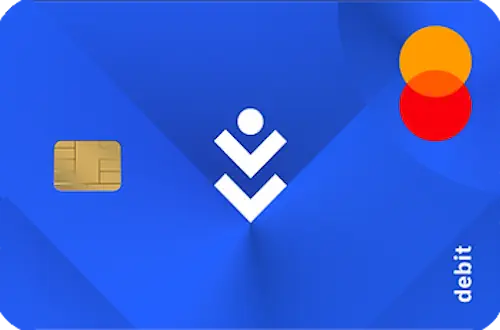
1. COCA Visa Card
Self-Banking: 8% Cashback + 5% APY + 0% FX
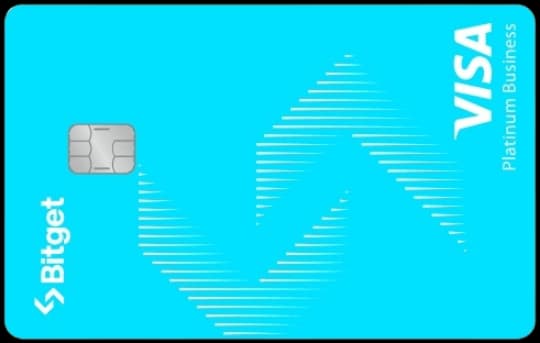
2. Bitget Card
Trade and Spend: Up to 8% BGB Cashback for Bitget Traders
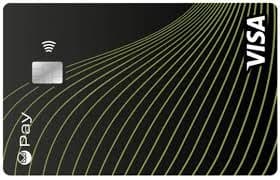
3. Gnosis Pay Card
Your Keys, Your Card, Your Money

4. ether.fi Core Card
3% Back on the First $2,000 Each Month, No Stake Required

5. Plutus Visa Card
Non-Custodial PLU Rewards on Eligible Spend + Lifestyle Perks
Complete list:
All 48 crypto cards available in Croatia in September 2026
This table includes every crypto card we currently track for Croatia. Rows marked Top pick are ranked and reviewed above.
| Crypto card | Max rewards | Annual fee | FX fee | Type | Custody |
|---|---|---|---|---|---|
1 COCA Visa CardTop pick | Up to 8% rewards | Free | 0% | Debit | Self-custody |
2 Bitget CardTop pick | Up to 8% rewards | Free | 0% | Debit | Custodial |
3 Gnosis Pay CardTop pick | Up to 5% rewards | Free | 0% | Debit | Self-custody |
4 ether.fi Core CardTop pick | Up to 3% rewards | Free | 0.5% | Crypto Backed Credit | Self-custody |
5 Plutus Visa CardTop pick | Up to 9% rewards | $240 | 2.5% | Debit | Non-custodial |
| Up to 10% rewards | Free | 3% | Debit | Hybrid | |
| Up to 8% points | Free | 0.4% | Debit | Custodial | |
| Up to 8% rewards | TBD | 0% | Prepaid | Custodial | |
| Up to 6% rewards | $200 with code | 1% | Debit | Self-custody | |
| Up to 5% rewards | TBD | 0% | Prepaid | Custodial | |
| Up to 4.5% rewards | $87 with code | 1% | Debit | Self-custody | |
| Up to 4% rewards | Free | 0% | Crypto Backed Credit | Self-custody | |
| Up to 4% rewards | Free | 0% | Crypto Backed Credit | Self-custody | |
| Up to 4% rewards | TBD | 0% | Prepaid | Custodial | |
| Up to 3% rewards | Free | 0.25% | Crypto Backed Credit | Self-custody | |
| Up to 3% rewards | Free | 0% | Crypto Backed Credit | Self-custody | |
| Up to 3% rewards | $10000 | 0.5% | Prepaid | Custodial | |
| Up to 3% rewards | Free | 0% | Debit | Custodial | |
| Up to 3% rewards | $199 | 0.5% | Crypto Backed Credit | Self-custody | |
| Up to 3% rewards | $299.9 | 0% | Prepaid | Custodial | |
| Up to 2% rewards | Free | 0% | Debit | Custodial | |
| Up to 2% rewards | Free | 0% | Debit | Self-custody | |
| Up to 2% rewards | $1000 | 0.5% | Prepaid | Custodial | |
| Up to 2% rewards | Free | 0% | Prepaid | Custodial | |
| Up to 2% rewards | Free | 0% | Debit | Custodial | |
| Up to 2% rewards | Free | 0.2% | Crypto Backed Credit | Hybrid | |
| Up to 2% rewards | Free | 1% | Crypto Backed Credit | Self-custody | |
| Up to 2% rewards | $49.9 | 0% | Prepaid | Custodial | |
| Up to 2% rewards | $999 | 0% | Crypto Backed Credit | Self-custody | |
| Up to 1.5% rewards | Free | 0.5% | Prepaid | Custodial | |
| Up to 1.5% rewards | Free | 0.5% | Prepaid | Custodial | |
| Up to 1.5% rewards | Free | 1% | Debit | Self-custody | |
| Up to 1.5% rewards | $249 | 0.25% | Crypto Backed Credit | Self-custody | |
| Up to 1% rewards | Free | 0% | Debit | Custodial | |
| Up to 1% rewards | Free | 1.75% | Debit | Self-custody | |
| Up to 1% rewards | Free | 1% | Debit | Self-custody | |
| Up to 1% rewards | Free | TBD | Prepaid | Custodial | |
| Up to 1% rewards | $99 | 0.5% | Crypto Backed Credit | Self-custody | |
| Up to 0.5% rewards | Free | 1% | Crypto Backed Credit | Self-custody | |
| none | Free | 0% | Prepaid | Custodial | |
| Varies | Free | 1.7% | Prepaid | Custodial | |
| cashback | Free | 1.75% | Prepaid | Self-custody | |
| cashback | $199 | 0.75% | Prepaid | Self-custody | |
| cashback | Free | 0.5% | Prepaid | Custodial | |
| none | Free | 1% | Prepaid | Self-custody | |
| none | Free | 1% | Debit | Self-custody | |
| Varies | Free | 1.5% | Debit | Custodial | |
| points | Free | 1% | Debit | Self-custody |
Crypto Card Regulation in Croatia
HANFA (Hrvatska agencija za nadzor financijskih usluga / Croatian Financial Services Supervisory Agency) is Croatia's primary financial market regulator and the designated authority for MiCA implementation. HANFA oversees securities, investment funds, insurance, pension funds, and (since MiCA) crypto asset service providers. HANFA is headquartered in Zagreb on Miramarska ulica.
The HNB (Hrvatska narodna banka / Croatian National Bank) transitioned from independent monetary policy to a eurozone national central bank on January 1, 2023. The HNB now operates within the European Central Bank's monetary framework, overseeing payment system integrity and banking supervision in Croatia. The HNB's currency board function ended with EUR adoption, and the fixed HRK-EUR conversion rate of 7.53450 was locked permanently.
Croatia applies AML/KYC rules to crypto service providers. Since the legacy transition ended on July 1, 2026, a domestic VASP registration alone is not sufficient for covered cryptoasset services: providers need a MiCA authorization or a valid EEA passport. HANFA's notice explains the current position.
Croatia's regulatory environment has been described by industry participants as "EU-compliant but not aggressive." HANFA implements EU directives faithfully without adding excessive national requirements on top.
Under MiCA, authorized providers can use EEA passporting. Crypto.com, Bitget, and Plutus serve Croatian residents through their European entities. Check the provider's current authorization and card eligibility; Belgium's FSMA has advertising rules, not a blanket crypto-advertising ban.
Croatia introduced a Digital Nomad Visa in January 2021 for eligible non-EU remote workers. Immigration permission and tax residence are separate questions; neither the visa label nor a short stay automatically settles the tax treatment of crypto gains or employment income.
Croatia's recent full EU integration (eurozone + Schengen + MiCA) makes it a strong crypto card jurisdiction with no restrictions on EEA-passported issuers.
Tax Treatment of Card Rewards in Croatia
Croatia taxes crypto gains under the Zakon o porezu na dohodak (Income Tax Act), specifically the provisions on capital gains (kapitalni dobici). The key rule is one of the most favorable in the EU:
- Crypto held less than 2 years: Gains taxed at 12% (porez na kapitalne dobitke)
- Crypto held 2 years or more: Gains are completely tax-free (0%)
- No municipal surtax: Croatia abolished the prirez (municipal surtax) on January 1, 2024, so crypto capital gains are a flat 12% nationwide, with no city-level add-on.
This 2-year exemption is more generous than Germany's 1-year exemption and comparable only to a few other EU countries (Portugal had a similar exemption that was reformed in 2023). For crypto card users, the implication is clear: plan your card funding around older holdings.
Example 1 (held 3 years, tax-free): You bought 1 ETH at EUR 800 in January 2023. In March 2025, ETH is at EUR 3,000 and you load your card. The EUR 2,200 gain is completely tax-free because you held for over 2 years. This is EUR 2,200 of pure, untaxed profit flowing through your card.
Example 2 (held 6 months, taxed): You bought 1 ETH at EUR 2,500 in September 2024 and load your card in March 2025 at EUR 3,000. Gain: EUR 500. Tax: EUR 60 (flat 12%, the same anywhere in Croatia since prirez was abolished). Still far lower than Austria (EUR 137.50), France (EUR 150), or Germany (up to EUR 210 at top bracket).
Example 3 (mixed holdings, FIFO): Croatian tax administration applies FIFO (first in, first out) accounting. If you bought 0.5 BTC in 2022 and 0.5 BTC in 2024, loading your card disposes the 2022 BTC first (2+ years old, tax-free). Once the 2022 tranche is exhausted, the 2024 purchase is disposed (under 2 years, 12% taxed). Track your tranches carefully.
Example 4 (stablecoin funding): A recent USDC purchase may produce a small EUR gain or loss if its value barely moves before card conversion. Its dollar peg does not fix its EUR value or remove the need for cost-basis records.
Cashback taxation in Croatia: The Porezna uprava has not published explicit guidance for crypto-card cashback. Crypto rewards may be taxable when received under general income principles, but the correct category and rate depend on the program and taxpayer. Record the reward's EUR value and later disposal. The 12% capital-gains rate on qualifying disposals should not be assumed to govern every reward receipt; USDC can also change value against EUR.
| Scenario | Disposal Tax | Cashback Tax (8% on EUR 1,000 spend) | Total Tax | Net on EUR 80 Cashback |
|---|---|---|---|---|
| Qualifying BTC held 2+ years | 0% on disposal gain | Not established | Depends on reward treatment | EUR 80 before reward tax |
| BTC held under 2 years (EUR 500 gain) | EUR 60 | Not established | EUR 60 plus any reward tax | EUR 80 reward before tax |
| USDC funding | Depends on EUR gain | Not established | Depends on both events | EUR 80 reward before tax |
For qualifying older lots, the two-year exemption can matter. For newer purchases, compare the actual EUR gain on the funding asset with conversion costs; stablecoins are an option, not a guaranteed tax-free route.
Tax reporting: Croatian residents file their annual porezna prijava (tax return) with the Porezna uprava by the end of February for the previous calendar year. Capital gains from crypto disposals are reported on the Obrazac JOPPD (Unique Report Form) or through the ePorezna electronic system.
Croatian tax software is limited compared to Western Europe. CoinTracking, Koinly, and Blockpit support Croatian tax reporting, though none is specifically tuned to Croatian rules.
How to Apply from Croatia
Croatian crypto card applications require an osobna iskaznica (Croatian national ID card, credit-card format with chip, issued by MUP / Ministarstvo unutarnjih poslova / Ministry of Interior) or putovnica (Croatian passport) for citizens. EU/EEA citizens can use their national ID card. Non-EU residents need a valid passport plus dozvola boravka (residence permit) or, for digital nomads, proof of their Digital Nomad Visa.
The OIB (Osobni identifikacijski broj / Personal Identification Number) is Croatia's 11-digit national identifier, assigned to all citizens and registered residents. Format: 11 digits with the last digit being a check digit (ISO 7064, Mod 11,10). The OIB appears on your osobna iskaznica and is required for all financial and tax reporting in Croatia.
Proof of address via racun za komunalije (utility bill from HEP for electricity, Gradska plinara Zagreb for gas, or Vodoopskrba for water), izvod iz banke (bank statement from ZABA, PBZ, Erste, OTP, or RBA), or ugovor o najmu (rental agreement, notarized or with a potvrda from the local policijska uprava / police administration confirming address registration).
Verification timelines: EEA issuers use standard European verification via Onfido, Jumio, or Sumsub. Typically 1-3 business days for new users. Physical cards ship to Croatian addresses within 7-14 business days via Hrvatska posta (Croatian Post) or private couriers (DHL, DPD, GLS). Virtual cards are available immediately for crypto cards with Apple Pay and Google Pay use at any NFC terminal.
Digital nomad visa holders: Your Digital Nomad Visa confirmation plus proof of Croatian address (rental agreement) is sufficient documentation for EEA card applications. You do not need Croatian citizenship or permanent residency.
Spending Tips for Croatia
The 2-Year Rule: Croatia's Strategic Advantage
Croatia's 2-year holding period exemption transforms how you should think about crypto card spending. The optimal strategy:
- Fund with crypto purchased 2+ years ago. Completely tax-free disposal. FIFO accounting means your oldest purchases are disposed first automatically.
- If all your crypto is under 2 years old, consider low-gain funding assets and calculate any EUR gain rather than assuming USDC is exempt.
- Never sell recently-purchased volatile crypto through a card unless the gain is minimal. The 12% tax eats into cashback returns.
The two-year holding period is Croatia's main tax distinction for qualifying crypto gains. Keep lot records and compare each card's funding method and fees; another country's rules do not determine the Croatian result.
Card Selection for Croatian Users
- Plutus (9%, GBP 240/yr Premium, approx. EUR 280): Highest cashback rate but capped at GBP 1,000/month eligible spend. 3 subscription perks (Netflix, Spotify, Prime refunded in PLU). 2.5% FX on HRK/EUR cross-border transactions. No free tier
- COCA (up to 8% with staking $COCA, 1% free): Non-custodial wallet + 5% APY on eligible USD. The 2-year disposal exemption is useful for aged holdings, but reward taxation should still be tracked separately.
- Crypto.com Icy (4%): Metal card with airport lounge access for Adriatic coast travel and Schengen-wide airports. CRO stake required
- KAST (1.5% USD cashback on first $2K/mo, 0.5-1.75% FX, free): Simplest prepaid entry for EUR spending
- Nexo (2%): Borrow-to-spend to bridge the under-2-year gap. Spend against new crypto without triggering the 12% tax, wait for the 2-year exemption to apply naturally
COCA vs Plutus vs Gnosis Pay: Croatian Break-Even
For qualifying two-year-old funding assets, these annual reward figures are shown before any tax on cashback:
| Monthly Spend (EUR) | COCA Elite 8% | Plutus 9% (GBP 240/yr, approx. EUR 280; capped) | Gnosis Pay up to 5% GNO |
|---|---|---|---|
| EUR 500 | EUR 480 | EUR 540 - approx. EUR 280 = EUR 260 | EUR 300 |
| EUR 1,000 | EUR 960 | EUR 1,080 - approx. EUR 280 = EUR 800 | EUR 600 |
| EUR 1,500 | EUR 1,440 | EUR 1,264 - approx. EUR 280 = EUR 984 (capped) | EUR 900 |
| EUR 2,000 | EUR 1,920 | EUR 1,264 - approx. EUR 280 = EUR 984 (capped) | EUR 1,200 |
COCA leads at every spending level shown, all of which remain inside Elite's $350 monthly claim capacity. Gnosis Pay at up to 5% GNO with zero cost and self-custody scales linearly within its reward rules. Plutus's GBP 240/yr (approx. EUR 280) subscription and eligible spend cap limit its maximum return. COCA's 5% APY on eligible USD adds yield for users maintaining a spending reserve.
For a 12% reward-tax illustration only, EUR 1,000 of monthly spend would leave about EUR 845 of COCA's EUR 960 annual reward and EUR 528 of Gnosis Pay's EUR 600. Plutus's EUR 1,080 gross reward would leave about EUR 670 after a 12% charge on the gross reward and the EUR 280 subscription, assuming the subscription is not deductible. These are modeled outcomes, not a published Porezna uprava classification of card cashback.
Spending Scenario: Zagreb Professional at EUR 1,200/month
A Zagreb-based professional spending EUR 1,200/month on cards (rent is typically via bank transfer/trajni nalog):
| Funding Method | Annual Spend | COCA Cashback (8%) | Tax on Disposal | Reward Result |
|---|---|---|---|---|
| Qualifying BTC held 3 years | EUR 14,400 | EUR 1,152 | EUR 0 | EUR 1,152 before reward tax |
| USDC | EUR 14,400 | EUR 1,152 | Depends on EUR gain | EUR 1,152 before reward tax |
| BTC held 6 months (doubled) | EUR 14,400 | EUR 1,152 | 12% of documented gain | EUR 1,152 before reward tax |
| Borrow via ether.fi Core | EUR 14,400 | Up to EUR 432 in ETHFI | Depends on arrangement | Before borrowing costs and reward tax |
The table does not assume a universal 12% tax on cashback. If a 12% charge applied to the EUR 1,152 COCA reward, it would leave about EUR 1,014 before other costs. Separately, BTC worth EUR 14,400 with a EUR 7,200 basis would create an EUR 864 disposal tax at 12% if the two-year exemption did not apply. The ether.fi Core route requires a financing and collateral-risk calculation.
*The table assumes the borrowing itself does not dispose of the collateral. Confirm the treatment and repayment consequences for the specific arrangement.
Borrowing While the Two-Year Clock Runs
Croatia's two-year exemption creates a possible use case for collateral-backed spending. If an eligible asset is 18 months into its holding period, an immediate sale may realize a taxable gain. One alternative is:
- Deposit supported collateral with ether.fi Core or Nexo
- Borrow a supported stablecoin against it
- Spend from the card without immediately selling the collateral
- Keep the loan healthy while the asset approaches the two-year threshold
- Repay under a plan that accounts for interest, collateral price, and Croatian tax treatment
The comparison is between borrowing cost and the tax on the unrealized gain, not the collateral's full value. A short bridge can be economical when the gain is large and the threshold is close, but liquidation, changing rates, and repayment can erase the advantage.
Croatian Cost of Living Context
- Zagreb: Rent EUR 600-1,100/1BR center (trajni nalog bank transfer). Groceries EUR 300-450/month at Konzum, Kaufland, Lidl, Spar, Plodine. Dining EUR 10-20 per meal (cevapi at a zalogajnica runs EUR 7-10, seafood restaurants EUR 20-35). ZET monthly tram/bus pass EUR 46. Monthly card-eligible spending: EUR 800-1,500.
- Split: Rent EUR 550-1,000 (higher in summer due to tourist demand). Groceries EUR 280-420. Strong restaurant scene around Diocletian's Palace (EUR 15-30 per meal). Summer tourist season inflates prices 20-30%.
- Rijeka: Rent EUR 450-800. Groceries EUR 260-400. Port city with lower costs than Zagreb or Split. Gateway to Istria and Kvarner coast.
- Dubrovnik: Rent EUR 700-1,300 (highest in Croatia due to tourism). Summer dining EUR 25-50 per meal in Old Town. Winter prices drop 40-50%. Digital nomads increasingly base here off-season.
- Adriatic coast (summer): Tourism drives spending to EUR 2,000-4,000+/month for residents and visitors. Beach clubs, island-hopping ferries (Jadrolinija), sailing charters, and waterfront dining all accept Visa/Mastercard.
Digital Nomad Angle
Croatia's Digital Nomad Visa attracts remote workers from outside the EU. A stay under 183 days will often avoid Croatian tax residence, but days alone do not settle it: residence ties, income source and any applicable treaty matter. Longer stays can bring Croatian residence into the analysis, including the two-year crypto holding exemption. Do not infer zero Croatian tax solely from the visa or a short stay.
The visa allows living anywhere in Croatia. Split, Dubrovnik, and the islands (Hvar, Brac, Korcula) are popular bases with strong co-working infrastructure and card acceptance.
Where Cards Work in Croatia
Contactless Visa/Mastercard acceptance is excellent across urban Croatia and the entire Adriatic coast. Zagreb: Shopping centers (Arena Centar, City Center One, Avenue Mall, Westgate), supermarkets (Konzum, Kaufland, Lidl, Spar, Plodine), restaurants, cafes, and bars all accept contactless.
Split: Diocletian's Palace restaurants, Mall of Split, City Center One Split, Riva waterfront establishments. Dubrovnik: Old Town restaurants (most accept cards due to international tourism), Lapad area shops, cruise port vendors.
Adriatic coast and islands: Tourist-facing businesses universally accept Visa/Mastercard. Ferries (Jadrolinija, Krilo, TP-Line) accept card payments for tickets. Beach clubs, marinas, and restaurants on Hvar, Brac, Korcula, Vis, and Mljet all accept contactless. Exception: Small island konobe (traditional taverns) in remote areas and some trznice (open-air markets) may be cash-preferred. Carry EUR 50-100 cash for island excursions.
Apple Pay and Google Pay work at all NFC-enabled terminals. ZET (Zagreb tram/bus) uses contactless bank card tap-to-pay on newer vehicles. HZ (Hrvatske zeljeznice, Croatian Railways) tickets can be purchased online or at stations with Visa/Mastercard. Bolt ride-hailing operates in Zagreb and Split and accepts card payments.
Supported Exchanges & Wallets in Croatia
Plutus offers up to 9% with subscription perks (Netflix, Spotify, Prime), but its GBP 1,000/month eligible spend cap and GBP 240/yr subscription limit the modeled EUR 1,500/month case to roughly EUR 984/year before any reward-tax treatment.
The subscription rebates add value on top, especially in Croatia where streaming costs represent a larger share of disposable income than in Western European markets. Under the 2-year exemption with older crypto, the disposal is free too.
COCA combines up to 8% cashback (1% free Starter, scaling with staking $COCA tokens) with 5% APY on eligible USD in a non-custodial smart wallet. It reduces custody exposure but still carries smart-wallet, issuer, and $COCA staking risk.
For Croatian residents building a savings position, COCA's combined card + yield produces better risk-adjusted returns than most Croatian bank deposit accounts (which offer 0.5-2% APY on EUR savings since eurozone entry).
Croatia's two-year rule gives collateral-backed cards a specific role. ether.fi Core pays tiered ETHFI rewards and supports direct stablecoin spending or optional borrowing, while Nexo offers a broader collateral range. For assets approaching the threshold, compare the tax on the unrealized gain with the complete cost and risk of keeping a loan open.
Nexo's Sofia headquarters gives it a regional footprint, while ether.fi Core is the more DeFi-native route. Neither option makes retaining collateral automatically preferable to selling it.
For DeFi-native Croatian users, Gnosis Pay provides full on-chain spending from a Gnosis Chain wallet with complete transaction transparency. MetaMask Card (1-3%) connects the popular wallet directly to Visa. Ledger CL Card integrates hardware wallet security.
Ready offered Starknet-native self-custody with STRK cashback, but its card program is currently unavailable after its card issuer began winding down. Bleap provides an additional chain-specific option; Solflare is another but its card is paused as of July 28, 2026.
Bitpanda at 1% offers 600+ tradeable assets and strong EUR integration but the lowest cashback in the EEA. Gate.io, KuCoin, and Kraken round out the exchange-linked options.
Locally, Bitcoin Store is Croatia's primary domestic crypto exchange with physical offices (mjenjacnica) in Zagreb (Ilica) and Split. It offers EUR-to-crypto purchases and is HANFA-registered, but does not offer a Visa/Mastercard spending card. Croatian residents rely entirely on EEA-passported international issuers for card products. None of the major Croatian banks (ZABA, PBZ, Erste, OTP) offer crypto card products.
Croatia's 2-year tax-free exemption, eurozone EUR settlement, Schengen-wide travel benefits, full EEA card access, and growing digital nomad community combine to make it one of the better-positioned crypto card jurisdictions in the EU.
Written by SpendNode Editorial
Frequently Asked Questions
Is crypto spending tax-free in Croatia?
Yes, if held for 2+ years. Croatia exempts crypto gains from tax after a 2-year holding period. Crypto held less than 2 years is taxed at a flat 12% (the municipal prirez surtax was abolished on January 1, 2024, so there is no city-level add-on). HANFA registration mandatory for crypto exchanges.
Which crypto card is best for Croatia?
COCA (up to 8%, non-custodial smart wallet), Bitget (8%, 7.1% net), and Gnosis Pay (5% GNO, self-custody) lead. EUR settlement means zero FX since Croatia joined the eurozone in January 2023. With 2+ year crypto, all disposal is tax-free.
When did Croatia join the eurozone?
January 1, 2023. Croatia simultaneously joined the eurozone and Schengen area. EUR-denominated crypto cards have zero FX conversion costs, and MiCA regulations apply fully from 2026.
Do crypto cards work on the Croatian coast?
Yes. Dubrovnik, Split, Hvar, and other Adriatic destinations have excellent card infrastructure due to tourism. Hotels, restaurants, shops, and supermarkets accept contactless Visa/Mastercard. Apple Pay is widely supported.
Other Countries
View all 112 countries →


Latest Page Changes to the Best Crypto Cards in Croatia Guide
- Croatia crypto CGT is 12%, not 10%
- HANFA mandatory registration, DAC8 alignment, and a proposed 12% to 10% tax reduction were added to the local regulatory picture