

Best Crypto Cards in Egypt (2026)
Egypt is a currency-hedge page first: users care about getting out of EGP weakness, holding stablecoins, and keeping spending live without relying on local bank rails more than they care about premium card perks.
Verified for Egypt
41 crypto cards available
Local currency: EGP
Egypt's banking system charges some of the highest FX markups in the Middle East. CIB (Commercial International Bank), NBE (National Bank of Egypt), and Banque Misr debit cards impose 3-7% on foreign currency transactions, and the EGP's collapse from 15.7/USD in early 2022 to 50+/USD by 2025 means every dollar spent abroad costs far more than it did three years ago.
Crypto cards with zero FX fees and up to 5% cashback offer Egyptians a way to bypass both the FX markup and the currency's structural weakness.
Egypt ranks among the top 20 countries globally for crypto adoption according to Chainalysis, driven by the EGP devaluation, a massive remittance economy ($23+ billion/year), and a young, tech-literate population (median age 24). Approximately 3+ million Egyptians are estimated to own crypto.
Egypt's Central Bank warns that issuing, trading or promoting crypto, or operating related platforms, requires authorization under Banking Law No. 194 of 2020. A card purchase may settle through Visa or Mastercard in fiat, but that does not resolve the legality of the crypto funding route.
Summary:
Which crypto cards are best in Egypt?
The best crypto cards in Egypt in September 2026 are Tria Signature Card, Rizon Emerald Card, Kolo Card, KAST K Card, and Private (Icy White / Rose Gold). The detailed ranking below explains the local tax, fee, and availability trade-offs.
| Crypto card | Base reward | Net after fees | Annual fee | FX fee | Type |
|---|---|---|---|---|---|
| 4.5% base4.5% on the first $1,000/mo, then 1% | 3% | $87 with code | 1% | Debit | |
| Up to 2.5% rewards | - | $83.88 | 1.02% | Crypto Backed Credit | |
| 1% base2% for the first 30 days, then 1%; also capped at $1/EUR 1 per transaction ($2/EUR 2 during intro) and $100/EUR 100 per month | 1% | Free | 0% | Prepaid | |
| 1.5% base | 1% | Free | 0.5% | Prepaid | |
| 4% baseneeds a $50k CRO stake to hold the tier | 4% | TBD | 0% | Prepaid |
Tria Signature leads the list with self-custody at 4.5% on the first $1,000/mo (then 1%), 1% FX plus a 0.5% per-payment fee (about 3% net) for $109/year - keys stay in the holder's wallet in a market where banks cannot touch crypto.
Kolo pays 1% ongoing BTC (2% for the first 30 days), capped at $100/month and $1 per transaction, with zero FX.
KAST at 1.5% USD cashback on the first $2,000/month, free, is the clearest prepaid option for users who need card access outside the bank-dependent bottlenecks that define Egypt's market, while Crypto.com Icy adds lounge access at Cairo International Airport (CAI) for higher-earning users and the GCC diaspora.
Best Card For Every Need in Egypt
Top 5 Crypto Cards in Egypt
Egypt's pound lost 70% of its value since 2022 while the CBE simultaneously banned banks from facilitating crypto transactions, creating a country where 3+ million people hold crypto through P2P channels but cannot officially interact with the banking system to buy or sell it.
Kolo stays useful because its 1% ongoing BTC cashback (2% for the first 30 days, capped at $100/month and $1 per transaction) and 0% FX on a free prepaid card require no exchange loyalty tier or banking relationship.
Rizon Emerald takes the second slot for the audience this page keeps circling back to: Egypt's 500,000+ freelancers earning USD on Upwork, Fiverr, and Mostaql. It is a US-issued Visa Platinum with passport-based eligibility (the Egyptian passport is on its 49-nationality list) and USD account details attached to the same wallet, so a dollar payout can land and stay in dollars without touching CIB's 3-7% FX machinery.
The $6.99/month Emerald plan (minimum 3-month commitment, about $20.97 upfront) is the tier we would actually run here: international transactions drop to roughly 1.02% instead of the free plan's 1.7% + $0.30, both virtual and physical cards are included, and the 2.5% cashback (capped at the plan fee) effectively refunds the subscription once eligible spend passes about $280 a month, which a freelancer billing $1,000 clears without trying.
Stablecoin collateral sits in the user's own smart-contract wallet, useful where bank accounts get frozen for P2P patterns. Kolo stays ahead for everyday EGP earning; Rizon's lane is the USD-billed side (subscriptions, US merchants, the freelancer's dollar float) rather than the Carrefour run. Anyone who wants to test the rails first can start on the free Standard plan, where code spendnode cuts the virtual card to $1.
Tria Signature carries the top slot: self-custody at 4.5% (about 3% net after its 1% FX and 0.5% per-payment fees), keeping keys outside exchange risk in a market where banks cannot facilitate crypto transactions. Its $109 fee clears at roughly EGP 15,150 ($303) of monthly card spend.
KAST at 1.5% USD cashback on the first $2,000/month, free, stays as the simplest prepaid on-ramp for users who need card access outside bank-dependent bottlenecks. Crypto.com Icy serves the 3.5+ million Egyptians in GCC countries earning enough to justify the CRO stake, with airport lounge access at CAI for return trips home.
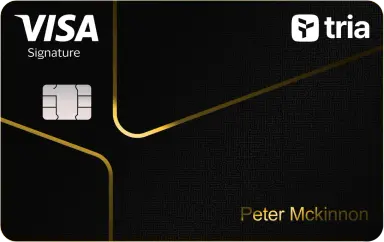
1. Tria Signature Card
High-Yield Self-Custody: 15% APY + Visa Signature Perks
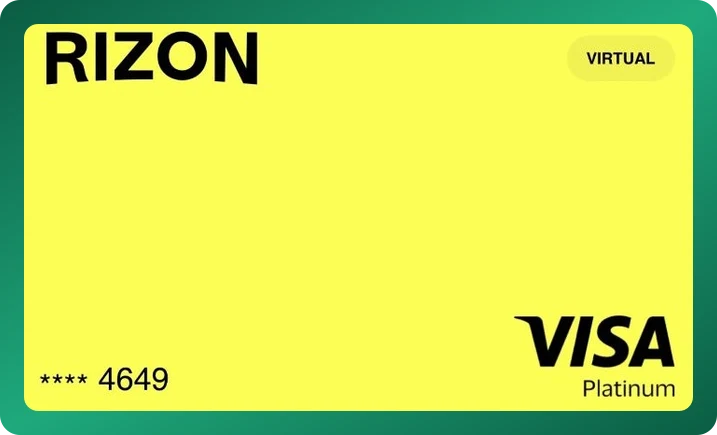
2. Rizon Emerald Card
Rizon's top plan: international fees near 1%, trading at 0.85%, and the physical Visa Platinum included.
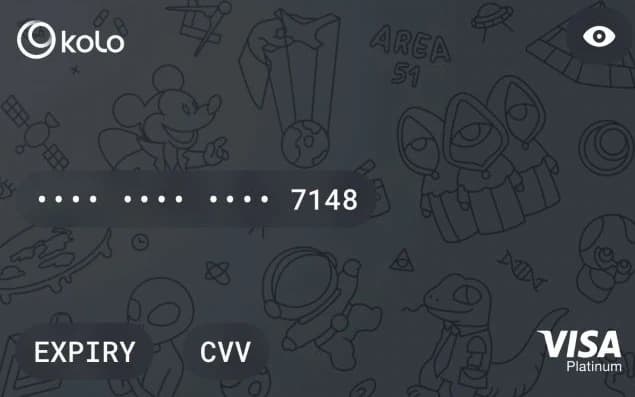
3. Kolo Card
Earn Bitcoin on Purchases: 2% for 30 Days, Then 1% (Capped) + Visa Platinum + 170+ Countries
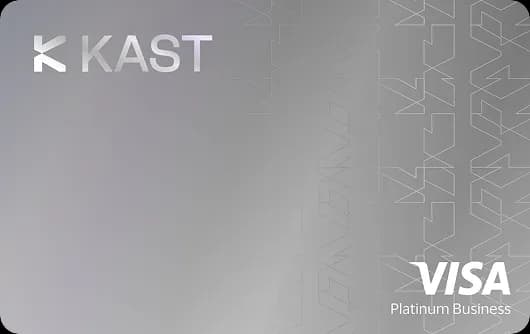
4. KAST K Card
Free USD Cashback: 1.5% on First $2K/Month
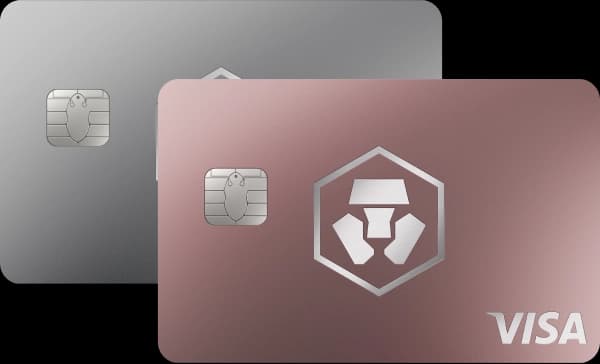
5. Private (Icy White / Rose Gold)
Private Tier: 4% Uncapped Cashback + Lounge Guest
Complete list:
All 41 crypto cards available in Egypt in September 2026
This table includes every crypto card we currently track for Egypt. Rows marked Top pick are ranked and reviewed above.
| Crypto card | Max rewards | Annual fee | FX fee | Type | Custody |
|---|---|---|---|---|---|
1 Tria Signature CardTop pick | Up to 4.5% rewards | $87 with code | 1% | Debit | Self-custody |
2 Rizon Emerald CardTop pick | Up to 2.5% rewards | $83.88 | 1.02% | Crypto Backed Credit | Self-custody |
3 Kolo CardTop pick | Up to 2% rewards | Free | 0% | Prepaid | Custodial |
4 KAST K CardTop pick | Up to 1.5% rewards | Free | 0.5% | Prepaid | Custodial |
5 Private (Icy White / Rose Gold)Top pick | Up to 4% rewards | TBD | 0% | Prepaid | Custodial |
| Up to 8% rewards | Free | 0% | Debit | Custodial | |
| Up to 8% rewards | TBD | 0% | Prepaid | Custodial | |
| Up to 6% rewards | $200 with code | 1% | Debit | Self-custody | |
| Up to 5% rewards | Free | 1% | Crypto Backed Credit | Self-custody | |
| Up to 5% rewards | TBD | 0% | Prepaid | Custodial | |
| Up to 5% rewards | Free | 1% | Debit | Self-custody | |
| Up to 4% rewards | Free | 1% / 1.8% | Debit | Hybrid | |
| Up to 4% rewards | Free | 0% | Crypto Backed Credit | Self-custody | |
| Up to 3% rewards | $10000 | 0.5% | Prepaid | Custodial | |
| Up to 3% rewards | $199 | 0.5% | Crypto Backed Credit | Self-custody | |
| Up to 3% rewards | $299.9 | 0% | Prepaid | Custodial | |
| Up to 3% rewards | $129 | 1.2% | Prepaid | Custodial | |
| Up to 2% rewards | $1000 | 0.5% | Prepaid | Custodial | |
| Up to 2% rewards | Free | 1% | Crypto Backed Credit | Self-custody | |
| Up to 2% rewards | $49.9 | 0% | Prepaid | Custodial | |
| Up to 2% rewards | $999 | 0% | Crypto Backed Credit | Self-custody | |
| Up to 1.5% rewards | Free | 0.5% | Prepaid | Custodial | |
| Up to 1.5% rewards | Free | 1% | Debit | Self-custody | |
| Up to 1.5% rewards | $249 | 0.25% | Crypto Backed Credit | Self-custody | |
| Up to 1% rewards | Free | 1% | Crypto Backed Credit | Self-custody | |
| Up to 1% rewards | Free | TBD | Prepaid | Custodial | |
| Up to 1% rewards | $47.88 | 1.275% | Crypto Backed Credit | Self-custody | |
| Up to 1% rewards | $99 | 0.5% | Crypto Backed Credit | Self-custody | |
| Up to 0.5% rewards | Free | 1% | Crypto Backed Credit | Self-custody | |
| none | Free | 0% | Crypto Backed Credit | Self-custody | |
| none | $30 | 0% | Crypto Backed Credit | Self-custody | |
| none | Free | 0% | Prepaid | Custodial | |
| cashback | Free | 1.75% | Prepaid | Self-custody | |
| cashback | $199 | 0.75% | Prepaid | Self-custody | |
| cashback | Free | 0.5% | Prepaid | Custodial | |
| none | Free | 1% | Prepaid | Self-custody | |
| Varies | Free | 1.5% | Debit | Custodial | |
| Varies | Free | 1.2% | Prepaid | Custodial | |
| Varies | Free | 1.2% | Prepaid | Custodial | |
| Varies | Free | 1.7% | Crypto Backed Credit | Self-custody | |
| points | Free | 1% | Debit | Self-custody |
Crypto Card Regulation in Egypt
Egypt's crypto rules are restrictive. The CBE's warning covers unauthorized issuing, trading, promotion and platforms; the absence of an express possession offense should not be read as permission for unlicensed trading or card funding.
The CBE (Central Bank of Egypt, Al-Bank Al-Markazi Al-Masri, البنك المركزي المصري) issued its first crypto-related circular in 2018, directing all licensed banks and financial institutions to refrain from dealing in, trading, or facilitating transactions involving cryptocurrencies. The CBE later renewed that warning publicly.
This was reinforced by the Banking Law No. 194 of 2020, Article 206, which prohibits issuing, trading, or promoting cryptocurrencies without CBE and CMA approval, with penalties including fines of EGP 1-10 million and imprisonment.
Key regulatory timeline:
- 2018: CBE circular banning banks from crypto transactions
- 2020: Banking Law No. 194, Article 206 formalizes penalties for unlicensed crypto dealing
- 2021: CBE warns again, references FATF anti-money laundering guidelines
- 2022: Egypt's FRA (Financial Regulatory Authority) begins studying a crypto regulatory framework
- 2023-2024: Reports of a full Digital Assets Law being drafted. No official text published
- November 2024: FRA (Financial Regulatory Authority) issues Decree No. 163 of 2024, establishing a fintech regulatory sandbox for non-banking financial activities
- 2024-2025: IMF reform conditions (tied to $8 billion loan package) include financial sector modernization, potentially accelerating crypto regulation
- 2025: CBE issues another public warning after surge in online crypto investment advertisements targeting Egyptians
- 2025: Dar Al-Ifta (Egypt's Islamic authority) reaffirmed a 2018 fatwa declaring crypto trading haram (forbidden under Islamic law), though this is a religious opinion, not civil law
- July 2025: CBE signs cooperation agreement with People's Bank of China covering CBDC development
The critical distinction: The law and CBE warning address unauthorized crypto activity, not merely the payment message at a merchant terminal. The fiat card settlement does not establish that acquiring, converting or funding with crypto is lawful. Residents should check the specific arrangement and current CBE rules before using such a route.
CBDC work and possible future licensing do not change the current restrictions. No announced E-Pound target or prospective licensing model should be treated as authorization for crypto-card funding today.
Tax Treatment of Card Rewards in Egypt
Egypt's tax treatment of crypto is not formally codified. The ETA (Egyptian Tax Authority, Maslahit Al-Daraib Al-Masriyyah, مصلحة الضرائب المصرية) has not issued specific crypto tax guidance, and the closest official baseline remains Egypt's general income tax law materials.
Income tax rates for individuals are progressive: 0% on the first EGP 40,000 annual, then 10% to EGP 55,000, 15% to EGP 70,000, 20% to EGP 200,000, 22.5% to EGP 400,000, 25% to EGP 1,200,000, and 27.5% above EGP 1,200,000.
The tax treatment of listed securities does not establish a crypto rate. Do not apply a securities capital-gains rate to card-funded crypto disposals without an Egyptian tax classification supporting it.
Tax scenario comparison:
| Scenario | Gain | Tax Treatment | Estimated Tax |
|---|---|---|---|
| BTC sold at profit | EGP 100,000 | Crypto classification unresolved | Requires case-specific advice |
| USDC spent | Depends on EGP cost basis | Calculate gain or loss | Requires case-specific advice |
| Cashback received | Depends on reward terms | Receipt classification unresolved | Requires case-specific advice |
USDC can reduce dollar-price volatility, but an EGP gain or loss and the legal status of the funding route still require analysis. VAT on the purchase is separate from any crypto tax question.
Tax reporting and authorization are separate questions. Keep transaction records and seek Egyptian legal and tax advice before assuming either that a disposal is untaxed or that reporting it cures any licensing issue.
How to Apply from Egypt
Egyptian crypto card applications require a Bitaqat Al-Rataqm Al-Qawmi (Egyptian National ID Card, بطاقة الرقم القومي), the mandatory 14-digit identity card issued by the Civil Status Organization under the Ministry of Interior. All Egyptian citizens over 16 must hold this card. The national number encodes governorate of birth, date of birth, and gender.
For foreign residents: Passport plus iqama (residence permit) or valid visa documentation. Egypt has approximately 9 million foreign nationals (primarily Sudanese, Syrian, Libyan, and Yemeni communities).
Proof of address via utility bills from the Egyptian Electricity Holding Company (regional distribution companies), Cairo Water (Holding Company for Water and Wastewater), or telecom bills from Vodafone Egypt (largest mobile operator, 45M+ subscribers), Orange Egypt (formerly Mobinil), Etisalat Egypt (now e&), or WE (Telecom Egypt, state-owned fixed-line and mobile).
Bank statements from CIB (largest private bank), NBE (National Bank of Egypt, state-owned, largest by assets), Banque Misr (state-owned), QNB Al Ahli (formerly NSGB), or HSBC Egypt.
Most globally available crypto card issuers accept Egyptian passports. Egyptian passports have moderate international recognition but card issuers serving GLOBAL markets typically approve Egyptian applicants.
Spending Tips for Egypt
The EGP Devaluation: Why Stablecoin Cards Matter More Here Than Almost Anywhere
The Egyptian pound has lost over 70% of its value against the US dollar since 2022. From EGP 15.7/USD in January 2022 to EGP 31/USD after the March 2022 devaluation, then to EGP 50+/USD by 2025 following the March 2024 float (which saw the pound lose 40% in a single day). A salary of EGP 20,000/month that bought $1,274 in 2022 buys approximately $400 in 2025.
For crypto-literate Egyptians, holding USDC on a crypto card is a savings strategy, not just a payment method. Every EGP held in a bank account depreciates against the dollar. Every USDC held on a card maintains purchasing power. The "cashback" on a crypto card is secondary to the FX hedge.
What Egyptian Bank Cards Actually Cost You
Egyptian banks operate in a system where FX access is structurally constrained. After the 2024 float, banks technically offer market-rate FX, but credit card FX markups remain high.
| Bank | Debit FX Markup | Credit Card FX | Monthly Limit (Intl) | Cashback |
|---|---|---|---|---|
| CIB | 3-4% | 3.5-5% | Varies by card tier | 0-0.5% |
| NBE | 3-5% | 4-6% | EGP limits apply | 0% |
| Banque Misr | 3-5% | 4-7% | EGP limits apply | 0% |
| QNB Al Ahli | 2.5-4% | 3-5% | Varies | 0.5% select categories |
| HSBC Egypt | 2-3% | 2.5-4% | Higher limits | Up to 1% |
A crypto card with 0% FX eliminates 2-7% in markups on every international transaction. On EGP 5,000/month of international spending ($100), that is EGP 1,200-4,200/year in pure FX savings, before any cashback.
Card Selection for Egypt
- Tria Signature (4.5% on first $1,000/mo): Self-custody, 1% FX + 0.5%/payment (~3% net), $109/yr. Keys stay in your wallet, not on an exchange.
- Crypto.com Icy (4%): 0% FX + airport lounge access at CAI Terminal 2. Requires CRO stake, best for GCC diaspora.
- Kolo (1% ongoing BTC, 2% for 30 days, capped $100/mo and $1/txn): Free BTC cashback, 0% FX. BTC rewards still compound against EGP weakness.
- KAST (1.5% USD cashback on first $2K/mo): Free prepaid, 0.5-1.75% FX. Simplest on-ramp when banking access is uncertain.
- RedotPay (stablecoin-native): Stablecoin-focused, 1.2% FX. Remittance corridor spending.
- xPlace (0.5-2% Credit Mode, capped monthly): Self-custody, SOL ecosystem, 0-1% FX by tier.
Spending Scenario: EGP 15,000/month (approx. $300, Cairo Professional)
| Category | Monthly | Annual | Where It Goes |
|---|---|---|---|
| Groceries | EGP 4,000 | EGP 48,000 | Carrefour, Spinneys, Seoudi, Kazyon |
| Dining | EGP 2,500 | EGP 30,000 | Zamalek restaurants, New Cairo cafes |
| Transport | EGP 2,000 | EGP 24,000 | Uber/Careem, petrol, metro top-ups |
| Subscriptions | EGP 1,500 | EGP 18,000 | Netflix, Spotify, Adobe, gym, Shahid |
| Shopping | EGP 3,000 | EGP 36,000 | City Stars, Mall of Egypt, Cairo Festival City |
| Delivery | EGP 2,000 | EGP 24,000 | Talabat, elmenus, Breadfast |
Total spending is EGP 180,000 per year ($3,600). Kolo's 1% ongoing BTC rate produces EGP 1,800 ($36) on a free card, and KAST's 1.5% USD cashback returns EGP 2,700 ($54).
Tria Signature earns EGP 8,100 ($162) gross at 4.5%, but its 1% FX, 0.5% per-payment charge, and EGP 5,450 ($109) annual fee leave it close to break-even in this example. International purchases may also avoid some of the 3-7% FX markup charged by Egyptian bank cards.
Tria vs KAST vs Kolo vs Icy: Egypt-Specific Math
Egypt has no settled crypto-tax classification, so all rewards below are shown before tax. Kolo pays 1% ongoing in BTC, with figures assuming purchases at or below $100 so its $1-per-transaction cap does not bite.
| Monthly Spend | Tria Sig (4.5% to $1k/mo, $109/yr, 1% FX + 0.5%/payment) | KAST (1.5% USD, $2K/mo cap, free) | Kolo (1% BTC, free) | Icy (4%, CRO stake) |
|---|---|---|---|---|
| EGP 10,000 ($200) | EGP 3,600/yr minus EGP 5,450 fee | EGP 1,800/yr | EGP 1,200/yr | EGP 4,800/yr + lounges |
| EGP 15,000 ($300) | EGP 5,400/yr minus EGP 5,450 fee | EGP 2,700/yr | EGP 1,800/yr | EGP 7,200/yr + lounges |
| EGP 25,000 ($500) | EGP 9,000/yr minus EGP 5,450 fee | EGP 4,500/yr | EGP 3,000/yr | EGP 12,000/yr + lounges |
| EGP 40,000 ($800) | EGP 14,400/yr minus EGP 5,450 fee | EGP 7,200/yr | EGP 4,800/yr | EGP 19,200/yr + lounges |
Among the free options, KAST stays simpler when offshore USD balances need to clear EGP merchants, while Kolo's BTC payout suits households already accumulating Bitcoin against EGP devaluation.
Tria Signature breaks even at around EGP 15,150/month ($303) once its 1% FX, 0.5% per-payment charge, and EGP 5,450 annual fee are counted. Below that, its draw is self-custody rather than raw return.
KAST remains the zero-friction prepaid option for users dealing with Egypt's banking restrictions. Crypto.com Icy adds airport lounge access at Cairo International (CAI) for the GCC diaspora returning home.
Local Payment Infrastructure
Card acceptance is growing rapidly, driven by Egypt's National Payments Council push for financial inclusion. Meeza (Egypt's national payment scheme, launched 2019, 45+ million cards issued) has expanded card acceptance.
Shopping malls (City Stars Heliopolis, Mall of Egypt 6th October, Cairo Festival City New Cairo, Mall of Arabia 6th October) have full Visa/Mastercard acceptance. Supermarkets (Carrefour 30+ locations, Spinneys, Seoudi 60+ stores, Kazyon 1,000+ discount stores) accept cards at most locations.
Mobile wallets dominate daily transactions: Vodafone Cash (25M+ users), Fawry (40M+ registered users, Egypt's largest e-payments platform), InstaPay (CBE's instant payment system connecting 30+ banks and wallets), and Orange Cash handle everything from utility bills to merchant payments. Ride-hailing (Uber Egypt, Careem, InDrive) and food delivery (Talabat, elmenus, Breadfast) all accept card payments.
Where cash still dominates: Souqs and street markets (Khan El Khalili, Ataba), most taxis (non-app), smaller restaurants in popular neighborhoods (Downtown, Mohandiseen side streets), and baladi (local) grocers. Cairo's informal economy is large and cash-based.
Cost of Living and Spending Tiers
Egypt's cost of living varies between Cairo's premium neighborhoods and the broader economy. The devaluation has made dollar-equivalent costs look absurdly low to outsiders, but local salaries have not kept pace.
| Area | 1-Bed Rent/Month | Groceries/Month | Card-Eligible Spending |
|---|---|---|---|
| New Cairo (5th Settlement) | EGP 12,000-25,000 | EGP 5,000-8,000 | EGP 15,000-30,000 |
| Zamalek/Garden City | EGP 15,000-35,000 | EGP 5,000-8,000 | EGP 15,000-35,000 |
| Maadi | EGP 8,000-18,000 | EGP 4,000-7,000 | EGP 10,000-20,000 |
| 6th October City | EGP 5,000-12,000 | EGP 3,500-6,000 | EGP 8,000-15,000 |
| Heliopolis/Nasr City | EGP 6,000-15,000 | EGP 3,500-6,000 | EGP 8,000-18,000 |
| Alexandria (San Stefano) | EGP 5,000-12,000 | EGP 3,000-5,000 | EGP 7,000-14,000 |
The tech professional earning EGP 25,000-50,000/month in New Cairo or Zamalek is the core crypto card demographic: high enough income to have meaningful card-eligible spending, tech-literate, internationally connected.
Egypt's Freelancer Economy
Egypt has one of the largest freelancer populations in the Middle East, estimated at 500,000+ active users across Upwork, Fiverr, Mostaql (Arabic freelancing platform), and Khamsat. The freelancer economy is driven by the weak EGP: earning in USD while spending in EGP provides enormous purchasing power. A graphic designer earning $1,000/month on Upwork receives approximately EGP 50,000, putting them in the top 5% of Egyptian earners.
Traditional freelancer payment channels can add withdrawal fees and unfavorable FX rates. For freelancers already comfortable with crypto, receiving payment in USDC and spending through a card may reduce those intermediary costs, although network and card fees still apply.
The Remittance Lifeline: $23+ Billion/Year
Egypt receives $23+ billion in annual remittances (8th largest globally), primarily from:
- Saudi Arabia: 2.5+ million Egyptian workers, largest single corridor
- UAE: 1+ million, Dubai and Abu Dhabi construction, hospitality, professional services
- Kuwait: 500,000+ workers, high-earning professionals
- Qatar: 300,000+ workers, FIFA World Cup infrastructure built partly by Egyptian labor
- Libya: Historical labor corridor, disrupted by civil war but recovering
- US/Europe: Growing professional diaspora, estimated 500,000+ in the US, 200,000+ in Italy
Traditional remittance channels (Western Union, MoneyGram, Al Rajhi transfers from Saudi) charge 3-6% in combined fees and FX spread. For tech-literate expats, USDC transfers to family in Egypt provide both fee savings and a stable-value store.
Online Shopping and USD Subscriptions
Egypt's e-commerce market exceeded $9 billion in 2024. Amazon.eg (launched 2021, replacing Souq.com) dominates alongside Noon.com and Jumia Egypt (Africa's largest e-commerce platform, listed on NYSE). B.TECH (largest electronics chain, 90+ stores) and 2B handle electronics.
International subscriptions billed in USD hit harder every devaluation: Netflix Standard went from approximately EGP 200/month (at 15.7/USD) to approximately EGP 650/month (at 50/USD) without any price change in dollar terms. Adobe, Microsoft, Amazon Prime, Coursera, and Apple services all bill in USD. A zero-FX crypto card funded with USDC eliminates the additional 3-5% bank FX markup on top of the already painful exchange rate.
Tourism Destinations and Spending
Egypt's tourism economy (Red Sea resorts, Luxor/Aswan, Sinai) represents card-eligible spending. Hurghada, Sharm El Sheikh, El Gouna (Orascom's planned resort city), Marsa Alam, and Ain Sokhna all have hotel, restaurant, and retail card acceptance. Domestic tourism spending for Egyptian residents at these destinations typically runs EGP 5,000-15,000 per trip, all card-eligible.
Supported Exchanges & Wallets in Egypt
We mapped Egypt's funding routes across multiple channels. The country has no domestically licensed crypto exchanges. The primary on-ramp is Binance P2P with EGP pairs, which processes most Egyptian crypto purchases despite the banking ban. Sellers accept bank transfers (CIB, NBE, Banque Misr), Vodafone Cash, InstaPay, and Fawry deposits.
The spread over market rate varies with demand. P2P counterparties and payment rails add fraud, account-freeze and legal risk; moving the same activity to a secondary bank account or wallet does not remove those risks or make it authorized.
Among global card issuers, Tria Signature offers self-custody at 4.5% on the first $1,000/mo (then 1%) with 1% FX plus 0.5% per payment (about 3% net) for $109/year; its USDT cashback can take up to three months to arrive.
Crypto.com provides CRO-staking metal tiers from Midnight Blue (0% cashback, free) through Icy (4%) with airport lounge access.
Kolo delivers 1% ongoing BTC (2% for the first 30 days), capped at $100/month and $1 per transaction, with zero FX and zero annual fee. It is the simpler cashback-card route for users accumulating Bitcoin against EGP weakness.
KAST at 1.5% USD cashback on the first $2,000/month and 0.5-1.75% FX fits users dealing with the ambiguous regulatory environment because it keeps prepaid spending outside the bank-dependent points of failure. KAST rewards sit locked for 14 days, then redeem manually as credit against your next purchase, not as withdrawable cash.
RedotPay offers Virtual (free) and Physical ($100) variants at 1.2% FX. xPlace brings the self-custody option, its tiers paying from 0.5% in Credit Mode on the free Basic card to 2% on Platinum, each capped monthly.
Regional Comparison: Egypt vs MENA Crypto Markets
Egypt's position is unique in the region:
- UAE: Fully licensed (VARA), zero tax, cards work freely. Egypt lacks this clarity.
- Bahrain: CBB-licensed exchanges (Rain), zero tax. Egypt has no licensed exchanges.
- Saudi Arabia: Not banned for individuals, zero tax, SAR-USD peg. Egypt has bank restrictions plus tax ambiguity.
- Jordan: New VASP licensing law (2025), JOD-USD peg. Egypt is behind on regulation but far ahead on adoption (3M+ users vs 900K).
- Turkey: Licensed exchanges, 0.03% transaction tax. Lower barriers than Egypt but 0-40% income tax on gains.
For Egyptian crypto holders, the practical question is whether a particular funding route is authorized under current law. P2P use of person-to-person payment rails and later Visa or Mastercard settlement do not answer it.
The E-Pound project and any future licensing framework may eventually formalize more of that path. Until then, the card remains the last mile between offshore assets and ordinary purchases, with the funding route carrying the greater regulatory risk.
Written by SpendNode Editorial
Frequently Asked Questions
Is crypto legal in Egypt?
Individual crypto ownership is not explicitly banned, but banks are restricted from processing crypto transactions (2018 CBE directive, reinforced by Banking Law No. 194 of 2020). Users access crypto through P2P platforms. The CBE is developing the E-Pound CBDC (target 2030) and formal crypto licensing may follow.
Which crypto card is best for Egypt?
Kolo's 1% ongoing BTC, 2% for the first 30 days, capped $100/mo and $1/txn with $0 annual fee and 0% FX keeps it relevant as a free option. Tria Signature offers 4.5% on the first $1,000/mo (then 1%, about 3% net after a 1% FX fee and 0.5% per payment) with self-custody at $109/year. KAST at 1.5% USD cashback on first $2K/mo with 0.5-1.75% FX provides the simplest prepaid option. All three let users hold stablecoins to hedge against EGP devaluation.
Can crypto cards help with EGP devaluation?
Yes. Holding USDC on a crypto card hedges against further EGP weakness. When the EGP drops, your stablecoin balance maintains USD purchasing power. A zero-FX card like Kolo eliminates the 3-7% FX markup that Egyptian bank cards impose on top of the already painful exchange rate.
How do Egyptians buy crypto?
Primarily through Binance P2P with EGP pairs since banks are restricted from crypto transactions. Sellers accept bank transfers (CIB, NBE, Banque Misr), Vodafone Cash, InstaPay, and Fawry deposits. Yellow Card also serves the Egyptian market.
Other Countries
View all 112 countries →


Latest Page Changes to the Best Crypto Cards in Egypt Guide
- 2025 CBE crypto warning, FRA Decree No. 163/2024 fintech sandbox, E-Pound CBDC (target 2030, POC phase, BIS/IMF/PBoC cooperation), July 2025 PBoC agreement to regulatory timeline