

Best Crypto Cards in Jordan (2026)
Jordan legalized crypto in 2025 under the Virtual Assets Transactions Regulation Law. The JSC licenses VASPs while the JOD-USD peg makes stablecoin spending seamless.
Verified for Jordan
32 crypto cards available
Local currency: JOD
Jordan legalized cryptocurrency in 2025 under Law No. 14, the Virtual Assets Transactions Regulation Law, making it one of the first Arab nations with a full crypto licensing framework. The Jordan Securities Commission (JSC) now publishes the 2025 VASP licensing regulation, replacing the Central Bank of Jordan's previous prohibition that had been in place since 2014.
This is a rare case of a Middle Eastern country moving from outright ban to full regulatory framework in a single legislative step.
Jordan's unique financial advantage is the JOD-USD peg (1 JOD = approx. $1.41, maintained since 1995). Dollar-denominated stablecoins like USDC hold near-zero volatility against the JOD, making zero-FX crypto cards genuinely zero-cost. Digital payments hit a record JD 23.2 billion in the first seven months of 2025 alone, with 180 million transactions representing 77% year-over-year growth.
Arab Bank, Housing Bank for Trade and Finance, and Jordan Ahli Bank charge 1.5-3% FX on non-JOD transactions and earn minimal cashback (0-0.5%). A crypto card with up to 5% rewards and 0% FX transforms the economics.
Summary:
Which crypto cards are best in Jordan?
The best crypto cards in Jordan in September 2026 are Tria Signature Card, Private (Icy White / Rose Gold), Kolo Card, and KAST K Card. The detailed ranking below explains the local tax, fee, and availability trade-offs.
| Crypto card | Base reward | Net after fees | Annual fee | FX fee | Type |
|---|---|---|---|---|---|
| 4.5% base4.5% on the first $1,000/mo, then 1% | 3% | $109/year | 1% | Debit | |
| 4% baseneeds a $50k CRO stake to hold the tier | 4% | TBD | 0% | Prepaid | |
| 1% base2% for the first 30 days, then 1%; also capped at $1/EUR 1 per transaction ($2/EUR 2 during intro) and $100/EUR 100 per month | 1% | Free | 0% | Prepaid | |
| 1.5% base | 1% | Free | 0.5% | Prepaid |
Our Jordan fee comparison puts Tria Signature first: 4.5% USDT cashback on the first $1,000/month (then 1%) with a 1% FX fee plus 0.5% per payment, about 3% net on dinar spend, at $109/year.
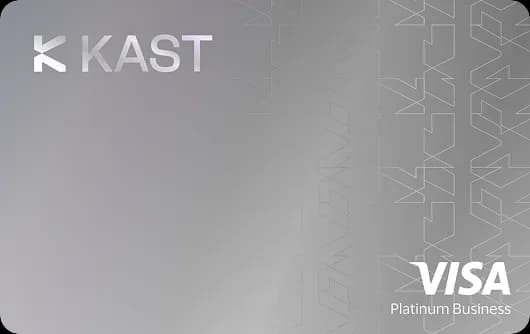
Kolo remains a free BTC option, while KAST pays 1.5% USD cashback on the first $2,000 per month without requiring a token stake.
Crypto.com Icy adds 4% cashback and lounge access at Queen Alia International Airport (AMM). Tria Signature delivers 4.5% USDT cashback on the first $1,000/month (then 1%) with a 1% FX fee plus 0.5% per payment (about 3% net on dinar spend) at $109/year.
Best Card For Every Need in Jordan
Best for Max Cashback
Tria Signature Card
4.5% back
Highest verified rewards rate
View details →Best for No Fees
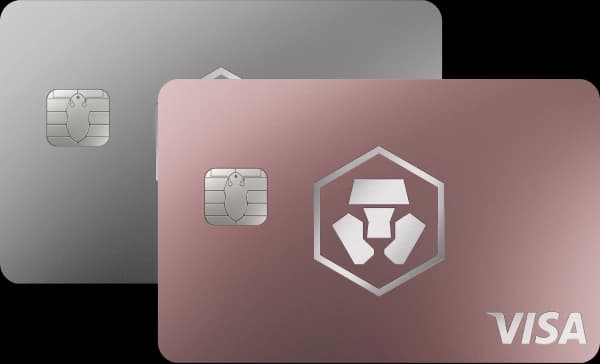
Private (Icy White / Rose Gold)
$0 annual + 0% FX
Zero annual fee and zero FX markup
View details →Best for Self-Custody
Tria Signature Card
Your keys
Non-custodial — you control the wallet
View details →Top 4 Crypto Cards in Jordan
Jordan's 2025 Virtual Assets Transactions Regulation Law created a licensing framework. Personal crypto-card tax treatment needs case-specific classification; the law itself does not impose a flat card-spending rate. Recently acquired stablecoins can limit price gains on any of the cards below.
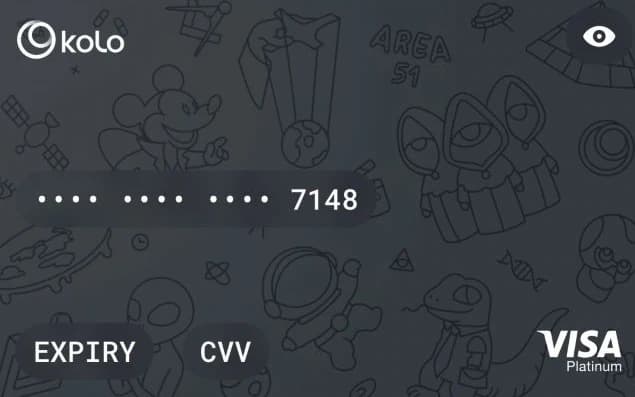
The JOD-USD peg means USDC funding carries little currency volatility against the dinar. Kolo's 1% ongoing BTC cashback remains a low-friction option for small purchases, subject to its monthly and per-transaction caps.
Tria Signature takes the top slot: 4.5% USDT cashback on the first $1,000/month (then 1%) with a 1% FX fee and 0.5% per payment (about 3% net on dinar spend) at $109/year, a fee that roughly JOD 220/month of card spend recovers. Crypto.com Icy adds 4% cashback and AMM lounge access for the tech professionals in King Hussein Business Park and Abdali who fly frequently. KAST works for younger Jordanian users who want a free 1.5% USD cashback prepaid card (capped at $2,000/month of spend) while avoiding staking-led economics.

1. Tria Signature Card
High-Yield Self-Custody: 15% APY + Visa Signature Perks
2. Private (Icy White / Rose Gold)
Private Tier: 4% Uncapped Cashback + Lounge Guest
3. Kolo Card
Earn Bitcoin on Purchases: 2% for 30 Days, Then 1% (Capped) + Visa Platinum + 170+ Countries
4. KAST K Card
Free USD Cashback: 1.5% on First $2K/Month
Complete list:
All 32 crypto cards available in Jordan in September 2026
This table includes every crypto card we currently track for Jordan. Rows marked Top pick are ranked and reviewed above.
| Crypto card | Max rewards | Annual fee | FX fee | Type | Custody |
|---|---|---|---|---|---|
1 Tria Signature CardTop pick | Up to 4.5% rewards | $109/year | 1% | Debit | Self-custody |
2 Private (Icy White / Rose Gold)Top pick | Up to 4% rewards | TBD | 0% | Prepaid | Custodial |
3 Kolo CardTop pick | Up to 2% rewards | Free | 0% | Prepaid | Custodial |
4 KAST K CardTop pick | Up to 1.5% rewards | Free | 0.5% | Prepaid | Custodial |
| Up to 10% rewards | Free | 0% | Prepaid | Custodial | |
| Up to 8% rewards | Free | 0% | Debit | Custodial | |
| Up to 8% rewards | TBD | 0% | Prepaid | Custodial | |
| Up to 6% rewards | $250/year | 1% | Debit | Self-custody | |
| Up to 5% rewards | TBD | 0% | Prepaid | Custodial | |
| Up to 4% rewards | Free | 0% | Crypto Backed Credit | Self-custody | |
| Up to 3% rewards | $10000 | 0.5% | Prepaid | Custodial | |
| Up to 3% rewards | $199 | 0.5% | Crypto Backed Credit | Self-custody | |
| Up to 3% rewards | $299.9 | 0% | Prepaid | Custodial | |
| Up to 3% rewards | $129 | 1.2% | Prepaid | Custodial | |
| Up to 2% rewards | $1000 | 0.5% | Prepaid | Custodial | |
| Up to 2% rewards | Free | 1% | Crypto Backed Credit | Self-custody | |
| Up to 2% rewards | $49.9 | 0% | Prepaid | Custodial | |
| Up to 2% rewards | $999 | 0% | Crypto Backed Credit | Self-custody | |
| Up to 1.5% rewards | Free | 0.5% | Prepaid | Custodial | |
| Up to 1.5% rewards | $20/year | 1% | Debit | Self-custody | |
| Up to 1.5% rewards | $249 | 0.25% | Crypto Backed Credit | Self-custody | |
| Up to 1% rewards | Free | TBD | Prepaid | Custodial | |
| Up to 1% rewards | $99 | 0.5% | Crypto Backed Credit | Self-custody | |
| Up to 0.5% rewards | Free | 1% | Crypto Backed Credit | Self-custody | |
| none | Free | 0% | Prepaid | Custodial | |
| cashback | Free | 1.75% | Prepaid | Self-custody | |
| cashback | $199 | 0.75% | Prepaid | Self-custody | |
| cashback | Free | 0.5% | Prepaid | Custodial | |
| none | Free | 1% | Prepaid | Self-custody | |
| Varies | Free | 1.2% | Prepaid | Custodial | |
| Varies | Free | 1.2% | Prepaid | Custodial | |
| points | Free | 1% | Debit | Self-custody |
Crypto Card Regulation in Jordan
Jordan's crypto regulatory shift in 2025 was one of the biggest in the Arab world. The Central Bank of Jordan (CBJ, Al-Bank Al-Markazi Al-Urdunni, البنك المركزي الأردني) had banned all banks and financial institutions from dealing with cryptocurrencies since 2014, citing risks to financial stability and consumer protection.
This decade-long prohibition was replaced by Law No. 14 of 2025, the Virtual Assets Transactions Regulation Law (Qanun Tanzim Muamalat Al-Usul Al-Iftiradhiyya, قانون تنظيم معاملات الأصول الافتراضية), effective September 14, 2025.
The JSC subsequently published the Virtual Assets Service Providers Licensing Regulation for 2025, setting out detailed requirements for VASP licensing and supervision.
The law places all virtual assets and VASPs under the Jordan Securities Commission (JSC, Hayat Al-Awraq Al-Maliyya, هيئة الأوراق المالية). Key requirements:
- Mandatory VASP licensing with the JSC
- Strict AML/CFT compliance protocols aligned with FATF recommendations
- Full KYC procedures for all users, verified through official Jordanian identity systems
- Segregation of client funds from operational funds
- Regular independent auditing
- Capital adequacy requirements (minimum capital varies by VASP type)
- Insurance or guarantee arrangements for client asset protection
The CBJ retains authority over monetary policy and is researching a potential digital dinar (CBDC), with pilot programs possible by 2026-2027. The JOD-USD peg's stability makes CBDC design simpler than for countries with floating currencies.
Jordan's JSC licensing framework gives domestic virtual-asset businesses a formal route to authorization. It does not automatically license every overseas card issuer or settle whether a particular card can onboard a Jordanian resident.
Tax Treatment of Card Rewards in Jordan
Jordan's Income Tax Law provides the general framework for taxable income, administered by the Income and Sales Tax Department (ISTD). Article 4 generally exempts capital gains, subject to statutory exceptions. A personal investment gain may therefore be outside income tax if it qualifies as a capital gain; business trading or reward income can differ.
The ISTD has not classified every crypto-card disposal, and the 2025 VASP law is a licensing law, not a personal tax schedule.
Individual income tax rates are progressive: 5% on the first JOD 5,000 of taxable income, 10% on the next JOD 5,000, 15% on the next JOD 5,000, 20% on the next JOD 5,000, and 25% on income above JOD 20,000. General Sales Tax (GST) is 16%, among the highest in the region.
Mining, staking, and card cashback need separate classification under the income-tax rules. The JSC's VASP licensing rules do not by themselves establish that each reward is ordinary income at receipt.
Tax worked examples:
| Scenario | Amount to Assess | Tax Treatment | Tax Owed | Record to Keep |
|---|---|---|---|---|
| BTC purchased at JOD 500, spent at JOD 1,500 | JOD 1,000 economic gain | Depends on classification | Not fixed here | Keep purchase and conversion records |
| ETH staking yield received | JOD 200 value | Depends on activity | Not fixed here | Record receipt and later disposal |
| USDC purchased and spent | Potentially small gain or loss | Depends on conversion | Not automatically zero | Track JOD values and fees |
| KAST USD cashback on JOD 300/mo | Program-dependent | Depends on reward terms | Not fixed here | Record credit and use |
USDC funding is the cleanest route for many Jordanian users. The JOD-USD peg keeps currency volatility low, while a recently acquired stablecoin position should carry little disposal gain.
How to Apply from Jordan
Jordanian crypto card applications require the Bitaqat Ahwal Madaniyya (Civil Status ID Card, بطاقة أحوال مدنية), the mandatory national identity card issued by the Civil Status and Passports Department (Dairat Al-Ahwal Al-Madaniyya wa-l-Jawazat, دائرة الأحوال المدنية والجوازات). The card contains a unique 10-digit national number (Al-Raqam Al-Watani, الرقم الوطني) assigned to every Jordanian citizen.
Alternative identification: Jordanian passport (Jawaz Al-Safar Al-Urdunni, جواز السفر الأردني). Proof of address via utility bills from JEPCO (Jordan Electric Power Company), Miyahuna (Amman water utility), EDCO (Electricity Distribution Company) for southern governorates, or bank statements from Arab Bank (Jordan's largest, founded 1930), Housing Bank for Trade and Finance, Jordan Ahli Bank, Cairo Amman Bank, or Bank al Etihad.
Jordan's SANAD digital identity platform is being expanded for financial services verification, which could make future KYC easier with international crypto card providers. The 2025 VASP law's KYC requirements are designed to be interoperable with international standards, which should improve approval rates for Jordanian applicants.
Spending Tips for Jordan
The JOD-USD Peg: Jordan's Defining Advantage
The Jordanian dinar has been pegged to the US dollar at approximately JOD 0.709 = $1 since 1995. This is Jordan's single biggest structural advantage for crypto card users. USDC denominated in dollars holds near-zero volatility against the JOD, unlike countries with floating currencies (Egypt's EGP has lost 70%+ since 2022, Turkey's TRY has lost 80%+ since 2020).
Zero-FX crypto cards translate to genuinely zero cost on international purchases, not just zero markup on top of a volatile conversion.
What Jordanian Bank Cards Actually Cost You
| Bank | Debit FX Markup | Credit Cashback | Monthly Fee | International Limits |
|---|---|---|---|---|
| Arab Bank | 2-3% | 0-0.5% | JOD 0-3 | Standard |
| Housing Bank | 2-2.5% | 0% | JOD 0-2 | Standard |
| Jordan Ahli Bank | 2-3% | 0% | JOD 0-2 | Standard |
| Cairo Amman Bank | 2-3% | 0% | JOD 0-2 | Standard |
| Bank al Etihad | 2-2.5% | 0.5% select | JOD 0-3 | Standard |
A crypto card with 0% FX eliminates 2-3% in markups on every non-JOD transaction. On JOD 200/month of international spending ($282), that is JOD 48-72/year in pure FX savings, before cashback.
Card Selection for Jordanians
- Tria Signature (4.5% on first $1K/mo, then 1%): $109/year, 1% FX + 0.5%/payment, ~3% net. USDT cashback.
- Crypto.com Icy (4%): CRO stake required. Metal card + airport lounge access at Queen Alia (AMM). Netflix/Spotify rebates.
- Kolo (1% ongoing BTC, 2% for 30 days, capped $100/mo and $1/txn): $0 annual, 0% FX. Simple free BTC cashback on everyday spend.
- KAST (1.5% USD cashback on first $2K/mo): $0 annual, 0.5-1.75% FX. Free prepaid option without staking exposure.
- RedotPay: Stablecoin-focused, 1.2% FX. Virtual (free) and Physical ($100).
- xPlace (0.5-2% Credit Mode, capped monthly): Tiered USDC cashback, Solana ecosystem, 0-1% FX by tier.
Spending Scenario: JOD 400/month (approx. $564, Amman Professional)
| Category | Monthly | Annual | Where It Goes |
|---|---|---|---|
| Groceries | JOD 100 | JOD 1,200 | Carrefour, Safeway, Cozmo, Miles |
| Dining | JOD 80 | JOD 960 | Abdoun restaurants, Rainbow Street cafes |
| Transport | JOD 60 | JOD 720 | Petrol, Uber/Careem rides |
| Subscriptions | JOD 30 | JOD 360 | Netflix, Spotify, Shahid, gym |
| Shopping | JOD 80 | JOD 960 | City Mall, Abdali Mall, Taj Mall, Mecca Mall |
| Delivery | JOD 50 | JOD 600 | Talabat, Careem Now, Toters |
Our local cost analysis puts card-eligible spending at JOD 4,800 per year. At that level, Tria Signature nets roughly JOD 67 after its fees, KAST returns JOD 72 in USD rewards free, Kolo returns JOD 48 in BTC at its ongoing rate, and Crypto.com Icy returns JOD 192 before accounting for its CRO requirement. Stablecoin funding keeps disposal gains small.
KAST vs Kolo vs Crypto.com Icy: Jordan-Specific Math
Gains can be taxed at rates reaching 25%, while the JOD-USD peg limits currency volatility. Kolo figures use its 1% ongoing BTC rate and assume purchases stay within the $1 reward cap.
| Monthly Spend | KAST (1.5% USD, $2K/mo cap, $0) | Kolo (1% BTC, $0) | Crypto.com Icy (4%, CRO stake) |
|---|---|---|---|
| JOD 200 | JOD 36/yr | JOD 24/yr | JOD 96/yr + lounges |
| JOD 400 | JOD 72/yr | JOD 48/yr | JOD 192/yr + lounges |
| JOD 600 | JOD 108/yr | JOD 72/yr | JOD 288/yr + lounges |
| JOD 1,000 | JOD 180/yr | JOD 120/yr | JOD 480/yr + lounges |
KAST leads the free cards at every spending level in this table, with Kolo working best for smaller purchases. Crypto.com Icy tops the raw rate at 4% but requires CRO and adds airport lounge access at Queen Alia International.
Local Payment Infrastructure
Amman has strong and growing card acceptance. JoPACC (Jordan Payments and Clearing Company) operates three national payment systems: CliQ (instant bank-to-bank transfers, JD 10.75 billion in H1 2025), eFAWATEERcom (bill payments, JD 8.89 billion), and JoMoPay (mobile wallet payments, JD 3.56 billion).
Shopping malls (City Mall, Abdali Mall, Taj Mall, Mecca Mall, Galleria Mall) have full Visa/Mastercard acceptance. Hotels (Four Seasons, W Amman, Fairmont, InterContinental, St. Regis) accept all international cards. Supermarkets (Carrefour 5+ locations, Safeway 10+ stores, Cozmo, Miles) and restaurants in Abdoun, Sweifieh, and Rainbow Street areas have strong acceptance.
Mobile wallets: ZainCash, Orange Money, Dinarak, and UWallet (Umniah) handle digital payments. Apple Pay launched in Jordan; Google Pay available through select banks. Ride-hailing (Uber, Careem) and food delivery (Talabat, Toters, Careem Now) all accept card payments.
Outside Amman: Aqaba (Jordan's Red Sea city, special economic zone), Irbid (second-largest city, university town), and Madaba have good card acceptance at hotels and major retailers. The Dead Sea resort strip has full card acceptance at all hotels.
Jordan's Tech Workforce
Jordan's IT sector is one of the strongest in the Arab world. Maktoob (acquired by Yahoo in 2009 for $164M, the region's first major tech exit), Aramax (now aramex, global logistics), and Mawdoo3 (largest Arabic content platform) all originated in Jordan. The country's young population (65% under 30), high internet penetration (over 85%), and strong English proficiency create a natural crypto-literate demographic.
Amman's tech hub (concentrated in King Hussein Business Park, Abdali, and the University of Jordan area) hosts offices of Amazon, Expedia, and Microsoft alongside local startups. Tech professionals earning JOD 800-2,000/month ($1,128-2,820) represent the core crypto card demographic.
Cost of Living and Spending Context
| Area | 1-Bed Rent/Month | Groceries/Month | Profile |
|---|---|---|---|
| West Amman (Abdoun) | JOD 400-800 | JOD 120-200 | Upscale, embassies, expats |
| Sweifieh/Deir Ghbar | JOD 300-600 | JOD 100-180 | Commercial, young professionals |
| Dabouq/Khalda | JOD 250-500 | JOD 100-160 | Residential, families |
| East Amman | JOD 100-250 | JOD 60-120 | Traditional, more cash-based |
| Aqaba | JOD 200-400 | JOD 80-150 | Red Sea resort, tourism economy |
| Irbid | JOD 100-200 | JOD 60-100 | University city, budget-friendly |
Cross-Border Spending and Travel
Jordan's geographic position creates natural FX spending opportunities:
- UAE (AED): Frequent flights to Dubai for shopping, business, medical tourism. AED-USD peg means minimal FX. Dubai Mall and Mall of the Emirates are popular Jordanian destinations.
- Turkey (TRY): Top vacation destination. Istanbul, Trabzon, Antalya. TRY depreciation means major savings with zero-FX cards.
- Egypt (EGP): Popular affordable destination. Sharm El Sheikh charter flights from Amman. EGP weakness amplifies zero-FX savings.
- Saudi Arabia (SAR): Religious tourism (Umrah/Hajj), business ties. SAR-USD peg. Growing Riyadh connections.
- Europe (EUR/GBP): London, Paris, Berlin for education, medical treatment, and shopping. Largest FX savings category.
Aqaba special zone: Aqaba's Special Economic Zone has different tax treatment (0% income tax within the zone, lower GST). Aqaba is also a gateway to Wadi Rum and Petra, both major tourist destinations where hotels and larger restaurants accept cards.
The Diaspora and Remittance Economy
Jordan receives approximately $5+ billion in annual remittances, representing 15-20% of GDP (one of the highest ratios in the world). The Jordanian diaspora is concentrated in:
- Gulf states: 500,000+ Jordanians work in Saudi Arabia, UAE, Kuwait, and Qatar. High-earning professionals in engineering, education, healthcare.
- United States: 100,000+ Jordanian Americans, concentrated in Chicago, Detroit, and Houston.
- Europe: 50,000+ across Germany, UK, and Scandinavia.
For diaspora Jordanians, a crypto card can provide a remittance-funded spending route. In the World Bank's US-to-Jordan corridor, the Q3 2025 average total cost for a US$500 transfer was US$16.92, including the fee and exchange-rate margin; individual cash routes cost more. Compare that full cost with stablecoin acquisition, network, card, and cash-out charges before assuming the card is cheaper.
The Young Population Advantage
65% of Jordan's 11+ million population is under 30. The University of Jordan, Jordan University of Science and Technology (JUST), German-Jordanian University (GJU), Princess Sumaya University for Technology, and the American University of Madaba produce tech-literate graduates who are natural adopters of crypto financial products. University students spending JOD 50-150/month on subscriptions, food delivery, and online shopping represent an entry market for free-tier crypto cards like KAST.
Jordan also hosts approximately 750,000 registered Syrian refugees (with an actual population closer to 1.3 million Syrians) and 2+ million Palestinian-Jordanians with Jordanian citizenship. The refugee population has limited banking access, making low-KYC crypto cards potentially relevant for financial inclusion.
Online Shopping and Subscriptions
Jordan's e-commerce market is growing rapidly. OpenSooq (classifieds, 10M+ monthly visits), Jiji (marketplace), and cross-border platforms (Amazon.ae delivering to Jordan, Namshi, Shein, AliExpress) drive online spending.
International USD-billed subscriptions (Adobe, Netflix, Spotify, Microsoft 365, Apple services) benefit from the JOD-USD peg and zero-FX crypto cards. The peg means Netflix does not become more expensive over time like it does in Turkey or Egypt - the dollar cost stays stable against JOD.
Supported Exchanges & Wallets in Jordan
Jordan's 2025 VASP law creates a pathway for formal exchange licensing under the JSC. Currently, the primary on-ramps are international: Rain Financial (Bahrain-licensed, serves Jordan with JOD bank transfers), Binance (P2P with JOD pairs), and BitOasis (Dubai-based, historically served Jordan). The JSC licensing framework means these platforms could formally apply for Jordanian licenses.
Among global issuers, Tria Signature leads, delivering 4.5% USDT cashback on the first $1,000 per month, then 1%, with fees that leave about 3% net on dinar spending.
Crypto.com provides metal tiers from Midnight Blue (0%) through Icy (4%, CRO stake required). Kolo offers 1% ongoing BTC (2% for the first 30 days), capped at $100/month and $1 per transaction, on crypto cards with cashback at $0 annual and 0% FX.
KAST provides 1.5% USD cashback on the first $2,000 per month with no annual fee and 0.5-1.75% FX. RedotPay keeps its virtual card free, while the physical version costs $100; both carry 1.2% FX.
xPlace runs a tiered ladder from Basic at 0.5% to Platinum at 2% in Credit Mode, each capped monthly.
Tourism and Hospitality Spending
Jordan's tourism economy centers on Petra (UNESCO World Heritage, 1M+ visitors/year), Wadi Rum (desert safaris and glamping), the Dead Sea (luxury resort strip), and Aqaba (Red Sea diving). Domestic tourism has grown since 2020.
Jordanian families spending JOD 200-800 on weekend Dead Sea hotel stays (Kempinski Ishtar, Hilton, Movenpick), Aqaba beach resorts, or Wadi Rum glamping camps can earn meaningful cashback on these larger transactions. All major hotels and tour operators in these areas accept Visa/Mastercard.
The JOD-USD peg limits currency movement between a dollar-settled card and local spending, although issuer FX charges can still apply. For an Abdali tech worker spending JOD 400 per month, KAST's 1.5% USD cashback produces JOD 72 per year on a free card. Kolo's ongoing 1% BTC rate provides a BTC-denominated alternative.
The JSC licensing framework under the 2025 Virtual Assets Law will determine whether domestic exchanges can eventually offer card products, but the globally available options already serve the market.
Written by SpendNode Editorial
Frequently Asked Questions
Is cryptocurrency legal in Jordan?
Yes. Jordan legalized crypto in 2025 under Law No. 14 of 2025, the Virtual Assets Transactions Regulation Law. The Jordan Securities Commission (JSC) licenses all virtual asset service providers. Previously, the Central Bank of Jordan had banned banks from dealing with crypto since 2014.
How is crypto taxed in Jordan?
Crypto gains fall under Jordan's progressive income tax rates (up to 25% on income above JOD 20,000). The 2025 VASP law integrates virtual assets into the existing tax framework. Specific ISTD guidance on crypto reporting forms and staking/mining treatment has not been published as of early 2026.
Which crypto cards work in Jordan?
Several globally available crypto cards serve Jordan. Tria Signature leads with 4.5% USDT cashback on the first $1,000/month then 1%, with fees leaving about 3% net on dinar spend ($109/yr).
Crypto.com Icy delivers 4% cashback with lounge access at Queen Alia. Kolo pays 1% ongoing BTC after its introductory month, subject to monthly and transaction caps. KAST provides 1.5% USD cashback on the first $2,000/month with no annual fee and 0.5-1.75% FX.
What is Jordan's digital payments landscape?
Jordan has a sophisticated digital payments ecosystem. JoPACC operates JoMoPay (mobile payments), CliQ (instant payments), and eFAWATEERcom (bill payments). Mobile wallets include ZainCash, Orange Money, Dinarak, and UWallet. Digital transactions grew 77% in 2025.
Other Countries
View all 112 countries →


Latest Page Changes to the Best Crypto Cards in Jordan Guide
- Law No. 14 effective date (September 14, 2025) and VASP Licensing Regulation subsidiary legislation