
Best Crypto Cards in Hungary (2026)
Hungary's flat 15% crypto tax is manageable by European standards, but HUF users still need to avoid weak FX stacks and overhyped reward tiers. This guide compares the cards that still make sense after the real math is done.
Verified for Hungary
54 crypto cards available
Local currency: HUF
OTP Bank controls roughly a quarter of Hungary's retail banking market. Its standard debit card charges a 1.5-3% FX markup on every non-HUF transaction and offers zero cashback. Erste Bank Hungary and K&H Bank are marginally better on FX but still charge 1-2%.
If you are a Hungarian resident buying anything priced in EUR, USD, or GBP (which includes most international subscriptions, online merchants, and cross-border purchases), your Hungarian bank is silently extracting 1-3% of every transaction as a currency conversion fee.
This is where crypto cards create disproportionate value for Hungarian residents compared to eurozone neighbors. A zero FX fee crypto card eliminates that 1-3% spread entirely. On typical card spending of HUF 400,000/month (approx. EUR 1,000), the FX savings alone are worth HUF 48,000-144,000/year (EUR 120-360) before any cashback is factored in.
When you add 3-8% cashback on top, the combined value can exceed HUF 500,000/year (EUR 1,250). No Hungarian bank product comes close.
Hungary is not in the eurozone and has no target date for euro adoption. The forint (HUF) fluctuates against EUR, trading in the HUF 390-420 range in recent years. This currency risk cuts both ways for crypto card users: card transactions are converted at the interbank rate (or very close to it) with 0% markup, whereas OTP or Erste apply their own less favorable rates.
The practical result is that every non-HUF transaction through a crypto card saves money twice: zero FX fee and a better exchange rate.
Summary:
Which crypto cards are best in Hungary?
The best crypto cards in Hungary in September 2026 are Tria Premium Card, Bitget Card, Gnosis Pay Card, COCA Visa Card, Nexo Dual Card, and Private (Icy White / Rose Gold). The detailed ranking below explains the local tax, fee, and availability trade-offs.
| Crypto card | Base reward | Net after fees | Annual fee | FX fee | Type |
|---|---|---|---|---|---|
| 6% base6% on the first $2,000/mo, then 1% | 4.5% | $200 with code | 1% | Debit | |
| 0.5% baseup to 8% by holding 20,000+ BGB | 0.5% | Free | 0% | Debit | |
| 1% baseup to 5% with 100 GNO + OG NFT; weekly eligible-spend cap $250-$1,250 by tier | 1% | Free | 0% | Debit | |
| 1% baseup to 8% with a large $COCA stake; $15-$350/mo claim capacity by tier | 1% | Free | 0% | Debit | |
| 1% baseneeds a $5,000 balance; up to 2% with NEXO loyalty | 0.8% | Free | 0.2% | Crypto Backed Credit | |
| 4% baseneeds a $50k CRO stake to hold the tier | 4% | TBD | 0% | Prepaid |
We checked HUF conversion rates across all card issuers. Tria Premium is the strongest combined pick for most Hungarian residents: a 1% FX fee plus 0.5% per payment (about 1.5% per non-HUF transaction, still at or below OTP/Erste's 1-3% markup) on an accessible 6% on the first $2,000/month that nets about 4.5%, self-custody, and no staking gate.
Bitget carries a higher raw 8% (net 7.1% after the 0.9% transaction fee) but only at about $40,000 of BGB held, so it leads for existing BGB holders rather than the typical user. Gnosis Pay is the self-custody option: up to 5% in GNO tokens, zero fees, and your funds stay in your wallet until settlement.
Plutus reaches 9% with subscription rebates (1-3 perks), but the 2.5% FX on HUF transactions and GBP 240/year cost make it poor value for Hungarian users who should prefer 0% FX alternatives. For holders sitting on gains, Nexo offers a crypto-backed credit line that may defer a sale, subject to interest, collateral, and repayment risk.
Best Card For Every Need in Hungary
Top 6 Crypto Cards in Hungary
Hungary's floating HUF makes conversion costs relevant when a card settles outside forints. Compare each issuer's rate and fees with the bank card you would otherwise use; a stablecoin position can still move in HUF terms.
Tria Premium is the top pick for most Hungarian residents: an accessible 6% on the first $2,000/month (about 4.5% net after its 1% FX and 0.5% per-payment fees) with no staking gate opens a large value gap versus OTP or Erste. Bitget posts a higher raw 8% but only at about $40,000 of BGB held, so it leads for residents already holding the token. Nexo's credit line is a separate option for holders who want liquidity without an immediate sale and can manage the loan risk.
Gnosis Pay provides self-custody with up to 5% GNO for the Ethereum developer community, while COCA combines up to 8% cashback with 5% APY on eligible USD for users willing to use its staking tiers. COCA reward claims are limited to $15-$350 per month by tier. Crypto.com Icy at 4% earns Budapest Liszt Ferenc lounge access and stays useful for Hungarian users who want a more traditional exchange-linked lifestyle card.
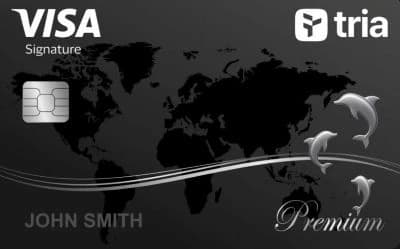
1. Tria Premium Card
Self-Custody Premium: 6% Cashback + Zero ATM Fees
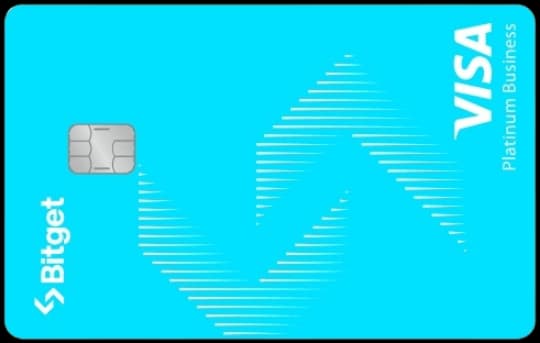
2. Bitget Card
Trade and Spend: Up to 8% BGB Cashback for Bitget Traders
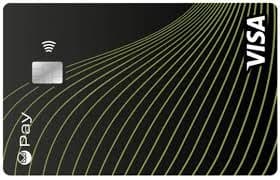
3. Gnosis Pay Card
Your Keys, Your Card, Your Money
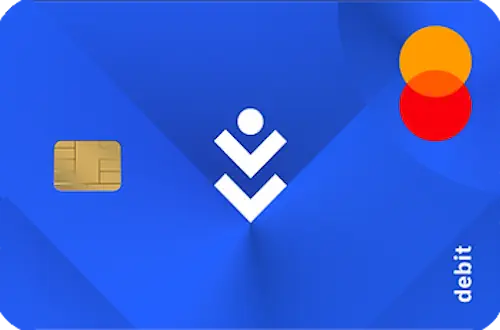
4. COCA Visa Card
Self-Banking: 8% Cashback + 5% APY + 0% FX
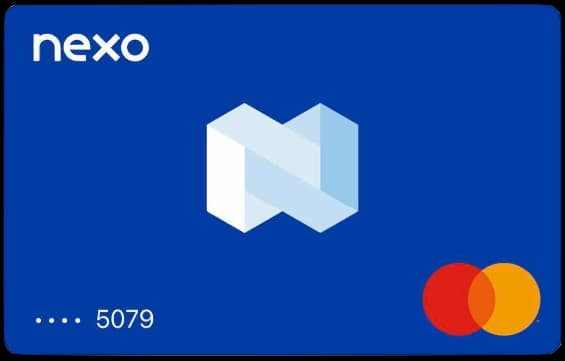
5. Nexo Dual Card
Credit/Debit Toggle: 2% Rewards + Up to 14% APY on Idle Balance
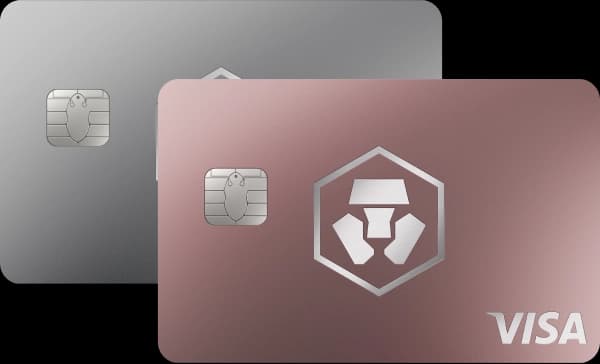
6. Private (Icy White / Rose Gold)
Private Tier: 4% Uncapped Cashback + Lounge Guest
Complete list:
All 54 crypto cards available in Hungary in September 2026
This table includes every crypto card we currently track for Hungary. Rows marked Top pick are ranked and reviewed above.
| Crypto card | Max rewards | Annual fee | FX fee | Type | Custody |
|---|---|---|---|---|---|
1 Tria Premium CardTop pick | Up to 6% rewards | $200 with code | 1% | Debit | Self-custody |
2 Bitget CardTop pick | Up to 8% rewards | Free | 0% | Debit | Custodial |
3 Gnosis Pay CardTop pick | Up to 5% rewards | Free | 0% | Debit | Self-custody |
4 COCA Visa CardTop pick | Up to 8% rewards | Free | 0% | Debit | Self-custody |
5 Nexo Dual CardTop pick | Up to 2% rewards | Free | 0.2% | Crypto Backed Credit | Hybrid |
6 Private (Icy White / Rose Gold)Top pick | Up to 4% rewards | TBD | 0% | Prepaid | Custodial |
| Up to 9% rewards | $240 | 2.5% | Debit | Non-custodial | |
| Up to 8% points | Free | 0.4% | Debit | Custodial | |
| Up to 8% rewards | TBD | 0% | Prepaid | Custodial | |
| Up to 8% rewards | Free | 0% | Debit | Hybrid | |
| Up to 5% rewards | TBD | 0% | Prepaid | Custodial | |
| Up to 4.5% rewards | $87 with code | 1% | Debit | Self-custody | |
| Up to 4% rewards | Free | 0% | Crypto Backed Credit | Self-custody | |
| Up to 4% rewards | Free | 0% | Crypto Backed Credit | Self-custody | |
| Up to 3% rewards | Free | 0.5% | Crypto Backed Credit | Self-custody | |
| Up to 3% rewards | Free | 0.25% | Crypto Backed Credit | Self-custody | |
| Up to 3% rewards | Free | 0% | Crypto Backed Credit | Self-custody | |
| Up to 3% rewards | $10000 | 0.5% | Prepaid | Custodial | |
| Up to 3% rewards | Free | 0% | Debit | Custodial | |
| Up to 3% rewards | $199 | 0.5% | Crypto Backed Credit | Self-custody | |
| Up to 3% rewards | $299.9 | 0% | Prepaid | Custodial | |
| Up to 3% rewards | $129 | 1.2% | Prepaid | Custodial | |
| Up to 3% rewards | Free | 0% | Debit | Hybrid | |
| Up to 2% rewards | Free | 0% | Debit | Custodial | |
| Up to 2% rewards | Free | 0% | Debit | Self-custody | |
| Up to 2% rewards | $1000 | 0.5% | Prepaid | Custodial | |
| Up to 2% rewards | Free | 0% | Prepaid | Custodial | |
| Up to 2% rewards | Free | 0% | Debit | Custodial | |
| Up to 2% rewards | Free | 1% | Crypto Backed Credit | Self-custody | |
| Up to 2% rewards | $49.9 | 0% | Prepaid | Custodial | |
| Up to 2% rewards | $999 | 0% | Crypto Backed Credit | Self-custody | |
| Up to 1.5% rewards | Free | 0.5% | Prepaid | Custodial | |
| Up to 1.5% rewards | Free | 0.5% | Prepaid | Custodial | |
| Up to 1.5% rewards | Free | 1% | Debit | Self-custody | |
| Up to 1.5% rewards | $249 | 0.25% | Crypto Backed Credit | Self-custody | |
| Up to 1% rewards | Free | 0% | Debit | Custodial | |
| Up to 1% rewards | Free | 1.75% | Debit | Self-custody | |
| Up to 1% rewards | Free | 1% | Debit | Self-custody | |
| Up to 1% rewards | Free | TBD | Prepaid | Custodial | |
| Up to 1% rewards | $99 | 0.5% | Crypto Backed Credit | Self-custody | |
| Up to 0.5% rewards | Free | 0% | Debit | Hybrid | |
| Up to 0.5% rewards | Free | 1% | Crypto Backed Credit | Self-custody | |
| none | Free | 0% | Prepaid | Custodial | |
| Varies | Free | 1.7% | Prepaid | Custodial | |
| cashback | Free | 1.75% | Prepaid | Self-custody | |
| cashback | $199 | 0.75% | Prepaid | Self-custody | |
| cashback | Free | 0.5% | Prepaid | Custodial | |
| none | Free | 1% | Prepaid | Self-custody | |
| none | Free | 1% | Debit | Self-custody | |
| Varies | Free | 1.5% | Debit | Custodial | |
| Varies | Free | 1.2% | Prepaid | Custodial | |
| Varies | Free | 1.2% | Prepaid | Custodial | |
| Varies | Free | 1.2% | Prepaid | Custodial | |
| points | Free | 1% | Debit | Self-custody |
Crypto Card Regulation in Hungary
MNB Oversight and MiCA Transition
The Magyar Nemzeti Bank (MNB) is Hungary's central bank and MiCA supervisor. Crypto-asset service providers serving Hungarian residents must hold the relevant CASP authorization or valid EEA passport.
Before MiCA, Hungary regulated crypto primarily through AML/CTF transposition of 5AMLD and 6AMLD. VASPs were required to register with the MNB and comply with know-your-customer and anti-money laundering obligations. The Hungarian Financial Intelligence Unit (HFIU) within the MNB handled suspicious transaction reports. Hungary's regulatory environment was less developed than Germany's BaFin regime or France's AMF registration system, but functional.
The MNB has issued multiple consumer warnings about crypto volatility and unregulated platforms. In 2022, the MNB specifically warned about crypto lending products (relevant for borrow-to-spend cards) and urged consumers to verify that any crypto service provider is properly registered.
For crypto card users, all major EEA-licensed issuers serve Hungary through MiCA passporting. Gnosis Pay operates under a Lithuanian EMI license, Plutus under UK/EU authorizations, Bitpanda under its Austrian license. Exchange-linked cards from Crypto.com use EEA-licensed third-party issuers.
The Nemzeti Ado- es Vamhivatal (NAV, National Tax and Customs Administration) handles all crypto tax enforcement and has been increasingly active in requesting exchange data through EU cooperation mechanisms.
DAC8 reporting (from 2026): Crypto exchanges and platforms must automatically report Hungarian user transaction data to NAV, tightening tax visibility.
Hungary repealed the separate crypto-conversion validator regime under Act XXXVIII of 2026. That removed the national validation requirement and its related criminal provisions; MiCA authorization remains a separate requirement.
Days earlier, on July 20, 2026, the MNB granted Hungary's first MiCA license to Tiwala Solutions, operator of the CoinCash exchange, covering custody, exchange, transfers, advice, and portfolio management.
Use only EEA-licensed or MiCA-authorized card issuers. The MNB is the designated MiCAR competent authority for licensing and supervising crypto service providers in Hungary.
Tax Treatment of Card Rewards in Hungary
15% Crypto-Transaction Tax and HUF Records
Under NAV's crypto-transaction guidance, qualifying individual crypto transactions fall under a separate 15% personal income tax calculation. Documented annual costs and the crypto-loss tax-equalization rules matter. The page's former automatic 15% plus 13% social-contribution calculation did not follow that guidance.
Commercial or employment-related crypto income may be classified differently; trading frequency alone does not establish a 28% rate on every card-funded disposal.
When a Crypto Transaction Is Counted
NAV's rule covers qualifying transactions in which a person receives non-crypto value for crypto, including fiat proceeds. Crypto-to-crypto exchanges do not meet that description by themselves. Trace the card's funding path to establish where crypto was actually converted.
The tax calculation is annual: qualifying transaction proceeds are compared with documented eligible expenditures. NAV also describes a limited small-transaction rule and loss tax-equalization across the current and preceding two years. Neither is a blanket exemption for routine card spending.
Keep forint-denominated records of purchases, conversions, fees, and card funding. A card provider's fiat settlement to the merchant does not tell you, on its own, when your crypto was converted.
Worked Tax Examples (in HUF)
Example 1: Casual investor, BTC spending. You bought BTC at HUF 4,000,000 (approx. EUR 10,000). It triples to HUF 12,000,000. You spend HUF 1,200,000 through your card. Gain on that portion = HUF 800,000. Tax at 15% = HUF 120,000 (approx. EUR 300). Your HUF 1,200,000 purchase effectively cost HUF 1,320,000.
Example 2: USDC funding. A stablecoin acquired shortly before card funding may have little change in forint value, but a change in the HUF/USD rate or conversion fees can affect the annual calculation. It is not automatically a zero-tax transaction.
Example 3: Multiple transactions. If the same year includes other crypto sales, calculate the annual eligible proceeds and documented expenditures together under NAV's rules. Do not add a presumed 13% SZOCHO charge solely because there were many trades.
Example 4: Borrow-to-spend. A loan against 5 ETH is not the same transaction as selling ETH, but interest, repayment, and a possible collateral liquidation matter. Do not count a tax saving until the loan and subsequent transactions are classified.
Example 5: FX interaction with cost basis. You buy USDC at HUF 390/EUR and spend it when HUF is at HUF 410/EUR. The HUF weakened, so technically each USDC unit gained HUF 20 in forint terms. On HUF 400,000 of spending, the HUF depreciation gain is approx. HUF 20,500. Tax: HUF 3,075 (15%). This is small but real for non-eurozone residents and illustrates why pure USDC does not always mean zero tax in HUF terms.
| Funding Method | Main tax question | Record to keep |
|---|---|---|
| USDC/USDT | Was there a forint-denominated gain at conversion? | Purchase and conversion values |
| BTC/ETH | What were the annual proceeds and eligible costs? | Cost and disposal records |
| Cashback received | Is the reward income, a rebate, or another category? | Program terms and receipt value |
| Borrow-to-spend | Did a disposal occur later through repayment or liquidation? | Loan and collateral history |
Cost Basis in HUF
All tax calculations must be done in HUF, not EUR or USD. This means the HUF/EUR or HUF/USD exchange rate at both acquisition and disposal affects your gain calculation. If you buy BTC when HUF is strong (HUF 380/EUR) and spend when HUF is weak (HUF 420/EUR), your HUF-denominated gain is amplified beyond the crypto price movement. NAV uses the MNB official exchange rate for conversions.
File the SZJA return by May 20 of the following year and report qualifying crypto-transaction income in the applicable section. Keep the underlying records. NAV's DAC8 guidance describes provider registration and customer due diligence from 2026; do not assume that every 2026 transaction has already been reported to NAV.
How to Apply from Hungary
KYC: Hungarian Identity Documents
Hungarian crypto card applications require a szemelyigazolvany (szemelyazonosito igazolvany, Hungarian personal ID card) or utlevel (passport) for citizens. The szemelyigazolvany is the standard daily-use ID accepted by all EEA-licensed card issuers. EU/EEA citizens residing in Hungary can use their own national ID under eIDAS mutual recognition.
Non-EU residents need an utlevel (passport) plus tartozkodasi engedely (residence permit). Hungary also issues letelepedesi engedely (permanent settlement permits) which are equally valid for KYC purposes.
The adoazonosito jel (tax identification number, 10 digits) is required for Hungarian tax reporting through NAV but not always requested during initial card registration. The TAJ szam (social security number) is separate and generally not needed for crypto card KYC.
Proof of address: kozuzemi szamla (utility bill from E.ON for gas, MVM for electricity, Budapest Vizmu for water in Budapest, or Digi/Telekom for internet), bankszamlakivonat (bank statement from OTP Bank, Erste Bank Hungary, K&H Bank, or Raiffeisen Bank), or berleti szerzodes (rental agreement, also called lakasberileti szerzodes). Budapest addresses verify fastest due to better database coverage.
Physical cards ship to Hungarian addresses within 7-14 business days via standard EU postal services (Magyar Posta handles last-mile delivery). Virtual cards activate immediately and can be added to Apple Pay or Google Pay within minutes.
Spending Tips for Hungary
Hungary's Double Advantage: FX Savings + Cashback
For non-eurozone EEA countries, the crypto card value proposition has two layers. Layer 1: the FX savings from eliminating the 1-3% bank markup on every non-HUF transaction. Layer 2: the cashback itself. In eurozone countries, only Layer 2 exists. In Hungary, both layers stack, making the total return per euro spent higher than for a German or French user on the same card.
Quantifying FX Savings
| Monthly Non-HUF Spend | OTP Bank (2% FX) | 0% FX Crypto Card | Annual FX Saving |
|---|---|---|---|
| HUF 100,000 | HUF 2,000/mo | HUF 0/mo | HUF 24,000/yr (EUR 60) |
| HUF 250,000 | HUF 5,000/mo | HUF 0/mo | HUF 60,000/yr (EUR 150) |
| HUF 500,000 | HUF 10,000/mo | HUF 0/mo | HUF 120,000/yr (EUR 300) |
International subscriptions (Netflix EUR 13.99, Spotify EUR 10.99, Amazon Prime EUR 8.99, ChatGPT $20), online shopping from EU merchants (Zalando, Amazon.de, About You), and any travel outside Hungary all incur FX fees through traditional banks. A HUF 250,000/month international spend pattern (common for Budapest professionals) saves HUF 60,000/year in FX alone before cashback.
Card Selection for Hungarian Residents
- Tria Premium (6% on first $2,000/mo, 1% FX + 0.5%/payment, ~4.5% net, $250/yr): Staking-free USDT cashback. The $2,000 band covers a full Budapest budget, though non-HUF spend now carries the 1% FX plus 0.5% per-payment fee. Strongest accessible no-stake pick for most residents.
- Bitget (net 7.1% after 0.9% tx fee): Highest raw cashback plus 0% FX, but the top rate needs about $40,000 of BGB held. For a top-tier holder at HUF 400,000/month, net annual return is approx. HUF 340,800 in cashback + HUF 96,000 in FX savings = HUF 436,800 (approx. EUR 1,092).
- Gnosis Pay (up to 5% GNO, free): The self-custody pick. Up to 5% GNO cashback with zero FX. No staking requirement. Your funds sit in your own wallet.
- COCA (up to 8%, free card): Non-custodial Visa with 0% FX and 5% APY on eligible idle USD. The 8% rate needs COCA staking; the free Starter tier pays 1%.
- Nexo (up to 2% NEXO, 0.2% EEA FX): A credit-line option for holders who prefer not to sell immediately. Compare borrowing costs, liquidation risk, and the tax treatment of repayment.
- Crypto.com Icy (4%): Metal card with airport lounge access at Budapest Liszt Ferenc Airport (BUD), useful for frequent international travelers. CRO stake required. 0% FX is valuable for HUF users traveling in the eurozone.
- Plutus (up to 9%, GBP 240/yr Premium): Domestic perk optimizer. Subscription rebates (1-3 perks depending on plan) on Netflix, Spotify, Amazon Prime. However, the 2.5% FX fee on all HUF transactions erodes value for Hungarian users, and most should choose 0% FX cards instead.
- KAST (1.5% USD cashback on first $2K/mo, 0.5-1.75% FX, free): Prepaid option for users who want card spending working before committing to an exchange-linked setup.
Break-Even: Tria Premium vs Bitget vs Gnosis Pay vs Crypto.com
| Monthly Spend (HUF) | Tria Premium (6% to $2K/mo, ~4.5% net, $250/yr) | Bitget (7.1% net, 0% FX) | Gnosis Pay (up to 5% GNO, 0% FX) | Crypto.com Icy (4%, 0% FX) |
|---|---|---|---|---|
| 250,000 | HUF 35,000/yr | HUF 213,000/yr | HUF 150,000/yr | HUF 120,000/yr |
| 400,000 | HUF 116,000/yr | HUF 340,800/yr | HUF 240,000/yr | HUF 192,000/yr |
| 600,000 | HUF 224,000/yr | HUF 511,200/yr | HUF 360,000/yr | HUF 288,000/yr |
| 1,000,000 | HUF 320,000/yr | HUF 852,000/yr | HUF 600,000/yr | HUF 480,000/yr |
Bitget leads on raw cashback at all spending levels, but those figures assume its top BGB tier (around $40,000 locked). Without that stake, the no-lockup picks are Gnosis Pay and Tria Premium: Gnosis Pay at up to 5% GNO with zero cost edges Tria's ~4.5% net on raw return, while Tria pays USDT instead of a volatile token and adds Visa Premium perks for its $250/yr.
The $250 annual fee is also why Tria's figures trail at lower spend and only close the gap as spend climbs into its $2,000/month band. Crypto.com Icy at 4% adds cards with airport lounges at BUD for frequent travelers.
These figures exclude the additional FX savings (HUF 60,000-240,000/year) versus traditional Hungarian bank cards. Plutus is not recommended for HUF users: the 2.5% FX fee on every transaction offsets the cashback advantage, and the GBP 240/year subscription further erodes returns.
Budapest Cost of Living
A realistic monthly budget for a single person in Budapest: rent HUF 200,000-350,000 (District VII/Erzsebetvaros, District VIII/Jozsefvaros HUF 200,000-260,000; District V/Belvaros, District XII/Buda Hills HUF 300,000-400,000; suburban Pest HUF 150,000-220,000), groceries HUF 80,000-120,000 (Tesco, Lidl, Aldi, SPAR, CBA), dining out HUF 60,000-150,000 (langos HUF 1,200-1,800, ruin bar meals HUF 3,000-5,000, fine dining HUF 15,000-25,000).
BKK transit pass HUF 9,500/month (Budapest Kozlekedesi Kozpont), utilities HUF 30,000-50,000, subscriptions HUF 15,000-25,000.
Total: HUF 395,000-700,000/month of card-eligible spending (approx. EUR 990-1,750).
Debrecen, Szeged, Pecs, and Gyor run 20-35% cheaper than Budapest: rent HUF 120,000-200,000, groceries HUF 60,000-90,000.
At HUF 500,000/month on Bitget at its top BGB tier with USDC funding: HUF 426,000/year in cashback (7.1% net) minus approx. HUF 63,900 cashback tax (15%) = HUF 362,100 after tax. Add HUF 120,000/year in FX savings on international purchases. Total annual value: approx. HUF 482,100 (EUR 1,205). That covers 2.5 months of rent or 4 months of groceries.
Local Payment Infrastructure
Budapest has excellent card acceptance. BKK (Budapest Kozlekedesi Kozpont) public transport accepts contactless bank cards on all metro lines, trams, and buses. Tap your crypto card on the purple reader for single-trip validation. The major shopping centers (Arena Plaza, WestEnd City Center, Mammut, Allee, MOM Park) are fully contactless. All Tesco, Lidl, Aldi, SPAR, and CBA supermarkets accept contactless Visa/Mastercard.
Apple Pay and Google Pay work throughout Budapest and major cities. The ruin bar district (Szimpla Kert, Instant, Fogashaz) accepts cards at most venues, though some smaller bars still prefer cash. The Nagycsarnok (Great Market Hall) and Raday utca restaurant strip are mixed: tourist-facing stalls take cards, traditional vendors prefer cash.
Outside Budapest, card acceptance drops. Lake Balaton resort towns (Siofok, Balatonfured, Tihany) are well-covered in summer. Rural villages, piac (farmers' markets), and small-town kocsmak (pubs) often remain cash-only.
Cross-Border FX Advantage
Hungary borders four eurozone countries (Austria, Slovakia, Slovenia, Croatia) plus Romania (RON), Serbia (RSD), and Ukraine (UAH). For Hungarian residents, cross-border travel is routine and FX-intensive:
- Vienna (1-hour drive, EUR zone): OTP charges 2% FX on EUR. A 0% FX crypto card saves HUF 4,000 per HUF 200,000 spent. Budapest-Vienna shopping trips are extremely common.
- Bratislava (2 hours, EUR zone): Zero FX on a crypto card vs 1.5-2% through OTP. Popular for day trips and IKEA runs.
- Zagreb (3.5 hours, EUR zone since 2023): Croatia's eurozone accession means zero FX for crypto card users. OTP still charges their standard markup.
- Romania (RON zone): Transylvanian trips (Kolozvar/Cluj-Napoca, Nagyvarad/Oradea) are culturally significant for many Hungarian speakers. A 0% FX card saves on RON conversions.
The annual FX savings for a typical Budapest professional who shops in Vienna quarterly, visits Bratislava occasionally, and takes a summer holiday in Croatia can easily reach HUF 80,000-150,000 (EUR 200-375) from FX alone.
Supported Exchanges & Wallets in Hungary
Card Issuers Serving Hungary
Hungary's crypto market benefits from Budapest's growing tech hub status. The city that produced Prezi, LogMeIn, and Ustream has a developer community that skews crypto-aware, and the relatively low cost of living compared to Western European capitals makes crypto card cashback proportionally more valuable here. HUF 500,000/year in combined cashback and FX savings represents purchasing power in Budapest.
EEA-native issuers are fully available through MiCA passporting. Plutus fits Budapest's subscription-heavy tech workers. Gnosis Pay serves the Ethereum developer community. Bitpanda (Vienna-based, 1% flat cashback) has particular affinity with Hungary given the geographic proximity and cultural ties between Budapest and Vienna.
Wirex offers up to 8% at higher tiers. Bleap adds EEA-focused account abstraction. Ready brought Starknet self-custody at 0.5-3% STRK, but its card program is currently unavailable after its card issuer began winding down.
Borrow-to-spend may defer a crypto disposal, but it adds interest and collateral risk. The ordinary 15% crypto-transaction guidance does not create an automatic 28% card-spending rate for active traders.
Nexo (up to 2% cashback, broad collateral) serves Hungary and effectively functions as a tax shield for appreciated holdings: spend from a crypto-backed credit line instead of selling, and no disposal is triggered.
Local exchanges: CoinCash.eu (Budapest-based) offers HUF trading pairs and is one of Hungary's few domestic crypto platforms. MrCoin provides simple BTC/HUF buying. Neither offers a Visa or Mastercard card product. They serve primarily as local fiat on-ramps for users who prefer HUF-denominated purchasing before loading funds onto a separate crypto card.
Wallet-based cards can reduce exchange dependence. MetaMask (1-3%), Ledger CL (1%, hardware wallet), COCA (up to 8% with 5% APY on eligible USD), and Solflare (card paused as of July 28, 2026) use different custody models, from direct key control to Privy-managed smart wallets.
For Hungarians concerned about forint volatility (the HUF weakened against EUR during the 2022-2023 period), holding stablecoin reserves in a self-custody wallet and spending through a card provides both inflation protection and cashback.
Hungary's non-eurozone status makes FX terms important alongside cashback. Compare the card's actual HUF conversion rate with the bank card you would otherwise use, and keep records of crypto acquired and converted in forint terms.
Written by SpendNode Editorial
Frequently Asked Questions
What is Hungary's crypto tax rate?
15% flat SZJA on crypto gains, classified as 'other income'. An additional 13% SZOCHO may apply to professional traders (28% combined). Report to NAV by May 20. DAC8 reporting and mandatory validation certificates begin 2026.
Which crypto card is best for Hungary?
Tria Premium (6% on the first $2,000/mo then 1%, 1% FX plus 0.5% per payment, about 4.5% net, $250/yr) is the strongest accessible pick for most residents: its roughly 1.5% per-transaction cost still undercuts OTP and Erste's 1-3% markup on non-HUF spend, and the rate has no staking gate.
Bitget reaches a higher 8% (7.1% net) but only at about $40,000 of BGB held. Gnosis Pay (up to 5% GNO, self-custody, 0% FX) edges Tria on raw rate for free, though it pays a volatile token, and COCA (up to 8%, non-custodial smart wallet) is a strong alternative. Nexo's credit line defers the 15% tax (or 28% with SZOCHO) by letting you borrow instead of sell. All significantly outperform OTP Bank and Erste debit cards.
Is crypto regulated in Hungary?
Yes. The MNB is the MiCAR competent authority for licensing and supervising crypto service providers. Mandatory validation certificates for providers implemented late 2025. EU-licensed card issuers provide full consumer protection.
Can I use crypto cards in Budapest?
Yes. Contactless Visa/Mastercard is accepted at Arena Mall, WestEnd, Tesco, Lidl, SPAR, restaurants, and most urban businesses. Apple Pay and Google Pay work widely. Cash is still preferred at markets and some smaller shops.
Other Countries
View all 112 countries →


Latest Page Changes to the Best Crypto Cards in Hungary Guide
- DAC8 reporting from 2026 and mandatory validation certificates (late 2025)
- Confirmed MNB as MiCAR competent authority