

Best Crypto Cards in Ghana (2026)
Ghana's crypto-card case is driven by mobile-money funding, rising stablecoin use, and newly legal VASP rails. This guide compares the cards that make sense once rewards, FX, and real onboarding options are stripped back to the current data.
Verified for Ghana
42 crypto cards available
Local currency: GHS
GCB Bank, Ecobank, and Standard Chartered debit cards work at ATMs and a growing number of POS terminals in Accra and Kumasi, but international transactions carry 3-5% FX markups and unreliable acceptance outside West Africa. Crypto cards available in Ghana offer up to 8% cashback, zero FX fees, and a way to hold value in stablecoins while the cedi depreciates, a combination no Ghanaian bank currently matches.
Ghana consistently ranks in Africa's top 5 for crypto adoption, driven by three forces: mobile money culture (MTN MoMo alone has 15+ million active wallets), cedi depreciation that erodes savings, and a young, digitally literate population where 57% are under 25.
The VASP Act 2025 (Act 1154), signed December 29, 2025, explicitly legalized crypto trading under SEC and Bank of Ghana shared regulation. Ghana recorded over $10 billion in crypto transactions by November 2025, with an estimated 3 million participants.
Summary:
Which crypto cards are best in Ghana?
The best crypto cards in Ghana in September 2026 are COCA Visa Card, Rizon Standard Card, Tria Signature Card, Private (Icy White / Rose Gold), Kolo Card, and KAST K Card. The detailed ranking below explains the local tax, fee, and availability trade-offs.
| Crypto card | Base reward | Net after fees | Annual fee | FX fee | Type |
|---|---|---|---|---|---|
| 1% baseup to 8% with a large $COCA stake; $15-$350/mo claim capacity by tier | 1% | Free | 0% | Debit | |
| Varies | - | Free | 1.7% | Crypto Backed Credit | |
| 4.5% base4.5% on the first $1,000/mo, then 1% | 3% | $87 with code | 1% | Debit | |
| 4% baseneeds a $50k CRO stake to hold the tier | 4% | TBD | 0% | Prepaid | |
| 1% base2% for the first 30 days, then 1%; also capped at $1/EUR 1 per transaction ($2/EUR 2 during intro) and $100/EUR 100 per month | 1% | Free | 0% | Prepaid | |
| 1.5% base | 1% | Free | 0.5% | Prepaid |
We verified which cards ship to Ghana. COCA leads the list with up to 8% cashback at $0 annual and 0% FX, from 1% at Starter to 8% at Elite with 30,000 COCA staked, held in a non-custodial smart wallet. Kolo adds 1% ongoing BTC after its first month, subject to a $100 monthly and $1-per-transaction cap.
KAST connects Ghana's mobile-money ecosystem to a working Visa: 1.5% USD cashback on the first $2,000/month, 0.5-1.75% FX, zero annual fee, though its cashback is timelocked 14 days, redeemed manually, and spendable only toward a later card purchase. For a market where MTN MoMo charges per transaction and bank debit cards add 3-5% on foreign purchases, a $0-annual-fee crypto card offers a practical way to turn exchange-funded balances into international spending.
Best Card For Every Need in Ghana
Top 6 Crypto Cards in Ghana
Ghana's 2022 sovereign default and the cedi's uneven path since 2020 make currency risk more important than a small difference in cashback. A stablecoin balance can reduce cedi exposure, but its dollar value and the cost of getting in and out still matter.
COCA takes the top slot: 8% at Elite with 30,000 COCA staked (1% at the free Starter tier), and at GHS 3,000/month of spending that headline rate produces GHS 2,880/year before its monthly claim-capacity rules become binding.
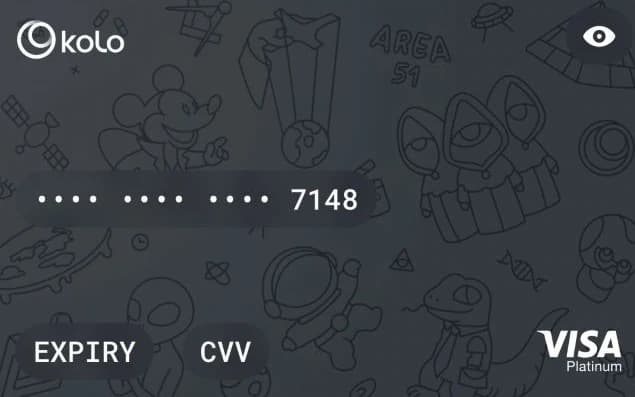
Kolo is the simple free option at 1% ongoing BTC after its first month, subject to its $100 monthly and $1-per-transaction caps. It charges no annual or FX fee.
Rizon Standard takes the second slot on access. A Ghanaian passport clears its nationality list, and the $1 offer with code spendnode provides a US-issued Visa Platinum, USD account details, card delivery to Ghana, and ATM withdrawals at a published $1 plus 0.65%. The free plan earns RizPoints rather than cashback and charges 1.7% plus $0.30 on non-USD spend.
Tria Signature delivers 4.5% on the first $1,000/month (then 1%) with a 1% FX fee and 0.5% on every payment (about 3% net on cedi spend) at $109/year, so it fits the higher-spending Accra professional who clears the fee. Crypto.com Icy is the premium exchange-linked option for users who want lounge access and a more familiar card stack.
KAST fits the MoMo-to-crypto bridges that millions of mobile-wallet users already understand.
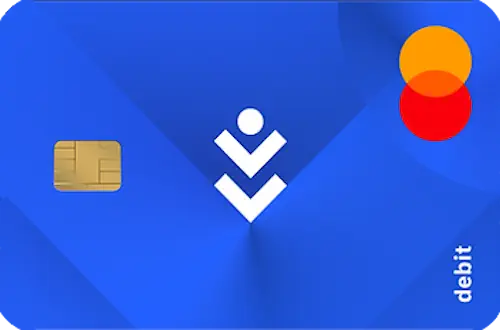
1. COCA Visa Card
Self-Banking: 8% Cashback + 5% APY + 0% FX
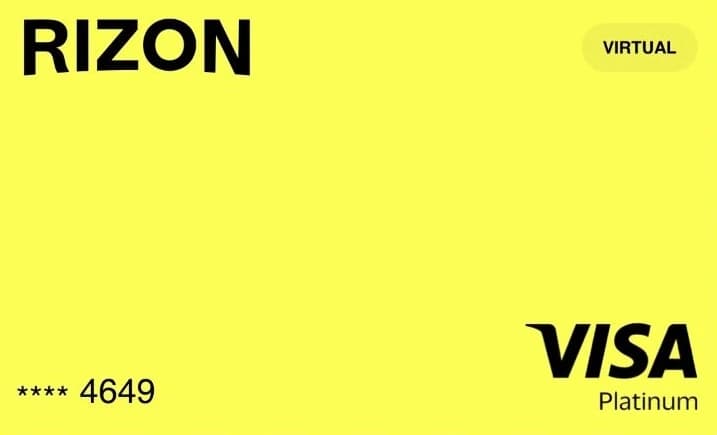
2. Rizon Standard Card
A $1 US virtual Visa Platinum for passport holders the traditional card system skips.
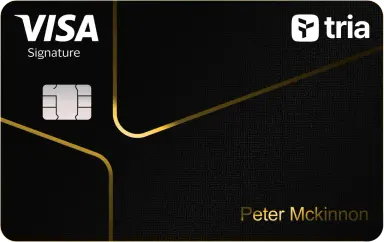
3. Tria Signature Card
High-Yield Self-Custody: 15% APY + Visa Signature Perks
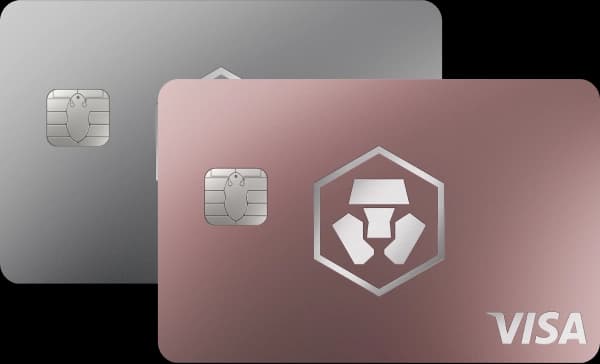
4. Private (Icy White / Rose Gold)
Private Tier: 4% Uncapped Cashback + Lounge Guest
5. Kolo Card
Earn Bitcoin on Purchases: 2% for 30 Days, Then 1% (Capped) + Visa Platinum + 170+ Countries
6. KAST K Card
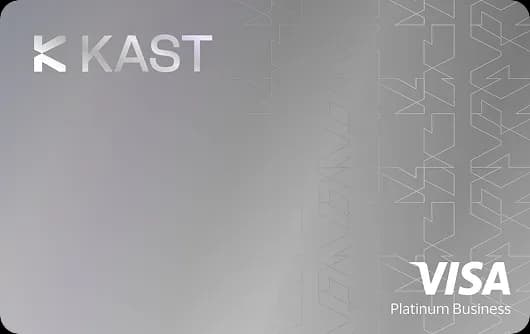
Free USD Cashback: 1.5% on First $2K/Month
Complete list:
All 42 crypto cards available in Ghana in September 2026
This table includes every crypto card we currently track for Ghana. Rows marked Top pick are ranked and reviewed above.
| Crypto card | Max rewards | Annual fee | FX fee | Type | Custody |
|---|---|---|---|---|---|
1 COCA Visa CardTop pick | Up to 8% rewards | Free | 0% | Debit | Self-custody |
2 Rizon Standard CardTop pick | Varies | Free | 1.7% | Crypto Backed Credit | Self-custody |
3 Tria Signature CardTop pick | Up to 4.5% rewards | $87 with code | 1% | Debit | Self-custody |
4 Private (Icy White / Rose Gold)Top pick | Up to 4% rewards | TBD | 0% | Prepaid | Custodial |
5 Kolo CardTop pick | Up to 2% rewards | Free | 0% | Prepaid | Custodial |
6 KAST K CardTop pick | Up to 1.5% rewards | Free | 0.5% | Prepaid | Custodial |
| Up to 10% rewards | Free | 0% | Prepaid | Custodial | |
| Up to 8% rewards | Free | 0% | Debit | Custodial | |
| Up to 8% rewards | TBD | 0% | Prepaid | Custodial | |
| Up to 6% rewards | $200 with code | 1% | Debit | Self-custody | |
| Up to 5% rewards | Free | 1% | Crypto Backed Credit | Self-custody | |
| Up to 5% rewards | TBD | 0% | Prepaid | Custodial | |
| Up to 5% rewards | Free | 1% | Debit | Self-custody | |
| Up to 4% rewards | Free | 1% / 1.8% | Debit | Hybrid | |
| Up to 4% rewards | Free | 0% | Crypto Backed Credit | Self-custody | |
| Up to 3% rewards | $10000 | 0.5% | Prepaid | Custodial | |
| Up to 3% rewards | $199 | 0.5% | Crypto Backed Credit | Self-custody | |
| Up to 3% rewards | $299.9 | 0% | Prepaid | Custodial | |
| Up to 3% rewards | $129 | 1.2% | Prepaid | Custodial | |
| Up to 2.5% rewards | $83.88 | 1.02% | Crypto Backed Credit | Self-custody | |
| Up to 2% rewards | $1000 | 0.5% | Prepaid | Custodial | |
| Up to 2% rewards | Free | 1% | Crypto Backed Credit | Self-custody | |
| Up to 2% rewards | $49.9 | 0% | Prepaid | Custodial | |
| Up to 2% rewards | $999 | 0% | Crypto Backed Credit | Self-custody | |
| Up to 1.5% rewards | Free | 0.5% | Prepaid | Custodial | |
| Up to 1.5% rewards | Free | 1% | Debit | Self-custody | |
| Up to 1.5% rewards | $249 | 0.25% | Crypto Backed Credit | Self-custody | |
| Up to 1% rewards | Free | 1% | Crypto Backed Credit | Self-custody | |
| Up to 1% rewards | Free | TBD | Prepaid | Custodial | |
| Up to 1% rewards | $47.88 | 1.275% | Crypto Backed Credit | Self-custody | |
| Up to 1% rewards | $99 | 0.5% | Crypto Backed Credit | Self-custody | |
| Up to 0.5% rewards | Free | 1% | Crypto Backed Credit | Self-custody | |
| none | Free | 0% | Crypto Backed Credit | Self-custody | |
| none | $30 | 0% | Crypto Backed Credit | Self-custody | |
| none | Free | 0% | Prepaid | Custodial | |
| cashback | Free | 1.75% | Prepaid | Self-custody | |
| cashback | $199 | 0.75% | Prepaid | Self-custody | |
| cashback | Free | 0.5% | Prepaid | Custodial | |
| none | Free | 1% | Prepaid | Self-custody | |
| Varies | Free | 1.2% | Prepaid | Custodial | |
| Varies | Free | 1.2% | Prepaid | Custodial | |
| points | Free | 1% | Debit | Self-custody |
Crypto Card Regulation in Ghana
Ghana passed landmark crypto legislation on December 29, 2025, when President John Dramani Mahama signed the Virtual Asset Service Providers (VASP) Act, 2025 (Act 1154) into law.
The law gives the Securities and Exchange Commission (SEC) and the Bank of Ghana (BoG) shared authority to license, supervise, and regulate digital-asset activity. Crypto trading now operates within an explicit regulated framework.
In February 2026, the BoG and SEC jointly directed all VASPs, including sandbox participants, to refrain from mass marketing or public promotional campaigns unless expressly authorized. The signal is that regulators want controlled adoption rather than a consumer gold rush.
On March 5, 2026, the BoG issued a mandatory registration notice requiring all VASPs operating in Ghana to register with the Bank, regardless of sandbox status. Registration is compulsory, and failure to comply may lead to sanctions or disqualification from future licensing.
On March 9, 2026, the SEC issued its Securities Industry Regulatory Sandbox Licensing Guidelines 2026, formalizing the path from sandbox to full license. The SEC launched a crypto regulatory sandbox on March 10, 2026, admitting 11 companies (Africoin, Blu Penguin, Goldbod, Hanypay, Hyro Exchange, HSB Global, Koinkoin, Whitebits, Vaulta, Xchain, Bsystem) into a 12-month pilot. Companies whose products are market-ready may transition to full licenses after six months.
Sandbox participants must submit custody model disclosures, AML/CTF frameworks including FATF Travel Rule compliance, and monthly reporting on transaction volumes, user adoption, and complaints resolution.
The BoG retains authority over payment-related VASPs and stablecoins. The BoG is monitoring rising demand for foreign-backed digital assets and has signaled interest in safeguarding monetary stability as crypto adoption grows.
Ghana recorded over $10 billion in cryptocurrency transactions by November 2025 (up from $6 billion the year before), with an estimated 3 million Ghanaians participating in digital asset markets. The regulatory framework positions Ghana alongside Kenya and South Africa as one of Africa's three most structured crypto markets.
COCA, Kolo, Tria, Crypto.com, KAST, and RedotPay are available to Ghanaian residents. The VASP Act 2025 provides a clear legal framework for crypto card usage, so crypto is no longer in a regulatory gray zone.
Tax Treatment of Card Rewards in Ghana
Ghana applies the Income Tax Act, 2015 (Act 896) to gains from the realization of assets and to business income. The GRA has not published a card-specific crypto disposal rule. Its personal income-tax schedule reaches 35% above GHS 600,000 of annual chargeable income, not GHS 240,000.
The GRA's capital-gains guidance describes a 15% rate for an individual's isolated gain on an asset disposal, while business gains enter annual returns. It does not establish that every crypto-card conversion qualifies for that 15% treatment. The facts of the transaction and the asset classification matter.
Example: You acquired BTC worth GHS 5,000 and it appreciated to GHS 15,000 when spent via a crypto card. The GHS 10,000 difference needs classification before any tax amount can be calculated. A recently acquired stablecoin may have a small price gain, but stablecoin funding does not automatically settle the treatment of rewards or other income.
| Cashback Type | When Received | When Spent via Card | Total Tax Burden |
|---|---|---|---|
| BTC cashback | Not specified for cards | Depends on classification and gain | Keep receipt and disposal records |
| USDC cashback | Not specified for cards | Price gain may be small | Do not assume a zero-tax reward |
| Points/perks | Depends on reward terms | Depends on whether an asset is disposed | Check the specific program |
Funding with recently acquired USDC can limit price gains at disposal, but it does not answer whether a reward or other crypto receipt is taxable. Keep transaction records while GRA guidance on card-specific treatment remains limited.
How to Apply from Ghana
Ghanaian crypto card applications require a Ghana Card (national ID card issued by the National Identification Authority, NIA, format GHA-XXXXXXXXX-X). The Ghana Card is biometric and is the primary identification document for all government and financial services since 2022. Foreign residents need a passport plus a residence or work permit issued by the Ghana Immigration Service.
Proof of address via utility bill from ECG (Electricity Company of Ghana) or PDS (Power Distribution Services), Ghana Water Company, or a bank statement from GCB Bank, Ecobank, or Standard Chartered. Ghanaian phone number (+233) may be required for verification. The Ghana Card number is now linked to TIN, SSNIT, and NHIS records, making verification simple for card issuers that accept it.
Physical cards ship to Ghanaian addresses within 21-30 business days (West Africa shipping times are longer than EEA or APAC). Virtual cards activate immediately and work for online purchases and Apple Pay/Google Pay where supported.
Spending Tips for Ghana
What Ghanaian Bank Cards Actually Cost You
Ghana's banking sector is dominated by domestic players with limited international card infrastructure.
| Bank | Debit FX Markup | Annual Card Fee | International Online | Cashback |
|---|---|---|---|---|
| GCB Bank | 3-5% | GHS 50-100 | Often declined | 0% |
| Ecobank | 3-5% | GHS 50-150 | Unreliable | 0% |
| Standard Chartered | 2-4% | GHS 100-200 | Most reliable | 0% |
| Fidelity Bank | 3-5% | GHS 50-100 | Often declined | 0% |
| CalBank | 3-5% | GHS 50-100 | Unreliable | 0% |
The bigger issue is the reliability of international transactions. GCB and Ecobank debit cards are frequently declined by international merchants, especially subscription services (Netflix, Spotify, Adobe). Standard Chartered is the most reliable for international acceptance but charges the highest annual fee. A crypto card funded with USDC eliminates both the FX markup and the decline problem.
The Cedi Depreciation Story
The cedi lost substantial value between 2020 and 2024, but it has not stayed in a 14-16 GHS/USD range throughout 2025-2026. The Bank of Ghana's September 15, 2026 interbank mid-rate was 11.4824 GHS/USD. A GHS 10,000 balance would be about $871 at that reference rate, versus roughly $1,818 at 5.5 GHS/USD in early 2020; that comparison ignores interest, fees, and changes in purchasing power within Ghana.
Ghana's 2022 debt crisis led to a sovereign default, an IMF bailout ($3 billion Extended Credit Facility), and the Domestic Debt Exchange Programme (DDEP) that restructured government bonds held by banks and pension funds. This shook confidence in the entire banking system. Holding stablecoins (USDC, USDT) provides a hedge that Ghana's banking sector cannot currently offer, and crypto cards convert those stablecoins to cedi at the moment of purchase at fair market rates.
Cost of Living by City
| City/Area | 1-Bed Rent/Month | Groceries/Month | Card-Eligible Spending |
|---|---|---|---|
| Accra (East Legon) | GHS 3,000-8,000 | GHS 1,500-3,000 | GHS 2,500-6,000 |
| Accra (Osu/Labone) | GHS 2,500-6,000 | GHS 1,200-2,500 | GHS 2,000-5,000 |
| Accra (Tema) | GHS 1,500-3,500 | GHS 1,000-2,000 | GHS 1,500-3,500 |
| Kumasi (Ahodwo) | GHS 1,000-2,500 | GHS 800-1,500 | GHS 1,200-2,500 |
| Takoradi | GHS 800-2,000 | GHS 700-1,500 | GHS 1,000-2,500 |
| Cape Coast | GHS 600-1,500 | GHS 600-1,200 | GHS 800-1,800 |
The Accra tech professional earning GHS 4,000-15,000/month ($260-970) is the core crypto card demographic. East Legon, Cantonments, and Airport Residential Area host the highest concentration of card-accepting merchants.
Mobile Money: The Bridge to Crypto Cards
Ghana's mobile money ecosystem is among the most advanced in the world. MTN MoMo dominates with 15+ million active wallets and processes over GHS 1 trillion annually. Vodafone Cash and AirtelTigo Money complete the mobile money triad. Mobile money interoperability (launched 2018 via Ghana Interbank Payment and Settlement Systems, GhIPSS) means money moves freely between networks - a level of digital payment maturity that most African countries lack.
This culture of digital-first payments means Ghanaians are already comfortable with cashless transactions. The leap from MTN MoMo to a crypto card is smaller than in cash-dominant economies. Some crypto platforms (like Paxful) already support GHS deposits via mobile money, creating a MoMo-to-crypto-to-card spending chain that feels natural to Ghanaian users.
Card Selection by Use Case
- COCA (up to 8%): $0 annual, 0% FX. Tiered cashback (1% Starter to 8% Elite, requires 30k COCA staked), non-custodial smart wallet.
- Tria Signature (4.5% on first $1,000/mo, then 1%): $109/year, 1% FX + 0.5%/payment, ~3% net. USDT cashback that can take up to three months to arrive.
- Crypto.com Icy (4%): CRO stake. Airport lounge access at Kotoka International (ACC).
- Kolo (1% BTC ongoing, 2% for the first 30 days, capped $100/mo): $0 annual, 0% FX. Free BTC cashback.
- KAST (1.5% USD cashback on first $2K/mo): $0 annual, 0.5-1.75% FX. Best free card for MoMo-funded spending.
COCA vs KAST vs Kolo Break-Even Math
| Monthly Spend | COCA (Elite 8% staked, $0) | KAST (1.5% USD, $2K/mo cap, $0) | Kolo (1% BTC ongoing, $0) | Crypto.com Icy (4%, CRO stake) |
|---|---|---|---|---|
| GHS 2,000 | GHS 1,920/yr | GHS 360/yr | GHS 240/yr | GHS 960/yr + lounges |
| GHS 3,000 | GHS 2,880/yr | GHS 540/yr | GHS 360/yr | GHS 1,440/yr + lounges |
| GHS 5,000 | GHS 4,800/yr | GHS 900/yr | GHS 600/yr | GHS 2,400/yr + lounges |
| GHS 8,000 | GHS 7,680/yr | GHS 1,440/yr | GHS 960/yr | GHS 3,840/yr + lounges |
COCA tops out at 8% cashback with 30,000 COCA staked, while Starter earns 1%.
KAST at 1.5% USD leads Kolo at 1% ongoing BTC in these examples. Kolo's figures assume purchases at or under $100, where its per-transaction cap does not bite. Crypto.com Icy adds 4% and airport lounge access at Kotoka International Airport (ACC).
Spending Scenario: GHS 3,000/month (about $261 at the September 15 interbank reference rate)
| Funding Method | Annual Spend | Rewards (Kolo 1% BTC) | Cedi Hedge Value | Total Benefit |
|---|---|---|---|---|
| USDC (stablecoin) | GHS 36,000 | GHS 360 | GHS 5,000+ saved | GHS 5,360+ |
| GHS (bank savings) | GHS 36,000 | approx. GHS 0 | GHS 0 (lost to depreciation) | approx. GHS 0 |
The rewards (GHS 360) cover a few days of groceries at Melcom or Shoprite. But the cedi hedge (avoiding 20-30% annual depreciation on savings) is worth GHS 5,000+ annually on that spending level.
Ghana's Tech and Startup Ecosystem
Accra is emerging as a West African tech hub alongside Lagos. MEST (Meltwater Entrepreneurial School of Technology) in East Legon trains entrepreneurs and incubates startups. Impact Hub Accra, iSpace Foundation, and Ghana Hubs Network support the growing ecosystem.
Notable Ghanaian fintech companies include Zeepay (mobile money remittance, backed by Sequoia), ExpressPay (digital payments), Hubtel (e-commerce and payments), and Fido (AI lending). Google chose Accra for its first African AI research center.
The developer and tech professional workforce earning in both GHS and USD (freelancers on Upwork, Fiverr, Andela remote contracts) are natural crypto card users. Receiving payment in USDC avoids the cedi depreciation problem and provides immediate spending access through a zero-FX card.
Cocoa, Oil, and the Real Economy
Ghana is the world's 2nd largest cocoa producer (after Ivory Coast) and has been an oil producer since the Jubilee Field discovery in 2010. The COCOBOD (Ghana Cocoa Board) manages the cocoa supply chain, while the oil sector operates through the GNPC (Ghana National Petroleum Corporation). These commodity exports drive foreign exchange inflows but create volatility: when cocoa prices drop or oil revenues fall, the cedi depreciates sharply, as happened during the 2022 debt crisis.
For ordinary Ghanaians, this commodity dependency means their savings are hostage to global markets they cannot control. Holding stablecoins decouples personal savings from cocoa price fluctuations and government fiscal management. When Ghana's debt restructuring under the IMF's Extended Credit Facility caused the cedi to crash 50%+ in 2022, USDT holders were unaffected.
Online Shopping and Subscription Spending
Ghanaian bank cards are frequently declined by international merchants, making crypto cards essential for online shopping. Key platforms: Amazon (no direct shipping; uses freight forwarders and UK/US addresses), AliExpress (ships directly, popular for electronics), Jumia Ghana (domestic e-commerce, GHS pricing), Tonaton (Ghanaian classifieds).
International subscriptions that require reliable card acceptance: Netflix (GHS 35-80/month), Spotify, Apple Music, Adobe Creative Cloud, Microsoft 365, Canva Pro, ChatGPT Plus. A crypto card never gets declined by international merchants.
Cross-Border and Travel Spending
Ghana's geographic position creates frequent cross-border spending. Togo (Lome is 2 hours from Accra, weekend shopping trips), Ivory Coast (Abidjan business connections, ECOWAS trade), Nigeria (Lagos is the major West African business hub), UK (GBP, historical ties, large Ghanaian diaspora in London), US (USD, family visits, education), and South Africa (ZAR, business and education).
The ECOWAS free movement protocol means frequent travel within West Africa, and zero-FX crypto cards eliminate the 3-5% bank markup on every regional transaction.
The Diaspora: $4B+ in Remittances
Ghana receives over $4 billion in annual remittances (World Bank), with major corridors from the UK (Ghanaians in London, Manchester), US (New York, New Jersey, Virginia, Maryland), Germany (Hamburg, Dusseldorf), Italy, Canada (Toronto), and Netherlands. Traditional remittance fees run 5-8% on the Ghana corridor.
A family member abroad sending $300/month through WorldRemit or Western Union loses $15-24 monthly, $180-288 annually. The same amount sent as USDC to a crypto card costs under $1. That annual saving (GHS 2,700-4,300) covers a month of groceries in Kumasi.
Local Payment Infrastructure
Card acceptance is concentrated in Accra. Accra Mall, West Hills Mall, Marina Mall, and Junction Mall accept Visa/Mastercard. Supermarkets (Shoprite, Melcom, Palace, Koala), hotels (Kempinski, Movenpick, Labadi Beach), and modern restaurants in Osu, Labone, East Legon, and Cantonments have POS terminals.
Kumasi City Mall and Kumasi Kejetia Market (the largest market in West Africa) represent the split: the mall accepts cards, the traditional market is cash and MoMo only. Outside Accra and Kumasi, card acceptance drops. MTN MoMo is accepted across the country. Apple Pay is not officially supported in Ghana.
Supported Exchanges & Wallets in Ghana
Ghana's crypto ecosystem runs primarily through P2P platforms and a handful of local exchanges. Paxful has been popular since 2018, particularly for gift card-to-crypto trading, a uniquely West African pattern where US and UK gift cards (Amazon, iTunes, Steam) are traded for BTC and USDT.
Yellow Card (pan-African, backed by $40M Series B) provides GHS on/off-ramps with mobile money integration. Quidax serves Ghanaian users alongside its Nigerian base. BitLipa and Bundle Africa also operate in the market. Binance was widely used before increasing regulatory scrutiny across Africa.
We mapped Ghana's funding routes across P2P and local exchanges. None of these platforms offer Visa/Mastercard spending cards. They serve as the critical GHS-to-crypto on-ramp: convert cedis to USDT via Paxful or Yellow Card, then load onto a crypto card for spending.
Among global card issuers, COCA heads the field, reaching 8% through one of the stronger cards with cashback, though higher tiers require COCA staking and rewards share a monthly claim capacity.
Kolo adds 1% ongoing BTC after its first month, subject to its caps. Tria Signature pays 4.5% on the first $1,000/month before dropping to 1%; its 1% FX and 0.5% payment fee leave about 3% net on cedi spend at $109/year.
Crypto.com provides metal tiers from Midnight Blue (0%, free) through Icy (4%, CRO stake), with Icy adding airport lounge access at Kotoka International (ACC).
KAST provides 1.5% USD cashback on the first $2,000/month at $0 annual with 0.5-1.75% FX, fitting Ghanaian users coming from MTN MoMo or OTC-funded exchange balances. RedotPay offers Virtual (free) and Physical ($100) at 1.2% FX.
For a Ghanaian freelancer in Accra's East Legon earning $800/month on Upwork, receiving USDC and spending through Kolo at 1% ongoing BTC cashback (2% for the first 30 days) still trims the Payoneer withdrawal fees and bank FX markups. The VASP Act 2025 and SEC sandbox (11 companies) formalize what 3 million Ghanaians are already doing. The cedi's depreciation makes the stablecoin hedge the primary value, with cashback as a bonus.
Written by SpendNode Editorial
Frequently Asked Questions
What is Ghana's crypto tax rate?
15% capital gains tax on disposal of assets including crypto. Progressive income tax (0-35%) may also apply. Fund with USDC to avoid taxable gains. Tax enforcement on crypto is still developing.
Which crypto card is best for Ghana?
COCA leads the list: up to 8% with $0 annual and 0% FX, though the top tier requires 30,000 COCA and rewards share a monthly claim capacity (the free Starter tier pays 1%). Tria Signature nets about 3% on cedi spend after its payment and FX fees at $109/year. Kolo and KAST remain simpler free alternatives, subject to their respective reward caps and restrictions.
Can I fund crypto cards with mobile money in Ghana?
Not directly. However, you can buy crypto via P2P platforms (Binance P2P, Yellow Card) using mobile money (MTN MoMo), then load your crypto card. This provides an accessible on-ramp.
Is crypto legal in Ghana?
Yes. The VASP Act 2025 (Act 1154), signed December 29, 2025, explicitly legalizes crypto trading under SEC and Bank of Ghana shared regulation. The SEC launched a crypto sandbox in March 2026 with 11 companies. Ghana recorded $10B in crypto transactions by November 2025.
Other Countries
View all 112 countries →


Latest Page Changes to the Best Crypto Cards in Ghana Guide
- BoG mandatory VASP registration notice (March 5, 2026)
- SEC Securities Industry Regulatory Sandbox Licensing Guidelines 2026 (March 9)
- BoG/SEC joint marketing restrictions for VASPs (February 2026)
- Named all 11 sandbox firms (Africoin, Blu Penguin, Goldbod, Hanypay, Hyro Exchange, HSB Global, Koinkoin, Whitebits, Vaulta, Xchain, Bsystem)
- 6-month fast-track to full license for market-ready sandbox participants
- VASP Act 2025 (Act 1154) signed December 29, 2025 - crypto now explicitly legal. SEC crypto sandbox launched March 10, 2026 with 11 companies. $10B in crypto transactions and 3M participants. BoG cedi-backed stablecoin option and Rwanda cross-border pilot noted