

Best Crypto Cards in Poland (2026)
Poland offers the full EEA card lineup with a cleaner 19% tax framework than much of Europe, but PLN spending still punishes the wrong card structure. This guide compares the cards that survive the FX and tax math.
Verified for Poland
55 crypto cards available
Local currency: PLN
PKO Bank Polski, mBank, ING Bank Slaski, and Santander Polska debit cards earn zero cashback and charge 3-5% on every non-PLN transaction. For a country where thousands of IT professionals earn in EUR or USD from foreign clients, where Amazon.de and Zalando charge in EUR, and where weekend trips to Berlin or Prague are routine, that FX markup is a constant drain. On PLN 3,000/month in non-PLN spending, a Polish bank card costs PLN 1,080-1,800/year in FX fees alone.
A crypto card with 0% FX removes the issuer's FX markup and can add cashback. Poland taxes taxable crypto-disposal income at 19%; excess documented acquisition costs carry forward under crypto-specific rules, not the ordinary five-year loss rule. The PLN (zloty) is not pegged to the euro, so cross-currency fees matter. As an EU member, Polish residents can access EEA-passported card programs that accept their address.
Summary:
Which crypto cards are best in Poland?
The best crypto cards in Poland in September 2026 are Bitget Card, Plasma One Core Card, Tria Signature Card, Gnosis Pay Card, Private (Icy White / Rose Gold), and Plutus Visa Card. The detailed ranking below explains the local tax, fee, and availability trade-offs.
| Crypto card | Base reward | Net after fees | Annual fee | FX fee | Type |
|---|---|---|---|---|---|
| 0.5% baseup to 8% by holding 20,000+ BGB | 0.5% | Free | 0% | Debit | |
| 3% base3% base, up to 5% on AI spend; ChatGPT Go rebate; $199/yr or 20k XPL | 2.5% | $199 | 0.5% | Crypto Backed Credit | |
| 4.5% base4.5% on the first $1,000/mo, then 1% | 3% | $87 with code | 1% | Debit | |
| 1% baseup to 5% with 100 GNO + OG NFT; weekly eligible-spend cap $250-$1,250 by tier | 1% | Free | 0% | Debit | |
| 4% baseneeds a $50k CRO stake to hold the tier | 4% | TBD | 0% | Prepaid | |
| 3% baseup to 9% by stacking PLU; allowance-capped per plan | 0.5% | $240 | 2.5% | Debit | |
| 3% base3% on the first $2,000/month, then 1% and 0.5% | 2.5% | Free | 0.5% | Crypto Backed Credit | |
| 1% base2% for the first 30 days, then 1%; also capped at $1/EUR 1 per transaction ($2/EUR 2 during intro) and $100/EUR 100 per month | 1% | Free | 0% | Prepaid | |
| 1.5% base1.5% in USDC on Credit Mode spend; cashback capped at $100/mo | 1.3% | $249 | 0.25% | Crypto Backed Credit |
Our Poland fee comparison ranks Bitget as the highest cashback option for exchange users. Plutus reaches up to 9% with subscription rebates (1-3 perks), but the 2.5% non-domestic FX fee makes it poor value for PLN-based spending. Polish users would pay 2.5% on every transaction since Plutus settles in EUR.
At approximately PLN 1,100/year (GBP 240) for Premium with a GBP 1,000/month eligible spend cap, most Polish users are better served by 0% FX alternatives. Gnosis Pay offers 5% GNO through one of the stronger reward cards for self-custody users. For most cards, the 0% FX on non-PLN transactions is the foundational savings layer that makes crypto cards a clear upgrade over any Polish bank debit product.
Plasma One Core reads differently in Poland than anywhere else in the EU because of the domestic custody mess: a thrice-vetoed MiCA bill, the Zondacrypto probe, and local exchanges eyeing Lithuanian licenses. A card where custody never leaves the user's wallet simply has no Polish counterparty to worry about.
Entry is $199/yr or a 20,000 XPL lock, the 3% base pays in XPL and tapers past $1,000 of monthly spend, and its roughly 1.5% all-in FX means the 0%-FX cards above still win the cross-currency job.
xPlace Gold keeps FX to 0.25% on a PLN purchase drawing from a foreign-currency balance. For new memberships, Credit Mode pays 1.5% USDC up to $100 cashback per month and Cash Mode pays none. That leaves the $249 annual fee and variable borrowing costs to justify against 0%-FX alternatives before a Polish freelancer treats it as an everyday card.
Best Card For Every Need in Poland
Top 9 Crypto Cards in Poland
Polish bank cards charge 3-5% markup on non-PLN transactions, the highest FX penalty in the EEA. As an EU member where EUR-priced shopping is the norm, that markup bleeds thousands of zlotys per year before you even consider the flat 19% CGT on disposals.
Bitget leads the Polish list on raw cashback, while Tria Signature adds a no-staking alternative (4.5% on the first $1,000/mo, then 1%; about 3% net once its 1% FX and 0.5% per-payment fees land).
Kolo at 1% ongoing BTC (2% intro) is a weaker pick than in Germany, since each BTC cashback spend is a 19% PIT-38 disposal event, but its 0% FX on stablecoin-funded PLN spending removes the 3-5% bank-card FX markup on non-PLN purchases. Crypto.com Icy covers the lifestyle-card angle for users who value lounge access and CRO rewards.
Plasma One Core follows on custody grounds; its funding balance stays in the user's own wallet, though XPL rewards and foreign-currency conversion still need attention. The 0.25% FX on xPlace Gold is lower, but it no longer offsets Gold's fee and capped 1.5% reward for a typical cardholder.
Plutus reaches 9% with subscription rebates, though the 2.5% FX fee on non-EUR transactions makes it poor value for PLN-based spending. Gnosis Pay offers self-custody at 1-5% GNO cashback. ether.fi Core pays stepped ETHFI rewards from stablecoin-funded purchases and can also lend against eligible collateral; the latter needs a case-specific Polish tax assessment.
xPlace Gold closes the list for EUR/USD earners who specifically want a Kamino-backed credit line and low issuer FX. Its USDC cashback needs separate tax records, and the $100 monthly ceiling limits how much of the $249 fee spending can recover. Existing paid members should check whether an earlier rate still applies to their account.
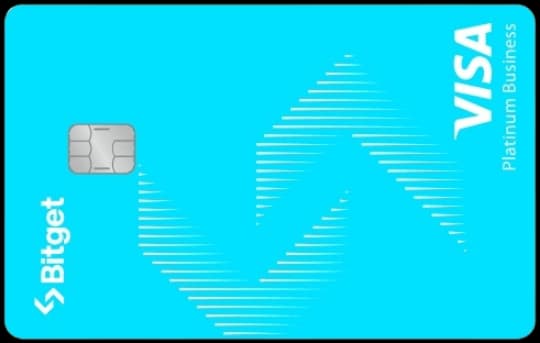
1. Bitget Card
Trade and Spend: Up to 8% BGB Cashback for Bitget Traders

2. Plasma One Core Card
Self-Custodial Visa for AI Spenders - 3% Base, 5% on AI Spend, ChatGPT Go Rebate

3. Tria Signature Card
High-Yield Self-Custody: 15% APY + Visa Signature Perks
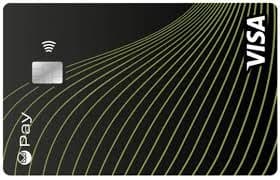
4. Gnosis Pay Card
Your Keys, Your Card, Your Money
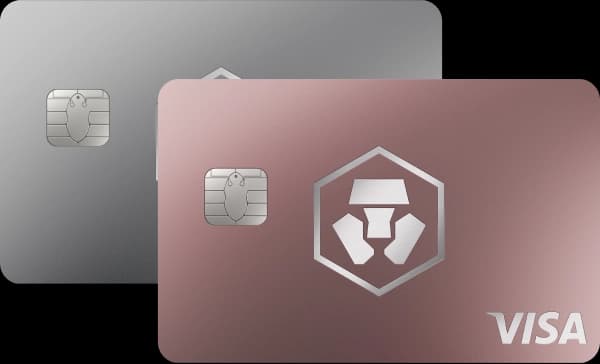
5. Private (Icy White / Rose Gold)
Private Tier: 4% Uncapped Cashback + Lounge Guest

6. Plutus Visa Card
Non-Custodial PLU Rewards on Eligible Spend + Lifestyle Perks

7. ether.fi Core Card
3% Back on the First $2,000 Each Month, No Stake Required
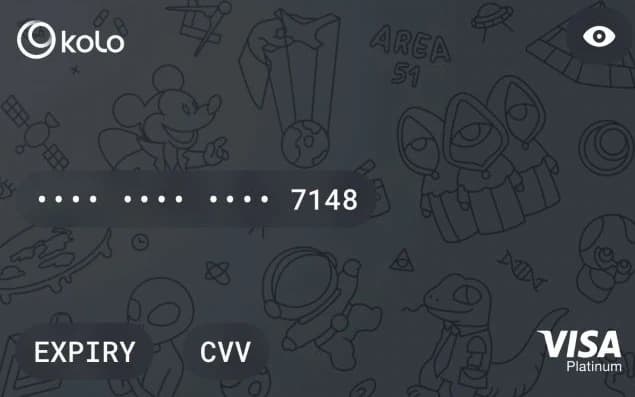
8. Kolo Card
Earn Bitcoin on Purchases: 2% for 30 Days, Then 1% (Capped) + Visa Platinum + 170+ Countries

9. Xplace Gold Card
10% Off Gold with SPENDNODE: Pay $224.10 Instead of $249
Complete list:
All 55 crypto cards available in Poland in September 2026
This table includes every crypto card we currently track for Poland. Rows marked Top pick are ranked and reviewed above.
| Crypto card | Max rewards | Annual fee | FX fee | Type | Custody |
|---|---|---|---|---|---|
1 Bitget CardTop pick | Up to 8% rewards | Free | 0% | Debit | Custodial |
2 Plasma One Core CardTop pick | Up to 3% rewards | $199 | 0.5% | Crypto Backed Credit | Self-custody |
3 Tria Signature CardTop pick | Up to 4.5% rewards | $87 with code | 1% | Debit | Self-custody |
4 Gnosis Pay CardTop pick | Up to 5% rewards | Free | 0% | Debit | Self-custody |
5 Private (Icy White / Rose Gold)Top pick | Up to 4% rewards | TBD | 0% | Prepaid | Custodial |
6 Plutus Visa CardTop pick | Up to 9% rewards | $240 | 2.5% | Debit | Non-custodial |
7 ether.fi Core CardTop pick | Up to 3% rewards | Free | 0.5% | Crypto Backed Credit | Self-custody |
8 Kolo CardTop pick | Up to 2% rewards | Free | 0% | Prepaid | Custodial |
9 Xplace Gold CardTop pick | Up to 1.5% rewards | $249 | 0.25% | Crypto Backed Credit | Self-custody |
| Up to 10% rewards | Free | 3% | Debit | Hybrid | |
| Up to 8% rewards | Free | 0% | Debit | Self-custody | |
| Up to 8% points | Free | 0.4% | Debit | Custodial | |
13 | Up to 8% rewards | TBD | 0% | Prepaid | Custodial |
| Up to 8% rewards | Free | 0% | Debit | Hybrid | |
| Up to 6% rewards | $200 with code | 1% | Debit | Self-custody | |
| Up to 5% rewards | TBD | 0% | Prepaid | Custodial | |
| Up to 4% rewards | Free | 0% | Crypto Backed Credit | Self-custody | |
| Up to 4% rewards | Free | 0% | Crypto Backed Credit | Self-custody | |
| Up to 3% rewards | Free | 0.25% | Crypto Backed Credit | Self-custody | |
| Up to 3% rewards | Free | 0% | Crypto Backed Credit | Self-custody | |
| Up to 3% rewards | $10000 | 0.5% | Prepaid | Custodial | |
| Up to 3% rewards | Free | 0% | Debit | Custodial | |
| Up to 3% rewards | $299.9 | 0% | Prepaid | Custodial | |
| Up to 3% rewards | $129 | 1.2% | Prepaid | Custodial | |
| Up to 3% rewards | Free | 0% | Debit | Hybrid | |
| Up to 2% rewards | Free | 0% | Debit | Custodial | |
| Up to 2% rewards | Free | 0% | Debit | Self-custody | |
| Up to 2% rewards | $1000 | 0.5% | Prepaid | Custodial | |
| Up to 2% rewards | Free | 0% | Debit | Custodial | |
| Up to 2% rewards | Free | 0.2% | Crypto Backed Credit | Hybrid | |
| Up to 2% rewards | Free | 1% | Crypto Backed Credit | Self-custody | |
| Up to 2% rewards | $49.9 | 0% | Prepaid | Custodial | |
| Up to 2% rewards | $999 | 0% | Crypto Backed Credit | Self-custody | |
| Up to 1.5% rewards | Free | 0.5% | Prepaid | Custodial | |
| Up to 1.5% rewards | Free | 0.5% | Prepaid | Custodial | |
| Up to 1.5% rewards | Free | 1% | Debit | Self-custody | |
| Up to 1% rewards | Free | 0% | Debit | Custodial | |
| Up to 1% rewards | Free | 1.75% | Debit | Self-custody | |
| Up to 1% rewards | Free | 1% | Debit | Self-custody | |
| Up to 1% rewards | Free | TBD | Prepaid | Custodial | |
| Up to 1% rewards | $99 | 0.5% | Crypto Backed Credit | Self-custody | |
| Up to 0.5% rewards | Free | 0% | Debit | Hybrid | |
| Up to 0.5% rewards | Free | 1% | Crypto Backed Credit | Self-custody | |
| none | Free | 0% | Prepaid | Custodial | |
| Varies | Free | 1.7% | Prepaid | Custodial | |
| cashback | Free | 1.75% | Prepaid | Self-custody | |
| cashback | $199 | 0.75% | Prepaid | Self-custody | |
| cashback | Free | 0.5% | Prepaid | Custodial | |
| none | Free | 1% | Prepaid | Self-custody | |
| none | Free | 1% | Debit | Self-custody | |
| Varies | Free | 1.5% | Debit | Custodial | |
| Varies | Free | 1.2% | Prepaid | Custodial | |
| Varies | Free | 1.2% | Prepaid | Custodial | |
| Varies | Free | 1.2% | Prepaid | Custodial | |
| points | Free | 1% | Debit | Self-custody |
Crypto Card Regulation in Poland
The Komisja Nadzoru Finansowego (KNF, Polish Financial Supervision Authority) oversees all crypto-asset service providers operating in Poland. Poland also maintains a publicly searchable register of virtual-currency activity that pre-dates MiCA, established under Poland's implementation of the EU's 5th Anti-Money Laundering Directive (5AMLD).
Poland was among the earlier EU countries to require formal VASP registration, creating a compliance baseline years before the broader MiCA framework arrived.
Under MiCA, the KNF is designated as the national competent authority. EEA-licensed crypto card issuers passport their licenses into Poland without needing separate KNF registration for the card product.
However, Poland faces a unique MiCA implementation crisis. President Nawrocki has vetoed successive national MiCA implementation bills three times: Bill 1424 in December 2025, Bill 2064 on February 12, 2026, and Bill 2363 on June 11, 2026, each time arguing the legislation grants the KNF excessive regulatory powers.
Parliament's attempts to overturn the vetoes fell short of the three-fifths majority required, including the failed override on April 18, 2026. Without this legislation, the KNF cannot formally process MiCA license applications, and Poland remains the only EU member state without domestic MiCA implementation.
With the MiCA transitional deadline of July 1, 2026 now passed, Polish-domiciled crypto companies that lack MiCA authorization have lost their legal ability to operate.
That limbo leaves the country without a clean domestic MiCA implementation path and extends the uncertainty facing Poland-based crypto firms, even as passported EEA providers continue operating.
Foreign firms with MiCA licenses from other EU countries (e.g., Coinbase via Luxembourg) can still passport into Poland, but Polish domestic exchanges face potential shutdown. Some Polish crypto businesses are already exploring licenses in Lithuania, Malta, and France as contingency.
That consumer-protection gap stopped looking theoretical in April 2026, when Polish prosecutors opened a probe into Zondacrypto over alleged fraud and inaccessible customer funds. The case affects a Poland-linked domestic exchange rather than the passported EEA card issuers covered on this page, but it reinforces the same practical point: local exchange and custody risk in Poland is now more salient than the availability of the major EEA card programs themselves.
For card users, the practical impact is limited. The cards recommended on this page are issued by EEA-licensed companies passporting into Poland, not by Polish-domiciled entities. Their availability is unaffected by the domestic legislative impasse.
Poland's crypto advertising rules follow the EU framework, requiring risk warnings and prohibiting misleading performance claims. The KNF has occasionally issued investor warnings about specific crypto platforms but has not attempted to restrict access to EEA-licensed services.
The Generalny Inspektor Informacji Finansowej (GIIF, General Inspector of Financial Information) oversees AML/CFT compliance at the operational level, working alongside the KNF. Crypto exchanges and card issuers operating in Poland must implement customer due diligence procedures that comply with Poland's ustawa o przeciwdzialaniu praniu pieniedzy (Anti-Money Laundering Act).
All major EEA-licensed card issuers serve Poland. Crypto.com, Plutus, Wirex, Gnosis Pay, Bitpanda, Bitget, Gate.io, KuCoin, and Kraken all operate under passported EEA licenses. The KNF register is publicly searchable at knf.gov.pl.
Tax Treatment of Card Rewards in Poland
Poland taxes positive income from virtual-currency disposals at 19%. A sale for fiat or a payment for goods or services can create taxable proceeds. The annual calculation compares those proceeds with documented direct acquisition and disposal costs; the tax authority's guidance does not impose the FIFO rule claimed by this page.
The 19% rate is one part of the comparison. Other countries classify crypto gains differently, apply holding-period rules, or changed rates in 2026. A simple league table can obscure the actual tax on a given card-funded disposal.
The Polish tax authority distinguishes a crypto acquisition-cost excess from an ordinary tax loss. Documented costs that exceed crypto-disposal proceeds carry into the next year's crypto cost calculation; the ordinary five-year loss deduction does not apply to virtual currencies.
| Annual crypto-disposal proceeds | Current-year documented costs | Earlier unclaimed costs | Taxable income | Tax at 19% |
|---|---|---|---|---|
| PLN 15,000 | PLN 5,000 | PLN 0 | PLN 10,000 | PLN 1,900 |
| PLN 15,000 | PLN 5,000 | PLN 10,000 | PLN 0 | PLN 0 |
| PLN 4,020 | PLN 4,000 | PLN 0 | PLN 20 | PLN 3.80 |
Cashback tax treatment: A cash-equivalent reward, a token distribution, and a purchase-price rebate need not share one tax classification. Keep the receipt value and later disposal records rather than assuming that all crypto cashback is taxed at receipt or that stablecoin rewards are exempt.
PLN/FX complication: We flag a Poland-specific risk: crypto cards settle in EUR or USD, and when converted to PLN at the point of sale, the exchange rate introduces a secondary taxable element on stablecoins. If you bought USDC at 1 USD = 4.10 PLN and spent it when 1 USD = 4.20 PLN, the PLN 0.10/dollar difference is technically a taxable FX gain. At Poland's 19% rate, this is usually trivial (a few groszy per transaction), but strict compliance requires tracking it.
Crypto-to-crypto swaps are tax-neutral in Poland. Converting BTC to USDC does not trigger the 19% tax - only conversion to PLN fiat or payment for goods/services does. This means Polish users can freely swap appreciated crypto to stablecoins before loading a card, with no tax on the swap itself.
Reporting: Crypto gains and losses are reported on the PIT-38 annual tax return, due by April 30 of the following year. The PIT-38 is specifically for capital gains, separate from employment income (PIT-37).
Koszty uzyskania przychodu (deductible costs) include documented direct acquisition costs and qualifying disposal costs. The tax authority excludes costs of crypto-to-crypto swaps and financing a purchase. DAC8 reporting covers 2026 transactions, with first platform reports due later; it does not remove the need for a complete PIT-38 record.
How to Apply from Poland
Polish crypto card applications require a Dowod osobisty (national identity card, issued by the urzad gminy) or Paszport (passport). The PESEL (Powszechny Elektroniczny System Ewidencji Ludnosci, 11-digit universal identification number assigned to all Polish residents) is required by most financial services for tax reporting to KAS.
The e-Dowod (electronic identity card, issued since March 2019) contains an electronic layer with a qualified electronic signature, which some platforms may support for faster digital verification. In practice, most EEA card issuers use the standard selfie + ID photo verification flow rather than integrating with Polish e-Dowod infrastructure.
Proof of address via utility bills from PGE or Tauron (electricity), PGNiG (gas), or Vectra/Orange/Play (telecoms). Bank statements from PKO BP, mBank, ING, Santander Polska, or BNP Paribas are also accepted. A Zaswiadczenie o zameldowaniu (registration certificate from the local urzad gminy) is the strongest form of address verification, though many EEA issuers accept standard utility bills without requiring the formal certificate.
EU/EEA citizens residing in Poland can use their home-country national ID. Non-EU residents present their Karta pobytu (residence card) issued by the voivodeship office (urzad wojewodzki). Physical cards ship via Poczta Polska or courier within 5-10 business days. Virtual cards are available immediately for Apple Pay and Google Pay.
Spending Tips for Poland
FX Savings: The Primary Value Proposition
Poland uses the zloty (PLN), and the PLN/EUR exchange rate fluctuates freely. Every EUR-priced transaction through a Polish bank card incurs a 3-5% markup. For many Polish residents, especially the large IT and tech workforce that works for foreign clients or on EUR-denominated contracts, non-PLN spending is a large share of monthly expenses:
- Amazon.de / Amazon.pl (many categories redirect to .de): EUR pricing
- Netflix, Spotify, ChatGPT, GitHub, Figma: USD/EUR billing
- Booking.com, Ryanair/Wizzair: EUR pricing on international routes
- Cross-border shopping in Germany (Berlin, Dresden) or Czech Republic (Prague): EUR/CZK
A crypto card with 0% FX eliminates the markup entirely. On PLN 4,000/month in non-PLN spending, that is PLN 1,440-2,400/year saved in FX fees alone, before cashback.
Card Selection for Polish Residents
- Plutus (up to 9%): Perk rebates on Netflix (PLN 43/mo), Spotify (PLN 20/mo), and Amazon Prime (PLN 49/yr) can offset subscription costs, but the 2.5% FX fee on every non-EUR transaction makes it poor value for general PLN spending. Best only if subscriptions dominate your card volume. PLU staking unlocks higher cashback.
- Tria (up to 6% headline, ~3% net Signature / ~4.5% Premium): Signature at 4.5% on the first $1,000/mo ($109/yr) or Premium at 6% on the first $2,000/mo ($250/yr), each trimmed by a 1% FX charge and 0.5% per payment. USDT cashback avoids volatile token PIT-38 exposure.
- Gnosis Pay (1-5% GNO, free): Self-custody Visa from a Safe wallet. 1% base, up to 4% with 100+ GNO held (not staked), 5% with OG NFT.
- Kolo (1% ongoing BTC, 2% intro, 0% FX on stablecoin top-ups, $0): Free BTC-payout card. Later BTC disposals need PIT-38 records; the tax due depends on annual crypto proceeds and costs.
- Crypto.com Icy (4%, CRO stake): Metal card with lounge access at Warsaw Chopin (WAW), Krakow (KRK), and Gdansk (GDN).
- ether.fi Core (3% ETHFI on first $2K/mo, then 1% / 0.5%): direct stablecoin spending or optional borrowing against eligible collateral.
- Bitpanda (1%): $0 annual, 0% FX simplicity. 1% on crypto-funded purchases (fiat and stablecoin excluded), 600+ assets. No staking, no tiers, no complexity.
Bitget vs Gnosis Pay vs Crypto.com at Polish Spending Levels
Polish average salaries are lower than Western Europe but rising fast, especially in tech hubs (Warsaw, Krakow, Wroclaw). A monthly card spend of PLN 3,000-6,000 is realistic for a professional household.
| Monthly Spend | Bitget (7.1% net at max BGB tier, 0% FX) | Gnosis Pay (5% with 100+ GNO + OG NFT, 0% FX) | Crypto.com Icy (4%, $50K CRO stake, 0% FX) |
|---|---|---|---|
| PLN 3,000 | PLN 2,556/yr | PLN 1,800/yr | PLN 1,440/yr + lounges |
| PLN 5,000 | PLN 4,260/yr | PLN 3,000/yr | PLN 2,400/yr + lounges |
| PLN 8,000 | PLN 6,816/yr | PLN 4,800/yr | PLN 3,840/yr + lounges |
At PLN 5,000/month, Bitget returns PLN 4,260/year in cashback (7.1% net after the 0.9% transaction fee). After 19% income tax on receipt (PLN 809), net is PLN 3,451. Gnosis Pay at 5% (requires 100+ GNO held + OG NFT; 1% base with no GNO) returns PLN 3,000/year at the top tier with full self-custody.
Crypto.com Icy at 4% (CRO stake) with 0% FX adds crypto cards with airport lounges at Warsaw Chopin Airport. Plutus is not recommended for Polish users: the 2.5% FX fee on every PLN transaction (since Plutus settles in EUR) offsets most of the cashback advantage, and the GBP 240/year subscription cost further erodes returns.
Spending Scenario: PLN 5,000/month Polish Tech Professional
| Strategy | Annual Spend | Cashback (5% Gnosis) | CGT (19%) | FX Savings vs Bank | Total Benefit |
|---|---|---|---|---|---|
| USDC funding | PLN 60,000 | PLN 3,000 | approx. PLN 0 | PLN 2,160 | PLN 5,160 |
| ETH (held, appreciated 50%) | PLN 60,000 | PLN 3,000 | PLN 3,800 | PLN 2,160 | PLN 1,360 |
| ETH + PLN 20,000 documented unclaimed acquisition costs | PLN 60,000 | PLN 3,000 | PLN 0 if costs qualify | PLN 2,160 | PLN 5,160 |
Row 3 assumes PLN 20,000 of documented acquisition costs were reported but not yet deducted. A fall in an asset's market price is not itself a deductible cost balance. Check the crypto-cost entries on prior PIT-38 returns before relying on an offset.
Check Unclaimed Crypto Costs
If documented crypto acquisition costs exceeded disposal proceeds in a prior year, the unclaimed amount carries into the next year's crypto-cost calculation. That treatment is different from the five-year loss deduction for shares. An unrealized price decline is not an acquisition-cost carryover by itself.
Compare annual crypto-disposal proceeds with current and unclaimed qualifying costs before choosing a funding asset. The rewards rate alone does not justify realizing a large gain.
Local Payment Infrastructure
Poland's payment infrastructure is among the most advanced in Europe. BLIK dominates mobile payments: over 100 million transactions per month, used for P2P transfers, online checkout, and in-store contactless payments. BLIK is bank-only (linked to PKO BP, mBank, ING, Santander, etc.) and does not work with crypto cards. However, BLIK covers a different use case (P2P splitting, Polish online checkout) while crypto Visa/Mastercard contactless covers everything else.
Contactless acceptance is strong. Poland was an early adopter of NFC payments, and most merchants with a POS terminal accept contactless Visa and Mastercard.
This includes:
- Supermarkets: Biedronka (3,200+ stores, Poland's largest by count), Lidl (850+), Zabka (10,000+ convenience stores, ubiquitous in every Polish city), Kaufland, Auchan, Carrefour
- Shopping centers: Galeria Mokotow and Arkadia (Warsaw), Stary Browar (Poznan), Galeria Krakowska (Krakow), Manufaktura (Lodz)
- Transit: ZTM Warsaw (metro, tram, bus) accepts contactless Visa/Mastercard. Krakow MPK, Wroclaw MPK, and Gdansk ZTM are implementing similar systems. A single Warsaw metro ride at PLN 4.40 via contactless adds up for daily commuters: PLN 176/month, yielding PLN 7/month at 4% cashback.
Zabka deserves special mention: with over 10,000 stores, it is Poland's most ubiquitous retailer. Nearly every urban block has one. All accept contactless. Daily coffee + snack spending at Zabka (PLN 10-15/day) generates PLN 300-450/month in card volume.
Cross-Border Shopping
Polish residents frequently shop cross-border in Germany (Berlin is 80 km from the Polish border, accessible from Szczecin, Poznan, and Zielona Gora) and Czech Republic (Prague is a common weekend trip from Wroclaw and Katowice). Both involve FX conversion (EUR and CZK respectively).
A 0% FX crypto card eliminates the 3-5% bank markup on these trips. A weekend in Berlin spending EUR 300 (PLN 1,260 at typical rates) saves PLN 38-63 in FX fees per trip. Over a year of monthly cross-border trips, that is PLN 450-750 in FX savings plus cashback.
Online Freelancer/Contractor Angle
Poland's IT sector employs hundreds of thousands of developers, designers, and consultants, many of whom work for foreign clients on EUR or USD contracts. These professionals receive income in foreign currency and then spend in PLN domestically, or in EUR/USD on tools and subscriptions. A crypto card simplifies the flow: receive EUR/USD, convert to crypto (or receive crypto payment directly), load the card, spend in PLN at 0% FX. No double conversion through the Polish banking system.
Supported Exchanges & Wallets in Poland
Zonda (formerly BitBay, rebranded 2021) is Poland's largest domestic crypto exchange, holding full KNF VASP registration. Zonda provides PLN/crypto trading pairs with Polish bank transfer (przelew) deposits, making it the lowest-friction local on-ramp. However, Zonda does not offer a spending card. This creates the standard Polish workflow: deposit PLN on Zonda, buy crypto, transfer to your card issuer's wallet, and spend.
Among exchange-linked card issuers, Bitget provides up to 8% BGB cashback through its Visa debit, with the Wallet Card as a stablecoin spending option on Immersve/DCS rails. Crypto.com is well-established with its CRO staking tiers.
Gate.io and KuCoin provide additional exchange-linked options. Kraken serves Poland through its EEA license.
EEA-native issuers are well-represented. Plutus with subscription rebates suits Poland's tech-savvy workforce. Gnosis Pay provides on-chain self-custody spending at 5% GNO. Bitpanda offers low-fee simplicity from neighboring Austria.
Wirex handles multi-currency spending for frequent travelers. Bleap provides account-abstraction wallet spending. Ready (formerly Argent) brought self-custody on Starknet with STRK cashback, but its card program is currently unavailable after its card issuer began winding down.
For Polish holders with significant unrealized gains, ether.fi Core and Nexo provide collateral-backed spending routes. These can postpone a sale but add interest and liquidation risk, and their Polish tax treatment should be assessed rather than assumed.
Tria now runs a 1% FX fee plus 0.5% on every payment on non-USD spend on every tier, leaving about 3% net on zloty spend and 4.5% on Premium: Signature at 4.5% on the first $1,000/mo ($109/yr) and Premium at 6% on the first $2,000/mo ($250/yr), then 1% above the cap.
USDT cashback has less token-price volatility, but still needs receipt and disposal records. Kolo (1% ongoing BTC, 2% intro, 0% FX on stablecoin spending, $0) pays in BTC, whose later disposal belongs in the PIT-38 calculation.
Self-custody options: MetaMask with the Virtual Card, Ledger CL Card for hardware wallet integration. KAST (1.5% USD cashback on first $2K/mo, 0.5-1.75% FX, free) provides a simple prepaid entry.
Poland combines a 19% tax rate on positive crypto-disposal income with a non-eurozone currency that makes FX fees relevant on international transactions. Excess qualifying crypto costs can carry into later PIT-38 calculations. Card acceptance remains broad for eligible Polish residents.
Written by SpendNode Editorial
Frequently Asked Questions
What is the crypto tax rate in Poland?
Poland applies a flat 19% tax on crypto gains, one of the lowest in the EU. Crypto-to-crypto swaps are tax-neutral - only fiat conversion triggers tax. Losses can offset gains and carry forward for 5 years. Report on PIT-38. From 2026, DAC8 requires platforms to report to KAS.
Why are FX fees so important for Polish crypto card users?
Poland uses PLN, not EUR. Polish bank cards charge 3-5% on non-PLN transactions. A crypto card with 0% FX fees eliminates this markup entirely. On PLN 3,000/month of non-PLN purchases, you save PLN 1,080-1,800/year in FX fees alone.
How do crypto cards compare to Polish bank cards?
PKO BP, mBank, and ING Bank Slaski debit cards offer zero cashback and charge 3-5% FX markup on non-PLN transactions. Crypto cards offer 1-9% cashback and 0% FX fees. On PLN 4,000/month spending, a crypto card generates PLN 5,760/year in combined cashback and FX savings.
Can I use accumulated crypto losses against card spending gains?
Yes. Poland's 5-year loss carryforward is uniquely generous. If you have PLN 10,000 in losses from past years, you can deduct them against card spending gains on your PIT-38, effectively making your card spending tax-free until the losses are exhausted.
Other Countries
View all 112 countries →


Latest Page Changes to the Best Crypto Cards in Poland Guide
- We reranked xPlace Gold for Polish residents after the new-member Credit Mode rate fell to 1.5% USDC, capped at $100 monthly. Low FX still helps cross-currency spending, but free 0%-FX alternatives now make a stronger first choice
- April 18, 2026 failed veto-override vote, extending uncertainty around Poland's domestic MiCA implementation path while passported EEA firms continue operating
- Presidential veto crisis: Bill 1424 vetoed twice (Dec 2025, Feb 2026), leaving Polish crypto firms without a path to MiCA licensing before July 1, 2026 deadline
- Context on foreign passporting still working for card users and Polish firms exploring licenses in Lithuania, Malta, and France