

Best Crypto Cards in Denmark (2026)
Denmark may be the world's most cashless country, but 42% crypto tax changes the card equation completely. This guide compares the EEA cards that still make sense once stablecoin funding, FX, and real net returns are accounted for.
Verified for Denmark
55 crypto cards available
Local currency: DKK
Denmark runs on cards. It is the world's most cashless society, with over 90% of transactions digital. Yet Danske Bank, Nordea, and Jyske Bank debit cards earn zero cashback and charge 1-2% on non-DKK purchases. Danske Bank's standard Visa/Dankort charges a 1.5% valutavekslingskurtillaeg (FX surcharge) on foreign currency transactions. Nordea's debit adds 1.75% FX plus a DKK 30/month international card fee on some accounts.
Jyske Bank charges 1.5% FX. For a country where card spending is the overwhelming norm, Danish residents accept poor terms from their banks.
Denmark has no general holding-period exemption for speculative crypto gains. SKAT's crypto guidance treats typical gains as personal income, with rates that can reach about 53%; losses are reported separately and may not offset gains symmetrically. Danish card users need records of each disposal, including the krone value of stablecoins.
However, the combination of 0% FX fees (saving 1-1.75% on every DKK transaction), 4-9% cashback (vs 0% from banks), and the world's best card infrastructure means crypto cards still deliver real value even after Denmark's punishing tax rates.
The DKK is pegged to EUR through ERM II at approximately 7.46 DKK/EUR, with a narrow fluctuation band of +/-2.25%. This means EUR-denominated crypto cards convert to DKK at a near-fixed rate with minimal FX risk. Denmark chose to opt out of euro adoption (the 2000 referendum rejected it by 53.2%), so the DKK-EUR peg is a permanent policy fixture rather than a transition toward eurozone entry.
Summary:
Which crypto cards are best in Denmark?
The best crypto cards in Denmark in September 2026 are COCA Visa Card, Plasma One Platinum Card, Bitget Card, ether.fi Core Card, Gnosis Pay Card, and Kolo Card. The detailed ranking below explains the local tax, fee, and availability trade-offs.
| Crypto card | Base reward | Net after fees | Annual fee | FX fee | Type |
|---|---|---|---|---|---|
| 1% baseup to 8% with a large $COCA stake; $15-$350/mo claim capacity by tier | 1% | Free | 0% | Debit | |
| 4% base4% base, up to 10% on AI and flights; 100k XPL lock | 4% | Free | 0% | Crypto Backed Credit | |
| 0.5% baseup to 8% by holding 20,000+ BGB | 0.5% | Free | 0% | Debit | |
| 3% base3% on the first $2,000/month, then 1% and 0.5% | 2.5% | Free | 0.5% | Crypto Backed Credit | |
| 1% baseup to 5% with 100 GNO + OG NFT; weekly eligible-spend cap $250-$1,250 by tier | 1% | Free | 0% | Debit | |
| 1% base2% for the first 30 days, then 1%; also capped at $1/EUR 1 per transaction ($2/EUR 2 during intro) and $100/EUR 100 per month | 1% | Free | 0% | Prepaid | |
| 4% baseneeds a $50k CRO stake to hold the tier | 4% | TBD | 0% | Prepaid | |
| 2% base2% in USDC on Credit Mode spend; cashback capped at $250/mo | 2% | $999 | 0% | Crypto Backed Credit |
We verified 25+ EEA-passported cards for Danish residents. Funding with recently acquired stablecoins may limit disposal gains, but USD/DKK movement can still create one. Selling appreciated BTC has a tax cost whether the proceeds fund a card or something else; compare the card's incremental fees and rewards separately.
COCA scales to 8% cashback at Elite tier (staking 30K $COCA tokens, 1% at free Starter) with 5% APY on eligible USD. The yield provides additional return on the stablecoin reserves used for card funding, while monthly reward claims are limited to $15-$350 by tier.
Gnosis Pay earns up to 5% GNO with full self-custody. Kolo delivers 1% ongoing BTC cashback (2% for the first 30 days) at zero cost; record the reward's value on receipt and its cost basis for a later disposal.
Tria Signature offers 4.5% on the first $1,000/month (then 1%) with self-custody, a 1% FX fee, and 0.5% on every payment (about 3% net on krone spend). ether.fi Core combines direct stablecoin spending with optional collateral-backed borrowing, useful for Danish holders comparing an immediate sale with the costs and risks of financing.
Crypto.com Icy at 4% adds airport lounge access at CPH (Kastrup Airport) through CRO staking.
For frequent travelers, xPlace Platinum offers 0% FX and lounges without a token stake. New Credit Mode memberships pay 2% in USDC, capped at $250 monthly. Covering its $999 annual fee from cashback alone requires about $4,163 of eligible monthly spend before borrowing costs, so the perks need to justify the card for most Copenhagen households.
The USDC payout avoids token-price volatility against USD, but Danish users still need its DKK value on receipt and on later disposal.
Plasma One Platinum deserves a Denmark-specific warning alongside its perks. Entry means locking 100,000 XPL for 12 months, and the proposed lagerbeskatning model would tax unrealized moves on exactly that kind of position annually, whether or not you can sell it. Until the Folketing decides, weigh the self-custodial design, the ChatGPT Plus and Claude Pro rebates, and the travel cover against a lock you cannot exit if the rules change mid-year.
Best Card For Every Need in Denmark
Top 8 Crypto Cards in Denmark
Denmark generally taxes speculative crypto gains as personal income. Stablecoin funding may limit gains when acquisition and spending values remain close in DKK. Collateral-backed borrowing can postpone an immediate sale, but adds borrowing costs and collateral risk.
COCA combines up to 8% cashback with 5% APY on eligible USD reserves. Bitget at 8% (7.1% net after 0.9% tx fee) provides a no-subscription alternative. Gnosis Pay earns up to 5% GNO with self-custody and 0% FX. Kolo pays a capped 1% BTC (2% for the first month) at zero cost; BTC rewards need DKK valuation and later disposal records.
Plasma One brings a self-custodial premium option, paid for with a 100,000 XPL lock instead of a fee. Consider the lock's token-price risk; a proposed inventory-tax model is not current law.
ether.fi Core deserves attention because its optional borrowing route can postpone an immediate sale of eligible collateral. Compare interest, liquidation exposure, and any eventual tax liability. Crypto.com Icy at 4% adds CPH lounge access for Copenhagen flyers.
xPlace Platinum suits a different frequent flyer: no token lock, 0% FX and USDC rewards. Its $250 monthly cashback cap and $999 annual fee leave less net return than the free cards at ordinary spend, while Credit Mode borrowing adds a separate cost.
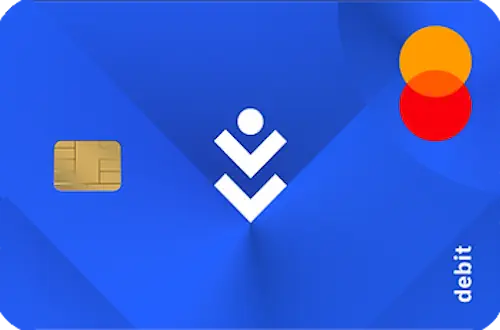
1. COCA Visa Card
Self-Banking: 8% Cashback + 5% APY + 0% FX

2. Plasma One Platinum Card
Premium Self-Custodial Visa - 4% Base, 10% AI, 10% Flights, Lounge Access, Boosted 5% Yield
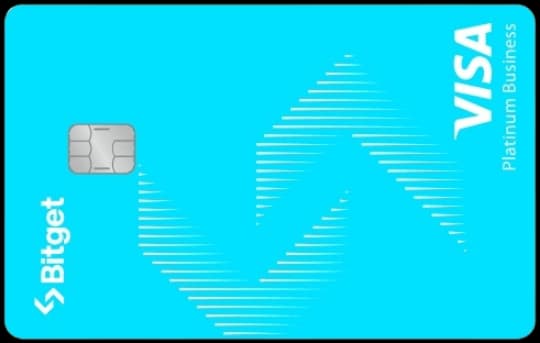
3. Bitget Card
Trade and Spend: Up to 8% BGB Cashback for Bitget Traders

4. ether.fi Core Card
3% Back on the First $2,000 Each Month, No Stake Required
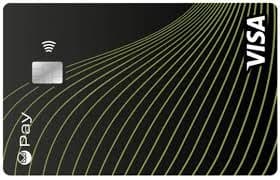
5. Gnosis Pay Card
Your Keys, Your Card, Your Money
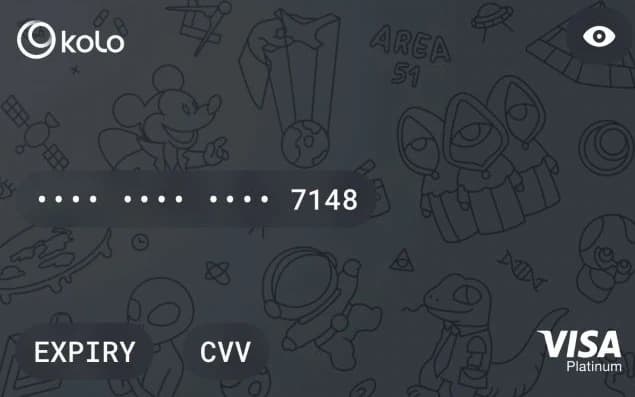
6. Kolo Card
Earn Bitcoin on Purchases: 2% for 30 Days, Then 1% (Capped) + Visa Platinum + 170+ Countries
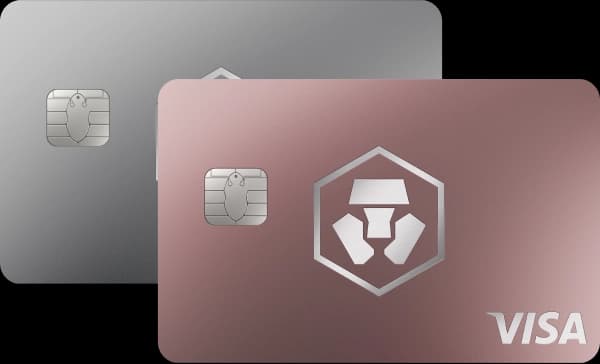
7. Private (Icy White / Rose Gold)
Private Tier: 4% Uncapped Cashback + Lounge Guest

8. Xplace Platinum Card
10% Off Platinum with SPENDNODE: Pay $899.10 Instead of $999
Complete list:
All 55 crypto cards available in Denmark in September 2026
This table includes every crypto card we currently track for Denmark. Rows marked Top pick are ranked and reviewed above.
| Crypto card | Max rewards | Annual fee | FX fee | Type | Custody |
|---|---|---|---|---|---|
1 COCA Visa CardTop pick | Up to 8% rewards | Free | 0% | Debit | Self-custody |
2 Plasma One Platinum CardTop pick | Up to 4% rewards | Free | 0% | Crypto Backed Credit | Self-custody |
3 Bitget CardTop pick | Up to 8% rewards | Free | 0% | Debit | Custodial |
4 ether.fi Core CardTop pick | Up to 3% rewards | Free | 0.5% | Crypto Backed Credit | Self-custody |
5 Gnosis Pay CardTop pick | Up to 5% rewards | Free | 0% | Debit | Self-custody |
6 Kolo CardTop pick | Up to 2% rewards | Free | 0% | Prepaid | Custodial |
7 Private (Icy White / Rose Gold)Top pick | Up to 4% rewards | TBD | 0% | Prepaid | Custodial |
8 Xplace Platinum CardTop pick | Up to 2% rewards | $999 | 0% | Crypto Backed Credit | Self-custody |
| Up to 10% rewards | Free | 3% | Debit | Hybrid | |
| Up to 9% rewards | $240 | 2.5% | Debit | Non-custodial | |
| Up to 8% points | Free | 0.4% | Debit | Custodial | |
12 | Up to 8% rewards | TBD | 0% | Prepaid | Custodial |
| Up to 8% rewards | Free | 0% | Debit | Hybrid | |
| Up to 6% rewards | $200 with code | 1% | Debit | Self-custody | |
| Up to 5% rewards | TBD | 0% | Prepaid | Custodial | |
| Up to 4.5% rewards | $87 with code | 1% | Debit | Self-custody | |
| Up to 4% rewards | Free | 0% | Crypto Backed Credit | Self-custody | |
| Up to 3% rewards | Free | 0.25% | Crypto Backed Credit | Self-custody | |
| Up to 3% rewards | Free | 0% | Crypto Backed Credit | Self-custody | |
| Up to 3% rewards | $10000 | 0.5% | Prepaid | Custodial | |
| Up to 3% rewards | Free | 0% | Debit | Custodial | |
| Up to 3% rewards | $199 | 0.5% | Crypto Backed Credit | Self-custody | |
| Up to 3% rewards | $299.9 | 0% | Prepaid | Custodial | |
| Up to 3% rewards | $129 | 1.2% | Prepaid | Custodial | |
| Up to 3% rewards | Free | 0% | Debit | Hybrid | |
| Up to 2% rewards | Free | 0% | Debit | Custodial | |
| Up to 2% rewards | Free | 0% | Debit | Self-custody | |
| Up to 2% rewards | $1000 | 0.5% | Prepaid | Custodial | |
| Up to 2% rewards | Free | 0% | Debit | Custodial | |
| Up to 2% rewards | Free | 0.2% | Crypto Backed Credit | Hybrid | |
| Up to 2% rewards | Free | 1% | Crypto Backed Credit | Self-custody | |
| Up to 2% rewards | $49.9 | 0% | Prepaid | Custodial | |
| Up to 1.5% rewards | Free | 0.5% | Prepaid | Custodial | |
| Up to 1.5% rewards | Free | 0.5% | Prepaid | Custodial | |
| Up to 1.5% rewards | Free | 1% | Debit | Self-custody | |
| Up to 1.5% rewards | $249 | 0.25% | Crypto Backed Credit | Self-custody | |
| Up to 1% rewards | Free | 0% | Debit | Custodial | |
| Up to 1% rewards | Free | 1.75% | Debit | Self-custody | |
| Up to 1% rewards | Free | 1% | Debit | Self-custody | |
| Up to 1% rewards | Free | TBD | Prepaid | Custodial | |
| Up to 1% rewards | $99 | 0.5% | Crypto Backed Credit | Self-custody | |
| Up to 0.5% rewards | Free | 0% | Debit | Hybrid | |
| Up to 0.5% rewards | Free | 1% | Crypto Backed Credit | Self-custody | |
| none | Free | 0% | Prepaid | Custodial | |
| Varies | Free | 1.7% | Prepaid | Custodial | |
| cashback | Free | 1.75% | Prepaid | Self-custody | |
| cashback | $199 | 0.75% | Prepaid | Self-custody | |
| cashback | Free | 0.5% | Prepaid | Custodial | |
| none | Free | 1% | Prepaid | Self-custody | |
| none | Free | 1% | Debit | Self-custody | |
| Varies | Free | 1.5% | Debit | Custodial | |
| Varies | Free | 1.2% | Prepaid | Custodial | |
| Varies | Free | 1.2% | Prepaid | Custodial | |
| Varies | Free | 1.2% | Prepaid | Custodial | |
| points | Free | 1% | Debit | Self-custody |
Crypto Card Regulation in Denmark
The Finanstilsynet (Danish Financial Supervisory Authority / FSA) is Denmark's primary financial market regulator and the designated MiCA authority. The Finanstilsynet regulates banks, insurance, investment firms, and (under MiCA) crypto asset service providers.
Denmark was among the early EU adopters of VASP registration requirements, implementing the 5th Anti-Money Laundering Directive (5AMLD) through amendments to the Hvidvaskloven (Money Laundering Act, Lov nr. 651 af 8. juni 2017, as amended).
The Nationalbanken (Danmarks Nationalbank) manages monetary policy through the DKK-EUR peg mechanism. Denmark participates in ERM II with a fluctuation band of +/-2.25% around the central rate of 746.038 DKK per 100 EUR.
The Nationalbanken maintains this peg through interest rate policy and foreign exchange interventions. This peg has been stable since 1999 and is considered one of the most reliable currency pegs in the world.
SKAT (Skattestyrelsen / Danish Tax Authority) is a critical entity for Danish crypto users. SKAT has been one of the most aggressive crypto tax enforcers in the EU:
- In 2018-2019, SKAT obtained transaction data from multiple international exchanges through EU mutual assistance agreements
- SKAT sent automated letters (opgoerelsesbreve) to thousands of Danish taxpayers identified as having unreported crypto gains
- Denmark participates in the EU DAC8 directive on automatic exchange of crypto asset information between tax authorities
- SKAT has publicly stated it uses AI and data analytics to cross-reference exchange data with self-reported tax returns
Under MiCA, Denmark benefits from full EEA-wide passporting. Crypto.com, Bitget, and Plutus all serve Danish residents through their European entities. No major crypto card issuer has been banned or restricted in Denmark. The Finanstilsynet has not imposed Denmark-specific advertising restrictions beyond EU standard requirements.
Proposed unrealized gains tax (2025-2026): Denmark's Tax Law Committee (Skattelovradet) proposed taxing unrealized crypto gains at 42% using an "inventory taxation" (lagerbeskatning) model, where entire portfolios are valued annually regardless of whether assets are sold. If enacted, this would tax paper gains each year, making Denmark potentially the harshest crypto tax jurisdiction globally.
The bill was expected to be introduced to the Folketing in 2025 but has not yet been enacted. Monitor developments closely.
DAC8 implementation: From 2026, EU Directive DAC8 requires crypto service providers to report Danish user transaction data to SKAT automatically. Combined with SKAT's existing exchange data agreements, this makes detailed reporting of all crypto activity mandatory.
August 2025 court decision: Denmark's City Court confirmed that crypto gains are taxable when the original purchase was made with speculative intent, even for early Bitcoin buyers who argued their coins were acquired for technical experimentation.
SKAT's enforcement reach makes compliance non-optional. Keep exact records of every card transaction, funding event, and cashback receipt. Assume SKAT has access to your exchange data.
Tax Treatment of Card Rewards in Denmark
For typical speculative holdings, SKAT instructs individuals to report gains as personal income in rubrik 20 and losses separately in rubrik 58. The tax on gains can reach about 53%, while the deduction value of losses can be lower.
FIFO cost-basis rules and each DKK-valued disposal matter. Business, mining, and certain financial-contract products can require different treatment.
Stablecoin example: If a USDC lot costs DKK 12,000 and is disposed of for DKK 12,000, there is no disposal gain on that lot. If USD/DKK changes its value before card spending, calculate the DKK gain or loss rather than assuming the peg fixes the tax result. Cashback may have its own receipt treatment and later disposal basis.
BTC example: If BTC bought for DKK 6,000 is sold for DKK 12,000 to fund a card, the DKK 6,000 gain may be taxable. That tax is attached to realizing the investment gain, not a card fee. Compare card rewards against another way of selling or spending the same BTC, not against keeping the BTC indefinitely.
Example 3, borrow-to-spend (advanced): Instead of selling appreciated crypto, you borrow against eligible collateral through ether.fi or Nexo. This may postpone an immediate sale, but it introduces variable borrowing costs, repayment obligations, and liquidation risk. It should be compared with the tax due on an actual sale rather than treated as a guaranteed tax-free route.
Interest is charged on the amount borrowed, not on the unrealized gain. Compare the borrowing cost on the actual loan balance with the tax timing, collateral risk, and eventual repayment treatment.
Keep exchange, wallet, and card records. Do not assume SKAT's pre-filled return captures all crypto disposals or that card top-ups are invisible.
| Funding method | Potential disposal result | Separate card comparison |
|---|---|---|
| Recently acquired USDC | Calculate DKK gain or loss | Gross cashback minus fees and applicable reward tax |
| Appreciated BTC | Gain taxable if disposed | Same disposal tax applies when sold outside the card |
| Collateral-backed borrowing | Sale of collateral may be postponed | Deduct interest and account for liquidation and repayment risk |
Recently acquired stablecoins can simplify the gain calculation when their DKK value has barely moved. Borrowing may preserve a position and postpone a sale, but carries financing and liquidation risks.
Tax reporting: Danish residents report ordinary speculative crypto gains in rubrik 20 and losses in rubrik 58 through TastSelv, as SKAT specifies. Check the current filing deadline and any pre-filled data for the tax year; keep records even if a service provider reports transactions.
How to Apply from Denmark
Danish crypto card applications require a pas (Danish passport) or sundhedskort (health insurance card, the yellow card/sygesikringskort) for identification. The sundhedskort is Denmark's most commonly used physical ID for domestic purposes (Denmark does not have a traditional national ID card separate from the passport). EU/EEA citizens living in Denmark can use their national ID card.
The CPR-nummer (Central Person Register number) is Denmark's 10-digit personal identifier (format: DDMMYY-XXXX), assigned to all Danish residents. The CPR-nummer is required by virtually all financial services in Denmark, including crypto card applications. It appears on your sundhedskort.
MitID (replaced NemID in October 2023) is Denmark's standard digital identification system, used for all online banking, government services, and increasingly for financial service verification. Some EEA crypto card issuers accept MitID verification for faster onboarding, though most use standard EU verification services (Onfido, Jumio, Sumsub).
Proof of Danish address via el-regning/varmeregning (electricity/heating bill from e.g., Oersted, DONG Energy successor, or local utility), kontoudtog (bank statement from Danske Bank, Nordea, Jyske Bank, Nykredit, or Sydbank), or CPR registration confirmation from the Folkeregister (Civil Registration). The e-Boks system (Denmark's official digital mail platform) can provide utility bills and bank statements digitally.
Physical cards ship to Danish addresses within 5-10 business days via PostNord (Danish-Swedish postal service). Virtual cards are available immediately for cards with Apple Pay and Google Pay use, which matters in Denmark where digital wallets are used at the majority of POS terminals.
Spending Tips for Denmark
Funding and Cost Basis
Denmark's speculative-gain rules make cost basis important, but do not require every card user to fund exclusively with stablecoins. For a new USDC lot, the DKK gain may be small. For appreciated BTC, tax arises on the realized gain whether the proceeds go to a card or to a bank account. Compare the card's actual reward and fees with the alternative sale route, and preserve FIFO acquisition records.
Borrow-to-Spend: A High-Risk Alternative to Selling
At Denmark's high tax rates, collateral-backed borrowing can be an alternative for users who do not want to sell immediately. ether.fi and Nexo let eligible users:
- Keep exposure to eligible collateral instead of selling it immediately
- Borrow USDC against your holdings
- Spend the borrowed USDC through a card
- Keep exposure to the collateral, which can rise or fall
- Repay the loan or risk liquidation if collateral requirements are not maintained
On a DKK 500,000 unrealized gain, the sale tax depends on the holder's actual tax position. A 6% APR on a DKK 100,000 loan would cost DKK 6,000 in annual interest before other fees; it would not cost 6% of the unrealized gain unless that is also the amount borrowed.
For Danish holders with large positions, this can materially change short-term cash flow, but it is leverage rather than a free tax saving.
Card Selection for Danish Users
- COCA (up to 8% with staking $COCA, 1% free): 5% APY on eligible USD reserves, useful when Danish users maintain stablecoin balances for card funding
- Bitget (8%, free, 0.9% tx fee): 0% FX matters for DKK users. Net effective 7.1% after transaction fee
- Gnosis Pay (up to 5% GNO): Self-custody on Gnosis Chain with tiered GNO cashback and 0% FX
- Kolo (1% ongoing BTC, 2% intro, free): Free BTC-payout card; track the reward's DKK value at receipt and its later disposal
- Tria Signature (4.5% on the first $1,000/mo, then 1%, $109/yr, 1% FX + 0.5%/payment, ~3% net): Self-custody Debit card with Visa perks
- Crypto.com Icy (4%): CPH Kastrup lounge access via LoungeKey. CRO stake required
- ether.fi (free; 3% in ETHFI on the first $2,000/month, then 1% to $5,000 and 0.5% above): Direct stablecoin spending plus an optional collateral-backed borrowing route
Card Rewards Before Tax
The figures below show annual rewards after the stated card transaction fee, before any tax on rewards, funding gain, FX spread or token-price movement:
| Monthly Spend (DKK) | COCA Elite 8% | Bitget 7.1% net | Gnosis Pay up to 5% GNO |
|---|---|---|---|
| DKK 8,000 | DKK 7,680 | DKK 6,816 | DKK 4,800 |
| DKK 15,000 | DKK 14,400 | DKK 12,780 | DKK 9,000 |
| DKK 25,000 | DKK 24,000 | DKK 21,300 | DKK 15,000 |
COCA leads the spending levels shown, which remain inside Elite's $350 monthly claim capacity. Bitget at 7.1% net (8% minus 0.9% tx fee) is a strong no-subscription alternative. Gnosis Pay at up to 5% GNO provides self-custody with no card fee. At 5%, a DKK 75,000 equivalent eligible USD balance with COCA earns about DKK 3,750/year before exchange-rate movement.
Spending Scenario: Copenhagen Professional at DKK 20,000/month
A Copenhagen-based professional (average salary DKK 42,000/month) spending DKK 20,000/month on cards (rent is typically via Netbank transfer, not card):
| Strategy | Annual Spend | Gross Cashback | Funding Tax | Other Costs |
|---|---|---|---|---|
| COCA 8% + USDC funding | DKK 240,000 | DKK 19,200 | Depends on DKK gain | Reward tax and any funding spread |
| COCA 8% + BTC funding | DKK 240,000 | DKK 19,200 | Depends on realized BTC gain | Reward tax and any funding spread |
| ether.fi Core + collateral-backed borrowing | DKK 240,000 | Up to DKK 7,200 in ETHFI | Depends on treatment | Interest, liquidation risk, reward tax |
The BTC disposal tax is not an incremental card cost if the holder would otherwise sell the same BTC. The borrowing route leaves the position unsold at that point, but its net result depends on interest, repayment, liquidation exposure and tax treatment.
Danish Cost of Living Context
Our local cost analysis for Copenhagen, Aarhus, and Odense confirms Denmark has one of the highest costs of living in Europe, making every DKK of cashback meaningful:
- Copenhagen: Rent DKK 8,000-14,000/1BR (Indre By/central, or DKK 6,000-10,000 in Amager, Noerrebro, Frederiksberg). Groceries DKK 3,000-4,500/month at Netto (cheapest), Foetex, Irma (premium), Rema 1000. Dining DKK 150-350 per meal (smoerreboerd at a traditional restaurant runs DKK 150-250). Copenhagen Metro/bus monthly pass DKK 400+ (Rejsekort zones). Monthly card-eligible spending: DKK 10,000-25,000.
- Aarhus: Rent DKK 6,000-10,000. Groceries DKK 2,500-4,000. Dining DKK 120-300. Denmark's second city with a strong university and IT sector. Slightly cheaper than Copenhagen.
- Odense/Aalborg: Rent DKK 4,500-8,000. Groceries DKK 2,000-3,500. Dining DKK 100-250. Lower costs but also fewer card-eligible spending opportunities.
At DKK 15,000-20,000/month card spending, up to 5% GNO cashback from Gnosis Pay is DKK 9,000-12,000/year before tax, reward-token movement and funding costs.
Where Cards Work in Denmark
Denmark is the world's most cashless society. Contactless Visa/Mastercard acceptance is universal:
Copenhagen: Every supermarket (Netto, Foetex, Bilka, Irma, Rema 1000, SuperBrugsen), every restaurant, every bar, every coffee shop, every clothing store. Stroeget (Europe's longest pedestrian shopping street), Tivoli Gardens, Copenhagen Airport (CPH). Many shops display "Vi tager ikke imod kontanter" (we do not accept cash). Card refusal is non-existent in Copenhagen.
Public transit: The Rejsekort system is a closed-loop NFC card for trains, buses, and metro. You cannot tap a crypto card at Rejsekort readers. However, DSB (Danish State Railways) intercity tickets can be purchased online or at station machines with Visa/Mastercard. The DOT (Din Offentlige Transport) app also accepts card payment.
MobilePay: Denmark's dominant mobile payment platform (owned by Vipps MobilePay, joint Nordic venture). MobilePay is linked to Danish bank accounts only, so crypto cards cannot be registered with MobilePay. This does not limit card usage since Visa/Mastercard contactless terminals are at every merchant, but MobilePay-only situations (primarily person-to-person payments and some small vendors) require a Danish bank account.
Apple Pay and Google Pay are universally supported and widely used. Danish consumers are highly comfortable with digital wallets, making virtual crypto card activation for instant mobile payments a natural fit.
Cross-Border FX: Nordics and Beyond
Despite the DKK-EUR peg (near-zero conversion), other Nordic currencies involve real FX:
- Sweden (SEK): Copenhagen-Malmo Oeresund commuters and shoppers. SEK is a floating currency. 0% FX saves 1.5-2% per purchase vs Danske Bank cards. The Oeresund bridge toll (SEK 575 or DKK 410) and Stockholm trips both benefit.
- Norway (NOK): Norwegian fjord trips, skiing in Hemsedal/Trysil. NOK floats. 0% FX saves 1.5-2%.
- UK (GBP): London flights from CPH are frequent. 0% FX saves 1.5-2% on GBP.
- Iceland (ISK): Popular Danish holiday destination. ISK is volatile. 0% FX can save 2-3%.
Supported Exchanges & Wallets in Denmark
Denmark's tax treatment makes the funding asset and its DKK cost basis important. Compare cashback on low-gain funding with the cost and risk of collateral-backed borrowing if avoiding an immediate sale is valuable.
COCA combines up to 8% cashback (1% free Starter, scaling with staking $COCA tokens) with 5% APY on eligible USD in a non-custodial wallet. The two return streams suit Danish users who already maintain stablecoin reserves for card funding, provided the token stake and claim capacity fit their spending.
Gnosis Pay earns up to 5% GNO cashback with full self-custody on Gnosis Chain. Kolo offers a free 1% ongoing BTC payout (2% for the first 30 days), with receipt and later disposal records needed. Tria offers self-custody Debit cards with up to 6% capped USDT cashback, with a 1% FX fee plus 0.5% per payment (about 3% net on krone spend, ~4.5% on Premium).
ether.fi supports direct stablecoin spending and collateral-backed borrowing. Borrowing can postpone a disposal, but the loan balance, APR, liquidation risk, repayment and eventual tax must all be modeled. Nexo offers a similar model with different collateral terms.
Wirex reaches up to 8% in USD at its metal tiers, unlocked by holding WPAY rather than a subscription. Bitpanda at 1% is the lowest-yielding option but offers 600+ tradeable assets. MetaMask Card (1-3%) connects wallet to Visa, and Ledger CL Card integrates hardware wallet security.
Ready brought Starknet self-custody with STRK cashback, but its card program is currently unavailable after its card issuer began winding down.
Danish-headquartered Saxo Bank offers crypto trading through its platform but does not offer a Visa/Mastercard spending card product. NBCB (Nordic Blockchain Association) promotes blockchain adoption in the Nordics but the domestic card market relies entirely on EEA-passported international issuers. Traditional Danish banks (Danske Bank, Nordea, Jyske Bank, Nykredit, Sydbank) have not entered the crypto card space.
Denmark's cashless infrastructure creates little payment friction for crypto cards, but SKAT's tax treatment makes the funding asset unusually important. Stablecoins can simplify the gain calculation when their krone value remains close to cost, while collateral-backed borrowing is suitable only when its financing and liquidation risks compare favorably with selling.
Written by SpendNode Editorial
Frequently Asked Questions
How harsh is Denmark's crypto tax for card users?
Very. Crypto gains are taxed as capital income at approximately 42% including municipal and church tax. SKAT has been one of Europe's most aggressive enforcers, obtaining exchange data directly. A proposed unrealized gains tax (inventory model) could make this even harsher. Fund exclusively with stablecoins.
Which crypto card is best for Danish residents?
COCA reaches up to 8% through a non-custodial smart wallet, adds 5% APY on eligible USD, and has $15-$350 monthly reward claim capacity. Bitget reaches 8%, or 7.1% after its transaction fee, while Gnosis Pay offers up to 5% GNO from a self-custody wallet. ether.fi Core pays stepped ETHFI rewards and supports direct stablecoin or optional collateral-backed spending. At Denmark's high tax rates, stablecoin funding and custody structure can matter as much as headline cashback.
Does the DKK-EUR peg help crypto card users?
Yes. DKK is pegged to EUR at approx. 7.46 DKK/EUR via ERM II, so EUR-settled cards have near-zero FX impact on Danish purchases. Non-EUR transactions (USD, GBP, SEK, NOK) benefit from 0% FX cards.
Can SKAT track my crypto card spending?
SKAT has obtained exchange data from multiple platforms and sends automated letters. DAC8 (from 2026) will require all EU crypto service providers to report Danish user transactions automatically. Keep meticulous records of all transactions.
Other Countries
View all 112 countries →


Latest Page Changes to the Best Crypto Cards in Denmark Guide
- We moved xPlace Platinum below the stronger Danish rewards cards after its Credit Mode rate changed to 2% USDC with a $250 monthly ceiling for new members. The no-stake travel benefits and 0% FX still distinguish it
- Proposed unrealized gains tax (inventory model), DAC8 implementation, and August 2025 court decision