

Best Crypto Cards in Nigeria (2026)
Nigeria is still the clearest stablecoin-card market in Africa: users want NGN spending, dollar protection, and fewer surprises from bank FX pricing.
Verified for Nigeria
42 crypto cards available
Local currency: NGN
Nigeria solved everyday digital payments faster than most of Africa. OPay, Kuda, PalmPay, and Moniepoint handle domestic transfers at scale. Flutterwave and Paystack process naira payments for merchants across the country. From a Shoprite in Lekki to a danfo fare in Ikeja, domestic money moves.
What Nigeria did not solve is the hard-currency problem. The naira lost over 70% against the dollar since 2020 - from 360 NGN/USD to roughly 1,400 by April 2026. GTBank, Access, and Zenith savings accounts pay 3-5% annual interest on naira deposits while the currency depreciates 30-40% per year.
Many banks enforce tight international spending limits on naira cards, often around $100/month equivalent - making them nearly useless for a London tuition payment, an Adobe subscription, or a $500 Amazon order through a forwarding service.
This is why the standard Lagos tech worker behavior is: convert salary to USDT the day it lands. Hold in USDT. Spend only at the moment of purchase through a crypto card that converts stablecoins to NGN at point of sale at the current market rate. The card is not mainly about cashback rewards or low FX fees. It is about preserving purchasing power that a naira bank account destroys.
Three representative profiles show who uses a crypto card here. Chidi, a senior developer in Yaba earning NGN 1.5 million/month, converts to USDT within hours of payday and loads a card for his Adobe, AWS, and daily spending.
Ngozi, a nurse in Birmingham on a Health and Care Worker visa, sends GBP 300/month to her parents in Port Harcourt and wants the money to arrive as spendable card balance, not a Western Union pickup losing 8%.
Emeka, a 2023 "Japa" migrant now in Toronto, manages a Canadian bank account, a dormant GTBank account, and a family WhatsApp group that coordinates money between three countries.
According to the Chainalysis 2025 Global Adoption Index, Nigeria ranked 6th globally with over $92 billion received - Africa's largest crypto market by volume. The real adoption numbers may be higher: the 2025 index removed the P2P sub-index, and much of Nigeria's activity runs through informal channels that on-chain analytics undercount.
Summary:
Which crypto cards are best in Nigeria?
The best crypto cards in Nigeria in September 2026 are ether.fi Core Card, Tria Signature Card, Jupiter Global, COCA Visa Card, Kolo Card, and KAST K Card. The detailed ranking below explains the local tax, fee, and availability trade-offs.
| Crypto card | Base reward | Net after fees | Annual fee | FX fee | Type |
|---|---|---|---|---|---|
| 3% base3% on the first $2,000/month, then 1% and 0.5% | 2.5% | Free | 0.5% | Crypto Backed Credit | |
| 4.5% base4.5% on the first $1,000/mo, then 1% | 3% | $87 with code | 1% | Debit | |
| 2% baseup to 4% by referring 2 qualifying friends the prior month | 1% | Free | 1% / 1.8% | Debit | |
| 1% baseup to 8% with a large $COCA stake; $15-$350/mo claim capacity by tier | 1% | Free | 0% | Debit | |
| 1% base2% for the first 30 days, then 1%; also capped at $1/EUR 1 per transaction ($2/EUR 2 during intro) and $100/EUR 100 per month | 1% | Free | 0% | Prepaid | |
| 1.5% base | 1% | Free | 0.5% | Prepaid | |
| 4% baseneeds a $50k CRO stake to hold the tier | 4% | TBD | 0% | Prepaid |
In Nigeria, the card decision turns on who delivers fair-market-rate stablecoin spending with the lowest friction on funding, not on who pays the highest cashback rate.
ether.fi Core leads on free starting rate at 3% in ETHFI on the first $2,000 per month, with self-custody and a 0-0.5% FX margin. A supported stablecoin balance can fund purchases directly; eligible collateral can instead support a loan.
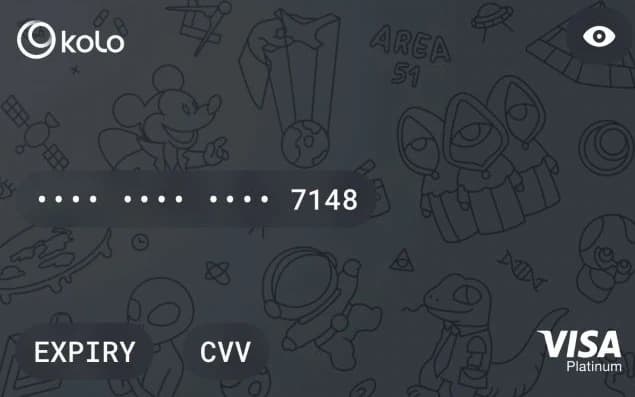
Kolo offers direct wallet-to-NGN spending at 1% ongoing BTC, or 2% for the first 30 days, capped at $100 per month and $1 per transaction. Jupiter Global is the free USDC alternative at 2% base, or 4% for one month after referring two friends, with a $100 monthly cashback cap.
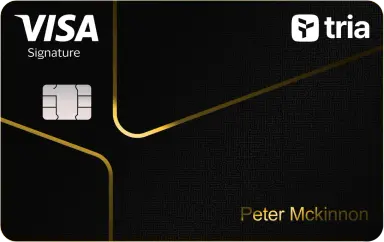
Tria Signature at 4.5% on the first $1,000/month (then 1%), with a 1% FX fee and 0.5% per payment netting about 3% on naira spend, and $109/yr fits the tech professional spending around NGN 1.5M/month (~$1,000), a level well past its roughly $303/month break-even where the 4.5% band nets about $251/year after fees, and it nets more than free Jupiter's ~1% on naira there.
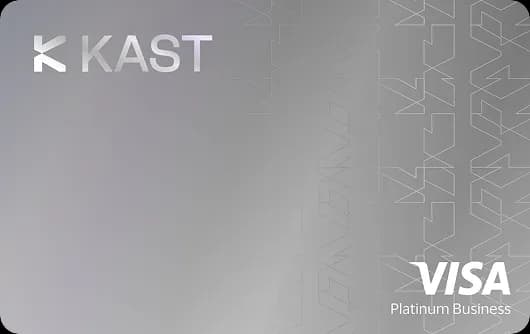
COCA still holds the case for users running $COCA staking exposure (up to 8% with stake, 1% at free Starter), plus 5% APY on eligible idle USD. Monthly reward claims range from $15 to $350 by tier. KAST stays the remittance-recipient default at 1.5% USD cashback on the first $2,000/month, the simplest path from offshore USDT to ordinary NGN purchases at Shoprite or SPAR.
Best Card For Every Need in Nigeria
Top 7 Crypto Cards in Nigeria
Nigeria's card decision runs on a different axis from most countries. The naira lost over 70% against the dollar between 2020 and April 2026 (from 360 to roughly 1,400 NGN/USD), GTBank and Access savings accounts pay 3-5% interest while the currency erodes 30-40% per year, and naira-issued cards enforce $100/month international spending caps that make them effectively unusable for an Adobe subscription, much less a London flight.
The crypto card here isn't a cashback play; it's a purchasing-power-preservation tool that bypasses the banking-system constraints layered on top.
ether.fi Core earns the top slot on raw free rate within typical local spending: 3% in ETHFI on the first $2,000 per month, self-custody, and a choice between direct stablecoin spending and optional borrowing.
Kolo follows for the funding-friction reason the binding rule applies across core-Africa: 0% FX, $0 annual fee, and direct wallet-to-NGN spending that sidesteps Nigerian bank rails entirely, paying 1% ongoing BTC (2% for the first 30 days) capped at $100/month and $1 per transaction.
Its cashback arrives as BTC, which a Lagos crypto-savings culture already treats as a parallel store of value, so the volatility trade-off lands more cleanly here than in a tax-heavy EEA jurisdiction.
Jupiter Global is the complement for the Lagos tech worker who'd rather receive cashback as USDC than BTC. 2% USDC base (4% for a month after referring 2 friends), $0 annual, 1% FX, virtual-only with QR-based handoff. The $100/month cashback cap binds at $5,000/month of card spend, sitting above the typical Nigerian profile. Sits at the end of the Binance P2P → USDC → wallet pipeline that already runs the Yaba salary-conversion routine.
Tria Signature suits the tech professional spending right around the $1,000/month cap. At NGN 1.5M/month (~$1,000), after its 1% FX, 0.5% per-payment, and $109 fees the 4.5% headline nets about $251/yr, ahead of Jupiter's roughly $120 net at the same spend (2% USDC less its 1% FX, though Jupiter has no annual or per-payment fee).
Tria charges no FX on USD-billed subscriptions (Adobe, AWS, GitHub) that Nigerian bank cards either decline outright or charge punishing spreads on, though its 1% FX does apply to naira purchases. Above $1,000/month Tria's marginal rate drops to 1%, so the very high spender who can reach Jupiter's $5,000/month cap ceiling (about $1,200/yr in cashback at the $100/month cap) does better there.
COCA holds the case for users running $COCA staking exposure. The free Starter tier pays 1%, while 5% APY on eligible USD can appeal to someone holding USDC as primary savings against naira depreciation. On a $5,000 eligible balance, the APY returns $250/year before any card spending.
KAST remains the remittance-recipient default. 1.5% USD cashback on the first $2,000/month, $0 annual fee, the simplest path from offshore USDT to ordinary NGN purchases. Ngozi's parents in Port Harcourt receive GBP-to-USDC from Birmingham, load the card, and spend at market rates with no Western Union fee. That 1.5% is not instant money, though: KAST holds it for two weeks, requires a manual claim, and lets you apply it only to a later card purchase rather than withdraw it.
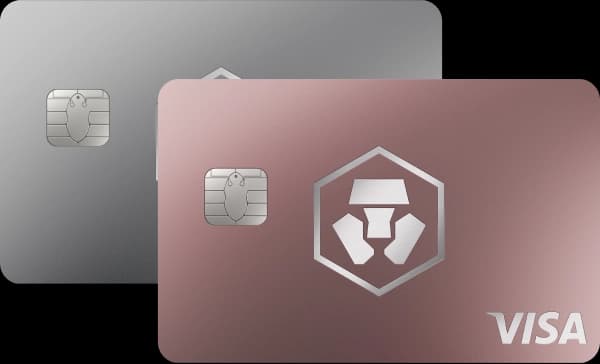
ether.fi adds a collateral-backed route for holders who do not want to sell appreciated ETH immediately. That route introduces interest and liquidation risk, and its treatment under Nigeria's new tax framework should not be assumed. Crypto.com Icy White adds Priority Pass lounge access at Murtala Muhammed International (LOS).

1. ether.fi Core Card
3% Back on the First $2,000 Each Month, No Stake Required
2. Tria Signature Card
High-Yield Self-Custody: 15% APY + Visa Signature Perks
3. Jupiter Global
Free virtual USDC card with 2% base cashback
4. COCA Visa Card
Self-Banking: 8% Cashback + 5% APY + 0% FX
5. Kolo Card
Earn Bitcoin on Purchases: 2% for 30 Days, Then 1% (Capped) + Visa Platinum + 170+ Countries
6. KAST K Card
Free USD Cashback: 1.5% on First $2K/Month
7. Private (Icy White / Rose Gold)
Private Tier: 4% Uncapped Cashback + Lounge Guest
Complete list:
All 42 crypto cards available in Nigeria in September 2026
This table includes every crypto card we currently track for Nigeria. Rows marked Top pick are ranked and reviewed above.
| Crypto card | Max rewards | Annual fee | FX fee | Type | Custody |
|---|---|---|---|---|---|
1 ether.fi Core CardTop pick | Up to 3% rewards | Free | 0.5% | Crypto Backed Credit | Self-custody |
2 Tria Signature CardTop pick | Up to 4.5% rewards | $87 with code | 1% | Debit | Self-custody |
3 Jupiter GlobalTop pick | Up to 4% rewards | Free | 1% / 1.8% | Debit | Hybrid |
4 COCA Visa CardTop pick | Up to 8% rewards | Free | 0% | Debit | Self-custody |
5 Kolo CardTop pick | Up to 2% rewards | Free | 0% | Prepaid | Custodial |
6 KAST K CardTop pick | Up to 1.5% rewards | Free | 0.5% | Prepaid | Custodial |
7 Private (Icy White / Rose Gold)Top pick | Up to 4% rewards | TBD | 0% | Prepaid | Custodial |
| Up to 10% rewards | Free | 0% | Prepaid | Custodial | |
| Up to 10% rewards | Free | 3% | Debit | Hybrid | |
| Up to 8% rewards | Free | 0% | Debit | Custodial | |
11 | Up to 8% rewards | TBD | 0% | Prepaid | Custodial |
| Up to 6% rewards | $200 with code | 1% | Debit | Self-custody | |
| Up to 5% rewards | TBD | 0% | Prepaid | Custodial | |
| Up to 4% rewards | Free | 0% | Crypto Backed Credit | Self-custody | |
| Up to 4% rewards | Free | 0% | Crypto Backed Credit | Self-custody | |
| Up to 3% rewards | Free | 0.25% | Crypto Backed Credit | Self-custody | |
| Up to 3% rewards | Free | 0% | Crypto Backed Credit | Self-custody | |
| Up to 3% rewards | $10000 | 0.5% | Prepaid | Custodial | |
| Up to 3% rewards | $199 | 0.5% | Crypto Backed Credit | Self-custody | |
| Up to 3% rewards | $299.9 | 0% | Prepaid | Custodial | |
| Up to 3% rewards | $129 | 1.2% | Prepaid | Custodial | |
| Up to 2% rewards | $1000 | 0.5% | Prepaid | Custodial | |
| Up to 2% rewards | Free | 1% | Crypto Backed Credit | Self-custody | |
| Up to 2% rewards | $49.9 | 0% | Prepaid | Custodial | |
| Up to 2% rewards | $999 | 0% | Crypto Backed Credit | Self-custody | |
| Up to 1.5% rewards | Free | 0.5% | Prepaid | Custodial | |
| Up to 1.5% rewards | Free | 1% | Debit | Self-custody | |
| Up to 1.5% rewards | $249 | 0.25% | Crypto Backed Credit | Self-custody | |
| Up to 1% rewards | Free | 1% | Crypto Backed Credit | Self-custody | |
| Up to 1% rewards | Free | TBD | Prepaid | Custodial | |
| Up to 1% rewards | $99 | 0.5% | Crypto Backed Credit | Self-custody | |
| Up to 0.5% rewards | Free | 1% | Crypto Backed Credit | Self-custody | |
| none | Free | 0% | Prepaid | Custodial | |
| cashback | Free | 1.75% | Prepaid | Self-custody | |
| cashback | $199 | 0.75% | Prepaid | Self-custody | |
| cashback | Free | 0.5% | Prepaid | Custodial | |
| none | Free | 1% | Prepaid | Self-custody | |
| Varies | Free | 1.5% | Debit | Custodial | |
| Varies | Free | 1.2% | Prepaid | Custodial | |
| Varies | Free | 1.2% | Prepaid | Custodial | |
| Varies | Free | 1.2% | Prepaid | Custodial | |
| points | Free | 1% | Debit | Self-custody |
Crypto Card Regulation in Nigeria
From Ban to Coordinated Framework: The Regulatory Timeline
February 2021: The CBN banned banks from facilitating crypto transactions. P2P trading went underground. Binance P2P became Nigeria's de facto exchange.
December 2023: The CBN partially reversed course, allowing banks to service licensed VASPs. This reopened the formal banking-to-crypto bridge.
February 2024: Binance executives Tigran Gambaryan and Nadeem Anjarwalla were detained in Abuja. Anjarwalla fled the country. Gambaryan spent eight months in detention before charges were dropped on humanitarian grounds. He departed Binance in June 2025. The CBN's regulatory pressure fragmented the market away from Binance toward domestic platforms.
February 2025: Nigeria filed a lawsuit demanding $79.5 billion from Binance for alleged economic damages plus $2 billion in back taxes. The case remains unresolved.
2025: The Investments and Securities Act (ISA) 2025 brought virtual and digital assets within the SEC's statutory remit. That does not mean every asset or provider has the same license status.
The SEC's Accelerated Regulatory Incubation Programme (ARIP) still operates: three additional VASPs received approval-in-principle in August 2026, not unrestricted full authorization.
March 31, 2026: The CBN announced an AML/CFT supervisory pilot involving KuCoin, cNGN, Flutterwave, Juicyway, KoinKoin, and Paystack. The pilot does not confer a license; it is a structured supervisory exercise, separate from the SEC's ARIP approvals.
July 17, 2026: President Tinubu signed an Executive Order on virtual assets, establishing a cross-agency coordination framework. A new committee chaired by the CBN, with the FIRS and SEC as vice-chairs, is tasked with drafting a unified regulatory framework.
Under the stated division of responsibilities, the SEC supervises investment and security-type activity while the CBN handles banking and payment-system responsibilities. The SEC published broader digital-asset rules for consultation in August 2026; those draft rules are not yet a new permission for card providers.
The direction is clear: prohibition to supervised, coordinated integration. But consumer reality still runs ahead of the rulebook. The CBN pilot includes six companies. Nigeria has millions of crypto users transacting daily through channels that predate and operate outside any pilot program.
The eNaira
The eNaira (launched October 2021, Africa's first CBDC) coexists awkwardly with crypto. Fewer than 10 million wallets activated despite 200+ million population. The eNaira works at POS terminals via NFC but offers no cashback, no stablecoin hedge, and no international utility. It solves a different problem than crypto cards.
The international cards we track for Nigerian residents include COCA, Kolo, KAST, Crypto.com, and ether.fi.
Other options include RedotPay, xPlace, and Jupiter. Availability can vary by issuer and verification profile, so confirm eligibility before depositing funds.
Tax Treatment of Card Rewards in Nigeria
Nigeria's Tax Act 2025 and Tax Administration Act 2025, effective January 2026, brought virtual-asset transactions explicitly into the tax framework. The administration law covers sales, exchanges, transfers, income from mining or staking, and assets received as compensation or rewards.
Individuals are subject to the new progressive income-tax bands, which reach 25% above NGN 50 million of taxable income; the old 24% ceiling no longer describes the schedule.
What this means for Chidi: If he bought 0.05 ETH at NGN 100,000 and spends it when worth NGN 500,000, he needs records for the NGN 400,000 change in value. The exact liability depends on his taxable income and the transaction's classification; it is not automatically a flat 25% charge. USDC can limit dollar-price movement, but it can still gain or lose value in naira, and converting salary into a token does not erase income tax on that salary.
The tax administration law requires relevant virtual-asset businesses to keep and report transaction records. For card users, the important distinction is between a funding asset's gain, compensation received in crypto, and a purchase rebate. None is safely described as tax-free merely because settlement happens through a stablecoin.
| Cashback Type | When Received | When Spent via Card | Total Tax Burden |
|---|---|---|---|
| BTC cashback | Depends on reward terms | Gain may arise on disposal | Not a fixed 25% charge |
| USDC cashback | Depends on reward terms | NGN value may change | Not automatically zero |
| Points/perks | Depends on how earned | Depends on redemption | Not automatically exempt |
Stablecoin funding can be useful as a naira hedge, but it is not a blanket tax exemption. Keep NGN values for acquisition, reward receipt where relevant, and card disposal; compare the card's fees and exchange rate with the hedge benefit.
How to Apply from Nigeria
Nigerian crypto card applications require a NIN (National Identification Number, 11 digits) and BVN (Bank Verification Number, 11 digits). Valid photo ID includes an international passport (ecowas biometric), driver's license, voter's card (INEC PVC), or national ID card (NIMC slip or NIN card).
Proof of Nigerian address via utility bill (PHCN/DisCo electricity, water), bank statement, or tenancy agreement. Global issuers may require phone number verification with a Nigerian number (+234). Some issuers have additional screening for Nigerian applicants due to compliance requirements.
Physical card shipping to Nigeria may take 10-21 business days depending on the issuer and courier service. Virtual cards are available immediately for Apple Pay and Google Pay use.
Spending Tips for Nigeria
What Nigerian Bank Cards Actually Cost You
Nigerian banks offer increasingly digital products but international spending remains painful.
| Bank | Debit FX Markup | Dollar Card Fee | International Limit | Cashback |
|---|---|---|---|---|
| GTBank | 3-5% | NGN 1,500/yr | $100/month (CBN cap) | 0% |
| Access Bank | 3-5% | NGN 1,000-2,000/yr | $100/month cap | 0-0.5% |
| First Bank | 3-5% | NGN 1,000-2,000/yr | $100/month cap | 0% |
| Zenith Bank | 3-5% | NGN 1,500-3,000/yr | $100/month cap | 0% |
| UBA | 3-5% | NGN 1,000-2,000/yr | $100/month cap | 0% |
The tight international spending limits on naira cards - widely reported at around $100/month equivalent across major banks - are the critical constraint. These limits (introduced to defend the naira) make bank cards nearly useless for large international purchases. A crypto card funded with USDC has no such cap. This alone makes crypto cards essential for Nigerian professionals who need to pay for international services.
Cost of Living by City
| City/Area | 1-Bed Rent/Month | Groceries/Month | Card-Eligible Spending |
|---|---|---|---|
| Lagos (Lekki/VI) | NGN 1M-3M | NGN 150K-300K | NGN 300K-800K |
| Lagos (Ikeja/Maryland) | NGN 400K-1M | NGN 100K-200K | NGN 200K-500K |
| Abuja (Maitama/Asokoro) | NGN 800K-2M | NGN 120K-250K | NGN 250K-600K |
| Port Harcourt (GRA) | NGN 300K-800K | NGN 80K-180K | NGN 150K-400K |
| Ibadan | NGN 100K-300K | NGN 50K-120K | NGN 80K-200K |
| Kano | NGN 80K-250K | NGN 50K-100K | NGN 80K-200K |
The Lagos tech professional earning NGN 500K-2M/month ($325-1,300) is the core crypto card demographic. Lagos alone has an estimated 1+ million crypto users.
The Tech Ecosystem: Lagos as Africa's Crypto Capital
Lagos is the undisputed crypto capital of Africa. Yaba (nicknamed "Yabacon Valley") hosts a concentration of fintech startups: Flutterwave (valued at $3B+, payment infrastructure), Paystack (acquired by Stripe for $200M), Interswitch (payment switching), Kuda (digital-only bank, 5M+ accounts), OPay (Opera-backed, dominant mobile payments), PalmPay (Chinese-backed, fast-growing).
This ecosystem creates a tech-literate workforce comfortable with digital financial products.
Nigerian developers, designers, and product managers earning in both NGN and USD (freelancers on Upwork, Toptal, Andela) are natural crypto users. Receiving payment in USDC and spending via a crypto card is both a currency hedge and a banking bypass.
The Cross-Border Money System: Japa, Remittances, and Education
"Japa" (Yoruba slang for "run" or emigrate) describes the massive wave of Nigerian professionals leaving since 2020. Tens of thousands of doctors (over 2,000 in 2022 alone per the Medical and Dental Council), nurses, engineers, and tech workers relocated to the UK (Health and Care Worker visa), Canada (Express Entry), Australia (Skilled Worker visa), and the US (H-1B, EB-2).
Over 100,000 Nigerian students study abroad annually, primarily in the UK (40,000+ on Student Route visas), US, Canada, and Ghana.
These are not separate stories. They are one cross-border money system. Emeka in Toronto earns CAD, converts to USDC, sends $500/month to his parents' crypto card in Port Harcourt for their spending, pays his sister's UK tuition in GBP from the same USDC balance, and uses a crypto card himself for his own Toronto spending at 0% FX. Three countries, one stablecoin wallet, zero bank FX markup.
Nigeria receives an estimated $20-26 billion in annual remittances (largest in Africa, 6th globally). The CBN targets $1 billion/month through formal channels by end of 2026 - up from roughly $200 million/month before reforms. The major corridors: United States (Houston, Dallas, Atlanta, New York), United Kingdom (London, Manchester, Birmingham), Canada (Toronto, Calgary, Edmonton), Gulf states (UAE and Saudi Arabia, labor migration), and South Africa.
Traditional channels charge 5-10% on the Nigeria corridor - among the highest rates globally. The math on $500/month:
| Channel | Monthly Cost | Annual Cost | How It Works |
|---|---|---|---|
| Western Union | $25-50 (5-10%) | $300-600 | Cash pickup or bank deposit in NGN at unfavorable rate |
| WorldRemit/Remitly | $15-25 (3-5%) | $180-300 | Digital transfer, better rate, still significant fee |
| USDC to crypto card | Under $1 | Under $12 | Sender buys USDC, sends to recipient wallet, loads card |
That $300-600 annual saving on Western Union represents weeks of groceries at Shoprite Lagos or a term of school fees. For a parent funding a child's London accommodation (800-1,200 GBP/month), the bank card's $100/month international limit is functionally useless. USDC-to-card has no cap.
The Naira Timeline
The rate progression: 360 NGN/USD in early 2020, 411 (official) in mid-2021, 460 in 2022, then the CBN's June 2023 exchange rate "unification" - eliminating the managed official rate - sent the naira past 800. By late 2024, the parallel market breached 1,500. As of April 2026, the NAFEM official rate sits around 1,360-1,405 and the parallel market tracks closely at 1,390-1,410, with the spread between official and street rates narrowing to under 2%.
Someone holding NGN 1 million in a GTBank savings account in January 2020 ($2,778 at the time) now holds roughly $720 of purchasing power - a 74% loss against the dollar in six years. The bank's 4% annual interest did not begin to cover 30-40% annual depreciation.
On NGN 200,000/month of card spending, the purchasing power preservation from holding USDT instead of naira is worth more per year than any cashback rate. The cashback is the bonus. The currency hedge is the product.
Card Selection by Use Case
- ether.fi (3% ETHFI on first $2K/mo, then 1% / 0.5%, 0-0.5% FX, free): Direct stablecoin spending or optional collateral-backed borrowing
- COCA (up to 8% with staking $COCA, 1% free): Tiered cashback + 5% APY on eligible USD, with $15-$350 monthly reward claim capacity.
- Kolo (1% ongoing BTC, 2% for 30 days, capped $100/mo and $1/txn, 0% FX, free): Free BTC cashback. BTC payout adds volatility
- KAST (1.5% USD cashback on first $2K/mo, 0.5-1.75% FX, free): Simplest route from remittance-funded USDT to day-to-day NGN spending
- Crypto.com (up to 8%, 0% FX): Metal tiers + airport lounge perks at Murtala Muhammed International (LOS)
Break-Even Math: Free Cards Compared
| Monthly Spend | ether.fi (3% ETHFI within these rows, 0-0.5% FX) | Kolo (1% BTC, 0% FX) | KAST (1.5% USD cashback - 0.5-1.75% FX, $2K/mo cap) | COCA (1% free Starter, 0% FX) |
|---|---|---|---|---|
| NGN 100,000 | approx. NGN 36,000/yr | approx. NGN 12,000/yr | -NGN 3,000 to NGN 12,000/yr | approx. NGN 12,000/yr |
| NGN 200,000 | approx. NGN 72,000/yr | approx. NGN 24,000/yr | -NGN 6,000 to NGN 24,000/yr | approx. NGN 24,000/yr |
| NGN 500,000 | approx. NGN 180,000/yr | approx. NGN 60,000/yr | -NGN 15,000 to NGN 60,000/yr | approx. NGN 60,000/yr |
| NGN 1,000,000 | approx. NGN 360,000/yr | approx. NGN 120,000/yr | -NGN 30,000 to NGN 120,000/yr | approx. NGN 120,000/yr |
Free ether.fi Core at 3% leads the no-fee, no-stake cards (Kolo's 1% is shown for purchases of $100 or less, where its $1-per-transaction cap has no effect).
COCA matches at its 1% free Starter tier shown above; its headline 8% with 0% FX needs 30,000 COCA staked, so it only pulls ahead for users already holding that position.
Kolo at 1% ongoing BTC roughly matches KAST once KAST's 0.5-1.75% FX eats into its 1.5% USD cashback on NGN-merchant transactions; KAST still wins on simplest USDT-to-spend onboarding for remittance households where the cap-bypass and Naira-hedge value matter more than the cashback rate.
Crypto.com Icy White at 4% with 0% FX offers uncapped returns plus lounge access at LOS, but requires a $50,000 CRO stake. KAST fits users turning offshore stablecoin balances into everyday NGN purchases while keeping the setup free. The real value for Nigerian users is the Naira hedge and the $100/month cap bypass, not the cashback alone.
Spending Scenario: NGN 200,000/month (approx. $130)
| Funding Method | Annual Spend | Net Cashback (KAST 1.5% USD - 0.5-1.75% FX range) | Naira Hedge Value | Total Benefit |
|---|---|---|---|---|
| USDT (stablecoin) | NGN 2,400,000 | -NGN 6,000 to NGN 24,000 | NGN 500,000+ saved | NGN 494,000-524,000+ |
| NGN (bank savings) | NGN 2,400,000 | approx. NGN 0 | NGN 0 (lost to depreciation) | approx. NGN 0 |
The cashback range reflects KAST's FX band on NGN-merchant transactions: at the low end of FX (0.5%), USD cashback nets positive; at the high end (1.75%), it nets slightly negative. Either way, the Naira hedge (NGN 500,000+ in preserved purchasing power) is the primary value, not the cashback.
Online Shopping: Breaking the $100/month Bank Cap
The CBN's $100/month international spending cap on naira-denominated cards makes online shopping painful. Nigerian professionals need access to Amazon (no direct shipping to Nigeria - uses forwarders like ShipBuy, Heroshe, Buyam), AliExpress (ships directly, popular for electronics and fashion), Jumia (Africa's e-commerce leader, NGN pricing), and Konga (Nigerian e-commerce).
International subscriptions add up fast: Netflix (NGN 4,400/month), Spotify, Adobe Creative Cloud ($659/year), Microsoft 365, Apple iCloud+, and Coursera/Udemy courses popular for upskilling. A Lagos designer paying $54/month for Adobe alone uses 54% of their bank card's monthly international allowance. A crypto card has no cap.
Cross-Border and Travel Spending
Nigerian international travel creates FX needs across key corridors: UK (GBP, top destination for shopping, education, and medical tourism), UAE (AED, Dubai business and shopping), US (USD, business and family), Ghana (GHS, frequent Accra business travel), South Africa (ZAR, medical tourism in Johannesburg), and Turkey (TRY, growing vacation destination - lira weakness amplifies savings).
Every international purchase through a bank card hits the spending limit and adds 3-5% FX markup. A crypto card with 0-1% FX removes both constraints.
Mistakes That Cost Real Money
1. Leaving salary in naira "until you need it." Consider NGN 2 million sitting in a Zenith savings account for three months in late 2024 while the naira fell from 1,100 to 1,500/USD. That balance went from $1,818 to $1,333 in purchasing power - a $485 loss. The bank's 4% annual interest returned roughly NGN 20,000 ($13) over the same period. Holding USDT would have preserved the full $1,818.
2. Sending $500/month via Western Union instead of USDC. Ngozi's family loses $25-50 per transfer, or $300-600 per year. That is a term of secondary school fees at a mid-tier Lagos school. A single USDC transfer on Tron costs under $1.
3. Paying for Adobe/Netflix/AWS with a bank card. Chidi's Lagos designer friend pays $54/month for Adobe Creative Cloud. Through a GTBank dollar card, that is 54% of the monthly international spending limit gone on one subscription. Add Netflix, Spotify, iCloud, and Coursera and the limit is exhausted before any actual shopping. A crypto card has no cap.
4. Using a naira bank card for London tuition. Emeka's younger brother was admitted to a UK university at 15,000 GBP/year. The bank card's monthly limit would take over 12 years to pay one year of tuition. Nigerian parents funding children abroad through bank cards face an arithmetic impossibility. USDC-to-card solves the routing problem entirely.
5. Not converting BTC cashback before the volatility hits. BTC cashback from Kolo or Crypto.com can drop 20% in a week. For a Nigerian user whose primary goal is purchasing power preservation (not speculation), converting BTC rewards to USDT immediately after receiving them locks in the dollar value. The cashback is a bonus, not a position to hold.
Local Payment Infrastructure
Card acceptance is growing but uneven across Nigeria. Lagos (Lekki, Victoria Island, Ikeja) has the strongest POS coverage: malls (Palms Shopping Centre, Ikeja City Mall, Lekki Mall, The Pavilion), restaurants, hotels, and supermarkets (Shoprite, SPAR, Hubmart, Ebeano) accept Visa/Mastercard contactless.
Abuja (Jabi Lake Mall, Ceddi Plaza, Wuse II) and Port Harcourt (Port Harcourt Mall, Genesis Deluxe, Trans Amadi) have good coverage at larger merchants. Outside these three cities, POS availability drops sharply.
OPay, Kuda, PalmPay, and Moniepoint dominate everyday mobile transfers but operate on domestic bank networks separate from Visa/Mastercard. Markets (Balogun, Computer Village in Ikeja, Alaba International), roadside vendors, and danfo/BRT buses are cash-only or OPay-only. Apple Pay is limited but growing among iPhone users in Lagos and Abuja.
Supported Exchanges & Wallets in Nigeria
How Money Gets In: The On-Ramp Problem
After the Binance crackdown (Gambaryan detention, $79.5B lawsuit), Nigeria's crypto on-ramp market fragmented. The main NGN-to-crypto platforms are now:
- Yellow Card - pan-African, Nigerian-founded, raised $40M Series B. P2P and direct purchase.
- Quidax - holds SEC Nigeria VASP license, full naira on/off-ramp.
- Luno - acquired by Digital Currency Group. Established but lower volume post-Binance era.
- Roqqu and Patricia - also serve the Nigerian market.
None of these offer Visa/Mastercard spending cards. They are the critical first step - converting NGN to USDT/USDC - before loading onto a globally issued card.
For the Japa generation and diaspora, the on-ramp is simpler: earn in GBP/CAD/USD, buy USDC on a local exchange in the host country, send to wallet, load card. No NGN conversion needed.
Which Card for Which Nigerian
COCA combines up to 8% cashback (scaling with $COCA staking, 1% at free Starter), 0% FX, and 5% APY on eligible USD. For Chidi holding $5,000 in USDC as his primary savings, the APY alone returns $250/year before any card spend.
KAST (1.5% USD cashback on first $2K/mo, 0.5-1.75% FX, $0/yr) is the simplest path from remittance-funded USDT to ordinary NGN purchases. No staking, no premium tier. This is Ngozi's family card.
Kolo (1% ongoing BTC, 2% for the first 30 days, capped $100/mo and $1/txn, 0% FX, $0/yr) is the free BTC option - no token staking required. BTC cashback adds volatility but aligns with Nigeria's strong crypto savings culture.
Crypto.com provides metal tiers from Midnight Blue (0%, free) through Obsidian (5%). Jade/Indigo adds airport lounge access at Murtala Muhammed International (LOS) - useful for Emeka's Lagos-London-Toronto rotation.
ether.fi Core pays stepped ETHFI rewards with direct stablecoin and collateral-backed spending modes. RedotPay offers stablecoin-native spending with high daily limits across Virtual, Solana, and Physical tiers.
xPlace and Jupiter serve the Solana and DeFi segment for users who prefer those ecosystems.
What Comes Next
Nigeria built two financial systems. The first - OPay, Kuda, Flutterwave, Paystack, Pago Movil - handles naira brilliantly. Domestic transfers are fast, cheap, and ubiquitous. The second - Binance P2P, Yellow Card, USDT on Tron, WhatsApp OTC groups - handles the dollar problem. International access, savings preservation, remittance routing.
The CBN's April 2026 VASP pilot, alongside the July 2026 cross-agency coordination order, is the first serious attempt to connect these two systems under regulatory oversight. Six pilot companies. Six to nine months. The outcome will determine whether the crypto rails that millions of Nigerians already use become formally integrated with the banking system or remain parallel infrastructure that the government tolerates but does not govern.
A crypto card sits at the intersection. It takes the USDT that the second system produces and routes it through the Visa/Mastercard network that the first system relies on. For Chidi, Ngozi, and Emeka, it is not a fintech product. It is the bridge between two financial realities that Nigeria has not yet figured out how to merge.
Written by SpendNode Editorial
Frequently Asked Questions
Can I receive remittances through a crypto card in Nigeria?
Yes. A family member abroad sends USDT or USDC to your wallet. You load it onto a crypto card (like KAST) and spend at any Visa/Mastercard POS terminal. Total cost is under 1% versus 5-10% through Western Union or MoneyGram. On NGN 200,000/month, that saves NGN 120,000-240,000/year.
Which crypto card is best for Nigerian users?
ether.fi Core pays 3% in ETHFI on the first $2,000/month, then 1% through $5,000 and 0.5% above, with self-custody and 0-0.5% FX. It supports direct stablecoin spending or optional collateral-backed borrowing. Kolo (1% ongoing BTC, 2% for the first 30 days, capped at $100/month and $1 per transaction) is a free BTC option. Jupiter Global offers 2% USDC base cashback, 4% for a month after referring 2 friends, with a 1% FX fee and $100 monthly cap.
Tria Signature pays 4.5% on the first $1,000/month then 1%; its 1% FX fee and 0.5% per payment leave about 3% on naira spend, at $109/year. COCA reaches up to 8% with $COCA staking, starts at 1% free, adds 5% APY on eligible USD, and has $15-$350 monthly claim capacity. KAST pays 1.5% on the first $2,000/month with no annual fee. Across these options, stablecoin funding can matter more than the reward rate when the naira is depreciating.
Are crypto card gains taxed in Nigeria?
Yes. The Nigeria Tax Administration Act (NTAA) 2025, effective January 2026, applies capital gains tax of up to 25% on crypto profits. The ISA 2025 classified digital assets as securities, giving SEC Nigeria full enforcement authority. Enforcement is still developing for individual card users, but the legal framework is now explicit. Fund with USDT/USDC to minimize taxable gains.
How does the CBN banking ban affect crypto card usage?
The CBN partially reversed its crypto banking ban in December 2023, allowing banks to service licensed VASPs. Crypto cards from global issuers were less affected since they operate outside the Nigerian banking system. The card converts crypto to NGN through Visa/Mastercard, not through Nigerian banks.
Other Countries
View all 112 countries →


Latest Page Changes to the Best Crypto Cards in Nigeria Guide
- CBN supervisory VASP pilot program launched April 2, 2026
- Named all six participants: KuCoin, cNGN, Flutterwave, Juicyway, KoinKoin, Paystack
- Nigeria's ISA 2025 classified digital assets as securities, while NTAA 2025 raised crypto CGT from 10% to up to 25% from January 2026