
Best Crypto Cards for HODLers (2026)
Compare crypto cards for HODLers by stablecoin spending, crypto-backed credit, FX costs, and the real tradeoff between preserving your stack and paying interest or giving up cashback.

Curated for HODLers
34 matching cards
Filtered by stablecoin spend, self custody spend
The entire point of HODLing is not selling. But you still need to eat, pay rent, and buy things. The moment you swipe a crypto card that converts BTC to fiat, you have sold BTC, triggering a taxable event and reducing your position.
Every $100 purchase becomes a disposal that your tax software needs to track, and if BTC has appreciated since you bought it, you owe capital gains on each transaction.
A HODLer spending $2,000/month directly from a BTC balance at a cost basis of $20,000 per BTC (current price $90,000) triggers roughly $1,556 in taxable capital gains every single month. At a 20% long-term capital gains rate, that is $311/month in tax liability, just from buying groceries and paying rent. Over a year, $3,733 in taxes on money you spent, plus your BTC stack is smaller by 0.267 BTC.
There are two ways to solve this without selling your holdings.
We tested each card below for stablecoin-only spending or crypto-backed credit lines, specifically chosen for people who refuse to sell their stack.
If preserving your stack is not the central requirement, our top crypto card rankings give the broader market view first. If it is, the compare tool helps you isolate the cards that minimize forced selling.
HODLer Card Comparison
| Card | Approach | Cashback | FX Fee | Custody | Stablecoin Support | Annual Fee |
|---|---|---|---|---|---|---|
| COCA | Stablecoin spend | Up to 8% (1% free) | 0% | Non-custodial | USDC | Free |
| Gnosis Pay | Stablecoin spend | 1-5% GNO | 0% (Visa rate on non-EUR) | Self-custody | EURe | Free |
| Avici Platinum | Crypto-backed credit | 0% | 0% (Visa 0.4-1% cross-border on non-USD) | Self-custody | USDC | Free |
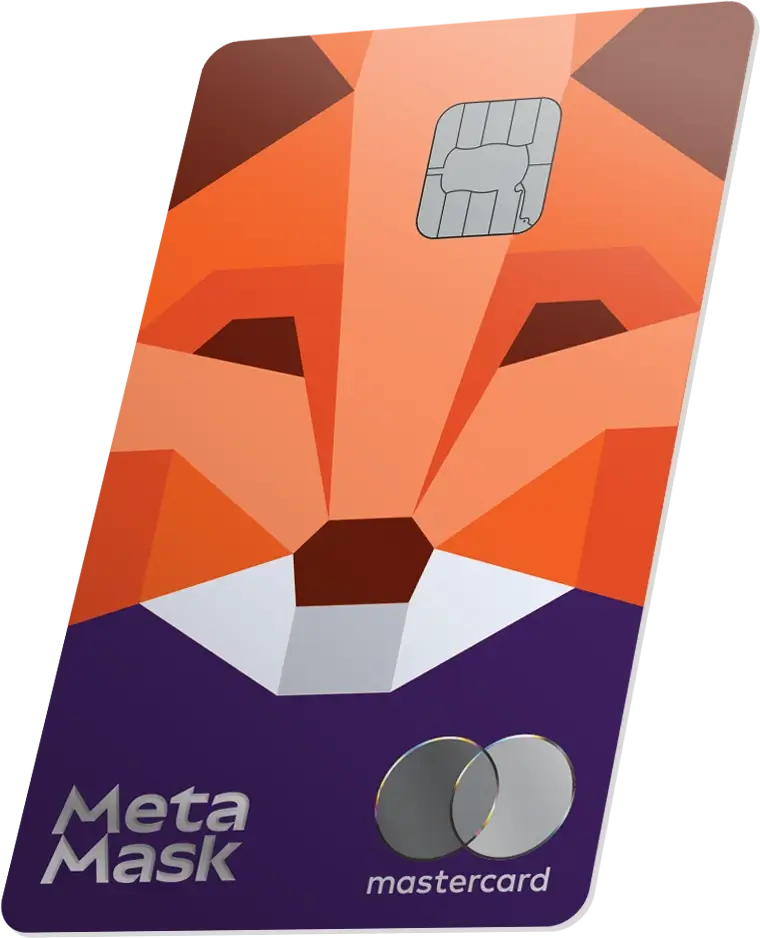
| MetaMask Virtual | Stablecoin spend | 1% | 1% cross-border | Self-custody | USDC | Free |
| ether.fi Core | Stablecoin spend | 3% | 1% | Protocol-managed | USDC | Free |
| Ready Lite | Stablecoin spend | 0.5% STRK | 1% | Self-custody | USDC | Free |
For the borrow-to-spend approach (credit line against crypto collateral), see Nexo (up to 2% cashback, 0.2% FX, 1.9-13.9% APR, EEA/UK/CH) covered in the strategy section below. For global stablecoin access, RedotPay (150+ countries, 1.2% FX, no cashback) and Ledger CL (hardware-signed, 1%, 1.75% FX) serve as secondary options.
What HODLers Need in a Crypto Card
Stablecoin spending so you never trigger a taxable BTC or ETH disposal
Crypto-backed credit option to borrow against holdings instead of selling
Self-custody compatibility - your keys, your coins, card just handles fiat
No forced liquidation without warning - clear LTV ratios and margin call process
Multi-chain support so you are not locked into one ecosystem
Top 6 Cards for HODLers
Two strategies, one goal: never sell your stack. COCA earns 8% cashback on stablecoin spending so your USDC sidecar generates returns while preserving your BTC and ETH positions. Gnosis Pay and MetaMask Virtual keep stablecoins in your own self-custody wallet until the exact moment of payment, so no exchange holds your funds.
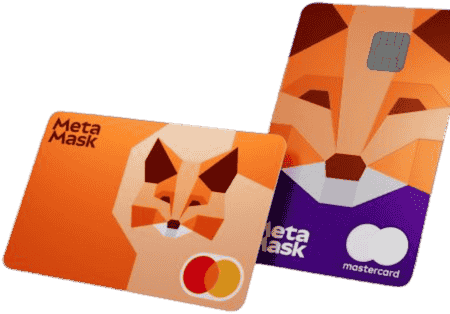
MetaMask Virtual's 1% cashback with 1% cross-border fee (Metal: 0% FX) and Rewards points (proven airdrop distributions) makes it the simplest self-custodial entry for HODLers who want to spend without selling. Avici Platinum is the borrow-to-spend option: use your crypto as collateral, spend borrowed fiat, and trigger zero taxable disposals.
ether.fi Core adds restaking yield on idle balances so your spending reserves earn while they wait. Ready Lite provides a free USDC-only entry point on Starknet for HODLers who want to start simple.

1. COCA Visa Card
Self-Banking: 8% Cashback + 6% APY + 0% FX

2. Gnosis Pay Card
Your Keys, Your Card, Your Money
3. Avici Platinum Card
Zero-Fee Self-Custody: Deposit USDC, Spend USD Anywhere
4. MetaMask Virtual Card
Sovereign Spending: 1% Cashback + Self-Custody + MetaMask Security

5. ether.fi Core Card
Zero Barriers: 3% Back on Every Purchase, No Stake Required

6. Ready Lite Card
Self-Custody for Free: Spend USDC From Your Own Wallet
What $1,500/Month Looks Like
$150
/month in cashback (based on Jupiter Global at 10%)
Scenario 1: Satoshi-Fan Steve, Bitcoin Maximalist in Austin ($2,500/month)
Steve bought 3 BTC between 2019-2021 at an average cost basis of $25,000/BTC. Current value: $270,000. He works as a software engineer and has fiat income covering his expenses, but he wants to maximize cashback on spending without ever selling a single sat.
Setup:
- Primary: COCA Elite (8% cashback with staking 30K $COCA, 6% APY on idle balance)
- COCA balance: $5,000 USDC (replenished monthly from salary)
- BTC stack: 3 BTC on a Ledger Nano, never connected to any card
- Fiat income: $7,500/month after tax
Monthly flow:
| Category | Monthly Spend | Cashback (8%) | Notes |
|---|---|---|---|
| Rent | $1,200 | $96 | Crypto-friendly landlord |
| Groceries (H-E-B) | $400 | $32 | Weekly runs |
| Dining/coffee | $300 | $24 | Austin food scene |
| Subscriptions | $200 | $16 | Netflix, Spotify, gym |
| Gas/transport | $200 | $16 | Truck payment separate |
| Other | $200 | $16 | Misc purchases |
| Total | $2,500 | $200/mo |
Annual result:
- Cashback: $2,400 (stablecoin, reinvested into USDC balance)
- Idle yield on $5,000 average balance: $300
- Tax events from card spending: near-zero (USDC in, USDC spent)
- Tax saved vs spending BTC directly: $3,733/year (at $25K cost basis, 20% LTCG)
- BTC stack: 3.000 BTC (unchanged)
- Total value: $2,700 earned + $3,733 tax saved = $6,433/year
Verdict: "My BTC has not moved from cold storage in four years. My card earns me $2,400/year in cashback on money I was spending anyway. And I save $3,700/year in taxes I would have paid if I spent BTC directly. This is not complicated."
Scenario 2: Nadia, Early ETH Holder in Zurich ($4,000/month)
Nadia holds 50 ETH from mining in 2017 (cost basis: approx. $300/ETH). Current value: approx. $175,000. She has freelance income of $3,000/month but her lifestyle costs $4,000/month. She needs to bridge the $1,000/month gap without selling ETH.
Setup:
- Primary: Nexo (credit line against 10 ETH collateral)
- Backup: Gnosis Pay (self-custody, funded from freelance income)
- Nexo collateral: 10 ETH ($35,000), 25% LTV = $8,750 credit line
- Gnosis Pay: $3,000/month from freelance income
- Remaining 40 ETH: cold storage, untouched
Monthly flow:
| Category | Card | Monthly Spend | Funding Source |
|---|---|---|---|
| Rent | Gnosis Pay | $2,000 | Freelance income |
| Groceries (Migros, Coop) | Gnosis Pay | $600 | Freelance income |
| Dining | Nexo | $400 | Credit line |
| Transport (SBB) | Gnosis Pay | $200 | Freelance income |
| Subscriptions | Gnosis Pay | $200 | Freelance income |
| Travel/entertainment | Nexo | $600 | Credit line |
| Total | $4,000 | $3K fiat + $1K credit |
Annual result:
- Nexo credit used: $12,000/year
- Nexo interest (6% APR): $720/year
- Tax saved vs selling ETH (cost basis $300, Swiss no-CGT for individuals): $0 (Switzerland has no CGT)
- Gnosis Pay cashback (4% GNO): $1,440
- Nexo cashback (2%): $240
- Net: $1,680 cashback - $720 interest = $960/year net income
- ETH stack: 50.000 ETH (unchanged, 10 locked as collateral)
In Switzerland, the credit line approach is less about tax savings (no CGT) and more about preserving her ETH position during what she believes is still early in the cycle. If ETH reaches $10,000, her 50 ETH will be worth $500,000. She would rather pay $720/year in interest than sell any of it.
Verdict: "I paid $720 in interest to borrow $12,000 against my ETH. If I had sold 3.4 ETH instead, those 3.4 ETH would have been gone forever. At $10,000/ETH, that is $34,000 I preserved for $720. The math is obvious."
Scenario 3: Marcus, Recent Buyer in Berlin ($1,500/month)
Marcus bought 0.5 BTC six months ago at $85,000 (cost basis: $42,500, current value: $45,000). His gains are minimal. He wants to use a crypto card but does not want the complexity of credit lines.
Setup:
- Primary: MetaMask Virtual (1% cashback, self-custody)
- Balance: $2,000 USDC on Linea in MetaMask
- BTC: 0.5 BTC on Ledger (separate wallet, never connected to MetaMask card)
Monthly flow:
| Category | Monthly Spend | Cashback (1%) | Notes |
|---|---|---|---|
| Groceries | $400 | $4 | REWE, Lidl |
| Dining | $300 | $3 | Restaurants, Doner |
| Transport (BVG) | $100 | $1 | Monthly pass |
| Subscriptions | $150 | $1.50 | Streaming, gym |
| Other | $550 | $5.50 | Misc |
| Total | $1,500 | $15/mo |
Annual result:
- Cashback: $180
- Tax saved vs spending BTC: $147 (only $5.9K in gains on $24K spend, at 26.375% German rate)
- Net: $327/year
Marcus's gains are small, so the tax savings from stablecoin spending are modest ($147/year). But Germany's 1-year holding period rule means if he holds his BTC past the 1-year mark, all gains become completely tax-free. By spending USDC instead of BTC for the next 6 months, he preserves the full 0.5 BTC and its potential for tax-free gains after the holding period expires.
Verdict: "In six months, my BTC becomes tax-free in Germany. Every sat I spend before then is a taxable event. Every sat I hold past the deadline is permanently tax-free. USDC spending for six months is the obvious play."
Tax Comparison: Three Approaches Side by Side
| Approach | Tax Event per Purchase | Annual Tax ($24K spend, $20K basis) | Interest Cost | Position Impact | Best For |
|---|---|---|---|---|---|
| Sell BTC to spend | Capital gain each time | $3,733 (20% LTCG) | $0 | Stack shrinks | Never |
| Crypto-backed credit | None (borrowing) | $0 | $720-$3,360/yr | Stack locked as collateral | Asset-rich, cash-poor |
| Stablecoin spending | Near-zero | Less than $50/yr | $0 | Stack untouched | Everyone else |
For most HODLers, stablecoin spending is the clear winner: zero tax complexity, zero interest cost, zero liquidation risk, and your investment stack stays completely untouched. See our tax-conscious guide for country-specific holding period rules.
Multi-Card Strategy for HODLers
How HODLers Actually Spend Without Selling
There are two fundamentally different approaches, and choosing the wrong one for your situation can cost thousands per year.
Approach 1: The Stablecoin Sidecar
Maintain two completely separate pools of money:
Pool A: Your investment stack. BTC, ETH, SOL, whatever you are holding long-term. This never touches the card. It stays in cold storage, a hardware wallet, or a self-custody wallet under your exclusive control.
Pool B: Your spending balance. USDC loaded onto a crypto card. This is your "checking account" equivalent. You top it up periodically by buying stablecoins with fiat income, not by selling your holdings.
The mechanical flow: Your salary arrives in your bank account. You convert $2,000 to USDC via a fiat on-ramp (Coinbase, Kraken, or direct bank-to-USDC). You transfer the USDC to your card wallet. You spend from USDC. Your BTC stays in cold storage, completely untouched.
Tax impact: Each USDC purchase creates a near-zero taxable event (you buy at $1.00, you spend at $1.00, gain is zero or negligible). Your BTC position generates zero taxable events because it is never touched.
Approach 2: Crypto-Backed Credit
Instead of spending stablecoins, you borrow fiat against your BTC/ETH collateral and spend the borrowed money. Your crypto stays locked as collateral but never gets sold.
The mechanical flow with Nexo: You deposit 1 BTC ($90,000) as collateral. Nexo grants you a credit line at 50% LTV: $45,000. You spend from this credit line via the Nexo card. Nexo charges interest (1.9-13.9% APR depending on tier). Your 1 BTC remains in Nexo's custody as collateral. If BTC drops below the required LTV threshold, Nexo sends a margin call. If you do not deposit more collateral, they liquidate enough BTC to restore the LTV ratio.
Tax impact: Borrowing is not a taxable event in most jurisdictions. You avoid capital gains entirely. However, interest payments are typically not tax-deductible for personal spending. And if Nexo liquidates your collateral during a crash, that IS a taxable disposal at the worst possible price.
The Three Numbers HODLers Must Evaluate
Number 1: Annual tax cost of selling vs not selling
Our annual cost calculation shows this is the number that determines whether any of this is worth the effort:
| Cost Basis | Current Price | Annual Spend | Annual Capital Gains | Tax (20% LTCG) | Tax (37% STCG) |
|---|---|---|---|---|---|
| $20,000/BTC | $90,000/BTC | $24,000 | $18,667 | $3,733 | $6,907 |
| $40,000/BTC | $90,000/BTC | $24,000 | $13,333 | $2,667 | $4,933 |
| $60,000/BTC | $90,000/BTC | $24,000 | $8,000 | $1,600 | $2,960 |
| $80,000/BTC | $90,000/BTC | $24,000 | $2,667 | $533 | $987 |
If you bought BTC at $20,000, spending $24,000/year directly from BTC creates $3,733 in taxes (20% rate). The stablecoin approach avoids this entirely. The savings justify any reasonable card fee, gas cost, or cashback trade-off.
If you bought BTC at $80,000, the tax cost of selling is only $533/year. The stablecoin sidecar still makes sense (zero is better than $533), but the urgency is lower.
Number 2: Interest cost vs tax cost (for credit line users)
Borrowing against your BTC avoids capital gains tax. But it is not free.
| Annual Spend | Nexo Interest (6% APR) | Tax Saved (20% LTCG, $20K basis) | Net Benefit of Borrowing |
|---|---|---|---|
| $12,000 | $720 | $3,733 | +$3,013 |
| $24,000 | $1,440 | $3,733 | +$2,293 |
| $36,000 | $2,160 | $3,733 | +$1,573 |
| $48,000 | $2,880 | $3,733 | +$853 |
| $60,000 | $3,600 | $3,733 | +$133 |
At 6% APR and $20K cost basis, borrowing beats selling up to about $62,000/year in spending. Beyond that, the interest cost exceeds the tax savings. At higher cost bases ($60K+), the tax savings shrink, and borrowing becomes net negative at lower spending levels.
Number 3: Liquidation crash buffer
If you use a crypto-backed credit line, this number determines whether you survive a bear market:
| LTV Used | BTC Drop to Trigger Liquidation | Survived 2022 Crash (-78%) | Survived 2018 Crash (-84%) |
|---|---|---|---|
| 25% | -75% | Yes (barely) | No |
| 30% | -70% | Yes | No |
| 40% | -60% | No | No |
| 50% | -50% | No | No |
The 2022 crash took BTC from $69K to $15.5K (a 78% drawdown). Only LTV below 22% would have survived without liquidation. The "safe" 50% LTV that exchanges advertise would have liquidated you at a 50% drop, which happened within months. If you use credit lines, 20-25% LTV is the maximum that provides meaningful crash protection.
Stablecoin Yield While You Wait to Spend
Your USDC spending balance does not need to sit idle:
| Card | Yield on Idle USDC | Source | Risk | Best For |
|---|---|---|---|---|
| COCA | 6% APY | Morpho lending | Smart contract | Maximum yield + up to 8% cashback (staking 30K $COCA) |
| ether.fi | 3-5% APY | EigenLayer restaking | Restaking risk | ETH believers |
| Nexo | Up to 14% APY | Nexo lending | Platform risk | Credit line users |
| Gnosis Pay | 0% | N/A | Zero | Self-custody purists |
| Ledger CL | 0% | N/A | Zero | Hardware security |
A $5,000 USDC spending balance earning 6% on COCA generates $300/year. On Nexo at up to 14%, the same $5,000 earns up to $700/year. For HODLers, this is income from money that was going to be spent anyway, without touching your investment stack.
The Bull Market Trap
During bull markets, HODLers are tempted to increase their credit line LTV because collateral values are rising. This is exactly backwards. Higher prices mean you should reduce LTV (the same dollar credit line now requires less percentage of your collateral), not increase spending.
If BTC doubles from $45K to $90K, your $50,000 collateral is now worth $100,000. Instead of borrowing more, reduce your LTV from 50% to 25%. Your $25,000 credit line stays the same, but your crash buffer expanded from 50% to 75%.
The corollary: the time to be conservative with leverage is when everything feels safe. The time you need the buffer is when it no longer feels safe.
Emergency Protocol: When BTC Drops 30%
If you use a credit line and BTC drops significantly, here is what to do at each threshold:
| BTC Drop | Action at 25% LTV | Action at 40% LTV | Action at 50% LTV |
|---|---|---|---|
| -20% | Monitor only | Reduce spending | Deposit collateral immediately |
| -30% | Reduce spending | Deposit collateral | Margin call likely |
| -40% | Consider depositing collateral | Margin call likely | Liquidation |
| -50% | Approaching danger zone | Liquidation | Already liquidated |
| -60% | Monitor for recovery | Already liquidated | Already liquidated |
The best defense against liquidation is a low LTV and a collateral reserve. Keep additional BTC or stablecoins available to deposit as emergency collateral during drawdowns. If you cannot deposit additional collateral during a 30% crash, you should not be using a credit line.
Common Mistakes to Avoid
1. Spending BTC Directly for "Convenience"
The mistake: Using a card that auto-converts BTC to fiat at the point of sale.
The cost: At a $20,000 cost basis and $90,000 current price, every $100 purchase creates $77.78 in taxable capital gains. Over $24,000/year in spending, that is $18,667 in gains and $3,733 in tax (20% LTCG). Plus 300+ individual disposal events to track for tax reporting.
How to avoid it: Fund your card with USDC only. Buy USDC with fiat income. Never let your card touch your BTC. Your BTC stays in cold storage, generating exactly zero tax events.
2. Over-Leveraging Your Credit Line
The mistake: Borrowing 50% of your BTC collateral because the exchange says you can.
The cost: A 50% LTV means liquidation at a 50% price drop. The 2022 crash was 78%. The 2018 crash was 84%. At 50% LTV with $90,000 BTC, liquidation triggers at $45,000. Your entire collateral gets sold at the worst possible price, realizing massive capital gains taxes on top of the loss.
How to avoid it: Never exceed 25% LTV. At $90,000 BTC, that means borrowing a maximum of $22,500 on 1 BTC collateral. Keep additional collateral (BTC or stablecoins) available to deposit during drawdowns. Set price alerts at -20%, -30%, and -40%.
3. Keeping Your Investment Stack on an Exchange
The mistake: Keeping all your BTC on Binance or Coinbase "for easy access" to the card.
The cost: FTX held $8 billion in customer assets when it collapsed. Celsius, BlockFi, and Voyager lost billions more. If you hold 3 BTC ($270,000) on an exchange and it fails, you lose everything. Bankruptcy recovery typically returns 20-40 cents on the dollar, 18-36 months later.
How to avoid it: Keep your investment stack in cold storage (Ledger, Trezor) or self-custody. Only the spending balance (USDC) should be on a card wallet. Maximum exposure: 30 days of spending money.
4. Ignoring Interest Rates on Credit Lines
The mistake: Assuming crypto-backed credit is "free money" because you are not selling.
The cost: Nexo rates range from 1.9% to 13.9% APR depending on tier. At 10% APR on $24,000 borrowed, you pay $2,400/year in interest. If your cost basis is $60,000/BTC, the tax cost of just selling would be $1,600 (at 20% LTCG). You are paying $800 MORE per year to borrow than you would to sell.
How to avoid it: Calculate: (annual spending x interest rate) vs (annual capital gains x tax rate). Borrowing only beats selling when the tax cost exceeds the interest cost. This depends entirely on your cost basis, tax rate, and the lender's APR.
5. Not Setting Price Alerts for Liquidation Thresholds
The mistake: Taking out a credit line and then not monitoring BTC price movements.
The cost: Flash crashes can happen overnight. If BTC drops 35% in 24 hours (as it has multiple times), you may wake up to find your collateral partially liquidated. Liquidation happens at market price during a crash, which is typically the worst possible price, plus you owe capital gains tax on the forced sale.
How to avoid it: Set alerts at 20%, 30%, and 40% below your collateral's value. Have a plan: at -20%, reduce credit usage. At -30%, deposit additional collateral. At -40% with no additional collateral, accept partial liquidation and close the credit line.
6. Mixing Investment and Spending Wallets
The mistake: Using one wallet for both your BTC investment and your USDC card spending.
The cost: Accidentally spending from the wrong balance. One mis-tap and you have sold BTC, created a tax event, and reduced your position. Also, if the card wallet is compromised, the attacker has access to your entire portfolio, not just your spending money.
How to avoid it: Complete wallet separation. Investment stack on a hardware wallet. Spending balance in a separate card wallet. Different seeds, different devices, different apps. The card wallet should never have BTC in it. The hardware wallet should never connect to a card.
Card Selection by HODLer Profile
Cold storage purist: Gnosis Pay or MetaMask Virtual for self-custody stablecoin spending. Your BTC stays on your Ledger, your USDC sits in your own wallet. Zero counterparty risk.
Maximum cashback HODLer: COCA (up to 8% cashback with staked $COCA + 6% APY on idle USDC). At Elite tier (staking 30K $COCA) with $2,500/month: $2,400/year cashback plus $300 yield. Free Starter tier gets 1% ($300/yr) + the same 6% APY. Your BTC stays untouched while your USDC earns more than most savings accounts.
Asset-rich, cash-poor: Nexo for crypto-backed credit. Borrow against BTC at conservative LTV (20-25%). Only if annual interest cost is less than annual capital gains tax from selling.
Beginner HODLer: Start with COCA or RedotPay (simple setup, USDC spending). Graduate to Gnosis Pay or MetaMask once comfortable with self-custody.
Multi-chain HODLer: Ledger CL for hardware security across all chains, or ether.fi for ETH restaking yield while HODLing. SOL holders: Solflare for native SOL staking.
Traveling HODLer: Any 0% FX card with USDC. RedotPay works in 150+ countries. See our travelers guide.
German HODLer: Use stablecoins exclusively for spending until your BTC passes the 1-year holding period. After that, all BTC gains are permanently tax-free. Do NOT sell a single sat before the 365-day mark.
Final take: HODLing and spending are not contradictory. The key is separating your investment stack from your spending balance. Fund a crypto card with USDC, spend from that balance, earn 1-8% cashback, and never touch your BTC. At a $20,000 cost basis, stablecoin spending saves you $3,733/year in taxes on $24,000 of annual spending.
Your investment thesis stays intact, your daily expenses are covered, and you avoid creating hundreds of taxable disposal events per year. For those with large positions and limited fiat income, crypto-backed credit from Nexo offers an alternative, but only at 20-25% LTV and only when interest costs are less than the tax you would owe from selling.
Disclaimer: SpendNode is a data comparison platform. We are not financial advisors. Crypto cards involve risks including asset volatility, custodial risk, and tax complexity. Verify all terms directly with issuers before applying.
Written by Aleksandar Dukic
Frequently Asked Questions
How do I spend money without selling my crypto?
Two approaches. First: hold stablecoins (USDC/USDT) separately from your investment stack and spend those through any crypto card. Second: use a crypto-backed credit card like Nexo or Avici that lets you borrow against your BTC/ETH at 1.9-13.9% APR (depending on loyalty tier) - you spend borrowed fiat while your crypto stays as collateral. Nexo also offers Zero-Interest Credit (ZiC) with 0% interest but structured collar terms that cap upside on BTC/ETH collateral.
Is spending stablecoins a taxable event?
Technically yes in most jurisdictions - but the gain is near zero. USDC bought at $1.00 and spent at $1.00 generates no capital gain. This is fundamentally different from spending BTC bought at $30,000 when it is worth $90,000, which triggers a $60,000 capital gain per BTC. Stablecoins are the tax-efficient spending method for HODLers.
What is the risk of a crypto-backed credit line?
Liquidation. If you borrow against BTC and BTC drops below the required loan-to-value ratio, the lender sells your collateral to cover the loan. Nexo typically offers 50% LTV - meaning a 50%+ BTC crash could trigger liquidation. Mitigation: borrow conservatively (use only 25-30% of your collateral value), set price alerts, and keep extra collateral ready to deposit.
Should I use a self-custody card or exchange card as a HODLer?
Self-custody. The entire HODLer philosophy is about controlling your own keys. Cards like MetaMask, Gnosis Pay, and Ledger CL let you spend from your own wallet without depositing to an exchange. The trade-off is slightly less convenience - but your investment stack never leaves your custody.
Recent Updates to Best Crypto Cards for HODLers
- Fixed ether.fi Core from Points to 3%. Gnosis Pay and Avici FX caveats added. COCA corrected to Up to 8% (1% free)