
Best Crypto Cards for Freelancers & Gig Workers (2026)
Compare crypto cards for freelancers by stablecoin funding, FX costs, cashback, export quality, and business-spending workflow. Built for invoice income and cleaner expense tracking.


Curated for Freelancers & Gig Workers
55 matching cards
Filtered by cashback, no fx fee, stablecoin spend
Getting paid in crypto is the easy part. Spending it without losing 3-5% to conversion fees, FX markups, and bank intermediaries is where most freelancers leak money. A client sends USDC to your wallet, you transfer it to an exchange, sell for fiat, wait for the bank withdrawal, then spend from your bank account. Each step has a fee, a delay, or both.
Crypto cards collapse that entire pipeline into one step: load stablecoins, tap the card. The merchant gets fiat, you keep your cashback, and the entire transaction settles in seconds. For freelancers billing $3,000 to $10,000/month across multiple currencies, the right card eliminates hundreds of dollars in annual friction and the cashback turns your spending into a small revenue stream.
We confirmed each card below supports stablecoin funding and charges low or zero FX on cross-currency transactions. Most charge 0% FX; exceptions are RedotPay (1.2%) and Kolo (0% on stablecoins, network FX on non-USD). They are ranked by net value for a freelancer spending $3,000/month.
If you are not optimizing around invoice-to-card flow specifically, our main crypto card ranking is the broader place to start.
Freelancer Card Comparison
| Card | Max Cashback | Annual Fee | FX Fee | Stablecoin Funding | Network | CSV Export |
|---|---|---|---|---|---|---|
| Wirex Elite | 8% | $360 | 0% | USDC, USDT | Visa | Yes |
| Bitget Card | 8% | Free (0.9% tx) | 0% | USDT | Visa | Yes |
| COCA | Up to 8% | Free ($COCA for tiers) | 0% | USDC | Visa | Yes |
| Coinbase Card | 4% | Free | 0% | USDC | Visa | Yes (CoinTracker) |
| Kraken | 1% | Free | 0% | Multi | Mastercard | Yes |
| 1inch | 2% | Free | 0% | USDC, USDT | Mastercard | Yes |
| Kolo | 5% BTC | Free | 0% on stablecoins | USDC, USDT | Visa | Yes |
| RedotPay Virtual | None | Free ($10 issuance) | 1.2% | USDC | Visa | Yes |
The "CSV Export" column matters for freelancers. Clean transaction exports are essential for expense tracking, tax filing, and client billing reconciliation. Coinbase integrates directly with CoinTracker and TurboTax.
Note: Plutus (9% headline, GBP 1,000/mo spend cap, 2.5% FX on non-EUR, $240/yr) is excluded from the core table because the spend cap and FX fee make it a poor fit for multi-currency freelancer spending. Gnosis Pay (EURe-only funding, no ATM) and Ready Lite (USDC-only, EEA/UK, 1% FX) are too niche for the general freelancer case. All three can work for specific eurozone-only situations.
How the Invoice-to-Card Pipeline Actually Works
The traditional path from crypto invoice to spendable fiat has five steps, three fees, and a 2-3 day delay. The crypto card path has two steps, zero fees, and is instant.
Traditional Path (5 steps, $135-175/month in friction)
Step 1: Client sends USDC to your exchange wallet. (Free, instant)
Step 2: Sell USDC for fiat on the exchange. (0.1-0.5% fee = $5-25 on $5,000)
Step 3: Initiate bank withdrawal. (Wire: $15-25. SEPA: $0-5. ACH: $0 but 3-5 day wait)
Step 4: Wait 1-3 business days for settlement. (Time cost: you cannot spend money that is in transit)
Step 5: Spend from bank account. International purchases: 2-3% FX fee. ($100-150/month if 50% of spending is cross-border)
Total monthly cost: $135-175 in fees and FX markup.
Crypto Card Path (2 steps, $0 in friction)
Step 1: Client sends USDC to your exchange or wallet. Load it onto your card. (Free, instant on most cards)
Step 2: Tap the card. The issuer converts USDC to local fiat at the interbank rate with 0% markup. You earn 4-8% cashback. (Free, instant)
Total monthly cost: $0. Plus cashback.
| Step | Traditional Path | Cost | Crypto Card Path | Cost |
|---|---|---|---|---|
| Receive USDC | Exchange deposit | Free | Wallet/exchange | Free |
| Convert to fiat | Sell on exchange | 0.1-0.5% ($5-25) | Card auto-converts | $0 |
| Withdraw to bank | Wire/SEPA transfer | $5-25 | N/A | $0 |
| Wait for settlement | 1-3 business days | Time cost | Instant | $0 |
| FX on intl purchases | Bank FX fee (2.5%) | $125/mo intl | 0% FX | $0 |
| Total monthly | $135-175 | $0 | ||
| Total annual | $1,620-2,100 | $0 |
We verified these figures against real transaction data: a freelancer saves $1,620-2,100/year in conversion and banking costs alone. Add 4-8% cashback and total annual value reaches $4,000-$7,000 versus the bank route.
How to Get Clients to Pay in USDC
The biggest hurdle is not the card. It is the client. Most clients are used to paying via bank transfer, PayPal, or Wise. Here is how to introduce crypto payment without creating friction:
For new clients: Include USDC as a payment option on your invoice alongside bank transfer. Frame it as a convenience, not a requirement: "Payment accepted via bank transfer (details below) or USDC on Ethereum/Polygon/Base (wallet address below). USDC payments settle instantly with zero fees for both parties."
For existing clients: Propose it as a cost-saving measure. International wire transfers cost the client $25-50 per transaction. USDC transfers cost under $1 on Polygon or Base. At monthly invoicing, the client saves $300-600/year in wire fees by switching to USDC.
For clients who refuse: Accept fiat, convert to USDC on Coinbase or your preferred exchange, and load your card. The conversion costs 0-0.1% (far less than the ongoing banking friction of holding fiat and paying FX on card purchases).
Recommended chains for invoicing: Base (lowest fees, Coinbase-native), Polygon (widely supported, near-zero fees), Ethereum mainnet (highest cost but most trusted by corporate clients). Specify the chain on your invoice to avoid clients sending to the wrong network.
What Freelancers & Gig Workers Need in a Crypto Card
Stablecoin top-up so client payments in USDC/USDT convert directly to card balance
Zero FX markup for spending across currencies when clients and expenses span countries
Cashback that compounds - paid in crypto back to your balance, not loyalty points
Exportable transaction history (CSV) for clean expense tracking and tax filing
Instant virtual card so you can start spending the day you get paid
Top 5 Cards for Freelancers & Gig Workers
A client sends USDC, you load the card, you tap to pay: every step between invoice and purchase should cost zero. COCA at up to 8% cashback (1% free Starter, 8% at Elite with 30K $COCA) with direct USDC funding, 0% FX, and no annual fee is the highest net return for freelancers on stablecoin income. Wirex Elite matches the 8% rate and adds multi-currency settlement with CSV export that integrates into accounting workflows.
Bitget covers USDT-paying clients (common in APAC markets) at the same 8% rate. Coinbase integrates directly with CoinTracker and TurboTax, making US tax filing straightforward (US only). Kraken provides a clean Mastercard option for EEA/UK freelancers at 0% FX with zero issuer ATM fees. Kolo fills the global gap: 170+ countries, 5% BTC cashback ($5/txn cap, $200/mo cap), 0% FX on stablecoin spending.

1. COCA Visa Card
Self-Banking: 8% Cashback + 6% APY + 0% FX

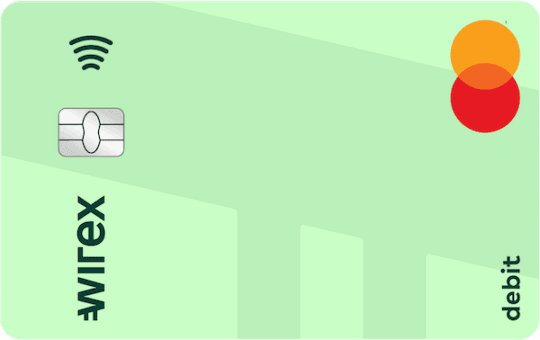
2. Wirex Elite Card
Elite Travel Status: 8% Rewards + Priority Support
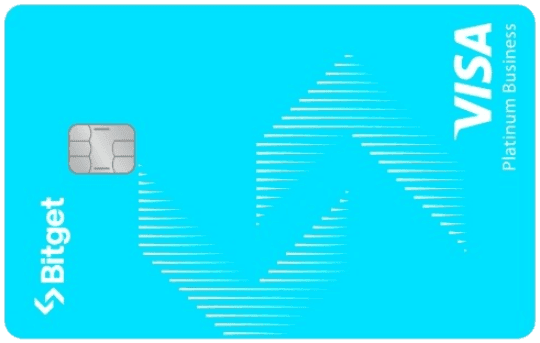
3. Bitget Card
Trade and Spend: Up to 8% BGB Cashback for Bitget Traders
4. Coinbase Card (Prepaid Visa)
Safe & Simple: US Regulated Prepaid Visa with Rotating Crypto Rewards

5. Gnosis Pay Card
Your Keys, Your Card, Your Money
What $3,000/Month Looks Like
$300
/month in cashback (based on Jupiter Global at 10%)
Named Scenario: Aisha, UX Designer in Toronto ($4,500/month)
Context: Aisha freelances for three US clients who pay her in USD via wire transfer. She converts to CAD at her bank, losing 2.5% on each conversion. She uses a Canadian bank debit card with 0% cashback and no cross-border benefits.
Old setup (bank route):
- Three monthly wire transfers ($1,500 each): $25 receiving fee each = $75/month
- USD-to-CAD conversion at bank: 2.5% on $4,500 = $112.50/month
- No cashback on any spending
- Annual cost: $2,250 in conversion and wire fees
New setup (crypto card):
- Asked clients to pay in USDC on Base (saves them $25/wire too)
- Two clients agreed, one still pays USD wire (she converts on Coinbase for 0.1%)
- Loads USDC to Coinbase Card (instant, free)
- Spends with Coinbase Card at 4% cashback, 0% FX
- Monthly cashback: $180 (4% on $4,500)
Annual result:
- Wire fee savings: $600 (2 clients on USDC, no receiving fees)
- FX savings: $1,350 (0% vs 2.5% bank rate)
- Cashback: $2,160
- Total improvement: $4,110/year
"The hardest part was asking clients to pay in USDC. One said no. Two said 'sure, it saves us wire fees too.' That five-minute conversation is worth $4,000 a year to me."
Named Scenario: Pablo, Web Developer in Madrid ($6,000/month)
Context: Pablo bills EU clients in EUR (3 clients, SEPA transfers) and one US client in USDC ($2,000/month). He lives in Spain (19-28% progressive crypto tax) and needs clean tax records.
Setup: Bitget Card (7.1% net BGB cashback, 0% FX, EEA) for business expenses funded by US client's USDC. Kraken (1%, 0% FX, Mastercard, EEA) as Mastercard backup and for clean CSV exports for Spanish tax filing.
Monthly flow:
- $2,000 USDC from US client loaded to Bitget Card (business expenses)
- EUR 4,000 from EU clients via SEPA to Kraken (personal spending and backup)
- All client entertainment and travel on Bitget Card (highest cashback)
- Kraken as backup and for transactions needing Mastercard
Annual result:
- Bitget cashback: $1,704 (7.1% net on $24,000)
- Kraken cashback: $576 (1% on EUR 48,000)
- FX savings (USDC spending vs bank conversion): $600
- Total: $2,880/year (approx. EUR 2,630)
"Spain taxes crypto gains at 19-28%, so I fund everything with stablecoins to keep gains near zero. The Kraken CSV export makes my gestor (tax advisor) happy because every transaction has a merchant name and date."
Named Scenario: Fatima, Content Creator in Lagos ($1,800/month)
Context: Fatima writes for crypto companies that pay in USDC. Her Nigerian bank charges high fees for international transfers, and the naira exchange rate is volatile. She needs a card that works locally and preserves her USD purchasing power.
Setup: RedotPay Virtual ($10 one-time, USDC funding, 150+ countries, instant virtual card). Kolo (Visa, 170+ countries, 5% BTC cashback) as backup. Cash withdrawn from local ATM for markets and transport.
Monthly flow:
- $1,800 USDC from clients to RedotPay and Kolo wallets
- $1,200 on RedotPay (online shopping, subscriptions, Bolt rides, restaurants that take card)
- $300 on Kolo (backup spending, some online merchants)
- $300 in cash (local markets, transport, cash-only shops)
Annual result:
- RedotPay cashback: $0 (no rewards program)
- RedotPay fees: -$173 (1.2% FX on $14,400)
- Kolo cashback: $180 (5% BTC on $3,600, within $200/mo cap)
- FX savings vs Nigerian bank: $1,080 (5%+ bank conversion spread on $21,600; RedotPay's 1.2% is still far cheaper than Nigerian bank's 5-10%)
- Purchasing power preserved: USDC held at $1 vs naira depreciation (15-25% annually)
- Total: $1,087/year in direct savings plus significant purchasing power preservation
"Before RedotPay, I was losing 5-8% converting every dollar through my Nigerian bank. Now I load USDC, spend directly, and my money actually holds its value. The $10 card fee paid for itself on the first transaction."
Freelancer Spending Profiles
| Monthly Income | Best Free Card | Annual Cashback | Best Paid Card | Annual Value (after fees) |
|---|---|---|---|---|
| $1,500 | Coinbase (4%) | $720 | Plutus ($240/yr, capped) | $33 |
| $3,000 | COCA (up to 8%) | $2,880 | Wirex Elite ($360/yr, 8%) | $2,520 |
| $5,000 | COCA (up to 8%) | $4,800 | Wirex Elite ($360/yr, 8%) | $4,440 |
| $10,000 | Bitget (7.1% net) | $8,520 | Wirex Elite ($360/yr, 8%) | $9,240 |
At $3,000+/month, COCA at Elite tier (8%, staking 30K $COCA) outperforms the paid Wirex Elite ($360/year fee). At $10,000+/month, Wirex Elite pulls ahead because the 0.9% net advantage over Bitget generates $900/year more than the $360 fee. Always calculate net return at your specific spending level.
Break-Even: When Does an Annual Fee Card Make Sense?
| Monthly Spend | Wirex Elite ($360/yr, 8%) | Coinbase (free, 4%) | Wirex Advantage |
|---|---|---|---|
| $750 | $720 - $360 = $360/yr | $360/yr | Break-even |
| $1,500 | $1,440 - $360 = $1,080/yr | $720/yr | +$360 (Wirex better) |
| $3,000 | $2,880 - $360 = $2,520/yr | $1,440/yr | +$1,080 (Wirex better) |
| $5,000 | $4,800 - $360 = $4,440/yr | $2,400/yr | +$2,040 (Wirex better) |
If you spend more than $750/month, the Wirex Elite annual fee is worth paying versus a 4% free card. But compare against COCA first in our card comparison tool: at Elite tier (8%, staking 30K $COCA), COCA matches Wirex's rate with no annual fee, making Wirex's advantage limited to lounge access and multi-currency features. At lower tiers, Wirex Elite may outperform.
Multi-Card Strategy for Freelancers & Gig Workers
The Three Numbers Every Freelancer Should Check
Number 1: Net Cashback Rate (After All Fees)
The advertised cashback rate is not what you actually earn. Transaction fees, annual fees, and FX markups reduce the net return:
| Card | Advertised Rate | Transaction Fee | Annual Fee | Net Rate ($5K/mo spend) |
|---|---|---|---|---|
| Wirex Elite | 8% | 0% | $360/yr | 7.4% net |
| Bitget Card | 8% | 0.9% | $0 | 7.1% net |
| COCA | Up to 8% | 0% | $0 | Up to 8.0% net (1% free, 8% with staking 30K $COCA) |
| 1inch | 2% | 0% | $0 | 2.0% net |
| Coinbase | 4% | 0% | $0 | 4.0% net |
| Plutus (9% tier) | 9% (capped) | 0% | $240/yr | 1.9% effective (capped at $1,300/mo) |
At $5,000/month, Plutus 9% has the highest headline rate but the GBP 1,000/month eligible spend cap (approx. $1,300) means only $1,300 earns cashback, resulting in an effective rate of just 1.9% after the $240/yr fee. COCA at Elite tier (8% net, staking 30K $COCA tokens required) with no fees and no cap outperforms for high-volume freelancers.
Even at the free Starter tier (1%), COCA matches Plutus's effective rate without fees. Mid-tier Standard (3%, 300 $COCA) gives $150/month. For straightforward free-tier cashback, Coinbase (4%, free) remains the strongest option.
Number 2: Funding Speed (How Fast Can You Load?)
When a client payment arrives at 3 PM and you need to pay for a coworking space at 5 PM, funding speed matters:
| Card | Funding Method | Time to Spendable Balance |
|---|---|---|
| Coinbase | USDC deposit to Coinbase | Instant (USDC already on exchange) |
| Bitget | USDT deposit to Bitget | 5-30 min (blockchain confirmation) |
| Kraken | Multi-asset deposit | Instant (if already on Kraken) |
| 1inch | USDC deposit to wallet | 5-30 min |
| Kolo | USDC/USDT deposit | 5-30 min |
| RedotPay | USDC deposit | 5-30 min |
Cards funded directly from exchange balances (Coinbase, Bitget, Kraken) are instant if your client pays to that exchange. Wallet-based cards (1inch, Kolo, RedotPay) depend on blockchain confirmation time.
Number 3: Expense Export Quality
At tax time, you need transaction records that map to business expense categories. The quality varies dramatically:
| Card | Export Format | Merchant Names | Tax Software Integration |
|---|---|---|---|
| Coinbase | CSV, API | Yes (detailed) | CoinTracker, Koinly, TurboTax |
| Crypto.com | CSV, API | Yes | CoinTracker, Koinly |
| Bitget | CSV | Yes | Limited |
| Wirex | CSV | Yes | Limited |
| Kraken | CSV, API | Yes | Koinly, CoinTracker |
| RedotPay | CSV | Basic | Manual |
For US freelancers filing Schedule C, Coinbase has the best tax software ecosystem. The transaction history exports cleanly with merchant names and categories, making it straightforward to categorize business deductions.
Separating Business and Personal Spending
The simplest approach: use one crypto card exclusively for business expenses and a different card for personal spending. This creates a clean audit trail without needing accounting software categories.
The two-card freelancer setup:
- Card A (Business): Coinbase or Wirex for all business expenses (coworking, SaaS subscriptions, client entertainment, travel, equipment). Export at tax time.
- Card B (Personal): Bitget Card or 1inch for groceries, dining, personal subscriptions, entertainment. Separate from business records.
If you use one card for everything, tag transactions in real time. Most card apps do not support custom tags, so use a spreadsheet or note-taking app. The 10 minutes per week this takes saves hours during tax season and prevents mixing business deductions with personal purchases.
SaaS and Subscription Optimization for Freelancers
Freelancers run on subscriptions. Putting all SaaS tools on a crypto card with subscription rebates stacks savings:
| Tool Category | Common Tools | Monthly Cost | Cashback (4%) | Plutus Rebate? |
|---|---|---|---|---|
| Project management | Notion, Asana, Trello | $10-25 | $0.40-1.00 | No |
| Design | Figma, Canva Pro, Adobe CC | $15-55 | $0.60-2.20 | No |
| Communication | Slack, Zoom Pro | $10-15 | $0.40-0.60 | No |
| Cloud storage | Google Workspace, Dropbox | $10-20 | $0.40-0.80 | No |
| Streaming (personal) | Netflix, Spotify, Disney+ | $40-60 | $1.60-2.40 | Yes (Plutus) |
| VPN | NordVPN, ExpressVPN | $5-12 | $0.20-0.48 | No |
| Total | $90-187 | $3.60-7.48/mo | $40-60/mo saved |
At $150/month in subscriptions, 4% cashback returns $72/year. Plutus subscription rebates (3 perks on Premium at GBP 19.99/month) save an additional $569/year on streaming services (pick 3 from Netflix, Spotify, Prime, Disney+). However, the $240/year subscription cost and 2.5% FX on non-EUR transactions limit Plutus to eurozone-based freelancers who value specific subscription rebates.
The Freelancer Emergency Protocol
What happens when your primary card goes down mid-week:
Scenario 1: Exchange maintenance (2-12 hours). Your Coinbase Card stops working during routine maintenance. Switch to your backup card (different issuer). Coinbase usually announces maintenance in advance: check their status page before relying on the card for a critical payment.
Scenario 2: KYC reverification (3-7 days). Your card is frozen pending document review. This can happen without warning, especially after changing countries, large transactions, or account age milestones. Upload documents immediately. Use your backup card for the 3-7 day review period. This is the strongest argument for maintaining two cards from different issuers.
Scenario 3: Card compromise (immediate freeze, 5-14 day replacement). Someone clones or steals your card details. The issuer freezes the card and issues a replacement. Physical card replacement takes 5-14 days. If your card supports instant virtual reissuance, you can add the new card to Apple Pay and keep spending while the replacement ships.
Prevention: Two cards, two issuers, two networks. Never put all your freelance spending on a single card. The backup does not need to be premium: a free Kolo or 1inch as a secondary card costs nothing and prevents a complete spending shutdown.
Common Mistakes to Avoid
1. Spending Volatile Crypto Instead of Stablecoins
What happens: A client pays you 2 ETH at $3,000 each. Over the next month, ETH rises to $3,500. You spend the ETH through your card on daily purchases. Each of the 60+ transactions triggers a capital gain calculation: $500 gain per ETH divided across every purchase amount.
Dollar cost: On $6,000 in ETH spending with $1,000 in total gains at a 20% tax rate: $200 in unexpected tax liability. Multiply across 12 months: $2,400/year in avoidable taxes.
How to avoid it: Convert client crypto payments to USDC immediately upon receipt. One planned conversion event (one taxable transaction) instead of 60+ micro-disposals per month. Then spend the USDC through your card at near-zero gain per transaction.
2. Ignoring the Transaction Fee on "Free" Cards
What happens: You choose Bitget Card for its advertised 8% cashback, but every transaction also incurs a 0.9% fee. Your net rate is 7.1%, not 8%.
Dollar cost: At $5,000/month: the 0.9% tx fee costs $45/month or $540/year. Your actual cashback is $355/month, not $400/month.
How to avoid it: Always calculate net cashback after all fees. COCA at Elite tier (8%) with zero transaction fee gives a true 8% net. Bitget at 7.1% net is still excellent but is not 8%. The headline rate is marketing. The net rate is reality.
3. Using One Card for All Spending
What happens: Your only crypto card gets flagged for fraud during a KYC reverification while you are trying to pay for a coworking space and a client dinner on the same day. Both payments fail. You explain to your client that your card is "being verified."
Dollar cost: Professional embarrassment aside, falling back to a bank card costs 2-3% FX on international spending ($75-150 on a $5,000 month). Plus the stress of not knowing when your primary card will be unfrozen.
How to avoid it: Two cards, two issuers. Business expenses on Card A, personal on Card B. If Card A goes down, Card B covers everything until the issue is resolved. The backup card does not need to be premium: a free Kolo or 1inch card costs nothing to maintain.
4. Not Tracking Business vs Personal Transactions
What happens: You use one card for everything and at tax time, your accountant asks you to categorize 720 transactions (60/month x 12) as business or personal. You spend two full days going through transaction history trying to remember whether the $45 charge at "CAFE CENTRO" was a client meeting or a personal lunch.
Dollar cost: 8-16 hours of your time at your freelance rate ($50-150/hour) = $400-2,400 in opportunity cost. Plus potential missed deductions because you default to "personal" when unsure.
How to avoid it: Dedicated business card from day one. Every transaction on that card is a business expense by default. No categorization needed. Export the CSV at tax time and hand it to your accountant.
5. Not Converting Client Crypto Payments Immediately
What happens: A client pays you $5,000 in ETH. You plan to convert to USDC "later." ETH drops 20% over the weekend. Your $5,000 payment is now worth $4,000.
Dollar cost: $1,000 lost purchasing power. This is not a theoretical risk: ETH has dropped 20%+ in a single week multiple times.
How to avoid it: Convert client crypto payments to USDC within 24 hours of receipt. Freelancers are not traders. Your income needs to be stable. If you want ETH exposure, buy it deliberately with a portion of your income after converting to stablecoins first.
6. Waiting for Physical Card Delivery
What happens: You apply for a card from Bali, provide your parents' address for delivery, and wait 2-3 weeks for the physical card. Meanwhile, you continue using your bank card at 0% cashback and 2.5% FX.
Dollar cost: 2-3 weeks of missed cashback: $100-300 depending on spending level. Plus continued FX fees on bank card: $50-100.
How to avoid it: Apply for cards with instant virtual issuance. Bleap, MetaMask, RedotPay Virtual, and Kolo all issue cards immediately. That matters for freelancers who still need a live backup card while a replacement physical card is crossing borders or sitting in a family mailbox.
Tax Considerations for Freelancers
Every stablecoin conversion through your card is a potential taxable event. But for freelancers, additional complexities arise: is card cashback business income? Are card-based business expenses deductible? Does your jurisdiction treat crypto card spending differently for businesses?
Cashback Classification
| Jurisdiction | Cashback Treated As | Tax Implication | Record Keeping |
|---|---|---|---|
| US | Likely purchase rebate (not income) | Reduces cost basis, not taxed at receipt | Track per transaction |
| Germany | Unclear (varies by Finanzamt) | May be income at receipt | Track fair market value at receipt |
| UK | Not specifically addressed by HMRC | Treat conservatively as income | Track per transaction |
| Portugal | Not clarified | Follow general crypto disposal rules | Track all |
| UAE | No income tax | Not taxable | Minimal |
| Singapore | No capital gains tax | Not taxable on disposal | Minimal |
The safest approach for freelancers: Treat cashback in stablecoins as reducing your cost basis (not taxable income). Treat cashback in volatile tokens (CRO, BGB, PLU, SOL) as income at fair market value on the date received, then track cost basis for future disposal. This conservative approach prevents surprises at audit time.
Business Expense Deductibility
Card-based business purchases (coworking, SaaS, client entertainment, travel) are deductible in most jurisdictions. The crypto card does not change the deductibility rules, it just changes the payment method. Keep your business card separate from personal spending and export clean CSV records for your accountant. See our tax-conscious guide for detailed strategies by country.
Card Selection by Freelancer Situation
US freelancer (Schedule C filer): Coinbase Card (4%, free, CoinTracker integration). Best tax software ecosystem. Transaction history maps cleanly to Schedule C categories. See our US guide.
European freelancer: Bitget Card (7.1% net, 0% FX, EEA/APAC) or Kraken (1%, 0% FX, 0% ATM, Mastercard, EEA/UK) for business expenses with clean exports. Coinbase is US-only. See our Europeans guide.
Digital nomad freelancer: COCA (up to 8% with staked $COCA, 0% FX, 6% APY on idle balance) or Kolo (5% BTC, 0% FX on stablecoins, 170+ countries). See our digital nomads guide.
Emerging market freelancer: RedotPay (150+ countries, $10 one-time, instant virtual card). No bank account needed. For freelancers in countries with unstable currencies (Nigeria, Argentina, Turkey), it matters less that the card is fast and more that USDC purchasing power can be spent directly instead of being trapped in a weakening local bank balance.
Privacy-conscious freelancer: Bleap (self-custody Mastercard, 2%, 0% FX, EEA) or MetaMask (self-custody, 1%, Mastercard, US/EEA/UK). Funds in your own wallet. No exchange custody risk. See our privacy guide.
High-volume freelancer ($10K+/month): Wirex Elite (8%, $360/year, high limits) or run two cards: COCA Elite (8%, staking 30K $COCA) + Bitget (7.1% net, free) to maximize cashback volume across two issuers and reduce single-point-of-failure risk. See our business guide.
Freelancer couple: One partner on Coinbase or COCA (high uncapped cashback) for shared household expenses. The other on 1inch (Mastercard, 2%, EEA/UK) for daily spending. Add Plutus only if subscription rebates justify the GBP 19.99/month cost. Different issuers, different networks. See our couples guide.
The verdict: Freelancers billing $3,000-$10,000/month in crypto save $1,000-$2,100/year in conversion and banking costs by switching to a crypto card. Add 4-8% cashback and the total annual value reaches $2,500-$12,000. The best card depends on your region and volume: US freelancers default to Coinbase (4%), EEA/UK freelancers to Bitget Card (7.1% net) or Kraken (1%, clean Mastercard), and global freelancers to COCA (up to 8% + yield).
Load with USDC, spend directly, skip the bank entirely. The hardest part is asking your first client to pay in USDC. After that, the card does the rest.
Disclaimer: SpendNode is a data comparison platform. We are not financial advisors. Crypto cards involve risks including asset volatility, custodial risk, and tax complexity. Verify all terms directly with issuers before applying.
Written by Aleksandar Dukic
Frequently Asked Questions
Which crypto card is best for freelancers paid in USDC?
RedotPay and Ready both accept USDC directly with no conversion step. Coinbase Card lets you hold USDC and spend it at point of sale. For non-US freelancers, Wirex supports multi-currency wallets with up to 8% cashback on the Elite tier. The best choice depends on your region and whether you want self-custody or exchange-linked convenience.
Can I use a crypto card for business expenses as a freelancer?
Yes. Most crypto cards are issued under personal terms, but freelancers and sole proprietors routinely use them for business expenses. The transaction CSV export works for expense reports and tax deductions. Keep a separate card or at minimum a tagged category for business vs personal spending.
How do I handle taxes on crypto card cashback?
In most jurisdictions, cashback is treated as a purchase rebate (not taxable income) when received at point of sale. However, if cashback is paid in a volatile token (CRO, BGB, PLU) that later appreciates, selling it triggers capital gains. Stablecoin cashback or fiat cashback avoids this complexity entirely.
Should I keep separate cards for different clients or projects?
Not necessary. Most card apps let you export CSV transaction history filtered by date range, which is sufficient for project-based expense tracking. If you bill in multiple currencies, a single 0% FX card handles all of them without needing separate currency accounts.
What happens if a client pays me in ETH or BTC instead of stablecoins?
Convert to USDC or USDT before loading your card. Spending volatile crypto directly means every purchase is a taxable disposal at whatever the market price is that day. Converting once to stablecoins creates one taxable event instead of dozens. Most exchanges and DEXs handle this swap in seconds.
Recent Updates to Best Crypto Cards for Freelancers & Gig Workers
- Removed Plutus, Gnosis Pay, and Ready Lite from main table (spend cap, EURe-only, 2.5% FX). Added Kraken and Kolo
- Fixed COCA FX from 0-1% to 0%. Fixed Coinbase as US-only throughout. Replaced all KAST Standard refs with Kolo
- Fatima scenario updated: KAST to Kolo, cashback recalculated ($144 to $180)