
Debit vs Prepaid Crypto Cards 2026
Compare debit and prepaid crypto cards side by side. Understand funding models, fee structures, and which card type fits your spending style in 2026.


Every crypto card falls into one of two camps: debit cards that spend directly from your balance at the moment of purchase, and prepaid cards that require you to load funds before you can use them. This is not a minor technical detail. It changes your fees, your tax reporting, your risk exposure, and whether you can keep custody of your own funds.
We use both models daily. Some of our team prefer the zero-friction debit approach where you tap and go. Others prefer loading a set amount each month to keep spending in check. After testing 30+ cards across both models, we found that the right choice comes down to three questions: how often you spend, whether you need self-custody, and how much you care about tax simplicity.
If you are still deciding at the broader market level, see our top crypto card rankings first, then come back here to choose the funding model.
Below we compare both models side by side to help you decide which funding approach fits your spending style, then point you to the best cards within each camp.
Three Numbers That Matter
720 vs 12 - Taxable events per year. A debit card user making 60 purchases/month triggers 720 individual crypto-to-fiat conversions. A prepaid user topping up once per month has just 12.
$312/year - The hidden annual cost of a typical prepaid card (1% loading + 1.5% FX on international spend) at $2,000/month. Self-custody debit cards like Gnosis Pay cost $0.
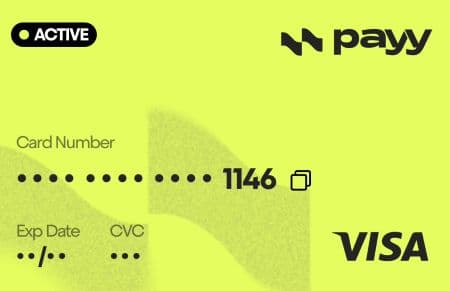
17 vs 3 - Self-custody card variants available as debit versus prepaid. The vast majority of self-custody cards, from Gnosis Pay to MetaMask to Ledger, use the debit model. A handful of prepaid options exist (Cypher, Payy) but they are the exception. If self-custody matters to you, debit gives you the widest selection.
How Debit Crypto Cards Work
A crypto debit card connects directly to your exchange balance or wallet. When you tap your card at a terminal or make an online purchase, the system converts your crypto to fiat at the moment of settlement. You do not need to pre-load funds. Your spending limit is your balance.
The conversion flow:
- You tap the card at a merchant
- The card processor queries your exchange or wallet balance
- Crypto is sold at the current market rate (plus a conversion spread)
- Fiat is sent to the merchant via Visa or Mastercard settlement
- Your exchange balance decreases by the equivalent amount
Most exchange-linked debit cards charge a conversion fee on each transaction, typically 0.9% to 2%. Some self-custody debit cards like Gnosis Pay and MetaMask handle the conversion differently, settling from stablecoin balances in your own wallet.
Key debit card issuers in 2026:
| Issuer | Network | Conversion Fee | FX Fee | Max Cashback | Custody |
|---|---|---|---|---|---|
| COCA | Visa | 0% | 0% | Up to 8% | Self-custodial |
| Wirex | Visa | 0.9% | 0% | 8% WXT | Custodial |
| Gnosis Pay | Visa | 0% | 0% | Up to 5% GNO | Self-custodial |
| Kraken | Mastercard | 0% | 0% | 1% | Custodial |
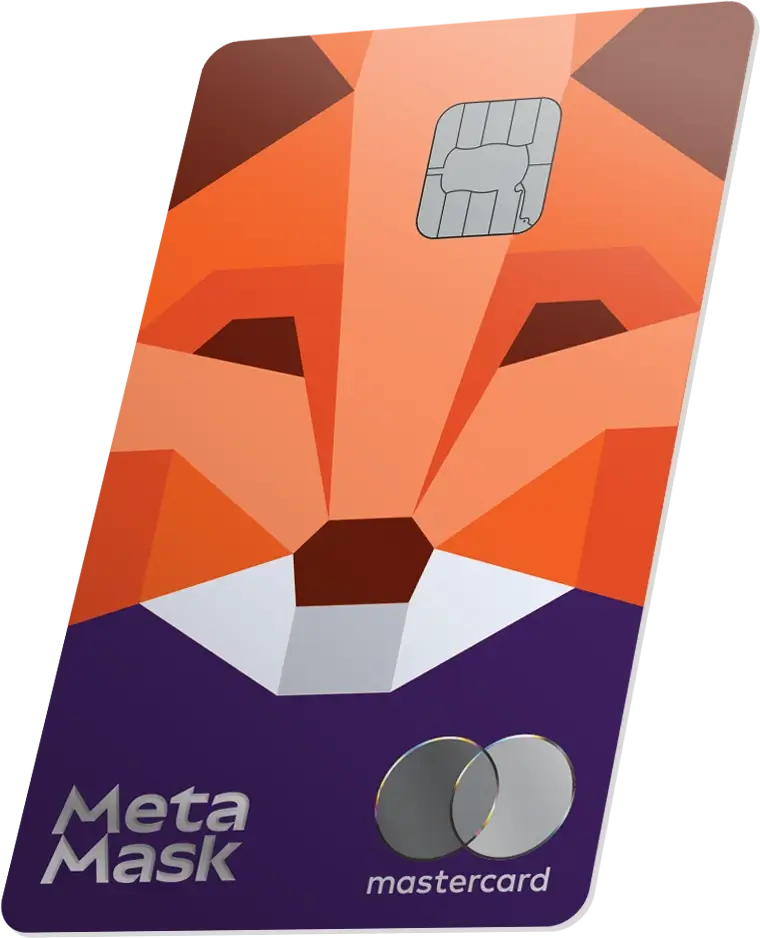
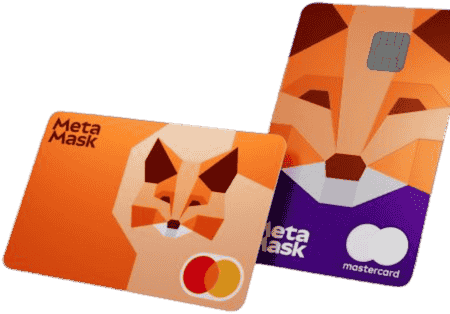
| MetaMask | Mastercard | 0% (spread) | 0% (Metal) / 1% (Virtual) | 3% ETH | Self-custodial |
| Plutus | Visa | 0% | 2.5% | 9% PLU | Non-custodial |
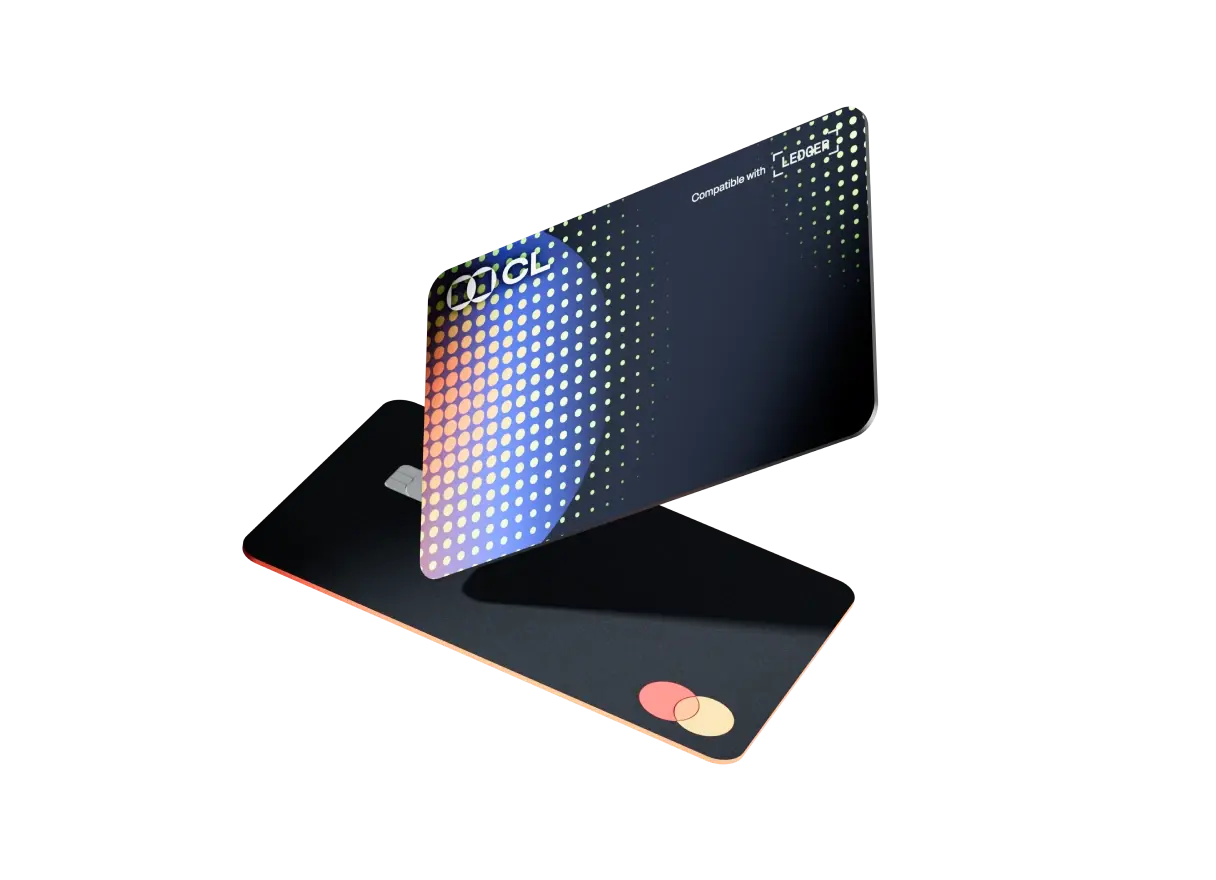
| Ledger | Visa | 2% card spend | 1.75% | 1% BTC | Self-custodial |
| Gate.io | Visa | 0.9% | 0.4% | 1-5% USDT | Custodial |
| Uphold Elite | Visa | 0% (spread) | 0% | 4% XRP | Custodial |
| Jupiter | Visa | 0% | 0% on USD / 1-1.8% non-USD | 4-10% JupUSD | Hybrid |
Debit card advantages: Real-time crypto pricing, no manual top-ups required, your full balance is available to spend at any time, and many offer 0% FX fees for international spending.
Debit card drawbacks: Each transaction is a taxable crypto-to-fiat conversion event, conversion spreads can be hidden, and your full exchange balance is exposed if the card is compromised.
How Prepaid Crypto Cards Work
A prepaid crypto card works like a reloadable gift card backed by your crypto. You sell crypto (or deposit fiat) into a card balance before spending. When you tap the card, it draws from this pre-loaded fiat balance. No real-time conversion happens at the point of sale.
The funding flow:
- You convert crypto to fiat on the exchange (or load fiat directly)
- Fiat is credited to your card balance
- You spend from the card like a regular prepaid Visa or Mastercard
- The merchant receives fiat - no crypto conversion at checkout
- Your card balance decreases
Loading fees vary by issuer. Some charge a flat percentage (1-2%), others charge nothing but apply a spread during conversion. The key difference from debit is that the crypto-to-fiat conversion happens at top-up, not at the point of sale.
Key prepaid card issuers in 2026:
| Issuer | Network | Loading Fee | FX Fee | Max Cashback | Custody |
|---|---|---|---|---|---|
| Crypto.com | Visa | 0% | 0% | Up to 5% CRO (8% Prime) | Custodial |
| KAST | Visa | 0% | 0.5-1.75% | 2% MOVE (up to 12% special editions) | Custodial |
| RedotPay | Visa | 1% | 1.2% | None | Custodial |
| Coinbase | Visa | 2.49% (crypto) | 0% | 4% rotating | Custodial |
| Binance | Mastercard | 0.9% | 0% | 2% BRL | Custodial |
| BitPay | Visa/MC | 0% | None | None | Custodial |
| Bitget Wallet | Mastercard | 0% | 1.7% | None | Custodial |
Prepaid card advantages: Spending control (you only risk what you load), the taxable conversion event happens once at top-up rather than per transaction, and some issuers offer the highest cashback rates in the market (Crypto.com 8%, KAST 12%).
Prepaid card drawbacks: Manual top-ups add friction, unused loaded fiat earns no yield, you may overpay FX fees if traveling with fiat locked in a single currency, and card balances are custodial by default.
Head-to-Head Comparison
| Feature | Debit | Prepaid |
|---|---|---|
| Funding | Automatic from balance | Manual top-up required |
| Conversion timing | At point of sale | At top-up |
| Spending limit | Full exchange/wallet balance | Only loaded amount |
| Tax events | Every purchase | Only at top-up |
| FX handling | Real-time rates (often 0%) | Fiat-locked (may pay FX) |
| Risk exposure | Full balance at risk | Limited to loaded amount |
| Cashback ceiling | Up to 9% (Plutus) | Up to 8% (Crypto.com Prime) |
| Self-custody options | Yes (Gnosis, MetaMask, Ledger, Ready, COCA) | Rare (Cypher, Payy only) |
| Best for | Daily spenders, travelers, DeFi users | Budget-conscious, high-cashback seekers |
Fee Structures: The Real Cost Breakdown
The headline "0% fees" is misleading on many cards. Both debit and prepaid models have layers of costs that reduce your effective return. Here is what to watch for.
Debit Card Fees
Conversion spread: Even when a card advertises "0% conversion fee," the exchange may sell your crypto at 0.5-1.5% below the market mid-price. This spread is invisible in the transaction receipt but real in your wallet balance. Gnosis Pay settles from EURe/GBPe stablecoins, avoiding this entirely. Kraken uses their exchange's tight spreads.
Per-transaction fee: Some debit cards charge a flat fee per transaction (typically $0.20-$0.50) in addition to any spread. Check the fee schedule for cards like Bitget Card (0.9% transaction fee on top of the conversion).
FX markup: Most debit cards in the crypto space offer 0% FX, settling at interbank rates. This is one of debit's strongest advantages over prepaid and traditional bank cards alike.
Prepaid Card Fees
Loading/top-up fee: This is the main cost for prepaid users. Coinbase charges 2.49% for crypto-funded top-ups (free for USDC). RedotPay charges 1%. Crypto.com charges 0% for crypto top-ups but applies a spread. BitPay charges 0%.
Inactivity fee: Some prepaid cards charge $5-$10/month if unused for 60-90 days. Always check terms before loading a large balance.
FX on pre-loaded fiat: If you load USD but spend in EUR, your prepaid card may charge 1-3% FX on the fiat-to-fiat conversion. Debit cards avoid this because they convert crypto to the local currency in real time.
Net Cost Illustration: $2,000 Monthly Spend
| Scenario | Debit (0.9% conversion) | Prepaid (1% loading) | Debit (0% spread, self-custody) |
|---|---|---|---|
| Monthly spend | $2,000 | $2,000 | $2,000 |
| Conversion/loading cost | $18 | $20 | $0 |
| FX fees (20% intl spend) | $0 | $6 (1.5% on $400) | $0 |
| Total monthly cost | $18 | $26 | $0 |
| Annual cost | $216 | $312 | $0 |
The self-custody debit column represents cards like Gnosis Pay that settle from stablecoins with no conversion spread. Note that Ledger CL Card charges a 2% card spend fee on crypto-funded transactions plus 1.75% FX on cross-currency, so it does not fit the zero-fee self-custody debit model. Note that Plutus now charges 2.5% on non-domestic transactions. For frequent spenders, the annual savings over a typical prepaid card can exceed $300.
Which Type Fits Your Spending Style?
Choose Debit If:
You are a daily spender. Debit cards eliminate the friction of manual top-ups. Your balance is always available, and conversion happens automatically. Best picks: COCA (up to 8%, self-custody), Wirex (up to 8% cashback), or Bitget Card (up to 8%).
You travel internationally. Debit cards with 0% FX convert to the local currency at interbank rates in real time. No need to pre-load multiple fiat currencies. Best picks: Gnosis Pay (0% everything), Kraken (0% FX), Ready Metal (0% FX + 3% STRK cashback).
You want self-custody. Nearly all self-custody crypto cards are debit-model, spending directly from your own wallet. MetaMask, Gnosis Pay, Ledger, ether.fi, and Ready all use this approach.
You want fewer conversion steps. One tap, one conversion, done. No need to manage a separate card balance.
Choose Prepaid If:
You want spending control. Loading only what you plan to spend prevents overspending and limits risk. If the card is compromised, the attacker can only access the loaded balance, not your full exchange account.
You want the highest shipped cashback rates. Some of the strongest prepaid cashback programs sit at the top end of the market, with Crypto.com Obsidian (5% CRO) as the clearest example. The trade-off is that the biggest prepaid rewards usually come with staking, token exposure, or both.
You want simpler tax reporting. With prepaid, each top-up is a single taxable conversion event. If you load $2,000 once per month, you have 12 taxable events per year. A debit card user making 60 purchases per month has 720 taxable events. The difference in record-keeping is significant.
You spend primarily in one currency. If you live, work, and shop in one country, prepaid avoids the FX risks entirely. Load your local currency and spend without worrying about conversion rates.
Tax Implications: A Critical Distinction
In most jurisdictions (US, UK, EU), converting crypto to fiat is a taxable disposal event. This means:
Debit cards: Every purchase is a separate taxable event. Buying a $5 coffee with Bitcoin triggers a capital gains calculation: sale price minus cost basis. At 60 transactions per month, that is 720 individual tax events per year.
Prepaid cards: The taxable event occurs when you load the card. If you load $2,000 in Bitcoin once per month, you have 12 taxable events per year. The actual spending from the prepaid balance is fiat-to-fiat and not taxable.
The stablecoin exception: If you fund either card type with stablecoins (USDC, USDT), there is typically no capital gain because the value has not changed. Cards like RedotPay (USDC-funded prepaid), Ready (USDC-only debit), and Gnosis Pay (EURe stablecoin debit) effectively sidestep the tax distinction entirely.
Crypto-backed credit is a third option worth mentioning. Cards like Nexo and Avici let you borrow against your crypto without selling it. No disposal means no taxable event until you close the loan. This is a different category from debit or prepaid but relevant for tax-conscious users.
Regional Availability
Card type availability varies by region:
United States: The US market skews heavily prepaid. Coinbase, BitPay, and Crypto.com are all prepaid. The Gemini Credit Card (a traditional credit card paying crypto rewards) is the notable exception. Debit options are limited in the US due to banking regulations.
Europe (EEA): Europe has the widest variety of both types. Debit: Gnosis Pay, Plutus, Wirex, MetaMask, Ready, Ledger. Prepaid: Crypto.com, KAST, Binance. European users have the most choice.
Global / APAC: RedotPay (prepaid, 150+ countries), Gate.io (debit, global). These serve markets where local banking infrastructure is limited.
Common Mistakes When Choosing Between Debit and Prepaid
Mistake 1: Choosing Prepaid for International Travel
Cost: $120-$360/year in unnecessary FX fees at $1,000/month international spend.
Prepaid cards lock your balance in a single fiat currency. Spending in a different currency abroad triggers FX conversion at 1-3%. Debit cards with 0% FX convert crypto to the local currency at interbank rates in real time, avoiding this entirely.
How to avoid it: If you travel or make international purchases regularly, choose a debit card with 0% FX like Gnosis Pay, Kraken, or Ready Metal. Reserve prepaid for domestic-only spending.
Mistake 2: Ignoring the Tax Reporting Burden of Debit Cards
Cost: Hours of bookkeeping or $100-$300/year in tax software for high-volume users.
Each debit card purchase is a separate taxable crypto-to-fiat conversion. At 60 transactions per month, that is 720 individual capital gains calculations per year. Many users underestimate this until tax season arrives with a spreadsheet they cannot close.
How to avoid it: If tax simplicity matters, either choose prepaid (12 events/year vs 720) or fund your debit card exclusively with stablecoins (USDC/USDT). Stablecoin transactions have approximately zero capital gain, making the 720 events trivial. Ready Lite and Gnosis Pay are both USDC/EURe-native debit cards.
Mistake 3: Loading Too Much Onto a Prepaid Card
Cost: Lost yield on idle fiat balances, typically $50-$200/year on a $5,000 over-load.
Prepaid users often load $2,000-$5,000 "just in case" but spend only $1,000/month. The excess sits as idle fiat earning nothing. The same $4,000 in USDC could earn 4-8% APY on platforms like COCA or Bleap.
How to avoid it: Load only what you plan to spend in the next 1-2 weeks. Keep the rest in a yield-earning stablecoin position. A debit card eliminates this problem entirely since it draws from your balance only at the moment of purchase.
Where It Lands
There is no universally "better" model. The right choice depends on three factors:
1. How often do you spend? Daily spenders benefit from debit's zero-friction model. Monthly budgeters benefit from prepaid's spending control.
2. Do you need self-custody? If you refuse to leave funds on an exchange, debit is your only real option. Gnosis Pay, MetaMask, ether.fi, Ledger, and Ready are all self-custody debit cards.
3. How important is tax simplicity? Prepaid consolidates taxable events into fewer, larger conversions. Debit creates a taxable event on every purchase. For users outside stablecoin-only spending, this is a meaningful quality-of-life difference at tax time.
Best debit picks: COCA for cashback + self-custody, Gnosis Pay for zero-fee self-custody, Kraken for no-fee simplicity.
Best prepaid picks: Crypto.com for cashback + perks, KAST for global access, RedotPay for low-KYC entry.
Best of both worlds: Fund any card with USDC or USDT to avoid taxable conversion events entirely. This works for both debit (Ready, Gnosis Pay) and prepaid (RedotPay, Coinbase) models.
The 2026 crypto card market offers enough variety that the debit-vs-prepaid choice is no longer a compromise. It is a preference. Pick the model that matches how you actually spend, and let the card work for you.
Disclaimer: SpendNode is a data comparison platform. We are not financial advisors. Crypto cards involve risks including asset volatility, custodial risk, and tax complexity. Verify all terms directly with issuers before applying.
Written by Aleksandar Dukic
Frequently Asked Questions
What is the main difference between a crypto debit card and a crypto prepaid card?
A crypto debit card spends directly from your exchange or wallet balance, converting crypto to fiat at the point of sale. A prepaid card requires you to load fiat (or convert crypto to fiat) in advance before spending. Debit cards offer real-time pricing but less spending control, while prepaid cards offer predictable balances but require manual top-ups.
Which type is cheaper to use daily?
It depends on your spending pattern. Debit cards typically charge a conversion fee (0.9-2%) on each transaction. Prepaid cards charge a one-time loading fee when you top up. For frequent small purchases, prepaid can be cheaper because you convert once. For occasional large purchases, debit avoids holding idle fiat.
Are crypto debit cards safer than prepaid?
Both have Visa/Mastercard fraud protections. The key difference is risk exposure. Debit cards access your full exchange balance, meaning a compromised card could drain more funds. Prepaid cards limit exposure to whatever amount you loaded. Self-custody debit cards like Gnosis Pay and MetaMask add wallet-level security.
Can I get cashback on both debit and prepaid crypto cards?
Yes. Both types offer cashback programs. Prepaid examples include Crypto.com (up to 5% CRO, 8% at Prime tier) and KAST (2% MOVE base, up to 12% on special editions). Debit examples include COCA (up to 8%), Wirex (up to 8% WXT), and ether.fi (up to 3% ETH). The highest cashback rates tend to require staking regardless of card type.
Which type works better for international travel?
Debit cards with 0% FX fees (like Wirex, Gnosis Pay, Kraken) are ideal for travelers because they convert at real-time interbank rates with no markup. Prepaid cards often lock your balance in a specific fiat currency, meaning you may pay FX fees if spending in a different currency abroad.
Do debit and prepaid crypto cards have different tax implications?
Yes. With debit cards, every purchase triggers a crypto-to-fiat conversion at the point of sale, which is a taxable event in most jurisdictions. With prepaid cards, the taxable event happens when you top up (convert crypto to fiat), not when you spend. This distinction can simplify tax reporting for prepaid users who track fewer conversion events.
Recent Updates to Best Debit vs Prepaid Crypto Cards
- Corrected cashback rates and card networks across both tables (Kraken, Binance, Crypto.com, KAST, Bitget Wallet)
- Added COCA to debit card table