
Best Crypto Cards for Tax-Conscious Users (2026)
Compare crypto cards for tax-conscious users by stablecoin funding, disposal-event minimization, export quality, and whether the spending model avoids forced sales of appreciated crypto.


Curated for Tax-Conscious Users
22 matching cards
Filtered by stablecoin spend
Every time you spend crypto through a card, you are making a disposal. In most tax jurisdictions, that disposal triggers a capital gains calculation: the difference between what you paid for the crypto and what it was worth when you spent it.
Buy BTC at $30,000, spend it when it is worth $90,000, and every coffee, grocery run, and gas fill-up generates a $60,000-per-BTC capital gain that needs to be reported. Multiply that across 200+ transactions per year and your tax return becomes a nightmare.
The solution is not to avoid crypto cards. It is to fund them with USDC or USDT. USDC bought at $1.00 and spent at $1.00 generates near-zero capital gain per transaction. The disposal event still exists on paper, but the gain is effectively zero.
Your tax software calculates hundreds of transactions and the total tax owed is negligible. Same card, same spending, dramatically simpler tax situation.
Our fee audit found that the biggest cost of crypto spending is not the FX fee or the annual fee. It is the tax liability from careless disposal of appreciated assets. The cards below support direct stablecoin funding and are ranked by tax-efficiency of their spending model.
If tax treatment is not your first filter, our top-ranked crypto cards give the wider market before you narrow down to spending models.
Tax-Efficient Card Comparison
| Card | Stablecoin Funding | Spending Model | Auto-Convert? | Cashback Token | Network |
|---|---|---|---|---|---|
| Gnosis Pay | EURe | Stablecoin direct | No | GNO (hold-based) | Visa |
| ether.fi Core | USDC | Borrow-to-spend | No | 3% cashback | Visa |
| Ready Lite | USDC only | Stablecoin direct | No | STRK | Mastercard |
| Bitpanda | USDC, USDT | Stablecoin direct | No | 1% BEST | Visa |
| Avici Platinum | USDC | Secured credit | No | None | Visa |
Gnosis Pay charges 0% issuer FX markup but Visa network rate applies on non-EUR transactions. Avici charges 0% issuer markup but Visa may charge 0.4-1% cross-border on non-USD. ether.fi Core uses borrow-to-spend against staked ETH, meaning no taxable disposal occurs when you spend. Other stablecoin-capable cards worth considering: Coinbase (4%, USDC, best US tax software integration), COCA (up to 8%, USDC cashback, 6% APY), Bleap (2%, USDC, 0% FX, EEA), and MetaMask Virtual (1%, USDC, self-custody).
The "Auto-Convert" column is the most important for tax purposes. Cards that automatically convert your BTC or ETH at point of sale create taxable events you did not choose. Cards that only spend stablecoins you explicitly loaded give you full control over when disposals happen.
How a Crypto Card Transaction Creates a Tax Event
Understanding exactly what happens during a single card purchase prevents expensive surprises at tax time. Here is a $50 grocery purchase broken down from a tax perspective:
Step 1: You tap your card. The merchant charges $50. Your card issuer deducts $50 worth of crypto from your balance.
Step 2: The disposal happens. The moment your card issuer converts your crypto to fiat to pay the merchant, you have "disposed" of crypto. This is the taxable event: you sold $50 worth of crypto, even though you did not go to an exchange and press "sell."
Step 3: The gain is calculated. Your tax software calculates: (sale price) - (cost basis) = capital gain. If you bought USDC at $1.00 and spent it at $1.00, the gain is $0.00. If you bought BTC at $30,000 and it is worth $90,000 when you spend, the gain is proportional to the appreciation (67% of the $50 = $33.33 gain).
Step 4: The gain goes on your tax return. In the US, each disposal event appears on Form 8949. In the UK, it factors into your Capital Gains Tax calculation on your Self Assessment. In most EU countries, it is reported on your annual crypto tax declaration.
A single grocery run creates one taxable event. A month of card spending creates 50-100. A year creates 600-1,200. The number of events does not change whether you spend BTC or USDC. What changes is the gain per event: near-zero for USDC, potentially thousands for appreciated BTC.
Cost Basis Methods: FIFO, LIFO, and Specific Identification
When you hold multiple lots of the same crypto (bought at different times and prices), which lot gets "spent" first? The method determines your tax bill:
| Method | How It Works | Best For | Worst For |
|---|---|---|---|
| FIFO (First In, First Out) | Oldest crypto is spent first | Falling markets (oldest = highest cost basis) | Rising markets (oldest = lowest cost basis = highest gains) |
| LIFO (Last In, First Out) | Newest crypto is spent first | Rising markets (newest = highest cost basis = lowest gains) | Falling markets |
| Specific Identification | You choose which lot to spend | Maximum control (always pick highest cost basis) | Record-keeping burden |
Our break-even analysis confirms this: for stablecoin spenders, the method barely matters because USDC is always approximately $1.00. The gain per lot is near-zero regardless of which lot you spend first. This is another reason stablecoin funding simplifies everything.
For BTC/ETH spenders, the method is critical. If you bought BTC at $30K in 2023 and $60K in 2025, FIFO spends the $30K BTC first (high gain), while LIFO spends the $60K BTC first (low gain). Specific identification lets you cherry-pick the highest-cost-basis lot to minimize gains. Most crypto tax software (CoinTracker, Koinly) supports all three methods.
Important: In some jurisdictions (UK, Australia), specific identification has restrictions. The US allows specific identification if you can adequately identify the lot. Consult a tax professional for your jurisdiction.
What Tax-Conscious Users Need in a Crypto Card
Direct stablecoin spending (USDC/USDT/DAI) to avoid capital gains on each purchase
Clean transaction export (CSV) for seamless tax software import
Prepaid model preferred - clear top-up events are easier to account for than auto-conversions
Support for multiple stablecoins so you can choose based on your tax jurisdiction
No forced auto-conversion of volatile crypto - you control when and what gets converted
Top 5 Cards for Tax-Conscious Users
Gnosis Pay spends EURe directly with no auto-conversion, so every transaction is a stablecoin disposal with near-zero gain. ether.fi Core does the same with USDC while earning restaking yield on idle balances, so your tax-efficient spending money is also productive. Ready Lite is the purest stablecoin card: USDC-only, no option to spend volatile crypto even accidentally.
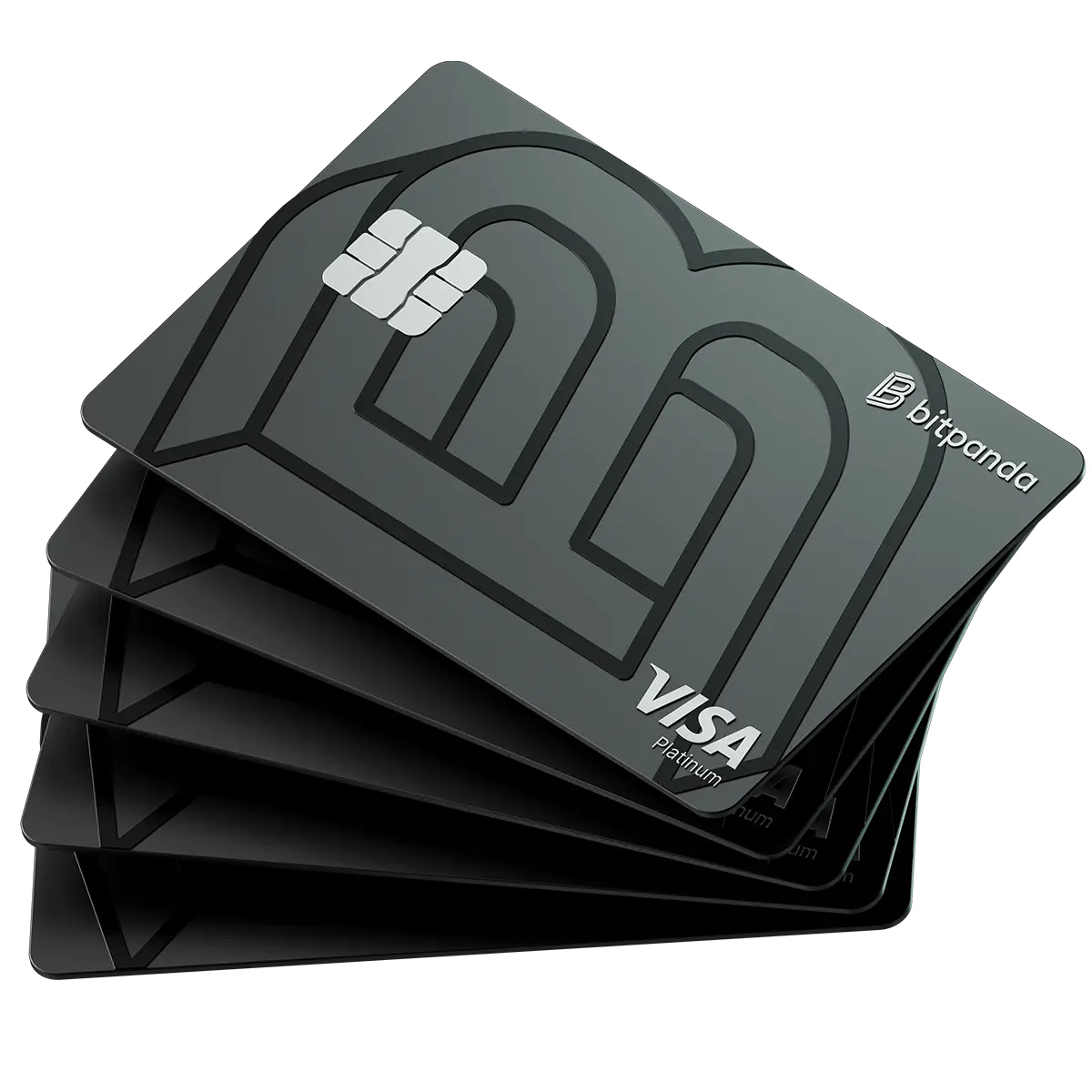
Bitpanda adds EEA regulatory compliance with clean CSV transaction exports that import directly into Koinly and CoinTracker. Avici Platinum takes a fundamentally different approach: borrow against your crypto at 0% interest instead of spending it, meaning no disposal event occurs at all. Five cards, two strategies: near-zero-gain stablecoin spending or zero-disposal borrowing.

1. Gnosis Pay Card
Your Keys, Your Card, Your Money

2. ether.fi Core Card
Zero Barriers: 3% Back on Every Purchase, No Stake Required

3. Ready Lite Card
Self-Custody for Free: Spend USDC From Your Own Wallet
4. Bitpanda Visa Platinum Card
The EU Crypto Spending Card - 1% Back, Zero Fees

5. Avici Platinum Card
Zero-Fee Self-Custody: Deposit USDC, Spend USD Anywhere
What $3,000/Month Looks Like
$300
/month in cashback (based on Jupiter Global at 10%)
Named Scenario: Rachel, Software Engineer in Austin ($3,000/month)
Context: Rachel holds 2 BTC (bought at $25,000 each) and earns $150K salary. She wants to use a crypto card for daily spending but is worried about triggering capital gains on her appreciated BTC.
Setup: Coinbase Card set to spend USDC only. She buys USDC fresh with her paycheck (no crypto conversion). 4% cashback received in USDC (not volatile tokens).
Monthly flow:
- Deposits $3,000 USD to Coinbase via ACH (free)
- Buys USDC with USD on Coinbase (0.1% fee = $3/month)
- Sets Coinbase Card to spend USDC only (never BTC or ETH)
- Sets cashback to USDC (not BTC)
- BTC stays untouched in a separate Coinbase vault
Annual tax result:
- Card disposal events: approximately 600 (50/month)
- Gain per disposal: $0.00 (USDC $1 in, $1 out)
- Total reportable gains: approximately $0
- Cashback received: $1,440 (4% on $36,000)
- Cashback tax treatment: likely purchase rebate (not income)
- Tax software: CoinTracker auto-imports from Coinbase, generates Form 8949
- Estimated additional tax from card spending: $0
If she had spent BTC instead:
- Each $100 BTC purchase = $64 capital gain (BTC 2.6x'd from $25K to $65K)
- Annual gains: $23,040 on $36,000 spending
- Tax at 15% LTCG rate: $3,456
- The USDC strategy saves Rachel $3,456/year in taxes.
"My accountant was initially nervous about 600 transactions on my tax return. Then he saw they were all USDC with zero gain. The CoinTracker export made it trivial."
Named Scenario: Markus, Investor in Munich ($5,000/month)
Context: Markus holds significant crypto (BTC, ETH) and lives in Germany, which exempts crypto held longer than 1 year from capital gains tax. He wants to exploit the 1-year holding exemption for card spending.
Setup: Gnosis Pay (EUR-settled, EURe, self-custody). He bought EURe in January 2025 and plans to start spending it in February 2026 (13 months later, past the 1-year threshold).
Strategy:
- Buy EURe in bulk once per year (one purchase lot)
- Hold for 12+ months in his Gnosis Safe wallet
- Start spending after the holding period expires
- Each disposal is fully tax-exempt under Germany's 1-year rule
Annual tax result:
- Card disposal events: approximately 600
- Gain per disposal: $0.00 (stablecoin)
- Tax treatment: Fully exempt (held 1yr+)
- Total tax: $0, no reporting required for exempt transactions
- Gnosis Pay cashback: up to 5% in GNO (taxable at receipt as income, but the GNO itself is also exempt after 1-year hold)
Trade-off: Markus needs to plan 12+ months ahead. He buys next year's spending money today and cannot touch it until the holding period expires. This requires capital discipline and sufficient liquidity to fund current spending from other sources.
"Germany's 1-year rule is the most powerful tax optimization in crypto. I buy my annual card spending budget in EURe every January, wait 13 months, then spend it completely tax-free. No reporting, no gains, no complexity."
Named Scenario: Yuki, Consultant in Singapore ($7,000/month)
Context: Singapore has no capital gains tax. Yuki does not need to optimize for tax efficiency on disposals. She optimizes purely for cashback and yield.
Setup: COCA Elite (8% USDC cashback with staking 30K $COCA, 6% APY on idle balance) as primary. Bitget Card (7.1% net) as backup for higher spending categories.
Monthly flow:
- $5,000 on COCA (daily spending, subscriptions, online shopping)
- $2,000 on Bitget (dining, transport, retail)
- COCA idle balance earns 6% APY between top-ups
- No tax planning needed: Singapore has zero capital gains tax
Annual result:
- COCA cashback: $4,800 (8% on $60,000)
- Bitget cashback: $1,704 (7.1% net on $24,000)
- COCA yield on average $3,000 idle balance: $180
- Tax on all of the above: $0 (Singapore)
- Total: $6,684/year, zero tax
"I moved from Tokyo (where crypto gains are taxed at up to 55%) to Singapore (zero). My card strategy did not change, only the tax bill. Same spending, same cards, $3,000+ less in annual taxes."
Annual Tax Impact Comparison
If you want the tax angle next to annual fee, rewards, and funding model, open the comparison tool in another tab as you work through the scenarios below.
For a user spending $36,000/year through crypto cards:
| Strategy | Annual Taxable Gains | Estimated Tax (20%) | Cashback Earned (4%) | Net After-Tax Position |
|---|---|---|---|---|
| Spend appreciated BTC (3x) | $24,000 | $4,800 | $1,440 | -$3,360 |
| Spend USDC (fresh from fiat) | Near $0 | Near $0 | $1,440 | +$1,440 |
| Spend USDC (converted from BTC) | $24,000 (one-time) | $4,800 (one-time) | $1,440 | -$3,360 (year 1) |
| Spend in tax-free jurisdiction | $0 | $0 | $1,440 | +$1,440 |
| Germany: USDC held 1yr+ | $0 (exempt) | $0 | $1,440 | +$1,440 |
The key insight: spending USDC that was bought fresh with fiat avoids the $4,800 tax bill entirely. If you convert appreciated BTC to USDC first, you still trigger the gain, but as a single planned event rather than hundreds of micro-transactions.
The Cashback Tax Double Event
When you receive cashback in a volatile token, two separate tax events can occur:
Event 1: Receipt of cashback. If treated as income (not a rebate), you owe income tax at the fair market value on the date received. You receive 100 BGB at $2 each = $200 income.
Event 2: Disposal of cashback tokens. When you sell the BGB later at $5 each, you owe capital gains on the appreciation: ($5 - $2) x 100 = $300 capital gain.
Total tax on $200 of cashback: Income tax on $200 (Event 1) + capital gains tax on $300 (Event 2). At a combined 30% rate: $150 in total taxes on $200 of cashback. Your effective cashback value drops from $200 to $50.
How stablecoin cashback avoids this: USDC cashback at $1.00 is $1.00 at receipt and $1.00 when "sold." Event 1 may be a rebate (no tax). Event 2 has zero gain. Total tax: near $0.
Multi-Card Strategy for Tax-Conscious Users
The Three Numbers Every Tax-Conscious User Should Check
Number 1: Annual Disposal Events
Every card purchase is a disposal event. At 50 transactions per month, that is 600 events per year. Each one needs to appear in your tax records. The number of events does not determine your tax bill (the gains do), but it determines your record-keeping burden and the complexity of your tax return.
| Monthly Transactions | Annual Events | Tax Software Handles? | Manual Feasible? |
|---|---|---|---|
| 20 | 240 | Yes | Difficult |
| 50 | 600 | Yes | No |
| 100 | 1,200 | Yes | Absolutely not |
At any transaction volume above 20/month, crypto tax software is not optional. Manual tracking of 600+ disposal events is impractical and error-prone.
Number 2: Average Gain Per Disposal
This determines your actual tax bill. Calculate it for your situation:
| Funding Method | Purchase Price | Spend Price | Gain Per $100 Spent | Annual Tax at 20% ($3K/mo spend) |
|---|---|---|---|---|
| USDC (fresh from fiat) | $1.00 | $1.00 | $0.00 | $0 |
| USDC (converted from BTC) | $1.00 | $1.00 | $0.00 (but BTC conversion was taxed) | $0 on spending |
| BTC (bought at $30K) | $33.33 per $100 | $100 | $66.67 | $4,800/year |
| BTC (bought at $60K) | $66.67 per $100 | $100 | $33.33 | $2,400/year |
| ETH (bought at $2K) | $57.14 per $100 | $100 | $42.86 | $3,086/year |
The difference between USDC spending ($0/year tax) and appreciated BTC spending ($4,800/year tax) on the same $36,000/year in purchases is the entire argument for stablecoin funding.
Number 3: Cashback Token Type
Cashback creates its own tax events. The token you receive determines the complexity:
| Cashback Type | Tax at Receipt | Future Tax on Disposal | Total Complexity |
|---|---|---|---|
| USDC cashback | Likely rebate (not income) | Near-zero gain | Very low |
| Fiat-equivalent rewards | Likely rebate | N/A | Very low |
| BGB/CRO/PLU cashback | Possibly income at FMV | Capital gains when sold | High |
| Points (ether.fi, MetaMask) | No tax at receipt | Tax when converted to token | Medium |
Cards paying cashback in stablecoins (COCA pays USDC, Bleap pays USDC) are cleanest for tax purposes. Cards paying in volatile tokens (Bitget pays BGB, Crypto.com pays CRO) create two layers of tax: potential income at receipt AND capital gains when the token is eventually sold.
The Tax-Efficient Spending Framework
Tax-conscious crypto card usage rests on three principles:
Principle 1: Separate your investment stack from your spending stack
Keep BTC, ETH, and other appreciated assets in a separate wallet or account. Never let them touch your card. Your card balance should only contain stablecoins. When you need to top up, buy USDC fresh from an exchange with fiat. Do not sell appreciated crypto to fund your card.
If you must convert crypto to stablecoins, do it in a single, planned transaction. This creates one taxable event instead of hundreds of micro-disposals throughout the month. Batch your conversions quarterly or when rebalancing your portfolio. Time conversions to tax years where you have offsetting losses.
Principle 2: Choose cards with explicit stablecoin-only funding
The safest cards for tax purposes are those that only accept stablecoin deposits:
Gnosis Pay only accepts EURe. There is no way to accidentally spend volatile crypto. Your EURe sits in a self-custody Gnosis Safe wallet at approximately 1:1 with EUR. Every transaction is a near-zero-gain disposal. This is the cleanest tax setup available.
Ready Lite accepts only USDC. Self-custody on Starknet, 0.5% STRK cashback, and no option to load BTC or ETH. The STRK cashback is a small taxable event (income at receipt), but the spending side stays clean.
COCA pays up to 8% cashback in USDC (not a volatile token) - 1% at the free Starter tier, scaling to 8% at Elite (staking 30K $COCA). Your cashback is in the same stablecoin you spent, minimizing future capital gains complexity. Additionally, idle USDC earns 6% APY in Morpho vaults.
Coinbase Card lets you choose which asset to spend. Always select USDC, never BTC or ETH. The 4% cashback can be received in various cryptos. For tax simplicity, set cashback to USDC.
Principle 3: Avoid auto-convert cards if you hold appreciated crypto
Some exchange cards automatically sell your BTC at the moment of purchase. If you are sitting on significant unrealized gains, each auto-conversion triggers capital gains tax. Coinbase Card lets you choose which asset to spend. Always set it to USDC explicitly. Never let the card choose which crypto to sell.
Stablecoin Tax Treatment by Jurisdiction
| Jurisdiction | Stablecoin Disposal = Taxable? | Gain Calculation | Reporting Required | Key Rule |
|---|---|---|---|---|
| United States | Yes (disposal event) | USDC $1 to $1 = $0 | Form 8949 | De minimis not available |
| UK | Yes (HMRC guidance) | Near-zero gain | Self Assessment | Annual exempt amount applies |
| Germany | No (if held 1+ year) | Exempt after 1yr | Only under 1yr | 1-year holding exemption |
| France | Yes (30% flat tax) | Near-zero gain | Annual declaration | Flat 30% PFU rate |
| Netherlands | No (wealth tax model) | N/A | Box 3 wealth tax | Taxed on holdings, not disposals |
| Portugal | Yes (since 2023) | Near-zero gain | Annual declaration | 28% on gains (365-day exemption) |
| Spain | Yes (19-28% progressive) | Near-zero gain | Modelo 100 | Must report all crypto |
| Italy | Yes (26% above EUR 2K) | Near-zero gain | Annual declaration | EUR 2,000 threshold |
| UAE | No (zero income tax) | N/A | N/A | Zero tax on everything |
| Singapore | No (no capital gains) | N/A | N/A | Zero capital gains tax |
Tax-free jurisdictions like UAE and Singapore eliminate the question entirely. Germany's 1-year holding exemption means stablecoins held over 12 months are tax-free to spend (but you need to track the holding period per lot). The Netherlands does not tax disposals at all, only the total value of your holdings on January 1st.
The Year-End Tax Optimization Checklist
| Timeline | Action | Why |
|---|---|---|
| November | Review total crypto card gains for the year | Know your approximate tax liability |
| November | Harvest tax losses in your portfolio | Offset card spending gains with investment losses |
| December 1-15 | Convert any remaining BTC spending to USDC | Stop accumulating gains in the current tax year |
| December 15-31 | Review cost basis method with your accountant | FIFO vs LIFO can change your bill by thousands |
| January | Export all card transactions (CSV/API) | Feed into tax software before you forget |
| January | Record all cashback token receipts with FMV | Cost basis tracking starts at receipt |
Tax loss harvesting integration: If your crypto portfolio has positions at a loss, selling them before year-end creates capital losses that offset gains from card spending. A $5,000 loss offsets $5,000 in card spending gains, potentially saving $1,000+ in taxes (at 20% rate). This is the most powerful tax optimization available to crypto card users.
Common Mistakes to Avoid
1. Using Auto-Convert on Appreciated Crypto
What happens: Your exchange card defaults to auto-converting BTC at the moment of purchase. Your BTC has 3x'd since you bought it. Every card swipe triggers a capital gain.
Dollar cost: At $3,000/month spending with 67% appreciation (BTC $30K to $90K): $2,000/month in reportable gains, $400/month in tax at 20% = $4,800/year.
How to avoid it: Turn off auto-convert. Set your spending asset to USDC explicitly on Coinbase. Better yet, choose a card that only accepts stablecoins (Gnosis Pay, Ready Lite, COCA) so accidental BTC spending is impossible.
2. Assuming Stablecoin Spending is Tax-Free
What happens: You spend USDC all year and do not report any transactions, assuming "no gain = no tax." Your tax authority audits you and assesses penalties for unreported disposals.
Dollar cost: Penalty for failure to report: 5-25% of the unreported tax liability per month (IRS) or fixed penalties (HMRC). Even if the actual tax is $0, the penalties for non-reporting can be significant.
How to avoid it: Report all transactions even when the gain is zero. Use tax software (CoinTracker, Koinly, TokenTax) to auto-generate the reports. The tax impact is negligible but the reporting requirement is real.
3. Not Tracking Cashback Token Cost Basis from Day One
What happens: You earn $3,000 in BGB cashback over a year but do not record the fair market value at each receipt. When you sell the BGB two years later, you cannot calculate your cost basis. Your tax software defaults to $0 cost basis, and you owe capital gains on the entire sale amount.
Dollar cost: If BGB went from $2 (receipt) to $5 (sale): your actual gain is $3,000 x ($5-$2)/$2 = $4,500. With $0 cost basis, your reported gain is $3,000 x $5 = $15,000. At 20% tax: $3,000 in tax vs $900 actual. Over-reporting costs you $2,100.
How to avoid it: Record the fair market value of every cashback receipt on the date received. Most tax software does this automatically if connected to your exchange. If not, export monthly and note the token price.
4. Converting Large Crypto Positions Without Tax Planning
What happens: You decide to fund your card with USDC and sell $50,000 of appreciated BTC in a single transaction in December. This pushes your annual income into a higher tax bracket, increasing your rate on both the crypto gain and your salary.
Dollar cost: Bracket jumping from 15% to 20% LTCG rate on a $50,000 gain: $2,500 additional tax versus spreading the conversion across two tax years ($25,000 each year at 15% = $7,500 total vs $10,000 all in one year at 20%).
How to avoid it: Spread large conversions across tax years. If you need $50,000 in USDC for annual card spending, convert $25,000 in December and $25,000 in January. If you have capital losses elsewhere in your portfolio, use them to offset the gains. Consult a tax professional before converting significant positions.
5. Ignoring Country-Specific Rules
What happens: You follow US-centric tax advice while living in Germany. You spend freshly-bought USDC and report hundreds of near-zero-gain transactions. But in Germany, you could have held the USDC for 12 months and spent it completely tax-free with no reporting required.
Dollar cost: Hours of unnecessary tax preparation. In the other direction: a German resident assuming the 1-year rule applies to all crypto while spending tokens held under 1 year owes taxes they did not plan for.
How to avoid it: Research your specific jurisdiction's rules. Germany's 1-year holding exemption, the Netherlands' wealth tax model (no disposal tax), Portugal's 365-day exemption, Italy's EUR 2,000 de minimis threshold, and Singapore's zero-capital-gains policy all create different optimal strategies.
6. Not Using Tax Loss Harvesting to Offset Card Gains
What happens: Your crypto portfolio has a $5,000 unrealized loss in an altcoin position. You spend appreciated BTC through your card, generating $5,000 in gains. If you had sold the losing position before year-end, the loss would have offset the gain, and your net tax would be $0.
Dollar cost: $1,000 in unnecessary tax (20% on $5,000 gain that could have been offset).
How to avoid it: Before year-end, review your portfolio for positions at a loss. Selling them creates capital losses that directly offset gains from card spending. The wash sale rule (US) prevents repurchasing the same asset within 30 days. Note: wash sale rules for crypto are jurisdiction-specific and evolving. Consult a tax professional.
Card Selection by Tax Situation
US taxpayer (capital gains concern): Coinbase Card set to spend USDC only. 4% cashback likely treated as purchase rebate. Near-zero capital gains. Clean CoinTracker/TurboTax integration for Form 8949. See our US guide.
EU taxpayer (MiCA regime): Gnosis Pay (EURe self-custody, 0% FX in eurozone) or Ready Lite (USDC only, Starknet self-custody). Both limit spending to stablecoins, preventing accidental volatile crypto disposals. See our Europeans guide.
German taxpayer (1-year holding rule): Buy USDC or EURe, hold for 12+ months, then load onto Gnosis Pay. After the holding period, disposal is completely tax-free with no reporting requirement. Requires 12+ months of planning. See our Germany guide.
Dutch taxpayer (wealth tax model): Any card works. The Netherlands does not tax disposals. Only your total crypto holdings on January 1st are taxed under the Box 3 wealth tax. Optimize purely for cashback rate. See our Netherlands guide.
Tax-free jurisdiction (UAE, Singapore): Any card works. No capital gains tax means the spending model does not matter. Optimize for cashback rate: COCA (up to 8% with staking $COCA), Bitget Card (7.1% net), or Crypto.com (up to 5% with CRO stake).
Digital nomad (uncertain residency): Coinbase Card (USDC spending) or RedotPay (USDC, 150+ countries). Stablecoin spending creates the cleanest possible transaction trail regardless of which jurisdiction ultimately claims tax authority.
Freelancer (business expenses): Separate business and personal cards. Business card spending may be deductible. Use Coinbase for clean CSV exports. Track card transactions separately from personal spending.
High spender ($10K+/month): At $10,000/month with 8% cashback, you earn $9,600/year in cashback tokens. If treated as income at a 30% rate, that is $2,880 in taxes. Consider COCA Elite (USDC cashback, likely rebate treatment, requires staking 30K $COCA) over Bitget (BGB cashback, possibly taxable income).
Tax Software Compatibility
| Card | CSV Export | API Integration | Tax Software | Record Quality |
|---|---|---|---|---|
| Coinbase | Yes | CoinTracker, Koinly, TurboTax | Excellent | Merchant names, categories |
| Crypto.com | Yes | CoinTracker, Koinly | Good | Merchant names |
| Bitget | Yes | Limited | Fair | Basic transaction data |
| Gnosis Pay | On-chain | Manual import | Fair | Perfect blockchain records |
| 1inch | Yes | Limited | Fair | Transaction data |
| RedotPay | Yes | No | Manual | Basic |
| COCA | Yes | Limited | Fair | Transaction data |
Coinbase has the best tax software ecosystem with direct integrations into CoinTracker, Koinly, and TurboTax. On-chain cards like Gnosis Pay have perfect transaction records on the blockchain but require manual import. For tax-conscious users, the quality of transaction exports should be a selection factor alongside cashback rates.
Record Keeping: What to Track
Regardless of jurisdiction, maintain these records for every crypto card transaction:
- Date and time of each transaction
- Amount in local currency (what you paid)
- Amount in crypto disposed (what was deducted from your balance)
- Cost basis of the crypto disposed (what you originally paid for it)
- Gain or loss per transaction (calculated automatically by tax software)
- Cashback received with fair market value at date of receipt
Most of this is automated if you use tax software connected to your exchange. For self-custody cards (Gnosis Pay, Ready, MetaMask), you need to track wallet transactions, which blockchain explorers handle but may require manual export.
The verdict: The single most impactful tax decision for crypto card users is not which card to pick. It is what you fund it with. Spending USDC generates near-zero capital gains in every jurisdiction. Spending appreciated BTC generates $3,000-$5,000+ in annual tax liability on modest spending.
Fund with stablecoins bought fresh from fiat, keep your investment portfolio in a separate wallet, choose a card with stablecoin-only funding to prevent accidental volatile crypto disposals, and use tax software to automate reporting.
Coinbase (4%, USDC, best tax integration) for US users. Gnosis Pay (EURe, self-custody, Germany 1-year rule compatible) for Europeans. COCA (up to 8%, USDC cashback) for tax-free jurisdictions. Your tax strategy should be invisible: spend normally, pay near-zero tax, and let the software handle the reporting.
Disclaimer: SpendNode is a data comparison platform. We are not financial advisors. Crypto cards involve risks including asset volatility, custodial risk, and tax complexity. Verify all terms directly with issuers before applying.
Written by Aleksandar Dukic
Frequently Asked Questions
Is spending stablecoins actually tax-free?
Not technically tax-free, but near-zero taxable gain. Spending USDC bought at $1.00 and spent at $1.00 generates no capital gain. The transaction is still a disposal event in most jurisdictions, but the gain is effectively zero. This is fundamentally different from spending BTC that has appreciated, which triggers capital gains on every purchase.
Which stablecoin is best for tax-efficient spending?
USDC is the safest choice for tax purposes: fully backed by US Treasuries and cash, audited monthly, and widely accepted by crypto cards. USDT (Tether) works similarly but has less transparent backing. DAI is decentralized and may have minor price fluctuations (0.1-0.5%) that create small taxable events. For pure tax simplicity, stick with USDC.
Do I still need to report stablecoin spending on my taxes?
In most jurisdictions, yes. Each USDC-to-fiat conversion is technically a disposal event. However, since the gain is near zero, the actual tax owed is negligible. The reporting burden exists, but transaction history exports make it manageable. Some tax professionals argue stablecoin spending should be treated as fiat, but this is not settled law in most countries.
How do I track my crypto card transactions for taxes?
Most card apps export CSV transaction history. Import this into crypto tax software (Koinly, CoinTracker, TokenTax) which calculates gains per transaction. For stablecoin spending, the software will show near-zero gains across hundreds of transactions. The key is maintaining records, not the complexity of the calculations.
Recent Updates to Best Crypto Cards for Tax-Conscious Users
- Added ether.fi Core and Bitpanda to main comparison. Gnosis Pay corrected from DAI/EURe to EURe only
- Added Gnosis Pay and Avici Platinum FX caveats. Avici Platinum added as secured credit option