
Best Crypto Cards for Students (2026)
Compare student-friendly crypto cards with low fees, small-balance usability, virtual access, and simple funding. Built for everyday spending, study abroad, and first-time use.
Curated for Students
39 matching cards
Filtered by no annual fee, virtual card
Most crypto cards are marketed toward high-net-worth traders staking thousands of dollars for premium tiers. That is not you. You need a card that costs nothing to try, works with small balances, and does not punish you for spending $500/month instead of $5,000. The good news: several crypto cards are genuinely excellent for small budgets, with zero annual fees, instant virtual cards, and cashback that compounds even on modest spending.
The real value of a crypto card as a student is not just the cashback (though that helps). It is the education. You learn how wallets work, how stablecoin conversions happen, how FX fees are structured, and how crypto-to-fiat settlement actually functions, all by spending money you were going to spend anyway. By the time you graduate, you understand practical crypto infrastructure better than most people in finance.
Our editorial team reviewed each card on this page to confirm they all cost $0 to hold, issue a virtual card instantly, and require no staking or token lock-up.
If you are not shopping with a student budget in mind, our best cards overall show the wider market before this page narrows things down to zero-cost starters.
Student-Friendly Card Comparison
| Card | Cashback | Annual Fee | Virtual Card | Min. Deposit | Network | Best For |
|---|---|---|---|---|---|---|
| Coinbase Card | Up to 4% | Free | Instant | None | Visa | US students |
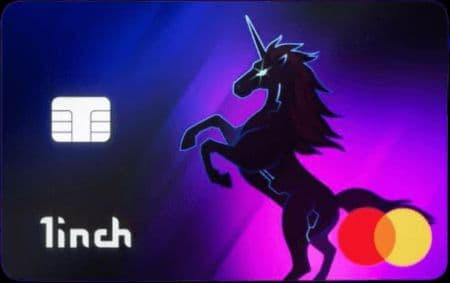
| 1inch | 2% | Free | Instant | None | Mastercard | European students |
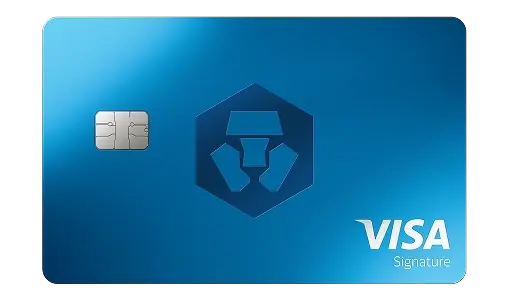
| Crypto.com Midnight Blue | 0% | Free | Instant | None | Visa | Learning the ecosystem |
| KAST K Card | 4% MOVE | Free | Instant | None | Visa | 2-minute KYC |
| RedotPay Virtual | 0% | $10 one-time | Instant | $10 | Visa | 150+ countries |
| Kraken Card | 1% | Free | Instant | None | Mastercard | EEA/UK |
| ether.fi Core | Points | Free | Instant | None | Visa | DeFi + restaking yield |
All cards above charge $0 annual fee (RedotPay has a $10 one-time issuance). Cashback rates shown are base tier, with no staking or VIP status required.
What Students Need in a Crypto Card
Zero annual fee - nothing to lose if you try it and decide it is not for you
Instant virtual card - start spending online the same day you sign up
No staking or token lock-up requirement for the base tier
USDC or stablecoin support so your balance does not swing with the market
Clean, intuitive mobile app - not a rough beta product with confusing UX
Top 4 Cards for Students
At $500/month, every dollar of fees matters more than chasing the highest cashback tier. Coinbase is the obvious US pick because most students already have a Coinbase account from buying their first crypto, which means the card extends a setup they already understand instead of asking for another account and another funding flow.
KAST at 4% MOVE covers the rest of the world with zero annual fees and instant virtual cards (KAST charges 0.5-1.75% FX on non-USD spending), while 1inch (2%, Mastercard, 0% FX) is the clean European pick.
RedotPay Virtual is the budget international option: $10 one-time, works in 150+ countries, and requires 2-minute KYC - important for students who do not yet have long address histories or full local banking access. COCA rounds out the list with up to 8% cashback (1% free at Starter, 8% requires staking 30K $COCA tokens with 30-day cooldown), the highest rate available at zero annual cost.
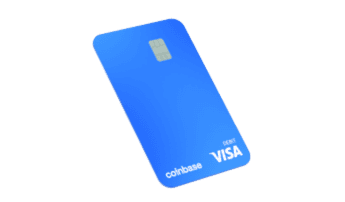
1. Coinbase Card (Prepaid Visa)
Safe & Simple: US Regulated Prepaid Visa with Rotating Crypto Rewards
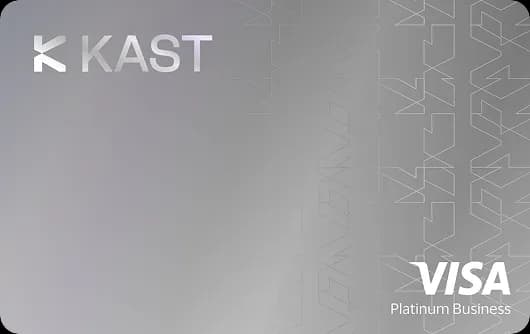
2. KAST K Card
Early Adopter Access: 2% Points + 4% $MOVE on Every Swipe
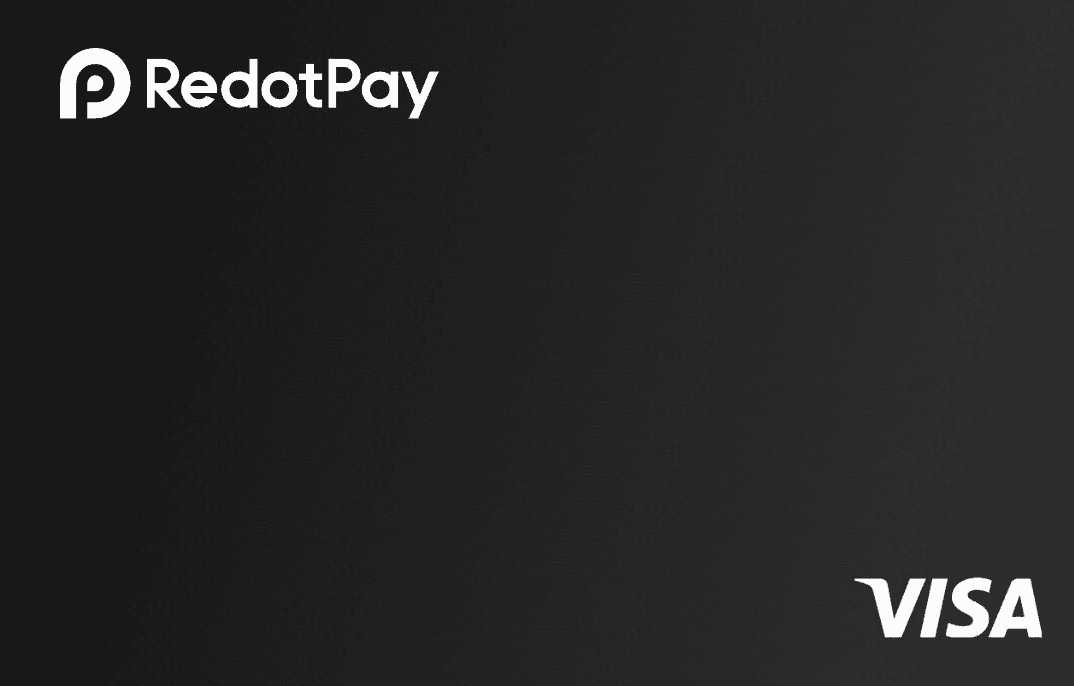
3. RedotPay Virtual Card
High-Capacity Global Spend: $1M Daily Limit + Instant Visa Payouts

4. COCA Visa Card
Self-Banking: 8% Cashback + 6% APY + 0% FX
What $500/Month Looks Like
$50
/month in cashback (based on Jupiter Global at 10%)
Scenario 1: Priya, Computer Science Student in Austin
Setup: Sophomore at UT Austin. Part-time tutoring income: $600/month. Monthly spending: $500. Lives on campus. No international purchases.
| Category | Monthly | Card | Rate | Cashback |
|---|---|---|---|---|
| Groceries + meal plan top-ups | $150 | Coinbase Card | 4% | $6.00 |
| Subscriptions (Spotify, iCloud) | $17 | Coinbase Card | 4% | $0.68 |
| Coffee + dining out | $80 | Coinbase Card | 4% | $3.20 |
| Textbooks + supplies | $50 | Coinbase Card | 4% | $2.00 |
| Transport (Uber, gas) | $60 | Coinbase Card | 4% | $2.40 |
| Misc (Amazon, toiletries) | $143 | Coinbase Card | 4% | $5.72 |
| Total | $500 | $20/mo |
Annual result: $240 cashback, $0 fees, $0 risk
4-year result: $960 in crypto cashback. If she takes the cashback in BTC and BTC appreciates 50% over 4 years, the cashback is worth $1,440. If BTC drops 30%, it is worth $672. The safe play: take cashback in USDC ($960 guaranteed) and buy BTC separately with money she can afford to lose.
Priya set up Coinbase in 8 minutes during a break between classes. She loaded $100 in USDC from her debit card (one-time $0.99 fee), added the virtual card to Apple Pay, and tapped for coffee that afternoon. She loads $125 every two weeks from her tutoring income. Total monthly time spent managing the card: under 5 minutes.
"I told my roommate I earn 4% back on everything. She said her bank gives her 0.01% interest on her savings. We set up her Coinbase card that night." - Composite profile
Scenario 2: Lucas, Exchange Student in Barcelona
Setup: German student studying abroad in Barcelona for one year. Monthly spending: $1,200, all in euros. Home bank charges 2.5% FX on non-EUR transactions, but even EUR transactions abroad sometimes incur fees.
| Category | Monthly | Card | Rate | Value |
|---|---|---|---|---|
| Rent (shared apartment) | $450 | 1inch | 2% | $9.00 cashback |
| Groceries | $200 | 1inch | 2% | $4.00 |
| Transport (metro, Renfe) | $50 | 1inch | 2% | $1.00 |
| Dining + nightlife | $200 | 1inch | 2% | $4.00 |
| Subscriptions | $20 | 1inch | 2% | $0.40 |
| Weekend travel (budget airlines) | $180 | 1inch | 2% | $3.60 |
| Misc | $100 | 1inch | 2% | $2.00 |
| FX savings vs home bank | $1,200 total | 0% FX vs 2.5% | $30/mo saved | |
| Total | $1,200 | $54/mo |
Annual result (study abroad year): 1inch cashback $288 + FX savings $360 = $648 net value
Lucas's German bank card would have cost him $360/year in FX fees alone. The 1inch card eliminated that and added $288 in cashback on top. His parents send him EUR via bank transfer. He loads the card with EUR through the 1inch app and spends. Total friction: minimal on-ramp fees, against $648 in value.
His weekend trips to Portugal, France, and Italy work exactly the same. No FX fees anywhere in the eurozone, and the same 1% cashback on every train ticket and hostel booking.
"My friends still use their German bank cards and pay 2.5% on everything. I tried explaining the crypto card but they think it is complicated. It is literally tap and pay." - Composite profile
Scenario 3: Amara, Side Hustle Student in Lagos
Setup: Final-year business student at the University of Lagos. Earns $300/month doing graphic design freelance work, paid in USDC via Fiverr and direct crypto transfers. Monthly spending: $400. Traditional banking in Nigeria is expensive for international transactions.
| Category | Monthly | Card | Rate | Value |
|---|---|---|---|---|
| Transport (Uber, BRT) | $60 | RedotPay Virtual | 0% | $0 |
| Data + phone credit | $30 | RedotPay Virtual | 0% | $0 |
| Online shopping (AliExpress, Amazon) | $80 | RedotPay Virtual | 0% | $0 |
| Subscriptions (Spotify, Canva) | $25 | RedotPay Virtual | 0% | $0 |
| Groceries + dining | $120 | Cash (not card-eligible) | N/A | $0 |
| Savings/freelance tools | $85 | RedotPay Virtual | 0% | $0 |
| Conversion fee savings | $300 USDC income | Spent directly, no bank conversion | $15-30/mo saved | |
| Total card spend | $280 | $0 cashback |
Annual result: RedotPay cashback: $0 (no rewards program). RedotPay fees: -$74/year (2.2% on $3,360 card spend). Conversion fee savings vs bank: $180-360. Net value: $106-286/year.
RedotPay pays zero cashback, but the real value is avoiding bank conversion fees. Converting $300 USDC to naira through a Nigerian bank costs $15-30 in fees and spread (5-10%). RedotPay charges 2.2% (1% conversion + 1.2% FX), which is still significantly cheaper than the bank route. Amara spends her USDC directly wherever Visa is accepted. The $10 one-time card fee paid for itself in the first month.
For online purchases (freelance tools, design assets, international subscriptions), the card works where Nigerian bank cards often get declined. This alone justifies the $10 investment.
"My bank charges me to receive international payments AND to spend internationally. The RedotPay card charges me nothing. I keep my freelance income in USDC and spend it directly." - Composite profile
Multi-Card Strategy for Students
How a Crypto Card Actually Works (First-Timer Walkthrough)
If you have never used a crypto card, the process is simpler than it sounds. Here is what happens from signup to your first tap:
Step 1: Create an account. Download the app (Coinbase, Crypto.com, 1inch, or whichever card you choose). Sign up with email. Complete identity verification (KYC) if required. For KAST, the full KYC takes under 2 minutes via Sumsub. For Coinbase, it takes 5-10 minutes with an ID photo.
Step 2: Get your virtual card. Once approved, a virtual Visa or Mastercard number appears in the app. You can add this to Apple Pay or Google Pay immediately. No waiting for the plastic card in the mail.
Step 3: Load your card. Transfer USDC (a stablecoin pegged to $1) to your card balance. You can buy USDC with a bank transfer inside the app. If you already have crypto, transfer it directly. Start with $50-$100 to test.
Step 4: Spend. Tap your phone at any contactless terminal, or use the virtual card number online. The card issuer converts your USDC to the merchant's local currency at the moment of purchase. You see the charge in the app within seconds.
Step 5: Earn cashback. Within 24-48 hours, cashback appears in your account. Depending on the card, this is in BTC, ETH, the issuer's token (CRO, BGB, MOVE), or your choice. On a $25 grocery run at 4%, you earn $1 back.
That is it. The point is not speed for its own sake. It is that a student can go from downloading the app to paying for food, transport, or subscriptions without first committing to staking tiers, premium fees, or a full new banking relationship.
The Three Numbers That Matter for Students
Number 1: Cashback at YOUR spending level. Not at $5,000/month (the number in most card reviews). At your actual spending.
| Card | Rate | At $300/mo | At $500/mo | At $800/mo | At $1,200/mo |
|---|---|---|---|---|---|
| Coinbase | 4% | $12/mo ($144/yr) | $20/mo ($240/yr) | $32/mo ($384/yr) | $48/mo ($576/yr) |
| KAST K Card | 4% MOVE | $12/mo ($144/yr) | $20/mo ($240/yr) | $32/mo ($384/yr) | $48/mo ($576/yr) |
| 1inch | 2% | $6/mo ($72/yr) | $10/mo ($120/yr) | $16/mo ($192/yr) | $24/mo ($288/yr) |
| Crypto.com Blue | 0% | $0 | $0 | $0 | $0 |
| Bank debit card | 0% | $0 | $0 | $0 | $0 |
Our methodology models cashback at actual student spending levels. At $500/month, a 4% card earns $240/year. Over a 4-year degree: $960. That is a semester's textbooks, a month's groceries, or a round-trip budget flight. From money you were spending anyway.
Number 2: FX savings if you study abroad or buy internationally. A traditional bank charges 2-3% on every foreign currency transaction. A 0% FX crypto card saves that entirely.
| Monthly Foreign Spend | Bank FX Cost (2.5%) | Crypto Card (0%) | Annual Savings |
|---|---|---|---|
| $200 (online shopping) | $5/mo | $0 | $60/year |
| $500 (semester abroad, partial) | $12.50/mo | $0 | $150/year |
| $1,200 (full semester abroad) | $30/mo | $0 | $360/year |
Study abroad is where crypto cards transform from "nice to have" to "saving you real money." A student spending $1,200/month abroad saves $360/year in FX fees alone. Add 4% cashback ($576/year) and the total value versus a bank card: $936/year.
Number 3: Time to first use. How quickly can you go from "I want a crypto card" to "I just tapped to pay for coffee"? For students, speed matters because complexity kills adoption.
| Card | Signup Time | KYC Required? | Virtual Card Ready In | First Purchase Possible |
|---|---|---|---|---|
| KAST K Card | 2 minutes | Full (2 min via Sumsub) | Instantly | Under 10 minutes |
| Coinbase | 5-10 minutes | Yes (ID photo) | After approval (minutes-hours) | Under 1 hour |
| 1inch | 5-10 minutes | Yes (ID photo) | After approval | Under 1 hour |
| RedotPay | 5 minutes | Minimal at base tier | Instantly | Under 15 minutes |
| Crypto.com | 10 minutes | Yes (ID photo) | After approval | Under 2 hours |
Picking Your First Card by Region
If you are in the US: Coinbase Card is the default. You probably already have or can create a Coinbase account in minutes. Hold USDC, spend anywhere Visa is accepted, earn 4% back. The app is polished and the transaction history exports cleanly. See our US guide.
If you are in Europe: 1inch (free, 2%, Mastercard, 0% FX) or Crypto.com Midnight Blue (free, 0% cashback but excellent app for learning the ecosystem). Both work across the EEA with 0% FX within the eurozone. If a student just needs a cheap way to start spending stablecoins before thinking about premium tiers, KAST K Card is still the cleaner fallback. See our Europeans guide.
If you are outside the US and EU: RedotPay Virtual works in 150+ countries for a $10 one-time fee. Load USDC, spend anywhere Visa is accepted. No bank account required, which is useful in countries where student banking is inaccessible or expensive.
The Learning Opportunity
Think of your crypto card as a lab for financial literacy. Here is what you learn by using one:
Wallets and custody. When you load USDC onto Coinbase, Coinbase holds your money (custodial). When you load USDC onto Gnosis Pay, your money stays in your own wallet until you spend it (self-custody). Understanding this distinction, and why it matters, is worth more than any textbook chapter on financial infrastructure.
FX and currency conversion. Buy something from a UK retailer with your US bank card: 2.5% fee. Buy the same thing with a 0% FX crypto card: $0 fee. Watching the difference on your statement teaches you more about international finance than a semester of macroeconomics.
Tax implications. Every crypto-to-fiat conversion is potentially a taxable event. By spending USDC or USDT (near-zero gain per transaction), you learn the principle without the complexity. See our tax-conscious guide for details.
Building Toward Premium Tiers
Starting with a free card does not mean staying there. Here is the natural progression:
| Stage | Timeline | Recommended Card | Why |
|---|---|---|---|
| Learning | Months 1-6 | Coinbase, 1inch, CRO Blue | Free, instant, learn mechanics |
| Exploring | Months 6-12 | ether.fi Core, KAST | Earn points/rewards |
| Post-grad, first job | Year 2+ | Bitget, COCA | Higher cashback with real income |
| Established career | Year 3+ | Wirex Elite, Crypto.com Jade | Premium perks, lounge access |
The skills you build as a student (managing wallets, understanding FX, tracking transactions) give you a head start when premium cards make financial sense. A beginner who starts at 22 and learns the system on $500/month is better positioned at 26 than someone who jumps straight to a premium tier without understanding the mechanics.
Subscription Optimization
Students typically pay for Spotify, Netflix, cloud storage, and other monthly subscriptions. Some crypto cards offer subscription rebates that refund these costs:
- Plutus (EEA/UK): Choose from a menu of perks including Spotify, Netflix, Amazon Prime. Plans start at GBP 6.99/month (approx. $84/year) with 1 perk on Starter, 2 perks on Everyday (GBP 9.99/month), or 3 perks on Premium (GBP 19.99/month). Not free - only worth it if the rebate value exceeds the subscription cost.
- Crypto.com Ruby: Spotify rebate at the Ruby tier ($400 CRO stake). Not recommended for students due to the staking requirement, but worth knowing about for post-graduation.
Even without rebates, putting subscriptions on a 4% cashback card versus paying from a bank account saves $0.68/month on a $17 Spotify subscription. Small, but over 4 years: $32.64 on Spotify alone. If you have 3-4 subscriptions, cashback on recurring charges adds $80-120 over a degree.
Set up a weekly recurring stablecoin balance top-up so your card never runs dry mid-billing cycle. A failed subscription payment is a minor inconvenience; a failed rent payment (if you route rent through the card) is not.
Security on a Student Budget
You do not need a hardware wallet to be safe. But follow these practices:
- Enable 2FA on every exchange and card app. Use an authenticator app (Google Authenticator, Authy), not SMS
- Never share your seed phrase with anyone, including "support agents" in DMs
- Use a dedicated email for your crypto card account, not your university email
- Set spending limits in the card app to cap potential losses if your phone is lost
- Add the virtual card to Apple Pay or Google Pay instead of carrying the physical card
Common Mistakes to Avoid
1. Starting with Volatile Crypto Instead of Stablecoins
Your first card balance should be USDC or USDT, not BTC or ETH. A 20% market crash turns your $500 spending budget into $400 overnight. You cannot buy groceries with the $100 that evaporated.
Cost if it happens: On a $500 balance, a 20% BTC crash = $100 gone. That is a week of food or a month of transport for most students.
How to avoid it: Load USDC only. It holds its $1 peg regardless of market conditions. Learn the card mechanics with stable money first. Experiment with volatile crypto using separate funds you can afford to lose entirely.
2. Chasing High Cashback Tiers You Cannot Afford
A card offering 8% cashback sounds amazing until you realize it requires $4,000 in staked tokens. At $500/month spending, 8% yields $40/month, or $480/year. You have $4,000 locked up earning $480. That is a 12% annual return, which sounds good, until the staked token drops 30% ($1,200 loss) and wipes out 2.5 years of cashback.
Cost if it happens: $1,200 loss on a 30% token drop, against $480/year cashback. Net loss after 1 year: $720.
How to avoid it: Free tiers at 1-4% are better for students. Your capital stays liquid, you earn cashback with zero risk, and you can always upgrade later when you have income that justifies staking. See our beginners guide.
3. Only Having One Payment Method
Exchange maintenance, fraud flags, and random KYC reverification can freeze your card without warning. If your crypto card is your only payment method, you cannot pay for food or transport until the issue is resolved.
Cost if it happens: A 2-day freeze when you have $200 loaded means no access to that money. You borrow from a friend, use cash reserves, or miss a payment.
How to avoid it: Keep a traditional bank card as backup, even if you use it rarely. Or carry enough cash for 2-3 days of essentials. The crypto card is your primary tool, not your only tool.
4. Not Using the Virtual Card Immediately
Many students order a physical card and wait 1-3 weeks for delivery before using it. Every crypto card on this page issues a virtual card number instantly. That is 1-3 weeks of cashback you are leaving on the table.
Cost if it happens: At $500/month and 4% cashback, a 3-week delay costs $15. Small, but it is also a habit problem. The longer you wait, the less likely you are to start.
How to avoid it: The moment your account is approved, add the virtual card to Apple Pay or Google Pay. Make your first purchase within 30 minutes. Start with something you were going to buy anyway (coffee, a subscription payment, a transit pass). The physical card is a backup for ATM withdrawals.
5. Ignoring Tax Implications Until They Become a Problem
In most countries, receiving crypto cashback is a taxable event. At student spending levels, the amounts are small ($240/year at 4% on $500/month), and many students fall below the reporting threshold. But if you accumulate cashback in BTC and it appreciates significantly, you could owe capital gains when you eventually sell.
Cost if it happens: $960 in BTC cashback over 4 years that doubles to $1,920. Capital gains on $960 of appreciation at 20% tax rate: $192 owed. Not catastrophic, but unexpected if you did not track it.
How to avoid it: Use stablecoins to keep your tax situation simple. Record the date and USD value of every cashback receipt (most apps do this automatically in transaction history). If you are in a country with no crypto capital gains tax (Portugal, UAE), this matters less. See our tax-conscious guide.
What If Your Cashback Token Drops?
If you take cashback in a volatile token (BTC, ETH, CRO, MOVE), the value fluctuates. Here is what $240/year in cashback looks like under different scenarios:
| Scenario | Token Price Change | Your $240 Cashback Becomes | Effective Rate (on $6K spending) |
|---|---|---|---|
| Bull market | +50% | $360 | 6% effective |
| Flat market | 0% | $240 | 4% effective |
| Mild downturn | -20% | $192 | 3.2% effective |
| Bear market | -50% | $120 | 2% effective |
| Crash (CRO-style) | -90% | $24 | 0.4% effective |
The safe play for students: take cashback in USDC (if the card allows) or convert to USDC immediately upon receipt. You lock in the 4% rate with zero price risk. Only hold volatile tokens with money you explicitly want to invest, not with your cashback.
Card Selection by Student Situation
US undergrad: Coinbase Card (4%, instant virtual, Visa). The app is polished, USDC top-ups are straightforward, and 4% is the highest flat-rate free card available in the US. At $500/month: $240/year, $960 over 4 years. See our US guide.
European student: 1inch (free, 2%, Mastercard, 0% FX) or Crypto.com Midnight Blue (free, 0% cashback, excellent learning app). Both work across the EEA with 0% FX. See our Europeans guide.
Study abroad student: Any 0% FX card. The FX savings alone ($360/year at $1,200/month) justify the switch. Coinbase or RedotPay work in the widest range of countries.
Privacy-conscious student: KAST K Card offers 4% MOVE cashback with fast KYC (2 min). It is useful for students who want a card running off stablecoins without tying it to a local bank account they may barely use.
Student with crypto side income: Any card that accepts USDC directly. Coinbase and KAST both let you load stablecoins and spend without converting to fiat first, saving $15-30/month in conversion fees.
Student in emerging markets: RedotPay Virtual ($10 one-time, 150+ countries). Works where local bank cards often get declined on international purchases. Load USDC from freelance income, spend directly.
Our take: A student spending $500/month earns $60-240/year in cashback depending on the card, with zero annual fees and zero risk. Over a 4-year degree, that compounds to $240-960 in free money. If you study abroad, the FX savings add $360+/year.
If you have crypto side income, the conversion fee savings add another $180-360/year. Start with one free card today. Add the virtual card to Apple Pay. Buy coffee. You just learned more about crypto infrastructure than most finance textbooks will ever teach you.
Disclaimer: SpendNode is a data comparison platform. We are not financial advisors. Crypto cards involve risks including asset volatility, custodial risk, and tax complexity. Verify all terms directly with issuers before applying.
Written by Aleksandar Dukic
Frequently Asked Questions
What is the easiest crypto card for a student to start with?
Coinbase Card if you are in the US - most students already have or can easily create a Coinbase account. For students outside the US, Bitget Card or RedotPay Virtual ($10 one-time) are the simplest options. All three are free (RedotPay has a $10 one-time fee), give you a virtual card instantly, and have polished mobile apps.
Do I need to own crypto to use a crypto card?
No. You can buy USDC (a stablecoin pegged to $1) directly in most card apps using a bank transfer or debit card, then spend that USDC through your crypto card. You never need to touch BTC, ETH, or any volatile cryptocurrency if you do not want to.
Can I build credit history with a crypto card?
Most crypto cards are prepaid or debit - they do not report to credit bureaus. The exception is Gemini Credit Card (US only), which is a true credit card issued by WebBank. If building credit history is a priority, Gemini is currently the only crypto card option that helps.
What happens if crypto crashes while money is on my card?
If you funded with stablecoins (USDC, USDT), nothing changes - stablecoins maintain a $1 peg. If you funded with BTC or ETH, your balance drops with the market. This is why we recommend students start with stablecoins only until you understand the volatility.
Is there a minimum age for crypto cards?
Most crypto card issuers require you to be 18+ for KYC verification. A few options like RedotPay offer no-KYC basic access with reduced limits, while KAST has fast 2-minute KYC. All issuers expect users to be adults. There are currently no crypto cards designed specifically for minors.