
Best Crypto Cards for Expats (2026)
Compare crypto cards for expats by FX cost, settlement currency, ATM access, remittance savings, and real annual value for living and spending abroad.
Featured

Curated for Expats
31 matching cards
Filtered by no fx fee, stablecoin spend
Moving to a new country creates a financial gap. Your old bank charges 3% on every foreign transaction. Your new country's banks require residency permits, utility bills, or employer letters you do not yet have. International wire transfers take 3-5 business days and cost $25-50 per transaction. For the first months after relocation, and often much longer, expats live in a financial no-man's land between two banking systems that do not communicate well.
Crypto cards solve the immediate problem: spend anywhere Visa or Mastercard is accepted at 0% FX, funded by stablecoins that anyone can send you from anywhere in the world. No local bank account required. No waiting for paperwork. No currency conversion surcharges.
The longer-term value is equally significant. Traditional expat banking, maintaining accounts in two countries with wire transfers between them, costs $500-$2,000/year in fees, spreads, and transfer charges. A 0% FX crypto card with cashback eliminates those fees and earns money back on every purchase.
In our expat card ranking, an expat spending $3,000/month saves $1,080/year in FX fees alone and earns $1,440-$2,880/year in cashback on top. That is $2,520-$3,960/year in total financial benefit versus a traditional bank card, and you can line up the exact tradeoffs in our card comparison tool.
If relocation friction is not your main constraint, our top crypto card rankings give the broader market before you narrow to expat-specific pain points.
Expat Card Comparison
| Card | Max Cashback | FX Fee | Settlement Currency | ATM Free | Stablecoin Support | Network |
|---|---|---|---|---|---|---|
| COCA | Up to 8% (1% free) | 0% | USD | Tier-dependent | USDC | Visa |
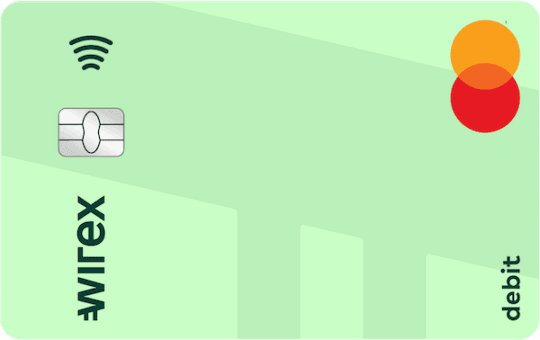
| Wirex Elite | 8% | 0% | Multi-currency | Tier-dependent | USDC, USDT | Visa |
| Coinbase Card | 4% | 0% | Merchant currency | No ATM | USDC | Visa |
| Kolo | 5% BTC | 0% on stablecoins | USD | N/A | USDC, USDT | Visa |
| Bitget Card | 8% | 0% (0.9% tx) | Merchant currency | 2% | USDT | Visa |
Coinbase is US-only. For non-US expats, Kolo (170+ countries, 0% FX on stablecoins, standard network FX on non-USD) and COCA (60 countries, 0% FX) are the primary picks. For Mastercard network diversity, EEA/UK expats should add Kraken (1%, 0% FX, 0% issuer ATM fee). For cash-heavy destinations, RedotPay Physical (150+ countries, 1.2% FX + 1% conversion fee) provides ATM access.
What Expats Need in a Crypto Card
Zero FX markup on local currency transactions in your new country
Stablecoin top-up so family or employers can send you USDC from anywhere
Works without a local bank account - critical in the first months after relocation
ATM access with free monthly allowance for cash-dependent countries
Multi-currency support for trips back home or spending in neighboring countries
Top 5 Cards for Expats
Moving abroad means every purchase is a foreign transaction until you open a local bank, and that process takes weeks to months. COCA offers up to 8% cashback (1% at free Starter, 8% at Elite with 30K $COCA) at 0% FX across 60 countries. Wirex Elite matches at 8% with 0% FX and multi-currency settlement, though availability is limited to 35 countries.
Coinbase is the default for US expats who already have accounts and want zero friction (US only). Kolo fills the global gap for non-US expats: 170+ countries, 5% BTC cashback ($5/txn cap, $200/mo cap), 0% FX on stablecoin spending. Bitget at 8% (7.1% net after 0.9% tx fee) covers the EEA-to-APAC corridor that most expat relocations follow.

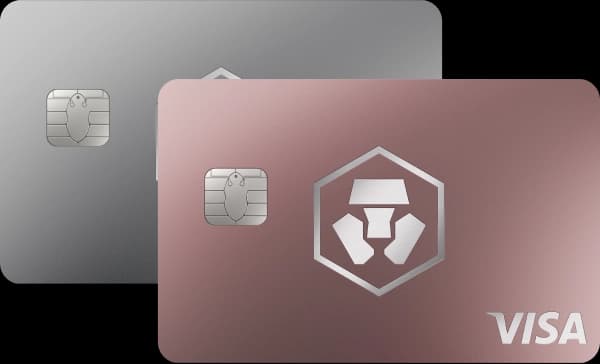
1. COCA Visa Card
Self-Banking: 8% Cashback + 6% APY + 0% FX
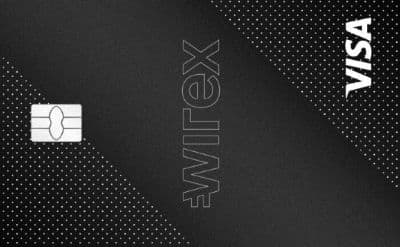
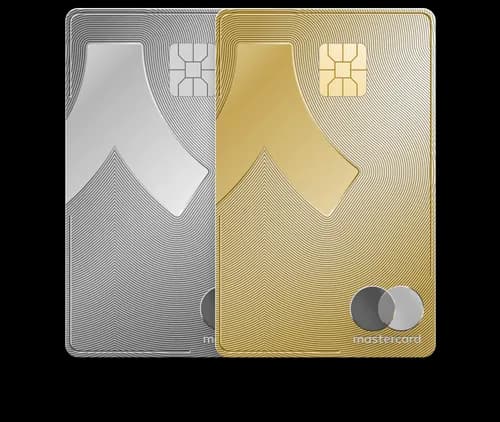
2. Wirex Elite Card
Elite Travel Status: 8% Rewards + Priority Support
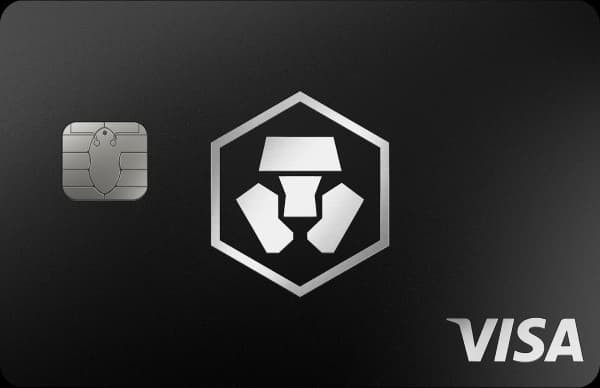
3. Coinbase Card (Prepaid Visa)
Safe & Simple: US Regulated Prepaid Visa with Rotating Crypto Rewards
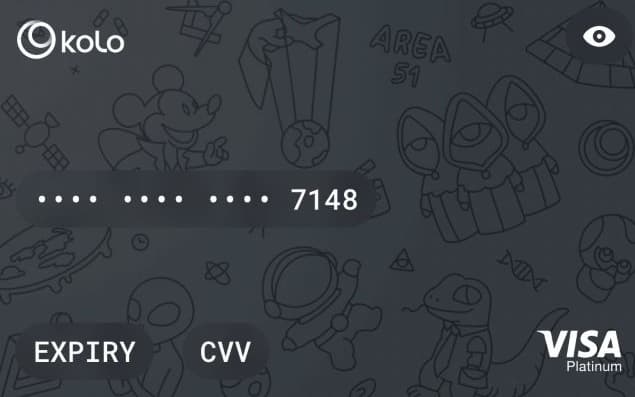
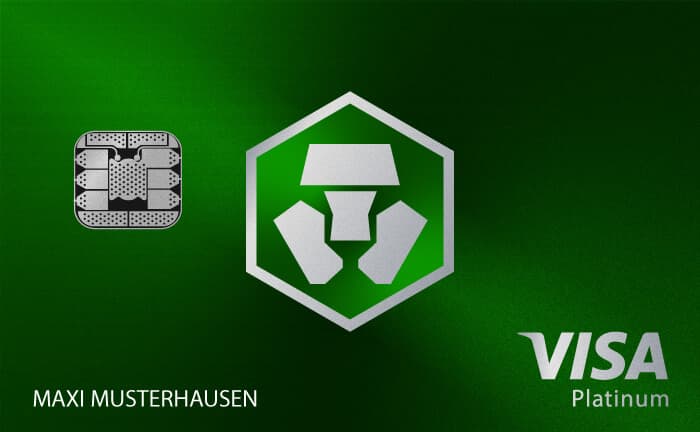
4. Kolo Card
Earn Bitcoin on Every Purchase: 5% BTC Cashback + Visa Platinum + 170+ Countries
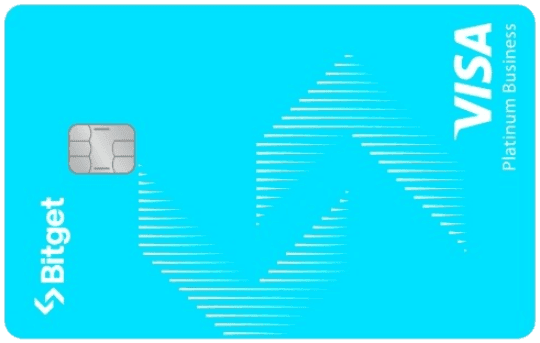
5. Bitget Card
Trade and Spend: Up to 8% BGB Cashback for Bitget Traders
What $4,000/Month Looks Like
$320
/month in cashback (based on Bitget Card at 8%)
Scenario 1: Lucia, Marketing Manager in Lisbon ($3,000/month)
Lucia relocated from Argentina to Portugal on a D7 visa. She earns in USD from remote clients. Her Argentine bank charges 8% on international transactions (official rate + PAIS tax). She sends $300/month to her parents in Buenos Aires.
Setup:
- Primary: COCA Elite (8% cashback with staking 30K $COCA, 0% FX)
- Backup: Wise EUR IBAN for rent direct debit and Portuguese tax reporting
- Remittances: USDC transfers to her parents' Binance account
Monthly flow:
| Category | Card | Monthly Spend | Return |
|---|---|---|---|
| Rent (via Wise IBAN) | Wise | $900 | No cashback |
| Groceries (Continente, Pingo Doce) | COCA | $400 | $32 cashback |
| Dining (restaurants, pastelerias) | COCA | $350 | $28 cashback |
| Transport (Metro, Uber) | COCA | $150 | $12 cashback |
| Subscriptions | COCA | $200 | $16 cashback |
| Remittance to parents | USDC transfer | $300 | $0 |
| Other | COCA | $700 | $56 cashback |
| Total | $3,000 | $144/mo |
Annual result:
- COCA cashback: $1,728
- FX savings vs Argentine bank (8% on $2,100 card spend): $2,016
- Remittance savings (USDC vs Western Union at $35/transfer): $408
- Total annual benefit: $4,152
Compare to her previous setup (Argentine bank + Western Union): $4,152 in annual savings and earned cashback. That is almost two months of rent in Lisbon, from fees she no longer pays.
Verdict: "My Argentine bank took 8% of everything. Western Union took $35 per transfer to my parents. Now I pay zero FX, earn 8% cashback, and send money home for less than a cent. I kept my Argentine account open but I never use it."
Scenario 2: Raj, Software Engineer in Dubai ($6,000/month)
Raj relocated from Bangalore to Dubai for a tax-free salary. He earns $9,000/month (AED salary converted) and sends $1,000/month to his family in India. Dubai is nearly cashless, so ATM access is not a priority.
Setup:
- Primary: Wirex Elite (8% cashback, $360/year, 0% FX)
- Backup: Kolo (5% BTC, free, 170+ countries)
- Remittances: USDC to family's exchange account
Monthly flow:
| Category | Card | Monthly Spend | Return |
|---|---|---|---|
| Rent | Wirex Elite | $2,200 | $176 cashback |
| Groceries (Carrefour, Spinneys) | Wirex Elite | $800 | $64 cashback |
| Dining | Wirex Elite | $600 | $48 cashback |
| Transport (RTA, Careem) | Wirex Elite | $300 | $24 cashback |
| Business expenses | Kolo | $500 | $25 cashback (5% BTC) |
| Remittance to family | USDC transfer | $1,000 | $0 |
| Other | Wirex Elite | $600 | $48 cashback |
| Total | $6,000 | $380/mo |
Annual result:
- Wirex cashback: $4,320 (on $4,500/mo)
- Kolo cashback: $300 (5% BTC on $500/mo, within $200/mo cap)
- Wirex annual fee: -$360
- Remittance savings (USDC vs bank wire at $45 + 2% FX): $780
- Tax saved (UAE = 0% income tax): N/A (structural advantage)
- Total annual benefit: $5,040
At $6,000/month spending, Wirex Elite pays for itself in the first week ($360 fee / 8% rate = $4,500 breakeven). The remaining 51 weeks are pure profit.
Verdict: "I moved to Dubai for zero tax. The crypto card was the second smartest financial decision. $5,040/year in savings and cashback, from money I was going to spend anyway."
Scenario 3: Yuki, English Teacher in Bangkok ($1,800/month)
Yuki relocated from Osaka to Bangkok. She earns 55,000 THB/month ($1,500) teaching English, plus $300/month from online tutoring (paid in USD). Bangkok is moderately cash-dependent: markets, street food, and taxis are cash-only, but malls and restaurants take cards.
Setup:
- Primary: RedotPay Physical ($100, ATM-capable, 1.2% FX, 50+ countries)
- Backup: Bangkok Bank debit card (for Thai-only payments)
- Cash: 30% of spending in cash, withdrawn from ATM monthly
- Funding: Tutoring income in USDC, Thai salary in THB
Monthly flow:
| Category | Payment | Monthly Spend | Notes |
|---|---|---|---|
| Rent (Thai landlord) | Bank transfer | $450 | Must be local bank |
| Groceries (Tesco Lotus, Big C) | RedotPay | $200 | Card accepted |
| Street food/markets | Cash | $250 | Cash only |
| Transport (BTS, Grab) | RedotPay/cash | $100 | Mixed |
| ATM withdrawal (for cash needs) | RedotPay | $300 | $200/mo free |
| Other | RedotPay | $500 | Online, restaurants |
| Total | $1,800 |
Annual result:
- RedotPay cashback: $0 (no rewards program)
- RedotPay fees (2.2% on $1,100 card spend): -$290/yr
- Japanese bank fees (3% FX on $1,100): -$396/yr
- FX savings vs Japanese bank: $106/yr (3% - 2.2% = 0.8% on $13,200)
- Remittance savings: N/A (she does not send money home)
- ATM convenience: RedotPay Physical has $10K/month ATM allowance
- Total annual FX savings vs Japanese bank: approx. $106
The FX savings are modest ($106/year) but the bigger value is practical: Yuki did not need to wait 3 months for a Thai bank account to start spending. Her RedotPay card worked from day one. A rewards card like Kolo (5% BTC cashback, 170+ countries) would produce better returns on card spending, but RedotPay's ATM capability and instant physical card delivery made it the right first card for Bangkok's mixed cash-and-card economy.
Verdict: "I landed in Bangkok on a Friday. By Monday I had a working card. My Japanese friends spent six weeks trying to open a Thai bank account. I just loaded USDC and started spending."
The First 90 Days: Expat Financial Timeline
| Timeline | Action | Why |
|---|---|---|
| Before departure | Activate crypto card, load $2,000 USDC | Working payment from day one |
| Day 1 | Add card to Apple Pay/Google Pay | Contactless works everywhere |
| Week 1 | Set up second card on different network | Backup if primary fails |
| Week 2 | Open Wise/Revolut for IBAN | Rent, utilities, direct debits |
| Month 1 | Evaluate cash needs, ATM strategy | Adjust based on local norms |
| Month 2 | Set up recurring USDC top-ups | Automate funding |
| Month 3 | Review spending data, consider premium | Upgrade if $4K+/month |
Multi-Card Strategy for Expats
How Settlement Currency Affects Your Expat Spending
This is the single most important technical detail most expats miss, and it can cost hundreds per year even on a "0% FX" card.
When you tap your card abroad, two conversions may happen:
Single conversion (ideal): Your USDC converts to the merchant's local currency. One conversion, one rate. Cards that settle in the merchant's currency (like Bitget Card) have the card network (Visa/Mastercard) convert directly from your USDC balance to, say, Thai Baht.
Double conversion (the trap): Your USDC converts to the card's settlement currency (EUR), then EUR converts to the merchant's currency (Thai Baht). Two conversions, two spreads. Cards settled in EUR (Plutus, Gnosis Pay) do this for non-EUR purchases. The second conversion carries a hidden 0.3-0.8% spread that does not appear as a fee.
| Your Country | Card Settlement | Conversion Path | Hidden Spread |
|---|---|---|---|
| Thailand (THB) | EUR (Plutus) | USDC to EUR to THB | 0.3-0.8% |
| Thailand (THB) | Merchant (Bitget) | USDC to THB | 0% |
| Portugal (EUR) | EUR (Gnosis Pay) | USDC to EUR | 0% |
| Japan (JPY) | USD (COCA) | USDC to USD to JPY | 0.1-0.3% |
| Japan (JPY) | Merchant (Bitget) | USDC to JPY | 0% |
| UAE (AED) | USD (Kolo) | USDC to USD to AED | Network rate |
Rule of thumb: Our methodology distills this to a simple rule - if you live in a EUR country, use a EUR-settled card. If you live anywhere else, use a card that settles in the merchant's currency (Bitget, Kolo). The "0% FX" claim on a EUR-settled card is only true within the eurozone.
The Three Numbers Every Expat Should Know
Number 1: Total annual cost of your current banking setup
Add up every fee your traditional bank charges you for living abroad:
| Fee Type | Traditional Bank | Crypto Card | Annual Savings |
|---|---|---|---|
| FX markup (3% on $3K/mo) | $1,080/yr | $0 | $1,080 |
| Wire transfers home (2x/mo at $35) | $840/yr | under $12/yr (USDC) | $828 |
| ATM abroad (4x/mo at $5) | $240/yr | $0-$48/yr | $192-$240 |
| Account maintenance (2 countries) | $120-$360/yr | $0 | $120-$360 |
| Total | $2,280-$2,520/yr | under $60/yr | $2,220-$2,460 |
Most expats are paying $2,000+/year in banking friction without realizing it. The FX markup alone ($1,080 on $3K/mo at 3%) exceeds the cost of any premium crypto card.
Number 2: Cashback return on your actual spending
| Monthly Spend | COCA Elite (8%) | Wirex Elite (8%, $360/yr) | Coinbase (4%) | RedotPay (0%, 2.2% fees) |
|---|---|---|---|---|
| $2,000 | $1,920/yr | $1,560/yr | $960/yr | -$528/yr |
| $3,000 | $2,880/yr | $2,520/yr | $1,440/yr | -$792/yr |
| $5,000 | $4,800/yr | $4,440/yr | $2,400/yr | -$1,320/yr |
At $3,000/month, COCA Elite's 8% cashback ($2,880, requires staking 30K $COCA tokens) is nearly 3x what Coinbase returns ($1,440). COCA's free Starter tier (1%) gives $360/year. Wirex Elite becomes cost-effective above $375/month ($360 fee / 8% rate), so at $3,000/month it is an excellent option.
Number 3: Cash dependency of your destination
This determines how important ATM access is in your card selection:
| Destination | Card Acceptance | Cash Needed | ATM Priority |
|---|---|---|---|
| UAE, Singapore | Near-universal | Rarely | Low |
| Western Europe | 95%+ | Rarely | Low |
| Eastern Europe | 80-90% | Sometimes | Medium |
| Thailand, Malaysia | 70-80% | Frequently | High |
| Vietnam, Indonesia | 50-60% | Daily | Critical |
| Rural Latin America | 30-50% | Most transactions | Critical |
| Sub-Saharan Africa | 20-40% | Most transactions | Critical (or mobile money) |
If your destination has 80%+ card acceptance, ATM allowance is a minor factor. If it is below 60%, ATM fees dominate your card economics, and you need a card with generous free withdrawals.
The Expat Financial Setup: Three Layers
Layer 1: Primary spending card (zero FX crypto card). This handles 80% of your daily spending. COCA for maximum cashback (up to 8% with staked $COCA, 0% FX), Kolo for widest global coverage (170+ countries, 5% BTC), or Wirex Elite if spending exceeds $4,000/month (35 countries).
Layer 2: Traditional fintech backup (Wise or Revolut). For receiving salary via IBAN, paying landlords via direct debit, and situations where crypto cards are not accepted. Some landlords and utility companies require a local bank or IBAN.
Layer 3: Cash access card. If you live in a cash-dependent country, you need ATM access. RedotPay Physical provides ATM access in 150+ countries (1.2% FX + 1% conversion fee). Kraken charges 0% issuer ATM fee (EEA/UK).
The Remittance Advantage
Sending money home through traditional channels is expensive:
| Method | Fee on $500 Transfer | Speed | Setup Required |
|---|---|---|---|
| Bank wire | $35-50 + 2-3% FX ($10-15) | 3-5 business days | Bank account both ends |
| Western Union | $25-50 (5-10%) | Same day | ID + location visit |
| Wise/Revolut | $2.50-5 (0.5-1%) | Instant-1 day | App + bank account |
| USDC on Solana | under $0.01 | 2 minutes | Wallet both ends |
| USDC on Ethereum L2 | $0.01-0.50 | 5 minutes | Wallet both ends |
Crypto rails are the cheapest option if the recipient can use a wallet or exchange. Total cost: under $1 per transfer versus $35-65 for a bank wire. At 2 transfers/month, that is $816-$1,548/year in savings. The limitation is adoption: your family needs to set up a wallet or exchange account.
Best Cards by Expat Destination
Europe (EEA): Widest selection. Plutus (up to 9% + subscription rebates), COCA (up to 8% with staked $COCA), or Gnosis Pay (EURe self-custody). EUR settlement means zero double-conversion within the eurozone. See our Europeans guide.
Southeast Asia: Cash-heavy regions. Kolo (170+ countries, 5% BTC) or RedotPay Physical (150+ countries, ATM access). Prioritize ATM allowances. Carry cash as backup. See guides for Thailand, Singapore, Vietnam.
Middle East (UAE, Qatar): Zero income tax. Kolo or Bitget Card (EEA/APAC) for broad coverage. UAE's crypto regulation means most international crypto cards work without issues.
Latin America: Growing adoption but cash-heavy. Kolo or RedotPay for broadest coverage. For countries with unstable currencies (Argentina), stablecoin-funded cards are a natural hedge. See guides for Mexico, Colombia, Brazil.
Africa: Cash-dominant with mobile money prevalence. RedotPay for widest coverage. M-Pesa and MTN Mobile Money are more common than card payments in many countries.
Common Mistakes to Avoid
1. Relying on a Single Card in a New Country
The mistake: Arriving in a new country with only one crypto card as your payment method.
The cost: Your card gets flagged for unusual spending patterns. Or the exchange goes into maintenance. Or the card network has a regional outage. Without a backup, you are stuck without payment in a country where you may not speak the language or know the banking system.
How to avoid it: Two crypto cards minimum (ideally on different networks: one Visa, one Mastercard), plus Wise or Revolut, plus $200-300 in local cash. The backup costs nothing but prevents a crisis.
2. Using a EUR-Settled Card in a Non-EUR Country
The mistake: Taking your Plutus or Gnosis Pay card (EUR settlement) to Thailand, Japan, or Mexico.
The cost: Every purchase converts twice: USDC to EUR, then EUR to local currency. The second conversion carries a 0.3-0.8% hidden spread. On $3,000/month spending, that is $9-$24/month ($108-$288/year) in invisible fees on a card advertised as "0% FX."
How to avoid it: Check your card's settlement currency. In non-EUR countries, use a card that settles in the merchant's currency (Bitget, Kolo). Reserve your EUR-settled card for eurozone spending.
3. Not Understanding Local ATM Fee Stacking
The mistake: Assuming your card's "free ATM" allowance covers all fees.
The cost: Your card offers $200/month free ATM. But the ATM operator charges $5-7 per withdrawal, and in Thailand, the local ATM network adds 220 THB ($6). Your "$200 free withdrawal" actually costs $11-13. Four withdrawals per month: $44-52 in ATM operator fees that your card's "free allowance" does not cover.
How to avoid it: Withdraw larger amounts less frequently (one $500 withdrawal vs five $100 withdrawals). Research which ATM networks in your destination charge the lowest operator fees. In Thailand, Aeon ATMs charge 0 THB. In Mexico, Scotiabank ATMs charge no surcharge. Ask local expat forums for ATM recommendations.
4. Ignoring the 183-Day Tax Residency Rule
The mistake: Living in a new country for 7 months without understanding you have become a tax resident.
The cost: Most countries consider you a tax resident after 183 days. This can mean owing income tax in BOTH countries if no tax treaty prevents double taxation. Your crypto card spending creates a financial footprint that tax authorities can request, establishing your physical presence.
How to avoid it: Consult a cross-border tax professional before your first filing. Track your days in each country. Understand whether a tax treaty exists between your countries. Some destinations (UAE, Singapore) have no income tax, making the 183-day rule a benefit rather than a risk. See our tax-conscious guide.
5. Not Converting to Stablecoins Before Spending
The mistake: Loading your card with BTC or ETH and spending from a volatile balance.
The cost: You load $3,000 in ETH at $3,500/ETH. By month-end, ETH is $3,100. Your spending balance lost $343 in purchasing power, plus every purchase created a taxable disposal event. In an unfamiliar tax jurisdiction, hundreds of capital gains calculations are the last thing you need.
How to avoid it: Always convert to USDC before loading your card. One conversion to stablecoins, then clean spending with near-zero tax events. See our HODLer guide for the stablecoin sidecar strategy.
6. Trying to Optimize on Day One
The mistake: Spending your first week researching the perfect card, premium tier, and staking strategy instead of just getting a working payment method.
The cost: While you research, you are paying 3% FX on your old bank card or carrying large amounts of cash. At $100/day in spending, a week of delay costs $21 in unnecessary FX fees.
How to avoid it: Get any free 0% FX card working on day one (Kolo, COCA). Optimize later once you have real spending data from your new country. The "perfect" card choice depends on local cash dependency, ATM networks, and spending patterns you cannot predict before arriving.
Expat Tax Planning: Two-Country Considerations
| Situation | Home Country Tax | Destination Tax | Crypto Card Impact |
|---|---|---|---|
| US citizen abroad | Must file worldwide | May owe local tax | FBAR reporting if card balance exceeds $10K |
| EU citizen moving within EU | Home country releases you | New country taxes after 183 days | Clean transition |
| Moving to zero-tax country (UAE) | Home country releases you | No income tax | Pure benefit |
| Dual residency (no treaty) | Both countries may tax | Both countries may tax | Double taxation risk |
| Remote worker (employer in Country A, living in Country B) | Employer may withhold | You may owe in Country B | Spending records prove residence |
US citizens face the strictest rules: worldwide taxation regardless of residence, plus FBAR reporting for foreign financial accounts. If your crypto card balance exceeds $10,000 at any point, you must report it on FinCEN Form 114.
Card Selection by Expat Situation
Just arrived, need something now: Kolo (5% BTC, free, 170+ countries, instant virtual card) or Coinbase Card (4%, free, US expats only). Both are useful when an expat needs supermarket, transit, and online payments working before local payroll, tenancy paperwork, or bank onboarding are settled.
Settled, spending $3K+/month: COCA Elite (8% cashback with staking 30K $COCA + 6% APY) or Wirex Elite (8%, $360/yr). Both generate $2,500+/year at this spending level.
Cash-heavy destination: RedotPay Physical (150+ countries, 1.2% FX + 1% conversion fee) or Kraken (0% issuer ATM fee, EEA/UK). ATM allowance and coverage are the deciding factors.
Sending money home regularly: Set up USDC transfers on Solana (under $0.01 per transfer). Teach your family to use a simple exchange with local-currency withdrawal.
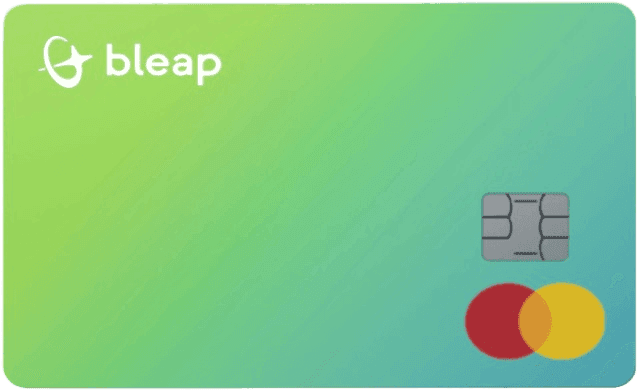
European expat: COCA (up to 8%, 0% FX, 60 countries) as daily driver, with Kraken (1%, 0% FX, Mastercard, EEA/UK) as network backup. For self-custody, see Gnosis Pay (EURe, eurozone only) or Bleap (EEA). See our Europeans guide.
Digital nomad moving every few months: Prioritize global coverage and multi-network backup. See our nomad guide for the pre-departure setup timeline.
Where it lands: Expats are among the highest-value users of crypto cards. The combination of 0% FX, instant cross-border transfers, no local bank requirement, and 4-8% cashback generates $2,000-$5,000+ in annual value versus traditional expat banking. The math is simple: a $3,000/month expat saves $1,080 in FX fees, earns $1,440-$2,880 in cashback, and saves $400-800 in remittance fees. Total: $2,920-$4,760/year.
Start with a free card the moment you arrive. Add a second card on a different network for redundancy. Keep your stablecoin spending pool separate from investments. Your financial infrastructure should cross borders as easily as you do.
Disclaimer: SpendNode is a data comparison platform. We are not financial advisors. Crypto cards involve risks including asset volatility, custodial risk, and tax complexity. Verify all terms directly with issuers before applying.
Written by Aleksandar Dukic
Frequently Asked Questions
Can I use a crypto card before opening a local bank account?
Yes. Cards like RedotPay, Bitget, and Coinbase work independently of any local bank. You fund them with stablecoins from anywhere in the world. This makes crypto cards ideal for the transition period after relocating - when local bank applications are pending or require residency documentation you do not yet have.
How do crypto cards compare to Wise or Revolut for expats?
Crypto cards offer 0% FX (same as Wise/Revolut), but add cashback (1-8%) that traditional fintech cards do not match. The trade-off is that crypto cards require stablecoin funding, while Wise/Revolut accept direct bank transfers. Many expats use both: crypto card as the daily driver for cashback, Wise as the backup for bank transfers and salary reception.
Can I receive my salary on a crypto card?
Not directly in most cases. Crypto cards do not typically provide an IBAN or bank account number for salary deposits. The typical flow: receive salary in a bank or Wise account, buy USDC, load your crypto card. Some exchange cards (Coinbase, Crypto.com) can accept bank transfers to your exchange account, which comes close.
What about sending money home to family?
Crypto rails are often cheaper than traditional remittance services. Buy USDC, send it to a family member's wallet or exchange account, they withdraw to local currency. The total cost is typically under 1% compared to 5-10% for Western Union or bank wires. However, the recipient needs to be comfortable with a crypto exchange or wallet.
Recent Updates to Best Crypto Cards for Expats
- Rebuilt main table to match topCardSlugs. Added Kolo, Bitget, Kraken. Removed Plutus, 1inch, Gnosis Pay, Crypto.com Jade from main table
- Fixed COCA FX from 0-1% to 0%. Scoped Coinbase as US-only throughout. Replaced KAST with Kolo in all recommendations
- Dubai scenario: Coinbase backup replaced with Kolo. Bangkok scenario: KAST replaced with Kolo