
Best No KYC Crypto Cards 2026
Crypto cards with minimal or no identity verification. Compare simplified onboarding options, spending limits, and the regulatory trade-offs of low-KYC crypto cards.
Let us save you some time: there is no such thing as a truly anonymous crypto card in 2026. Every card on Visa or Mastercard rails requires some level of identity verification. The phrase "no KYC" is marketing, not reality. What actually exists is a spectrum, from cards that need just an email address with strict spending caps to cards that verify your ID in under two minutes and unlock full features immediately.
That said, there are genuinely good providers where the KYC process is so fast and painless that it barely registers as friction. They are not technically "no KYC" but they deserve a place on this page because they solve the same problem: getting you from zero to spending as quickly as possible.
We tested every card on this spectrum and the results surprised us. Avoiding verification does not just limit your spending. It costs you real money. A card with email-only onboarding charges 1.2% on every transaction and pays zero cashback. A card with a 2-minute ID check pays 4% cashback with lower fees. On $12,000 in annual spending, that gap is $564 per year. You are paying $564 to avoid a process that takes less time than making a coffee.
If you want the broader market view before narrowing it down to low-KYC options, see our top-ranked crypto cards.
This page maps the full verification spectrum card by card, calculates the exact dollar cost of each KYC tier, and shows you where the sweet spot is between onboarding speed and card value. We also cover the regulatory reality (5AMLD, FATF, MiCA) so you understand why these requirements exist and where they are heading.
How we ranked these cards
We did not rank by how little verification a card requires. We ranked by the best value you can get at each point on the KYC spectrum. For some users, email-only access matters for a quick test. For most, the fastest full-KYC process wins because it unlocks dramatically better economics. A card that verifies you in 2 minutes and pays 4% cashback outranks a card that skips verification and charges you 1.2% on every swipe.
Here is where each card lands on the spectrum, starting with the ones that get you the most value for the least friction.
Top 5 No KYC Cards

1. KAST K Card
Early Adopter Access: 2% Points + 4% $MOVE on Every Swipe
2. COCA Visa Card
Self-Banking: 8% Cashback + 6% APY + 0% FX
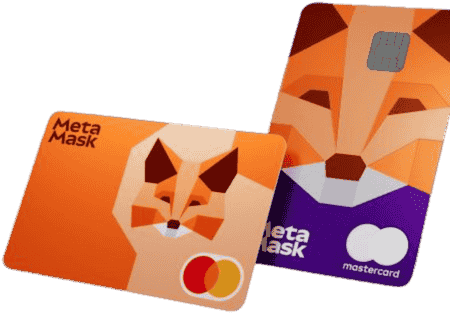
3. MetaMask Virtual Card
Sovereign Spending: 1% Cashback + Self-Custody + MetaMask Security
4. Bleap Mastercard
Secure DeFi Spend: Tiered USDC Cashback + 0% FX Fees
5. RedotPay Virtual Card
High-Capacity Global Spend: $1M Daily Limit + Instant Visa Payouts
What "No KYC" Actually Means in 2026
Those were our picks. You will notice the top card on the list requires full KYC, and that is the whole point. The fastest verification process wins, not the one that skips verification. Now let us walk through the data behind that logic.
Every card that connects to Visa or Mastercard touches the traditional banking system. That means compliance with anti-money laundering (AML) and know-your-customer (KYC) regulations. The question is not whether KYC exists, but how much and when it kicks in.
| Verification Tier | What You Provide | Typical Monthly Limit | Who Uses This |
|---|---|---|---|
| No KYC | Email + phone only | $150 - $500 | EU prepaid exemption users, testers |
| Soft KYC | Email + phone + selfie | $1,000 - $10,000 | Regular daily spenders |
| Standard KYC | Government ID + selfie | $10,000 - $50,000 | Power users, frequent travelers |
| Enhanced KYC | ID + proof of address + source of funds | Unlimited | High-net-worth individuals, business use |
Most cards marketed as "no KYC" operate in the Soft KYC tier - they ask for minimal information upfront and only escalate when you hit spending thresholds. The truly zero-document tier exists primarily under the EU's prepaid card exemption (explained below), and even that window is narrowing.
The Dollar Cost of Avoiding KYC
| KYC Level | Best Available Card | Cashback | FX Fee | Annual Value at $12K Spend | What You Give Up |
|---|---|---|---|---|---|
| No KYC (email) | RedotPay Virtual | 0% | 1.2% | -$144 (FX loss) | $564/year vs KAST |
| 2-min Full KYC | KAST K Card | 4% ($MOVE) | 0.5-1.75% | +$420 | Nothing |
| Streamlined ID | MetaMask Virtual | 1% | 1% cross-border | +$120 (domestic) | $360/yr vs KAST |
| Standard ID | Bleap | 2% | 0% | +$240 | $240/yr vs KAST |
Avoiding KYC entirely costs approximately $564/year compared to a 2-minute verification on KAST. The "privacy premium" is real and measurable.
Complete No/Low-KYC Card Comparison
| Card | Minimum KYC | Lowest Tier Limit | Full KYC Limit | cards with cashback | FX Fee | Custody | Region |
|---|---|---|---|---|---|---|---|
| RedotPay Virtual | Email only | approx. $160/mo | $50K/mo | 0% | 1.2% | Custodial | Global |
| RedotPay Solana | Email only | approx. $160/mo | $50K/mo | None | 1.2% | Custodial | Global |
| RedotPay Physical | Full KYC | N/A | $1M/day | 0% | 1.2% | Custodial | Global |
| KAST K Card | Full (2 min) | N/A | Varies | 4% $MOVE | 0.5-1.75% | Custodial | Global |
| KAST Solana Gold | Full (2 min) | N/A | Varies | 8% pts | 0.5-1.75% | Custodial | Global |
| MetaMask Virtual | Streamlined ID | N/A | Standard | 1% | 1% cross-border | Self-custody | US, EEA, UK, CH, LatAm |
| MetaMask Metal | Streamlined ID | N/A | Standard | 3% (first $10K/yr) | 0% | Self-custody | US, EEA, UK, CH, LatAm |
| Bleap | Standard ID | N/A | Standard | 2% | 0% | Self-custody | EEA |
| 1inch | Standard ID | N/A | Standard | 2% | 0% | Custodial | EEA/UK |
| COCA | Minimal | Varies | Varies | Up to 8% | 0% | Self-custody | Global |
Card-by-Card KYC Breakdown
Here is the exact verification process for every card tagged with simplified onboarding in our database. We verified these processes firsthand and through official issuer documentation as of February 2026.
RedotPay - The Tiered Approach
RedotPay operates a clear three-tier verification system that lets you start spending with almost nothing and unlock higher limits as you verify.
Tier 0 (Email Only):
- Provide: email address and phone number
- Get: virtual card with basic spending access
- Limits: restricted to small daily transactions
- Time: instant
Tier 1 (Basic ID):
- Provide: government-issued ID (passport or national ID card)
- Get: full virtual card access, eligible for Solana card
- Limits: up to $50,000/month spending, $100,000 per transaction
- Time: typically under 5 minutes (automated verification)
Tier 2 (Enhanced):
- Provide: ID + proof of address (utility bill or bank statement)
- Get: physical card eligibility, highest limits
- Limits: up to $1,000,000 daily
- Time: 24-48 hours (manual review for some documents)
Why it matters: RedotPay's Tier 0 is one of the closest things to "no KYC" that still exists on regulated card rails. You can load USDC and other stable balances and spend at 130M+ Visa merchants with just an email. The catch: your limits are severely restricted until you verify further. For testing the card or making small purchases, Tier 0 is genuinely frictionless.
KAST - Two-Minute Full KYC
KAST takes a different approach: instead of minimizing KYC, they made the full process so fast that it barely matters. Their FAQ states "KYC takes less than 2 minutes" - and based on user reports, that is accurate.
The Process:
- Download the app and enter your email
- Scan your government ID (passport, driver's license, or national ID)
- Take a live selfie for biometric matching
- Wait approximately 90 seconds for automated verification
- Virtual K Card is issued instantly upon approval
What makes it fast: KAST uses automated document verification with AI-powered liveness detection. There is no manual review queue for standard applications. The system either approves you in seconds or flags you for manual review (which adds 24-48 hours).
All 7 KAST variants - from the free K Card to the $10,000/year Solana Gold - use the same KYC process. Tier upgrades are payment-based, not verification-based. Once you pass KYC once, every card tier is available.
MetaMask - Wallet-First, KYC-Light
MetaMask Card represents the self-custodial approach to simplified KYC. Since your funds never leave your wallet until the moment of purchase, the compliance burden is structurally lighter.
The Process:
- Connect your existing MetaMask wallet (Linea, Base, or Solana)
- Provide email and basic personal information
- Complete a streamlined ID verification (government ID + selfie)
- Virtual card is issued within minutes
Why it is simpler: Traditional exchange cards require KYC at the exchange level AND at the card level. MetaMask skips the exchange entirely. Your wallet is your account. The only KYC happens at the card issuance stage (required by Mastercard's compliance rules), and it is a single streamlined flow rather than multiple verification steps across different platforms.
Both the Virtual (1% cashback) and Metal (3% on first $10K/yr, then 1%, $199/yr) variants use the same verification process.
Bleap - Account Abstraction Meets Simplified Onboarding
Bleap uses account abstraction (smart contract wallets) to deliver a self-custodial card with a streamlined sign-up flow.
The Process:
- Create an account with email
- The app generates a smart contract wallet via account abstraction
- Complete basic identity verification (ID + selfie)
- Virtual Mastercard issued with 0% FX and 2% cashback
What sets it apart: Bleap's account abstraction model means there is no seed phrase to write down and no existing wallet to connect. The smart contract wallet is created as part of onboarding, with social recovery built in. For users who want self-custody benefits without the complexity of managing wallet infrastructure, Bleap is the most accessible entry point. Currently available in the EEA only.
1inch - DeFi-Native Card via Baanx
1inch Card is issued through Baanx and connects to the 1inch DeFi ecosystem.
The Process:
- Link your existing 1inch or compatible wallet
- Provide basic personal details and complete ID verification
- Virtual Mastercard issued with 0% FX fees and up to 2% cashback
- Apple Pay and Google Pay support for contactless spending
The DeFi angle: 1inch's integration with Baanx means your card is directly connected to one of the largest DEX aggregators. KYC is handled by Baanx (a regulated card issuer), not by 1inch itself. The process is standard for European card issuance, but faster than most exchange-based cards because there is no exchange account to set up separately.
For DeFi-native users already operating on-chain, this is the shortest path from decentralized swaps to a physical Mastercard: one KYC flow, no exchange deposit required.
The Regulatory Reality: Why "No KYC" Is Disappearing
Understanding why fully anonymous cards barely exist requires understanding the regulatory framework that governs them.
The EU's 5th Anti-Money Laundering Directive (5AMLD)
The EU's 5AMLD, implemented across all member states, includes a prepaid card exemption that allows reduced customer due diligence when:
- The card is non-reloadable, OR
- Monthly transaction volume does not exceed 150 EUR (~$160), AND
- The card cannot be used for cash withdrawals above 50 EUR
This exemption is why some EU-issued prepaid crypto cards can operate with email-only verification at the lowest tier. However, the upcoming 6AMLD (expected enforcement 2027) is widely expected to lower or eliminate this threshold entirely.
FATF Travel Rule
The Financial Action Task Force (FATF) Travel Rule requires financial institutions to share sender and receiver information for transactions above $1,000 USD (lowered from $3,000 in many jurisdictions during 2025). This rule now applies to virtual asset service providers (VASPs) in most G20 countries.
Practical impact: Even if a card issuer does not require KYC upfront, the moment you transact above Travel Rule thresholds, the underlying bank or payment processor must collect and transmit your identity information. Cards that allow anonymous spending above $1,000 are either non-compliant or operating in jurisdictions with weak enforcement - both are red flags.
MiCA (Markets in Crypto-Assets Regulation)
Europe's MiCA framework, fully enforced since June 2025, requires all crypto-asset service providers (CASPs) to be licensed and to implement full KYC/AML programs. For crypto card issuers operating in the EEA:
- All customers must be identified before establishing a business relationship
- Transaction monitoring is mandatory
- Suspicious activity reporting to Financial Intelligence Units (FIUs) is required
- The 5AMLD prepaid exemption still applies but only within its strict limits
FinCEN (United States)
In the US, FinCEN's Bank Secrecy Act requires all money services businesses (MSBs) to implement KYC programs. There is no prepaid exemption equivalent to the EU's. Any card that can be used to spend cryptocurrency at US merchants must comply with full AML/KYC requirements. This is why most "no KYC" cards exclude the US market entirely.
| Jurisdiction | Prepaid Exemption | Travel Rule Threshold | KYC Enforcement Level |
|---|---|---|---|
| EU/EEA | Yes (under 150 EUR) | 1,000 EUR | High (MiCA + 5AMLD) |
| United States | No | $3,000 (lowering) | Very High (FinCEN) |
| United Kingdom | Limited | 1,000 GBP | High (FCA) |
| Singapore | No | 1,500 SGD | High (MAS) |
| Global (FATF) | Varies | $1,000 recommended | Varies by adoption |
Risks and Warnings: What You Need to Know
The Frozen Account Problem
The single biggest risk of using a card with minimal KYC is an account freeze. Here is how it typically plays out:
- You sign up with email only and start spending
- Your transaction volume or pattern triggers an automated compliance flag
- The card issuer freezes your account and requests full KYC documents
- Until you provide satisfactory documentation, your loaded funds are inaccessible
- If you cannot verify your identity, the issuer may hold your funds for 90-180 days before returning them (minus fees) to the original funding source
This is not theoretical. Multiple Reddit threads and crypto forums document users losing access to prepaid card balances for weeks after triggering compliance alerts. The irony: users who skip KYC to protect their privacy end up providing even more documentation during a compliance investigation than they would have during normal onboarding.
No Fraud Protection at the Lowest Tier
Cards with minimal verification typically offer minimal fraud protection. If your card number is stolen and used for unauthorized purchases:
- Full KYC accounts: The issuer can verify your identity, investigate the fraud, and issue a chargeback. You are protected.
- Minimal KYC accounts: The issuer cannot verify you are who you claim to be. Fraud disputes become extremely difficult to resolve. Some issuers explicitly exclude low-tier accounts from chargeback protection in their terms of service.
The Compliance Crackdown Cycle
Historically, cards marketed aggressively as "no KYC" follow a predictable lifecycle:
- Launch: Aggressive marketing around anonymous spending
- Growth: User base grows, transaction volumes increase
- Regulatory attention: Payment processor or banking partner receives inquiries from regulators
- Policy change: KYC requirements are suddenly tightened or the card is discontinued
- User disruption: Existing users must retroactively verify or lose access
This pattern has played out with dozens of crypto card projects since 2020. Cards that start with sustainable, tiered KYC models (like RedotPay and KAST) tend to be more stable long-term than those promising complete anonymity.
Self-Custody: The Real Answer to the Privacy Question
If your primary motivation for seeking a "no KYC" card is privacy and asset control, self-custodial cards solve the underlying problem more effectively than avoiding KYC.
The core insight: KYC tells the card issuer who you are. Custody determines who controls your money. These are separate concerns.
With a self-custodial card like MetaMask or Bleap:
- Your funds stay in your own wallet until the exact moment of purchase
- The card issuer never holds your balance
- If the issuer goes bankrupt, your crypto remains in your wallet
- You maintain full control of your private keys
- Transaction history on-chain is pseudonymous (tied to your wallet address, not your name)
You still complete KYC for the card itself (required by Visa/Mastercard), but your financial sovereignty is preserved. The issuer knows your name but never controls your money. For most users concerned about privacy, this is the more meaningful protection.
Named Scenarios: Real KYC Decision Math
Scenario 1: Leo, Freelance Developer in Lisbon
Leo earns in crypto and wants to spend it at local restaurants and cafes without uploading his passport to every new app. Monthly card spend: $1,500.
| Option | Card | KYC Level | Monthly Cashback | Monthly FX Cost | Net Monthly Value | Annual Value |
|---|---|---|---|---|---|---|
| A | RedotPay Virtual | Email only | $0 | -$18 (1.2%) | -$18 | -$216 |
| B | MetaMask Virtual | Streamlined ID | +$15 (1%) | $0 | +$15 | +$180 |
| C | KAST K Card | Full (2 min) | +$60 (4%) | -$7.50 (0.5%) | +$52.50 | +$630 |
Leo picks Option A for the first month to test the concept. After confirming crypto-to-card spending works at his usual spots, he completes KAST's 2-minute KYC and switches. Annual improvement: $846 (from -$216 to +$630). The RedotPay trial cost him $18 - a reasonable price for testing.
Scenario 2: Amara, Digital Nomad in Southeast Asia
Amara moves between Thailand, Vietnam, and Indonesia. She wants a card that works everywhere without complex exchange onboarding in each country. Monthly card spend: $2,400.
| Option | Card | KYC Level | Monthly Cashback | Monthly FX Cost | Net Monthly Value | Annual Value |
|---|---|---|---|---|---|---|
| A | RedotPay Solana | Basic ID (Tier 1) | $0 (none) | -$28.80 (1.2%) | -$28.80 | -$345.60 |
| B | KAST K Card | Full (2 min) | +$96 (4%) | -$12 (0.5%) | +$84 | +$1,008 |
| C | Both cards | Mixed | Split spending | Varies | +$70 avg | +$840 |
Amara completes KAST's KYC and uses it as her primary. She keeps RedotPay Solana as a backup in case KAST's payment processor has issues in a specific country. Having two Visa cards from separate issuers prevents single-point-of-failure. The trade-off: RedotPay costs $28.80/month in fees with no cashback to offset it, so she uses it only when KAST is unavailable. The RedotPay Tier 1 KYC (one ID scan) took under 5 minutes.
Scenario 3: Marcus, Privacy-Focused Engineer in Berlin
Marcus works in cybersecurity and is philosophically opposed to sharing personal data with startups. He wants maximum asset control. Monthly card spend: $3,000.
| Option | Card | KYC Level | Monthly Cashback | Monthly FX Cost | Custody | Annual Value |
|---|---|---|---|---|---|---|
| A | RedotPay Virtual | Email only | $0 | -$36 (1.2%) | Custodial | -$432 |
| B | Bleap | Standard ID | +$60 (2%) | $0 | Self-custody | +$720 |
| C | MetaMask Metal | Streamlined ID | +$47 avg (3%/1%) | $0 | Self-custody | +$361 net |
Marcus realizes his real concern is asset control, not identity privacy. Even with KYC, a self-custodial card means the issuer never holds his crypto. He picks MetaMask Metal ($199/yr): his funds stay in his wallet, the 3% cashback on his first $10K in spending (then 1% above) still nets $361/yr, and if MetaMask's card program shuts down, his crypto is untouched. Annual difference vs no-KYC RedotPay: $793 ($361 net vs -$432).
Five Mistakes with No-KYC Cards
1. Loading $5,000 onto a No-KYC Account
You load $5,000 in stablecoins onto a RedotPay Tier 0 account. A compliance flag triggers. Your account freezes. You cannot access your $5,000 until you complete full KYC verification, which takes 2-4 weeks. Dollar cost: $5,000 locked for up to a month, plus potential late fees on bills you cannot pay.
How to avoid it: Never load more than you can afford to lose at the lowest verification tier. Start with $50-100 to test the card at a few merchants, then upgrade your KYC tier before loading serious amounts. Treat Tier 0 as a trial, not a primary spending account.
2. Choosing No-KYC Over Self-Custody for Privacy
Many users seek "no KYC" because they want financial privacy. But a no-KYC custodial card still holds your funds on their servers. If the issuer gets hacked or goes bankrupt, your funds are gone. A self-custodial card like MetaMask with standard KYC keeps your funds in YOUR wallet. Dollar cost: 100% of your card balance if the custodial issuer fails.
How to avoid it: Separate the two concerns. KYC tells the issuer who you are. Custody determines who controls your money. Pick a self-custodial card (MetaMask, Bleap, Gnosis Pay) and complete KYC. Your assets stay in your wallet regardless.
3. Using No-KYC Cards Above Travel Rule Thresholds
You make a $2,500 purchase on a minimal-KYC card, assuming your identity is private. The FATF Travel Rule requires the payment processor to collect and share sender/receiver data for transactions above $1,000. Your "no KYC" card silently reports you anyway. Dollar cost: zero financial loss, but the privacy you were paying for (in worse card terms) was illusory.
How to avoid it: Understand that above $1,000, your identity is shared between financial institutions regardless of your card's KYC tier. If you are spending above this threshold, you gain nothing from avoiding KYC - complete it upfront and unlock better card terms.
4. Ignoring $564/Year in Better Terms Available with Full KYC
RedotPay Virtual at Tier 0 offers 0% cashback and charges 1.2% FX fees. KAST K Card with 2-minute full KYC offers 4% $MOVE cashback with 0.5-1.75% FX. On $12,000 annual spending, you sacrifice $480 in cashback and save $84 in FX fees (0.7% difference). Dollar cost: $564/year for avoiding a 2-minute identity check.
How to avoid it: Calculate the actual cost of avoiding KYC before choosing a card. If the only reason you pick a 2-minute KYC card is convenience, the 2-minute KAST verification pays $282/minute in annual savings. Complete it.
5. Assuming No-KYC Is Permanent
Cards that launch with minimal KYC requirements routinely tighten them as they grow. MiCA enforcement in the EU (2025) and the upcoming 6AMLD (expected 2027) are pushing all issuers toward stricter verification. Users who built their spending habits around a no-KYC card face sudden disruption when requirements change. Dollar cost: days or weeks without card access during mandatory retroactive verification.
How to avoid it: Complete full verification proactively, even when it is optional. If your card offers tiered KYC, advance to the highest tier before you are forced. Have a backup card (KAST or MetaMask) fully verified and ready to use if your primary card tightens requirements overnight.
Tax Implications: KYC Level Does Not Change Your Tax Obligations
A common misconception: using a no-KYC card reduces your tax burden. It does not. In every major jurisdiction, spending crypto triggers a taxable event regardless of whether your card issuer collected your identity.
United States (IRS): Every swipe is a disposal of property. You owe capital gains tax on any appreciation between your acquisition cost and the spending amount. The IRS receives transaction data from payment processors through 1099 forms - your card's KYC tier is irrelevant.
EU/EEA (MiCA + national laws): Most EU countries treat crypto spending as a taxable disposal. Germany exempts crypto held longer than one year from capital gains tax. MiCA's reporting requirements (effective 2025) mean card issuers report transaction data to tax authorities regardless of which KYC tier you are on.
United Kingdom (HMRC): Each crypto-to-fiat conversion at the point of sale is a CGT event. HMRC's data-sharing agreements with exchanges and payment processors mean transactions are visible even on minimal-KYC cards.
The stablecoin advantage: Spending USDC or USDT eliminates most capital gains events because the value does not fluctuate. This is a more effective tax simplification strategy than avoiding KYC - and it works on any card regardless of verification level.
Key takeaway: If your motivation for avoiding KYC is tax avoidance, reconsider. Tax authorities track blockchain transactions independently of card issuers. Using a no-KYC card while failing to report taxable events creates legal risk without meaningful privacy benefit. Consult a crypto-literate tax advisor in your jurisdiction.
We recommend completing the full KYC upfront. The 2-5 minutes you spend verifying your identity protects you from frozen accounts, unlocks higher limits, enables fraud protection, and ensures your card will not be disrupted by future compliance changes. If privacy is your primary concern, pair full KYC with a self-custodial card - you get the best of both worlds.
Disclaimer: SpendNode is a data comparison platform. We are not financial advisors. Crypto cards involve risks including asset volatility, custodial risk, and tax complexity. Verify all terms directly with issuers before applying.
Written by Aleksandar Dukic
Frequently Asked Questions
Do any crypto cards truly require zero KYC in 2026?
Almost none. Regulators worldwide now require at least basic identification for fiat-linked payment products. Cards marketed as 'no KYC' typically mean simplified or tiered verification - email and phone for small limits, government ID only when you exceed thresholds. Fully anonymous crypto cards connected to Visa or Mastercard networks effectively do not exist in regulated markets.
What is the difference between no KYC, soft KYC, and full KYC?
No KYC means zero identity documents required (typically limited to sub-$150 prepaid products in the EU). Soft KYC means basic verification like email, phone, and selfie with spending caps around $1,000-$10,000/month. Full KYC means government-issued ID, proof of address, and sometimes source-of-funds documentation, unlocking unlimited spending.
Can I use a no-KYC crypto card for large purchases?
No. Cards with minimal verification enforce strict spending limits - typically $200-$1,000 per month at the lowest tier. To unlock higher limits ($10,000+/month), you will need to complete progressively more verification. This tiered model is designed to comply with anti-money laundering regulations.
Are no-KYC crypto cards legal?
Yes, within their regulatory limits. The EU's 5th Anti-Money Laundering Directive allows reduced due diligence for prepaid instruments under approximately 150 EUR. Many jurisdictions allow simplified verification for low-value transactions. However, using fake identity documents or circumventing verification requirements is illegal everywhere.
Why do self-custodial cards have simpler KYC?
Self-custodial cards like MetaMask and Bleap connect to your existing wallet rather than holding your funds. Since the card issuer never custodies your assets, some regulatory frameworks apply lighter verification requirements. You still need basic KYC for the card itself (because it touches fiat rails via Visa or Mastercard), but the process is typically faster and requires fewer documents than exchange-based cards.
What happens if I skip KYC and my account gets flagged?
If your transaction patterns trigger compliance alerts, the card issuer will freeze your account and request additional verification documents. Until you provide them, your funds may be locked for weeks or months. Some issuers permanently close accounts that cannot complete enhanced due diligence. This is why starting with honest, complete verification - even if optional - protects you long-term.
How much money am I losing by using a no-KYC card?
The opportunity cost is significant. No-KYC cards typically offer 0% cashback and charge 1-2% FX fees. A fully verified card like KAST earns 4% cashback with 0.5-1.75% FX. On $12,000/year spending, that gap is approximately $564/year in cashback and FX savings you sacrifice by avoiding a 2-minute verification process.
Can I use a VPN or fake documents for KYC?
No. Using fake documents is fraud and a criminal offense in every jurisdiction. Modern verification systems use AI liveness detection, document authentication, and cross-referencing with government databases. Fake documents are almost always detected, resulting in permanent account closure and potential legal action.
Which cards on this page support Apple Pay or Google Pay?
KAST, MetaMask, and Bleap all support Apple Pay and Google Pay after completing their respective verification processes. RedotPay's virtual card at Tier 0 (email only) supports basic online purchases but may not support all mobile wallet features until Tier 1 verification is complete.
Recent Updates to Best No KYC Crypto Cards
- Reframed intro to warn against no-KYC marketing claims. Added methodology box explaining ranking by best value at each KYC tier, not by least verification
- Reordered Top X: KAST moved to #1 (2-min full KYC, 4% $MOVE), 1inch dropped. Added editorial verdicts for all 5 cards
- Fixed KAST cashback from 2% to 4% $MOVE in comparison table. Removed redundant Card Selection by Privacy Need and What Matters sections