


Best Crypto Cards in Tunisia (2026)
Tunisia banned crypto in 2018, but parliamentary committees are drafting a virtual-asset framework for 2026 with sandbox experiments already underway. This page serves the 1.5M+ diaspora in France, Italy, Germany, and Belgium.
Verified for Tunisia
31 crypto cards available
Local currency: TND
Tunisia has one of North Africa's most tightly controlled financial systems, despite a growing fintech scene led by startups like Flouci and D17. The Central Bank of Tunisia (BCT, Banque Centrale de Tunisie, البنك المركزي التونسي) banned all cryptocurrency activities in 2018 under currency-control law, with penalties of up to five years in prison and fines exceeding 100,000 Tunisian dinars.
Yet Tunisia has one of North Africa's most active fintech ecosystems, with startups like Flouci pioneering remote eKYC and digital banking, and the BCT operating a regulatory sandbox for controlled blockchain experiments.
The regulatory picture may be shifting. Parliamentary committees are reportedly considering a draft bill to decriminalize crypto possession and create a licensing regime, though no official timeline has been confirmed. This page primarily serves Tunisia's 1.5+ million diaspora (concentrated in France, Italy, Germany, Belgium, and Canada) and the country's growing tech workforce.
| Card | Max Cashback | Annual Fee | FX Fee | Card Type | Practical Access |
|---|---|---|---|---|---|
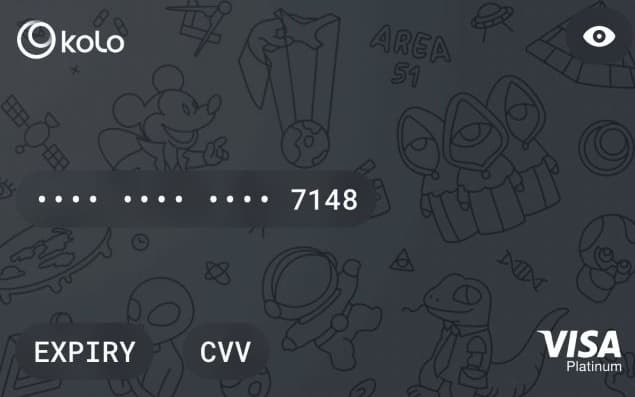
| Kolo | 5% | $0 | 0% | Prepaid | BTC cashback, diaspora-friendly |
| Tria Signature | 4.5% | $109 | 0% | Debit | Yield-linked rewards, 0% FX |
| Crypto.com Icy | 4% | CRO stake | 0% | Prepaid | Metal tiers, may block TN residents |
| ether.fi | 3% | $0 | 1% | Debit | Borrow-to-spend, avoids CGT in France/Italy |
| KAST | 2% | $0 | 0.5% | Prepaid | Lighter KYC, GLOBAL |
| RedotPay | - | $0-$100 | 1.2% | Prepaid | HK-based, GLOBAL coverage |
| xPlace | 0.5-2% | $0 | 1% | Debit | Tiered SOL cashback |
| Jupiter | 4-10% JupUSD | $0 | 1% | Debit | Solana ecosystem |
Based on our Tunisia research, Kolo at 5% BTC cashback and $0 annual fee delivers the highest free-tier return for diaspora members. KAST at 2% with lighter documentation requirements is the best option for Tunisian nationals who already hold crypto abroad.
None of these cards are currently legal for use within Tunisia. Tunisian nationals with European residency permits (carte de sejour in France, permesso di soggiorno in Italy) face significantly fewer barriers.
Best Card For Every Need in Tunisia
Top 4 Crypto Cards in Tunisia
Tunisia's TND 6,000 annual travel allocation and five-year prison penalty for crypto activity create a paradox: the country where stablecoin spending is most needed is the country where it is most restricted. These picks serve the 1.5+ million diaspora in France, Italy, Germany, and Belgium, plus the El Ghazala tech workforce earning EUR offshore.
Kolo at 5% BTC cashback delivers the highest free-tier return and converts diaspora remittance spending into BTC savings. KAST earns its spot because a Tunisian already operating through European residency documents can activate a prepaid spending rail with lighter documentation. ether.fi at 3% is particularly relevant for diaspora in France (30% flat tax) and Italy (26% CGT) - borrow-to-spend avoids triggering capital gains in these high-tax jurisdictions.
1. Kolo Card
Earn Bitcoin on Every Purchase: 5% BTC Cashback + Visa Platinum + 170+ Countries
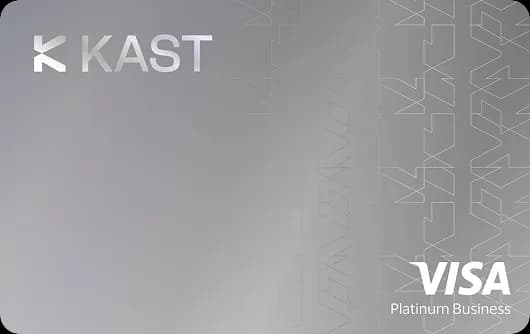
2. KAST K Card
Early Adopter Access: 2% Points + 4% $MOVE on Every Swipe
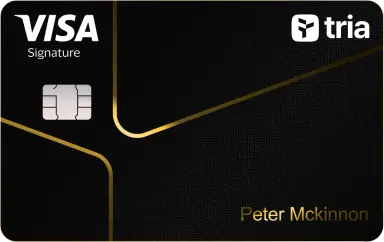
3. Tria Signature Card
High-Yield Mastery: 15% APY + Visa Signature Perks
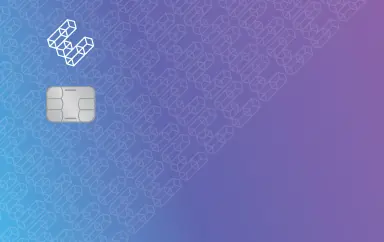
4. ether.fi Core Card
Zero Barriers: 3% Back on Every Purchase, No Stake Required
Crypto Card Regulation in Tunisia
Tunisia's crypto regulatory framework rests on a 2018 directive from the Central Bank of Tunisia (BCT, Banque Centrale de Tunisie, البنك المركزي التونسي) that criminalized unauthorized virtual currency activities. The directive was issued under the broader currency-control framework, which restricts capital flows and foreign exchange transactions.
The BCT is supported by the Financial Market Authority (CMF, Conseil du Marche Financier, مجلس سوق الأوراق المالية) for securities oversight and the Tunisian Financial Analysis Committee (CTAF) for AML/CFT compliance.
Penalties for crypto violations are severe: up to five years in prison and fines that may exceed 100,000 TND. The offense is treated as a breach of currency-control law, not a standalone crypto regulation.
However, the BCT operates a regulatory sandbox that allows small groups of fintechs to test blockchain-based payments, remittances, and traceability platforms in controlled environments. This signals institutional openness to blockchain technology even while crypto remains banned.
As of 2025, parliamentary committees are reportedly considering a draft bill that would decriminalize crypto possession and create a licensing regime for virtual-asset service providers (VASPs). The proposed framework is said to include conditional exchange licenses, mandatory on-shore KYC, and a progressive capital gains tax regime. No official timeline has been confirmed.
Industry observers have speculated about a framework by 2026 and pilot exchanges by 2027-2028, but these projections have not been published by the BCT or any Tunisian government body. Tunisia is also reportedly exploring a digital dinar (CBDC), though no formal pilot has been announced.
Tax Treatment of Card Rewards in Tunisia
Under the current ban, there is no formal cryptocurrency tax framework in Tunisia. Crypto profits are legally classified as proceeds of illegal activity and subject to confiscation rather than taxation. The Direction Generale des Impots (DGI, الإدارة العامة للضرائب) has not issued specific guidance on crypto taxation.
The draft legislation under consideration proposes a progressive capital gains tax regime that would apply once trading is legalized. Tunisia's existing capital gains tax rate on securities is 10% for individuals. Standard income tax rates are progressive, reaching up to 35% for the highest bracket. Corporate income tax is 15% (standard rate, reduced from 25% in recent reforms).
Example: Under the proposed framework, if you acquired BTC worth TND 1,000 and it appreciated to TND 3,000, spending TND 3,000 via a crypto card could trigger a TND 2,000 capital gain. At an estimated 10% rate, that would be approximately TND 200 in tax.
| Cashback Type | When Received | When Spent via Card | Total Tax Burden |
|---|---|---|---|
| BTC cashback | Unclear | Unclear | Uncertain |
| USDC cashback | Unclear | approx. 0% gain | Uncertain |
| Points | Unclear | Unclear | Uncertain |
USDC funding will minimize tax complexity once a framework exists. The fundamental issue is that crypto activity itself is currently illegal, making taxation secondary. Tunisian nationals living abroad should follow the tax rules of their country of residence. Tunisia has bilateral tax treaties with France, Italy, Germany, Belgium, and Canada.
How to Apply from Tunisia
Tunisian crypto card applications would require a Carte d'Identite Nationale (CIN, بطاقة التعريف الوطنية), the mandatory biometric identity card for all Tunisian citizens aged 18 and older, issued by the Ministry of Interior. Tunisia is also rolling out E-Houwiya (الهوية الإلكترونية), a national digital identity system designed to enable secure remote verification for banking and government services.
Alternative identification: Tunisian passport (جواز السفر التونسي, issued by the Ministry of Interior). Proof of address via utility bills from STEG (Societe Tunisienne de l'Electricite et du Gaz), SONEDE (Societe Nationale d'Exploitation et de Distribution des Eaux), or bank statements from BIAT, BNA, or Amen Bank.
The BCT published new KYC regulations in February 2025 enabling remote onboarding via E-Houwiya, improving access for unbanked populations. Flouci already uses eKYC with CIN photo verification and facial recognition for remote bank account opening. However, most offshore crypto card issuers may not accept Tunisian CIN cards for KYC. Tunisian nationals with European residency documents have significantly higher approval rates. Virtual cards are the most practical option.
Spending Tips for Tunisia
What Tunisian Banks Actually Cost You
Tunisia's banking sector is dominated by state-owned and legacy institutions with limited international card infrastructure.
| Bank | Debit FX Markup | Annual Card Fee | International Online | Cashback |
|---|---|---|---|---|
| BIAT (Banque Internationale Arabe) | 3-5% | TND 30-60 | Often declined | 0% |
| BNA (Banque Nationale Agricole) | 3-5% | TND 25-50 | Unreliable | 0% |
| Amen Bank | 3-5% | TND 30-60 | Inconsistent | 0% |
| STB (Societe Tunisienne de Banque) | 3-5% | TND 20-50 | Unreliable | 0% |
| Attijari Bank (Attijariwafa subsidiary) | 2-4% | TND 30-80 | Best in class | 0% |
The critical constraint is Tunisia's capital control regime. The BCT limits foreign currency allocations for individuals: the annual travel allowance (allocation touristique) is capped at TND 6,000 (approx. $1,900) for tourism and a separate allocation for business travel.
This means Tunisian bank cards are functionally useless for any serious international spending. A crypto card funded with offshore stablecoins bypasses this constraint entirely - which is precisely why crypto cards are most valuable (and most legally sensitive) in Tunisia.
Cost of Living by City
| City/Area | 1-Bed Rent/Month | Groceries/Month | Card-Eligible Spending |
|---|---|---|---|
| Tunis (Les Berges du Lac) | TND 800-1,500 | TND 400-800 | TND 600-1,200 |
| Tunis (La Marsa) | TND 700-1,400 | TND 400-700 | TND 500-1,000 |
| Tunis (Centre Ville) | TND 400-900 | TND 300-600 | TND 400-800 |
| Sousse | TND 350-700 | TND 250-500 | TND 300-700 |
| Sfax | TND 300-600 | TND 250-450 | TND 300-600 |
| Hammamet/Nabeul | TND 400-800 | TND 300-500 | TND 350-700 |
Tunisia has one of the lowest costs of living in the Mediterranean region. A professional in Tunis earning TND 2,000-5,000/month ($630-1,600) can live comfortably. Les Berges du Lac (business district) and La Marsa (upscale coastal) have the highest card acceptance and rent. Sidi Bou Said (the blue-and-white village) is primarily a tourist and expat area with excellent card infrastructure.
The Diaspora Remittance Corridor
According to our regional data, Tunisia receives approximately $2.3 billion in annual remittances (World Bank), primarily from France (700K+ Tunisians), Italy, Germany, Belgium, and Canada. Traditional remittance channels (La Poste Tunisienne, Western Union, RIA) charge 5-8% in fees. Stablecoin transfers via crypto cards theoretically reduce this cost dramatically, making the technology enormously relevant for Tunisia's 1.5+ million diaspora, even while domestic use remains illegal.
Card Selection for Tunisians Abroad
- Kolo (5% BTC cashback, $0, 0% FX): Highest free-tier rewards
- Tria Signature (4.5%, $109/yr, 0% FX): Yield-linked, breaks even at $202/month
- KAST (2%, $0, 0.5% FX): Best offshore prepaid for lighter KYC
- ether.fi (3%, $0, 1% FX): Borrow-to-spend, avoids CGT in high-tax residence countries
Break-Even Math (Nationals Abroad)
For Tunisian nationals living overseas. Tax depends on country of residence (France 30% flat, Italy 26%, Germany 0% after 1yr).
| Monthly Spend | Kolo (5%, free) | Tria Sig (4.5%, TND 343/yr) | ether.fi (3%, free) | KAST (2%, free) |
|---|---|---|---|---|
| TND 400 | TND 240/yr | -TND 127/yr | TND 144/yr | TND 96/yr |
| TND 600 | TND 360/yr | -TND 19/yr | TND 216/yr | TND 144/yr |
| TND 1,000 | TND 600/yr | TND 197/yr | TND 360/yr | TND 240/yr |
| TND 1,500 | TND 900/yr | TND 467/yr | TND 540/yr | TND 360/yr |
For Tunisians abroad, Kolo at 5% BTC cashback delivers the strongest free-tier return while converting spending into BTC savings that offset TND depreciation. Tria Signature breaks even at TND 635/month ($202/month), making it viable for tech professionals earning EUR offshore.
ether.fi at 3% is critical for diaspora in France (30% flat tax) and Italy (26% CGT) - borrow-to-spend avoids triggering capital gains. KAST serves the lighter-documentation market.
Spending Scenario: TND 600/month (approx. $190, Tunisian Professional Abroad)
| Funding Method | Annual Spend | Cashback (2%) | Est. Tax | Net Cashback |
|---|---|---|---|---|
| BTC (appreciated 200%) | TND 7,200 | TND 144 | Unclear | TND 144 |
| USDC (stablecoin) | TND 7,200 | TND 144 | approx. TND 0 | TND 144 |
TND 144/year (approx. $46) in cashback. For Tunisian diaspora members, the bigger savings come from avoiding traditional remittance fees (5-8% on $2.3B+ annual flows).
Online Shopping Under Capital Controls
Tunisia's capital controls make international online shopping through bank cards nearly impossible for many purchases. The annual FX allocation limits what you can spend abroad.
Key platforms: Amazon (ships to Tunisia, often via Amazon.fr, but bank card declines are common), AliExpress (ships directly, popular for electronics - payments frequently blocked by Tunisian banks), Jumia Tunisie (domestic, TND pricing, works with local cards), Tayara (Tunisian classifieds).
International subscriptions that Tunisian bank cards frequently cannot pay for: Netflix (TND 20-45/month, often requires foreign card), Spotify (blocked or inconsistent), Adobe Creative Cloud, Apple services, Google services. For diaspora members with crypto cards, these problems do not exist.
Cross-Border Spending
Tunisia's geographic position and cultural ties create natural spending corridors. France (EUR, primary diaspora link, TunisAir flies Paris, Lyon, Marseille, Toulouse, Nice), Italy (EUR, second largest diaspora, Palermo and Rome are the closest European cities), Algeria (DZD, shared border, family connections - but land border frequently closed since 2021), Libya (LYD, trade corridor via Ras Ajdir border crossing, complex due to Libyan instability), Turkey (TRY, growing tourism destination, Turkish Airlines hub connections).
The Tunis-Palermo ferry (8 hours) is a budget option for Tunisia-Italy travel. Every cross-border purchase through a bank card consumes the precious annual FX allocation and adds 3-5% markup.
Offshoring and the Francophone Tech Workforce
Tunisia has built a competitive IT offshoring sector serving French, Belgian, and Swiss companies. El Ghazala Technopark (Tunis) houses 200+ IT companies. Tunis Telecom City and the proposed Smart Tunisia initiative target 50,000 tech jobs.
Companies like Sofrecom (Orange subsidiary), Linedata, and Vermeg have major Tunisian operations. The francophone advantage (French is the business and university language) and competitive developer salaries (TND 2,500-5,000/month for mid-level engineers vs EUR 3,000-5,000 in France) make Tunisia attractive for nearshoring.
Tech professionals earning in EUR or receiving offshore payments are the most natural crypto card users in Tunisia - they have the technical literacy, the foreign currency exposure, and the motivation to bypass capital controls and banking limitations.
Tourism: Recovering and Growing
Tunisia attracted 9+ million tourists in 2024 (Ministry of Tourism), driven by beach resorts in Hammamet, Djerba, Sousse, and Monastir, plus cultural tourism in Carthage, Sidi Bou Said, Kairouan, and Tozeur (Saharan oasis).
Tunisia's ultra-competitive pricing (all-inclusive beach resorts from EUR 30-60/night) attracts budget-conscious European tourists, primarily from France, Germany, UK, and Eastern Europe. Hotels, restaurants, and tourist shops in resort areas accept Visa/Mastercard. For visiting tourists, a zero-FX crypto card saves 3-5% on every dinar transaction.
Local Payment Infrastructure
Tunisia's digital payment ecosystem is growing rapidly. Flouci (developed by Kaoun) pioneered remote eKYC bank account opening using CIN photos and facial recognition. D17 is a popular digital wallet for peer-to-peer transfers and bill payments. La Poste Tunisienne serves millions through postal banking and money orders.
Card acceptance is strongest in Tunis (Berges du Lac, La Marsa, Sidi Bou Said), Sousse, Hammamet, Djerba, and other tourist areas. Hotels, malls (Tunisia Mall, Lac Palace), supermarkets (Carrefour, Monoprix, Geant), and restaurants in tourist zones accept Visa and Mastercard. Cash remains dominant in medinas, local markets, and rural areas. Apple Pay and Google Pay are not officially supported in Tunisia.
The Dinar and Capital Controls
The Tunisian dinar operates under strict capital controls managed by the BCT. The TND/USD rate has deteriorated steadily: 1.7 in 2015, 2.7 in 2019, 3.1 in 2022, and 3.1-3.3 in 2025-2026. Against the euro, the depreciation is similar: 2.0 in 2015 to approximately 3.4 in 2026. This gradual erosion (45%+ against USD over a decade) destroys savings held in dinar. Bank deposit rates of 6-8% do not compensate for 8-12% annual depreciation.
Capital controls make it nearly impossible for ordinary Tunisians to hold foreign currency through traditional banking channels. The travel allocation (allocation touristique) is capped, business allocations require extensive documentation, and any attempt to move more than trivial amounts of foreign currency triggers BCT scrutiny. This creates enormous demand for stablecoins as an unofficial savings vehicle - holding USDC or USDT preserves purchasing power that the banking system cannot.
Youth Unemployment and the Crypto Generation
Tunisia's unemployment rate hovers around 15-16% overall, but youth unemployment exceeds 35% (among the highest in MENA).
The paradox: Tunisia has one of the most educated populations in Africa (250,000+ university students, 60%+ of graduates are women, strong engineering and IT programs at ENIT, INSAT, and Sup'Com) but insufficient formal employment to absorb them. Many graduates turn to freelancing (Upwork, Fiverr, Freelancer.com), remote work for European companies, or entrepreneurship.
This educated-but-underemployed generation is the core crypto user demographic in Tunisia. They are technically literate, frustrated with the formal banking system's limitations, and motivated to earn and save in foreign currency. Receiving freelance payments in crypto and spending through a crypto card is not a luxury for this group - it is a practical solution to capital controls, banking limitations, and dinar depreciation.
The Olive Oil Economy
Tunisia is one of the world's top 5 olive oil producers (350,000+ tonnes in good years, 80+ million olive trees). The olive oil harvest (November-February) drives rural cash flows and export revenue.
Tunisia also exports dates (Deglet Nour from Tozeur and Nefta), phosphates (CPG, the national phosphate company, is the 5th largest producer globally), and textiles (for European fast fashion brands). These export industries bring EUR and USD into the economy, creating a professional class with foreign currency exposure who benefit from stablecoin-based spending.
Supported Exchanges & Wallets in Tunisia
No crypto exchanges operate legally inside Tunisia. Binance P2P (TND pairs) is the primary on-ramp despite operating informally. Banks actively block suspected crypto-related transactions.
The BCT's regulatory sandbox tests blockchain-based remittance and traceability platforms in controlled environments, but retail crypto remains prohibited. For Tunisian residents, acquiring crypto requires P2P contacts or international intermediaries, making crypto cards primarily viable for those with existing offshore holdings or diaspora members.
For the 1.5+ million Tunisian nationals living abroad (primarily France, Italy, Germany), access is straightforward with foreign documentation. Kolo leads with 5% BTC cashback at $0 annual fee and 0% FX - converting diaspora spending into BTC savings that offset TND depreciation. Tria Signature at 4.5% yield-linked rewards and 0% FX suits tech professionals earning EUR.
Crypto.com provides tiered rewards with Icy at 4% adding lounge access at Tunis-Carthage International Airport (TUN) for diaspora visiting home. ether.fi with the Core Card offers borrow-to-spend at 3%: stake ETH, borrow against it, spend without triggering capital gains in France (30% flat) or Italy (26% CGT).
KAST at 2% with $0 annual fee and 0.5% FX is the prepaid card that best fits Tunisians already operating outside the domestic banking perimeter with lighter documentation requirements.
RedotPay offers Virtual (free, instant) and Physical ($100, ATM). xPlace provides tiered SOL-based rewards. Jupiter serves the Solana ecosystem. Tunisia's BCT regulatory sandbox and parliamentary draft bill represent North Africa's most structured path from prohibition to regulated legalization. The 2026-2028 timeline positions Tunisia as a potential early mover in formalized MENA crypto regulation.
Written by SpendNode Editorial
Frequently Asked Questions
Is cryptocurrency legal in Tunisia?
No. The Central Bank of Tunisia banned all crypto activities in 2018 under currency-control law. Penalties include up to 5 years in prison and fines exceeding 100,000 TND. However, parliamentary committees are considering a draft bill to decriminalize possession and create a licensing regime, with a framework expected by 2026.
How is crypto taxed in Tunisia?
Currently, crypto profits are considered proceeds of illegal activity and subject to confiscation, not taxation. The draft legislation includes a progressive capital gains tax regime. Tunisian nationals living abroad should follow their country of residence's tax rules - France 30% flat tax, Italy 26% CGT, Germany 0% after 1-year hold.
Which crypto cards work for Tunisians abroad?
Tunisian diaspora with European residency can access Kolo (5% BTC cashback, $0, 0% FX), Tria Signature (4.5%, $109/yr, 0% FX), KAST (2%, $0, 0.5% FX), and ether.fi (3%, borrow-to-spend to avoid CGT in France/Italy). No crypto cards are legal for domestic use in Tunisia.
What is Tunisia's fintech landscape?
Tunisia has a growing fintech ecosystem led by Flouci (remote bank account opening via eKYC), D17 (digital wallet), and La Poste Tunisienne (postal banking). The BCT published new KYC regulations in February 2025 enabling remote onboarding. E-Houwiya is the national digital identity system being rolled out.
Other Countries
View all 108 countries →


Recent Updates to Best Crypto Cards in Tunisia
- Removed COCA (unavailable) and MetaMask (unavailable) from topCardSlugs and all references. Added Kolo (5% BTC, $0, 0% FX) and Tria Signature (4.5%, $109, 0% FX) as top picks for diaspora
- Fixed KAST from 'up to 12%' to 2% and FX 0.5-1.75% to 0.5%. Fixed ether.fi FX 0% to 1% and card type Credit to Debit. Fixed Crypto.com 5% to Icy 4%
- Break-even table rebuilt with Kolo, Tria Signature, ether.fi, and KAST. Tria fee properly converted to TND 343 ($109) showing correct break-even at TND 635/month. ether.fi CGT avoidance angle for France/Italy diaspora emphasized
- Rationale rewritten: removed COCA savings narrative and Ledger CL self-custody (both unavailable). Added Kolo BTC savings angle and ether.fi CGT avoidance for high-tax diaspora countries