


Best Crypto Cards in Tanzania (2026)
Compare 30+ crypto cards accessible from Tanzania. Kolo (5% BTC, free), Tria Signature (4.5%, self-custody), and ether.fi (3%, borrow-to-spend at 30% CGT) lead after the landmark Yellow Card court ruling.

Verified for Tanzania
31 crypto cards available
Local currency: TZS
Tanzania is East Africa's mobile money superpower. Over 60% of adults actively use mobile money, with Vodacom M-Pesa, Airtel Money, and Halopesa processing over $80 billion in transactions annually - one of the highest mobile money volumes per capita on the continent.
This mobile-first financial revolution means card payments play a secondary role domestically, but for international purchases, subscriptions, and cross-border e-commerce, Visa/Mastercard rails remain essential and locally undersupplied.
Cryptocurrency's legal status was transformed by a landmark December 2024 High Court ruling: in Yellow Card Tanzania Limited v. Nyamwero Michael Nyamwero, the court declared that crypto trading cannot be considered illegal since participants pay taxes under existing tax laws (Income Tax Act, Finance Act 2024). This precedent, combined with the Finance Act 2024's formal 3% withholding tax on crypto exchange transactions, effectively legitimized the industry.
Tanzania is now one of the most legally progressive crypto environments in East Africa.
The Tanzanian shilling (TZS) has depreciated from approximately 1,600 TZS/USD in 2015 to 2,600+ TZS/USD, a 38%+ loss. Holding stablecoins and spending through a crypto card preserves purchasing power that bank deposits cannot match.
| Card | Max Cashback | Annual Fee | FX Fee | Card Type | Best For |
|---|---|---|---|---|---|
| Kolo | 5% BTC | $0 | 0% | Prepaid | Highest free cashback, BTC rewards |
| Tria Signature | 4.5% | $109/yr | 0% | Debit | Self-custody, zero FX |
| ether.fi | 3% | $0 | 1% | Credit | Borrow-to-spend at 30% CGT |
| KAST | 2% | $0 | 0.5% | Prepaid | M-Pesa-funded international spending |
| RedotPay | - | $0-$100 | 1.2% | Prepaid | Stablecoin spending |
| xPlace | 0.5-2% | $0-$5,000 | 1% | Debit | Self-custody, SOL ecosystem |
Kolo leads with 5% BTC cashback and 0% FX on a free card, giving Tanzanians a dollar-denominated spending rail that reliably clears international merchants where CRDB and NMB Visa cards fail 30-40% of the time.
KAST at 2% free is the simplest bridge from M-Pesa or Binance P2P into card-only international spend. ether.fi Core at 3% matters here specifically because Tanzania's 30% CGT rate makes borrow-to-spend a genuine tax strategy. Card POS acceptance is strongest in Dar es Salaam, Arusha, and Zanzibar's tourist corridor.
Best Card For Every Need in Tanzania
Top 4 Crypto Cards in Tanzania
Tanzania's December 2024 Yellow Card court ruling (Commercial Case No. 12171 of 2024) created East Africa's most legally certain crypto environment, but the real driver is that CRDB and NMB Visa cards get declined 30-40% of the time on international transactions, making any global Visa/Mastercard an immediate upgrade.
Kolo leads with 5% BTC cashback and 0% FX on a free card, turning M-Pesa-funded crypto balances into reliable international spending while accumulating BTC against the TZS's 38% decade-long depreciation.
Tria Signature adds self-custody at 4.5% with 0% FX for $109/year, keeping keys outside exchange risk in a market without formal exchange licensing. At Tanzania's 30% capital gains rate, ether.fi Core's borrow-to-spend model genuinely avoids taxable disposals. KAST at 2% free stays as the simplest bridge from Binance P2P into AliExpress orders and foreign subscriptions.
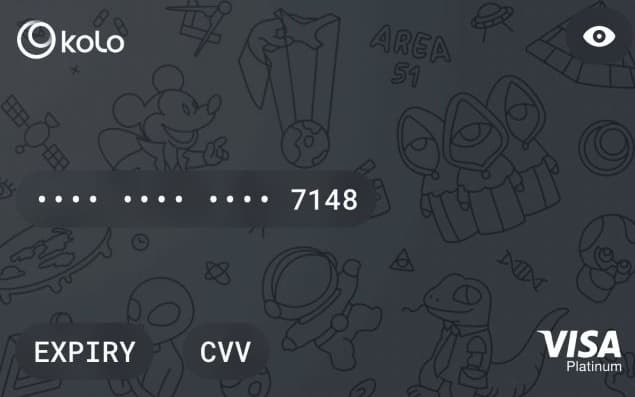
1. Kolo Card
Earn Bitcoin on Every Purchase: 5% BTC Cashback + Visa Platinum + 170+ Countries
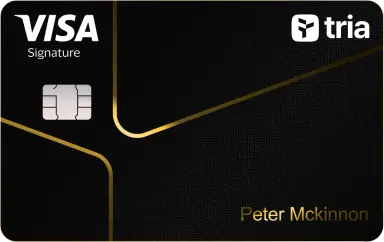
2. Tria Signature Card
High-Yield Mastery: 15% APY + Visa Signature Perks

3. ether.fi Core Card
Zero Barriers: 3% Back on Every Purchase, No Stake Required
4. KAST K Card
Early Adopter Access: 2% Points + 4% $MOVE on Every Swipe
Crypto Card Regulation in Tanzania
Tanzania's crypto regulatory picture is defined by the December 2024 High Court ruling that transformed the legal environment. The Bank of Tanzania (BOT, Benki Kuu ya Tanzania) is the sole monetary authority and issued a public notice in November 2019 warning against virtual currencies, stating they are contrary to existing foreign exchange regulations and that the Tanzanian shilling is the only legal tender.
However, the High Court's ruling in Yellow Card Tanzania Limited v. Nyamwero Michael Nyamwero established that since digital asset participants pay taxes under the Income Tax Act and the Finance Act, their transactions cannot be declared illegal. This precedent effectively legitimized crypto trading despite the absence of specific legislation.
The Finance Act 2024, effective July 1, 2024, introduced a 3% withholding tax on payments by digital asset exchange platforms, formally acknowledging the existence of crypto transactions within the tax system. The Tanzania Financial Intelligence Unit (FIU) monitors transactions under the Anti-Money Laundering Act 2006.
The BOT completed a comprehensive CBDC study in August 2025 and is now awaiting a government directive on potential implementation, according to BOT Governor Emmanuel Tutuba. Tanzania is moving toward regulation rather than prohibition. The Yellow Card court precedent and the Finance Act's tax provisions suggest formal legalization is a matter of when, not if.
Tax Treatment of Card Rewards in Tanzania
Tanzania's Finance Act 2024 established the first formal crypto tax framework in East Africa. The Act introduced a 3% withholding tax on payments made by digital asset exchange platforms to residents for the exchange or transfer of digital assets. The definition covers cryptocurrencies, tokens, and NFTs broadly. The Tanzania Revenue Authority (TRA, Mamlaka ya Mapato Tanzania) administers these taxes.
Capital gains from cryptocurrency sales are taxable under existing income tax provisions. Business income from crypto activities falls under standard income tax rates (progressive, up to 30% for individuals, 30% for corporations).
Example: You acquired BTC worth TZS 500,000 and it appreciated to TZS 1,500,000. If you spent TZS 1,500,000 via a crypto card, the TZS 1,000,000 gain would attract capital gains tax = approximately TZS 300,000 in tax (at 30% rate). The 3% withholding tax applies separately on exchange platform transactions.
| Cashback Type | When Received | When Spent via Card | Total Tax Burden |
|---|---|---|---|
| BTC cashback | Up to 30% | Up to 30% on gains | Varies |
| USDC cashback | Up to 30% on FMV | approx. 0% gain | Up to 30% |
| Points | Unclear | Unclear | Uncertain |
USDC funding minimizes the tax burden on the disposal side. The 3% withholding tax on exchange transactions is a separate consideration. Revenue from crypto taxes contributed approximately 2% of total tax revenue in fiscal year 2024-2025, indicating growing enforcement. Tanzanian tax residents must file annual returns with the TRA.
How to Apply from Tanzania
Tanzanian crypto card applications would require a Kitambulisho cha Taifa (National Identity Card/NIN), the mandatory biometric ID issued by the National Identification Authority (NIDA, Mamlaka ya Vitambulisho vya Taifa). The NIN is a unique 20-digit number required for all citizens over 18 and is increasingly integrated with financial service APIs for real-time verification. NIDA is also rolling out a Mobile Digital National Identification (m-ID) to fast-track issuance.
Alternative identification: Tanzanian passport (Pasipoti ya Tanzania, issued by the Immigration Services Department). Proof of address via utility bills from TANESCO (Tanzania Electric Supply Company), Dar es Salaam Water and Sewerage Corporation (DAWASCO), or bank statements from CRDB Bank, NMB Bank, or Stanbic Bank Tanzania.
Most offshore crypto card issuers may not directly accept Tanzanian NIDA cards for KYC. Virtual cards loaded to Apple Pay or Google Pay are the most practical option, though NFC terminal availability is limited outside major urban centers.
Spending Tips for Tanzania
Banking System: Big Four and Their Limits
Tanzania's banking sector is more developed than many East African peers but still fails to deliver reliable international card spending. CRDB Bank (largest by assets and branch network, 250+ branches) issues Visa debit cards that work domestically but international online transactions face 30-40% decline rates from merchant-side country blocks and 3DS failures. International fees: 2.5-3.5% FX markup plus TZS 5,000-10,000 per transaction.
NMB Bank (National Microfinance Bank, second largest, 200+ branches) focuses on microfinance and SME lending with limited international card capability.
Stanbic Bank Tanzania (Standard Bank subsidiary) has the best international connectivity but requires minimum balances of TZS 2,000,000+ for premium cards. Exim Bank Tanzania and NCBA Bank Tanzania round out the tier-one institutions.
The core problem: even a CRDB or Stanbic Visa card cannot reliably process payments on Amazon, Netflix, Spotify, or Steam. 3DS authentication failures, merchant-side Tanzania blocks, and Bank of Tanzania prudential limits on international card spending (typically TZS 5,000,000/month cap) mean that a Dar es Salaam professional needs an alternative. A crypto card registered as a global Visa/Mastercard bypasses all of these restrictions.
The Shilling Story: Steady Depreciation
The TZS has followed a less dramatic but persistent depreciation trajectory compared to neighbors:
- 2015: approx. 1,600 TZS/USD
- 2018: approx. 2,280 TZS/USD
- 2021: approx. 2,320 TZS/USD (BOT intervention kept it relatively stable)
- 2024-2025: 2,600-2,700 TZS/USD
A 38%+ loss over a decade, less dramatic than Kenya (35%) but still meaningful for savings. A CRDB bank deposit paying 5-7% annual interest in TZS loses net value against the dollar. USDC holdings on a crypto card appreciate 3-5% annually in TZS terms just from the depreciation hedge, before cashback is added.
Card Selection for Tanzanians
- Highest free cashback: Kolo (5% BTC, $0, 0% FX) - BTC accumulation against TZS depreciation
- Self-custody with high rewards: Tria Signature (4.5%, $109/yr, 0% FX) - keys in your wallet
- Tax optimization at 30% CGT: ether.fi Core (3%, $0, 1% FX) - borrow against staked ETH, defer capital gains
- M-Pesa-funded international spending: KAST (2% reward guide, $0, 0.5% FX) - simplest bridge from P2P to card
- Stablecoin spending: RedotPay (free virtual, 1.2% FX) - stablecoin-native
Kolo vs Tria vs ether.fi vs KAST: Tanzania Math
USDC funding eliminates disposal tax (up to 30% on appreciated crypto). Yellow Card court ruling established trading legality. Kolo pays in BTC ($5/txn cap, $200/mo cashback cap).
| Monthly Spend | KAST (2%, free) | Kolo (5%, free) | Tria Sig (4.5%, $109/yr) | ether.fi (3%, free) |
|---|---|---|---|---|
| TZS 300,000 ($115) | TZS 72,000/yr | TZS 180,000/yr | TZS 162,000/yr minus $109 fee | TZS 108,000/yr |
| TZS 500,000 ($192) | TZS 120,000/yr | TZS 300,000/yr | TZS 270,000/yr minus $109 fee | TZS 180,000/yr |
| TZS 800,000 ($308) | TZS 192,000/yr | TZS 480,000/yr | TZS 432,000/yr minus $109 fee | TZS 288,000/yr |
| TZS 1,500,000 ($577) | TZS 360,000/yr | TZS 900,000/yr | TZS 810,000/yr minus $109 fee | TZS 540,000/yr |
Kolo leads at every spending level with 5% BTC cashback and no annual fee. Tria Signature breaks even around TZS 525,000/month ($202).
ether.fi Core earns its place through tax optimization - at 30% CGT, borrowing against ETH instead of selling saves TZS 300,000+ annually on a typical crypto holder's disposals. KAST is the best fit for turning M-Pesa-funded P2P balances into a card that reliably clears foreign merchants.
Cost of Living by Area
Masaki/Oyster Bay (Dar es Salaam's upscale peninsula): Rent USD 800-3,000/month for apartments. Restaurants USD 10-35/meal. Home to embassies, international organizations, and the expat community. Slipway shopping center, Sea Cliff Village, and restaurants along Toure Drive all accept Visa/Mastercard. Best area for daily crypto card spending.
Mikocheni/Kinondoni (upper-middle-class Dar): Rent USD 300-800/month. Growing card acceptance at malls (Mlimani City, Quality Centre), Shoprite, Game Stores, and formal restaurants. The Mlimani City food court is one of the few places where even budget dining accepts cards.
Kariakoo/Ilala (downtown Dar): Rent USD 100-300/month. Kariakoo Market is East Africa's largest open-air market - entirely cash and mobile money. No realistic card spending use case except online purchases.
Arusha (safari capital): Rent USD 200-600/month. Tourism-driven card acceptance at hotels (Arusha Coffee Lodge, Mount Meru, Four Points), safari operators (most accept cards for bookings), and restaurants on Boma Road and at the Arusha Hotel. Significant expat and NGO community. Card acceptance better than Dar proportionally, driven by tourism spend.
Zanzibar (Stone Town/North Coast): Rent USD 300-1,200/month (highly variable by season). The tourist corridor from Stone Town through Nungwi and Kendwa to Paje has excellent card acceptance at hotels, dive shops, and restaurants. Stone Town's Forodhani Gardens food market: cash only. Zanzibar's dual economy - tourist-card-friendly vs local-cash-only - makes a crypto card essential for visitors but limited for residents outside the tourist zone.
Dodoma (political capital): Government workers, limited commercial infrastructure. Some card acceptance at hotels. Primarily cash and mobile money.
The Safari and Tourism Economy
Tanzania's tourism industry generates USD 2.5+ billion annually. Serengeti National Park, Ngorongoro Crater, Mount Kilimanjaro, and Zanzibar's beaches attract 1.5+ million international visitors per year. Safari packages range from USD 200-500/person/day for budget lodges to USD 1,000-3,000/day for luxury camps (Singita, andBeyond, Nomad Tanzania).
For Tanzanian safari operators, guides, and hospitality workers who receive tips and payments in USD or EUR, a crypto card provides a way to preserve that foreign currency value rather than converting to TZS through banks at unfavorable rates. A guide receiving a USD 100 tip can buy USDC on Binance P2P, load a crypto card, and spend at Masaki restaurants in TZS at the market rate with 2% cashback - instead of losing 3-5% at a bank or forex bureau.
Zanzibar's semi-autonomous status and growing fintech ambitions (the Zanzibar e-Government Agency has explored blockchain for land registration) create additional crypto-friendly dynamics. The island's heavy tourism economy means USD circulates freely, and merchants comfortable with foreign currencies are natural early adopters of crypto card acceptance.
Online Shopping and Subscriptions
The same frustration as across East Africa: CRDB and NMB Visa cards get declined on international platforms. Netflix (not officially available in Tanzania but accessible via VPN + international card), Spotify, Amazon, AliExpress, Steam, App Store, Google Play, educational platforms (Coursera, edX), and software subscriptions (Adobe, Canva) all require international card rails.
Before crypto cards, Tanzanians used gift card resellers at 10-20% markup or relied on diaspora family to make purchases.
The Diaspora and Remittance Corridors
Tanzania receives approximately USD 700 million to USD 1 billion in annual remittances:
UK (largest Tanzanian diaspora in Europe, concentrated in London, Birmingham, Manchester): Historical colonial connection. Remittances via M-Pesa International, Mukuru, or Western Union at 4-8% fees.
US (New York, Atlanta, Dallas, Washington DC): Growing community, particularly in healthcare and academic sectors. Canada (Toronto, Calgary): Mining sector connection (Tanzania's gold mines attract Canadian investment and workers).
South Africa (Johannesburg, Durban): Business and education corridor. EAC free movement facilitates travel. Gulf States (UAE, Oman, Saudi Arabia): Labor migration, particularly in construction and domestic work.
Kenya (Nairobi): The closest and most active corridor. EAC integration means Kenyans and Tanzanians cross frequently for business and trade. The Namanga border crossing sees heavy daily traffic.
For a family receiving USD 300/month, switching from Western Union (6-10% fee) to a USDC-loaded crypto card means saving USD 18-30 per transfer, or USD 216-360 annually.
Cross-Border EAC Spending
Tanzania's membership in the East African Community (EAC) means free movement with Kenya, Uganda, Rwanda, Burundi, DRC, and South Sudan. Common spending corridors:
Kenya: Nairobi shopping (Westgate, Two Rivers, Village Market), business meetings, medical tourism (Nairobi's hospitals are the region's best). A crypto card works at Kenyan merchants without needing to carry KES.
Uganda: Kampala for education (Makerere University draws Tanzanian students) and business. Rwanda: Kigali's growing conference economy and gorilla trekking tourism.
Dubai: The most common non-African destination for middle-class Tanzanians. Shopping (Dubai Mall, Dragon Mart), medical tourism, and trade sourcing. A crypto card eliminates TZS-to-AED conversion chains.
Local Payment Infrastructure
Dar es Salaam has the strongest card acceptance: malls (Mlimani City, Quality Centre, Shoppers Plaza), supermarkets (Shoprite, Game Stores), hotels (Serena, Hyatt Regency, Slipway), and restaurants in Masaki, Oyster Bay, and the Slipway complex. Arusha and Zanzibar have strong tourism-driven card acceptance.
Outside these three centers, mobile money (M-Pesa, Airtel Money, Halopesa) is the only practical digital payment. Apple Pay and Google Pay are not officially supported in Tanzania but NFC-enabled crypto cards can tap at compatible terminals.
Supported Exchanges & Wallets in Tanzania
Our exchange section for Tanzania covers eight issuers serving through global coverage, with the Yellow Card court ruling providing unprecedented legal clarity for their use.
Kolo delivers 5% BTC cashback with zero FX and zero annual fee, making it the strongest free card for Tanzanians who need reliable international spending.
Tria Signature adds self-custody at 4.5% with 0% FX for $109/year.
Crypto.com provides CRO-staking metal tiers from Midnight Blue (0% cashback, free) through Icy (4%) with lounge access at Julius Nyerere International (DAR) and Kilimanjaro International (JRO).
KAST is the best fit for turning Binance P2P purchases into international spending. $0 annual fee, 2% cashback. For a Kariakoo trader who buys USDT on Binance P2P and needs to pay AliExpress suppliers, KAST converts that USDT into a usable Visa without forcing an exchange-tier or lounge-driven rewards workflow.
RedotPay fits the stablecoin-centric user with Virtual (free) and Physical ($100) variants at 1.2% FX.
ether.fi Core is particularly relevant for Tanzanian crypto holders given the 30% capital gains rate. Borrowing against staked ETH at 3% cashback and 1% FX rather than selling avoids triggering a taxable disposal - a genuine tax efficiency strategy. xPlace provides self-custody with SOL-based rewards from 0.5% to 2%.
On-Ramps: Yellow Card and Binance P2P
Yellow Card - the company that won the landmark court case establishing crypto legality - is the most legally established on-ramp in Tanzania. Its app supports TZS deposits via M-Pesa and bank transfer, with USDT and USDC available for card loading. The court ruling means Yellow Card operates with more legal certainty than any crypto business in East Africa.
Binance P2P handles the largest volume, with TZS pairs and M-Pesa as the primary payment method. Typical markup: 2-4% above spot. The flow: buy USDT with M-Pesa on Binance P2P, withdraw to crypto card wallet, spend. Total cost from TZS to card spending is 2-4% (P2P markup) minus 2-3% (card cashback) = net 0-2%. Compare this to a CRDB international card transaction at 3-5% in fees with no cashback.
Banks have historically blocked suspected crypto-related bank transfers, but the Yellow Card ruling and Finance Act 2024's formal tax acknowledgment are shifting this. CRDB and NMB have not issued updated policies, but enforcement of blocks has softened since the court decision.
The practical reality: a Dar es Salaam professional buying USDT via M-Pesa on Binance P2P at a 3% markup, then spending through Kolo at 5% BTC cashback and 0% FX, nets positive on the round trip. A CRDB Visa card doing the same international transaction charges 3-5% FX with no cashback and a 30-40% chance of outright decline. The Yellow Card court ruling removed the legal uncertainty; the Finance Act 2024 formalized the tax. What remains is execution.
Written by SpendNode Editorial
Frequently Asked Questions
Is cryptocurrency legal in Tanzania?
The legal status is evolving. The Bank of Tanzania warned against crypto in 2019, but the December 2024 High Court ruling (Yellow Card Tanzania v. Nyamwero, Commercial Case No. 12171 of 2024) stated that crypto trading cannot be declared illegal since participants pay taxes under tax laws. The BOT completed a CBDC study in August 2025 and is awaiting government directive.
How is crypto taxed in Tanzania?
The Finance Act 2024 introduced a 3% withholding tax on payments made by digital asset exchange platforms. Capital gains from crypto sales are taxable at up to 30%. USDC funding minimizes disposal tax.
Which crypto cards work in Tanzania?
Kolo (5% BTC cashback, $0, 0% FX), Tria Signature (4.5%, $109/yr, 0% FX), KAST (2%, $0, 0.5% FX), and ether.fi Core (3%, $0, 1% FX) all serve Tanzania through GLOBAL coverage. Mobile money (M-Pesa) is the primary P2P on-ramp to fund card balances.
Can I use mobile money with crypto cards in Tanzania?
Not directly. Buy USDT via Binance P2P using M-Pesa, then load a crypto card. Visa/Mastercard acceptance is growing at urban merchants, hotels, and supermarkets in Dar es Salaam, Arusha, and Zanzibar.
Other Countries
View all 108 countries →


Recent Updates to Best Crypto Cards in Tanzania
- Removed COCA (unavailable in Tanzania), Ledger CL (US/EEA/UK/LATAM only), and RedotPay Solana (0% rewards) from recommendations and topCardSlugs
- Added Kolo (5% BTC, $0, 0% FX) and Tria Signature (4.5%, $109/yr, 0% FX). Corrected ether.fi FX from 0% to 1%, KAST FX from 0.5-1.75% to 0.5%, Crypto.com from '5%' to Icy 4%, Midnight Blue from '1%' to 0%
- Updated BOT CBDC status: study completed August 2025, awaiting government directive. Added formal case citation for Yellow Card ruling (Commercial Case No. 12171 of 2024)
- Rebuilt break-even table with 4 cards (KAST/Kolo/Tria/ether.fi) at Tanzanian spending levels in TZS