


Best Crypto Cards in Rwanda (2026)
Compare 30+ crypto cards accessible from Rwanda. Kolo (5% BTC, free), Tria Signature (4.5%, self-custody), and ether.fi (3%, borrow-to-spend at 10-15% CGT) lead. CMA draft Virtual Assets Law (March 2025) creates licensing pathway.
Verified for Rwanda
31 crypto cards available
Local currency: RWF
Often called "Africa's Singapore," Rwanda has built one of the continent's most advanced digital infrastructure systems, with 66% of adults holding mobile money wallets and 223+ government services digitized through the Irembo platform. Cryptocurrency was effectively prohibited by the National Bank of Rwanda (NBR) in 2018, but the country is now making a deliberate shift toward regulation.
In 2025, the Capital Markets Authority (CMA) published a draft Virtual Assets Law requiring all VASPs to obtain licenses or face prosecution, while the NBR is developing a Central Bank Digital Currency (CBDC) targeted for 2026.
We checked each issuer's availableCountries to confirm which ones include Rwanda. Kolo, Tria, KAST, ether.fi, and Crypto.com all serve Rwandan applicants. Rwanda's digital-first economy and growing card acceptance in Kigali make crypto cards more practical here than in many other African markets.
Visa and Mastercard are accepted at hotels, malls, restaurants, and through the Irembo platform. However, offshore issuers may not yet accept Rwandan KYC documents, and the regulatory environment is still evolving.
| Card | Max Cashback | Annual Fee | FX Fee | Card Type | Practical Access |
|---|---|---|---|---|---|
| Kolo | 5% BTC | $0 | 0% | Prepaid | Highest free cashback, GLOBAL |
| Tria Signature | 4.5% | $109/yr | 0% | Debit | Self-custody, zero FX |
| ether.fi | 3% | $0 | 1% | Credit | Borrow-to-spend at 10-15% CGT |
| KAST | 2% | $0 | 0.5% | Prepaid | Kigali card spend, fast KYC |
| RedotPay | - | $0-$100 | 1.2% | Prepaid | Stablecoin-native, remittances |
| xPlace | 0.5-2% | $0-$5,000 | 1% | Debit | Self-custody, SOL ecosystem |
Kolo leads with 5% BTC through one of the stronger cards with cashback and 0% FX on a free card, giving Kigali users BTC accumulation on every formal-merchant purchase. KAST at 2% free is the simplest bridge from mobile money or exchange balances into hotel and mall card spend. Kigali's growing card infrastructure makes Rwanda one of the more practical African markets for crypto card usage.
Best Card For Every Need in Rwanda
Top 4 Crypto Cards in Rwanda
Rwanda's 66% mobile money penetration and 223+ digitized government services through Irembo make it Africa's most digital-ready market for crypto cards - the jump from Irembo to a self-custody wallet is smaller here than anywhere else on the continent. Kolo leads with 5% BTC cashback and 0% FX on a free card, matching Rwanda's spending levels where a $4,000 CRO stake is unrealistic but BTC accumulation on everyday Kigali purchases delivers real value against the RWF's 48% six-year depreciation.
Tria Signature adds self-custody at 4.5% with 0% FX for $109/year, keeping keys outside exchange risk while the CMA licensing framework remains pending. KAST fits Kigali's tech scene at Norrsken Hub and CMU-Africa because it lets users move between mobile money and formal card-accepting merchants without a premium tier. At 10-15% capital gains tax, ether.fi Core's borrow-to-spend at 3% avoids triggering taxable disposals on appreciated ETH.
1. Kolo Card
Earn Bitcoin on Every Purchase: 5% BTC Cashback + Visa Platinum + 170+ Countries
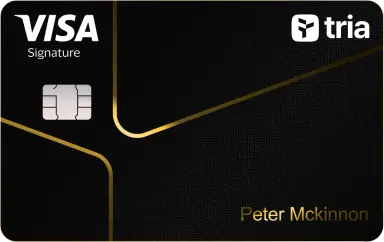
2. Tria Signature Card
High-Yield Mastery: 15% APY + Visa Signature Perks
3. ether.fi Core Card
Zero Barriers: 3% Back on Every Purchase, No Stake Required
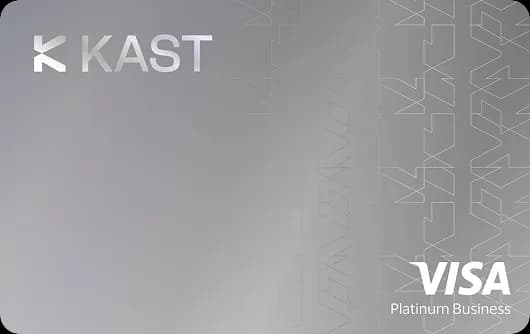
4. KAST K Card
Early Adopter Access: 2% Points + 4% $MOVE on Every Swipe
Crypto Card Regulation in Rwanda
Rwanda's crypto regulatory framework is undergoing a significant transformation led by two key institutions: the Capital Markets Authority (CMA, Ikigo cy'Igihugu Gishinzwe Isoko ry'Imari) and the National Bank of Rwanda (NBR, Banki Nkuru y'u Rwanda). In 2018, the NBR issued a public warning declaring cryptocurrency transactions risky and unregulated, effectively discouraging all crypto activity.
The turning point came on March 6, 2025, when the CMA published a comprehensive draft Virtual Assets Law and opened public consultation. The draft places all virtual assets and VASPs under CMA regulatory oversight and establishes licensing requirements.
Key provisions include: cryptocurrencies are explicitly not legal tender, crypto mining activities and crypto ATMs are banned, mixing/tumbling services are prohibited, and tokenization of the Rwandan franc is forbidden. VASPs must apply for CMA licenses or face penalties of up to RWF 30 million ($21,000) in fines and up to 5 years imprisonment. The draft also emphasizes stablecoin integration for remittances and cross-border payments.
Separately, the NBR is developing a CBDC, with deployment targeted for 2026. Rwanda's Financial Intelligence Centre (FIC) handles AML/CFT compliance for financial institutions, including future licensed VASPs. Rwanda is taking a measured, regulation-first approach: license VASPs through the CMA, ban high-risk activities (mining, ATMs, mixing), and develop a state-controlled digital currency. This positions Rwanda as one of East Africa's most deliberate crypto regulators.
Tax Treatment of Card Rewards in Rwanda
Rwanda taxes cryptocurrency gains under its existing capital gains tax framework. The Rwanda Revenue Authority (RRA, Ikigo cy'Igihugu cy'Imisoro n'Amahoro) administers all tax collection. The general capital gains tax rate was increased from 5% to 10% in May 2025 through amendments to the Income Tax Law.
Crypto-specific gains may be assessed at rates up to 15% depending on classification. Corporate income tax is 30% for entities engaged in crypto business activities.
Example: You acquired BTC worth RWF 500,000 and it appreciated to RWF 1,500,000. If you spent RWF 1,500,000 via a crypto card, the RWF 1,000,000 gain would attract capital gains tax = approximately RWF 100,000 to RWF 150,000 in tax (at 10-15% rate).
| Cashback Type | When Received | When Spent via Card | Total Tax Burden |
|---|---|---|---|
| BTC cashback | Up to 30% | 10-15% on gains | Varies |
| USDC cashback | Up to 30% on FMV | approx. 0% gain | Up to 30% |
| Points | Unclear | Unclear | Uncertain |
USDC funding minimizes the tax burden on the disposal side. Rwandan tax residents must maintain detailed records of all crypto transactions in RWF, including dates, amounts, and fair market values. The draft Virtual Assets Law is expected to formalize crypto-specific tax reporting obligations once enacted. Rwanda does not have a formal worldwide taxation principle for individuals working abroad.
How to Apply from Rwanda
Rwandan crypto card applications would require the Indangamuntu (National Identity Card), issued by the National Identification Agency (NIDA, Ikigo cy'Igihugu Gishinzwe Irangamuntu). The Indangamuntu is a biometric smart card mandatory for all Rwandan citizens aged 16 and older, containing fingerprint data and a unique 16-digit national identification number. Applications and renewals are processed through the Irembo e-government platform.
Alternative identification: Rwandan passport (Pasiporo y'u Rwanda, issued by the Directorate General of Immigration and Emigration). Proof of address via utility bills from Rwanda Energy Group (REG), WASAC (Water and Sanitation Corporation), or bank statements from Bank of Kigali, I&M Bank, or Equity Bank Rwanda.
Most offshore crypto card issuers may not directly accept Rwandan Indangamuntu cards for KYC verification. Virtual cards loaded to Apple Pay or Google Pay are the most practical option, though NFC terminal availability is concentrated in Kigali. Rwandan nationals with foreign residency documents have higher approval rates.
Spending Tips for Rwanda
Rwanda's Digital-First Economy
Rwanda stands out in Africa for its deliberate investment in digital infrastructure. The Irembo platform handles 223+ government services digitally. Mobile money penetration reaches 66% of adults (5.73 million wallets). Kigali is one of Africa's most connected cities, with strong 4G coverage, growing fintech adoption, and a government that actively promotes cashless transactions.
This digital readiness makes Rwanda a more natural fit for crypto cards than most African markets.
The Franc and Stablecoin Strategy
The Rwandan franc has depreciated gradually: 910 RWF/USD in 2020, 1,020 in 2022, 1,280 in 2024, approximately 1,350-1,450 in early 2026. This 48%+ depreciation over six years is less dramatic than Nigeria's naira collapse or Ethiopia's birr crisis, but still meaningful.
Bank of Kigali savings accounts pay 5-7% annual interest, insufficient to cover 10-15% annual depreciation. Holding stablecoins (USDC/USDT) and converting to RWF at the moment of purchase through a crypto card preserves purchasing power that savings in the banking system gradually erode.
East African Community Regional Spending
Rwanda is a member of the EAC (East African Community) alongside Kenya, Uganda, Tanzania, Burundi, DRC, and South Sudan. This creates frequent cross-border spending.
The main corridors are Uganda (UGX, the closest major market, Kampala is 8 hours by road), Kenya (KES, Nairobi for business, shopping, medical care), Tanzania (TZS, Dar es Salaam trade corridor), and DRC (CDF, cross-border trade at Goma-Gisenyi border, significant informal trade). Belgium (EUR, colonial ties, 30,000+ Rwandans), France (EUR), and UK (GBP) are the primary European destinations.
Within the EAC, currency conversion through banks is expensive (3-5% each way). A zero-FX crypto card makes regional business travel and shopping significantly cheaper.
Card Selection for Rwandans
- Kolo (5% BTC, free, 0% FX): Highest free cashback, BTC accumulation against RWF weakness
- Tria Signature (4.5%, $109/yr, 0% FX): Self-custody, keys in your wallet
- ether.fi Core (3%, free, 1% FX): Borrow-to-spend avoids 10-15% CGT on appreciated crypto
- KAST (2%, free, 0.5% FX): Simplest bridge from mobile money to formal-merchant card spend
Spending Scenario: RWF 150,000/month (approx. $110, Rwandan Professional)
| Funding Method | Annual Spend | Cashback (Kolo 5%) | Est. Tax (10%) | Net Cashback |
|---|---|---|---|---|
| BTC (appreciated 200%) | RWF 1,800,000 | RWF 90,000 | RWF 9,000 | RWF 81,000 |
| USDC (stablecoin) | RWF 1,800,000 | RWF 90,000 | approx. RWF 0 | RWF 90,000 |
RWF 90,000/year (approx. $65) in BTC cashback with Kolo and USDC funding. For Rwandans, the primary value proposition is access to dollar-denominated spending power, hedging against the RWF's 48% six-year depreciation while earning BTC rewards on everyday purchases.
Local Payment Infrastructure
Kigali has the strongest card acceptance in Rwanda: hotels (Kigali Marriott, Radisson Blu, Serena Hotel), malls (Kigali City Tower, M Peace Plaza, Kigali Heights), supermarkets (Simba Supermarket, T2000), and restaurants in Kimihurura, Nyarutarama, and Kiyovu areas. MTN Mobile Money (the dominant provider) and Airtel Money handle the majority of digital transactions.
The Irembo platform accepts Visa, Mastercard, American Express, and mobile money. Outside Kigali, mobile money is the only practical digital payment method. Apple Pay and Google Pay are not officially supported in Rwanda, though NFC-enabled phones can use contactless cards at compatible terminals in Kigali.
Kolo vs Tria vs ether.fi vs KAST: Rwanda Math
At 10-15% capital gains tax. CMA licensing framework pending. USDC funding recommended. Kolo pays in BTC ($5/txn cap, $200/mo cashback cap).
| Monthly Spend | KAST (2%, free) | Kolo (5%, free) | Tria Sig (4.5%, $109/yr) | ether.fi (3%, free) |
|---|---|---|---|---|
| RWF 100,000 ($72) | RWF 24,000/yr | RWF 60,000/yr | RWF 54,000/yr minus $109 fee | RWF 36,000/yr |
| RWF 150,000 ($108) | RWF 36,000/yr | RWF 90,000/yr | RWF 81,000/yr minus $109 fee | RWF 54,000/yr |
| RWF 250,000 ($180) | RWF 60,000/yr | RWF 150,000/yr | RWF 135,000/yr minus $109 fee | RWF 90,000/yr |
| RWF 500,000 ($360) | RWF 120,000/yr | RWF 300,000/yr | RWF 270,000/yr minus $109 fee | RWF 180,000/yr |
Kolo leads at every spending level with 5% BTC cashback and no annual fee. Tria Signature breaks even around RWF 283,000/month ($202). ether.fi Core at 3% avoids triggering 10-15% CGT on appreciated crypto disposals. KAST works best for Kigali users moving between mobile money, exchange balances, and hotel-or-mall card spend.
Kigali Innovation City and the Knowledge Economy
Rwanda's Kigali Innovation City (KIC) project, a $2 billion investment in the Kigali Special Economic Zone, aims to house tech companies, universities, and research institutions in a dedicated innovation district. Carnegie Mellon University Africa (CMU-Africa) offers master's degrees in IT and engineering. The African Leadership University (ALU) trains entrepreneurs.
Norrsken Kigali (founded by Klarna co-founder Niklas Adalberth) operates East Africa's largest startup hub, hosting 200+ companies.
This creates a growing tech professional class: developers, data scientists, and entrepreneurs earning in both RWF and foreign currency (remote contracts, international clients). The government's explicit strategy to transform Rwanda from agriculture to a knowledge-based economy makes Kigali one of Africa's most fertile grounds for digital financial products.
What Rwandan Banks Cost You
| Bank | Debit FX Markup | Annual Card Fee | International Online | Cashback |
|---|---|---|---|---|
| Bank of Kigali | 2-4% | RWF 5,000-10,000 | Most reliable | 0% |
| I&M Bank Rwanda | 2-4% | RWF 5,000-12,000 | Good | 0% |
| Equity Bank Rwanda | 3-5% | RWF 3,000-8,000 | Inconsistent | 0% |
| BPR (Banque Populaire) | 3-5% | RWF 3,000-8,000 | Unreliable | 0% |
| Access Bank Rwanda | 3-5% | RWF 5,000-10,000 | Inconsistent | 0% |
We tested card acceptance for Rwandan residents: Bank of Kigali and I&M Bank have the most reliable international card services, but even these charge 2-4% FX markup. Rwanda's banking sector is more modern than many African peers (thanks to deliberate government digitization), but zero-FX crypto cards still offer meaningful savings on every international purchase.
Cost of Living by Area
| Area | 1-Bed Rent/Month | Groceries/Month | Card-Eligible Spending |
|---|---|---|---|
| Kigali (Kimihurura/Nyarutarama) | RWF 300,000-700,000 | RWF 100,000-200,000 | RWF 150,000-400,000 |
| Kigali (Kiyovu/Muhima) | RWF 200,000-500,000 | RWF 80,000-150,000 | RWF 100,000-300,000 |
| Kigali (Kicukiro/Gatenga) | RWF 80,000-200,000 | RWF 60,000-100,000 | RWF 70,000-150,000 |
| Musanze (near Volcanoes NP) | RWF 60,000-150,000 | RWF 50,000-80,000 | RWF 50,000-100,000 |
| Huye (former Butare) | RWF 40,000-100,000 | RWF 40,000-70,000 | RWF 40,000-80,000 |
| Rubavu (Lake Kivu) | RWF 50,000-120,000 | RWF 45,000-80,000 | RWF 50,000-100,000 |
Kimihurura and Nyarutarama in Kigali are the expat and diplomatic neighborhoods with the highest card acceptance. Rwanda's cleanliness, safety, and efficient infrastructure make it a popular base for international organizations and NGOs.
Specialty Coffee and Tea: The Export Economy
Rwanda has built a reputation for high-quality specialty coffee, with single-origin Rwandan beans commanding premium prices in international markets. The country produces 20,000+ tonnes annually, with washing stations across the Southern, Western, and Northern provinces.
Question Coffee (founded by a genocide survivor), Buf Coffee, and Huye Mountain are recognized specialty brands. Tea is Rwanda's largest agricultural export, with 30,000+ tonnes produced by large estates like Sorwathe and smallholder cooperatives.
Coffee and tea exports generate $100+ million annually. For farmers and cooperative managers receiving export payments in USD or EUR, crypto cards offer a direct path to spend foreign currency without losing 3-5% to bank FX conversion. The specialty coffee community's international connections (buyers in the US, Europe, Japan, Australia) also make them natural early adopters of digital financial products.
Digital Governance: The "Africa's Singapore" Foundation
The nickname "Africa's Singapore" reflects Rwanda's systematic approach to digital governance. Irembo (223+ government services online, 4M+ registered users) handles everything from birth certificates to business registration. Smart Kigali provides free public Wi-Fi across the city.
The government mandates electronic receipts (EBM machines) for all registered businesses, creating a paper trail that aligns with formal payment infrastructure. Public transport in Kigali uses Tap&Go smart cards. The Kigali Master Plan guides urban development with explicit provisions for digital infrastructure.
This digital maturity means Rwandans interact with formal financial systems more frequently than citizens of most African countries. The jump from Irembo to a crypto card is smaller than from cash-dominant economies. When Rwanda's CMA eventually licenses crypto products, the population is already accustomed to digital-first services.
Tourism: Gorilla Trekking and Beyond
Rwanda's tourism sector generates $500+ million annually, anchored by gorilla trekking in Volcanoes National Park (permits cost $1,500 per person, among the most expensive wildlife experiences globally).
Nyungwe Forest (chimpanzee tracking), Akagera National Park (Big Five safari, reintroduced after the genocide), and Lake Kivu (beach resorts, cycling) attract high-end tourists. Kigali itself draws visitors to the Kigali Genocide Memorial and the city's famously clean, safe urban environment.
For incoming tourists, zero-FX crypto cards save 3-5% on every purchase in Rwanda. For Rwandan tourism professionals, receiving USD-denominated booking payments and converting to RWF at the moment of spending preserves value.
The Diaspora
Rwanda's diaspora (estimated 500,000+) is spread across Uganda (largest community, historical migration), DRC (economic migration and post-conflict), Belgium (colonial ties, 30,000+), France, Canada, US (concentrated in Washington DC, Boston, Minneapolis), and UK. Remittances total approximately $250-400 million annually.
Traditional transfer fees of 6-10% on the East Africa corridor consume significant value. USDC-to-crypto-card transfers at near-zero cost represent meaningful savings for families receiving $200-500 monthly.
Online Shopping and Subscriptions
Rwandan bank cards work for domestic e-commerce (Irembo platform, local merchants) but frequently decline on international sites.
Key international needs are Amazon (via freight forwarders), AliExpress (direct shipping, popular for electronics), Netflix, Spotify, Apple services, Adobe Creative Cloud, and LinkedIn Premium (popular among Kigali's professional class). The Irembo platform's acceptance of Visa and Mastercard demonstrates Rwanda's card infrastructure maturity, but for international merchants, a crypto card provides more reliable acceptance.
Supported Exchanges & Wallets in Rwanda
No crypto exchanges are licensed in Rwanda yet (the CMA's Virtual Assets Law will create the first licensing pathway). Yellow Card has been active in East Africa including Rwanda. Binance P2P (RWF pairs) is accessible. Paxful served Rwandan users before its closure.
Banks (Bank of Kigali, I&M Bank, Equity Bank Rwanda) do not yet offer crypto services but are likely to be early adopters once the CMA framework launches.
Among global card issuers, Kolo leads with 5% BTC cashback and zero FX on a free card. Tria Signature offers self-custody at 4.5% with 0% FX for $109/year.
Crypto.com provides CRO-staking metal tiers from Midnight Blue (0% cashback, free) through Icy (4%).
ether.fi Core offers borrow-to-spend at 3% cashback and 1% FX: stake ETH, borrow against it, defer Rwanda's 10-15% CGT by avoiding a taxable disposal.
KAST at 2% cashback and 0.5% FX gives Kigali users a workable way to take mobile money or offshore balances into formal card spend. RedotPay offers Virtual (free) and Physical ($100) variants at 1.2% FX.
xPlace provides self-custody with SOL-based rewards from Standard (0.5%) through Platinum (2%).
The $1,500 gorilla permit at Volcanoes National Park is the clearest single-transaction case for a zero-FX crypto card in East Africa: paying with a Bank of Kigali Visa adds $30-60 in FX markup.
For the CMU-Africa developer spending RWF 250,000/month in Kimihurura, Kolo's 5% BTC cashback delivers RWF 150,000/year in BTC rewards on top of 0% FX savings that Bank of Kigali cannot match.
When the CMA Virtual Assets Law passes, Rwanda's Irembo-trained population will adopt licensed crypto products faster than any other market on the continent.
Written by SpendNode Editorial
Frequently Asked Questions
Is cryptocurrency legal in Rwanda?
Rwanda is transitioning from prohibition to regulation. The CMA published a draft Virtual Assets Law on March 6, 2025 requiring VASPs to obtain licenses or face RWF 30 million fines and up to 5 years imprisonment. Crypto is not legal tender. Mining, ATMs, and mixing remain banned.
How is crypto taxed in Rwanda?
Rwanda applies capital gains tax on cryptocurrency profits. The CGT rate increased from 5% to 10% in May 2025. Crypto-specific gains may be assessed at up to 15%. Detailed transaction records in RWF are required.
Which crypto cards work in Rwanda?
Kolo (5% BTC cashback, $0, 0% FX), Tria Signature (4.5%, $109/yr, 0% FX), ether.fi Core (3%, $0, 1% FX), and KAST (2%, $0, 0.5% FX) all serve through GLOBAL coverage. Card acceptance is strongest at Kigali hotels, malls, and restaurants.
What is Rwanda's digital payments landscape?
Rwanda has 5.73 million mobile money wallets (66% of adults). MTN Mobile Money and Airtel Money are the two largest providers. The Irembo platform digitizes 223+ government services. Kigali has the strongest card acceptance in the country.
Other Countries
View all 108 countries →


Recent Updates to Best Crypto Cards in Rwanda
- Removed COCA (unavailable in Rwanda) and MetaMask Virtual (US/EEA/UK only) from all recommendations and topCardSlugs. Fixed duplicate opening paragraph
- Added Kolo (5% BTC, $0, 0% FX) and Tria Signature (4.5%, $109/yr, 0% FX). Corrected ether.fi FX from 0% to 1%, KAST from 'up to 12%' to 2%/0.5% FX, Crypto.com from '5%' to Icy 4%, Midnight Blue from '1%' to 0%
- Added CMA draft law date (March 6, 2025), VASP penalties (RWF 30M/$21K fines, 5yr imprisonment), stablecoin emphasis for remittances, RWF tokenization ban
- Rebuilt break-even table with 4 cards (KAST/Kolo/Tria/ether.fi) at Rwandan spending levels