


Best Crypto Cards in Morocco (2026)
Morocco's crypto-card story is really about the diaspora: people earning and living abroad who want lower-friction spending than remittance rails allow. This guide compares the cards that still fit once Draft Bill 42.25, issuer access, and actual rewards data are accounted for.
Verified for Morocco
31 crypto cards available
Local currency: MAD
Cryptocurrency has been banned in Morocco since 2017. Bank Al-Maghrib (BAM), the Moroccan Capital Market Authority (AMMC), and the Exchange Office jointly declared all crypto transactions illegal, citing risks to financial stability and consumer protection. Yet Morocco ranks among the top crypto adoption markets in North Africa, with a projected market size of $278.7 million by 2025 and significant P2P trading volume despite the prohibition.
That position is shifting. In November 2025, Bank Al-Maghrib and the AMMC published Draft Bill No. 42.25 to legalize and regulate digital assets, aligning with IMF, BIS, and FATF recommendations. The bill proposes licensing crypto-asset service providers (CASPs), regulating stablecoins, and introducing a 15-30% capital gains tax. Parliamentary review began in Q1 2026, with adoption expected by mid-2026.
Until the law passes, crypto remains technically illegal. This page primarily serves Morocco's massive diaspora (5+ million abroad, concentrated in France, Spain, Italy, Belgium, Netherlands, Germany, and Canada) and the growing Moroccan tech workforce.
| Card | Max Rewards | Annual Fee | FX Fee | Card Type | Practical Access |
|---|---|---|---|---|---|
| Kolo | 5% BTC | $0 | 0% | Prepaid | Highest free cashback, GLOBAL |
| Tria Signature | 4.5% | $109/yr | 0% | Debit | Self-custody, zero FX |
| Crypto.com Icy | 4% | CRO stake | 0% | Prepaid | Metal + airport lounge perks at CMN |
| ether.fi | 3% | $0 | 1% | Credit | Borrow-to-spend, staking yield |
| KAST | 2% points | $0 | 0.5% | Prepaid | Fast prepaid, GLOBAL |
| RedotPay | - | $0 | 1.2% | Prepaid | Stablecoin-native, remittances |
| xPlace | 0.5-2% | $0-$5,000 | 1% | Debit | Self-custody, SOL ecosystem |
Kolo leads with 5% BTC rewards and 0% FX for diaspora members already holding stablecoins. KAST at 2% points free is the easiest first card for Moroccans operating from offshore balances or diaspora documentation. None of these cards are currently legal for use within Morocco. Moroccan nationals with European residency permits (carte de sejour, tarjeta de residencia) face significantly fewer barriers with EEA-licensed issuers.
Best Card For Every Need in Morocco
Top 5 Crypto Cards in Morocco
Morocco's 2017 ban means this page serves the 5+ million diaspora, not domestic users, and that diaspora sends $12 billion home annually through channels charging 4-8% per transfer. Kolo leads because its 5% BTC cashback with zero FX and zero annual fee gives Moroccan nationals in Paris, Barcelona, or Brussels a free spending card that accumulates Bitcoin on every EUR purchase.
Tria Signature adds self-custody at 4.5% with 0% FX for $109/year, keeping keys outside exchange risk, which matters for a population that has learned to operate outside the banking system since Attijariwafa, BMCE, and Banque Populaire actively block suspected crypto transactions.
KAST at 2% points free remains the easiest first card for diaspora using carte de sejour or tarjeta de residencia documentation. ether.fi Core at 3% with borrow-to-spend avoids triggering capital gains in the country of residence (France's 30% PFU, Spain's 19-28%, Belgium's 33%). Crypto.com Icy adds airport lounge access at Mohammed V International (CMN) for return visits.
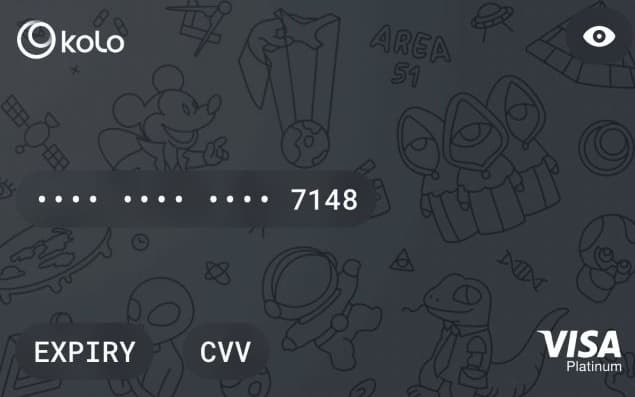
1. Kolo Card
Earn Bitcoin on Every Purchase: 5% BTC Cashback + Visa Platinum + 170+ Countries
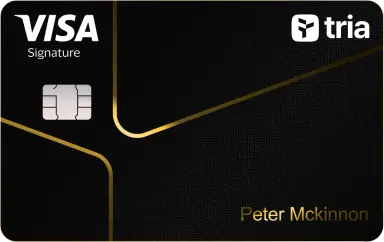
2. Tria Signature Card
High-Yield Mastery: 15% APY + Visa Signature Perks
3. ether.fi Core Card
Zero Barriers: 3% Back on Every Purchase, No Stake Required
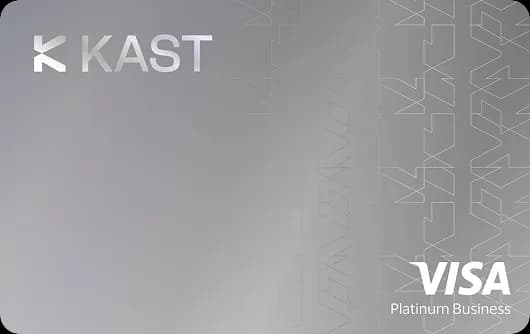
4. KAST K Card
Early Adopter Access: 2% Points + 4% $MOVE on Every Swipe
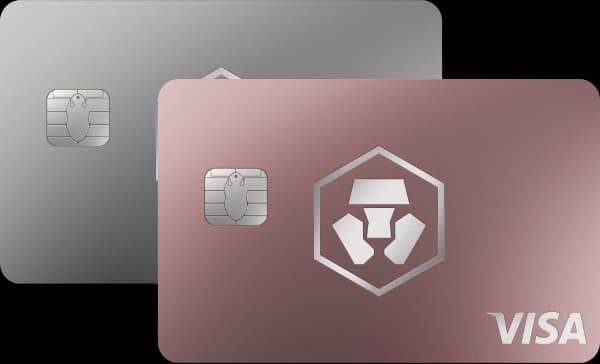
5. Private (Icy White / Rose Gold)
Elite Private Status: 4% Uncapped Cashback + Guests
Crypto Card Regulation in Morocco
Morocco's crypto regulatory history begins with the joint communique of November 2017, when three authorities - Bank Al-Maghrib (BAM, Banque Centrale du Maroc, بنك المغرب), the AMMC (Autorite Marocaine du Marche des Capitaux, الهيئة المغربية لسوق الرساميل), and the Office des Changes (مكتب الصرف) - declared all cryptocurrency transactions illegal. The ban covered buying, selling, holding, and using virtual currencies for payments.
In November 2025, Bank Al-Maghrib and the AMMC published Draft Bill No. 42.25, a comprehensive framework to legalize and regulate digital assets. The bill establishes four pillars: investor protection, market integrity and AML/CFT compliance, innovation promotion, and financial stability safeguards.
Under the proposed framework, the AMMC will oversee token issuance and licensing of crypto-asset service providers (CASPs), while BAM will regulate stablecoins and asset-backed tokens. A new body, the National Financial Intelligence Authority (ANRF), will supervise AML/CFT compliance across the crypto sector.
Bill 42.25 requires CASPs to obtain licenses, maintain minimum capital of MAD 3 million (approx. $300,000) at a Moroccan banking institution, implement KYC/AML procedures, and segregate client funds. Stablecoin issuers must maintain reserves in segregated accounts at Moroccan credit institutions under BAM supervision.
The Exchange Office will monitor cross-border crypto flows. Importantly, the draft does not legalize crypto for direct payments - it permits buying and selling through licensed platforms in MAD only.
Parliamentary review began in Q1 2026, with adoption expected by mid-2026. Morocco is actively transitioning from prohibition to regulated legalization, making it one of the first North African countries to establish a comprehensive crypto framework.
Tax Treatment of Card Rewards in Morocco
Under the current ban, there is no formal crypto tax framework. However, the draft legislation proposes a capital gains tax of 15-30% on cryptocurrency profits, mirroring the treatment of securities under the General Tax Code (Code General des Impots, المدونة العامة للضرائب). The Direction Generale des Impots (DGI, المديرية العامة للضرائب) will administer crypto taxation once the law passes.
Progressive income tax rates of 10% to 38% may apply to mining, staking, and airdrop income classified as professional earnings. Corporate entities involved in crypto activities face standard corporate tax rates.
Example: You acquired BTC worth MAD 10,000 and it appreciated to MAD 30,000. If you spent MAD 30,000 via a crypto card, the MAD 20,000 gain could attract 15-30% tax = MAD 3,000 to MAD 6,000 in tax once the law is enacted.
| Cashback Type | When Received | When Spent via Card | Total Tax Burden |
|---|---|---|---|
| BTC cashback | 15-30% on FMV | 15-30% on gains | Up to 60% |
| USDC cashback | 15-30% on FMV | approx. 0% gain | 15-30% |
| Points | Unclear | Unclear | Uncertain |
USDC funding minimizes the tax burden on the disposal side. However, until the draft law passes, the legal status of crypto activity itself remains the primary concern. The treatment of DeFi yields and NFTs has not been addressed in the draft. Moroccan nationals living abroad should follow the tax rules of their country of residence. The loss offset rules remain unclear under the proposed framework.
How to Apply from Morocco
Moroccan crypto card applications would require a Carte Nationale d'Identite Electronique (CNIE, البطاقة الوطنية للتعريف الإلكترونية), the mandatory biometric smart card for all Moroccan citizens over 16 issued by the Direction Generale de la Surete Nationale (DGSN). The CNIE contains biometric data (fingerprints, facial image) and a unique national identifier.
Alternative identification: Moroccan passport (جواز السفر المغربي, issued by the Ministry of Foreign Affairs). Proof of address via utility bills from ONEE (Office National de l'Electricite et de l'Eau Potable), Lydec (Casablanca), Amendis (Tangier-Tetouan), or bank statements from Attijariwafa Bank, BMCE Bank of Africa, or Banque Populaire.
In practice, most offshore crypto card issuers may not accept Moroccan CNIE cards for KYC verification due to the current ban. Moroccan nationals with European residency permits (carte de sejour in France, tarjeta de residencia in Spain, permesso di soggiorno in Italy) have significantly higher approval rates. Virtual cards for Apple Pay or Google Pay are the most practical option, avoiding shipping challenges.
Spending Tips for Morocco
What Moroccan Banks Actually Cost You
Morocco's banking sector is dominated by three groups that control 65%+ of deposits.
| Bank | Debit FX Markup | Annual Card Fee | International Online | Cashback |
|---|---|---|---|---|
| Attijariwafa Bank | 3-5% | MAD 100-300 | Generally works | 0% |
| BMCE Bank of Africa | 3-5% | MAD 100-250 | Inconsistent | 0% |
| Banque Populaire | 3-5% | MAD 80-200 | Inconsistent | 0% |
| CIH Bank | 2-4% | MAD 50-150 | Good (fintech-forward) | 0% |
| Credit du Maroc | 3-5% | MAD 100-250 | Inconsistent | 0% |
CIH Bank is Morocco's most digitally progressive bank (first to offer Apple Pay integration, first digital-only banking product), but still charges 2-4% FX on international transactions. The Office des Changes (Morocco's capital control authority) restricts how much foreign currency Moroccan residents can access annually, making traditional bank FX even more constrained. A crypto card for diaspora or nationals abroad eliminates both the FX markup and the capital control limitation.
Cost of Living by City
| City/Area | 1-Bed Rent/Month | Groceries/Month | Card-Eligible Spending |
|---|---|---|---|
| Casablanca (Maarif/Gauthier) | MAD 4,000-8,000 | MAD 2,000-4,000 | MAD 3,000-7,000 |
| Rabat (Agdal/Hassan) | MAD 3,500-7,000 | MAD 1,800-3,500 | MAD 2,500-6,000 |
| Marrakech (Gueliz) | MAD 3,000-6,000 | MAD 1,500-3,000 | MAD 2,000-5,000 |
| Tangier (Centre Ville) | MAD 2,500-5,000 | MAD 1,500-3,000 | MAD 2,000-4,500 |
| Fes (Ville Nouvelle) | MAD 2,000-4,000 | MAD 1,200-2,500 | MAD 1,500-3,500 |
| Agadir | MAD 2,000-4,000 | MAD 1,200-2,500 | MAD 1,500-3,500 |
Casablanca as Morocco's economic capital has the highest living costs and the strongest card acceptance infrastructure. The tech workforce in Casashore (Casablanca's nearshoring zone), CasaNearshore, and Rabat Technopolis earns MAD 8,000-25,000/month ($800-2,500), overlapping with the crypto card user profile.
The Diaspora and Remittance Angle
Morocco receives approximately $12 billion in annual remittances (World Bank 2024), making it one of the largest remittance recipients in the MENA region and Africa. An estimated 5+ million Moroccans live abroad, primarily in France (1.5M+), Spain, Italy, Belgium, Netherlands, Germany, and Canada.
Traditional remittance channels (Western Union, MoneyGram, Wafacash, Barid Bank Cash Express) charge 4-8% in fees. Stablecoin transfers via crypto cards could theoretically reduce this to near zero, making the technology enormously relevant for the diaspora.
Card Selection for Moroccans Abroad
- Kolo (5% BTC, free, 0% FX): Highest free cashback, BTC accumulation on EUR spending
- Tria Signature (4.5%, $109/yr, 0% FX): Self-custody, keys stay in your wallet
- ether.fi Core (3%, free, 1% FX): Borrow-to-spend avoids CGT in France (30% PFU), Spain, Belgium
- KAST (2% points, free, 0.5% FX): Easiest first card for Moroccan diaspora using EU or Gulf residency documents
- Crypto.com Icy (4%, CRO stake, 0% FX): Airport lounge perks at CMN for return trips home
Kolo vs Tria vs KAST vs Icy: Diaspora Math (EUR Spending)
For Moroccan nationals living in Europe. Tax depends on country of residence (France 30% PFU, Spain 19-28%, Belgium 33%). USDC funding recommended.
| Monthly Spend (EUR) | KAST (2% points, free) | Kolo (5%, free) | Tria Sig (4.5%, $109/yr) | Icy (4%, CRO stake) |
|---|---|---|---|---|
| EUR 300 | EUR 72/yr | EUR 180/yr | EUR 162/yr minus $109 fee | EUR 144/yr + lounges |
| EUR 500 | EUR 120/yr | EUR 300/yr | EUR 270/yr minus $109 fee | EUR 240/yr + lounges |
| EUR 800 | EUR 192/yr | EUR 480/yr | EUR 432/yr minus $109 fee | EUR 384/yr + lounges |
| EUR 1,500 | EUR 360/yr | EUR 900/yr | EUR 810/yr minus $109 fee | EUR 720/yr + lounges |
Kolo leads at every spending level with 5% BTC cashback and no annual fee. Tria Signature breaks even at approximately EUR 185/month and offers self-custody. KAST is the easiest first card for users verifying with EU or Gulf residency documents (2% rewards are points, not cashback). Crypto.com Icy adds airport lounge access at CMN for the GCC and European diaspora visiting home.
Spending Scenario: MAD 3,000/month (approx. $300, Moroccan Professional Abroad)
| Funding Method | Annual Spend | Cashback (Kolo 5%) | Est. Tax (20%) | Net Cashback |
|---|---|---|---|---|
| BTC (appreciated 200%) | MAD 36,000 | MAD 1,800 | MAD 360 | MAD 1,440 |
| USDC (stablecoin) | MAD 36,000 | MAD 1,800 | approx. MAD 0 | MAD 1,800 |
At MAD 3,000/month ($300) with Kolo's 5% BTC cashback and USDC funding, a Moroccan professional abroad nets MAD 1,800/year (approx. $180). For diaspora members, the bigger savings come from avoiding traditional remittance fees (4-8% on $12B+ annual flows). Even a 2% reduction would save Morocco $240 million annually.
Online Shopping
Moroccan bank cards work reasonably well for domestic e-commerce (Jumia Maroc, Avito, Hmizate) but international shopping triggers the Office des Changes annual FX allowance and adds 3-5% bank markup. Key international platforms: Amazon (ships to Morocco, often via Amazon.fr or Amazon.es), AliExpress (ships directly, extremely popular for electronics and household goods), Zara/Inditex online (Spanish fast fashion, popular in Morocco), ASOS, and Shein.
International subscriptions: Netflix (MAD 50-120/month, widely adopted), Spotify, Adobe Creative Cloud, Apple services, Microsoft 365. For diaspora members visiting Morocco, an existing crypto card simply works at local merchants without needing to carry cash or manage multiple currency accounts.
Cross-Border Spending
Morocco's geography and cultural ties create specific FX corridors. Spain (EUR, Tangier-Tarifa ferry takes 35 minutes, weekend shopping trips to Algeciras and Ceuta), France (EUR, flights to Paris, Marseille, Lyon from MAD 800 return, the primary diaspora corridor), Turkey (TRY, growing vacation destination, Turkish Airlines has aggressive Morocco pricing), UAE (AED, Casablanca-Dubai business connections and shopping), and Mauritania/Senegal (West African trade routes).
The Ceuta and Melilla Spanish enclaves within Morocco create a unique situation where EUR spending happens without leaving Moroccan territory - zero-FX crypto cards eliminate the markup for these frequent cross-border transactions.
The 2030 World Cup Factor
Morocco will co-host the 2030 FIFA World Cup with Spain and Portugal. The government has committed $5 billion+ to infrastructure: a new 115,000-seat stadium in Casablanca (Grand Stade Hassan II), high-speed rail extensions, airport expansions at Casablanca, Marrakech, and Tangier, hotel capacity expansion, and transport network upgrades.
This investment will dramatically improve card acceptance infrastructure, create thousands of hospitality jobs, and bring millions of visitors who will need payment solutions. By 2030, Morocco's crypto card market could be transformed - both by the regulatory framework expected in 2026 and by the infrastructure modernization ahead of the tournament.
Local Payment Infrastructure
Morocco's domestic payment infrastructure is changing fast. Maroc Telecom m-wallet and Orange Money serve mobile payments, though adoption remains low (only 6% of Moroccans have mobile wallets). MarocPay (activated by the Centre Monetique Interbancaire/CMI) serves over 8 million wallet holders. CIH Pay was among the first Moroccan banks to support Apple Pay (introduced 2023).
Visa and Mastercard contactless payments are accepted at malls (Morocco Mall, Anfa Place in Casablanca, Menara Mall in Marrakech), supermarkets (Marjane, Carrefour, Acima), hotels, and restaurants in major cities. Cash remains overwhelmingly dominant in souks, local markets, and rural areas.
Tourism: 14+ Million Visitors Annually
Morocco attracted 14.5 million tourists in 2024 (Ministry of Tourism data), making it Africa's most visited country. Marrakech (Jemaa el-Fnaa, Majorelle Garden, luxury riads), Fes (world's largest car-free urban area, tanneries), Chefchaouen (the blue city), Essaouira (coastal/surf), Sahara desert tours (Merzouga, Zagora), and Tangier (revitalized port city with direct ferry to Spain) drive a tourism economy worth over $10 billion annually.
Hotels, restaurants, and tourist-facing businesses in these cities accept Visa/Mastercard widely. For visiting tourists: a zero-FX crypto card saves 3-5% on every dirham purchase compared to home-country bank cards. For Moroccan tourism professionals: receiving international booking revenue and tips in foreign currency through crypto cards avoids the Office des Changes restrictions on holding foreign currency.
Nearshoring: Morocco's Growing Tech Workforce
Morocco has positioned itself as a major nearshoring destination for European companies, particularly French firms. CasaNearshore and Casashore in Casablanca, Rabat Technopolis, and Tangier Free Zone host call centers, IT service providers, and software development offices for companies like Capgemini, Atos, CGI, and Accenture.
The francophone workforce, GMT+1 timezone (aligned with Western Europe), and competitive labor costs (MAD 10,000-20,000/month for mid-level developers vs EUR 3,000-5,000 in France) make Morocco attractive.
These nearshoring professionals often earn in EUR or receive bonuses in foreign currency. Holding stablecoins and spending through a crypto card provides a natural FX optimization: receive EUR, convert to USDC, spend in MAD at the moment of purchase without the 3-5% bank markup or the Office des Changes annual FX allowance limit.
Morocco's Industrial Economy: Cars, Phosphates, and Cannabis
Morocco has built Africa's largest automotive industry. Renault Tangier (400,000+ vehicles/year) and PSA/Stellantis Kenitra (200,000+) have made Morocco the continent's top car exporter. The OCP Group (Office Cherifien des Phosphates) controls 75% of the world's phosphate reserves - a strategic resource for global agriculture. In 2021, Morocco legalized cannabis cultivation for medical and industrial use (Law 13-21), creating a new export industry from the Rif region.
These industrial sectors bring foreign exchange earnings and create a professional class earning competitive salaries (engineers at Renault Tangier earn MAD 12,000-25,000/month). For this workforce, stablecoin holdings hedge against the gradual MAD weakening, and crypto cards provide zero-FX spending on international purchases - from Amazon shopping to European weekend trips across the Strait of Gibraltar.
MAD Stability
The Moroccan dirham operates under a managed float, pegged to a basket of EUR (60%) and USD (40%). This provides relative stability compared to fully floating African currencies, but the MAD has gradually weakened against the euro (1 EUR = 10.7 MAD in 2020, approximately 11.0-11.2 MAD in 2026). The peg provides a floor but not full protection. Holding stablecoins (USDC/USDT pegged to USD) provides a hedge against further depreciation while maintaining spending capability through crypto cards.
Supported Exchanges & Wallets in Morocco
No crypto exchanges operate legally inside Morocco. Binance P2P (MAD pairs) is the primary on-ramp despite operating in a legal gray area. Coinmama advertises Morocco availability. Banks (Attijariwafa, BMCE Bank of Africa, Banque Populaire, CIH Bank) actively block suspected crypto-related transactions.
For Moroccan residents, the on-ramp challenge is real - acquiring crypto requires P2P or international contacts, making crypto cards primarily viable for those with existing offshore holdings or diaspora members sending crypto home.
For the 5+ million Moroccan nationals living abroad, access is straightforward with foreign documentation. Kolo leads with 5% BTC on cashback cards and zero FX on a free card, giving diaspora members BTC accumulation on every EUR purchase in Paris or Brussels. Tria Signature offers self-custody at 4.5% with 0% FX for $109/year.
Crypto.com provides CRO-staking metal tiers from Midnight Blue (0% cashback, free) through Icy (4%) with airport lounge access at Mohammed V International (CMN). ether.fi Core offers borrow-to-spend at 3% cashback and 1% FX: stake ETH, borrow against it, spend without triggering capital gains in France (30% PFU) or Spain (19-28%).
KAST at 2% points and 0.5% FX provides the easiest first card for Moroccan nationals using European or Gulf documentation. RedotPay offers Virtual (free) and Physical ($100) variants at 1.2% FX. xPlace provides self-custody with SOL-based rewards from Standard (0.5%) through Platinum (2%).
Until Bill 42.25 passes, Morocco's 5+ million diaspora remain the primary crypto card users. A Moroccan developer at CasaNearshore earning EUR 2,500/month in Paris can fund Kolo with USDC, earn 5% BTC on every purchase, and send stablecoins to family in Casablanca for a fraction of Western Union's 4-8% fees on the Morocco corridor. When the AMMC licensing framework launches, domestic users in Casablanca's Maarif and Gauthier districts will follow.
Written by SpendNode Editorial
Frequently Asked Questions
Is cryptocurrency legal in Morocco?
Not currently. Morocco banned all crypto transactions in 2017. However, Bank Al-Maghrib and AMMC published Draft Bill No. 42.25 in November 2025 to legalize and regulate crypto. Parliamentary review began Q1 2026, with adoption expected by mid-2026. Until enacted, crypto remains prohibited.
What tax will Morocco charge on crypto?
Draft Bill 42.25 proposes 15-30% capital gains tax on crypto, mirroring the treatment of securities. Progressive income tax of 10-38% may apply to mining and staking income. Stablecoin issuers must maintain reserves at Moroccan banks under BAM supervision.
Which crypto cards can Moroccans access?
No crypto card officially targets Morocco. Globally available cards like Kolo (5% BTC cashback, $0, 0% FX), KAST (2%, 0.5% FX), and Tria Signature (4.5%, $109/yr) list worldwide coverage. Moroccan nationals living abroad (France, Spain, Italy, Belgium) face fewer barriers with EU residency documents.
How large is Morocco's crypto market?
Despite the ban, Morocco's crypto market is projected at $278.7 million for 2025. The 5+ million Moroccan diaspora and growing tech workforce drive adoption through offshore channels. Bill 42.25 will require CASPs to hold MAD 3 million minimum capital.
Other Countries
View all 108 countries →


Recent Updates to Best Crypto Cards in Morocco
- Corrected Tria break-even math and normalized KAST reward wording across the page
- Kept the diaspora-remittance and draft-legalization framing coherent after the comparison cleanup
- Removed COCA (unavailable in Morocco) and MetaMask Virtual (US/EEA/UK only) from all recommendations and topCardSlugs
- Added Kolo (5% BTC, $0, 0% FX), Tria Signature (4.5%, $109/yr), and Crypto.com Icy (4%) for diaspora. Corrected KAST from 'up to 12%' to 2%, ether.fi FX from 0% to 1%, Crypto.com from '5%' to Icy 4%, Midnight Blue from '1%' to 0%
- Updated Draft Bill No. 42.25 with specific provisions: CASP MAD 3M capital requirement, ANRF anti-money laundering body, stablecoin reserve rules, parliamentary review Q1 2026, adoption expected mid-2026. Added note that draft does not legalize crypto for direct payments
- Rebuilt break-even table in EUR for diaspora spending (4 cards: KAST/Kolo/Tria/Icy). Updated spending scenario to Kolo 5% from KAST 2%