


Best Crypto Cards in Ethiopia (2026)
Compare 30+ crypto cards accessible from Ethiopia. Kolo (5% BTC, free), Tria Signature (4.5%, self-custody), and ether.fi (3%) serve the 3M+ diaspora. NBE banned birr P2P in Feb 2026; framework expected mid-2026.

Verified for Ethiopia
31 crypto cards available
Local currency: ETB
Ethiopia has one of Africa's most tightly controlled financial systems, with 120 million people relying on Telebirr, CBE Birr, and the Commercial Bank of Ethiopia for daily transactions.
Ethiopia, with 120 million people (Africa's second-largest population), banned cryptocurrency payments in 2022 through the National Bank of Ethiopia (NBE).
Yet the country has simultaneously embraced Bitcoin mining, licensing operations since 2024, and is developing a comprehensive crypto regulatory framework expected by mid-2026. The birr has depreciated sharply against the dollar, making stablecoins increasingly attractive as a store of value for Ethiopia's growing tech-savvy urban population and its massive diaspora.
We checked each card issuer's availableCountries to confirm which ones actually serve Ethiopian applicants. KAST, RedotPay, Kolo, and Tria all include Ethiopia in their availability lists.
In practice, Ethiopian residents face significant barriers: strict capital controls, limited card infrastructure (mobile money dominates), and the payment ban. The primary audience is Ethiopia's 3+ million diaspora (concentrated in the US, Middle East, and Europe) and the emerging tech workforce.
| Card | Max Cashback | Annual Fee | FX Fee | Card Type | Practical Access |
|---|---|---|---|---|---|
| Kolo | 5% BTC | $0 | 0% | Prepaid | Highest free cashback, GLOBAL |
| Tria Signature | 4.5% | $109/yr | 0% | Debit | Self-custody, zero FX |
| ether.fi | 3% | $0 | 1% | Credit | Borrow-to-spend (US diaspora CGT) |
| KAST | 2% | $0 | 0.5% | Prepaid | Diaspora prepaid, fast KYC |
| RedotPay | - | $0-$100 | 1.2% | Prepaid | Stablecoin-native, remittances |
| xPlace | 0.5-2% | $0-$5,000 | 1% | Debit | Self-custody, SOL ecosystem |
Kolo leads with 5% BTC from cards with cashback and 0% FX for diaspora members already holding stablecoins offshore. KAST at 2% free is the easiest first card for Ethiopians abroad funding from exchange balances. None of these cards are endorsed for payment use within Ethiopia. Ethiopian nationals living abroad, particularly in the US, Gulf states, and Europe, face significantly fewer barriers.
Best Card For Every Need in Ethiopia
Top 4 Crypto Cards in Ethiopia
Ethiopia's birr lost 73-76% of its value in six years while the NBE simultaneously banned crypto payments, licensed Bitcoin mining, and in February 2026 explicitly prohibited birr-paired P2P transactions, tightening the on-ramp for 120 million citizens.
Kolo leads for the 3+ million diaspora because its 5% BTC cashback with zero FX and zero annual fee turns everyday USD spending in Washington DC or Dubai into BTC accumulation while preserving purchasing power that birr bank deposits actively destroy. Tria Signature adds self-custody at 4.5% with 0% FX, keeping keys outside exchange risk in a market where the NBE has proven it will restrict access.
KAST at 2% free stays as the simplest prepaid card for diaspora funding from exchange balances. ether.fi Core at 3% matters specifically for the 500,000+ Ethiopian Americans where US capital gains tax makes borrow-to-spend a genuine tax optimization.
1. Kolo Card
Earn Bitcoin on Every Purchase: 5% BTC Cashback + Visa Platinum + 170+ Countries
2. Tria Signature Card
High-Yield Mastery: 15% APY + Visa Signature Perks

3. ether.fi Core Card
Zero Barriers: 3% Back on Every Purchase, No Stake Required
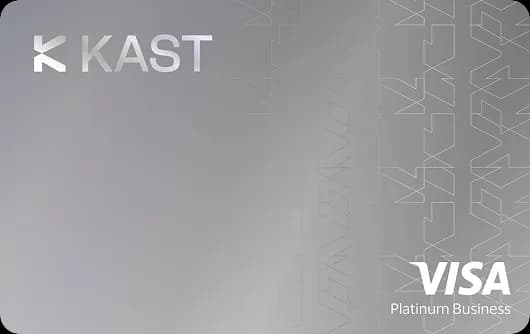
4. KAST K Card
Early Adopter Access: 2% Points + 4% $MOVE on Every Swipe
Crypto Card Regulation in Ethiopia
Ethiopia's crypto regulatory framework is shifting rapidly under the oversight of the National Bank of Ethiopia (NBE, Ye'Ityopya Bherawi Bank, የኢትዮጵያ ብሔራዊ ባንክ). In 2022, the NBE declared that using cryptocurrency for financial transactions is illegal, affirming the Ethiopian birr as the only legal tender. However, the government has taken a distinctly different approach to blockchain technology and crypto mining.
In 2024, the NBE introduced licensing requirements for crypto mining firms, requiring compliance with both energy and financial regulations. In 2025, the NBE clarified AML/KYC requirements for crypto businesses. Bybit delisted ETB from its P2P platform effective July 21, 2025. Binance discontinued its P2P Cash Zone in March 2025 under regulatory pressure.
On February 27, 2026, the NBE issued a formal notice prohibiting all birr-paired P2P cryptocurrency transactions, stating that birr-denominated P2P trading on platforms, exchanges, or similar services is not permitted unless explicitly authorized by the NBE. The notice cited risks of price volatility, fraud, FX manipulation, and absence of AML/CFT safeguards.
The Ethiopian Capital Markets Authority (ECMA) oversees crypto assets that may be classified as securities. The Information Network Security Administration (INSA) has been mandated to register and control certain crypto operations. The NBE is conducting public consultations with international peer regulators and expects to finalize comprehensive crypto regulations by mid-2026.
The NBE is also researching a CBDC, tentatively called the "Digital Birr," with trials potentially beginning in 2026-2027. Ethiopia is pursuing a phased approach: ban payments, license mining, then regulate trading. The 2026 framework will determine whether crypto cards and exchanges can operate formally.
Tax Treatment of Card Rewards in Ethiopia
Ethiopia has no specific cryptocurrency tax framework for individual traders. The Ministry of Revenue (MoR, Ye'Gibir Menistir, የገቢ ሚኒስቴር) has not explicitly defined how capital gains from crypto trading should be taxed. However, crypto mining businesses are subject to the standard 30% corporate income tax rate. Individual business income follows progressive rates up to 35%.
Example: You acquired BTC worth ETB 100,000 and it appreciated to ETB 300,000. If you spent ETB 300,000 via a crypto card, the ETB 200,000 gain could theoretically attract income tax. In practice, the MoR does not currently collect tax from crypto-to-fiat conversions, creating an enforcement gap that the upcoming 2026 framework may address.
| Cashback Type | When Received | When Spent via Card | Total Tax Burden |
|---|---|---|---|
| BTC cashback | Unclear | Unclear | Uncertain |
| USDC cashback | Unclear | approx. 0% gain | Uncertain |
| Points | Unclear | Unclear | Uncertain |
USDC funding minimizes complexity regardless of the eventual tax treatment. The fundamental issue is that crypto payments are currently banned, making the tax question secondary. Ethiopian nationals living abroad should follow the tax rules of their country of residence. Ethiopia does not have a formal worldwide taxation principle for most individuals.
How to Apply from Ethiopia
Ethiopian crypto card applications would primarily require the Fayda National Digital ID (ፋይዳ ብሔራዊ ዲጂታል ማንነት), Ethiopia's biometric digital identity system developed with TECH5 and Visa. Fayda uses fingerprint, facial recognition, and OTP verification, and is already integrated with 90+ public and private agencies.
The rollout follows a phased approach: pilot in Addis Ababa from January 2025, major cities by July 2025, and nationwide by January 2026. All bank accounts must be linked to Fayda IDs by December 31, 2026.
Alternative identification: Kebele ID (the traditional community-level identity card) and Ethiopian passport (የኢትዮጵያ ፓስፖርት, issued by the Immigration, Nationality, and Vital Events Agency). Proof of address via utility bills from Ethiopian Electric Power (EEP), Addis Ababa Water and Sewerage Authority (AAWSA), or bank statements from Commercial Bank of Ethiopia (CBE), Awash Bank, or Dashen Bank.
Most offshore crypto card issuers are unlikely to accept Ethiopian Fayda or Kebele IDs for KYC. Ethiopian nationals with foreign residency (US Green Card, Gulf state iqama, European residence permits) have much higher approval rates. Virtual cards are the most practical option given limited physical card shipping infrastructure.
Spending Tips for Ethiopia
The Birr Depreciation Crisis
The Ethiopian birr has undergone one of Africa's most dramatic depreciations. The ETB/USD rate: 32 in early 2020, 43 in 2021, 53 in 2022, 56 in 2023, then the July 2024 exchange rate liberalization (dropping the managed float) sent it past 100. By early 2026, the rate fluctuates between 120-135 ETB/USD.
Someone holding ETB 1 million in a savings account in 2020 ($31,250) now holds roughly $7,400-8,300 of purchasing power - a 73-76% loss in six years.
The 2024 liberalization was a condition of Ethiopia's IMF reform program. The NBE had maintained an artificial official rate for years, creating a parallel market where the street rate was 50-80% higher than official. The liberalization closed this gap but devastated savers who had been forced to hold birr by capital controls.
CBE and Awash savings accounts pay 7-8% annual interest on birr deposits - meaningless against 40-50% annual depreciation. Holding stablecoins (USDC/USDT) through a crypto card is not a speculative choice in Ethiopia; it is basic financial self-defense. Converting birr to USDT and spending through a card at the moment of purchase preserves purchasing power that the banking system actively destroys.
Telebirr and Mobile Money
Ethiopia's mobile money revolution began with Telebirr (Ethio Telecom, launched 2021), which reached 40+ million users within two years - one of the fastest mobile money rollouts in global history. CBE Birr (Commercial Bank of Ethiopia) and M-Birr (consortium of banks) handle additional mobile transactions. EthSwitch provides national payment switching.
Yet despite this mobile sophistication, international spending remains almost impossible through Ethiopian financial infrastructure. Telebirr handles domestic payments brilliantly (airtime, utilities, transfers) but cannot make an international Visa/Mastercard purchase. A crypto card fills this gap entirely.
Card Selection for Ethiopians Abroad
- Kolo (5% BTC, free, 0% FX): Highest free cashback, BTC accumulation against birr weakness
- Tria Signature (4.5%, $109/yr, 0% FX): Self-custody, keys in your wallet
- ether.fi Core (3%, free, 1% FX): Borrow-to-spend for US diaspora (avoids CGT)
- KAST (2%, free, 0.5% FX): Simplest prepaid for diaspora with offshore balances
Spending Scenario: ETB 50,000/month (approx. $400, Ethiopian Professional Abroad)
| Funding Method | Annual Spend | Cashback (Kolo 5%) | Est. Tax | Net Cashback |
|---|---|---|---|---|
| BTC (appreciated 200%) | ETB 600,000 | ETB 30,000 | Unclear | ETB 30,000 |
| USDC (stablecoin) | ETB 600,000 | ETB 30,000 | approx. ETB 0 | ETB 30,000 |
ETB 30,000/year (approx. $240) in BTC cashback with Kolo. The real value for Ethiopians is currency preservation: holding stablecoins instead of birr avoids exposure to further depreciation that has already erased 73-76% of purchasing power in six years.
Local Payment Infrastructure
Ethiopia's payment system is dominated by mobile money, not cards. Telebirr (Ethio Telecom, 40+ million users) is the largest mobile payment platform. CBE Birr (Commercial Bank of Ethiopia) and M-Birr handle additional mobile transactions. EthSwitch is the national payment switch.
Card acceptance is limited to Addis Ababa: hotels (Sheraton Addis, Hyatt Regency, Capital Hotel), malls (Friendship City Center, Edna Mall, Dembel City Center), and international restaurants in Bole and Kazanchis areas. Outside Addis Ababa, cash and mobile money are the only practical payment methods. Apple Pay and Google Pay are not supported in Ethiopia.
Kolo vs Tria vs ether.fi vs KAST: Diaspora Math
For Ethiopian nationals living overseas. Tax depends on country of residence (US, Gulf, Europe). USDC funding recommended.
| Monthly Spend | KAST (2%, free) | Kolo (5%, free) | Tria Sig (4.5%, $109/yr) | ether.fi (3%, free) |
|---|---|---|---|---|
| $250 | $60/yr | $150/yr | $135/yr minus $109 fee | $90/yr |
| $400 | $96/yr | $240/yr | $216/yr minus $109 fee | $144/yr |
| $600 | $144/yr | $360/yr | $324/yr minus $109 fee | $216/yr |
| $1,200 | $288/yr | $720/yr | $648/yr minus $109 fee | $432/yr |
Kolo leads at every spending level with 5% BTC cashback and no annual fee. Tria Signature breaks even at approximately $202/month. ether.fi Core is worth adding for US-based Ethiopians where borrow-to-spend avoids US capital gains tax. KAST works as the simplest first card when offshore exchange balances need to cover everyday spending.
The Diaspora: $5-6B in Remittances
Ethiopia receives $5-6 billion in annual remittances (World Bank), making it one of Africa's largest recipients.
The major corridors are the United States (Washington DC has the largest Ethiopian diaspora globally, followed by Dallas, Minneapolis, Seattle, and Los Angeles, with 500,000+ Ethiopian Americans), Saudi Arabia (300,000+ Ethiopian workers, primarily domestic and construction labor), UAE (Dubai and Abu Dhabi, 100,000+), and Israel (170,000+ Ethiopian Jews, Beta Israel community).
Germany, UK, Canada (Toronto and Ottawa), and Sweden (Stockholm has a significant Ethiopian community) round out the main diaspora network.
Traditional remittance channels charge 6-12% on the Ethiopia corridor - among the most expensive globally. Western Union, MoneyGram, and Dahabshiil handle most flows. On $500/month sent from Washington DC, traditional fees consume $30-60. The same amount sent as USDC to a family member's crypto card costs under $1. That annual saving ($360-720) represents 2-3 months of groceries in Addis Ababa.
What Ethiopian Banks Actually Cost You
Ethiopia's banking sector is dominated by state-owned institutions with limited digital infrastructure.
| Bank | Debit FX Markup | Annual Card Fee | International Online | Cashback |
|---|---|---|---|---|
| CBE (Commercial Bank of Ethiopia) | 3-5% | ETB 500-1,000 | Very unreliable | 0% |
| Awash Bank | 3-5% | ETB 500-1,500 | Unreliable | 0% |
| Dashen Bank | 3-5% | ETB 500-1,500 | Inconsistent | 0% |
| Abyssinia Bank | 3-5% | ETB 500-1,200 | Unreliable | 0% |
| Zemen Bank | 2-4% | ETB 800-2,000 | Better than average | 0% |
The CBE (state-owned, 70%+ of banking assets) is Ethiopia's largest bank but its international card services are severely limited. Even when cards work internationally, the NBE's strict capital controls limit how much foreign currency Ethiopian residents can access. Crypto cards funded with offshore stablecoins bypass both the bank card reliability problem and the capital control ceiling.
Cost of Living by Area
| Area | 1-Bed Rent/Month | Groceries/Month | Card-Eligible Spending |
|---|---|---|---|
| Addis Ababa (Bole) | ETB 15,000-40,000 | ETB 8,000-15,000 | ETB 12,000-30,000 |
| Addis Ababa (Kazanchis) | ETB 12,000-30,000 | ETB 7,000-12,000 | ETB 10,000-25,000 |
| Addis Ababa (CMC/Megenagna) | ETB 8,000-20,000 | ETB 6,000-10,000 | ETB 8,000-18,000 |
| Adama (Nazret) | ETB 5,000-12,000 | ETB 4,000-8,000 | ETB 5,000-12,000 |
| Hawassa | ETB 4,000-10,000 | ETB 3,500-7,000 | ETB 4,000-10,000 |
| Dire Dawa | ETB 4,000-10,000 | ETB 3,500-7,000 | ETB 4,000-10,000 |
Bole (home to Bole International Airport, diplomatic quarter, and the African Union headquarters) has the highest concentration of card-accepting merchants and expat-friendly businesses. The professional class in Bole and Kazanchis earning ETB 30,000-100,000/month ($240-800) represents the core crypto card demographic.
The Coffee Economy and Agriculture
Ethiopia is the birthplace of coffee (Arabica) and the 5th largest global producer. The coffee export sector generates $1-1.5 billion annually, with 15+ million Ethiopians dependent on coffee for their livelihood. The Ethiopian Commodity Exchange (ECX) handles coffee, sesame, and other agricultural commodity trading.
Beyond coffee: sesame (world's 3rd largest exporter), khat (significant domestic and export market to Somalia and Djibouti), leather (growing manufacturing sector), and textiles (industrial parks in Hawassa, Kombolcha, and Mekelle attracting H&M, PVH, and other global brands).
These export industries bring foreign currency into the economy, but capital controls mean individuals cannot freely hold or spend it. For agricultural exporters, tech workers at the Addis Ababa Innovation Hub, and professionals in the growing services sector, stablecoin holdings represent financial autonomy that the birr and the banking system cannot provide.
The Diplomatic Capital: African Union and International Organizations
Addis Ababa is the "diplomatic capital of Africa," hosting the African Union headquarters (built by China, inaugurated 2012), the United Nations Economic Commission for Africa (UNECA), and over 100 embassies and international organizations.
This creates a substantial international professional community in Bole and Old Airport areas: diplomats, UN staff, NGO workers, and consultants earning in USD and EUR. For this community, crypto cards provide zero-FX spending in birr without the hassle of Ethiopian bank FX queues and capital control paperwork.
The AU's presence also makes Addis Ababa a conference and events hub. The Addis Ababa Convention Center hosts pan-African summits, trade conferences, and political meetings year-round, creating hospitality and services spending that benefits from international card acceptance.
The Bitcoin Mining Paradox
Ethiopia licensed Bitcoin mining operations in 2024, making it one of the few African countries to formally recognize blockchain infrastructure. The attraction: GERD (Grand Ethiopian Renaissance Dam), Africa's largest hydroelectric project on the Blue Nile, generates 6,450 MW of renewable electricity.
This cheap, green energy attracted mining firms seeking to reduce costs and environmental impact. The NBE's willingness to license mining while banning payments creates a paradox - the government sees value in blockchain as infrastructure and revenue but fears uncontrolled capital flows. The 2026 regulatory framework may resolve this tension by licensing VASPs alongside miners.
Online Shopping
Ethiopian bank cards are among the most frequently declined by international merchants in Africa. Key platforms: AliExpress (ships to Ethiopia, popular for phones and electronics), Amazon (via freight forwarders, expensive), Shein (fashion, growing popularity). Domestic: Deliver Addis (Ethiopian e-commerce), Ke Grocery (online grocery delivery in Addis).
International subscriptions: Netflix (growing, requires reliable international card), DStv/MultiChoice (dominant pay-TV), Apple services, Google services. A crypto card provides the reliable international Visa/Mastercard acceptance that Ethiopian bank cards cannot match.
Cross-Border Spending
Ethiopia's position and diaspora create FX spending needs. Djibouti (DJF, Ethiopia's primary port access since losing Eritrean ports, Addis-Djibouti railway), Kenya (KES, Nairobi business connections, growing trade), and UAE (AED, Dubai is the primary shopping and business destination for wealthy Ethiopians) are the first three core corridors.
Saudi Arabia (SAR, religious pilgrimage and labor migration), US (USD, diaspora visits), and Turkey (TRY, Turkish Airlines hub connections via Istanbul, growing medical tourism) complete the main set.
The Addis Ababa-Djibouti railway (Chinese-built, 752km) has intensified the Djibouti trade corridor. Zero-FX crypto cards eliminate the markup on every cross-border transaction.
Supported Exchanges & Wallets in Ethiopia
No crypto exchanges operate formally in Ethiopia. The on-ramp situation has tightened significantly since 2025: Bybit delisted ETB from P2P (July 2025), Binance discontinued its P2P Cash Zone (March 2025), and the NBE's February 2026 notice explicitly banned all birr-paired P2P transactions.
Banks (CBE, Awash, Dashen) actively block suspected crypto-related transfers. For domestic users, acquiring crypto now requires offshore contacts or the diaspora corridor. The NBE's 2024 licensing of Bitcoin mining (leveraging GERD's 6,450 MW hydropower) shows the government values blockchain infrastructure while restricting retail access.
For Ethiopian nationals abroad (particularly the 500,000+ in the US), access to crypto cards is straightforward with foreign documentation. Kolo leads with 5% BTC cashback and zero FX on a free card. Tria Signature offers self-custody at 4.5% with 0% FX for $109/year.
Crypto.com provides CRO-staking metal tiers from Midnight Blue (0% cashback, free) through Icy (4%). ether.fi Core offers borrow-to-spend at 3% cashback and 1% FX, particularly relevant for Ethiopian Americans avoiding US capital gains tax.
KAST at 2% cashback and 0.5% FX provides prepaid spending for diaspora funding from offshore exchange balances. RedotPay offers Virtual (free) and Physical ($100) variants at 1.2% FX. xPlace provides self-custody with SOL-based rewards from 0.5% to 2%.
The February 2026 P2P ban tightened on-ramps but did not eliminate demand. For the 500,000+ Ethiopian Americans in Washington DC, Dallas, and Minneapolis, the path is straightforward: buy USDC on Coinbase, load Kolo, spend at 5% BTC cashback.
For family in Addis, the practical question is whether the $360-720/year saved by replacing Western Union with stablecoin transfers justifies the compliance risk of receiving crypto while the NBE framework remains pending.
Written by SpendNode Editorial
Frequently Asked Questions
Is cryptocurrency legal in Ethiopia?
The NBE banned crypto payments in 2022 and explicitly prohibited birr-paired P2P transactions in February 2026. Bitcoin mining is licensed since 2024. Bybit delisted ETB from P2P (July 2025) and Binance discontinued its P2P Cash Zone (March 2025). A comprehensive regulatory framework is expected by mid-2026.
How is crypto taxed in Ethiopia?
There is no specific crypto tax framework for individual traders. Mining profits are taxed at the standard 30% corporate rate. The Ministry of Revenue has not defined capital gains treatment for crypto. Ethiopian nationals abroad should follow their country of residence's tax rules.
Which crypto cards work for Ethiopians?
Kolo (5% BTC cashback, $0, 0% FX), Tria Signature (4.5%, $109/yr, 0% FX), KAST (2%, $0, 0.5% FX), and ether.fi Core (3%, $0, 1% FX) serve through GLOBAL coverage. These primarily serve the 3M+ diaspora (US, Gulf, Europe) rather than domestic residents.
What is the Fayda digital ID?
Fayda is Ethiopia's national biometric digital ID system, mandatory for all banking transactions by December 31, 2026. It uses fingerprint, face recognition, and OTP verification. Integrated with 90+ agencies, it will be the primary KYC document for all financial services.
Other Countries
View all 108 countries →


Recent Updates to Best Crypto Cards in Ethiopia
- Removed COCA (unavailable in Ethiopia) and MetaMask Virtual (US/EEA/UK only) from all recommendations and topCardSlugs
- Added Kolo (5% BTC, $0, 0% FX) and Tria Signature (4.5%, $109/yr, 0% FX). Corrected ether.fi FX from 0% to 1%, KAST from 'up to 12%' to 2%, Crypto.com from '5%' to Icy 4%, Midnight Blue from '1%' to 0%
- MAJOR: Added February 27, 2026 NBE notice explicitly banning birr-paired P2P transactions. Added Bybit ETB delisting (July 2025), Binance P2P Cash Zone discontinuation (March 2025), INSA mandate for crypto registration
- Rebuilt break-even table in USD for diaspora spending (4 cards: KAST/Kolo/Tria/ether.fi). Updated spending scenario to Kolo 5% from KAST 2%